
WB Class 7 Math Solution Geometry Chapter 7 Type Of Quadrilateral Exercise 7 Solved Problems
Quadrilateral:
⇒ A closed plane figure bounded by four line segments is called a quadrilateral.
⇒ There are four sides and four vertices in a quadrilateral.
⇒ The line joining two opposite vertices is called a diagonal.
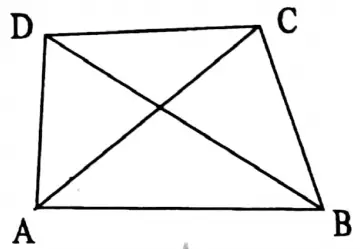
⇒ In the adjacent image, ABCD is a quadrilateral whose four sides are AB, BC, CD, and DA, four vertices are A, B, C, and D, two diagonals are AC and BD.
“WBBSE class 7 maths geometry chapter 7 solutions”
⇒ The sum of the measurement of four angles of a quadrilateral is 360°.
Read and Learn More WBBSE Solutions for Class 7 Maths
Convex Quadrilateral:
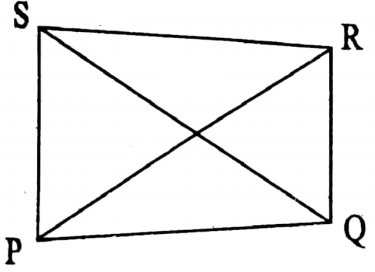
⇒ A convex quadrilateral is a four-sided polygon that has interior angles that measure less than 180° each. The diagonals are contained entirely inside of these quadrilaterals. PQRS is a convex quadrilateral.
Concave Quadrilateral:
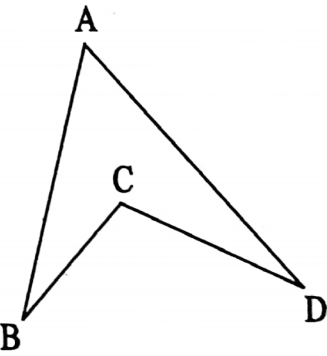
⇒ If the quadrilateral has an interior angle greater than 180°, it is called a concave quadrilateral.
⇒ ABCD is a quadrilateral whose interior ∠BCD > 180°
Parallelogram:
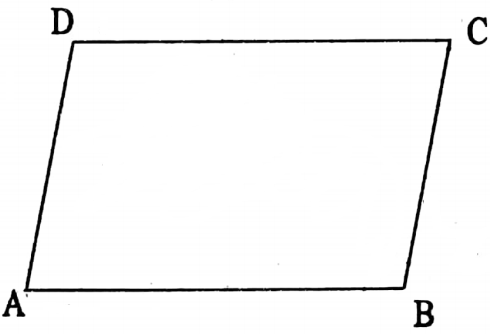
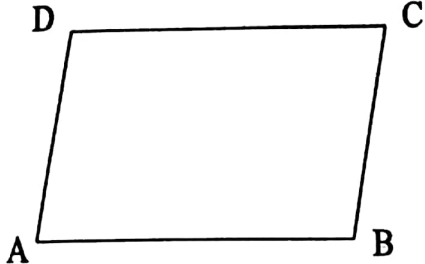
⇒ The quadrilateral whose opposite sides are parallel is called a parallelogram.
⇒ ABCD is a parallelogram whose AB || DC and AD || BC.
“types of quadrilateral WBBSE class 7 maths notes”
Trapezium:
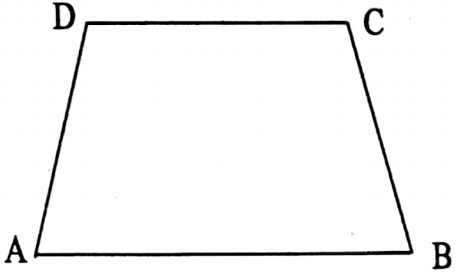
⇒ The quadrilateral whose one pair of opposite sides are parallel is called a trapezium.
⇒ The nonparallel sides of a trapezium are called oblique sides. ABCD is a trapezium whose AB || DC and AD  BC
BC
Isosceles trapezium:
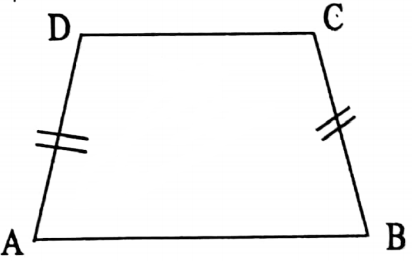
⇒ The trapezium whose oblique sides are equal is called isosceles trapezium.
⇒ ABCD is a isosceles trapezium whose AB || DC and AD BC.
“exercise 7 solved problems on quadrilaterals class 7”
Rectangle:
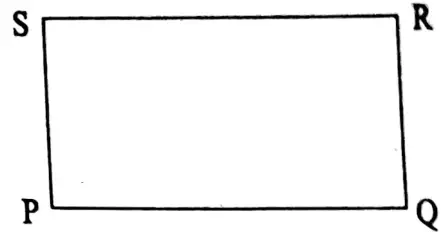
⇒ If a parallelogram has its one angle a right angle (90°) is called a rectangle.
⇒ PQRS is a rectangle whose SR || PQ, SP || RQ, and ∠SPQ 90°.
Rhombus:
⇒ A rhombus is a parallelogram whose one pairs of adjacent sides are equal in length.
⇒ Or, A rhombus is a quadrilateral whose four side are equal in length ABCD is a rhombus whose AB = BC = CD = DA.
“WBBSE class 7 maths chapter 7 important questions”
Square:
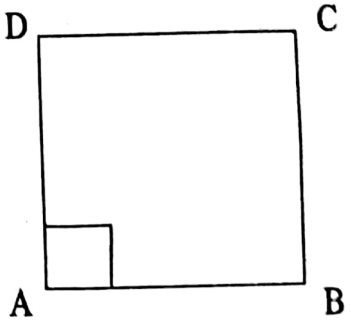
⇒ A square is a rectangle whose one pair of adjacent sides are equal in length.
⇒ ABCD is a square whose AB BC = CD = DA and ∠A = 90°
Kite:
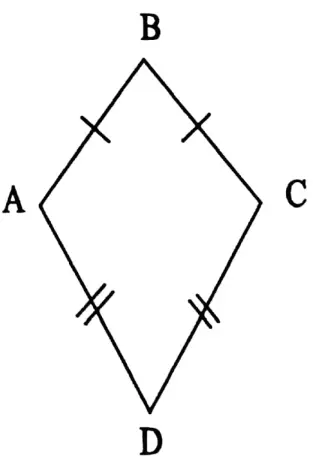
⇒ A kite is a quadrilateral whose one pairs of adjacent sides are equal and the other two sides are equal.
“definition and classification of quadrilaterals class 7”
⇒ ABCD is a kite whose AB = BC and AD = CD
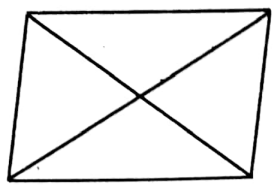
Properties of different quadrilaterals parallelogram:
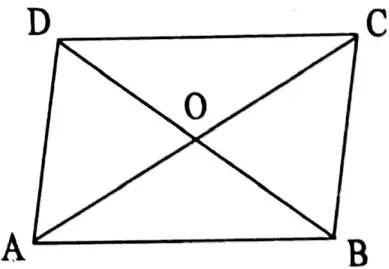
1. Opposite sides are equal
2. Opposite angles are equal
3. Diagonals bisect each other
4. Opposite sides are parallel.
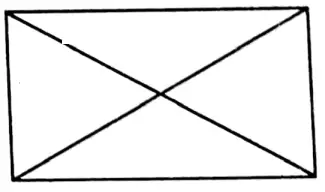
Properties of Rectangle:
1. Opposite sides are parallel
2. Opposite sides are equal
3. Diagonals are equal
4. Diagonal bisect each other
5. Each angles is right angle.
Properties of Rhombus:
1. Opposite sides are parallel
2. Four sides are equal in length
3. Diagonals are not equal
4. Diagonals bisect each other perpendicularly.
Properties of Square:
1. Length of the four sides are equal
2. Length of the diagonals are same
3. Diagonals bisect each other perpendicularly
4. Each angle is a right angle.
“properties of parallelogram, rectangle, square, and rhombus”
Question 1. Choose the Correct Answer
1. The measurement of the sum of four angles of any quadrilateral is
1. 90°
2. 180°
3. 360°
4. None of these.
Solution: The measurement of sum of four angles of any quadrilateral is 360°
So the correct answer is 3. 360°
2. The quadrilateral whose one pairs of opposite side are parallel is
1. Trapezium
2. Rhombus
3. Rectangle
4. None of these
Solution: 1. Trapezium
The quadrilateral whose one pairs of opposite side are parallel is Trapezium
3. In which quadrilateral, two diagonals are not equal?
1. Isosceles trapezium
2. Rhombus
3. Rectangle
4. Square
Solution: 2. Rhombus
“sum of interior angles of a quadrilateral theorem proof”
Question 2. Write true or false
1. Each interior angle of a square is a right angle.
Solution: The statement is true.
2. In a rhombus only one pair of the opposite side are equal.
Solution: The statement is false.
3. In a parallelogram opposite sides are parallel.
Solution: The statement is true.
Wbbse Class 7 Maths Solutions
Question 3. Fill in the blanks
1. The length of the oblique sides of an isosceles trapezium is ______
Solution: Equal.
2. The lengths of opposite sides of a rectangle are _____
Solution: Equal.
3. Rhombus is one type of ____
Solution: parallelogram.
Question 4. Every rectangle are parallelogram. Explain.
Solution: The opposite sides of the rectangle are parallel. Also, the opposite side of a parallelogram are parallel. So each rectangle is a parallelogram.
Question 5. All parallelogram are trapezium-Explain.
Solution: The quadrilateral whose one pairs of opposite sides are parallel is called a trapezium. As two pairs of opposite sides of a parallelogram are parallel, so each parallelogram is a trapezium.
Type Of Quadrilateral Type Of Quadrilateral Exercise 7.1
1. Hence, quadrilateral has __________ diagonals.
Solution: 2.
2. Pentagon has__________diagonals. But triangles do not have diagonals.
Solution: 5.
3. The number of sides of a triangle is 3 the number of its diagonals = \(\frac{3(3-3)}{2}\)= __________
Solution:
Given
The number of sides of a triangle is 3 the number of its diagonals = \(\frac{3(3-3)}{2}\)
Number of its diagonal
= \(\frac{3(3-3)}{2}\)
= 0
“real-life applications of quadrilateral properties WBBSE”
4. The number of sides of a quadrilateral is 4. Number of diagonals \(\frac{4(4-3)}{2}\) = __________
Solution:
Given
The number of sides of a quadrilateral is 4.
Number of its diagonal
= \(\frac{4(4-3)}{2}\)
5. The Pentagon has 5 Sides. It has \(\frac{5(5-3)}{2}\) = 5 Diagonals.
Solution:
⇒ The Pentagon has 5 Sides, Numbers is diagonal \(\frac{5(5-3)}{2}\) = 5
6. Hexagon has 6 sides. It has = \(\frac{6(6-3)}{2}\) = diagonals. 6(6-3)
Solution:
Hexagon has 6 sides, it has ___________ = 9 diagonals.
7. An n-sided polygon has n sides. Its number of diagonals ____________
Solution:
⇒ A n-sides polygon has n-sides
⇒ It’s number of diagonal = \(\frac{n(n-3)}{2}\)
“difference between trapezium and parallelogram class 7 WBBSE”
Type Of Quadrilateral Exercise 7.2
Question 1. Let us identify the quadrilateral from the figures given below
Solution:
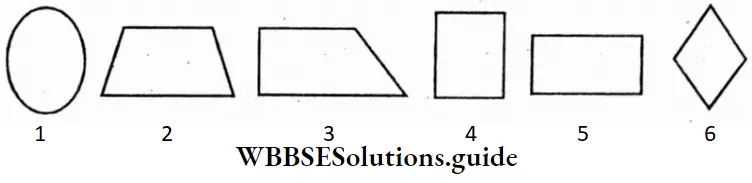
Solution: 2,3,4,5,6 → Are quadrilateral
Question 2. Let us fill in the gaps
1. Oblique sides of isosceles trapezium are [equal / unequal]
Solution: Equal.
2. If two pairs of opposite sides of a trapezium are equal it is a.
Solution: Isosceles trapezium.
3. Opposite sides of a parallelogram are mutually [parallel / not
parallel.
Solution: Parallel.
4. If one angle of a parallelogram is 90° then it will be, [Rectangle / Rhombus].
Solution: Rectangle.
5. Quadrilateral has_ diagonals.
Solution: Two.
“step-by-step solutions for quadrilateral problems class 7”
6. Diagonals of a rhombus bisect each other at_.
Solution: Right angle.
7. The opposite sides of a rectangle are [equal/unequal]
Solution: Equal.
8. Rhombus is a special type of [square/parallel]
Solution: Parallelogram.
9. The diagonals of a parallelogram
Solution: Bisect.
Question 3. By cutting paper, let us verify
Solution:
- The diagonals of a square bisect each other at right angles.
- The diagonals of the rectangle bisect each other