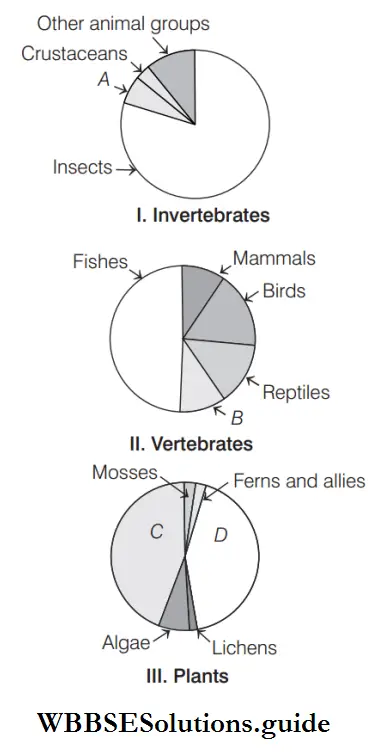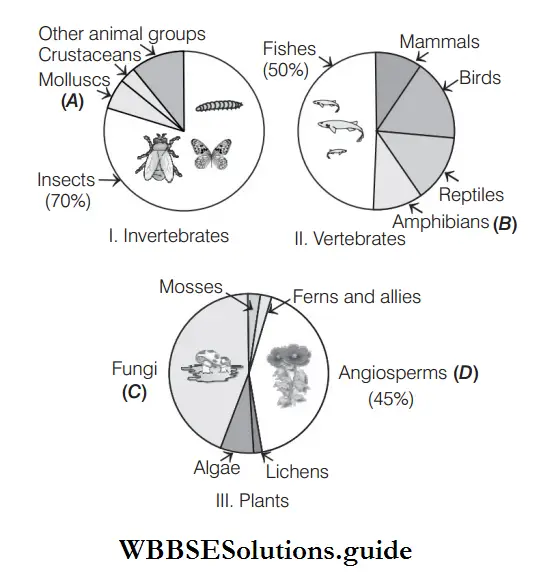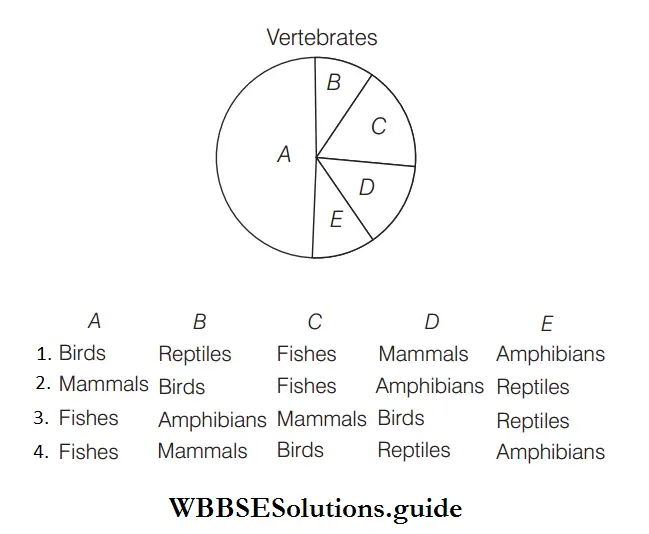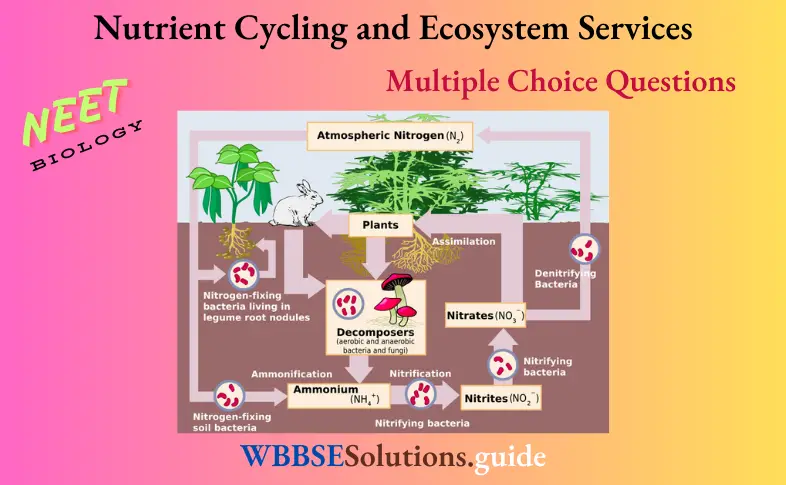
NEET Biology Loss of Biodiversity and its Causes Multiple Choice Question And Answers

Biology MCQs With Answers For NEET Loss Of Biodiversity And Its Causes

Question 1. The number of species facing the threat of extinction worldwide is

  1. 14,500
  2. 14,000
  3. 15,000
  4. 15,500

Answer: 4. 15,500

The number of species facing the threat of extinction world wide is 15,500.

Question 2. In IUCN Red list, documents the extinction of 784 species includes

  1. 335 vertebrates, 360 invertebrates and 89 plants
  2. 337 vertebrates, 362 invertebrates and 88 plants
  3. 338 vertebrates, 359 invertebrates and 87 plants
  4. 340 vertebrates, 357 invertebrates and 87 plants

Answer: 3. 338 vertebrates, 359 invertebrates and 87 plants

“viable material of endangered species can be preserved by “

Accrding to IUCN Red list (2004), 338 vertebrates, 359 invertebrates and 87 plants are extinct in the last 500 yrs.

Read And Learn More: NEET Biology Multiple Choice Question And Answers

Question 3. Which organisation publishes the Red Data Book?

  1. GEF
  2. IUCN
  3. UNEP
  4. WWF

Answer: 2. IUCN

The Red Data Book is a public document which is created for recording endangered and rare species of plants, animals, fungi as well as some local subspecies. It contains the complete list of threatened (endangered) species. Currently the International Union for Conservation of Nature (IUCN) maintain the Red Data Book

NEET Biology Loss Of Biodiversity And Its Causes mcqs

“biodiversity questions “

Question 4. How much percentage of the species will be lost by end of the 21st century on earth if the current rate of loss continues?

  1. 10%
  2. 20%
  3. 50%
  4. 40%

Answer: 3. 50%

The current rate of global diversity loss is estimated to be 100 to 1000 times higher the previous extinction rate. If the current rate of loss continues 50% of the species will be lost by the end of 21st century on earth.

Question 5. According to IUCN Red list, during the last two decades, the maximum increase in the number of threatened species is among 

  1. Amphibians
  2. Reptiles
  3. Birds
  4. Mammals

Answer: 1. Amphibians

Threatened species is the one which is liable to become extinct if not allowed to realise its full biotic potential by providing protection from exotic species, human exploitation and other activities. According to IUCN Red list, during the last two decades, the maximum increase in the number of threatened species is among amphibians.

Biology MCQs with answers for NEET

Question 6. Red list of plants in India is completed by

  1. Botanical Survey of India
  2. Zoological Survey of India
  3. Geological Survey of India
  4. None of the above

Answer: 1. Botanical Survey of India

In India, Red list of plant species is prepared by Botanical Survey of India. It is government of India ministry of environment, forest and climate change’s organisation for the survey, research and conservation of plant resources, flora and endangered species of India. It was founded on 13 February in 1890, by the East India company.

Question 7. Red list contains data or information on 

  1. All economically important plants
  2. Plants Whose Products Are In International Trade
  3. Threatened Species
  4. Marine vertebrates only

Answer: 3. Threatened Species

IUCN (International Union for Conservation of Nature) maintains Red list, which is a catalogue for threatened species. A threatened species is any species which is vulnerable endangered or critically endangered.

NEET Biology Loss of Biodiversity MCQs with answers

Question 8. According to IUCN Red list, what is the status of red panda (Ailurus fulgens)?

  1. Critically endangered species
  2. Vulnerable species
  3. Extinct species
  4. Endangered species

Answer: 4. Endangered species

According to IUCN Red list, red panda comes under endangered species. These species facing a high risk of extinction in the wild in the near future due to decrease in its habitat, excessive predation or poaching.

“biodiversity questions and answers pdf “

Question 9. Species listed in Red list which presently have sufficient population, but are facing the risk of extinction in medium term future are called

  1. Endangered Species
  2. Vulnerable Species
  3. Rare Species
  4. Extinct species

Answer: 2. Vulnerable Species

Presently, the population of vulnerable species is sufficient, but is undergoing depletion due to some factors, so that it is facing risk of extinction in medium term future, e.g. Antelope cervicapra.

Biology MCQs with answers for NEET

Question 10. According to Red list in India, ………… plant species are critically endangered.

  1. 132
  2. 50
  3. 60
  4. 80

Answer:  1. 132

According to the Red list of 2012, 132 species are critically endangered in India.

Question 11. List of endangered species was released by AFMC

  1. IUCN
  2. BBC
  3. WCC
  4. UN

Answer: 1.

The Red Data Book is a public document which is created for recording endangered and rare species of plants, animals, fungi as well as some local subspecies. It contains the complete list of threatened (endangered) species. Currently the International Union for Conservation of Nature (IUCN) maintain the Red Data Book

Important MCQs on Loss of Biodiversity for NEET

Question 12. Number of endangered species of angiosperms in India is 

  1. 15,000
  2. 487
  3. 3000
  4. 5000

Answer: 3.

The number of endangered species of angiosperms in India is 3000.

Read And Learn More: NEET Biology Multiple Choice Question And Answers

Question 13. A threatened species category included

  1. Only Endangered Species
  2. Only Vulnerable Species
  3. Endangered And Rare Species
  4. Endangered, vulnerable and rare species

Answer: 4. Endangered, vulnerable and rare species

The species which can extinct in future comes under the threatened species. All the types of endangered, vulnerable and rare species are included under category of threatened species.

Question 14. Given below are pie diagram A, B, C, D and E related to the percentage of various categories of threatened species of angiosperms, amphibians, reptiles, birds and mammals, respectively. Identify what each shaded slice of the pie chart refer to?
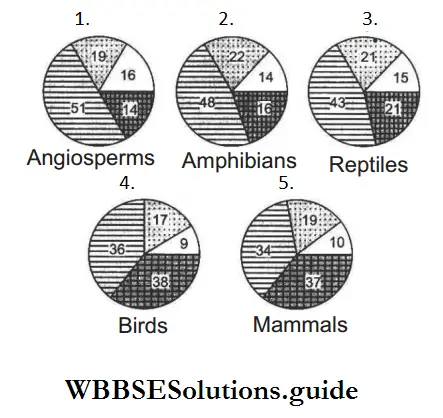
NEET Biology Loss of Biodiversity and its Causes percentage of various categories

Critically study and identify the following regions
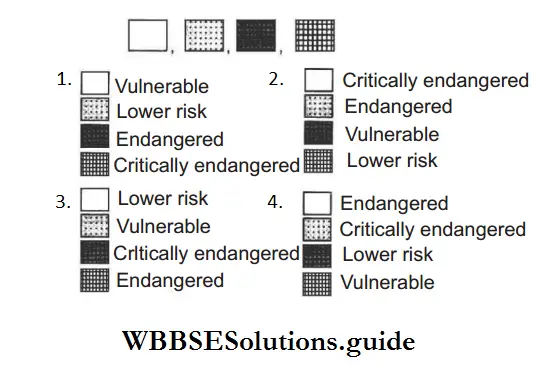
NEET Biology Loss of Biodiversity and its Causes percentage of various categories.

Answer: 2. Amphibians

  • 10% mammals, 9% birds, 15% reptiles, 16% amphibians and 16%
    angiosperms are facing very high risk of extinction in the wild and can become extinct any moment in the immediate future.
  • The percentage number of endangered species in the list of
    threatened species is 19% mammals, 17% birds, 21% reptiles, 22% amphibians and 19% angiosperms.
  • Percentage of depleted (vulnerable) species out of the total threatened species is 34% mammals, 36% birds, 43% reptiles, 48% amphibians and 51 % angiosperms.

Biology MCQs with answers for NEET

Question 15. Which one of the following is an endangered plant?

  1. Lycopersicum
  2. Dalbergia
  3. Cedrus
  4. Rauwolfia

Answer: 4.

Rauwolfia is a source of antihypertensive drug reserpine. It is used to treat high blood pressure (hypertension). It is an endangered plant due to its hyper-exploitation.

Question 16. The endangered member of flora is

  1. one horned rhino
  2. Drosera indica
  3. flying squirrel
  4. None of the above

Answer: 2. Drosera indica

Drosera indica L. is a threatened and endangered insectivorous plant. It is native to tropical countries.

Question 17. Which group of vertebrates comprises the highest number of endangered species?

  1. Birds
  2. Mammals
  3. Fishes
  4. Reptiles

Answer: 2. Mammals

Mammals have 177 endangered species which represent 3.8% of all the species. Similarly, birds have 188 endangered species which represent 1.9% of all the species. Reptiles, amphibians and fishes have 47, 32 and 158 endangered species representing 0.7%, 0.7% and 0.6%, respectively of all the species. So, the mammals of vertebrates comprise the highest number of endangered species.

Causes of Biodiversity Loss MCQs for NEET

Question 18. Asiatic lion (Panthera leo persica) is now

  1. Endangered
  2. Extinct In Wild
  3. Vulnerable
  4. Critically endangered

Answer: 1. Endangered

Asiatic lion is restricted to the Gir National Park and environs in Gujarat. On the IUCN Red list, it is listed under its former scientific name, Panthera leo persica as endangered because of its small population size and area of occupancy.

Biology MCQ For NEET With Answers

Question 19. Most of the endangered species are victims of 

  1. Competition With Introduced Species
  2. Habitat Destruction
  3. Overhunting
  4. Acid Rain

Answer: 2. Habitat Destruction

The most important cause of the driving animals and plants to extinction is habitat loss and fragmentation which comes under habitat destruction. Due to various human activities, when large habitats are destructed, various animals are badly affected, leading to population decline. So, most of the endangered species are victims of habitat destruction.

Question 20. One of endangered species of Indian medicinal plants is that of

  1. Podophyllum
  2. Ocimum
  3. Garlic
  4. Nepenthes

Answer: 1. Podophyllum

Podophyllum emodi (medicinal plant) is an Indian endangered flora. It is an verge of extinction due to overexploitation. Its dried roots and rhizomes are used in chronic, constipation and tumour growth.

Question 21. Which endangered animal is the source of the world’s finest, lightest, warmest and most expensive wool the ‘Shahtoosh’?

  1. Nilgai
  2. Cheetal
  3. Kashmiri goat
  4. Chiru

Answer: 4. Chiru

A special shawl, which is woven with the down hair of the Tibetan antelope (Chiru), by craftsmen and women of Kashmir is called as ‘Shahtoosh’. Being an endangered species, Chiru is now being protected. Thus, the shawl is now legally banned. Shahtoosh is the world’s finest lightest, warmest and most expensive wool having the lowest micron count.

“which one is an endangered species in the following “

Question 22. Which one of the following plant species is in endangered list?

  1. Eucalyptus
  2. Nepenthes
  3. Ceratophyllum
  4. Delonix

Answer: 2. Nepenthes

Nepenthes species are endangered plant. They are mainly insectivorous plant, which grows in nitrogen deficient soils. It traps insects for nitrogen requirement. Due to deforestation, they have become an endangered species.

Biology MCQ For NEET With Answers

Question 23. Which one is a critically endangered animal species?

  1. Antelope cervicapra
  2. Ailurus fulgens
  3. Calotes versicolor
  4. Hyla

Answer: 2. Sus salvanius

Pygmy hog (Sus salvanius/Porcula salvania) is an endangered species of small wild pig, previously spread across India, Nepal and Bhutan but now only found in Assom. The current world population is about 150 individuals or fewer. Recent conservation measures have improved the prospects of survival in the wild of this critically endangered species.

Question 24. Golden langur (Trachypithecus geei), is considered as

  1. Endangered Species
  2. Vulnerable Species
  3. Rare Species
  4. Extinct species

Answer: 1. Endangered Species

The golden langur, Trachypithecus geei, is an endangered species, endemic to India and Bhutan. Its distribution is limited to a small forest belt in Western Assom in Northeast India and Bhutan, between the River Manas in the East.

NEET quiz on Biodiversity Loss and Its Causes with solutions

Question 25. The endangered largest living lemur Indri indri is found in

  1. Sri Lanka
  2. Madagascar
  3. Mauritius
  4. India

Answer: 2. Madagascar

The lemurs are the inhabitants of Madagascar and the Comoro Islands. It is currently facing extinction. The major threat to the extinction of lemur, Indri indri is the deforestation.

Question 26. Which one of the following sets is endangered?

  1. Musk deer and Himalayan bear
  2. Tiger and Bustard
  3. Peacock and Pheasant
  4. All of the above

Answer: 4. All of the above

All of the given species are endangered. Himalayan musk deer is endangered because of overexploitation. The Himalayan brown bear is critically endangered due to poaching for their fur and claws. The Siberian tiger and peacocks both are endangered. The great Indian bustard are critically endangered because it has an extermely small population. Pheasants are one of the most endangered groups of birds in the world.

Thus, option 4 is correct.

Question 27. Which one of the following is a pair of endangered species?

  1. Garden lizard and Mexican poppy
  2. Rhesus monkey and Sal tree
  3. Indian peacock and carrot grass
  4. Hornbill and Indian aconite

Answer: 4. Hornbill and Indian aconite

In India, aconite and hornbill are endangered species. Hornbill illegally hunting for its casque. Indian aconite belongs to family–Ranunculaceae. It is exploited due to its medicinal properties.

Biology MCQ For NEET With Answers

Question 28. Which of the following plant is an endangered species in India?

  1. Lycopodium sp.
  2. Pinus roxburghii
  3. Hydrilla
  4. Cedrus deodara

Answer: 1. Lycopodium sp.

Lycopodium (Phlegmariurus nutans) is a fern, which is an endangered species in India. It has been used in treatment of disorder of the locomotor system, skin, liver.

Question 29. Which of the following are rare species?

  1. Indian desert cat
  2. Wild yak
  3. Gharial
  4. All of these

Answer: 4. All of these

A rare species is a group of organisms that are very uncommon, scarce or infrequently encountered. Indian desert cat, wild yak, gharial comes under rare species.

Thus, option 4 is correct.

NEET expected MCQs on Biodiversity Loss 2025

Question 30. Which one of the following is an endangered animal?

  1. Rhesus monkey
  2. Antelope
  3. Langur
  4. Lion tailed macaque

Answer: 4. Lion-tailed macaque

The lion-tailed macaque, endemic to the evergreen forests of the Western ghats in Southern India. With less than 2500 individuals remaining in the wild and about 400 more in zoos, the lion-tailed macaque is one of the most endangered species in the world today.

Question 31. Which of the following is not endangered?

  1. Peacock
  2. Indian rhino
  3. Asiatic lion
  4. Great Indian bustard

Answer: 1. Peacock

Technically only males are peacock. Females are peahens and together, they are called peafowl. Indian peafowl are widely distributed in the wild across South Asia and protected both culturally in many areas and by law in India. Conservative estimates of the population put them at more than 1,00,000. So, peacock is not an endangered species. Whereas Indian rhino, Asiatic lion and Great Indian bustard belong to endangered species.

Question 32. Which one of the following species is no more an endangered species and has been given the status of ‘vulnerable’, recently?

  1. Tiger
  2. Giant panda
  3. Elephant
  4. Deer

Answer: 2. Giant panda

The Giant panda is an endangered species, threatened by continued habitat loss and by very low birth rate, both in wild and in captivity. The numbers are slowly increasing due to widespread conservation efforts and it has moved into the vulnerable category of IUCN’s Red list.

NEET Biology MCQ

Question 33. Among various categories of threatened species, the percentage of angiosperms categorised as vulnerable is about 

  1. 14%
  2. 19%
  3. 41%
  4. 51%

Answer: 4. 51%

Out of total threatened species 34-51% are vulnerable (34% mammals, 36% birds, 43% reptiles, 48% amphibians and 51% angiosperms).

Question 34. Organisms are susceptible to extinction as a result of

  1. Their Large Body Size
  2. Their Small Population
  3. Their High Trophic Level
  4. All of the above

Answer: 4. All of the above

  • Organisms are susceptible to extinction is due to
  • Large body size, e.g. elephant, rhinoceros, Bengal tiger, lion.
  • Small population size.
  • Low reproductive potential, e.g. blue whale, giant panda.
  • The higher status of trophic level, e.g. bald eagle, Bengal tiger, due to all these reasons, they are unable to sustain and hence comes under organisms which are susceptible to extinction.

Thus, option 4 is correct.

Question 35. The rate of extinction in the tropics is

  1. High
  2. Moderate
  3. Low
  4. Negligible

Answer: 3. Low

There are various hypotheses for the presence of higher diversity in tropical areas. One of them is, the rate of extinction is low in tropics because climatic conditions are favorable and stable.

Question 36. Which animal has gone extinct in recent times in India?

  1. Panthera leo
  2. Acinonyx jubatus
  3. Antilope cervicapra
  4. Rhinoceros unicornis

Answer: 2. Acinonyx jubatus

Acinonyx jubatus, commonly called cheetah, has gone extinct in recent times in India due to the rapid destruction of its habitat, high rate of mortality of the cubs, and the killing by hunters.

Question 37. The bird ‘dodo’ became extinct because of

  1. Its Beautiful Feathers
  2. Its Flesh
  3. Its Curved Beak
  4. Its melodious songs

Answer: 2. Its Flesh

The dodo (Raphus cucullatus) was first described in 1601 from the island of Mauritius. By 1681, it had become extinct as a result of hunting by Dutch colonists. It becomes extinct because of its flesh and the bird was flightless too, which increased its predation and poaching.

NEET Biology MCQ

Question 38. A species facing an extremely high risk of extinction in the immediate future is called CBSE AIPMT

  1. Vulnerable
  2. Endemic
  3. Critically Endangered
  4. Extinct

Answer: 3. Critically Endangered

The taxon under critically endangered category are facing very high risk of extinction in the wild and can become extinct at any moment in the immediate future.

Question 39. If the Bengal tiger becomes extinct then

  1. Hyenas And Wolves Will Become Scarce
  2. The Wild Areas Will Be Safe For Man And Domestic Animals
  3. Its Gene Pool Will Be Lost Forever
  4. The population of beautiful animals like deer will get stabilised

Answer: 3. Its Gene Pool Will Be Lost Forever

If the Bengal tiger becomes extinct, its gene pool is lost forever. The combination of all the genes present in a given population is called the gene pool of that population. Extinction leads to deletion of gene from the resultant genome in course of evolution.

Question 40. Which of the following birds is on the verge of extinction in India?

  1. Peacock AMU 2001
  2. Pintail ducks
  3. Hornbill
  4. Great Indian bustard

Answer: 4. Great Indian bustard

The great Indian bustard is a tall, long legged bird which is on the verge of extinction in India. It’s numbers have now dwindled to just 150 felling by 100 since 2011.

NEET Biology Loss of Biodiversity MCQs with explanations

Question 41. Which of the following is the most important cause for animals and plants being driven to extinction?

  1. Habitat loss and fragmentation
  2. Drought and floods
  3. Economic exploitation
  4. Alien species invasion

Answer: 1. Habitat loss and fragmentation

Habitat loss and fragmentation is the most important cause driving animals and plants to extinction. When large habitats are broken up into small fragments due to various human activities, mammals and birds requiring large territories and certain animals with migratory habits are badly affected.

NEET Biology MCQ

Question 42. Main cause behind destruction of biodiversity is 

  1. Deforestation
  2. Illegal Hunting
  3. Air Pollution
  4. Interspecific competition

Answer: 1. Deforestation

Deforestation leads to loss of various species of plants and animals dependent on them. This leads to habitat loss for many animals. Deforestation also results in less rainfall in that area. So, main cause behind destruction of biodiversity is deforestation.

Question 43. A species is prone to extinction as a result of 

  1. Drastic Environmental Changes And Population Characteristics
  2. Large Body Size And Large Population Size
  3. Drastic Environmental Changes And Mass Extinction
  4. Population Characteristics And Pollution
  5. None of the above

Answer: 1. Drastic Environmental Changes And Population Characteristics

A species becomes prone to extinction due to the two categories of attributes, drastic environmental changes and population characteristics. Population traits are small population size, large body size, higher status of trophic level, etc

Question 44. At present, the most significant cause of dwindling biodiversity is probably

  1. The Deterioration Of Ozone Layer
  2. The Destruction Of Habitat
  3. Biological Magnification Of Ddt
  4. Global warming

Answer: 2. The Destruction Of Habitat

Habitat destruction affects the survival of populations and reduces biodiversity. The major causes of biodiversity decline are pollution, changes in atmospheric CO2 concentrations, changes in the nitrogen cycle and acid rain, climate alterations and the introduction of exotic species, all coincident to human population growth.

Question 45. Which of the following is the natural cause of extinction of species?

  1. Pollution of soil, water and air
  2. Earthquakes, floods, landslides
  3. Cutting of forest trees, overgrazing
  4. Uprooting of orchids and medicinal plants

Answer: 2. Earthquakes, floods, landslides

Extinction occurs when species are diminished because of environmental forces (habitat loss, fragmentation, global change), natural disaster (earthquakes, floods, landslides, etc.), overexploitation of species (for human use) or because of evolutionary changes in their members (genetic inbreeding, poor reproduction, decline in population numbers). So, earthquakes, floods and landslides are the natural cause of extinction of species.

Question 46. Identify the causes of biodiversity loss.

  1. Overexploitation
  2. Alien species
  3. Coextinction
  4. All of these

Answer: 4. All of these

The world is facing accelerated rate of biodiversity losses due to human interference. The four major causes are the overexploitation, coextinctions, alien-species invasions, habitat loss and fragmentation, etc.

Thus, option 4 is correct.

Question 47. Wildlife is destroyed the most when 

  1. There Is Lack Of Proper Care
  2. Mass Scale Hunting For Foreign Trade
  3. Its Natural Habitat Is Destroyed
  4. Natural calamity

Answer: 3. Its Natural Habitat Is Destroyed

Destruction of natural habitats causes the most serious threat to the biodiversity, i.e. endangering many animals. Habitats are destroyed/fragmented by many human activities like developmental work, deforestation, pollution, etc. Overhunting and poaching also have harmful effect. Thus, wildlife is destroyed the most when its natural habitat is destroyed.

Question 48. Extinction vertex includes

  1. Genetic Factors
  2. Demographic Factors
  3. Both 1 And 2
  4. None of the above

Answer: 3. Both 1 And 2

Extinction vertex is a combination of genetic and demographic factors. Genetic factors are involved due to restricted mating opportunities, in breeding becomes more likely. If populations remain small and isolated for many generations, they loose genetic variation necessary to respond to environmental challenges. The small and isolated populations are threatened by extinction. Thus, environmental demographic and genetic factors can interact and reinforce each other in a downward spiral, extinction vertex.

Thus, option 3 is correct.

Question 49. India’s biodiversity is in jeopardy and major reason for this is

  1. Population Explosion
  2. Habitat Destruction
  3. Pollution and animal poaching
  4. All of the above

Answer: 4. All of the above

Today, with the population explosion, more and more land is being cleared for agriculture, habitation destruction and other developmental projects. Pollution by heavy metals, persistent biocides, organic wastes, removal of sand from riverbeds and agricultural runoff have spoilt the river ecosystem. Poaching of animals for their skin, fur, tusk, horns and meat for medicinal purposes are a major threat to birds, mammals, plants and reptiles.

Thus, option 4 is correct.

Mock test on Loss of Biodiversity for NEET preparation

Question 50. Extinction abetted by human activities is called

  1. Natural Extinction
  2. Mass Extinction
  3. Coextinction
  4. Anthropogenic extinction

Answer: 4. Anthropogenic extinction

Anthropogenic extinctions are the extinctions abetted by human activities like settlements, hunting,overexploitation and habitat destruction.

Question 51. Loss of biodiversity may lead to

  1. Lower resistance to environmental stress.
  2. Decrease in plant production.
  3. Breakdown in functioning the ecosystem processes.
  4. Increase in genetic diversity.

Choose the correct option.

  1. 1 and 2
  2. 1 and 4
  3. 1 and 3
  4. 1, 2 and 3

Answer: 4. 1, 2 and 3

All statements are correct except

Incorrect statement can be corrected as Loss of biodiversity may lead to decrease in genetic diversity.

Question 52. Decline in the population of Indian native fishes due to introduction of Clarias gariepinus in river Yamuna can be categorised as

  1. Coextinction Neet
  2. Habitat Fragmentation
  3. Overexploitation
  4. Alien-species invasion

Answer: 4. Alien-Species Invasions

Introduction of the African catfish, Clarias gariepinus for aquaculture purposes, has become athreat to indigenous catfishes in our rivers. It is an example of alien species, as it has come from outside for the invasion communities in Yamuna.

Question 53. Water hyacinth (Eichhornia crassipes) is an example of …………………………… . It was introduced in Indian waters for its beautiful flower.

  1. Disturbance And Degradation
  2. Coextinctions
  3. Alien-Species Invasions
  4. Overexploitation

Answer: 3. Alien-Species Invasions

Water hyacinth (Eichhornia crassipes) introduced in Indian waters. It is an example of alienspecies invasions. These causes dense mate of biomass on the water surface, which reduces dissolved oxygen.

Question 54. Which of the following is an exotic species?

  1. Lantana
  2. Parthenium
  3. Eichhornia
  4. All of these

Answer: 4. All of these

All of the given species are exotic species. An exotic species is one that is not native to a given area. It is a plant, animal or insect that has been brought to an area, often by immigrants.

Thus, option 4 is correct.

NEET practice test on Loss of Biodiversity and Its Causes

Question 55. Which of the following is an example of alien species invading a new ecosystem resulting in biodiversity losses?

  1. Introduction of Nile Perch into Lake Victoria in East Africa
  2. Introduction of water hyacinth into India
  3. Introduction of African catfish into Indian rivers
  4. All of the above

Answer: 4. All of the above

All given options are an example of alien-species invading a new ecosystem resulting in biodiversity losses. When alien species are introduced unintentionally or deliberately they result in decline in biodiversity, e.g. when Nile perch was introduced into Lake Victoria in East Africa, it led to extinction of cichlid fish in the lake.

Thus, option 4 is correct.

Question 56. American water plant that has become a troublesome water weed in India is

  1. Cyperus rotundus
  2. Eichhornia crassipes
  3. Typha latifolia
  4. Trapa bispinosa

Answer: 2. Eichhornia crassipes

Eichhornia crassipes is an American origin plant and now water weed in India.

Question 57. A weed which has invaded many forest lands of India.

  1. Ocimum sanctum
  2. Papaver somniferum
  3. Lantana camara
  4. Oryza sativa

Answer: 3. Lantana camara

Lantana camara is considered to be a weed in large areas of the Paleotropics, where it has established itself. In agricultural areas or secondary forests, it can become the dominant understorey shrub, crowding out other native species and reducing biodiversity. So, Lantana camara has invaded many forest lands of India.

Question 58. Which of the following is not an invasive species?

  1. Parthenium hysterophorus
  2. Ocimum sanctum
  3. Lantana camara
  4. Eichhornia crassipes

Answer: 2. Ocimum sanctum

Ocimum sanctum (tulsi) is not an invasive species. Non-native or alien species are often introduced inadvertently for their economic and other uses. They often become invasive and drive away the local species. Lantana camara has replaced many species in forests of Central India. Parthenium hysterophorus has pushed out several herbs and shrubs from open places in the plains. Water hyacinth (Eichhornia crassipes) was introduced in Indian water to reduce pollution. It clogged water bodies including wetlands at many place resulting in death of several aquatic plants and animals.

Question 59. Consider the following statements with respect to Eichhornia.

  1. It drains off oxygen from water and is seen growing in standing water.
  2. It is an indigenous species of our country.

Choose the correct option.

  1. Statement 1 is correct, but 2 is incorrect
  2. Statement 1 is incorrect, but 2 is correct
  3. Both statements 1 and 2 are correct
  4. Both statements 1 and 2 are incorrect

Answer: 1. Statement 1 is correct, but 2 is incorrect

Statement 1 is correct, but 2 is incorrect. Incorrect statement can be corrected as Eichhornia is an alien or exotic species. This plant was introduced in India because of its beautiful flowers and shape of leaves.

Question 60. When a species becomes extinct, the plant and animal species associated with it also becomes extinct, this is called

  1. Extinction
  2. Coextinction
  3. Fragmentation
  4. Proextinction

Answer: 4. Proextinction

When a species becomes extinct, the plant and animal species associated with it also becomes extinct. This is called coextinction, e.g. when a host fish species become extinct, its unique assemblage of parasites also meet the same fate.

Question 61. If the high altitude birds become rare or extinct, the plants which may disappear along with them are 

  1. Pine
  2. Oak
  3. Orchids
  4. Rhododendrons

Answer: 4. Rhododendrons

Rhododendrons are woody plants that grow at high altitude which attract birds. Birds take up the nectar produced by flowers of these plants and carry out the pollination. So, both are dependent on each other and if bird species become extinct, the plant also becomes extinct.

Question 62. One out of the following is not responsible for biodiversity loss.

  1. Alien-species invasion
  2. Coextinction
  3. Ex situ conservation
  4. Deforestation

Answer: 3. Ex situ conservation

Ex situ conservation is not responsible for biodiversity loss, rather it is a method of conservation of biodiversity. It conserves selected rare plants/animals in places outside their natural homes whereas alien-species invasion, coextinction and deforestation result in extinction of many species and loss of biodiversity.

Question 63. The alien-species introduced into lake Victoria that was responsible for the extinction of cichlid fishes is 

  1. Water Hyacinth
  2. Carrot Grass
  3. Nile Perch
  4. African Catfish
  5. Murrels

Answer: 3. Nile Perch

The Nile Perch, a voracious predator introduced to the lake Victoria as a fish food lead to the extinction of over one hundred species of native cichlid fish there.

Question 64. A pollinator specific to a plant (mutualism is seen) becomes extinct. What effect will be observed in those plants?

  1. Decreased pollination
  2. No effect as a substitute pollinator is available
  3. The plant would not be pollinated
  4. None of the above

Answer: 3. The plant would not be pollinated

If a pollinator specific to a plant becomes extinct, plant would not be pollinated anymore because both of these share mutualistic relation. Finally, it leads to extinction of plant species also.

Question 65. Assertion The current species extinction taking place is different from the earlier mass extinction. Reason (R) Present species extinction is due to natural causes, whereas the earlier extinction was due to man-made causes.

  1. Both A and R are true and R is the correct explanation of A
  2. Both A and R are true, but R is not the correct explanation of A
  3. A is true, but R is false
  4. Both A and R are false

Answer: 3. A is true, but R is false

A is true, but R is false because The current species extinction are estimated to be 100 to 1000 times faster than in the prehuman times and our activities are responsible for these faster rates. Ecologists warn that if, the present trend continues, nearly half of all the species on earth might be wiped out within the next 100 years. The present occurring species extinction is different from the earlier mass extinction as the present species extinction is due to man-made causes, whereas the earlier extinction was due to the natural causes.

Question 66. An example of …………………… is the disappearance of dinosaurs along with various other organisms.

  1. Coextinction
  2. Anthropogenic Extinction
  3. K-T Boundary
  4. Extinction vertex

Answer: 3. K-T Boundary

Mass extinction occurred between cretaceous and tertiary over 60 million years ago when dinosaurs and a number of other organisms disappeared. It is also called K-T boundary.

Question 67. Many species like steller’s sea cow, passenger pigeon have been driven to the brink of extinction. A reason for this could be

  1. Over-Exploitation By Humans
  2. Pollution
  3. Habitat Loss
  4. Competition from introduced species

Answer: 1. Over-Exploitation By Humans

Excessive exploitation of a species, whether a plant or animal reduces the size of its population, so that it becomes vulnerable to extinction, e.g. steller’s sea cow, passenger pigeon, etc.

Question 68. Which of the following pairs of an animal and a plant represents endangered organisms in India?

  1. Bentinckia nicobarica and red panda
  2. Tamarind and rhesus monkey
  3. Cinchona and leopard
  4. Banyan and black buck

Answer: 1. Bentinckia nicobarica and red panda

A plant Bentinckia condapanna/nicobarica (member of family–Arecaceae) and the animal redpanda, both are declared as endangered in India.
NEET Biology Patterns of Biodiversity And Their Importance Multiple Choice Question And Answers

Biology MCQs with answers for NEET Patterns of Biodiversity and Their Importance

Question 1. Species diversity increases as one proceeds from

  1. High Altitude To Low Altitude And High Latitude To Low Latitude
  2. Low Altitude To High Altitude And High Latitude To Low Latitude
  3. Low Altitude To High Altitude And Low Latitude To High Latitude
  4. High altitude to low altitude and low latitude to high latitude

Answer: 1. High Altitude To Low Altitude And High Latitude To Low Latitude

Biodiversity or species diversity increases from poles to equator, i.e. from high to low altitude and high to low latitude. Arctic and temperate regions show severe climatic conditions, i.e. low temperature and little availability of water. This is one of the reasons of less biodiversity in poles. However, tropical regions have good warmth, light, temperture and water availability throughout the year resulting in extension of growing period.

Question 2. Assertion Decrease in species diversity occurs as we ascend a high mountain. Reason (R) Decrease in species diversity occurs with increase in altitude due to rise in temperature.

  1. Both A and R are true and R is the correct explanation of A
  2. Both A and R are true, but R is not the correct explanation of A
  3. A is true, but R is false
  4. Both A and R are false

Answer: 3. A is true, but R is false

“viable material of endangered species can be preserved by “

A is true, but R is false because Barring arid/semiarid and aquatic habitats, biodiversity shows latitudinal and altitudinal gradients. A decrease in species is observed as we ascend a high mountain due to drop (decrease) in temperature (lapse temperature, being 6ºC for 1 km or 1000 m) and greater seasonal variability.

Read And Learn More: NEET Biology Multiple Choice Question And Answers

Question 3. Which of the following statements is incorrect?

  1. Biodiversity changes with change in latitude
  2. Biodiversity changes with change in altitude
  3. Biodiversity is uniform throughout the world
  4. Climatic conditions in tropical rainforest favour growth of new species

Answer: 3. Biodiversity is uniform throughout the world

The statement in option is incorrect and can be corrected as Biodiversity is not uniform throughout the world. As ecological factors like temperature, rainfall, etc., varies, so diversity or number of organisms or different types of organisms residing in different geographical areas throughout the world varies. Rest all statements are correct

NEET Biology Patterns of Biodiversity MCQs with answers

Question 4. The distribution of species diversity on earth may be best described as 

  1. It Is Uniformly Distributed
  2. It Is Highest In the Tropics
  3. It Is Highest In Polar Regions
  4. It is highest in Southern Hemisphere and lowest in the Northern Hemisphere

Answer: 2. It Is Highest In Tropics

The diversity of plants and animals is not uniform throughout the world, but shows rather an uneven distribution. With very few exceptions, tropics harbour more species than temperate or polar areas. It means biodiversity is more at the equator than at poles. So, the distribution of species diversity on earth may be best described as, it is highest in tropics.

Question 5. Select the incorrect statement.

  1. Species diversity increases as we move away from the equator towards the poles
  2. Stellar’s sea cow and Passenger pigeon got extinct due to over-exploitation by man
  3. Lantana and Eichhornia are invasive weed species in India
  4. The historic convention on biological diversity was held in 1992
  5. Among animals, insects are the most species-rich taxonomic group

Answer: 1. Species diversity increases as we move away from the equator towards the poles

The statement in option 1 is incorrect. Rest all statements are correct.

Biodiversity or species diversity increases from the poles to the equator, i.e. from high to low altitude and high to low latitude. Arctic and temperate regions show severe climatic conditions, i.e. low temperatures and little availability of water. This is one of the reasons of less biodiversity in poles. However, tropical regions have good warmth, light, temperture and water availability throughout the year resulting in an extension of the growing period.

Biology MCQs with answers for NEET

NEET Biology Patterns of Biodiversity And Their Importance Multiple Choice Question And Answers

Important MCQs on Patterns of Biodiversity for NEET

Question 6. Identify the correct explanations for higher diversity in tropical areas in comparison to temperate areas.

  1. There are no favourable seasons in the tropics.
  2. Less solar energy is available in the tropics.
  3. The rate of extinction is low in the tropics.
  4. Resource availability is higher in the tropics.

Choose the correct option.

  1. 1, 3 and 4
  2. 1, 2, 3 and 4
  3. 1, 2 and 3
  4. 3 and 4

Answer: 4. 3 and 4

  • Statements 3 and IV are correct explanations, but statements I and 2 are incorrect explanations about higher diversity in tropical areas in comparison to the temperate areas. Incorrect explanations can be corrected as
  • There are no unfavourable seasons in the tropics.
  • A continued favourable environment has helped tropical organisms to gain more niche specialisation and increased diversity.
  • More solar energy is available in the tropics.
  • This promotes higher productivity and increased biodiversity.

Question 7. Maximum species diversity is seen in a latitudinal range of

  1. 23.5° N to 66.5° N
  2. 23.5° N to 23.5° S
  3. 23.5° S to 66.5° N
  4. 66.5° N to 90° N

Answer: 2. 23.5° N to 23.5° S

Biodiversity increases in temperate areas but reaches the maximum in the tropics (23.5° N to 23.5° S). It is because tropical rainforests have favourable environmental conditions not only for speciation, but also for supporting both variety and a number of organisms.

Question 8. Columbia located near the equator, is home to …………….. species of bird.

  1. 2,400
  2. 1,400
  3. 2,000
  4. 2,500

Answer: 2. 1,400

The number of species of birds in Columbia, located near the equator is 1,400.

“biodiversity questions “

Question 9. The position of New York is 41°N with ……………… species, while Greenland located at 71°N has only ……………… species.

  1. 56,105
  2. 150, 65
  3. 105, 56
  4. 65,150

Answer: 3. 105, 56

New York has 105 species and Greenland has only 56 species because Greenland is near to pole.

NEET quiz on Biodiversity Patterns and Their Importance with solutions

Question 10. A biome characterised by hot summer, warm winter and treeless vegetation is

  1. Tropical deserts
  2. Steppe grasslands
  3. Savannah grassland
  4. Temperate desert

Answer: 4. Temperate desert

Daytime temperatures are high in summer and low in winter in temperate desert biomes. Vegetation also here is very scarce due to unfavourable conditions.

Biology MCQs with answers for NEET

Question 11. A treeless biome is 

  1. Tundra
  2. Grassland
  3. Arctic desert
  4. All of these

Answer: 4. All of these

The treeless biome is found in places with high altitudes and latitudes with little precipitation. Examples of treeless biomes include Tundra, grassland, desert, and Arctic desert. Tundra is also called the Arctic desert, it is known for its cold and desert-like conditions.

Thus, option 4 is correct.

Question 12. The bulk fixation of carbon through photosynthesis takes place in

  1. Tropical Rainforests Cbse Aipmt
  2. Tropical Rainforest And Crop Plants
  3. Crop Plants
  4. Oceans

Answer: 4. Oceans

Bulk fixation of carbon through photosynthesis takes place in oceans due to the presence of majority of phytoplanktons.

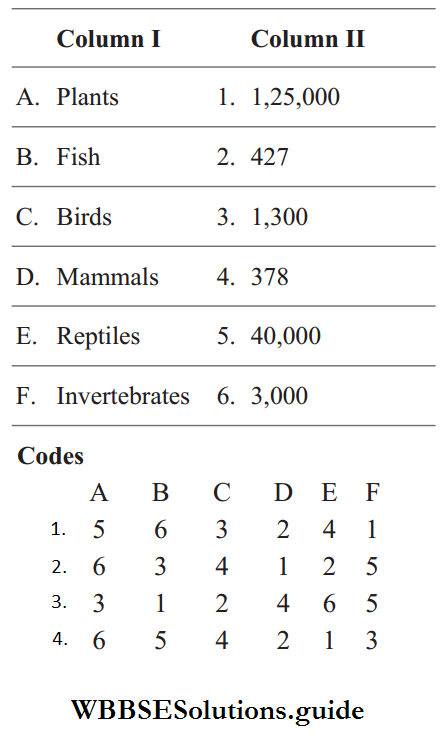
Question 13. Which one of the following rainforests is home to more than 40,000 species of plants, 3,000 of fishes, 1,300 of birds, 427 of mammals, 427 of amphibians, 378 of reptiles and more than 1,25,000 invertebrates?

  1. Amazonian
  2. Tropical
  3. Arctic tundra
  4. Temperate

Answer: 1. Amazonian

The largely tropical Amazonian rainforest in South America has the greatest biodiversity on earth. It is home to more than 40,000 species of plants, 3,000 of fishes, 1,300 of birds, 427 of mammals, 427 of amphibians, 378 reptiles and of more than 1,25,000 invertebrates. Scientists estimate that in these rainforests, there might be at least two million insect species waiting to be discovered and named.

Biology MCQs with answers for NEET

Question 14. Ecologists and evolutionary biologists have proposed various hypotheses. Which of the following hypothesis are correct about tropical area?

  1. Speciation is generally a function of time. These regions have witnessed frequent glaciations in the past.
  2. Areas have remained relatively undisturbed for millions of years and thus had a long evolutionary time for species diversification.
  3. These are less seasonal, relatively more constant and
    predictable. Such constant environments promote niche specialisation and lead to greater species diversity.
  4. There is more solar energy available. It contributes to higher productivity which in turn might contribute indirectly to greater diversity.

Choose the correct option.

  1. 1 and 2
  2. 4, 2 and 3
  3. 2 and 3
  4. 2, 3 and 4

Answer: 4. 2, 3 and 4

Hypothesis 2, 3 and IV are correct about tropical region. Hypothesis I is not correct about tropical area and can be corrected as Temperate regions have witnessed frequent glaciation in the past

“which one is an endangered species in the following “

Question 15. Most of the tree dwellers are found in which of the forests?

  1. Northern conifer forest
  2. Deciduous forest
  3. Mediterranean scrub forest
  4. Tropical rainforest

Answer: 4. Tropical rainforest

NEET expected MCQs on Patterns of Biodiversity 2025

Question 15. Most of the tree dwellers are found in which of the forests?

  1. Northern conifer forest
  2. Deciduous forest
  3. Mediterranean scrub forest
  4. Tropical rainforest

Answer: 4. Tropical rainforest

Most of the tree dwellers and insect species are found in tropical rainforest. The warm humid climate of tropical rainforests supports the broad leaves, evergreen plants and trees. Animals life is also highly diverse, some of the animals of tropical rainforests are monkeys, snakes, tropical birds, bats, carnivorous animals, variety of fishes, etc.

Question 16. At which height in the Himalayan region of our country are Taiga forests located?

  1. At the height of 1000-1500 m
  2. At the height of 2000-3000 m
  3. At the height of 500-1000 m
  4. At the height of 1000-1200 m

Answer: 1. At the height of 1000-1500 m

Taiga (North coniferous forests) are found above 5300 ft (1000- 1500 m) altitude chiefly on the mountains of the Himalayas and Nilgiri. There are not a lot of species diversity of plants and animals because of the harsh conditions (–54 to –1°C in winters and –7°C in summers).

Biology MCQ For NEET With Answers

Question 17. One of the following biomes has the richest flora and fauna because of sufficient rainfall throughout the year

  1. Pampas
  2. Desert
  3. Savannah
  4. Tropical rainforest

Answer: 4. Tropical rainforest

More than half of the world’s species of plant and animals are found in the rainforest as they have favourable conditions. There is sufficient rainfall which leads to richest flora and fauna in tropical rainforests. Whereas pampas, desert, and savannahs have scarce vegetation due to unfavourable conditions.

Question 18. Alpine tundra found in

  1. Himalayas
  2. Siberia
  3. Andaman islands
  4. Tropics

Answer: 1. Himalayas

Alpine tundra is a type of natural region or biome that does not contain trees because it is at high elevation like Himalayas. It occurs in mountains worldwide. The flora of the Alpine tundra is characterised by dwarf shrubs close to the ground.

Question 19. Alpine forests occur at altitude

  1. 3000-6000 m
  2. 1900-3000 m
  3. 1000-1500 m
  4. 500-1000 m

Answer: 2. 1900-3000 m

Alpine biomes are found in mountain regions worldwide, including the Andes, Alps and Rocky mountains. The Alpine biome usually lies between an altitude of about 10,000 ft (3000 m) and the place where the snow line of a mountain begins.

Question 20. Alpine forests of Himalayas have

  1. Tall Evergreen Coniferous Trees
  2. Tall Broad-Leaved Evergreen Trees
  3. Tall Broad-Leaved Deciduous Trees
  4. Dwarf shrubby plants

Answer: 4. Dwarf shrubby plants

Alpine tundra is a type of biome that is found at high elevation like Himalayas. It does not contain trees. Instead, it has dwarf shrubby plants. As the latitude approaches the poles the threshold elevation for alpine tundra gets lower til sea level.

Biology MCQ For NEET With Answers

Question 21. Maximum species diversity is found in 

  1. Arctic Region
  2. Temperate Region
  3. Grasslands
  4. Tundra Region
  5. Tropical rainforest

Answer: 5. Tropical rainforest

Maximum species diversity is found in tropical rainforest as these are less seasonal, they are neither too hot nor too cold and are more predictable.

Question 22. Deciduous forests are mainly found in region, where annual precipitation ranges between

  1. 50 to75 cm
  2. 75 to150 cm
  3. 150 to 200 cm
  4. Above 200 cm

Answer: 2. 75 to150 cm

“biodiversity quiz “

Temperate deciduous forests receive more rain annually than any other environment except rainforests. In winter, precipitation may fall as snow. Annual precipitation ranges from 75-150 cm (30-60 inches) a year.

Question 23. Sal forest is a

  1. Tropical Rainforest
  2. Tropical Evergreen Forest
  3. Temperate Deciduous Forest
  4. Grassland

Answer: 3. Temperate Deciduous Forest

Sal forest is found in Central India (MP and Gujarat). It is a temperate deciduous forest. The trees are evergreen, where leaves fall off early.

Biology MCQ For NEET With Answers

Question 24. Deserts, grasslands, forests and tundra are the examples of

  1. Biomes
  2. Biospheres
  3. Ecosystems
  4. Biogeographical realms

Answer: 1. Biomes

A biome is a large regional unit delimited by a specific climatic zone, having a particular major vegetation zone and its associated fauna, e.g. Tundra desert, grasslands, temperate deciduous forest, tropical rainforest and ocean, etc.

Question 25. Which one of the following pairs is mismatched?

  1. Savannah–Acacia trees
  2. Prairie–Epiphyte
  3. Tundra–Permafrost
  4. Coniferous forest–Evergreen trees

Answer: 2. Prairie–Epiphyte

Option 2 is mismatched pair and can be corrected as A Prairie is a type of habitat with mostly grasses, but also flowering plants and occasional shrubs orisolated trees. Rest options are correctly matched pairs.

NEET Biology Biodiversity Patterns MCQs with explanations

Question 26. The most striking difference between tropical rainforest and temperate forest is that

  1. Tropical Rainforests Have a Preponderance Of Angiosperms, While Temperate Have Preponderance Of Gymnosperms
  2. The Trees Of Temperate Forests Are Taller Than Those Of Tropical Rainforests
  3. Plants of temperate forests are comparatively more mesophytic
  4. All of the above

Answer: 1. Tropical Rainforests Have a Preponderance Of Angiosperms, While Temperate Have a Preponderance Of Gymnosperms

In tropical rainforests, the most plants found are angiosperms, i.e. they are home to 2/3rd of flowering plants on this planet. Temperate forest is dominated by gymnosperm.

Biology MCQ For NEET With Answers

Question 27. Amazon rainforest is considered as lungs of the planet. Identify the reason for this.

  1. They contribute 15% of the world’s total oxygen
  2. They contribute 10% of the world’s total oxygen
  3. They contribute 30% of the world’s total oxygen
  4. They contribute 20% of the world’s total oxygen

Answer: 4. They contribute 20% of the world’s total oxygen

Amazon rainforests are considered as lungs of the planet as they contribute 20% of the total oxygen in earth’s atmosphere. The Amazon rainforest, is the largest of the rainforests, supporting a huge number of plants and animals and hugely important to our own survival.

Question 28. Match Column I in types of organisms with Column 2 in its numbers found in the Amazon rainforest.

NEET Biology Patterns of Biodiversity and Their Importances Mathch the columns

Answer: 1. A–5, B–6, C–3, D–2, E–4, F–1

Question 29. Quercus species are the dominant component in 

  1. Temperate Deciduous Forests
  2. Alpine Forests
  3. Scrub Forests
  4. Tropical rainforests

Answer: 1. Temperate Deciduous Forests

Quercus species is a dominant component in temperate deciduous forests. The common name of Quercus is cork oak belongs to family–Fabaceae. Cork used as bottle stoppers, soles for shoes, insulating material and for the manufacture of linoleum.

NEET Biology Mcq

Question 30. Water saturation capacity is maximum in

  1. Tropical Forests
  2. Deciduous Forests
  3. Scrub Forests
  4. Temperate forest

Answer: 1. Tropical Forests

Water saturation capacity is the maximum water-holding capacity of soil. Tropical rainforests possess the maximum water saturation capacity. It receives from 60-160 inches of precipitation that is evenly distributed throughout the year.

Question 31. Which of the following communities is more vulnerable to invasion by outside animals and plants?

  1. Temperate forests
  2. Tropical evergreen forests
  3. Oceanic island communities
  4. Mangroves

Answer: 2. Tropical evergreen forests

“biodiversity questions and answers pdf “

Tropical evergreen forests represent a biome which is at the culmination of floristic development showing best kind of multistoried forests that harbour marvellous fauna. In this biome, no species dominates, but almost all ecological niches are well-occupied.

Question 32. The percentage of land covered by forest in India is

  1. 9-18%
  2. 18-27%
  3. 27-36%
  4. More than 50%

Answer: 2. 18-27%

The total forest cover in India is 708,273 sq. km, which is 21.54% of the total area of the country. Forest and tree cover when combined, it is 8,02,088 sq. km or 24.39% of the total geographical area. Thus, the percentage of land covered by forest in India is 18-27%.

Question 33. Which one of the following pairs of geographical areas shows the maximum biodiversity in our country?

  1. Sundarbans and Rann of Kutch
  2. Eastern ghats and West Bengal
  3. Eastern Himalayas and Western ghats
  4. Kerala and Punjab

Answer: 3. Eastern Himalayas and Western ghats

Eastern Himalayas and Western ghats are the geographical areas in India which show the maximum diversity in plants and animals. Eastern Himalayas and Western ghats are also known as ‘hotspot’ of biodiversity.

NEET Biology Mcq

Question 34. The type of forest mainly found in India is

  1. Sub-Tropical Deciduous
  2. Tropical Moist Deciduous
  3. Tropical Deciduous
  4. Temperate Deciduous

Answer: 3. Tropical Deciduous

Tropical deciduous forests can be classified into two broad categories, i.e. dry deciduous forests (covers 38.2% of total forest area in India) and moist deciduous forests (covers 30.3% of total forest area in India). So, we can see majority of India is covered by tropical deciduous forest.

Question 35. Assertion Most common forest type in India is tropical dry deciduous forests. Reason (R) They are common in West Bengal.

  1. Both A and R are true and R is the correct explanation of A
  2. Both A and R are true, but R is not the correct explanation of A
  3. A is true, but R is false
  4. Both A and R are false

Answer: 3. A is true, but R is false

A is true, but R is false because In India, tropical dry deciduous forests are common. They grow in the States of Madhya Pradesh, Uttar Pradesh, Bihar, Chhattisgarh, Odisha and parts of Maharashtra.

Mock test on Biodiversity Patterns for NEET preparation

Question 36. Coniferous forests in India are found in

  1. MP
  2. Himalayan regions
  3. Satpura Hills
  4. Rajasthan

Answer: 2. Himalayan regions

Coniferous forests grow in the Himalayan mountain region, where the temperature is low. In coniferous forests, vegetation is composed primarily of cone-bearing needle-leaved or scale-leaved evergreen trees, found in areas with long winters.

Question 37. Temperate deciduous forest is found in

  1. Assom
  2. Himalayas
  3. Aravalli
  4. Western ghats

Answer: 4. Western ghats

Temperate deciduous or temperate broad leaf forests are a variety of temperate forest dominated by trees that lose their leaves each year. They are found in areas with warm moist summers and cool winters. They mostly occur along the Eastern slopes of the Western ghats, North-Eastern part of the Peninsula.

NEET Biology Mcq

Question 38. Assertion Tropical rainforests are disappearing fast from developing countries such as India. Reason (R) No value is attached to these forests because they are poor in biodiversity.

  1. Both A and R are true and R is the correct explanation of A
  2. Both A and R are true, but R is not the correct explanation of A
  3. A is true, but R is false
  4. Both A and R are false

Answer: 3. A is true, but R is false

A is true, but R is false because Tropical rainforests are disappearing fast from developing countries such as India. The reason is due to increasing deforestation, poaching, construction mining, etc. Tropical rainforests have high levels of biodiversity (species richness). These have high degree of endemism as well. Thus, they are of great value.

Question 39. In India, tropical rainforests occur in

  1. Jammu and Kashmir
  2. Andaman and Nicobar
  3. Uttar Pradesh
  4. Himachal Pradesh

Answer: 2. Andaman and Nicobar

Tropical rainforests of India are found in the Andaman and Nicobar Islands, the Western ghats, which fringe the Arabian Sea, the coastline of peninsular India and the greater Assom region in the North-East. Small remnants of rainforest are found in Odisha state.

Question 40. Which pair of geographical area shows maximum diversity in our country?

  1. Sunderbans and Rann of Kutch
  2. Eastern Ghats and Western Ghats
  3. Eastern Himalayas and Western Ghats
  4. Kerala and Punjab

Answer: 3. Eastern Himalayas and Western Ghats

A mountain range that runs parallel to the Western coast of the Indian peninsula is known the Western ghats. The area has over 7402 species of flowering plants, 1814 species of non-flowering plants, 139 mammal species, 508 bird species, 179 amphibian species, 6000 insects species and 290 freshwater fish species. Around 325 globally threatened species also occur here. And this makes clear that the Western ghats are the most biodiversity rich zone in India. Joining the Western ghat in this category are the Eastern Himalayas.

So, the correct answer is option 3.

NEET Biology Mcq

Question 41. In India, temperate evergreen vegetation occurs mostly in 

  1. Rajasthan and South Punjab
  2. Eastern and Western Himalayas less than 3500 m
  3. Western Himalayas above 3500 m
  4. Western ghats and Assom

Answer: 2. Eastern and Western Himalayas less than 3500 m

Temperate evergreen forests are altitudinal forests which occur in the Himalayas (i.e. Eastern and Western) at the altitude of 1700-3000 m (i.e. less than 3500 m). They are evergreen because the needle-shaped leaves of the coniferous plants persist for 2-7 years.

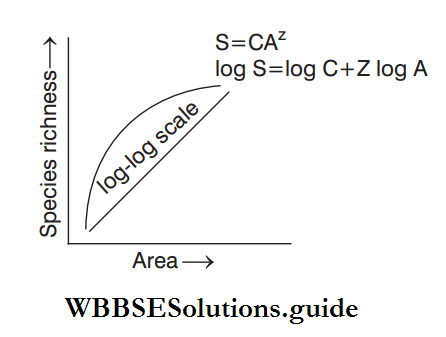
Question 42. When a graph is plotted to describe the relationship between species richness and its area for a variety of taxa the relationship appears as

  1. A Rectangular Hyperbola
  2. A Sigmoid Curve
  3. A Straight Line
  4. None of the above

Answer: 1. A Rectangular Hyperbola

The relationship between the species richness and the area for a wide variety of taxa (angiosperm, plants, birds, bats, freshwater fishes), appears as a rectangular hyperbola.

Question 43. The species-area relationship is a straight line described by the equation

  1. log S = \(\frac{log C}{log A}\)
  2. Z log = \(\frac{log C}{log S}\)
  3. log S = log C + Z log A
  4. log S = log C – Z log A

Answer: 3. log S = log C + Z log A

On a logarithmic scale, the species area relationship is a straight line described by the equation, log S = log C + Z log A where, S = Species richness
A = Area
Z = Slope of the line
C = Y-intercept

NEET Biology Patterns of Biodiversity and Their Importances logarithmic scale

Question 44. If log A= 4, Z = 0.3 and log C= 0.8, find the value of log ‘S’?

  1. 3.76
  2. 100
  3. 4.24
  4. 2

Answer: 4. 2

Given, log A = 4, Z = 0.3 and log C = 0.8 Putting these values in the equation, i.e. species-area relationship equation, we will get the value of log S. log S = log C + Z log A = 0.8 + 0.3 × 4 = 0.8 + 1.2 = 2.0

Question 45. According to Alexander von Humbolt NEET

  1. Species Richness Decreases With Increasing Area Of Exploration
  2. Species Richness Increases With Increasing Area, But Only Up To Limit
  3. There Is No Relationship Between Species Richness And Area Explored
  4. Species richness goes on increasing with increasing areas of exploration

Answer: 2. Species Richness Increases With Increasing Area, But Only Up To Limit

Alexander von Humboldt observed that within a region, species richness increases with increasing explored area, but up to a limit. That is represented by the rectangular hyperbola which represents the equation S CA Z= 2 where S is species richness, A is the area, C is a constant and Z is he regression constant.

NEET Biology Mcq

Question 46. Alexander von Humbolt described for the first time

  1. Ecological Biodiversity
  2. Laws Of Limiting Factor
  3. Species-Area Relationships
  4. Population growth equation

Answer: 3. Laws Of Limiting Factor

Alexander von Humboldt described for the first time a species-area relationship.

Question 47. The slope for frugivorous birds and mammals in tropical forests of different continents is found to be

  1. 1.15
  2. 1.5
  3. 1.05
  4. 1.005

Answer: 1. 1.15

For frugivorous birds and mammals in the tropical forests of different continents, the slope is found to have a value of 1.15, which means that the slope is steeper, which indicates that number of species found increases faster than the area explored in very large areas line the entire continents.

Question 48. Which of the following affects the biodiversity of an area?

  1. Latitudinal gradients and species-area relationship
  2. Species-area relationship and longitudinal gradients
  3. Both 1 and 2
  4. Latitudinal and longitudinal gradients

Answer: 1. Latitudinal gradients and species-area relationship

Throughout the world, biodiversity is not uniform because it is affected by two factors, latitudinal gradients and species-area relationships.

Question 49. The percentage of forest cover in India, for plains and hills as decided by the Forest Policy Act (1988) is Plains Hills

  1. 60% 40%
  2. 33% 67%
  3. 20% 33%
  4. 70% 30%

Answer: 1. 60% 40%

The percentage of forest cover in India for plains and hills is 60% and 40%, respectively as decided by Forest Policy Act in 1988.

NEET practice test on Patterns of Biodiversity and Their Importance

Question 50. Communities with more species tend to be more stable than those with less species. This was confirmed by

  1. Alexander von Humboldt
  2. David Tilman
  3. Odum
  4. None of the above

Answer: 2. David Tilman

Ecologists believe that the communities with more species tend to be more stable than those with less species. This was confirmed by David Tilman.

Question 51. Read the statements regarding a stable community and choose the correct option.

  1. Must be resistant to occasional disturbances.
  2. Should show much variation in productivity from year to year.
  3. Must be resistant to invasions by alien species.

Choose the correct option:

  1. 1 and 2 are correct
  2. 1, 2 and 3 are correct
  3. Only 1 is correct
  4. 2 and 3 are correct
  5. 1 and 3 are correct

Answer: 5. I and 3 are correct

Statements I and 3 are correct whereas statement 2 is incorrect. The incorrect statement can be corrected as the Stable community has maximum diversity and niche specialisation. It should not show too much variation in productivity from year to year.

Question 52. The environment as a self-sustaining system is mainly preserved by

  1. Man
  2. Animals
  3. Trees
  4. Wildlife

Answer: 4. Wildlife

The environment is preserved as a self-sustaining system by wildlife. It includes various living organisms which are interdependent on each other and able to meet the basic requirement for survival.

Question 53. Assertion Community with more species tends to be more stable than those with less species. Reason (R) More will be the species less will be year to year variation in total biomass.

  1. Both A and R are true and R is the correct explanation of A
  2. Both A and R are true, but R is not the correct explanation of A
  3. A is true, but R is false
  4. Both A and R are false

Answer: 1. Both A and R are true and R is the correct explanation of A

Both A and R are true and R is the correct explanation of A. Communities with more species tend to be more stable than those with less species. It is able to resist occasional disturbances. A stable community should not show too much variation in productivity from year to year, it must be resistant to invasions by alien species. David Tilman’s long-term experiments showed the plots with more species, had less will be year-to-year variation in total biomass.

Question 54. Consider the following statements.

  1. Diversity in species provides stability to the ecosystem.
  2. An ecosystem with higher biodiversity is more productive than an ecosystem with lower biodiversity.
  3. Biodiversity does not play any role in the maintenance and health of ecosystems.

Choose the option containing the correct statements.

  1. 1 and 2
  2. 1, 2 and 3
  3. 2 and 3
  4. Only 1

Answer: 1. I and 2

All given statements are correct except 3 because It is species diversity, which is important for maintaining higher levels of productivity and ecosystem health. All the aspects of nature falls under biodiversity, hence biodiversity plays an important role in the maintenance and health of the ecosystem.

Question 55. The reason of diversity in living beings is due to

  1. Mutation
  2. Long-Term Evolutionary Change
  3. Gradual Change
  4. Short-term evolutionary change

Answer: 2. Long-Term Evolutionary Change

Diversity in living beings is due to long-term evolutionary changes. Adaptability to continuous changes in environmental conditions is important for natural selection of variants and variations generation after generation leading to the emergence of diverse descendants.

Thus, option 1 is correct.

Question 56. Rivet Popper hypothesis explains the importance of

  1. Species In An Ecosystem
  2. Birds In An Ecosystem
  3. Fishes In A Pond Ecosystem
  4. None of the above

Answer: 1. Species In An Ecosystem

Rivet Popper hypothesis explains the importance of biodiversity for the survival of species. It was proposed by Paul Ehrlich. This hypothesis assumes the ecosystem to be an aeroplane and the species to be the rivets joining all parts together.

Question 57. Rivet popper hypothesis assumes the …A… to be an aeroplane and the …B… to be the rivets joining all parts together. Here, A and B refer to

  1. A–species, B–ecosystem
  2. A–ecosystem, B–species
  3. A–species, B–community
  4. A–community, B–species

Answer: 2. A–ecosystem, B–species

Rivet Popper hypothesis explains the importance of biodiversity for the survival of species. It was proposed by Paul Ehrlich. This hypothesis assumes the ecosystem to be an aeroplane and the species to be the rivets joining all parts together.

NEET Biology Biodiversity And Its Conservation Different Levels Multiple Choice Question And Answers

NEET Biology Mcqs Biodiversity and its Different Levels

Question 1. The term ‘biodiversity’ was given by

  1. WG Rosen
  2. John Roy
  3. William Hornaday
  4. Myers

Answer: 1. WG Rosen

The term biodiversity was coined by WG Rosen in the year 1985 when the plans for National Forum on Biological Diversity to be held in the year 1986 was underway.

Question 2. Biodiversity refers to the totality of 

  1. Genes
  2. Species
  3. Ecosystems
  4. All of these

Answer: 4. All of these

Read And Learn More: NEET Biology Multiple Choice Question And Answers

Biodiversity is the totality of different types of ecosystems, different species of organisms with the whole range of their variants (biotypes) and genes adapted to different climates, and environments along with their interaction and process.

Thus, option 4 is correct.

Question 3. The biodiversity of a geographical region represents 

  1. Endangered Species Found In The Region
  2. The Diversity In The Organisms Living In The Region
  3. Genetic Diversity Present In The Dominant Species Of The Region
  4. Species endemic to the region

Answer: 2. The Diversity In The Organisms Living In The Region

“viable material of endangered species can be preserved by “

Biodiversity includes the endangered species, genetic diversity,
endemic species of that region, so diversity in the organisms living in the region mostly represented by the biodiversity of the geographical region.

Question 4. An ecologist uses the term biodiversity for the variety of species of 

  1. All living plants
  2. All living animals
  3. Both 1 and 2
  4. 1, 2 and microbes also living in their natural habitats

Answer: 4. 1, 2 and microbes also living in their natural habitats

An ecologist use the term biodiversity or biological diversity to the variety of life forms and habitats found in defined area. In other words biodiversity can be defined as the variety of species of all living plants and animals and microbes also living in their natural habitats and the ecological complexes of which they are a part.

NEET Biology Biodiversity and Conservation MCQs with Answers

Question 5. The levels of diversity that can be observed in the biosphere are

  1. Genetic Diversity, Species Diversity And Ecological Diversity
  2. Species Diversity, Ecological Diversity And Habitat Diversity
  3. Geographical Diversity, Geological Diversity And Biological Diversity
  4. Ecological diversity, species diversity and community diversity

Answer: 1. Genetic Diversity, Species Diversity And Ecological Diversity

Immense diversity (heterogeneity) exists in our biosphere, not only at the species level but at all the levels of biological organisation ranging from the macromolecules within cells to biomes. Sociobiologist Edward Wilson described the combined diversity at all levels of biological organisation. These are genetic diversity, species diversity and ecological diversity.

Biodiversity Levels

NEET Biology Biodiversity And Its Conservation Different Levels Multiple Choice Question And Answers

Important MCQs on Biodiversity and Conservation for NEET

Question 6. Genetic diversity is the measure of

  1. Varieties Of The Species And Their Relative Abundance Present Within A Region
  2. Variety In The Genetic Information Contained In The Organisms
  3. Diversity Of The Genes At Community And Ecosystem Levels
  4. All of the above

Answer: 2. Variety In The Genetic Information Contained In The Organisms

Genetic diversity is the diversity in number and types of genes as well as the chromosomes present in different species, their variation in the genes and their alleles in the same species. It is mainly the variation in genetic information present in the organisms. These help in speciation or evolution of the new species.

Thus, option 2 is correct.

“biodiversity questions “


Question 7. Genetic diversity is essential for

  1. Maintenance Of Species
  2. Prevent Extinction Of Species
  3. Improvement Of Genetic Code
  4. Maintenance and improvement of species

Answer: 4. Maintenance and improvement of species

The wide variety of genes in a species is known as its genetic diversity. Genetic diversity helps the organisms to adapt themselves to the changing environmental conditions due to the variations in the alleles of the individuals of the species. The individuals with the alleles more fit to survive in an environment will grow and reproduce thus maintaining themselves and will also lead to continuous survival of species generation after generation.

Thus, option 4 is correct.

Question 8. The medicinal plant, Rauwolfia vomitoria, is an example of ……………………. It grows in the Himalayan ranges and shows variation in terms of the potency and concentration of the chemical (reserpine) that it produces.

  1. Species Diversity
  2. Ecological Diversity
  3. Genetic Diversity
  4. None of the above

Answer: 3. Genetic Diversity

The medicinal plant, Rauwolfia vomitoria shows variation due to the genetic diversity. Variation in the genes of a species increases with the increase in size and environmental parameters of the habitat. It results in the formation of polymorphs ecotypes, races, varieties and subspecies.

Question 9. Which of the following shows the maximum genetic diversity in India?

  1. Maize
  2. Mango
  3. Groundnut
  4. Rice

Answer: 4. Rice

The diversity of rice in India is the highest in the world. More than 50,000 genetically different strains of rice has been estimated in India, alone. Basmati rice has 27

Different Levels of Biodiversity MCQs for NEET

Question 10. In India, we find mangoes with different flavours, colours, fibre content, sugar content and even shelf-life. The large variation is on account of

  1. Species Diversity
  2. Induced Mutations
  3. Genetic Diversity
  4. Hybridisation

Answer: 3. Genetic Diversity

Genetic diversity represents the total number of genetic characteristics in the genetic makeup of a species whereas, the genetic variability describes the tendency of genetic characteristics to vary. This diversity lets the population adapt to changing environments. For example, in India, we find mangoes with different flavours, colours, fibre content, sugar content and shelf-life. The great variation is due to the genetic diverisity.

Biodiversity Levels

Question 11. About 1000 different varieties of ………… has been estimated in India.
  1. Teak
  2. Mango
  3. Wheat
  4. None of the above

Answer: 2. Mango

Mangos has the maximum genetic diversity in India. It has approximately more than 1000 different varieties.
Question 12. The greatest threat to genetic diversity in agricultural crops is Manipal

  1. Extensive Use Of Insecticides And Pesticides
  2. Extensive Mixed Cropping
  3. Introduction Of High Yielding Varieties
  4. Extensive use of fertilisers

Answer: 2. Introduction Of High Yielding Varieties

Introduction of high yielding varieties is the greatest threat to genetic diversity in agricultural crops. High yielding varieties contain the required traits and therefore are always bred purely. This reduces the genetic diversity within a particular species.

“biodiversity questions and answers pdf “

Question 13. Genetic diversity will be more common in organisms with

  1. Parthenogenesis
  2. Sexual Reproduction
  3. Asexual Reproduction
  4. Parthenocarpy

Answer: 2. Sexual Reproduction

Sexual reproduction provides genetic diversity because progeny produced by the combination of sperm and egg contain different combinations of genes than the parent organisms.

Topic-wise Biodiversity and Conservation MCQs with Explanation

Question 14. Choose the right one which denotes genetic diversity.

  1. Chromosomes → Nucleotides → Genes → Individuals → Populations
  2. Populations → Individuals → Chromosomes → Nucleotides → Genes
  3. Genes → Nucleotides → Chromosomes → Individuals → Populations
  4. Nucleotides → Genes → Chromosomes → Individuals → Populations

Answer: 4. Nucleotides → Genes → Chromosomes → Individuals → Populations

The genetic hierarchy includes a sequential arrangement of genetic material from simple to complex. Nucleotide is the smallest unit, any genetic variation in nucleotide leads to the change in the population genetics. The correct sequence of genetic diversity is Nucleotides → Genes → Chromosomes → Individuals → Populations

Question 15. The measure of the variety of species and their relative abundance present within a region is referred to as

  1. Biodiversity
  2. Genetic Diversity
  3. Species Diversity
  4. Geographical diversity

Answer: 3. Species Diversity

The diversity at the species level is measured as species diversity. It is the variety in the number and richness of the species of a region.

Biodiversity Levels

Question 16. Which of the following refers to species diversity?

  1. Diversity in the amphibians between Western and Eastern ghats
  2. Genetic variation in the concentration and potency of chemical reserpine
  3. 1000 varieties of mangoes
  4. Presence of deserts, rainforests, coral reefs

Answer: 1. Diversity in the amphibians between Western and Eastern ghats

The number of species that live in a certain location is called species diversity. The Western ghats have a greater number of amphibians as compared to Eastern ghats, as the climatic conditions and other ecological factor favour species richness in Western ghats.

Question 17. Which one is odd for species diversity?

  1. α-diversity
  2. γ-diversity
  3. β-diversity
  4. δ-diversity

Answer:  4. δ-diversity

δ-diversity is odd for species diversity. Ecosystem diversity is of three types, i.e. α β, and γ. Alpha (α) diversity is within the community, beta (β) diversity is between the community and gamma (γ) diversity is the diversity present in ranges of communities as represented by the diversity of habitats /ecosystems over a total landscape or geographical area.

NEET Biology Biodiversity Hotspots and Conservation Strategies MCQs

Question 18. The table below gives the population (in thousands) of ten species (A-J) in four areas (I-IV), consisting of the number of habitats given within the brackets against each. Study the table and answer the question which follows.

Biodiversity and its Different Levels Species and their population

Which area out of I to IV shows the maximum species diversity?

  1. 2
  2. 3
  3. 4
  4. 1

Answer: 3. 4

In the given table, area ‘4’ has the maximum species diversity, as there are 10 species (A-J) residing in 12 habitats, while in area 3, the 10 species reside in 13 habitats, so they exhibit less diversity than area 4.

Question 19. Which of the following regions of the globe exhibits higher species diversity?

  1. Madagascar
  2. Himalayas
  3. Amazon forests
  4. Western Ghats of India

Answer: 3. Amazon forests

The Amazonian rainforest in South America has the greatest biodiversity on earth. Rainforests have high biodiversity because they are abundant in nutrients, energy and have a favourable climate for the biodiversity to prosper

“biodiversity quiz “

Question 20. The number of species per unit area is called

  1. Species Richness
  2. Species Evenness
  3. Species Equitability
  4. Genetic richness

Answer: 1. Species Richness

Species diversity is the variety in number and richness of the species of a region. The number of species per unit area is called species richness. It is simply a count of species and it does not take into account the abundance of the species.

3 Levels Of Biodiversity

Question 21. Biodiversity is determined by

  1. Evolution
  2. Species Richness
  3. Species evenness
  4. Both 2 and 3

Answer: 4. Both 2 and 3

Biodiversity is defined and measured as an attribute that has two components, i.e. richness and evenness. Richness is a number of groups of genetically or functionally related individuals. Evenness is the proportions of species or functional groups present on a site. The more equal species are in proportion to each other the greater the evenness of the site. A site with low evenness indicates that a few species dominate the site.

Thus, option 4 is correct.

Question 22. Ecological diversity includes

  1. Species Diversity
  2. Genetic Diversity
  3. Ecosystem diversity
  4. All of the above

Answer: 3. Ecosystem diversity

Ecological diversity is made up of a community of plants and animals, which consist of different species in an ecosystem. It is known as ecosystem diversity.

NEET Exam Biodiversity and Its Conservation Most Repeated MCQs

Question 23. The term ‘alpha diversity’ refers to

  1. Species Diversity Web Jee
  2. Genetic Diversity
  3. Community And Ecosystem Diversity
  4. Diversity among the plants

Answer: 3. Community And Ecosystem Diversity

The term ‘alpha diversity refers to the diversity within a particular area or ecosystem, usually expressed by the number of species (i.e. species richness) in that ecosystem.

Question 24. The diversity of the habitats over the total geographical area is called

  1. Alpha Diversity
  2. Beta Diversity
  3. Gamma Diversity
  4. Delta diversity

Answer: 3. Gamma Diversity

Gamma diversity is the diversity of habitat over a total landscape (regional species pool or geographical area).

3 Levels Of Biodiversity

Question 25. Differences in the composition of species between a coral reef and the adjoining intertidal zone are termed as

  1. α-diversity
  2. β-diversity
  3. γ-diversity
  4. δ-diversity

Answer: 2. β-diversity

Differences in the composition of species between a coral reef and the adjoining intertidal zone are termed as beta (β)-diversity. It represents the differences in species composition among sites.

Question 26. The rate of replacement of species within given geographical areas is called

  1. α-diversity
  2. β-diversity
  3. γ-diversity
  4. δ-diversity

Answer: 2. β-diversity

Beta diversity refers to the rate of replacement of species along a gradient of habitat or communities within a given geographical region.

Question 27. Consider the following statements.

  1. The diversity observed in the entire geographical area is called gamma diversity.
  2. Biodiversity decreases from high altitude to low altitude.

Choose the correct option.

  1. Statement 1 is correct, but 2 is incorrect
  2. Statement 1 is incorrect, but 2 is correct
  3. Both statements 1 and 2 are correct
  4. Both statements 1 and 2 are incorrect

Answer: 1. Statement 1 is correct, but 2 is incorrect

Statement I is correct, but II is incorrect. Incorrect statements can be corrected as Biodiversity varies with a change in altitude. The diversity increases as move from high to low altitudes (i.e. from poles to equator). Tropics harbour more species than temperate or polar areas.

Question 28. The State of Gujarat has river, desert, forest and lake ecosystem, thus exhibiting a diversity of life. Which measure do you use to denote the total diversity in such a case?

  1. α (alpha)
  2. β (beta)
  3. γ (gamma)
  4. δ (delta)

Answer: 3. γ (gamma)

Gamma (γ) diversity represents the total richness of the species in all the habitats found within a region, geographical area or landscape. The State of Gujarat represents γ-diversity because it has diverse forms of life in a total landscape.

Question 29. Match the following columns.

Biodiversity and its Different Levels Match the columns

Codes:

  1. 1 3 2 4
  2. 2 1 4 3
  3. 4 2 3 1
  4. 3 4 2 1

Answer: 4. 3 4 2 1

Causes and Threats to Biodiversity MCQs for NEET with Answers

Question 30. Which one of the following expanded form of the following acronyms is correct?

  1. UNEP – United Nations Environmental Policy
  2. IUCN – International Union for Conservation of Nature
  3. EPA – Environmental Pollution Agency
  4. IPCC – International Panel for Climate Change

Answer: 2. IUCN – International Union for Conservation of Nature

Option 2 is a correct expanded form of the acronym. The headquarter of IUCN or the International Union for Conservation of Nature is at Morges, Switzerland. It studies the threat to biodiversity in all the parts of the world by gathering information about the geographical distribution, population size and population changes of various taxa. It prepares a red list or Red Data Book. Rest options are incorrect expanded form of acronyms and can be corrected expanded form as UNEP – United Nations Environment Programme EPA – Environmental Protection Agency IPCC – Intergovernmental Panel on Climate Change

Question 31. According to the IUCN, the total number of plant and animal species described so far is over

  1. 2.5 million
  2. 2 million
  3. 1.5 million
  4. 1 million

Answer: 3. 1.5 million

According to the IUCN (2004), the total number of plant and animal species described, so far is slightly more than 1.5 million, but there is no clear idea of how many species are yet to be discovered and described.

Question 32. The species diversity of plants on earth is

  1. 2.4%
  2. 22%
  3. 8.1%
  4. 85%
  5. 70%

Answer: 2. 22%

When we discuss earth’s biodiversity, more than 70% of all the species recorded are animals, while plants (including algae, fungi, bryophytes, gymnosperms and angiosperms) comprise not more than 22% of the total.

Question 33. An estimate of the number of species said to be present on earth is DUMET

  1. 0.5-1.55 million
  2. 11.1-15.2 million
  3. 6.7-9.7 million
  4. 2.5-3.0 million

Answer: 3. 6.7-9.7 million

There are about 8.7 million (±1.3 million) organisms on earth, the most precise calculation ever offered with 6.5 million species on land and 2.2 million in oceans. So, an estimate of the number of species said to be present on Earth is 6.7-9.7 million.

Question 34. Insects comprise ………………… of the total number of animals.

  1. Less Than 70%
  2. Equal To 70%
  3. More than 70%
  4. None of the above

Answer: 3. More than 70%

Among animals, insects are the most species-rich taxonomic group,
making up more than 70% of the total. That means, out of every 10 animals on this planet, at least 7 are insects.

NEET Biology Mcqs

Question 35. Given below are pie diagrams I, II and III related to the proportionate number of species of major taxa of invertebrates, vertebrates and plants, respectively. Critically study and fill in the blanks A, B, C and D.

Biodiversity and its Different Levels major taxa of invertebrates

  1. A–Molluscs, B–Amphibians, C–Angiosperms, D–Gymnosperms
  2. A–Molluscs, B–Amphibians, C–Fungi, D–Angiosperms
  3. A–Turtles, B–Amphibians, C–Fungi, D–Angiosperms
  4. A–Hexapoda, B–Amphibians, C–Fungi, D–Angiosperms

Answer:

Biodiversity and its Different Levels major taxa of invertebrates.

In-situ and Ex-situ Conservation MCQs for NEET

Question 36. Which of the following is the largest taxon among plants in terms of the number of species?

  1. Algae
  2. Mosses
  3. Ferns
  4. Fungi

Answer: 4. Fungi

According to the estimate made by Robert May, the largest taxon
among plants in terms of the number of species are fungi, followed by algae, mosses and ferns.

“which one is an endangered species in the following “

Question 37. India ranks …………… in the world in respect of the richness of flowering plants (17,500 sp.) and mammals (350 sp.).

  1. 2nd
  2. 1st
  3. 10th
  4. 3rd

Answer: 3. 10th

India ranks tenth (10th) in the world both in respect of richness of flowering plants (17,500 sp.) and mammals (350 sp.) and fourth in Asia in plant diversity. India is also a centre of crop diversity, a homeland of as many as 167 species of crops and 320 species of wild crop relatives.

Question 38. India is one of the twelve mega diversity countries with ……………… of genetic resources of the world.

  1. 12.1%
  2. 18.1%
  3. 38.1%
  4. 8.1%

Answer: 4. 8.1%

India has only 2.4% of the world’s land area, its share of the global species diversity is about 8.1%. It makes India one of the 12 mega-diversity countries of the world. Nearly 45,000 sp. of plants and twice as many of animals have been recorded from India.

Question 39. Given below is the representation of the extent of global diversity of vertebrates. What groups do the portions represent?

Biodiversity and its Different Levels extent of global diversity of vertebrates

Answer: 4. Fishes, Mammals, Birds, Reptiles, Amphibians

  • A–Fishes have the highest diversity among the vertebrates. B–Mammals, constitute the second highest group.
  • C–Birds comprises rank third.
  • D–Reptiles comprises rank fourth.
  • E–Amphibians comprise the last position in the extent of global diversity.

Question 40. Wildlife is 

  1. All biota excluding man, domestic animals and cultivated crops
  2. All vertebrates of reserve forests
  3. All animals of reserve forests
  4. All animals and plants in the reserve forest

Answer: 1. All biota excluding man, domestic animals and cultivated crops

Wildlife comprises all the living organisms (plants, animals and microorganisms) in their natural habitats which are neither cultivated no domesticated.

NEET Biology Mcqs

Question 41. What is the correct ascending order in respect of complexity of the following?

  1. Ecosphere
  2. Species
  3. Population
  4. Community
  5. Ecosystem

Choose the correct Option:

  1. 1,2,3,4,5
  2. 3,2,4,5,1
  3. 1,3,2,4,5
  4. 2,3,4,5,1

Answer: 4. 2,3,4,5,1

As we move from lower to higher organisation the complexity increases. So, species is followed by population by community and group of communities make an ecosystem and group of ecosystems make ecosphere.

Thus, option 4 is correct.

Question 42. Which of the following represents the maximum number of species among global biodiversity?

  1. Lichens
  2. Fungi
  3. Mosses and ferns
  4. Algae

Answer: 2. Fungi

The number of species of fungi is 72,000 which is the maximum in respect to other options. The number of fungus species in the world is more than the combined total of species of fishes, amphibians, reptiles and mammals.

NEET Biology Nutrient Cycling and Ecosystem Services Multiple Choice Question And Answers

Biology MCQs with answers for NEET Nutrient Cycling and Ecosystem Services

Question 1. The total amount of nutrients like carbon, phosphorus, calcium, etc., present in soil at any time is referred to as

  1. Standing Crop
  2. Standing State
  3. Nutrient Crops
  4. None of the above

Answer: 2. Standing State

The total amount of nutrients like carbon, phosphorus, calcium, etc., present in soil at any given time is called standing state. Standing state varies with the kind of ecosystem and season.

Question 2. The movement of nutrient elements through various components (abiotic and biotic) of an ecosystem is called

  1. Carbon Cycle
  2. Geochemical Cycle
  3. Biogeochemical Cycle
  4. Water cycle

Answer: 3. Biogeochemical Cycle

The term nutrient cycle or biogeochemical cycle is used for the exchange/circulation of biogenetic nutrients between the living and non-living components of the biosphere. Biogenetic nutrients or biogeochemical nutrients are essential elements required by the organisms for their body building and metabolism. These are provided by earth and return to earth again after their death and decay.

Read And Learn More: NEET Biology Multiple Choice Question And Answers

Question 3. Biogeochemical cycles are of

  1. Two Types
  2. Three Types
  3. Four Types
  4. Five types

Answer: 1. Two Types

“questions for ecology “

The biogeochemical cycles are classified into two types, namely gaseous cycles and sedimentary cycles

Biology MCQs with answers for NEET

NEET Biology Nutrient Cycling and Ecosystem Services Multiple Choice Question And Answers

NEET Biology Nutrient Cycling MCQs with answers

Question 4. The biogeochemical cycle may be

  1. Gaseous
  2. Sedimentary
  3. Gaseous and sedimentary
  4. None of the above

Answer: 3. Gaseous and sedimentary

There are two types of biogeochemical cycles, i.e. gaseous type and sedimentary type. In gaseous type, the atmosphere constitutes the major reservoir of the element that exists there in gaseous phase, e.g. carbon and nitrogen cycles. In sedimentary type, major reservoir is the lithosphere, from which the elements are released by weathering, e.g. phosphorus, sulphur cycles.

Question 5. The reservoir pool for gaseous cycles of matter is

  1. Atmosphere
  2. Hydrosphere
  3. Both 1 And 2
  4. Lithosphere

Answer: 3. Both 1 And 2

In gaseous cycles, the materials involved in circulation between biotic and abiotic components of biosphere are gases or vapours and the reservoir pool is atmosphere or hydrosphere, e.g. C, H, O2, N2 and HO2 .

Question 6. Which of the following play a direct role in maintaining the nutrient and energy flow in biogeochemical cycle?

  1. Decomposers
  2. Producers
  3. Consumers
  4. Herbivores

Answer: 1. Decomposers

Decomposers are heterotrophs capable of reducing the complex organic matters of dead organic remains into simple inorganic forms. Thus, they play a direct role in maintaining the nutrient and energy flow in biogeochemical cycles

Important MCQs on Nutrient Cycling for NEET

Question 7. A cycle in which the elements return to and are withdrawn from the atmosphere. This type of cycle is called

  1. Gaseous
  2. Sedimentary
  3. Both 1 and 2
  4. None of the above

Answer: 1. Gaseous

In a gaseous cycle, the element return to and is withdrawn from the atmosphere as a gas. The four most abundant elements in the living systems (H, C, O, N) have predominantly gaseous cycles.

Biology MCQs with answers for NEET

Question 8. Biogeochemical cycle of which element has atmospheric phase?

  1. Carbon
  2. Sodium
  3. Phosphorus
  4. Magnesium

Answer: 1. Carbon

“ecosystems questions and answers “

Carbon has gaseous cycle. Other materials showing gaseous cycles are nitrogen, oxygen and water. All these gaseous cycles has atmospheric phase. The biogenetic materials involved in circulation between the biotic and abiotic components of biosphere are non-gaseous and have lithosphere as the main reservoir pool, e.g. phosphorus, calcium, magnesium.

Question 9. Edaphic nutrient cycle includes

  1. Gaseous Types
  2. Partial Sedimentary Types
  3. Total sedimentary types
  4. All of the above

Answer: 4. All of the above

Edaphic nutrient cycles include gaseous types, partial sedimentary types and total sedimentary types cycles. Thus, option is correct.

Question 10. Biogeochemical cycles can be traced in

  1. Ecosystems
  2. Biomes
  3. Water
  4. Both 1 and 2

Answer: 1. Ecosystems

Biogeochemical cycles can be traced in ecosystems.

NEET previous year questions on Nutrient Cycling and Ecosystem Services

Question 11. The reservoir for the sedimentary cycle exists in

  1. Earth Crust
  2. Organic Sediments
  3. Calcareous Sediments
  4. Limestone

Answer: 1. Earth Crust

In sedimentary cycle, the main reservoirs are soil and rocks (earth crust), e.g. sulphur cycle, phosphorus cycle, etc.

Biology MCQs with answers for NEET

Question 12. Match Column I with Column II and select the correct option from codes given below.

Nutrient Cycling and Ecosystem Services Match the columns

Answer: 1. A–3, B–4, C–2, D–1

Question 13. What is the reason behind deficit arising in nutrient reservoir?

  1. Due to imbalance in the rate of influx
  2. Due to imbalance in the rate of efflux
  3. Due to imbalance in the rate of influx and efflux
  4. None of the above

Answer: 3. Due to imbalance in the rate of influx and efflux

The nutrient reservoir meets the deficit arising due to imbalance in the rate of influx and efflux of nutreint.

Biology MCQ For NEET With Answers

Question 14. The reservoir for the gaseous type of biogeochemical cycle exists in

  1. Stratosphere
  2. Atmosphere
  3. Troposphere
  4. Both 1 and 2

Answer: 2. Atmosphere

In gaseous cycles, the main reservoirs of chemical are the atmosphere and ocean, e.g. carbon cycle, nitrogen cycle, oxygen cycle, etc.

Question 15. In which of the following both pairs have correct combination?

  1. Gaseous nutrient cycle–Nitrogen and sulphur Sedimentary nutrient cycle–Carbon and phosphorus
  2. Gaseous nutrient cycle–Sulphur and phosphorus Sedimentary nutrient cycle–Carbon and nitrogen
  3. Gaseous nutrient cycle–Carbon and nitrogen Sedimentary nutrient cycle–Sulphur and phosphorus
  4. Gaseous nutrient cycle–Carbon and sulphur Sedimentary nutrient cycle–Nitrogen and phosphorus

Answer: 3. Gaseous nutrient cycle–Carbon and nitrogen Sedimentary nutrient cycle–Sulphur and phosphorus

Option represents both pairs as correct combination. In gaseous nutrient cycles, the materials involved in circulation are gases or vapours and the reservoir pool is atmosphere or hydrosphere, e.g. carbon, hydrogen, oxygen, nitrogen and water. In sedimentary nutrient cycles, materials involved in circulation are non-gaseous and the reservoir pool is lithosphere, e.g. phosphorus, calcium, magnesium. Sulphur has both sedimentary and gaseous nutrient cycles.

“questions about ecosystem with answers “

Question 16. Which of the following is important in water cycle?

  1. Transpiration through leaves
  2. Evaporation from ocean
  3. Percolation of water into the ground
  4. Absorption of capillary water by plants

Answer: 2. Evaporation from ocean

The water cycle describes how water evaporates from the surface of the earth, rises into the atmosphere, cools and condenses into rain or snow in clouds and falls again to the surface as precipitation. Evaporation occurs when warmth from the sun causes water from oceans, lakes, streams, ice and soils to rise into the air and turn ve water vapour (gas).

Biology MCQ For NEET With Answers

Question 17. Forest regions receiving water. In this, which cycle is observed?

  1. Hydrological cycle
  2. Carbon cycle
  3. Nitrogen cycle
  4. Calcium cycle

Answer: 1. Hydrological cycle

The hydrological cycle of the earth is the sum total of all processes in which water moves from the land and ocean surface to the atmosphere and back in form of precipitation. Thus, forest regions receiving water from hydrological cycle.

NEET quiz on Nutrient Cycling with solutions

Question 18. Assertion Sulphur contributes maximum to sedimentary cycle. Reason (R) Most of the sedimentary rocks have fossils.

  1. Both A and R are true and R is the correct explanation of A
  2. Both A and R are true, but R is not the correct explanation of A
  3. A is true, but R is false
  4. Both A and R are false

Answer: 2. Both A and R are true, but R is not the correct explanation of A

Both A and R are true, but R is not the correct explanation of A. Sulphur contributes maximally to sedimentary cycle as sulphur is present in majority of rocks, minerals, ocean sediments, etc. Sulphur is also present in fossils that are found in sedimentary cycles.

Question 19. Source of maximum sulphur is

  1. Ocean
  2. Land
  3. Rocks
  4. Lakes

Answer: 3. Rocks

The majority of the earth’s sulphur is stored underground in rocks and minerals, including as sulphate salts buried deep within ocean sediments that are being found in sedimentary
cycles.

Question 20. The only natural source of sulphur dioxide is …………… which contributes 2 × 10⁹ kg to 5 × 10⁹ kg sulphur per year is

  1. Acid Rains
  2. Sea
  3. Volcano
  4. Industrial wastes

Answer: 3. Volcano

Sulphur dioxide is produced naturally as a result of forest fires and from volcanoes.

Biology MCQ For NEET With Answers

Question 21. Given below is a simplified model of phosphorus cycling in a terrestrial ecosystem with four blanks (A -D). Identify the blanks.

Nutrient Cycling and Ecosystem Services phosphorus cycling in a terrestrial ecosystem with four

Nutrient Cycling and Ecosystem Services phosphorus cycling in a terrestrial ecosystem with four.

Answer: Option is 3 correct. It can be represented as

Nutrient Cycling and Ecosystem Services phosphorus cycling in a terrestrial ecosystem with four..

Read And Learn More: NEET Biology Multiple Choice Question And Answers

Question 22. Phosphorus cycle is a/an

  1. Gaseous Cycle
  2. Perfect Cycle
  3. Imperfect Cycle
  4. Partly gaseous and partly sedimentary

Answer: 3. Imperfect Cycle

Phosphorus cycle is an imperfect cycle as the biological processes account for considerable losses of the phosphorus from the cycle.

NEET expected MCQs on Nutrient Cycling 2025

Question 23. Phosphorus of ocean becomes available to land plants due to

  1. Sea Birds
  2. Deep Sea Activities
  3. Ocean spray
  4. All of the above

Answer: 1. Sea Birds

Phosphorus moves from the ocean to the land by birds feeding on fish or ocean plants and excreting ‘guano’ onto land. Without the role of birds, phosphate would remain in oceans.

Question 24. The phosphorus rich fertiliser obtained from sea birds along the coast of Chile and Peru, is

  1. Guano
  2. Bone Meal
  3. Dung
  4. Urea

Answer: 1. Guano

The excess of phosphate in the bodies of animals is excreted out through faeces. Sea bird guano (excreta) along the coast of Chile and Peru contains a large amount of phosphate.

Question 25. Natural reservoir of phosphorus is 

  1. Animal Bones
  2. Rock
  3. Fossils
  4. Sea water

Answer: 2. Rock

The natural reservoir of phosphate is rock which contains phosphorus in the form of phosphates. When rocks weather away, minute amounts of this phosphate dissolves in soil solution and is absorbed by the roots of the plants. Herbivores and other animals obtain this element from plants.

Question 26. The phosphorus cycle differs from those of carbon and nitrogen as well as those of sulphur, oxygen and hydrogen as it lacks

  1. Water
  2. Dust Particles
  3. Gaseous phase
  4. All of the above

Answer: 3. Gaseous phase

Phosphorus cycle has no atmosphere phase as it lack geseous phase. The ultimate source of phosphate in the ecosystem is crystalline rocks.

Biology MCQ For NEET With Answers

Question 27. Which one of the following element is the critical limiting factor in the function of ecosphere because of its irretrievable loss into the ocean?

  1. Phosphorus
  2. Calcium
  3. Magnesium
  4. Iron

Answer: 1. Phosphorus

A large amount of phosphorus is lost in the sea by sedimentation. This is an irretrievable loss and due to this, phosphorus acts as critical limiting factor in ecosphere functioning.

Question 28. Phosphorus is needed for the production of

  1. Bones And Teeth
  2. Cellular Membranes
  3. DNA and RNA
  4. All of the above

Answer: 4. All of the above

Phosphorus is needed for the production of DNA and RNA, cellular membranes, bones and teeth.

Thus, option is current

Question 29. Phosphorus is the major constituent of

  1. Biological membranes.
  2. Nucleic acids.
  3. Cellular energy transfer system.

Choose the correct option.

  1. 1 and 2
  2. 1 and 3
  3. 2 and 3
  4. 1, 2 and 3

Answer: 4. 1, 2 and 3

Phosphorus is the major constituent of biological membrane, nucleic acids and cellular energy transfer systems.

Thus, option 4 is correct.

“ecosystem question answer “

Question 30. Phosphorus cycling occurs in the form of

  1. HPO3-
  2. P2 (gas)
  3. PO43
  4. AI2(PO4)3

Answer: 3. PO43

Phosphorus cycling occurs in the form of Organic phosphorus circulates in nature from plants to animals. Phosphate is released by decomposers (phosphatising bacteria) back to soil.

Biology MCQ For NEET With Answers

Question 31. Water soluble inorganic nutrients go down into the soil horizon and get precipitated as salts, this process is called

  1. Mineralisation
  2. Humification
  3. Leaching
  4. Fragmentation

Answer: 3. Leaching

Leaching is the process of extracting substances from a solid by dissolving them in a liquid, naturally.

Question 32. Which of the following statements is incorrect regarding the phosphorus cycle?

  1. Phosphates are the major form of phosphorus reservoir
  2. Phosphorus solubilising bacteria facilitate the release of phosphorus from organic remains
  3. There is an appreciable respiratory release of phosphorus into the atmosphere
  4. It is a sedimentary cycle

Answer: 3. There is the appreciable respiratory release of phosphorus into the atmosphere

  • The statement in the option is incorrect and can be corrected as
  • There is no respiratory release of phosphorus into the atmosphere because phosphorus is an inorganic nutrient that does not take part in respiration.
  • The phosphorus cycle is a type of sedimentary cycle, i.e. its main reservoirs are soil and rocks. It is mainly found as phosphates in rocks.
  • During this cycle, phosphorus solubilising bacteria like Pseudomonas, Acetobacter, etc., help to release phosphorus from organic remains. A large amount of phosphate is lost in sea by sedimentation.
  • The rest other statements are correct regarding the phosphorus cycle.

Question 33. What is true about the phosphorus cycle?

  1. Rocks are the natural reservoirs of phosphorus.
  2. Weathering of sedimentary rocks makes phosphate available to the soil.
  3. Nitrosomonas plays a key role in fixing phosphorus to the soil.
  4. Herbivores and carnivores obtain phosphorus from plant directly or indirectly.

Choose the correct option.

  1. 1 and 4
  2. 2, 3 and 4
  3. 2 and 3
  4. 1, 2 and 4

Answer: 4. 1, 2 and 4

All given statements are true except 3. The incorrect statement can be corrected as: Nitrosomonas helps in fixing atmospheric nitrogen to soil.

The major reservoir for phosphorus is phosphate rocks and fossil bone deposits, laid down in the past geological ages. There is no atmospheric phase in the phosphorus cycle. Phosphorus becomes available in the soil for plants use by natural erosion of rocks and by human efforts.

Thus, option 4 is correct.

NEET Biology Mcq

Question 34. In the phosphorus cycle, weathering makes phosphate available first to Punjab PMET

  1. Producers
  2. Decomposers
  3. Consumers
  4. None of these

Answer: 1. Producers

In the phosphorus cycle, weathering makes phosphate available to the soil from where plants or producers get them first. Inorganic phosphates are absorbed by the plants from soil and water bodies which eventually pass into animals through food chain.

Entry of phosphorus in the green plants (producers) occur, via. labile inorganic pool. From plants, it travels to various trophic levels in the form of organic phosphates.

NEET Biology Nutrient Cycling and Ecosystem Services MCQs with explanations

Question 35. An overabundance of phosphorus in coastal areas and at the mouth of rivers causing overgrowth of algae which results in the depletion of oxygen and killing of aquatic life is called

  1. Mineralisation
  2. Eutrophication
  3. Leaching
  4. Humification

Answer: 2. Eutrophication

Eutrophication (meaning ‘well-nourished’) or hypertrophication occurs when a water body becomes overly enriched with minerals and nutrients which induce excessive growth of algae.

This process may result in oxygen depletion of the water body. Eutrophication is often induced by the discharge of nitrate or phosphate-containing detergents, fertilisers or sewage into an aquatic system.

Question 36. The concentration of nitrogen remains constant by

  1. Nitrogen Cycle
  2. Thundering And Light
  3. Enzymes
  4. Both 1 and 2

Answer: 4. Both 1 and 2

The concentration of nitrogen remains constant by nitrogen cycle, thundering and light.

Thus, option 4 is correct.

Question 37. The organisms which participate most actively in nitrogen cycle in nature are

  1. Saprophytic Angiosperms
  2. Parasitic Fungi
  3. Bacteria
  4. Legumes

Answer: 3. Bacteria

Bacteria mostly participate actively in nitrogen cycle.

Question 38. The major chunk of nitrogen in nature is fixed by

  1. Lightning
  2. Symbiotic Bacteria
  3. Denitrifying Bacteria
  4. Chemical industries

Answer: 2. Symbiotic Bacteria

An important and major nitrogen fixing bacteria, Rhizobium leguminosarum, lives in the root nodule of the plants of Leguminosae family can fix direct atmospheric nitrogen. It is a mutualistic, symbiotic bacteria.

Other important symbiotic bacteria are Frankia, associated with certain dicotyledonous species (actinorhizal plants) and certain Azospirillum species, associated with cereal grasses.

NEET Biology Mcq

Question 39. The conversion of ammonia into nitrites and nitrates is called 

  1. Ammonification
  2. Nitrification
  3. Denitrification
  4. All of the above

Answer: 2. Nitrification

The conversion of ammonia into nitrites and nitrates is called nitrification. It involves the oxidation of ammonia to nitrates through nitrites in the presence of nitrifying bacteria. Nitrite bacteria (Nitrosomonas and Nitrococcus) convert ammonia to nitrites whereas nitrate bacteria (Nitrobacter and Nitrocystis) convert nitrite to soluble nitrates.

Question 40. One of the useful activities of most of the bacteria is

  1. Nitrogen-Fixation
  2. Nitrification
  3. Operation of biogeochemical cycles
  4. All of the above

Answer: 4. All of the above

One of the useful activities of most of the bacteria is nitrogen fixation, nitrification and operation of biogeochemical cycles.

Thus, option 4 is correct.

Question 41. Denitrification is

  1. Reduction Of NO2
  2. To Ammonia By Bacteria In The Soil
  3. Conversion Of Ammonia To Amino Acids
  4. Conversion Of Ammonia And Nitrates To Gaseous Nitrogen
  5. Oxidation Of Ammonia To Nitrate

Answer: 3. Conversion Of Ammonia And Nitrates To Gaseous Nitrogen

The part of nitrogen cycle where ammonium is converted into nitrate is called nitrification. Denitrification is the process in which reduction of nitrate occur into nitrogen gas.

Question 42. The limiting factor in nitrification of soil is

  1. pH
  2. Temperature
  3. Light
  4. Air

Answer: 1. pH

Soil pH is the limiting factor in soil nitrification. 8.5 is the optimal pH for nitrification. A pH lower than 7.5 slows down the nitrobacteria activity.

“ecological pyramid of grassland ecosystem “

Question 43. Role of nitrifying bacteria in nitrogen cycle is to 

  1. Convert Ammonia Into Nitrates
  2. Fix Atmospheric Nitrogen
  3. Convert Ammonia Into Nitrogen
  4. Convert amino acids into ammonia

Answer: 1. Convert Ammonia Into Nitrates

Nitrifying bacteria such as Nitrobacter converts nitrites to nitrates, while Nitrosomonas converts ammonia to nitrites.

Thus, option 1 is correct.

NEET Biology Mcq

Question 44. Which two distinct microbial processes are responsible for the release of fixed nitrogen as dinitrogen gas (N2) to the atmosphere?

  1. Aerobic nitrate oxidation and nitrite reduction
  2. Decomposition of organic nitrogen and conversion of dinitrogen to ammonium compounds
  3. Enteric fermentation in cattle and nitrogen-fixation by Rhizobium in root nodules of legumes
  4. Anaerobic ammonium oxidation and denitrification

Answer: 4. Anaerobic ammonium oxidation and denitrification

Denitrification is a chemical process in which nitrates in the soil are reduced to molecular nitrogen (N2) which is then released into the atmosphere. It is done by denitrifying bacteria like Pseudomonas denitrificans. Anaerobic oxidation of ammonium (NH4) also releases nitrogen in atmosphere.

Question 45. ……… is released as a byproduct of photosynthesis.

  1. CO2
  2. O2
  3. SO2
  4. NO2

Answer: 2. O2

The main product of photosynthesis is glucose, which is the molecule that produces energy to run the processes of the cell. Oxygen is mainly a byproduct of the process of photosynthesis.

Question 46. Assertion Maximum contribution of oxygen is from phytoplankton. Reason (R) 90% of the photosynthesis with oxygen evolution is contributed by them.

  1. Both A and R are true and R is the correct explanation of A
  2. Both A and R are true, but R is not the correct explanation of A
  3. A is true, but R is false
  4. Both A and R are false

Answer: 1. Both A and R are true and R is the correct explanation of A

Both A and R are true and R is the correct explanation of A. Phytoplanktons are the major producers of ocean ecosystem. They release about 90% of the oxygen in the atmosphere, via. photosynthesis.

Question 47. Match the following columns.

Nutrient Cycling and Ecosystem Services Match the columns 1

Answer: 2. A–4, B–1, C–2, D–3

Mock test on Nutrient Cycling for NEET preparation

Question 48. Identify the incorrect statement from the following. 

  1. Atmospheric inputs of phosphorus through rainfall are much smaller than carbon inputs
  2. The reservoir pool for the phosphorous cycle is the earth’s crust whereas the atmosphere is the reservoir pool for the carbon cycle
  3. Gaseous exchanges of phosphorus between organisms and the environment are negligible
  4. During the carbon cycle and phosphorus cycle, there is very little respiratory release of carbon and phosphorus, respectively

Answer: 4. During the carbon cycle and phosphorus cycle, there is very little respiratory release of carbon and phosphorus, respectively

The statement in the option is incorrect and can be corrected as the Carbon cycle is an example of a gaseous biogeochemical cycle in which the major reservoir is the atmosphere. The phosphorus cycle is a sedimentary cycle, in which the major reservoir are the sediments of the earth. Both carbon and phosphorus are part of living organisms, but only carbon is released by respiration in an environment in form of CO2 gas.

The rest statements are correct.

“the rate of biomass production is called “

Question 49. In green plants, the fixation of CO2 occurs by

  1. Photosynthesis
  2. Respiration
  3. Pollination
  4. Mineralisation

Answer: 1. Photosynthesis

Carbon fixation or carbon assimilation is the conversion process of inorganic carbon (carbon dioxide) to organic compounds by living organisms. The most prominent example is photosynthesis, although chemosynthesis is another form of carbon fixation that can take place in the absence of sunlight.

Question 50. The quantity of CO2 in the atmosphere is about

  1. 0.003%
  2. 0.03%
  3. 0.3%
  4. 3.0%

Answer: 2. 0.03%

The percentage of carbon dioxide in the atmosphere remains constant at around 0.03% by volume.

NEET Biology Mcq

Question 51. Which of the following is the source of carbon to plants?

  1. Atmospheric CO2
  2. CO2 of carbonate rocks
  3. Fossils
  4. All of the above

Answer: 1. Atmospheric CO2

The source of carbon dioxide in plants is the atmosphere.

Question 52. The carbon and nitrogen atoms circulating in the biogeochemical cycles are the same atoms that were in

  1. Insects Of the Cenozoic Era
  2. Dinosaurs, Insects And Trees Of the Mesozoic Era
  3. Mammals of the Cenozoic era only
  4. All of the above

Answer: 2. Dinosaurs, Insects And Trees Of Mesozoic Era

Since, the formation of earth, the cycling of material is occurring in the atmosphere. Therefore, carbon and nitrogen atoms circulating in the biogeochemical cycles are the same atoms that were in dinosaurs, insects and trees of the Mesozoic area.

Question 53. ……… of the dry weight of an organism constitutes carbon.

  1. 49%
  2. 59%
  3. 69%
  4. 39%

Answer: 1. 49%

Carbon constitutes 49% of the dry weight of an organism.

Question 54. Which of the following acts as a medium for the carbon cycle to occur?

  1. Atmosphere
  2. Oceans
  3. Living and dead organisms
  4. All of the above

Answer: 4. All of the above

The carbon cycle occurs through the atmosphere, ocean and through living and dead organisms. It is estimated that 4×10¹³ kg of carbon is fixed in the biosphere through photosynthesis annually.

Thus, option 4 is correct.

Question 55. About 70% of total global carbon is found in 

  1. Grasslands
  2. Agro-Ecosystems
  3. Oceans
  4. Forests

Answer: 3. Oceans

About 70% of total global carbon is found in oceans. This oceanic reservoir regulates the amount of carbon dioxide in the atmosphere.

Atmosphere contains only about one per cent of total global carbon.

Question 56. The amount of carbon fixed annually through photosynthesis in the biosphere is

  1. 4 × 10¹³ kg
  2. 5 × 10¹³ kg
  3. 4 × 10¹⁶ kg
  4. 5 × 10¹⁶ kg

Answer: 1. 4 × 10¹³ kg

Question 57. Carbon is available to crop plants in the form of

  1. Amino Acids
  2. Carbon Dioxide
  3. Elemental Carbon
  4. Carbonates

Answer: 2. Carbon Dioxide

For photosynthesis, green plants take carbon dioxide from the air.

Question 58. Animals obtain all their carbon through

  1. Plants
  2. Soil
  3. Air
  4. Water

Answer: 1. Plants

Plants fix atmospheric carbon through photosynthesis. Animals eat plants. Thus, animal obtains all their carbon through plants.

Question 59. The reservoir pool of carbon is

  1. Air And Water
  2. Fossil Fuels
  3. Rocks
  4. All of these

Answer: 4. All of these

  • Carbon is present in the abiotic environment in the following forms
  • CO2 in the air or atmosphere
  • Dissolved CO2 or carbonic acid and bicarbonates in water or hydrosphere
  • Carbonates and graphite in the rocks and fossils.

Thus, option 4 is correct.

Question 60. Which of the following contributes to the carbon cycle?

  1. Photosynthesis
  2. Respiration
  3. Fossil fuel combustion
  4. All of the above

Answer: 4. All of the above

Carbon enters the biotic system through photosynthesis. In photosynthesis, green plants utilise CO2 and incorporate the CO2 in glucose. In respiration, burning of biomass and fossil fuels, a lot of CO2 is released. Burning of fossil fuels adds 6×10¹² kg of carbon into the atmosphere.

Thus, option 4 is correct.

Question 61. Identify the activities that result in the release of CO2 to the atmosphere.

  1. Burning of wood
  2. Volcanic activity
  3. Combustion of organic matter
  4. Fossil fuels

Choose the correct option.

  1. 1, 2, 3 and 4
  2. 3 and 4
  3. 1, 3 and 4
  4. 2 and 3

Answer: 1. 1, 2, 3 and 4

Burning of wood, forest fire, volcanic activity, and combustion of organic matter and fossil fuels area are some essential sources for releasing CO2 in the atmosphere.

Thus, option 1 is correct.

Question 62. The role of bacteria in the carbon cycle is 

  1. Breakdown Of Organic Matter
  2. Photosynthesis
  3. Assimilation
  4. Chemosynthesis

Answer: 1. Breakdown Of Organic Matter

Bacteria are essential to the proper functioning of the carbon cycle on earth. Along with fungi, they are the main decomposers that break down organic molecules and release carbon back into the carbon cycle, via. the air and soil.

NEET practice test on Nutrient Cycling and Ecosystem Services

Question 63. Of more immediate concern regarding carbon cycle is

  1. Increased Output Rate Of Carbon Locked In Deposits Of Coal, Petroleum And Natural Gas
  2. Greenhouse Gases
  3. Increase in the total mass of carbon in earth’s atmosphere by 12-14%
  4. All of the above

Answer: 4. All of the above

The immediate concern regarding carbon cycle is greenhouse gases, increase in the total mass of carbon in earth’s atmosphere by 12-14% and depleting fossil fuels due to increased output rate of carbon locked in deposits of coal, petroleum and natural gas.

Thus, option 4 is corect.

Question 64. An action of humans that is rapidly increasing and is resulting in an overload of the carbon cycle.

  1. Use of green energy
  2. Biotechnology
  3. Deforestation
  4. Afforestation

Answer: 3. Deforestation

Human activities like deforestation and burning of fossil fuel has caused an increase in the amount of CO2 in atmosphere.

Question 65. Assertion Oceans acts as a global sink for CO2. Reason (R) Human activities are increasing CO2 concentration in the air.

  1. Both A and R are true and R is the correct explanation of A
  2. Both A and R are true, but R is not the correct explanation of A
  3. A is true, but R is false
  4. Both A and R are false

Answer: 2. Both A and R are true, but R is not the correct explanation of A

Both A and R are true, but R is not the correct explanation of A. Carbon dioxide is almost certainly being absorbed by the oceans, which act as a global ‘sink’ for CO2. It is not clear how much more CO2 ocean can hold. Human activities like deforestation, massive burning of fossil fuel for energy and transport has caused an increase in the amount of CO2 in the atmosphere.

Question 66. Consider the following statements about the carbon cycle.

  1. The atmospheric input of carbon from rainfall is greater.
  2. Carbon gas is exchanged between organisms and the atmosphere during respiration.

Choose the correct option.

  1. Statement 1 is correct, but 2 is incorrect
  2. Statement 1 is incorrect, but 2 is correct
  3. Both statements 1 and 2 are correct
  4. Both statements 1 and 2 are incorrect

Answer: 3. Both statements 1 and 2 are correct

Question 67. Human activities affecting carbon cycle is

  1. Burning of fossil fuels
  2. Burning and ploughing of tropical rainforest
  3. Growing paddy
  4. All of the above

Answer: 4. All of the above

Human activities that are affecting carbon cycle are burning of fossil fuels, growing excessive paddy and burning and ploughing of rainforests.

Thus, option 4 is correct.

Question 68. Ecological services include

  1. CO2 fixation, release of O2, pollination
  2. O2 fixation, release of CO2, fertilisation
  3. Nitrogen-Fixation, Release Of Nh3, Syngamy
  4. Phosphorus Fixation, Release Of Phosphate, Transformation

Answer: 1. CO2 fixation, release of O2, pollination

All the natural processes, arising from healthy ecosystems that are beneficial to the living components of the ecosystem are called as ecological services, e.g. CO2 fixation, release of O2, pollination.

Question 69. According to Robert Costanza, 50% of the total cost for ecosystem services goes to Karnataka CET

  1. Nutrient Cycling
  2. Recreation
  3. Soil Formation
  4. Climate regulation

Answer:

Out of the total cost of various ecosystem services, the soil formation accounts for about 50%. Contributions of other services like recreation and nutrient cycling are less than 10% each. The cost of climate regulation and habitat for wildlife are about 6% each.

Question 70. Fill up the blanks.

  1. The products of ecosystem processes are called …A….
  2. …B… are the major source of ecosystem services.
  3. …C… and his colleagues tried to put price tags on nature’s life support services which, came up to US …D… a year.

Choose the correct option for A, B, C and D.

  1. A–Ecosystem services, B–Plants, C–Robert Brown, D–31 trillion
  2. A–Ecology services, B–Plants, C–Robert Costanza, D–32 trillion
  3. A–Ecosystem services, B–Forests, C–Robert Costanza, D–33 trillion
  4. A–Ecology services, B–Pond C–Robert Brown, D–34 trillion

Answer: 3. A–Ecosystem services, B–Forests, C–Robert Costanza, D–33 trillion

NEET Biology Ecosystem Miscellaneous Multiple Choice Question And Answers

Biology MCQ For NEET With Answers – Biology Ecosystem Miscellaneous

Question 1. The term biocoenosis was first of all used by Manipal

  1. Forbes
  2. Mobius
  3. Reiter
  4. Lindeman

Answer: 2. Mobius

Biocoenosis refers to all the organisms living in a particular place at a particular time. It is equivalent of a biome and is used especially in the ecological literature of Eastern Europe. The term ‘Biocoenosis’ is coined by Karl Mobius.

Question 2. Which of the following is false?

  1. Quantity of biomass in a trophic level at a particular period is called standing crop
  2. The energy content in a trophic level is determined by considering individuals of a species in that trophic level
  3. The succession that occurs in newly cooled lava is called primary succession
  4. Rate of succession is faster in secondary succession

“questions for ecology “

Answer: 2. The energy content in a trophic level is determined by considering individuals of a species in that trophic level

Option is false and can be corrected as The energy level in a trophic level is not determined by considering individuals of a species in that trophic level. Rest all statements are correct

Read And Learn More: NEET Biology Multiple Choice Question And Answers

Question 3. Find the correct statement.

  1. Low temperature and aerobic conditions inhibit decomposition
  2. Plants capture only 2-10% of the PAR and sustain the entire living world
  3. In aquatic and terrestrial ecosystems the GFC is the major conduit for energy flow
  4. Measurement of biomass in terms of fresh weight is more accurate than dry weight

Answer: 2. Plants capture only 2-10% of the PAR and sustain the entire living world

  • Other statements are incorrect and can be corrected as
  • Low temperature and anaerobiosis inhibits decomposition.
  • Decomposition is mainly anaerobic process.
  • In aquatic ecosystem, GFC is the major conduit for energy flow. As against this, in a terrestrial ecosystem much larger fraction of energy flows through the DFC.
  • Measurement of biomass in terms of dry weight is more accurate than fresh weight.

NEET Biology Mcq Chapter Wise

NEET Biology Ecosystem Miscellaneous Multiple Choice Question And Answers

NEET Biology Ecosystem Miscellaneous MCQs with Answers

Question 4. Ability of the community to come back quickly to its original form is

  1. Resistance
  2. Resilience
  3. Disturbance
  4. Heterogeneity

Answer: 2. Resilience

Resilience is the capacity of an ecosystem to respond to a perturbation or disturbance by resisting damage and recovering quickly.

“ecosystems questions and answers “

Question 5. Match the following columns and select the correct option

Miscellaneous Match the columns 1

Answer: 4. 2 1 4 3

Important MCQs on Ecosystem for NEET

Question 6. In a grassland ecosystem, if the number of primary producers is approximately 6 million plants the number of top carnivore (in million) which may be supported by it may be

  1. 3
  2. 30
  3. 6
  4. 60

Answer: 1. 3

In a grassland ecosystem, the number of producers (mainly grasses) is always maximum, followed by decreasing numbers at second trophic level (herbivores), third trophic level (carnivores) and least number of apex predators.

Thus, 6 million producers would support about 3 million top carnivores.

NEET Biology Mcq Chapter Wise

Question 7. Match the terms with their definition given in columns.

Miscellaneous Match the columns

Answer: 1. 5 6 4 3 1 2

Components of an Ecosystem MCQs for NEET

Question 8. In the given formula, what does ‘a’ represent?

Assimilatory efficiency = \(\frac{Use of energy in food}{a}\) x 100

  1. Energy obtained through primary producer
  2. Biomass at own level
  3. Biomass at lower trophic level
  4. Energy obtained through food

Answer: 4. Energy obtained through food

Assimilatory Efficiency (AE) is the percentage of food energy assimilated for bodybuilding to total food ingested.

So, the formula AE = \(\frac{Use of energy in food}{Energy obtained through food}\) × 100

Ecological Productivity and Nutrient Cycling MCQs for NEET

Question 9. Match the following columns.

Miscellaneous Match the columns 2

Codes

  1. 1 5 3 4
  2. 2 3 4 5
  3. 3 5 1 2
  4. 3 5 2 1

Answer: 3. 3 5 1 2

Read And Learn More: NEET Biology Multiple Choice Question And Answers

Question 10. Match the following columns.

Miscellaneous Match the columns 3

Answer: 1. 1 2 3 4

Topic-wise Ecosystem Miscellaneous MCQs for NEET with Explanation

Question 11. Match Column I with Column II and select the correct option.

Miscellaneous Match the columns 4

“ecosystems questions and answers “

Answer: 2. 5 4 2 1

NEET Biology Mcq

Question 12. Select the correct statement.

  1. Phosphorus cycle is an example of gaseous nutrient cycle
  2. The pyramid of biomass in sea is generally inverted
  3. By the process of humification, soluble inorganic nutrients go down into the soil horizon
  4. A given organism may not occupy more than one trophic level simultaneously
  5. Pyramid of energy is always inverted, can never be upright

Answer: 2. The pyramid of biomass in sea is generally inverted

  • Statement in option 2 is correct, while all other statements are incorrect and can be corrected as:
  • Phosphorus cycle is sedimentary nutrient cycle and its reservoir exists in earth’s crust.
  • Humification is the formation of dark coloured humus from detritus. Water soluble inorganic nutrients go down into deeper layers of soil by leaching.
  • A given organism may occupy more than one trophic level simultaneously.
  • Pyramid of energy is never inverted.

NEET Biology Energy Flow and Food Chains MCQs

Question 13. If carbon dioxide is withdrawn from the biosphere, which organism would first experience negative effects?

  1. Primary producers
  2. Producers
  3. Secondary consumers
  4. Tertiary consumers

Answer: 2. Producers

In a terrestrial ecosystem, plant grows by manufacturing food from carbon dioxide of air, water and minerals of soil with the help of chlorophyll and sunlight. Hence, if carbon dioxide is withdrawn from the biosphere, producers would first experience negative effects.

Question 14. The term ‘homeostasis’ in an ecosystem refers to 

  1. Feedback Mechanism
  2. Self-Regulatory Mechanism
  3. Influence Of Production
  4. State of equilibrium

Answer: 4. State of equilibrium

Homeostasis or state of equilibrium or balance of nature is maintained through a number of controls like carrying capacity self regulation and feedback system.

NEET Biology Mcq

Question 15. Which of the following does not contribute directly to the recycling pathways of trophic?

  1. Bacteria and fungi feeders
  2. Plants
  3. Carnivores
  4. Herbivores

Answer: 1. Bacteria and fungi feeders

“ecosystem question answer “
“questions about ecosystem with answers “

The trophic pathways are made up of species that share similar habitat requirements and complementary life history traits. Thus, bacteria and fungi feeders do not contribute directly to the recycling pathway of trophic.

Question 16. Full name of professor Misra who is known as the Father of Ecology in India is

  1. Ramesh Misra
  2. Ramavtar Misra
  3. Ramakant Misra
  4. Ramdeo Misra

Answer: 4. Ramdeo Misra

“pond ecosystem pyramid “

Ramdeo Misra is revered as the Father of Ecology in India. His research laid the foundations for understanding of tropical communities and their succession, environmental responses of plant populations and productivity and nutrient cycling in tropical forest and grassland ecosystems. He was honored with the prestigious Sanjay Gandhi Award for his great work in the field of environment and ecology.
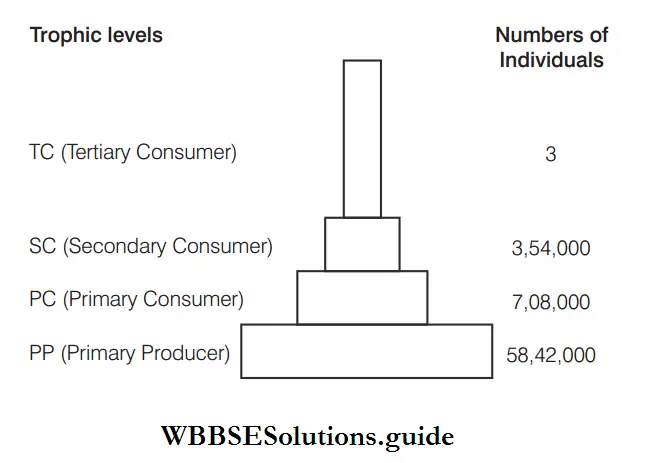
Human Impact on Ecosystems and Conservation MCQs for NEET

Question 17. In our biosphere, the most important and vast area is covered by hydrosphere. Hydrosphere has 

  1. 1.4 billion cubic km of water
  2. 1.4 million cubic km of water
  3. 2.5 billion cubic km of water
  4. 1.5 billion cubic km of water

Answer: 1. 1.4 billion cubic km of water

More than 70% of earth’s surface is covered by water. There is about 1.4 billion cubic kilometre of water in the hydrosphere. Of this, about 97% is ocean water and only 3% is freshwater.

NEET Biology Ecological Succession Multiple Choice Question And Answers

Biology MCQ For NEET With Answers Ecological Succession

Question 1. The natural process by which different groups or communities colonize the same area over a period of time in a definite sequence is called

  1. Adaptation
  2. Variation
  3. Succession
  4. Biological rhythm

Answer: 3. Succession

Succession is the natural process by which different groups or communities colonize the same area over a period of time in a definite sequence.

Question 2. During ecological succession 

  1. The Number And Types Of Animals Remain Constant
  2. The Changes Lead To A Community That Is In Near Equilibrium With The Environment And Is Called Pioneer Community
  3. The Gradual And Predictable Change In Species Composition Occurs In A Given Area
  4. The establishment of a new biotic community is very fast in its primary phase

Answer: 3. The Gradual And Predictable Change In Species Composition Occurs In A Given Area

ecological succession class 12

The sequential, gradual and predictable changes in the species composition in an area are called ecological succession.

Read And Learn More: NEET Biology Multiple Choice Question And Answers

Question 3. Ecological succession is

  1. A Long Term Process
  2. A Very Fast Process
  3. A Short Term Process
  4. Also known as migration

Answer: 1. A Long Term Process

Ecological succession is directional because succession proceeds in a direction and is a long term process.

Question 4. What is represented by this sequence? Cyanobacteria → Crustose lichens → Foliose lichens → Mosses → Shrubs → Dicotyledonous plants

  1. Genetic drift
  2. Eltonian pyramid
  3. Ecological succession
  4. Phylogenetic relationships

Answer: 3. Ecological succession

The given sequence represents ecological succession. There is change in the species structure of an ecological community over time.

Mcq On Ecological Succession

NEET Biology Ecological Succession Multiple Choice Question And Answers

NEET Biology Ecological Succession MCQs with Answers

Question 5. Succession showing changes in communities at a place is called 

  1. Geographical Succession
  2. Biotic Succession
  3. Physiographic Succession
  4. Climatic succession

Answer: 2. Biotic Succession

ecological succession class 12

Communities are never stable, but keep on changing. This relatively definite sequence of communities over a period of time in the same area is called ecological or biotic succession.

Read And Learn More: NEET Biology Multiple Choice Question And Answers

Question 6. Biotic succession is caused by

  1. Competition Amongst Species
  2. Occurrence Of Diseases
  3. Changes Is Grazing Habits
  4. Adaptive ability to environmental changes

Answer: 4. Adaptive ability to environmental changes

Biotic succession is caused by adaptive ability of a species to environmental changes.

Question 7. Succession occurs in

  1. Plant
  2. Animal
  3. Both 1 and 2
  4. None of the above

Answer: 3. Both 1 and 2

Succession can occur in both plant and animals.

Question 8. Plant succession is a ……………… process.

  1. Definite
  2. Haphazard
  3. Unimportant
  4. Orderly

Answer: 4. Orderly

Plant succession is an orderly process of community change in an area over a period of time.

Mcq On Ecological Succession

Question 9. ……….. can be defined as the entire sequence of communities that successively change in a given area.

  1. Sere
  2. Climax
  3. Pioneer species
  4. Xerarch

Answer: 1. Sere

The entire sequence of development stage of biotic succession from pioneer to a climax community is known as sere.

Important MCQs on Ecological Succession for NEET

Question 10. Ecesis is

  1. Establishment Of A Plant In A New Place
  2. A Condition Of Equilibrium
  3. Climax
  4. Invasion of a number of plants

Answer: 1. Establishment Of A Plant In A New Place

Ecesis is the process by which a plant or animal becomes established in a new habitat.

Question 11. The process by which a bare area is created is

  1. Invasion
  2. Nudation
  3. Reaction
  4. Coaction

Answer: 2. Nudation

Nudation is the process by which bare area is created. Processes that might lead to nudation are land slides volcanic eruptions, forest fire, agriculture, etc.

Question 12. The correct sequence of events during ecological succession is

  1. Nudation, Invasion, Reaction, Stabilisation
  2. Invasion, Nudation, Stabilisation, Reaction
  3. Reaction, Invasion, Coaction, Climax
  4. Stabilisation, Reaction, Nudation, Climax

Answer: 1. Nudation, Invasion, Reaction, Stabilisation

The correct sequence of events during ecological succession is nudation, invasion, reaction, stabilisation.

ecological succession class 12

Question 13. Succession on the secondary bare area is

  1. Primosere
  2. Xerosere
  3. Subsere
  4. None of the above

Answer: 3. Subsere

Subsere is a secondary succession arising after an ecological climax community that has been interrupted or destroyed. (as by fire or human agency).

Mcq On Ecological Succession

Question 14. An individual transitional community in ecological succession are termed as

  1. Climax Community
  2. Pioneer Community
  3. Seral Communities
  4. Single community

Answer: 3. Seral Communities

The various biotic communities that develop during biotic succession are termed as seral or transitional communities.

Types of Ecological Succession MCQs for NEET

Question 15. In succession, the seral forms are

  1. Large Sized
  2. Long Lived
  3. Less Diverse
  4. Slow growing

Answer: 3. Less Diverse

A seral community consist of less diverse, short-lived, usually small-sized, and fast-growing species.

Question 16. In autogenic succession

  1. Early And Continued Dominance Of Autotrophic Organisms Takes Place
  2. Replacement Of Existing Communities Caused Largely By Any Other External Condition
  3. Early Dominance Of Heterotrophs Takes Place Such As Bacteria, Fungi And Other Animals
  4. Community Itself Modifies Its Own Environment, Thus Causing Its Own Replacement By New Communities
  5. Starts With Previously Built Up Substrata With Already Existing matter

Answer: 4. Community Itself Modifies Its Own Environment, Thus Causing Its Own Replacement By New Communities

Autogenic succession (auto-self, genic–generate) is the modification and the development of new environment made by the community itself such that the community makes its own replacement by new communities. The changed environment is favourable for new community.

Question 17. The species that invade a bare area in ecological succession are called

  1. Benthos
  2. Founding Species
  3. Seral Species
  4. Pioneer species

Answer: 4. Pioneer species

The first biotic community which develops in a bare area and start succession is called pioneer community or species. It has very little diversity. This stage takes the longest time to change the environment for invasion by the next community

Mcq On Ecological Succession

Question 18. A community which starts succession in a habitat is 

  1. Pioneer Community
  2. Seral Community
  3. Biotic Community
  4. Ecosere

Answer: 1. Pioneer Community

The first biotic community which develops in a bare area and start succession is called pioneer community or species. It has very little diversity. This stage takes the longest time to change the environment for invasion by the next community

Question 19. The sequence of successional stages that occur on sand is known as

  1. Lithosere
  2. Hydrosere
  3. Psammosere
  4. Xerosere

Answer: 3. Psammosere

A psammosere ecological succession began life on newly exposed coastal sand. Most common psammoseres are sand dune systems.

Topic-wise Ecological Succession MCQs for NEET with Explanation

Question 20. Primary succession is the development of communities on

  1. Cleared Forest Area
  2. Previously Unoccupied Sites
  3. Fresh Harvested Crop Field
  4. Pond filled after a day season

Answer: 2. Previously Unoccupied Sites

The primary succession occurs in the barren, soilless, previously unoccupied site such as igneous rock emerged from the sea, lava deposit, sand dune, newly created pond or reservoir.

ecological succession class 12

Question 21. The communities of primary succession are called as

  1. Sub-Sere
  2. Mesosere
  3. Pioneer Sere
  4. None of the above

Answer: 3. Pioneer Sere

The communities of primary succession are called as pioneer sere.

Question 22. Serule is

  1. Hydrosere
  2. Biosphere
  3. Microbial Succession
  4. Lithosere

Answer: 3. Microbial Succession

A succession of microorganisms like fungi, bacteria, etc., occurring within a microhabitat is known as micro succession or rule. This type of succession occurs within communities. For example, in dead trees, animal droppings, etc.

Question 23. Secondary succession is uncomplicated and fast as

  1. The Area Already Has Soil And Some Vegetation
  2. The Area Is Soilless
  3. The Area Is Barren With No Animals Too
  4. None of the above

Answer: 1. The Area Already Has Soil And Some Vegetation

The secondary succession is easy and completed quickly because the area already has soil and some vegetation. Soil is already present in the area, where secondary succession begins.

Question 24. Secondary succession starts in an area

  1. Where No Living Organisms Ever Existed
  2. Which Has Lost All The Living Organisms Once Existed
  3. Where Only One Species Of Organism Existed
  4. Where Human Beings Live

Answer: 2. Which Has Lost All The Living Organisms Once Existed

Secondary succession starts in an area that has lost all the living organisms once existed.

Question 25. Which one of the following statements is incorrect about secondary succession?

  1. It occurs in an area, which has been renewed recently
  2. Soil is present at the time of the beginning of secondary succession
  3. Reproductive structures of the previous occupants are present in the area
  4. It begins on a bare rock

Answer: 4. It begins on a bare rock

The statement in option is incorrect and can be corrected as Secondary succession begins in areas where natural biotic communities have been destroyed, e.g. abandoned farm lands, buried or cut forests (deforested site). Since soil is available, it is a faster process. Primary succession begins in areas where no living organisms ever existed, e.g. bare rock.

Ecological Succession Mcq

Question 26. Which one of the following statements is correct for secondary succession?

  1. It begins on a bare rock
  2. It occurs on a deforested site
  3. It follows a primary succession
  4. It is similar to primary succession except that it has a relatively fast pace

Answer: 2. It occurs on a deforested site

Secondary succession begins in areas where natural biotic communities have been destroyed, e.g. abandoned farmlands, buried or cut forests (deforested site). Since soil is available, it is a faster process. Primary succession begins in areas where no living organisms ever existed, e.g. bare rock.

ecological succession class 12

Question 27. Primary succession takes much longer than secondary succession because it involves

  1. Development Of The Soil
  2. Development Of A Seed Bank
  3. Colonization By Organisms That Are Farther Away
  4. Colonization by more K-selected organisms

Answer: 1. Development Of The Soil

Primary succession is a biotic succession that occurs on a sterile or bare area unlike secondary succession. Thus, it take longer time to develop as there also occurs development of soil.

Question 28. Which of the following would appear as the pioneer organisms on bare rocks?

  1. Lichens
  2. Liverworts
  3. Mosses
  4. Green algae

Answer: 3. Mosses

Lichens are pioneer organisms on bare rocks as they corrode the rocks by secreting enzymes and convert it into soil.

Question 29. In any lithosere, the pioneer community is

  1. Blue-Green Algae
  2. Foliose Lichens
  3. Mosses
  4. Crustose lichen

Answer: 4. Crustose lichen

Primary succession on rocks or lithosere starts with crustose lichen species like Rhizocarpon, Rinodina, and Lecanora. They produce some acids which bring about weathering of rocks. These lichens are then replaced by foliose type of lichens. Due to deep depressions and retention of water by them, they form a fine thin soil layer on the rock surface and thus, there is a change in the habitat.

Question 30. The pioneer species in xerarch and hydrarch succession are, respectively 

  1. Lichens And Phytoplanktons
  2. Lichens And Sedges
  3. Phytoplanktons And Lichens
  4. Lichens and rooted hydrophytes

Answer: 1. Lichens And Phytoplanktons

The species that invade a bare area are called pioneer species. In xerarch, i.e. succession in dry areas, lichens are pioneer species. In primary succession in water, i.e. hydrarch, the pioneers are the small phytoplanktons.

Ecological Succession Mcq

Question 31. The first plants to reappear in a badly burned forest area will most probably be

  1. Mosses
  2. Liverworts
  3. Ferns
  4. Grasses

Answer: 3. Ferns

Ferns are the first plants to grow after a forest fire as it is a soilbinder. This means ferns, especially the Bracken fern, can withstand a fire or other extremes by gripping the soil with a vast network of roots.

Question 32. The succession includes in series

  1. Lichens → Mosses → Shrubs
  2. Lichens → Mosses → Trees
  3. Mosses → Trees → Shrubs
  4. Mosses → lichens → trees

Answer: 1. Lichens → Mosses → Shrubs

The succession that includes in serie is Lichens → mosses → shrubs

ecological succession class 12

Question 33. Which one of the following is correct for xerarch succession?

  1. Successional series from xeric to mesic condition
  2. Successional series from hydric to mesic condition
  3. Both 1 and 2
  4. None of the above

Answer: 1. Successional series from xeric to mesic condition

Xerarch succession is plant succession which takes place in dryarea leading to a successional series from xeric to mesic conditions.

Question 34. In which of the following will succession time be least?

  1. Newly created reservoir
  2. Bare rock
  3. Buried or cut forest
  4. Newly cooled lava

Answer: 1. Newly created reservoir

Buried or cut forest already has soil, humus and some vegetation (underground stems). Hence, in buried or cut forest, succession is easy and fast.

Question 35. Xerarch succession is observed in

  1. Desert Areas
  2. Terrestrial Areas
  3. Aquatic Areas
  4. Marshy areas

Answer: 4. Marshy areas

A xerosere is the series of development stages of biotic succession taking place in an arid area like desert area.

Question 36. What role does acid secreted by pioneer species on a barren rock play?

  1. It helps in dissolving rocks.
  2. It helps in weathering.
  3. It helps in soil formation.

Which of the statements given above are correct?

  1. 1 and 2
  2. 1 and 3
  3. 2 and 3
  4. 1, 2 and 3

Answer: 4. 1, 2 and 3

All given statements are correct.

Ecological Succession Mcq

Question 37. Assertion A lake can undergo ecological succession and become a forest over time. Reason (R) A bare rock can become a forest through ecological succession.

  1. Both A and R are true and R is the correct explanation of A
  2. Both A and R are true, but R is not the correct explanation of A
  3. A is true, but R is false
  4. Both A and R are false

Answer: 2. Both A and R are true, but R is not the correct explanation of A

Both A and R are true, but R is not the correct explanation of A. Ecological succession means the natural development of a series of biotic communities, one after the other, in some area till a permanent climax community is established. A lake can become a dryland forest through ecological succession. Ecological succession can turn a bare rock into a forest with time.

Question 38. The final stable community in an ecological succession is 

  1. Pioneers
  2. Sere
  3. Climax
  4. Carnivore

Answer: 3. Climax

The climax community is the stable, self-perpetuating and final biotic community that develops at the end of biotic succession and is in perfect harmony with the physical environment.

Question 39. Climax community found in a large restricted land body is known as

  1. Biogeographic Realms Dpmt
  2. Biome
  3. Savannah
  4. None of the above

Answer: 3. Savannah

The climax community in a large restricted land body is known as savannah.

ecological succession class 12

Question 40. The nature of climax community ultimately depends on

  1. Climate Cbse Aipmt
  2. Bed Rock
  3. Soil Organisms
  4. Pool of available nutrients

Answer: 1. Climate Cbse Aipmt

The climax community is in harmony with the climate of the region and thus, the nature of this community depend upon available climatic conditions only.

Question 41. All the characteristics are true for climax community except that

  1. It Rapidly Keeps On Changing To Reach Equilibrium
  2. It Is The Final Community
  3. It Is The End Of Succession
  4. It is stable

Answer: 1. It Rapidly Keeps On Changing To Reach Equilibrium

All are characteristics for climax community are true except option as Climax community is stable and is in equilibrium with the environment. Thus, it does not change further to any other form.

NEET Biology Mcq Chapter Wise

Question 42. In plant succession, when climax community is reached, the net productivity

  1. Continues To Increase
  2. Becomes Zero
  3. Become Reduced
  4. Becomes stable

Answer: 4. Becomes stable

The climax community remains in perfect harmony with the physical environment and has a stable net productivity, maximum diversity and niche specialization.

Question 43. Climax community is

  1. Self-Perpetuating
  2. Final Biotic Community
  3. Stable
  4. All of the above

Answer: 4. All of the above

Climax community is the stable, self-perpetuating, and final biotic community.

Question 44. In ecological succession from pioneer to climax community, the biomass shall 

  1. Decrease
  2. Increase And Then Decrease
  3. No Relation
  4. Increase continuously

Answer: 4. Increase continuously

In ecological succession from pioneer to climax community, the biomass shall increase continuously because after climax communities are made, the species become stable and do not change very much

NEET Biology Mcq

Question 45. In ecological succession, the climax community is best recognized by the following state 

  1. P = R
  2. P > R
  3. P < R
  4. P ≠ R

Answer: 1. P = R

The climax community is the final community that develops in an area during ecological succession. In the climax community, productivity and respiration are equal. P = R

ecological succession class 12

Question 46. Climax vegetation of a region is generally

  1. Xerophytic
  2. Hydrophytic
  3. Mesophytic
  4. Depends upon the climate

Answer: 3. Mesophytic

Mesophytes are terrestrial plants that are neither adapted to particularly dry nor particularly wet environments. These form climax vegetation.

Question 47. Plagioclimax is the climax of plagiosere which means

  1. Sere Of Marine Plants
  2. Deflected Sere Resulting In Deviation Of Plant Succession From Natural Course Due To Human Activity
  3. Sere where plant succession deviates from its natural course due to human activity
  4. Both 2 and 3

Answer: 4. Both 2 and 3

A plagioclimax community is an area or habitat in which the influences of human have prevented the ecosystem from developing further. The ecosystem may have been stopped from reaching its full natural climatic climax or deflected towards a different climax by human activities such as cutting down the existing vegetation.

NEET Biology Autotrophic and Heterotrophic Succession MCQs

Question 48. Assertion Every biological system resists change and wants to remain in a state of equilibrium. Reason (R) Climax communities of an ecosystem are produced after several changes it has gone through succession.

  1. Both A and R are true and R is the correct explanation of A
  2. Both A and R are true, but R is not the correct explanation of A
  3. A is true, but R is false
  4. Both A and R are false

Answer: 2. Both A and R are true, but R is not the correct explanation of A

Both A and R are true, but R is not the correct explanation of A. Homeostasis is the tendency of a biological system to maintain relatively constant conditions in the internal environment, while continuously interacting with and adjusting to changes originating within or outside the system. In ecology, a climax community is a biological community of plants, animals and fungi which had reached a steady state. This equilibrium was thought to occur because the climax community is composed of species best adapted to average conditions in that area.

Biology MCQ For NEET With Answers

Question 49. Identify the changes that occur in successive seral stages in order to reach climax.

  1. Changes in the diversity of species of organisms.
  2. Increase in the number of species and organisms.
  3. Increase in the total biomass.

Choose the correct option.

  1. Only 1
  2. Only 2
  3. Only 3
  4. 1, 2 and 3

Answer: 4. 1, 2 and 3

All given statements represent events that occur in successive seral stages in order to reach climax. In successive seral stages, there is not only a change in the species diversity of organisms present, but there is also an increase in the number of species. A succession of plant and animal communities occurs side by side. These also occurs an increase in biomass.

Question 50. Phytoplanktons in the hydrosere constitute

  1. Members Of Climax Community
  2. Pioneer Community
  3. Intermediate Seral Members
  4. All of the above

Answer: 2. Pioneer Community

The passively floating and drifting plants (phytoplanktons) are the pioneers in a hydrosere. They generally comprise green algae, blue algae, diatoms, etc.

Question 51. Match the following columns.

Ecological Succession Match the following columns

Answer: 3. 1 2 4 3

Biology MCQs with answers for NEET

Question 52. The second stage of hydrosere is occupied by the plants like

  1. Salix
  2. Vallisneria
  3. Azolla
  4. Typha

Answer: 2. Vallisneria

The second stage of hydrosere is occupied by submerged aquatic plants, e.g. Hydrilla, and Vallisneria. The third stage has free-floating plants, e.g. Azolla (floating aquatic fern). The fourth stage is reed swamp which includes indude plants like Typha, Salix Deciduous trees and shrubs, constitute the sixth (woodland stage) and climax stages.

Question 53. Ecological succession in hydrosere includes

  1. Increase In Species Diversity
  2. Increase In Structural Complexity
  3. Increase in organic matter
  4. All of the above

Answer: 4. All of the above

ecological succession class 12

Ecological succession in hydrosere includes increase in species diversity, structural complexity and organic matter.

Question 54. Match the following columns.

Ecological Succession Match the following columns 2

Answer: 3. 1 2 3 4

Ecological Succession and Environmental Changes MCQs for NEET

Question 55. Pick out the correct option from (1) to (4).

  1. Primary succession begins in areas where natural communities have been destroyed.
  2. Hydrarch succession takes place in water.
  3. The climax community is the community that is in near equilibrium with the immediate environment.
  4. In newly cooled lava, secondary succession occurs.

Choose The Correct Option:

  1. 1 and 2 are correct, 3 and 4 are incorrect
  2. 2 and 3 are correct, 1 and 4 are incorrect
  3. 1 and 4 are correct, 2 and 3 are incorrect
  4. 2 only is correct, 1, 3 and 4 are incorrect
  5. Only 1 is correct, 2, 3 and 4 are incorrect

Answer: 2. 2 and 3 are correct, 1 and 4 are incorrect

Statements 2 and 3 are correct, but 1 and 4 are incorrect. These can be corrected as Primary succession occurs on previously bare or unoccupied area, e.g. igneous rocks, sand dunes, newly cooled lava or deltas. In primary succession, environment is very hostile for pioneer community and reproductive structures of any previous community are absent. Secondary succession occurs in an area from which community has been removed and where nutrients and conditions for existence are present, e.g. cut over forest, ploughed fields and abandoned crop land.

Question 56. Fill up the blanks.

  1. Pioneer species on bare rocks – A
  2. Secretions that help in dissolving rocks and enabling soil formation – B
  3. First species to appear – C
  4. Community that has undergone continuous change to attain stability – D
  5. Pioneers in primary succession in water – E

ecological succession class 12

Choose The Correct Option:

  1. A–Bryophytes, B–Acid, C–Climax community, D–Pioneer community, E–Zooplanktons
  2. A–Lichen, B–Acid C–Pioneer species, D–Climax community, E–Passively floating phytoplanktons
  3. A–Lichen, B–Base, C–Xerosere, D–Seral stages, E–Small plant
  4. A–Lichen, B–Acid, C–Pioneer species, D–Climax community, E–Submerged floating plants

Answer: 2. A–Lichen, B–Acid C–Pioneer species, D–Climax community, E–Passively floating phytoplanktons

Question 57. Identify the plant belonging to the reed-swamp stage in hydrarch succession.

  1. Juncus
  2. Sagittaria
  3. Salix
  4. Trapa

Answer: 2. Sagittaria

Reed-swamp stage is also known as amphibious stage as the plants are rooted, but most parts of their shoots (assimilatory organs) remain exposed to air and possess emergent leaves.Scirpus, Typha, Sagittaria and Phramites, etc., are the chief plants of this stage. They have well-developed rhizomes and form a very dense vegetation.

Question 58. The areas, where water is present in abundance is called

  1. Hydrarch Succession
  2. Xerarch Succession
  3. Hydrosere
  4. Both 1 and 2

Answer: 4. Both 1 and 3

Hydrarch succession occurs in wet areas or water and the successional series progress from hydric to the mesic conditions. A hydrosere is a plant succession which occurs in an area of freshwater such as in Oxbow lakes and Kettle lakes. Xerarch succession takes place in dry areas and the series progress from xeric to mesic conditions. So, option is correct.

Question 59. Both hydrarch and xerarch successions lead to CBSE AIPMT

  1. Medium Water Conditions
  2. Xeric Conditions
  3. Highly Dry Conditions
  4. Excessive wet conditions

Answer: 1. Medium Water Conditions

Hydrarch succession takes place in wetter areas and the succession series progress from hydric to the mesic condition. Xerarch succession takes place in dry areas and the series progress from xeric to mesic condition. Hence, both hydrarch and xerarch succession leads to medium water conditions (mesic).

Question 60. Consider the following statements on succession of plants.

  1. In hydrarch succession progress is observed from hydric to the mesic condition.
  2. In xerarch succession progress is observed from xeric to the mesic condition.
  3. Xerarch succession if started on bare rock, pioneer species is lichens.
  4. In hydrarch and xerarch succession, progress is observed from mesarch to xerarch condition.

Choose option containing correct statements.

  1. 1 and 3
  2. 3 and 4
  3. 2 and 4
  4. 1, 2 and 3

Answer: 4. 1, 2 and 3

All statements are correct except IV. It can be corrected as Both hydrarch and xerarch succession ultimately lead to mesarch conditions. The pioneer species on bare rock is always lichen.

Pioneer and Climax Species in Ecological Succession MCQs for NEET

Question 61. The correct sequence of plants in a hydrosere is CBSE PMT

  1. Volvox → Hydrilla → Pistia → Scirpus → Lantana → Oak
  2. Pistia → Volvox → Scirpus → Hydrilla → Oak → Lantana
  3. Oak → Lantana → Volvox → Hydrilla → Pistia → Scirpus
  4. Oak → Lantana → Scirpus → Pistia → Hydrilla → Volvox

Answer: 1. Volvox → Hydrilla → Pistia → Scirpus → Lantana → Oak

The correct sequence of plants in a hydrosere is Volvox, Hydrilla, Pistia, Scirpus, Lantana and Oak. A hydrosere is a plant succession which occurs in a freshwater lake. In time, an area of open freshwater such as a lake naturally dry out and ultimately become woodland. During this change, a range of different land types such as swamp and marsh succeed each other. The succession from open water to climax woodland is likely to take at least two hundred years.

ecological succession class 12

Question 62. What is observed in hydrarch succession?

  1. Growth of phytoplanktons followed by submerged and free-floating plants, rooted hydrophytes, sedges, grasses and trees
  2. Transformation of pool of water to swamp and then to marsh and mesic condition
  3. Growth of lichens and weathering of rocks
  4. Both 1 and 2

Answer: 4. Both 1 and 2

  • Hydrarch succession occurs in the following steps
  • Phytoplankton stage Spores, algae, and bacteria enter the water body which multiply and flourish to form phytoplanktons (Pioneer species).
  • Submerged stage Submerged hydrophytes like Vallisneria, utricularia grow.
  • Floating stage Plants like Nymphaea, Typha, etc., grow in this stage.
  • Reed swamp stage Amphibious plants like Marsilea, Polygonum grow, depth of water body decreases.
  • Sedge grass stege Marshy soil is formed due to decreased water level. Plants like Carex, Iris, etc.,grow in this stage.
  • Shrub stage Mesic conditions are created which allow the growth of Salix, Cassia, etc.

Question 63. Given below are several sequences of primary successions in water or hydrosere. Choose the correct sequence.

  1. Small phytoplanktons → Free-floating angiosperms → Rooted hydrophytes → Sedges → Grasses → Trees
  2. Free-floating angiosperm → Rooted hydrophytes → Small phytoplanktons → Grasses → Sedges → Trees
  3. Small phytoplanktons → Sedges → Free-floating angiosperms → Rooted hydrophytes → Grasses → Trees
  4. Small phytoplanktons → Zooplankton → Grasses → Freefloating angiosperms → Rooted hydrophytes → Trees

Answer: 1. Small phytoplanktons → Free-floating angiosperms → Rooted hydrophytes → Sedges → Grasses → Trees

The correct sequence is Small phytoplanktons → Free floating angiosperms → Rooted hydrophytes → Sedges → Grasses → Trees.

Question 64. Find out the correct order of succession levels in xerarch or rock.

  1. Lichen → moss stage → annual herb stage → perennial herb stage and shrub stage → forest
  2. Annual herb stage → perennial herb stage → lichen → moss stage → shrub stage → forest
  3. Shrub stage → forest annual herb stage → perennial herb stage → lichen → moss stage
  4. Forest → shrub stage → annual herb stage → perennial herb stage → lichen → moss stage

Answer: 1. Lichen → moss stage → annual herb stage → perennial herb stage and shrub stage → forest

ecological succession class 12

Succession levels in xerarch (serosere/lithosere) are:

  1. Lichen stage, e.g. crustose lichens followed by foliose lichens.
  2. Moss stage, e.g. Tortula, Polytrichum.
  3. Annual herb stage, e.g. Cymbopogon.
  4. Perennial herb and shrub stage, e.g. Rubus, Capparis, Zizyphus.

Climax community, e.g. forest with herbs shrubs, and trees.

Question 65. Find out the wrong sequence.

  1. Phytoplanktons → submerged plants → free-floating plants → rooted hydrophytes
  2. Lichens → trees → shrubs → herbs
  3. The pool of water → swamp → marsh → Mesic conditions
  4. Sedges → grasses → woodland → forest

Answer: 2. Lichens → trees → shrubs → herbs

The option is showing the wrong sequence. It can be corrected as Lichens → Herbs → Shrubs → Trees

Question 66. Match the following columns.

Ecological Succession Match the following columns 1

Answer: 1. 4 1 2 3

NEET Biology Ecological Pyramids Multiple Choice Question And Answers

NEET Biology Mcq Chapter Wise Ecological Pyramids

Question 1. The graphic representation of the inter-relationship between plants and animals is

  1. Ecological Niche
  2. Ecological Pyramid
  3. A trophic level
  4. None of the above

Answer: 2. Ecological Pyramid

Ecological pyramid represents the trophic structure and trophic function of an ecosystem. An ecological pyramid is a graphic representation of an ecological parameter like number of individuals, amount of biomass and amount of energy.

Question 2. Ecological pyramids were first devised by

  1. Charles Elton
  2. R Hesse
  3. RA Lindemann
  4. Justus van Liebig

Answer: 1. Charles Elton

“questions for ecology “

Ecological pyramids were first developed by Charles Elton (1927) and are therefore, also called Eltonian pyramids.

Read And Learn More: NEET Biology Multiple Choice Question And Answers

Question 3. Ecological pyramid are of

  1. Two Types
  2. Three Types
  3. Four Types
  4. Five types

Answer: 2. Three Types

Three types of ecological pyramids are pyramid of number, pyramid of biomass and pyramid of energy.

Question 4. Which of the following always has a pyramidal shape, that is decreasing values at higher trophic levels?

  1. Pyramids of number
  2. Pyramid of biomass
  3. Pyramids of energy
  4. All of the above

Answer: 3. Pyramids of energy

The pyramid of energy is always upright whatever will be the case. Thus, it always has a pyramidal shape, that is decreasing values at higher trophic levels.

NEET Biology Ecological Pyramids MCQs with Answers

Question 5. Which is an example of true pyramid in an ecosystem?

  1. Pyramid of biomass DUMET
  2. Pyramid of number
  3. Pyramid of energy
  4. None of the above

Answer: 3. Pyramid of energy

The pyramid of energy is always upright because energy is always lost as heat at each step. It represents the total amount of energy utilised by different trophic level organisms in unit area over a period of time. Hence, it is an example of true pyramid.

NEET Biology Ecological Pyramids Multiple Choice Question And Answers

Question 6. Which of the following is not used for the construction of ecological pyramids?

  1. Number of individuals
  2. Fresh weight
  3. Rate of energy flow
  4. Dry weight

Answer: 2. Fresh weight

Fresh weight is not used for the construction of ecological pyramids. Even in pyramid of biomass, total dry weight of living matter is considered.

Mcq On Ecological Pyramids

Question 7. Topmost members of most of Eltonian pyramids are

  1. Producers
  2. Decomposers
  3. Carnivores
  4. Herbivores

Answer: 3. Carnivores

Topmost members of most of Eltonian pyramids are carnivores.

“ecology questions “

Question 8. In the pyramid of food, the primary producers lie at

  1. Base
  2. Apex
  3. Near The Position Of Base
  4. Near the position of apex

Answer: 1. Base

The pyramid of food contains primary producers at the base of the pyramid which traps the solar energy and converts it into the usable form of energy. These are followed by the herbivores and then to the carnivores at the top of the pyramid.

Important MCQs on Ecological Pyramids for NEET

Question 9. The base of an ecological pyramid always represents the … A …, while the apex represents … B….

  1. A–producers, B–top level consumers
  2. A–top level consumers, B–producers
  3. A–producers, B–secondary consumers
  4. A–producers, B–primary consumers

Answer: 1. A–producers, B–top level consumers

Read And Learn More: NEET Biology Multiple Choice Question And Answers

Question 10. Consider the following statements about ecological pyramids.

  1. Charles Elton developed the concept of an ecological pyramid.
  2. It is a numerical representation or pyramid-shaped diagram which depicts the number of organisms, biomass and energy at each trophic level.

Choose the correct option.

  1. Statement 1 is correct, but 2 is incorrect
  2. Statement 1 is incorrect, but 2 is correct
  3. Both statements 1 and 2 are correct
  4. Both statements 1 and 2 are incorrect

Answer: 1. Statement 1 is correct, but 2 is incorrect

Statement I is correct, but 2 is incorrect. Incorrect statement can be corrected as Ecological pyramids diagrammatically represents the relationship between the number, biomass and energy contents of the producers and consumers of different trophic levels in any ecosystem.

Mcq On Ecological Pyramids

Question 11. Peacock eats a snake, snake eats frog and frog eats insects, while insects eat green plants. The position of peacock is 

  1. Primary Producer
  2. Secondary Producer
  3. Decomposer
  4. At the apex of food ecological pyramid

Answer: 4. At the apex of food ecological pyramid

Green plants → Insects → Frog → Snakes → Peacock. From the above food chain, it is clear that the peacock stands at the apex.

“ecosystems questions and answers “

Question 12. Pyramid of number depicts

  1. Number Of Individual In The Subsequent Trophic Level
  2. Number Of Individual At A Place In Trophic Level
  3. Number Of Species Of Organisms At A Particular Trophic Level
  4. All of the above

Answer: 1. Number Of Individual In The Subsequent Trophic Level

Pyramid of number depicts the number of individual (organisms) at different (subsequent) trophic levels of food chain.

Question 13. In a pyramid of numbers, representing an ecosystem of a large freshwater pond, the number of primary consumers is DPMT

  1. More Than The Producers
  2. Less Than The Tertiary Consumers
  3. Less Than The Secondary Consumers
  4. More than the secondary consumers

Answer: 4.More than the secondary consumers

In the pond ecosystem, number of phytoplankton (producers) is larger than zooplanktons (primary consumers) and the latter are more in number than the secondary consumers.

Types of Ecological Pyramids MCQs for NEET

Question 14. Which of the following can be observed in a pyramid of number in grassland ecosystem?

  1. Large number of producers at the bottom and fewer top consumers
  2. Large number of top consumers and fewer producers
  3. Equal number of producers and consumers
  4. Top consumer than primary consumers

Answer: 1. Large number of producers at the bottom and fewer top consumers

In a grassland ecosystem, the number of producers is more than the number of top carnivores, whereas in case of a tree, the number of producers is less as compared to consumers.

Mcq On Ecological Pyramids

Question 15. Assertion The pyramid of number of pond ecosystem is upright. Reason (R) Phytoplanktons are maximum and secondary consumers are least in number.

  1. Both A and R are true and R is the correct explanation of A
  2. Both A and R are true, but R is not the correct explanation of A
  3. A is true, but R is false
  4. Both A and R are false

Answer: 1. Both A and R are true and R is the correct explanation of A

Both A and R are true and R is the correct explanation of A. The pyramid of number in pond ecosystem is upright because base of this pyramid is occupied by the maximum number of phytoplanktons (autotrophs) and number of individuals gradually decreases towards the primary and secondary consumers side, respectively.

“questions about ecosystem with answers “

Question 16. The pyramid of numbers in grassland ecosystems is 

  1. Linear
  2. Upright
  3. Inverted
  4. Negative

Answer: 2. Upright

The pyramid of numbers depicts the number of individual organisms at different trophic levels of the food chain. The pyramid of number in a grassland is upright as the producers are always maximum in number than herbivores and carnivores.

Question 17. In a tree ecosystem, the pyramid of numbers is

  1. Upright
  2. Inverted
  3. Both and
  4. None of these

Answer: 4. None of these

In a tree ecosystem, the pyramid of numbers is spindle-shaped. Here, the number of primary consumers is more than producers as well as top consumers. Tree → Several insects → Birds Thus, option is correct.

Question 18. The upright pyramid of numbers is absent in

  1. Pond
  2. Forest
  3. Lake
  4. Grassland

Answer: 2. Forest

Pyramid of number is always upright in grassland, pond and lake ecosystems. But in forest or single tree ecosystem, it is spindle-shaped and if parasitic food chain is considered, then it will be an inverted pyramid. Thus, the upright pyramid of numbers is absent in forest.

Topic-wise Ecological Pyramids MCQs for NEET with Explanation

Question 19. Eltonian pyramids of numbers are upright in which of the following ecosystems?

  1. Grassland
  2. Tree
  3. Pond
  4. Both 1 and 3

Answer: 4. Both 1 and 3

Pyramid of numbers is always upright in grassland, pond and lake ecosystems. But in forest or single tree ecosystem, it is spindle-shaped and if parasitic food chain is considered, then it will be an inverted pyramid. Thus, the upright pyramid of numbers is absent in forest.

“ecosystem question answer “

Question 20. Which of the following pyramid of numbers in ecology is not upright?

  1. Pond ecosystem
  2. Desert ecosystem
  3. Tree ecosystem
  4. Forest ecosystem

Answer: 3. Tree ecosystem

Pyramid of number is always upright in grassland, pond and lake ecosystems. But in forest or single tree ecosystem, it is spindle-shaped and if parasitic food chain is considered, then it will be an inverted pyramid. Thus, the upright pyramid of number is absent in forest.

Question 21. The pyramid of number involving parasites in a tree ecosystem is

  1. Always Inverted
  2. Always Upright
  3. Mixture Of Inverted And Upright
  4. Sometimes Inverted And Sometimes Upright

Answer: 1. Always Inverted

The pyramid of numbers deals with the number of primary producers and consumers. It is inverted in a tree ecosystem involving parasites. In a tree, the number of producers (tree) is less as compared to consumers (parasites).

Question 22. Which of the following representations shows the pyramid of numbers in a forest ecosystem?

Ecological Pyramids pyramid of numbers in a forest ecosystem

Answer: 3 is the correct option

In a tree ecosystem or forest ecosystem, the pyramid of numbers is spindle-shaped. Thus, option 3 is correct.

NEET Biology Pyramid of Energy, Biomass, and Number MCQs

Question 23. Identify the pyramid of numbers in a grassland ecosystem from the following images.

Ecological Pyramids grassland ecosystem

  1. 2
  2. 3
  3. 1
  4. Both 1 and 3

Answer: 3. 1

“anthropogenic ecosystem “

In a grassland ecosystem, a larger number of grass plants or herbs support a fewer number of grasshoppers that support a still smaller number of frogs, the latter still smaller number of snakes, and the snakes have very few peacocks or falcons

Ecological Pyramids pyramid of biomass

So, image A shows pyramid of numbers in a grassland ecosystem.

Question 24. Given below is an imaginary pyramid of numbers. What could be one of the possibilities about certain organisms at some of the different levels?

Ecological Pyramids imaginary pyramid

  1. Level PC is ‘insects’ and level SC is ‘small insectivorous birds’
  2. Level PP is ‘phytoplanktons’ in sea and ‘whale’ on top level TC
  3. Level one PP is ‘pipal trees’ and the level SC is ‘sheep’
  4. Level PC is ‘rats’ and level SC is ‘cats’

Answer: 1. Level PC is ‘insects’ and level SC is ‘small insectivorous birds’

The given figure shows spindleshaped pyramid of number in single tree ecosystem. Here, a single, large sized tree (PP) provides food to a large number of herbivores, insects (PC) which in turn support a few small insectivorous birds (SC) and the latter are eaten up by small number of top carnivores (TC).

Question 25. An ecological pyramid of biomass is the representation of the ecosystem’s AIIMS

  1. Energy Flow Through Each Trophic Level
  2. Population In Each Food Web
  3. Tissue Organisation At Each Trophic Level
  4. All of the above

Answer: 3. Tissue Organisation At Each Trophic Level

The amount of living or organic matter present in an organism is called biomass. It is measured as dry weight. It can also be referred to as tissue mass organisation at each trophic level. Maximum biomass occurs in producers. There is a progressive reduction of biomass at each trophic level.

“pond ecosystem pyramid “

Question 26. Given below is one of the type of ecological pyramids.

Ecological Pyramids types of ecological pyramids.

This type represents

  1. Pyramid Of Energy In A Grassland
  2. Pyramid Of Biomass
  3. Pyramid Of Number In A Lake
  4. Pyramid of nutrition

Answer: 2. Pyramid Of Biomass

The given ecological pyramid is pyramid of biomass representing dry weight of organisms at different trophic levels

NEET Biology Mcq Chapter Wise

Question 27. In a food chain, the total amount of living material is depicted by Manipal, BHU

  1. Pyramid Of Energy
  2. Pyramid Of Biomass
  3. Pyramid Of Numbers
  4. All of the above

Answer: 2. Pyramid Of Biomass

Pyramid of biomass is a diagrammatic representation of the amount of organic material or total amount of living material found in a particular habitat at ascending level ofthe food chain. A pyramid of biomass is a more accurate representation of the flow of energy through a food chain than pyramid of number, but seasonal variations may change the values for the amount of biomass.

Question 28. Assertion The pyramid of biomass indicates the decrease in biomass at each trophic level from base to apex. Reason (R) Parasites have inverted pyramid for biomass.

  1. Both A and R are true and R is the correct explanation of A
  2. Both A and R are true, but R is not the correct explanation of A
  3. A is true, but R is false
  4. Both A and R are false

Answer: 3. A is true, but R is false

A is true, but R is false. Reason can be corrected as Pyramid of biomass in case of parasites cannot be inverted because the amount of biomass produced by parasites is very small as compared to the host organism.

Question 29. In an upright pyramid of biomass, the herbivores occupy the position

  1. 4
  2. 2
  3. 3
  4. 1

Answer: 2. 2

Herbivores are organisms that feed upon plants only. In an upright pyramid of biomass, as plants (producers) always form first trophic level, herbivores occupy the second position.

NEET Biology Mcq Chapter Wise

Question 30. The biomass pyramid of forest is 

  1. Inverted
  2. Upright
  3. Infinite
  4. Finite

Answer: 2. Upright

The biomass of producers is greater than the biomass of top consumers in the forest ecosystem. Thus, the pyramid of biomass in forest is upright.

Question 31. The greatest biomass of autotrophs in the oceans is that of 

  1. Sea Grasses And Slime Moulds
  2. Free-Floating Microalgae, Cyanobacteria And Nanoplankton
  3. Benthic Brown Algae, Coastal Red Algae And Daphnids
  4. Benthic diatoms and marine viruses

Answer: 2. Free-Floating Microalgae, Cyanobacteria And Nanoplankton

The greatest biomass of autotrophs in the oceans is that of free-floating microalgae, cyanobacteria and nanoplankton.

Question 32. In a lake ecosystem, the pyramid of biomass is 

  1. Upright
  2. Inverted
  3. Anything is possible
  4. None of the above

Answer: 2. Inverted

In pond or lake ecosystem, pyramid of biomass is of inverted type as biomass of producers (small plants) is less and of consumers (fishes) is more.

Question 33. Inverted pyramid of biomass can be traced in one of the following ecosystems.

  1. Rainforest
  2. Desert
  3. Ocean
  4. Tundra

Answer: 3. Ocean

In ocean ecosystem, producers are the smallest organisms, while carnivores are large in size. Consequently, there is a gradual increase in biomass of organisms at successive trophic levels from producers to top carnivores, resulting in inverted pyramid.

NEET Biology Mcq

Question 34. In a pyramid of biomass, if the total dry weight (kg/m²) of primary producers is about 809, it will decrease at tertiary consumer level up to 

  1. 37 kg/m²
  2. 11 kg/m²
  3. 5 kg/m
  4. 1.5 kg/m²

Answer: 4. 1.5 kg/m²

If in a pyramid of biomass, total dry weight (kg/m²) of primary producers is about 809, it will decrease at subsequent level, as only 10% is passed on to the next trophic level.

Ecological Pyramids pyramid of biomass

Thus, 0.8 kg/m² remains at tertiary consumers. But 1.5 kg/m² is the nearest value given in options. Thus, option is correct.

Question 35. Which is the reason for highest biomass in aquatic ecosystem?

  1. Nanoplankton, blue-green algae, green algae
  2. Sea grass and slime moulds
  3. Benthic and brown algae
  4. Diatoms

Answer: 3. Benthic and brown algae

Highest biomass in aquatic enviroment is contributed by benthic and brown algae. The benthic region includes all the sea floor. Due to abundance of light, oxygen, CO2 and less salinity, this zone support dense growth of biomass production.

NEET Biology Mcq

Question 36. What type of ecological pyramid would be obtained with the following data?

Secondary consumer: 120 g
Primary consumer: 60 g
Primary producer: 10 g

  1. The inverted pyramid of biomass
  2. Upright pyramid of biomass
  3. Upright pyramid of numbers
  4. Pyramid of energy

Answer: 1. Inverted pyramid of biomass

The given data depicts the inverted pyramid of biomass, because the biomass is increasing from producers to consumer level. It is usually found in aquatic ecosystem.

Question 37. Consider the following statements pertaining to pyramid of biomass.

  1. A plot of the net dry weight of producers, herbivores and carnivores gives us a pyramid of biomass.
  2. Pyramids of biomass can be upright or inverted.
  3. An upright pyramid is obtained when organisms with larger biomass support organisms with smaller biomass.
  4. When smaller weight of producers support larger weight of consumers, an inverted pyramid of biomass is formed.

Choose the option containing correct statements.

  1. 2 and 3
  2. 1 and 4
  3. 3 and 4
  4. 1, 2, 3 and 4

Answer: 4. 1, 2, 3 and 4

All given statements are correct.

Ecological Efficiency and Energy Flow MCQs for NEET

Question 38. The pyramid of biomass and the pyramid of number represent

  1. The Rate Of Energy Flow
  2. The Rate Of Food Production
  3. Standing Crop
  4. Relationship Among Organisms

Answer: 4. Relationship Among Organisms

An ecological pyramid (pyramid of numbers, pyramid of biomass, pyramid of energy) is a graphical representation of the relationship between different organisms in an ecosystem.

Question 39. An inverted pyramid of number and an inverted pyramid of biomass are, respectively seen in 

  1. Grassland And Tree Ecosystem
  2. Sea And Tree Ecosystem
  3. Tree And Sea Ecosystem
  4. Sea And Grassland Ecosystem
  5. Tree and grassland ecosystem

Answer: 3. Tree And Sea Ecosystem

In a tree ecosystem, the number of insects feeding on a single tree is very large. But, the number of small birds eating these insects and large birds eating small birds successively reduces. Hence, a spindle-shaped or inverted pyramid of number is obtained. Also pyramid of biomass in sea is generally inverted because the biomass of fishes far exceeds that of phytoplanktons.

Biology MCQ For NEET With Answers

Question 40. The efficiency of any ecosystem is best depicted by pyramid of

  1. Energy
  2. Number
  3. Biomass
  4. Volume

Answer: 1. Energy

The pyramid of energy is the most efficient in describing the ecosystem.

Question 41. Pyramid of energy is always 

  1. Inverted
  2. Upright
  3. Spindle-shaped
  4. None of these

Answer: 2. Upright

The pyramid of energy for any ecosystem (desert, forest, river, pond, etc.) is always upright, because energy is transferred from herbivores to carnivores and finally to the top carnivores. With every transfer, a certain amount of energy is lost in form of heat or radiation. Thus, in all ecosystems, the energy value decreases and finally it is completely used up by the top carnivores.

Question 42. Given below is the diagram of the ecological pyramids.

Ecological Pyramids ecological pyramids

This type represents

  1. Pyramid Of Number In A Grassland
  2. Pyramid Of Biomass In A Lake
  3. Pyramid Of Biomass In A Land
  4. Pyramid of energy

Answer: 4. Pyramid of energy

The given pyramid represents pyramid of energy.

Question 43. Calculate the rate of secondary production in the energy pyramid given below?

Ecological Pyramids rate of secondary production in the energy pyramid

  1. Uncertain
  2. 100 kcal/m²/yr
  3. 10 kcal/ m²/yr
  4. 110 kcal/m²/yr

Answer: 3. 10 kcal/ m²/yr

Plant utilise only 1-2% of total energy incident on earth. In the given question, 10000 kcal/m²/yr solar radiation is incident on earth. So, plant producers utilise 1 % of 10000 kcal/m²/yr

Question 44. The pyramid of energy is the best representation of an ecosystem because it indicates

  1. Relation Of All Plants And Animals
  2. Total Energy Present In An Ecosystem
  3. The rate of energy flow through the food chain
  4. None of the above

Answer: 3. The rate of energy flow through the food chain

Pyramids of energy are the most fundamental and they indicate the overall nature of the ecosystem. It is a graphical representation of amount of energy trapped per unit time and area in different trophic levels of a food chain, i.e. it indicates the rate of energy flow through the food chain.

Question 45. Pyramid of energy is always upright, it represents

  1. There Is an Increase In the Energy Of the Ecosystem
  2. There Is a Decrease In Energy Due To Concentration In Successive Levels
  3. There Is a Decrease In Energy Due To Loss In The Form Of Heat In Each Trophic Level
  4. There is an increase in energy due to gain of heat in each trophic level

Answer: 3. There Is a Decrease In Energy Due To Loss In The Form Of Heat In Each Trophic Level

The pyramid of energy for any ecosystem (desert, forest, river, pond, etc.) is always upright because energy is transferred from herbivores to carnivores and finally to the top carnivores. With every transfer, a certain amount of energy is lost in the form of heat or radiation. Thus, in all ecosystems, the energy value decreases and finally, it is completely used up by the top carnivores.

Biology MCQ For NEET With Answers

Question 46. The pyramid of energy is always upright for any ecosystem. This situation indicates the fact that 

  1. Producers Have The Lowest Energy Conversion Efficiency
  2. Carnivores Have A Better Energy Conversion Efficiency Than Herbivores
  3. Energy Conversion Efficiency Is The Same In All Trophic
  4. Herbivores Have A Better Energy Conversion Efficiency Than Carnivores

Answer: 4. Herbivores Have A Better Energy Conversion Efficiency Than Carnivores

The pyramid of energy is always upright for any ecosystem. This situation indicates the fact that herbivores have a better energy conversion efficiency than carnivores.

Question 47. Assertion The pyramid of energy is always upright. Reason (R) Number of autotrophs in the pyramid of energy is maximum.

  1. Both A and R are true and R is the correct explanation of A
  2. Both A and R are true, but R is not the correct explanation of A
  3. A is true, but R is false
  4. Both A and R are false

Answer: 3. A is true, but R is false

A is true, but R is false. The reason can be corrected as the Number of autotrophs in the pyramid of energy is not represented. It represents the energy, in Joules, present in the autotrophs.

Question 48. Which one of the following statements for the pyramid of energy is incorrect?

  1. Its base is broad
  2. It shows the energy content of different trophic-level organisms
  3. It is inverted in shape
  4. It is upright in shape

Answer: 3. It is inverted in shape

Statement in option is incorrect and can be corrected as Pyramid of energy is always upright and can never be inverted. Rest statements are correct for the pyramid of energy.

Question 49. Identify the incorrect statement from the following.

  1. Pyramid of biomass in sea is generally inverted as the biomass of fish far exceeds that of phytoplanktons
  2. Pyramid of energy is mostly upright, but sometimes it may be inverted
  3. Food chains are generally short with few trophic levels as only 10% of the energy is transferred to each trophic level from the lower trophic level
  4. Pyramids of number and biomass may be either upright or inverted

Answer: 2. Pyramid of energy is mostly upright, but sometimes it may be inverted

Limitations of Ecological Pyramids MCQs for NEET

Question 50. Which one of the following statements regarding the ecological pyramid is not correct?

  1. In most ecosystems, the pyramid of numbers and biomass are upright
  2. In tree dominated ecosystem, the pyramid of numbers is inverted
  3. The pyramid of energy expresses mainly the rate of food production
  4. In deep water ecosystem, the pyramid of biomass is upright

Answer: 4. In deep water ecosystem, the pyramid of biomass is upright

Statement in option is not correct and can be corrected as: In aquatic ecosystem, the producers are small organisms with least biomass and the biomass gradually increase towards the apex of the pyramid. Thus, the pyramid of biomass of aquatic ecosystem is inverted in shape. Rest other statements are correct regarding ecological pyramid.

Biology MCQ For NEET With Answers

Question 51. Identify the type of pyramid depicted below

Ecological Pyramids type of pyramid depicted below

  1. Pyramid of number in tree ecosystem
  2. Pyramid of biomass in tree ecosystem
  3. Pyramid of biomass in aquatic ecosystem
  4. Pyramid of energy in tree ecosystem

Answer: 3. Pyramid of biomass in aquatic ecosystem

In aquatic ecosystems, producers are the smallest organisms, while carnivores are large in size. Consequently, there is a gradual increase in the biomass of organisms at successive trophic levels from producers onward to top carnivores resulting in an inverted pyramid. In such an inverted pyramid of biomass in an aquatic ecosystem, a small standing crops of phytoplankton supports a large standing crop of zooplankton. Thus, the option 3 is correct.

Question 52. Given below is one of the types of ecological pyramids.

Ecological Pyramids types of ecological pyramids

This type represents

  1. Pyramid Of Numbers In A Grassland
  2. Pyramid Of Biomass In A Fallow Land
  3. Pyramid Of Biomass In A Lake
  4. Energy pyramid in a spring

Answer: 3. Pyramid Of Biomass In A Lake

The given spindle-shaped pyramid is found in the lake ecosystem where the biomass of producers (phytoplanktons) and secondary consumers (fishes) is less than that of primary consumers (zooplanktons).

Question 53. Given below is one of the types of ecological pyramids.

Ecological Pyramids types of ecological pyramids

This type represents

  1. Pyramid Of Number In A Grassland Ecosystem
  2. Pyramid Of Energy In Forest Ecosystem
  3. Pyramid Of Biomass In Sea Ecosystem
  4. Pyramid Of Biomass In Terrestrial Ecosystem

Answer: 1. Pyramid Of Number In A Grassland Ecosystem

Question 54. Consider the following statements about limitations of ecological pyramid.

  1. It never takes into account the same species belonging to two or more trophic levels.
  2. It assumes a simple food chain, which never exists in nature.
  3. Eventhough a vital role is played by saprophytes decomposers, they do not hold any position in ecological pyramids.

Which of the statements given above are correct?

  1. Only 2
  2. Only 3
  3. 2 and 3
  4. 1, 2 and 3

Answer: 4. 1, 2 and 3

All given statements are correct.

NEET Biology Structure And Function Of Ecosystem, Its Productivity And Decomposition Multiple Choice Question And Answers

Biology MCQ For NEET With Answers Structure and Function of Ecosystem, its Productivity and Decomposition

Question 1. Ecology deals with

  1. The Earth And Planets
  2. The Relationship Between Organism And Their Environments
  3. The Life Under The Sea
  4. Economical growth of poor people

Answer: 2. The Relationship Between Organism And Their Environments

Ecology deals with the relationship between organism and their environments.

ecosystem pyq neet

Question 2. Ecology is basically concerned with how many levels?

  1. One
  2. Three
  3. Four
  4. Five

Answer: 3. Four

Ecology is basically concerned with four levels of biological organisation.

They are

  • Organisms
  • Populations
  • Communities
  • Biomes

Read And Learn More: NEET Biology Multiple Choice Question And Answers

Question 3. Identify the basic levels of ecology

  1. Organisms
  2. Populations
  3. Communities
  4. Biomes
  5. Human
  6. Vertebrates

Choose the correct option.

  1. 1, 2 and 3
  2. 2 and 4
  3. 1, 2, 3 and 4
  4. 1 2, 3 and 5

Answer: 3. 1, 2, 3 and 4

Organisms, populations, communities and biomes are basic levels of ecology

Biology MCQ For NEET With Answers

NEET Biology Structure And Function Of Ecosystem, Its Productivity And Decomposition Multiple Choice Question And Answers

NEET Biology structure and function of ecosystem MCQs with answers

Question 4. A biome is

  • Sum Of Ecosystems In A Geographical Area
  • Sum Of All Ecosystems On The Earth
  • Biotic Component In A Population
  • Biotic component in an ecosystem

Answer: 1. Sum Of Ecosystems In A Geographical Area

A biome is a sum of ecosystems in a geographical area. It can also be defined as ‘biotic community of geographical extent characterised by distinctiveness in the life forms of important climax (final stage) species.

Question 5. Biotic community is the assemblage of populations of

  1. Same Species Which Live In Particular Area
  2. Different Species Which Live In Particular Area
  3. Different Species Which Live In Different Area
  4. Same species which live in different area

Answer: 2. Different Species Which Live In Particular Area

Biotic community is also called biological community. It is an association of different species of plants, animals, bacteria, fungi, etc., living in a particular geographical area with interaction among themselves.

Question 6. An ecosystem is

  1. Different Communities Of Plants, Animals And Microbes Interact Together With Their Physico-Chemical Environments
  2. Different Communities Of Plants And Microbes Interact With Their Physico-Chemical Environments
  3. A Localised Assemblage Of Several Plants And Animals
  4. An assemblage of plants, animals and their surroundings

Answer: 1. Different Communities Of Plants, Animals And Microbes Interact Together With Their Physico-Chemical Environments

An ecosystem may be defined as a structural and functional unit of the biosphere, comprising living organisms (i.e. plants, animals and microbes) and their non-living environment that interact by means of food chains and chemical cycles. It result in energy flow, biotic diversity and material cycling to form a stable, self-supporting system.

Ecosystem productivity and decomposition multiple choice questions for NEET

Question 7. The living organisms of all ecosystems collectively constitute

  1. Producers
  2. Decomposers
  3. Consumers
  4. Biosphere

Answer: 4. Biosphere

The biosphere is a global ecosystem composed of living organisms (biota) and the abiotic (non-living) factors from which they derive energy and nutrients.

Biology MCQ For NEET With Answers

Question 8. Study the following columns and choose the correct option.

Ecosystem Match the following columns

Codes:

  1. 3 2 1 4
  2. 5 2 3 4
  3. 2 3 5 1
  4. 3 2 4 1

Answer: 4. 3 2 4 1

Important ecosystem structure and function questions for NEET Biology

Question 9. The two components of an ecosystem are

  1. Plants And Animals
  2. Weeds And Trees, Animals And Man
  3. Energy Flow And Mineral Cycling
  4. Biotic and abiotic

Answer: 4. Biotic and abiotic

The components of an ecosystem may be divided into two main types, i.e. biotic component comprising the various kinds of living organisms and abiotic component consisting of environmental factors.

“questions for ecology “

Ecosystem Components of Ecosystem.

Question 10. Abiotic components refer to

  1. Non-Living And Physico-Chemical Factors
  2. Living And Physico-Chemical Factors
  3. Gases Produced By Industries
  4. Organisms present in water bodies

Answer: 1. Non-Living And Physico-Chemical Factors

Abiotic components includes the non-living and physico-chemical factors of the environment. These components not only affect the
distribution and structure of organisms, but also their behaviour and inter-relationships. Abiotic factors include inorganic substances, organic compounds, climatic factors and edaphic factors.

Biology MCQ For NEET With Answers

Question 11. Biotic components are

  1. Organic Waste
  2. Nutrient-Deficient Soil
  3. Living Organisms
  4. Fossil fuels

Answer: 3. Living Organisms

Biotic component comprises the various kinds of living organisms in an ecosystem.

Question 12. The term ecosystem was coined by

  1. EP Odum
  2. AG Tansley
  3. E Haeckel
  4. E Warming

Answer: 2. AG Tansley

The term ‘ecosystem’ was introduced by AG Tansley in 1935 to describe the whole complex of living organisms, living together as sociological units in their habitats.

Question 13. The ecosystem consists of Manipal

  1. Producers
  2. Decomposers
  3. Consumers
  4. All of these

Answer: 4. All of these

An ecosystem is made up of two types of components, biotic and abiotic. Biotic components of ecosystem further include producer, consumer and decomposer.

Question 14. An ecosystem resists change because it is in a state of

  1. Homeostasis
  2. Regular Illumination
  3. Static Imbalance
  4. Food accumulation

Answer: 1. Homeostasis

The state of equilibrium in an ecosystem is called homeostasis. Every ecosystem is characterised by possessing an inherent property that it resists to any sort of change in its constitution and physical environment.

ecosystems questions and answers

Question 15. The major functions of an ecosystem include

  1. Productivity
  2. Decomposition
  3. Energy flow
  4. Nutrient flow

Choose the correct option.

  1. 1 and 3
  2. 2, 3 and 4
  3. 1 and 4
  4. 1, 2, 3 and 4

Answer: 4. 1, 2, 3 and 4

Major functions of an ecosystem includes productivity, decomposition, energy flow and nutrient cycling (flow).

NEET Biology Mcq

Question 16. Among the following, what happens in abiotic components of an ecosystem?

  1. Flow of energy
  2. Cycling of materials
  3. Consumer
  4. Flow of energy and cycling of material

Answer: 2. Cycling of materials

Abiotic components of ecosystem include sunlight, temperature, moisture, wind or water currents, soil, etc. Among these components, cycling of essential materials like carbon, nitrogen, phosphorus, etc., occurs, so as to release these minerals back to environment.

Question 17. An aquatic ecosystem consists of

  1. Biotic Factors
  2. Biotic And Abiotic Factors
  3. Consumers Only
  4. Producers only

Answer: 2. Biotic And Abiotic Factors

An aquatic ecosystem consists of both biotic and abiotic factors. It includes phytoplankton, fishes, aquatic plants, water, etc.

Question 18. Which of the following is not a biotic component?

  1. Phytoplankton
  2. Herbivores
  3. Light
  4. Bacteria

Answer: 3. Light

Light is an abiotic component of an ecosystem. Rest others are biotic components of ecosystem.

Question 19. In an ecosystem, which of the following are important components?

  1. Energy flow and food chain
  2. Mineral recycling and energy flow
  3. Food chain and decomposers
  4. All of the above

Answer: 4. All of the above

All the given options are important components of an ecosystem.

Question 20. Match the following columns.

Ecosystem Match the following columns 1

Answer: 2. 4 3 1 2

“ecosystem question answer “

Question 21. The animal species controlling the ecosystem functioning is known as

  1. Edge Species Wb Jee 2015
  2. Pioneer Species
  3. Keystone Species
  4. Umbrella species

Answer: 3. Keystone Species

Keystone species are those species which have significant and disproportionately large influence on the community structure and characteristics. It often has considerably low abundance and biomass as compared to dominant species. Removal of such species causes serious disruption in structure and function of community. Thus, it controls ecosystem functioning.

Question 22. A pond is a

  1. Biome
  2. Natural Ecosystem
  3. Artificial Ecosystem
  4. Community of plants and animals

Answer: 2. Natural Ecosystem

Natural ecosystems may be terrestrial (such as a desert, forest or
meadow) or aquatic (a pond, river or lake). A natural ecosystem is a biological environment that is found in nature (e.g. a forest) rather than created or altered by man (a farm)

NEET Biology Mcq

Question 23. A natural ecosystem

  1. Depends On Man
  2. Depends On Plants
  3. Depends On Animals
  4. Is auto-operated

Answer: 4. Is auto-operated

A natural ecosystem is auto-operated because plants and animals, both balance their activities in mutual manner.

Question 24. Artificial ecosystem is

  1. Man-Made And Stable
  2. Man-Made And Unstable
  3. Long Last And Do Not Require Maintenance
  4. Without minerals

Answer: 2. Man-Made And Unstable

An artificial ecosystem is a manmade system of plants, animals and people living in an area together with their surroundings. It is also unstable due to various activities occurring within the system

Question 25. The man-made ecosystem is

  1. Highly Efficient And Unstable
  2. Highly Efficient And Stable
  3. Inefficient And Unstable
  4. Inefficient and stable

Answer: 1. Highly Efficient And Unstable

Man-made ecosystems are made for economic benefits, thus are highly efficient. They are unstable because they are mostly monocultures and have very less diversity

Solved MCQs on ecosystem components and productivity for NEET

Question 26. Which of the following can be considered an ecosystem?

  1. Coral reef
  2. Lagoon
  3. Pond
  4. All of these

Answer: 4. All of these

The ecosystem is a self-sufficient and self-regulating segment of nature comprising of a biotic community and its physical environment, both interacting and exchanging materials, e.g. pond, lagoon, coral reef, etc.

Question 27. Most stable ecosystem is

  1. Ocean
  2. Forest
  3. Desert
  4. Mountain

Answer: 1. Ocean

The oceans form the most stable ecosystem. They are stable in their chemical composition due to salinity and other features like, dissolved oxygen, light, temperature also remain more or less constant.

Question 28. Largest ecosystem of the world is 

  1. Grassland
  2. Great Lake
  3. Ocean
  4. Forest

Answer: 3. Ocean

Oceans have the largest flora and fauna, hence represent largest ecosystem of the world.

Question 29. Aquatic ecosystem occupies how much area?

  1. 75%
  2. 90%
  3. 10%
  4. 30%

Answer: 1. 75%

About 75% of earth surface is covered by water, where 97% of water is salt water, 2% of water is from glaciers and only 1% of water is available as freshwater.

“ecological pyramid of grassland ecosystem “

Question 30. Which of the following is an example of man-made ecosystem?

  1. Herbarium
  2. Aquarium
  3. Tissue culture
  4. Forest

Answer: 2. Aquarium

An anthropogenic, artificial or man-made ecosystem is the one which is created and maintained by human beings, e.g. crop fields, garden, aquarium, etc.

Question 31. A man-made ecosystem is

  1. Less In Diversity
  2. More In Diversity
  3. Man Does Not Make Ecosystem
  4. More stable than natural ecosystem

Answer: 1. Less In Diversity

Man-made ecosystems are made for economic benefits, thus are highly efficient. They are unstable because they are mostly mono cultures and have very less diversity.

Question 32. Which of the following is an artificial ecosystem?

  1. Rice-field
  2. Forest
  3. Grassland
  4. Lake

Answer: 1. Rice-field

Artificial ecosystem is a man-made ecosystem, e.g. rice-field, orchard

Question 33. In a comparative study of grassland ecosystem and pond ecosystem, it may be observed that

  1. The Biotic Components Are Almost Similar
  2. The Abiotic Components Are Almost Similar
  3. Primary and secondary consumers are similar
  4. Both biotic and abiotic components are different

Answer: 2. The Abiotic Components Are Almost Similar

According to Odum (1983), the ecosystem has six components, in which abiotic components are almost similar in every ecosystem.

1. Abiotic components:

  • Inorganic substances C, N, S, K, CO2, HO2, temperature, humidity, soil, light, pressure, etc.
  • Organic substances Proteins, carbohydrates, lipids, etc.

2. Biotic components Producers, macro consumers, micro consumers:

Thus, in grassland and pond ecosystems, the abiotic components are almost similar

Question 34. Which of the following statement(s) is/are true about the ecosystem?

  1. The term ‘ecosystem’ was coined by Sir AG Tansley
  2. The size of the ecosystem varies from a small pond to a large forest or sea
  3. In a forest ecosystem, trees, shrubs, herbs, and grasses occupy various vertical strata
  4. All of the above

Answer: 4. All of the above

All given statements are true about the ecosystem.

Question 35. …………………. refers to species being distributed in an ecosystem wherein each species occupies a different level of the ecosystem. It occurs as a result of succession.

  1. Stratification
  2. Decomposition
  3. Fragmentation
  4. Humification

Answer: 1. Stratification

Vertical distribution of different species occupying different levels is called stratification, e.g. in a forest ecosystem, trees occupy top vertical strata or layer, shrubs occupy second and herbs and grasses occupy the bottom layers.

Question 36. Stratification on land is more prominent in

  1. Tropical Rainforest
  2. Desert
  3. Temperate Forest
  4. Savannah

Answer: 1. Tropical Rainforest

Stratification on land is more prominently seen in tropical rainforest. It occurs vertically and determined by height of organisms. For example, in a forest community, stratification takes place when trees of different species grow to different heights

Question 37. In a forest community, stratification takes place when

  1. Density And Distribution Of Species Vary Along A Horizontal Gradient
  2. Physiognomy Or External Appearance Of A Community Remains Constant Due To Dominant Species
  3. Trees Of Different Species Grow To Different Heights
  4. Trees of different species grow with same height

Answer: 1. Density And Distribution Of Species Vary Along A Horizontal Gradient

Stratification on land is more prominently seen in tropical rainforest. It occurs vertically and determined by height of organisms. For example, in a forest community, stratification takes place when trees of different species grow to different heights

Question 38. The horizontal distribution of trees is studied in

  1. Scarification
  2. Stratification
  3. Zonation
  4. Speciation

Answer: 3. Zonation

Zonation refers to the horizontal segregation of organisms in a community. Other options are explained as Stratification refers to vertical layering of a habitat. Scarification involves weakening, opening or altering the coat of a seed to encourage the germination. Speciation is the evolutionary process through which a species evolve into distinct species.

Question 39. Which one of the following is a characteristic feature of cropland ecosystem?

  1. Absence of soil organisms
  2. Least genetic diversity
  3. Absence of weeds
  4. Ecological succession

Answer: 2. Least genetic diversity

Cropland ecosystem is a manmade ecosystem. It mostly has same type of crop plants, so it has the least genetic diversity

Question 40. The Great Barrier Reef along the East coast of Australia can be categorised as

  1. Population
  2. Community
  3. Ecosystem
  4. Biome

Answer: 3. Ecosystem

The Great Barrier Reef is a thriving, aquatic ecosystem that covers a length of 2300 kilometres of sea bed off the coast of Queensland, Australia. Though vast and intriguing, the reef is suffering great loss of life as a result of climate change, pollution, overfishing and general disregard

Question 41. One of the following is a true micro ecosystem.

  1. One liter of water from a pond kept in an air-tight flask
  2. One liter of tap water in a flask covered over by a cotton plug
  3. Ten liter of boiled pond water covered over by a lid
  4. One liter of pond water closed with a cork having gas exchange tube

Answer: 4. One litre of pond water closed with a cork having gas exchange tube

Microecosystems can exist in locations which are precisely defined by critical environmental factors within small or tiny spaces. One litre of pond water closed with cork but having gaseous exchange is a micro ecosystem.

NEET Biology Mcq

Question 42. The ecosystem of a pond is referred as 

  1. Lotic
  2. Xeric
  3. Lentic
  4. Benthic

Answer: 3. Lentic

The ecosystem of pond is referred as lentic or standing water type of ecosystem. Other options are explained as Lotic means moving water. Xeric refers to the dry place or desert ecosystem and benthic means the bottom water ecosystem.

Question 43. In a pond ecosystem, benthos means

  1. Epineuston
  2. Periphyton
  3. Zooplankton On The Water Surface
  4. Primary consumers in the depth of the pond

Answer: 4. Primary consumers in the depth of the pond

In a pond ecosystem, benthos are bottom-dwelling animals that crawl over, buried into or remain attached to the bottoms of the pond. These are primary consumer present in the depth of the pond.

Question 44. Bottom dwellers where no light occurs is found in

  1. Benthic Zone
  2. Abyssal Zone
  3. Pelagic Zone
  4. Lotic zone

Answer: 2. Pelagic Zone

The benthic zone begins from shore to continental shelf. The deep sea floor where light does not reach is called the abyssal zone. Bottom dwellers are found in this zone.

Question 45. Phytoplanktons are dominant in which of the following zone?

  1. Limnetic zone
  2. Profundal zone
  3. Littoral zone
  4. Benthic zone

Answer: 1. Limnetic zone

The limnetic zone has a dominant phytoplankton population. These include algae, green flagellates, euglenoids and dinoflagellates.

Role of decomposers in ecosystem NEET MCQs with answers

Question 46. Types of benthic animals in an aquatic environment is determined by

  1. Type Of Water
  2. Type Of Sediment Characteristics
  3. Light availability
  4. None of the above

Answer: 2. Type Of Sediment Characteristics

Benthic organisms are attached or rest on the bottom sediments. Their diversity and distribution is determined by type of sediment characteristics like rocky or soil surface.

Question 47. Which region of the open sea is devoid of producers?

  1. Aphotic
  2. Photic
  3. Abyssal
  4. Euphotic

Answer: 3. Abyssal

The abyssal zone is below 2000 m of perpetual darkness. It is devoid of producers.

Question 48. The free-floating organisms in open sea and the shore are collectively called

  1. Planktons
  2. Nektons
  3. Sea Anemone
  4. Benthic

Answer: 1. Planktons

Planktons are organisms living in the surface layers of the aquatic habitat which float or drift passively along with the water currents either due to the absence of locomotory organs or presence of weak locomotory organs. Planktons are of two types, i.e. phytoplankton (photosynthetic plankton) and zooplankton (phagotrophic plankton). So, the free-floating organisms in open sea and the shore are collectively called planktons.

Question 49. The essential components of the ecosystem, without which ecosystems cannot function, are

  1. Consumer Organisms Amu 1995
  2. Secondary Consumer Organisms
  3. Sunlight, Green Plants
  4. Decomposer organisms

Answer: 3. Sunlight, Green Plants

Sunlight and green plants are the two essential components of an ecosystem without which the ecosystem cannot function.

Question 50. Autotrophs

  1. Prepare Their Own Food
  2. Are The Base Of The Food Chain
  3. Are Primary Producers
  4. All of the above

AnswEcosystem Match the following columns 1er: 4. All of the above

Autotrophs are green plants. These are the primary producers of all food chain. Thus, they occupy the base of the ecological pyramid. They can prepare their own food by the process of photosynthesis.

Question 51. Which of the following is an ecological energy source?

  1. Air
  2. Water
  3. Soil
  4. Sunlight

Answer: 4. Sunlight

The sunlight is the major source of energy for organisms and ecosystems.

Question 52. Study the diagram carefully and fill in the blanks.

Ecosystem Components of Ecosystem

Choose the correct option for A, B, C, D, and E:

  1. A–Biotic components, B–Consumer, C–Decomposers, D–Secondary consumer, E–Photoautotrophs
  2. A–Physical components, B–Herbivore, C–Phytoplanktons, D–Plants, E–Parasites
  3. A–Biotic components, B–Consumer, C–Decomposers, D–Autotrophs, E–Mixotrophs
  4. A–Physical components, B–Consumer, C–Bacteria and fungi, D–Autotrophs, E–Secondary consumer

Answer: 1. A–Biotic components, B–Consumer, C–Decomposers, D–Secondary consumer, E–Photoautotrophs

Question 53. Consider the following statements.

  1. Producers are also called as transducers because they are able to change radiant energy into chemical form.
  2. Consumers are animals, which feed on other organisms or their parts.
  3. Decomposers are saprotrophs, which feed on dead bodies of organisms.

Choose the option containing the correct statements.

  1. 1, 2 and 3
  2. 1 and 2
  3. 1 and 3
  4. 2 and 3

Answer: 1. 1, 2 and 3

All given statements are correct.

Question 54. Which of the following is absolutely essential for the functioning of the ecosystem?

  1. Only producers
  2. Producers and herbivores
  3. Producers and detritivores
  4. Only detritivores

Answer: 3. Producers and detritivores

Producers can fix light energy and make use of simple inorganic substances to manufacture complex organic food materials. They convert solar radiation into chemical energy. Detritivores feed on and break down dead plants or animals matter and return essential nutrients back to the ecosystem, e.g. fungi, bacteria, etc. Thus, both producers and decomposers (detritivores) are absolutely necessary for the ecosystem.

Question 55. Green plants and green sulphur bacteria, which prepare food themselves with the help of sunlight, are known as

  1. Chemoautotrophs
  2. Photoautotrophs
  3. Heterotrophs
  4. Oligotrophs

Answer: 2. Photoautotrophs

Photoautotrophs are green plants, some protists such as Euglena and certain bacteria, such as green sulphur bacteria. With the help of their chlorophyll, they entrap light energy from the sun and convert it into the chemical energy in the form of a simple carbohydrate, which is produced by them from simple inorganic compounds, namely carbon dioxide and water. This process is called photosynthesis.

Question 56. In a grassland ecosystem, the largest population is of

  1. Producers
  2. Primary Consumers
  3. Only Grass
  4. Herbivores

Answer: 1. Producers

A grassland is a place where plenty of grass grows. These are the producers of an ecosystem. Therefore, we can say in any grasslandecosystem, the largest population is of producers.

Question 57. Man is a

  1. Producer
  2. Herbivore
  3. Consumer
  4. Decomposer

Answer: 3. Consumer

Consumers are animals, which ingest other organisms or their particulate organic matter as they are heterotrophic in nature, e.g. man.

Question 58. In a freshwater environment like pond, rooted autotrophs.

  1. Nymphaea and Typha
  2. Ceratophyllum and Utricularia
  3. Wolffia and Pistia
  4. Azolla and Lemna

Answer: 1. Nymphaea and Typha

Nymphaea is a rooted hydrophyte with floating leaves and Typha is rooted emergent hydrophyte in freshwater environment like pond. Whereas Azolla, Wolffia, Pistia are free floating plants. Ceratophyllum is a submerged plant.

Question 59. The organisms which physically and chemically break the complex dead organic remains are known as

  1. Scavengers
  2. Decomposers
  3. Both And
  4. Parasites

Answer: 2. Decomposers

Decomposers (saprotrophs) are the organisms that breakdown complex organic matter into inorganic substances and in doing so, they carryout the natural process of decomposition.

Question 60. Plant decomposers are CBSE AIPMT 

  1. Monera and Fungi
  2. Fungi and plants
  3. Protista and Animalia
  4. Animalia and Monera

Answer: 1. Monera and Fungi

Microorganisms (bacteria belonging to Monera and Fungi) are decomposers of the ecosystem. They feed upon dead decaying living organisms (both plant and animals) and break them into simpler compounds. These are released free in the atmosphere and are utilised by producers during the synthesis of food materials.

Best multiple choice questions on ecosystem structure and decomposition for NEET preparation

Question 61. Most animals that live in deep oceanic waters are

  1. Tertiary Consumers
  2. Detritivores
  3. Primary Consumers
  4. Secondary consumers

Answer: 2. Detritivores

Benthos is the community of organisms which live on, in or near the sea bed, also known as the benthic zone.

As no light is available at this zone of sea, the energy source for deep benthic ecosystems is often organic matter from higher up in the water column which drifts down to the depths.

This dead and decaying matter sustains the benthic organisms, and therefore, most organisms in benthic zone, i.e. in deep oceanic waters, are scavengers or detritivores.

Question 62. They are nature’s cleaners.

  1. Producers
  2. Consumers
  3. Symbionts
  4. Decomposers and scavengers

Answer: 4. Decomposers and scavengers

Scavengers are organisms that consume remains of other dead organisms or their waste products. The scavenger’s role in the ecosystem is to prepare bodies for decomposition.

They open up the bodies so that others can share the food. Scavengers include animals, e.g. crow, vulture, hyena, lion, etc. Decomposers are organisms that transform the bodies of both plants and animals back into the basic constituents they were made from.

Decomposers are mostly bacteria and fungi. Hence, decomposers and scavengers are nature’s cleaners.

Question 63. Osmotrophs are

  1. Primary Consumers
  2. Secondary Consumers
  3. Top Carnivores
  4. Decomposers

Answer: 4. Decomposers

Osmotrophs are also called decomposers.

Question 64. If the decomposers from an ecosystem go on strike from functioning as decomposers, the functioning of ecosystem will be adversely affected because 

  1. Energy Flow In An Ecosystem Will Be Blocked
  2. Cycling Of Mineral And Material Will Be Stopped
  3. Both 1 And 2
  4. Adversely Affected For A Short Period And Then Function Normally

Answer: 2. Cycling Of Mineral And Material Will Be Stopped

Decomposers decompose the waste organic matter and release energy back in the environment. They recycle various minerals between the environment and living organisms. Hence, if the decomposers from an ecosystem go on strike from functioning, the ecosystem functioning will be adversely affected because cycling of mineral and material will be stopped.

Question 65. The amount of organic matter (biomass) accumulated at any trophic level in unit time is called

  1. Structure Of An Ecosystem
  2. Function Of An Ecosystem
  3. Spatial Pattern Of An Ecosystem
  4. Productivity of an ecosystem

Answer: 4. Productivity of an ecosystem

In ecology, productivity refers to the rate of generation of biomass in an ecosystem. It is usually expressed in units of mass per unit surface (or volume) per unit time.

Question 66. Fill up the blanks.

  1. …A… and …B… of an ecosystem comprise of living and non-living components.
  2. The term ‘ecosystem’ was coined by …C… .
  3. The interaction of structural and functional attributes of a community and their environment is called …D….
  4. The rate of biomass production is called …E….

Choose the correct option:

  1. A–Physical, B–chemical, C–Charles Elton, D–biotic environment, E–food chain
  2. A–Biotic, B–abiotic, C–Tansley, D–ecosystem, E–productivity
  3. A–Autotrophic, B–heterotrophic, C–Mobius, D–abiotic environment, E–food web
  4. A–Producer, B–decomposer, C–Hult, D–ecosystem, E–ecological pyramid

Answer: 2. A–Biotic, B–abiotic, C–Tansley, D–ecosystem, E–productivity

Question 67. Primary productivity is

  1. The Rate Of Formation Of New Organic Matter By Consumers
  2. The Rate Of Conversion Of Light Into Chemical Energy In An Ecosystem
  3. The rate of energy production per unit area over a time period during photosynthesis
  4. None of the above

Answer: 2. The Rate Of Conversion Of Light Into Chemical Energy In An Ecosystem

Primary Productivity (PP) is defined as the rate at which radiant
energy or light is converted by the photosynthetic and chemosynthetic autotrophs to organic substances or chemical energy.

Question 68. Productivity is the rate of production of biomass expressed in terms of

  1. (kcal m) −3 yr−1
  2. g −2 yr −1
  3. g −1 yr−2
  4. (kcal m−2) yr−1

Choose the correct option:

  1. Only 2
  2. Only 3
  3. 2 and 4
  4. 1 and 3

Answer: 3. 2 and 4

The rate of biomass production per unit area over a time period by plants during photosynthesis is called productivity. It is expressed in g −2 yr−1 or (kcal m−2) yr-1 .

Question 69. The sunlight directly affects primary productivity as

  1. Gross Primary Productivity Is Utilised By Plants In Respiration
  2. The Plants Perform Respiration With The Help Of Sunlight
  3. The plants perform photosynthesis with the help of sunlight
  4. Both 2 and 3

Answer: 3. The plants perform photosynthesis with the help of sunlight

The sunlight directly regulates the primary productivity because the plants perform photosynthesis with the help of sunlight. The amount of biomass or organic matter produced per unit area over a time period in plants during photosynthesis is called primary production.

Question 70. Primary productivity is affected by

  1. Temperature
  2. Sunlight
  3. Moisture
  4. Availability of nutrients

Choose the option containing correct statements:

  1. 1 and 2
  2. 1, 2 and 3
  3. 2, 3 and 4
  4. 1, 2, 3 and 4

Answer: 4. 1, 2, 3 and 4

Factors affecting primary productivity are as follows

1. Plant species inhabiting a particular area or habitat.

2. Environmental factors including

  • Sunlight directly regulates the primary productivity because the plants perform photosynthesis with the help of sunlight. As trophic region receives maximum sunlight, so it exhibits higher productivity.
  • Temperature regulates the activity of enzyme. So, optimum temperature is required for proper functioning of enzymes.
  • Moisture, rain or humidity is required for higher primary productivity.
  • Deserts have the lowest primary productivity as the soil is deficient in moisture. Greater availability of nutrients ensures the greater primary productivity.

Question 71. Primary productivity depends upon

  1. Availability Of Nutrients
  2. Photosynthetic capacity of plants
  3. Both  1 and 2
  4. None of the above

Answer: 3. Both 1 and 2

The amount of biomass or organic matter produced per unit area over a time period in plants during photosynthesis is called primary production. Primary productivity depends upon photosynthetic capacity of plants and nutrient availability.

Question 72. Assertion Primary productivity is contributed by green plants. Reason (R) Primary productivity is shown by chemosynthesisers.

  1. Both A and R are true and R is the correct explanation of A
  2. Both A and R are true, but R is not the correct explanation of A
  3. A is true, but R is false
  4. Both A and R are false

Answer: 2. Both A and R are true, but R is not the correct explanation of A

Both A and R are true, but R is not the correct explanation of A. Green plants trap the light from the sun and converts the photo-chemical energy into food and are considered as major contributor to primary productivity. Chemosynthesisers also contribute to primary productivity by converting carbon dioxide into organic food molecules.

Question 73. Primary productivity is

  1. 10% less than secondary productivity.
  2. The rate of formation of new organic matter by consumers.
  3. Expressed in terms of weight or energy.
  4. The amount of biomass produced per unit area in a time period by plants during photosynthesis.

Which of the statements given above are correct?

  1. 1, 2 and 3
  2. 1 and 2
  3. 3 and 4
  4. 2 and 4

Answer: 3. 3 and 4

Statements 3 and 4 are correct, but 1 and 2 are incorrect. The amount of biomass or organic matter produced per unit area over a time period by plants or autotrophs during photosynthesis is called primary production. It is expressed in the terms of weight (g −2) or energy (kcal m−2). It is more than secondary productivity.

Question 74. Primary productivity can be measured by

  1. Harvest Method
  2. Chlorophyll Content
  3. Oxygen given out
  4. All of the above

Answer: 4. All of the above

Primary productivity can be measured from the amount of oxygen consumed by a volume of water in afixed period of time. This oxygen production indicates net primary productivity only. Primary production can also be measured by determining the amount of functional chlorophyll present in leaves. Chlorophyll is extracted with acetone and determined spectrophotometrically or fluorometrically. Harvest method measures the productivity of a water body, such as of fish pond by harvest at the end of the season.

Question 75. Which most often limits the primary productivity of the ecosystem?

  1. Solar radiation/light
  2. Oxygen
  3. Consumers
  4. Nitrogen

Answer: 1. Solar radiation/light

Light limits the primary productivity of an ecosystem. The primary production is regulated by factors such as light, temperature, herbivory and the supply of water and nutrients.

Question 76. Which atom is limiting the primary productivity mostly?

  1. C
  2. P
  3. O
  4. N

Answer: 1. C

Limiting factor is that factor which directly affect a process if its quantity is changed. Since, carbon is one of the main component of photosynthetic process, the primary productivity is mostly affected by amount of carbon.

NEET Biology energy flow and productivity in ecosystem MCQs

Question 77. Higher primary productivity requires higher …A… . …B… has the lowest primary productivity as the soil is deficient in moisture.

Choose the correct option for A and B.

  1. A–rainfall, B–Desert
  2. A–heat, B–Forest
  3. A–snowfall, B–Desert
  4. A–humidity, B–Rainforest

Answer: 1. A–rainfall, B–Desert

Question 78. Maximum primary productivity of pond is achieved by Manipal

  1. Phytoplankton
  2. Zooplankton
  3. Floating Plants
  4. Red algae

Answer: 1. Phytoplankton

Highest primary productivity of pond is achieved by phytoplankton.

Question 79. Which of the following ecosystem has very little primary productivity?

  1. Forest
  2. River
  3. Sea
  4. Grassland

Answer: 3. Sea

Primary productivity is lowest in deserts, the tundra, ocean or sea, lakes and stream biomes.

Question 80. One of the following ecosystems has the highest primary productivity.

  1. Pond ecosystem
  2. Lake ecosystem
  3. Grassland ecosystem
  4. Forest ecosystem

Answer: 4. Forest ecosystem

The highest net primary productivity in terrestrial environments occurs in swamps or marshes and tropical rainforest ecosystem.

Question 81. Which of the following is the most productive ecosystem?

  1. Rice
  2. Wheat
  3. Maize
  4. Sugarcane

Answer: 4. Sugarcane

In an ecosystem, the productivity is the rate of generation of biomass in the given ecosystem in a given time. Sugarcane is the most productive agroecosystem.

Question 82. Which of the following aquatic ecosystems has the maximum primary productivity?

  1. Ocean
  2. Estuary
  3. River
  4. Pond

Answer: 2. Estuary

Estuary has the maximum primary productivity due to rapid circulation of nutrients, quick removal of wasteproducts and year round succession of organisms.

Question 83. Estuaries are considered as nutrient trap due to the mixing of 

  1. River And Sea Water
  2. Pond And Lake
  3. Lake And River
  4. Ocean and pond

Answer: 1. River And Sea Water

An estuary is the place where a river meets the sea. The mixing up of sea and freshwater produces turbulence. In a tidal estuary, there is low vertical turbulence, but high horizontal turbulence.

Question 84. Secondary productivity is 

  1. The rate of formation of new organic matter by consumers
  2. Greater than primary productivity
  3. 5% less than primary productivity
  4. Equal to the gross primary productivity

Answer: 1. The rate of formation of new organic matter by consumers

The rate of formation of new organic matter by consumers is called secondary productivity.

Question 85. Total energy fixed by an ecosystem is known as its

  1. Primary Production
  2. Gross Production
  3. Net Production
  4. Secondary production

Answer: 2. Gross Production

Total energy fixed by an ecosystem is called gross production.

Question 86. The rate at which organic compounds are formed in a green plant or in a population of green plants per unit time and area is known as the

  1. Net Primary Productivity
  2. Gross Primary Productivity
  3. Biomass Productivity
  4. Cellular productivity

Answer: 2. Gross Primary Productivity

The rate at which organic compounds are formed in green plants or in a population of green plants per unit time and area is known as the gross primary productivity. It is usually measured as an increase in stored energy or an increase in biomass.

Question 87. Energy obtained during gross primary productivity is utilized by …A… in …B….

  1. A–plants, B–photosynthesis
  2. A–plants, B–respiration
  3. A–animal, B–respiration
  4. A–animal, B–digestion

Answer: 2. A–plants, B–respiration

Gross primary productivity is utilised by plants in respiration (2).

Question 88. The total energy stored by photosynthetic plants is

  1. NPP
  2. Secondary productivity
  3. GPP
  4. Community productivity

Answer: 3. GPP

Gross Primary Productivity (GPP) is the total energy stored in the food materials synthesized by the green plants or total rate of photosynthesis including the organic matter used up in the respiration during total photosynthesis or total assimilation.

Question 89. The rate at which light energy is converted to the chemical energy of organic molecules in the ecosystem’s CBSE AIPMT

  1. Net Primary Productivity
  2. Gross Primary Productivity
  3. Net Secondary Productivity
  4. Gross secondary productivity

Answer: 2. Gross Primary Productivity

The rate at which light energy is converted to the chemical energy of organic molecules in the ecosystem is called gross primary productivity.

Question 90. Which of the following is expected to have the highest value (gm/m 2/yr) in a grassland ecosystem?

  1. Secondary production
  2. Tertiary production
  3. Gross Production (GP)
  4. Net Production (NP)

Answer: 3. Gross Production (GP)

Productivity at the producer’s level is known as primary productivity. Gross primary productivity is primary productivity including the amount which is utilised in respiration and other metabolic activities. Since, gross production includes total production it is more than other forms of productivity.

Question 91. The biomass available for consumption by herbivores and the decomposers is called 

  1. Net Primary Productivity
  2. Secondary Productivity
  3. Standing Crop
  4. Gross primary productivity

Answer: 1. Net Primary Productivity

The biomass available for consumption by the herbivores and decomposers is called net primary productivity. It is equal to the rate of organic matter created by photosynthesis minus the rate of respiration and other losses.

Question 92. ……………… obtain the net primary productivity.

  1. Autotrophs
  2. Decomposers
  3. Heterotrophs
  4. All of these

Answer: 3. Heterotrophs

The amount of organic matter produced by the autotrophs that is not used by them and is available for consumption by heterotrophs represents the net primary production.

Question 93. Net primary productivity

  1. Part Of Total Energy Stored By Producers
  2. Energy Produced By Producers
  3. Energy Stored By Primary Consumers
  4. Energy received by primary consumers

Answer: 4. Energy received by primary consumers

Net primary productivity represents food potentially available to primary consumers and decomposers. i.e. Net primary productivity = Gross productivity – Respiration and other losses.

Question 94. The net primary productivity of an ecosystem is

  1. Total Weight Of Green Plants – Respiratory Losses
  2. Total Weight Of Green Plants + Respiratory Losses
  3. Respiratory Losses Alone
  4. None of the above

Answer: 4. None of the above

Net primary productivity represents food potentially available to primary consumers and decomposers. i.e. Net primary productivity = Gross productivity – Respiration and other losses.

Question 95. Which one of the following ecosystem types has the highest annual net primary productivity?

  1. Tropical deciduous forest
  2. Temperate evergreen forest
  3. Temperate deciduous forest
  4. Tropical rainforest

Answer: 4. Tropical rainforest

Tropical rainforests are found in the equatorial regions where rainfall exceeds 140 cm. The warm humid climate supports broad leaved evergreen plants. Thus, they possess highest annual net primary productivity.

Question 96. Which ecosystem has the highest gross primary productivity?

  1. Deserts
  2. Coral reefs
  3. Mangroves
  4. Grasslands

Answer: 2. Coral reefs

Gross primary productivity is maximum in the coral reefs because of large number of aquatic phototrophs and abundant nutrients.

Question 97. In relation to gross primary productivity and net primary productivity of an ecosystem, which one of the following statements is correct?

  1. Gross primary productivity is always more than net primary productivity
  2. Gross primary productivity and net primary productivity are one and same
  3. There is no relationship between gross primary productivity and net primary productivity
  4. Gross primary productivity is always less than net primary productivity

Answer: 1. Gross primary productivity is always more than net primary productivity

Gross Primary Productivity (GPP) of an ecosystem is the rate of production of organic matter during photosynthesis. Net primary productivity is GPP–respiration losses. Hence, gross primary productivity is always more than Net Primary Productivity (NPP).

Question 98. Which ecosystem has the maximum biomass?

  1. Forest ecosystem
  2. Grassland ecosystem
  3. Pond ecosystem
  4. Lake ecosystem

Answer: 1. Forest ecosystem

A forest ecosystem shows highest amount of biomass. The number of organisms occupying each trophic level in a forest ecosystem is much high than other ecosystems. The order of biomass productions is

  1. Tropical rainforest
  2. Coral reef
  3. Estuaries
  4. Sugarcane fields

Question 99. The rate of biomass production and the rate of production of organic matter during photosynthesis are called, respectively.

  1. Total Productivity, Primary Production
  2. Gross Primary Productivity, Gross Secondary Productivity
  3. Net Primary Productivity, Secondary Productivity
  4. Net Productivity, Gross Secondary Productivity
  5. Productivity, gross primary productivity

Answer: 5. Productivity, gross primary productivity

The productivity of an ecosystem refers to the rate of biomass production, i.e. the amount of organic matter accumulated by any trophic level per unit area in unit time. Gross primary productivity is the total organic matter synthesised by the producers in the process of photosynthesis per unit time and area.

Question 100. The biomass available for consumption to heterotrophs and the rate of formation of new organic matter by consumers are defined as

  1. Gross Primary Productivity And Net Primary Productivity, Respectively
  2. Net Primary Productivity And Gross Primary Productivity, Respectively
  3. Gross Primary Productivity And Secondary Productivity, Respectively
  4. Net Primary Productivity And Secondary Productivity, Respectively
  5. Secondary productivity and net primary productivity, respectively

Answer: 4. Net Primary Productivity And Secondary Productivity, Respectively

Net primary productivity is the available biomass for the consumption to heterotrophs (herbivores and decomposers). Secondary productivity is defined as the rate of formation of new organic matter by consumers.

Question 101. Consider the following statements.

  1. Primary production is expressed in term of weight (g −2) or energy (kcal/m2/yr).
  2. Sugarcane have more efficiency to trap sunlight, so they accumulate more primary productivity.

Choose the correct option.

  1. Statement 1 is correct, but 2 is incorrect
  2. Statement 1 is incorrect, but 2 is correct
  3. Both statements 1 and 2 are correct
  4. Both statements 1 and 2 are incorrect

Answer: 3. Both statements 1 and 2 are correct

Question 102. Select the formula for ecological efficiency.

  1. \(\frac{Gross primary productivity}{Incident total solar radiation}\) × 100
  2. \(\frac{Food energy assimilated}{Food energy ingested}\) × 100
  3. \(\frac{Net primary productivity}{Gross primary productivity}\) × 100
  4. \(\frac{Energy in biomass at a trophic level}{Energy in biomass production at previous topic level}\) × 100

Answer: 4. latex]\frac{Energy in biomass at a trophic level}{Energy in biomass production at previous tophic level} × 100

Ecological efficiency or trophic level efficiency rfers to the percentage of energy converted into biomass by a higher trophic level over the energy of food resources available at the lower trophic level. The formula is as follows Ecological efficiency

= \(\frac{Energy in biomass at a trophic level}{Energy in biomass production at previous tophic level}\) × 100

Question 103. Which of the following statements about productivity is true?

  1. Primary productivity of all ecosystems is a constant
  2. The annual net primary productivity of the whole of the biosphere is 7 billion tons (dry weight) of organic matter
  3. Net primary productivity is the amount of biomass available for consumption by carnivores
  4. Secondary productivity is defined as the rate of formation of new organic matter by decomposers
  5. Primary productivity depends on the plant species inhabiting a particular area

Answer: 5. Primary productivity depends on the plant species inhabiting a particular area

  • Primary productivity is the rate of biomass production per unit area over a time period by plants during photosynthesis and it is expressed as.
  • It depends on the photosynthetic efficiency of the plant species inhabiting a particular area. Other statements are not true and can be corrected as
  • Primary productivity of all ecosystems varies depending upon the number of producers in an ecosystem.
  • The annual net primary productivity of whole biosphere is 17 billion tons of organic matter.
  • Net primary productivity is the amount of biomass available for consumption by all consumers.
  • Secondary productivity is rate of formation of new organic matter by consumers.

Question 104. The process of breaking down complex organic matter into simpler compounds such as CO2, water and nutrients is known as

  1. Humification
  2. Disintegration
  3. Decomposition
  4. Leaching

Answer: 3. Decomposition

Decomposition is the process of breaking down a substance into its constituent parts. Decomposition of dead organic matter (plants, animals and waste products of animals) occurs in nature and it is also called decay or putrefaction. In a terrestrial ecosystem, the upper layer of soil is the main site of decomposition.

Question 105. The important steps in the process of decomposition are AMU

  1. Fragmentation And Mineralisation
  2. Leaching And Catabolism
  3. Humification and mineralisation
  4. All of the above

Answer: 4. All of the above

Decomposition is physical and chemical breakdown of complex organic remains with the help of organisms called decomposers. The decomposition processes include fragmentation of detritus, catabolism, leaching, humification and mineralisation.

Question 106. The word detritus refers to

  1. Dead Plant Parts
  2. Remains Of Animals
  3. Animal Excretions
  4. All of the abvoe

Answer: 4. All of the above

Detritus is non-living particulate organic material. It typically includes the bodies or fragments of dead organisms like plants and animals as well as faecal material.

Question 107. Detritivores are

  1. Animals Feeding On Plant Matter
  2. Animals Feeding On Dead And Decaying Organic Matter
  3. A Plants Feeding On An Animal
  4. Animals feeding on dead and decaying animals

Answer: 2. Animals Feeding On Dead And Decaying Organic Matter

Detritivores feed on and breakdown the dead plants and animal matter and thus, return essential nutrients to the ecosystem. They include microorganisms such as bacteria and protists as well as larger organisms such as fungi, insects, worms and crustaceans.

Question 108. Decomposition of organic matter is brought about by

  1. Protozoans
  2. Plants
  3. Microorganisms
  4. None of the above

Answer: 3. Microorganisms

Decomposition is physical and chemical breakdown of complex organic remains with the help of organisms called decomposers. Microorganisms including bacteria, soil mites, fungi, etc., are chief decomposers of ecosystem.

Question 109. Dried leaves, bark, flowers, etc., and remains of animals including faecal matter, present on/in the soil constitute

  1. Below Ground Detritus
  2. Above Ground Detritus
  3. Litter fall

Choose the correct option.

  1. 1 and 2
  2. 1 and 4
  3. 2 and 3
  4. 1 and 3

Answer: 3. 2 and 3

Dried plant parts such as leaves bark, flower, etc., and dead remains of animals including faecal matter drop over the soil, constitute the above ground detritus and litter fall.

Question 110. The similarity between earthworm, soil mites and dung beetle.

  1. They all are detritivores
  2. They all are primary consumer
  3. They all are secondary consumer
  4. They all are tertiary consumer

Answer: 1. They all are detritivores

Detritivores are animals which feed on dead bodies of other organisms, e.g. earthworms, termites, carrion beetles. They are helpful in quick disposal of the dead bodies. So, the earthworm, soilmites and dung beetle, all are detritivores.

Question 111. Detritivores like earthworm, breakdown detritus into smaller particles. This process is called

  1. Fragmentation
  2. Leaching
  3. Humification
  4. Mineralisation

Answer: 1. Fragmentation

Detritivores like earthworm breakdown detritus into smaller particles. This process is called fragmentation

Question 112. Rate of decomposition is maximum in which layer of soil?

  1. Upper layer of soil
  2. Middle layer of soil
  3. Lower layer of soil
  4. None of the above

Answer: 1. Upper layer of soil

Upper layer of soil comprises of detritus, thus decomposition rate is highest here.

Question 113. Product(s) of decomposition is/are

  1. Humus
  2. Inorganic Nutrients
  3. Organic nutrients
  4. Both 1 and 2

Answer: 4. Both 1 and 2

The end result of decomposition is the production of dark brown, humus and inorganic nutrient like carbon dioxide, water, etc.

Question 114. The enzymatic process by which detritus is converted into simpler inorganic substances is referred to as

  1. Catabolism
  2. Leaching
  3. Mineralisation
  4. Anabolism

Answer: 1. Catabolism

During the process of catabolism, the extracellular enzymes released by bacteria and fungi carryout enzymatic conversion of the decomposing detritus to simpler compounds and inorganic substances.

Question 115. The degradation of humus by microbes releases inorganic nutrients and this process is called

  1. Leaching
  2. Fragmentation
  3. Mineralisation
  4. Humification

Answer: 3. Mineralisation

Mineralisation is the final step of decomposition process. It is the process of the degradation of the humus to release inorganic nutrients.

Question 116. Humus is

  1. Dark Coloured Amorphous Organic Matter Rich In Lignin
  2. Dark coloured organic matter rich in cellulose
  3. Both 1 and 2
  4. Dark coloured organic matter containing only animal remains

Answer: 3. Both 1 and 2

Humus is dark coloured amorphous substance rich in lignin and cellulose.

Question 117. Bacteria, fungi release extracellular enzyme on detritus to carryout

  1. Fragmentation
  2. Leaching
  3. Catabolism
  4. Humification

Answer: 3. Catabolism

Bacterial and fungal enzymes degrade detritus into simpler inorganic substances. This process is called catabolism

Question 118. Formation of humus by the process of decomposition is called

  1. Fragmentation
  2. Humification
  3. Mineralisation
  4. Leaching

Answer: 2. Humification

Humus is a complex organic substance resulting from the breakdown of plant material in a process called humification. This process occurs naturally in soil.

Question 119. A process in which essential water soluble inorganic nutrients are lost from the soil and get precipitated as unavailable salts is called as

  1. Fragmentation
  2. Leaching
  3. Photooxidation
  4. Mineralisation

Answer: 3. Photooxidation

By the process of leaching, water-soluble inorganic nutrients go down into the soil horizon and get precipitated as unavailable salts.

Question 120. What will happen if all the bacteria and fungi are destroyed?

  1. There will be fixation of carbon dioxide
  2. Amount of nitrogen in soil increases
  3. Dead bodies and excretions will pile up
  4. Soil will become rich in all nutrients

Answer: 1. There will be fixation of carbon dioxide

As decomposers are primary weapons to decompose dead organic matter, hence extinction of decomposers will severely destroy nature as the remains of plants and animals will accumulate and will not get decomposed. As a result, the soil will not get nutrients and will become infertile. So, if all the bacteria and fungi are destroyed then dead bodies and excretory products will pile up

Question 121. Higher amounts of …………………… increases rate of decomposition.

  1. Nitrogen And Sugar
  2. Phosphorus And Sugar
  3. Calcium And Sugar
  4. Both 2 and 3

Answer: 1. Nitrogen And Sugar

The decomposition rate is higher when detritus is rich in nitrogen and water-soluble substances like sugars.

Question 122. Which of the following factors affect decomposition?

  1. Chemical quality of detritus
  2. Temperature
  3. Soil moisture and pH
  4. All of the above

Answer: 4. All of the above

Decomposition is affected by chemical quality of detritus, temperature, soil moisture and pH.

Question 123. The rate of decomposition is faster in the ecosystem due to following factors.

  1. Detritus Rich In Sugars
  2. Warm And Moist Environment
  3. Presence Of Aerobic Soil Microbes
  4. Detritus richer in lignin and chitin

Answer: 4. Detritus richer in lignin and chitin

The rate of decomposition is faster in the ecosystem if detritus is rich in nitrogen and water-soluble substances like sugars. The warm and moist environments also favor decomposition. But if detritus is rich in lignin and chitin, the decomposition rate gets slower.

Question 124. Excessive moisture inhibits the process of decomposition due to

  1. Anaerobiasis
  2. Aerobiosis
  3. Photooxidation
  4. Photosynthesis

Answer: 1. Anaerobiosis

Warm and moist environment favor decomposition. Low temperature and anaerobiosis inhibit decomposition.

Question 125. Which one of the following processes during decomposition is correctly described?

  1. Humification–Leads to the accumulation of a dark colored
    substance humus which undergoes microbial action at a fast rate
  2. Catabolism–Last step decomposition under fully anaerobic condition
  3. Leaching–Water soluble inorganic nutrients rise to the top layers of soil
  4. Fragmentation–Carried out by organisms such as earthworms

Answer: 4. Fragmentation–Carried out by organisms such as earthworms

  • Option correctly described the process of decomposition. Other options are incorrect and can be corrected as
  • Catabolism is degradation by fungal and bacterial enzymes.
  • Leaching is seeping of nutrients into the soil during decomposition.
  • Humification is the formation of humus.

Question 126. The presence of the large amount of N2 in the atmosphere is due to the presence of

  1. Producer
  2. Fertilizers
  3. Decomposer
  4. None of the above

Answer: 3. Decomposer

Decomposers help to breakdown the complex organic remains into both non-mineral and mineral forms by physical and chemical processes. Decomposition helps in recycling of biogeochemicals, by which the atmosphere receives inorganic nutrients like N2, CO2, P, etc. Thus, large amount of N2 in the atmosphere is due to the presence of decomposers.

NEET Biology Biodiversity And Its Conservation Miscellaneous Multiple Choice Question And Answers

NEET Biology Mcqs Biodiversity And Its Conservation Miscellaneous

Question 1. The major characteristics of the vegetation of a locality are controlled by

  1. Man Only
  2. Mainly By Climate
  3. Animals Only
  4. Altitude of place only

Answer: 2. Mainly By Climate

The vegetation of a particular locality depends upon the climatic conditions prevailing in the area.

Question 2. It is considered poor man’s timber.

  1. Mango wood
  2. Bamboo
  3. Acacia wood
  4. Eucalyptus wood

Answer: 2. Bamboo

Bamboos have thousands of economic applications, hence people call them ‘green gold’, ‘poor man’s timber’, ‘friend of the people’ and ‘cradle to coffin timber’.

Read And Learn More: NEET Biology Multiple Choice Question And Answers

Question 3. What is the animal symbol of WWF (World Wildlife Fund)?

  1. Dolphin
  2. Kangaroo
  3. Tiger
  4. Giant panda

Answer: 4. Giant panda

” viable material of endangered species can be preserved by”

The inspiration for the WWF logo came from Chi-Chi, a giant panda that was living at the London Zoo in 1961, the same year WWF was created. WWF’s founders were aware of theneed for a strong, recognisable symbol that would overcome all language barriers.

NEET Biology Biodiversity And Its Conservation Miscellaneous Multiple Choice Question And Answers

NEET Biology Biodiversity and Its Conservation MCQs with Answers

Question 4. The grasslands in Asia are known as

  1. Prairies
  2. Pampas
  3. Veldt
  4. Savannahs

Answer: 4. Savannahs

Savannahs are tropical grassland with scattered, drought resistant trees not exceeding 10 m in height. The grassland biome is found where rainfall is 25-75 cm per year. The largest areas of savannah are found in Africa, South America, Australia, India, Myanmar, Thailand and Madagascar.

Question 5. Match the following columns.

NEET Biology Biodiversity and its Conservation Miscellaneous Match the columns Q5

“biodiversity questions “


Answer: 2. A–2, B–1, C–4, D–3

Question 6. Which of the following is correctly matched?

  1. Aerenchyma – Opuntia
  2. Age pyramid – Biome
  3. Parthenium hysterophorus – Threat to biodiversity
  4. Stratification–Population

Answer: 3. Parthenium hysterophorus – Threat to biodiversity

Option 3 is correctly matched. Parthenium hysterophorus is an exotic or alien species which causes extinction of native or indegenous species.

NEET Biology Mcqs

Question 7. Which of the following statements is correct?

  1. Species diversity in general increases from poles to the equator
  2. Conventional taxonomic methods are equally suitable for higher plants and microorganisms
  3. India’s share of global species
    diversity is about 18%
  4. There are about 25,000 known species of plants in India

Answer: 1. Species diversity in general increases from poles to the equator

  • Statement in option 1 is correct as Species diversity in general increases from poles to the equator. Other statements are incorrect and can be corrected as
  • Conventional taxonomic methods are not equally suitable for higher plants and microorganisms. Microorganisms cannot be preserved easily and so cannot be classified easily.
  • India has only 2.4% of the world’s land area its share of the global species diversity is an impressive 8.1%. So, it makes our country one of the megadiversity countries of the world.
  • Nearly 45,000 species of plants and twice as many of animals have been recorded from India.
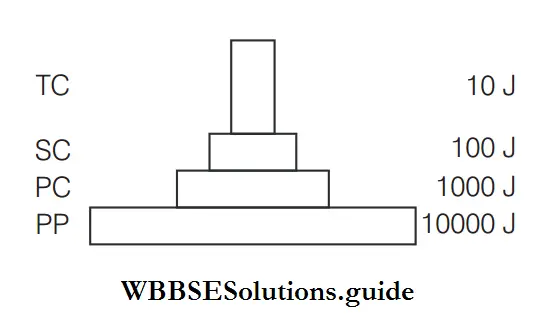
Miscellaneous MCQs on Biodiversity and Conservation for NEET

Question 8. Assertion The National Bird of New Zealand is Apteryx. Reason (R) Flightless birds are native of New Zealand.

  1. Both A and R are true and R is the correct explanation of A
  2. Both A and R are true, but R is not the correct explanation of A
  3. A is true, but R is false
  4. Both A and R are false

Answer: 1. Both A and R are true and R is the correct explanation of A

Both A are R are true and R is the correct explanation of A. Kiwi or Apteryx, flightless birds are native to New Zealand and is also the National, bird of New Zealand.

“biodiversity questions and answers pdf “

Question 9. Consider the following statements.

  1. The estuaries are semienclosed coastal body of water which has a free connection with the open sea.
  2. Estuaries may be considered as ecotones between the fresh and marine habitats.
  3. Estuaries are salt-water lakes.
  4. Estuaries are freshwater lakes.

Choose the option containing correct statements.

  1. 1 and 2
  2. 2 and 3
  3. 3 and 4
  4. 1, 2 and 3

Answer: 1. 1 and 2

Statements I and II are correct. An estuary is a partially (semi) enclosed coastal body of brackish water with one or more rivers or streams flowing into it, and with a free connection to the open sea. Estuaries form a transition zone between river environments and marine environments known as ecotone. Other statements are incorrect.

Different Aspects of Biodiversity and Its Conservation MCQs for NEET

Question 10. Which bird is the symbol of ‘The Bombay Natural History Society (BNHS)’?

  1. Hornbill
  2. Spoonbill
  3. Egret
  4. Sunbird

Answer: 1. Hornbill

The BNHS logo (symbol) is the great hornbill, inspired by a great hornbill named William, who lived on the premises of the Society from 1894 until 1920. Inquiline is an animal that lives in close association with another animal without harming it in any serious manner whereas a cultigen is a domesticated plant species of unknown or obscure origin, distinct in its characteristics from known natural species.

Question 11. Animals like cockroaches, lizards and mice share buildings of human dwellings. Such animals are

  1. Transgenic
  2. Endemic
  3. Inquilines
  4. Cultigens

Answer: 3. Inquilines

Animals like cockroaches, lizards and mice share buildings of human dwellings. Such animals are inquilines.

Question 12. Wildlife of Nature is renamed as

  1. World wildlife conservation of nature
  2. World wildlife of nature
  3. World wild fauna
  4. World wildlife fund

Answer: 4. World wildlife fund

World Wildlife Fund (WWF) was renamed as Wildlife of nature in 1986 which has a membership of about 23 countries including India.
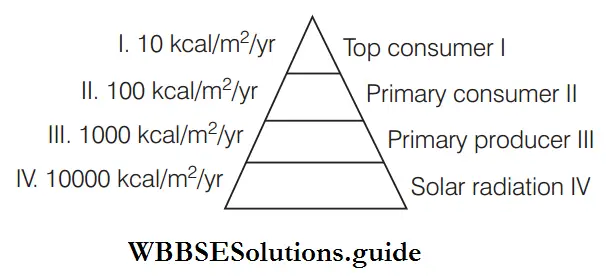
“which one is an endangered species in the following “

Question 13. Choose the incorrectly matched pair.

  1. World Summit on Sustainable Development, 2002 – Johannesburg
  2. Carrot grass – Lantana
  3. Wildlife safari parks – Ex situ conservation
  4. Amazon rainforest – Lungs of the planet
  5. Khasi and Jaintia hills – Meghalaya

Answer: 2. Carrot grass – Lantana

Option 2 is incorrectly matched pair and can be corrected as Botanical name of carrot grass is Parthenium hysterophorus. Carrot grass belongs to family–Asteraceae and is native to subtropics of North and South America. Rest options are correctly matched pairs.
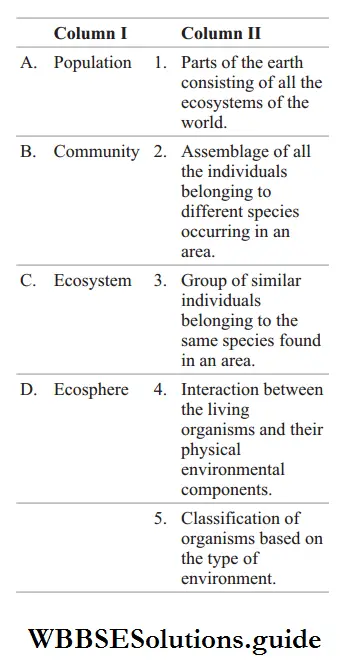
NEET Biology Mcqs

Question 14. Find the incorrectly matched pair.

  1. Endemism – Species confined to a region and not found anywhere else
  2. Hotspots – Western ghats
  3. Sacred groves – Jaintia Hills of Rajasthan
  4. Ex situ conservation – Zoological parks
  5. Alien species to India – Water hyacinth

Answer: 3. Sacred groves – Jaintia Hills of Rajasthan

Option 3 is incorrectly matched pair and can be corrected as Sacred groves are forest patches around places of worship which are held in high esteem by tribal communities.They are found in several parts of India, e.g. Karnataka, Maharashtra, Rajasthan (Aravalli), Meghalaya. In Meghalaya, sacred groves are found in Jaintia and Khasi hills. Rest options are correctly matched pairs.

NEET Biology Mcqs Chapter Wise

Question 15. Find the incorrectly matched pair.

  1. Endemism–Species confined to one region and not found anywhere else
  2. Hotspots – Regions with species richness
  3. Alien species to India – Clarias gariepinus
  4. Lungs of the planet – Amazon rainforest
  5. In situ conservation – IVF

Answer: 5. In situ conservation – IVF

Option 5 is an incorrectly matched pair and can be corrected as IVF is In Vitro Fertilisation, which is a method of assisted reproduction for infertile couples. In this method, fertilization is done outside the body in almost similar conditions as that in the body. It is not a method of in situ conservation. Rest options are correctly matched pairs.

Question 16. ‘One of the following statements is incorrect with reference to biodiversity. Identify it.

  1. The richest reservoirs of animal and plant life (high species richness) with few or no threatened species are called ‘biodiversity hotspots
  2. Biodiversity increases from higher altitudes to lower altitudes
  3. Biodiversity decreases from the equator to polar regions
  4. Depletion in the genetic diversity of crop plants is mainly due to the introduction of better varieties

Answer: 1. The richest reservoirs of animal and plant life (high species richness) with few or no threatened species are called ‘biodiversity hotspots

  • The statement in option 1 is incorrect and can be corrected as Biodiversity hotspots are areas with a high density of biodiversity or megadiversity which are also the most threatened ones.
  • They are determined by mainly three factors.
  • Number of species/species diversity.
  • Degree of endemism.
  • Degree of threat to habitat due to its degradation and fragmentation. Rest of other statements are correct with reference to biodiversity.

WBBSE Class 10 Model Question Paper 2023 Mathematics set 3

Model Question Paper 2023 Mathematics set 3


Model Question Paper 2023 Mathematics set 3 MCQs


Question 1. Interest on principal amount Rs. b at the rate of simple interest a% per annum for C months is

1. Rs. abc/1200
2. Rs. abc/100
3. Rs. abc/200
4. Rs. abc/120


Solution: l = prh/100

= Rs. abc/12 / 100

= Rs. abc/1200


Answer. 1. Rs. abc/1200


Question 2. The ratio of the capital amounts in a joint business invested by Tirtha, Bulu, and Rabeya is 10:12: 15 if the profit at the end of the year is Rs. 7,400. Rabeya will get a share of the profit of

1. Rs. 2,000
2. Rs. 2,400
3. Rs. 3,000
4. Rs. 2,800

Solution: 

The ratio of the capital amounts in a joint business invested by Tirtha, Bulu, and Rabeya is 10:12: 15 if the profit at the end of the year is Rs. 7,400.

Share of profit of Rabeya = 15/10+12+15

= 15/37 x Rs. 7,400

= 15/37 x Rs. 7,400 

= Rs. 3,000

Answer. 3. Rs. 3,000

“WBBSE Class 10 Mathematics model question paper 2023 set 3 with solutions”


Question 3. If x ∝ y, then

1. x² ∝ y²
2. x³∝ y²
3. x∝ y3
4. x²∝ y²

Answer. 4. x² y²

WBBSE Class 10 Model Question Paper 2023 Mathematics set 3


Question 4. If the roots of quadratic equation kx²-5x+ k = 0 are real and equal, the value of
k is

1. ± 5
2. ± 5/2
3. ± 2/5
4. ± 2


Solution:
When roots are equal, discriminant = 0

i.e., (-5)²-4 K       K = 0

∴ K²= 25/4

∴ K = ± 5/2

The value of k is ± 5/2

Answer: 2. ± 5/2

Question 5. If a/3 = b/4 = c/7 = 2a-3b+c / x

1. 1
2. 2
3. 3
4. 4

Solution: x = 2 x 3 – 3 x 4 +7

= 6-12+7

= 1

Question 6. If x = √7 + √6, the value of x + 1/x is 

1. 2√6
2. √6
3. 2√7
4. √7

Solution: x = √7+√6

∴ 1/x = 1/√7+√6

= √7-√6

=2√7

Answer: 3. 2√7

Class 10 Maths Class 10 Social Science
Class 10 English Class 10 Maths
Class 10 Geography Class 10 Geography MCQs
Class 10 History Class 10 History MCQs
Class 10 Life Science Class 10 Science VSAQS
Class 10 Physical Science Class 10 Science SAQs


Question 7. If α = 90°, B = 30°, the value of sin(α-B) is

1. 1
2. 1/2
3. √3/2
4. 1/√2

Solution: sin(α-B)=sin(90° – 30°) = sin60° = √3/2

Ans. 3. √3/2

“WBBSE Class 10 model question paper 2023 set 3 mathematics with detailed solutions”


Question 8. The angle measured 1 radian will be

1. acute angle
2. right angle
3. obtuse angle
4. straight angle

Answer. 1. acute angle

Question 9. In a cyclic quadrilateral ABCD if AB = AD and ∠ABD = 30°, the value of ∠BCD is

1. 90°
2. 30°.
3. 45°
4. 60°

Solution: ∠ADB = ∠ABD = 30°

∴ ∠BAD = 180° -2 (30°)

= 120°

∴ ∠BCD = 180° – 120° 

= 60°

Answer. 4. 60°

WBBSE Class 10 Model Question Paper 2023 Mathematics set 1


Question 10. The tangent PA is drawn to a circle with center O from the external point P. If PA = 4 cm OP = 5 cm. the radius of the circle is

1. 5 cm.
2. 4 cm.
3. 6 cm.
4. 8 cm.

Solution: OP² = OA² + AP²

The tangent PA is drawn to a circle with center O from the external point P. If PA = 4 cm OP = 5 cm

OA² = OP² – AP²

= 5²-4²=9

∴ OA = √9 = 3

∴ Diameter = 23cm = 6cm.

Answer. 3. 6 cm.


WBBSE Class 10 Model Question Paper 2023 Mathematics set 2


Question 11 If = AB/DE = BC/FD = AC/EF of ΔABC and ΔDEF,

1. ∠B = ∠E
2. ∠A = <D
3. ∠B = <D
4. ∠A = <F

Answer. 3. <B = <D


Question 12. If the ratio of volumes of two cubes is 8: 125, the ratio of total surface areas of the two cubes will be

1. 2:5
2. 4:25
3. 4:5
4. 2:25

Solution: Ratio of volumes of two cubes = 8: 125

∴ Ratio of sides =3√8/125

= 2/5

Ratio of surface areas = (2/5)²

= 4:25

Answer. 2. 4: 25


Question 13. If the length of the radius of the base of a right circular cone remains the same, the height becomes half of the previous one, then the volume of the cone will be decreased by

1. 25%
2. 50%
3. 75%
4. 100%

Answer. 2. 50%


Question 14. The mode of 1, 3, 2, 8, 10, 8, 3, 2, 8, 8 is

1. 2
2. 3
3. 8
4. 10

Solution: By arranging 1, 2, 2, 3, 3, 8, 8, 8, 8, 10

Answer. 3. 8


Question 15 The median of 8, 15, 10, 11, 7, 9, 11, 13, and 16 is

1. 15
2. 10
3. 11.5
4. 11

Solution: By arranging: 7, 8, 9, 10, 11, 11, 13, 15, 16

n = 9, Median = 9+1/2

= 5th term = 11

Answer. 4. 11

Question 2.

1. If a sum of money at 5% compound interest per annum for 2 years becomes Rs. 615, find the principal amount.

Solution:

If a sum of money at 5% compound interest per annum for 2 years becomes Rs. 615

A = P (1+r/100)n

∴ C.I = A-P = P (1+r/100)n – P

= P x 2.05 x 0.05

= 615

P = 615/2.05 x 0.05

= 6000


2. x and y are two variables. Corresponding values related to them are: x=7, y = 9; x = 4, y = 6; x = 12, y = 18; x = 3.6, y = 5.4. Determine the relationship of variation between x and y with reasons.

Solution:

x and y are two variables. Corresponding values related to them are: x=7, y = 9; x = 4, y = 6; x = 12, y = 18; x = 3.6, y = 5.4.

1st case x/y = 112/18 = 2/3

= x/y constant

∴ x α y


3. If the two roots of the quadratic equation x² + 8x + 2 = 0 are α and ẞ, find the value of (1/α + 1/β)

Solution: Here, α+β=-8 & α ẞ=2

1/α 1/β = α+β/αβ

= -8/2

= -4


4. A cylinder and a sphere are of equal radii, and their volumes are also equal. Find out the ratio of the diameter and height of the cylinder.

Solution: Volume of cylinder = 4r³h

Volume of sphere = 4/3 л

∴ 3h 4r or, 3h = 2 x 2r.

∴ 2r/h = 3/2

∴ Ratio of diameters: height = 3:2.


5. If the volume of a solid hemisphere is 144л, what is its diameter?

Solution : 2/3лr³ = 144π

r³ = 144 x 3 / 2

= 216

∴ r = 3√216 = 6.

Diameter = 2 x 6 cm = 12 cm.

True Or False

1. Only one circle can be drawn through three non-collinear points.

Answer: True

2. A concyclic parallelogram is a rectangular figure.

Answer: False

Fill In The Blanks

1. The angle in the segment of a circle that is greater than a semi-circle is A cute angle.

2. Perpendicular bisector of any chord passes through the Centre of the circle.


8. If tan2θ = 1, find the value of cos2θ.

tanθ = 1/tan2θ = cot2θ tan(90-2θ)

∴ θ=90-2θ      or, 3θ = 90°        ∴ θ = 30°

∴ cos2θ = cos60° = 1/2


9. The length of the radius of a circle is 14 cm. Find the circular measures of the angle at the center by an arc of this circle 66 cm in length.

Solution: Radian = arc/radian

= 66/15 radius

= 4.71 radians.


10.

WBBSE Class 10 Model Question Paper 2023 Mathematics set 3 Q.10


Solution:

WBBSE Class 10 Model Question Paper 2023 Mathematics set 3


“WBBSE Class 10 Mathematics 2023 model question paper set 3 for practice”

Question 3. At what rate of interest will Rs. 60,000 amount to Rs. 69,984 for 2 years?

Solution: 


WBBSE Class 10 Model Question Paper 2023 Mathematics set 4


Or, At the start of the year, Arun and Ajoy started a business jointly with a capital of Rs. 24,000 and Rs. 30,000 respectively. After some months Arup Invested Rs. 12,000 more in that business. If the profit after the end of the year was Rs. 14030 and Arun got a profit share of Rs. 7130, determine after how many months Arun Invested the amount.

Solution:

At the start of the year, Arun and Ajoy started a business jointly with a capital of Rs. 24,000 and Rs. 30,000 respectively. After some months Arup Invested Rs. 12,000 more in that business. If the profit after the end of the year was Rs. 14030 and Arun got a profit share of Rs. 7130

Let Arun invest Rs. 12,000 more after x months.

Arun’s Capital throughout the year

= Rs. [24000 × 12+12000 x (12-x)]

= Rs. (288000 + 144000 12000x) 

= Rs. (432000 – 12000x) 

ajoy’s Capital throughout the year

= Rs. 30000 x 12 = Rs. 360000

The ratio of Arun’s Capital & ajoy’s Capital

= (432000-12000x): 360000

= 1000(432-12x): 360000

= (432 – 12x): 360 12(36-x): 360 (36 – x): 30

Total profit= Rs. 14030.

∴Arun’s share of profit = 36-x / (36-x)+30 x Rs. 14030.

= 36-x /66-x x Rs. 14030.

∴According to the given problem,

= 14030 x 36-x/66-x = 7130

or, 36-x/66-x  = 7130/14030

= 713/1403

or, 713(66 – x)= 1403(36 – x)

or, 47058 – 713x= 50508 – 1403x

or, 1403x-713x= 50508-47058 

or, 690x = 3450

∴x = 3450/690

= 5

∴ After 5 months Arun invested Rs. 12,000 more.


Question 4. Solve : 1/a+b+x = 1/a + 1/b + 1/x , [x = 0, – (a + b)]

Solution:


WBBSE Class 10 Model Question Paper 2023 Mathematics set 5


Or, The velocity of a boat is 8 km/h in the still water. The boat takes 5 hours to cover 15 km downstream and 6 km upstream. Find the velocity of the current. 

Solution: Let the speed of current = x km/hr.

As the speed of the boat = is 8 km/hr.

∴ Speed of the boat with the current = (8 + x) km/hr. 

& Speed of the boat against the current = (8x) km/hr. 

∴ According to the problem,

15/8+x + 22/8-x

or, 15(8-x)+22 (8+x)/(8+x) (8-x) = 5

or, 120-15x+176 + 22x=5 (64 – x²)

or, 296 +7x=320-5x²

or, 5x²+7x-24=0

or, 5x² + 15x- 8x-24 = 0

or, 5x (x+3)-8 (x+3)=0 or, (x+3) (5x-8)= 0 

Either x+3=0                           ∴ x = – 3 (Not possible)

Or, 5x-8=0                              ∴ 5x = 8

∴ X = 8/5

= 1 3/5 km/hr. 


Question 5. √5/√3+√2 – 3√3/√2+√5 + 2√2/√3+√5

Solution:  Given =  √5/√3+√2 – 3√3/√2+√5 + 2√2/√3+√5 ———–(1)


WBBSE Class 10 Model Question Paper 2023 Mathematics set 6


Or, If 5 men can harvest jute cultivated in 10 bighas of land in 12 days, how many farmers can harvest jute cultivated in 18 bighas in 9 days? Determine this by applying the variation theorem.

Solution: Let the number of farmers be A,

number of days be B and area of land be C

The number of farmers is in direct variation with the area, of land, when the number of days remains constant.

∴ A ∝ C, when B is constant.

Again, if the area of land remains constant, then the number of farmers is in inverse variation

with the number of days, i.e., Aα 1/B

when C is constant.

∴  According to the theorem on joint variation, A α C/B, when B and C both vary.

i.e., A = K C/B [where, K is non zero constant] ———–(1)

Given A= 5, B = 12 and C = 10

From (1) we get 5 K = 10/12

or, K = 5×12/10          ∴ K = 6

Now, putting the value of K in equation (1) we get A = 6 C/B ——–(2)

If B = 9 and C = 18 then, we get from (2), A =  6 x 18/9

= 12

∴ Required number of farmers = 12.


Question 6. If ay – bx / c = cx – az / b = bz – cy/a, proved that x/a = y/b = z/c.

Solution: ay – bx / c = cx – az / b = bz – cy/a

∴ c(ay – bx) + b(cx – az) + a(bz – cy) / c²+b²+a²

= cay -cbx + bcx – baz +abz – acy / c²+b²+a²

= 0    [using addendo we get]

so, ay – by / c = 0     or, ay – bx = 0

or, ay = by        ∴ y/b = x/a

Again, cx – az / b = 0        or, cx = az            ∴ x/a = z/c

∴ x/a = y/b = z/c [proved]


Or, If a,b, and c are in continued proportion, prove that a²b²c²(1/a³ + 1/b³ + 1/c³) = a³+b³+c³

Solution: To prove, a²b²c²(1/a³ + 1/b³ + 1/c³) = a³+b³+c³


WBBSE Class 10 Model Question Paper 2023 Mathematics set 7


Question 7. State and prove Pythagoras’ theorem.

Solution:

Given: ABC is a right-angled triangle whose∠A is a right angle.

To prove: BC²= AB² + AC²

Construction: I draw a perpendicular AD on the

hypotenuse BC from the right angular point A which intersects the side BC at point D.

Proof: In right-angled triangle ABC, AD is perpendicular on the hypotenuse BC

∴ ΔABD and ΔCBA are similar.

Hence AB/BC = BD/AB,        ∴ AB² = BC.BD———-(1)

Again, ΔCAD and AGBA are similar.

Hence, AC/BC = DC/AC,       ∴ AC² = BC.DC

So, by adding (1) and (2), I get, AB²+ AC² = BC.BD + BC.DC

= BC(BD+ DC) = BC.BC= BC²

∴ BC² = AB²+ AC² Proved.


WBBSE Class 10 Model Question Paper 2023 Mathematics set 8


Or, Prove that the opposite angles of a cyclic quadrilateral are supplementary. 

Solution:

Given: ABCD is a cyclic quadrilateral of a circle with center O.

To prove that: ∠ABC + ∠ADC= 2 right angles and <BAD +∠BCD 2 right angles

Construction: A, O, and C, O are joined.

Proof: ∠AOC is the reflex angle at the center and ABC is the angle at the circle arc formed with the circular area ADC.

∴ Reflex∠AOC = 2∠ABC

∴ ∠ABC = 1/2 reflex ∠AOC———(1)

Again, ∠AOC is the angle at the center and ZADC is the angle at the circle formed with the circular area ABC.

∴ ∠AOC = 2∠ADC

∴ ∠ADC = 1/2 ∠AOC———(2)

∴ From (1) and (2), we get∠ABC + ∠ADC 

= 1/2(reflex ∠AOC+ ∠AOC)

= 1/2 x 4 right angles = 2 right angles


WBBSE Class 10 Model Question Paper 2023 Mathematics set 9


Similarly by joining B, O and D, O; it can be prove that /BAD + BCD = 2 right angles (Proved)

Alternative proof:

Given: ABCD is a cyclic quadrilateral.

To prove that: ∠ABC + ∠ADC= 2 right angles and ∠BAD + ∠BCD 2 right angles

Construction: Two diagonals AC and BD are drawn.

Proof: ∠ADB = ∠ACB [angle in the same segment of the circle] Again, BAC = BDC [angle in the same segment of the circle]

Again, ∠ADC = ∠ADB + ∠BDC=∠ACB + <BAC

∴ ∠ADC + ∠ABC = ∠ACB + ∠BAC + ∠ABC

∴ ∠ADC + ∠ABC= 2 right angles [sumof there angles of a triangle is 180°]

Similarly, we can prove that ∠BAD + ∠BCD = 2 right angles. Proved.


WBBSE Class 10 Model Question Paper 2023 Mathematics set 10


Question 8. ABCD is a trapezium of which AB || DC; a straight line parallel to AB intersects AD and BC at the points E and F respectively. Prove that AE: ED = BE: FC. 

Solution:

Given: AB | DC in the trapezium ABCD; the straight line parallel to AB has intersected AD and BC at the points E and F respectively.

To prove: AE: ED = BF: FC.

Construction: I joined A, C which has intersected EF at the point G.

Proof: In ΔADC, DC || EF

So, from Thales theorem, we get, AE/ED

= AG/GC ———(1)

Again, in ΔACB, AB || FG

∴ From Thales theorem, we get, AG/GC

= BF/FC ———(2)

So, from (1) and (2), we get AE/ED = BF/FC

∴ AE ED = BF: FC


WBBSE Class 10 Model Question Paper 2023 Mathematics set 11


Or, In a cyclic quadrilateral ABCD if AB = DC, prove that AC = BD.

Solution: ABCD is a cyclic quadrilateral.

∴ AB = DC

To prove AC BD

In ΔABC & ABCD,

(1) AB = CD, BC is common

∠DBC = ∠BAC (angle on same arc)

∴ ΔABC ≅ ΔBCD

∴ AC = BD.


WBBSE Class 10 Model Question Paper 2023 Mathematics set 12


Question 9. Find the value of √22 geometrically. 

Solution: 22=5 x 4.4

From AX, cut AB = 5 cm & BC = 4.4 cm. 

O is the midpoint of AC.

Draw a semicircle with center O.

Now draw a perpendicular at B on AC, which cuts the semicircle at D.

Length of BD is the value of √22 = 4.7 (approx)


WBBSE Class 10 Model Question Paper 2023 Mathematics set 13

Or, Draw a triangle having a side of 6.5 cm in length and measures of two angles adjacent to the side are 50° and 75°. Draw the in-circle of that triangle.

Solution: ABC is an A whose

C = 75° & B = 50°, BC = 6.5 cm.

O is the center of the incircle.


WBBSE Class 10 Model Question Paper 2023 Mathematics set 14


Question 10. Answer any two questions :

1. Find the value of x from the equation (x + 1) cot² Π/6= 2cos²Π/3 +3/4 sec²Π/4 +4sin²Π/6

Solution: (x + 1) cot² Π/6= 2cos²Π/3 +3/4 sec²Π/4 +4sin²Π/6


WBBSE Class 10 Model Question Paper 2023 Mathematics set 15


2. Show that cosec²22° cot 68° = sin² 22° + sin²68° + cot²68°. 

Solution: L.H.S. = cosec²22°. cot²68°

=cosec²(90° – 68°) cot²68°

= sec²68°. cot²68°

= 1/cos² 68° x cos² 68° / sin² 68°

= 1/sin² 68°

= cosec²68°

R.H.S= sin²22° + sin²68° + cot²68° 

= sin²(90° – 68°) + sin²68° + cot²68°

= cos²68° + sin²68° + cot²68°

= 1 + cot²68°

=cosec²68°

∴ L.H.S. =  R.H.S.


3. If cose =
X/√x²+ y², show that x sine = y cose.

Solution: sinθ = √1-cos²0 =√1 – (x/√x²+y²)²

WBBSE Class 10 Model Question Paper 2023 Mathematics set 16


Question 11.

1. A hemisphere and a cone have an equal base and their heights are also equal, find the ratio of their volumes and the ratio of their curved surface areas.

Solution: Height of hemisphere = Radius of base = r

Height of cone Radius of base = r


“WBBSE 2023 Class 10 Mathematics set 3 model question paper with solved answers”

WBBSE Class 10 Model Question Paper 2023 Mathematics set 17


2. Find the volume of a right circular cone obtained from a wooden cube of 4.2 dcm edge by wasting minimum quantity of wood.

Solution: Here diameter of base of the cone one edge of cube.

Radius = 4.2 / 2

= 2.1 dcm 

= 21 cm

Height of cone one edge of cube = 42 cm..

Volume= 1/3г²h= X

= 1/3 x 22/7 x 21 x 21 x 42 cu cm.

= 22 x 21 x 42 cu cm 

= 19404 cu cm.

∴ Volume of cone = 19404 cu cm. Ans.


3. Height of a right circular cylinder is twice of its radius. If the height would be 6 times of its radius, then the volume of the cylinder would be greater by 539 cubic dm. Find the the height of the cylinder.

Solution:

Height of a right circular cylinder is twice of its radius. If the height would be 6 times of its radius, then the volume of the cylinder would be greater by 539 cubic dm.

Let the height of the cylinder = h dcm & radius = r dcm.

∴ h = 2r

Volume of the cylinder = r² x 2r= 2πr³

If height h = 6r, volume = r² x 6r = 6πr³

According to the problem, 6r³-2r³ = 539

4πr³ = 539

or, 4 x 22/7 r3 = 539

∴ r³ = 539 x 7 / 88

= (7/2)³

∴ r= 7/2

∴ 2r= 7.

∴ Height = 2r = 7dcm.


Question 12. The angle of elevation and the angles of depression of the top and foot of the monument, when observed from a point on the roof of a five-storied building of Mihir, are 60° and 30° respectively. If the height of the building is 16 metre, what will be the height of the monument ?

Solution:

The angle of elevation and the angles of depression of the top and foot of the monument, when observed from a point on the roof of a five-storied building of Mihir, are 60° and 30° respectively.

Let AB 16 m Height of the building


WBBSE Class 10 Model Question Paper 2023 Mathematics set 18


Or, When the angle of elevation of the sun changes from 45° to 60°, the length of shadow of a telegraph post changes to 4 metres. When the angle of elevation of the sun is 30°, then find the length of shadow of the telegraph post.

Solution: In APQR

WBBSE Class 10 Model Question Paper 2023 Mathematics set 19


Question 13. Answer any two questions:

1. Shakil babu would bring mangoes kept in 50 packing boxes in the retail market. These boxes contained varying number of mangoes. The following is the distribution of mangoes according to the number of boxes.


WBBSE Class 10 Model Question Paper 2023 Mathematics set 3 Q.13


Find the mean number of mangoes kept in 50 packing boxes.

Solution:


WBBSE Class 10 Model Question Paper 2023 Mathematics set 20


2. Find the mean of heights of students from the following distribution table


WBBSE Class 10 Model Question Paper 2023 Mathematics set 3 Q.13.2


Solution:


WBBSE Class 10 Model Question Paper 2023 Mathematics set 21


3. Find the mode of the following frequency distribution table


WBBSE Class 10 Model Question Paper 2023 Mathematics set 3 Q.13.3


Solution:


WBBSE Class 10 Model Question Paper 2023 Mathematics set 3 Q.13.3


WBBSE Class 10 Model Question Paper 2023 Mathematics set 22