WBBSE Notes For Class 6 General Science And Environment Chapter 12 Waste Products

Chapter 12 Waste Products Waste Products

Origin and Nature-The waste products of our home and their reuse :

In urban communities everywhere they are producing huge quantities of household and commercial waste. Most of you have seen heaps of rubbish or garbage dumped at the roadside or in the dustbin.

You may have noticed a dustbin in your house or on the roadside usually unused things such as plastic, packets, old bottles, parts of vegetables, damaged or unused papers, broken glass pieces, boxes, etc. are thrown in the dustbin.

Read and Learn More WBBSE Notes For Class 6 General Science and Environment


WBBSE Notes For Class 6 General Science And Environment Chapter 12 Waste Products Plastic, old bottles,Papers,Packets

Class 6 History Class 6 Social Science
Class 6 Geography Class 6 Science
Class 6 Maths Class 6 Science MCQs
Class 6 General Science Class 6 Maths Solutions
Class 6 Geography Class 6 Hindi


Sometimes you may have also seen your parents, to sale some old papers, plastic bottles, some pieces of metal, broken glasses, etc to some salesman or rag-pickers. These throwaway items are called waste products.

“WBBSE Class 6 General Science Chapter 12 waste products notes”

Waste is unwanted or unusable materials which are rejected after primary use or have no further use.

Make a list of things of your house that already have been discarded.


Articles discarded Sources
From house From kitchen
1.
2.
3.
4.


Now the question is why we discard things. Usually, we discard things because these things occupy a lot of space and these have no further use in that format.

“Methods of waste disposal Class 6 WBBSE Science”

Moreover, organic products such as rotten vegetables and vegetable peels spoil the hygienic atmosphere of our house.

Make a list of waste products around you and complete the table.


List of Waste Products Do they occupy space? How much space do they occupy? Do they have definite weight?
1. Paper boxes
2. Plastic boxes
3. Pieces of thermocol
4. Old blades
5. Rotten fruits, vegetables
6. Old batteries
7. Electrical broken parts
8. Unused mobile parts
9.
10.


The traditional method of disposal of waste is by dumping the rubbish in landfill sites. such as disused quarries and grovel pits.

If you notice in a dustbin or garbage, a heap of vegetable peels, banana and other fruit peels, paper packets, jute products, straw products or other plant products decompose easily and mix with soil within a few days whereas plastic or polythene packets, bags and bottle pieces of glass, tin, cans, radio, television, electrical and computer parts remain unchanged, neither decompose nor mix with soil.

“Class 6 WBBSE General Science Chapter 12 types of waste products explained”

The former products are biodegradable and later products are known as non-biodegradable products. The waste products that easily decompose and get mixed with the soil are called Biodegradable products and the waste products that do not decompose even after remaining in the soil for a long time are called Non-Biodegradable.

Make a list of Biodegradable and Non-Biodegradable products around you.


Throwaway products Biodegradable Non-Biodegradable
1.
2.
3.
4.


Try to keep two separate colored waste buckets or baskets in your house and in your classroom or in school and label them as Biodegradable and Non-Biodegradable. Keep degradable and non-degradable waste products separately in two bucket baskets.

“Step-by-step notes on waste products Class 6 WBBSE”

Besides this, you keep another bucket of the basket to keep recyclable waste products such as paper, plastic packets, plastic, bottles, and metallic substances.


WBBSE Notes For Class 6 General Science And Environment Chapter 12 Waste Products Papers,old bottles, Packets,and metalic


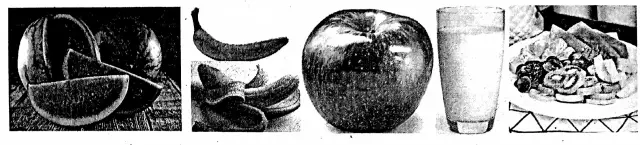
Identify the biodegradable and non-biodegradable products from the above-mentioned pictures and complete the table below.


Products Biodegradable Non-biodegradable
1.
2.
3.
4.


Let’s see some waste products and from where they come (sources)


Waste products From where they come (Sources)
1.    Broken glass parts, lamp. Houses and public dustbin.
2.    Plastic bottles, polythene bags, etc.  Houses.
3.    Packets, wood pieces, dust. Shops and from different commercial activities
 4.    Rotten vegetables  Market places
5.    DDT, BHC, and other pesticides. Agricultural land
 6.    Broken pipes, plastic, asbestos, etc.  From construction place
 7.    Syringes, cotton, used glasses, plusters, % medicine foiles, etc. Hospitals and other health centers
8. Chemical wastes, oil, etc. From factory


From the above waste materials complete the table below.


Products/materials Types of waste Remarks 
Bio-degradable Non-bio degradable Useful non-useful


All the waste that we generate can be categorized into three types

  1. Bio-degradable.
  2. Non-Biodegradable and
  3. Recyclable.

The Biodegradable materials can be put into deep pits in the ground and be left for natural decomposition (breakdown). Non-biodegradable waste to be disposed off.

The three R’s-reduce, reuse, and recycle-all help to cut down on the amount of waste we throw away. They conserve natural resources, landfill space, and energy.

“WBBSE Class 6 General Science Chapter 12 important questions and answers”

We can use newspaper for packaging, broken plastic buckets as dustbins, carrier bags can be reused in shopping, and when possible carry goods in a bag. By this way you can reduce the use of plastic bags. Don’t ask for plastic bags, use your old bag.


Chapter 12 Waste Products Reusing Waste Products

Reusing Waste Products:

Many items found around the home can be used for different purposes. So before you throw these items away think about how these things can be reused.

Reuse is the action or practice of using something again whether for its original purpose (known as conventional reuse) or to fulfill a different function (known as creative reuse).

WBBSE Class 6 Waste Products Notes

Benefits Of Reuse

  1. Reuse and reduce hazardous waste.
  2. It reduces air, water, and land pollution.
  3. Limits the need for new natural resources, such as timber, petroleum, fibers, plastic products, etc.
  4. Gives economic benefits.

Since the introduction of the EPA’s Reduce, Reuse, Recycle campaign, many have adopted recyclable waste management systems.
Some home items we can save from trash and instill new life and purpose.


Items We Can Reuse

  1. Glass jars, containers or cans.
  2. Gallon jugs, plastic soda bottles, and other plastic containers.
  3. Newspapers, magazines, hard boards, paper bags, etc.
  4. Clothes, towels, bedding, etc.
  5. Seeds.
  6. Plastic bags.
  7. Bathroom items like toothbrushes or other brushes, toothpaste tubes, shop care, etc.
  8.  Broken dishes
  9. Old furniture.
  10. Metalic substances.

You can reuse many organic waste items like egg cells, rotten vegetables, teabags, peels of fruits, leaves, scales of fish, etc. converting them into composite fertilizer. These can be used to grow plants in your garden.

“Solved examples of waste products and their disposal WBBSE Class 6 Science”

Papers, plastics, glasses, etc. can be recycled and would be the raw material for new products. So don’t through all these things in the dustbin as waste.

Separate these things which can be recycled and hand over these things to the particular rag-pickers or ‘kabadiwallahs’. With these 3 ‘R’s we can refuse some items such as plastic bags for each product, and plastic bottles as containers.

In spite of these, we can use our own utensils to carry cloth or other natural fiber carry bags when we go to shopping and reuse polythene bags. Therefore, we can adapt the 4Rs (Reduce, Refuse, Reuse, and Recycle) to reduce the waste items.

Complete the table with 3 types of waste items


Waste items Categories Recyclable
Bio-degradable Non-biodegradable
1. Plastic bags Yes Yes
2. Paper Yes Yes
3. Rubber Yes Yes
4. Food wastes Yes
5. Glass
6. Metals
7. Leather
8. Textile
9.
10.
11.
12.


Rejected computers, mobile, its parts, and other electronic goods are known as electronic waste or e-waste. Recycling is the only solution for the treatment of e-wastes.

“Best guide for Class 6 General Science WBBSE waste management”]

WBBSE Notes For Class 6 General Science And Environment Chapter 12 Waste Products Recycling solution for the treatment of E-Wastes.


WBBSE Notes For Class 6 General Science and Environment

WBBSE Notes For Class 6 General Science And Environment Chapter 11 Habits And Habitats Of Some Important Animals

Chapter 11 Habits And Habitats Of Some Important Animals Behavioural Science And Behavioural Scientists

You may have heard the name of Arctic Tern, a small migratory seabird famous for its long-distance migration between the North Pole and South Pole. Do you know how the male bird impresses the female?

The male bird flies over the female or around the female with a fresh fish in his beak. If the male can please the female then she (the female) receives the fish and bonding forms between them.

Later during nest building and courtship male provides the female with a steady diet of fish. Most of you have seen the spiderweb (net-like structure made up of fine thread) Have you noticed how the spider catches its prey?

Many spiders build webs with fine threads (proteinaceous spider-silk). When an insect such as a fly, mosquito or other small insect falls into the spider-web, it sticks to the sticky threads.

Read and Learn More WBBSE Notes For Class 6 General Science and Environment

WBBSE Notes For Class 6 General science And Environment Chapter 11 Habits And Habitats Of Some Important Animals Spider web

The spider soon approaches the trapped insect and uses its fangs to inject venom into its body and after the death of the prey, the spider sucks the juice of the prey.

Take another example

Most of you have heard the sweet voice of the common cuckoo, especially during spring. Cuckoos are unable to build their nest. Female (a hen) Cuckoo lays its egg in the nest of other birds mainly Crow.

During the egg-laying period male cuckoo moves around the nest of the crow and emits a constant voice and disturbs the male and also female crow (or other birds).
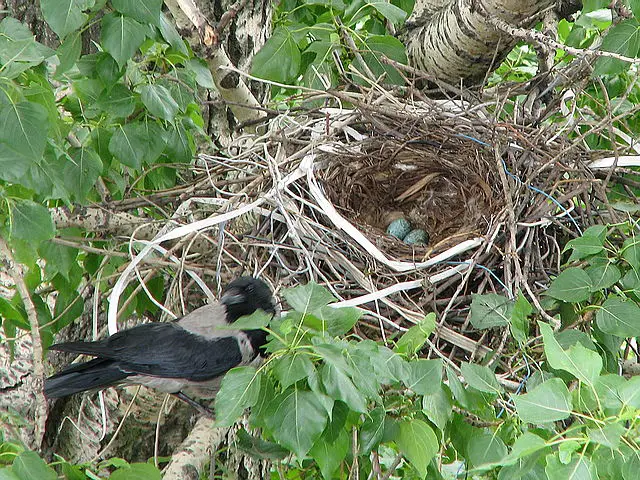
WBBSE Notes For Class 6 General science And Environment Chapter 11 Habits And Habitats Of Some Important Animals Nest of Crow .

When the crows both male and female try to drive away the male cuckoo at that appropriate moment, the hen cuckoo flies down to the host’s (crow or other birds) nest, pushes one egg out of the nest and lays its egg and flies off.

“WBBSE Class 6 General Science Chapter 11 habits and habitats of some important animals notes”

The whole process takes about a few seconds (cuckoo layers 10-12 eggs but one egg at a time and in different nests of other birds for incubation). If you look around you may find many such cases of animal behaviour in nature.

Class 6 History Class 6 Social Science
Class 6 Geography Class 6 Science
Class 6 Maths Class 6 Science MCQs
Class 6 General Science Class 6 Maths Solutions
Class 6 Geography Class 6 Hindi

The behaviour of organisms allows them to interact with their kind as well as with other kinds (species). Behaviour is the way organisms respond to their environment and other members of the same species and sometimes with other species.

The science of animal behaviour is known as ethology. Behavioural science (ethology) has a close relation to other branches of science (Ecology, Genetics, Physiology, etc.).

The activities of animals enable them to survive and to find a favourable environment. Animals behave in a particular way to meet a particular need.

Aetiology

It is the scientific and objective study of animal behaviour usually with a focus on behaviour under natural conditions.

Animal behaviour includes all the ways that animals interact with each other and the environment. The branch of biology that studies animal behaviour is called Ethology.

Chapter 11 Habits And Habitats Of Some Important Animals History Of The Study Of Animal Behaviour

People have been making detailed descriptions of the natural history of animals since the dawn of human history. The origin of the scientific study of animal behaviour lies in the works of various scientists and thinkers.

Behavioural science has its scientific roots in the work of Charles Darwin (1809-1882). Charles Darwin’s approach was a revolutionary one.
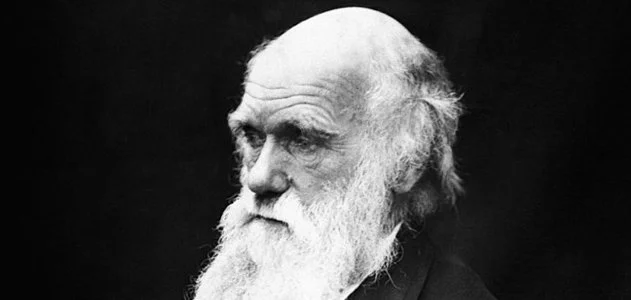
WBBSE Notes For Class 6 General science And Environment Chapter 11 Habits And Habitats Of Some Important Animals Charles darwin

He observed animal behaviour from childhood and later his five-year voyage on HMS Beagle (the ship on which he travelled) as a geologist gave him a lot of opportunities to study animals in different parts of the world.

From his observation, he published his theory in 1958 after years of scientific investigation. The study and research of modern biology are all based on Darwin’s scientific theory.

The simple things of Darwin’s Natural selection theory are-Animals adapted themselves in different environments by changing their behaviour.

This change is inherited from one generation to another, the animals or plants able to make positive changes selected by nature and sustain and ultimately form new species, and those forms that can’t change (unable to adapt to surroundings) extinct from the earth.

“WBBSE notes for Class 6 Science habits and habitats of animals”

From different studies, it has been found that the behaviour of animals has a genetic basis (Genes influence the development of neural and hormonal mechanisms that control behaviour) but the development of mechanisms that control behaviour is subject to environmental influences, such as practice after birth.

Jeans Henri Fabre, a French Biologist (entomologist) was one of the founders of the study of insect behaviour. It was his hobby to observe the behaviour of the insects and note all these things. He wrote many books.
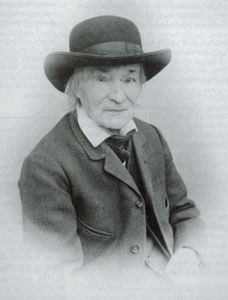
WBBSE Notes For Class 6 General science And Environment Chapter 11 Habits And Habitats Of Some Important Animals Jeans Henri Fabre

Fabre had the great merit of demonstrating the importance of instinct among insects. He wrote many beautiful accounts on insects. In one experiment he showed the stubborn habit of caterpillars moving in a line.

The direction of movement of the first one follows the rest. In one of his experiments, he picked up a line of caterpillars with the help of a stick and placed them on the edge of a round pot.

Fabre noticed that the caterpillars kept on moving in a circle for hours on the circular edge of the pot. The caterpillars kept moving in the same way until they got tired and dropped from the edge.

This is an example of instinctive behaviour control by the nervous system. Modern studies of behaviour, based on the observation of animals in their natural environment, were established by the work of Karl.
WBBSE Notes For Class 6 General science And Environment Chapter 11 Habits And Habitats Of Some Important Animals Karl von Fritsch

Von Fritsch, Konrad Lorenz and Niko Timbergen. They were collectively awarded the Nobel Prize in 1973. Von Fritsch studied the behaviour of honeybees for over forty years.
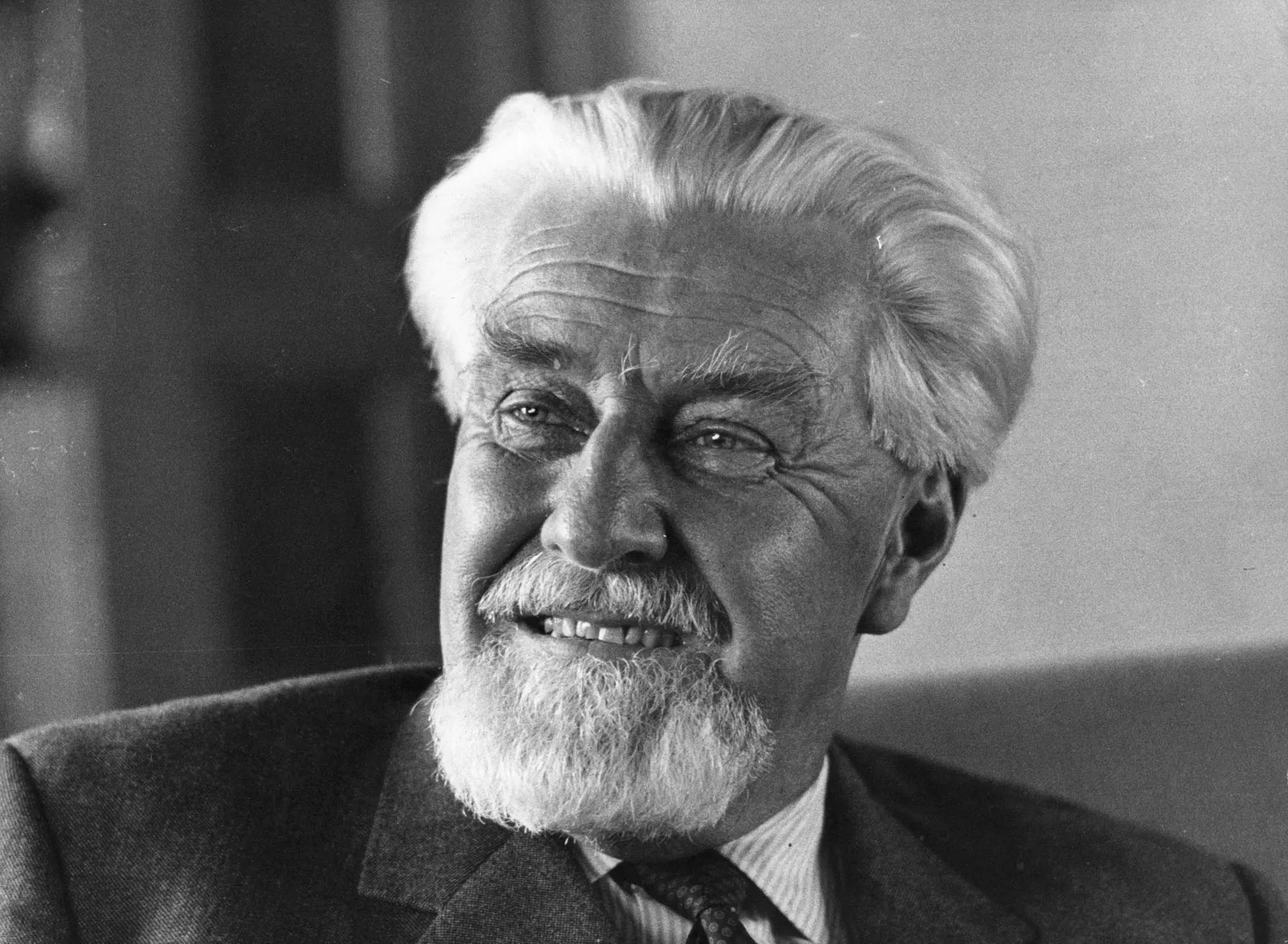
 

WBBSE Notes For Class 6 General science And Environment Chapter 11 Habits And Habitats Of Some Important Animals Konrad Lorenz


Von Fritsch established that bees use polarised light and magnetic fields to navigate. They can also see colours.

He showed that bees communicate to fellow workers the positions of food and sources found at a distance from the hive using a ‘waggle dance’. After seeing the dance, worker bees rush to the source and fetch the nectar (food) to the hive.

“Class 6 WBBSE General Science Chapter 11 animal habits and habitats explained”

Lorenz performed many experiments. In one of his spectacular demonstrations (experiment) with birds (Grey leg goose), he showed that the young animal (birds and mammals) forms a more or less permanent bond with a larger, moving object that is first observed.


Waggle Dance

The Waggle dance of a worker honeybee is the way it communicates the location of a new food source to other workers. The dance is performed on the vertical comb surface or the floor of the hive entrance.

It is a figure of eight (‘8’) dance, performed in darkness surrounded by sister workers. The dancing worker bee emits buzzing noise, vibrates its wings and laterally vibrates its body.
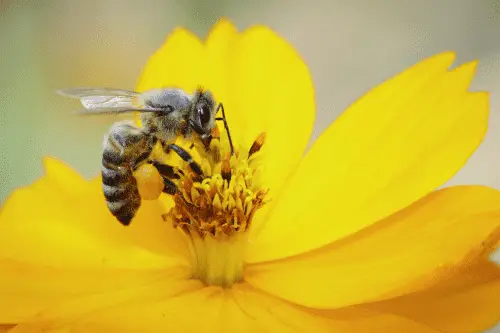
 

WBBSE Notes For Class 6 General science And Environment Chapter 11 Habits And Habitats Of Some Important Animals Waggle Dance


When the dance is performed more rapidly it indicates that the food source is close to the hive (shorter distance). In the mid-20th century, Dutch scientist Niko Timbergen studied the nesting of Herring Gulls (a type of bird).

He noticed that nearly hatched gull chicks were fed by their parents only after they picked the red spot on the side of its parent’s beaks, near the tip (The adult bill is yellow with a prominent red spot).
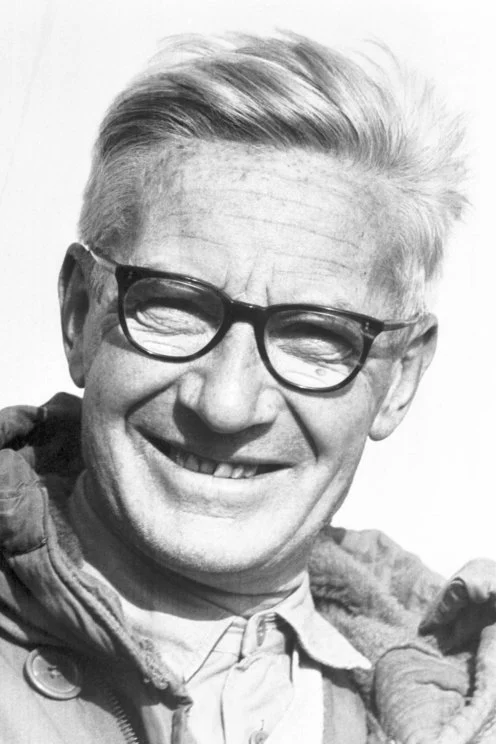
 

WBBSE Notes For Class 6 General science And Environment Chapter 11 Habits And Habitats Of Some Important Animals Niko Timbbergen


Timbergen tested the hypothesis that it is this spot that stimulates the chick to the peak. In his study, he presented to very young chicks in the nest, two models of a gull’s head one in natural colours with a red spot and the other identical shape with the red spot absent.

The model with the red spot received all the pecks. Niko Timbergen In another experiment Timbergen noticed the foolish behaviour of birds. Herring gulls hatch eggs on the ground.
WBBSE Class 6 Habits And Habitats Notes

He placed a bigger and more glossy fake egg near the real eggs. He found that the parents came hurriedly to warm that fake egg, leaving behind the real eggs.

Jane Goodall was the first woman who spent many days in the jungles of Tanzania (Africa) and ventured into the little-known world of wild Chimpanzees. She studied their behaviour and she discovered that Chimpanzees make tools, eat and hunt for meat, and have similar social behaviour to humans.
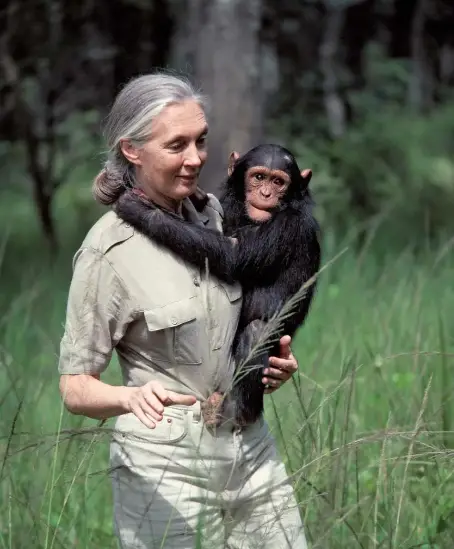
 

WBBSE Notes For Class 6 General science And Environment Chapter 11 Habits And Habitats Of Some Important Animals Jane Goodall


She was the first person who told us that chimpanzees used sticks as tools to dig out termites and they inserted the stick inside the termite hive and collected termites. They can use tools for catching fish.

Chapter 11 Habits And Habitats Of Some Important Animals Some Famous Indian Ethologists

There are many Indian ethologists (scientists) who became famous for their studying the habits and behaviour of animals. Among Indians, Ratanlal Brahmachary is widely known for his research on pheromones, (the biochemical messengers in a living organism).

Brahmacharya made a significant contribution to tiger behavioural studies. He studied the animal for over 50 years. He was among the first scientists to observe the scent-marking behaviour of tigers, where the animals spray urine on tree branches to mark their territories and communicate via biochemical messengers (pheromones).
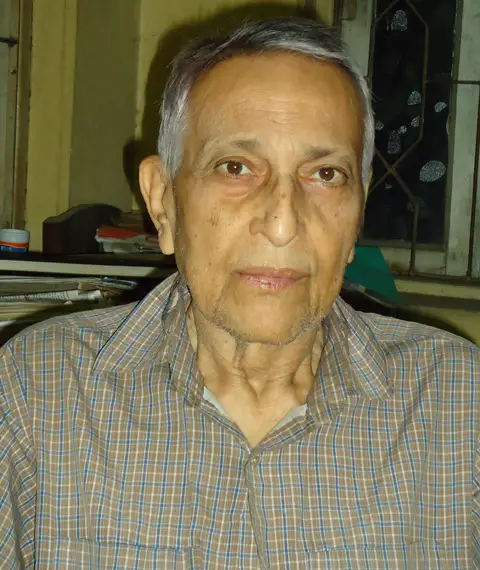
 

WBBSE Notes For Class 6 General science And Environment Chapter 11 Habits And Habitats Of Some Important Animals Ratanlal Brahmachary


He wrote several books in ‘Bangla’ to promote the cause of wildlife protection and scientific observation of animal behaviour.

Salim Ali is another famous naturalist and Ornithologist (scientist who works on birds) in India. He is known as the “Birdman of India”. He was a great bird-watcher. He wrote many books on birds and their behaviour.
 

WBBSE Notes For Class 6 General science And Environment Chapter 11 Habits And Habitats Of Some Important Animals Salim ali


In his book “The Book of Indian Birds” (1941) he discussed the kinds and habits of Indian birds. He was honoured by Padmabhushan and Padma Vibhusan awards. Raghavendra Gadagkar is also a famous naturalist who studied the working cycle of Bumblebees.

M. K. Chandrasekharan, a famous zoologist studied the working cycle in the body of various animals, including bats.
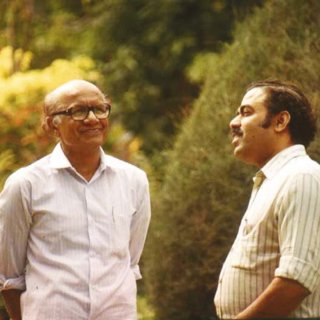
 

WBBSE Notes For Class 6 General science And Environment Chapter 11 Habits And Habitats Of Some Important Animals M.k Chandrasekharan


Gopal Chandra Bhattacharya, one of the famous naturalists of Bengal spent his entire life studying the behaviour and habits of the insects found in Bengal. He wrote many books and papers both in Bengali and English in a very simple language.

His writing is so simple that common people can easily understand these. His famous book in Bengali “Banglar kitpatango”. If you get a chance you must read the book.


Cultural Transmission Of Behaviour

One advantage of living in groups is that animals gain information from one another. Young animals like mammals and birds learn skill from their parents by watching and observing.

Macaque Monkeys on the Japanese island of Kohima learned to wash sweet potatoes originally provided for them by researchers in the early 1950s.

This behaviour was passed on from parents to offspring and was observed by other members of the troop. After a few months, researchers observed that all the monkeys were washing their potatoes in the sea.

Nearly fifty years later, this colony of monkeys still wash their potatoes even though they are not provided with dirty potatoes any more. Scientists think they like the salty taste.

From the above discussion, you may have felt behavioural science is an interesting one. It is an interesting branch of science.

“Step-by-step notes on habits and habitats of important animals Class 6 WBBSE”

From today onwards you also start observing the behaviour of animals (mainly birds, insects, common mammals, etc), all around you like the famous scientists you have just learned.

Not only start watching, note down the events with date, time and place and analyse the data from time to time. Who knows one day you might be a great Ethologist (behavioural scientist) like Darwin, Frisch, Goodall, Salim Ali, or Gopal Chandra Bhattacharya.

Of course, you will need to study hard and research a lot for that.

Complete the table:

Some behavioural incident Describe by
1.    Behaviour of chimpanzees 1. Jane Goodall
 2.    ……………  2.    ……………
3.    …………… 3.      …………….
4.    …………… 4.       …………….


Chapter 11 Habits And Habitats Of Some Important Animals The Habits and Behaviour Of Some Animals

The surrounding conditions in which an organism lives and with which it interacts is called its environment. The place where an organism lives is known as its habitat.  An organism gets shelter, food and the right climatic condition in a specific habitat.

Habitat constitutes a part of the total environment. The way organisms respond to their environment and to another member of the same species is known as behaviour. The habit of an organism refers to a usual way of behaving.

Let us know the habits and behaviour of some animals.

1. Ants:

All of you have seen ants. Ants are social insects. They live in colonies that may reach as many as a few million members. They are of various colours and types. Scientists are not yet able to describe all of the types.

Many types are yet to be discovered. Their total number is nearly half of the total organisms. Ants work together to gather food and care for the young, and their behaviour is surprisingly coordinated and methodical.

Most ant colonies are so united towards the common purposes of survival, growth and reproduction that they behave like a single organism. This social behaviour gives ants a major advantage over solitary insects and other animals.

Ants perform many strange and interesting activities. According to scientists red ants are masters and the black ants are their workers. Red ants are good in fighting in comparison to black ants. But black ants are more intelligent and first movers. They are hard. workers as well.
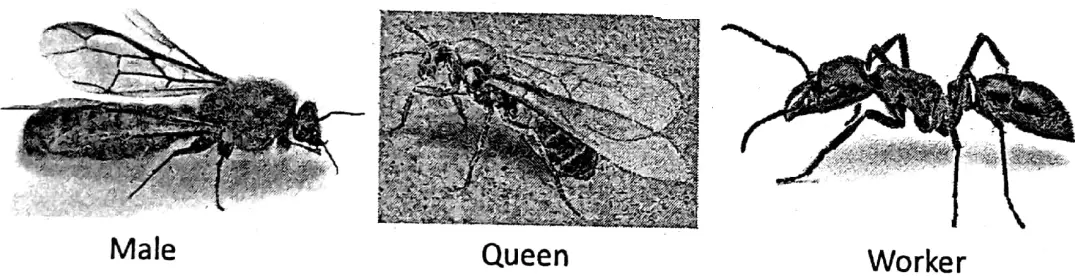
 

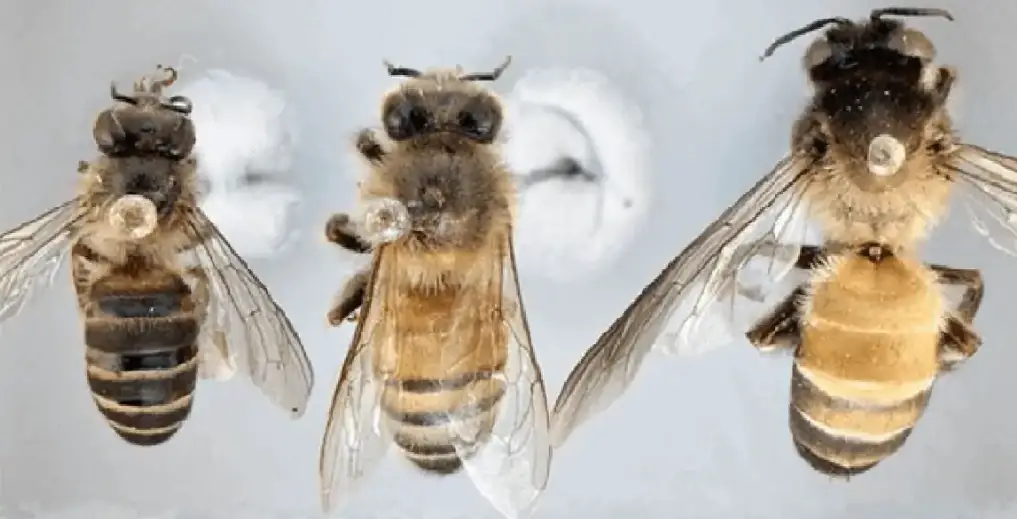
WBBSE Notes For Class 6 General science And Environment Chapter 11 Habits And Habitats Of Some Important Animals Different types of honey bees


The colour Most ants live in nests which may be located in the ground or under a rock or built above ground and made of twigs, sand, grovel, mud etc.

Many species produce winged males and queens (female) that fly into the air, where they mate. Queen ants have wings which they shed when they start a new nest.

There are three kinds of ants in a colony. The queen, the female workers and the males. The queen and the males have wings, while the workers don’t have wings. The queen sheds the wings when they start a new colony after mating.

The queen is the only ant that can lay eggs. The male ant’s job is to mate with the future queen ant and they do not live very long. Once the queen grows to adulthood, she spends the rest of her life laying eggs.

Depending on the species, a colony may have one queen or many queens. A division of labour (work) exists among worker ants, for example, the bigger ones with very large heads or with powerful jaws are called soldiers.

Soldier ants protect the queen, defend the colony, gather or kill (other insects or organisms) and attack an enemy in search of food and nesting space.

If they defeat another ant colony, they take away eggs of the defeated ant colony to their nests and when the egg hatches, the new ants become the ‘slave’ ants for the colony.

Do you know how the soldier ants protect the colony? The soldiers like our army barrack stand in the anthill at each exit and block it with their heads.

“WBBSE Class 6 General Science Chapter 11 important questions and answers”

When a returning worker approaches the closed entrance, it knocks with its antennae on the head of the soldier, who lets him in after receiving this sign.

Some other jobs of the colony include taking care of the eggs and babies, gathering food for the colony and building the anthills or mounds performed by workers.

Workers with swollen abdomen devour (consume) the nectar of flowers and honey from honey beehives. They regurgitate the honey and feed other workers.

Some species of ants farm Aphids (a tiny plant sap-sucking insect), protecting them on the plants where they are feeding and consuming the honeydew aphids release from their body.

This is a mutualistic relationship with these dairying ants milking the aphids by stroking them with their antennae. The aphids are then called the “Cow of ants”.

You may have seen the nest of ants, known as anthills. Anthills are cupola-shaped (dome-shaped) nests of ants. The population of a large anthill may reach several million individuals.

The anthills (nest) have numerous passages, wherein the young develop. Ants live in groups of numerous families for many years, consisting of females, males and workers.


WBBSE Notes For Class 6 General science And Environment Chapter 11 Habits And Habitats Of Some Important Animals Anthill


An ant has a mobile head with well-developed biting upper jaws. The head bears compound eyes and bent antennae, legs are well-developed. The abdomen is very narrow.

Some species (Red imported fire ants have sting) of ants have a string at the posterior end of the abdomen to discharge poison. Some form of ants make their wood home, they are often called wood ants.
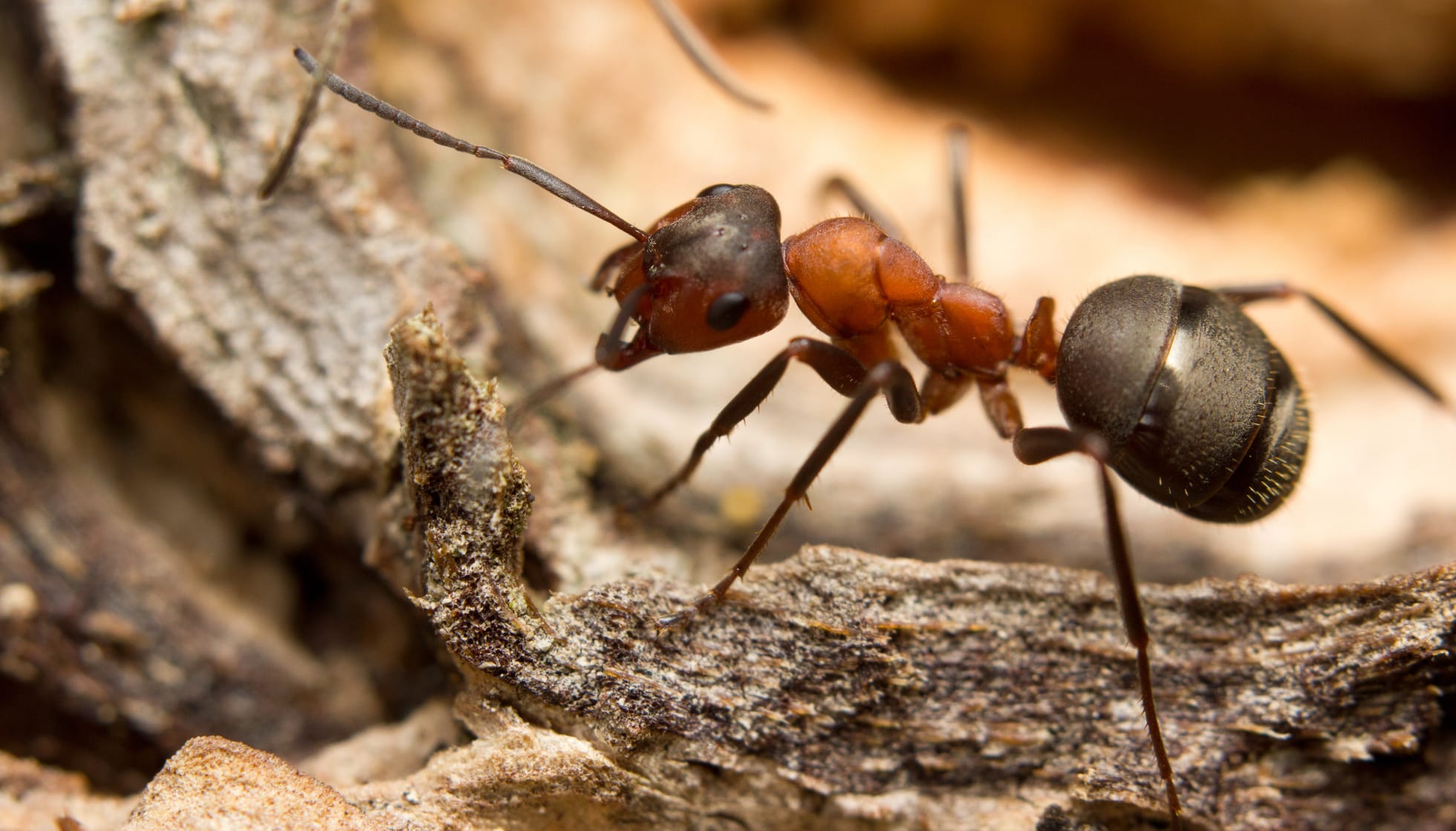
 

WBBSE Notes For Class 6 General science And Environment Chapter 11 Habits And Habitats Of Some Important Animals Wood Ant .


Ants live in the nest which are located underground, in ground-level mounds, or trees. Carpenter ants are large ants, they form nests in wood.

Ants typically eat nectar, seeds, fungus or insects. Ants spend winter in the underground part of the anthill. (Where the temperature is not as low as on the surface).

Gathering into a tight cluster they stay there until spring and feed on stored food. In hot countries, Nomadic ants are found. They keep changing their nest from time to time.

Worker ants of some tropical species cultivate mushrooms and moulds under the ground surface and use them to feed the larvae. Ants feed mainly on insects.

“Solved examples of animal habits and habitats WBBSE Class 6 Science”

It has been calculated that an ant family brings about 1 () kg of insects every day to the anthill, including caterpillars, butterflies, and beetle larvae.

The majority of these insects are pests (damage beneficial plants) of the forest and cultivated crops. Ants are useful in eliminating these pests.

Your work:

Try to observe ant’s behaviour along with their morphology in different localities. You may find many interesting behaviours of ants.


SI. No. Location Name of Ants /Sample  Colour of ants Size of ants Structure of ants  Habitat  Behaviour any speciality 
1.
2.
3.
4.
5.


Do it yourself:

Try to find Habitats for different types of ants.

Take some necessary things like a pen, a pencil, a notebook, a watch glass, gloves, pins, needles, a small brush, a small glass tube, a small amount of alcohol, forceps, some polybags or glass jars etc.

Observations:

  1. Find an ant’s nest.
  2. Follow the line of ants from where to where they are moving.
  3. Whether they have anything in their mouth or not?
  4. Whether they are carrying large food and what type of this food?
  5. What is the colour of these ants?
  6. Have you seen any mixture of ants?
  7. Take samples of one / two ants and put them into alcohol for further studies. (8) Try to follow the nest pattern.
  8. Whether see any other interesting events?
  9. Follow the mutual understanding of ants with other animals.
  10. Whether the ants eating their food on the spot or carrying it to their nest?
  11. Whether the ants are carrying food alone or eating alone?
  12. How speedy the ants are?
  13. How do they communicate with each other?

Fill up the tables :

1.

Size of ants large Medium Small Remarks


2.

Colour of ants Red Black Brown Other     Remarks


3.

Body shape Head Thorax Abdomen Other Parts Remarks


4.

Types of carrying substance Insects larva  Fungus eggs Other Remarks


5.

Types of food Vegetarian Reaction Non-veg Reaction Remarks


6.

Attitude of ants Aggressive Quiet Normal Other Remarks


7.

Seasonal activity Summer Winter Spring Other season Remarks


8.

Nature of Ant’s nest (anthills) In the ground with mud/ sands etc. In tree In wood In leaks Others Remarks


9.

Special behaviour you watch if any During movement Meeting with other ants Fighting among them Carrying food Carrying egg During flight Anthill making Remarks


Synchronise all the matter and write a paper on your observation. (You may use the following hints) Take help from your teacher.

  1. Type
  2. Colour
  3. Structural Specification
  4. Food
  5. Colony
  6. Association with other animals
  7. Social behaviour
  8. Works of different forms
  9. Seasonal appearance
  10. Any interesting observation
  11. Sample collection
  12. Drawing figures of different forms
  13. Communication
  14. Draw figures of anthills
  15. Conclusion
  16. Acknowledgement.


Chapter 11 Habits And Habitats Of Some Important Animals Termites

You may have seen tunnels in the frames of doors, windows even in walls by termites. Termites, popularly known as ‘white ants’ are also social insects like ants and honeybees.

Termites live in large colonies. They form their nest in soil or wood. Sometimes they form their nest (termitaria) which often rises to a height of 2.5 metres or above.


WBBSE Notes For Class 6 General science And Environment Chapter 11 Habits And Habitats Of Some Important Animals Termites


Termites have four distinct castes-Queen (female) and king (male), these are fully-winged reproductive forms, Workers which are small, wingless, sterile forms responsible for building and maintaining the nest and all other works of the nest.

The last cast is Soldiers who are also wingless and sterile and are responsible for defending the colony. Soldiers have large heads with powerful jaws (some forms have a snout-like projection from which they discharge a sticky secretion that immobilises enemies (usually ants).

Four from (castes) of termites are male, Female (reproductive forms) workers, and soldiers. The termitaria (nests) of termites is made up of many chambers, underground channels, and covered tunnels above ground, through which food is carried are constructed by using saliva to cement particles of sand together and are very strong.


WBBSE Notes For Class 6 General science And Environment Chapter 11 Habits And Habitats Of Some Important Animals Termites nest


The queen of termites is very bulky and whitish or creamy coloured. The abdomen is usually the only visible part. Termites don’t have a hard covering around the body.

Their body colour except for some soldiers’ form (they are pigmented) are whitish, or pale and have no pigment, so they are called white ants. They expose very little to sunlight.

If they are too exposed to sunlight the water in their bodies dries up. Termites maintain humidity and temperature in their nest and the tunnels of their passages.

Termites have a special feature, they can digest. cellulose, a component of carbohydrates (found in plant food products), with the help of microorganisms (Tryconympha-a protozoa) present in their (termites) intestines.
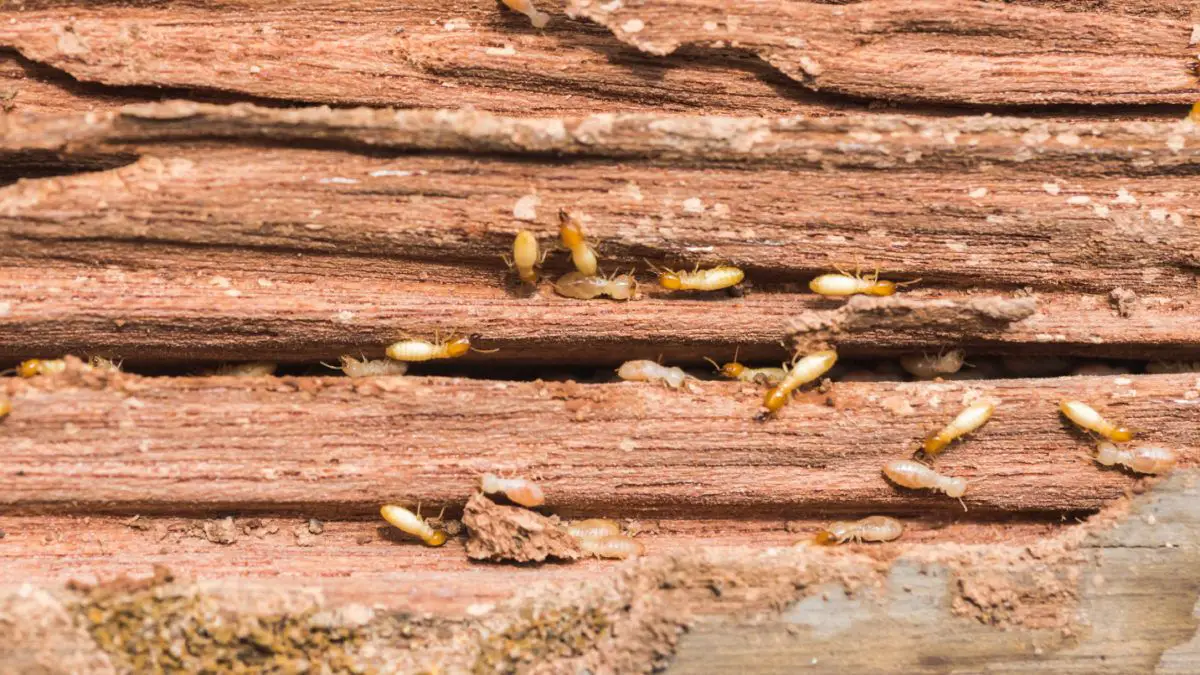
 

WBBSE Notes For Class 6 General science And Environment Chapter 11 Habits And Habitats Of Some Important Animals Termites Digest


Other animals do not have this ability. Though termites damage a lot of wooden substances of our society but it helps to clean the environment by removing leaves, dead vegetation, and wood from the environment.

Reproductive forms like Queen (female) and King (male) are winged forms. They have functional eyes and are pigmented. Soon after a heavy shower of rain, young reproductive forms fly out of nests and undergo a flight (nuptial flight).

“Best guide for Class 6 General Science WBBSE animal adaptations”

Mating occurs during this flight. After that, they fall to the ground and lose their wings. After some of them have been eaten by birds, lizards, toads or frogs or other insects.

Surviving pairs of males and females are ready to start a new nest and form a new colony. You can easily observe this incident during the rainy season. Try to observe termites and related facts, note down these and then analyse your observation.


Do It yourself

Observe the following things and note them down. Then fill up the tables.

  1. Collect different types of termites.
  2. Try to find their nests.
  3. If possible with the help of the teacher try to observe the constructional peculiarities of their nest.
  4. Try to find out the living places of termites.
  5. Draw pictures of different forms of termites-Reproductive forms, workers, soldiers. Try to observe their functions (different forms of termites).
  6. Try to observe their movement.
  7. Observe detailed morphology such as shape, size, colour, jaws, wings, abdomen, etc.
  8.  Insert a stick through one of the holes in the termites’ nest, and observe their movement. Find some termite mounds. Measure their height, and how hard they are; look for the entry of exit points. Draw pictures.

Ants and termites are sometimes mistaken for each other, however, they are very different groups.

Difference between Termites and Ants :


Termites  Ants
1. Body 1. Differentiation of the body into the head, thorax and abdomen is not so distinct. The waist is broad, the abdomen is broad at the end. 1. Three distinct parts of the body, distinct narrow waist, abdomen pointed at the end.
2. Antenna 2. Antennae almost straight beadlike. 2. Segmented elbowed antennae.
3. Food 3. Eat the cellulose inside the wood. 3. Eats sugar and proteins.
4. Visibility 4. They are not usually visible unless swarming. 4. Frequently visible around us.
5. Body colour 5. Except the soldier’s colour of body is pale whitish. 5. Usually not white, red, black, or brown.
6. Wings 6. In winged forms—both wings are equal. 6. Wings of winged form are not equal; the front wing are larger than the hind (back) wings.
7. Eyes 7. Usually workers have no eyes. 7. Compound eyes present.
8. Sex of the worker 8. Sexually undeveloped males and females. 8. Sexually undeveloped females.


  1. Ant wings do not break off easily. Termite wings break of easily with just a touch. Termite wings are twice as long as the body.
  2. Can you identify a flying ant with a winged termite?

Similarities between ants and termites

  1. Both ants and termites can have a winged stage in their reproductive cycle.
  2. Both are social insects-division of labour in different castes.
  3. Both have jointed appendages so both are arthropods.


Chapter 11 Habits And Habitats Of Some Important Animals Honey Bees

Honey Bees:

All of you have tested honey. Do you know from where this honey is extracted? We get honey from beehives. The nest of honeybee are called a beehive. Honeybees are social animals. They live in big colonies.

Each honeybee colony includes one big female, who is the queen, several hundred males, drones and many thousand workers. The workers are underdeveloped females, who are incapable of reproduction.
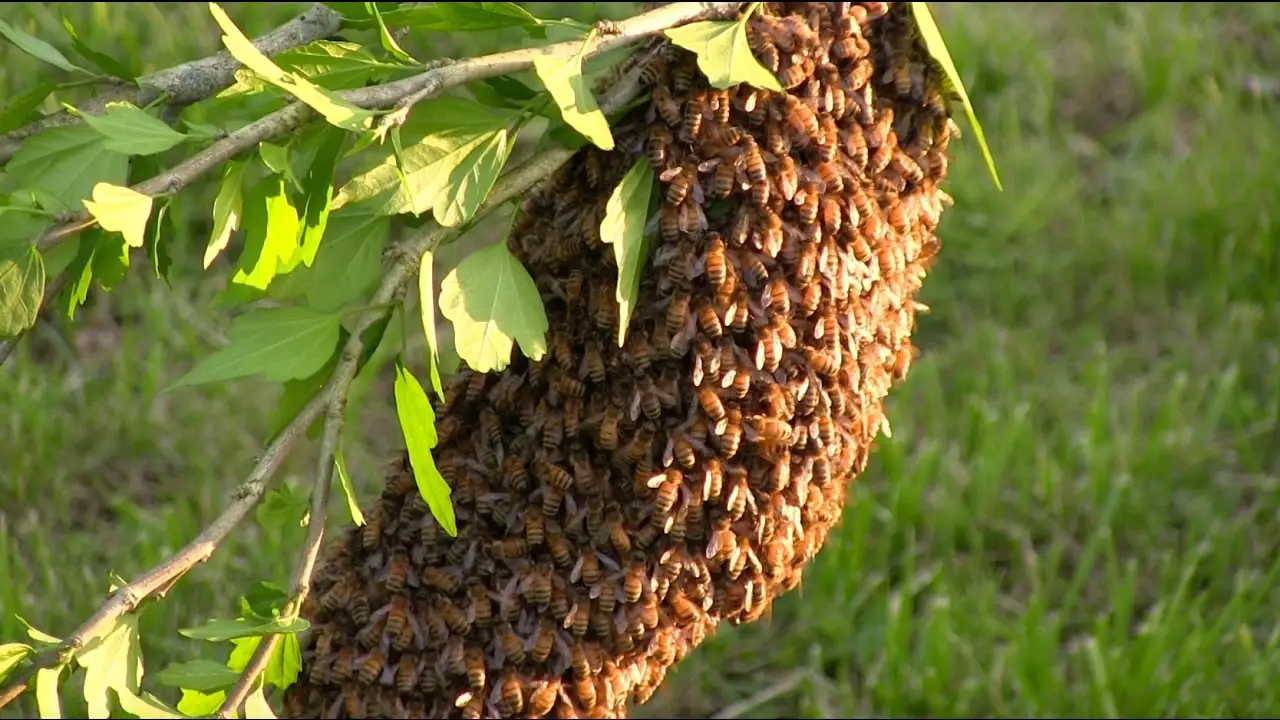
 

WBBSE Notes For Class 6 General science And Environment Chapter 11 Habits And Habitats Of Some Important Animals Beehives


A drone is larger than a worker and the end of its abdomen is blunt. Whereas the abdomen of a worker is more pointed. The queen has a relatively much larger and longer body than either the drone or the worker.
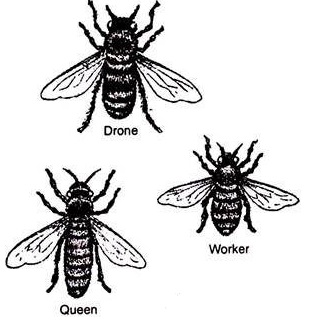
 

WBBSE Notes For Class 6 General science And Environment Chapter 11 Habits And Habitats Of Some Important Animals Different types of Bees.


The queen and workers possess sting whereas the drone do not. The honeybee has mouthparts modified for sucking, manipulating wax, and collecting nectar. The legs of the worker are adapted to collect pollen and to build cells in the combs.

How can you differ a honeybee from a fly?

  1. Honeybee has two pairs of wings but fly has one pair.
  2. The worker and queen bee have a string at the end of the abdomen and the fly has not.
  3. The abdomen of a honeybee possesses many hairs.

The nector, sucked from a flower by a bee is drawn into a bulky crop and mixed with the secretion of the crop glands (crop = stomach). Then bees put the nector into comb cells, wherein it transforms into honey.

The queen lays all the eggs of the colony when drones do nothing in the colony only to mate with the queen during the marriage flight.


The Workers Do All The Work

  1. Gather nector and pollen from flowers, defend the colony, take care of the queen, eggs, and larva, and build beehives.
  2. If the cells of beehives get warm, workers fan it with their wings, they also fan very fast to dry the hive after heavy rain.
  3. They ventilate and regulate the temperature of the hive.
  4. Keep the hive clean and carry away debris and the bodies of any dead bees.
  5. They secrete the wax with which they build the combs.
  6. They incubate the eggs and also feed all other members of the community, including the larvae.

The worker bees defend the colony aggressively-if an enemy comes nearby they attack by pricking it with their sting. That sting is fixed with the abdomen in such a way that when it pricks the enemy’s body, it tears the abdomen, gets detached from the abdomen and sticks to the enemy As a result, the worker bee dies.

Bee-bread:

It is a mixture of honey and pollen, all members of the honeybee colony feed this.

  1. All larvae feed rich food for three days; this is known as bee milk which vomits out by worker bees.
  2. The larva which is marked to be queen feeds royal jelly for five to six days. Other larvae after three days feed with bee bread.

Honey is tasty and beneficial. Honey is a good food with more or less all the components of food. Humans have learnt the art of honey extraction from beehives from the wild and also knew the artificial culture of honey bees.

 

WBBSE Notes For Class 6 General science And Environment Chapter 11 Habits And Habitats Of Some Important Animals Honey


In India 3-4 types of honey-bee species are common.

  1. Apis indica (Common Indian bee)
  2. Apis florea (Little bee)
  3. Apis dorsata (Rock bee)


WBBSE Notes For Class 6 General science And Environment Chapter 11 Habits And Habitats Of Some Important Animals Apis Indica, Apis Florea and Apis dorsata


Do It yourself

  1. Observe carefully beehives and bees in the garden.
  2. Take help from your teacher, collect an old beehive and observe its cells.
  3. Try to observe different types of bees from the artificial culture site.

Fill up the table

SI. No. Type of Beehives Location of beehive Draw a figure of it Observe different chambers


Try to collect different type of bees and observe it and write their features:

Type of bee Length Presence of sting or not Body structure Drawing
1.
2.
3.
4.


Try to observe:

  1. Time of beehive formation.
  2. Place of beehive formation.
  3. Type of the bees who form the beehive.
  4. Follow (if possible) from which plant they usually pick nectar.
  5. Keep some sugar solution and other solution where the bees visit. How many times in an hour?
  6. How do bees help in pollination?


Chapter 11 Habits And Habitats Of Some Important Animals Elephant

Elephants are the largest living land animals of the world. Elephants are broadly divided into two groups such as Indian Elephant or Asiatic elephant (Elephas maximus) and African Elephant (Loxodonta africana).

Indian or Asiatic elephant is relatively smaller than the African with relatively small ears and tusks. Size and weight are the most striking characteristics of elephants.
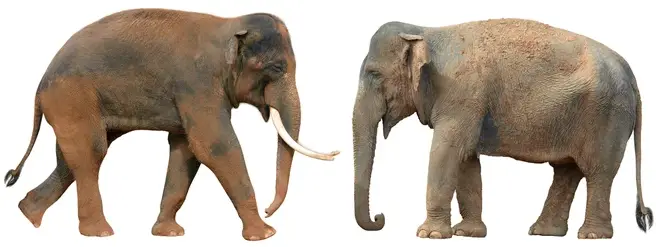
 

WBBSE Notes For Class 6 General science And Environment Chapter 11 Habits And Habitats Of Some Important Animals Indian elephant and african elephant


The elephants found in India each weigh about two thousand kilograms (kg) (range 2000 to 5000 thousand kg) in average and their height is around eleven feet from head to toe (African elephants are even more tall and heavy).

In general male elephants are larger than females. Indian elephants can live 70 years. Whereas African elephant lives 50 years approximately. Age can be judged from ears and teeth. The nose and the upper lip of the elephant are joined to form the trunk.

The trunk is very useful. It functions for grasping something, breathing, help in feeding, dusting and watering his body, smelling (sometimes it raises high to smell), drinking, lifting something, sound production/communication, it also helps in defence and protection.

“Understanding different animal habitats and their adaptations Class 6 WBBSE”

Another peculiar structure of elephants is its tusks. Tusks are elongated continuously growing front teeth usually but not always in pairs. The average length of tusks of an adult African elephant is 5-8 feet weight around 23-45 kg.

The Tusk of an Indian female elephant is relatively short and its weight is also less than African.

  1. The second incisors of the elephant are modified into huge tusks but in the case of tiger, dog, etc. canine teeth is elongated. Nearly a good number of elephants (30,000 approx in Africa) are killed for their tusks by poachers (hunters who kill elephants and other animals illegally) every year.
  2. A group of elephants is called a ‘herd’.

Elephants live in herds (in groups). Each group actually is a family. A herd is always led by the oldest and largest female elephant, other. members of the herd are daughter, granddaughter, grandson etc.
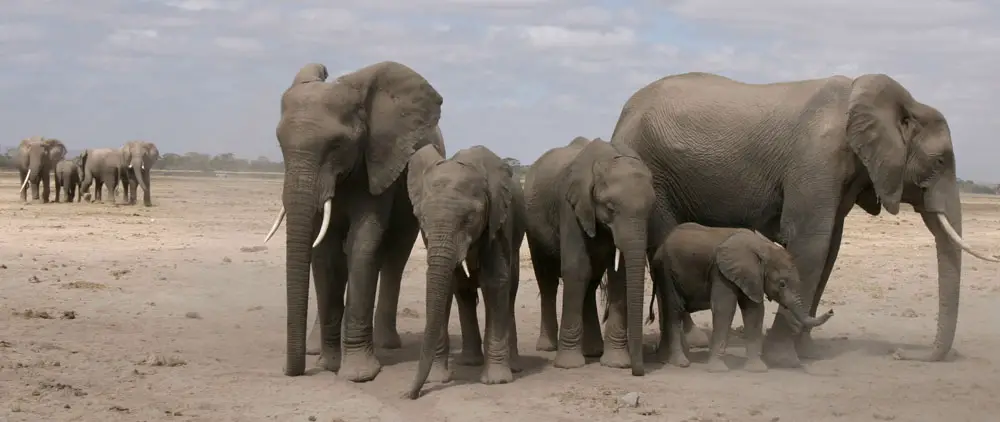
 

WBBSE Notes For Class 6 General science And Environment Chapter 11 Habits And Habitats Of Some Important Animals Elephant


The herd usually is made up of 8-100 elephants. Female elephants are called cows. They have a gestation period of 22 months and produce one offspring at a time. The baby is called a calf.

When a calf is born it is raised and protected by the whole matriarchal herd. Males leave the family unit between the ages of 12-15 years and may lead solitary lives or live temporarily with other males.

Like a human being elephants also keep an eye out for their offspring when in danger elephant raises its trunk and trumpets to call for help and the other elephants of the group come to fight against danger unitedly.

“Examples of terrestrial, aquatic, and aerial animals Class 6 WBBSE”

Matriarchy is a social system in which females (in mammals) hold the primary power positions in roles of political leadership.

Touching is an important form of communication among elephants. Individuals greet each other by stroking or wrapping their trunks, older elephants use trunks to slap, kick and shove to discipline the younger ones.

You may have heard that sometimes elephant gets hurt by getting hit by trains while they are crossing the railway track (lines). In such cases, elephants gathered around the wounded elephant.
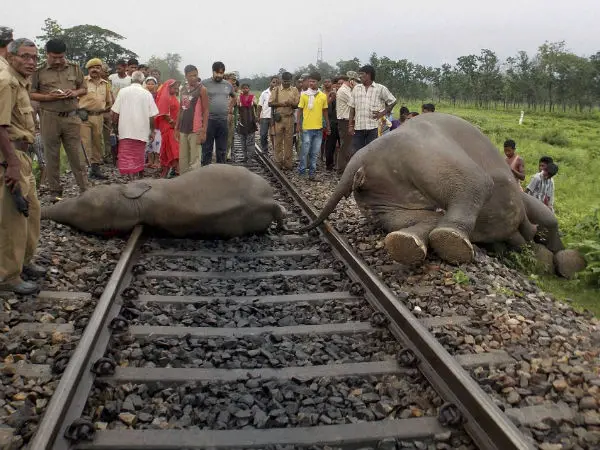
 

WBBSE Notes For Class 6 General science And Environment Chapter 11 Habits And Habitats Of Some Important Animals Elephants Died in raiway tracks


A peculiar phenomenon is found among the elephant herds. If an elephant calf gets lost while walking in the forest, the herd tries to search it out. But if they found that lost calf under the shelter of humans, they never accept it back.

Elephants eat a lot. Each elephant can eat up to 150 kg of grass, leaves, branches of plants, fruits etc. in a day. Elephants love to stay in the forest. The forest does not always offer them sufficient food.

Then they enter fields of crops in the villages in search of food. When villagers try to stop them they attack human beings and destroy huts and houses. Every year many acres of paddy fields in the North Bengal and Jangalmohol areas are lost by them.

When wounded or cornered the elephant really becomes dangerous. Migration of elephants usually takes place in the rainy season when they are relatively safe and they travel long distances in search of new feeding grounds.


Threats To The Elephant Population

  1. Habitat loss is one of the key threats to elephants.
  2. Many climatic changes also affecting elephant populations.

Increasing conflict with human populations taking over more and more elephant habitats and poaching for ivory are additional threats that are placing the elephant’s future at risk.

Asian elephants have been very important to Asian culture for thousands of years. They have been domesticated and are used for religious festivals, transportation, tourism and moving heavy objects.

“What are the different types of animal habitats? Class 6 WBBSE Science”

Try to gather knowledge by visiting any forest ranger’s office and talking to the people who are in touch of forest animals. If you found any Mahut ask him about the different behaviour of elephants.


Chapter 11 Habits And Habitats Of Some Important Animals Chimpanzees

  1. Most probably all of you have seen chimpanzees either in zoos or in TV. Observe their activities.
  2. Anthropoid apes (apes-like animals) are Gibbons, Orang-utans, Gorillas and Chimpanzees.
  3. Chief similarities between the chimpanzee and humans are- the absence of a tail, more or less upright posture and a high degree of development of the brain.

The Chimpanzee one of the ape-like animals is very close to humans. Human and these ape-like animals, ancestor was the same. Many years ago (Miocene era) human line (evolutionary line) had been separated from the ape-group.
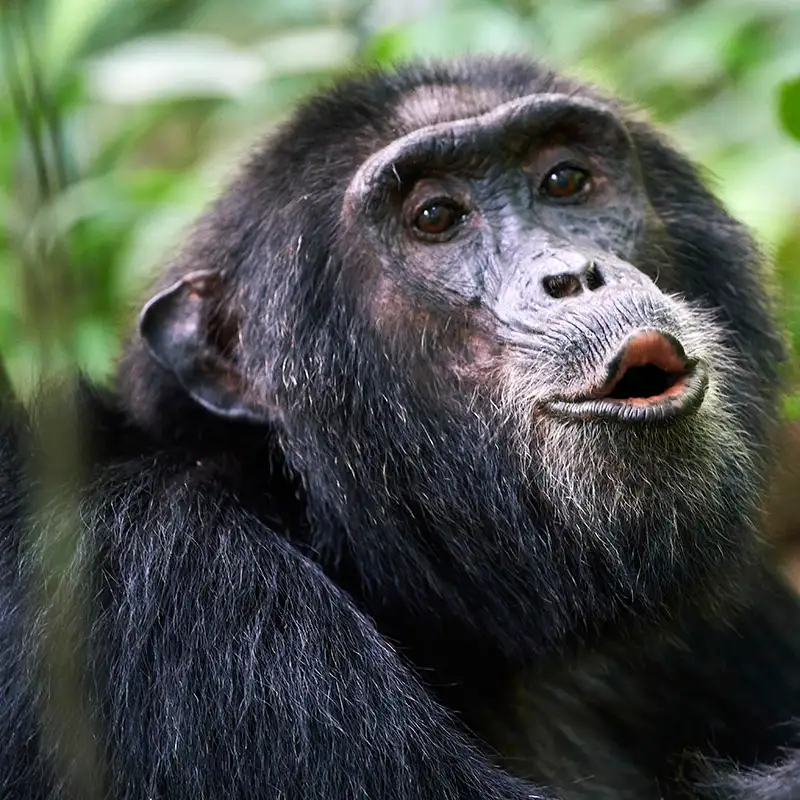
 

WBBSE Notes For Class 6 General science And Environment Chapter 11 Habits And Habitats Of Some Important Animals Chimpanzees


Chimpanzees are usually found in the deep forests of equatorial Africa. They usually live in groups with a single male as head and have a harem of several females. The male protects the family. Chimpanzees possess excellent memory and quickness of wit.

Experiments on chimpanzees have demonstrated that they can apply acquired habits under varied conditions. In nature they break off a twig, remove the leaves and use it to extract insects (termites) and their larva from the narrow passage, they use straws as toothpicks.

“WBBSE Class 6 Science adaptation of animals to their environment”

Chimpanzees have learnt to imitate closely a number of operations performed by humans such as putting on clothes, eating and drinking at tables, sweeping, washing up, using keys, hammers and other tools, to ride bicycles, and smoking. They easily become friends with humans.


Chapter 11 Habits And Habitats Of Some Important Animals Migratory Birds

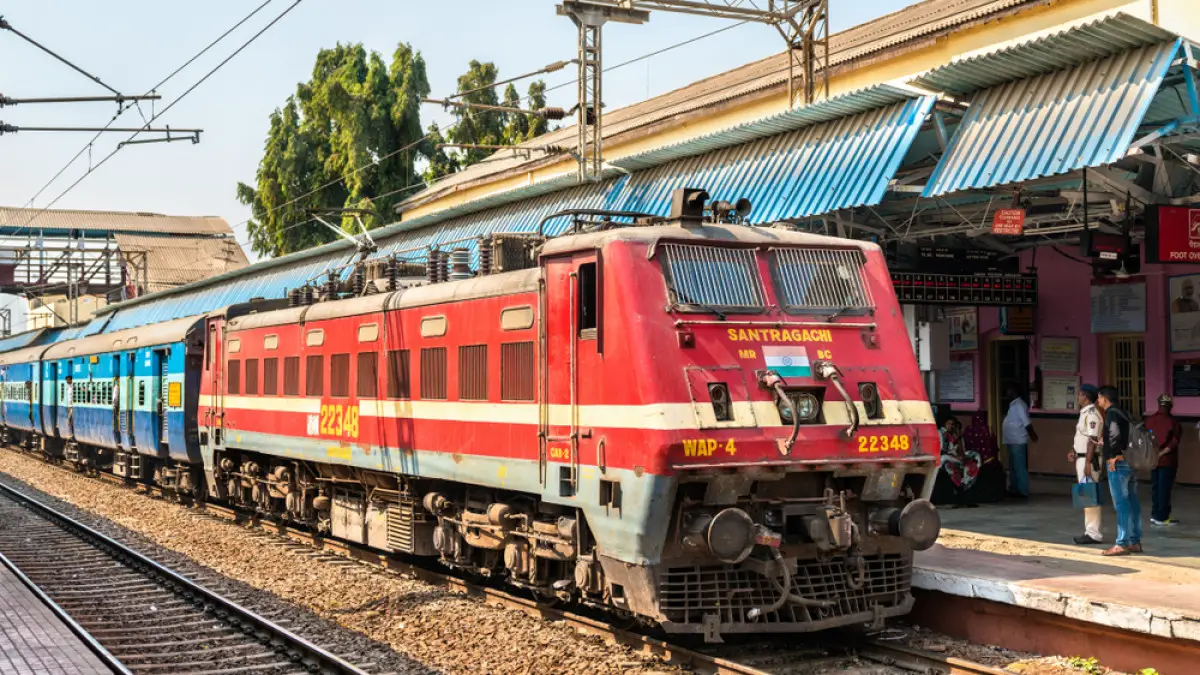
You may have seen migratory birds in Alipur Zoo or Santragachi Jheel (lake), Howrah or Kulik Bird Sanctuary, Raiganj or many other places. They usually come to this area during winter.

Migration is a natural process. It is the regular seasonal movement (fly) of birds from one place to another (between breeding and wintering grounds). Migration is also occur in other types of animals such as fish, mammals, reptiles etc.

Migratory birds are these birds which fly to warm areas (countries) from cold areas (countries) during winter and return to their homes once winter is over.

They unite in flocks numbering hundreds and thousands of individuals (some may travel solitarily). Some fly in the daytime, while others fly at night. The birds feed on the route, rest and fly further to their habitual winter grounds.

India is a winter home for most of the Siberian birds such as Siberian cranes, Greater Flamingo, and Demoiselle cranes. Many birds from other regions of the world also migrate to India every year during winter and summer (few cases) for food, breeding and nesting.

There are many birds migrate to India during the late autumn or winter months, fly from Tibet, Bhutan, Ladakh, high mountainous regions of the Himalayas and the Siberian region, where winter is very cold, snow covers the land and water bodies are the main source of food for them start to freeze and it becomes hard to get food and they come down to the plain lands for their food, sometimes for breeding.

Winter in India is moderate and less cold than in their original home place of that birds. At that time a lot of food is available here.

At the onset of summer when the cold decreases and snow melt and trees bear leaves and flowers begin to appear, insects, molluscs and other foods available they return to their home again.

During migration, the birds keep permanent routes that they follow every year to the winter and in spring they return to breed.


Few Migratory Birds Who Visited India

  1. Amur Falcon (North East India, Nagaland)
  2. Siberian Cranes (Bharatpur National Park)
  3. Great Flamingo during winter [Gujarat, Chillca lake (Orissa)]
  4. Demoiselle Crane (Rajasthan)
  5. Bluethroat (Nilkantha pakhi)
  6. Coloured birds, Black-winged stilt
  7. Bar-headed goose-they migrates over the Himalayas and spend their winter in India (Assam, Tamilnadu)
  8.  Rosy starling.
  9. Great white Pelican (You may find them in Alipur Zoo during winter)
  10. Jacobin Cuckoo (coming to India in the summer season).

These birds come to India from South-East Asia and the Siberian region during the winter and summer seasons. The migratory birds mainly arriving at the wetland spots of the national park, also seen in parts of the lakes and settle down in shallow or water ponds, Jheels etc.

Siberian species come to India only during winter and prefer swampy lands for nesting. You may find migratory birds if you visit Chupirchor (Purba Bardhaman), Santragachi Jheel (Howrah), Alipore Zoo, Rabindra Sarobor (lake), Sajnekhali (Sundarban), Sahebbandh jheel, Purulia.

Arctic tern are small migratory birds which cover the maximum distance. It migrates from the Arctic to Antarctica and back. If you are in Sundarban, Mandarmoni or Dadanpatra (East Midnapur) during Nov-Dec.

You will see wild ducks, geese, cranes, storks and other large migratory birds passing overhead. You may observe this in other parts also where large water lands are present. Besides birds, very few other animals make such long and regular migratory journeys.  Such as-Eels, and salmon (migratory fish).

  1. Decrease in the amount of habitual food, and shortened day time which are the signals for migrating from the areas.
  2. Migration is an instinctive action of birds and it developed several million years ago under the effect of seasonal change.

In Santragachi Jheel (lake) you may see many migratory birds during winter (November- February). Different types of duck, Gadwall, and Northern Pintail usually come there.

In the Botanical garden (Acharya Jagadish Chandra Bose Indian Botanical Garden) Shibpur, Howrah is also a place where you may see some migratory birds (Brown Hawk, Owl, Booted eagle, some wood peakers and Kingfishers).

In the Eco-urban village, New town, Kolkata also hosts a few rare migratory birds in the winter (Amur falcons, Bluethroats, Open billed strokes, Strawberry Finch, Egrets, etc.)

Besides these places migratory birds like wild ducks are seen is many lakes, ponds and wetlands of rural Bengal, Wagtail (Khanjana bird) with long tail, grey coloured kajal bird (black lining in its eyes) are found in the fields and fruit trees of Bengal.

These birds are also the winter guest which comes from the Himalayas. Birds are normally selective in their food, and with their high degree of mobility, they can fly to where the kind of food they require is available.

“How animals survive in different habitats Class 6 WBBSE Science”

As a general rule, species whose range of food is limited, make the longest journeys. Birds during their long journey they face many problems such as adverse weather, the direction of winds, storms and overall disturbance created by humans.

Scientists are trying to know how these migratory birds calculate the direction, and distance and get their necessary energy during flight. Still, scientists have to get answers of many such questions.

Do it yourself:

  1. Visit the places where migratory birds appear each year.
  2. Observe their behaviour.
  3. Note down when they come and when leaving the place.
  4. Look around your residence or locality to watch birds, if you find any new birds, note it. How many days do birds stay there.
  5. What type of food the bird eat.
  6. Gather some information from different sources regarding migratory birds.


Chapter 11 Habits And Habitats Of Some Important Animals Crow

Crow:

The crow is one of the most familiar birds and is found around humans. Crows are found all over the world. In India two types of crow are common-

The house crow (Corvus splendens) are common in India and Srilanka. It is an expert thief that will steal everything. There are around 40 species of crows in the world.

House crow (Pati kak) or Indian grey necked or Colombo crow and Raven (Dhar kak). In the house crow’s forehead, crown, throat and upper breast are glossy black, while the neck and breast are lightly grey in colour.

The wings are tall and the legs are black. The entire body of the raven is jet black in colour and they are bigger than a house crow. Crows eat small animals such as mammals (rats, moles, etc), amphibians (frogs, toads etc), reptiles (lizards, house lizards) and other small birds and their eggs.

They also eat insects, seed grains, nuts, fruits, non-insect arthropods, molluscs, and worms (earthworms). They also pick up their food from the garbage.
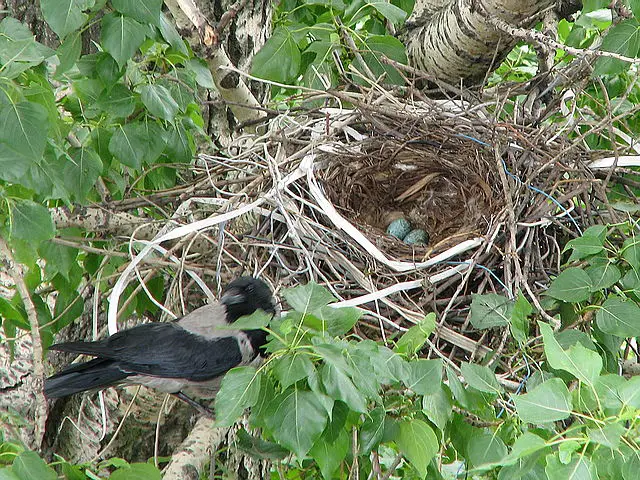
 

WBBSE Notes For Class 6 General science And Environment Chapter 11 Habits And Habitats Of Some Important Animals Nest of Crow .


Many scientists think that crows are the most intelligent among the birds and also like the chimpanzee, based on their ability to solve problems, make tools and apparently consider both possible future events and other individuals’ states of mind.

Crows can hide food, they can use sticks as tools. Crows sit in a council, and hundreds of crows gather in certain events like human beings.

Crows can make their nest but they are not at all experts in this matter. Both members of a breeding pair help to build the nest. They prefer to nest in evergreens but can make a nest in deciduous trees when evergreens are less available.

“Important facts about animal habits and habitats Class 6 WBBSE”

The nest is made largely of medium-sized twigs with inner cups lined with pine needles, grass, weeds, soft bark or animal hair. Crows are social birds too. They call other members in the time of any danger and death of any member.

In the event of the death of a crow other living members call to each other, gathering around and paying attention to the dead one. They are likely trying to find out if there’s a threat where the death occurred so they can avoid it in the future.

Do it yourself:

Observe the crow around you and try to answer the following questions : . How are the structural difference between the two types of common crows?

  1. What are their nature?
  2. What type of food they eat?
  3. How they make their nest and with which type of plant?
  4. Give some examples of crow’s intelligence.


Chapter 11 Habits And Habitats Of Some Important Animals Mosquito

Mosquito

Most probably all of you have an experience of mosquito bites. Mosquito bites along with the ‘song of mosquito’ (the sound due to the beating of their wings produced during flight) are one of the most irritating matters to human beings.

Mosquitoes are found all over the world, but they are abundant in the tropics. You have heard the name of three main types of mosquitos such as-Anopheles, Culex and Aedes.
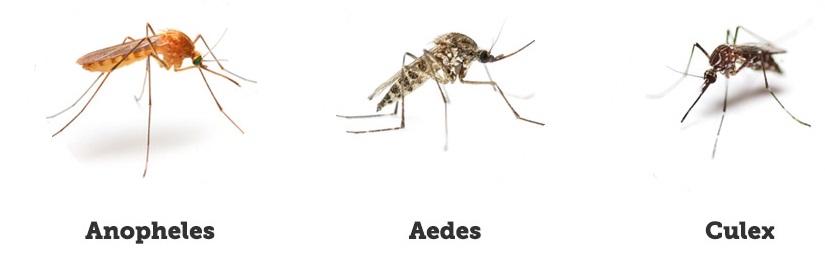
 

WBBSE Notes For Class 6 General science And Environment Chapter 11 Habits And Habitats Of Some Important Animals Anopheles,Culex and Aedes


These three types of mosquitos transmitted diseases like malaria, filariasis or elephantiasis and dengue fever respectively. It is only the female mosquitoes that suck human blood (other vertebrates are also mainly warm-blooded animals) but males are harmless, they do not bite, and they only suck plant juice.

The disease is transmitted by the mosquito biting and sucking blood from an infected person (carrying blood with germs) and giving the germs later to another (healthy) person through another bite.

Females of most mosquito species require a blood meal in order to ripen their eggs. Actually, the germs (microorganisms) of diseases are sucked by the female mosquito pass some time within the mosquito’s body and then is transmitted to another person through saliva (containing germs) which is secreted by the mosquito after each bite to the person before starting bloodsucking.

Germs of disease pass into the bloodstream along with the mosquito’s saliva. The female mosquito lays eggs in standing waters of small pools, drains, water tanks, and other containers (where water is stored) near the house. Anopheles and Aedes mosquitoes lay eggs in clean water whereas Culex in dirty water.

Mosquitoes’ saliva contains a substance that prevents the blood from clotting and this chemical evokes a response that causes localized redness, swelling and itching.

This is due to the immune system response of the body. The swelling is caused by histamine which is produced by the body’s immune system.

Histamine increases blood flow and WBC (White blood corpuscles) count around the affected area, which causes swelling (inflammation). Mosquito bites itch because histamine also sends a signal to the nerves around the bite.

The larva hatches out of the egg and moves in rapid Jerks. They are usually stick-like bodies and with many hairs. They either float horizontally (Anopheles larva) or hang from the surface (Culex larva).

At that stage, they eat microorganisms and insects present in the water. After a few days, larva change into a pupa (the resting stage). Pupa is coma (») like and doesn’t takes any food.

After a short period, a full-grown mosquito (imago) comes out breaking the pupal cover. Shortly after emergence, the wings harden and expand and the mosquito fly out of the water.

If you carefully look the mosquitos and follow when they appear (their appearing time like day, evening night, early night, late night) you can get some idea about the type of mosquito.


Anopheles

They are slender, greyish bodies with delicate legs. Black spots on the wings, when they seat on a surface they form a 45° angle to the surface (inclined appearance). They make sounds during flight. Come out in the late evening and at midnight.

Transmit the germs of malaria disease (Plasmodium-microscopic protozoa).


Culex

No spots on the wings, larger than anopheles with shorter legs, sit nearly parallel with the surface. Make no sound during the flight. Come out at night, may appear in day time also in the evening and early morning.

Transmit the germs of Filariasis (microscopic stages of helminth).


Aedes

Comparatively large body, with black and white bands on the body (abdomen and legs). They rest almost parallel to the sitting surface and make no sound during flight. Come out in day time.

Transmit the virus of Dengue fever.

Mosquitoes are known to transmit a variety of viruses (Dengue, Chikungunya etc.) and other pathogens (Pathogens disease-causing microorganisms) like protozoans (malaria) and helminth (filariasis).

However, not all species of mosquitoes can become infected with and transmit all pathogens. Prevention is better than cure, so we have to take preventive measures against mosquitoes.

The most important is the destruction of breeding places of mosquitoes and different development stages. We have also to be careful against adult mosquitoes that are never able to bite us, regular use of mosquito nets and other devices should be taken to avoid mosquito bites.


Chapter 11 Habits And Habitats Of Some Important Animals Fish

Fishes are vertebrates and all of them live in water (aquatic). Their primary respiratory organ is the gill, present under the operculum on either side of the head. Very few fishes like Kai, Magur, and Singhi have accessory respiratory organs besides gills; so they can live some time outside the water.

Fishes gulp water through their mouths and pass it out through the gills. Gills with the help of blood capillaries, (fine blood contains vessels) absorb oxygen (O2 ) from the surrounding water and release carbon dioxide (CO2 ) to it.

Gill is the respiratory or breathing organ of fish which exclusively work in water. So fishes are not able to live outside of water. They die soon when they are kept out of the water (except some jeol fishes already mentioned).

Operculum is the large flap with a free lower edge on either side of the head. It covers the gill. Gills have many comb-like structures with many blood capillaries. For this reason, the gills are red (If you lift the hard operculum you can see the gills.)

“Class 6 WBBSE General Science Chapter 11 worksheet on animal habitats and habits”

Fishes can live in three types of water-salty water, sweet water and mix-water (salt and sweet water). Fishes that live in salty water (sea- water) are called marine fishes (Salman, Pomfret, Shark, Ray fish, etc.)

And those who live in the sweet water of lakes, rivers, ponds, canals etc. are called freshwater fishes (e.g. Bata, Ruhu, Catla, Punti, Tilapia, etc) and some fishes live in the semi-salty water of Sundarban and the areas in which freshwater (river, canals) meets salt water are called brackish water fishes (Bhetki, Parse, etc.).

Skeletons of some fishes are soft and more flexible, these are called Cartilaginous (skeletons made of cartilage) fishes such as Shark, Dogfish, Pomfret, and Ray-fish. Many marine fishes are cartilaginous fishes.

On the other hand, the skeleton of another group of fish’s skeleton is hard and less flexible (skeleton made of bone) are called Bony fishes such as Ruhu, Katla, Punti, Tilapia, etc.

Fishes move in the water by swimming with the aid of the powerful muscles (myotome) of the tail, tail-fin and other fins. Fins help in movement and balance in the water. The tail fin is like the helm of a boat.

It takes the fish to the direction in which the fish wants to move. The tail muscles and other muscles of the trunk of fish contract alternately on the two sides and thus cause a wave-like movement of the tail and the tail fin, which push the fish forward in a straight line.

Fish eat small algae of water, small insects and their larvae, warm, underwater plants and their parts, some large fishes eat small fishes too.

Give different types of foods to the fish of an aquarium separately or keep some fish in a jar to observe the activities of fish, what type of food they like most, what type of food they reject which fish take which type of food. Make a table of your observation.

Some fishes can move or migrate from salt water to fresh water and fresh water to salt water which no apparent discomfort e.g. Eel (fresh water to sea) and Salmon and Hilsa (sea to freshwater).


Care Of The young

Many fishes do not show any parental care to their offspring. Usually, they lay large numbers of eggs (millions of eggs). But some fishes show parental care to their offspring.

Fish species that take care of their young (usually spawn) are a very small number. Fishes like- Tilapia, Shol, Chitol Gojal etc take care of their young till the eggs hatch and grow into adults.

When the female (mother) lays eggs in the nest (usually form with algae) the male (father) fish stands guard all the time. If he finds any enemy he chases it away to a particular distance.

After the hatching of young fish (fry) both males and females jointly guard them for several days preventing them to swim far away from the nest. Tilapia shows an excellent type of parental care. They build a nest before the female lays eggs.

They make many long furrows on the underwater soft floor of the earth and are covered with algae. Fertilization of eggs occurs in these nests. The female carries the fertilized eggs in their mouth until the eggs hatch into young.

After that, the young do not disperse but stay near the mother. When there is the danger she allows them to enter her mouth again for protection. In some forms of Tilapia males also do the same work.

Because of the care given by the parents of Tilapia a high proportion of their young survive than in most other fishes, which give no such care.

Sea-horse, a type of sea fish that are named for the shape of its head which looks like the head of a tiny horse. In males have a broad pouch into which the female lays eggs and fertilization occurs inside the pouch.

The eggs hatch in the pouch of the male (father). During the development of eggs (gestation), his mate (mother) visits him daily. The young fish after hatching remained in the pouch for a period of time.

After leaving the breeding pouch, the youngs swim by the sides of the males. In case there happen anything dangerous, then the male will open the pouch at once. The young will swim quickly into it and the pouch is closed afterwards.

Many of you have seen fish in aquariums. One of the aquarium fish is, Paradise fish, which male or father fish uses saliva to form bubbles. With this, form a bubble nest.

The female (mother) paradise fish use this bubble nest and lay eggs with this form of bubble nest. Fertilised eggs are much lighter than the eggs under the nest. The male fish guard the nest and take care of the babies.

A floating mat of saliva-coated air bubbles often incorporates plant matter. The shark takes great care to its offspring. In general, they do not lay eggs in water the fertilized eggs developed in the body cavity, hatched into the young and then separated from their mother.

They take nourishment from egg falls. Mother fish is only for protection and hatching. Fish live in the most varied aquatic habitats-in seas and freshwater bodies, near the upper surface and in the deep at high and low temperatures etc.

The living conditions, food, rivals and enemies are different everywhere, which influences great variety in the structure and behaviour of fish.

Sometimes the oxygen level in the water decreases, sometimes water starts to evaporate quickly and sometimes they face dangerous chemical substance gets mixed in the water. When in danger, fishes generate a strange smell from their bodies.

Other fishes after sensing this smell takes guard and swim around very fast in the water. Fish living in the upper strata (level) of the water and at the surface usually have a stream-lined body shape and a well-developed caudal fin, making it possible for them to swim at high speed.

Bottom-dwelling fish usually swim slowly. Their flattened body is barely (hardly) visible to prey and enemies. Fishes of coral reefs are usually brightly coloured.

Fish use their bright colour for camouflage, blending in with the corals and plants of the habitat and they are able to ambush their prey as well as protect themselves against predators.

Colourless fish inhabit water caves or in the deep sea where they live under conditions of entire darkness. The colour of some catfishes are blackish which helps them to camouflage.

Some deep-sea fishes have luminescent organs (light-producing organs). About 32,000 types of Indian fishes have been identified, but still, a lot of fishes are to be identified.

Your work:

  1. Try to observe fishes in the aquarium, observe their movement breathing technique, food intake, and types of food they take.
  2. Try to observe jeol fish (fishes with accessory respiratory organs) like Shol, and Singhi. Try to observe how mother Shol protects their offsprings.
  3. Observe Tilapia carefully in a small tank, and follow their behaviour.


Chapter 11 Habits And Habitats Of Some Important Animals Snake

All of you have seen snakes either them in natural conditions or at a zoo or in the buskets of snake-charmer (Bedye). Snakes are slender cylindrical long, legless reptiles. Snakes are carnivorous (flesh eaters) and hunt other animals.

Snakes have a fairly restricted diet some feeding on rodents (rats, moles) others on birds, frogs, toads, fish or insects. Some feed other reptiles as well as other snakes.

Wheather snakes are able to hear or not?

Snakes are unable to hear because they have no external (outer) ear. But they feel vibrations very well. During the snake charmer’s play with snakes, they (snakes) follow the pungi (the sound-producing instrument Been use before, the snake) that the snake charmer holds with his hands.

The snake considers the person a threat and responds to it as if it were a predator. Remember that snakes never eat bananas or drink milk etc. as we have a common myth.

Eating by these animals snake balance nature and maintains the food chain and also save our food crops from the rodents like rat, mole and insects. Some snakes are highly specialised as egg-eater.

Except for the extremely cold areas, snakes are found all over the world. Snakes are abundant in tropical regions. In India there are around 300 species of snakes, out of them few are (around 60 species) venomous (poisonous).

Snakes live in the branches and holes of trees, in the ground, in the holes (made by rodents usually) in the undisturbed moist dark corners of a broken walls, rubbish, woods, breaks, etc. Some snakes live in the water.

The skin of the snake is covered with scales which are smooth and slightly overlap one another. In most cases, there is a series of transversely enlarged plates beneath the belly. In land, snakes move with the help of their abdominal scales.


Shedding Of Scales

Snakes periodically moult (shedding) or change their scaly skins (outer layer of skin with scale) and acquire new ones. Before shedding, snake stops eating and often hides or removes to a safe place.

All snakes swallow their prey-whale. They have the remarkable power of swallowing animals several times of their own diameter. The bones in the skull of the snake and the ligaments are so arranged that they can expand their jaws and open their mouth widely.

Teeth are angled backwards and solid (except the two poisonous teeth) for smooth capturing of prey (to grip with prey). Less than one-third of snakes are venomous (poisonous) and of them perhaps one-third kill their prey by injecting poison.

Other preys kill by constriction or biting and swallowing. Poisonous (venomous) snakes have two tubular fangs (poison teeth) in the anterior (front part) of the upper jaw.

These fangs are connected with the poison gland (they are modified salivary glands) through narrow tubules. The teeth of Boas and pythons are solid. They are non-poisonous snakes.

They fangs are used to inject poison into the organism of prey or enemy when biting it. Venom is primarily used to paralyse the prey. It also helps in digestion (it is a salivary secretion)

Snakes have a long tongue that is forked at the tip. The tongue is continuously flickering in and out through a groove in the upper lip. This is not at all related to the poisonous equipment.

This is simply an organ of touches and feels the surrounding environment (olfactory function) such as can feel the temperature, and presence of some chemicals in the air (they only can feel all these when this information passes to the brain via a special organ present in the upper part of the mouth), moisture etc.

The eyelids of the snake are fused together, become transparent and cover the eyes like a watch crystal. We have already learned that most snakes are non-poisonous, and few are poisonous to human beings.

The common poisonous snakes are :

  1. Common krait (Kalach or Domna-chilli)
  2. Cobra (Keute), King Cobra (Sankhachur)
  3. Russel’s viper (Chandrabora) saw-scaled viper
  4. Indian cobra or spectacled cobra (Gokhra)
  5. Malabar pit viper (usually found in the western ghat area)
  6. Banded krait (Shakhamuti).

So far the largest snake is the giant anaconda reaching up to 11 metres in length. It lives in South America. Banded Seakrait is among the most toxic and venomous snakes in the world lives in the coral reef of India and spent most of its time underwater.

Python, Boa, Jaldhora, Indian Rat snake (Dhamna snake), common Sand Boa, etc. are non-venomous. Snake venoms are a complex cocktail of proteins and enzymes.

Some snakes’ venom (poison) affects the nervous system (Neurotoxic venom) while some affect the blood circulatory system (Hemotoxic venom). Besides these types, some venom affects specific sites or muscle groups (cytotoxic venom).

There are nearly 3000 different species of snakes in the world. Nearly 10% of these are venomous. Of that (10%) 10-15% snake venom is the most dangerous. A very small portion of it is fatal to humans.

Snakes never target a person to bite, as well as a human is not at all the food of a snake. They are very fearful. When a snake finds itself in front of a human it thinks itself to be in danger and shows some symptoms against human-like a hissing sound (due to rapid breath) or lift its head and expanding the neck portion (in some cases) and turning its tail.

In extreme cases they bite a person, they bite to protect themselves or if they are facing any obstacle by a man. Snakes usually do not want to waste its poison except to catch prey.

Why does snake venom kill humans but not the snake that is filled with venom?

It is a complex matter but you just know the simple fact that the poison used by the snake to paralyse or kill the prey, that poison breaks down in its stomach into harmless products and also they have developed antibodies (natural body defence protein) to protect itself from their own venom.

More over the poison gland is well protected in the snake’s body. So the own poison does not affect the snake.

If one is bitten by a snake, the victim should be taken to a physician as fast as possible. Not to bring him to an Ojha for any type of unscientific treatment.

It is most effective to treat the victim with a special antivenom and if necessary perform a blood transfusion. Snakes even poisonous ones, should not be killed.

All snakes, including poisonous ones, are beneficial for exterminating harmful rodents. The poison of snakes is used in medicine in various drugs.

Your work:

  1. Gather more information about poisonous and non-poisonous snakes.
  2. Try to understand their bite spot (take help from your teacher/parents).
  3. Explain the truth against the non-scientific myths of society.


Chapter 11 Habits And Habitats Of Some Important Animals Tiger

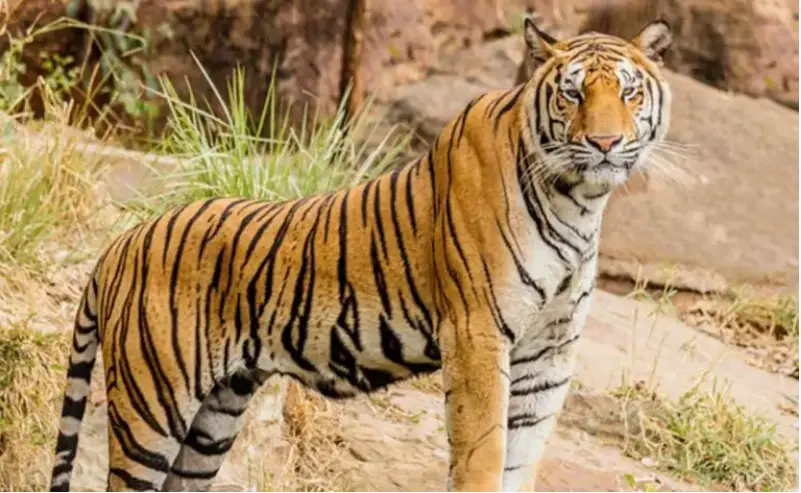
All of you have seen tigers from childhood either in pictures or in the cinema or in the circus or in the forest or in the zoo. When a visitor goes for a visit to Sundarban, he or she always expects to see a tiger in natural condition.

Tiger is the most fascinating and powerful animal of the cat family (the cat family includes the cat, tiger, and lion). Tiger is the king of the forest (Jungle) and easily hunts animals bigger than its own size. Tigers live solitary lives (live alone), except during mating season and when females bear young.

Tigers are usually territorial (living in a particular area) and mark their large home (area) ranges by creating stretch marks in the tree’s bark, emitting liquid from its urine which it spread by urination in trees and ground.

The tigress and tiger find each other by smell. Tigers also excrete waste at a particular place to mark their presence. The eyesight of the tiger is exceptionally (very) good, particularly at night.

The eye has been designed to see very well in the dark. In normal daytime, they can see more or less like us. But at night their vision is about six times better than of a human being.

This is due to the presence of Tapetum Lucidium in the retina of the tiger’s eyes which makes it possible. Tigers have a well-developed sense of touch that they use to navigate in the darkness, detect danger and attack prey.

The tiger’s sense of hearing is also very good. Their ears are capable of detecting the origin and direction of various sounds produced by prey in dense forests. The sense of smell is poor in tigers.

Tigers take extremely strong jaws and sharp canine teeth on them. The teeth of tigers are very strong and are built for gripping and tearing flesh. Tiger’s hind legs are longer than its front legs.

They can cover 20-30 feet in one jump. Tigers have large padded feet so they can move silently towards their prey. The claws (retractable) of the tiger are up to 4 inches in length and are used to grasp and hold on to prey.

A tiger cannot only jump and hunt its prey but also climb a tree and swim in the water if necessary. Tigers of Sundarban is known as the Royal Bengal Tiger (Panthera tigris tigris) is world famous due to its special features.

They have light yellow or reddish yellow coloured skin with black stripes. This is the only tiger group which inhabits mangrove forests. These features help them to hide easily in the mangrove forests.

Now-a-day it is threatened by poaching loss of habitat and fragmentation of habitat. They are born killers. They allow the prey to get near and make a sudden leap (jump).

At it with their slippy and strong body (inflicting) deep wounds with their sharp claws). They know the exact point to attack. They usually hold the neck of the animal. Usually tiger hunt between dawn to dusk (mainly evening to early night).

Royal Bengal tigers are caring towards the females and children, therefore when the killing of prey happens, male tigers eat after the female and children complete their feast.

They like to hunt animals like deer, pig, water buffalo, badger, and wild boar. They have also peculiar food habits, they even eat crabs, fish, iguanas, tortoises or other reptiles.

During the day it remains hidden in the forest. Active during the evening and early part of the night to stalk its prey lying in wait by paths to forest or water, or along the banks of rivers.

If the prey is too large to be taken at a single meal is dragged away into a thicket (a dense group of bushes and trees) to which the tiger returns on successive days,. They can carry double their body weight.

When the tigers become old or injured they often come near to human settlement or (villages) to get easy prey like cattle, sometimes it becomes man-eater as well. Tigers prepare clean spots before giving birth of a cub.

Mothers never leave the place after giving birth of cubs and remain to sit with them all the time. It can go without eating only to guard the cubs. If anyone finds out its den or location, then the tigress immediately moves away to find another spot (new spot).

Both male and female tigers are ferrous. They kill anyone who comes near the den or during changing den. Many woodcutters and honey collectors fall victim to the tigress. By nature, tiger cubs are playful and rather active.

When the cubs grow up a little, the tigress teaches them to hunt, how to tear and how to eat meat with teeth. Tigress also teaches the cubs how to swim. After six or seven months tiger cubs become adults.

Your work :

  1. Gather information about the distribution of tigers.
  2. Make a chart mentioning its role in the food chain.
  3. Gather information about the nature of the tiger.
  4. Try to campaign against tiger killing.


Chapter 11 Habits And Habitats Of Some Important Animals Whales

Whales are large-sized aquatic mammals. Whales have streamlined body shapes, well adapted to swimming. The body is completely hairless except for some hair on the top of the head, near its nasal area.

Blubber, the thick layer of fat under the skin of a whale which is the Auxiliary source of energy and conserves body heat.

Whales have a thick layer of fat under their skin which is known as Blubber. Blubber serves to conserve body heat (whales, like mammals, is a warm-blooded animal) and provide energy for movement.

They have no external ears or projecting nostrils like us. This arrangement helps them to move smoothly in the water. In some forms, hairs are modified as whalebone (not true bone) which acts as a filter for the food, for example, right whales.

Whales move in water by means of the extended tail which have two horizontal labeo (flulees) projecting on each side (this is totally different from the tail of fish) that act as propellers and a pair of forelimbs that have been modified into flippers.

Hind limbs have become last (two small bones attached in the pelvis indicate that their ancestors had hind limbs too). In some forms have a dorsal fin (this is little more than a fold of skin and not supported by a skeleton or fin rays).

These indicate that whales are descended from four-footed terrestrial mammals.


Flipper

The extended and modified forelimb of the whale. Its bones have similarities with the forelimbs of other terrestrial animals. The flippers can only move up and down. They are not propellent. It is a balancing organ. The blue whale is the largest living animal (largest mammals also) of the earth.

The length of a Blue Whale reaches up to 30 metres and its weight is 150 tons. They feed on small aquatic animals mainly krills [a small prawn-like (crustacean) animal]. A blue whale eats from 2-4 tons of food daily.

Though whales is totally aquatic animal their respiratory organ is the lung. It breathes when it comes to the surface of the water. Whales dive to depths of 100 to as much as 1200 metres and some like sperm whales can stay below for an hour.

Before driving, the whale takes in a large volume of air and after coming back to the surface it exhales deeply through the blowhole (nasal opening) present on the top of the head.

They exhale air in such speed that the released air goes (spout) straight up to a height of 10-40 feet. The exhaled air is spout usually warmer than the surrounding air so the surrounding atmospheric air gets transformed to water droplets.

Thus when a whale come to the surface after a deep dive, a white stream is seen from a distance almost like a fountain. Many of you may see this picture in TV or in video. It is an amazing sight.


Different Types Of Whales

Few of them are

  1. Blue whale (30 m. long)-a largest animal on the earth
  2. Greenland right whale (16-20 m long)
  3. Pigmy right whale (6 m) smallest whale (the whale has a dorsal fin)
  4. Bottlenose whale (10 m)
  5. Humpback whale (13-16m)
  6. The sperm whale (tooth whale)-23 m long square head and the snout tooth is 20 cm long and approximately 3 kg is weight. They are the most aggressive.

Your work:

  1. Try to collect pictures of different types of whales.
  2. Draw a picture of a whale and mark its parts.
  3. Compare a whale with a shark.
  4. Gather information about whale killing and campaign against it.

WBBSE Notes For Class 6 General Science and Environment

WBBSE Notes For Class 6 General Science And Environment Chapter 10 Biodiversity And Its Classification

Chapter 10 Biodiversity And Its Classification

Would you face any problem if you were asked to write the names of some living organisms such as plants or animals around you?

I am sure you won’t face any problems. You can write many pages without any hesitation. There are several life forms in our earth. Living forms are a little bit to a great different from each other.

This variability is known as biological diversity or biodiversity. Biodiversity is the term used to describe the variety of life on the earth. It includes every plant and animal as well as microorganisms such as bacteria and viruses.

“WBBSE Class 6 General Science Chapter 10 biodiversity and its classification notes”

Viruses are between living and non-living forms. Viruses are living when they are inside living organisms. But you cannot get all the living forms in a particular place or location. Biological diversity is not evenly distributed over the earth’s surface.

Read and Learn More WBBSE Notes For Class 6 General Science and Environment


Chapter 10 Biodiversity And Its Classification Simply Biodiversity Is The Number And Variety Of Living Forms In A Particular Place.

You can study the biodiversity of plants and animals in your locality. Make a table of different plants and animals in your locality. How many varieties of plants and animals are there and their number in a particular place? Simply that is the biodiversity of that place.


WBBSE Notes For Class 6 General Science And Environment Chapter 10 Biodiversity And Its Classification Biodiversity of plants and animals


Complete the table

Organisms Number Varieties Remarks
1. Plants
2. Animals
3. Other organisms


Now the question is how many species exist on our earth? Exactly how many species of life exist on Earth is not known. However, it estimates range from 20 to 50 million (2 to 5 crores) or more than that.

Among the vast number of living forms (species) nearly 1.9 million (Nineteen lacks) species are identified all over the world. They are given scientific names. A large number of species are yet to be identified.

Class 6 History Class 6 Social Science
Class 6 Geography Class 6 Science
Class 6 Maths Class 6 Science MCQs
Class 6 General Science Class 6 Maths Solutions
Class 6 Geography Class 6 Hindi

Now let us see what is species.

You have seen tigers, different types of dogs, pigeons, crows, cows, cats as well as different types of mango trees, ornamental plants, etc.

Among them, some animals or plants have similar features but some have different ones. Living forms or organisms having the same features are known as species.

  1. The term ‘Biodiversity’ was coined by Walter G. Rosen, in 1985.
  2. E. O. Wilson popularized this word. Wilson is often called the father of Biodiversity.
  3. Members of a species have close similarities (same features) and more or less have the same type of gene and they reproduce within themselves only.
  4. All humans are single species Homo sapiens.

Such as Rohu fish is Labeo rohita. Bata fish is Labeo bata. A common mango plant is Mangifera indica. Pea plant is Pisum sativum.


WBBSE Notes For Class 6 General Science And Environment Chapter 10 Biodiversity And Its Classification Pati kak .


If you follow crows in your locality you may find some have a grey part around the neck region but some have not so and totally black in color. There are two different species of crow, the former is Corvus splendens (Pati kak), and the latter is (raven) Corvus corax.


WBBSE Notes For Class 6 General Science And Environment Chapter 10 Biodiversity And Its Classification Raven


Such as Tiger-Panthera tigris, Cat-Felis catus. These are the scientific name of these organisms. Now the question what is the necessity of giving a scientific name to a living organism?

Most of the animals and plants have a local name, such as Tiger, (English name) is known as ‘Bagh’ in Bengali, ‘Sher’ in Hindi, ‘hu’ in Chinese, and ‘Huli’ and ‘Puli’ in somewhere. So it creates confusion to identify the actual animal.

“WBBSE notes for Class 6 Science biodiversity and classification”

To solve this problem scientists consider the features of that organism (animals, plants or microorganisms), and a scientific name is given to that particular organism.

For example, the scientific name of the Tiger is Panthera tigris. This animal or Tiger is known as Panthera tigris all over the world. The scientific name of the Tiger is Panthera tigris.


WBBSE Notes For Class 6 General Science And Environment Chapter 10 Biodiversity And Its Classification Tiger


Like this all human beings of our earth whatever their religions and race, color, and height belong to the same species-Homo sapiens. This is the scientific name of humans.

  1. The scientific name has two parts-first word is known as ‘genus’ and the second word is known as ‘species’.
  2. Such as in Panthera tigris
  3. ‘Panthera’ is genus and ‘tigris’ is species.
  4. Scientist Carolus Linnaeus introduced this naming procedure. This is known as Binomial nomenclature.

So far scientists have identified nearly 1.9 million (nineteen lacks) species. Still, a lot to be identified. But now the question arises of how these vast numbers of species to be kept properly in an organism table.

To avoid confusion, Taxonomists (Scientists that deal with this part of biological science) have classified these organisms in scientific methods. Biological classification is the way biologists use to categorize and organize all the life in earth.


Have you Noticed How Medicines Are Kept In Medicine Shop And Books In The Library

If you notice carefully that the medicine shopkeeper and librarian keep medicine and books respectively in a definite order. Librarians arrange books in different racks in a particular order-subjectwise, classwise, and sometimes alphabetically like A-Z.


WBBSE Notes For Class 6 General Science And Environment Chapter 10 Biodiversity And Its Classification Bokks in libarary


Medicine shopkeepers also arrange different medicine in racks or boxes alphabetically from ‘A’ to ‘Z’. So they are able to deliver books or medicines as soon as the demand is placed.


WBBSE Notes For Class 6 General Science And Environment Chapter 10 Biodiversity And Its Classification Medicines in medicine shop

Similarly, all living organisms are classified into groups based on very basic shared characteristics. Organisms within such groups are then further divided into small groups.

Scientists have arranged this living forms in definite order or rule on the basis of similarities and dissimilarities. The scientific arrangement of different living forms (species) on the basis of similarities is known as classification.

Classification of living forms has many steps. The major first step of classification is the kingdom. Though some Taxonomists introduce a category (rank) over the kingdom is known as the Eight levels of modern classification

Steps are-

  1. Domain
  2. Kingdom
  3. Phylum
  4. Class
  5. Order
  6. Family
  7. Genus
  8. Species

WBBSE Class 6 Biodiversity Notes

‘Domain’. They placed all organisms under three domains. Under these domains, six kingdoms are placed. More or less acceptable six kingdoms are

  1. Bacteria
  2. Protozoa
  3. Chromista
  4. Fungi
  5. Plantae
  6. Animalia.

In some other type of popular classification (R. H. Whittaker, 1969) organisms are placed under five kingdoms.

They are

  1. Monera
  2. Protista
  3. Fungi
  4. Plantae and
  5. Animalia.

“Class 6 WBBSE General Science Chapter 10 biodiversity explained”

In some recent classification, organisms are placed under three domains, the first rank of classification.

3 domains are

  1. Archaea
  2. Bacteria.
  3. Eukarya(by Carl Woese)


Kingdoms

  1. Monera-Prokaryotes (have no true or typical nucleus)
  2. Protista-Unicellular eukaryotes (which have typical nucleus)
  3. Fungi-Including all fungi.
  4. Plantae-All photosynthetic plants.
  5. Animalia-All animals.


WBBSE Notes For Class 6 General Science And Environment Chapter 10 Biodiversity And Its Classification Kingdoms


Viruses are not placed in any type of classification because they are not truly living organisms. They are treated in between living and non-living forms.

They only grow (reproduce) when they are enter into a living organism’s body. But outside the living body virus is non-living (no sign of a living organism).


Chapter 10 Biodiversity And Its Classification History Of Classification

From the dawn of civilization, many attempts have been made to classify living organisms. The biological classification of plants and animals was first introduced by Aristotle Linnaeus and later classified all living organisms into two kingdoms (Two kingdom classification).

  1. Plantae (Plants) and
  2. Animalia (animals) that include all plants and animals respectively.

Classification of organisms into plants and animals was easy to understand, but a large number of organisms did not fall into either category. After many attempts, R. H. Whittaker (1969) proposed a five kingdom classification, which is very popular.

Later Cavalier-Smith’s and others classified organisms into six kingdom.


Kingdom Bacteria

They are single-celled prokaryotic microscopic organisms. They have the simple primitive type of nucleus. In five kingdom classific- action Bacteria are placed within the kingdom Monera.

Some members of this kingdom are harmful to humans as well as other plants and animals. Bacteria are responsible for many human diseases such as tuberculosis (TB), Typhoid, Cholera, Diarrhea, etc. But some are beneficial too.

Example-Salmonella typhi, Vibrio cholera, Rhizobium, etc.


WBBSE Notes For Class 6 General Science And Environment Chapter 10 Biodiversity And Its Classification Bacteria


Kingdom Protozoa

Protozoans are single-celled eukaryotes (having typical nuclei) either free-living or parasitic. Which feed on organic matter such as other microorganisms or organic tissues and debris.

Examples-Amoeba, Entamoeba (germ of amebiosis), Plasmodium (germ of Malaria), etc.

Thomas Cavalier-Smith et. al 1981, has ranked protozoa as a kingdom. In the five kingdom classification, they are placed within the kingdom Protista.


WBBSE Notes For Class 6 General Science And Environment Chapter 10 Biodiversity And Its Classification Protoza


Kingdom Chromista

This is an eukaryotic kingdom. They include the group of colored algae as well as various colorless forms that are closely related to plants. Details of this kingdom are not yet known.

Example-Macrocytis kelp, Diano-flagellates, Foraminifera, some marine algae etc.


WBBSE Notes For Class 6 General Science And Environment Chapter 10 Biodiversity And Its Classification Chromista


Chloroplast contains chlorophylls ‘a’ and ‘c’. Photosynthetic chemists often carry various pigments in addition to chlorophyll which are not found in plants. Kingdom chloroma is distinguished from plants because of the more complex chloroplast.


Kingdom Fungi

Mushrooms, Yeast, Mucor, and other pigment less forms which are unable to produce their own food. They absorb nutrition from (heterotrophs) other organism’s body.

Some fungi are harmful some are beneficial. Some mushrooms are edible. Some are not. Some fungi help in alcohol and bread formation.

Example-Toadstools, Penicillium, Yeast, Mucor, etc.


WBBSE Notes For Class 6 General Science And Environment Chapter 10 Biodiversity And Its Classification Fungi


Kingdom Plantae

All plants belong to this kingdom. Chlorophyll present in their body. They can produce their own food with the help of chlorophyll.

Example-All green plants.


WBBSE Notes For Class 6 General Science And Environment Chapter 10 Biodiversity And Its Classification Plantae


Kingdom Animalia

All animals from sponges to man. are placed within this kingdom. They have sense organs. Animals are unable to produce their own food.

Example-Sponge to humans, all animals.


WBBSE Notes For Class 6 General Science And Environment Chapter 10 Biodiversity And Its Classification Animila .


Five Kingdom Classification


WBBSE Notes For Class 6 General Science And Environment Chapter 10 Biodiversity And Its Classification Kingdoms


All of you may have seen earthworms, ants, cockroaches, snails, jellyfish, prawns, crabs, etc. in nature. Have you seen any backbone or internal spine or hard internal structure of these animals?

On the other hand, you have seen fish, toads, snakes, tortoises, birds, cows, goats, etc. The animal of the first group have no internal hard structure, some may have external hard structures (shells of snails) or covering (cockroaches, ants,s, etc).

But the animals of the second group possess a hard internal structure. The first group of animals who have no hard internal supporting structure are known as invertebrate animals and the animals of the last group who have hard internal bony structures are known as vertebrate animals.

Make a list of vertebrate and invertebrate animals in your locality.


Complete The Table

Locality Date/year Invertebrates Vertebrates
1. 1.
2. 2.
3. 3.
4. 4.


Now all of you have understood that vertebrates have a hard internal bony structure which is known as the vertebral column. Whereas invertebrates have no vertebral column.

The animals of the animal kingdom are placed under some phylum (rank below the kingdom) on the basis of the simple to complex nature of the body construction of the animals.

If you examine the legs and antennae of prawns, crabs, cockroaches you will see these organs are made up of many small parts. If you pull two ends of these organs parts will be separated easily.


WBBSE Notes For Class 6 General Science And Environment Chapter 10 Biodiversity And Its Classification Examples of Arthopoda


Therefore, the appendages of these animals are joined. So these animals are placed under phylum Arthopoda (Artho = jointed, poda = leg). Body of these animals are covered with a hard covering that contains a specialized nitrogenous substance known as a cuticle.

If you carefully observe their eyes you may see these are made up of many small eyes. These eyes are called compound eyes. Insects like fly, mosquitoes, moths, and butterflies are also included in this group (Arthopoda).

“Step-by-step notes on biodiversity and its classification Class 6 WBBSE”

Many of you may have seen snails, and oysters and some of you may also have seen octopuses, and squids (in sea or aquarium). Octopus, sepia, and Loligo have no outer hard covering. Sepia and Loligo have calcareous internal hard plate-like structures.


WBBSE Notes For Class 6 General Science And Environment Chapter 10 Biodiversity And Its Classification Sea and aquarium animals


All these soft-bodied, unsegmented animals are placed under the phylum (group) Mollusca (phylum-Mollusca). Snails, and oysters have hard outer shells (coverings) made of calcarious materials.

Mollusks have a soft ventral muscular leg for their movement (in some forms legs are modified into other forms).


Insect

Insects are arthopodes. This is the largest animal group (class) among the animal kingdom. They are found in land, air, and water. The most successful group of animals appeared in the earth nearly 40 crores years ago.

Insects have three pairs of legs and usually with two pairs of wings. Their body is divided into three parts-Head, thorax, and abdomen.

Example:

Dragonflies, grasshoppers, ants, beetles, wasps, aphids, butterflies, mosquitoes, flies, cockroaches, etc.

A large number of animals inhabit the earth today. These animals vary in shape and size, habit and habitat, colors, weight as well as in their distribution.

Kingdom Animalia is broadly divided into two major groups-Non-chordates (groups of lower and simple animals) and chordates (groups of higher and complex animals).

The majority of chordates have hard internal bony structures, and vertebral columns. These animals are placed under the rank (group) vertebrate.

The chordates who have no vertebral column are called lower chordates or invertebrate-chordates (e.g. Balanoglossus, Amphioxus, etc.) Lets see some important animal groups (phylum) and their salient features habitats and common examples.


WBBSE Notes For Class 6 General Science And Environment Chapter 10 Biodiversity And Its Classification Animals names , features and examplesWBBSE Notes For Class 6 General Science And Environment Chapter 10 Biodiversity And Its Classification Animals names , features and examples 1WBBSE Notes For Class 6 General Science And Environment Chapter 10 Biodiversity And Its Classification Animals names , features and examples 2


  1. Invertebrates have no notochord. In all chordates, the notochord is present either throughout life or early (developmental) stages of development.
  2. In vertebrates, the notochord is replaced by the bony vertebral column.

All vertebrates possess notochord in their developmental stages but are replaced later by the bony vertebral column. But in a few chordate members notochord remain as notochord throughout life or for a certain period but no replacement occurs.

“WBBSE Class 6 General Science Chapter 10 important questions and answers”

These chordates are known as lower chordates or invertebrate chordates. Examples are Balanoglosus, Amphioxus, Acidia, etc. Vertebrates are divided into six classes. You can separate them externally observing their features. Let’s see some important features of them.


Chapter 10 Biodiversity And Its Classification Vertebrates

WBBSE Notes For Class 6 General Science And Environment Chapter 10 Biodiversity And Its Classification VerebratesWBBSE Notes For Class 6 General Science And Environment Chapter 10 Biodiversity And Its Classification Verebrates 1


Arrange the following animals in their respective groups (phylum/class) and write/remark why you placed them to that group (Phylum/class).


Chapter 10 Biodiversity And Its Classification Animals

Human, shark, toad, leech, earthworm, frog, monitor-lizard, crocodile, cockroach, cobra, whale, tortoise, vulture, owl, pea-cock, fox, lion, rat, cat, koi fish, ray fish, snail, octopus, corals, tapeworm, roundworm, mosquito, fly, spider, starfish, sea-urchin, salamander, orangutang.


Animals Group Phylum/class Remarks (Why they are kept in this group)
Example: 1. Human Phylum—Chordata 1. Body covered with hairs
Class—Mammalia 2. Presence of mammary glands
3.
2.
3.
4. Leech Phylum—Annelida (invertebrate) 1. Soft segmented body sucker present
5.
6.
7.
8.
9.
10.


Fill in table

Features of vertebrate animals Types of vertebrate (class)
1. Live early stages of life (larval stages) in water, adult in the land. 1
2. Body covered by feathers. 2
3. Have a vertebral column (bony) and gill is the respiratory organ. 3
4. Body is covered by hair. 4
5. Give birth young one who doesn’t lay eggs. 5
6. Body covers with dry scales. 6
7.    Presence of fin with fin-rays. 7
8.    Vertebral column made of cartilage. 8
9.    4 legs with claws. 9


Complete the table

Features Group Example
Example: 1. Presence of tube-feet 1. Echinodermata (Phylum) 1. Starfish
2. Flat body head with hooks and suckers. 2. 2.
3.    Round body tapering at both ends present in the human intestine.
4.    Soft segmented body
5.    Body with jointed appendages
6.    Presence of ventral muscular foot. 6. Mollusca 6. Snail
7.    Skin with calcareous spines
8.    Soft, cylindrical body with single aperture
9.    Body covered by hard calcareous shell
10.    Simple body with many pores, mainly marine
11.    Presence of compound eyes.
12.    Invertebrate body with internal calcareous skeleton


Complete the table

From the following examples (animals) pick the animals of the same group and put them in a Box


Chapter 10 Biodiversity And Its Classification Animals

  1. Dog
  2. Koi fish
  3. Shark
  4. Corals
  5. Dolphin
  6. Penguin
  7. Poller Bear
  8. Magur
  9. Sponges
  10. Hydra
  11. Octopus
  12. Tortoise
  13. Crocodile
  14. Toad
  15. Butterfly
  16. Whale
  17. Cobra snake
  18. Owl
  19. Kite
  20. Fox
  21. Sparrow
  22.  Crow
  23. Rat
  24. Ray-fish
  25. Salamander
  26. Lizard
  27. Tapeworm
  28. Starfish
  29. Filaria worm
  30. Leech
  31.  Sea-urchin
  32. Earthworm
  33. Spider
  34. Vulture
  35. Sea lily
  36. Jellyfish
  37. Scorpion
  38. Pigeon
  39. Roundworm
  40. Deer
  41. Rhinoceros
  42. Kangaroo
  43. Oyster
  44. Lion
  45.  Sepia
  46. Man
  47. Monkey
  48. Whale
  49. Dolphin


WBBSE Notes For Class 6 General Science And Environment Chapter 10 Biodiversity And Its Classification Phylum class


Complete The Table

From the above examples select invertebrate and vertebrate animals and put them in their respective box.


 Invertebrates  Vertebrates
Example Phylum/class Example Phylum/class
Sponges (9) Dog 1
Put the animals (from the figure) to their respective phylum/class)


Kingdom Plantae

All of you have seen plants of different types, some are long, some are medium and some are small to very small. Some plants can’t stand erect some are not, they creep along the soil or climb up with the help of support.

Plant kingdom-Plantae :

Most plants are green. They possess green pigments and chlorophyll in their body. Plant makes its own food by photosynthesis (a process by which plant makes their food with the help of sunlight, chlorophyll, water, and carbon dioxide).

There are various plants in nature. Some of them are long-lived and some are short-lived. There are usually three types of plants besides very small plants like algae.


Chapter 10 Biodiversity And Its Classification Phylum Class Plants

WBBSE Notes For Class 6 General Science And Environment Chapter 10 Biodiversity And Its Classification Phylum class Plants


Try to collect different types of plants and try to understand the difference between them (Take help from your teacher):

Points/Questions  Herbs Shrubs Trees
1. Have any woody stem 1. No 1. Yes 1. Yes
2. Have any trunk 2. No 2. No 2. Yes
3. Height of the plant 3. …….. 3. …….. 3. ……..
4. Branches 4. ………. 4. ………. 4. ……….
5. Life span 5. ………. 5. ………. 5. ……….
6.
7.
8.


Complete The Table

Pick up the plant from the list (below) and place it to its proper place.

  1. Potato
  2. Pumkin
  3. Bitter melon
  4. Water melon
  5. Paddy
  6. Banana
  7. Mango
  8. Hibiscus
  9. Palm
  10. Rose
  11. Ginger
  12. Maize
  13. Coconut
  14. Amlaki
  15. Mint
  16. Bael
  17. Neem
  18. Garlic
  19. Sundari
  20. Shal
  21. Water hyacinth
  22. Grass.


 Herbs Shrubs Trees
1. 1. 1.
2. 2. 2.


In the summer or rainy season when we swim in ponds or rivers, we often meet some water weeds. Some are floating, some are underwater like ribbons. Many of you have experienced how to walk on a slippery surface in the bathroom, pond side ‘ghat’ etc.

If you carefully observe the surface you may find some greenish or brownish surfaces. These are the algae. Algae are a type of plant. They have no roots, stems or leaves.

They do not have flowers (non-flowering plants) but they can make their own food in their bodies because they have chlorophyll. Algae often float freely in lakes, ponds, and oceans.


WBBSE Notes For Class 6 General Science And Environment Chapter 10 Biodiversity And Its Classification Algae


Sometimes they fix themselves with some objects. You can see some ribbon-like or thread-like algae in the pond. These long ribbon-like slippery algae are known as water silk (Spirogyra).


WBBSE Notes For Class 6 General Science And Environment Chapter 10 Biodiversity And Its Classification Spirogyra


Most of the algae are simple thallus-like and without any root, stem or leaves. They are aquatic or grow in a moist places. Algae are placed under the group Thallophyta.


WBBSE Notes For Class 6 General Science And Environment Chapter 10 Biodiversity And Its Classification Thallophyta.


Algae

(singular. Alga) Algae are mainly aquatic, non-flowering, photosynthetic (can produce their own food) having chlorophyll and other pigments but lack of true root, stem, and leaves.


Thallophyta

A group of plants or plant-like organisms, whose body is thallus like have no root, stem or leaves. Algae and some fungi are examples of Thallophyta.

During monsoon or autumn, many of you have seen a thick green mat that grows on the surface seen mostly in the lawns, moist old boundary walls of your school or home, or in rocky surfaces in forests, tree trunks, etc.

These are moss-like plants (See picture). These moss-like plants are placed under the group Bryophyta. They include liverworts, hornworts, and mosses.

Bryophytes live in humid (moist) and shaded places. Bryophytes are non-flowering plants. The main body of bryophytes is more or less thallus-like (Ricca) plants. They do not have true roots, stems, and leaves.

“Solved examples of biodiversity and classification WBBSE Class 6 Science”

They generally have something similar to a root, which is known as rhizoids. Which absorbs water from the substratum (the place to which the plant is attached).

But some bryophytes have leafy (not true leaf) erect structures which bear capsule-like spore-bearing sacs when the capsule dies off, spores (powder-like small grains) come out and fall on the moist surface.

New plants grow from these spores. example Moss, Liverwort, Pogonatum, etc. Bryophytes are called the amphibians of the plant kingdom. Though they grow in terrestrial environments (land area) they are dependent on water for the reproduction process.


WBBSE Notes For Class 6 General Science And Environment Chapter 10 Biodiversity And Its Classification Moss, livewort and pogonatum


Many of you have seen Fern as an ornamental plant in some gardens or roadside. You may have eaten Shushnishak, Dhekishak, etc., and attending a height of up to six Tree ferns have full trunks meters.

All these plants are placed under the group Fern-like plant or Pteridophyta. They are generally terrestrial in habitat occurring in moist shady places over the soil. Sometimes they also grow on other trees.

Pteridophytes have leaves, roots, and sometimes true stems. Stems are usually covered by brown scaly leaves (ramenta). Pteridophytes are non-flowering plants.

They have feather-like leaves (compound). Young leaves of fern is coiled at the tip (look like dog tail). If you look underside of mature fern leaf you will fine brown or blackish dot-like or sac like hard structures.

It bears spores. Now plants grow from these spores through some stages. intermediate position between Pteridophytes occupies the intermediate position between Bryophytes and Phanerogams (flowering plants).


WBBSE Notes For Class 6 General Science And Environment Chapter 10 Biodiversity And Its Classification Thallophyta, Bryophyta and Pteridophyyta


Fern and moss have two stages in their life cycle sporophytes stage (bear spore) and gametophytes (bear games) From the above discussion you have learned three types of plant groups under the non-flowering group (Cryptogam, seedless plants).

They are Thallophyta (alga), Bryophyta (moss-like plant), and Pteridophyta (fern-like plants). Besides these, there is a large group of seed-bearing plants (mainly flowering plants or phanérogamae or Spermatophyta) around us.

The main plant body has true root, stem, and leaves. If you compare a Pine (pinus) tree with a Mango tree you can see the difference between their leaves, their fruits, and seeds.

Seeds produced by Pine (pinus) are naked and are not enclosed within fruits, but the seed of the Mango plant is enclosed within the fruit. You may also find differences in their leaves. The leaves of Pinus is needle like whereas the leaves of Mango is flat.

Pine (gymnosperms) have no flowers or fruits and have ‘naked’ seeds on the lower surface of leaves. The seeds are arranged together in a circle (forming a cone). Whereas Mango’ plant is a flowering plant and has a seed that is enclosed within the fruit.


WBBSE Notes For Class 6 General Science And Environment Chapter 10 Biodiversity And Its Classification Gymnosperm


The former plant (Pinus) group is known as Gymnosperm and the later plant group (Mango) is known as Angiosperm.


WBBSE Notes For Class 6 General Science And Environment Chapter 10 Biodiversity And Its Classification Angiosperm.


Both Gymnosperms and Angiosperms are included under Spermatophyta or Phanerogamae (seed-bearing plants)


Gymnosperm

These are the seed-bearing plant group having no flowers and fruit seeds are naked (uncovered).

Example Cycys, Pinus, Casarina.

Angiosperm

These are the seed-bearing flowering plant group where seeds are enclosed within the fruits.

Example Mango, Neem, Apple, etc.

Angiosperms are seed plants, they have flowers and seeds and are produced inside fruits. They occur in all types of habitats dry, wet, and temperate areas.

Difference between Gymnosperm and Angiosperm

Question Gymnosperm Angisosperm
1. have any flowers? 1. 1.
2. Have any fruit? 2. 2.
3. Location of seeds. 3. 3.
4. Example 4. 4.


Make a list of Gymnosperm plants and Angiosperm plants

Gymnosperm plant Angiosperm plant
1. 1.
2. 2.
3. 3.


Take some seeds of Pea (motor) or Bengal Gram (Chola) and Paddy (Dhan). Then remove their outer cover (dry cover), and give little pressure to both type of seed [Pea seed and Paddy (rice)] you may see.

Pea seed has two semicircular halves but Paddy (rice) has one long portion with little whitish mark at the end. Then two halves of pea seed and a single part of paddy is known as cotyledons.

Pea (and gram) is dicotyledon seed (having two cotyledons) and paddy (rice) is a monocotyledon seed (having one cotyledon). Dicotyledon seed-bearing plants are known as dicotyledons and monocotyledon seed-bearing plants are known as Monocotyledons.


WBBSE Notes For Class 6 General Science And Environment Chapter 10 Biodiversity And Its Classification Monocotyledones and Dicotyledons


Monocotyledons bear seeds that have a single cotyledon or seed leaf.

Example: Rice, Grass, Sugarcane, Wheat, Bamboos, Maize, etc.

Dicotyledons bear seeds that have two cotyledons or seed leaves.

Example: Grams, Peas, Beans, Sunflower, rose etc.

Place the plants in the box below. Ginger, Banana, Wheat, Rose, Ground nut, Potato, Plam, Maize, Tomato, Pea, Garlic, Onion, Hibiscus, Eucalyptus

Monocotyledons (monocots) Dicotyledons (dicots)
1. 1.
2. 2.
3. 3.
4. 4.


  1. Take one leaf of the banana plant and one mango leaf. Look carefully.
  2. Do you notice any difference of the colour of the two surfaces?
  3. What are the arrangement of veins in two leaves? Is it the same?


Question Banana leaf Mango leaf
1. How many veins in the middle? Single midvein Single midvein
2. Types of arrangement of veins in the leaf blade? Side branches run paralleled from mid-vein without meeting each other. Side branches coming from the mid vein meet with each other and form a network of veins.
3.    Meeting of side branches of veins occur No Yes
4.    Type of venation  Parallel venation  Reticulate venation
The arrangement of veins in a leaf blade is called venation.


Now you have an idea about venation. Monocots have parallel venation while dicots have reticulate venation. Try to collect different leaves and examine their venation.


Complete The Table

Plant leaf Type of venation Parallel / Reticulate Type of plant Monocots / dicots
1.
2.
3.
4.


WBBSE Notes For Class 6 General Science And Environment Chapter 10 Biodiversity And Its Classification Plant kingdom


Try To Summarise your Understanding

  1. Mango is a (Angiosperm / Gymnosperm) plant.
  2. The venation of sugarcane leaf is (parallel/reticulate).
  3. Banana is a _______________ (Dicotyledonous / monocotyledonous) plant.
  4. You are given a leaf that has the reticulate type of venation; the plant is _______________ (Monocotyledonous / Dicotyledonous).
  5. Pinus bears fruit (yes/no).
  6. Plants have no root, stem, and leaf are ________________ (algae/bryophytes/ pteridophytes).
  7. Rizoids present in ________________  (algae / bryophytes / pteridophytes).
  8. Body divisible into root, stem, and leaves but has no flower the plant is ________________ (Bryophytes /Pteridophyts/Gymnosperms).
  9. Water-silk, Spirogyra is a _____________ (algae / Moss/Fern).
  10. ‘Sorus’ is found in (Spirogyra / Moss / Fern).
  11. A parallel type of venation is usually found in (Monocotyledonous / Dicotyledonous/plants).
  12. Pea seeds have (one / two) cotyledons.
  13.  The plant usually found in seashore Casurina is (a seed-bearing / seedless plant).
  14.  New leaves of fern are (straight/curly).
  15.  (Algae/Brophytes / Pteridophytes) are amphibious plants.
  16.  Naked seed-bearing plants are called ___________ (Gymnosperms/Angiosperms).

Besides two major kingdoms Plantae (plant kingdom) and Animalia (Animal kingdom), there are some other kingdoms. Though we have already learned a little bit of these kingdoms. Under the popular 5-kingdom classification Bacteria are placed under Monera.

Members of these kingdoms are simple, single-called (prokaryotic) organisms (though in some recent classifications, Bacterias are placed under the kingdom Bacteria).

Bacteria is present in most of places of the earth. They are not visible normally (not visible to our naked eyes) they are visible only under Microscope (the instrument through which we can see very small organisms/particles).

You may have seen curd formation in your home. Usually, a little amount of old curd are added to the milk and after a few hours, this milk turns into curd. Small Bacteria (Lactobacillus) present in curd is responsible for the formation of curd.

Some Bacteria are beneficial some are harmful. We obtained antibiotic drugs from some bacteria. Some bacteria make the soil fertile and help in crop production.

“Best guide for Class 6 General Science WBBSE biodiversity topic”

Again you must have heard about many bacterial diseases like Cholera, Typhoid, Diarrhoea, Tuberculosis (TB), Plague, Leprosy, etc. Many bacterial species cause food processing also.

All organisms are made of the smallest unit. This structural and functional unit of life is known as a cell. These are the building block of living organisms as the bricks of a brick wall.

Bodies of organisms like plants, animals, bacteria, etc are made up of cells. Normally each cell contains a round-shaped structure known as a nucleus.

Bacteria (members of the Monera kingdom under 5 kingdom classification) have single cells and have no typical nuclei in their bodies. All of you have heard the name of the disease Malaria, Dysentery.

  1. Malaria is caused by the protozoa- Plasmodium. Dysentery by-Entamoeba
  2. The main symptoms of malaria are pe- periodic attacks of shivering followed by high fever, headache, and muscular pain.
  3. Dysentery-Gastrointestinal trouble.

These diseases are caused by a type of small unicellular (single-celled) organism, known as Protozoa. Protozoa is placed under the kingdom Protista (in the five-kingdom classification, though in some recent classifications, protozoa is treated as a separate kingdom).

Members of the kingdom Protista are unicellular (single-celled) with typical nuclei (eukaryotic). Euglena, Paramecium, etc. tiny (small) organisms are placed under the kingdom Protista other examples of Protista are Amoeba, Diatom, etc.

All of you have seen toadstools around your house usually in moist places. Many of you have eaten mushrooms as food. Though some mushrooms are poisonous and not suitable for eating.

Many of you have seen blackish-green mould in old bread and rotten lemon. All these are fungi (singular-fungus). Sometimes many of us suffer from different types of fungal diseases. Fungi are unable to produce their own food.

“Understanding biodiversity and its types Class 6 WBBSE”

They have no chlorophyll. Fungi are heterotrophic. They collect food from dead, decaying organic substances. Some fungi are parasitic in nature. All fungi are placed under the kingdom of Fungi.

Lichens: Fungus live in symbiotic association (mutual inter-relationship) with algae.

“How is biodiversity classified? Class 6 WBBSE Science”

Collect some samples from a pond/playground and surrounding area and placed them under the following kingdom:

If possible use a hand lense or microscope (take help from your teacher)

Sample Plantae Animalia Fungi Protista Monera
1.
2.
3.
4.
5.


Place these collected animals into the following box.

Sample Invertebrates Vertebrates
1.
2.
3.
4.
5.


In this way select any environment (take help from your teacher) and make the following list

Environment

Plant Group Plants Sample
Thallophytes
Bryophytes
Pteridophytes
 Gymnosperms
Angiosperms


Environment

Plant Plant Group Animal Animal group
1. Aquarium
2. Forest
3. Sea
4. Desert
5. Mountain area
6. Grassland
7. Pond


WBBSE Notes For Class 6 General Science and Environment

WBBSE Notes For Class 6 General Science And Environment Chapter 9 Common Machines

Chapter 9 Common Machines Introduction To Machines

Machines:

We do different types of work in our daily lives in homes, schools, colleges, offices, etc. You know that to do work, you need to apply some force. Some work needs less force and some work needs a large force.

When you push down the handle of a tubewell, water comes out from its mouth; you use a pair of scissors to cut a piece of paper or cloth; you drive a nail into a wooden block by hammering it with a hammer; to open the lid of a soft drink bottle you use a bottle- opener.

WBBSE Class 6 Common Machines Notes

To dig soil you use a shovel; you use a pen or pencil for writing or drawing on paper; labourers use an inclined wooden plank to load heavy barrels upon a truck; a pulley is used to lift a load, etc.

“WBBSE Class 6 General Science Chapter 9 common machines notes”

The underlined things are nothing but machines. Note that in each of these things, you apply force on one part and the work is done at another part.

Read and Learn More WBBSE Notes For Class 6 General Science and Environment

Chapter 9 Common Machines Simple Machines

A simple machine is a mechanical device which is used to multiply the amount of applied force or to change the direction of force or both.

Simple machines make a job easier to do.

Types of simple machines

These are six types of simple machines:

1. Lever.
2. Inclined plane.
3. Screw.
4. Pulley.
5. Wheel and axle.
6. Wedge.

Chapter 9 Common Machines Complex Machines

A complex machine is made up of two or more simple machines. With the advent of civilization, various types of complex machines have been devised so far.

Class 6 History Class 6 Social Science
Class 6 Geography Class 6 Science
Class 6 Maths Class 6 Science MCQs
Class 6 General Science Class 6 Maths Solutions
Class 6 Geography Class 6 Hindi

For example:

Sewing machines, bicycles, buses, taxis, tractors, printing machines, computers, etc.

Let us look at the following chart :

Purpose of use Simple machine Complex machine
Sewing Needle Sewing machine
Writing Pen or Pencil Printing machine or Type Machine
Cutting paper Blade, Knife, Scissors Electric cutting machine
Cutting wood Saw Electric-cutter
Cutting soil Spade Tractor
Making holes in walls or wood Chisel Drilling machine


General terms related to simple machines :

  1. The force applied on a machine is called the effort (E).
  2. The force against which a machine works is called the load (L) or resistance.
  3. A fixed point situated on the body of a machine about which the machine turns while doing mechanical work is called the fulcrum (F).
  4. The shortest distance of the effort from the fulcrum is called the effort arm.
  5. The shortest distance of the load from the fulcrum is called the load arm.

Chapter 9 Common Machines Lever

A lever is the simplest machine that we are familiar with. It is a rigid rod which is capable of turning about a fixed point (or axis) called a fulcrum.

Types of levers :

Based on the position of the fulcrum, load and the point of application of the effort, levers are classified into three groups:

Class, I lever: The fulcrum is in between the effort and the load.


WBBSE Notes For Class 6 General Science And Environment Chapter 9 Common Machines Class 1 lever


Class II lever: The load is in between the fulcrum and the effort.


WBBSE Notes For Class 6 General Science And Environment Chapter 9 Common Machines Class 2 Lever

“WBBSE notes for Class 6 Science common machines”

Class III lever: The effort is in between the fulcrum and the load.


WBBSE Notes For Class 6 General Science And Environment Chapter 9 Common Machines Class 3 Lever


Examples of class I lever :

A see-saw, a crowbar, a pair of scissors, a wire cutter, the handle of a tubewell, a spade, a beam balance, etc.


WBBSE Notes For Class 6 General Science And Environment Chapter 9 Common Machines Examples of class 1 lever


Examples of class II lever :

A nutcracker, a bottle opener, a wheelbarrow, a lemon squeezer, etc.

WBBSE Notes For Class 6 General Science And Environment Chapter 9 Common Machines Examples of class 2 lever


Examples of class III lever :

Forceps, a pair of tongs, a fishing rod, a broom, a human forearm, a bread-cutting knife, etc.


WBBSE Notes For Class 6 General Science And Environment Chapter 9 Common Machines Examples of class 3 lever


Chapter 9 Common Machines Concept Of Inclined Plane

An inclined plane is a slanted surface which is used to lift heavy loads by applying relatively little effort. See the shown alongside. It is easier to lift a load along an inclined plane than to lift it vertically.

“Class 6 WBBSE General Science Chapter 9 types of common machines explained”


WBBSE Notes For Class 6 General Science And Environment Chapter 9 Common Machines Inclined plane


It has many applications in real life. A staircase, a ramp, a leaning ladder, a hilly road, a bridge a flyover, etc. are examples of an inclined plane.


Chapter 9 Common Machines Screw

A screw generally looks like a nail having spiral grooves on the surface of a metal rod. The spiral ridges so-formed are called threads of the screw. These spiral ridges make an inclined plane.

“Step-by-step notes on common machines Class 6 WBBSE”


WBBSE Notes For Class 6 General Science And Environment Chapter 9 Common Machines Screw


A screw is a combination of an inclined plane and a cylinder. It is easier to drive a screw into a wooden plank with a screwdriver than by hammering. That’s why it takes less force to drive a screw into wood than to drive a nail.

Chapter 9 Common Machines Pulley

A pulley is a simple machine to lift a load by applying an effort in a convenient and suitable direction. You have seen that a bucket of water from a well can easily be raised with a pulley by applying the effort in the downward direction.

A picture of it is shown in. It is nothing but a grooved wheel through which a rope runs.


Old pulley with rope


Note: A pulley is used for lifting a load.

Chapter 9 Common Machines Wheel And Axle

Take a circular wheel having a hole at its centre. Through the centre, attach a pen/pencil/anything like this firmly to it. This forms a wheel and axle arrangement.

“WBBSE Class 6 General Science Chapter 9 important questions and answers”

Thus, the arrangement consists of a big cylinder joined with a small cylinder, The big cylinder is called the wheel and the small cylinder is called the axle.


WBBSE Notes For Class 6 General Science And Environment Chapter 9 Common Machines Wheel Axle


If you rotate the wheel, you see the axle (pen/pencil) also rotate. Ropes are wound around the wheel and the axle in opposite directions.

In general, the rope round over the axle is tied to the load, while at the other end of the rope round over the wheel the effort is applied. The wheel and axle arrangement takes less effort to move something.


WBBSE Notes For Class 6 General Science And Environment Chapter 9 Common Machines Wheel and Axle .


There are many applications of this arrangement. In a screwdriver, the thick handle works as a wheel, while the metal rod attached to it functions as an axle. Similarly, a water tap, a door nob, a steering wheel, wheels of a car, etc. are other examples.


WBBSE Notes For Class 6 General Science And Environment Chapter 9 Common Machines Applications Of wheel and axle


Chapter 9 Common Machines Maintenance Of Machines

A machine needs to be properly maintained for its trouble-free, efficient and longer use.

“Solved examples of common machines WBBSE Class 6 Science”

We can take the following ways:

  1. Most of the parts of a machine are made of iron. To protect these parts from rusting they should be painted.
  2. Moving parts of a machine suffer wear and tear due to friction. Such parts should be lubricated with good-quality lubricating oil to reduce friction.
  3. When a machine is not in use, it should be covered to protect it from dirt and dust.
  4. A machine should be cleaned at regular intervals.
    Following these ways, we can increase the life of a machine.

WBBSE Notes For Class 6 General Science and Environment

WBBSE Notes For Class 6 General Science And Environment Chapter 8 The Human Body

Chapter 8 The Human Body Heart

Have you observed where a Doctor places his stethoscope on the chest of a patient to hear the heart sound?

If you put your hand on the chest of your friend who has just completed running events in school sports. What you will feel if you place your ear in his chest, you will hear the ‘lub-doub’ sounds of the heart (heart sounds) and it come more or less from the left side of the chest.

WBBSE Notes For Class 6 General Science And Environment Chapter 8 The Human Body Chest and stethoscope

This active organ is one of the most vital organs of our body and is called ‘the heart’. It is the main organ of blood circulation of our body. Make a hand-made stethoscope or you may get it from your school laboratory (Biology Department).

“WBBSE Class 6 General Science Chapter 8 the human body notes”

Try to understand the location of the heart in the human body and complete the table. If necessary take help from your teacher.

Read and Learn More WBBSE Notes For Class 6 General Science and Environment
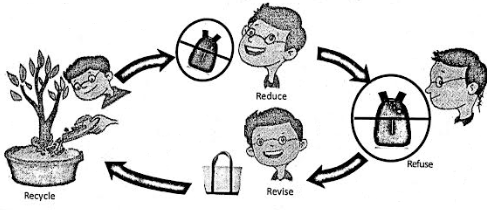
Tick in the proper place :


WBBSE Notes For Class 6 General Science And Environment Chapter 8 The Human Body Tick the proper place


Chapter 8 The Human Body Location Of Heart

Location Of Heart:

The heart is well covered in our body. It is protected by the rib cage by the sternum (the middle place where ribs meet together) from the side and front and back by the vertebral column (made up of hard bony vertebrae).


WBBSE Notes For Class 6 General Science And Environment Chapter 8 The Human Body Location of heart


The heart is located in a thoracic cage (cavity) between the sternum and vertebral column. The largest part of the heart is situated in the left half of the thoracic cavity.

What is the heart?

The heart is the pumping mechanism of the body. It is a hollow, muscular cone-shaped organ. It is the main organ of blood circulation. The weight of the heart is about 300 grams.

Class 6 History Class 6 Social Science
Class 6 Geography Class 6 Science
Class 6 Maths Class 6 Science MCQs
Class 6 General Science Class 6 Maths Solutions
Class 6 Geography Class 6 Hindi

It may be compared with a two-storied house with two rooms on the ground floor and two on the first floor. The first floor or the upper part of the heart (apex or anterior part) has two chambers (rooms) and the ground floor or lower part (base or posterior part) also has two chambers (rooms).

“WBBSE notes for Class 6 Science the human body”
=

Therefore, the human heart has four (4) chambers, two in the upper part and two in the lower. The upper chambers are called the atrium or auricle and the lower chambers are called the ventricles. The walls of the ventricles are thicker than the auricles.

The blood continuously moves through the organs. This movement is called blood circulation.

Chapter 8 The Human Body Blood

The blood is red fluid salty, and alkaline in reaction.

The heart is enveloped (covered by) in a membranous sac called the pericardium. (the outer membrane of the heart) The blood flows through a narrow elastic tube-like structure, these are called blood vessels.

Blood vessels are of three types-

  1. Arteries
  2. Veins and
  3. Capillaries.

Arteries:

These are blood vessels through which blood flows from the heart to organs.

Veins:

These are the blood vessels through which blood flows from organs to the heart.

Capillaries:

Are minute blood vessels. They are found between small arteries and veins.


WBBSE Notes For Class 6 General Science And Environment Chapter 8 The Human Body Heart, house


WBBSE Notes For Class 6 General Science And Environment Chapter 8 The Human Body Blood Vessel


WBBSE Notes For Class 6 General Science And Environment Chapter 8 The Human Body Name of the Chambers heart location and functions


  1. Blood purifies in the lungs.
  2. Impure blood reaches the lung through the pulmonary artery. After purification pure blood
  3. Again comes to the heart (left auricle) through the pulmonary vein.
  4. Blood flows fromthe  right ventricle to the lungs through the pulmonary artery.

Usually, the artery carries pure blood (more oxygenated blood) and the vein carries impure blood (less oxygenated blood). But the pulmonary artery carries impure blood and the pulmonary veins carry pure blood.


WBBSE Notes For Class 6 General Science And Environment Chapter 8 The Human Body Blood


The left ventricle of the human heart is the largest chamber and it is the most powerful chamber too. This is to exert more pressure which helps to send pure blood to the aorta.

All these events which you have just read do not happen one by one. Blood enters simultaneously to the right and left auricles and similarly, blood passes to the right and left ventricle simultaneously from the right auricle and left auricle respectively.

WBBSE Class 6 Human Body Notes

Similarly, blood flows out from the right and left ventricles to the lungs and body respectively simultaneously. The work of the heart consists of rhythmic contractions (reduced size) and relaxations (expands) of auricles and ventricles.

The heart’s contraction is called systole and the relaxation is called diastole. The contractions and relaxations of the different parts of the heart take place in a definite order.

  1. In the simultaneous contraction of both auricles, blood passes from the auricle to the ventricle.
  2. Simultaneous contraction of both ventricles → blood flows out of the heart.
  3. During the relaxation of auricles and ventricles → blood enters into these chambers.

The work of the heart gives rise to sounds known as heart sounds. They may be heard by putting an ear directly to the chest or by means of a special instrument, stethoscope or phonendoscope.


Heartbeat

Heart always in move it. expands and contracts. Each expansion (diastole) and contraction (systole) consists the heartbeat.

Heartbeat:

Pulsation of the heart including one complete systole and diastole.

Pulse is the result of the rhythmic contractions of the heart.

Pulse And Pulse Rate

Pulse rate is the number of times a person’s heart beats per minute.

The normal pulse rate may vary from 60 to 80 beats per minute in rest. In children, the pulse rate is faster. The average pulse rate of an adult is 72 per minute (72 beats/minute).

Try to check your pulse rate and your friends or family members and make a table. The pulse rate depends on various conditions. A person’s pulse is often felt through the arteries (radial artery) on the wrist.

“Class 6 WBBSE General Science Chapter 8 human body explained”

You can measure the pulse rate by pressing the radial artery (superficial artery underlying bones) with two fingers (fore and middle) by your opposite hand.

Besides the wrist, you can take your pulse inside the elbow, at the side of your neck (cardiac pulse) or on the top of your foot. You can also take your pulse at your groin behind your knee and on the temple.

Complete the Worksheet

Examine the pulse of different persons:


Name sex age Pulsebeats per minute Remark on condition resting/working
Pluse beat per minute
1.
2.
3.


Pulse checking points of the body Pluse per minute Remarks
1. Wrist
2. Neck
3.
4.
5.


Chapter 8 The Human Body Measure your Pulse

Tracking your pulse is easy. You can do it on your wrist or neck. Little press with (lay) your index (2nd) and middle finger (3rd) on the inside of your wrist below the base of your thumb (between the bone and the tendon on the radial artery).

WBBSE Notes For Class 6 General Science And Environment Chapter 8 The Human Body Measure Pluse

The spot over the radial artery. When you feel the beat, count the beat for 15 seconds (with a watch or stopwatch). Multiply the count by four to calculate the number of beats per minute.

Calculation :

Suppose you count the number of beats in 15 seconds as 18 then the pulse rate per minute is (pulse rate)

18 x 4 = 72 beats per minute.

Pulse rate depends on the physical condition of the person concerned. Take the pulse rate of your friends in different conditions and compare it.


Name Age Sex Physical condition Remarks
1. 1. Sitting in the School bench
2. After working such as stair Brealey
3. After running
4.  Lying in bed.
5.  After a sports event


Don’t do this if your friend or the person is not fit or ill

Chapter 8 The Human Body Problem Of Heart

You will find some people who are suffering from heart disease. You may head some students who have a hole in their heart. Let’s see some of the common heart problems.

Sometimes there are defects (problems) in the walls of the heart like holes in the heart or to the valves (valves may be too narrow or partially or completely blocked) which means either blue (venous) blood or red blood (oxygenated) gets mixed up or the heart may not pump very well.

These show some symptoms like-

  1. Blue baby-blue skin and blue around the lip.
  2. Difficulty in feeding.
  3. Shortness of breath.

These symptoms are usually due to a reduced supply of oxygen to the body. If you find someone around you with this problem you must convey the message to your parent, teacher, and doctor you know.

Sometimes you may hear pacemaker has been fitted to some person’s heart. It is an artificial treatment for irregular heartbeat. Sometimes blood flow in heart muscles (cardiac muscles) is hampered.

“Step-by-step notes on the human body Class 6 WBBSE”

In some cases, heart muscles do not work properly, and the person feels chest pain, breathing problems, and sweating profusely. This a serious problem of the heart. In this case, the patient must be hospitalized.

There are many different types of heart diseases. Some are congenital (people born with heart problems) but the majority of heart diseases develop over time and affect people later in life.

Some Heart diseases are

  1. Coronary artery disease
  2. Silent ischemia
  3. Angina
  4. Arrhythmia

Some common symptoms of different types of heart disease:

  1. Discomfort.
  2. Chest pain that radiates to the shoulders, neck, or arms.
  3. Shortness of breath.
  4. Profuse sweating.
  5. Nausea and vomiting.
  6. Rapid heartbeat.
  7. Severe weakness.

You should advise a person who is facing a few of these symptoms should go to a doctor or health center for a check-up.

Chapter 8 The Human Body Blood Pressure

It is the pressure of circulating blood on the walls of blood vessels. Normal human blood pressure is 120/80 mm Hg. (systolic pressure 120 mm /Hg, diastolic pressure 80 mm/Hg)

Blood pressure is measured by a special instrument known as Sphygmomanometer.


WBBSE Notes For Class 6 General Science And Environment Chapter 8 The Human Body Sphygmomanometer


All of you have seen blood. Many of you may have tested it. You have already learned that blood is a red-coloured fluid salty in taste and alkaline in nature. Blood is one of the most important fluids of the body.

It is a connective tissue that delivers necessary substances such as nutrients (food substances) and oxygen to the cells and brings back carbon dioxide from cells.

It transports metabolic waste (waste products) from the cells and transfers these into the liver and kidney.


Chapter 8 The Human Body Composition Of The Blood

The major constituent of blood is water, the watery part of blood is known as plasma. Plasma is viscous, slightly yellowish fluid, 55% of blood is plasma. Plasma consists of 90- 92% water and 8-10% organic and inorganic substances.

The greater part of organic substances are protein-like albumins, globulin, and fibrinogen. It also contains glucose, fat, and waste products like urea, and uric acid. Plasma also contains different mineral salts, vitamins, etc.

“WBBSE Class 6 General Science Chapter 8 important questions and answers”

Other components of blood are different types of blood cells (45%). As the plasma is a watery substance it helps the blood to move through the thick and thin channels (blood vessels) from one part to another.

Most of the carbon dioxide is carried by the blood plasma.


WBBSE Notes For Class 6 General Science And Environment Chapter 8 The Human Body Components of the blood


1. Red blood cells or Red blood corpuscles (RBC) :

They are flattened disc-like structures, that transport oxygen (O2) to different parts of the body. RBCs are not visible to the naked eye (microscopic).

They are red due to the presence of the pigment hemoglobin, which helps to carry O2 and CO2. blood plasma. Most of the O2 carried by Most of the CO2 is carried by the hemoglobin of RBC.

2. White blood cells or white blood corpuscles (WBC) :

WBCs are white and have a nucleus. They are also not visible to the naked eye. They are also very important. They perform a protective function. WBCs fight with the microbes that attack our body and in most cases, they engulf (eat) and destroy bacteria and other microbes.

3. Blood platelets or thrombocytes :

Besides RBC and WBC there are some very small irregularly shaped particles in the blood, these are called platelets or thrombocytes. They help the blood to coagulate (blood clotting) when there is a cut in the body.


WBBSE Notes For Class 6 General Science And Environment Chapter 8 The Human Body Various type of human blood corpuscle


Besides this blood contains many other things such as hormones, enzymes, different foreign bodies, toxins, etc. Blood try to balance its components but when it does not work the imbalance will cause problems. Then we may have to go to the doctor for a check-up.

Make a table with different components of blood


Component of blood Function
1. Plasma
2. RBC
3. WBC
4. Platelets
5. Other components of plasma


Why does blood clot?

When you cut your finger, it starts to bleed, but after some time, the bleeding stops. This is because your blood contains special substances that make the blood clot.

Platelets, fibrinogen (a protein present in plasma), and some chemicals take part in blood clotting. After some chain chemical reaction platelets dump together and form a plug which reduces bleeding.


Chapter 8 The Human Body Effects Of Fight Of Blood With Microbes

Every day various types of disease-causing microbes enter our bodies. But they are always not able to cause diseases.

Why all time we not get sick ?

Because the body has its own defense mechanism which destroys many microbes once they enter into the body. Body defense includes physical and chemical barriers that are always ready and prepared to defend the body from infections.

The first line of body defense includes our skin, tears, mucous, cilia, stomach acid (HCI), urine flow, friendly bacteria, and WBC. Natural barriers and the immune system of the body defend against organisms (microbes) entering in to our body.

When our eyes are infected by microbes, (bacteria or viruses) such as conjunctivitis (by a virus) thick white fluid or puss comes out of our eyes.

You may have noticed eyes discharge at the corner of your eyes or in the eyelids. Eye discharge is usually thicker and pus-like yellow, green or even grey in colour.

Personal hygiene, thorough washing of eyes with clean water. Not to touch your eyes without cleaning your hands and with contaminated clothes. It is to necessary to take the advice of a doctor as soon as possible.

“Solved examples of the human body WBBSE Class 6 Science”

You may have noticed that yellowish or whitish or brown-yellow pus (liquor purine) discharges from old wounds or boils pus is a protein-rich fluid filled with dead WBC (leucocytes) that fight against microbes.

When the buildup is on or near the surface of the skin it is called a pustule or pimple. An accumulation of pus is on enclosed tissue space is called an abscess.

Thick discharge of mucus may be an indication of infection of fungus or other microbes. Besides blood, some other substances are present or secreted in different parts of the body which also protect the body from harmful microbes.

When bacteria (microbes) enter the body through the eyes, nose, mouth, cut or bruise or even with food there are different mechanisms like blood to kill the microbes.

Different things besides blood help to kill microbes


WBBSE Notes For Class 6 General Science And Environment Chapter 8 The Human Body Different things beside blood helps to kill microbes

WBBSE Notes For Class 6 General Science And Environment Chapter 8 The Human Body Different things beside blood helps to kill microbes 1


To improve body defense against germs we need to follow the following guidelines

  1. Maintain healthy diet
  2. Maintain cleanliness of body and dresses.
  3. Maintain regular exercise.
  4. Skin care because the skin is one of the most important first lines of defense against microbes.
  5. Behavioral change according to need.


Complete The Table

Make a list of entry points of germs in our body.


Organ/things Place / Location / Cause
1. Head and face  1. Mouth (Mouth aperture)
 2. Nose (Nasal apperture)
 3. Ear
2. Skin 1. Cut
2.  Dirty skin
3. Damage skin.
3. Mouth Through food and water
4.
5.
6.


Make a list of preventive measures of the body (defense mechanisms)


Name Place Role
1.    Hydrochloric acid
2.    Mucus discharges
3.    Saliva
4.
5.
6.


You may have faced some breathing problems in a crowded bus or train or in a less airy place. This is due to the inadequate amount of oxygen in air. There is a continuous interchange of gases between humans and the external environment (breathing).

We breathe approximately fifteen thousand liters of fresh air in a day. We have special apparatus for this purpose, that is, for respiration. The main respiratory organ of humans is the lung.

Other important associated organs are the trachea, bronchi, and bronchioles. The air (oxygen-mixed air) enters our body either through the nose or mouth and travels to the lungs through the windpipe (trachea) bronchi and bronchioles.

Lungs have about three hundred million tiny air sacs (alveoli) which are surrounded by fine blood vessels. Blood vessels absorb oxygen (O2) from air sacs and transfer oxygen to the blood.

“Best guide for Class 6 General Science WBBSE the human body”
 =

At the same time, carbon dioxide (CO2) leaves the blood and enters into alveoli or air sacs and is thrown out through the same route during exhale. All of you know that oxygen is necessary for our survival.


WBBSE Notes For Class 6 General Science And Environment Chapter 8 The Human Body Human Lung


The air we breathe consists of oxygen with other gases. Atmospheric air contains nearly 21% (or 1/5) oxygen.’ After entering our body through respiratory organs oxygen reach different parts of the body (every cell) and burns the food there and releases energy from food.

We use this energy for our activities. The lung is the main respiratory organ of humans. Human has two lungs-right and left. The human lung is a bag-like structure, blackish pink in color. The right lung has 3 lobes and is bigger in size.

The left one is comparatively smaller and has two lobes only. Lungs are situated in the thoracic cavity. The windpipe or trachea divides into two parts. Each part is called bronchus (bronchi- pleural)

Two bronchi enter separately into two lungs. The branches of bronchi after entering the lung divide into numerous branches and sub-branches. These smaller branches of bronchi are called bronchioles.

Bronchioles ultimately end in small air sacs (balloon-like structure), alveoli. Each alveolus is covered with small blood vessels (capillaries).

“Understanding human body systems Class 6 WBBSE”

Trachea is internally supported by a half ring of cartilage (soft bone cartilage ring) that prevent the trachea and bronchi to being collapse completely during low air pressure.

Respiration is a physiological (biochemical) process in which food substances are broken down with the aid of oxygen and as a result carbon dioxide and water are produced and energy is released.

Normal respiration rate (breathing rate) for an adult person at rest range from 12 to 16 breaths per minute. In a relaxed state a man breathes approximately fifteen times per minute.

In both lungs of an adult, there are about 300 million alveoli (30 core)

The path-way of air passing in the human respiratory system.

Environment:

WBBSE Notes For Class 6 General Science And Environment Chapter 8 The Human Body Environment


Chapter 8 The Human Body Breathing

Breathing is a mechanical process. It consists of two processes

  1. Inspiration-Taking in of air (oxygen) from the environment.
  2.  Expiration-Giving out of carbon dioxide to the air.

Organ of Breathing:

Organs concerned with the process of breathing (external respiration) are wind-pipe (trachea) bronchi (branches from trachea), ribs and muscles between the ribs (intercostal muscles), and the diaphragm.

Diaphragm is a muscular membrane present between the lungs and stomach (between the thoracic and abdominal cavities)

Mechanism-How do we inhale and exhale?

  1. During inhalation or inspiration rib muscles and diaphragm contract, increasing the area of the thoracic cavity the cage in which the lung is placed with the increase of the thoracic cage lung expands, as a result, the atmospheric air enters in to the lungs.
  2. During exhalation or expiration, reverse cases happen. Rib muscles and diaphragm relax. The area of the thoracic cage (chest) decreases. As a result, lungs become compressed and air comes out from the lungs.


WBBSE Notes For Class 6 General Science And Environment Chapter 8 The Human Body Intercostal muscles


Chapter 8 The Human Body Lung Problems

Lung disease refers to disorders that affect the lungs.

Asthma:

Asthma is a disease that affects the breathing passages of the lungs. This makes breathing troubles.

COPD:

It is a type of obstructive lung disease characterized by long-term breathing problems.

Pneumonia:

the bacterial disease affects the lung.

Common symptoms of lung disorders include shortness of breath, coughing, noisy breathing, and chest pain, blood in the cough, etc.

  1. In some lung diseases like TB (Tuberculosis) blood comes with a cough.
  2. It is a bacterial disease. Lung cancer is also a dreadful disorder of the lung.
  3. If you find any such problem you should inform your parent, teacher, and physician.

Signs and symptoms of Lung disease TB (TB may occur in another organ too) Coughing that lasts for three or more weeks

  1. Cough with blood (blood in cough)
  2. Chest pain or pain with breathing or coughing. Weight loss, fever, night sweating, etc.
  3. In the later stage blood in coughed at regular basis.
  4. Asthma: Asthma is also a lung-related problem in which difficulty in breathing.
  5. Chest pain
  6. Cough and wheezing
  7. Rapid breathing.


WBBSE Notes For Class 6 General Science And Environment Chapter 8 The Human Body Lung diseases TB


Chapter 8 The Human Body Bones Bone Joints And Muscles

Bones:

Have you ever observed any human skeletons? The human skeleton is composed of many short and long bones of different types. We can stand erect and walk straight because of the presence of bones.

At the time of birth, a baby has more than three hundred bones (approx 300) inside the body. (So their body is so flexible). With the passage of time as one grows some of the bones join together.


WBBSE Notes For Class 6 General Science And Environment Chapter 8 The Human Body Bones bone joints and muscles


A fully grown adult has 206 bones. Nearly half of the total number of bones in a human body are located in the hands and legs (30 in each hand and leg). The thigh bone, which is known femur is the longest bone and the smallest bone is step is present in the ear (middle ear)

Touch and feel different bones of your classmate or try to see any pressure bone and complete the table-


Parts of the body No. of bones Structure / How they look like   Position of the bones
1. Finger
2. Palm
3. Wrist
4. Hand
5. Arm
6. Legs
1. Thigh
2. Ankles
3. Feet
4. Finger of leg


If you follow the central axis of (the 22 bones in the brain box) the skeleton (middle part) and skull is at the top made up of many differently shaped (22 bones) hard bones.

The skull ends with the upper Jaw, and lower Jaw attached separately below the skull Jaws bear the Position of the eye, Cranium (brain) teeth. Below the skull is the vertebral column or backbone. It consists of vertebrae short hard knob-like bones known as vertebrae.


WBBSE Notes For Class 6 General Science And Environment Chapter 8 The Human Body Skull


These are the bones that permit you to bend and twist your back. It also protects the inner spinal cord. Vertebrae of different regions of the vertebral column have some structural differences. In the chest region ribs (12 pairs) are present.


WBBSE Notes For Class 6 General Science And Environment Chapter 8 The Human Body Vertebral column or back bone


Ribs from both sides joint in the front side with the sternum and form the rib cage which protects many vital organs of the body like lungs, heart, etc.

  1. The skeleton performs functions of support, movement, and protection.
  2. Bone marrow is present inside the bones it produces blood cells.

Bones are called long, short, flat, and mixed according to their shapes. Long bones are found in the limbs-such as upper arm bone forearm bones, thigh bone, and shin bone.

Short bones are found in the wrist, ankles, and fingers. Flat bones are found in pectoral and pelvic girdles. eg. ribs, scapula. Mixed bones are present in the head.


WBBSE Notes For Class 6 General Science And Environment Chapter 8 The Human Body Mixed bones


Make a list of different bones as their shape and size and mention their location


Bones’ shape and size Location Remark
1.
2.
3.


How Are Bones Held Together

The bones are held together by means of tough strip-like structures known as ligaments.

Ligaments stretch across the joint and prevent bone from moving too far away in the wrong direction.

Tendon is a tough band of fibrous (connective) tissue that usually connects muscle to bone. A ligament is a fibrous connective tissue which attaches bone to bone.

The gymnasts exercise to stretch their ligaments for easy movements of their bones.


Orthopedic Problems

Dislocation of the bones:

Sometimes bone loses its location, this is called the dislocation of bone. For example, in the event of an accident, the head of the arm bone (humerus) which normally fits into the shoulder blade might be knocked out of its socket.

This knocking out of the humerus is a dislocation of the bone. The same case may happen in the femur and other joints also.


WBBSE Notes For Class 6 General Science And Environment Chapter 8 The Human Body Bone joint


How are bones joints?

Bones joined with each other in various ways. The point at which two bones are joined together is known as the bone joint.


Type Of Joints

  1.  Bone joints present in the skull are not movable. These are called immovable joints.
  2. Some bone joints are less mobile and have only a limited range of movement. These are called partly movable joints or slight movable joints. Example-Joints between vertebrae, hip joints, etc.
  3. Movable joint (or synovial joint) This is the type of bone joint in which some degree of free movement of bone is possible.

In this type of joint opposing bony surfaces are covered by cartilage (a type of elastic bone) and bones are held together by surrounding tubes like capsules. Ligaments are present on the outside of the capsule and synovial membrane inside.

“Functions of human body organs Class 6 WBBSE Science”

Within the synovial cavity a liquid, synovial fluid is present which makes the movement of bones easy.


Chapter 8 The Human Body Types Of Movable Joints

Pivot Joint (= rotary joint)

The joint between the first (atlas) and second vertebra (axis) of the vertebral column in our body. A truly movable joint that allows only rotary movement around a single axis. In this type of joint, the moving bone rotates within a ring that is formed from a second bone.


WBBSE Notes For Class 6 General Science And Environment Chapter 8 The Human Body Pivot Joint


Ball And Socket Joint

A joint in which a ball (head of a bone) moves within a socket so as to allow rotary motion in every direction within certain limits.

For example hip and shoulder bones have this type of joint. Rotation of the head of humorous and femur within their respective cavities of joints.

Ligament: They attach one bone to another.

Tendon: Attach muscles to bone.


WBBSE Notes For Class 6 General Science And Environment Chapter 8 The Human Body Ball and Socket joint


Hinge Joint

The wrists, ankles knee, and elbow joints have hinge joints. Hinge joints are formed between two or more bones where the bones can only move along one axis like the hinge of a door.


WBBSE Notes For Class 6 General Science And Environment Chapter 8 The Human Body Hinge Joint


Saddle Joint

In a saddle joint, you can slide and hinge the bone in any direction (biaxial) allowing movement in sagittal and frontal planes. The joint at the base of the thumb is a saddle joint.


WBBSE Notes For Class 6 General Science And Environment Chapter 8 The Human Body Saddle joint


WBBSE Notes For Class 6 General Science And Environment Chapter 8 The Human Body Bone joints


WBBSE Notes For Class 6 General Science And Environment Chapter 8 The Human Body Middle joint and synovial joint


Complete The Table

Different bone joints their location and functions


WBBSE Notes For Class 6 General Science And Environment Chapter 8 The Human Body Different bone Joints their location and functions


Bone joints Type of joint Nature of joint
1. between 1st and 2nd vertebrae 1. Pivot 1. Synovial or movable
2. Rotation of the head of the femur in pelvic girdle 2.
3. Joint in the skull 3. immovable 3. immovable
4. Wrist joint 4. 4.
5. Finger joints 5. 5.
6. Joint between vertebrae 6. 6.


Different Movements


WBBSE Notes For Class 6 General Science And Environment Chapter 8 The Human Body Different movements


Chapter 8 The Human Body Problem Of Bone Joints

Calcium makes our bones hard. If our body does not get enough calcium and vitamin ‘D’ to support important body functions it takes calcium from our bones. This is called losing bone mass.


WBBSE Notes For Class 6 General Science And Environment Chapter 8 The Human Body Osteoporosis and Osteoarthritis


This increases the risk of bone disease and Osteoporosis (bones are weak and porous). Another common bone-related disease is Osteoarthritis. It is a degenerative disease of the joints usually accompanied by pain and stiffness. This degenerative disorder develops with age and affects walking.

“Different systems of the human body explained Class 6 WBBSE”

Gout:

When excessive uric acid, a type of waste product deposited in joints. Joints become swollen, reddish, and very painful situations arise.


WBBSE Notes For Class 6 General Science And Environment Chapter 8 The Human Body Gout


Back pains:

Back pain may be caused by a slipped disk or it may be associated with some disease of bones and joints.

Rheumatoid arthritis:

It is a chronic inflammatory disease affecting the connective tissue of the joints, pain, and stiffness in the joints. It usually begins with the joints in the finger spreading to the wrist, and elbows.

How do broken bones heal?

Although bone is a hard body part but during an accident or injury bone breaks. But the broken bone has the power to repair itself. Gradually new bone starts growing across the gap eventually.


WBBSE Notes For Class 6 General Science And Environment Chapter 8 The Human Body Broken bone


This new bone part hardens and unites the two broken ends. The doctor make plaster because the damaged part should not be moved. This helps to grow new bones without any difficulties and are united in the correct position.


Chapter 8 The Human Body Muscles

You may have seen a bodybuilder and may have seen a weight-lifter at least in Television. If you observe their body you may find different prominent muscles. Muscles grow bigger and better by exercise.

There are approximately six hundred and fifty muscles in the body. Each one of these muscles performs a particular task. For example, while walking, there are over two hundred muscles in action.

The muscle controls the bone to which direction it moves. The muscles are made up of packages of stretchable fibre-like material (myofibrils). These fibers are extremely slender (thin).

Each fiber is commanded by a nerve which makes it to contract. When muscles contract they do work.

Functionally all muscles are divided into two groups

  1.  Voluntary (=striated) muscles-It contract by the w.I of man, example skeletal muscle.
  2.  Involuntary (smooth) muscles-It’s contractions are not controlled by man.


WBBSE Notes For Class 6 General Science And Environment Chapter 8 The Human Body Skeletal muscles, cardiac and Visceral muscles


For example, muscles are found in the walls of internal organs, and blood vessels.

Muscles attached with the bones (hands, legs, etc.) are called skeletal muscles. Muscles attached with the stomach and other internal organs are known as visceral muscles. (viscera internal organs).

Muscles of the heart are known as cardiac muscles. It is a special type of muscle. It is branched, involuntary, and usually never gets fatigued.

How do muscles work?

A tendon joins the muscle to a bone. The muscles can only perform one action and that is they can pull (contraction). In order to move a joint at least two separate muscles are required.

For example, the lower arm is raised when the bicep muscle (muscle present on the upper side of the arm) is contracted. In this state, the tricep muscles (muscles of the lower side of the arm) relaxed.


WBBSE Notes For Class 6 General Science And Environment Chapter 8 The Human Body Muscles


The arm can not be strengthened again by the biceps alone. It is done when the triceps pull the ulna down the biceps and then relax.

Ask your friend to fold his arm from the elbow. What you will see? Biceps muscle over the humorous swell. Press this part. You will feel hard then ask your friend to relax and lower his arm. Then see the length of the biceps muscle.

Make a table of your observation :

The shape of muscle (working muscle) muscles at the time of elbow folding muscles at the time of  relaxation
Length increase/decrease increase/decrease
Width increase/decrease increase/decrease
Stiffness increase/decrease increase/decrease


Nature of Job The nature of muscles involve
1.    Movement of Jaw
2.    Peristalsis movement or movement of the Alimentary canal.
3.    Movement of the tongue
4.    Holding somethings
 5.    Climbing
 6.    Swimming
 7.    Talking.
 8.    Opening and closing of eyes
9.    Rhythmic contraction of the heart


What is a muscle cramp?

You may often hear the case of muscle cramps of players. A cramp is an involuntary action that is a painful contraction of a muscle. It occurs when a muscle suddenly contracts unexpectedly.

It is usually a very painful state and remains for several minutes. Muscle cramps usually occur in the feet and hands. Sometimes it occurs in leg near the knee (calf muscle).


Problems Of The Muscles

You may have seen some people who is unable to move his/her lower body parts since birth. Legs and hands are slender. Many of you and your friend and family members who use computers often face some problems in fingers and neck.

During old age, people can not walk properly, and sometimes may not be able to stand erect, due to weakness of muscles. You may have found many office workers who has been having neck and back pains.

These area-related muscles are not working properly due to overaction. After proper exercise, this pain can be relieved.


The Growth And Development Of The Human Body

Most of you have noticed a newborn baby and a four-month-old baby. (1 to 3-month baby). You must have also observed that they have soft, small, slender arms and legs, fingers are short, slender, and have no or little strength.

All of us have passed this phase during starting of our life but as the advancement of age, our body gradually develops and gain strength. With the advancement of age, height and weight increase. Let’s see some examples and complete the table.


Name of the organs /Parts of the body Functions
1. Hand and Finger 1. To hold something, used during swimming, most of the work such as writing, throwing, etc.
2. Legs 2.
3. Knee 3.
4. Teeth 4.
5. Shoulder 5.
6. Ankle 6.
7. Lips 7.
8. Tongue 8.


Every living organism requires food. We also require it for our survival maintenance of health, growth, and development. You have noticed with the advancement of age, a person’s body develops.

Proportionate development of different parts (organs) of the body occurs. Diet is the kind of food on which a person or a group lives. There are various components of food such as carbohydrates, fat, proteins, minerals, vitamin, and water.

Each of these components has a specific role in body formation. Good dietary habit gives us sound health and good mental development.


WBBSE Notes For Class 6 General Science And Environment Chapter 8 The Human Body Diet food


If you do not get sufficient food in day or day after day your body would not grow as well as the development of mental growth would also be hampered.


Chapter 8 The Human Body Work To Do

Complete the list by taking measurements of a different person as mentioned below. Some data has been provided. You have to complete the list.

From this table, you will get a picture of the measurement of different parts of our body (organs).


Age of the person Height (cm) Weight (kg) Name of different parts/organs of body Measurement (cm) Proportionate measurement of the head, hand body, leg.
3-years 94-95 14 Head 46-7-50-7
Head 15-17
Body 12—13
Leg 20-23
6-years 112-113 20-22 Head 49-50
Head 50-51
Body 40-41
Leg 65
9-years 132 31 Head 51
Head 59
Body 51
Leg 72
12-years 149-150 40-41 Head 51
Head 66
Body 56
Leg 93


Name of the student Class Sex Weight Height
1.
2.
3.
4.
5.
6.
7.
8.
9.


Categorization of Weight of different student


Number of Students Less than 30 kg 30.5-32.5 (30-32 kg) 32.6-34.5 (32-34 kg) 34.6-36.5 (34-36 kg) 36.6-38.5 (36-38 kg) 38.6-40.5 (38-40 kg) 40.5-above  (40-above)


From this table, you would get the average weight and height of students of your class. You may notice some has abnormal length and weight. They may be shorter or longer than average as well as some may be underweight and some are over weighted.


Normal Height Short height (dwarfism) Long to very long (Gigantism)
Male Female


No. of students Normal Weight Under Weight Over weight (Obese)
Male Female


Chapter 8 The Human Body Abnormal Development

In the human beings, abnormal development can occur due to some chemical factor (hormone), hereditary or disease-related causes.


WBBSE Notes For Class 6 General Science And Environment Chapter 8 The Human Body Abnormal Development

Three major functioning groups of food.

  1. Energy-producing food- carbohydrates,-Fat
  2. Bodybuilding Food of balanced diet
  3. Protective Food Minerals, vitamins, water

Some Deficiency Diseases


WBBSE Notes For Class 6 General Science And Environment Chapter 8 The Human Body Some deficiency diseases


Before the start of puberty at the age of 10 there is not much difference between in growth ratio between boys & girls. (about 5 cm per year). Growth rate changes during puberty. In the onset of puberty in girls usually starts at around the age of 10.

“WBBSE Class 6 Science human anatomy and physiology notes”

Girls on average start their growth between the age of 10 and 14, about a year before boys. The average boy starts his growth at the age 12. Besides the above-mentioned deficiency disorder some other types of illnesses you may notice among students.

In the following table, a few of them and their probable reason are mentioned.


Name of Illness Cause of reason of illness
1. Broken corner of the nail Deficiency of calcium and some toxic effects of fluoride.
2. White mark on teeth Toxicity of fluoride.
3. Fadeness of the corner of the eye Deficiency of iron, vitamin B, and protein.
4. Color of skin Malnutrition and deficiency of protein.
5. Ulcer at the corner of the lips and tongue Deficiency of vitamin B.
6. Swollen gum and profuse bleeding Deficiency of vitamin C.
7. Change of shape of the bone Deficiency of calcium, protein, and vitamin D.
8. Frequent breaking of bone Deficiency of calcium.
9.
10.


Chapter 8 The Human Body Work To Do

After careful observation, you make of table (considering all these disorders) of your classmates.


SI. No. Name of the ‘ students Class Sex Observation Remark
1. R. Das VI M Swollen gum relish blood appears sometime Vitamin ‘C’ deficiency, need to take citrus fruits
2. ………… ………… ………… ………… …………
3. ………… ………… ………… ………… …………


Body Mass Index

The Body Mass Index (BMI) ( Quetelet index) is a value derived from the body mass (weight) and height of an individual. BMI can be measured by dividing the body mass (weight) by the square of the body height.

“How do human body organs work? Class 6 WBBSE Science”

Its value indicates a health condition either person is under-weight, or mal or overweight or obese. Body mass index is a simple calculation using a person’s weight and height the formula is

WBBSE Notes For Class 6 General Science And Environment Chapter 8 The Human Body BMI

Simply divide your weight in kilograms (kg) by your height in square meters. Example-Suppose the height of a student is 1.2 metres and weight is 38 kg. How can you calculate the body mass index (BMI) of that student?

WBBSE Notes For Class 6 General Science And Environment Chapter 8 The Human Body BMI .

Now check the scale of BMI and make remarks


Importance Of BMI

It is an indicator of whether a person’s weight is low, normal or over normal. Being overweight causes different physiological problems such as disease of the heart, bones, and liver. A person can be cautious about BMI and can take steps accordingly.

“Important facts about the human body Class 6 WBBSE”

Scale of BMI
BMI less than
15 =excessively low weight
16-18.5 = low weight
18.5-25 = Normal
25-30 = Heavy weight
30-40 = Excessively heavy
40 above = Obesity

The growth rates of girls and boys are slightly different. The growth rate of the girls increases in the age group of eight to twelve or thirteen.

WBBSE Notes For Class 6 General Science and Environment
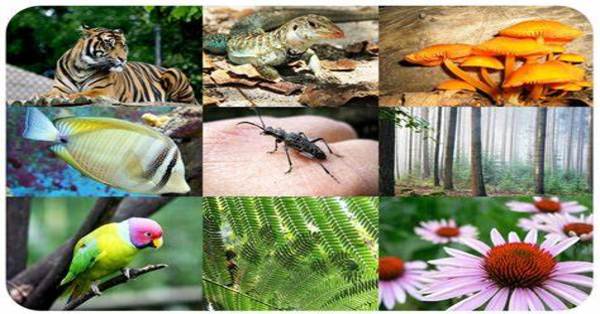
WBBSE Notes For Class 6 General Science And Environment Chapter 4 Rocks And Minerals

Chapter 4 Rocks And Minerals The Earth Crust Rocks

Do you know?

  1. Our planet earth is more than 5000 million years old.
  2. The earth comprises of three main regions-the lithosphere (which is solid), the hydrosphere (which is the liquid portion) and the atmosphere (or gaseous portion).
  3. The outermost surface of the earth is made up of hard soil, sand, silt, clay and rocks like granite, etc.
  4. The pressure and temperature under the earth’s surface are extremely high.
  5. Within the earth the temperature increases with depth at the rate of 1°C for every 32 m of depth, giving an average temperature of about 5000°C at the centre. At such high temperatures, the rocks remain in a molten state which is known as magma.
  6. During volcanic eruptions, such molten magma erupts on the surface of the earth and flows down the slope of the surface. Then it is called lava.
  7. Outside the crater of a volcano, the lava gets solidified by cooling and in this way, primary rocks are formed.
  8. Rocks differ from one another in colour and texture.

Read and Learn More WBBSE Notes For Class 6 General Science and Environment

WBBSE Notes For Class 6 General Science And Environment Chapter 4 Rocks And Minerals Volcanic eruption

Chapter 4 Rocks And Minerals Different Types Of Rocks

Different Types Of Rocks

On the basis of the mode of formation.

The rocks are classified as

  1.  Igneous rocks.
  2. Sedimentary rocks and
  3. Metamorphic rocks.

“WBBSE Class 6 General Science Chapter 4 rocks and minerals notes”

Igneous Rocks

The word ‘igneous’ means ‘fire’, derived from the Latin word ‘ignis’ or its Sanskrit word ‘Agni’. Igneous rocks are formed by the process of solidification of hot molten lava.

WBBSE Notes For Class 6 General Science And Environment Chapter 4 Rocks And Minerals Igneous rocks

They are referred to as primary rocks. Basalt, Granite and Pumice are three common examples of igneous rocks. The black-coloured stones you see near railway tracks or stone chips that are used for the construction of asphalt roads are nothing but pieces of granite.

Class 6 History Class 6 Social Science
Class 6 Geography Class 6 Science
Class 6 Maths Class 6 Science MCQs
Class 6 General Science Class 6 Maths Solutions
Class 6 Geography Class 6 Hindi

Note that no holes are seen in a granite rock. But in a pumice stone, you can see many holes. Usually, pumice is formed by the process of quick cooling and solidification of bubbling foam from the upper portion of molten magma.

When the bubbles escape into the air, the holes are formed in the solid pumice.

Sedimentary Rock

The word ‘sedimentary’ is derived from a Latin word which means ‘settling down’. Sediments of sand, gravel, slit and clay are deposited in water bodies like seas, rivers and lakes over millions of years.

“WBBSE notes for Class 6 Science rocks and minerals”

Due to the high pressure and temperature of the interior layers of the earth, these sediments get consolidated (or hardened) into rocks which are known as sedimentary rocks. These are also called secondary rocks.

WBBSE Notes For Class 6 General Science And Environment Chapter 4 Rocks And Minerals Sedimentary Rocks

Sometimes fossilized remains of plants and animals are found between the layers of sediments. As shown in Sandstone, Shale and Limestone are three common examples of sedimentary rocks.

Sandstone is formed by the consolidation of the deposits of sand, whereas deposits of clay get hardened to form shale.

WBBSE Notes For Class 6 General Science And Environment Chapter 4 Rocks And Minerals

Metamorphic Rocks

The word ‘metamorphism’ means ‘change of form’. Metamorphic rocks are rocks which are formed by the process of metamorphism of pre-existing igneous and sedimentary rocks.

During the process of metamorphism, the original structure of pre-existing rocks gets altered into new minerals which combine together to form metamorphic rocks.

Metamorphic rocks are harder and more resistant than the original rocks.

WBBSE Notes For Class 6 General Science And Environment Chapter 4 Rocks And Minerals Metamorphic Rocks

Marble, Slate, Gneiss, Quartzite, Schist, etc. are examples of metamorphic rocks.

For example:

Limestone gets metamorphosed to form marble. Shale gets altered to form Slate. Granite gets metamorphosed into Gneiss. Quartzite is the metamorphosed form of Sandstone.

Chapter 4 Rocks And Minerals Minerals And Ores

The earth’s crust is made up of rocks of various types. Do you know that a rock is a mixture of various minerals in different combinations. About 2000 minerals are known to exist in the earth’s crust.

“Class 6 WBBSE General Science Chapter 4 rocks and minerals explained”

However, minerals are made up of some chemical elements. Among these elements, in the earth’s crust oxygen is the most abundant, and silicon is the second most abundant element.

Other elements are aluminium, iron, calcium, sodium, copper, magnesium, zinc, etc. You must have an idea about some objects made from metals that we use in our everyday life.

Follow this chart:

Metal Uses
Aluminium To make utensils, furniture, electrical wires, picture frames, and the body of planes.
Iron For making machines, rods, rail lines, utensils, lamp posts, and railings.
Copper In the manufacture of electrical wires, cables, electrotyping, electric motors, electric cells, coins.
Zinc In galvanizing iron and steel, to prepare a painted zinc white, in a dry cell.
Silver Utensils, ornament manufacturing.
Gold In manufacturing valuable ornaments.


Most of the metals are found to occur in nature in combination with other elements forming compounds mixed with soil and sand. These compounds are known as minerals.

Example:

Aluminium is found as different compounds, namely, Bauxite, Cryolite, Felspar, and Diaspore-which are minerals of aluminium. The minerals of iron are Haematite, Magnetite, Copper has the minerals Copper glance, Copper pyrites, and Cuprite.

Metal extraction is the process by which a metal is extracted from its minerals.

The particular mineral from which a metal can be extracted conveniently and economically is called the ore of that metal.

WBBSE Notes For Class 6 General Science And Environment Chapter 4 Rocks And Minerals Metamorphic Rocks Bauxite, Haematite and Copper glance

Example:

  1. The ore of Aluminium is Bauxite, of Iron it is Haematite, of Copper it is a Copper glance.
  2. All ores are minerals but all minerals are not ores for a metal.

A metal may have more than one mineral, but one or two ores from which the metal can be extracted conveniently and economically.

“Step-by-step notes on rocks and minerals Class 6 WBBSE”

For example:

Aluminium has the minerals Bauxite, Cryolite, Felspar, and Diaspore but its ore is only Bauxite. Because Aluminium is extracted economically from Bauxite.

Chapter 4 Rocks And Minerals Alloys

You are familiar with some solid substances like bronze, brass, steel, stainless steel, bell- metal, etc. These are not pure metals, but rather, a mixture of metals. These are called alloys.

Definition Of Alloys :

An alloy is a mixture of two or more metals as a solid solution.

Why do we prefer alloys than pure metals?

  1. Alloys are harder than pure metals.
    For example, a bridge built of pure iron cannot withstand heavy load but a bridge built of steel (an alloy of iron and carbon) can do that easily.
  2. Alloys are used to protect the metal from corrosion by air or moisture.
    For example, an iron spoon gets rusty easily but a spoon made of stainless steel (an alloy of iron and chromium) never rusts.
  3. The purpose of alloying is to lower the melting point.
    For example, an alloy of lead and tin, called solder has a melting point lower than lead or tin. An electric fuse is also made out of the alloy of lead and tin in a 3:1 ratio.
  4. An alloy is used for superior casting.
    For example, statues, and medals are made out of brass (an alloy of copper and zinc), and bronze (an alloy of copper and tin).

Chapter 4 Rocks And Minerals Fossils

A fossil is a skeletal impression (or trace) of once-living plants and animals from the past geological age. These skeletal impressions get preserved in between the layers of sedimentary rocks.

WBBSE Notes For Class 6 General Science And Environment Chapter 4 Rocks And Minerals Metamorphic RocksBauxite, Haematite and Copper glance Fosslis

Formation of fossils :

When a plant or animal died in a watery environment (one day which were alive) and got buried in mud and slit, their body parts underwent a lot of changes over millions of years. First of all their soft tissues had been decomposed.

For animals, only hard bones or shells were left behind and for plants, traces of leaves were left behind. Over time many chemical changes also took place and the organic remains got preserved over the top and hardened into rocks.

These rock-like traces are called fossils. Fossils help us in fixing the relative ages of rocks. Besides this, the footprints of extinct animals help us to study about them.

Chapter 4 Rocks And Minerals Fossil Fuel

Fuels are the substances which produce heat on burning. Our domestic use fuels include cow-dung cakes, matchstick, wood, hay, paper, etc. We also use fossil fuels like coal, petroleum and natural gas.

“WBBSE Class 6 General Science Chapter 4 important questions and answers”

These are called fossil fuels because they are formed by the chemical decomposition of dead remains of plants and animals over millions of years which got buried underneath the earth.

Coal :

Coal is found deep under the earth’s surface. Coal was formed when huge forest areas got buried under the earth’s surface about 200 million of years ago.

Due to the very high pressure and temperature of the interior layers of the earth and chemical decomposition reactions, the remains of plants got compacted to form a stony residue, called coal.

Different varieties of coal, e.g. peat, lignite, and bituminous are formed. They differ in their carbon content and volatile compounds.

WBBSE Notes For Class 6 General Science And Environment Chapter 4 Rocks And Minerals Formation Of coal

Uses of coal :

Coal is the most common fossil fuel that we use. On burning coal, heat energy is produced. This heat energy is used to generate electricity in thermal power stations.

When coal is burnt in absence of air, the volatile impurities are expelled, leaving behind a liquid residue (called tar) and a porous residue (called coke).

The coke contains 98% of free carbon and does not produce any smoke on burning. So, coke is a better fuel than coal. Coal is also used as a source of some organic compounds such as benzene, toluene, naphthalene, etc.

Chapter 4 Rocks And Minerals Petroleum And Natural Gas

Millions of years ago, the dead bodies of extremely small sea animals and plants got covered by mud and sand. Due to intense heat and pressure under the earth, the sediments changed into sedimentary rocks.

After a lot of chemical decomposition, the bodies of dead animals and plants decayed into a product of petroleum and natural gas.

WBBSE Notes For Class 6 General Science And Environment Chapter 4 Rocks And Minerals Formation of petroleum and natural gas

Petroleum occurs at depths 500-2000 m between two layers of impervious rocks and the natural gas always remains above petroleum trapped in between the rock cap and the petroleum layer.

Uses of petroleum :

Crude petroleum is refined by the process of fractional distillation at different temperatures. The products of refining of petroleum are kerosene, petrol, diesel, LPG, paraffin wax, lubricating oil, asphalt, petroleum gas, naphtha, etc.

  1. Kerosene is used as a household fuel in wick stoves.
  2. Petrol is used as fuel for light vehicles like cars, scooters, etc.
  3. Diesel is used to running heavy vehicles like buses, trucks, tractors, etc.
  4. LPG (Liquid Petroleum Gas) is used as a household fuel.

Uses of natural gas :

Natural gas contains 95% methane. Under high pressure, natural gas is stored in cylinders. It is commonly called Compressed Natural Gas (or CNG) and is used as fuel for homes, transports and industries.

“Solved examples of rocks and minerals WBBSE Class 6 Science”

Natural gas can be piped from production wells to homes in the same way as water supply. Natural gas causes less pollution on burning, than vehicles run on diesel. So, natural gas is a very clean and efficient fuel.

WBBSE Notes For Class 6 General Science and Environment
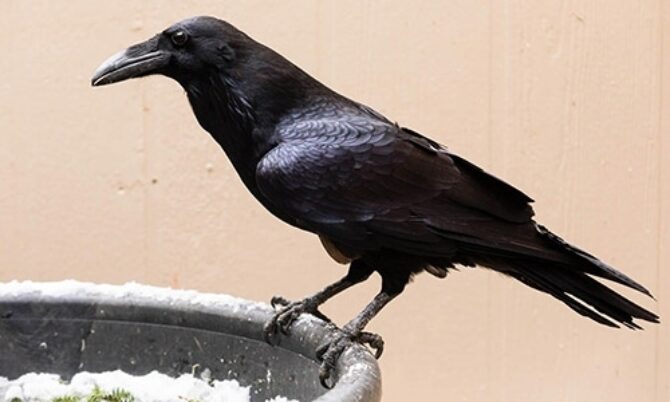
WBBSE Notes For Class 8 History Chapter 4 Nature Of Colonial Economy

Chapter 4 Nature Of Colonial Economy Background

The Supremacy of the British in India was known as the ‘British Raj’. “The settlement of 1818 marks the beginning of the paramountcy of the East India Company” (Dodwell).

After establishing colonial rule in India, the company’s political, economic, and administrative power highly developed. In a time of the rule of the English East India Company (1757-1857) the Nawab of Bengal and as well as native princes became the puppet rulers to the hands of the British.

Most of the Governor Generals founded the British Raj on a strong basis. According to R. C. Majumder sovereignty or paramount power of the British in India is called the “British Raj”.

The concepts of ‘oligarchy’ and ‘autocracy’ were taken in, the new administrative policy of the British Raj. The growing colonial imperialism had been seen after the Sepoy mutiny (1857).

“WBBSE class 8 history chapter 4 notes”

So the aftermath of the Revolt, Queen Victoria (1837-1901) adopted the policy of reorganization of the British Raj.

Chapter 4 Nature Of Colonial Economy British Colonial Impact On The Indian Economy

British Colonial Impact On The Indian Economy

The colonial rule of the British had a deep impact on the Indian Economy. After the Battle of Buxar, the Company’s colonial expansion and colonial exploitation reached the highest grade.

The period of dyarchy gave political support to the colonial rulers in India. The prosperous trade and industries in India gradually declined.

Class 8 General Science Class 8 Maths
Class 8 History Class 8 Science LAQs
Class 8 Geography Class 8 Science SAQs
Class 8 Maths Class 8 Geography
Class 8 History MCQs Class 8 History

The important ship-building factories were built in Sweat, Bassein, Goa, Chittagong, Dacca, and Mussolipattam, which once came under the control of the colonists.

The silk, wool, and cotton textile industries developed in Ahmedabad, Surat, Broach, Bangalore, Madurai, Delhi, Agra, Vishakapattanam, Benaras, Lahore, Multan, etc. The ‘Moslin’ and ‘Calico’ cotton goods of Dacca were world famous.

“nature of colonial economy WBBSE class 8 history”

Apart from these ceramic earthen pottery and leather industries and its various artisans appeared in this period. In a word, the indigenous economy was self-sufficient and prosperous.

But the establishment of the Company’s colonial rule and its exploitation gradually ruined the whole economic network. The period of “economic plunder” really started from the post-Plassey and Buxar eras.

Very soon India’s politics, society, and economy were severely affected. British colonial rule highly affected the Indian village economy.

WBBSE Class 8 History Chapter 4 Nature Of Colonial Economy

As a result

  1. Prosperous self-sufficient villages declined.
  2. Village agrarian society penetrated poverty.
  3. Administrative reforms of the British delta mode blow on the agriculture and peasantry.
  4. Every governor of India paid attention to Indian revenue because it was their high source of national income.
  5. The ‘Dadan System’ of the company became the cause of increasing tension in the village community.
  6. Not only the raw materials, to sell their industrial products company captured the whole, market of India.
  7. The government also started the policy of payment of revenue through cash, not by kind.
  8. The company’s ‘agents’ and ‘gomastas’ collected the agrarian goods and raw materials at a very high price.
  9. Due to the high taxation of Indian cotton goods, the helpless cotton weavers and artisans were compelled to give up their traditional occupations. Mr. D. H. Buchanon said that the introduction of railways ruined the self-dependent village economy.
  10. The company’s policy of de-industrialization also had far-reaching effects.

Chapter 4 Nature Of Colonial Economy Land Revenue Policy And Decline In Agricultural Economy

At the very outset of the company regime, the whole of India including Bengal, Bihar, and Orissa, was an agriculture-based country. So, due to the eagerness of the British and the active part of the Company, different land revenue policies were taken up.

After Bengal, Bihar and, Orissa got the Diwani (1765 A.D.), the income of the company increased to a great extent. In 1765-66 A.D. the land revenue collected was Rs. 1 crore 20 lacs. Later it increased to Rs. 2 crores 40 lacs.

Dewan Reza Khan and Sitab Rai used to collect huge revenues from Bengal and Orissa respectively by coercion and exploitation. At this time, the condition of the Bengali farmers became worse as Clive introduced dual ruling.

“exercise 4 solved questions on colonial economy class 8”

After Clive, Verelest (1767-69 A.D.) and Cartier (1770 A.D.) did not even try to improve the coerced way of collecting land revenue.

Land Revenue Policy of Warren Hastings:

The company formed ‘Comptrolling Councils of Revenue’ in Patna and Murshidabad in July 1770 A.D. with the purpose of retrenching the corrupted employees. Similarly, he formed the Comptrolling Committee of Revenue in Calcutta in April 1771 A.D.

The ‘Court of directors of the company ordered the principal officers in Calcutta to recover the condition of famine-stricken Bengal. Under these circumstances, Lord Warren Hastings was sent to Bengal as governor (1772-85 A.D.).

After being governor he immediately sacked Reza Khan and Sitab Ray and appointed a special class of employees known as ‘Collector’. A ‘Board of Revenue’ was formed to determine how much revenue they would collect.

Under this Board, there was a ‘Committee of Circuit’. Warren Hastings introduced the ‘Five-year settlement from 1772-77 A.D. It visited each district and the ‘Committee of Circuit’ was given the responsibility to allot land through an auction for a tenure of five years.

In 1773 A.D. a change was made in the revenue system by the ‘Regulating Act’. ‘Hastings-Barwell’ Project was made in 1775 A.D. Middleton Decars supported it.

“WBBSE class 8 history chapter 4 important questions

Ultimately the five-point system was nullified due to some disadvantages and a One-year settlement was introduced in 1775 A.D. even before the end of the five-year settlement system.

Neither a Five-year settlement nor a One-year settlement was introduced in 1775 A.D. even before the expiry of the Five-year settlement. Warren Hastings appointed Amini Commission in 1776 A.D.

Both Five year and One-year settlements could improve the condition of the peasants.

Class 8 History Wbbse

Chapter 4 Nature Of Colonial Economy Land Revenue Policy Of Lord Cornwallis

Cornwallis changed the system of land revenue. Sir Henry Dandus, the President of Pitt’s India Act (1784 A.D.) The Court of Directors and Board of Control advised him to reform the land revenue and to introduce a permanent settlement.

He enquired about the land revenue in 1786-89 A.D. At last, he introduced the ‘Ten-year settlement’ in Bengal and Bihar in 1789 A.D. and in Orissa in 1790 A.D.

Lord Cornwallis

WBBSE Notes For Class 8 History Chapter 3 Establishment Of Colonial Authority Lord Cornwallis

To make this system permanent, he discussed the matter with Charles Grant, John Shore, Phillip Francis, Thornton, etc. This permanent settlement became legalized when the Court of Directors sanctioned it.

Permanent Settlement:

Cornwallis introduced the permanent settlement on 22nd March 1793 A.D. This system was introduced in Bengal, Bihar, Orissa, and Benaras. Basically, this system was introduced between the zamindars and the Company.

So it was also known as the zamindari system. Cornwallis thought that this system would bring about the loyalty of the zamindars as well as the stability of revenue earning would be restored.

“features of colonial economy in India class 8”

According to the historian Ramesh Chandra Datta (Economic History of India, Vol-1), the collected revenues from the permanent settlement was very much necessary for the Company for the expansion of the kingdom, warfare, and expansion of trade and commerce.

Because 9/10th of such revenue had to be paid to the Company and the rest 1/10th remained with the zamindars. The excess amount was negated by the zamindars even if it was illegal.

“impact of British policies on Indian agriculture WBBSE”

Impact or results:

The bad effects were as-

  1. Firstly: Due to such permanent settlement, the middleman between the zamindars and the collectors became the real owners of the land.
  2. Secondly: The Company did not determine the amount of revenue to be paid by the peasants.
  3. Thirdly: Many middlemen like ljaradar, Pattanidar, Paik, etc. threw the farmers of Bengal into absolute poverty due to the introduction of this system.
  4. Fourthly: The cottage industry collapsed as a result, and many artisans, artists, and social workers were thrown out of employment and became landless farmers. Karl Marx said in his book ‘British Rule in India’, “It was the change in the property relations which caused the social revolution”.
  5. Fifthly: Many Banian people of the city invested money in the land because they found that the zamindari system was profit-making. Over and above many noble and old zamindars became paupers due to “Sunset Law”:
  6. Sixthly: Historian T. R. E. Homes in his book History of Indian Mutiny said, “The permanent settlement was a sad blunder”.

So the government somehow managed this situation by introducing the ‘Bengal Land Tenancy Act’ (1859). The positive effects of the permanent settlement are as-

  1. The company assured about their source of income from land after the permanent settlement.
  2. The zamindars concentrated on improving land after getting the permanent right over the land.

Simultaneously, many people were interested in investing money in agriculture rather than investing in business or industry because the earning from the land was

much more. J. C. Marshman, the editor of Digdarshan said in his book History of India (VII-1871, Page 35) “It (Permanent settlement) was a bold, brave and wise measure.”

Ryotwari settlement:

In 1820 A. D. Thomas Munro and Captain Alexander Reed developed the Ryotwari system with the land tenants of the Bombay Presidency. The term of this system was for thirty years and it was developed with the understanding between the governments and the ryots.

Thomas Munro

WBBSE Notes For Class 8 History Chapter 4 Nature Of Colonial Economy Thomas Munro

In this case, this government itself played the role of zamindar. Under this system, the ryots had to take help from the hawkers to meet up tax liability and became the prey of exploitation.

Thomas Munro introduced Permanent settlements in the places like Salem, Chingelpet, Chittur, Uttar Sarkar, Dindigul, Ramananda, etc. due to exploitations of the zamindars.

Mahalwari system :

In 1822 A.D. Mackenzie, the revenue secretary introduced the Mahalwari System in the Gangetic Valley. The land was distributed per mahal or house instead of per peasant. This was introduced in Uttar Pradesh, Madhya Pradesh, and Punjab.

Under this system, the land was distributed for a period of thirty years. Here the land revenue was fixed purely on estimation.

Due to the efforts of Elphinstone and Mackenzie, a combined Grammari and Bhaiachari system was introduced comprising of some Mahals or villages in Punjab (1824 A. D.). As the population was, this system was quite, effective.

“land revenue systems zamindari, ryotwari, and mahalwari”

Chapter 4 Nature Of Colonial Economy Impact Of British Land Revenue Policy On Indian Society

Impact:

The three mainland revenue policies like the permanent settlement with the zamindars, ryotwari settlement with the ryots or farmers and malware settlement with the family heads, and another system named Bhaiyacharya settlement with the village heads were together almost harmful for Indian society.

  1. Firstly, the heavy tax burden caused their increasing poverty and hunger.
  2. Secondly, many so-called zamindars were de-rooted or destroyed due to the rigidity of “sunset law” during the days of permanent settlement.
  3. Thirdly, all the revenue policies benefited only the British, not the peasants or the zamindars.
  4. Fourthly, neither government or their collectors did not have the interest to improve the painful life and miserable condition of peasants.
  5. Fifthly, traditional Indian society including agrarian society was totally destroyed.
  6. Sixthly, a new class of zamindars like ‘absentee landlords, money lenders, and intermediate classes’ emerged in Indian society.
  7. Seventhly, due to the bad
  8. Effects of land revenue policy rural agrarian society was ruined and new businessmen, money lenders, Damascus, barkandaj, paiks established their overlordship in villages.
  9. Eighthly, according to Dr. R. C. Datta due to poverty, famine, and measures money lenders, British agents, and, brokers of the new urban zamindars dominated over the villages.

These new classes had no interest in the welfare of peasants.

Chapter 4 Nature Of Colonial Economy Commercialisation Of Agriculture

One of the most important features of colonialism. The Indian economy was the commercialization of agriculture. The agro-based Indian economy is the main source of income of the British colonial rulers.

Commercial crops

Therefore, the colonial rulers gave importance on the cultivation of commercial crops like jute, indigo, tea, coffee, rubber etc. These are also called “commercial crops”.

For the introduction of highly developed transportation like the expansion of railways commercial crops were imported easily which increased the high process of commercialization of agriculture. It also helped to develop the concept of “modernization of economy” or “mixed economy”.

WBBSE Notes For Class 8 History Chapter 4 Nature Of Colonial Economy Cultivation Of Commercial Crops

It is the symbol of a dynamic economy. After obtaining Diwani rights of Bengal, Bihar and Orissa Englishman introduced various land revenue policies to get maximum revenue from the Indian zamindars and peasants.

In order to meet the high demand of revenue, the peasants perpetually remained indebted to the local moneylenders. Many of the peasants lost their lands to those greedy money lenders for the inability to pay back the borrowed amount.

British government’s policy of commercialization of agriculture encouraged market-oriented production of cash crops like tea, coffee, opium, indigo, jute, sugar, etc. The peasants of India were forced to produce these cash crops that spoiled the fertility of the soil and other crops could be grown on it.

The growth of minimum subsistence crops led to the deterioration and impoverishment of the agriculture and cultivation of India. The peasants were suppressed under the triple burden of the government money lenders and landlords.

On the other hand, the lack of attention in the development of agriculture and the use of new methods and equipment of the British also ruined Indian agriculture.

The commercialization of agriculture means the agricultural crops and goods are produced by peasants for sale in markets and not for their own consumption. Commercialization of agriculture in India began during British rule.

Wbbse Class 8th History Notes

The commercialization of Indian Agriculture took place not to feed the industries of India, because India was far behind in industrial development as compared to England, France, Belgium, and other European countries of the eighteenth century.

It was done primarily to feed British Industries that it was taken up and occupied in case of those agricultural products which were needed by British industries or could fetch cash commercial profit to the British in the markets of Europe or America.

For example, efforts were made to increase the production of cotton in India to provide raw and good quality cotton to the cotton textile industries of England, which were growing fast after the industrial revolution in Britain.

Hence the production of Cotton increased manifold with the gradual lapse of time in India. Similarly, tea, indigo, coffee, and other plantation were encouraged in India because these could get commercial markets abroad.

It is very important to note that most of the plantations for commercial crops were controlled by the British. Crops like cotton, jute, tea, coffee, rubber, indigo, sugarcane, tobacco, ground nuts, etc.

Which had a high demand in the markets were increasingly cultivated by the British. The commercialization of Indian agriculture started post-1813 when the industrial revolution in England gained pace.

Its results were

  1. It was beneficial to the British planters.
  2. Traders and manufacturers were benefited by it.
  3.  It also profited few Indian traders and moneylenders who made a huge fortune by working as middlemen for the British and it adversely affected the poor people of India and became difficult for them to get even a sufficient supply of food.

Evaluation:

The tax burden on the farmers increased as there had been new systems introduced gradually. Dr. Rajani Palme Dutta, said, “The agriculture of Bengal are more resourceful today, and more secure against the world effects of famine than the agriculture of any other province in India.”-Economic History of India.

De-industrialisation :

Before the advent of the Europeans in India, India was not an industrial country, but the “industrial workshop” of the world. India’s traditional village economy was characterized by the “blending of agriculture and handicrafts”.

But this traditional economic system rapidly declines from the beginning of the 19th century. This process came to be called as “de-industry- realisation”-an opposite term to industrialization.

Wbbse Class 8th History Notes

The use of the word ‘de-industrialization’ could be traced to 1940. Its dictionary meaning is the “deduction or destruction of a nation’s industrial capacity”.

The term came into prominence in India to describe the “process of destruction of Indian handicraft industries by competition from the products of British manufacture during the 19th century”.

Daniel Thorner defined de-industrialization as a decline in the proportion of the working population engaged in the secondary industry to the total working population or a decline in the proportion of the population dependent on the secondary industry to the total population.

But nationalist economists Dr. Ramesh Chandra Datta and Mahadev Gobinda Ranade said it as the process of “de-industrialization” since the bulk of the population is agriculture rather than industry as a means of livelihood.

According to Dr. Sabyasachi Bhattacharya, de-industrialization means the deterioration or decline of industries in India. But this opinion of nationalist historians like Dr. Bipan Chandra, and Dr. Amiya Kr. Bagchi, Dr. Tapan Roychowdhury, etc. is criticized by foreign historians, such as Morris David Morris, Daniel Thorner, etc.

Chapter 4 Nature Of Colonial Economy Decline Of Indigenous Industry In The British Period

The British people wanted to expand economic power after capturing political power. There are many impacts of the British industrial revolution in India. They used India for the supply of raw materials and also for selling their finished products.

Indian cotton textile industry suffered to a great extent due to this colonial policy. Economist Dr. R. Gadgil said that Indian handicraft and textile industry was destroyed due to this colonization causes are as-

  1.  The Charter Act of 1813 A. D. demolished the trade monopoly of the East India Company. So Indian market became open to all of European merchants. The Indians had to pay tax which Europeans did not. Statistically, it is seen that England imported commodity of 3,86,000 pounds in 1780 A.D. which increased to 80,00000 pounds in 1850 A.D. England imported silk of 30,00000 yards in 1818 A.D. and in 1837 A.D. it increased to 6,40,000,00 yards. It proves that the Indian textile industry was already weak and it was destroyed due to the indiscriminate policy taken by the British government.
  2. Due to the decline of the independent Indian rulers, who were the chief patron of this industry, a decline of this industry became inevitable.
  3. The Company passed Acts in favour of their trade. Historian William Bolts said that they even tried to humiliate the carpenter of India. They even cut their thumbs. The carpenters had to sell their products to European merchants at a very low cost. So many of them joined agriculture and left their traditional job. In 1825 A.D. there were 1,50,000 weavers in Dhaka and in 1836 A.D. the number reduced to 30,000.
  4.  Dr. Ramesh Ch. Datta, Lord Hamilton, and Dr. Rushbrook William said that the industrial revolution of England and government policies were togetherly responsible for the decline of Indian cotton industries.

“decline of Indian handicrafts during colonial rule”

The textiles of Lancashire, Manchester, and Yorkshire of Britain were sold in the Indian market without any tax. The British Parliament passed two acts in 1700 and 1720 to curb Indian imports.

The high rate of trade duties on Indian goods in England were imposed in 1747, 1759, and 1760. On the opposite, the Indian ‘Calico’ textile had a 672% extra tax, and silk of Dhaka (Maslin) had an additional 372% tax in Britain.

H. H. Wilson said that if Indian merchants could sell at a 50-60% reduced price, it would be profitable to them. The British government introduced the tax to protect British industry and to destroy Indian industry.

Morphing of India from an Exporter to an Importer-Jewel in the Crown of the British Empire.

It was quite natural for the European countries to exploit the natural resources of their colonies, for enriching their own interests. And India was no exception to this rule.

The British were looting the natural resources of the country and taking the minerals and other materials to Britain. They then processed the raw materials to finished goods and India was importing the finished goods for its own consumption.

For the very reason that India was the provider as well as the importer of goods from England, it was nicknamed as the Jewel in the Crown of the British Empire.

“deindustrialization and drain of wealth class 8 history”

Historian Dr. Tarachand had commented that Colonial India was converted into an economic slave of Great Britain. According to Dr. Rajani Palme Dutta, in his book India Today had said that Modern England’s shine was due to looted wealth by the British from India.

For this reason, contemporary British Prime Minister Benjamin Disraeli called “India as the jewel in the crown of the British Empire”. According to historians India changed from a net exporter to an importer sometime in 1842-43 AD.

WBBSE Notes For Class 8 History Chapter 4 Nature Of Colonial Economy Colonial World

By extracting and exploiting the resources of the country, and through the tribune system, England was earning millions worth of income every year.

In 1851 through the tribune system 2.5 million pounds, in 1901, 17.3 million pounds, and in 1933, 27.5 million pound sterling was earned by Great Britain from India.

“role of railways and telegraphs in colonial economy”

In 1878, the expenses made by the British Government on its military based in India was 25 million sterling pounds, which was equivalent to the 41 percent revenue budget of the country.

Hence the common man was paying a total of 41% of his taxes for the preservation of the British army in India. The major items being exported to Britain were tea, coffee, cotton, etc the net value of which in 1851 was 3.3 million pound sterling.

From 1913 to 1914, the British had taken 14-2 million pounds and in 1933-34 this figure had touched 68.7 million pounds. Besides this about 42-9 million pound worth of gold and silver was taken to England to secure the English currency against devaluation.

The British employees were also paid lavish salaries from the tax collected from the poor Indians. This is the reason why India was the jewel in the crown of the British Empire.

Chapter 4 Nature Of Colonial Economy Railway Establishment In India

The construction of railways in agriculture-based India brought a revolutionary change in transport, economy, lifestyles, and in other aspects. Railways played a pivotal role in the developing economy of modern India.

The proposal of setting up railways was taken up in 1832 A.D. first keeping in mind the overall development of agriculture-based poor India.

Later on due to endeavoring of Lord Dalhousie, “the father of Indian railways”, a railway line was laid from Bombay to Thane in 16th April 1853 A.D, which was 21 miles long.

WBBSE Notes For Class 8 History Chapter 4 Nature Of Colonial Economy Indian Rail

In the next year, another line was laid by ‘East India Railways Co.’ from Howrah to Pandua in July 1854 A.D. From this time onwards a unique change was noticed in the economic, social, political, administrative, and cultural fields of India.

After that, the railway connection was made between Howrah and Raniganj in 1855 A.D. In 1856 A.D. Madras, Arcott, Calcutta, and Bombay were, included in the railway network.

About 200 miles of railway lines were made during the period of Dalhousie (1848-56 A.D.)

The expansion of railways was like the following chart :

1857       A.D       –  439     Km
1860       A.D       –  1349   Km
1870       A.D       –  7678   Km
1890       A.D       –  25,495 Km
1920-21 A.D       –  56,980 Km
1946-47 A.D       –  65,217 Km

In 1867 A.D. 19 out of 20 main cities of India were connected by railways. Anyway, the total expenditure for laying railway lines in British India was approx. 550 crores of Rupees. But it was not sufficient in comparison with the necessity.

Chapter 4 Nature Of Colonial Economy Objectives Or Reasons Of Introduction Of The Railways

1. Object of Dalhousie :

The main object of Dalhousie was to fulfill the imperialist interest by the introduction of railways in India. There were some reasons of Dalhousie behind setting up railways in India-

  1. To move the army to distant places quickly,
  2. To increase British investment in India.
  3. To build up communication with the ports. Dalhousie felt it very urgent and important to build up railways for the sake of economic, military, and political interests.

2. Administrative reason:

The Government gave importance on the railways for a better communication system. Besides this, the soldiers can be sent quickly to encounter any internal conflicts within the country.

3. Economic reason:

Railways were necessary for importing industrial products from England and exporting raw materials to England after the industrial revolution.

Many iron merchants and industrialists of England felt the importance of the construction of railways in India. Richard Temple, the Governor of Bombay said in 1880 A.D. that India should be included within the British empire because such an empire will last long due to huge British investments made in India.

Dr. N. B. Mehta has commented similarly in his book ‘Indian Railways’. So for the expansion of railways in India, at least 8 private British companies were invited to India with a minimum guarantee of 5% of the profit during 1849-1869 A.D.

The Clauses of this guaranteed system were-

  1. The government will allot land to the companies free of cost.
  2. They will receive a minimum 5% interest on the total invested capital.
  3. The government may buy out the railways after 25 to 50 years.

But these companies purposely used to show huge losses as there was guaranteed profit.

To compensate for these losses, there was great pressure on the land revenues of India. With this issue, the Government was immensely criticized and as a result, it canceled the guarantee system and started constructing railways of its own in 1869- 1880 A.D.

Wbbse History Chapter 4 Class 8 Notes

But due to the Second Anglo-Afghan war in 1878 A.D. and the famine, the Government was bound to re-establish the guarantee system in 1880 A.D. for the reason of extreme financial crisis. In that case, the rate of interest was reduced to 3.5%.

An important event was the establishment of “The Railway Board” in 1905 A.D. and the constitution of the Ackworth Committee under the leadership of Sir William Ackworth in 1919 A.D. The idea was to spend Rs. 150 crores per year for the development of railways. The railways was nationalized from this time.

Chapter 4 Nature Of Colonial Economy Good Effects Of Railways

  1. The communication system between the distant villages, ports, and markets was improved. Railways has an important role in communicating between town and the village. The village people got the opportunity to buy industrial products at a cheaper. rate only due to railways.
  2.  Railways brought a revolutionary change in the transport system: Speedy movements of articles from one place to another was possible due to railways. On the other hand, the cost of transportation was decreased. The contribution of railways is enormous in sending relief and food to the regions affected by famine, earthquake, and flood.
  3. Railways opened a new horizon to employment opportunities. Railways played an important role in eradicating the unemployment problem. There were 34,000 railway workers within 12 years from the inception (1865 A.D.) and it increased to 2,73,000 in 1895 A.D. and 10,47,000 in the pre-independence era. So, there is no doubt that the railways brought a revolution in Indian life.
  4. Passenger carriage was 630 million in 1930 A.D. as opposed to 19 million in 1871 A.D. Besides this, the railways became very important in building up public opinion and exchange of views among the people of different parts of the country.
  5.  Satisfactory advancement was made in industry and trade with the expansion of railways. Initially, only 700 railway engines were made in India. But it was insufficient to the needs. Hence 12,000 engines were imported from England. During 1862-1929 A.D. export increased to 230% and imports increased to 350%. Hence the railways can claim for high praise due to this overall improvement. Historian Bipan Chandra in his book “The Rise and Growth of Economic Nationalism in India” said that “The construction of railways had a revolutionary impact on the life, culture, and economy of Indian people.”
  6.  Railways had helped in developing a sense of nationalism. The railways had a positive role in the exchange of views between different races, religions, and creeds. A sense of unity grew among the railway passengers.
  7. The agro-based economy of India was transformed into an industry and capital-based economy due to railways, though the British constructed railways for their own sake and interest. Karl Marx said that The railway system will become in India truly the forerunner of modern India.

Bad effects of Railways:

  1. As the ports and distant villages were communicated by railways, foreign articles became easily available to people. At the same time, Indian traders and commerce were affected due to unequal competition with foreigners. Thus, at one time, Indian industry and trade were almost ruined.
  2. The water transport system was neglected because too much emphasis was put upon railways. Due to such negligence, the navigability of the rivers as well as the irrigation system deteriorated to a great extent. To solve this problem a sum of Rs. 43 crores was spent for improving this in 1902 A.D.

It may be concluded that due to the advent of railways, the foundation of exploitation and colonial ruling became very strong. American historian D. H. Buchanan said that the self-sufficiency of the village people was shattered by the railway lines and started sucking the blood of the villagers.

The introduction of railways in India created a mixed reaction to the Indian people.

Features of modern industrial advancements in India :

The majority of the industries in the pre-British era were cottage industries in India. A revolution in Indian industries was noticed with the enterprising effort of the British.

Wbbse History Chapter 4 Class 8 Notes

As a result, the agro-based economy of India became an industry-based economy during the pre and post First world war periods. A new chapter was opened in the advancement of industry in India.

Both Indian and European enterprises were seen behind the establishment of modern industries in India.

Chapter 4 Nature Of Colonial Economy Problems Of Indian Enterprises In Industries

The Indian industries faced manifold problems in respect of Governmental help and lack of capital up to 1914 A.D. Only ‘The Punjab National Bank’ and ‘Bank of India’ were under the control of Indians.

They could get industrial loans from there but the rate of interest was so high that it was very difficult to earn a profit.

The Indians faced some special problems-

  1. The industrial policy of the Government was a hindrance for the Indian industrialists.
  2. The problem of capital investment was still there though the Indians set up banks and insurance companies.
  3. The Indian industrialists and merchants were continuously being pressurized from different angles.
  4. Europeans were getting privileges by getting agencies and guarantees in contrary to the Indians who were prevented from growing industries. Historian A. R. Desai thought that the British wanted to abolish the pre-capitalistic structure of production and became inclined to the modern capitalistic structure of production.
  5. Indians could not improve science and technology for the upliftment of modernizing industries.
  6. Apart from this, the Indian industrialists were in trouble because British Government did not give them an industrial loan, license, and fixed high rate of duties on imported cotton goods. They also reduced the supremacy of the Indians in the raw material market.

The main specialty of the advancement of modern industries was the enthusiasm and encouragement of the Indian industrialists.

Government sector industries and division of commercial departments (1905 A.D.):

The pace of the step which the British took in modern industrialization in India was very slow at the initial stage but later on this nature changed a lot.

“chapter 4 nature of colonial economy long and short questions”

Historian Rajani Palme Dutta said by quoting George Pein that the British Government in 1911 A.D. had invested about 3650 lac lbs. in India and Srilanka for the expansion of Industries. In the later stage, this was increased a lot.

Utilizing the administrative machinery, the British Government was increasing their profits in the name of industrialization in India.

An ‘Industrial Commission’ was set up in 1905 A.D. to start a new phase in different industries like indigo, paper, coal, coffee, jute and leather etc.

Chapter 4 Nature Of Colonial Economy European Enterprises In India

With the efforts of the Europeans, a new stream of industrialization started in India. This was the main specialty in the modern advancement of Indian industrialization.

The trend of such European efforts was like this : 

1. Jute industry:

George Auckland founded the first jute mill in Rishra in Hooghly in 1855 A.D. From this, the interests of the jute cultivators were increased. As a result, jutes were cultivated in 8,50,000 acres of land in 1870 A.D.

It increased to 31,50,400 acres in 1903 A.D. Side by side, the number of jute mills and jute laborers also increased. The total number of laborers in 36 jute mills was 1,10,000 in 1901 A.D. as opposed to only 20,000 in 20 mills in 1882 A.D.

In 1913-14 A.D., the jute products exported from India were worth Rs. 2,05,00,000. The “Indian Jute Manufacturers Association” was formed in 1884 A.D. This was named as.

“Indian Jute Mills Association” in 1902 A.D. As a result, the expansion of the jute industry became organized.

“effects of colonial economy on Indian society WBBSE”

2. Garden industry:

The cultivation of indigo, tea, and coffee were the main garden industry. Andrew Charlton in 1832 A.D. planted tea trees at first in this country. Carl Bloom planted an indigo tree in 1780 A.D. Coffee was cultivated in the Nilgiri region (1823 A.D.)

The Europeans showed their keen interest in respect of these three industries. Several thousand of Nilkuthis were developed around this indigo industry.

Problems of the Indian industries:

The British Government took all measures to retard the industrial growth in India. They were completely against the growth of any industry under any Indian ownership.

Because, if the Indian industries grow, the British will lose the large Indian market and cheap labor and raw materials will not be available to them.

“practice exercises on nature of colonial economy class 8”

So the British Government put some restrictions on Indian industries, namely,

  1. Not to issue any license for Indian industries.
  2. Not to sanction ‘any loan for any modern industry.
  3. To fix the high rate of taxation on the transportation of Indian goods.
  4. To fix the high rate of taxation on Indian cotton industries.
  5. To flood the market of foreign goods by lowering the import duty for which Indian industrial products may not find a market within the country.

By this, the British Government showed a step-motherly attitude towards the Indian industries. But in spite of all odds and Governmental restrictions many modern industries under Indian ownership developed.

Some of these were garments, jute, tea, sugar, coal, glass, leather, paper, chemicals, engineering, iron, and steel, etc.

Chapter 4 Nature Of Colonial Economy Indian Industries in Pre First World War Period

A new chapter began when many modern industries were developed under the ownership of some Indians in the pre-first world war period.

Cloth industry:

The first factory of cloth manufacturing was set up in Ghusuri in Howrah in 1818 A.D. under the ownership of some Indians. But due to want of raw materials and capital, that factory was closed within a short period.

“how British economic policies benefited colonial powers”

The first large factory was “Bombay Spinning and Weaving Co” founded by Kowasji Nanabhai Davar (1814-1873 A.D.) in 1853-54 A.D. Within 1861 A.D. thirteen more cloth mills were established in Bombay and Ahmedabad.

This number was increased to 137 in 1876 A.D. According to the economist Dr. Sunil Sen (the name of his book is Economic History of Modern India) statistically there were 167 cloth mills under the ownership of Indians in 1898-99 A.D.

Kowasji Nanabhai Davar

WBBSE Notes For Class 8 History Chapter 4 Nature Of Colonial Economy Kowasji Nanabhai Davar

This was increased to 335 in 1922 A.D. Out of this only 9 were under European ownership. The rest was under Indian management.

Dr. Rabindra Kumar thinks the main reason of cloth mills in Bombay being flourished was due to the fact that the riches of Bombay preferred investing money in cotton industries rather than inland property.

Wbbse History Chapter 4 Class 8 Notes

Besides this, in the early twentieth century, the taxes on cloth industries were very much relaxed and hence, the demand of Indian cloth increased in China as before. “Alexander Mill” of Bombay, “Empress Mill” and “Advance Mill” of Ahmedabad were the large cloth mills in the pre-first world war period.

Jute industry:

The first jute mill was established in Rishra of Serampore in Hooghly under Indian ownership in 1855 A.D. As there was no dearth of raw materials in this industry the total number of jute mills was 20 within 1882 A.D.

And total on both sides of the Hoogly river number of laborers engaged in these industries were 20,000. In 1895 A.D. the Government observing the satisfactory growth of this industry invested several crores of rupees and for this reason, the mills on either side of the Hooghly river were unified.

class 8 history chapter 4 wbbse

In 1901 A.D. there were 36 jute mills in India and 1,15,000 labourers in jute mills.

Tea industry:

Assam Tea Co’ was founded in 1845 A. D. under the complete ownership of the Indians. For the development of this industry many capitalists like Motilal Sil, Mirza Ispahani, Prince Dwarakanath Tagore, etc.

Motilal Sil


WBBSE Notes For Class 8 History Chapter 4 Nature Of Colonial Economy Motilal Sil

Invested Tea Co’s of Assam and Jalpaiguri large amount of money in this industry. In 1878 A. D. industrialist Jaichand Sanyal founded “Jalpaiguri Tea Company”, thus it became a glaring example in the tea industries.

Dwarakanath Tagore

WBBSE Notes For Class 8 History Chapter 4 Nature Of Colonial Economy Prince Dwarakanath Tagore

Telegraph:

The word telegraph comes from the Greek word, ‘Tele’ or at a distance, and ‘graphein’ means to write. With the help of the telegraph, some small messages can be sent to far places at very less time.

Wbbse History Chapter 4 Class 8 Notes

This wonder invention was made by the French inventor Claude Chapel. Radio and wireless telegraphy came into being in the early part of the 20th century. England and India were connected through the telegraph in 1862.

Presently of course the communication systems globally have evolved into e-mails and short message systems through mobile phones.

The drain of wealth:

The theory of the ‘drain of wealth’ was used first by Dadabhai Naoroji in his famous book ‘Poverty and Un-British Rule in India’. According to him drain of wealth was the portion of wealth and economy of India that was not available to Indians.

In 1867 he said that Britain completely drained India. Indian leaders and economists stated that the constant flow of wealth from India to England for which India did not get an adequate commercial, economic or material return was the ‘drain of wealth’.

The colonial British government utilized Indian agriculture, revenue, resources, and industry not for developing India, but for the prosperity of England.

If the resources have been utilized within India then they could have been invested and the income of the people would have increased. The drain of wealth was interpreted as an indirect tribute extracted by imperial Britain from India year after year.

After the battle of Plassey, the situation was reversed and the drain of wealth took an outward as England gradually acquired monopolistic control over the economy of India.

The drain of wealth from India to England started in 1757 through dastak, dastur, Nazarene, and private trade. After. territorial aggression and administer East India Company acquired control over the surplus revenue of India.

class 8 history chapter 4 wbbse

The causes of companies surplus were

  1. Profit from oppressive land revenue policy.
  2. Profit from monopoly trade and control over Indian markets.
  3. Extractions made by the officials of the company.

The Drain of Wealth was nothing but a unilateral transfer of funds. The drain of wealth theory was systemically initiated by Dadabhai Naoroji in 1867 and further analyzed and developed by Dr. Ramesh Chandra Datta, M. G. Ranade, etc.

Poverty in India:

During the British colonial rule in India, poverty reached its highest grade. The drain of wealth, high rate of revenue, and other economic exploitations caused increasing poverty in India.

The causes of poverty in India are-

  1. Climatic conditions like frequent floods, famines, earthquakes, and cyclones cause heavy damage to agriculture,
  2. The rapid growth of the population aggravates the poverty of the people. The growth of the population exceeds the rate of growth in national income,
  3.  The size of a family has a significant bearing on rural poverty,
  4. Lack of motivation is an important cause of rural poverty. Most of the rural people are lazy, dull, and reluctant to work. Hence they rot in poverty,
  5.  Low agricultural productivity is an important cause of poverty,
  6. The decline of village industries and mobilization of labor also account for rural poverty,
  7.  Lack of employment, education, etc. are responsible for poverty in India. Poverty in India is a major issue even in this day and age.

According to the common definition of poverty, when a man can no longer meet the required levels to maintain a specified standard of living, they considered poor.

It means that in India alone almost 220-1 million people are living below the poverty line almost 25% of the total population.

WBBSE Notes For Class 8 History Chapter 5 Reaction Of Colonial Rule Assistant And Revolt

Chapter 5 Reaction Of Colonial Rule Assistant And Revot  Background

The growth of English education in India:

The establishment of British rule and business firms in Bengal. Many Indians joined the business houses of the British, who were known as Benyan, Dewan, Mutsuddi, etc. the Indian officers and ICS of British administration in India.

These were the main causes for the rise of the Middle class in India.

English education in India Features:

From the establishment of English education the idea of the ‘middle class’ came into existence.

“WBBSE class 8 history chapter 5 notes”

English education in India Features of this class are as-

  1. The educated middle-class people were the pioneer of the Indian national movement.
  2. As they were the child of the Indian Renaissance, they were free from all corruption and orthodoxy.
  3. The English-educated middle-class people of India taught English language and literature. So they were greatly inspired with the creations of J. S. Mill, Bentham, Miller, Milton, Dante, Goethe, Thomas Paine, etc.
  4.  The idea of nationalism and internationalism was first explained by them. The history of the French Revolution, the American war of Independence, unification movement of Italy and Germany encouraged the new-born middle-class people.
  5. The growth of English education has increased the number of educated middle classes like doctors, teachers, lawyers, etc. Derozio, Rammohan Ray, Vidyasagar, and Radha Kanta Dev were some important personalities who belonged to the English-educated middle-class community.
  6. The middle-class community rose in open protest against govt. misrule, economic exploitation. The emergence of English-educated middle-class people added a new dimension in, the national movement in India.
  7. They were the city-dwellers and free thinkers.
Class 8 General Science Class 8 Maths
Class 8 History Class 8 Science LAQs
Class 8 Geography Class 8 Science SAQs
Class 8 Maths Class 8 Geography
Class 8 History MCQs Class 8 History

English education in India Impact:

  1. The Western-educated Indian middle class opposed evil practices in society.
  2. They started a socio-religious reform movement.
  3. They tried to spread Western education and culture in literature and science.
  4. The renaissance and national movement really brought by the Indian middle class.
  5. The ideals, of the American War of independence, the French revolution, etc. were spread and popularised by this class.

WBBSE Notes For Class 8 History Chapter 5 Reaction Of Colonial Rule Assistant And Revolt Window Or Sati

Abolition of the burning of Sati system:

Till the 18th Century, Sati or burning of widows was a great course of Hindu society. According to it, the wife of a dead husband was burnt alive on the funeral pyre of the husband.

“reaction of colonial rule resistance and revolt WBBSE class 8”

Many people wished to protest against this old superstition but dared not do so. Like the Antarjali Jatra, Satidaha was also a custom that affected the condition of unfortunate women.

In the medieval period, rules like Muhammad Bin Tughluq and Akbar and persons like Rammohan, Derozio, Vidyasagar, etc. created a strong protest movement against this practice. Akbar abolished Sati by law and inflicted severe punishment for the law-breakers.

Rammohan quoted the texts from Vishnu, Vyas, and Brihaspati and states that the widows should remain honest and restrained according to the shastras. They were not to be destroyed.

The first papers like ‘Samachar Darpan’ of the Serampore Missionaries, and ‘Sambad Kaumudi’ of Rammohan wrote articles against sati. Also; Friend of India, Calcutta Journal, etc. papers criticized the role of the conservative Hindu paper like Samachar Chandrika.

WBBSE Class 8 History Chapter 5 Reaction Of Colonial Rule Assistant And Revolt

Between 1815-1818 A.D. Rammohan surveyed the burning ghats and informed that 2365 women had been Satis by that time. Of 1528 belonged to Calcutta and its surroundings.

A Conservative judge like Mrityunjoy Vidyalankar joined the movement of Rammohan against Sati. In 1828 A.D. James Peggs, a missionary from Cuttack encouraged the British to enact the  Bill.

When Lord. William Bentinck became the governor (1828-35 A.D.) there were some doubts regarding the protest, but ultimately in 1829 A.D. Sati was banned by “Regulation XVII”. Rammohan had congratulated Bentinck for that.

“exercise 5 solved questions on resistance and revolt class 8”

Professor Dilip Kumar Biswas has said in his book ‘Rammohan Sameeksha’ (p.343) that one the main and noblest achievements of Rammohan was his movement against Sati.

But Dr. Ajit Kumar Ghosh (Introduction: Rammohan Rachanabali, p 20) has said that the main role of Rammohan in this sphere was that of a rational writer but he had not taken the role of a real protestant.

Notwithstanding this criticism, we can say that the anti-Sati Act brought an end to a cruel rite of Bengal.

Chapter 5 Reaction Of Colonial Rule Assistant And Revot Introduction Of Widow Remarriage

Widow Remarriage

Vidyasagar first declared his intention of starting a movement favoring widow remarriage was when he was just 21 years of age. He also wrote a book outlining the necessity for widow remarriage.

After analyzing the ancient Hindu scriptures he came to the conclusion that

  1.  There was no religious binding amongst the Hindus to stop a widow from getting remarried and
  2. The widow had absolute rights over her dead husband’s property.

After consulting experts and collecting the witness signatures of 987 Pandits, he submitted an application to Lord Canning to legalize widow remarriage.

WBBSE Notes For Class 8 History Chapter 5 Reaction Of Colonial Rule Assistant And Revolt Window Remarriage

Lord Canning agreed to the proposal and on 26th July 1856, Act XV was passed which legalize the remarrying of widows. With this act, the hereditary laws regarding the transfer of properties to the widow as per the Hindu Act was also put into place.

To set an example, Vidyasagar had his son Ishan Chandra to marry a widow named Bhabasundari and this was the first ever widow remarriage to happen in the province of Bengal.

The next remarriage took place on 7th December 1856 when Vidyasagar helped another widow eleven years old Kalimoti to marry the Sanskrit College teacher, Srish Chandra Bandhopadhya.

Vidyasagar donated nearly eighty thousand rupees to help nearly 62 widows to get remarried and start a new life. The first campaign favouring widow remarriage was Nilkanta Bandhopadhya.

Some of the people who had supported Vidyasagar in this movement included the Maharaja of Burdwan and Keshab Chandra Sen. In the days of Vidyasagar, out of the age of 0-4 years married girls nearly 30 to 40 out of every 1000 girls became widows.

In the age group of 10 about 40 to 60 people were widowed. In the age group of 10 to 14 about 20-40 became widows and in the age group of 50-55 years, the number went up to 550.

“WBBSE class 8 history chapter 5 important questions”

Rammohan Ray (1772-1833):

Raja Rammohan, as a sympathetic practical reformer protested against the caste system, untouchability, priestly dominance, sati, etc. He dreamt about abolishing the social disparity to form a socialistic pattern of society.

With the earnest efforts of Rammohan, Bentinck prohibited Sati by “Regulation- XVII” in 1829 A.D. At this time the papers like ‘Samachar Darpan’ ‘Sambad Kaumudi’, ‘Bengal Harkara’, ‘Indian Gazettee’, ‘Calcutta Journal’, ‘Friend of India’, etc.

WBBSE Notes For Class 8 History Chapter 5 Reaction Of Colonial Rule Assistant And Revolt Raja Ram Mohan Ray

protested against Sati. To establish the right of women in their paternal property, Rammohan quoted the Yajnagyabalka Smriti and said that women have rights in their paternal properties.

Raja Rammohan Ray, the ‘Prometheus of India’ and a messenger of the renaissance, being enlightened with the western rationalism, found that the religious life of Bengal was too conservative and complicated.

So to Raja Rammohan Ray realize the real essence of religion, he read Koran in the Arabic language, the Upanishad and Veda in Sanskrit, New Testament in Greek and Talmud, and Old Testament in Hebrew.

He gained sufficient proficiency in 12 languages like Arabic, Persian, Urdu, Sanskrit, Greek, Latin, Hebrew, German, English, etc. He got some clear ideas about the religions by learning of Tantras from Hariharananda Tirthswami.

He wrote a book, ‘The Percepts of Jesus’ in English. Rammohan formed Atmiyasabha in 1815 A.D. along with some of his young followers to make the anti-religious and superstition movement popular.

He formed the ‘Calcutta Unitarian Committee’ with the help of his friend William Adam in 1821 A.D. to make the secular ideology popular. He founded ‘Vedanta College’ in 1825 A.D. to propagate Hindu monotheism.

He founded ‘The British Indian Unitarian Association’ in 1827 A.D. and ‘Brahma Samaj’ in 1828 A.D. This is known as ‘Brahma Sabha’.

He said in a lecture in the Town Hall at Calcutta on 15th December 1829 A.D. that Indians need close proximity with the Europeans for developing their mental make-up.

Macaulay the education secretary of Bentinck recommended in a Despatch for the expansion of western education in India. He helped Alexander Duff in 1830 A.D. for establishing ‘General Assemblies Institution (Scottish Church College).

Salauddin Ahmed said,’ Rammohan did not take the step which Martin Luther took, to bring about the religious revolution. Rabindranath called him “Bharat Pathik”.

Bipin Chandra Pal called him the ‘Constructor of a new era’, Dr. Dilip Kr. Biswas called him ‘Viswamanab’ and Brajendranath Seal called him ‘Universal man’ and Mughal Emperor Akbar Shah II give him the title “Raja”.

Chapter 5 Reaction Of Colonial Rule Assistant And Revot Vidyasagar 1820 To 1891

Iswar Chandra Vidyasagar became famous through social and educational reforms. Lord Dalhousie first introduced the “Widow Remarriage Act” in 1856 A.D. As a result of this, Vidyasagar gave the marriage of Srish Chandra Vidyaratna to a widow in that particular year.

After that, he gave marriage of Narayan, his own son to Bhabasundari, a widow of 18 years. Another Act was passed with his effort in which the minimum age of marriage of girls was fixed at 10 years.

WBBSE Notes For Class 8 History Chapter 5 Reaction Of Colonial Rule Assistant And Revolt Iswar Chandra Vidyasagar

Besides this, he criticized the Polygamy of men, the execution of female children, killing of leprosy patients. He had to suffer no less when he protested against “Kulinism”.

Vidyasagar founded as many as 35 girls’ schools for female education. He established Bethune school and college with the help of Drinkwater Bethune for rendering western education to women.

He wrote the books like ‘Barna Parichaya’, ‘Bodhodaya’, ‘Kathamala’, ‘Sitar Banabas’, ‘Bhrantivilas’, ‘Betal Panchabingshati’, etc. Vidyasagar built up the ‘Metropolitan Institution’ (Presently Vidyasagar College) in his own cost.

Amalesh Tripathi called him a “Traditional Modernizer” because, within him, there was a unique combination of the past tradition and modern western philosophy.

Ramendra Sunder Trivedi said that his appearance in Bengal will be a surprising historic event and there is no doubt about it.

Young Bengal movement of Derozio:

The movement organized by Derozio in the company regime (1757-1857 A.D.) was known as the Young Bengal movement. This movement was social as well as cultural.

Though Henry Louis Vivian Derozio (1807-1831 A.D.) was an Anglo-Indian in origin, he used to love India like his own motherland. So he had written the poem, ‘To India, my native land’. He wrote it by worshipping mother India.

The ideologies of Mill, Bentham, Rousseau, Voltaire, Montesquieu, Thomas Paine, Dante, Geoffrey, Chaucer, etc. influenced him and his followers a lot. His students considered the book ‘Age of Reason’ by Thomas Paine as the Bible.

Henry Louis

WBBSE Notes For Class 8 History Chapter 5 Reaction Of Colonial Rule Assistant And Revolt Henry Louis Vivian Derozio

Derozio formed Academic Association in his residence at Entally (1827 A.D.). From this time he started editing the newspapers like ‘Parthenon’, ‘Hespeas’, ‘Calcutta Literary Gazette’, ‘Calcutta Magazine’, ‘Indian Magazine’, ‘Bengal Annual’, ‘Caleidoscope’, ‘Enquirer’, ‘Gynanneshan’ etc. His main target was to build up a movement against the conservative and orthodox Hindu Society.

*David Kopf in his book ‘British Orientalism and Bengal Renaissance (P-283) said, ‘The Bengal Renaissance was the child of eighteenth-century cosmopolitanism and pragmatic British policy built around the need for an accelerated civil service class.

Chapter 5 Reaction Of Colonial Rule Assistant And Revot Maharashtra In Social Reform Movement

Bombay city of Maharashtra was the main center of the religious and social reform movement. An organization named ‘Paramhamsamandali’ first started a reform movement in this city in 1840 A.D.

This organization protested against the worship of deities and the caste system. Gopalhari Deshmukh (1823-1892 A.D.) known as ‘Lokhitabadi’ was the father of the reform movement in Western India.

“early resistance movements against British rule in India”

After that, Keshab Sen inspired religious reform in Maharashtra. He propagated the Brahma religion in 1864 A.D. in Bombay. ‘Prarthana Samaj’ was founded in Bombay in 1867 A.D. The founder of this samaj was Dr. Atmaram Pandurang (1823-1894 A.D.).

Keshab Chandra again visited Bombay in 1868 A.D. and strengthened the Prarthana Samaj. After that, in 1870 A.D. the famous historian Ramakrishna Gopal Bhandarkar and justice Mahadev Gobinda Ranade (1842-1901 A.D.) joined Prarthana Samaj and converted this samaj very strongly.

Mahadev Gobinda Ranade (1842-1901)

Was the main spring of Prarthana Samaj. His assistant was R. G. Bhandarkar. Ranade formed ‘Widow Marriage Association in 1861 A.D. He founded ‘Puna Sarbajanin Sabha’ in 1870 A.D.

‘Deccan Education Society’ was formed in 1884 A.D. for the advancement of education. He had contributions in forming National Congress. Ranade conducted the ‘National Social Conference’ in 1887 A.D.

WBBSE Notes For Class 8 History Chapter 5 Reaction Of Colonial Rule Assistant And Revolt Mahadev Gobinda Rande

Education is the main weapon to build up movement against superstitions and increase of social consciousness. So ‘The Deccan Education Society’ was devoted to developing a new educated generation.

Gopal Krishna Gokhale, the future congress leader, was a volunteer of the Deccan Education Society. Many writers had a specific role on Maratha social and religious reform movement.

The main writers were G. N. Madgankar, Baba Padmaji, Krishna Shastri Vishnubua Brahmachari, Jyoti Rao Gobinda Rao Phule, etc. The Parsis of Maharashtra also participated in this reform movement.

The English-educated Parsi youths formed ‘Ranumai Majdaisanan Sabha’ (Reform Association) in 1851 A.D. The main object of this association was to maintain the purity of the religion that was propagated by the prophet Zoroaster. K. R. Cama explained the advice of Zarathrustra perfectly in 1859 A.D.

The Parsi reformers expressed their different views about women’s education, the Puraa system, and the age for marrying. Behramji Merwanji Malabari protested against child marriage.

Mainly due to his effort the ‘Age of Consent Act’ was passed in 1891 A.D. It was mentioned in the act that a marriage will not be legal if the wife does not attain the age of 12 at the time of marriage. The conservative Hindu society protested this act.

Chapter 5 Reaction Of Colonial Rule Assistant And Revot  Punjab In Reform Movement

Dayananda Saraswati of Punjab (1824-1883 A.D.) formed Arya Samaj in 1875 A.D. He formed this ‘Samaj’ for the resurgence of Hindu society. He was born in a Brahmin family of Gujarat. He was a Sanskrit pundit.

Dayananda Saraswati

WBBSE Notes For Class 8 History Chapter 5 Reaction Of Colonial Rule Assistant And Revolt Dayananda Saraswati

He did not know English. He came in contact with Keshab Sen after being Saint. After that, he appointed himself during his last 8 years of life in the reform the work of religion and society.

  1.  “Go back to the Vedas.” We have nothing to learn from the West. Because our Veda is self-sufficient in respect of all knowledge and teachings.
  2. The Tantrik and mythical Hindu religion should be reformed because there are many shortfalls in this religion.
  3. He was against deity worship, child marriage, and the caste system and was a great supporter of woman’s education, widow marriage, and sea voyages.
  4. He fulfilled his movement by writing two books namely ‘Satyartha Prakash’ and ‘Vedabhasya’.
  5. He propagated religious ideologies among the common people. The main difference with Brahmo Samaj was that he was not educated in western education.
  6. He started the ‘Suddhi movement’ for reconverting the Hindus who were detached from it. As a result, his relationship with the Muslims became strained.

The Arya Samaj movement gradually spread over the entire India. It spread in Punjab, Rajputana, Uttar Pradesh, and Gujarat. Historian K. M. Panikkar thinks that Arya Samaj had an important role in strengthening the Hindu religion in Northern India.

“causes of revolts during colonial rule class 8 history”

Other reformers:

Swami Dayananda died in 1883 A.D. His followers tried to continue to propagate his ideologies. The important representatives of Arya Samaj were Lala Hamsaraj, Pandit Gurudatta, Lala Lajpat Rai, and Swami Sraddhyananda.

Lala Hamsaraj founded ‘Anglo Vedic College’ in Lahore. Sraddhyananda founded ‘Gurudal Arya Vidyalaya’ in Haridwar in 1902 A.D. Their main object was to propagate the ideology of Veda. But from this time; the members of this Samaj realized the necessity of western education.

WBBSE Notes For Class 8 History Chapter 5 Reaction Of Colonial Rule Assistant And Revolt Veersalingam Pantulu

‘Dev Samaj’ was founded by Swami Satyananda Agnihotri in 1887 A.D.

  1. Veersalingam Pantulu (1848-1919) was a Telugu social reformer. He disliked castism, untouchability, polygamy, etc. He founded ‘Rajmundri Social Reform Association (1878) and ‘Deyaleswar Giri School (1874). So he is called “The father of Telugu social reform”.
  2. Jatiba Phoole (1827-1890)and his wife Savitri Bai founded Female School at Poona in 1851. Phoole also opposed castism and untouchability. He founded the “Satya Shodhak Samaj” in 1873 A.D.
  3. Narayan Guru (1856-1928) Narayan Guru was a Keralian reformer who started a movement against castism and the oppression on the downtrodden. He founded ‘The all India Depressed classes Federation’ (1927) for the ‘Ezhava community. He started the ‘Bhaikom Satyagraha Movement’.
  4.  ‘Theosophical Society of Madam Blavataski and H. T. Olcott had a vital role in the reform movement. Mrs. Anne Besant popularised the movement in India.

WBBSE Notes For Class 8 History Chapter 5 Reaction Of Colonial Rule Assistant And Revolt Jatiba Phoole


WBBSE Notes For Class 8 History Chapter 5 Reaction Of Colonial Rule Assistant And Revolt Narayan Guru

Chapter 5 Reaction Of Colonial Rule Assistant And Revot  Brahmo Movement And Revival Of Hinduism

Debendranath Tagore (1817-1905 A.D.):

Debendranath Tagore, a, keen follower of Rammohan, founded Adi Brahma Samaj. In 1843 A.D. Dedendranath first founded ‘Sarbatatyadipika Sabha’ for religious discussions. Later it was known as ‘Tatwabodhini Sabha’.

He introduced the ‘Tatwabodhini Pàtrika’ and its editor was Akshay Kr. Dutta. On 21st December 1843 A.D. Debendranath, along with his 20 friends became Brahma by Ramchandra Vidyabagish.

WBBSE Notes For Class 8 History Chapter 5 Reaction Of Colonial Rule Assistant And Revolt Debendranath Tagore

Debendranath with the help of Radhakanta Dev founded ‘Hindu Hitarthi’ on 1st March 1846. Then he founded ‘Hindu Metropolitan College’ and ‘Brahma Vidyalaya’ (1859 A.D.).

The death of this great man on 19th January 1905 A.D. was a serious blow to cultural movement and reform.

Keshab Chandra Sen (1838-1884):

Debendranath Tagore used to call him as ‘Brahmananda’.Keshab Sen founded the ‘Indian Brahmo Mandir’ in 1869 A.D. just to bring about harmony between temples, mosques, and churches.

In 1878 A.D. there had been some conflicts between keshab Sen and some of his young followers. As a consequence, Shibnath Shastri, Anandamohan Bose, etc. came out of Indian Brahmo Samaj and founded Sadharan Brahmo Samaj separately.

WBBSE Notes For Class 8 History Chapter 5 Reaction Of Colonial Rule Assistant And Revolt Keshab Chandra sen

At the same time. Nababidhan Samaj (1880) was founded. Besides this, they had some contributions towards the expansion of women’s education and equal rights by establishing the Civil Marriage Act and Victoria Institution.

Not only as a reformer but also as a scholar Keshab Sen wrote biographical texts of Sri Krishna, Jesus, Mohammad, etc.

Chapter 5 Reaction Of Colonial Rule Assistant And Revot Bijoy Krishna Goswami 1841 To 1899

Bijoy Krishna was a famous reformer in Bengal in the 2nd half of the 19th century. He belonged to an Advaita Vaishnava family but had become a devotee of the Brahmo religion in 1860-61. He met Sri ramakrishnadev in 1875.

Though he was Brahmo, he was criticized by other Brahmo leaders for his worshipping of Radha-Krishna’s images. Bengal’s religion and society was also influenced by Bijoy Krishna Goswami. In his early life, he was influenced by the Brahmo Samaj.

Bijoy Krishna

WBBSE Notes For Class 8 History Chapter 5 Reaction Of Colonial Rule Assistant And Revolt Bijoy Krishna Goswami

Later on, he came under the influence of a religious sage and under his guidance started roaming the forests and mountains to become a hermit. He did a very difficult meditation and finally emerged as a Saint.

He came to be known as Prabhupada Bijoy Krishna Goswami. He was born in the Dahakul village of Shantipur and later on he shifted to Calcutta and got admitted to Sanskrit College (1859). His father was Ananda Chandra Goswami and his mother was Swarnamoyi Devi.

He died at Nilachal, Puri on 5th June 1899. At the age of 18, Bijoy Krishna Goswami got married to one Jogmaya Debi. But he was not able to continue long in his family life and soon he got admitted to the Brahmo Samaj under the influence of Debendra Nath Tagore.

He was also admitted to the Medical College but at the fag and of the course he had left his medical studies. Along with Keshab Sen, he and Agharnath Gupta had created the ordinary Brahmo Samaj in 1878.

Unfortunately, in his later life, Bijoy Krishna became a critic of Keshab Sen on the concept of divine incarnation. He then return to the Vaishnava religion of Chaitanyadev and started the ‘Neo Vaishnava Movement’ in 1886.

He founded the ‘Gendaria Ashrama’ at Dhaka in 1888 with the help of his followers like Bipin Chandra Pal, Aswini Kumar Datta, Satish Chandra Mukherjee of Dawn Society, etc.

Baba Loknath Brahmachari had greatly influenced the young Bijoy Krishna Goswami. He had established his own Ashram after exiting from Brahmo Samaj. His three main ideals are to love god, country, and countrymen.

Like Swami Vivekananda, he gave effort to the ideal of man-making religion and selfless service for the India. According to historian David Kopt, he combined the Brahmo and Hindu Bhakti religions.

Ramakrishna Paramhansadeva (1836-1886 A.D.):

Sri Sri Thakur Ramakrishna Paramhansadeva had a great role to play in the broad humanitarian religious propagation and reform movement. His impact on social conservatism and religious rigidity was a great gain for the nation.

The simple, easy, broad views of life was a new light towards the darkened society. Sri Ramakrishna really lighted the way as Avtar. Historian Toynbee said, ‘In this case, Ramakrishna has raised his uniqueness’.

Ramakrishna was born in a poor Brahmin family of Kamarpukur in Hooghly. Later he was appointed as a priest in the Bhabatarini temple of Dakshineswar under the instructions of Rani Rashmoni.

WBBSE Notes For Class 8 History Chapter 5 Reaction Of Colonial Rule Assistant And Revolt Ramakrishna Paramhansadeva

From this time, his depth toward religion started increasing and he became famous. Keshab Sen’s mind changed when he came to see Ramakrishna in 1875 A.D. He became a non-believer in idolatry.

Besides this, Keshab Sen was absorbed in realizing God for some time by forming Sadhanashram. People like Bijay Krishna Goswami, Balaram Basu, Girish Ghosh, Mahendranath Gupta, etc. were very much influenced by Ramakrishna.

Vivekananda and Ramkrishna Mission (1897 A.D.):

The theory of Sri Ramakrishna Jata Mat, Tata Path’ showed the way of unity and tolerance. Swami Vivekananda (1863-1902 A.D.). the main disciple of Sri Sri Thakur, founded ‘Ramakrishna Mission’ on 1st May 1897 A.D.

The main object of this mission in “Bahu-Janahitaya, Bahujana Sukhaya”. Vivekananda founded ‘Sri Ramakrishna Math’ in Belur on 9th December 1898 A.D. The main ideals of the saints of this Math were “Atmono Mokharthang Jagadhitayacha”.

WBBSE Notes For Class 8 History Chapter 5 Reaction Of Colonial Rule Assistant And Revolt Swami vivekananda

This means sacrificing yourself. The ideals of serving and sacrifice of this mission still ‘stand high in, our society. Irrespective of any caste, religion or creed, Ramakrishna Mission is still an exception in social and educational reform.

The ideals of Swamiji-‘Man Making religion’ and ‘Practical Vedanta’ helped to make the human mind fertile. His ideals are accepted all over the world.

The foreigners like Sister Nivedita and Okakura being inspired by his ideology came to India. ‘Sarada Mission and Math’ was founded by him is famous now.

Chapter 5 Reaction Of Colonial Rule Assistant And Revot  Nature And Limitations Of Reform Movements

If we analyze the nature of the reform movement we must find out some characteristic features of its such as

  1. Removal of evil practices from society and religion.
  2. Introduction of rationalism and humanism.
  3. Led the foundation of renaissance and regeneration.
  4. The idea of equalism and pragmatic and
  5. Role of the middle class in the movement etc.

Besides the limitation of the reform movement are-

  1. It brought awakening only among educated people,
  2. Rural illiterate people where not influenced by the movement,
  3. It brought renaissance only among a few people in society.

It failed to enlighten the whole, society religion, politics, and culture. Dr. K. M. Panikkar said in his book. ‘A Survey of India History’, ‘As a phase of nationalism and as an expression of resistance to Christian and Islamic doctrines, Arya Samaj is very important.

Arya Samaj is still an important factor in the Hindu resurgence of the North.

Reforms in Muslim Society: Aligarh Movement:

Syed Ahmed influenced contemporary politics though he was known as a social reformer in the 2nd half of the nineteenth century. With the advice of the British, he wanted to raise a barrier between Hindus and Muslims and he used to comment against Hindus in “The Aligarh Institute Gazette”.

He first mentioned the “Two Nation Theory” and mentioned Hindus and Muslims as ‘two separate races’. He expressed his anti-Congress speech of the National Congress was being held in Madras in 1887 A.D.

At that time, he called Congress as a Hindu organization and he called its movement as “an unarmed civil war”. So he founded ‘The United Indian Patriotic Association’, ‘The Mohammedan Anglo-Oriented Defence Association’ of upper India, and ‘The Educational Congress as the alternative to the Congress for the general improvement of the Muslims.

These associations were supported by the British for the sake of safeguarding the interest of the Muslims and strengthening the Aligarh movement. But nevertheless, this sowed the seed of communalism in India.

Syed Ahmed

WBBSE Notes For Class 8 History Chapter 5 Reaction Of Colonial Rule Assistant And Revolt Syed Ahmed Khan

The base of this movement was social reformation. He tried to develop mass consciousness against all prejudice and superstitions of the Muslim community. He took a bold step in protesting ‘talaq’ paratha, child marriage, and polygamy of man.

He emphasized on humanity and tried to modify the Mullatantra and the verdicts of the Koran. He said that anything which is irrational and unscientific in the Koran should be rejected. But in his opinion, the Koran is the only holy text.

His effort was unique in making an equilibrium between society and religion. According to R.C. Majumdar-“He did for his community something like what Raja Rammohan Roy had done for the Hindus”-History of Freedom Movement in India (Vol. 1).

  1. The movement was activated by British support. In this context, Moulana Jamaluddin-al-Afghani said that Syed was against the “Pan-Islamic” ideology.
  2. Really backward poor class did not have any role in this movement except a few educated servicemen and zamindars of Uttar Pradesh.
  3. The religious fanatism of the Muslims increased to a great extent and the British also supported this movement.
  4. The Aligarh movement was opposed by the Hindu-Bengalee and the National Congress at the same time.

Chapter 5 Reaction Of Colonial Rule Assistant And Revot  Revolt Of Peasants And Tribals

British Raj was established in Bengal, Bihar, and Orissa first. Naturally, the people of these regions were severely affected. So the aggressive people of Bengal and other provinces organized 40 revolts and man small upheavals from 1763 to 1865 A.D.

The tribals and peasants organized movements like the ‘Sannyasi revolt’ (1772-1812) of Bengal and Bihar; the Chuar revolt (1766-1799) of Bankura, Ghatshila, Midnapur, Dhalbhum, Poligarh revolt (1783-1805) of Tamilnadu, Peasant revolt of Kurnul (1846-47) and other revolts by the Koya, Konda, etc near the bank of the river of the Godavari.

The Paik Revolt (1817) under the leadership of Vidyadhar Mahapatra started in Orissa. Historian Dr. Ranjit Guha in his book ‘Elementary Aspects of Peasant.

Insurgency’ stated that the peasant upsurge against Devi Singh, the oppressive ljaradar of Rangpur ultimately transformed into an anti-imperialist struggle.

“The Revolt of 1857 causes, events, and consequences”

The ‘Pagalpanthi Revolt’ of Mymensing district (1824- 33) was really conducted by a special religious group. Sheikh Karim Shah was its leader.

Causes of Peasant and Tribal Movements :

The hundred years (1757 to 1857) of British Rule in India and the establishment of its paramount power made unrest among the peasants and tribal of India. Mainly the colonial and commercial interests of the company played a vital role in the uprisings.

Now the causes of the revolts are as follows

  1. Firstly, the high rate of revenue of the Mughals and some other revenue demands of the state extremely deprived the peasants. They had no sufficient subsistence after fulfillment of the state demand of land revenue. The state was under the control of the Company’s rule, where the state really had no surplus. According to Dr. Narahari Kaviraj, the new classes of zamindars, moneylenders, and Company officials together exploited the peasants.
  2. Secondly, the introduction of the ‘private property act’ in land by the British brought revolutionary changes in an agrarian society. As a result, land became a purchasable commodity and the Zaminder had enjoyed the right to evict the peasants from the land at any time.
  3. Thirdly, like the ‘encloser system’ in Europe, land fragmentation in India became the other cause of the peasant’s unrest. Joint land system and joint family fragmented generation after generation. Increasing land fragmentation created increasing tension in rural areas.
  4. Fourthly, the rise of moneylenders in society were actually the broker of the British. It was. another cause of peasant rebellion. The system of paying revenue in cash forced the peasants to depend on the moneylenders. They gave loans at a high rates of interest. The dishonest moneylenders squeezed out the poor peasants by applying inhuman fraudulent methods.
  5. Fifthly, after the introduction of the permanent settlement Kol, Santhal, etc. tribals were depressed by various men. The Company’s officials, moneylenders, agents, zamindars, etc. started exploitation on them.
  6. Sixthly, The British policy of deforestation was an important cause of the discontentment of tribals. The transformation of forest lands into cultivable lands and the conversion policy of the Christian Missionaries caused the tribal revolt.
  7. Seventhly, the British government forced the peasants to cultivate some cash crops like jute, cotton, indigo etc. in place of rice, wheat, etc.

The indigo revolt (1860) was such an uprising in which peasants were forced to cultivate indigo. In the ryotwari system company acted like zamindars. So the peasants organized the Deccan riot. The unrest situation among the peasants
arose.

Chapter 5 Reaction Of Colonial Rule Assistant And Revot  Santhal Hool 1855 To 1856

The Santhal Rebellion broke out in 1855-56 A.D. The main reason behind the Santhal rebellion was the exploitation of the zamindars and money lenders. Sidhu himself complained that the Mahajans exploited them and enacted an interest of 50%- 500%.

So he boldly declared that their movement was against the zamindar and not against the Government. But Sherwell and Ward think that religious animosity was the main cause of the revolt. But they had also accepted the exploitations of the Mahajan.

Paresh Bhattacharya and zamindar Gopal Sinha thought that the Santhals were led to revolt due to the rape and exploitation of their women by the British officers. The main important event was that the zamindars’ men began to encroach up to the Jungle- Mahals of the Santhals.

WBBSE Notes For Class 8 History Chapter 5 Reaction Of Colonial Rule Assistant And Revolt Sindu Murmu And Kanu murmu

They cut their noble Shal trees frequently and expanded lands for cultivation. The zamindars and his people plundered the locality of the Santhals. The latter called their own territories as ‘Damin-i-Koh’. Unlike the former peaceful situation, the new zamindars increased their torture.

Then 20,000 Santhals under the leadership of Sidhu, Kanu, Chand, and Bhairab united themselves in the field of ‘Bhagna-dihi’ and took the promise of Hul or revolt (30th June 1855 A.D.) The Santhal revolt, led by Sidhu and Kanu began on 7th July 1855 A.D.

It was spread in Ranchi, Hazaribag, Birbhum, Chhotanagpur, Midnapur, Purulia and Bhagalpur, etc. At first, Mahesh Daroga and his follower was killed. Then the Santhals started killing the Mahajans desperately.

Ultimately the British army under Lord Dalhousie ruthlessly suppressed the rebellion. Jervis the British commander himself accepted that they had not launched any war but mass killing.

Barun De, Amalesh Tripathi, and R. C. Majumder stated in their book Freedom struggle that this rebellion became a war of independence before the Sepoy Mutiny.

“regional uprisings and tribal revolts against colonial rule”

Though it was suppressed by the government according to Dr. K. K. Quanungo (The Santhal Rebellion) had to submit to the force of the rebellion. Ultimately a separate area called “Santhal-Dihi-Pargana” was created for the Santhal minorities.

Thus the government had to fulfill partly the aims of Sidhu and Kanu.

Moplah Revolt:

The Moplah peasants of Malabar Coast (North Kerala) organized 22 movements against the oppression of the landlords (Genmis) from 1836 to 1854. The Moplahs’ discontent found nearly renewed expression in 15 major outbreaks from 1873 to 1880.

The Moplah peasants belonged to Muslim community and were religious-minded. Yaqub Khan was the leader of the Moplah Revolt. The Hindus were nearly 4,00,000.

They were economically very poor just for the severe exploitation of the Hindu gennis (specially Nambodri and Nayar zamindar). The Moplah formed a majority of the total population in the talukas like Earnad and Walluvanad.

WBBSE Notes For Class 8 History Chapter 5 Reaction Of Colonial Rule Assistant And Revolt Moplah revolt

The Congress and khilafat parties organized them for tenancy reform movements against the big landlords. The police broke a mosque, which was another cause of their open protest. The agitators sacked the police station, and looted govt.

Treasuries and destroyed the records of mortgages and debts. The Moplah region was free from British rule for and a Moplah leader started to govern the territory.

During the khilafat movement, Moplahs resorted to violence and Gandhiji withdrew his support from it. The rebels killed 500 Hindus, sacked 100 temples, and forcibly converted 2500 Hindus into Muslims.

On the other hand, 10,000 rebels died in this prolonged guerrilla warfare and many among them were shot, hanged, died of suffocation (61 prisoners), and deported to the Andamans.

According to Dr. D. N. Dhanagare the rebels were the poor peasants, not the rich kanamder Moplahs. So he remarked “The communal sentiment or fanaticism of the Moplahs was only the symptom and not the disease”.-Peasant Movements in India 1920-1950.

Chapter 5 Reaction Of Colonial Rule Assistant And Revot  Faraizi Movement

Haji Sariatullah (1781-1837 A.D.) was the founder of the Faraizi movement. The movement continued from 1818 A.D. to 1906 A.D. From this time, he started the Faraizi movement as a part of the religious reform movement.

‘Faraizi’ has been derived from the Arabic word ‘Faraiz’ and from this came the word ‘Farazi’. This means the mandatory duties determined by Islam surrendered to Allah.

According to Sariatullah, the British ruled India is an enemy country ‘Dar-ul-Harb’ so he told everybody to be united according to the dictum of the Koran. Sariatullah told about forming a socialistic state free from superstitions.

WBBSE Notes For Class 8 History Chapter 5 Reaction Of Colonial Rule Assistant And Revolt Haji Sariatullah

The Faraizi movement was really a bold step against the Indigo owners and the Hindu-Muslim zamindars. The poor Hindu and Muslim peasants, weavers, artisans, laborers from Faridpur, Dhaka, Mymensingh, Barishal, etc. participated in this movement.

After Haji Sariatullah the death of Sariatuallah in 1837 A.D. his son Dudhu Mian (1819-62 A.D.) converted the Faraizi movement into a political, economic, and social movement.

His slogan against the zamindars and government was the “lands belong to them who cultivate the land”. Or “the owner of the land is god”. Hence no tax would be paid. He stopped the exploitation of Sikdar, the zamindar of Faridpur (1841 AD.).

In 1846 A.D. total member of his followers were nearly 80,000. So he had been able to kill Kashi Prasad, the go most of Dunlop, the tutorial of Panch Char of Faridpur. For this offense, he was imprisoned in Alipore jail up to 1859 A.D.

Due to his influence, the ideology of the Faraizi movement spread over Dhaka, Pabna, Bakhargunge, Mymensingh, Noakhali, Khulna, Tripura and West Bengal. After the death of Dudhu Mian in 1862 A.D.

Noa Mian his son converted this Faraizi movement into a religious movement. According to the historian Narahari Kabiraj, “The Farazi movement was essentially an agrarian movement though the demands were carefully dressed up in religious catchwords….”.

Wahabi Movement:

The Wahabi belonged to a religious group of Muslims. The Wahabi group was founded by Abdul Wahabi. The word ‘Wahabi’ means ‘regeneration’ or rebirth.

His follower was Syed Ahmed of Raiberili, U. P. His aim was ‘Islamic revivalism’ but he had apathy on British Rule in India. To him, India was ‘Har-ul-Harb’ or ‘enemy’ state. He wanted to transform it into a ‘Dar-ul-Islam’ or ‘theocratic state’.

WBBSE Notes For Class 8 History Chapter 5 Reaction Of Colonial Rule Assistant And Revolt Abdul Wahabi

One of his followers was Titumirh who started the Wahabi movement from Barasat. Dr. Ranjit Guha remarked that the Wahabi agitators tried to establish their ‘Subaltern identity’. Suprakash Ray said it a primary stage of the anti-imperialist struggle.

W. C. Smith in his book ‘Modern Islam in India: A Social Analysis rightly remarked its nature as “the movement through religious was not simply communalist”.

“role of peasants and workers in anti-colonial movements”

The Movement did not set the lower class Muslims against lower class Hindus in open conflict, nor did it divert the lowest class Muslims from economic issues to false solidarity with their communal friends but class enemies.

Titumer’s biographer Biharilal Sarkar wrote that many Hindus accepted Titu and joined him.

Barasat revolt of Titumir (1831):

Titumir’s Barasat revolt of 1831 A.D. was one of the main peasant movements fought for economic and religious reasons. Titumir (Mir Nisar Ali 1782 A.D.-1831 A.D.) tried to expand the Wahabi movement in Bengal.

This gymnast was born in the village of Baduria in Haiderpur in North 24 Parganas. While going to Mecca for Haj at the age of 39, Titumir came in contact with Syed Ahmed.

After that, he led the Barasat revolt in the style of the Wahabis. The word Wahabi meant a ‘Renaissance’ (Regeneration). Titumir tried to remove the superstitions of Muslim society for the first time.

WBBSE Notes For Class 8 History Chapter 5 Reaction Of Colonial Rule Assistant And Revolt Titumir

Then he united the poor Muslim weavers and peasants against the cruel zamindar. Indigo planters and the British government had started a mass movements in Khulna, Jessore; Rajshahi.

Dacca, Nadia, Malda and 24 Parganas, Krishnadev Ray, the zamindar of Punra of North 24 Parganas. Titu became very angry and attacked the house of Krishnadev with 300 followers.

Biharilal Sarker in his ‘Titumir’ (P-60) and Kumud Nath Mallick in his ‘Nadia Kahini’ (P-76) mentioned that the followers of Titumer had attacked the temples and the priests, similarly they had also looted the wealth of rich Muslims.

Titu established his supremacy over a large area from Barasat to Basirhat and declared himself as ‘Badshah’. His close associates were his nephew and commander Golam Masum and his follower Mainuddin.

V. A. Smith has stated that many Hindus of lower castes had joined the army fo Titumir. When he became powerful, he established a bamboo fort in the village of Narkelberia and ignoring the British started enacting taxes.

Then Lord Bentinck started a battle against him. 600 followers of Titu attacked the British with green bel fruit, bricks, bows, arrows, and spears and ultimately the bamboo fort was destroyed by the cannons of Bentinck on 19th November 1831 A.D.

Many of the soldiers died with the bamboo fort. Those who were alive had to face long imprisonment. This event was known as the Barasat revolt. Historian Quamuddin Ahmed thinks that.

Titumir’s revolt was a non-communal national revolt as the lower caste Hindus and Muslims alike supported it.

Chapter 5 Reaction Of Colonial Rule Assistant And Revot Munda Ulgulan

The Munda community used to live in Chotonagpur and its adjoining areas. The word ‘Munda’ means the village headman. They believed that the farmland and residential buildings which their ancestors or khuntoktidar had made by clearing deep forest was forcibly taken away by the dike.

The British even ousted the main priest or the pahan community. The land acquired by traditional khuntoktidar was called khuntakati.

The system of collective ownership of the Munda people over this property is called khuntakati. The Munda Revolt was called Ulgulan which means “great danger”.

Main causes of the Munda revolt were-

  1.  ‘Bet-began or forced labour of the Mundas,
  2. No help from Missionaries,
  3. No proper justice from the government,
  4. Torture and exploitation from the Dikus and
  5. According to historian K. S. Singh, the religious and cultural devastation of the Munda tribe turned them towards revolt.

Under these circumstances, the famous Munda leader Birsa Munda (1878- 1900) took up the reins of the revolt in his own hands. He was the son of Sugan Munda. A few hundred Munda leaders also perished.. Many of them were either sentenced for life or deported.

WBBSE Notes For Class 8 History Chapter 5 Reaction Of Colonial Rule Assistant And Revolt Birsa Munda

A total of 450 followers were imprisoned. 87 were presented at the session’s court and only two were hanged. This incident came to be known as Ulgulan or dangerous muddle. In the midst of this situation, Birsa was jailed in Ranchi on 3rd February 1900.

On 2nd June, at the age of 26 years, he succumbed to cholera while still in custody. Hence, intensity and comprehensiveness were two important characteristic features of this rebellion.

The rebellion had far-reaching effects-In spite of the fact that the rebellion had failed, the Government recognized their system of Khuntakati and passed a bill called Chotonagpur Law of Tenants Rights (1908).

But the Dikus had already grabbed 90% of the Khuntakati land from the Munda people.

Chapter 5 Reaction Of Colonial Rule Assistant And Revot  Indigo Revolt  1859To 60

After the ‘great revolt’ (1857 A.D.) British Government tried to pacify the people through many administrative changes but they could not succeed Just after two years in 1859-1860 A.D. from the mutiny, nearly 60 lacs of Indigo peasants started the ‘Indigo revolt’ against the British rulers due to exploitations and oppressions.

After that, the Deccan Peasant Movement started. In the long past, indigo was cultivated in this country. It is a bush-like a tree. Its height is 4-5 ft. The scientific name of indigo is Indigofera Tinctoria.

Cultivation for indigo was mentioned in ‘Ain-i-Akbari’ written by Abul Fazal. Louis Bonard, a French merchant first cultivated indigo in. this country in 1777 A.D. After Karl Blam first established the indigo industry in India.

India was ranked first in the world in indigo production within the period from 1780-1802 A.D. In 1815-16 A.D. indigo production in Bengal was able to meet up the entire demand of the world.

By the ‘Charter Act’ in 1833, indigo cultivation was freed from the hands of the British. As a result, many employees of the company and of the private sector, British employees left their job and became engaged in indigo cultivation because it fetched 100% profit.

Though the British owners/officials increased the profit margin, yet the lacs of peasants were pennyless and extremely poor. So at one time, they exploded in the Indigo revolt.

Chapter 5 Reaction Of Colonial Rule Assistant And Revot  Causes Of Indigo Revolt

Firstly, the Indigo planters used two kinds of land. These were

  1. ‘Niza Abad’ and
  2. ‘Ryoti chas’. The land directly owned by the European Indigo planters was known as ‘Niza Abad’. ‘Ryoti chas’ belonged to the farmers.

In territorial land, the farmers were engaged on daily basis. In non-territorial land, the farmers were paid Rs. 2/- per bigha. Due to extreme poverty, the farmers were trapped in ‘data’ system.

But in both cases, the farmers were extremely exploited. The condition became intolerable when the indigo cultivation and Nilkuthis were expanded in Nadia, Jessore, Khulna, Dacca, Pabna, Faridpur, etc.

WBBSE Notes For Class 8 History Chapter 5 Reaction Of Colonial Rule Assistant And Revolt Nilkuthi

It was found that there was about 1000 Nikuthis in Bengal in 1830 A.D. As a result, the total land area was increased due to indigo cultivation. Side by side the degree of exploitation was also increased.

Secondly, indigo cultivation was a total loss to the farmers. Food crops cannot be cultivated in a particular land when it is used for indigo cultivation. Over and above the farmers were trapped in ‘Dadan’ loan which was unbearable to them.

The farmers of Bengal were modified into land laborers. The Nilkar owners became furious when the farmers refused to cultivate indigo. This was another reason of unrest among the farmers.

Thirdly, The unwilling farmers were whipped with a leather-covered whip known as ‘Shyamchand’. Not only that, cows and agricultural equipment of the unwilling farmers were looted.

Even the huts of the farmers were set to fire after looting everything. The women were molested. Even the local zamindars and affluent people of the locality were treated in the same manner. So, unrest was inevitable in every corner and every person.

Fourthly, Lord, William Bentinck passed Regulation-V in 1830 A.D. As a result, any breach of contract between the Nilkar owners and the farmers were treated as a criminal offense.

Fifthly, the newspapers and magazines of that period also inspired the farmers. Harish Chandra Mukherjee wrote about the tortures and Government negligence in ‘Hindu Patriot’ – which also inspired the farmers.

“impact of revolts on British colonial policies WBBSE”

Sisir Kumar Ghosh, editor of ‘Amrita Bazar Patrika’ wrote many letters in ‘Hindu Patriot’ by the nickname ‘M.L.L.’ for inspiring indigo farmers.

‘Sambad Prabhakar’ of Iswar Gupta and ‘Tatwabodhini Patrika’ of Akshay Kumar Datta played a great role in making the background of Indigo Revolt. It was mentioned in the book ‘Indigo Rebellion ‘O’ Bangali Samaj’ by Dr. Pramod Ranjan Sengupta that the role of Bankim Chandra Chattopadhyay was great in inspiring the indigo farmers.

Besides this, Madhusudan Dutta translated ‘Nil Darpan’, a drama written by Dinabandhu Mitra in English and published in the name of father James Long. This created a sensation among the people at that time.

WBBSE Notes For Class 8 History Chapter 5 Reaction Of Colonial Rule Assistant And Revolt Dinabandhu Mitra

Sixthly, according to Rev. James Long the main causes of the Indigo Rebellion were-

  1. Rise in price of commodities
  2. Rise in labour wages
  3. Impact of exciting political incidents like the Wahabi and Sepoy Mutiny and
  4. Support by the educated middle-class towards the indigo farmers.

Chapter 5 Reaction Of Colonial Rule Assistant And Revot Leaders Of Indigo Rebellion

Bishnu Charan Biswas and Digambar known as “Biswas brothers” of Chougachha Village of Krishnanagar first initiated the Indigo movement in 1859 A.D. After that this Movement spread in Nadia, Jessore, Khulna, Pabna, Faridpur, Rajshahi, Malda, Murshidabad, Dinajpur, Barasat etc.

Baidyanath Sardar and Biswanath Sardar (known as Bishe Dakat) of Bansberia, Rafique Mandal of Malda, Rahimullah of Sundarban, Meghai Sardar of Asan Nagar, Panchu Seikh of Mallikpur, Srihari Ray of Chandipur, Zamindar Srigopal Palchowdhury of Ranaghat, Manmathanath Acharya of Sadhuhati, Zamindar Ramratan Mullik of Narail (known as Narasaheb of Bengal), Mahesh Banerjee of Pabna, Lalchand Saha and Morad Biswas of Aurangabad, etc.

“chapter 5 reaction of colonial rule long and short questions”

Took an active part in this mass movement. The Indigo Planters tried to subdue this movement with paid goondas and lathes. But according to Regulation-X 1859 A.D., the eviction of indigo farmers Iwas banned and the owners were in difficulty.

Ultimately the Indigo Rebellion was a success.

Importance:

There is no doubt the Indigo Rebellion was successful as the first peasant movement. Because, by judging the intensity of the movement’ J. P. Grant, the Deputy Governor of Bengal formed ‘Indigo Commission’ on 31st December 1860 A.D.

It was a five-member Commission. It was said in the report of this Commission that indigo cultivation is polluted, injurious and wrong. The price of indigo increased as per the recommendation of the Commission. ‘Tinkathia system’ was introduced.

That is three kathas of land per bigha can only be used as indigo cultivation. That too if the farmer is willing. It cannot be done forcefully.

It was fortunate that Germany started manufacturing indigo in an artificial method in 1891 A.D. and as a result, the cultivation of indigo lost its importance and the agricultural business of indigo stopped.

The Indigo Rebellion started after two years of Sepoy Mutiny and continued for two years. Indigo Rebellion was very significant in respect of importance and the result.

Chapter 5 Reaction Of Colonial Rule Assistant And Revot The Revolt Of 1857

Nature of the Sepoy Mutiny: Popular revolt:

Historians differ regarding the nature of the Sepoy Mutiny. According to some, this was a struggle between the whites and the blacks, some found feudal reactions and dying voices of feudalism in it, while others regard it as a revolt of the sepoys.

Some find in it a national revolt, while some regard it as the first war of Indian Independence. The most important among those who regard it as a Sepoy Mutiny were Charles Reikes, Charles Roberts, John Silly, John Lawrence, John Key, etc.

“contributions of leaders in resistance movements class 8”

Among the Indians who named it as a Sepoy Mutiny, mention should be made of Iswar Chandra Gupta, Sambhu Chandra Mukherjee, Harish Chandra Mukherjee, Akhsoy Kumar Datta, Durgadas Banerjee, Syed Ahmed Khan, Raj Narain Bose, Dadabhai Nauroji, etc.

The Sepoys started but finally, common people joined it, so it was a popular revolt no doubt. From Eastern Punjab to Western Bihar it was a revolt of commoners. In Oudh, more than one lac people joined the revolt of 1857.

In the July of 1857 A.D. Disraeli, the leader of the Tory Party declared the rebellion as a ‘National Revolt’ in the British Parliament. Many British historians like J. B. Norton, Alexander Duff, Malleson, Charles Ball, James Outram, and Holmes also regarded it as a national revolt.

Karl Marx had also accepted the national character of the rebellion. Vinayak Damodar Savarkar in his book ‘Indian war of Independence’ has declared that the revolt of 1857 A.D. was the First Indian war of Independence.

He was supported by the only historian Ashoke Mehra. Dr. Ramesh Chandra Majumdar in his ‘History of Freedom Movement in India’ has written that the “First National war of independence in 1857 A.D. is neither First or National nor a war of Independence.”

Dr. Surendranath Sen said in his book ‘Eighteen Fifty-Seven’ that the revolt of 1857 A.D. is neither First or National nor a war of Independence”.

The Marxist historian Rajani Palme Datta referred to the movement as a military unrest against all feudal and conservative forces. Pandit Jawaharlal Nehru has stated in his ‘Discovery of India’ that the revolt was reactionary in character.

Chapter 5 Reaction Of Colonial Rule Assistant And Revot  Causes

Political Cause:

  1. The people of all classes became angry with the British due to the latter’s despotic policy of aggression adopted from the battle of Plassey to the revolt of 1857 A.D.
  2.  Clive introduced a double rule in the name of good government and brought famine in India.
  3. Wellesley’s Subsidiary alliance by which he grabbed different provinces increased political resentment.
  4. Lord Dalhousie deprived the Indians from adopting a son by implementing his Doctrine of Lapse. By this policy, he occupied the princely states of Satara, Sambalpur, Nagpur, and Jhansi and aroused public sentiment against him.
  5. Apart from the princely states, the Santhals, Bhils, Khasis, Jaths and Faraizis revolted against the British.
  6. The Indian sepoys of Bhopal were very angry with the British since 1806 A.D. Because they were deprived of the right to wear tikas on the forehead or turbans on the head.
  7. When the East India Company became sovereign and while Bahadur Shah II disowned his title as the ‘Mughal Emperor’, the Muslims became united against the British.

The first Sepoy Mutiny took place in Vellore (1806), then it spread out in Bengal (1824), Sind, and Rawalpindi (1844).

Economic Cause:

  1. P. J. Marshall has commented in his ‘East India Fortune’s that after the battle of Plassey poverty in this country increased as the Government drained the
  2. The wealth of India by taking away diamonds, gold, silver, and other precious articles by indirect reforms in Danish trade and by Bill of Exchange.
  3. After the attainment of Dewani, the cost of land revenue was also increased to a great extent.
  4. The Charter Act of 1833 A.D. gave the facilities to many other Europeans. companies like trading in India. In this way, pressures on the Indian economy went on
  5. increasing.
  6. The British used to take raw materials at a cheaper rate from India and sold the costly readymade goods here.
  7. Indian markets were full of Manchester clothes which ultimately destroyed India’s handicraft industry.
  8. Besides the high rate of tariff and the ‘Drainage of wealth’ led to famines and epidemics in India.
  9. At the same time, the salaries of the Indians were much lower than that of the Europeans. One statistic recorded that when 98 lakh pounds were spent for 3,15,650 Indians annually, a sum of 2356 lakhs 60 thousand pounds were spent for 51316 white officers.

This economic discrimination was one of the main reasons of the great revolt.

Social Cause:

It is known from the text ‘Siyar-ul-Mutakherin’ that social discrimination took a bad shape on the eve of the revolt. The British people used to hate the Indians as Black skinned.

Dr. Nikhil Sur has written that Bentinck himself had similar attitudes towards the Indians. While introducing western education, Mackulay had made a neglecting comment on India’s culture that the entire collection of India’s books cannot be compared with the superior quality of a single European library.

It is known from the works of Lieutenant Darn that the British, officials had never mixed freely with the Indians. Indian entry was prohibited in restaurants, parks, and clubs reserved for the British.

It was written at the entrance of many European nightclubs-“No entry for dogs and Indians.” A British magistrate at Agra said in a law that Each Indian must Salute each British on the street.

Indian officers and general people had to suffer from racial and social discrimination in their courts and offices.

Military Cause:

Another cause of the revolt of 1857 A.D. was the growing resentment of the Indian army.

There were many reasons behind such resentment-

  1. Low salary as compared with the British soldiers
  2.  Poor quality of food
  3.  III manners of the British battalion
  4. Lack of promotion
  5. Sending of soldiers in faraway places across the ocean etc. R. C. Majumdar has said in his book “British Paramountcy and Indian renaissance” that the salary of the Indian soldiers was 9 Rupees per month.

The Hindu soldiers were also angry for crossing the seas or Kalapani. Their religious feelings were hurt by it. According to Thomas Munroe, the Indian soldiers had lost their respect due to the ill manner of the British.

Bipan Chandra commented that while the Indian soldiers consisted of 2,75,000 men, the Europeans were only 45,000 in number, so numerically speaking the resentment of the sepoys led to an imminent revolt. On 29 March 1857 A.D.

Mangal Pandey first revolted out of this anger and became a martyr (hanged on 8th April 1857).

Direct Cause:

The sepoys were given a new rifle called “The Enfield rifle”. The grease paper cover of its cartridge was made of the fat of beef and pig. A rumor spread that efforts were made to destroy the religion of the Hindus and the Muslims.

In Dum Dum, Calcutta (23, January). and in Bahrampur the mutiny of sepoys started in February. Mangal, Pandey revolted against it for the first time in Barrackpore on 29th March 1857.

WBBSE Notes For Class 8 History Chapter 5 Reaction Of Colonial Rule Assistant And Revolt Mangal Pandey

Then the revolt spread in Barrackpore, Meerut (10 May) Delhi (12 May), Lucknow, etc. Thus the revolt became a great revolt from East Punjab to West Bihar. So the Revolt of 1857 A.D. was a man-made event and not an incidental happening.

Laxmibai and Tatiatopi of Jhansi, Nana Saheb of Kanpur, Begum Hazrat Mahal of Oudh, Moulavi-Ahmedullah of Rohilkhand, Kunwar Singh (Tiger of the Revolt) of Bihar, Moniram Diwan of Assam joined the revolt of 1857 A.D.

Laxmibai

WBBSE Notes For Class 8 History Chapter 5 Reaction Of Colonial Rule Assistant And Revolt Rani Laxmi Bai

Reasons for the Failure of the Revolt of 1857 A.D.

There were several causes behind their failure.

  1. Though the sepoys revolted over a large area from Eastern Punjab to Western Bihar, it had no effect on the entire sub-continent. It was not felt elsewhere except in some portions of Uttar Pradesh, Delhi, Rohil Khand, Oudh, Bengal, and Bihar. There was no revolt in Sind, Rajasthan, Nepal or South India. So this localized nature of the revolt made it less powerful.
  2. Though there was public support for the revolt in many places like Jhansi, ‘Oudh, and Delhi, people of the other areas were reluctant to sympathize with the sepoys. The king of Gwalior, Sindhia, and his minister Dinkar Rao, Jang Bahadur of Nepal, the Nawab of Hyderabad, the Begam of Bhopal, the king of Jodhpur had helped the British to subdue the rebels. Besides, the kings and the common people of Patiwala and Jhind were supporting the British.
  3. There was no unity or harmony among the leaders of the rebellion. For instance, Lakshmibai, the Rani of Jhansi revolted for the selfish interests of her own state. Similarly, Kunwar Singh of Bihar, fought for himself, Nana Saheb tried to re-establish the Maratha power, the Mughal Emperor Bahadur Shah II fought for his own sovereignty.
  4. The leaders could not place a definite aim before the sepoys. As there was no national interest or proper planning, the revolt could not start together at all places.
  5. The Indian Sepoys did not have efficient leaders like Lawrence, Outram, Havelock, Nicholson, or Nill. Among the Indian leaders, Nana Saheb, Tantiya Topi, and Lakshmibai had led the revolt quite confidently, but they were not led for national purposes.

Chapter 5 Reaction Of Colonial Rule Assistant And Revot  Result

The results of the great rebellion of 1857 A.D. had been far-reaching. Though the revolt had failed, historians like Sir Lepal Griffin Stated that “The revolt of 1857 A.D. swept the Indian sky clear of many clouds”.

“practice exercises on resistance and revolt WBBSE history”

This revolt brought far-reaching changes in political, social, and other aspects.

Firstly:

On 2nd August 1857 A.D. “An Act for the Better Government in India” has been passed. By this act, the East India Company’s rule ended with the direct rule of Queen Victoria. The Viceroy post was created instead of the earlier Governor General.

Instead of the Board of Control and the Court of Directors, the post of the Secretary of States for India was initiated. For proper governance, the Imperial Legislative Council was formed with 15 members.

Secondly:

On 1st November 1858 A.D. Queen Victoria had promised in a declaration.

  1. The Doctrine of Lapse will be ended.
  2. The Indians will be appointed according to their qualifications.
  3. The policy of imperial expansion will be abandoned.
  4. Nobody’s customs and beliefs will interfere notwithstanding anyone’s race, religion, or caste.
  5. All Indian prisoners except those committing serious offenses will be released.

Thirdly:

The Indian army will be reorganized so that the sepoys will not revolt again and the sepoys will also not be placed in higher military services.

“economic and social impact of colonial revolts”

Fourthly:

The Hindus and Muslims will be consciously separated so that the Indians will not revolt in the future.

WBBSE Notes For Class 8 History Chapter 6 Early Growth Of Nationalism

Chapter 6 Early Growth Of Nationalism Background

Nationalist Associations before Indian National Congress :

According to Dr. Anil Sil, the nineteenth century was an “Age of Association”. The organizations that came up during this period were ‘Bangabhasa Prakashika Sabha’ (1836 A.D.), and the Landholder Society (1838 A.D.). ‘British India Society’ (1839 A.D.), ‘Bengal-British India Society’ (1843 A, D.),

‘British Indian Association’ (1851 A. D.). ‘Indian League’ (1875 A. D.), Indian Association’ (1876 A. D.), ‘Indian National Congress (1885 A. D.), etc. These associations helped develop national feelings.

WBBSE Notes For Class 8 History Chapter 6 Early Growth Of Nationalism Members Of Indian national congress

The Government’s policy of suppression worked as another factor for the Indian discontent. Lord Mayo, Lord North Brooke, Lytton, Lord Dufferin, Curzon, and others adopted suppressive policies.

“WBBSE class 8 history chapter 6 notes”

Class 8 General Science Class 8 Maths
Class 8 History Class 8 Science LAQs
Class 8 Geography Class 8 Science SAQs
Class 8 Maths Class 8 Geography
Class 8 History MCQs Class 8 History

Indian Association:

Many assume the ‘The Indian League’ of Sishir Kumar Ghosh merged up into the ‘The Indian Association’. On 26th July 1876 A.D. Sir Surendranath Banerjee founded the Indian Association.

At a mass rally at the Albert Hall, he referred to the foundation of this Association as a symbolic platform to upraise Indian hopes and demands. Sibnath Shastri, Anandamohan Basu, Dwarakanath Gangapadhyay, and others stood beside him on the same cause.

Surendranath Banerjee

WBBSE Notes For Class 8 History Chapter 6 Early Growth Of Nationalism Surendranath Banerjee

The Indian Association had four political objectives-

  1. Organizing a strong public opinion in the country.
  2. Uniting the various people of India based on a common political ideal.
  3. The promotion of friendly ideas between Hindus and Muslims.
  4. To rally the masses in the political movement.

The Association played a vital role in the agitations against the Ilbert Bill controversy and in decreasing the age limit of Indian Civil Service examinees from 21 to 19. ‘The Bengalee’ published by Surendranath was one of the important outlets for spreading patriotism.

“early growth of nationalism WBBSE class 8 history”

Chapter 6 Early Growth Of Nationalism National Conference

On the other hand, according to Dr. Bipan Chandra, Surendranath Banerjee took many initiatives for the foundation of the Congress. His ‘Indian Association’ (1876 A.D.) initiated and acted as a favoring factor in preparing the mental setup for the Congress.

The ‘All India National Conference’ called by Surendranath in Town Hall, Calcutta in 1883 A.D. paved the way for the origin of the Congress in 1885 A.D.

According to the biographer historian Hume, William Wedderburn, a retired member of the Civil Service, from secret documents of police reports, came to know about the probability of the growing forces of popular discontent.

WBBSE Notes For Class 8 History Chapter 6 Early Growth Of Nationalism

Class 8 History Wbbse

For that reason, on 1st March 1883 A.D., he addressed in an “Open letter” to the graduates of the Calcutta University which meant founding the Congress for the social, moral, and political upgradation of the Indian population. According to this plan Congress was founded.

The foundation of the National Congress :

The origin of the Indian National Congress was not an accidental event. Though it is commonly believed that Mr. A. O. Hume was the “Father of the Indian National Congress”, there are many other opinions regards the genesis of the Congress and its first president was Womesh Chandra Bandyopadhyay.

The efforts of Hure behind the formation of the National Congress cannot be denied. His main aim was to provide a ‘Safety valve’ for the British Empire against the growing forces of public uprisings.

“exercise 6 solved questions on early nationalism class 8”

He thought that for formal fulfillment of the demands, there was a need of Congress: He had a secret discussion with the Governor General in this affair. Mainly for the sake of the safety of the British rule Duffrin nodded positively to Hume’s plan.

WBBSE Notes For Class 8 History Chapter 6 Early Growth Of Nationalism Allan Octavian Hume

According to leftist historian R. P. Dutta ‘Congress is the result of a conspiracy between Hume and Dufferin’. In conclusion, it can be said that Congress took birth in a special situation in the post-revolt period of 1857 A.D.

Historian R. C. Majumdar gave less significance to the words of Pattavi Sitaramaiyya. According to him, its origin should be searched differently.

According to Cambridge Historian Anil Sil, the role of Lord Dufferin in the foundation of Congress is a myth. So the actual origin of the Congress still today remains in darkness.

“WBBSE class 8 history chapter 6 important questions”

Historian Percival Spear considers that even if Congress was developed as a safety valve by Dufferin and Hume, there are doubts as to how much this theory could be enacted.

According to R. P. Dutta Congress originated from the conspiracy between Hume and Dufferin, though no conclusions about this can be drawn.

Chapter 6 Early Growth Of Nationalism Lord Lytton And Repressive Acts

Vernacular Press Act:

Lord Lytton imposed some conditions by passing the ‘Vernacular Press Act of 1878 A.D.’

The conditions were

  1. No government employee can edit any newspaper without prior permission of the government.
  2. The editor as well as the publishers and the other associated persons will be arrested if any newspaper published in a native language, reports anything against the British.

The equipment and machinery will also be seized. Many people called it the ‘Gagging Act’ as it tried to strangulate the voices of the press. Large-scale protests started against this Act.

After passing the Press Act of Lord Lytton ‘Somprakash’ and ‘Sahachar’ were first banned. ‘Amrita Bazar Patrika’ of Sisir Kumar Ghosh was published both in English and Bengali.

With the enactment of this Act, it was published in English only. The Press Act literally made the Indians anti-British.

Arms Act:

For imperialist cause and the safety of the Europeans in India, this Act had to be enacted. It meant to curb the weapon power of the Indian uprisings ‘developed out of the growing dissatisfaction.

WBBSE Notes For Class 8 History Chapter 6 Early Growth Of Nationalism Lord Lytton

In 1878 A.D. Lord Lytton for the cause of imperialist expansion came up with the Act more strongly. In 1880 A.D. the ‘Arms Act’ was passed announcing no Indian was to keep arms without the Government’s permission. Illegal maintenance of arms shall lead to penal servitude.

Ilbert Bill Agitation:

The British rulers in any way could not stop the motion of the Indians. This agitation of the Indians ended when Lord Ripon lifted this Act when he came to India as Governor-General in 1882 A.D.

“factors leading to the rise of nationalism in India”

The European Magistrates had the power of trialing the Indians, but the Indian District Magistrates or Judges did not possess the right to trial the European offenders merely for the cause of racial discrimination.

Lord Ripon, the then Viceroy (1880-1884 A.D.) thought this to be inhuman and unjust, and to remove this illogical social discrimination a bill was passed. This is popularly known as the “Ilbert Bill”.

WBBSE Notes For Class 8 History Chapter 6 Early Growth Of Nationalism Lord Ripon

A committee was made under the leadership of the then Law Member of the Viceroy’s Council Sir C. P. Ilbert in Feb 1883 A.D. After requisite investigation, a bill was drafted. In this Bill, the Indian Magistrates and Sessions Judges were given equal status with their European counterparts.

When the Bill was passed the Europeans took offense in it and they launched serious agitation against it. J. H. A. Branson, the then Judge of the Calcutta High Court, on the cause of European safety, started a movement against the Bill and formed the Defence Association.

Kelvin J. J. Kessuik and others joined hands with him. Lord Ripon faced deep criticism in the British newspapers.

Chapter 6 Early Growth Of Nationalism First Two Decades Of The National Congress

In the nineteenth century, Congress took birth as a national outlet for realizing the Indian demands. In 1885 A.D. Allan Octavian Hume founded the Indian National Congress.

On 1st March 1883 A.D. he is an ‘Open letter’ had addressed the graduates of Calcutta University, and from this took the birth of the National Congress.

The first session of Congress was organized at Gokuldas Tejpal Sanskrit College of Bombay on 25th December 1885 A.D. in this session from the 72 delegates, Barrister Womesh Chandra Bandyopadhyay was the first elected President.

WBBSE Notes For Class 8 History Chapter 6 Early Growth Of Nationalism Womesh Chandra bandyopadhyay

In his Presidential address, he spoke about the primary four objectives of the Congress

  1. Promotion of intimacy and friendship among the earnest workers in different parts of the country who had been working for the country’s cause.
  2. Eradication of all possible race, creed or provincial prejudices in order to develop sentiments of national unity.
  3. To discuss the mature opinions of the educated classes in India on important and pressing social problems.
  4. To determine the methods of action to be pursued by the Indian politicians for public interests during the next one year.

At first, for the first twenty years the Congress was committed mostly to the educated aristocrats and it ‘was not a people’s body.

During this period, the most prominent moderate leaders were Surendranath Banerjee, Firoz Shah Mehta, Dadabhai Naoraji, Ananda Mohan Basu, Dinsha Wacha, Badruddin Tayebji, Ramesh Chandra Datta, Gopal Krishna Gokhale, and others.

Activities of the Moderates:

The British after occupying the administrative power used it for the sake of their imperialist interest. In the Central and Regional administrative bodies, there was no scope for the Indians.

Even if, one or two were selected they remained biased to the British Government. Moreover, the governmental setup did not nest on decentralization policy.  For that reason, Congress demanded- the ‘Indianisation’ of the British Administration and ‘Decentralisation’ of the administrative setup.

The Congress leaders demanded for the provision of inclusion of Indian representatives in the central and provincial councils. Due to the pressure of their movement, the British government was forced to pass the ‘Indian Council Act of 1892 A. D.’

By this Act, some members in the central and provincial councils were to be selected from the non-governmental sectors. Furthermore, the government assured to accept the demand of electing few members in the legislative councils, which meant a victory for the Congress.

“role of socio-religious reform movements in nationalism”

But later these victories were dubbed as ‘hoaxes’. The British imperialist cause was responsible for the destruction of Indian industry, trade, and agriculture. In the unequal competition with the European traders, the Indian traders suffered losses.

Cottage industries were destroyed. The agricultural system was at the British hands. The government paid no heed to the proper payment of the workers and peasants and tried the least to stand by the affected mass during the famines.

So blaming the British rule for the economic distress of India, Dadabhai Naoraji wrote ‘Poverty and Un-British Rule in India’ and ‘England’s duties towards India.

‘ Other than these R. C. Dutta’s ‘The Economic History of India’, M. G. Ranade’s ‘Indian Economy’, and William Digby’s ‘Prosperous British India’ are some of the notable writings.

In 1887 Governor General Lord Dufferin humiliated Congress by considering it as ‘a microscopic minority of the people. Lord Curzon also wrote to Home Secretary Hamilton that all works have been done for “the peaceful demise of the Congress”.

WBBSE Notes For Class 8 History Chapter 6 Early Growth Of Nationalism Lord Dufferin

The British employees called Congress members as “disloyal babus”, “seditious brahmin”, and “Violent villains”. They described the Congress as “a factory of sedition” and “a big jump into the unknown”.

Importance of the moderates:

The method of agitation adopted by the Congress was ‘Prayer, Petition and Protest’ or ‘3P’s. They avoided the direct political struggle. Some considered this policy as “Political mendicancy”.

Among these moderate leaders, the notable are W. C. Banerjee, Surendranath Banerjee, Firoz Shah Mehta, Dadabhai Naoroji (he was called “father of Indian Politics”), Badruddin Tayebji, and others. Dr. Sumit Sarkar criticized them as ‘Part-time politicians’.

WBBSE Notes For Class 8 History Chapter 6 Early Growth Of Nationalism Dadabhai Naoroji

Revolutionary Aswini Kr. Dutta humorously criticized the sessions as ‘Teen Din Ka Tamasha’. As communication with the commoners was lacking, some considered Congress as an organization of the elite class society.

The moderates succeeded in rising the national consciousness of the people against British rule. Dr. Amalesh Tripathy in his book the Extremist challenges said that the Dadabhai Naoroji failure of the moderates gave rise to extremism.

S. R. Mehrotra in his book ‘Towards India’s freedom’ has said that the Congress leaders have proved their foresight by adopting this method of agitation in that situation.

Because when the political consciousness of the people had matured they acted in the right way. Because if the Congress would have gone in the way of revolutionary terrorism from the beginning the political unification of the masses would have grown doubtful.

So Congress had played a positive role. According to Bipan Chandra, “the early nationalists laid. strong foundations for the national movement, to grow up on and that they deserve a high place among the makers of modern India”.

Economic Nationalism

Economic nationalism is an umbrella term that includes economics, politics, and theories designed to improve the domestic economy relative to foreign economics.

It, therefore, subsumes various theories like economic patriotism, protectionism, and mercantilism, all of which are different forms of ‘economic nationalism’.

If we think about a definition of economic nationalism it must be expressed that taking issue with the generalized remit of economic nationalism in recent writings, it suggests that it consists of practices to create, bolster and protect national economics in the context of world markets.

Moderate congress leaders like Ramesh Chandra Datta, Dadabhai Naoroji, and Mahadev Gobinda Ranade openly criticized the role of the British in the economic crisis of India. It is called ‘economic nationalism’.

Among the moderates, notables were Surendranath Banerjee, Dadabhai Naoroji, G. K. Gokhale, Firozshah Mehta, and others. The British Government took advantage of the conservative thoughts.

The Home Secretary Morley wrote to Minto “The Congress collapse was a great triumph for us”. Sumit Sarkar considered the split as ideological which strengthened the national movement.

Rise of Extremist Politics

The main achievement of the Surat session was that it accelerated the national movement with such force and confidence that was never seen in other times.

Aurobindo said that fortunately, the split did not develop frustrations rather communication developed soon between the two ways. This force soon started loosening British rule. The British paid no heed to the 3P policy of the Congress.

WBBSE Notes For Class 8 History Chapter 6 Early Growth Of Nationalism Arobindo ghosh


So some of the leaders chose a way of revolutionary terrorism. Notable among these leaders are Aurobindo Ghosh, Balgangadhar Tilak, Aswini Kumar Dutta, Bipin Chandra Pal, Lala Lajpat Ray, etc.

Apart from this Lord Curzon’s Partition of Bengal changed the views of the Congress leaders. In 1907 A.D. there was a rise of extremism against moderate policies. A change in the political history of Bengal was inevitable.


WBBSE Notes For Class 8 History Chapter 6 Early Growth Of Nationalism Lala Lajipat ray


The government’s attitude helped in the rise of extremism. The early. Congress leaders achieved little and failed miserably. But they succeeded in raising the consciousness of the people against British Rule.

The early twenty years of the Indian national movement from 1885-1905 A. D. was moderate and it frustrated the Indians. So militant nationalism developed in India. Traditional Hindu Philosophy helped the development of this nationalism.

Balgangadhar Tilak of Maharashtra, Lala Lajpat Ray of Punjab, Arobindo Ghosh and Bipin Chandra Pal in Bengal gave the leadership. They supported the armed freedom struggle. There were many reasons for this development.


WBBSE Notes For Class 8 History Chapter 6 Early Growth Of Nationalism Bipin chandra pai


The political beggary of the Indian National Congress from (1885-1905 A.D.) frustrated Indians. In 1892 A.D. “Indian Council Act” was passed which made Indians more frustrated. Extremism developed within National Congress in this time.

“formation of Indian National Congress 1885 WBBSE”

The British exploited India to a great extent in this era. There was a huge drain of wealth and according to Bipan Chandra, it impoverished the Indians. Indigenous cotton textile age of 1896 A.D. was anti-Indian and Indian traders faced a great loss due to this act.

Chapter 6 Early Growth Of Nationalism Surat Session Of National Congress


The extremist movement within Congress had its birth during the phase of the anti-partition struggle. The debate in which the Congress leaders were engaged during 1905-07 A.D.

The process of agitation had its inevitable outcome in the division of Congress in the Surat Session. The extremists demanded Lala Lajpat Ray to be the President. But Surendranath and Gokhale opposed and Rashbehari Ghosh presided over the session.

The discontented Aurobindo, Tilak, Bipin Chandra, Lala Lajpat Roy, and others built another party within the Congress itself. Thus the Congress was divided. This was known as the “Surat split”.


WBBSE Notes For Class 8 History Chapter 6 Early Growth Of Nationalism Rashbehari Ghosh


Among the moderates, notables were Surendranath Banerjee, Dadabhai Naoroji, G. K. Gokhale, Firozshah Mehta, and others.

The British Government took advantage of the conservative thoughts, The Home Secretary Morley wrote to Minto “The Congress collapse was a great triumph for us.”

Sumit Sarkar considered the split as ideological which strengthened the national movement.

“contributions of early nationalist leaders class 8”

Sarala Debi And Pratapaditya Utsav 

Sarala Debi Chowdhurani (1872-1945) was the second daughter of Swarnakumari Debi and Janakinath Ghoshal. She was a graduate in English, having been awarded the ‘Padmavati gold medal’.

She wrote books like ‘Nababarsher Swapna’ (Dreams in the New Year), Jibaner Jharapata’ (The Fallen Leaves of life), ‘Shibratrir Puja’ (Worship on Shibratri), etc. Jeebaner Jharapata is a unique material in the study of Indian History.

This book was published in as a series in the weekly magazine ‘Desh’ from 24th Kartik, 1351 to 26th Jaishtha, 1352. It was first published as a book on International Women’s Year, in 1975.

Sarala Debi Chowdhurani


WBBSE Notes For Class 8 History Chapter 6 Early Growth Of Nationalism Sarala Debi Chaudhurani


The autobiography Jibaner Jharapata’ tells us not only about the story of the young Sarala’s growing up into a lady, but also gives us glimpses of our country during that time. Normally a woman’s autobiography contains mundane incidents about daily life.

But Sarala Debi boldly defied the diktats of society and wrote about her activities outside the confinements of her home. Many of these events have made their place in history.

Jibaner Jharapata’ is of immense importance to understanding Bengali society today. In those days she helped in women’s organizations, encouraged boys to undertake physical training and form clubs, and even sang herself in functions and conferences.

As the first political leader of modern India, Sarala Devi had involvement with ‘Suhrid Samiti’ (1905) and pioneered the ‘Bharat Stri Mahamandal’ (1911).

Class 8 History Chapter 6 Wbbse

She introduced ‘Birashtami Utsav’ (1902) and ‘Pratapaditya Utsav’ (1903) to encourage the youths with the ideals of Lathi and sword fighting. Sarala Debi got married barrister of Punjab Pandit Rambhanja Dutta Choudhury in 1905.

The music for the first two lines of the song ‘Vande Mataram’ by Bankim Chandra was composed by her uncle Rabindranath. But Jadu Bhatta set the music on ‘Vandemataram’ first.

Sarala Debi composed music for the remaining lines sang the song ‘Vande Mataram’ in Calcutta Congress Conference (1905), and proposed to name it the National song of India.

Chapter 6 Early Growth Of Nationalism Anti Partition Movement Of Bengal

Lord Curzon with the advice of Sir Andrew Frazer accepted Risley’s proposal of the partition and finalized it on 03.12.1903.

Though Lord Curzon put forward the administrative advantages behind the partition of Bengal his main aim in announcing the Partition on 20th July 1905 A.D. was to curb the nationalist unity and fulfill the “divide and rule policy”.

Lord Curzon


WBBSE Notes For Class 8 History Chapter 6 Early Growth Of Nationalism Lord Curzon


It was clearly said that a new province called ‘East Bengal and Assam’ shall be formed including Malda District, Dacca, Chittagong, Rajshahi, and Tripura.

Its capital shall be Dacca, while West Bengal, Bihar, and Orissa shall comprise the Bengal Province. Its capital shall be Calcutta. 16th October 1905’A. D. this partition was to be realized.

“methods of moderate nationalists in the freedom struggle”

Surendranath Banerjee described the event in his ‘The Bengalee’ as a ‘national disaster’. Hitabadi said that such a catastrophic event had not occurred in the last 150 years in the history of Bengal. A countrywide agitation started from this event.

16th October 1905 A. D. Rabindranath Tagore proposed to observe the ‘Raksha Bandhan Festival’. To develop the unity and fraternity of the Hindus and Muslims the Rakhi Bandhan was of immense significance.

Rabindranath Tagore


WBBSE Notes For Class 8 History Chapter 6 Early Growth Of Nationalism Rabindranath Tagore


In the program of movement, the greatest emphasis was laid upon the boycott. A wide view can be had from Valentine Chirol’s book “Unrest India”. In his journal “Sanjibani” Krishna Kumar Mitra proposed the boycott of British goods like Ireland and China.

In 1905, on the 13th of July, he first gave the call of an economical blockade against the government by eschewing all foreign articles or boycotts.

On 17th July, at Bagerhat, Khulna, 21st July at Dinajpur, and 7th August at the connection of about 5000 students organized by the teachers at College Square and later at a mass rally at the Calcutta Town Hall under the leadership of Maharaja Manindra Chandra Nandi the proposal of the boycott was accepted. The Muslims accepted this proposal on the 23rd and 28th of September at two mass rallies near the Kali Temple of Kalighat.

Significance:

The Swadeshi Movement had a deep-rooted effect on national life.

The effects of the Swadeshi Movement were-

  1. Firstly, it brought a new dimension to the Indian freedom movement.
  2. Secondly, the terrorist secret societies like ‘Anushilon Samity’ and ‘Jugantar Dal’ got their chances of rising. According to Will Durant, “It was in 1905 that the Indian revolution began.”
  3. Thirdly, from the Swadeshi Movement onwards grew bitter feelings between the Hindus and Muslims. In 1906 A.D. Nawab Salimullah of Dacca formed the ‘Muslim League’. Sir Nirod C. Chowdhury in his “The Autobiography of an unknown Indian” wrote that this gave rise to communal bitterness.
  4. Fourthly, the anti-partition movement gave rise to extremism. In 1906 A.D. Dadabhai Naoroji put up ‘Swaraj’ as the aim of the Congress.
  5. Fifthly, the Swadeshi Movement had a deep impact on Bengal’s social and cultural lives and the thoughts of the Bengalees.

Class 8 History Chapter 6 Wbbse

Chapter 6 Early Growth Of Nationalism Swadeshi Era And Abanindranath Tagore

Abanindranath Tagore (1871-1951) nephew of Rabindranath was both an artist and a writer. What he created with his brush is painting and what he created with his words is literature Abanindranath is called the “father of modern Bengali art”.

His student Nandalal Basu kept this art trend alive. In 1905 he created Bharatmata, which is considered to be an immortal creation of Abanindranath. This creation in water colour is a world renowned painting.

“impact of British colonial policies on Indian unity”


WBBSE Notes For Class 8 History Chapter 6 Early Growth Of Nationalism Abanindranath Tagore


It was painted at a time when the country was in turmoil fighting the partition of Bengal. The specialty of Bharatmata is that it is actually Bangamata (Bengal as a mother).

Through the brushes of the painter, mother India was portrayed as a Goddess of prosperity. She looks like a hermit; she is in fact Mother India herself. She is Indian tradition personified as Mother India.

Abanindranath’s Bharatmata has four hands. A special characteristic of this painting is that a nationalist spirit flows through it. She wears saffron clothes and appears as a woman saint.

On her two left hands, she holds a book and a bunch of paddies. On the two right hands, we find a pair of white clothing and a string of Rudraksha (sacred beads).

WBBSE Notes For Class 8 History Chapter 6 Early Growth Of Nationalism Bharatmata


The most important characteristic of Bharatmata is that she is a combination of all the gods and goddesses worshipped in India. Above all, she is Devi Durga.

She is often seen as a lady on the back of a lion, in saffron clothing, and sporting the Indian national flag. In the second half of the Nineteenth Century, Kiran Chandra Banerjee wrote a play called ‘Bharatmata’ in 1873.

“chapter 6 early growth of nationalism long and short questions”

Abanindranath got the concept of his painting ‘Bharatmata’ from the painting ‘Swadhinatar Devi’ drawn by Eugine Dalacroa.

Importance:

The famous painting Bharatmata by Abanindranath is of great historical importance because it is not just an artwork. It expresses the concept of the eternal mother.

Motherland has been personified as a lady in this picture. Jayanta Sengupta, secretary, and curator of the Victoria Memorial Hall says ‘In this way the mother is seeking liberation through her sons’.

Among all the paintings of Abanindranath, this one is regarded as an icon and the most important among them all. The painting ‘Bharatmata’ is on display at Victoria Memorial Hall for viewing by the general public.

Rabindra Bharati Society is also quite active in this matter. Sister Nivedita (Margaret Elizabeth Nobel) was a great patron of ‘Bharatmata’. She wanted the painting to be carried all over India, from Kashmir to Kanyakumari, thereby promoting the spirit of nationalism.

Swadeshi Industries :

According to Dr. Majumdar, this movement not only helped in the spread of national goods but also in the aspects of the national language, literature, education, and political ideology. The inevitable outcome of the boycott was the necessity of Swadeshi.

The negative approach of the Boycott and the positive aspect of Swadeshi unified to give birth to a stronger Swadeshi Movement. Swadeshi shops grew up in various localities. Such a shop is ‘Messers B. K. Sen and Co’, at Calcutta.

Acharya P. C. Roy’s ‘Bengal Chemical and Pharmaceutical Works’ gained much popularity. The others were Dr. Nilratan Sarkar’s ‘National Soap Factory’, Sir J. N. Tata’s ‘Iron and Steel Co.’ Chidambaram Pillay’s ‘National Ship Co’ etc.

Other factories of matches, leather goods, sugar, salt, and cotton products developed during this period. Many Swadeshi Banks, Insurance and Agencies were founded at this time.

Swadeshi Education:

As a part of the Swadeshi Movement the ‘National Council of Education’ was founded on 11th March 1906 A.D. with 92 members. Under this council without any Government aids some colleges, 500 secondary schools, and more than 300 primary schools could be founded.

Chapter 6 Early Growth Of Nationalism Division In Hindu Muslim

Analysis of Rabindranath:

The most rational explanation, even if a little charitable, for Rabindranath Tagore’s political stance against the Muslims of East Bengal could be that he, at that point of Bengal.

Sincerely believed in a broad-based ‘Bengali-nationalism’, comprising Bangla-speaking Hindus and Muslims of both East and West Bengal. Therefore, politically preached the political project of a united Bengal.

Sometimes we say that the British provoked the Muslims against the Hindus. But they are not benefiting by it at present. Rabindranath, however eventually revised his thesis of the eternal Hindu-Muslim brotherhood of Bengal.

In an article named ‘Byadhi O Pratikar’ in 1907 Tagore wrote “There is no point in telling lies anymore. We must now admit that there is a contradiction between the Hindus and the Muslims of Bengal.

We are not only different from each other; we are also opposed to each other”. For the promotion of unity among the Hindus and the Muslims Tagore celebrated “Rakhi Bandhan utsab” in 1905 during the ‘Swadeshi’ and ‘Boycott’ movement.

So our proper development would never be possible without real love and respect with trust and honor to each other.

Revolutionary Terrorism:

Satish Chandra Bose formed Anushilan Samiti at 12 Madan Mitra Lane of Calcutta on 24th March 1902 A.D. The name Anushilan Samiti was adopted from the Novel ‘Anandamath’ written by Bankim Chandra.

Barrister Pramathanath Mitra was appointed as the first President of this Samiti. In this time, the Vice President was Chittaranjan Das and Aurobindo Ghosh was the treasurer. There were two streams of the system of revolution in Anushilan Samiti.

That is

  1. ‘Passive resistance’ and
  2.  Armed revolution. Revolutionist Barindra Kumar Ghosh was in support of the armed revolution and secret murders.

After 1905 A.D. Anushilan Samiti had opened its branches in different areas of Calcutta and its neighborhood like Khidderpur, Darjipara, Pataldanga, Shibpur, Salkia, Serampore, Bali, Tarakeswar, Uttarpara etc.

Apart from this, the branches of Anushilan Samiti and many other secret societies were formed in Midnapore, Jessore, Nadia, Burdwan, Dinajpur, and Jalpaiguri.

“economic and political causes of rising nationalism”

The most important event was the attempt of murdering the Governor of East Bengal and Assam Bamfield Fuller, but it was failed and unsuccessful in Naihati station in December 1907 A.D.

Again, in 1909 A.D. the attempt to murder Andrew Frazer, the Governor of Bengal was unsuccessful in Midnapore. At this time the unsuccessful heroes were Hemchandra, Barin Ghosh, and Prafulla Chaki.

In 1907 A. D, the revolutionist Barindra Kumar Ghosh set up a factory in a garden house at 32, Muraripukur Road near the Manicktala area for making bombs.

WBBSE Notes For Class 8 History Chapter 6 Early Growth Of Nationalism Khudiram


Hemchandra Kanungo and Ullaskar Dutta of Presidency College took charge of making bombs in that garden house. The main object was to murder the torturous Kingsford, the Magistrate of the Calcutta Presidency.

On 30th April 1908, they charged a powerful bomb on the car of Mr. Kenedy, mistaking it as the car of Kingsford thus killing innocent Mrs. and Miss Kennedy, the wife and the daughter of Mr. Kenedy.

After this incident, Prafulla Chaki, with the fear of being arrested, committed suicide. Khudiram was arrested in Wayini station, 25 miles away from the spot of this murder.

After a trial for a few months, Khudiram was hanged to death on 11th August. 1908 A.D. in Muzaffarpur Jail under section 304 of the Indian Penal code.

In connection with the Muzaffarpur murder, police started investigating in every corner and eventually found plenty of explosives in the garden house of Muraripukur. 37 revolutionists were arrested in this connection.

Barin Ghosh and Aurobindo were the main accused. Everyone was put up in Alipore jail and the ‘Alipore Bomb Case’ was started against them.

Kanailal Dutta and Satyen Bose, the two main accused of this case murdered Naren Goswami, the government witness, inside the jail on 1st September 1908.

In 1910-1912 A.D. many revolutionists were imprisoned in the ‘Barisal Conspiracy Case’ in connection with the political dacoities. Between 1907 A.D. and 1917 A.D. at least 64 political murders took place.

Just before the World War, the revolutionists looted 50 Mauser revolvers and 46,000 cartridges from ‘Radda and Co’ in 1914 A.D. in Dharmatala under the leadership of Jatindranath Mukherjee (Bagha Jatin) and with the inspiration from Bipin Behari Ganguly the founder of ‘Atmonnati Sadhan Samity’.

Jatindranath Mukherjee

WBBSE Notes For Class 8 History Chapter 6 Early Growth Of Nationalism Jatindranath Mukherjee


At last, the German Consul, in Shanghai, sent three ships ‘Maverick’, ‘Annie Larsen’, and ‘Henry-S.’-loaded with arms and weapons in Raimangal and Bageswar area of Sundarban. But these three ships were seized by American, British, and Dutch officials.

“practice exercises on early nationalism WBBSE history”

On 5th September 1915 A.D., police raided the ‘Universal Emporium’ on the basis of a secret clue. After that, Charles Tagert, the Police Commissioner, encircled the group of Bagha Jatin on the bank of the Buri Balam river.

A battle started between the two groups on the bank of Buri Balam on the 9th of September 1915 A. D. In this battle, four companions of Bagha Jatin, namely, Jyotish Pal, Chittapriya Raychowdhury, Manoranjan Sengupta, and Niren Sengupta fought gallantly.

But in the gunfight for 20 minutes, Bagha Jatin became seriously injured and died in Balasore hospital on 10th September. In a trial, Jyotish Pal was sentenced to imprisonment for a lifetime (14 years) and the injured Manoranjan and Niren were hanged.
WBBSE Notes For Class 8 History Chapter 8 From Communalism To Partition Of India

Chapter 8 From Communalism To Partition Of India Background

Growth of Communalism in Colonial India :

The philosophy and the policy of Sufism started changing from the beginning of British rule in the Modern age. The character of Muslim politics also changed according to the Aligarh Movement and the ‘Deoband Movement’.

Sir Syed Ahmed, the leader of the Aligarh Movement introduced the ‘Two Nation Theory’ by identifying Hindus and Muslims as two separate communities.

“Class 8 WBBSE Chapter 8 study guide on communalism and partition of India”

From this, Aga Khan, the Nawab of Dacca and Salimullaha got the inspiration to form the ‘Muslim League’ in 1906 A.D. Historian Peter Hardy said that the British inflicted communalism for the use of Muslims as weapons against the Hindus.

Class 8 General Science Class 8 Maths
Class 8 History Class 8 Science LAQs
Class 8 Geography Class 8 Science SAQs
Class 8 Maths Class 8 Geography
Class 8 History MCQs Class 8 History

So, in 1909 A.D., the ‘Morle-Minto Reform Act’ was passed to make arrangements for separate election methods for minority Muslims. As a result, the relationship between Hindus and Muslims became strained in Indian politics.

WBBSE Class 8 History Chapter 8 From Communalism To Partition Of India

“WBBSE Class 8 History Chapter 8 notes on communalism and partition of India”

However, due to the Lucknow Pact in 1916 A.D., a new situation was created as Muslims and the Congress got united. Under this treaty, the separate election policy was not fully abolished and as a result, the harmony of the future became critical.

But, after the 1st World War, the Hindus and the Muslims were united based on the Khilafat Movement (1919 A.D.).

Towards Communal Divide

Lord Linlithgow proudly remarked ‘I want to appear in India like the character of Mussolini of Italy. He initiated. The “Police Raj” in India.

With the help of his 10 ordinance Police continued lathi, fire, physical torture, fine, rape, the capture of properties, arrest without cause etc. Due to the inhuman oppressive policy of the government, all welfare activities were stopped.

“From communalism to partition of India explained in WBBSE Class 8 History”

All nationalist papers and properties of the Congressmen were banned. However, the agitators boldly boycotted foreign goods and continued their Civil Disobedience Movement. The Satyagraha attacked the first railway and post and telegraph centres.

WBBSE Notes For Class 8 History Chapter 8 From Communalism To Partition Of India Civil desobedience Movement

Bombay and Bengal were their headquarters. The wave of movement spread throughout the remote cities and villages. Gandhiji’s fasting was not liked by the common people.

The British Prime Minister Sir ‘Ramshey Mcdonald’ declared his ‘Communal Award’ (16th August 1932). Ultimately the ‘treaty of Poone’ (1932) was signed between Dr B.R. Ambedkar and Dr Rajendra Prasad, to weaken government communal violence. Gandhiji built ‘The all India anti- untouchable League’ (September 1932).

Chapter 8 From Communalism To Partition Of India Towards The Decision Of Partition of India

The British government adopted a “divide and rule policy” to break Hindu-Muslim unity in India after 1857.
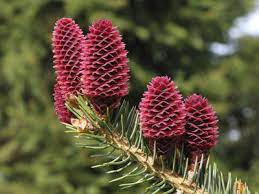
  • After the formation of Congress (1885) Sir Syed Ahmed raised the ‘Two Nation Theory’ first in India.
  • Lord Cross’s Act in 1892 initiated the policy of communal representatives in Indian politics.
  • H. Rishlay expressed the same attitude in 1901. Vikarul Mulk said that we need “a political organisation of our own”. He also said (1903) “We, the Indian Musalmans, being in the minority, have our own special needs and require some means through which we can place them before the Government”.
  • During the Swadeshi Movement (1904-05) Hindu- Muslim relations collapsed. Lord Curzon electrified the upper-class Muslims,
“Class 8 History WBBSE notes for Chapter 8 on partition of India and communalism”

In the ‘Simla Deputation’ (1st Oct. 1906) Muslims demanded to Lord Minto

  •  Religion-oriented election for the Muslims,
  • The election should not be based on population ratio and
  • Separate electorates for the Muslim representative. Francis Robinson remarked, “The Simla deputation failed in one of its major objects, the curbing of the young gentlemen.”
  • Like the Aligarh Movement of Syed Ahmed, the Deoband Movement was organised by Mohammad and Qasim Navautavi (1832-1880). He was supported by Rashid Ahmed Gangohi (1828-1916) and Haji Imadudullah Thanabhavni. Manlana Qasim Nanantavi founded ‘Dar-ul-Ullema’ madrasah at Deoband (30 May, 1866).Its early name was ‘Madrasah Islamia Arabia’, yet this name was changed soon. Tayyab Sahib in his book, ‘Dar-ul-Uloom Deoband ki Sadsala Zindagi’, Wrote: Thee objectives of our education are to prepare such young people who would be Indian from the point of view of race and colour and Islamic in their hearts and minds and who would have within them Islamic qualities and attributes from the point of religion and politics”.
The principals of the Aligarh College such as Syedans (1877-1883), Theodore Beck (1883-1899), Theodore Morrison (1899-1904) and Archibold influenced the students of the college to be anti-Hindu and Anti-Congress.

  • Aga Khan and the Nawab of Dacca Salimullah with the help of Lord Minto formed the Muslim League in 1906 for the protection of 6 crores of 20 Lac Indian Muslims.
  • In 1909 Morley-Minto Reforms Act played a very diplomatic game to create distance between Hindus and Muslims, but by the ‘Lucknow Pact’ (1916) the Muslim League and the Congress came closer.
  • Unfortunately, the Muslims of India who joined the Khilafat movement, withdrew their support from the Non-Cooperation Movement, as Gandhiji kept solving the Khilafat problem and suspended the movement in 1922. Dr Sumit Sarkar said, “The quite unprecedented growth of both Hindu and Muslim Communalism was in fact by far the most serious and permanent negative development of these years.” It needs to be emphasised, however, that much of this was a reaction against the very rapid spread of Hindu Communalism in these years.
  • Hindu Communalism emerged in this situation. B. G. Tilak opposed the ‘Age of Consent Act (1891)’ for Anti-Hindu expression in it by the British.

After that, the Hindu Sabha (1907) was formed in Punjab and the ‘Provincial Hindu Conference’ (1909) was held. In 1911 ‘Arya Samaj’ started to call them ‘Hindu’ in place of ‘Arya’.

WBBSE Notes For Class 8 History Chapter 8 From Communalism To Partition Of India Nawab Salimullah

The Hindu Mahasabha was established in 1915 on the occasion of the Kumbha Mela at Haridwar by Madan Mohan Malaviya. Dr V. D. Savarkar, Dr V. S. Munje and Lala Lajpat Rai joined it.

WBBSE Notes For Class 8 History Chapter 8 From Communalism To Partition Of India Aga Khan

Its objective was the revival of social and cultural consciousness among the Hindus. But after the 1930s Hindu Mahasabha gave the slogan of “Undivided India”. Savarkar in his book ‘Essentials of Hindutva’ (1922) emphasised the concept of eternal Hindu unity.

WBBSE Notes For Class 8 History Chapter 8 From Communalism To Partition Of India K.B. Hedgewar

But Thomas Blom Hansen in his book ‘The Saffron Wave’ remarked, “Savarkar’s cultural nationalism was communal, masculine and aggressively anti-Muslim”. The ‘Rashtriya Swayamsevak Sangha’ (R.S.S.) was formed in 1925 at Nagpur by K. B. Hedgewar. Sumit Sarkar called them aggressive Hindus.

Fourteen Points Of Mohammad Ali Jinnah

Mohammad Ali Jinnah raised fourteen points in the Delhi Conference held on 28th March 1929 A.D. in support of the Muslim interest. The ‘fourteen points that were raised by Jinnah, which were almost a challenge to the Nehru Report were

Mohammad Ali Jinnah

WBBSE Notes For Class 8 History Chapter 8 From Communalism To Partition Of India Mohammad Ali Jinnah

  1.  Introduction of statewide administrations unitedly,
  2. To form self-government in each state.
  3. To appoint sufficient Muslim members in each Legislative Assembly.
  4. To introduce a separate election system for Muslims.
  5. To reserve 3rd of the total strength for the Muslims in the Assemblies in the centre and the states.
  6. To keep the Muslim majority intact in reconstructing the states like Bengal, Punjab, and North-Western border states.
  7. Right to reject any bill by the 2nd of any community.
  8. To give recognition to the religious independence of all communities.
  9. 1/3rd of the members of the ministers both central and state are to be appointed Muslims.
  10. Permission has to be sorted from the local State Governments fto amendthe constitution.
  11. To form a new Sindhu State by detaching Bombay.
  12. To arrange for constitutional reforms in Baluchistan and other North-Western border states.
  13. To reserve the post for Muslims in the State and other local organisations.
  14. To concentrate on the education, culture, literature etc. of the Muslim community.

WBBSE Notes For Class 8 History Chapter 8 From Communalism To Partition Of India Mohammad Iqbal

On the other hand, the famous Urdu poet Mohammad Iqbal (1873- 1938 A.D.) said, while propagating his Pan-Islamic Theory “The formation of a consolidated North-West Indian Muslim state appears to me to be the final destiny of Muslims at least of North-West India.”

“Class 8 History Chapter 8 from communalism to partition of India WBBSE study material”

Chapter 8 From Communalism To Partition Of India Lahore Proposal Or Pakistan Proposal

From this time, Jinnah became extremely communal. He propagated his ‘Two-Nation Theory’ and said in his famous Lucknow lecture (1937 A. D.) “I want the Muslim to ponder ever the situation and decide their fate by having one, single, definite, uniform policy which should be loyally followed throughout India”.

So, all the Muslim brothers should dissociate themselves from the Congress and try to form a separate Pakistan State. During this time, Fazlul Haque of Bengal and Sikandar Hayat Khan of Punjab appeared as the regional leaders but none of them were anywhere near Jinnah in respect of power and influence.

“Detailed notes on communalism to partition of India for WBBSE Class 8”

So, Jinnah talked about the movement for a separate Pakistan state in the Muslim League conference held in Lahore in March 1940 A.D., based on the Two-Nation Theory.
Before the Lahore conference of the Muslim League, the Muslim League faced a total defeat in the 1937 A.D. election. In 1939 A.D. the Congress ministers resigned from the working committee and jubilant Jinnah called the Muslims to celebrate the ‘Day of Deliverance.

According to ‘The Pirpur Report’ Congress people tortured the Muslims. But as per the observation of Sir Maurice Guyea, the Dean of Oxford University, there was no such allegation against Congress.

Later in March 1940, A.D. Jinnah said in the Lahore Congress of the Muslim League. This ‘Lahore Proposal’ was drafted by Sir Sikandar Hayat Khan of Punjab and seconded by Abul Kashem Fazlul Haque.

Abul Kashem Fazlul Haque

WBBSE Notes For Class 8 History Chapter 8 From Communalism To Partition Of India Abul Kashem Fazul haque

Chowdhury Khalikuzzman was the second supporter of this proposal. This was known as the ‘Pakistan Proposal’ because there was a mention of making a separate Pakistan in that proposal.

It is needless to say Muslim League has been able to unite the lacs of Muslims by raising the slogan “Islam is in Danger”. After this, the ‘Pakistan Movement’ was started.

“Complete guide for WBBSE Class 8 History Chapter 8 on communalism and India’s partition”

This process was on well before the Lahore conference. So it is said, “Ahmed was the philosopher, Iqbal the prophet and Jinnah the statesman creator.”

Partition Of India And Independence

In September 1944 A.D. Jinnah and Gandhi discussed the solution to this political crisis. However, the aim of the discussion failed as Jinnah was rigid in his demand for Pakistan. Then Bengal was faced with the terrible famine of 1943-44 A.D.

Moreover, the complexities regarding communalism were also increasing. So at the end of 1944 A.D., Chakrabarti Rajagopalachari made a solution of compromise. This was known as the “C. R. Formula”.

WBBSE Notes For Class 8 History Chapter 8 From Communalism To Partition Of India Chakrabarti Rajagopalachari

There Rajaji said

  1. The Muslim League and the Congress would demand independence unitedly and would try to form an interim government jointly.
  2. Before going into the idea of a separate state, one should think of security and other things.
  3. The Muslims of the Muslim-dominated North-East and North-West India should make a promise not to segregate from India etc.

But this plan also failed due to the rigidity of Jinnah and the effort to unite the Hindus and Muslims failed. Thus communal movements emerged within the national movement.

“WBBSE Class 8 History chapter 8 explained on communalism and partition of India”

Lord Wavell keeping in mind the military importance of India, submitted some proposals to Congress and the Muslim League on 14th June 1945 A. D. This is known as the famous ‘Wavell Plan’.

Wavell mentioned this in his plan.s

  1. To transfer power from the British to the Indians and started working on preparing a constitution for the Indians.
  2. To form an Interim Government by the Indian representatives until the preparation of the constitution is complete.
  3. The ratio of caste Hindus and Muslims would be equal in the working committee of the Governor General.
  4. Except for the Governor General himself and the Chief of Army Staff, the rest members of this working committee will be Indians. An all-party conference was convened in Simla on 25th June 1945 A. D. to discuss these recommendations made by Wavell.
Jinnah was adamant about forming a separate Pakistan state and hence, it became almost impossible to find any positive solutions at this conference. Thus due to the extreme eccentricity of Jinnah the ‘Simla Conference’ virtually flopped.

WBBSE Notes For Class 8 History Chapter 8 From Communalism To Partition Of India Lord wavell

The political situation of India became very much critical, particularly after the end of 2nd World War. During the Naval Mutiny (18th February 1946 A.D.) anti-British mentality of the Indian soldiers and the common people made the situation graver.

Clement Atlee the British Prime Minister sent three members of the British Cabinet to India. This is known as the “Cabinet Mission”.

Clement Atlee

WBBSE Notes For Class 8 History Chapter 8 From Communalism To Partition Of India Clement Atlee

The Plans of the Mission were

  1. A Union territory will be formed with British-ruled India and native states.
  2. The Policy of Power distribution between the Central Government and the State Governments will be effective.
  3. The States will be selfly Governed but the defence, foreign policy and communication will be in the hands of the Centre.
  4. The states will be categorised as
  5. Hindu-inflicted states.
  6. Muslim-inflicted states and
  7. Bengal and Assam.

Initially, Congress opposed this proposal. But the mission assured that the ‘Interim Government’ could work independently and then Congress accepted the proposal.

On the other hand, Jinnah opposed and rejected the proposals of the mission and decided to take the policy of ‘direct action’. Lord Mountbatten came to riot-stricken India on 24th March 1947 as Governor-General.

WBBSE Notes For Class 8 History Chapter 8 From Communalism To Partition Of India Lord Mountbatten

Just after his arrival, he prepared the draft partition deed with the help of his Chief V. P. Menon. IOnthe very next day, he made a press release saying that India and Pakistan would be two separate independent dominions.

He also announced that the power would be transferred within 15th August 1947. Such announcement of Mountbatten is called the “Mountbatten Plan”.

It was mentioned in the Mountbatten plan that.

  1. Entire India will be divided into two independent dominions i.e. India and Pakistan.
  2. Pakistan will comprise the Muslim-inflicted states, Indus, British Baluchistan, and North-Western territorial states. West Punjab and East Bengal.
  3. Border Commission formed under the leadership of Cyril Radcliffe will decide the regions of Bengal and Punjab which will be included in the dominions.
  4. The regions of Sylhet and the North-Western territory will be decided by the people’s election.
  5. Each dominion can prepare its constitution only.
  6. The native states can enjoy their sovereignty and may join with any dominion as per their will.

This proposal of Mountbatten was sent to the British Parliament on 4th July 1947 (House of Commons). Based on this proposal, the Indian Independent Act (1947 A.D.) was passed in the British Parliament on 18th July 1947.

With this Act, Pakistan was born on 14th August 1947 comprising of North-Western territorial state, Baluchistan, Indus, West Punjab and Sylhet of Assam. India was born at midnight on the same day.

“Communalism and partition of India in WBBSE Class 8 History Chapter 8”

The British Government transferred all its powers to the Indians and thus ended the long 200 years of British Rule. So, at midnight of 14th August 1947 A.D. India became independent.

Chapter 8 From Communalism To Partition Of India Radcliffe Line

According to Mountbatten’s plan (June 1947), two separate Frontier commissions were set up for the partition of Bengal and Punjab under the presidentship of British lawyer Sir Ceril Rad- cliffe on 27th June 1947.

For each commission, two numbers were taken from both the Congress and the League. Sir Radcliffe took the charge on 12th July. In a very short period, he modelled the map of partition, which was called as “Radcliffe Line”.

The line made a map of many regions and destroyed the lives of numerous people in India. Without experience and spot verification, the Radcliffe Line was made for which he was responsible because no opinion was taken from the people of Bengal and Punjab.

WBBSE Notes For Class 8 History Chapter 8 From Communalism To Partition Of India Radcliffe Line

Within six weeks Sir Radcliffe submitted his “Border Commissions Report” on 16th August 1947 A. D. As per his report Bengal was divided into ‘East Bengal’ and ‘West Bengal’. A total of 36% area including Calcutta and 35% population came under West Bengal.

“Comprehensive notes for WBBSE Class 8 on communalism and the partition of India”

Also 16% of the Muslims were in West Bengal and 42% of the Hindus were in East Bengal. On the other hand, Punjab was divided into ‘East Punjab’ and ‘West Punjab’. A total of 38% of areas and 40% population of Punjab came to East Punjab.

This report of Radcliffe helped to divide India and raise the refugee problem. People of these territories did not aagree but Congress and the League were in favour of partition.

For this reason t,ransfer of power and their communal riot and refugee problem darkened the independence of India.