WBBSE Notes For Class 8 History Chapter 7 Ideal And Evolution Of Indian National Movement

Chapter 7 Ideal And Evolution Of Indian National Movement Background

The First World War (1914-1918) and the emergence of Gandhiji in Indian politics brought revolutionary changes. Besides worker’s peasant movement and the impacts of leftism in it strengthened the anti-British struggle in India.

Mahatma Gandhi And Ahimsha Satyagraha And Swaraj

Mohandas Karamchand Gandhi was born on 2nd October 1869 A.D. in Porebandar of Gujrat (1869-1948 A.D.). Just after passing Barristers from London in 1883 A.D.

He had to rush to South Africa to plead a case on behalf of ‘Dada Abdullah and Co’ in 1897 A.D. At this time, he observed the exploitation and oppression of the Negros by the Whites and formed the ‘Natal Indian National Congress to protest it.

Here he became successful by doing a non-violent Satyagraha movement with the local Negros. Dr. S. R. Mehrotra said, “Gandhiji was the best presentation of Indian Struggle in South Africa in the event of Indian national movement”.

Mohandas Karamchand Gandhi
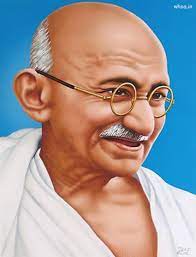
WBBSE Notes For Class 8 History Chapter 7 Ideal And Evolution Of Indian National Movement Mahatma Gandhi

He adopted the non-violence ideology from the book ‘Kingdom of God’ written by Leo Tolstoy and ‘Unto the Last, by John Ruskin. His first lesson in politics started in South Africa.

“WBBSE Class 8 History Chapter 7 notes on ideal and evolution of Indian National Movement”

After that, he had to come back to India due to First World War (1914-18 A.D.) as per international law. The period from 1915 A.D. to 1948 A.D. in Indian politics is called the “Gandhi Era”.

Chapter 7 Ideal And Evolution Of Indian National Movement Regional Movements

Gandhiji had a great impact on Indian politics while the Home Rule Movement was continuing on the other side. He developed the regional movements in Kheda in Gujrat and Champaran in Bihar.

He formed ‘Mazdur Mahajan Sabha’ for making movements against the mill owners of Ahmedabad for fixing the working time of the workers to 8 hours a day.

Class 8 General Science Class 8 Maths
Class 8 History Class 8 Science LAQs
Class 8 Geography Class 8 Science SAQs
Class 8 Maths Class 8 Geography
Class 8 History MCQs Class 8 History

Besides this, the wages were also increased by 35%, revenue taxes were also decreased in the case of the farmers of Kheda for the British rule “Satanism”.

So, historian Tarachand said, the transformation of a strong believer in non-violence like Gandhiji initiated the moral decline of the British empire.

WBBSE Class 8 History Chapter 7 Ideal And Evolution Of Indian National Movement

Jallianwalabag killings

In protest of the Rowlatt Act, nearly 10,000 people gathered in a meeting in a bounded garden near Amritsar on 13th April 1919 around 4-30 p.m. At this time, Brigadier Michael-O-Dyer was the ruler of Punjab.

He surrounded this meeting place with the soldiers without warning them or requesting them to stop the meeting. As per the instruction of Dyer, four entrances were closed, After that, the British soldiers started firing to the helpless throng of people with 50 rifles from a distance of hardly 100 yards.

They fired 1600 rounds of bullets within 10 minutes at a stretch. Many persons including children and women were killed and injured. According to the official statement, 379 persons were killed and 1200 were injured.

“Class 8 History Chapter 7 ideal and evolution of Indian National Movement WBBSE study material”

But it was known from the unofficial record that more than 1200 people were killed at the spot. In that evening ‘Marshal law’ and ‘curfew’ were introduced and as a result of this, the relatives could not bring back the dead bodies.

Even they could not give a drop of water to the injured ones. In protest of this, the entire country was raised to fire. In protest of the barbarous act of the British Government, Rabindranath Tagore heatedly refused to accept the ‘Knight’ title from the British.

In protest of it, Gandhiji wrote in ‘Young India’ “This satanic Government cannot be mended, it must be ended”.

Chapter 7 Ideal And Evolution Of Indian National Movement The Rowlatt  Act 1919

During the 1st World War, Indians started a revolution and movements for forming self- Government. To subdue these movements, the British Government appreciated Justice Sidney Rowlatt.

The notorious lawyer Sir S. A. T. Rowlatt formed a five member ‘Sedition Commission’ to tackle these movements and revolts.

It was said in the report of this commission that

  1. Nationalist newspapers should be banned.
  2. Just on suspicion, any Indian may be arrested and imprisoned for an indefinite period and without any trial.

Strong opposition was built up against this Anti-National Act. All the Indian members of the Centrál Law Committee raised their voices against this Act. Madanmohan Malavya, Mohammad Ali Jinnah, Mazhar-ul-Haque, etc. resigned from the committee.

Jinnah said, “The fundamental principle of justice has been imported and the constitutional rights of the people have been unrooted at a time when there is no real danger to the state”.

Surendranath Banerjee and Gandhiji called for an all-out movement against this Act. Amrita Bazar Patrika called this Black Act as a “gigantic blunder”. So nationwide strike was called by Gandhiji on 30th March and 6th April 1919 A.D.

Gandhiji sarcastically said “appeal nehi, ukil nehi, dalil nehi”, (there was no advocate, no appeal, and no record). Gandhiji called the Act as “Kala Kanun” or “Black Act”.

Act Of Montague-Chelmsford

Prior to the First World War ‘Morle-Minto Reform Act (1909 A.D.) related to administrative reforms was passed in 1909 A.D. Gopal Krishna Gokhle expressed his satisfaction as he thought this Act as ‘Progressive and reasonable’.

But after 10 years of this Act, ‘Montegu-Chelmsford Reform Act’ was passed in 1919 A.D., and the leaders like Tejbahadur Sapru, Surendranath Banerjee, Dinsha Wachha, Srinivas Shastri, etc.

Montague-Chelmsford
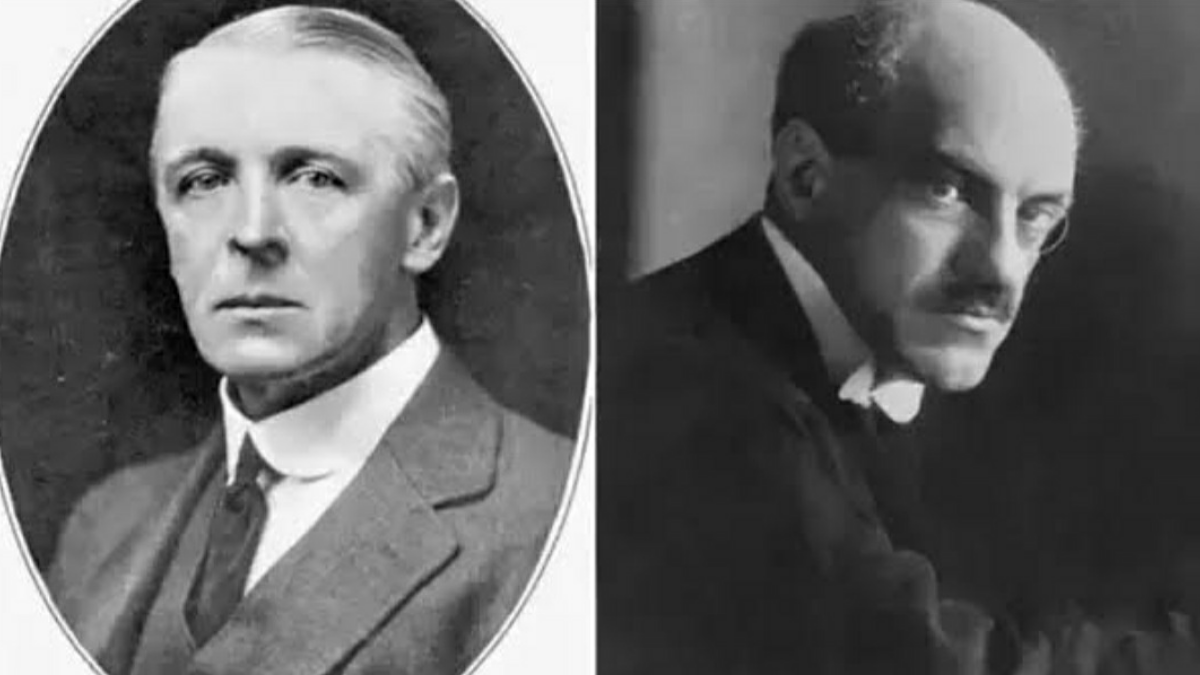
WBBSE Notes For Class 8 History Chapter 7 Ideal And Evolution Of Indian National Movement Montague and Chelmsford

Called this Act as a bold step for forming a responsible Government in India. But the extremist leaders of the Indian National Congress called this Act as ‘inadequate, unsatisfactory and disappointing.

The main clauses of this Act were-

  1. A working Committee with the Governor General was formed for the smooth running of the Central Government.
  2. The working committee will be comprised with three Indians and 5 European members.
  3. The power and the income will be proportionate between the Central and the State Governments. Central Government got the power of railways, defense, foreign policy, tax, currency, and post and telegraph. State Governments got the responsibility of police, law, education, health, communication, irrigation, agriculture, etc.
  4. The Legislative Assemblies of the Centre consisted of two houses. The higher house was called the National Council and the lower house was called the Central Legislative Assembly etc.

Chapter 7 Ideal And Evolution Of Indian National Movement The Khilafat Movement

The Khilafat movement was started in a positive political atmosphere after the First World War (1914-1918 A.D.). The Caliph of Turkey took the side of Germany, the enemy of the Allies during the First World War.

“Detailed notes on ideal and evolution of Indian National Movement for WBBSE Class 8”

But he was defeated along with Germany by England. Then five treaties were signed with the defeated countries at the treaty of Versailles in 1919 A.D. Of those the ‘Treaty of Sevres’ was signed by Britain and Turkey (1920, 14 May).
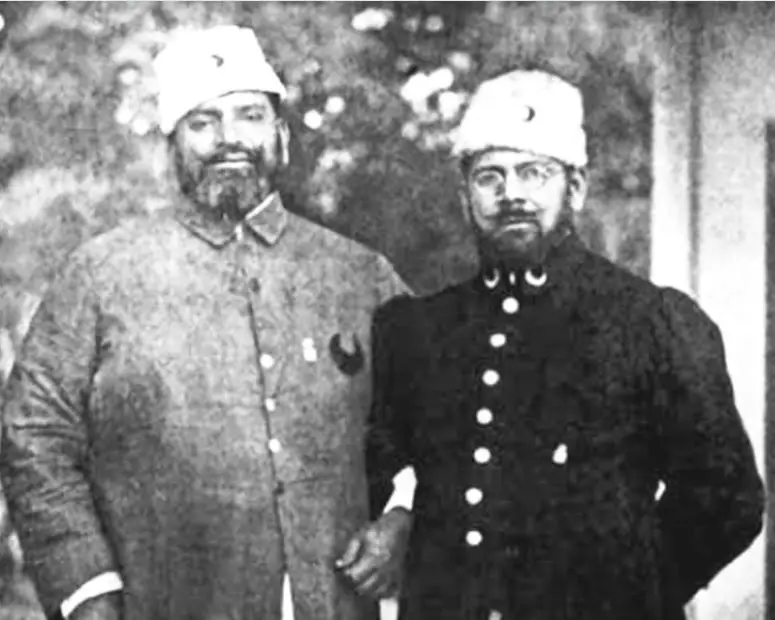
WBBSE Notes For Class 8 History Chapter 7 Ideal And Evolution Of Indian National Movement Muhammad ali and Saukat Ali

By this treaty, the Ottoman Turkey Empire was divided into various parts. So the religious leader Caliph lost his earlier power and was insulted.

Besides, Gandhiji united the Muslim farmers of the Malabar coast of Kerala (who started the ‘Moplah Revolt’ against zamindari oppression) with this movement and started a powerful all-India Khilafat movement.

The “Ali brothers”, i.e. Muhammad Ali and Shaukat Ali led the beginning of the movement through the ‘Khilafat Day’ on 17 October 1919 A. D. The leaders of the Khilafat committee had three demands-

  1. To retain the worldly empire of the Caliph.
  2. To the domination of the Caliph over Mesopotamia, Palestine, Arab, and Syria and
  3. To check foreign interference on the pious religious centers of Mecca and Medina.

The Economic Impact Of The First World War On India

The first World War had a great impact on the Indian economy-

  1. Export-import trade of India was destroyed.
  2. Severe unemployment problems and worker strikes increased.
  3. The great economic depression (1929-30) caused severe economic crises.
  4. More than one lac Indian soldiers who returned home were unemployed.
  5. High prices of goods increased by up to 80%, and
  6. A huge amount of money was spent as war-cost from the revenue of India and Indians had to bear a heavy tax burden which affected the peasants and workers.

Non-Co-Operation Movement

Mahatma Gandhi had taken the program of the non-co-operation movement up to 1920- 1922 A.D. It was the first biggest mass movement in the history of the freedom struggle in India.

After the First World War, Gandhi and other leaders were frustrated by the attitude of the government. It was believed that according to earlier promises, the Indians would receive the right of self-rule from the government after the war.

In 1919 A.D. the ‘Montague-Chelmsford Reforms Act’ was implemented. But the Indians felt angry, as their hopes were not fulfilled.

Besides the anti-British mentality depends due to the passing of the dangerous ‘Rowlatt Act’ (1918 A.D.), the cruel massacre of Jalianwallabag (1919 A.D.), and the insulting attitude of the British towards Abdul Hamid Shah II, the Caliph of Turkey (1920 A.D.).

Gandhiji started his non-violent non-co-operation with a few aims.

Those aims were-

  1. Refusal of the exploiting Rowlatt Act.
  2. To arrange for the punishment of each British official connected with the Jalianwallabag massacre.
  3. To bring an easy solution to Punjab and the Khilafat problem.
  4. To eradicate mutual jealousy and untouchability.
  5. To bring a permanent solution of the undue exploitation of Indians by the British.
  6. On the basis of the permission of the Khilafat committee in the Congress Working Committee, the ideal of self-rule was also taken as one of the chief aims of the movement. These aims were active behind the non-co-operation movement.

Dr. R. C. Majumdar thinks that the noncooperation had both positive and negative programs.

The main negative programs were-

  1. To leave all government offices and law courts,
  2. To boycott government schools and colleges,
  3. To boycott the Legislative Assembly and its election,
  4. To boycott all government titles, medals, and functions,
  5. To boycott all government-elected memberships and
  6. To boycott British goods.

The positive programs were

  1. Building indigenous educational institutions,
  2. To use swadeshi goods,
  3. To build up swadeshi institutions,
  4. To form a Judicial Board and to raise a fund of Rs. 1,20,000 for the Swaraj fund of Tilak and
  5. To import more swadeshi goods in merchandise etc.

Chapter 7 Ideal And Evolution Of Indian National Movement Murder Of Chaurichaura

On 5th February 1922 A.D. when the police fired at the peace rally of the Satyagrahi at Chaurichaura of Gorakhpur in U. P., 3,000 angry people attacked the police station at Chaurichaura and set fire to it.

“Complete guide for WBBSE Class 8 History Chapter 7 on Indian National Movement”

22 policemen were burnt alive at this incident. Gandhiji was shocked at this incident and declared the withdrawal of the Non co-operation movement.

Subhas Chandra Bose had criticized Gandhiji’s order as a great mistake, as it destroyed national enthusiasm. He declared Gandhiji’s order as the “Himalayan miscalculation”.

Motilal Nehru and Lala Lajpat Ray have said that due to the crime of a group of people, Gandhiji had penalized the whole country. The entire country was agitated with Gandhi. So when Gandhi was imprisoned, none protested against it.

Rise Of The Swarajya Party After Non-Co-Operation

When Gandhiji had withdrawn the Non’ cooperation movement in 1922 A. D., it had a negative reaction throughout India. On 1st January 1923 A.D.

Chittaranjan Das set up the All India Congress Khilafat Swarajya Party or the Swarajya Party within the Congress. He was appointed as the president of this newly formed Swarajya Party and Motilal Nehru became the secretary.

Chittaranjan Das
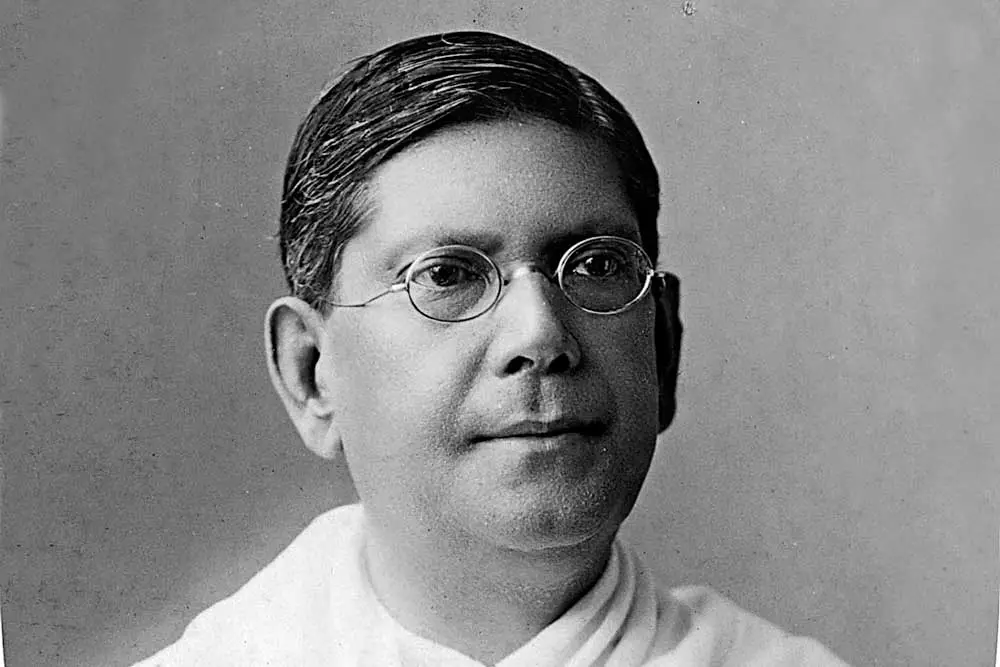
WBBSE Notes For Class 8 History Chapter 7 Ideal And Evolution Of Indian National Movement Chittaranjan Das

Thus, on the basis of the birth of the Swarajya Party, the Congress supporters were divided into two groups:

  1. ‘Pro-changers’ and
  2. ‘No-changers’.

The most prominent among the pro-changers were Madanmohan Malavya, Srinivas Ayengar, Bithalbhai Patel, Hakim Ajmal Khan, N. C. Kelkar, Satya Murti, Jayakar, etc.

On the other hand, the supporters of no-changers were Ballavbhai Patel, Chakrabarti Raja Gopalachari, Dr. Rajendra Prasad, Dr. Ansari, K. R. Ayengar, etc.

The pro-changers or supporters of C. R. Das all followed the policy and program of the Swarajya Party. After the death of Mr. Das in 1925 the Party weakened.

Chapter 7 Ideal And Evolution Of Indian National Movement Anti-Simon Commission Movement

The Government of India Act of 1919 A.D. failed to satisfy Indians. So Irwin wanted more reforms. Lord Birkenhead proposed the formation of this Commission.

Formation Of Simon Commission

Sir John Simon formed this commission with seven members. It is named after him. There were two members from Labour Party, one from Liberal Party, and four from Conservative Party. Unfortunately, there was no Indian member.

Sir John Simon
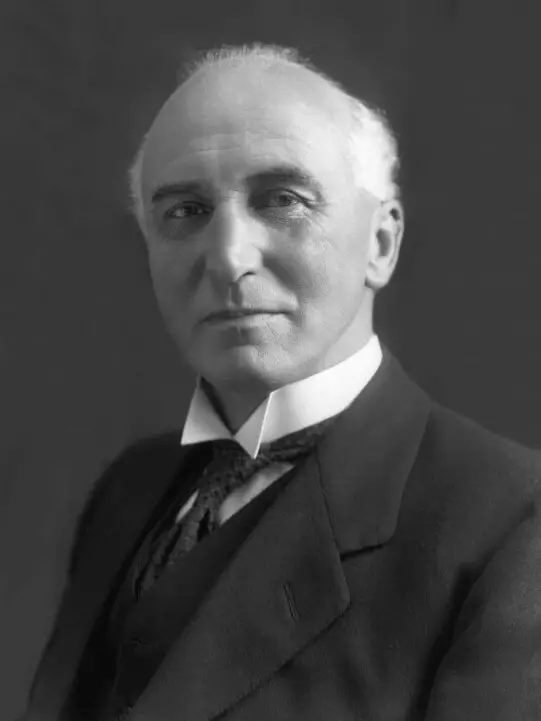
WBBSE Notes For Class 8 History Chapter 7 Ideal And Evolution Of Indian National Movement Sir John Simon

Members were Lord Strathcona, Lord Burnham, Colonel Stephen Walis, Lenfox, Major Atlee, and Edward Carogan. British Government believed that it was a balanced commission as there was representatives from all parties, although there was no Indian.

Aims Of Commission

The commission aimed to establish parliamentary rule in India to satisfy all, Indians. In another way, the commission indirectly tried to reduce Indian agitation against the British.

The aims were-

  1. To examine whether Indians can be capable in holding the highest administrative posts.
  2. Discussing future reforms.
  3. To check whether Montague- Chelmsford reform was working properly.

In this time there was two Indian members in the British Parliament. They were Satyenprasanna Sinha of the House of Lords and Shahpurji Saklatwala of the House of Commons. They had a close relationship with administrative reform.

“WBBSE Class 8 History chapter 7 ideal and evolution of Indian National Movement explained”

But the British Government consciously avoided them in the time of forming the commission. Dr. A. B. Keith properly said-“Only a body external to India could properly decide whether the country was fit for a further step towards the goal of self Government or not.

As India was not independent, she could not investigate her own case”.

Chapter 7 Ideal And Evolution Of Indian National Movement Agitation Of The Indians

The Indians became agitated as there was no Indian member in the commission. So in 3rd February 1927 A.D. when Simon reached Bombay port a large member of Indians showed agitation. A national strike was called.

The black flag was shown and there was one single voice ‘Go back, Simon’. It was a ‘national insult’ to the Indians. General Moon said that this commission was ‘a first class blunder Indians realized that they were betrayed. They said that the commission was of ‘all white’.

The ‘Civil Disobedience Movement

  1. When the Simon Commission under the leadership of Sir John Simon came to India to supervise the implementation of the Act of 1919 A.D., the people expressed protest against it. Because there was no Indian member in that commission.
  2. After that, Motilal Nehru created a constitutional plan, at the initiative of the Congress. This is known as the ‘Nehru report’ (1928 A.D.). The Government was given one year time to establish ‘Dominion Status’ or colonial self-rule in this report.
  3. When that proposal was not taken by the Government within the settled time (1929 A.D. of December), Congress informed the Government that it would now organize a Civil Disobedience Movement with a demand for ‘Purna Swaraj’. The Civil Disobedience Movement, led by Gandhi is an important event in the history of the Freedom Movement in India.

On 14-16th February 1930 A.D., the All India Congress organized a meeting of the working committee in the Sabarmati Ashram of Gujarat. Then the decision for the non-violent Civil Disobedience Movement was adopted. Then on 2nd March 1930 A.D.

Gandhiji informed the Viceroy Lord Irwin that he was violating the salt law. Before that Gandhiji raised his ‘eleven demands’ to the Government in the ‘Young India’ on 30 January 1930 A.D.

Within these, the boycott of alcoholic drugs, the release of prisoners, the abolition of the salt tax, the decrease in revenue were important. The Government then cautioned Gandhiji, but could not show him an alternative way.

Gandhiji said at that time, “We bent on knees, I asked for bread and have received a stone instead”. After that, the program for the movement was launched. On 12th March 1930 A. D.,
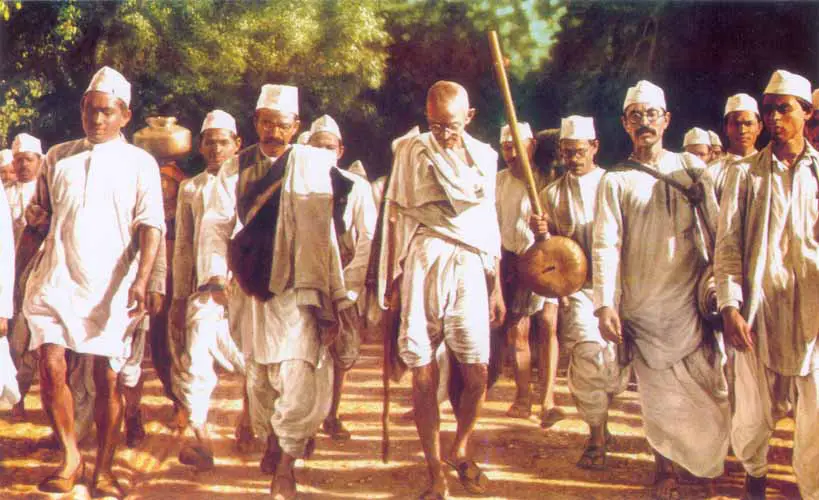
WBBSE Notes For Class 8 History Chapter 7 Ideal And Evolution Of Indian National Movement Gandhijis dandi March

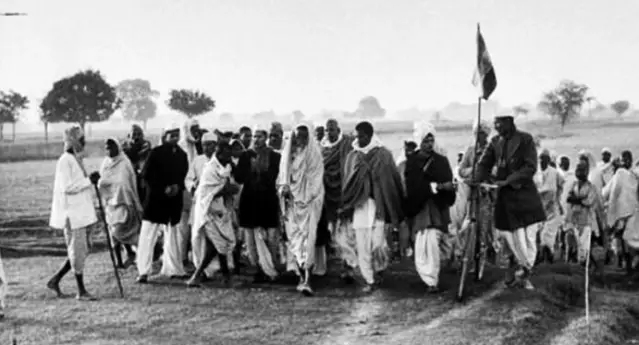
Gandhiji took 79 of his Satyagrahis and traveled 241 miles on foot in 24 days and reached on the Arab Sea (5th April) from Gujarat.  This long historical procession was known as Dandi March. There Gandhiji organized Civil Disobedience for the first time by making salt from the Arabian Sea.

The Salt Satyagraha movement was ceremoniously observed as “the National Week” (6-13th April 1930 A.D.). This movement spread from Gujarat to gradual places like Bengal, Bihar, Orissa, Uttar Pradesh, Karnataka, Madhya Pradesh, North-West Frontier Province, Delhi, Madras, Bombay, Andhra Pradesh, Malabar, etc.

Salt was hugely produced in Kanthi, Tamluk in Midnapore and Mahishbathan, Diamond Harbour, Kalikapur in 24 Parganas. This policy was introduced by neglecting the high taxation on salt by the Government.

Chapter 7 Ideal And Evolution Of Indian National Movement Civil Disobedience In North-West And Eastern India

Abdul Gaffar Khan, famous as ‘Frontier Gandhi’ and 600 ‘Red shirts’ or workers named Khuda-i-Khidmatgars were directly associated with the movement.

Here though the movement was caused by religious backgrounds, it had far-reaching political consequences. The Government started a policy of repression when the Civil Disobedience Movement took the shape of a mass militant struggle.

Abdul Gaffar Khan
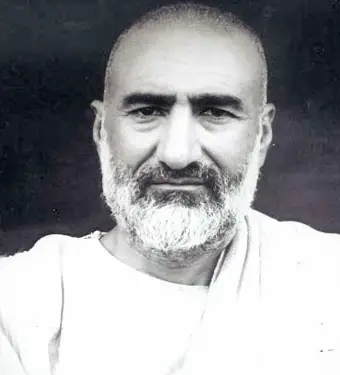
WBBSE Notes For Class 8 History Chapter 7 Ideal And Evolution Of Indian National Movement Abdul Gaffar Khan

According to Government records, a number of 76,000 Satyagrahis were imprisoned. This policy took the shape of cruelty in some places.. At the incidents of 24 firings, 111 persons were killed and 400 injured.

In Manipur and Nagaland Queen Gidals and in Syhlet and Mymansingh Maulana Abdul Hamid Khan Varani took part in the Civil Disobedience Movement in 1930.

Gandhi-Irwin Pact

The main success of the Civil Disobedience was the Gandhi-Irwin Pact of 5th March 1931 A.D. This was also known as the Delhi Pact. It was decided by this pact that

  1. The Government would stop all repressive acts and ordinances.
  2. All the political prisoners except those attached with violence would be released.
  3. Those who had lost their property for Civil Disobedience would get an indemnity.
  4. In a comfortable atmosphere for making salt people could produce salt for their own use.

But Jawaharlal Nehru and Subhas Chandra Bose and other leaders had criticized Gandhi as the latter had not discussed about the capital punishment of Bhagat Singh, Rajguru, Sukhdev, and Batukeshwar Dutta.

Surya Sen And Battle Of Jallalabad

After the death of Baghajatin in 1915 A.D., the revolutionary movement of Bengal stopped for nearly a decade. After that, with the appearance of Surya Sen (1893-1934 A.D.), a new wake in the revolutionary movement was noticed.

During the Civil Disobedience Movement organized by Gandhiji, Chittagong in East Bengal became a hot place of a revolutionary movement with the effort of Surya Sen.

Surya Sen
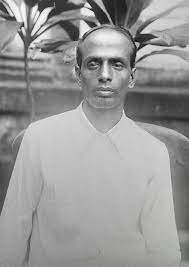
WBBSE Notes For Class 8 History Chapter 7 Ideal And Evolution Of Indian National Movement Surya Sen

The main achievement during his lifetime was the ‘Chittagong Armoury Raid’ (18th April 1930). But as he was connected handing over his dead body to his relatives, it was thrown in the sea. 14 revolutionists in the Chittagong Armour case were imprisoned.

He made the ‘Indian Republican Army’ (1930) consisting. 64 revolutionaries of which Lokenath Bal, Ganesh Ghosh, Ambika Chakraborty, Jiban Ghoshal, Tegra Bal, etc.

“Indian National Movement ideals and evolution in Class 8 WBBSE notes”

Historian Sumit Sarkar said, “The most formidable group, led by Surya sen of Chittagong, went on with effective preparation for a really dramatic action”.

On 20th April 1930 the revolutionaries took shelter in Jalalabad Hill and after 3 days of war 11 revolutionaries died, Surya Sen was hanged on 12th January 1934.

Writers’ Buildings Campaign (1930) Under Binay-Badal-Dinesh

Binay, Badal, and Dinesh are also known as B. B. D. in history. During the era of the Civil Disobedience Movement organized by Gandhiji, these three revolutionists continued their revolutionary activities.

At first, Binoykrishna Bose shot Lowman and Hudson, the two notorious on 29th August 1930 A.D. inside the patient ward of Midford Hospital in Dhaka.
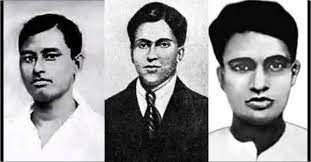
WBBSE Notes For Class 8 History Chapter 7 Ideal And Evolution Of Indian National Movement Binay Basu, badal Gupta and Dinesh Gupta

After that, he came to Calcutta and joined the ‘Bengal Volunteers Party’ (B. V.) formed by Hemchandra Ghosh. At this time, he met with Badal Gupta and Dinesh Gupta the two great revolutionists.

Later these three revolutionists planned to attack Writer’s Buildings. According to that plan, they entered Writers Buildings in disguised dress, in the afternoon of 8th December 1930 A.D.

After that, they went upstairs and Binay himself fired six rounds of bullets from his .38 caliber revolver to Col. Simpson, the Inspector General of Prisons. All six bullets penetrated the lungs of Simpson.

In the meantime, Charles Tagert rushed to the spot from Lalbazar with a large battalion of police and surrounded the Writers Buildings. After that Inspector Craig, Asstt. Inspector General Jones and Police Super Ford entered into “Writers’ Buildings”.
WBBSE Notes For Class 8 History Chapter 7 Ideal And Evolution Of Indian National Movement Hemchandra Ghosh

They had a severe gunfight with the three revolutionists. But, ultimately the revolutionists ran short of bullets and Badal committed suicide by taking potassium cyanide. The Statesman called it a ‘Corridor warfare’.

Chapter 7 Ideal And Evolution Of Indian National Movement Bhagat Singh 1907 To 1931

Bhagat Singh got in touch with Chandra Sekhar Azad (title=”Quick Silver”). In 1923 A.D. Bhagat Singh took membership of ‘The Hindustan Republican Army’ formed by Chandra Sekhar. Bhagat Singh himself also formed a militant youth organization named.

‘Naojawan Bharat Sabha’ in 1925 A.D. His main followers were Ramprasad Bismil, Raoshonlal, Ashfakulla, Dinanath, Abodhbehari, etc. ‘Kakori Conspiracy Case’ was started on the basis of rail dacoity on 8th August 1925 A.D.

After that, he assassinated Mr. Saunders, the Police Superintendent of Lahore on 17th November 1928 A. D. because he charged lathi on Lala Lajpat Ray for the anti-Simon commission Movement. This was in retaliation of the death of Lajpat Ray.

Bhagat Singh
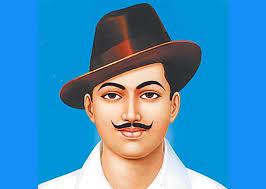
WBBSE Notes For Class 8 History Chapter 7 Ideal And Evolution Of Indian National Movement Bhagat singh

After that, Bhagat Singh and Batukeswar Dutta threw powerful bombs inside the Central Legislative Assembly Hall of Delhi from the public gallery on 8th April 1929 A. D. when the discussion was going on for passing the “Trade Dispute Bill” and “Public Safety Act”.

Both these bills were against the public interest. After that, both of them surrendered of their own. Later other revolutionists like Rajguru and Sukhdev along with others were arrested. The historic ‘Lahore Conspiracy Case’ started (in 1929 A.D.).

In a trial, Bhagat Singh, Batukeswar Dutta, Sukhdev, and Rajguru were sentenced to be hanged on 23rd March 1931 A.D. Before stepping in to the hanging platform. Bhagat Singh shouted “Inqilab Jindabad” i.e. “Long live revolution”.

Pattabhi Sitaramayya has rightly commented “Bhagat Singh’s name was widely known all over India and was as popular as Gandhiji’s” -29th March 1931 A. D.

Gandhian Movement Of 1942

On 26th April 1942, Gandhiji wrote an essay on ‘Quit India’ in the ‘Harijan Patrika’. On 14th July 1942 A.D, the ‘Congress Working Committee’ in the ‘Wardha Session’ accepted Gandhiji’s proposals.

Finally, they adopted it formally on 8th August 1942 A. D. and planned to start up the movement from the morning of 9th August. In front of the A. I. C. C. Gandhiji referred to this movement as “This is an open rebellion.

In this struggle secrecy is a sin”. He gave the cry of “Do or Die”, for the Nation. To the agitators, the holy words were “Do or Die”. So they daringly went for strikes, burning down offices, and courts, destroying railway lines, telegraph, and telephones, and seizing police stations, post offices, registry offices, rail stations, etc.
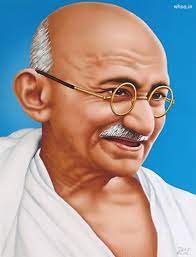
WBBSE Notes For Class 8 History Chapter 7 Ideal And Evolution Of Indian National Movement Mahatma Gandhi

This movement developed in this way of non-violence. The main centers of the Quit India Movement were Satara of Maharashtra, Tamluk, Kanthi of Midnapore, Balurghat of West Dinajpur, Balia, Azamgarh of U. P., Naogaon of Assam.

Among the notable leaders were Srinath Lal, and Nana Patil.of Satara, Chaitu Pandey of Balia, Matangini Hazra, Sushil Dhara of Tamluk, Punjab’s Fukonani, Assam’s Kanaklata Badua. At Midnapore, Bengal, the Quit India Movement took the form of a mass uprising.

The peasant movement organized by Birendranath Shasmal (“Desh Pran”) enabled the rapid spread of the Quit India Movement. It had deep impacts at Dinajpur, Balurghat, Midnapore, Kanthi, Tamluk, Patashpur, Bhagwanpore, Sutahata, Nandigram, Mahishadal, etc.

“WBBSE Class 8 Chapter 7 notes on evolution of Indian National Movement and its ideals”

And Birbhum, 24 Parganas etc. ‘Tamralipta Jatiya Sarkar’ was founded by Satish Samanta. On 8th Sept. 1942 movement started against village food grain suppliers.

On 29th September 1942, under the leadership of 72-year-old Matangini Hazra and Ramchandra Bera a mass of 20,000 seized the court and police station. When police opened fire on this procession many along with Matangini Hazra died.
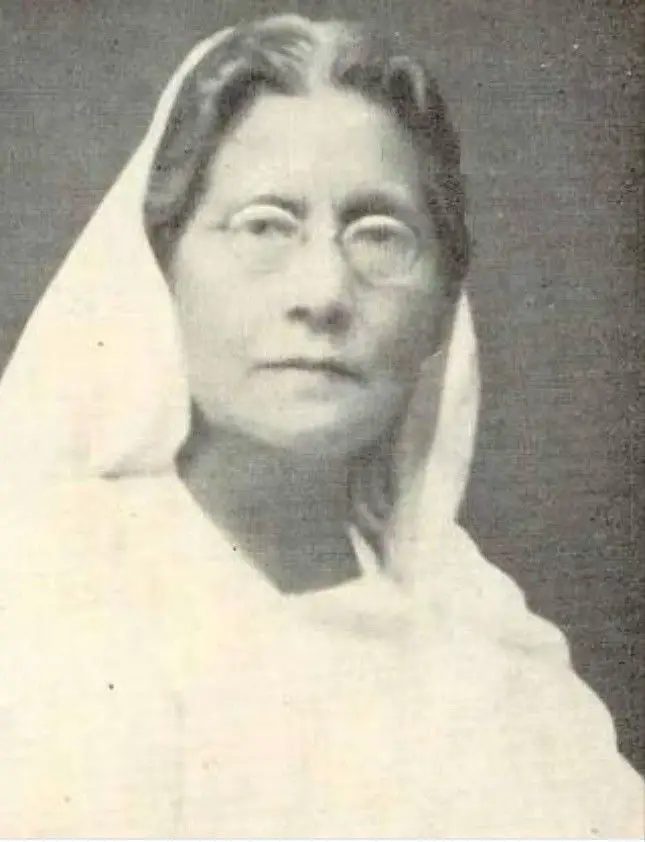
WBBSE Notes For Class 8 History Chapter 7 Ideal And Evolution Of Indian National Movement Matangini Harzra

After Matangini the leadership was taken by Ajay Mukherjee, Sushil Dhara, and Satish Samanta and they captured Lalbari. On 17th December 1942 A.D. Ajoy Mukherjee formed the “Tamluk Provisional National Government”.

They formed an armed force called ‘Bidyut Bahini’ and the women’s organization Bhagini Sena’.

The movement made the death toll of the British Government-

  1. It proved the power of the masses.
  2. According to Sumit Sarkar, in spite of all oppressions, the peasants came forth with great force. Jawaharlal Nehru, said, “It was essentially spontaneous mass upheaval”.
  3. This movement finalized the Independence of India and the transfer of power. Baliavbhai Patel and Linlithgow said, “an-anti British movement was behind these feelings”.
  4. According to Dr. Arun Bhuiya, this movement laid the foundation for freedom by raising mass consciousness and unity.

Impacts of World War II on Indian Politics and Economy:

During the Second World War between England-France-Soviet Russia and the Axis power group Germany-Italy-Japan, Viceroy General Lord Linlithgow declared India “a war country”. In 1942 the USA and the USSR became helpful to India.

“Idealism and evolution of Indian National Movement for WBBSE Class 8”

At that time food crisis, money inflation, and the terrible famine of 1943 made a negative impact in the Indian economy. The Second World War made a very devastating situation in the social, economic, and political life of India.
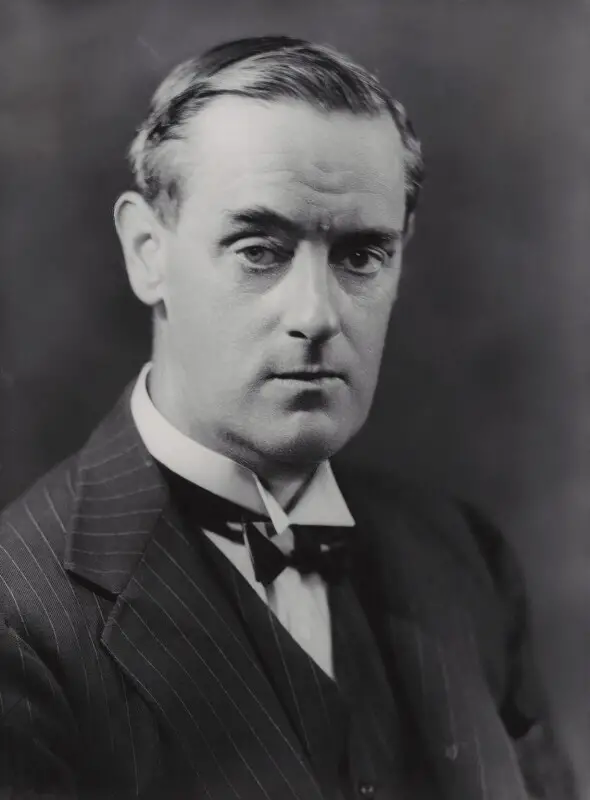
WBBSE Notes For Class 8 History Chapter 7 Ideal And Evolution Of Indian National Movement Lord Linlithgow

In the post-World War period food crisis, high prices, unemployment, and severe conditions in agriculture, trade, and industries created a very deadlock circumstances. 1 lac 80 thousand people were killed in the communal riot of 1946-47.

Archibold Wavell described it as the “dance at the edge of a volcano”. The student movements, naval revolts, and peasant and labour movements during the days of the post-war period, were started from various corners of India.

Chapter 7 Ideal And Evolution Of Indian National Movement Subhas Chandra Bose And The I. N. A

The appearance of Subhas Chandra Bose in Indian politics was like the flaming sword of the Indian struggle for independence. He was born on 23rd January 1897 A.D. at Cuttack.

A freedom fighter of his caliber and capability is rare in the history of the Indian Freedom Struggle. His experience attained maturity with the Swarajya Party of C. R. Das. Gandhiji, later on, stopped developing the quality of the mass movements like civil disobedience and for the sake of bourgeoisie started rating.

Subhas Chandra Bose
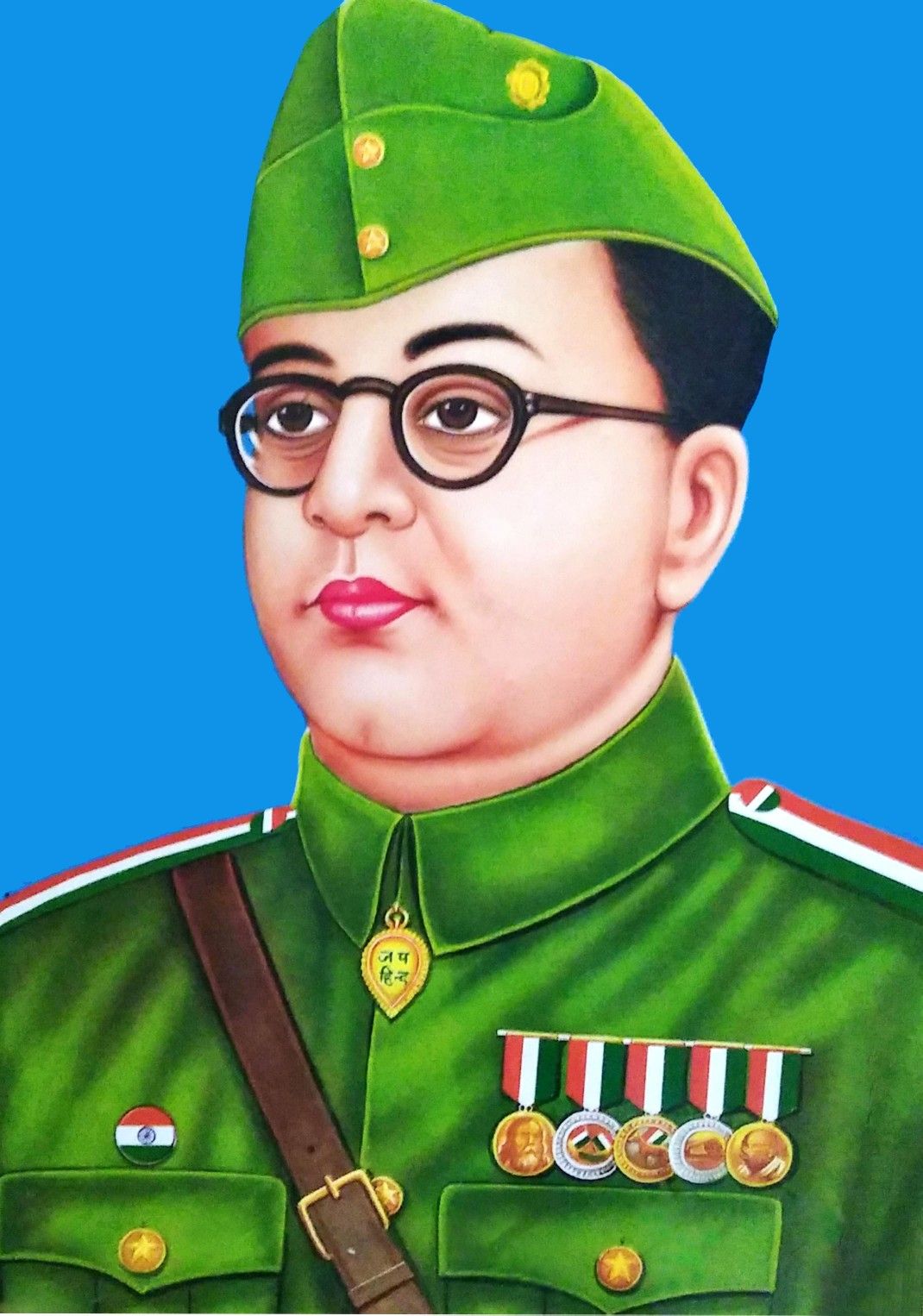
WBBSE Notes For Class 8 History Chapter 7 Ideal And Evolution Of Indian National Movement Subhas chandra Bose

The theory of economical freedom of Subhas and Gandhi’s political freedom theories met in a clash, in spite of which Subhas was eager to develop a nationwide movement to achieve the goal of total freedom.

Being inspired Pandit Jawaharlal Nehru took his side. After becoming the Congress President at Haripura in a meeting at Sraddhananda Park in 1938 A. D. he gave the call for desperate self-sacrifices to his countrymen.

Netaji’s Student Life

The appearance of Subhas Chandra Bose in Indian politics was like the flaming sword of the Indian struggle for independence. He was born on 23rd January 1897 A.D. at Cuttack.

A freedom fighter of his caliber and capability is rare in the history of the Indian Freedom struggle. He was described in the bureaucratic report of the British Govt. as a bitter unchangeable anti-British personality.

“Comprehensive study notes for WBBSE Class 8 on Indian National Movement evolution”

He dropped out the attractive job of I.C.S. and inspired by the words of Swami Vivekananda joined the freedom movement responding to the calls of Gandhiji. But he could not find hope even in the words of Gandhi.

Because he could not get a clear picture of the movements from Gandhiji and also to him the idea of freedom to be reached within a year seemed fake. So both the leaders in spite of their popularity grew distant in their thoughts.

Chapter 7 Ideal And Evolution Of Indian National Movement Womens Brigade In Azad Hind Fauj

The women’s brigade of Azad Hind Fauj was called the ‘Jhansi Brigade’. Netaji Subhas Chandra Bose vested the leadership of this women’s brigade in Smt. Lakshmi Swaminathan (24.10.19-23.07.2012). Later she became Lakshmi Saigal.

She was a true revolutionary in the Indian Freedom Movement, who was the Minister of Women’s Affairs in the Azad Hind Government. Towards the end of World War II, she was imprisoned in a jail in Burma under the name of ‘Captain Lakshmi’.

Lakshmi who hailed from the Malabar region had passed MBBS Examination from ‘Madras Medical College’ before she took charge of the women’s brigade of Azad Hind Fauj at Netaji’s call.

WBBSE Notes For Class 8 History Chapter 7 Ideal And Evolution Of Indian National Movement Lakshmi Swaminathan

In 1947, she married Prem Kumar Saigal and started living permanently in Kanpur. Anyway, Dr. Lakshmi Swaminathan took charge of the ‘Jhansi Brigade’, comprising of 856 women, on 16th July 1943. Her crusade against the British started on 23rd October.

These women had a role in the establishment of a Red Cross Unit also. Lakshmi Swaminathan made the Jhansi Brigade even stronger by recruiting voluntary women from Burma and Malay. A woman soldier of the Jhansi Brigade once commented, ‘We are all ready to die.

There is no woman in this brigade who is scared of death. In March 1946 Lakshmi Swaminathan was arrested and kept in the Red Fort, Delhi.

Birth of Forward Bloc

Due to Subhas’s sudden resignation, Dr. Rajendraprasad was elected President. On 3rd May 1939 A.D. Subhas formed the Forward Bloc, within the Congress. Subhas was its President while Sardar Shardul Singh was Vice-President.

To unify the Leftists and strengthen the Congress movement Subhas formed the ‘Left United Committee’.

The Great Escape Of Subhas

During the Second World War, the British Government distressed by Subhas’s popularity put him in confinement. First, he was kept in Alipore Central Jail (1940 A.D.) and then due to ill health he was kept in his own house under police confinement under the ‘Indian Preventive Act’.

He escaped on 17th January 1941 A.D. First, he went to Mathura from there he went to Moscow seeking Stallin’s help but was refused. From there he met foreign minister Ribbentrop of Hitler on 28th March 1941 A.D. He also met Mussolini.

He then formed a radio station named ‘Azad Hindustan’ to propagate the anti-British views and formed the ‘Azad Hind Fauz’ (December 1942 A. D.) with about 400 Indians in German confinement.

These soldiers used to call him ‘Netaji’. But when Hitler attacked Russia he left for South-East Asia.

Subhas In Japan And Singapore

Meanwhile, Subhas reached Tokyo, the capital of Japan with Abid Hassan. He took forward a brave expedition in a submarine at the invitation of Marshall Tojo, the Prime Minister of Japan.

Many Indian soldiers of the allied forces (England) were imprisoned by Japan at that time. After the session at Bangkok (June 1942 A.D.). Rashbehari Bose named this group as “Indian Independence League”.

On 1st September 1942, Rashbehari formed the Azad Hind Fauz with 40,000 Indian soldiers of the league at Singapore, Rashbehari put forward three main ideals of the Fauz-sense of unity, self-confidence, and self-sacrifice.

To develop a strong feeling against the allied forces, Subhas divided the Azad Hind Fauz into a few brigades-for example ‘Azad Brigade’, ‘Gandhi Brigade’, ‘Nehru Brigade’, ‘Subhas Brigade’ (chosen soldiers), and Jhansi Brigade’.

(army of women and ‘Balsenadal’ with boys and girls). Lakshmi Swaminathan was in charge of the Jhansi Brigade. The other leaders of the other Brigades were Gurubaksh Singh Dhillon, Prem Kumar Saigal, and Shahnawaz Khan.
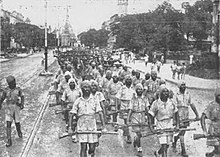
WBBSE Notes For Class 8 History Chapter 7 Ideal And Evolution Of Indian National Movement Road March Of INA

Chapter 7 Ideal And Evolution Of Indian National Movement Delhi Chalo

On 6th November 1943, Marshall Tojo delivered Andaman and Nicobar islands to Subhas who renamed those as ‘Sahid’ and ‘Swaraj’ islands respectively on 31st stronger, Netaji established his ‘Main military camp’ in Rangoon, the capital of Burma on 4th January 1944.

On 19th March of the same year, Netaji’s INA went to Kohima, the capital of Nagaland through Imphal, the capital of Manipur, and raised the ” ‘tricolored flag of India there quite happily.

Thus the Azad Hind Fauz occupied an area of 150 miles in Eastern India. It was decided that Bengal would be attacked through Assam during the rains and the I.N.A. would march straight towards the Red Fort in Delhi.

Impacts:

Netaji and his I.N.A. failed at the climax of the Indian Freedom Struggle. Information from ‘Netaji Research Bureau’ and other sources, have praised Netaji for his work.

Moulana Abul Kalam Azad had written about the praise of Subhas by Gandhi and stated in his autobiography that though Subhas had failed to reach his aim with foreign support, his brave ideal of sacrifice and love for the motherland had hastened the independence of India.

Clement Atlee, the Prime Minister of England himself had acknowledged, that the 20,000 naval soldiers had become anti-British mainly at the encouragement of Subhas.

For this reason, Abul Kalam Azad had accepted in his book ‘India Wins Freedom’ that by Subhas’s influence, the army and the police under the British became anxious for the independence of India.

Besides, the leaders of all sections and the general public opinion had strengthened the confidence of the I.N.A. of Subhas. During the trial of the I.N.A. in the Red Fort, famous lawyers like Jawaharlal Nehru, Tejbahadur Sapru, and Bhulabhai Desai, etc.

took the sides of the imprisoned soldiers of the Azad Hind Fauz and as a result, there was a new wave in the antiiBritish mass movement.

“Class 8 History WBBSE notes for Chapter 7 covering Indian National Movement ideals”

Atlee said that “This country could no more be ruled by the Indian army or the police”. Tarachand also praised Netaji and I.N.A. Naval Mutiny The Naval Mutiny was one of the main movements which started at the very outset of the freedom movement in India.

On 18th February 1946 A. D. nearly 20,000 sailors of the ‘Talwar Ship’ first revolted under the leadership of M. S. Khan, the Chief of ‘The Royal Indian Navy’. This revolt spread up to the Ship ‘Hindustan’ in Karachi.

The sailors from different ports like Cochin, Madras, Calcutta, etc. also participated in this revolt. The Indian naval soldiers formed the ‘Royal Indian Navy’ or ‘R. I. N.’ in British India. Around 75% of the naval staff were Indians. They became dissatisfied and unrestful due to many reasons.

  1. Firstly, the Indian sailors got salaries far lower than that of their European counterparts. This discriminating salary scale was absolutely illegal,
  2. Secondly, the Indian soldiers got food of worse quality in comparison with any European soldiers.
  3. Thirdly, due to racial reasons, the Indian officers were heckled by the European ones. The white sailors also used to hate the Indian soldiers due to racism.
  4. Fourthly, only the Indian soldiers were sent to those places which were dangerous and risky for life.
  5. Fifthly, the sailors of R. I. N. agitated and demanded the return of those soldiers who were sent to Indonesia.
  6. Sixthly, the Indian soldiers started revolting for the release of all Azad Hind Fauz soldiers under trial.

The Indian Naval staff of ‘Talwar’ and ‘Hindustan’ ships formed the ‘National Naval Central Strike Committee on 18th February 1946 A.D. under the leadership of M. S. Khan the Chief of R. I. N. on 19th February.

This committee hoisted the Indian tricolored flag in place of ‘The Union Jack on the masts of the ships in 19 ports including the ‘Castle Barrack’.

The supporters of the National Congress, Muslim League, and Communist Party in India also hoisted their own party flags respectively. On hearing the incident of firing on the sailors the Government employees, workers, farmers, students, etc.

Showed their agitations by making protest processions, meetings, strikes, etc. Police stations, railway stations, Post offices, shops, and offices were set to fire. This Naval Mutiny took complete shape in Bombay, Madras, Calcutta, Cochin, Delhi, Jamnagar, Vishakhapatnam, etc.
WBBSE Notes For Class 8 History Chapter 9 Structure Of Democracy And Rights Of People

Chapter 9 Structure Of Democracy And Rights Of People Background

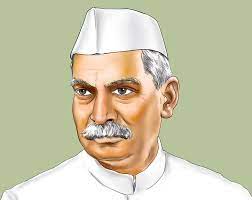
Constituent Assembly is a body to frames a constitution with several members from different provinces. Indians had a long demand for this assembly. Dr. Rajendra Prasad became the first President of the Constituent Assembly.

The first session of the Constituent Assembly was held from 9th December to 23rd December 1946. At that time the Draft Committee was formed with Dr. Bhimrao Ramji Ambedkar in the chair.

After that, the second session of the Assembly was held from 20th January to 25th January. The third session was held from 22nd April to 2nd May and the fourth session 14th-22nd July 1947.

Dr. Rajendra Prasad

WBBSE Notes For Class 8 History Chapter 9 Structure Of Democracy And Rights Of People Dr. Rajendra Prasad

The Constituent Assembly aimed to make India an “Independent Sovereign Democratic Republic”. The constitution framed by Ambedkar was accepted by Constituent Assembly on 26th November 1949 A. D. and Dr. Rajendra Prasad signed it.

“WBBSE Class 8 History Chapter 9 notes on structure of democracy and rights of people”

On 26th January 1950 A. D.’s new constitution came into force. The Constituent Assembly of India constructed the constitution of free India for 2 years 11 months and 18 days. It had held 11 sessions.

Class 8 General Science Class 8 Maths
Class 8 History Class 8 Science LAQs
Class 8 Geography Class 8 Science SAQs
Class 8 Maths Class 8 Geography
Class 8 History MCQs Class 8 History

After Dr. Rajendra Prasad’s prolonged discussion on the draft of the constitution, 2473 amended proposals were taken out of 7635. An amount of 64 lakhs of rupees was spent on the writing of this constitution.

The most important personalities involved in it were as B. R. Ambedkar, Rajendra Prasad, Sarbapalli Radhakrishnan, Jawaharlal Nehru, Sardar Vallavbhai Patel, Gobindballav Panth, Abul Kalam Azad, Acharya J. B. Kripalini, K. M. Munshi, T. T. Krishnamacharya, Gopal Swami Eyre, Alladi Krishnaswami Eyre, Purushottam Das Tandon, etc.

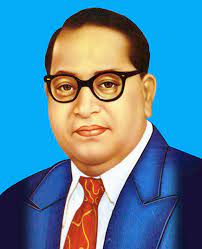
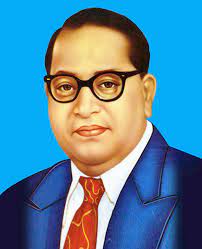
B. R. Ambedkar

WBBSE Notes For Class 8 History Chapter 9 Structure Of Democracy And Rights Of People B.R Ambedkar

Ambedkar was called “the father of the Indian Constitution”.

Preamble To The Indian Constitution

The preamble was made to form the constitution and this preamble is called ‘The Mirror’ of the Indian Constitution. It is a ‘miniature’ and ‘autobiography’ of the entire constitution.

WBBSE Notes For Class 8 History Chapter 9 Structure Of Democracy And Rights Of People Dr. Rajendra Prasad

Thakurdas Bhargay said-‘It is the soul of the constitution. It is a key of the constitution”. The main theme of the preamble are ‘We, the people of India’, having solemnly resolved to constitute, India into a Sovereign [socialist secular] ‘Democratic Republic and to secure to all its citizens;

‘Justice’, social, economic, and political; ‘Liberty’ of thought, expression, faith, belief and ‘Equality’ of status and of worship; opportunity and to promote among them all, ‘Fraternity’ assuring the dignity of the individual and the unity and integrity of the nation;

In our Constituent Assembly this twenty-sixth day of November 1949, Do Hereby adopt, enact and give to ourselves this constitution. ‘Sovereignty’ means the right to vote of all adult persons in trophic. ‘Socialism’ means state control over capital.

WBBSE Notes For Class 8 History Chapter 9 Structure Of Democracy And Rights Of People Radhakrishnan

‘Secular’ means liberty for all religions. ‘Republic’ means ‘Power of people not of any king’. P. B. Gajendragadkar said- “The basic philosophy of the constitution of India is to be found in essence in the preamble itself.”

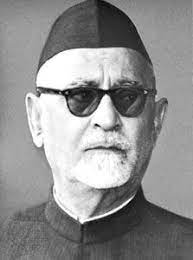
WBBSE Notes For Class 8 History Chapter 9 Structure Of Democracy And Rights Of People Dr. Zakir Hussain

Chapter 9 Structure Of Democracy And Rights Of People Organised Structure Of Democratic Republic

We can easily understand the structure of the democratic republic by analyzing the administration of India. The President, Prime Minister, Chief Minister, Parliament, mentioned in the constitution of India correlate.

WBBSE Class 8 History Chapter 9 Structure Of Democracy And Rights Of People

The President

Indian President is the constitutional held. An Indian citizen should be elected in the Lok Sabha (upper house of the Parliament) to be the President of India. So he is an elected person. He can be re-elected after the expiry of his tenure.

“Class 8 History Chapter 9 structure of democracy and people’s rights WBBSE study material”

He should be bankrupt. The minimum age for this post is 35 years. He is elected for 5 years.

The power of the President are five types,  such as

  1. Imperial
  2. Executive
  3. Legislative
  4. Financial and
  5. Emergency.

But the Indian President is not so powerful like the President of U. S. A. Article no. 74 (1) refers to “there shall be a council of ministers with the prime minister at the head to aid and advise, the president exercise his functions.”

At the same time, we have to remember that the President of India is a “titular executive, not real”. The Vice-President of India maintained all duties and responsibilities of the President in time of his absence.

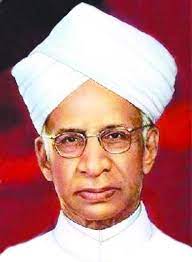
The first, second, and third Presidents of India were as Dr. Rajendra Prasad (1950-1962), Dr. S. Radhakrishnan (1962-1967) and Dr. Zakir Hussain (1967-1969) respectively.

Cabinet Ministers

Under the leadership of the Prime Minister the Cabinet Ministers are formed. The President exercises his functions with the advice of these ministers.

There are three types of ministers in the Central Council of ministers, Cabinet Ministers, Ministers of State, and Deputy Ministers. They are togetherly responsible to Lok Sabha.

Lawell said it as “the keystone of the political witch”. Similarly, Sir Ramsey Moore remarked, “It is a steering wheel of the state”.

Indian Parliament

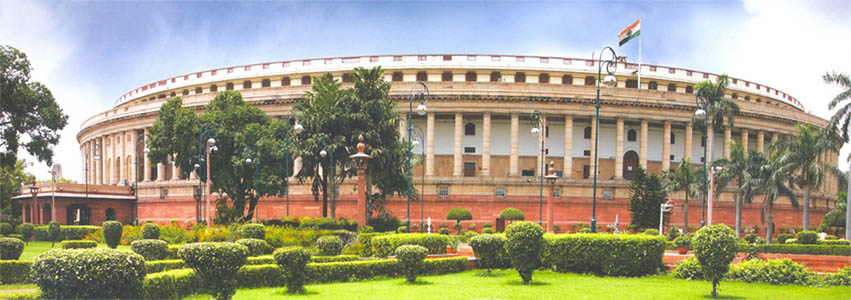
Parliament has two chambers an upper chamber of ‘the Rajya Sabha’ and a lower chamber or ‘the Lok Sabha’. Raja Sabha consists of 250 elected members and the Vice-President presides over this sabha.

The Lok Sabha consists of 545 elected members and the Speaker presides over it. India is a country of a Parliamentary form of govt.

WBBSE Notes For Class 8 History Chapter 9 Structure Of Democracy And Rights Of People Indian Parliament

A member of the Lok Sabha must be a citizen of India, acquired age of 25 years, not to be a proclaimed insolvent or offender, and should not be holding a profitable office under the govt.

The Lok Sabha is generally elected for 5 years. The Deputy Speaker acts as the Speaker in time of his absence. The members of a Rajya Sabha must possess qualities like he should be Indian citizens, being 30 years of age, not to be an offender or involve in any profitable office under the govt, etc.

The Vice-President is really the ex-officio Chairman of the Rajya Sabha in India. In absence of the Vice-President, the Deputy Chairman acts of the House as the.

Prime Minister

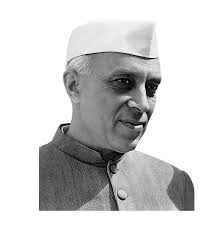
Indian Prime Minister is as important as the Prime Minister of Britain in the Parliamentary form of government. Generally, the Prime Minister is elected by the President if his party could get an absolute majority in the general election of the Lok Sabha.

Jawaharlal Nehru

WBBSE Notes For Class 8 History Chapter 9 Structure Of Democracy And Rights Of People Jawaharlal nehru

The Prime Minister comes to power for five years. As a leader of the Lok Sabha, he can form Cabinet Ministers and can advise the President, Attorney General, Election Commissioner, Public Servants, etc.

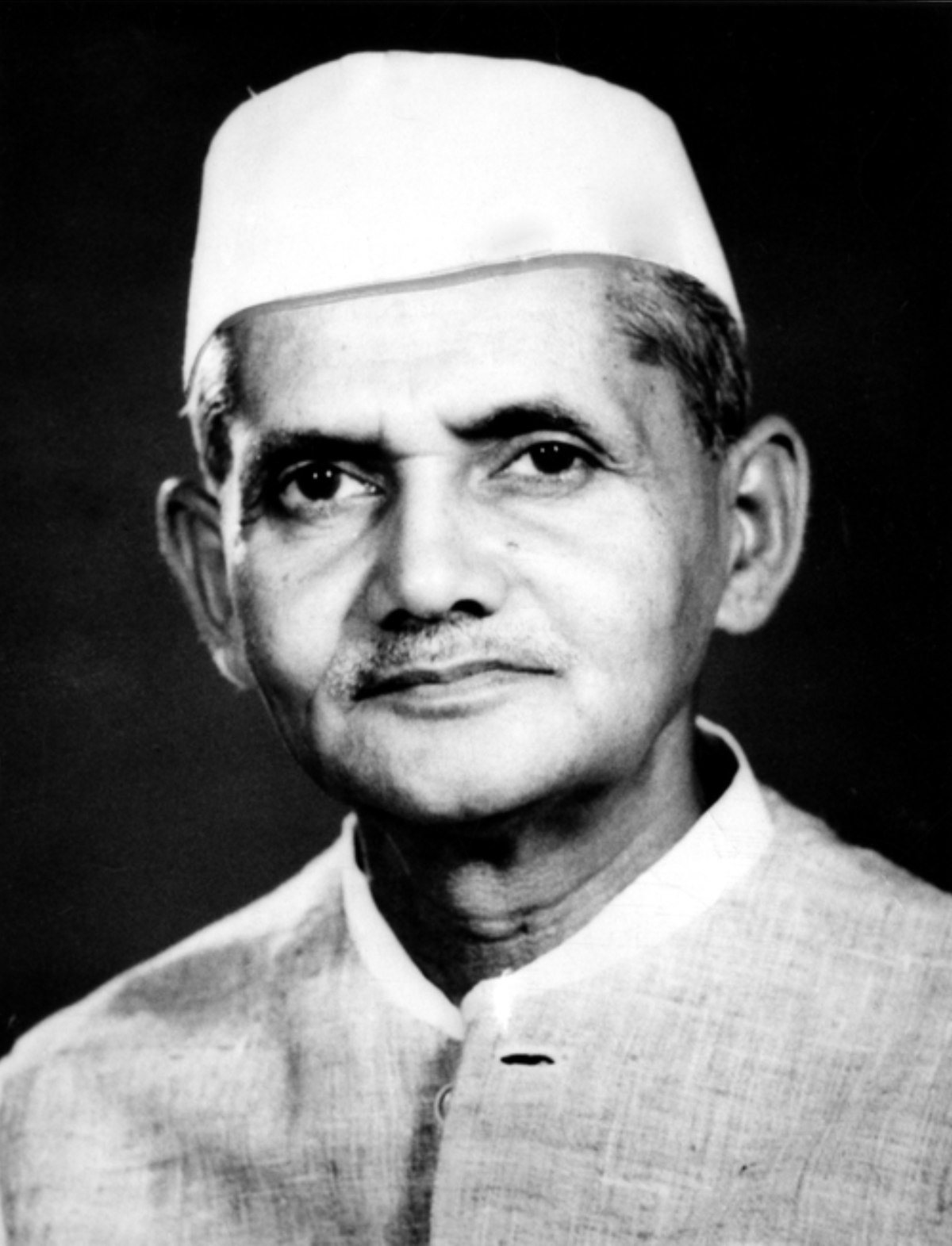
Lal Bahadur Shastri

WBBSE Notes For Class 8 History Chapter 9 Structure Of Democracy And Rights Of People Lal Bahadur shastri

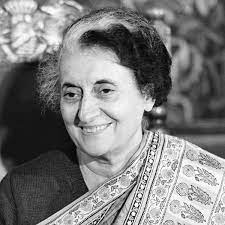
He is the real executive in the democratic republic of India. The first, second, and third Prime Ministers of India were as Jawaharlal Nehru (1947-1964), Lal Bahadur Shastri (1964-66), Guljarilal Nanda, and Smt. Indira Gandhi (1966-1977, 1980-1984).

WBBSE Notes For Class 8 History Chapter 9 Structure Of Democracy And Rights Of People Indira gandhi

Chapter 9 Structure Of Democracy And Rights Of People The State Legislature

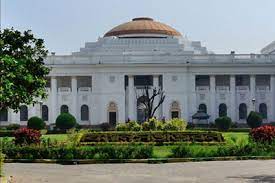
The Legislature of a state has two parts Sabha or Legislative Assembly (Upper House) and Vidhan Parishad or Legislative Council (Lower House). Some states have only one House known as Vidhan Sabha only.

The Vidhan Sabha can have a maximum of 500 members and a minimum of 60 members. The Vidhan Sabha of West Bengal consists with 294 members. But in Nagaland, Goa, Sikkim, and Mizoram the members of the Legislative Assembly are less than 60 each.

WBBSE Notes For Class 8 History Chapter 9 Structure Of Democracy And Rights Of People Vidhan Sabha bhavan Of West bengal

The members of the State. Legislature are to be elected. 1/12 of the whole members of the Parishad is elected by the teachers of 3 years standing of the H. S. Schools or Colleges of the state.

The State Legislature makes laws on 66 subjects that have been mentioned in the State List and can enforce laws on 47 subjects included in the Concurrent List too.

Chapter 9 Structure Of Democracy And Rights Of People Lok Sabha And Rajya Sabha

Whereas Lok Sabha is dissolved, the Rajya Sabha is a permanent house. Lok Sabha is generally formed for 5 years with elected members of 545. The Speaker presides over the Lok Sabha, the Vice-president presides over the Rajya Sabha.

“Detailed notes on structure of democracy and rights of people for WBBSE Class 8”

The members of the Rajya Sabha is elected for 6 years, but 1/3 of the total members retire after every 2 years. The parliament of India has to confirm a galaxy of functions, such as making of laws, executing govt, control over national finance, electoral functions, and judicial activities, etc.

The Governor

The chief constitutional executive authority of a state is the Governor. He is appointed or transferred by the President. A Governor of India must be possessed with the qualifications like a citizen of India physically and mentally fit, not to be a proclaimed offender, and age of 35 years.

Generally, he is appointed for 5 years, but he can be removed by the President from his office before the expiry of his term of service. The Governor is the constitutional head of a state.

His main powers are as executive powers, legislative powers, judicial and discretionary powers.

Chief Minister

According to Article no. 164(1), the Governor appoints the Chief Minister of a state but he must be a leader of the majority party in the Vidhan Sabha.

The Chief Minister with the formal advice of the Governor appoints the members of the State Council of Ministers. But a member who is not elected can also be selected as a Minister. He is the real authority of a state.

If the Chief Minister resigns on any ground, it is totally regarded as the resignation of all the Ministers of a state. The functions of the council of ministers of a state are a carbon copy of the functions of the Council of Ministers of the central govt.

All the Ministers are togetherly responsible to the State Legislature for their acts of commission and omission. The Chief Minister of a state and the Prime Minister at the central are the same in duties, but the jurisdiction is different.

On the advice fo the Chief Minister the Governor of a State exercises his functions. The Chief Minister occupies an important role to form his cabinet and presides over its meetings of it to distribute ‘Portfolios’ to the ministers as he desires.

He can ask any Minister to resign. He is the sole spokesman of the state govt. The Governor can override his advice, only in times of emergency. The Chief Minister is called the “real ruler and supreme head of the state” and “Primas meter pares-first among equals.”

Local Self Government

Recognition of Local government is our historical tradition. The tradition is accepted in Article No 40 of our Constitution. Village Panchayats, Panchayat Samitis, Zila Parishads, Municipalities, and Corporations are togetherly consisted the local self-rule in India.

The people of each and every village, town or city elect representatives to govern their community in their respective areas. Thus people directly participate in the administration through their representatives.

It is the feature of democracy and this system is called ‘local self-government’. The self-government body for rural areas is called the ‘panchayat’ and for urban areas is called the ‘municipality’.

The three-tire panchayat system based on Grampanchayat Panchayat Samiti and Zila parishad is the pilar of the Local Self Government.

Gram Panchayat

The word ‘panchayat’ has come from the word ‘panch’ which was generally used for five village elders who settle disputes and took absolute decisions.

Now all local self-government bodies for village areas are called ‘panchayats, which are formed as per definite rules and regulations. The local self-government for a village is called “Gram Panchayat”.

The village panchayat consists of the

  1. Gram Sabha,
  2. Gram Panchayat and
  3. Naya Panchayat.

Every villager above 18 years old, whose name is on the voter list can be a member of ‘The Gram Sabha’ and elects the head of ‘The Gram Panchayat’.

The Gram Sabha can review the works and accounts of the Gram Panchayat and can also remove the inefficient and corrupt members of the Gram Panchayat. It is formed for five years normally.

The elected members elect one of them as ‘Gram Pradhan’ and ‘Upagram Pradhan’. As per the density of the population rd of these posts are reserved for women, SC, and ST. Gram Sabha elects the ‘Naya Panchayat’ or village court to judge the offenders or criminals.

The Gram Panchayat looks after the roads, irrigation ‘small industries’ agriculture, supply of drinking water, Public health, education, records of births and deaths, etc.

Panchayat Samiti

The second level of the Gram Panchayat system in West Bengal is ‘Panchayat Samiti’ States with a population of more than 20,00,000 have Block Samities or Panchayat Samiti.

People of a Block elect the members of a Block Samiti which have some ex-officio members. The members of Panchayat Samiti elect a ‘Chairperson’ (Pramukh) and a ‘Vice-chairperson’ (Upa-pramukh). rd seats of the total posts are reserved for women, SC, and ST for 5 years like Gram Panchayat.

The Panchayat Samiti supervises the work of Gram Panchayats within a Block. It generally looks after the developmental works in the block.

It arranges for various welfare activities like primary and adult education, public health care, drinking water, sewerage, seeds for farmers, self-employment etc.

Zila Parishad

The people of a district generally elect the members of ‘Zila Parishad’, which has also some ex-officio members. Out of 23 districts of West Bengal, 17 districts have Zila Parishad and only in Kolkata and Darjeeling there is a Zila Parishad.

It has a President and Vice-president who are elected by the members among themselves for 5 years. According to West Bengal Panchayat Act, the convention of a meeting of Zila Parishad after every three months is compulsory.

And the President and Vice-president would not be attached with any profitable business or organization during holding their posts. This Zila Parishad supervises the activities of Panchayat Samities and Gram Panchayats.

It examines the budgets of Panchayat Samities and distributes the funds of Govt. among them. It also prepares the plans for the progress of the district and sometimes advises the Government on development.

Municipality

Lord Ripon adopted the municipal rule first in 1882 but Bengal Municipal Act was passed in 1932. The municipality is an important part of local self-rule in West Bengal. An urban self-ruling body is called a ‘municipality’.

There are three types of municipalities in India, like ‘Nagar Panchayats’ for semi-urban areas, ‘Municipal Councils’ for city areas, with populations of less than 10 lakhs, and ‘Municipal Corporations’ for larger populated city areas.

State Government can divide each municipal area into some ‘Words’. A representative from each word is elected as ‘Councillor’. All the councilors together form a council known as a ‘Municipality’. It is formed for 5 years.

All the members who are 21 years of age or above may stand for a municipal election. There are also seat reservations for SC, ST, OBC, and women. The members of the municipal council elect a chairman and a Vice-Chairman among themselves.

Role Of The Constitution In Social Development

Indian constitution is the safeguard of the citizens. It has given the right to equality in society. Now men and women are equal in society. The constitution takes steps against the exploitation on women.

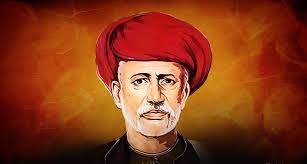
WBBSE Notes For Class 8 History Chapter 9 Structure Of Democracy And Rights Of People Jyotiba Phule

For a healthy society and social integrity, our constitution provides lot of opportunities for the development of backward and depressed class people. The constitution of India does not tolerate racial discrimination or religious orthodoxy in society and the state.

In the preamble to the Indian constitution therefore it has clearly been mentioned that “India is a secular country”. Its main objective is to make India a welfare country.

WBBSE Notes For Class 8 History Chapter 9 Structure Of Democracy And Rights Of People B.R Ambedkar

Equal rights to land and property for both males and females have been legalized by the amendment of the Indian Constitution in 2005.

Prevention Of Family Cruelty Act of 2005

In 2005 the ‘Prevention of Family Cruelty Act’ was passed by the Supreme Court. To protect women from unjust and exploitation this act is very helpful.

If any woman is exploited or insulted by anyone in any place, then and she can appeal to the department of Chief, Judicial Majitrate. Apart from this, she can also appeal to District Protection Officer for her safety.

Role of the Constitution to the protection of the Rights of Backward citizens: ‘Dalit’ is a Hindi word. It is being used in India for a very long time.

The extremely poor people, who are deprived of human rights, because of forceful oppression, are called ‘Dalit’, In a journal edited by Dr. B. R. Ambedkar, the Depressed Classes of British rule has been called ‘Dalit’.

The Dalit people of India have been prey to economic, social, political, and cultural deprivation as a result of century-old apartheid issues. The first person to start a movement in Maharashtra was Mahatma Jyotiba Phule in 1872.

For this purpose, he formed ‘Satya Shodhak Samaj’ in 1873. Dalit politics and movement started taking shape and extending with the initiative of his follower, Dr. Bhimrao Ramji Ambedkar.

During 1924 to 1930, he transformed Dalit Movement into a radical movement. The main purpose of his movement was to end the social problems and deprivation faced by the Dalit people. It was a legal fight along the lines of direct satyagraha.

“Complete guide for WBBSE Class 8 History Chapter 9 on structure of democracy and rights”

Ambedkar led and organized movements like the Choudar Lake Movement and Kalaran Satyagraha. The untouchable Mahar community were forbidden to use water from Choudar Community Lake.

Because of Ambedkar’s movement, not only were the rights of the Dalit people to drink water from the lake restored but they were also given right to serve water to all communities.

This humane aspect of the movement was depicted in Tagore’s dance drama ‘Chandalika’. V. R. Shilde founded ‘The Dalit Mission Society’ in 1906. Its president N. G. Chandravarkar demanded to the British a separate electorate for the backward Dalits.

Respected justice Sir Narayan Ganesh Chandavarkar convened a Dalit conference on 11 November 1917 where he demanded

  1. Compulsory free education for Dalits.
  2. Progress the social dignity and status of the Dalits and
  3.  Right to elect the Dalit representatives in the legislative council.

In the Montague Chelmsford Reforms Act (1919) Dalits were recognized in Indian Politics. As a result, Justic Party of the Dalit’ in Madras was formed and in the election, this party occupied 63 seats out of 98 seats in 1920 and Justice Party’s Government was formed in Madras.

In 1918 all India Dalit conferences was held. But Dr. Ambedkar officially convened the first ‘All India Dalit Conference’ on 30th May 1920. The untouchable Dalits were not allowed inside Kalaram Temple in Nasik.

As a result, the Dalit Movement was given a religious character. A memorandum was signed in the presence of Sankaracharya of Kanchi and it was decided that the Dalits would be allowed to enter the temple and also hold the holy ropes during Rath Yatra Festival.

But, finally, the upper-caste Hindus did not allow that to happen. Ambedkar, along with lakhs of followers embraced Buddhism on 14th August 1956. He felt that Buddhism was the true alternative of Brahmanical practices.

In 1930, Gandhiji organized the Dalit class’s struggle and brought it to the notice of the Government. He felt that the problem of the Dalit people was, in fact, a social problem.

But Dr. Ambedkar, the first Law Minister of India, viewed it as a political problem created by upper caste people. He took initiative to solve the problems related to their land, house, and untouchability.

The plight of the Dalit people of Madhya Pradesh, Andhra Pradesh, and Tamil Nadu was even greater. Hence, in these states, separate houses, toilets, drinking water, tube wells, and even crematorium, had to be kept.

During 1960s, the movement to safeguard the rights of the Dalits had started. It was mainly to safeguard social and economic rights. This movement was influenced by the ‘Black Panther Rebellion’ of America.

In India, the Dalit ‘Panther’ had a militant political agenda. The protesters demanded equal distribution of land, an increase in the rates of daily wages, a chance for free schooling of children, and stopping economic oppression.

Later on, the ‘Bahujan Samaj Party’ (BSP) adopted the programs like ‘Dalit-culture Preservation Bill’ and ‘Ambedkar Village Programme’.

On 9th July 1972, Namdeb Dhamal, Daya Pawar, Ramdas Sorte, J. V. Pawar, and Arjan Dangle started a movement called ‘Dalit Panther’.

Dalit literature movement spread across India through ‘D. S-4 Movement’ and through ‘The Republican Party of India’ (RPI) formed by Ambedkar. D.S.- 4 stands for ‘Dalit-Shoshit-Samaj-Sangharsh-Samity’. T

his movement had been very popular in Maharashtra, Karnataka, Andhra Pradesh, and Madhya Pradesh. Dalit thoughts received national stature through the fortnightly journal, ‘Dalit Voice’, edited by the national journalist V. T. Rajshekhar and published from Bangalore.

Gayle Omvet, in his book ‘Dalit Vision’, has vividly analyzed the social and political reality faced by the Dalit community. The Dalit Movement of Prof. Yashwant Manohar and its effect on Dalit literature had spread across the country, including Bengal.

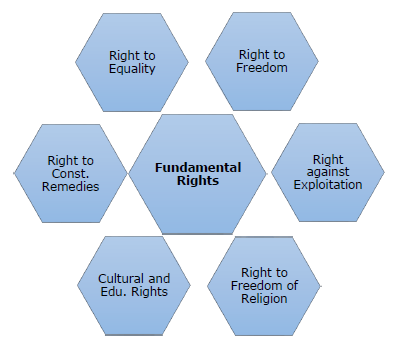
Chapter 9 Structure Of Democracy And Rights Of People Fundamental Rights Of The Indian Constitution

There are some fundamental rights in Indian Constitution, such as-

  1. Right to equality.
  2. Right to liberty.
  3.  Right against exploitation.
  4. Right to education and culture.
  5. Right to religion.
  6. Right to property.
  7. Right to constitutional prevention (1978).

‘Right to property’ was omitted by the revision of the 46th constitution. So now Indians enjoy six fundamental rights. Directive

WBBSE Notes For Class 8 History Chapter 9 Structure Of Democracy And Rights Of People Fundamental Rights

Principles

There are a few directive principles that tried to make India a welfare state. Free medical services, payment to unemployed persons, etc. are included in this principle. The right to children and women was given greater importance.

In the 42nd amendment of 1976, the word “secularism” was included. India is not a theocratic state like Bangladesh or Pakistan.

There are also some other important features like voting rights of all adults, rights to backward classes, right to the Supreme Court, etc. These features expose the real character of the Indian Constitution.

Chapter 9 Structure Of Democracy And Rights Of People Fundamental Duties

There are 10 fundamental duties like honesty to the national flag, obliging the constitution, maintaining the sovereignty of the nation, maintaining Indian culture, etc.

The Article 51A of part IVA containing Fundamental duties was inserted by the Constitution Act of 1976 which was effective from 3rd January 1977.

In the constitution, there were ten fundamental duties and now it has become eleven (11) after the 86th Amendment of the Constitution in 2002 (with effect from 1 April 2010). Now the fundamental duties of every citizen of India are as

  1. To abide by the Constitution and respect its ideals and institutions, the National Flag, and the National Anthem.
  2. To cherish and follow the noble ideals which inspired our national struggle for freedom.
  3. To uphold and protect the sovereignty, unity, and integrity of India.
  4. To defend the country and render national service when called upon to do so.
  5. To promote harmony and the spirit of common brotherhood amongst all the people of India transcending religious, linguistic, and regional or sectional diversities; to renounce practices derogatory to the dignity of women.
  6. To value and preserve the rich heritage of our composite culture.
  7. To protect and improve the natural environment including forests, lakes, rivers, and wildlife, and to have compassion for living creatures.
  8. To develop the scientific temper, humanism, and the spirit of inquiry and reform;
  9. To safeguard public property and to abjure violence.
  10. To strive towards excellence in all spheres of individual and collective activity so that the nation constantly rises to higher levels of endeavor and achievement.
  11.  Who is a parent or guardian, to provide opportunities for education to his child or, as the case may be, ward between the age of six and fourteen years.

Chapter 9 Structure Of Democracy And Rights Of People Land Water Jungle

Right to Life-occupations and mass movements

Land, water, and Jungle are the three most important resources for the overall development of India. During British rule in India, some steps were taken for the development of resources, such as-

  1. Introduction of land tenure.
  2. Opening of road and rail communication.
  3. Promotion of export trade in certain agricultural commodities and
  4. Foundation of Dept. of Agriculture.

Thereafter ‘The Forest Research Institute’ was set up in 1890. As per the recommendation of the ‘First Irrigation Commission’ development of irrigation schemes were adopted.

In the initial period of developing water resources, the rapid harnessing of the resource was its main objective. The purposes of the water resource projects were irrigation, flood control, hydropower generation, industries, supply of drinking water, etc.

For this reason, the Government of India passed the ‘Water Prevention and Control of Pollution Act (1974)’. Agriculture provides the livelihood for the largest number of people.

The robust growth in this field guarantees the achievement of broad-based growth of income levels and employment in rural areas.

The main strategy of the development of agriculture is centered around achieving of the objectives of sustainability of employment generation, food and nutrition security, equity, and poverty alleviation.

For tribal livelihood preservation and reservation of land, water, and forest are equally important. The movement for the right to life and occupation of the people forced them to organize mass movements.

Chapter 9 Structure Of Democracy And Rights Of People Tebhaga Telengana

Mass movement in Peasants Rights protection :

1. Tebhaga:

The Tebhaga movement was a new challenge to the British when the ‘Flood Commission’s Report’ expressed that 3rd of the total produces should be in the hand of the Bargadarh cultivators.

The Communist Party of India supported the Bargadarhs and at the same time ‘Provincial Krishak Sabha’ demanded 2/3rd of the produced crops for the Bargadarhs.

“WBBSE Class 8 History chapter 9 explained on structure of democracy and people’s rights”

Due to the tremendous pressure of the C. P. I. and Provincial Krishak Sabha the Tebhaga Peasants started a movement in November 1946 A.D. The movement spread in 23 Midnapur, Jassore, Dacca, Nadia, – Myemansingh etc.

Dr. Sumit Sarkar said that in the area where 60% of the villagers were Bargadarhs, the Tebhaga movement became a spontaneous mass upheaval.

WBBSE Notes For Class 8 History Chapter 9 Structure Of Democracy And Rights Of People Tebhaga movement

The Rajbamshi widow named Burima in the Thakurgaon village of Ramchandrapur subdivision Dinajpur of North Bengal and the Communist leader like Bhabani Sen took the leadership of the movement in Rangpur, Dinajpur, and Jalpaiguri, etc.

Apart from this Bimala Pande, Samar Mukherjee, Charu Majumder etc. took the leadership of the movement. Under the leadership of Kangsaru Halder 7000 Hindu, Muslim, and Santhal Peasants of Kakdwip of South 24 Parganas started the violent Tebhaga Movement.

A. Cooper remarked that the Tebhaga Movement spread to various places of Bengal at the end of 1946. Peasant leader Abdullah Rasul in his book. “Krishak Sabhar Itihas” admired it as a significant event.

Dr. Sunil Sen the author of ‘Peasant Movements in India’ said that 49 of the total agitators were killed. Dr. Sen said, “The main strength of the Tebhaga Struggle lay in poor peasants-the share Croppers”.

Dr. D. N. Dhanagare accepted it. But Hamza Alavi in his book ‘Peasants and Revolution’ remarked that the middle-class peasants did not have active participation in this movement.

2. Telangana

The Peasants of Telangana of Hyderabad organized a movement which took the shape of guerilla tactics of warfare. The Communist leader P. Sundarayyia and Komaya Doddy were the main organisers of the Telengana Movement.

His famous book ‘Telangana Peoples’ Armed Struggle 1946-1951, help us to know that 30,00,000 peoples of 3000 villages spread the movement in 16,000sq. miles area. The main centers were Khammam, Nalgonda, and Warangal districts.

Sundarayyia


WBBSE Notes For Class 8 History Chapter 9 Structure Of Democracy And Rights Of People Sundarayyia


Sundarayyia said, “In these villages, the hated landlords-the pillars of Nizam’s autocracy in the rural areas-were driven away from their fortress-like houses, and their lands were seized by the peasantry.”

The peasants formed village raj against feudalism. The village raj distributed 10 lac acres of land among the peasants. The Communist party suspended the movement in October 1951.

“Structure of democracy and rights of people in WBBSE Class 8 History Chapter 9”

In the movement 4,000 Communist and peasants were killed and 10,000 Communist workers and supporters were arrested.

Chapter 9 Structure Of Democracy And Rights Of People Right To Water Jungle


Eco-centris mass movement:

The chapter newly included in the history textbook for Schools is “Jami Jal Jangal: Jiban Jibikar Adhikar O Ganaandolan” (Land, Water, Forests: The right to life, lifelihood and Peoples movements).

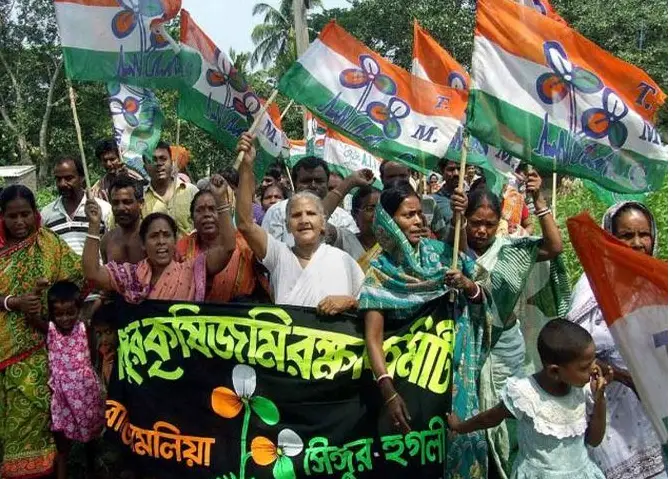
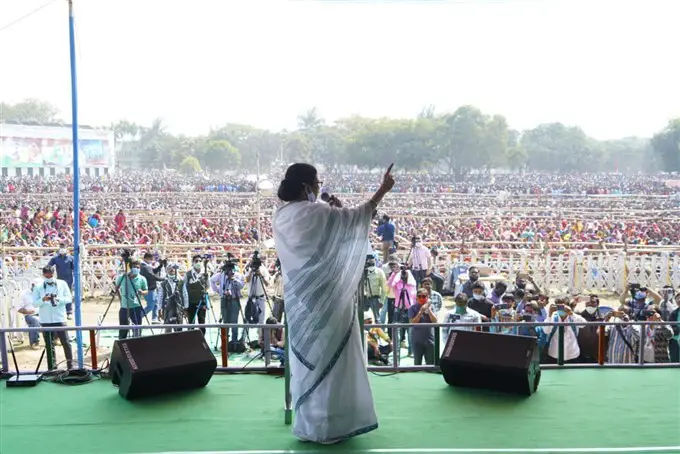
Mrs Mamata Banerjee had a vital role in the movement, which finally had become an eco-centric mass movement either in Singur or in Nandigram or in other places of West Bengal for the right to water and Jungle of people.

She started a movement in Singur by sowing paddy seeds.

Chapter 9 Structure Of Democracy And Rights Of People Eco Movements In 20th Century India

1. Chipko Movement (1973) in North India:

The chipko movement is the hug the movement of the trees. After passing the Forest Act of 1927 tribals in Tehri Garhwal in UP rose in open protest. A disciple of Gandhiji Saralaben founded ‘Uttarakhand Sarvadaya Mondal’ (1961).

A large number of people under Saralaben were united against deforestation. At the time local tribal women who loved tree like their son, opposed cutting trees.

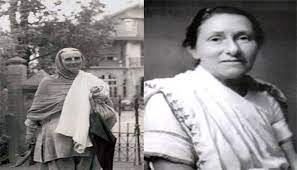
WBBSE Notes For Class 8 History Chapter 9 Structure Of Democracy And Rights Of People Saralaben and Miraben

Their movement started first in the hilly region of Gopeswar in the Chameli district of U.P. in 1973, which was called ‘the Chipko Movement’.

Eminent leaders of the movement were Saralaben, Miraben, Gouridevi, Chandrika prasad Bhat, Sundarlal Bahuguna, etc. Under the leadership of Gouridevi 27 tribal women continued night patrolling or acted as night guards for the protection of trees.

Finally, Government control over cutting trees was adopted. The word ‘Chipko’ means ‘hug’, therefore by hugging trees like child women saved trees from deforestation.

2. Narmoda Banchao Movement (1985) in Western India

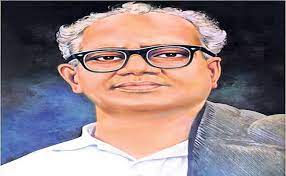
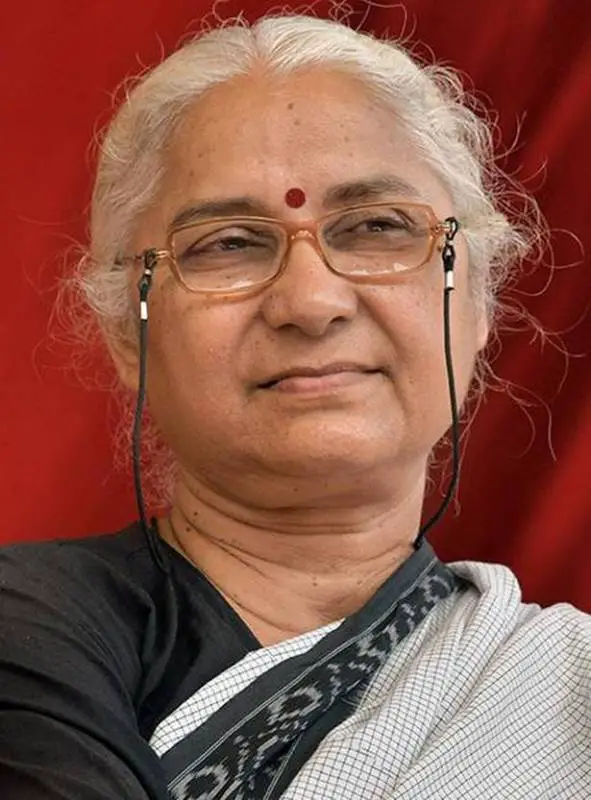
To protest against the Narmada River Valley Dam project ‘Narmada Bachao Movement’ (NBA) was started first by Baba Amtee. The icon of the movement was Medha Patekar. Thousands of people of Gujarat, Maharastra, and Madhya Pradesh join this movement.

Medha Patekar

WBBSE Notes For Class 8 History Chapter 9 Structure Of Democracy And Rights Of People Medha Patekar

Gujarat and Madhya Pradesh governments jointly took Sardar Sarovar Dam Project on the river Narmada-a river of 1450 km long. The government decided to build 30 big dams, 135 medium dams, and 3000 small dams on the Narmada River for the purposes of

  1. Production of hydro-electricity,
  2. Irrigation system for 3 states and
  3. To control of floods. The 25 years of the Narmada dam project was cost of Rs. 40,000 crores.

As this project caused the eviction of 10,00,000 people, Medha Patekar continued the Narmada Bachao Movement and was successful.

3. Appiko Movement (1983) in South India

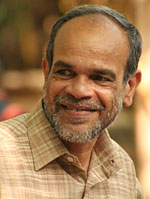
The Appiko movement was one of the revolutionary movements based on environmental conservation in India. Its leader was Pandurang Hegde born in 1956 AD.

The Chipko movement (Hug the Trees Movement) in Uttarakhand of the Himalayan region encouraged the villagers of the North Kannada district of Karnataka in South India to carry a similar movement on the protection of their forests.


WBBSE Notes For Class 8 History Chapter 9 Structure Of Democracy And Rights Of People Pandurang Hegde

‘Appiko’ means “hug the trees”, which rapidly had become a potent expression to counter violence against, reflecting empathy toward forests.

On 8 September 1983-AD, the villagers of Salkani of Sirsi in Uttar Kannada the Appiko movement started first which was locally called “Appiko Chalkvate”. An all-time record of 1.2 million saplings were grown by people in the Sirsi area in 1984-1985 A. D.

It tried to save the Western Ghats by spreading its roots all over South India.

Its three major objectives were

  1. Struggle to save the remaining tropical forests in the Western Ghats,
  2. Attempt to restore greenery in denuded areas, and
  3. Striving to propagate the idea of rational utilization in order to reduce the pressure on forest resources. Its main slogan is “Ulisu (save), Beleru (grow) and Balasu (rational use)”.

4. Silent Valley Movement (1973) Kerala

The Silent Valley is a golden chapter in the history of the conservation and recognition movement in the Silent valley forests in Kerala state of South India. It is a global heritage site and a national park (1984).

The movement slogan was “Save Silent Valley”. The Pathrakkadanu Hydroelectric Project (PHEP) on the Kunthi river near Silent Valley was the main cause of this movement.

WBBSE Notes For Class 8 History Chapter 9 Structure Of Democracy And Rights Of People Mr. Romulus Whitaker

Shielded from extreme climatic variations and as well as human incursions by tall ridges, some as high as 2000 meters the 8,952-hectare Silent valley National Park on the Nilgiri plateau region remains an “ecological island”.

This valley is perhaps the only forest land in the region with a relatively peaceful evolutionary history of at least 50 million years. The Silent valley Movement was started in 1973 to save Silent Valley Reserve Forest in from being flooded by a hydroelectric Project.

“Comprehensive notes for WBBSE Class 8 on structure of democracy and rights of people”

It was a social movement aimed at the protection of this Valley, an evergreen tropical forest in the Palakkad district of Kerala. The founder of the ‘Madras Snake Park’ and the ‘Madras Crocodile Bank’ Mr. Romulus Whitaker was the leader of the movement.

Chapter 9 Structure Of Democracy And Rights Of People Right To Agricultural Land

Singur Mass movement:

The iconic Singur Mass Movement in West Bengal was organized for the protection of the Right to Agricultural land against small car factories. According to the education minister of West Bengal Sri Partha Chatterjee Singur, the movement was a “historic win of the farmers”.

Along with the Singur movement, the Tebhaga movement and Krishak Andolan with also feature in the syllabus, and students must know that this movement is one of the milestones in the country’s history.”

After announcing a small car factory in Singur on 18 May 2006, Smt. Mamata Banerjee on behalf of farmers protested against the issue on 18 July 2006.

WBBSE Notes For Class 8 History Chapter 9 Structure Of Democracy And Rights Of People Mamata Banerjee

The ground of her protest was the forceful land acquisition by an elected state government, Mamata Banerjee’s Singur rally as a sign of protest started the historic movement.

The contemporary Left Government acquired 997-11 acres of multi-crop farmland to allocate for the construction of a small car factory, which was propagated as a project of public improvement. Thereafter started to build up a plant in Singur on 1st January 2007.

To protest against it many of the internationally famed social activists and Bengali Luminaries like Medha Patkar, Anuradha Talwar, Arundhuti Ray, Mahasweta Devi, and others had stood beside the movement led by Smt. Mamata Banerjee.

They thought that the factory site is the most Smt. Mamata Banerjee fertile one in the whole of Singur Block. More than 20,000 farmers are making their livelihoods from this multi-crop fertile land.

“Class 8 History WBBSE notes for Chapter 9 on people’s rights and democracy structure”

So on behalf of peasants Smt. Mamata, Banerjee started her indefinite dharna at Singur in August 2008 and on 2 September 2008, the management of the car company suspended development work on small cars.

On 3 September 2008, the then Governor of West Bengal Sir Gopal Krishna Gandhi agreed to play a mediator to resolve the issue between the government and the Trinamool Congress, but every effort had gone in vain.

But on 3rd October 2008, the small car company decided to move out from Singur, Hooghly district of West Bengal, India. Local farmers by founding the ‘Krishi Jami Raksha Committee (KJRC)’ started the Singur movement as a spontaneous resistance.

WBBSE Notes For Class 8 History Chapter 9 Structure Of Democracy And Rights Of People Agitation of krishi jami Raksha Committee at singur

This was a mass historic movement because, in essence, it was a spontaneous movement of the people. It was not a particular political party that began the movement.


In the history of the peasant movement in West Bengal, the Singur Mass Movement is relevant in the current century. Many factors were responsible for it.

Such as-

  1. Eviction of nearly 15,000 people of five moujas Beriberi, Bajemelia, Khasher Bheri, Singher Bheri, and Gopalnagar from their cultivable land forcefully.
  2. Without discussion and legal initiative, the former Left Government seized fertile lands from unwilling farmers on the name of a small car factory.
  3.  During land acquisition by contemporary government carried out oppressive measures on poor and helpless farmers and their families,
  4. By adopting the old Land Acquisition Act of 1894 near about 3000 bigha of land was acquired from thousands of land owners, pattadars, burglars, landless farmers, etc. who were severely devastated after losing their lands,
  5. Acquisition of highly fertile cultivable land in place of less fertile or unfertile land was another cause of this movement,
  6. Arrest and oppression of women and their imprisonment for many days and the torture and death of a young girl Tapasi Malik, daughter of a farmer leader made angry to the people of Singur,
  7. Being lost land poor landless peasants were not given sufficient compensation and on the other hand, a proposal for self-dependent economic growth and security of Women of the poor farmers, and families pursued by ‘The West Bengal Women Commission’ was not enacted,
  8. Role of intellectuals like Mahasweta Devi, Medha Patekar, Amlan Dutta, Kabir-Suman, Saoli Mitra, Jay Goswami, Jogen Choudhuri, Arundhuti Ray, Aparna Sen, and many others encouraged the farmers for a mass movement,
  9. Efficient leadership of Smt. Mamata Banerjee, Partha Chatterjee, Sovandev Chattopadhya, Sovan Chatterjee, Subrata Bakshi, Sujat Bhadra, Pratul Mukherjee, Purnendu Basu, Bratya Basu, Ashima Patra, Dola Sen, Raindranath Chattopadhaya, Becharam Manna etc. led the foundation of Singur movement on a strong basis.

For all these reasons Singur Mass Movement earned fame in India and abroad. The first martyr of the movement was Rajkumar Bhul. After losing land Haradhan Bag and Prasanta Das committed suicide and due to starvation Sankar Patra, Sankar Das, Srikanta Shee, etc. died and 10 people were killed.

But yet the movement was ultimately successful with the victory of farmers. Historians Sumit Sarkar and Romila Thapar supported the Singur mass movement.

The Singur mass movement gained international media attention since the Car Company started constructing a factory to manufacture their $2.500 car, the Tata Nano at Singur.

The state government of West Bengal facilitated the controversy by using the Colonial Land Acquisition Act’s 1894 rule to conduct an eminent domain takeover of 997 acres of farmland to have Tata build its factory.

“Rights of people and democracy structure explained in WBBSE Class 8 History”

For this reason, the project was opposed by activists and opposition parties in West Bengal. The Car company claimed that Singur would become a mini auto city and approximately 70 vendors would set up shop along with the factory an investment plan of Rs. 1000 crore.

Ten projects had however generated controversy just from the start, particularly on the question of state acquisition of fertile agricultural land for private enterprise.

This Land Acquisition Act (1894) has provisions for states to take over privately held land for public purposes but not for developing any individual or private business.

WBBSE Notes For Class 8 History Chapter 9 Structure Of Democracy And Rights Of People Mamata Banerjee Addressing Aa Rally at singur

So the illegal acquisition of land had been substantially conceded by the High Court of Kolkata. As the car factory’s areas of Singur were highly fertile farmland, peasants rose in open protest against it.

Chief protesters were the opposition parties spearheaded by the Trinamool Congress under Smt. Mamata Banerjee and ‘Socialist Unity Centre of India’.

The movement got widespread support from the ‘Civil Rights’ and ‘Human Rights groups, legal bodies, social activists Medha Patekar, “Booker-prize” winner Arundhuti Ray and “Magsaysay ” and “Jnanpith Award” winner Mahasweta Devi, poet Ruchit Shah, artist Suvaprasanna, theatre and film personalities Saoli Mitra, Aparna Sen, etc.

and Nobel Laureate Amartya Sen. They supported the idea of factories or industry but opposed the forcible acquisition of farmland of farmers. The protesters however have been criticized by the Communist Party of India (Marxist).

Ultimately, the Singur Mass Movement was successful with the victory of landless farmers. As per the order of the Supreme Court farmers of Singur have got back their farmland.

Chapter 9 Structure Of Democracy And Rights Of People Singur Land Protection Movement

A decade 

The land protection movement in Singur was continued for a decade (2006-2016). Ten years ago, the land protests in Singur against the proposed factory of Tata Nano made headlines across the globe and catapulted the then-opposition leader Mrs. Mamata Banerjee who came to the limelight.

By 2007, Singur had become a symbol of a popular mass movement against forcible land acquisition which paved the way for a farmer-friendly law in 2013.

Despite the loss of land and prolonged court struggle wreaking havoc on their family’s finances, many farmers refused compensation. The farmers promised for a movement.

They opposed their forcible eviction from their farmland by the then Left Front Government but not industrialization. At that time many farmers said, “we never opposed industrialization, we protested against only the government’s way of land acquisition”.

WBBSE Notes For Class 8 History Chapter 9 Structure Of Democracy And Rights Of People After Supreme court decision farmers finally got back their land

After a decade of the movement, the Supreme Court on 31 August 2016 asked for the entire 997 acres of land to be returned to their original owners-something that is not possible without removing the structures.

“Class 8 WBBSE Chapter 9 structure of democracy and rights of people study guide”

The Chief Minister of West Bengal Smt. Mamata Banerjee announced that the government will not only return land in a cultivable state but also offer various incentives to resume farming.

Farmers of Beriberi, Khaser Bheri, Bajemelia, etc. were happy with this victory.

The steps of Singur agitation were

  1. The Singur agitation began on 25 May 2006 with farmers rallying against Left Front governments allegedly forcibly capturing land.
  2. The protests saw 26 days of fasting in December 2006, with even the central government and other agencies, intervening in the matter.
  3. From barging into the Assembly of West Bengal and ransacking it to organizing demonstrations across the state, Mrs. Mamata Banerjee used all forms of protests in the anti-land acquisition movement.
  4.  In 2010 small car company moved their Nano project out of West Bengal and thus the legal case in the matter began.
  5.  After 6 years during which this case went from the Kolkata High Court to the Supreme Court of Delhi and the farmers finally got back their land through our honorable Chief Minister Smt. Mamata Banerjee.

WBBSE Notes For Class 6 General Science And Environment Chapter 1 Interdependence Of Organisms And The Environment

Chapter 1 Interdependence Of Organisms And The Environment Man And Other Animals Depend On Plants

Our family and our society:

Human beings are the most intelligent organism in earth. Yet we can not live alone. Not only we but no animal or plant or any other organism can also live alone.

An organism (Animal, plant, or microbes) lives in a group or a single (solitary), or whether the organism form a society or not, all the organisms have to depend on others directly or indirectly.

WBBSE Notes For Class 6 General Science And Environment Chapter 1 Interdependence Of Organisms And ThWork of plumbing,electrician and Docter Checking a patient

You must have noticed that your father or some other person calls a doctor when someone of your family member is ill, call a plumber to repair water pipe connections, or call an electrician. For any electrical problem in the house. Different persons are engaged for different types of jobs.

Read and Learn More WBBSE Notes For Class 6 General Science and Environment

WBBSE Notes For Class 6 General Science And Environment Chapter 1 Interdependence Of Organisms And The Environment Work Of cycle Repairing

Where you go when your cycle do not work properly?

Moreover, you have also noticed that in your family mother or any elderly woman or any other person does the work of cooking. Father, uncle, mother or grandfather performs the work of daily marketing.

“WBBSE Class 6 General Science Chapter 1 interdependence of organisms and environment notes”

Therefore, it is clear that all of us to depend on others for our existence in the family and in society. It is also clear that we can not do all these works ourselves alone.

WBBSE Notes For Class 6 General Science And Environment Chapter 1 Interdependence Of Organisms And The Environment Work From cooking

In the living world, animals depend on other animals and plants for their food, shelter, oxygen, reproduction, body defense, development, etc. Plants also depend on animals too for carbon dioxide (CO2 ), pollination, dispersal of fruits and seeds, reproduction, growth, etc.

Class 6 History Class 6 Social Science
Class 6 Geography Class 6 Science
Class 6 Maths Class 6 Science MCQs
Class 6 General Science Class 6 Maths Solutions
Class 6 Geography Class 6 Hindi

So in the living world animals and plants are interdependent :

Prepare Two Table-

  1. For which work we need help from family members and
  2. From other members of our society.

Family Work:

Type off work Whom to depend upon/performer
1.    Daily household cooking 1.    Mother, aunt, or some other person
2.    Washing and cleaning 2.    Mother or any person keep for this work
3.  Looking after children 3.    Mother, grandmother
4………………………… 4…………………………
5………………………… 5…………………………
6………………………… 6…………………………


Help from others Outside the family

Type of work Whom to depend upon/performer
1.    Electrical repairing 1. Electrician
2.    Plumbing problem  2………………..
3.    Sweeping and cleaning 3………………..
4…………….. 4.    Physician./ Doctor
5 5


How do we depend upon plants for our survival?

If you carefully observe around, you will find so many things that we depend upon come from plants.

Complete the table mentioning the plant products/objects:

Column l Column-ll
Products Plant/Plant parts
For Food
1. Rice 1. Paddy/ seed and fruit
2. Wheat 2. ………..
3. Bazra 3. ………..
4. ………… 4. ………..
Household goods (wooden)
1. Furniture 1. Wood from trees
2.  2. ……………….
3. 3.
Building materials
 1. Cori / Borga 1. ………..
2. Pillar 2. ………..
3. 3. ………..
Cloths
1. Fibres 1. Cotton
2. 2. ………..
Medicine
1. Quinine 1. Bark of Cinchona Tree
2. 2.
3. 3.


Not only man but other animals also depend upon plants in nature. Observe your surrounding and complete the table-

WBBSE Notes For Class 6 General Science And Environment Chapter 1 Interdependence Of Organisms And The Environment Purpose Plants Parts

WBBSE Notes For Class 6 General Science And Environment Chapter 1 Interdependence Of Organisms And The Environment Purpose Plants Parts .

How Do Human Beings And Other Animals Depend Upon Plants

Dependence of animals upon plants.

From the above discussion, it has been more or less clear that human beings as well as other animals depend upon plants. But it is true that all the food products of animals are not directly come from plants.

Human beings and some other animals also get food from other sources-like other animals or their derivatives, such as we get milk from goats, cows, buffalo, camels, etc.,

“WBBSE notes for Class 6 Science interdependence of organisms and environment”

Eggs from different birds, meat from different animals such as goat, sheep, cow, chicken, goose, etc. The source of food of Carnivores (like tiger, lion, etc.) are animal. They do not take directly the plant or plant products.

They use other animals as their food who are usually depend upon the plant directly (herbivorous), such as deer, cow, goat, etc.

WBBSE Notes For Class 6 General Science And Environment Chapter 1 Interdependence Of Organisms And The Environment

Carnivorous

The animals that feed on other animals Example Tiger, Lion, etc.

Herbivorous

The animals eat only plants example cows, Buffalo, Deer They, etc.

WBBSE Notes For Class 6 General Science And Environment Chapter 1 Interdependence Of Organisms And The Environment Carnivorous And Herbivorous

Herbivorous animals like cows, deer, goats, sheep, elephants, etc. depend upon plants directly for their food. For example, when we take guava as food, we take plant products directly.

But when we take a boiled egg or a glass of milk or a piece of meat as the food we are indirectly taking plant products as the hen (for egg) or cow (for milk) or goat or sheep (for meat). respectively who collect their food directly from plants.

Therefore, all animals depend on plants for food either directly (herbivores) or indirectly (carnivores)


WBBSE Notes For Class 6 General Science And Environment Chapter 1 Interdependence Of Organisms And The Environment Man

Make a list of animals who depend upon plant/plant products directly. (Complete the table.)

Name of the animal Plant/ plant parts Other sources (animals) Nature
1. Cow grass, different plant parts leaf, stem, fruit, flower, etc. not taking animals’ food totally depend upon plants (herbivorous)
2. Goat ……………….. ……………….. ………………..
3. Hen Grass, young leaves small insects earthworm etc. depend on both plant and animal (omnivorous)
4. Snail ……………….. ……………….. ………………..
5. Monkey ……………….. ……………….. ………………..
6. Deer ……………….. ……………….. ………………..
7. Lion ……………….. ……………….. (Carnivorous)


Make a list of animals who take plant/ plant products indirectly.

Animals Animal food sources Plant food sources of consumed animals Nature
1. Tiger Dear, cow, hare, goat, etc. Grass, different plant part Carnivorous
2. Kite
3. Fox
4. Pea-cock

Insectivorous plants

Pitcher plants, trap insects and use them as external sources of food of animal origin.


WBBSE Notes For Class 6 General Science And Environment Chapter 1 Interdependence Of Organisms And The Environment Insectivorous Plants

Human Beings depended a lot upon plants. let’s complete the table below. Here different plant parts have been mentioned.

WBBSE Notes For Class 6 General Science And Environment Chapter 1 Interdependence Of Organisms And The Environment plants food and parts

Chapter 1 Interdependence Of Organisms And The Environment Use Of Plant Parts Other Than Food By Animals

Dependence of animals on plants to build their homes:

Mostly birds build their nests on the trees, but some other animals such as mammals, arthropods, and reptiles also use trees as their home. Weaver birds (such as Baya weaver) are specialized to use leaves and twigs and build fine nests.

WBBSE Notes For Class 6 General Science And Environment Chapter 1 Interdependence Of Organisms And The Environment Birds nests on the tree

But all of the birds are not able to do so efficiently, they build nests with plant parts like twigs, dry grass leaves, and with other substances (e.g. crow). Some birds like parrots, wood pickers, and owls live inside the cavity or holes of trees.

WBBSE Notes For Class 6 General Science And Environment Chapter 1 Interdependence Of Organisms And The Environment Bird bulid nest on the tree

Nest:

A bird nest is a place in which a bird lays and incubates its eggs and raises its young.

Some birds are unable to build their nest in trees but build nests in the rooks and corners of houses, in the cornices or many places using different plant parts. (e.g. Sparrow) Herrons and some sea birds build platform nests.

“Class 6 WBBSE General Science Chapter 1 interdependence of organisms explained”

Platform nests are large flat nests built in the tree top. Vulture builds their nest high on the branches of Banyan (Bath), Peepal, and Raintree. Some tree dwellers are Spider, Monkeys, Tree kangaroos, Orangutans, Sloth, etc.

WBBSE Notes For Class 6 General Science And Environment Chapter 1 Interdependence Of Organisms And The Environment Monkey Use trees as home

Squirrels, Spiders, Ants, and many other insects, also live on trees. Bats hang from the branches of trees. Many birds also stay, their night and resting period on the plant.

WBBSE Notes For Class 6 General Science And Environment Chapter 1 Interdependence Of Organisms And The Environment Ants and other insects live on trees

Observe your locality, school, playground, park, bushes, and forest (if you have a chance to visit).

Complete this table on how birds and other tree-dwellers build their nest using different plant parts.

Different plant parts Animals Nature of nest Tree
Example 1. Twigs, leaves Weaver Bird (Babui) Baya weaver Hollow fine flask-shaped narrow tube-like nest Palm, Coconut
2. Dry twigs, grass leaves, and other substances Crow Pot-like, irregular build-in horizontal branches Mango, Jam, etc.
3.
4.
5.
6.


Chapter 1 Interdependence Of Organisms And The Environment Use Of Plant Parts For Building Our House

Have you seen any wooden houses? If you go to any hilly areas or earthquake-prone areas you will find this type of house. The frame of the house, floor, roof, beams, and side walls all are made of wood. You may also notice heavy wooden frames in the ceiling.

WBBSE Notes For Class 6 General Science And Environment Chapter 1 Interdependence Of Organisms And The Environment wooden house

Farmers are habituated to use wooden equipment from ancient times during cultivation, such as Plough, Mai (ladder), etc. Boats, traditional ships (in ancient times) wheels of bullock carts, and chariots, (two-wheeled vehicles pulled by horses) are also made up of wood.

WBBSE Notes For Class 6 General Science And Environment Chapter 1 Interdependence Of Organisms And The Environment Wooden bridge

Most of our household furniture such as chairs, tables, beds, and almirah are also made up of wood. In some remote places, temporary bridges are also prepared with bamboo and wood.

WBBSE Notes For Class 6 General Science And Environment Chapter 1 Interdependence Of Organisms And The Environment Wooden furnitures

Make a list of wooden articles and their sources (plant parts) and uses.

Wooden articles Source/plant/ plant parts Uses
1. Boat 1.    Tree trunk-wood 1. Use as a vehicle In the water.
2. ……. 2.  Tree Trunk 2. ……
3. ……. 3. ……. 3. a Sitting arrangement of students in classroom.
4. ……. 4. …… 4. ……
5. ……. 5. …… 5. ……


Use of Plant Parts:

Plant Parts Name/Type of plant Use of the part Remarks
Example
1. Fruit Bel-tree Food, as well as medicine Other parts are also used, such as leaves, twigs wood.
2. Leaf Palm-tree Hand fan Other uses chatai (Mat)
3. Seeds
4. Trunk
5. Flower
6. Gum (Latex) Rubber Eraser, car tires Prepare from an excretory product of plant (latex).
7.

Chapter 1 Interdependence Of Organisms And The Environment Our Dependence On Plants For Our Clothes

Most of you have seen a charka printed in Indian currency. Do you know what its use is? If you observe it carefully you will see charka pullar making fine threads from the cotton balls (karpas).

These threads are used to prepare clothes. If you visit any handloom weavers’ house you will find how these threads are used to form a piece of cloth. If you carefully observe a thread you will see threads are made up of fibers.

“Step-by-step notes on interdependence of organisms and environment Class 6 WBBSE”

There are many fibers yielding plants in nature, such as karpas, simul, Jute, etc. Cotton fibers are used to make cloths from which we make our dress materials.

WBBSE Notes For Class 6 General Science And Environment Chapter 1 Interdependence Of Organisms And The Environment Charka

Though nowadays artificial fibers are also used to prepare dress materials but dress-materials made up of cotton are comfortable and health-friendly.

WBBSE Notes For Class 6 General Science And Environment Chapter 1 Interdependence Of Organisms And The Environment Cotton

Karpas threads are also used to prepare bags, ropes, and many other household goods, simul cotton (silk cotton) are used to prepare pillow, and mattresses and also use in medical purpose.

Jute and Coconut fibers are also used to prepare sacs, rope, and other goods. Nowadays use of jute and coconut fibers has been declined. Artificial fibers are used in place of that, these increase the chance of pollution.

Complete the table.

Name of the fibre-yielding plants Parts of the plant used is fiber Use of it Remarks
1. Karpas Fibers around the seed Cloth, dress-material preparation Comfortable and health-friendly dresses
2. Shimul ……… ……… ………
3. Jute ……… ……… ………
4.  Coconut ……… ………
5. ……… ………
6.

Chapter 1 Interdependence Of Organisms And The Environment Other Products Of Plants Which We Often Use

So far from the discussion, it has been found that we depend upon plants for food, clothes, shelter, and many other different objects used in everyday life.

But this is not the end there are so many other things we get from plants. The book you are now reading, and the paper on which you write all are plant products. The glue (gum) you use are also a plant product(though nowadays synthetic glue are also used).

Excretory products:

Waste matters produce during metabolism in the body example resin, latex, tannin (plant) urea, and uric acid (animal).

Alkaloid:

Nitrogenous excretory products of plant e.g. quinine, reserpine.

“WBBSE Class 6 General Science Chapter 1 important questions and answers”

Resin:

Excretory products of plants are used to polish wooden furniture. It makes our furniture glossy and beautiful, as well as protects wooden furniture from water (water proof).

WBBSE Notes For Class 6 General Science And Environment Chapter 1 Interdependence Of Organisms And The Environment Tree Resin

Most of you have heard the name of Quinine, it is also an excretory product (alkaloid) of the Cinchona plant used as effective medicine of Malaria. Many such plant products are used as medicine, such as products of Tulsi, Swarpagandha, Basak, etc.

List of plant products used as medicine

Plant products Parts of Plant Use
1. Quinine The bark of the plant Cinchona Effective medicine of Malaria
2. ……..  ……..  ……..
3 ……..  ……..  ……..
4 ……..  ……..  ……..

Chapter 1 Interdependence Of Organisms And The Environment We Get Oxygen From Plant

You have learned already that man as well as other animals inhale oxygen (O2 ) and exhale carbon dioxide (CO2 ) during respiration. Plants consume carbon dioxide (CO2 ) of the atmosphere during food preparation (photosynthesis).

The process of food preparation of green plants (chlorophyll-containing) with carbon dioxide and water in the presence of sunlight is called Photosynthesis.

During this process, plants give off (liberate) oxygen.

So these two processes photosynthesis (by plants) and respiration (by all organisms) balance atmospheric oxygen and carbon dioxide.


WBBSE Notes For Class 6 General Science And Environment Chapter 1 Interdependence Of Organisms And The Environment Oxygen and carbon dioxide


From plants, only oxygen (O2 ) is liberated during day time though plants to take oxygen (O2 ) for respiration. But the amount of O2 produced during photosynthesis is higher.

So, the green plants get their necessary oxygen for respiration from their own system and liberate excess O2 to the atmosphere during the daytime.

The amount of CO2 liberated during respiration also use by plants for photosynthesis, but not during the night (because photosynthesis does not occur during the night.)

Chapter 1 Interdependence Of Organisms And The Environment Dependence of Plants On Animals

Pollination:

While moving in the park or in the garden you may have seen bees, butterflies bumble bees or some other insects who are moving from one flower to another (fluttering among flowers). Are they playing? No, they are in search of their food (honey or nectar).

Their movement from flower to flower benefited plants. These insects transfer pollen grains which are attached with their legs, wings, and mouth parts from one flower to another. They act as a vehicle.

“Solved examples of interdependence of organisms and environment WBBSE Class 6”

This process of transfer of pollen grains from flower to flower is known as pollination. Pollination leads to fertilization. The process of union or fusion of pollen grain (male gamete) and ovum (female gamete) starts the production if seeds. It is essential for the creation of new plants.

WBBSE Notes For Class 6 General Science And Environment Chapter 1 Interdependence Of Organisms And The Environment Self Pollination And Cross Pollination

Pollination:

It is the process of transfer of pollen grains from the anther (male part) to the stigma (female part) of a flower. When the pollen grain are transferred within the same flower or other flowers of the same plant is called self-pollination.

The pollen grains can be transferred from the flower of one plant to the flower of different plants of the same type. This is called cross-pollination.

WBBSE Notes For Class 6 General Science And Environment Chapter 1 Interdependence Of Organisms And The Environment Types of Pollination

Agents of pollination:

Those who help in pollination are known as agents of pollination these are insects (bees, butterflies, ants, etc.), birds, reptiles, bats, man (biotic agents), wind, water (abiotic agents), etc.

WBBSE Notes For Class 6 General Science And Environment Chapter 1 Interdependence Of Organisms And The Environment Agents of Pollination

WBBSE Notes For Class 6 General Science And Environment Chapter 1 Interdependence Of Organisms And The Environment Pollinating agents


Complete the table

Pollinating agents Examples
1. Wind 1. Paddy, Maize
2. Water 2. Vallisnarla
3. Bee 3  ……………
4. Birds 4  ……………
5 …………… 5  ……………
6 …………… 6  ……………
7 …………… 7  ……………
8 …………… 8  ……………


Chapter 1 Interdependence Of Organisms And The Environment Dispersal Of Fruits And Seeds

Many of you have noticed that Banyan or Peepal trees grow in the narrow fold of concrete walls or in the carnies or in the corner of the roof.

How does this happen?

This is due to the dispersal of fruit and seeds of these plants. Seeds of these plants are brought to this unusual location (where no or little soil content) may be by wind, water or most cases by birds.

Birds often fly with fruit or seed in their breaks, sometimes these fall to the ground or other places. Sometimes birds drop partly eaten fruit, seeds may also be transferred through the feces of birds.

Bats and some other mammals (dogs, foxes, etc.), also transfer seeds through feces. Undigested or partly digested seeds of feces germinate in favorable conditions.

WBBSE Notes For Class 6 General Science And Environment Chapter 1 Interdependence Of Organisms And The Environment Dispersal of fruits and seeds

Many of you after coming from the playground or park pick some sharp stick-like things from your dress, which are attached with your dress, and threw it outside. You may have also noticed your mother or sister also doing this after Coming from the park.

These are seeds of grass or other plants. This is one of the ways of dispersal of seeds. Many fruits and seeds have some adhesive substance or some plants have sticky seeds or some fruits and seeds have special devices like hooks and thorns by which are attached with animals’ bodies and transfer from one place to another.

Some seeds are so light and have a wing or fiber-like structure that helps them to float in air for a long time and can move from. one place to another by air.

Fruits and seeds after ripening usually go away from their parent plants to be distributed so as to develop their families in a larger scale with the least competition.

There are a variety of ways to disperse of seeds in nature-wind, water, animals, and sometimes special devices such as utilizing explosive force to spread their seeds away (e.g. Dopati).

Humans consciously or unconsciously take part in the dispersal of fruits and seeds. Such as when you through a mango or Jamun seed after eating its soft food part to ground.

Complete the table

Agents that help in the dispersal of fruits and seeds How this happens
(A) By animal (A)
1. Rat 1. ………….
2. crow 2. ………….
3. Fox 3. ………….
4. Wild cat 4. ………….
5. Man 5. ………….
(B) Wind (B) ………….
(C) Water (C) ………….
(D) Plant, Own device (D) ………….


Chapter 1 Interdependence Of Organisms And The Environment Nature Of Relationship Between Different Organisms

You may have noticed the presence of many red ants in ‘Jam’ (Black plum) and ‘Jamrul’ (water rose apple) trees especially during summer when’ these plants bear fruits (Jam and Jamrul).

It will be difficult for you to collect fruits without experiencing any bites of the ants. These ants protect the plant and fruits in exchange they get food and shelter from the trees.

WBBSE Notes For Class 6 General Science And Environment Chapter 1 Interdependence Of Organisms And The Environment Ants in tree

Different organisms of different populations do not live in isolation from one another. They are dependent on one another for food, reproduction, dispersal, space, and protection.

In nature, we can often see relationships between two organisms. Sometimes both are dependent on each other for their survival such as in Lichen, an organism which is an association of blue-green algae and fungus.

WBBSE Notes For Class 6 General Science And Environment Chapter 1 Interdependence Of Organisms And The Environment Lichen

The fungus helps in the absorption of water and minerals and the algal partner manufactures food. Both of them share this food.

In some relationship, one organism of two different types of organisms (species) is benefits, while the other remains unaffected. The organism which is benefited is called commensal and this incident is known as commensalism.

Example:

Arctic fox follows seal while Jackals follow Lion and Tiger they feed on the leftovers.

Symbiosis (or Mutualism):

When two or more organisms survive and benefited in nature by helping one another. This type of beneficial relationship is called symbiosis.

WBBSE Notes For Class 6 General Science And Environment Chapter 1 Interdependence Of Organisms And The Environment Symbiosis

Example of Symbiosis :

Rhizobium, nitrogen-fixing bacteria form nodules in the root of leguminous plants such as peas, grams, beams, etc. Rhizobium fixed nitrogen and forms a nitrogenous compound which are shared by both. Plants give shelter and allow the Rhizobium to form nodules.

Some of you may have seen during the cultivation of paddy farmers use a reddish-green small plant, Azola in the field. This plant helps to increase production.

WBBSE Notes For Class 6 General Science And Environment Chapter 1 Interdependence Of Organisms And The Environment Azola

Azola a tiny aquatic plant (Fern) reddish-green in colour whose leaves contain nitrogen-fixing cyanobacteria (Anabaena azollae). This is a symbiotic association between them. Anabaena can capture atmospheric nitrogen.

Azola gives them shelter. Azola is used in the paddy fields as a biofertilizer (natural manure). Therefore, no need to add additional nitrogenous manure in the field.

Chapter 1 Interdependence Of Organisms And The Environment Few Examples Of Symbiotic Relationships

WBBSE Notes For Class 6 General Science And Environment Chapter 1 Interdependence Of Organisms And The Environment Symbiosis relationship

WBBSE Notes For Class 6 General Science And Environment Chapter 1 Interdependence Of Organisms And The EnvironmentSymbiotic relationship..

WBBSE Notes For Class 6 General Science And Environment Chapter 1 Interdependence Of Organisms And The Environment Symbolic Realtionship.

Chapter 1 Interdependence Of Organisms And The Environment Animals Eat And Being Eaten Who Eats Whom

If you are asked what things cows, goats, deer, and buffalo use as food-all of you have the ready answer. They eat plant materials. The animals who eat only plants are called herbivores (herbivores) on the other hand the animals who eat other animals are called carnivores (carnivores).

WBBSE Notes For Class 6 General Science And Environment Chapter 1 Interdependence Of Organisms And The Environment Carnivorous And Ominivorous

Herbivorous herbivores :

Herbivores are animals who eat only plants example cows, Deer, goats, etc.

Carnivorous/carnivores:

The animals mostly eat meat or the flesh of animals example tigers, lions, etc.

Omnivorous (omnivores):

Omnivore is an animal that eats either animals or plants or both example pigs, bears, men, etc.

If you observe carefully in nature one animal eats another and himself becomes the prey for some other animals.

Predator and Prey:

Tiger eats deer. Here tiger is called the Predator and the deer is called the Prey. The organism which does the act of capturing, killing, and eating another organism (animal) is called a predator.

WBBSE Notes For Class 6 General Science And Environment Chapter 1 Interdependence Of Organisms And The Environment Tiger Predator and Deer prey

On the other hand, the organism which is being killed and eaten is called the prey. See another example- A toad eats insects. They (toads) are being eaten by snakes. The snakes become the food of eagles or peacocks.

WBBSE Notes For Class 6 General Science And Environment Chapter 1 Interdependence Of Organisms And The Environment Grass

Predator and Prey (relationship):

Examples:


WBBSE Notes For Class 6 General Science And Environment Chapter 1 Interdependence Of Organisms And The Environment Predator and prey

Make a list of animals of herbivores, and carnivores :

Prey and Predator

Animal Nature   Where you have seen What docs it cat (Prey) Predator
1. Deer Herbivorous Forest, sanctuary or zoological garden Grass, plant-parts Tiger, Lion (carnivores)
2. Monitor Lizard Carnivorous Grass-land  near pond, Lake, river, forest, bushes Snake, “crocodiles gg, fib., rat, ground birds, and  their eggs Big animals like Python etc.
3  …………… 3  …………… 3  …………… 3  …………… 3  ……………


Chapter 1 Interdependence Of Organisms And The Environment Parasitism

Living on others and taking food from it.

Have you seen Leech attach with the body of a cow or buffalo? Have you seen lice, tiny brownish insects present in the hairs of a human head. Leech and lice both suck blood from which organisms they attack, these animals are called parasites.

WBBSE Notes For Class 6 General Science And Environment Chapter 1 Interdependence Of Organisms And The Environment Leech, Lice


The organism that feeds on another living organism without killing it (doing harm to the host) is called a parasite (for example. a bed bug). The parasite is harmful to the host (from which the parasite collects food).

Host:

The host is the organism from which the parasite obtains nourishment.

Parasite:

The organism (usually smaller than the host) obtains nourishment from a larger organism called the host and spends a part or whole of its life on or inside the body of the host is called a parasite. example Lice (animal), Swarnalata (plant).

Temporary parasite Mosquito (Anopheles, Culex)
Permanent Parasite Human louse (external) Tapeworm (Taenia) (internal)
Ectoparasite Leech, Bed bug.
Endoparaslte Plasmodium. Taenia


Complete the table :

List of a few parasites and their location and the harm they cause.

Parasitic Organisms Host Location (Where it lives) Harmfulncss (How It harms the host)
1. Tuberculosis bacteria (TB) [Mycobacterium tuberculosis) Man and some other mammals Lung, Bones, Lymph nodes, etc Causing Tuberculosis (TB) —fever, cough, weakness, weight loss, late-stage blood in the cough.
2. Tape worm [Taenia solium) Man, pig, cow, etc Intestine, stomach, brain, muscle cells Weakness, seizure, anemia.
3. Malarian Parasite (Plasmodium) Man RBC, (Blood cell), Liver Fever, weakness, anemia enlargement of liver and spleen.’.
4. Amoeblosis [Entamoeba histolytica) Protozoan microbes Man Human intestine Diarrhea, dehydration, (loss of body water) pain in the lower intestine, mucus in the stool (mucousy stool)
5. Typhoid
6. Dengue


Swarnalata (Cuscuta)

A yellowish filamentous (wire-like) creeper plant that surrounds different areal parts of plants and sucks the juice from the host plant (by haustoria).

WBBSE Notes For Class 6 General Science And Environment Chapter 1 Interdependence Of Organisms And The Environment swarnalata

Dependence Of Man On Animals 

Many of you have experience of taking the juice of ‘tulsi’ or ‘Basak’ or ‘kalmegh’ leaves mixed with honey as ayurvedic medicine. Honey is a sweet viscous fluid obtained from a honeycomb prepared by the honey bees.

Chapter 1 Interdependence Of Organisms And The Environment Honey Is A Mixture Of Nectar Pollen And Saliva Of A Honey Bee.

Like honey we use many products of plants and animals as food, medicine, dress material, and other purposes, Humans are benefited from the animal world in many ways since the dawn of civilization.

WBBSE Notes For Class 6 General Science And Environment Chapter 1 Interdependence Of Organisms And The Environment Honey


On the basis of utility animals can be grouped in the following types

1. For food

  1. We get milk from cows, buffalo, goats, sheep, etc.
  2. We get meat from fowl, ducks, goats, sheep, cows, buffalo, pigs, etc., and eggs from birds.
  3. We also get some bi-products from animals such as butter, ghee, panir, loss, etc.

WBBSE Notes For Class 6 General Science And Environment Chapter 1 Interdependence Of Organisms And The Environment Food

Products The animal from which we get it
1. Milk
2. Meat
3. Honey
4. Egg
5.
6.

2. Animals used in preparing to clothe

Many of our dress materials like ‘sari’, shart, ‘dhuti’, and many others are made up of silk beside plant products- cotton. Silk is a hard, shiny, fine thread extracted from the cocoons of silk-moth. Silk moth is a tiny insect (Bombyx mori).

We get laksha from insects, and silk from silk moths (insects). Warm clothes are prepared from wool. Wool prepare from the body hairs of sheep and some other animals.

Dress material- animal sources

WBBSE Notes For Class 6 General Science And Environment Chapter 1 Interdependence Of Organisms And The Environment Products and animal sources

3. Animals are used in producing medicine

You may have seen cod liver oil. It is used to massage the whole body of a baby and adult. This is good for skin and bone as it contains a good amount of vitamins A and D.

Sometimes Doctor (physician) prescribes some tablets (medicine) made up of liver oil extracts (Fish like shark, cod, Halibert liver oil) which are rich with vitamins A and D. These vitamins make our bones and teeth strong.

“Best guide for Class 6 General Science WBBSE interdependence of organisms”

Vitamins are components of our diet present in very small amount though it has no calorie value but it protects our body and maintains growth. Deficiencies of vitamins cause many problems of our bodies.

Vitamins are A, D, C, E, and B-complex. We eat ‘mate’ of meat. This is the liver of that animal.

Name of the medicine of animal origin Animal from which its obtained Use of it
1. Cold-liver oil capsule 1. 1.
2. Antivenom (antivenin) 2. 2.  Used to treat Venomous snake bites
3. 3. 3.
4. 4. 4.


4. Role of Animal in pollution control/Animals that help in reducing pollution

All of you have noticed that crows eat dead and decaying substances from the roadside or uncleaned dustbins where waste materials are dumped. You may have also seen vultures (birds with ugly long hair and fewer necks) that eat dead and decaying animals.


WBBSE Notes For Class 6 General Science And Environment Chapter 1 Interdependence Of Organisms And The Environment Vulture and crow


These birds keep clean our environment. Crow is called a sweeper bird as it cleans our environment.


Name of the Animals reducing pollution How the animals work Remarks
1. Vulture 1.    Tree trunk-wood 1.
2. Crow 2. 2.
3. Owl 3. 3.


5. Animals that help in transportation

Some of you may have the experience to ride on bullock carts. From the old ages bulls, buffalo, camels, and horses are used to pull carts in remote places as well as in some urban areas.

These carts are used to carry passengers as well as goods from one place to another. Donkeys, horses, camels, and elephants are also used to carry people as well as goods where regular vehicles are usually not available.

WBBSE Notes For Class 6 General Science And Environment Chapter 1 Interdependence Of OrganismsAnimals that help in transportation, sleigh cart in pollar region

Rain Deer (in Scandinavian countries), dogs are used in the polar regions particularly in the Arctic circle to pull the ‘Sleigh carts’, which carry goods and polar people. Horses are used since the ancient period for the speedy transport of persons, especially to send messages in the battlefield.

Name of the animals that help in transport Types of Carriage Nature of carriages
1. Horse
2. Bullock-carts
3
4

6. Animals that help in Agriculture

If you go to the village side during the rainy season you may find some small farmers are still using bullocks for plowing. Though nowadays tractors or other new machines are used in a large scale.

WBBSE Notes For Class 6 General Science And Environment Chapter 1 Interdependence Of Organisms And The Environment Bullock for ploughing

Bullock, camel, buffalo, horse, and donkey are also used to separate grains from crop plants.

Name of the animal How the animals are used in agriculture Remark
1. Bullock (Ox) Plowing, pulling leveler to leveling the uneven agricultural field. Small farmers use them to cultivate small areas, (nowadays tractors are usually used in this purpose)
2. Horse
3. Camel
4. Donkey

Chapter 1 Interdependence Of Organisms And The Environment Use Of Microbes In Human Welfare

Microbes we depend upon :

If you follow the process of curd preparation at home or in the sweet shop you will see a small amount of card as inoculum (saja) are added to milk during the preparation of new curd and under a suitable temperature this curd-mixing milk turns into curd.

Why does this happen? A type of microbes known as Lactobacillus is responsible for curd formation. With the transfer of old curd millions of Lactobacillus, microbes transfer to milk. These microbes (LAB) grow in milk and convert it into curd.

“Understanding ecosystem and interdependence of organisms Class 6 WBBSE”

Lactobacillus is commonly called lactic acid bacteria or LAB. The organisms which are not visible with the naked eye are viewed under a microscope only and are called microbes.

WBBSE Notes For Class 6 General Science And Environment Chapter 1 Interdependence Of Organisms And The Environment Lactobaccillus (2)

Like curd, the dough which is used for making ‘dosa’ and ‘idli’ is also fermented by microbes (bacteria). A number of traditional drinks (‘hanria’, mohua, etc) and food are also made by fermentation.

Fermentation is the process in which a substance mainly sugar (carbohydrates) breaks down into simpler substances (alcohol or any organic acid) Microorganisms (microbes) like yeast (fungus), and bacteria usually play role in the process.

Yeast :

Single-cell fungus Scientific name-Saccharomyces cerevisiae

WBBSE Notes For Class 6 General Science And Environment Chapter 1 Interdependence Of Organisms And The Environment Yeast

Steps of making curd (Complete the table)

WBBSE Notes For Class 6 General Science And Environment Chapter 1 Interdependence Of Organisms And The Environment Steps of making curd

Preparation of bread :

Most probably all of you have seen bread and experienced its test. Do you know how this soft, porous food prepare? Bread is made up of flour, water, and a little bit of sugar.

During its preparation ‘yeast’, a kind of single-cell fungus is mixed with the dough (flour, water, and sugar mixture). Yeast helps to ferment the dough. During fermentation carbon dioxide (CO2 ) and alcohol are produced.

CO2 helps in swelling dough. During breaking CO2 comes out, thus pore is formed in the bread.

Preparation of medicines :

Nowadays many of you are familiar with the term antibiotics. If you go to a medicine shop you will find different types of antibiotics. Sometimes doctors prescribe antibiotic medicines to cure certain diseases.

Antibiotics are chemical substances that are produced by some microbes (bacteria, fungus) which can kill or retard the growth of other disease-causing microbes. Many of you are familiar with the drug penicillin, a commonly used antibiotic. Penicillin is prepared from penicillium-a fungus

Nowadays scientists are able to prepare many antibiotic medicines (antibiotics) from different microbes. Streptomyces is the largest antibiotic medicine-producing microbes (bacteria) (antibacterial, antifungal, antiparasitic medicine).

“WBBSE Class 6 Science environment and organisms relationship notes”

Many of its products are applied in humans and are used as veterinary medicine, agriculture, as well as antiparasitic agents. Erythromycin and Streptomycin have commonly used antibiotics derived from streptomyces.

Complete the Table :

Class 6 General Science And Environment Chapter 1 Interdependence Of Organisms And The Environment Microbes

WBBSE Notes For Class 6 General Science And Environment Chapter 3 Element Compound And Mixture

Chapter 3 Element Compound And Mixture Matter

Matter:

All of us have an idea that we live in an environment full of different kinds of matter having varied properties. Air, water, oil, milk, book, chair, table, gold, silver, pen, pencil, sugar, etc. are all examples of matter.

The matter around us generally exists in three different states-solid, liquid, and gas.

For example:

Ice, iron, salt, etc. are solid; water, mercury, oil, bromine, etc. are liquid; air, oxygen, carbon dioxide, nitrogen, etc. are gas.

Chapter 3 Element Compound And Mixture Classification Of Matter

Of the varieties of matter that we see around us some are pure and some are impure. A pure substance is one which contains one kind of material throughout its body.

Read and Learn More WBBSE Notes For Class 6 General Science and Environment

The substances that contain more than one kind of pure substance are necessarily impure substances or mixtures.

“WBBSE Class 6 General Science Chapter 3 element compound and mixture notes”

Types of pure substances:

The result of elaborate investigations show that pure substances are of two types:

  1. Element and
  2. Compound.

Chapter 3 Element Compound And Mixture Element

An element is a pure substance that can not be broken or decomposed into a new substance by any chemical means.

For example:

Breaking down a piece of iron we get tiny particles which contain all the properties of iron like attraction by a magnet and no new particles having different properties are obtained.

Class 6 History Class 6 Social Science
Class 6 Geography Class 6 Science
Class 6 Maths Class 6 Science MCQs
Class 6 General Science Class 6 Maths Solutions
Class 6 Geography Class 6 Hindi

This means that iron contains nothing other than iron. Similar results will be found for aluminium or copper.

More examples:

Gold, copper, iron, zinc, silver, mercury, carbon, sulphur, phosphorus, chlorine, bromine, iodine, hydrogen, oxygen, nitrogen, etc.

Do you know that till date 116 elements have been discovered, of which 92 elements are found in nature and they are called natural elements. The rest 24 elements have been discovered by scientists artificially, so they are called artificial elements.

WBBSE Notes For Class 6 General Science And Environment Chapter 3 Element Compound And Mixture

Elements can be solid, liquid or gas:


Solid elements Liquid elements Gaseous elements
Gold, copper, iron, zinc, carbon, etc. Mercury, bromine, etc. Hydrogen, oxygen, nitrogen, chlorine, etc.

Chapter 3 Element Compound And Mixture Study Of Metals And Non Metals

Based on physical and chemical properties, the elements are further classified into three groups:

  1. Metal
  2. Non-metal and
  3. Metalloid.

1. Metals:

The elements which are in general hard solids at room temperature with high melting and boiling points, lustrous (shiny), heavy, malleable, ductile, good conductors of heat and electricity, reflect light and produce a characteristic sound when struck (i.e. sonorous) are called metals.

Physical properties are exhibited by a substance externally without any change of its composition.

Chemical properties are exhibited by a substance when it undergoes a complete change of its initial composition due to the action of some other substances or by heat or electricity or sound.

In general, metals are solids. But, mercury is an exception-It is found in a liquid state at room temperature.

More example:

Gold, iron, tin, silver, copper, lead, aluminium, zinc, mercury, sodium, potassium, calcium, magnesium, etc. About 70 metals are found in nature.
Exceptions:

  1. Mercury is liquid though it is a metal.
  2. Sodium is soft and light though it is a metal. Sodium can be cut with a knife.

2.  Non-metals:

The elements which are in general soft with low melting and boiling points, non-lustrous (non-shiny), brittle, non-conductor of heat and electricity, which do not reflect light and do not produce sound when struck (not sonorous) are called non-metals.

Non-metals can be solid, liquid or gas.

  1. Solid non-metal: Carbon, sulphur, boron, iodine, phosphorus, silicon, etc.
  2. Liquid non-metal: Bromine.
  3. Gaseous non-metal: Hydrogen, oxygen, nitrogen, chlorine, etc.
Malleability:

It is the ability of a substance due to which it can be hammered into sheets. Gold and silver are highly malleable. Non-met- als are transformed into powder when hammered hard.

WBBSE Notes For Class 6 General Science And Environment Chapter 3 Element Compound And Mixture Malleability

Ductility:

It is the ability of a substance due to which it can be drawn into wires. Gold can be drawn into a very thin wire.

WBBSE Notes For Class 6 General Science And Environment Chapter 3 Element Compound And Mixture Ductility


Exceptions:

  1. Graphite (a form of carbon) is a good conductor of electricity though it is non-metal.
  2. Diamond (a form of carbon) is a very good conductor of heat though it is a non-metal. Diamond is hard.
  3.  Lodine is solid. It is lustrous though it is a non-metal.

Chapter 3 Element Compound And Mixture Compound

In ancient times, Indian philosophers thought water, air, and soil are the main constituents of the earth. Scientist Henry Cavendish first proved that water is not the main substance-it can be decomposed into two simpler substances, namely, hydrogen and oxygen.

“WBBSE Class 6 General Science Chapter 3 element compound and mixture notes”

Activity:

Take a beaker and pour a little water in it. Add a little acid in the water. Take a medium-sized rubber cork and two iron nails. Fix the nails on the cork with a little gap between them and dip the cork into the water as shown in inCombining 3-4 electric cells make a battery.

Join two copper wires at two opposite ends of the battery. Join the wires with the nails through a switch. Then, switch on and allow current to pass through the arrangement.

WBBSE Notes For Class 6 General Science And Environment Chapter 3 Element Compound And Mixture Electrolysis Of water

You will observe that gas bubbles are evolving at the two nails. To know the nature of the evolved gases, you are to hold two inverted gas jars filled with water over the nails.

Gases will be collected in the gas jars by downward displacement of water. When the gases become filled completely, the mouth of the gas jars are covered with a glass lid and kept erect.

The two gases are hydrogen and oxygen.

  1.  When a lighted splinter is inserted into the gas jar filled with hydrogen, it is put off but the gas burns with a blue flame.
  2. On introducing a glowing splinter into the gas jar containing oxygen, the glowing splinter rekindles but the gas does not burn itself.

Also, it can be verified that hydrogen and oxygen are present in water in the ratio of 1: 8 by weight.

WBBSE Notes For Class 6 General Science And Environment Chapter 3 Element Compound And Mixture Hydrogen Is Combustible and Oxygen Supports Combustion

Chapter 3 Element Compound And Mixture Learning Outcome

Water on electrolysis gives hydrogen and oxygen. Water is liquid but hydrogen and oxygen are gases. Hydrogen is combustible and oxygen supports combustion.

Water, on the other hand, is neither combustible nor a supporter of combustion-rather if it is used to put out a fire. So, there is no resemblance in properties between hydrogen and oxygen, each of which differs from water.

“WBBSE notes for Class 6 Science element compound and mixture”

Evidently, water is a complex substance compared to hydrogen and oxygen. Here, the complex substance water is a compound. In a compound, the properties of the constituents are lost and new properties appear instead.

Similarly, ammonia is a compound of two elements-nitrogen and hydrogen, carbon dioxide is a compound containing carbon and oxygen.

More examples of compounds :

State Name of compound Constituent elements
Solid Table salt Sodium + Chlorine
Glucose Carbon + Hydrogen + Oxygen
Soda Sodium + Carbon + Oxygen
Liquid  Kerosene Carbon + Hydrogen
Alcohol Carbon + Hydrogen + Oxygen
Sulphuric acid Hydrogen + Sulphur + Oxygen.
Gas Methane Carbon + Hydrogen
Hydrogen chloride Hydrogen + Chlorine
Hydrogen sulphide Hydrogen + Sulphur


Definition:

A compound is a pure substance which can be disintegrated by chemical means into two or more elements.

Alternatively, When two or more elements combine in a definite ratio by weight to produce a substance with new properties then the substance produced is called a compound.

Characteristic properties of compounds :

  1. A compound is formed by a chemical combination of two or more elements in a fixed proportion by weight.
  2. The composition and properties of all portions of a compound must be the same, i.e., it must be homogeneous.
  3. The constituents of a compound can not be separated by simple physical means.

Chapter 3 Element Compound And Mixture Mixture

A mixture is an impure substance.

Two or more elements or compounds may remain blended together in any proportion by weight so that the individual properties of the ingredients are retained.

For example:

On mixing one or two tablespoons of sugar in water taken in a glass and stirred thoroughly by a spoon, the sugar dissolves in the water and a mixture is formed.

Any portion of the mixture tastes equally sweet. The properties of both sugar and water remain unchanged in it, so it is a mixture.

Mixtures Name of the constituents 
Air Oxygen + Nitrogen + Water vapour + Inert gases
Sea water Water + Salt
Smoke Air + Fine carbon particles
Soda water Water + Carbon dioxide
Lemonade Water + Sugar + Carbon dioxide
Beverage Water + Sugar + Lemon


Characteristic properties of mixtures:

  1. The constituents of a mixture remain side by side.
  2. The constituents are blended in any proportion by weight.
  3. The constituents of a mixture can be separated easily by physical means.

Chapter 3 Element Compound And Mixture Concept Of Atoms And Molecules

In the 19th century, the famous British scientist John Dalton first developed a scientific theory regarding the structure of matter. He proposed that all matter is made up of very minute, indivisible particles called the ‘atoms’ which can neither be created nor destroyed.


WBBSE Notes For Class 6 General Science And Environment Chapter 3 Element Compound And Mixture Atoms And Molecules


An element is made up of one type of atom only. Later Amedeo Avogadro suggested that the atoms of gaseous elements like hydrogen, oxygen, nitrogen, etc.
cannot exist in nature freely-rather they are present as particles joining two atoms together. He called these particles as ‘molecules’. Atoms of the same or different elements combine to form a molecule.

Chapter 3 Element Compound And Mixture Symbol Formula And Valency

Symbol:

There are so many elements that it is not easy to represent an element by writing its full name. Conveniently it is done by symbols. The symbol is the short form or abbreviated name of an atom of an element.

Scientists follow a different procedure for shortening the names of the elements. John Jacob Berzelius used the first letter (in the capital) of the name of the element as its symbol.

For example:

Name of element Symbol
Hydrogen H
Oxygen O
Boron B
Fluorine F
Nitrogen N
Sulphur S
Carbon C
Iodine I


It has been found out that two or more elements have the same first letter. In those cases, the second letter (in small) is added to the first letter (in the capital).

For example:


Name of element Symbol
Calcium Ca
Helium He
Aluminium Al
Bromine Br
Cobalt Co
Lithium Li
Beryllium Be
Nickel Ni


In some cases, second prominent letter (in small) is added to the first letter (in the capital).

For example:

Name of element Symbol
Chlorine Cl
Magnesium Mg
Chromium Cr
Manganese Mn


In some cases, symbols are derived by taking a single letter or two letters from the Latin name of some elements.

For example:

Name of element Latin name Symbol
Sodium Natrum Na
Copper Cuprum Cu
Gold Aurum Au
Potassium Kalium K
Iron Ferrum Fe
Silver Argentum Ag


Formula:

The formula is the shortcut way to express the molecule of a compound. It expresses the number of atoms of each element present in the compound.

For example:

One molecule of hydrogen, oxygen and nitrogen consists of two atoms and their formula are written as H2, O2, and N2 respectively. Here, the number 2 represents the number of atoms.

So, ‘P’ refers to a molecule of phosphorus which contains 4 atoms, ‘O3 ‘ refers to one molecule of ozone which contains 3 atoms of oxygen, etc. A molecule of water contains 1 atom of hydrogen and 2 atoms of oxygen, so the formula of water is H2 O1 or simply H2 O.
“Class 6 WBBSE General Science Chapter 3 elements compounds and mixtures explained”

Atomicity is the number of atoms present in a molecule. H2 , O2 , N2 have atomicity = 2; atomicity of P4 = 4; atomicity of O3 = 3, atomicity of H2 O = 3, etc.
More Examples

Name of compound Formula Number of atoms Atomicity Meanings
Carbon monoxide CO C = 1, O = 1 2 Mono-1
Nitrogen dioxide NO2 N = 1, 0 = 2 3 Di-1
Phosphorus trichloride PCI3 P = 1, Cl = 3 4 Tri-1
Carbon tetrachloride CCI4 C = 1, Cl = 4 5 Tetra-4
Phosphorus pentachloride PCI5 P = 1, Cl = 5 6 Penta-5


Valency

In general, the valency of an element is expressed by the number of hydrogen atoms which can combine with one atom of an element to form a compound.
Name of compound Formula Number of atoms Valency of another element = Number of combined H-atoms
Water H2 O H = 2, 0 = 1 Valency of O = 2
Hydrogen chloride HCI H = 1, Cl = 1 Valency of Cl = 1
Ammonia NH3 N = 1, H = 3 Valency of N = 3
Methane CH4 C = 1, H = 4 Valency of C = 4


Chapter 3 Element Compound And Mixture Various Mixtures Solution

You already got the idea that a mixture contains more than one type of substance mixed in any proportion. Already it is told that solution is a mixture.

The solution of sugar or salt in water is a homogeneous mixture as the proportion of sugar or salt and water in every part of the mixture is the same.

In a solution, the substance whose proportion is less than the other is called the solute and whose proportion is comparatively larger. then the other is called solvent.

Generally, in a solution of sugar or salt in water, the solid substance (sugar or salt) is the solute and the liquid substance (water) is the solvent.

Thus, Solution = Solvent + Solute

In general, the colour of a solution is the same as that of the solute.

Solute Solvent Solution Type of the solution
Copper sulphate Water Copper sulphate solution Solid-liquid solution
Glycerine Water Glycerine solution Liquid-liquid solution
Carbon dioxide Water Soda-water Gas-liquid solution


Chapter 3 Element Compound And Mixture Process Of Separating Components Of A Mixture

The constituents of a mixture can be separated by a simple physical process. A single particular process can not be applied to all types of mixtures. Any process suitable for a particular mixture may not be applicable in the case of another mixture.

“Step-by-step notes on element compound and mixture Class 6 WBBSE”

Filtration:

Perhaps you know that muddy water (a mixture of water, mud, sand, etc.) looks turbid. If it is kept in a vessel undisturbed for some time you might have noticed that mud, sand, etc.

Settle at the bottom of the vessel and the water above these settled solid matters appears more transparent. The settled solid is called sediment. The clear water (or supernatant liquid) at the top may be poured off without disturbing the sediment.


WBBSE Notes For Class 6 General Science And Environment Chapter 3 Element Compound And Mixture Filtraction


This process of separating mud from water is called decantation. The supernatant water is apparently clear but still contains tiny particles. So by decantation complete separation is not possible.

Then, a better process called filtration is employed. A special type of porous paper called filter paper is generally used in laboratories for the separation of an insoluble solid like sand or chalk dust from a liquid (water).

A mixture of sand and water is taken in a beaker. A circular (dry) filter paper is folded two times and opened in the form of a cone such that three folds remain on one side and a single fold on the other.

“WBBSE Class 6 General Science Chapter 3 important questions and answers”

The cone is fitted in a funnel and the filter paper is made wet with a few drops of water so that it sticks to the sides of the funnel. The mixture is then poured slowly into the filter paper down a glass rod.

Water passes through the pores of the filter paper while sand is retained in the filter paper. Water collected in a receiver looks transparent; it contains no suspended solid particles.

This clear water is called filtrate, and the solid left on the filter paper is called the residue. The total process is called filtration.

Crystallization

By filtration, a solution of sugar can not be separated into its constituents, because sugar disappears completely in water. In that case, crystallization is a suitable process.

Take a solution of sugar and water in a beaker. Heat the solution gently and go on heating with constant stirring with a glass rod. The solution will become more and more concentrated. Then allow the solution to cool down at room temperature.

“Solved examples of elements compounds and mixtures WBBSE Class 6 Science”

Some granular crystals of sugar separate out from the mixture. Such little grains have a geometric shape. There are called crystals. The process of separating solid crystals from a solution is called crystallization.

Separation by using a magnet:

You know that a magnet attracts magnetic substances like iron. Take a mixture of iron fillings and sand. Spread the mixture over the clean paper. Place a magnet over the mixture and pull it back and forth through the mixture.

Iron fillings are attracted by the magnet, but the sand particles remain unattracted. Repeat the process several times. The magnet is taken outside and by jerking, iron fillings are separated out from the sand.

WBBSE Notes For Class 6 General Science and Environment

WBBSE Solutions For Class 6 General Science And Environment Chapter 5 Measurement

Chapter 5 Measurement Necessity Of Measurement In Our Daily Life

Measurement is the basis of science. In our daily life, we need to measure different things for different purposes.

See the following purposes:

  1. How far is your school from your house?
  2. When your school starts ?
  3. When your school close?
  4. How do you buy vegetables, fruits, rice, fish, etc. from the market?
  5. How do you buy packet milk, mustard oil or rice bran oil?
  6. How do you know that your friend has a fever?
  7. Which one is longer-door or the window of your study room?
  8. Which contains more milk-a cup of milk or a glass of milk?
  9. Which has a more area-your bedroom or your bathroom?
    ….. and so on.

Read and Learn More WBBSE Notes For Class 6 General Science and Environment

To answer all these questions, you need to measure something. Sometimes it may be the length, mass, time, volume, area, temperature, etc.

Now the question arises-how can you measure these things?

You need some instruments to measure length, time, etc.

WBBSE Solutions For Class 6 General Science And Environment Chapter 5 Measurement Some common measuring instruments

For example, when we buy sugar or wheat, the grocer measures its mass (usually we call it weight) using a common balance. Sometimes an electronic balance is used for the same purpose for more accurate measurement.

When we fall sick, the doctor measures our body temperature by using a clinical thermometer.

Chapter 5 Measurement Physical Quantities

Anything that can be measured with certain instruments is called a physical quantity. Some of examples of physical quantities are length, breadth, height, area, volume, mass, weight, density, time, temperature, etc.

The number of physical quantities that can be measured are very large. All physical quantities are classified as fundamental and derived quantities.

Class 6 History Class 6 Social Science
Class 6 Geography Class 6 Science
Class 6 Maths Class 6 Science MCQs
Class 6 General Science Class 6 Maths Solutions
Class 6 Geography Class 6 Hindi

Fundamental and Derived quantities :

Suppose you want to measure the floor area of your study room. Using a measuring tape, you will record the ‘length’ and ‘breadth’ of the floor and then multiply these two to get the actual floor area, i.e., Area = length and breadth.

Again, if you want to measure the volume of the room, by the same way you are to record the ‘height’ of the room and use the formula Volume = length x breadth x height.

Note that, while measuring ‘area’ you used the physical quantity ‘length’ for twice and while measuring ‘volume’ the physical quantity ‘length’ is used thrice.

“WBBSE Class 6 General Science Chapter 5 measurement solutions”

So, you understand that the physical quantity ‘length’ does not depend on other quantities whereas area, volume or density (Density = mass + volume) depend on other physical quantities.

Definition:

The physical quantities which do not depend on other quantities (i.e. which cannot be simplified further) are called fundamental quantities. Length, mass and time are examples of fundamental quantities.

The physical quantities which are expressed in terms of two or more fundamental quantities are called derived quantities. Area, volume, density, speed, force, momentum, etc. are examples of derived quantities.

WBBSE Solutions For Class 6 General Science And Environment Chapter 5 Measurement

Chapter 5 Measurement Units Of Measurement

All measurements are based on the comparison.

How?

Usually, the thing which to be measured is compared with a known constant quantity of the same nature as a ‘standard’. This standard quantity is nothing but a standard unit. Let us try to understand the meaning of this statement.

“WBBSE solutions for Class 6 Science measurement chapter”

Earlier, to measure the length the ancient men used various kinds of standards such as a footstep (a pace), an arms length (a cubit), a hand span, a foot or width of four fingers, etc.

Suppose, you measure the length of your study room with the help of your foot. If it is equal to twenty feet, you may say that the length of your study room is equal to twenty foots.

WBBSE Solutions For Class 6 General Science And Environment Chapter 5 Measurement Some ancient units of measurement of length

In this case, the foot is taken as the unit of length and twenty is the numerical value of the measurement. See the following where some earlier units of measurement of length are shown.

However, all these units vary from person to person and led to a lot of confusion.

You see that any measurement involves two things:

A number and a unit. No measurement is complete unless both the number and the unit are mentioned.

For example:

If your height is 1.5 metres, then 1-5 is the number and the metre is the standard unit. Your mass of 45 kg means that your mass is 45 times the standard mass of 1 kg. Here 45 is the number and kg is the standard unit.

“Class 6 WBBSE General Science Chapter 5 measurement exercises”

So, if we say that the mass of a body is 20-it is totally meaningless, rather we are to say 20 grams or 10 kilograms.

What is a unit?

Unit:

For the measurement of any physical quantity, some convenient and definite quantity of the same nature is chosen as a standard and the physical quantity is expressed by a numerical value to represent how many times the standard quantity is contained in the given physical quantity.

This standard quantity is called a standard unit. The units used to measure fundamental quantities such as length, mass, time are called fundamental units and the units used to measure derived quantities like area, volume, density, etc. are called derived units.

Chapter 5 Measurement System Of Units

In ancient days, different systems of units were used. In France in 1791, the metric system for standard units was first adopted. In this system, metre-kilogram-second (MKS) were taken as the base units.

Of length, mass and time respectively; And for measuring smaller physical quantities centimetre-gram-second (CGS) were taken as the base units of length, mass and time respectively.

To make measurement more scientific, convenient and uniform, scientists accepted a system of units called the SI units or International system of units in the year 1960.

It is used in science and technology all over the world in a uniform pattern. In this system, there are seven fundamental quantities.

Physical Quantity Unit Symbol
Length metre m
Mass kilogram kg
Time second s
Electric current ampere A
Temperature kelvin K
Intensity of light candela cd
Amount of substance mole mol


Multiples And Sub Multiples Of Metres

It is the fact that for the measurement of long lengths or distances, we require larger units of metre and for measuring smaller lengths, we require smaller units of the metre. For example, the distance from Howrah to Puri is 499000 m or 499 thousand metres.

To express such a long distance in metres is not practical. Therefore to measure larger lengths, we need different multiples of metres. Similarly, to measure the length of a small object like a pencil, pen or eraser, the metre is too big.

“Step-by-step solutions for measurement Class 6 WBBSE”

Therefore, to measure lengths smaller than a metre we need different sub-multiples (or fractions) of the metre. And see the tables.

Multiples of metre

Multiples Symbol Relation
1 decametre dam 10 metre
1 hectometre hm 100 metre
1 kilometre km 1000 metre


Sub-multiples of metre

Sub-multiples Symbol Relation
1 decimetre dm 1/100 metre
1 centimetre cm 1/100 metre
1 millimetre mm 1/1000 metre


Chapter 5 Measurement Measurement Of Different Physical Quantities

Measure of length

In general, the shortest distance between two ends of an object is called its length. Breadth, depth, height, thickness, radius, diameter, etc. are different physical quantities but all these are lengths.
The practical units of length are metre, centimetre, inch, foot, etc. for everyday use.
Definition of international standard metre:

A cylindrical bar made of an alloy of platinum (90%) and iridium (10%) was kept at the International Bureau of Weights and Measures in Paris, France.

The distance between two fine marks engraved on the platinum-iridium bar maintained at 0°C (or.273K) temperature is called the International Prototype of a metre.

“Step-by-step solutions for measurement Class 6 WBBSE”

You know that 1 centimetre = 1/100th part of 1 metre
1 inch (symbol”) = 2.54 centimetre
1 foot (symbol) = 12 inches or 0.3048 cm

Common instruments we use to measure length are rulers, metre scales and measuring tapes. Look at your ruler (15 cm long) and find that it is marked with centimetres on one side and inches on the other side.

WBBSE Solutions For Class 6 General Science And Environment Chapter 5 Measurement Measurement of length

To measure the length of a pencil, the zero mark of the scale is made to coincide with one of the ends of the pencil and the scale reading coinciding with the other end of the block is taken.

To reduce error in this measurement, the eye must be positioned at vertically above the point whose measurement is to be taken.

Measurement Of Area

In general, area means the space occupied by a flat shape or the surface of an object. Its SI unit is m2.

Suppose you are asked to measure the area of your science book. Place the book on a table and measure its length and breadth with an ordinary scale and then apply the formula: Area = length and breadth.

WBBSE Solutions For Class 6 General Science And Environment Chapter 5 Measurement Measurement Of Area

If you are said to measure the area of a spherical object like a football, you are to measure its diameter first. and like this, held the sphere in between two books or rectangular blocks.

Measure the distance between the inner edges of the blocks by an ordinary scale. This distance is the diameter of the sphere. Then apply the formula: Area = π × diameter x diameter. [π (pi) is a constant number whose value is 22/7 or 3.14].

The SI unit of area is square metre (symbol m2) where 1 m2 = 1 m x 1m = 100 cm x 100 cm = 10,000 cm2.

Measurement Of Volume

In general, volume is the quantity of space occupied by the closed surface of any shape of a substance (solid, liquid or gas). Its SI unit is cubic metre or m3 where 1m3= 1m x 1m x 1 m = 100 cm x 100 cm x 100 cm = 1000000 cm3.

If the length, breadth and height of a cube are of 1 m then the volume of the cube will be 1 m3. The volume of a liquid is expressed by the unit litre (symbol L).

Sometimes smaller unit of litre like millilitre (symbol ml) is used where 1 litre = 1000 millilitre.

WBBSE Solutions For Class 6 General Science And Environment Chapter 5 Measurement Measurements Of Volume

There are different instruments used to measure the volume of a liquid. A measuring cylinder is one of these. In the three measuring cylinders of different sizes (or volumes) are shown. They are graduated in ml from bottom to upwards.

Measuring cylinders are made of glass or plastic and availability of different sizes such as 50 ml, 100 ml, 200 ml, etc.
“WBBSE Class 6 General Science Chapter 5 important questions and answers”

Suppose you are said to measure the volume of tea in a cup or some milk, you are to pour the total amount of that liquid into an empty measuring cylinder.
Take the scale reading where the uppermost surface of the liquid touches the measuring cylinder. This is how you can know the required volume of some liquid.

Measurement Of Time

What is the meaning of ‘time’?

‘Time’

The interval between any two instances (or incidents or events) is called ‘time’.

If you are asked to say what is the time duration of your tiffin break?

Here, two events are the ‘starting of tiffin break’ and the ‘ending of tiffin break’. The interval between these two events is the actual required time.

The standard unit of time is second (s). It is actually measured in terms of a mean solar day. A mean solar day is a time taken by the earth to complete one rotation about its own axis. Its value is 24 hours.

That is, 1 mean solar day = 24 hours (24 x 60 x 60) seconds = 86400 s
Thus, 1s = 1/86400 part of 1 mean solar day

To measure the time of larger events, larger units like minutes, hours, days, months, years, decades, and centuries are used. For example, you express your age in years, months and days.

1 min = 60s
1h = 60 min
1 day = 24 h
1 year = 365¼ days
1 leap year = 366 days.
1 decade = 10 years
1 century = 10 decades

How To Measure Time

The instrument used to measure time is a clock or watch. The earlier people used to estimate time by looking at the visible position of the sun in the sky.

Then came the early clocks like sundial clocks, sand clocks, simple water clocks, etc. (see the shown below). The sundial clock has a flat plate called the dial and a metal rod which casts a shadow on the dial at different hour lines when the sun appears to move at different positions in the sky.


WBBSE Solutions For Class 6 General Science And Environment Chapter 5 Measurement Sundial clock, sand clock, simple water clock

Nowadays, time is measured with the help of modern advanced clocks and watches like pendulum clocks, table clocks, wristwatches, digital clocks, stopwatches, modern atomic (quartz) clocks, etc.

WBBSE Solutions For Class 6 General Science And Environment Chapter 5 Measurement Pendulum clock, Wrist watch, Table clock, Digital Clock

Our watches record time in seconds, minutes and hours. The minimum time it can measure is one second, i.e., by it less than a second cannot be measured. But in certain activities, there is a need to measure even a 1/100th fraction of a second accurately.

A digital clock is used for such purposes. For example, to measure the time taken by an athlete to finish a 100-metre race, the knob is to be pressed at the starting point and then at the finishing point.


WBBSE Solutions For Class 6 General Science And Environment Chapter 5 Measurement Stopwatch

The time interval gives the accurate time in seconds. For re-use, the knob is to be pressed once again to bring both the minute’s hand and the second’s hand to the initial position.

Stopwatch can measure 1/10th of a second accurately. Nowadays digital stopwatch is preferably used as it can measure 1/100th of a second.

Measurement Of Mass

The mass of a body is the amount of material substance contained in it. It can be measured by using a beam balance or physical balance. To measure the mass of rice, wheat, pulses, sugar and others, a shopkeeper usually uses standard weights like 1 kg, 500 g, 100 g, 50 g, etc.

WBBSE Solutions For Class 6 General Science And Environment Chapter 5 Measurement Measurement Of mass

The body whose mass is to be measured is placed on the left pan and standard weights are placed on the right pan till the beam comes in a horizontal position.

To measure small masses to a precision of 1 mg or even less, a physical balance is mainly used in laboratories and in jeweller shops.

Chapter 5 Measurement Importance Of Estimation In Measurement

In our daily activities, we do not always do work with accurate measurements using instruments. In cases where actual measurement is practically not possible, we often make estimations or approximations.

For example:

  1. We add sugar to a cup of tea by estimation only.
  2. You may take 10 minutes to reach your school by walking. If you walk fast, you may take 9 minutes or if there is a jam on the road, the time maybe 11 minutes.
  3. For cooking food, if the amount of salt is slightly less or more, it does not make much difference.
  4. When we buy vegetables or groceries, the measurement may not be accurate. But when we buy gold, the measurement should be precise.

Note: Estimation is a skill that one learns by practice.

However, while dealing with some devices like computers, rockets, etc. accurate measurement of various parameters is a must. The errors that come in readings can be reduced by taking the average of a large number of measurements of the same quantity.

Measurement Of Plant Growth

You must know that plant growth means the process by which a plant grows in size. Apparently simply by looking you can estimate about the growth of a plant but to know the actual growth you must need an apparatus.

An auxanometer or arc-auxanometer is such an apparatus. See shown alongside. In this apparatus, there is a flexible wire attached with the plant apex at one end and a weight attached at its other end.

WBBSE Solutions For Class 6 General Science And Environment Chapter 5 Measurement Measurement of plant growth

This wire passes over a pulley or a wheel. A pointer (or indicator) is attached with this wire. The pointed end of the indicator lies on a scale like an arc of a circle.

“Solved examples of measurement WBBSE Class 6 Science”

The indicator initially rests at ‘0’. When the height of the plant increases, the pulley rotates and accordingly the indicator moves over the scale. The scale reading gives the magnitude of plant growth over a certain period of time.

The rate of plant growth can be calculated by diving the increase in plant height by time.

Measurement Of Animal Growth

Using a centimetre scale we can measure the growth of man and other animals. In your physical education class, you must have seen the centimetre scale.

You are to stand straight in front of it and you are to note the point where your head touches the indicator. This length gives the measurement of your height in centimetres.

WBBSE Solutions For Class 6 General Science And Environment Chapter 5 Measurement Measurement of human growth

To measure the average height of all students in your class measure the height of all. Add all the values. Divide the total height by the number of students. You will get the average height of the students in your class.

“Best guide for Class 6 General Science WBBSE measurement chapter”

You can also find which height is maximum and which height is minimum. Taking the difference of these two values, you can also find the range of height of the students in your class.

WBBSE Notes For Class 6 General Science and Environment

WBBSE Notes For Class 6 General Science And Environment Chapter 6 Primary Concept Of Force And Energy

Chapter 6 Primary Concept Of Force And Energy Concept Of Rest And Motion

In our surroundings, we see some objects which do not change their positions with respect to time. They are called stationary objects or they are said to be at rest. Examples are our house, school, bank, post office, hills, trees, etc.

But moving vehicles, flying birds, walking people, falling raindrops, throwing balls, etc. occupy different positions at different instants of time in their immediate surroundings. The objects which change their positions with time are called moving objects or they are all in a state of motion.

WBBSE Notes For Class 6 General Science And Environment Chapter 6 Primary Concept Of Force And Energy Concepts of rest and motion

Do you know that the rest and motion of something is always measured relative to a stationary second object in its immediate surroundings. Here, the position of the second object is known as a reference point.

Suppose you are traveling in a train. If you consider the reference point inside the train, you will see other passengers, walls or floors of the train at rest.

But if the reference point is considered to be outside the train like a platform or ground, everything inside the train compartment appears to be moving along with the train.

Read and Learn More WBBSE Notes For Class 6 General Science and Environment

This is the reason why looking outside the window, the passengers observe that the trees, buildings, etc. are moving backward.

Chapter 6 Primary Concept Of Force And Energy Concept Of Force

Can you say why does a football moves when kicked? What makes a moving ball on the ground to stop on its own? What makes a spring to elongate or contract? What makes a sponge or ballon to get deformed? How does a body change its speed or its direction of motion?……..

WBBSE Notes For Class 6 General Science And Environment Chapter 6 Primary Concept Of Force And Energy Concept of force

It is our common experience that an external force is a basic cause for all cases. For example-to run a cycle you are to apply a force by your leg on the pedal, you pull your drawer to open, you push your drawer to close, you push a heavy box to displace, you pull a box for displacing it across the ground, in a car the engine supplies a force by which the car moves, etc.

Chapter 6 Primary Concept Of Force And Energy Effect Of Force

A force can be realized only by the effects that it can produce on an object.

Let us see the following examples:

1. Force produces motion in an object or stops motion.

By pushing a car or by pulling a trolley, the car or trolley starts to move. But a moving object can be brought to rest when a force is applied in the opposite direction of its motion.
For example-a, a moving cycle can be stopped by applying brakes.

WBBSE Notes For Class 6 General Science And Environment Chapter 6 Primary Concept Of Force And Energy Effect Of Force

Sometimes, the applied force is not enough to produce motion in a stationary object. If you push a wall of your classroom, it will not move.

Class 6 History Class 6 Social Science
Class 6 Geography Class 6 Science
Class 6 Maths Class 6 Science MCQs
Class 6 General Science Class 6 Maths Solutions
Class 6 Geography Class 6 Hindi

2. Force can increase or decrease the speed of a moving object.

If you push a moving cycle from behind, it moves faster. But if you push the moving cycle from the opposite side, the cycle would start to slow down.

WBBSE Notes For Class 6 General Science And Environment Chapter 6 Primary Concept Of Force And Energy Football and Cricket playing

3. Force can change the direction of motion of a moving object.

A player can change the direction of a football by kicking or pushing. A batsman can also change the direction of a cricket ball by hitting with the bat.

4. Force can change the shape and size of an object.

A sponge or ballon or dough (flour mixed with water) or a tube of toothpaste when pressed a little gets deformed. The shape of a toothpaste tube changes on squeezing. The size of the spring gets elongated on pulling and contracted on squeezing.

So, force is the external cause acting on a body that changes or tends to change the state of rest or of motion, the direction of motion or the shape and size of the body.

In fact, force is the basic cause of motion.

Units of force :

The commonly used unit of force is kilogram-force (symbol kg).
The SI unit of force is Newton (symbol, N).
In the CGS system, the unit of force is dyne (symbol dyn).

WBBSE Class 6 Science Chapter 6 Notes

Chapter 6 Primary Concept Of Force And Energy Force Without Touch

In our daily life, we come across several cases of forces.

All forces are categorized into two groups:

  1. Contact forces and
  2. Non-contact forces or forces acting at a distance.

1. A force that is applied on an object by another object due to actual contact between the objects is termed as a contact force.

For example-kicking, a football, hitting a cricket ball with a bat, hammering a nail, writing with a pen, etc. are contact forces.

2. Non-contact forces come into play without any physical contact between the objects. This type of force act from a distance.

Examples are:

  1. Gravitational force.
  2.  Electrical (or electrostatic) force.
  3. Magnetic force.

1. Gravitational force:

If you drop a stone from a certain height, it falls down. You know that the earth exerts pull (force) on the stone without touching it. In fact, the earth attracts everything towards its center.

WBBSE Notes For Class 6 General Science And Environment Chapter 6 Primary Concept Of Force And Energy Gravitational force

This force is called gravitational force. We call this force as the weight of the object. So, the SI unit of weight is the newton.

Do you know that the weight of an object can be measured with a spring balance?

2. Electrostatic force:

Suppose you rub a plastic comb on your dry hair. Bring the comb near small pieces of paper. You will see that the papers are pulled towards the comb. Here also there is no actual contact between the comb and the papers.


WBBSE Notes For Class 6 General Science And Environment Chapter 6 Primary Concept Of Force And Energy Electrostatic force

3. Magnetic force:

When you bring a bar magnet near some iron nails, then the nails are pulled toward the magnet. Here, the magnet itself applies a force on the nails.

WBBSE Notes For Class 6 General Science And Environment Chapter 6 Primary Concept Of Force And Energy Magnetic force


Chapter 6 Primary Concept Of Force And Energy Concept Of Energy And Its Different Forms

After playing football for one half you get tired and take some rest. You are asked to say the reason of such tiredness. You will say that energy is spent from your body while doing work.

Do you feel the same tiredness if you do not work hard for a long time ?-Certainly not. When energy is spent from your body you lose the ability of doing work. So, it is rightly said that energy is the ability to do work.

We get energy from the food that we eat daily. A body which is able to do some work is said to possess some energy. This means that work and energy are closely related to each other.

Types of energy:

In nature, energy can be found in different forms.

The different forms are:

  1. Mechanical energy
  2. Heat energy
  3. Light energy
  4. Electrical energy
  5. Chemical energy
  6. Magnetic energy
  7. Sound energy
  8. Nuclear energy.

Do you know that this energy can neither be created nor destroyed? Only one form of energy can be transformed into other forms.

Chapter 6 Primary Concept Of Force And Energy Mechanical Energy

It is the energy possessed by an object due to its state of rest or of motion.

This energy is of two types:

  1. Kinetic energy and
  2.  Potential energy.

You must have an idea that an object in motion gains some ability to do work, and it is called its kinetic energy. On the other hand, an object by virtue of its position, configuration, and shape gains some ability to do work, and it is called its potential energy.

WBBSE Notes For Class 6 General Science And Environment Chapter 6 Primary Concept Of Force And Energy Mechanical Energy 1

Let us explain the idea with some examples:

  1. You see that before taking a long jump (or high jump), an athlete brings his body in a state of motion by running for some distance. If he jumps standing at a point, he could not jump long. Actually, when the athlete runs, he gains an ability to jump by which he can jump a long distance due to his kinetic energy.
  2. A cricket ball at rest possesses no kinetic energy. But, a moving ball possesses kinetic energy due to its motion and blows the stationary stumps away.
  3. A bullet fired from a gun possesses kinetic energy due to its tremendous motion.
  4. Moving wind gains the ability to do work due to its motion. A boat with a sail moves forward due to the kinetic energy of the wind. Moving wind can run a windmill due to its kinetic energy.
  5.  A hammer while coming down from a height acquires an ability to do work. Due to this ability, the hammer possesses kinetic energy and drives a nail into the wood on striking.
  6. See A book kept on a table at rest possesses potential energy due to its position. Here, ‘position’ refers to the height of the table top from the floor.
  7. see the normal state of the spring coil in a watch. When the coil is wound up, then potential energy is stored in it due to the change in its configuration.
  8.  In the dotted line shows the normal position of a bow. When the bow is bent, then due to the change of shape of its different parts, potential energy is stored in it.

WBBSE Notes For Class 6 General Science And Environment Chapter 6 Primary Concept Of Force And Energy Mechanical Energy 2


WBBSE Notes For Class 6 General Science And Environment Chapter 6 Primary Concept Of Force And Energy Mechanical Energy 3


WBBSE Notes For Class 6 General Science And Environment Chapter 6 Primary Concept Of Force And Energy Spring Coil Of Watch

Chapter 6 Primary Concept Of Force And Energy Transformation Of Energy

There are many examples of the transformation of energy.

  1. A ball lifted from the ground to a certain height has only potential energy due to its position. When the ball falls down, its potential energy decreases and kinetic energy increases by the same amount. So it is an example of the transformation of potential energy into kinetic energy.
  2. A hammer raised at a certain height possesses potential energy. To drive a nail, when it is brought down then the potential energy is converted into kinetic energy.
  3. When a stretched bow is released as shown in the potential energy of the bow imparts kinetic energy to the arrow by which the arrow can move forward with high speed. So, this is an example of the conversion of potential energy into kinetic energy.
  4. As shown in a ball is placed on a spring and the ball kept at rest ball remains initially at rest. If the spring is compressed and released immediately, it is seen that the compressed, spring has acquired the ability to push the ball.

WBBSE Notes For Class 6 General Science And Environment Chapter 6 Primary Concept Of Force And Energy Transformation of energy 1


WBBSE Notes For Class 6 General Science And Environment Chapter 6 Primary Concept Of Force And Energy Transformation of energy 2


WBBSE Notes For Class 6 General Science And Environment Chapter 6 Primary Concept Of Force And Energy Transformation of energy 3


WBBSE Notes For Class 6 General Science And Environment Chapter 6 Primary Concept Of Force And Energy Ball placed on spring

Here, the spring on compression gains potential energy which on being released is converted into the kinetic energy of the ball.

More examples:

  1.  When you rub your palms, you feel hot. If you rub for a long time, you feel hotter. In this occasion, mechanical energy is converted into heat energy.
  2. When you play tabla or hit the drum with sticks, the sound is produced. So mechanical energy is converted into sound energy.
  3. Bring a magnet near a nail. You see the nail to move toward the magnet. In this case, magnetic energy (of the magnet) is converted into mechanical energy (or kinetic energy of the nail).
  4. 1. Switch on a bulb. 2. Switch on a fan. 3. Switch on an electric iron.
  5. In the first case, the bulb gives light. So electrical energy is transformed into light
    energy.
  6. In the second case, the fan starts moving, Here, electrical energy is transformed into mechanical energy.
  7. In the third case, the iron becomes hot. So in this occasion, electrical energy is transformed into heat energy.
  8. In an electric bell, when the switch is pressed current flows and electrical energy is converted into sound energy.
  9. In the explosion of crackers, its chemical energy is converted into light, sound, and heat energies.
  10. When you pour water into some quicklime taken in a pot, you watch that heat is produced. Here, the chemical energy of quicklime is transformed into heat energy.
  11. When coal burns, the chemical energy changes into heat energy.
  12. In a microphone, sound energy is transformed into electrical energy.
  13.  In an electric cell, chemical energy is transformed into electrical energy.


WBBSE Notes For Class 6 General Science And Environment Chapter 6 Primary Concept Of Force And Energy palms, tabla,tabla with sticks and electric bell

Chapter 6 Primary Concept Of Force And Energy Sources Of Energy

It is a common fact that from food we get energy for our daily activities. Broadly speaking, these food come from both plants and animals.

Plant sources: Rice, Dal, Vegetables, Fruits, etc.

Animal sources: Fish, Meat, eggs, Milk, etc.

We know that sun is the main source of energy on earth.

Green plants absorb solar energy and prepare food by the process of photosynthesis. So, plants convert solar energy into chemical energy in food. Animals get food from plants. As a whole, both plants and animals directly or indirectly depend on solar energy.

Coal, mineral, petroleum, etc. are produced by the conversion of plants and animals of an earlier age which remained buried for thousands of years under the earth. So, the chemical energy stored in coal or mineral is actually solar energy.

Water from ponds, rivers, and lakes is evaporated by means of solar heat and forms the clouds which provide rainfall on earth.
Accumulated rainwater in the mountain comes down with high speed by which the water turbine is rotated and in this way, hydroelectric power can be generated.

Chapter 6 Primary Concept Of Force And Energy Concept Of Energy Flow

Green plants are able to prepare food. So, they are called producers. It is a fact that green plants maintain the ecosystem.

The organisms which feed on plants and plant products e.g. animals are called consumers.

The animals which live directly upon green plants are called primary consumers.

Example: Goat, Rabbit, Deer, Cow, etc. Primary consumers are herbivores.

Man is omnivores-because man eats both plants and animals and their products. The animals which eat primary consumers or herbivores are called secondary consumers.

Example: Frog (eats insects), Tiger (eats deer), etc.

The animals which eat secondary consumers are called tertiary consumers.

Example: Snake.

Food chain:

In nature, there is a predator-prey relationship of plants and animals in a chain-like structure. It is called a food chain.


WBBSE Notes For Class 6 General Science And Environment Chapter 6 Primary Concept Of Force And Energy Food chain.

Food web:

A food web consists of many food chains. It shows how different consumers are connected through different food chains. So, the food web can be considered as the natural interconnection of different food chains.

WBBSE Notes For Class 6 General Science And Environment Chapter 6 Primary Concept Of Force And Energy Food chain


Examples of a food web

WBBSE Notes For Class 6 General Science And Environment Chapter 6 Primary Concept Of Force And Energy Food Web

Food pyramid: 

A food pyramid is a triangular diagram representing an arrangement of plants and animals of a food chain step by step from bottom to top. Each step in a food pyramid is known as the trophic level.

WBBSE Notes For Class 6 General Science And Environment Chapter 6 Primary Concept Of Force And Energy Food pyramid

In general, the producers occupy the first step and gradually the next upper steps are occupied by the primary consumers, secondary consumers, and tertiary consumers respectively.

In regard of energy transfer from one step to another, Lindermann’s law of ten percent is very important.

According to this law:

About 10% of energy assimilated at each trophic level is needed for the building of body mass and the rest 90% of energy is consumed for metabolic activities.

WBBSE Notes For Class 6 General Science And Environment Chapter 6 Primary Concept Of Force And Energy Producers

Chapter 6 Primary Concept Of Force And Energy Energy Crisis

Most of our energy requirements are met by the burning of fossil fuels like coal, petroleum, and natural gas. These are known as non-renewable sources of energy. These are being done so widely that in the coming days, we will face a crisis of energy.

Scientists have named such scarcity of energy sources as ‘energy crisis’. Do you know that 150 years ago the world population was approximately 100 crores; And, now it has become near about 600 crores? To fulfill the demands of such a huge population, we are using underground fossil fuels.

But their stock is limited. To overcome this situation, we are to be alert in using natural energies, side-by-side, to think about the use of non-conventional (or alternate) sources of energy such as solar energy, wind energy, tidal energy, co-thermal energy, biomass energy, etc. These are renewable sources of energy.

Chapter 6 Primary Concept Of Force And Energy Frictional Force In Our Daily Life

We see that a ball moving on the grass gradually slows down and stops on its own after moving through a distance.

Why?

Certainly, there is an external force that opposes the motion of the moving ball occurring between two surfaces (One of the ball and another of grass) which are in contact with each other. This force is called the force of friction or simply frictional force. It is a contact force.

Does the ball travel more distance on the floor than over the grass?

Actually, the ball faces more obstruction while moving over the grass. That is, the frictional force depends on the smoothness or roughness of the two surfaces which are in contact with one another.

WBBSE Notes For Class 6 General Science And Environment Chapter 6 Primary Concept Of Force And Energy Force of

Any surface, however rough or smooth, has a lot of irregularities like hills and valleys when viewed through a microscope. When two such surfaces slide (or tend to slide) over one another, the irregularities are interlocked with each other.

This is the reason why frictional force acts in a direction opposite to the direction of motion.

WBBSE Notes For Class 6 General Science and Environment

WBBSE Notes For Class 6 General Science And Environment Chapter 7 Statics And Dynamics Of Fluid

Chapter 7 Statics And Dynamics Of Fluid Fluid

A substance which has no definite shape and has the ability to flow from one place to another is called a fluid. In this sense, all liquids and gases are fluids. The only difference is that a liquid can not be compressed but a gas can be compressed.

Chapter 7 Statics And Dynamics Of Fluid Concept Of Pressure

Each and every substance has weight and anything that has weight can exert pressure. A solid exerts pressure due to its weight only on the surface on which it is placed. Let us try to understand the concept of pressure through the following examples.

“WBBSE Class 6 General Science Chapter 7 statics and dynamics of fluid notes”

Example-1:

Take one pointed nail, one blunt nail and a wooden block. Try to drive the nails separately into the wooden block by hammering their heads with equal force. You see that the pointed nail enters easily into the block, but the blunt nail does not.

Example-2:

Take a ballpoint pen. It has a pointed tip and a blunt back. Try to pick a paper separately with the two sides of the pen by applying equal force. Pricking of paper is easily done by the pointed tip than the blunt back. Piercing ability is more for the pointed tip than the blunt back.

WBBSE Notes For Class 6 General Science And Environment Chapter 7 Statics And Dynamics Of Fluid Concept of Pressure

Example-3:

Keep a brick on your palm with its longest side vertical, as shown in the given. You feel maximum pressure on your palm at this position of the brick. Now, keep the same brick on your palm with its shortest side vertical, as shown in the given. You feel the minimum pressure.

Read and Learn More WBBSE Notes For Class 6 General Science and Environment

Inference:

The effect of applied force increases as the area upon which it acts decreases and vice versa. Therefore, it can be said that the effect of a force depends on the area upon which it acts. This inference gives rise to the concept of pressure.’

Class 6 History Class 6 Social Science
Class 6 Geography Class 6 Science
Class 6 Maths Class 6 Science MCQs
Class 6 General Science Class 6 Maths Solutions
Class 6 Geography Class 6 Hindi

“WBBSE notes for Class 6 Science statics and dynamics of fluid”

Pressure is defined as the force acting on the unit area to the surface of a substance. If ‘F’ be the force and ‘a’ be the area then the pressure would be

p= F/a or, F = p x a i.e. force = pressure x Area

In example-1, the area of the pointed edge of the nail is too small. Hammering its head by a force, the pressure at the pointed edge becomes high enough and the nail can penetrate the wooden block easily.

The ends of nails, screws, knives, cutters, needles, pins, etc. are made sharp to reduce the effective surface area on which the force acts.

Unit of pressure:

SI unit of pressure is newton per square metre (abbreviated as N.m-2). It is also called Pascal (symbol Pa) in the honour of physicist Pascal. Its bigger unit is kilo Pascal or kPa.

1 kilo Pascal = 1000 Pascal

Chapter 7 Statics And Dynamics Of Fluid Effect Of Pressure

A liquid also exerts pressure due to its weight at the bottom of the container as well as on its walls. This happens due to the tendency of the flow of liquid.

Hands-on Activity

See the shown alongside.

A hole is made at any point on the wall of a water bottle. Hold the bottle as shown in. Water spurts out through the hole normally with the wall. If you try to block the flow of water by a finger, you feel the water pressure.

WBBSE Notes For Class 6 General Science And Environment Chapter 7 Statics And Dynamics Of Fluid Effect of pressure


Note: The spurting out of water depends upon its pressure but not on the force.

Do you know that the pressure at a point inside a liquid increases with the increase in its depth from its free surface

Hands on Activity

As shown in the left side, on the three holes are made on the wall of a pot at different heights. Cover the holes with wax. Then fill the pot with water. Hold the pot as shown in.

WBBSE Notes For Class 6 General Science And Environment Chapter 7 Statics And Dynamics Of Fluid Holes at different height

Now with the help of a pin, remove the wax covers as quickly as possible so that all three holes are made open almost at the same time.

What will you see?

You will see that the stream of water from the lowest hole gushes out with maximum speed and falls the farthest, and the stream from the uppermost hole travels the least distance.

Reason:

The depth of the lowest hole from the free surface of the water is maximum and it creates more pressure so that water reaches a longer distance on the ground. As the depth increases, the pressure of water also increases.

Conclusion: The greater the depth, the greater is the pressure.

Hands on Activity

As shown in connecting a narrow cylinder with a widespread big cylinder through a pipe. Connect a stopcock with the pipe. Keeping the stopcock closed, fill the narrow cylinder with water. Then pour water into the big cylinder.

WBBSE Notes For Class 6 General Science And Environment Chapter 7 Statics And Dynamics Of Fluid Hands On Activity 1

Open the stopcock and see what happens. Water flows from the narrow cylinder to the big cylinder although the big one contains about three times the water of the narrow one.

Why?

The height of water in the narrow cylinder is greater than that in the big cylinder. Greater height means greater depth and so, pressure is also greater. So that the flow of water depends on its height-not on its quantity.

“Class 6 WBBSE General Science Chapter 7 fluid mechanics explained”

Conclusion: Water (or any liquid or gas) flows from a place of higher pressure to a place of lower pressure.

Chapter 7 Statics And Dynamics Of Fluid Air Pressure

Already we’ve learnt that each and every substance has weight and anything that has weight can exert pressure. Air is light no doubt, but it is not weightless. So, air can exert pressure.

The air above the earth’s surface is considered to be divided into several air columns. Each and every air column has to bear the weights of the columns above.

Hence, the weight of the air column exerts a thrust (a force acting normally) on the earth’s surface and this gives rise to atmospheric pressure.

Air exerts pressure from all directions:

Two hollow hemispheres made of brass are taken. A ring is fitted at the end of one hemisphere, and a stopcock is fitted with the other hemisphere.

WBBSE Notes For Class 6 General Science And Environment Chapter 7 Statics And Dynamics Of Fluid Air exerts pressure from all directions

The rim of each of hemisphere is so designed that they can be fitted to each other to form a hollow sphere. The hemispheres are fitted exactly to each other by vaseline. The stopcock is opened and an air suction pump is attached to it.

Remove the air from within the sphere by the pump. At this position, it is found that the hemispheres cannot be detached. However, if the air is entered in the sphere by opening the stopcock-then the hemispheres can be pulled apart easily.

Statics and Dynamics of Fluid Class 6 WBBSE

Reason:

Initially, the hemispheres can be separated easily as the air pressure inside and outside the sphere were the same.

But when the inner side of the sphere becomes completely vacuum, then air from outside exerts pressure from all directions over the sphere and the hemispheres can not be detached.

We have learnt that “Force = Pressure x Area”.

“Step-by-step notes on statics and dynamics of fluid Class 6 WBBSE”

This implies that the action of force due to pressure increases with the increase of surface area upon which the force acts. For example, the pressure of air on a big piece of paper is larger than that on a small piece of paper.

Chapter 7 Statics And Dynamics Of Fluid Concept Of Bernoullis Principle

Bernoulli’s principle states that a fluid (liquid or gas) in motion exerts less pressure at a place where the speed is high.

Hands-On Activity

Folding cardboard in its two sides makes a bridge. Keep the bridge on a table. Then, blow your breath strongly under the bridge as shown in. The bridge is not seen to fly away from the table.

Why?

WBBSE Notes For Class 6 General Science And Environment Chapter 7 Statics And Dynamics Of Fluid Bernoullis principle activity

“WBBSE Class 6 General Science Chapter 7 important questions and answers”

According to Bernoulli’s principle, the air with very high speed under the bridge produces a very low pressure there. At that time, the air above the bridge exerts high pressure over it by which the bridge lowers down but is not displaced.

Hands-On Activity

Take a page and blow your breath strongly over it, as shown in shown at the top of the next page. Then stop blowing, and again blow. You see when you blow strongly the page remains flat. But when you stop blowing, the page falls.

WBBSE Notes For Class 6 General Science And Environment Chapter 7 Statics And Dynamics Of Fluid Bernoullis principle activity 1

In this case, also the moving air above the page creates a low-pressure region, while the pressure of air below the page becomes greater. This upward pressure helps to keep the page flat.

Hands-On Activity

Take two flat pages and hold them in front of your mouth keeping a little gap between them, as shown in the shown left. Blow strongly through the passage between the pages. You see the pages stick together as long as you blow.

WBBSE Notes For Class 6 General Science And Environment Chapter 7 Statics And Dynamics Of Fluid Bernoullis principle activity 2

Here also through this passage the pressure of the air becomes reduced, while the pressure of the air outside the pages becomes greater. This greater pressure pushes the pages to come closer.

WBBSE Notes For Class 6 General Science and Environment

WBBSE Notes For Class 6 General Science And Environment Chapter 2 Phenomena Around Us

Chapter 2 Phenomena Around Us Changes Around Us

Changes Around Us:

Changes involve different kinds of alternations in different things. You can see many incidents or phenomena that take place around you every day.

In such incidents, you must observe that some changes take place in different things either permanently or temporarily. There are a lot of examples of such changes.

For example:

Ice melts and forms water; water evaporates; cloud forms and it rains; Germination of seeds takes place; flowers blossom; fruits ripen; Burning of wood produces ash; etc.

You see that some of these changes take place on their own and some others are made by human beings. Changes that take place around us can be of different types which we are to learn in this chapter.

Read and Learn More WBBSE Notes For Class 6 General Science and Environment

Chapter 2 Phenomena Around Us Reversible And Irreversible Changes

Do you know: Why does a substance undergo a change?

When a substance is subjected to certain external agents like force, heat, light, electricity, etc. then it changes into a new substance. Now, if the external agent is removed, the new substance may or may not undergo a change in the reverse direction.

From this point of view, all changes around us can be broadly classified into two categories:

  1.  Reversible changes and
  2. Irreversible changes.

Under these two categories, there are more types of changes, such as periodic and non-periodic changes, desirable and undesirable changes, natural and man-made changes, slow and fast changes, and physical Hands-on Activity and chemical changes.

With the help of an adult, heat some wax in an earthen bowl, and then cool it. In a similar way, heat some sugar in a metallic spoon (with a plastic handle) for a long time, and allow it to cool.

WBBSE Notes For Class 6 General Science And Environment Chapter 2 Phenomena Around Us Wax Melts When Heated and Sugar Gets Charred When Heated

You will see that wax melts on heating and on cooling it comes back to its original state. So in this case, the opposite change can be brought about. We can say that the change can be reversed or the change is reversible.

“WBBSE Class 6 General Science Chapter 2 phenomena around us notes”

On the other hand, while heating sugar you can see that the colour of sugar first changes to brown and then to black when cooled. The blackish substance is carbon and it is completely different from sugar.

Class 6 History Class 6 Social Science
Class 6 Geography Class 6 Science
Class 6 Maths Class 6 Science MCQs
Class 6 General Science Class 6 Maths Solutions
Class 6 Geography Class 6 Hindi

So in this case, the opposite change can not be brought about. We can say that the change cannot be reversed or the change is irreversible.

Observe the following changes :

Name of the change Is it possible to return back to the previous state? Reversible / Irreversible
Melting of butter, chocolate  Molten butter and chocolate can be changed back to their solid forms. Reversible
Burning of firecrackers A new substance (ash) is left after burning. Irreversible
Ripening of fruits Not possible to get back the raw fruits. Irreversible
Freezing of water Can be reversed state on heating. Reversible
Cooking of food We cannot get back the ingredients in their original forms. Irreversible
The dissolving of salt in water On evaporation, water is eliminated and salt is left behind. Reversible
Inflation of a cycle tube Can be reversed. Reversible
Souring of milk Cannot be reversed Irreversible
Blooming of flowers Flowers cannot change back into buds. Irreversible

Definition:

Changes in which the substances can return to their previous state by reversing the conditions are called reversible changes and those which cannot return to their previous state are called irreversible changes.

WBBSE Notes For Class 6 General Science And Environment Chapter 2 Phenomena Around Us

What Happens When A Candle Is Lighted?


You know that a candle is made of wax. On lightning, immediately you see that the wax under the wick gets heated and starts melting which solidifies on cooking.

WBBSE Notes For Class 6 General Science And Environment Chapter 2 Phenomena Around Us Lighted candle

A major part of the melted wax actually burns on the wick-but the wick itself does not burn. See Fig. Note that the burnt part cannot be reversed.

“WBBSE notes for Class 6 Science phenomena around us”

Observe the shown below and identify in this case what type of phenomenon (reversible or irreversible) taking place :

The phenomena of cyclic nature that has been taking place are :

Rivers, ponds and other water bodies are getting filled up by the ice-melted water and rainwater coming from the clouds. Green plants grow by absorbing water from the soil.

WBBSE Notes For Class 6 General Science And Environment Chapter 2 Phenomena Around Us Phenomena of cyclic nature

Again, water from the soil and different water bodies evaporates in sunlight and rises up in the air-which on being cooled condenses to be changed into small droplets of water to form clouds and also ice on the hills. The total phenomena that has been occurring is cyclic in nature.

Chapter 2 Phenomena Around Us Periodic And Nonperiodic Changes

Changes that are repeated after regular intervals of time are called periodic changes. The occurrence of day and night or seasons are examples of periodic changes.

Similarly, the revolution of the earth or other planets around the sun, the rotation of a blade of a ceiling fan, the motion of the hands of a wall clock, tide and ebb, the change of periods in a school, the leap year, etc. are such changes.

“Class 6 WBBSE General Science Chapter 2 natural phenomena explained”

Conversely, changes that do not repeat themselves at particular intervals are called non-periodic changes. The occurrence of storm or rain at some place or flood in a year does not repeat at fixed intervals.

So these are non-periodic phenomena. Similarly, lightning and thunder, earthquakes, tsunami, cyclones, rusting of iron, waves of the sea, observation of a comet in the sky, etc. are such changes.

Chapter 2 Phenomena Around Us Desirable And Undesirable Changes

Changes which occur naturally and which do not harm nature or human beings or animals are called desirable changes. These changes are useful for us and we want these to occur.

WBBSE Notes For Class 6 General Science And Environment Chapter 2 Phenomena Around Us Phenomena arounds us

For example germination of seeds, growing of plants from seeds, ripening of fruits, season changes, etc. are desirable phenomena. Changes which harm nature or humans or animals and that we do not want to occur are called undesirable changes.

“Step-by-step notes on phenomena around us Class 6 WBBSE”

For example, cutting of trees, use of plastic carry bags, and bottles, loud noises for long periods of time, air pollution from vehicles and factories, etc. are undesirable phenomena.

Chapter 2 Phenomena Around Us Natural And Man Made Changes

Some phenomena happen on their own in nature and these are not controlled by human beings. These are called natural phenomena. For example, green plants while preparing food to absorb carbon dioxide from the air and release oxygen into the air.

The process is natural. On the other hand, there are some phenomena which are carried out by human beings. These are called man-made phenomena. These types of phenomena occur due to the careless attitude of man.

WBBSE Notes For Class 6 General Science And Environment Chapter 2 Phenomena Around Us A natural process

For example, vehicular exhaust enhances the amount of carbon dioxide in the air and makes the air polluted.

Forest fire:

In nature sometimes we see that a fire can break out in trees in the forest. It happens due to the rubbing of dry twigs among one another. It is called a Forest fire. It is a natural phenomenon because man has no hand behind it.

WBBSE Notes For Class 6 General Science And Environment Chapter 2 Phenomena Around Us Forest fire

On the other hand, when we light a fire for cooking or other needs, then it is a man-made phenomenon.

Natural disasters:

Floods, earthquakes, tornadoes, tsunamis, volcanoes, etc. are natural phenomena. On the other hand, man-made disasters like pollution, deforestation, killing of insects by spraying pesticides, combustive fire, etc. are caused due to careless human activities.

Now let us take more examples from our surroundings:

  1. Germination of seeds: Desirable and Natural.
  2. Blooming of flowers: Desirable and Natural.
  3. Cutting of trees and making of residences: Undesirable and Man-made.. 4. Death of wild animals by poachers
  4. Undesirable and Man-made.
  5. Cooking on the hearth by man: Undesirable and Man-made.
  6. Hatching of eggs: Desirable and Natural.

Chapter 2 Phenomena Around Us Worksheet

All of us know that human life and its growth depend on different plants and animals in different ways such as food, shelter, medicine, fuel, commercial goods, etc.

“WBBSE Class 6 General Science Chapter 2 important questions and answers”

But increasing human population damage the bio-diversity in many ways such as deforestation, environmental pollution, indiscriminate use of natural resources, etc.

WBBSE Notes For Class 6 General Science And Environment Chapter 2 Phenomena Around Us Farmers use chemical fertilizers and pesticides

Farmers often use chemical fertilizers and pesticides to yield more production (crop). Do you know how the excessive and unwise use of these things creates environmental hazards?

Effect on soil:

It makes soil either acidic or basic and also kills beneficial micro-organisms of the soil. The fertility of the soil also decreases.

Effect on the aquatic system:

The unused fertilizers and pesticides ultimately reach to the nearby ponds, rivers, lakes, etc. by rainfall, making the water unfit for human consumption and destroying aquatic life of fish and other aquatic animals and plants.

WBBSE Notes For Class 6 General Science And Environment Chapter 2 Phenomena Around Us Destruction of a aquatic lives

These also damage several representatives of the food chain example frogs, birds, snakes, butterflies, etc.

Effect on man:

The harmful chemicals directly or indirectly pass to human beings by vegetables, fruits, cereals, etc. and accumulate inside the tissues of different organs like lungs, kidneys, liver, etc. These remain in the body for a long time and cause several diseases.

Chapter 2 Phenomena Around Us Slow And Fast Phenomena

There are some phenomena which happen very quickly (within seconds or minutes) which are known as fast phenomena whereas the phenomena which happen gradually and very slowly (may take hours or days or months to happen) are known as slow phenomena.

“Solved examples of phenomena around us WBBSE Class 6 Science”

Examples of fast phenomena:

Burning of paper, bursting of crackers, lightning, thundering, evaporation of spirit, the reaction of quick lime with water, change of boiled milk on adding lime juice, etc.

Examples of slow phenomena:

Growth of plants, germination of seeds, change of tadpole into a frog, formation of coal over millions of years, change of the caterpillar into a butterfly, the reaction of muriatic acid with marble pieces, change of coconut from coconut sapling, etc.

Chapter 2 Phenomena Around Us Physical And Chemical Changes

There are so many changes which continue to occur around us in nature. Some of these are spontaneous and some are made to occur. What happens to the spirit if it is kept exposed to air or a piece of iron is left exposed to moist air?

You see spirit evaporates quickly and after a few days the piece of iron rusts. Thus in each case, the substance undergoes a change.

However, the changes that a substance undergoes are of two types:

  1. Physical change and
  2. Chemical change.

Physical changes :

In some of the changes no new substances are formed, i.e., the original substance remains unchanged throughout. In such a case, the original substance can be reversed by reversing the conditions. This is a physical change.

You can guess that all changes in the state of matter (such as the melting of ice, freezing of water, vaporization of water, condensation of water vapour, sublimation of naphthalene or camphor, etc.) are physical changes.

Note that on melting, ice absorbs heat and on freezing, water evolves heat. Here the original substance is ice and the final product is also ice.

“Best guide for Class 6 General Science WBBSE natural and physical phenomena”

Similarly on boiling, water absorbs heat and on cooling, steam evolves heat and ultimately condenses back of water. Here the original substance is water and the final product is also water.

Thus, if you remove the condition (or cause) of a physical change, you can get back the original substance. Besides this, if you take the weight of the substances before and after the change, you will see no change in weight occurs.

That’s why a physical change is temporary and reversible.

WBBSE Notes For Class 6 General Science And Environment Chapter 2 Phenomena Around Us Examples of Physical Changes


More Examples Of Physical Change

1. Take some table salt or sugar in a spoon and add it to a glass containing water. Stir the contents gently till the salt or sugar dissolves in the water. Now evaporate the above solution slowly.

You will observe that the water evaporates and ultimately the salt or sugar remains in the glass.
Is the salt or sugar can be got back ?—Yes.
Is any new substance formed ?-No.
So this is a physical change.

WBBSE Notes For Class 6 General Science And Environment Chapter 2 Phenomena Around Us Sugar Solution

2. On heating, the platinum wire becomes red-hot and emits white light. On cooling, the wire regains its original form and colour. The change that platinum undergoes is temporary. So this is a physical change.
3. On heating wax melts into a liquid and solidifies on cooling. So it is a physical change.
4. You know that iron is attracted by a magnet. Due to this property, iron can be converted into a magnet by appropriate property.
If you remove the main cause of the transformation of iron into a magnet, you can get back iron. This is also a physical change.
5. Similarly glowing of a bulb or heater is a physical change because as soon as the current is cut off, the bulb or heater returns to the original substance and no new substance is formed. That is, the current flow does not bring about a change in the material by which the wire of the bulb or heater is made.
6. Glacier from the top of the mountain melts into liquid water. This is an example of the natural phenomenon of physical change.
7. During some physical changes, there might occur evolution or absorption of heat.

For example:

1. On adding concentrated sulphuric acid to water, the solution becomes diluted and hot a little but no new substance is formed.
2. On adding solid ammonium chloride crystals to water in a beaker, a solution of the salt is produced and it seems cold-but no new substance is formed. So 1 and 2 are examples of physical change.
8. Heating or cooling of iron or any other metal by which expansion or contraction might occur. But no new substances are formed. On reversing the cause, the original metal can be got back. So, it is a case of physical change.
9. Breaking of glass is an irreversible physical change.
10. Tearing of paper is an irreversible physical change.

Physical Change Definition

A change in which no new substances are formed and which can be reversed by reversing the main condition is called a physical change.

Chemical changes :

There are some changes in which the original substance changes to form one or more new substances with different properties. No physical method (or easy means) can convert the new substances into the original substance.

This type of change is called a chemical change. This change is permanent and irreversible.

WBBSE Notes For Class 6 General Science And Environment Chapter 2 Phenomena Around Us Fresh Iron Nail and Rusted Iron Nail

Examples Of Chemical Change

1. Weigh out a piece of iron nail and leave it in moist air. Examine its outer surface after a few days. You will see a brown crust what we call rust has developed on its surface.

Take the weight again and see that the rusted nail weighs more than the original nail. Separate the rust from the nail with the help of a knife. Hold a magnet over the rust and see that the rust is not attracted by the magnet.

So, iron and rust are completely different. The rust cannot be converted into iron by easy means. Thus, rusting of iron is permanent and it is a chemical change.

“Understanding natural and man-made phenomena Class 6 WBBSE”

2. Heat a piece of magnesium ribbon. It burns with white fumes. These fumes get deposited over a cold surface as a white solid. The white solid is magnesium oxide, which is different from the original substance. It weighs more than magnesium. So it is a chemical change.

Note: This is an example of a chemical change where heat is needed.

WBBSE Notes For Class 6 General Science And Environment Chapter 2 Phenomena Around Us Magnesium ribbon burns

3. Sugar is white, sweet to taste and soluble in water. Take some sugar in a test tube and heat it.

On heating, water vapours evolve and a black mass is left in the test tube. Mix water into this black mass and shake well. You see that it does not dissolve in water. It is tasteless also. So, the black solid is definitely different from the sugar.

Its name is charcoal. Original sugar can by no means be obtained from this charcoal and water vapour. Therefore, it is a permanent, irreversible and chemical change.

4. Burning of coal, wood, paper, straw, candle, kerosene, and petrol are examples of chemical change.

“Different types of phenomena in nature Class 6 WBBSE Science”

When these are burnt in the air, immediately carbon dioxide gas is formed leaving a small amount of ash behind. The weights of the original substance and ash are different.

By no easy means, ash can be converted back into the original substance. So the change is permanent and irreversible. Burning of firecrackers are also a chemical change.

Note: Heat is needed to catch fire in the substances and heat is evolved also when they burn.

5. When you explode caps by pressing the trigger of your toy gun, then also a chemical change takes place. In this case, pressure energy is required to bring about the change.

6. Green plants make their food by a process called photosynthesis. In this process, carbon dioxide (from air) reacts with water in presence of sunlight and chlorophyll in the green parts of the plant to form glucose.

Here, glucose is a new substance. So, the change. is permanent and a chemical one.

7. Cooking of food is a chemical change.

For example:

  1. Boiling of rice grains in the water contained in a vessel for some time changes it into boiled rice: This change is permanent because boiled rice can by no means be converted into raw rice grains. So this is a chemical change.
  2. Digestion of food.
  3. Curdling of milk.
  4. Change of a tree from a seed. Growth of animals.
  5. Change of an unripe mango into a ripe mango.
  6. Forest fire (a natural chemical change).

Chemical Change Definition

A change in which new substances with different properties are formed and which cannot be reversed by reversing the main conditions is called a chemical change.

Can physical and chemical changes take place together?

When a candle burns in the air, a portion of it melts. These molten part when cooled returns to solid wax (the material of the candle). This is a physical change.

At the same time, a major portion of the candle converts into carbon dioxide and water vapour-which are different from the wax. This change is a chemical change. So, in this case, both physical and chemical changes take place at the same time.

The Distinction Between Physical And Chemical Changes :

Features Physical changes Chemical changes
1. Nature of change Temporary and reversible. Permanent and irreversible.
2. Formation of new substances No new substances are formed. New substances with different properties are formed.
3. Loss or gain in weight No loss or gain in weight takes place. There occurs a loss or gain f in weight.
4. Energy change Evolution or absorption of energy may or may not take place. Energy is either absorbed or evolved throughout the change.

WBBSE Notes For Class 7 History Chapter 1 Concept Of History

Chapter 1 Concept Of History Historical Explanation On The Naming Of The Country Bharatvarsha

There are different interpretations in different scriptures (the Epics and the Puranas) about the origin of the name “Bharatvarsha” Bha (Jnana) + rata (accustomed of) + Varsha (the vast land).

So Bharatvarsha means “the land where the study of Jnana or knowledge is carried on” -Smith. According to the “Markandeya Purana,” the earth is divided into seven diwas named Jambu’, ‘Shalmali’, ‘Saka’, ‘Plakkya’, ‘Puskara’, ‘Kush’ and ‘Cronchya’.

Jambudiwa is the main among these. Bharatvarsha is named as ‘Haimabatabarsh’ in the ‘Bayupurana’. In the Srimadbhagabatapurana it is mentioned as ‘Ajnabhabharshe’.

Read and Learn More WBBSE Notes For Class 7 History

This relates to God Bishnu, who created man. According to the Matshapurana ‘Bharatvarsha’ is named after the king Bharat and Manu.

“WBBSE Class 7 History Chapter 1 notes”

In the Mahabharata the name of the son of Dusmanta and Sakuntala is Bharat and it was believed that Bharatvarsha was named after him. Dr. Romila Thaper also emphasized different religious texts to trace the origin of the name ‘Bharatvarsha’.

Dr. Ramsharan Sharma said in his book ‘Ancient India’ (Page-1) “The name of Bharatvarsha or the land of Bharata was given to the whole country after the name of the ancient tribe called ‘Bharatas'”.

In the later period, Greeks called this land ‘Indus’, Muslims called it ‘Hindusthan’ and the British called it ‘India’. Hindu cosmographers called India as “Jambudiwa” in ancient times.

‘Sindhu’ is a Sanskrit term and the word ‘Hind’ or ‘Hindu’ came from the word ‘Sindhu’. The ancient Persians and Greeks called India as ‘Hind’. The Persians said the word ‘Sindhu’ as ‘Hindu’.

Wbbse Class 7th History Notes

The westerners pronounced the river ‘Sindhu’. They spoke ‘S’ of ‘Sindhu’ as ‘H’ or ‘1’. From then ‘Sindhu’ transformed into ‘Hindu’ and Indians came to be known as Hindu and the land inhabited by them is called ‘Hindustan’.

According to historian A. C. Banerjee “The Word ‘India’ Is derived from the river ‘Sindhu’, which the Iranians called ‘Hindu’ and Greeks ‘Indus'”. This sub-continent is a well-defined land with geographical borders.

“Concept of History Class 7 WBBSE notes”

In ancient times the whole mass of land including present Afghanistan, Pakistan, Nepal, India, Bangladesh, and Bhutan was known as ‘Bharatvarsha’ or ‘Hindustan’. In our Constitution, it is called India, which is Bharata.

What is History?

History is generally considered to be the study of the past. In earlier times, a chronological narration of past events was regarded as the main purpose of history.

Now history is said to be the scientific analysis of human evolution in the context of time and space. “History is an unending dialogue between the present and the past.”

It is the scientific study of our complete past. The word ‘history’ came from the Greek word “Istoria” or the Latin word “Historia”. In the broadest sense, history is the story of people-the study of our complete past.

“WBBSE Class 7 History Chapter 1 summary”

Some scholars put emphasis on events, like wars, revolutions, advancements, and governments, while others are interested in common people’s lives.

The American car manufacturer, Henry Ford once remarked “History is bunk”, but most people would disagree.

WBBSE Notes For Class 7 History Chapter 1 Concept Of History

Chapter 1 Concept Of History Importance Of Learning History

We come to know about the past from studying history. Man’s evolution through the ages, his walk toward civilization, all can be learned only by studying history.

About three lakh years from today, the discovery of fire by a Peking man is considered to be the first step towards civilization. After this, man has advanced from the stone to the metal age which brought about immense changes in his lifestyle.

Over thousands of years, primitive men learned how to make a fire to keep themselves warm and learned to cook his food, how to make tools, and how to hunt animals. All this can be understood by studying history.

Our world is huge with its different civilizations and lifestyles. This may be observed in every sphere. Man’s food habits, clothing, language, literature, religion, science, etc., are diversified.

This may be learned by studying the history of analyzing man’s progress. We know, changes in the ancient period have brought in the present age. To know how these changes appeared or the evolution of mankind, learning of history is essential.

WBBSE Notes For Class 7 History Chapter 1 Concept Of History Search For Food

According to historian Jones, ‘History is a minefield of experience’. We can make our knowledge complete by using these experiences. We know of the mistakes of the past by studying history, and this makes us alert beforehand. That is why the study of history is so important.

History may be regarded as the ‘fountain of knowledge’. It develops our philosophic consciousness and social awareness. Human success and failure both are parts of history.

“Class 7 History Chapter 1 WBBSE question answers”

The vast period of time from 2.5 million years ago to 500 A. D. saw the appearance of the first human beings and the creation of the first societies and civilizations.

Our earliest ancestors appeared 2.5 million years ago in Africa. So to know about the entire human life, history can be the main source. That is why history is told to be the ‘tower of experience.

To think impartially or to have an inquisitive mind to know about the past, learning of history is essential. No branch of social sciences is complete without the study of history.

All of us are dependent upon history. It may also be told history is the ‘mother of all sciences.’ Thinkers such as Hegel, Miller, and Anatole France believe that history represents knowledge about past events.

According to philosopher Karl Marx, the changes in human society reflect the history of class struggle. To Know about this, only history can help us.

Lastly, it may be said that history makes us aware of the historical past. It builds up love for the country and is important to know about other countries as well.

Karl August Muller has said, ‘Searching for truth is a religion of history’. Thus the main aim of teaching history is to make human civilization meaningful to the students so that they can shape their society in a proper way.

Today our lives are shaped by decisions and actions made decades, centuries, and even thousands of years ago. By knowing the past, we may be able to gain a very balanced view of the present.

Chapter 1 Concept Of History Changes Of Sources in Ancient History

Although no books were available in the pre-historic period, our knowledge of history has come from various sources. We know that most of the ancient civilisations were river-valley civilizations.

It was nearly five thousand years ago when the pre-historic age started, there was no written history of man available of that period. However, man’s civilization progressed as he stepped into the age of metal.

“WBBSE Class 7 History Concept of History explanation”

The old stone age, the new stone age or paleolithic, the chalcolithic, and lastly the iron age came one after another. Among the bronze age civilizations 3500-3000 B.C., the important river valley civilizations were the Mesopotamian, Egyptian, Chinese, and Harappan civilizations.

By studying history we come to know of the advancements made by Babylonians, Egyptian, Greek, Roman, and Chinese civilizations, as also Indian. To know this history, our sources are mainly of two types, such as archaeological sources and literary sources.

Chapter 1 Concept Of History Archaeological Sources

The ancient sources that have been excavated are called archaeological sources such as coins, inscriptions, sculptures, and paintings.

Inscriptions:

Among all archaeological sources, inscription demands a special mention. Inscriptions again may be classified into cave writings, rock, and pillar edicts, etc. These are not spoilt easily.

But if that happens it cannot be brought back to its original. Thus, inscription as a source of ancient history is very important.

‘Brahmi script’ and ‘Kharosthi script’ of King Asoka, ‘The hieroglyphic inscription’ of Egypt, ‘Bahistan inscription’ of Persia, ‘The pictographic script’ of Assyria, and the ‘Cuneiform script’ of Mesopotamia throw much light about that age, particularly on language, literature, and religion.

WBBSE Notes For Class 7 History Chapter 1 Concept Of History Brahmi Script

Due to the absence of paper in ancient times, scripts were also written on leaves, clay tablets, and in the bark of trees. Later, the ancient people used to write on the leaves of a kind of plant called ‘Papyrus’ from which the word ‘paper’ has came.

” chieftains meaning in history”

Dr. R. C. Majumdar said, “Inscriptions have proved the highest source of value for the reconstruction of the political history of ancient India.”

Coins :

Like scripts, and coins to help us to reconstruct ancient history. Coins help us to understand the economy, use of metals, religion, dates, the language of a particular period, etc.

WBBSE Notes For Class 7 History Chapter 1 Concept Of History Coins Of Kushanas


Also, the trade relations among various countries may be understood from coins. The history of the Kushanas has been reconstructed from the copper and gold coins struck by them.

From the coins of Samudragupta, we know that he had a love for music and he knew the playing on the harp.

Art-Architecture and other sources:

Weapons and utensils used by ancient people, house construction, and polished ‘objects of daily use are great archaeological evidence. The relic works on temple walls also help us to know about early history.

The human skull, skeleton, oracle bones, monumental evidence of early civilization, art, and craft, etc. also help us to reconstruct ancient history.

Chapter 1 Concept Of History Ancient History And Literary Sources

Literature also constitutes a very important source of ancient history. The Four Vedas (Rig, Sham, Yajur, and Atharva) and ‘Sutra literature’ are the main literary sources of the Vedic Period.

The Epics, the Upanishads, Buddhist texts like ‘Mahabamsha’ and ‘Dwipabamsha’ I (in Ceylonese language), Jain texts ‘Dwadash Anga’ or ‘Siddhanta’.

Accounts of foreigners such as the ‘Indika’ of Megasthenes “Fo-kio-ki” of Fa-Hien, ‘Si-yu-ki’ by Hien Tsang, ‘Rajatarangini’ of Kalhana, ‘Mricchakatikam’ by Sudraka and our epics the Ramayana and the Mahabharata provide sources about ancient Indian history.


WBBSE Notes For Class 7 History Chapter 1 Concept Of History Hien tsang

The writings of Herodotus, like ‘Persian’s History’ and “Histories”. ‘Germanika’ written by Thucydides and the ‘Iliad’ and ‘Odessey’ of Homer give an insight into the politics, social structures, and life of ancient Greece.

“Important questions for Class 7 WBBSE History Chapter 1”

Herodotus is called “the father of History”. Roman historians like Plutarch, Justin, and Pliny have written invaluable material on history in the ancient period. Nonetheless, everything about the ancient period is still not known. This requires more research and introspection.

Chapter 1 Concept Of History Age In History

The evolutionary process in the history of human civilization from time immemorial till the beginning of the twentieth century is very much eventful and elaborative. This transformation took place slowly.

In course of time, different glorious changes came into being. These changes were revolutionary. Historians considered the prevailing time with its economic, social, political, religious, and other systems to be called as an ‘era’ that means a specific period of History.

On the basis of race and religion a renowned historian Dr. Romila Thaper classified the periods of Indian History as ‘Ancient India is Hindu period, Medieval India is Muslim period and Modern India is British period’.

The categorization of the periods of history is generally followed through different ‘terms’ i.e., the Pre-historic Age, the Ancient Age, the Medieval Age, and the Modern Age. Yet there is a debate regarding the categorization or periodization of history.

Chapter 1 Concept Of History Periodisation Of History

Although it is not easy to identify the historic eras by any specific event, yet the periodization of history is necessary to understand the time, space, and chronology of history and the advancement of human civilization.

Class Vii History Book Wbbse

No one can define an era from a particular date or year because it is just not possible to identify the progress of civilization from that particular date or year. However, experts are of the opinion that a new era originates from the previous age.

Famous historians E. N. Johnson and J. W. Thomson, in their book “An introduction to the History of Europe” have explained history as a tree that takes roots in one era and grows it into the next era.

Chapter 1 Concept Of History Beginning Of The Middle Ages In Europe

A great change came in the history of human civilization at the end of the Fifth Century A.D. The ancient Roman empire was divided into two parts, the Western Roman empire with its capital at Rome, and the Eastern Roman empire with Constantinople as its capital.

In 476 A.D., the Germans under the leadership of General Odovȧcar dethroned the last Roman emperor, the twelve years old Romulus Augustulus. The glory of the western Roman empire came to an end during this time.

Historians marked this event as the end of, Ancient period in Europe and the beginning of the Middle Ages.

The Middle Ages or the Medieval Period:

On 29th May 1453, the Ottoman Turk leader Mohammad II attacked Constantinople, the capital of the Eastern Roman Empire. The period of a thousand years, from the fall of Rome in 476 AD to the fall of Constantinople in 1453 A.D. has been defined as the ‘Middle Ages’ in history.

During this time a new social, political, economic, and educational system emerged and transformed into a new era. But we must remember that this ‘Middle Age’ is applicable in Europe only because the characteristics of the ‘Middle Ages’ are more prominent in Europe than elsewhere.


WBBSE Notes For Class 7 History Chapter 1 Concept Of History Constantinople By turk sultan Mohammad


Though in India, the ‘Middle Ages’ started with the downfall of the Gupta Empire, it became more prominent when the Arabs conquered Sindh in 712 AD. With the downfall of the Mughal glory after the death of Aurangzeb (1707 A. D.), the ‘Middle Ages’ came to an end in India.

Middle Ages in India :

The old schools of historians were of the opinion that the Middle Ages in India started at the end of the Hindu period (i.e., the Sen era) and the beginning of the Muslim period (i.e., from the rise of the Delhi Sultanate).

But modern historians believe that the Middle Ages in India started in the fifth century A.D. when the Huns from Central Asia invaded the Gupta Empire in India.

From then certain changes took place in the socioeconomic system of India. Towards the end of the Gupta Age, the system of slavery was on the decline and it marked the rise of the feudal system.

The land belonged to the feudal lords who deprived the farmers like the feudal lords of Western Europe. After the downfall of the Gupta Empire, foreign tribes like the Huns and Gujjars entered India and became a part of Indian Society.

“Concept of History Class 7 WBBSE textbook solutions”

As a result of this, the social structure of ancient India changed drastically. In ancient India, society was formed depending on the “Chaturbarna System” (the four castes) but now a new social system came into being.

In this new society, the descendants of the Huns and Gujjars and the untouchables became a part of the society. However, we must remember that the feudal system in India was not so prominent as it was in Europe.

The Buddhist monasteries and Hindu temples played an important role in keeping the process of education with high esteem.

WBBSE Notes For Class 7 History Chapter 1 Concept Of History Time table of history

Chapter 1 Concept Of History Middle Ages In Different Parts of The World

It should be kept in mind that the Middle Ages was not ushered or did come to an end at the same time in different parts of the world.

For example:

The Middle Ages began in the third century B.C. with the downfall of the Chow dynasty in China, in the seventh century A.D. in Arabia, and in the eighth century A.D. in Korea.

In Japan, the Middle Ages spanned from the twelfth century to the middle of the nineteenth century A.D. and in the South-East Asian countries feudal system existed from the ninth century to the thirteenth century A.D.

Class Vii History Book Wbbse

An era means a vast period, so it cannot be defined from a particular time. Historians consider the period of one thousand years, from the fifth century A.D. to the middle of the fifteenth century A.D., to be the Middle Ages of the history of human civilization.

To understand the span of the Middle Ages in the history of human civilization, we should see the chart given above.

The Feudal System in India-

In the later part of the Gupta period, there was a remarkable change in the socioeconomic condition of the country.

According to historian Ram Sharan Sharma, the Feudal system was based on the ‘Agrahar’ system i.e., the gift of tax-free land to the Brahmanas. In ancient times royal officers of the high ranks named ‘Samanta’/ ‘Mahasamanta’ became powerful.

During this time slave system was not totally abolished but the farmers used to cultivate land independently and enjoyed a share of the crop. The feudal lords enjoyed the revenue.

In this way, the socio-economic condition named the feudal system (Samanta Pratha) existed in the Gupta period (330 AD-550 AD).

The characteristics of the Middle Ages-

A new era came into view in the cycle of world civilization with the fall of the Roman Empire.

The main characteristics of the Middle Ages are as follows:

  1. The rise of Feudalism was the main characteristic of this Age.
  2.  Another characteristic of this Age is the formation of the deprived farmer class. But in Europe, it was through the Serf system, and in India, it was through the misappropriation of the fruits of farmer’s labour by the landlords and the feudal.
  3.  Religious institutions preserved the educational system. In this respect, the Church in Europe and in India Buddhist monasteries, and Hindu temples had an important role.
  4.  King was merely a name but the Feudal lords were more powerful in this Age in Europe.
  5. The presence of Feudal Castles or Feudal Forts, nominal king, feudal lord, Mailed horsemen or Knight and Chivalry or heroic vows (popularly called the “blossoming flower of feudalism”), etc., were the most important characteristics of the Middle Ages.


WBBSE Notes For Class 7 History Chapter 1 Concept Of History Feudal Heirarchy

Differences of socioeconomic Conditions in India and Europe

In the Middle Ages slave system was abolished in Europe. The Germans settled in the different provinces of Rome. The hard-working German laborers grew bumper crops in farming. Some became landlords.

Ultimately German landlords employed free farmers in the field of agriculture. But German landlords were the owner of the land only and the farmers were their subjects. The farmers were not the personal property of the landlords.

Class 7 History Chapter 7 Wbbse

The farmers used to live independently within the jurisdiction of the landlord and they enjoyed a share of the cultivated crop. With the free mixing of the Romans and Germans, a new socioeconomic system emerged in West Europe.

In India, socio-economic changes took place with the fall of the Gupta Empire. By the end of the Gupta Age, the slave system came to an end. The farmers used to cultivate the agricultural land and enjoyed a share of the cultivated crop.

But the owners of the land were the feudal lords. They used to enjoy the revenue without giving any physical labor and were the absolute ruler or master.

So, the socioeconomic condition in Europe and India was not the same. It was quite different.

Chapter 1 Concept Of History Influence Of Roman Culture In German Tribes

  1. German tribes had the quality to adopt different cultures and make it their own.
  2. They had no traditional state law which the Romans had.
  3. They had a separate type of law and judiciary.
  4. Their religious beliefs were primitive and simple. Roman historian Tacitus mentioned it in his book ‘Germania’.
  5. The Germans worshipped their forefathers and nature. For example from the name of the god moon, ‘Monday’, the god of the sky was Tyre. The god of thunder was Thor from which ‘Thursday’ had come. The god of war was Tue from which ‘Tuesday’ had come. The goddess of energy and love was Friga from which ‘Friday’ had come. The god of poetry and the supernatural elements was Oden from which ‘Wednesday’ had come and from the name of the god Satan ‘Saturday’ and from the Sun god the name ‘Sunday’ had come.
  6. After the Germans started their interaction with the Romans they adopted the Roman laws, administrative system, and architecture.
  7. They learned moral values and decency from the Romans. Gradually they became more civilized. Thus the ancient European civilization was saved from destruction.
  8. On the other hand, the Romans were also influenced by certain characteristics of the Germans, such as their bravery, skill, respect for women, and faith in democracy. This confluence of German and Roman cultures formed the foundation of modern European culture.

Chapter 1 Concept Of History Beginning Of The Middle Ages-Not The Beginning Of A Dark Age

Dark Age is an old concept :

Some historians call the period from the fourth to the seventh century A.D. as the ‘Dark Ages’. While others consider the period from 500 A.D. to 1000 A.D. to be the dark ages. It was a period of political and social chaos and instability.

Anarchy also prevails during this time. This was the opinion of some of the historians. But it is debatable and not a full-fledged truth. According to a group of historians, the light of civilization was put off during this time.

Is there any base of this concept that the Middle Ages is a Dark Age?

It is already told that some of historians call the period from the fourth to the seventh century as the “dark age”. During this time the authority of the Roman administrator over the Roman administrative system collapsed.

Different sects and tribes of Germans attacked the Romans. The instability and the rise and fall of kingdoms created chaos and anarchy. This chaotic condition almost wiped out the Germans heritage of the Roman empire.

There was no peace in the country, so the concept of the dark age came to the mind of historians. Some of them named it as ‘Dark Age’.

Middle Age was not a Dark Age: Why?

However, the first three centuries of the Middle Ages cannot be called the ‘Dark Age’ because-

  1. It is known that during this time although the practice of science and knowledge had diminished, it had not ended totally. It was being continued within a limited scope by the initiative of temples and monasteries.
  2. Many aspects of education and moral values were discussed here.
  3.  ‘Latin’ was the main language that was practiced by priests and monks in temples and monasteries.
  4. Many ancient manuscripts were preserved here. The monks made copies of these manuscripts and translated them into different languages. Many new manuscripts were composed during this time.
  5. In fact, the Germans did not devastate the Roman empire. The empire had its inner weakness.
  6. The slave system overburdened the empire. The old civilization faced a transformation. The Germans accelerated this process of transformation. This was a transition period and not a dark age.
  7.  Christian priests helped a lot in rousing respect for the monasteries in the mind of people. It is true that civilization was not lost and everything did not plunge into darkness.

Chapter 1 Concept Of History Some Remarkable Scholars Of This Age

During this era of so-called darkness, different books on Mathematics, Geometry, Astronomy, Grammar, etc., were translated into Latin. Casiodorus, the monk took initiative. Boethius was another learned personality of the Middle Ages.

He translated the theories of the Greek Philosopher Aristotle, into Latin. Bithius wrote the famous book, “Consolation of Philosophy”. In the sixth century, a learned man Gregory wrote the ‘History of the Franks’.

Saint Benedict was a Christian monk who influenced the Germans to lead a peaceful and organized life through the concept of religion, education, and service to others.

Thus the Christian ideas helped the people to know what is right and what is wrong. Christianity preached the idea of love for mankind and Christian humanism. As a consequence of it, the renaissance came into being.

WBBSE Notes For Class 7 History Chapter 1 Concept Of History Saint Benedict

Chapter 1 Concept Of History The Impact Of The Middle Ages

  1.  In the Middle Ages, the Christian missionaries preached to Saint Benedict that those who were charitable, benevolent, and involved in the welfare work of others, would attain salvation and would get the bliss of the lord after death.
  2. Those who were selfish, fraud, and ill-behaved, would suffer agony in hell.
  3. Through the impact of Christianity, the people became aware of the difference between right and wrong, morality and immorality. So it can be said that all good values did not vanish in the Middle Ages.
  4. Within a few centuries after the collapse of the Roman Empire, a new civilization gradually started to develop. A new social, economic, and political condition came into existence. In the field of knowledge and industry, there came a novel (new) inspiration.
  5. These changes led to the birth of a new culture-‘Renaissance’ in Europe in the 15th century. So, the period from the 4th century to the 7th century cannot be regarded as the ‘dark age’, in the history of Europe.
  6.  In the history of human civilization the ‘Middle Ages’ is of equal importance as the Ancient or Modern Ages. We must remember that human civilization flourished in different ways in different ages, which has culminated into the present form of the Modern Age.

The Muslim Age or the Mediaeval Age which term is more reasonable in the context of the post-ancient Indian Age?

According to ancient scholars, Muslim Age came after the Hindu Age. But the modern historian thinks that due to the weakness of the central power and the decline of the Gupta empire and because of the Hun invasion many feudal leaders arose.

Historian A. L. Basham described this society in the 6th century as a “Feudal pattern of society”. As a result, feudalism became a specialty in Mediaeval Age, which abolished the slavery system in Ancient Age.

But the historians like Thompson and Johnson say that the division of ages in history is only for the sake of discussions but in reality, such division is not at all possible. Because the root of one age is embedded into another age.

Indian history was divided into three parts namely Hindu, Muslim, and British civilization by the first British historian and philosopher James Mill (1773-1836 A.D.) in 1817 A.D. It was written in his book “History of British India”.

Sir H. S. Elliot has supported this communal thought. The main object of the British historian was to divide Hindus and Muslims from each other. In that sense, it can be said that the ‘Ancient Age’ is the ‘Hindu Age’.

‘Mediaeval Age’ is ‘Muslim Age’ and ‘Modern Age’ is “British Age” or Christian Age. But this theory is unscientific, and it suffers from narrowness because there were also other communities other than Hindus in Ancient Age.

Similarly, there were people of many non-Muslim communities though the Muslims had political supremacy in the Medieval Age. There were many Hindu kings under the Muslim rulers though the central power was with the Muslims.

“Easy notes for Class 7 WBBSE History Chapter 1”

This age was the age of coordination between Hindus and Muslims. Because due to the expansion of the Bhakti and Sufi communities in the field of religion, the Hindus and the Muslims came nearer to each other.

Besides this, some Muslim rulers appointed Hindu employees. If the period between 1206 A.D. and 1707 A.D. is called the Muslim Age in the history of India, then the basic existence of many Hindus residing at the time is disregarded altogether.

But it is not possible. During the regime of the Sunni Muslim Aurangzeb, there were many Hindu kings belonging to Sikh, Rajput, and Maratha, who also ruled with their own identity in that period.

Hence history will be distorted if the Mediaeval Age is called the Muslim Age. There was a combined upsurge of cultural consciousness by following the Hindu-Muslim unity though Muslim domination was there in the field of religion, economics, society, politics, language, literature, and art.

Considering these factors, we can identify the post ancient age as the Mediaeval Age instead of calling it Muslim Age.

WBBSE Notes For Class 7 History Chapter 2 Some Streams Of The Political History Of India 7th To 12th Century A.D

WBBSE Chapter 2 Some Streams Of The Political History Of India 7th To 12th Century A.D Bengal In The Middle Ages

Geographical divisions:

The boundaries of ancient Bengal were demarcated by three main rivers the Padma, Meghna and the Bhagirathi. At that time main parts of ancient Bengal were Banga, Varendra, Bangal, Radha, Pundravardhan, Gouda, Samatata and Hariket.

These names had come from the names of clans of ancient Bengal. Pundravardhan consisted of a vast part of Bengal like West Bengal and Bangladesh (Dinajpur, Bagura, Rajshahi and Pabna).

WBBSE Notes For Class 7 History Chapter 2 Some Streams Of The Political History Of India 7th To 12th Century A.D

“WBBSE Class 7 History Chapter 2 notes”

Read and Learn More WBBSE Notes For Class 7 History

The Gupta rulers treated Pundravardhan as a part of the ruling area or “Bhukti”. “Varendra region” was situated between the Bhagirathi and the Kartoa. Banga was a region in between the Bhagirathi and the Padma looked like a triangular-shaped delta region.


WBBSE Notes For Class 7 History Chapter 2 Some Streams Of The Political History Of India 7th To 12th Century A.D Acient bengal


Once on the West side of the Bhagirathi, Radha and Sungha regions separately emerged that changed the boundary of Bengal. In the 11th century, Banga was the land of Dhaka, Faridpur, Bikrampur and Barishal of, Bangladesh.

Bengal was the Southern part of Banga. Radha was divided into North and South. The Southern Radha was called “Bajrabhumi” and the Northern Radha was called “Suvarnabhumi”.

In the Middle Ages, Bengal was divided into three parts Bengal, known as Varendrabhumi or Varendri or Pundravardhan; West Bengal. known as Raradesha and East Bengal known as Banga. These three parts together were known as Bengal.

Gauda Kingdom:

After the downfall of the Gupta empire, the kingdom of Gauda gained prominence in eastern India. Before the advent of Harshavardhan, Sasanka established an independent kingdom at Gauda (present-day North Bengal).

He was a powerful king and his capital was Karnasuvarna (presently known as Rangamati or Rakta-Mrittika near Berhampore in Murshidabad district).

Achievements of Sasanka (606-637 A.D.):

Not much is known about the family history of Sasanka. Probably he was a feudal chief under Mahasenagupta-a Gupta king of Magadha. Later in 606 A.D., he conquered North Bengal (then known as Gauda) and established an independent kingdom there.

“Some Streams of the Political History of India WBBSE notes”

He is considered to be the first ‘Sovereign ruler of Bengal’. Sasanka was also the first king of Bengal who extended his empire beyond Bengal. Other than Kamrup, the whole of northeast India was under his rule.

Sasanka adopted the title of ‘Narendraditya’ and was also known as ‘Gaudadheep’-the ruler of Gauda. Sasanka was a worshipper of Shiva. Devagupta, the king of Malwa was his friend.

After the death of Prabhakarvardhan of Thaneswar, Sasanka and Devagupta led a combined attack against Kanauj. Grahavarman, the king of Kanauj was defeated and killed. His wife Rajyashri was taken to prison.

She was the daughter of Prabhakarvardhan and the sister of Rajyavardhan and Harshavardhan. To avenge Grahavarman’s death, Rajyavardhan attacked, defeated and killed Devagupta.

Chapter 2 Some Streams Of The Political History Of India 7th To 12th Century A.D Gouda Under Sasanka

The original name of Sasanka was Narendraditya. He occupied a higher position among ancient Indian rulers. As the first Bengalee ruler, he founded an empire. He had a remarkable position in Indian politics.

The word ‘Sri Mahasamanta Sasanka’ was mentioned in an inscription found in Ratasgarh, Bihar. From it, one can assume that he started his career as a feudal chief under Gupta king Mahasenagupta of Bengal.

Later by taking advantage of the weakness of Mahasenagupta, he came to power. It was known from the ‘Ganjam inscription’ that from this time, the independent Gouda state was developed.

But it was mentioned in the Buddhist text ‘Aryamanjusri mulakalpa’ that there was no existence of independent Bengal before 525 A.D. He established the independent Gouda state by conquering Ganjum, Kangod, Utkal, Magadha, Venaras, Danbadhuti or Dantan in 606 A.D.

“WBBSE Class 7 History 7th to 12th century A.D. summary”

He developed the administrative system in Bengal in 619 A. D. After developing a friendship with the Malwa king Devagupta, Sasanka fought with the kings of Maukhari of Kanauj and Pushyabhuti of Thaneshwar.

The Maukhari-raj Grahavarma and the king of Thaneshwar Rajyavardhan were killed by Sasanka. So the next king of Thaneshwar and Kanauj, Harshavardhan wanted to give severe punishment to Sasanka.

Harshavardhan made a friendship relation with Bhaskarvarman, the king of Kamrup. He founded the future basis of the Pala empire. But Harshavardhan could do nothing of Sasanka till his death in 637 A.D.

His worthless son Manabadeva ruled for 5 months and 17 days and then anarchy prevailed in Bengal, which was known as “Matsyanyaya”.

Matsyanyaya

Sasanka, the first sovereign ruler of Gauda died in 637 A.D. His inefficient son Manabadeva ruled only for 5 months and 17 days. After that as there was no ruler in Bengal, a political Vacuum prevailed, Bengal saw extreme political indiscipline, uncertainty and anarchy.

West Bengal Board Class 7

This political disturbance and anarchy is known as Matsyanyaya. Matsyanyaya means like a fish. The summary of the word meant-“As the big fishes are fed by the small fishes similarly the weak were devoured by the powerful people of Bengal-that is known as Matsyanyaya”.

This period of matsyanyaya existed from 637-750 A.D. in Bengal. The powerful people exploited the weak to an extreme level. Kautilya referred to the torture of the powerful upon the weak as Matsyanyaya.

“Class 7 WBBSE History Chapter 2 important questions”

There was no law and order in this country without a king. The powerful men went on to show their process. The main feature of politics was that might is right. Taking advantage of this anarchy many people began to attack Bengal from outside the province.

These forces were

  1. The attack of the Shaila Tribes of the Himalayas on Bengal.
  2. The invasion of Jasobarman of Kananuj is known as the gandobaho of Vakpatiraj.
  3. The attack of Bengal by Lalitaditya Muktapira and Jayapira of Kashmir and
  4. The invasion of King Bhaskarbarman of Kamrupa.

In this situation, the sufferings of the Bengalee people are known from the writings of the Tibetan historian Taranath. To get rid of this anarchy and to establish political and administrative order, the ‘Prakritipunja’ (elites of Bengal) restored a Kshatriya, named Gopala on the throne of Bengal.

King Bangapati Gopala sat on the throne and was given all power. This incident had been compared with the ‘Meiji Restoration’ of Japan of 1868 A.D. Anyway, Gopala introduced an age of enlightenment by ending the hundred years of anarchy as the first elected king of Bengal.

Chapter 2 Some Streams Of The Political History Of India 7th To 12th Century A.D Harshavardhan

Harshavardhan ascended the throne of Thaneshwar in 606 A.D. He was only 16 years of age at that time. The responsibility came upon him after the death of his father Prabhakarbardhan and the accidental death of his eldest brother Rajyabardhan by the conspiracy of Sasanka and Malwaraj Debagupta.

In the meantime, his brother-in-law and king of Kanuaj Grahavarma also died. So with the requests from the members of the royal court, he was enthroned for Kanauj and Thaneshwar taking the title- ‘Yuvraj Shiladitya’ Prof. Smith said in his book, “He was, in short, a great warrior in camp, a statesman at court.

WBBSE Notes For Class 7 History Chapter 2 Some Streams Of The Political History Of India 7th To 12th Century A.D Harshavardhan

A poet in his palace and a devotee in the temple, a refined diplomat and a respected despot; he was a worthy successor to the glories of the Mauryas and the grandeur of the Guptas.” The term ‘Harsha era’ is calculated from the period of his enthronement.

Expansion Of Empire

Just after being the king, he started conquering Punjab, Rajputana, Gujarat and even the regions around the river Narmada one by one. But according to R. K. Mukherjee, there is doubt about whether Kashmir was under his empire or not.

“Political History of India Class 7 WBBSE question answers”

He extended his empire up to Bangladesh in the east. But he captured Banga only after the death of Sasanka. Bhaskarbarman, the king of Kamrup and Harshavardhan shared Gour within themselves after the death of Sasanka in the year 637 A.D.

Chalukya ruler Pulakeshin II. This was mentioned in the ‘Aihole Prashasti’ of Ravikirti. Harshavardhan, after his conquests, took the titles ‘Sakolottarpathanath’ and ‘Uttarapathnath’. Harshavardhan renovated his military system.

His military division was divided into four classes-infantry, cavalry, chariots and war elephants. But the cavalry regiment was comparatively larger. Infantries were called ‘Bar’ and ‘Bhat’.

The soldiers had to follow a very strict discipline. His military force consisted of 1,00,000 infantry, 40,000 cavalry and 60,000 war elephants. Harshavardhan was equally interested in art and culture.

‘Harshacharita’ and ‘Kadambari’ written by the poet Banabhatta are worth mentioning. The presence of Mauryan poets Bhartrihari, Matanga, Dibakara and Jaisingh also enriched his royal court.

Harshavardhan himself proved his eminence by writing the dramas like ‘Nagananda’, ‘Priyadarshika’ and ‘Ratnabali’. Dr Amalesh Tripathi thought that ‘Harsha seems to have wielded his pen with no less dexterity than the sword.’

Chapter 2 Some Streams Of The Political History Of India 7th To 12th Century A.D The Pala Dynasty Of Bengal

A person named Gopala established political peace and harmony in Bengal by abolishing the conflict between political instability and ‘Matsyannya.’ So the upsurge of the Pala kings in the history of Bengal was a unique phenomenon after the death of Sasanka (637 A. D.)

Gopala (750-770 A. D.)

With the request of the ‘Prakritipunja’ of Bengal, Gopala became the king of Bengal. Though he was of Kshatriyan origin, yet he did not belong to any royal family.

The whereabouts of Bappat and Dayitavishnu, the father and grandfather of Gopala respectively were not known much. But Deddadevi, the wife of Gopala was from an aristocratic family.

Dharmapala (770-810 A.D.)

After the death of Gopala in the year 770 A.D. his able son Dharamapala became the king of Bengal. He was called ‘Uttarapathaswamin’ in ‘Udaysundari’ lyrics by a Gujarati poet Soddhal recognising his supremacy.

From the ‘inscription of Khalimpur’, many regional kings of north India surrendered to Dharmapala in a conference held in Kanauj after he had conquered the entire north India.

Among these were-

  1. Bhoja (Berar),
  2. Matsya (Jaipur and Alwar),
  3.  Madra (Central Punjab),
  4.  Kuru (East Punjab and Thaneshwar),
  5. Keer. (Kangra Valley of Punjab),
  6. Yaban (Muslim state of Indus),
  7.  Jadu (Saurashtra),
  8. Gandhara (East Punjab),
  9.  Avanti (Rajputana) etc. were of special importance.

Devapala (810-850 A.D.):

Devapala, the son of Dharmapala became the king of Bengal in 810 A. D. He also ruled for 40 years like his father (850 A. D.). Like a great warrior, he built up a large empire by applying the ‘Blood and Iron policy’.

It was mentioned in the ‘Badal Prashasti’ and the ‘Haragouri Inscription’ that from the Himalayas in the north to the Vindhyas in the south and from Assam in the east to the coastal region in the west were included under his kingdom.

He defeated Pratihararaj Bhoja I and Rastrakutaraj Amoghvarsha I during the tripartite struggle. Devapala also defeated Dravida king Srimar Sri Ballava of the Pandian state.

According to Dr R. C. Majumdar by following the principle of his father he did not reduce the independence of the states like Pandian and Karnataka on the south of the Vindhyas which he had conquered.

His fame spread outside India like Java Island, Sumatra and Malay. Balaputradeva, the king of the Shailendra dynasty of Sumatra, built a Buddhist monastery in Nalanda comprising five villages, after having permission from Devapala.

The Arabian traveller Suleman praised very high about the army of Devapala. After the death of Devapala in 850, Bigrahapala I (850-854 A. D.). Narayanpala (854-908 A. D.), Rajyapala, and Bigrahapala II became the kings of Bengal respectively.

During Mahipala I’s reign (988-1038) even though Rajendra Chola invaded Bengal, but could not establish any permanent impact (1021-23 A. D.).

Over the above, due to the revolt of Kaivarta in North Bengal under the leadership of Bhim and Divya of Barendrabhumi, the situation turned into a fireball. Mahipala II could do nothing.

“WBBSE Class 7 History Chapter 2 textbook solutions”

After the death of Mahipala II his brother Rampala (1084-1130 A. D.) became the king of Bengal. ‘Ramcharita’ (A comical writing) written by his court poet Sandhyakar Nandy was nothing but the biography of Rampala.

Rampala could not defeat Anantavarmana Chorganga, the king of Kalinga (founder of Konark Sun temple). But he established a friendly relationship with Kulotungo-1, the king of the Cholas of far-south to dominate Anantavarman.

Mahipala I was defeated to Gangeyadeva Kolchuri in 1026 A. D. But he was called the ‘Second founder’ of the Pala Dynasty because it was revived by Mahipala due to his excellent military talent and expertise.

Mahipala constructed the Hindu temple of Kashi and two monasteries of Sarnath and Nalanda. Apart from this, he dug many ponds and built many cities.

Dr R. C. Majumdar rightly commented in his book History of Bengal, that a real unique rise of Bengal can be felt in every respect as a whole in the empire of Mahipala.

Mahipala II:

During the regime of Mahipala and just before the regime of his grandson Mahipala II the Pala empire became shattered due to invasions of Kalchuri king Lakxmikarna, Mahashivgupta Jajati the king of Orissa and Chalukyaraj I of Someswar.

Over and above, due to the revolt of Kaibarta in North Bengal under the leadership of Bhim and Divya of Barendrabhumi, the situation turned into a fireball.

According to Pandit Haraprasad Shastri and Dr S. P. Lahiri, The Kaibartas were farmers by profession and also a war-loving community.

Historian Grearson in ‘Bengal Gazetteer’ has said that the cultivators or farmers of Bengal and Mahisyas are Kaibartas. According to Dr Niharranjan Ray, Kaibarta is all of the fishermen’s community.

Mahipala II died while resisting this revolt. As a result, Kaibartas formed a separate independent state in North Bengal.

Rampala (1084-1130 A.. D.)

After the death of Mahipala II his brother Rampala became the king of Bengal. ‘Ramcharita’ (comical writing) written by his court poet Sandhyakar Nandy was nothing but the biography of Rampala.

From this text, it can be known that to resist the Kaibarta Revolt, he intelligently managed to bring some territorial kings into his camp. A list of thirteen kings is there in ‘Ramcharita’.

They are

  1.  Jaisingh, the king of Danabhukti or Dantan.
  2. Birgun, the king of, Vishnupur or Kotatabir.
  3. King Laxmisur of Aparmanda or Hooghly.
  4. King Narasingha of Kajangal or Rajmahal.
  5.  King Dwarapbardhan of Kaushambi or Rajshahi and the like.

Each one of them helped Rampala. Besides this, the Rashtrakuta king Tilak Mathan or Mahadeva on his maternal side, also helped Rampala a lot to revive Varendrabhumi. The Barman kings of Kamrup and East Bengal were defeated by him.

The kings of Garwal and Chalukkya also surrendered to him. Rampala did the mass killing of the imprisoned revolting Kaibartas by taking them to the ground for execution openly.

Rampala could not defeat Anantavarman Chorganga, the king of Kalinga. But he established a friendly relationship with Kulotungo, the king of Chola of the far south to dominate Anantavarman.

kings and kingdoms

The name of the newly-built capital of Rampala was Ramavati. Rampala was the last powerful king of Bengal. It is mentioned in Ramcharita that after ruling for 53 years, he committed suicide by jumping into the waters of the Ganges at the age of 80. The glorious chapter was closed permanently with the death of Rampala.

Chapter 2 Some Streams Of The Political History Of India 7th To 12th Century A.D  The Reign Of Sena dynasty Of Bengal

Origin:

Many historians think that the original homeland of Senas was in Karnataka or Mysore or south India. Many army officers of Vikramaditya started living in Bengal during the time of invasion by Vikramaditya (1068 A. D.), the king of Karnataka.

Samantasena, the son of Viswasena was born in Bengal. This Samantasena was the founder of the Sena dynasty. His son Hemantasena founded an independent feudal state in Bardhawan of Bengal.

Vijaysena, the son of Samantasena founded an independent Sena dynasty in Magadha by defeating Madanpala, the last descendant of the Pal dynasty. It is said that Sens were ‘Brahma-Kshatriya’ by caste.

“Class 7 WBBSE History Chapter 2 PDF download”

It was mentioned in ‘Bombay Gazetteer’ of 1885 A.D. that for survival from the hands of Parashuram, the pregnant Kshatriya women disguised themselves as Brahmin women and the offsprings born from their wombs were called ‘Brahma-Kshatriya’.

After Palas, this Brahma-Kshatriya Sena dynasty ruled Bengal for a long time.

Vijaysena (1096-1158 A.D.)

Vijaysena, the son of Hamantasena was the actual founder of the Sena dynasty. It is known from the ‘Deopara Prashasti’ and ‘Vikrampur Copperplate’ that he enhanced his pride and prestige by marrying a princess of the Sena family.

He made a friendly tie-up with Anantavarma Chorganga, the king of Kalinga (Orissa) to establish complete dominance over Bengal.

In this process, he defeated King Nannyadeva of Mithila, King Dwarapbardhan of Koushambi, King Virsena of Kotatvi and the Pala king Madanpala of Bengal to maintain his supremacy.

He extended his kingdom from Brahmaputra in the east to Koshi and Gandak rivers in the west and Kalinga in the south. Vijaysena set up two Capitals in Vijaypur in West Bengal and Vikrampur in East Bengal.

Ballalsena (1158-1179 A. D.)

After the death of Vijaysena, his son Ballalsena became the king. He included Bengal, Barendri, Magadha, Mithila, Bagri or Sunderban, Midnapore area within his territory.

But Ballalsena was more interested in the maintenance of his empire and cultural bondage rather than conquests of other states. Being a scholar in Veda, Smritisashtra and Purana on the rituals of the Hindu religion Ballalsena wrote two texts ‘Dansagar’ and ‘Abdhutsagar’.

Pandit Anandabhatta wrote the biography of Ballalsena named ‘Ballalcharita’ as per the instruction of Buddhimant Khan the ruler of Nabadwip. Ballalsena, of his own, dug the ‘Ballaldighi’ and built ‘Ballalbari’ in Dinajpur.

The city of Gour was built by him, which in turn, became known as ‘Lakxmanabati’ by the name of his son Laxmansena. In the last phase of life, Ballalsena built some pilgrimages by the side of the Ganges for religious rituals.

But historian Dr Niharranjan Ray said that Ballalsena was a very conservative Hindu. The ‘Kaulinsm’ created by him, was the main cause of disparity and untouchability in society. So in the court of history, Ballalsena is accused time and again even today.

Laxmansena (1179-1205 A. D.)

Laxmansena, the son of Ballalsena, became king at the age of sixty. He showed much bravery and gallantry in his youth, in the battles with Kamrup, Kalinga and Gour during the regime of his grandfather Vijaysena.

He showed his military excellence even in his old age. At this time, he constructed the pillar of success in Prayag, Puri and Varanasi. He also defeated the king of Kanauj of Garwal.

As a recognition of his military power, he took the title ‘Goureswar’ and ‘Ariraj Mardan Shankar’. In the first part of his life, he was Shaiba but in the later stage he was devoted to the Vaishnab religion and took the title ‘Param Vaishnava’. The name of his royal poet was Jaideva.

Invasion of Bakhtiyar Khilji

The most important event during the regime of Laxmansena was the invasion of Bengal and Bihar by ‘Iktiaruddin Mohammad Bin Bakhtiyar Khilji’, the chief commandant of Qutubuddin Aibek.

It was known from the text ‘Tabkat-i-Nasiri’ written by Minhajuddin Siraj that in the year 1199 A. D., the soldiers of Bakhtiyar Khilji destroyed the monastery of Odantapur mistaken as a fort, and killed many Buddhist monks.


WBBSE Notes For Class 7 History Chapter 2 Some Streams Of The Political History Of India 7th To 12th Century A.D Invasion of Bakhtiyar Khiliji

After that Khilji together with 18 subordinates disguised as Arabian horse traders, entered the place of Laxmansena in Nabadwip during lunchtime and attacked suddenly in 1201 A.D. Laxmansena somehow managed to escape and fled away to Srihatta in East Bengal by boat.

After reigning up to 1206, he died here. Though his sons Keshabsena and Viswarupsena were inefficient, yet they reigned up to 1260 A.D. But they could not achieve anything noticeable. After their death, the Sena dynasty declined forever.

Chapter 2 Some Streams Of The Political History Of India 7th To 12th Century A.D Chola Power Of South India

Chola dynasty:

The Cholas were a very old race of south India. The Chola empire was first established in the regions comprising Tanjore, Trichinapalli and Padukottai lying in between Pennar and Bhellar rivers on the south of Tungabhadra on the east coast.

This original homeland of Cholas was known as ‘Cholamandalam’. There are mentions of Cholas in Mahabharat, Buddhist text Mahabamsa, Milindponchho, Indica of Megasthenes, periplus of the Erythraen sea, Tamil Sangam Literature, Greek and Roman literature, an account of Hiuen Tsang, Inscriptions of Ashoka etc.

It is mentioned in the text of Ptolemy that the Cholas had two famous ports namely Kaveripattanam and Negapattanam. Karikal, the first historic king of Cholas, established his dominance over the entire Tamil state by defeating Panda, Cher and Ceylon.

After that Cholas became weak due to the rise of Chalukya, Pallavas and Rastrakut and became subordinate to the Pallavas. When Hiuen Tsang visited the Chola empire in the 7th century, he found the region as a desolated forest area.

Vijayalaya (850-872 A.D.)

Taking advantage of the conflicts between Pallava and Pandya, Vijayalaya released himself from the clutch of Pallavas and gained power. He captured Tanjore from the grip of Pandya in 850 A.D. and set up his capital there. He reigned independently up to 871 A.D.

Aditya I (871-907 A.D.)

Aditya I, son of Vijayalaya captured Kanku or Salem by defeating Gangos in the west. Aditya, I defeated and killed Aparajitabarman the last king of Pallava, Even though Pallavraj helped Aparajitabarman in the battle of Sripurambiuam against Pandyas.

Thus he expanded his kingdom from Madras to the Kavery River. Aditya, I was a devotee of Shiva.

Parantaka I (907-953 A.D.)

Parantaka I son of Aditya I captured certain parts of Madurai and Pandya states by defeating the kings of Pandya and Ceylon. He also defeated Banas and Baidambas. He took the title ‘Madurai Konda’.

He extended his kingdom up to Nellore in the north. But his eldest son Rajaditya was killed in the battle of Takkolam (949 A.D.) against Krishna III of Rastrakuta and Tanjore and Kanchi were captured by the Rashtrakuts.

Krishna III also took the title ‘Kanchi Tanjore Konda’. After this, Parantak I died in 953 A.D. with a broken heart. From this time onwards, the Cholas became weak for several years.

WBBSE Notes For Class 7 History Chapter 2 Some Streams Of The Political History Of India 7th To 12th Century A.D Madurai Temple

He covered the Shiva temple of Chidambaram with a golden sheet. He made considerable contributions in the fields of agriculture, education etc. After Parantak Sundar Chola defeated Vir Pandya and Rajrajeswar Temple of Tanjore drove away the Rastrakutas from Tondamandalam.

After Sunder Chola, Uttam Chola became the king in 973 A.D. and reigned for some time. At last Rajraj Chola, I became the king after Uttam Chola and introduced a golden age.

Rajraj Chola I (985-1014 A.D.)

Rajraj, the son of Sunder Chola, established a very large Chola empire by recovering the lost pride and prestige. The stories of his conquests can be known from the ‘Tanjore inscriptions’. He had a very powerful naval force.

He captured Kerala and Quilon by defeating Ravibarman, the king of Kerala in the battle of Trivandrum. According to Dr Romila Thaper, thus Rajraj built a very strong line of defence on the Malabar Coastal region to combat the Arabs.

He occupied Udgai Fort by capturing the Pandya king Amarbhujanga. He constructed a Shiva temple in Anuradhapura, the capital city of Ceylon by defeating Mahendra V, the king of Ceylon. Gangas of Mysore and Bimaladitya of Vengi were also defeated by Rajraj.


WBBSE Notes For Class 7 History Chapter 2 Some Streams Of The Political History Of India 7th To 12th Century A.D Rajrajeswar temple of Tanjore

Rajraj got his daughter Kundavak married to Vikramaditya. Besides this, he captured many islands of the Arabian Sea and the Indian Ocean. He conquered Lakshadweep, Maldives or the region called the 12,000 islands of the Ancient Sea and established a vast empire.

He was quite famous not only as a warrior but also as a good ruler. He determined the revenue by establishing self-government and by land measurement. He constructed the ‘Rajrajeswar temple’.

Though he was a devotee of Shiva, he also worshipped Vishnu as well as Buddha. He was called ‘The Great Rajraja’ because of his religious tolerance and broad heart.

“WBBSE Class 7 History 7th to 12th century A.D. explanation”

According to a historian, ‘The great and solid work of Rajraj was the foundation upon which Rajendra built the work of his son is the most authentic testimony to the work of the father.’ (Struggle for Empire. Page 286).

Rajendra Chola I (1014-1044 A. D.)

Rajendra Chola I, the son of Rajraj I was by far the best king of Cholas. He formed a strong naval force which was more powerful than that of his father, and he took military training.

The achievements of Rajendra Chola can be known from the ‘Tirumalai inscription’ and ‘Tanjore inscription’. He advanced towards Bengal by defeating Chalukya, Cher and Pandyas.

It was known from the Tirumalai inscription that he succeeded his expedition to Bengal by defeating the Mahipala I of West Bengal, Gobindachandra of East Bengal and Ramasur of South Bengal.

He took the title ‘Gangoikonda Cholapuram’ just for the memory of his Bengal expedition. He built a new capital named ‘Gongoikondacholapuram’ and dug the ‘Cholaganga Lake’ which was 16 miles long.

Apart from this, he took the title ‘Chola Martandya’ and ‘Uttam Chola’. The Bay of Bengal became the ‘Chola Lake’ only due to the extreme dominance of his Naval force over the sea.

He conquered some portions of the Andaman-Nicobar Islands, Maldives and Brahmadesh. He made Koderam, the capital of Srivijay of the Shailendra dynasty of Malay, Sumatra, a tributary.

state of Cholas. According to Dr Nilkantha Sastri, Rajendra Chola in his old age defeated the Chalukya king Someswar. Within a short time after this, Rajendra Chola died.

Rajadhiraj (1044-1052 A.D.):

Rajadhiraj I, son of Rajendra Chola I, subdued the revolt. of Kerala, Ceylone and Pandya. In 1052 A.D., Rajadhiraj was defeated by the Chalukyaraj Someswar I of Kalyan against the war of Koppam.

Two sons of Rajadhiraj-Rajendra Chola II (1052-1064 A.D.) and Vir Rajendra (1064-1070 A.D.) saved the Chola empire from the attack of Chalukyas. Vir Rajendra defended the attacks of Chalukya of Bengi, Cher and Pandyas.

Vir Rajendra built a winning tower by the side of the Tungabhadra River in memory of his achievements. After the death of Vir Rajendra, his son Adhirajendra Chola was defeated and driven away by the Chalukyaraj Kulotunga I.

Kulotunga I was the grandson of Rajendra Chola I. This Kulotunga became the king of Tanjore by taking the name as Rajendra Chola III in 1070 A.D. and reigned up to 1122 A.D. The Chola empire collapsed during the reign of Rajendra Chola IV.

During this time, the Chola empire totally declined due to the rise of different powers like Hoisal, Pandya, Kaktiya etc. The greatest contribution of Cholas in the history of South India was the establishment of rural-based self-government and the improved system of revenue.

Hence Dr V. A. Smith said. ‘The administration system was well thought and reasonably efficient. Apart from the powerful naval force and strong army, there had been considerable improvement in the fields of literature, art and language.

Chapter 2 Some Streams Of The Political History Of India 7th To 12th Century A.D Rise Of Regional Powers

The struggle began between Palas, Pratiharas and Rastrakutas for control over Kanauj when Harshavardhan died in the year 647 A.D. This is known as the Tripartite struggle.

Many regional kings and independent states arose in this age of political inequality. Among these, the Gurjar-Pratihara race (Pratihar means the guard of the door), of Malwa and Rajputana of western India, the Pala family of Bengal in the east and the Rastrakuta family of Maharastra on the west became very strong.

Particularly the rise of Rajputs was the most significant incident in this age. The 36 communities of the Rajput race became extremely powerful and influential within their respective territories.

Among these communities, Pratiharas of Malwa, Gaharbalar of Kanauj, Chowhans of Delhi and Ajmer, Sholanki of Gujarat, Kalchuri of Chedi, and Chandellas of Bundelkhand were very important.

The Causes of The Tripartite Struggle:

There was political unrest which continued for nearly 100 years after the death of Harshavardhan. Kanauj was the heartland of India, but due to the absence of any able and competent descendent, nobody could acquire the throne of Kanauj and Thaneswar.

As a result of this darkened political vacuum, the neighbouring states started struggling within themselves to acquire control over Kanauj. At first, Pratiharas and Palas got involved in this struggle.

Later on, Rastrakutas also took part in this struggle. There were some causes behind Pala, Pratihara and Rastrakuta powers for their taking an active part in healing up the political vacuum in north India after the death of Harshavardhan.

Firstly, Pala, Pratiharas and Rastrakutas started fighting with each other to become the supreme authority of the social unity which was built up centrally Kanauj at the time of Harshavardhan.

Secondly, the regional states became involved in the battle for establishing their supremacy and prestige like Harshavardhan over Kanauj during the middle of the eighth century.

Thirdly, the favourable geographic situation of Kanauj made the neighbouring states interested. The intention of establishing control and supremacy over the vast and fertile Gangetic valley was another reason.

Fourthly, Kanauj was a trade centre. The adjoining regions were also very prosperous and flourishing. So the importance of Kanuaj was extreme from the viewpoint of economic, cultural and geographical reasons.

For that reason, the struggle among Palas, Pratiharas and Rastrakutas became so intensified on the Kanauj issue. A historian has said, describing the importance of Kanauj, the heart of India. “As Rome was attractive to the militant tribal races like Babilon, Tiuton etc.

Of western Asia, so also the measuring stick was the prestige and supremacy to establish control and supremacy over Kanauj or ‘Mahodayasri’ to the native states during eighth and ninth centuries.”

Description Of Tripartite Struggle:

In the early stage of the tripartite struggle, the Pratihara king Batsaraja (775-800 A.D.) defeated the Pala king Dhramapala (770-810 A.D.) in the battle of Doab after capturing central Asia and Rajputana.

But at that time, the Rashtrakuta king Dhruba (779-793 A.D.) enthroned his subordinate Indrayudh in Kanauj and returned to south India. In this process, he defeated Batsaraja I and then Dharmapala.

Batsaraja also, after losing everything, returned to his land. From the inscriptions of Khalimpur, Munger and Bhagalpur of Narayanpala, it can be known that Dharmapala regained his lost prime and extended his empire upto Kanauj by taking advantage of the military weakness of Rastrakuta and Pratihara.

At this time Dharmapala enthroned one of his subordinate staff Chakrayudh by dethroning Indrayudh, the king of Kanauj. The second phase of the struggle was almost like the first one.

The Pratihara king Nagabhatta (800-825 A.D.) defeated Chakrayudha in the battle of Kanauj and Dharmapala in the battle of Munger respectively and after that, he shifted his capital from Ujjain to Kanauj.

“Easy notes for Class 7 History Chapter 2 WBBSE”

After being defeated, Dharmapala surrendered to Rastrakuta king Govinda III (793-814 A.D.). `the son of Rastrakuta king Dhruba and accepted his domination. Probably for that reason, Govinda III went to the confluence of the Ganges and Yamuna with his spear-armed battalion.

Then he advanced upto the foothills of the Himalayas by defeating the Pratihara king Nagabhatta II, Dharmapala regained his lost prime when Gobinda III went back to the south leaving behind and sacrificing the celebration of his conquest because of the internal conflicts and disputes within his family.

Dr R. C. Majumdar said that though Dharmapala did acquire much power due to his counterparts being powerless, he could not establish his direct domination except in Bengal and Bihar.


Gurjara-Pratiharas Rashtrakutas Palas
Batsaraja (786 A.D.) Dhruba (779-793 A.D.) Dharmapala (780-815 A.D.)
Nagabhatta (815 A.D.) Govinda (it (794-S13 A.D.) Devapala (815-855 A.D.)
Rambhadra Amoghbarsha I (814-877 A.D.) Bigrahapala (855-860 A.D.)
Pratham Bhoja (836-885 A.D.) Krishna II (878-914 A.D.) Narayanpala (860-915 A.D.)
Mahendrapdta (885-910 A.D.)


In the third phase of the Tripartite struggle, Devapala (810-850 A.D.), son of Dharmapala first defeated the Pratihar king Rambhadra and Mihirbhoja.

After that Devapala defended the Pratihara king Prathombhoja (836-885 A.D.) when he was advancing towards Kanauj after conquering Bundelkhand, Jodhpur, Kalibangan and Chedi of Tripuri.

As a result, Bhojraja foiled the invasion of Arabians by moving towards the west. Devapala also established his sovereignty by defeating the Rashtrakut king Amoghbarsha I. Towards the last phase, the Pala empire become very weak after the death of Devapala.

The Pratihara king Mihirbhoja conquered Kanauj. The strength and influence of Palas were almost completely demolished when the Pratihara king Mahendrapala (885-910 A.D.) conquered Bengal and Bihar.

On the other side, The Pala king Narayanpala (854-908 A.D.) was completely defeated in the hands of Rastrakutas in the year 860 A.D. The battle between the Rashtrakuta king Krishna II (878-914 A.D.) and Pratihara king Bhojraj was yet to be decided.

After the death of Krishna II, his son Indra III (914-922 A.D.) captured Kanauj after defeating the Pratihara king Mahendrapala or Mahipala (912-944 A.D.) in the year 916.

Being weakened, the Pratiharas gradually were abolished. After that, the Turkish invasion started in India. These Pratiharas were the last Hindu race of ancient India who defended India from the invasion of Muslims for nearly 200 years.

The Result and Significance of Tripartite Struggle:

The Tripartite struggle continued for nearly 200 years. In the history of ancient India, there were very few battles which continued for such a long period. The importance of judging the result and outcome of this battle is great.

  1. Firstly, due to such a long continuity of the battle, all three sides suffered a tremendous financial loss due to this battle.
  2. Secondly, The military power of each rival became extremely weak due to such long continuity of this battle.
  3. Thirdly, due to this tripartite struggle, federal unity was destroyed. As a result, the upsurge of fragmented regional powers became the political speciality in India in the post-struggle age.
  4. Fourthly, the idea of forming an undivided empire between the Palas, Pratiharas and Rastrakutas did not succeed in the post-Harshavardhan age.

Because some powers after being united initially, completely collapsed later, no empire or sovereignty of a permanent nature grew in the Aryabarta. On the other hand, powers like Chawhan, Chandella etc came up.

Hence some historians called this tripartite struggle a ‘failure’ which continued from the later part of the eighth century to the early part of the tenth century because nobody benefited from this struggle.