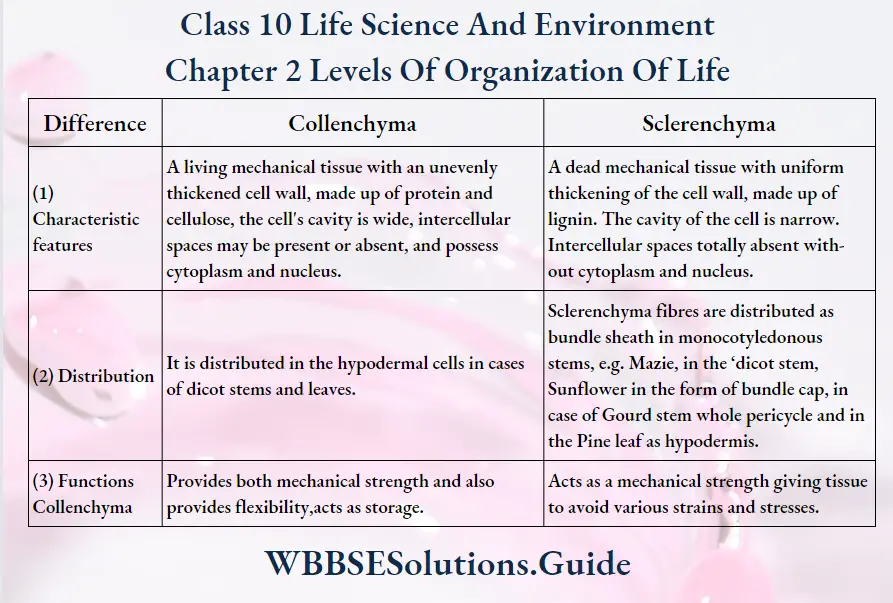
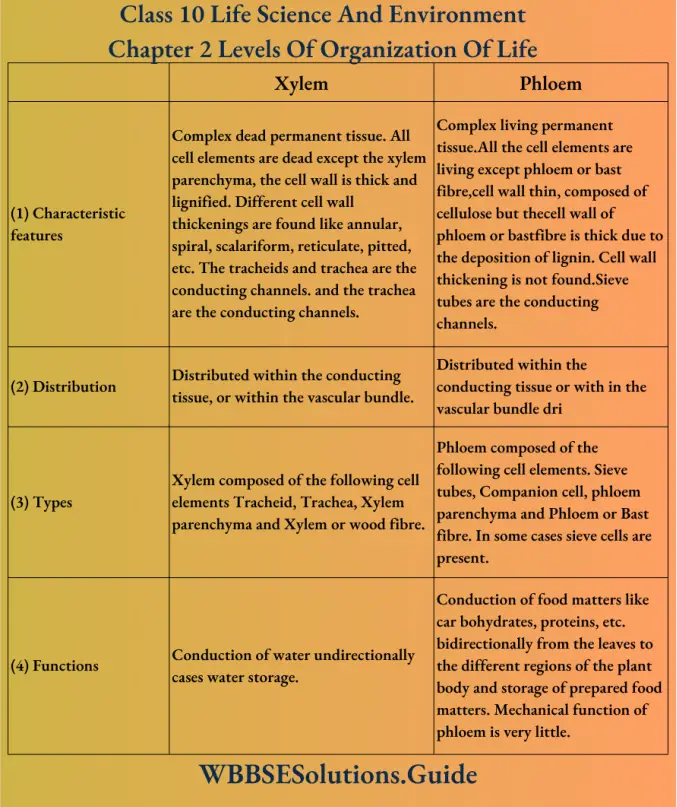
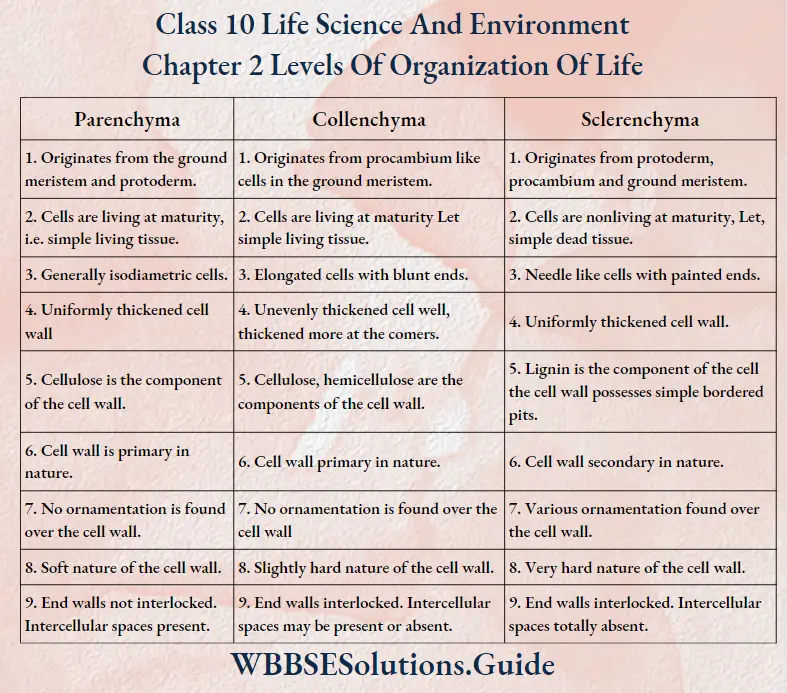
WBBSE Class 10 Life Science Chapter 3 Heredity And Common Genetic Diseases Multiple Choice Questions

Chapter 3 Heredity And Common Genetic Diseases Multiple Choice Questions

Question 1. Following the monohybrid cross of Mendel if a hybrid tall (Tt) pea plant is crossed with a pure dwarf (tt) pea plant, what would be the percentage of hybrid tall pea plants in the first filial generation (F,)?

  1. 25 percent
  2. 50 percent
  3. 75 percent
  4. 100 percent.

Answer. 2. 50 percent

The percentage of hybrid tall pea plants in the first filial generation (F,) will be 50 per cent.

Question 2. What will be the genotype ratio of a cross between hybrid tall pea plants (Tt) and dwarf pea plants (tt)?

  1. 1TT = 2Tt 1 tt
  2. 1Tt : 1tt
  3. Tt = Ite
  4. All Tt.

Answer: 1 Tt: 1

It will be the genotype ratio of a cross between hybrid tall pea plants (Tt) and dwarf pea plants (tt).

Question 3. If a pure tall (TT) pea plant is crossed with a pure dwarf (tt) pea plant, what would be the percentage of hybrid tall pea plants in the first filial generation (F,) under the rule of mendels monohybrid cross?

  1. 15 percent
  2. 50 percent
  3. 75 percent
  4. 100 percent.

Answer. 4. 100 percent. 

The percentage of hybrid tall pea plants in the first filial generation (F,) by the rule of Mendel monohybrid cross is 100 per cent.

Read and Learn More Class 10 Life Science MCQs

Question 4. The percentage of hybrid tall plants in F, generation produced from crossing two hybrid tall parental stocks is 4

  1. 25%
  2. 50%
  3. 75%
  4. 100%.

Answer. 2.50%

The percentage of hybrid tall plants in F, generation produced from crossing two hybrid tall parental stocks is 50%.

Question 5. The father of Genetics is

  1. Darwin
  2.  Bateson
  3. Benda
  4. Mendel.

Answer. 4. Mendel.

The father of Genetics is Mendel.

WBBSE Solutions For Class 10 Life Science And Environment Chapter 3 Heredity And Common Genetic Diseases Multiple Choice Questions

Question 6. A pair of contrasting characters is called

  1. Phenotype
  2. Genotype
  3. Gene
  4. Allele.

Answer. 4. Allele

A pair of contrasting characters is called Allele.

Question 7. The character which predominates and is seen in F, generation is said to be ・

  1. Dominant
  2. Recessive
  3. Particular
  4. Special.

Answer. The character which predominates and is seen in the F, generation is said to be Dominant.

Question 8. The term gene was coined by p

  1. Morgan
  2. Weismann
  3. Lamarck
  4. Johannsen.

Answer. The term gene was coined by Johannsen.

Question 9. When two individuals are similar in external BRESAUSASE but different in their genetic make-up, they are called as

  1. Allele
  2. Pure
  3.  Homozygous
  4. Heterozygous.

Answer. 4. Heterozygous

When two individuals are similar in external appearance but different in their genetic makeup, they are called Heterozygous.

Question 10. What would be the probable genotype of pure dwarf pea plant a

  1. Tt
  2.  tt,
  3. TT,
  4. None of the above

Answer. 2. tt

The probable genotype of pure dwarf pea plant will be tt

Question 11. Mendel’s choice of contrasting characters from pea plants are

  1. 8 pairs
  2. 7 pairs
  3. 6 pairs
  4. 5 pairs

Answer. 2. 7  pairs

Mendel choice of contrasting characters from pea plants is 7 pairs.

Class 10 Maths Class 10 Social Science
Class 10 English Class 10 Maths
Class 10 Geography Class 10 Geography MCQs
Class 10 History Class 10 History MCQs
Class 10 Life Science Class 10 Science VSAQS
Class 10 Physical Science Class 10 Science SAQs

Question 12. One pure red eyes Drosophila when crossed with pure white eyes Drosophila the offspring in F, generation will be found (when red is dominant over white)

  1. Both red and white eyes,
  2. Only red eyes,
  3. Only white eyes.
  4. Intermediate type of eyes.

Answer. 2. Only red eyes,

One pure red eyes Drosophila when crossed with pure white eyes Drosophila the offspring in F, generation will found (when red is dominant over white) Only red eyes.

Question 13. When a hybrid black guinea pig is crossed with a pure white Guineapig the offspring of F, will be –

  1. 3:1
  2. 1:2:1
  3. 1:1
  4.  None of them.

Answer. 3.1:1

When a hybrid black guinea pig is crossed with a pure white Guinea pig the offspring of F, will be 1: 1.

Question 14. The phenotype result of Mendel’s dihybrid cross will be

  1. 1:1:1:1
  2. 9:3:3:1
  3. 2:3:3:4:5
  4. 1:2:3:4

Answer. 2. 9: 3:3:1

The phenotype result of Mendel’s dihybrid cross will be 9: 3:3:1

Question 15. In dihybrid cross types of phenotypic offspring are produced in F, generation ・

  1. 2
  2. 5
  3. 6
  4. 4

Answer. 4. 4

In dihybrid cross types of phenotypic offspring are produced in F, generation 4.

Question 16. Hereditary component is

  1. Nucleus
  2. Chromosome
  3. DNA
  4. Protein

Answer. 3. DNA

The hereditary component is DNA.

Question 17. Mendel’s experimental results were published in the year

  1. 1900
  2. 1866
  3. 1865
  4. 1864

Answer. 2. 1866

Mendel’s experimental results were published in the year 1866.

Question 18. Like begets like is an important and universal phenomenon of life is due

  1. Genetics
  2. Eugenesis
  3. Morphology
  4. Embryology

Answer. 1. Genetics

Like begets like is an important and universal phenomenon of life due to Genetics.

Question 19. Which one is a hereditary disease?

  1. Cataract
  2. Leprosy
  3. Blindness
  4. Phenylketonuria

Answer. 4. Phenyl ketonuria

Phenyl ketonuria is a hereditary disease.

Question 20. How many types of genotypes will be obtained in plants of the F, generation when two hybrid tall plants (Tt) are crossed?

  1. One type
  2.  Two types
  3. Three types
  4. Four types

Answer. 3. Three types

Three types of genotypes will be obtained in plants of the F, generation when two hybrid tall plants (Tt) are crossed.

Question 21. The pea plants produced from the seeds obtained from a cross between hybrid tall (Tt) and pure dwarf (tt) pea plants will be

  1. All tall
  2. All dwarf
  3. 50% tall, 50% dwarf
  4. 75% tall, 25% dwarf.

Answer.

The pea plants produced from the seeds obtained from a cross between hybrid tall (Tt) and pure dwarf (tt) pea plants will be 50% tall, and 50% dwarf.

Question 22. Following the monohybrid cross of Mendel if a hybrid tall (Tt) Pea plant is crossed with a pure dwarf (tt) pea plant, what would be the percentage of
hybrid tall pea plant in the first filial (F,) generation?

  1. 25%
  2. 50%
  3. 75%
  4. 100%

Answer. The percentage of hybrid tall pea plants in the first filial (F,) generation will be 50%

Question 23. Who is known as the father of Genetics・?

  1.  Lamarck
  2. Darwin
  3. Hugo Devries
  4. Mendel.

Answer. 4. Mendel

Mendel is known as the father of Genetics・

Question 24. The genotypes of F, plants obtained by crossing two hybrids (Aa) plants will be

  1. One
  2. Two
  3. Three
  4. four.

Answer. 3. Three

The genotypes of F, plants obtained by crossing two hybrids (Aa) plants will be Three types.

Question 25. If hybridization is made between two aye tall pea plants; the hybrid tall pea plants in F, generation will be

  1. 25%
  2. 50%
  3. 75%
  4. 100%

Answer. 2. 50%

If hybridization is made between two hybrid tall pea plants, the hybrid pea plants in F, generation will be 50%. ゥ

Question 26. The genetic constitution of an organism is

  1. Phenotype
  2. Genotype
  3. Genotype and Phenotype
  4.  None of them.

Answer. 2. Genotype.

The genetic constitution of an organism is genotype.

Question 27. The phenotypic ratio deduced from the Mendel dihybrid cross is

  1. 3:1
  2. 1:2:1
  3. 9: 3:3: 1
  4. 9:9:1

Answer. 3. 9: 3:3: 1

The phenotypic ratio deduced from the Mendel dihybrid cross is 9: 3:3: 1

Question 28. Inheritance of characters is discussed in a branch of science known as

  1. Cytology
  2. Genetics
  3. Evolution
  4. Adaptation

Answer. (2) Genetics

Question 29. The term Genetics・has been coined by

  1.  Mendel
  2. Bateson
  3. Morgan
  4. Johansen

Answer. (2) Bateson

Question 30. Mendel did his experiment on a plant known as

  1. Bean Plant
  2. Wheat plant
  3. Paddy plant
  4. Pea plant

Answer. (4) Pea plant

Question 31. How many laws of inheritance were proposed by Mendel?

  1. One
  2. Two
  3. Three
  4.  Four

Answer. (2) Two

Question 32. The F, phenotypic ratio of Mendel’s monohybrid cross is

Answer. (2) 3: 1

  1. 2:1
  2. 3:1
  3. 1:2:1
  4. 9:4:3

Question 33. In the dihybrid cross of Mendel the F, ratio obtained is

  1. 9:3:3:1
  2.  9:7
  3. 1:1:1
  4. 9:4:3

Answer.(1)9:3:3:1

Question 34. What is the genotypic ratio of F, generation in Mendel’s monohybrid experiment?

  1. 1:1
  2. 2:1
  3. 3:1
  4. 1:2:1

Answer. (2) 2:1

Question 35. Who proposed the law of independent assortment?

  1. Darwin
  2.  De Vries
  3. Mendel
  4. Lamarck

Answer. (3) Mendel

Question 36. The “tall” trait of the pea plant is

  1. Dominant
  2.  Semidominant
  3. Recessive
  4. Codominant

Answer. (1) Dominant

Question 37. The cross between F, offspring and father or mother is known as

  1. Test cross
  2. Reciprocal cross
  3. Back cross
  4. None of the above

Answer. (3) Back cross

Question 38. What is meant by the 1: 1 ratio in the monohybrid cross?

  1. F, organism is homozygote
  2. F, organism is heterozygote
  3.  F, organism is pure
  4. The ratio is produced due to back cross

Answer. (2) F, organism is heterozygote

Question 39. Which of the following is a test cross?

  1. Tt x tt
  2. tt x tt
  3.  Tt Tt
  4. TT x TT

Answer. (1) Tt x tt

Question 40. Which of the following is a back cross?

  1. FX,
  2. F, x recessive
  3.  FE, xP
  4. F, x any parent

Answer. (4) F, x any parent

Question 41. Which one of the following is the result of a monohybrid cross?

  1. 1:1:1:1
  2. 9:3:3:1
  3. 3:1
  4. 9:7

Answer: (3)3.: 1

Question 42. What is known as the unit of heredity?

  1. Genotype
  2. Phenotype
  3. Gene
  4.  Protein

Answer. (3) Gene

Question 43. When two different alleles of a gene are present the organism is known as ・

  1. Heterozygote
  2.  Homologous
  3. Homozygote
  4. Hemizygote

Answer. (1) Heterozgote

Question 44. When the pure yellow, round pea plant is crossed with a green wrinkled pea plant, the F, pea plant will be

  1. All yellow wrinkled
  2. 50% yellow round, 50% green wrinkled
  3. All yellow round
  4. 50% yellow wrinkled, 50% green round

Answer. (3) All yellow round

Question 45. When will all children of a couple be found colourblind?

  1.  If the mother is normal and the father is normal
  2. If the mother is normal and the father is colourblind
  3. If the mother is homozygous colourblind and the father is normal
  4.  If the mother is homozygous colourblind and the father is colourblind.

Answer. (4) If the mother is homozygous colourblind and the father is colourblind.

Question 46. The separation of linked genes occurs through

  1. Crossing over
  2. Segregation
  3. Mutation
  4. Linkage

Answer. (1) Crossing over

Question 47. Colourblind is a sex-linked recessive trait. If a mother is colourblind sons will be

  1. All colourblind
  2. All normal vision
  3. 50% colourblind, 50% normal
  4. None of the above

Answer. (1) All colourblind

Question 48. Which of the following conditions is related to haemophilia?

  1. A responsible recessive gene present in the X chromosome
  2. A responsible dominant gene present in the X chromosome
  3. A responsible dominant gene present in the Y chromosome
  4. A responsible dominant gene present in the autosomal chromosome

Answer. (1) A responsible recessive gene present in the X chromosome

Question 49. In seven pairs of contrasting characters in the pea plant studied by Mendel, the number of flower-based characters was 

  1. 1
  2. 2
  3. 3
  4. 4


Answer. (2) 2 :

Question 50. In Mendel’s experiment, how many different kinds of seeds are produced from a short plant with wrinkled seeds (ttrr)?

  1. 9
  2. 4
  3. 2
  4. 1

Answer.(4) 1

Question 51. A cross between a dominant phenotype with the recessive parent to check its genotype is called

  1. Test cross
  2. Back cross
  3. Monohybrid cross
  4. Dihybrid cross

Answer. (1) Test cross

Question 52. Some of the dominant traits studied by Mendel were

  1. Round seed shape, constricted pod shape and axial flower position
  2. Ggreen pod colour, inflated pod shape and axial flower position
  3. Yellow seed colour, violet flower colour and yellow pod colour
  4. Axial flower position, green pod colour and green seed colour

Answer. (2) Green pod colour, inflated pod shape and axial flower position

Question 53. The colour-based contrasting traits in several contrasting pairs studied by Mendel in pea plants were

  1. 1
  2. 2
  3. 3
  4. 4


Answer. (3) 3

Question 54. The mechanism of transmission of characters, resemblances as well as difference, from the parental generation to the offspring is called

  1. Astrology
  2. Heredity
  3. Coincidence
  4. Nurture

Answer. (2) Heredity

Question 55. One of the scientists who rediscovered Mendelism was

  1. Bateson
  2. Darwin
  3. Tschermak
  4. Lamarck

Answer. (3) Tschermak

Question 56. is a change in a gene or chromosome.

  1. Evolution
  2. Variation
  3. Heredity
  4. Mutation

Answer. (4) Mutation

Question 57. The ability of tongue rolling is controlled by–

  1. Practice
  2. Gene
  3. Environment
  4. Temperature

Answer. (2) Gene

Question 58. An is an alternative form of gene.

  1. Allele
  2. Locus
  3. Genotype
  4. Phenotype

Answer. (1) Allele

Question 59. The place of location of a gene is called

  1. House
  2. Niche
  3.  Locus
  4. Chromosome

Answer. (3) Locus

Question 60. means that the organism has two copies of the same allele for a gene. 

  1. Hetergogygous
  2. Hemizygous
  3. Homozygous
  4. Hybrid

Answer. (3) Homozygous

Question 61. Genes are present in a sequence on the chromosomes

  1. Serial
  2. Linear
  3. Circular
  4. Haphazard

Answer. (2) Linear

Question 62. means that an organism has two different alleles of a gene.

  1. Hemizygous
  2. Heterozygous
  3. Homozygous
  4. Allozygous

Answer. (2) Heterozygous

Question 63. A genetic hybrid would carry two different of the same gene.

  1. Cocus
  2. Numbas
  3. Types
  4. Allejes

Answer. (4) Alleles

Question 64. The generation is the first set of parents crossed.

  1. Parental
  2. Filial
  3. Hybrid
  4. Mother

Answer. (1) Parental

Question 65. The Scientific name of the four o’clock plant is mirabilis

  1. Indicus
  2. Jalapa
  3. Domestica
  4. Bengalensis

Answer, (2) Jalapa

Question 66. The sex chromosomes of human males are

  1.  XX
  2. AA
  3. XY
  4. PQ

Answer. (3) XY

Question 67. Thalassemia is an autosomal trait.

  1. Dominant
  2. Recessive
  3. Sexlinked
  4.  Poisonous

Answer. (2) Recessive

Question 68. Haemophilic persons have problems with blood

  1. Pigmentation
  2. Clotting
  3. Colour
  4. Temperature

Answer. (2) Clotting

Question 69. Red colour blindness is the most common.

  1. Green
  2. Blue
  3. Black
  4. Yellow

Answer. (1) Green

Question 70. Genes do not occur in pairs in

  1.  Endosperm
  2. Zygote
  3. Gametes
  4. Somatic cells

Answer. (3) Gametes

Question 71. The phenomenon which defines the independent assortment is

  1. Segregation
  2. Dominance
  3. Crossing over
  4.  Linkage

Answer. (1) Segregation

Question 72. A haploid set of all the genes present in a gametes is called

  1. Genome
  2. Linkage group
  3. Phenotype
  4. Genotype

Answer. (1) Genome

Question 73. Who first used the termene?

  1. Mendel
  2. Johannsen
  3. Bateson
  4. Morgan

Answer. (2) Johannsen

Question 74. Incomplete dominance is observed in

  1. Hibiscus
  2. Mirabilis
  3. Sunflower
  4. Roulfia

Answer. (2) Mirabilis Jalpa (4 0・clock plant)

Question 75. What will be the percentage of hybrid tall plants produced in F, generation due to hybridisation between two hybrid tall pea plants?

  1. 100%
  2. 75%
  3. 50%
  4. 25%

Answer. (3) 50%

Question 76. The phenotypic ratio of F, generation in Mendel’s dihybrid cross is-

  1. 1:2:1
  2. 9:3:3:1
  3. 1:3
  4. 1:1

Answer. (6) 9:23:31

Question 77. All the genes present in interbreeding populations are together known as

  1. Genone
  2. Gene pool
  3. Chromosome
  4. None

Answer. (2) Gene pool

Question 78. The law derived from the dihybrid cross is

  1. Law of dominance
  2. Law of segregation
  3. Law of independent assortment
  4. All of these

Answer. (3) Law of independent assortment

Question 79. An alternative form of gene is-

  1. Chromosome
  2. Allele
  3. Character
  4. None

Answer. (2) Allele

Question 80. The combination of genes in an organism is-

  1. Phenotype
  2. Genotype
  3. Variation
  4. All

Answer. (2) Genotype

Question 81. The total loss of skin pigment in a body is called

  1. Leukemia
  2. Colour blindness
  3. Albinism
  4. Haemophilia

Answer. (3) Albinism

Question 82. A blood disease caused by gene mutation is-

  1. Anaemia
  2. Sickle cell anaemia
  3. Albinism
  4. Malaria

Answer. (2) Sickle cell anaemia

Question 83. An X-linked disease is

  1. Anaemia
  2. Haemophilia
  3.  Malaria
  4. All of the above

Answer. (2) Haemophilia

Question 84. Small differences among individuals are called

  1. Variation
  2. Mutation
  3. Evolution
  4. All of these

Answer. (1) Variation

Question 85. The technique in which the genetic constitution of an organism is altered by introducing a new gene is-

  1. Genetic counselling
  2. Genetic engineering
  3. Heredity
  4. None of these

Answer. (2) Genetic engineering

Question 86. A genetic disease is

  1. Haemophilia
  2. Thalassemia
  3. Colourblindness
  4. All of the above

Answer. (4) All of the above

Question 87. The operation of removal of anthers is known as

  1. Pollination
  2. Fertilization
  3. Emasculation
  4. Selection

Answer. (3) Emasculation

Question 88. The cross between F, hybrid and recessive homozygous parent is called

  1. Back cross
  2. Test cross
  3. Self cross
  4. Monohybrid cross

Answer. (2) Test cross

Question 89. Sex-linked inheritance was first discovered by

  1. Mendel
  2. Punnet
  3. Johansen
  4. T.H. Morgan

Answer. (4) T.H. Morgan

Question 90. The functional unit of DNA molecule is called

  1. Recon
  2. Cistron
  3. Muton
  4. All of these

Answer. (2) Cistron

Question 91. A common hereditary disorder which is carried on by autosomes is-

  1. Jurner’s syndrome
  2.  Klinefelter’s syndrome
  3. Down syndrome
  4. a and b

Answer. (3) Down syndrome

Question 92. The genotypic ratio of the monohybrid cross is

  1. 3:1
  2. 1:2:1
  3. 2:2
  4.  1:3

Answer. (2)1:2:1

Question 93. A ‘Y-chromosome-linked character in males is

  1. Hypertrichosis of ears
  2. Pattern baldness
  3. Both (1) and (2)
  4. None of these

Answer. (3) Both (1) and (2)

Chapter 3 Heredity And Common Genetic Diseases Fill In The Blanks

Question 1. is one of the discoverers of Mendelism.
Answer. Hugo De vries.

Question 2. The study of heredity is called
Answer. genetics.

Question 3. The pair of contrasting characters are called
Answer. Alleles.

Question 4. is the father of heredity.
Answer. G J. Mendel.

Question 5. The unit of heredity is
Answer. gene.

Question 6. The phenotypic ratio of the monohybrid cross is
Answer. 3:1.

Question 7. The genotypic ratio of the monohybrid cross is
Answer. 1:2:1.

Question 8. The genetic constitution of an individual is called
Answer. genotype.

Question 9. If the pure tall and the pure dwarf plants are crossed, all the plants produced in F, generation would be
Answer. hybrid.

Question 10. The plant on which the monohybrid experiment was conducted by Mendel is:
Answer. Sweet pea.

Question 11. Among the pairs of contrasting characters, Mendel noted smooth seed as against seed.
Answer. rough.

Question 12. The law of segregation is otherwise known as the law of
Answer. purity of gametes.

Question 13. is regarded as the father of genetics
Answer. Mendel.

Question 14. The phenotype that expresses itself in the F, generation is known as
Answer. dominant.

Question 15. The law of independent assortment was the outcome of Mendel’s cross-experiment.
Answer. Dihybrid.

Question 16. In human beings, chromosomes are responsible for maleness.
Answer. Y.

Question 17.9:3:3:1F, the ratio is the outcome of Mendel’s cross.
Answer. dihybrid.

Question 18. In dihybrid F, plants produce types of gametes.
Answer. 4.

Question 19. Genes in a chromosome are arranged in an order.
Answer. linear.

Question 20. Gene is composed of nucleic acid.
Answer. DNA.

Question 21. Scientists first described linkage in Drosophila.
Answer. Morgan

Question 22. The law of Mendel obtained from the monohybrid cross is known as the law of are.
Answer. Segregation

Question 23. From the dihybrid cross, Mendel derived the law of
Answer. Independent Assortment

Question 24. Mendel worked on pairs of contrasting characters.
Answer. 7

Question 25. The dwarf character of the pea plant is a character.
Answer. Recessive

Question 26. is the phenotypic F, ratio obtained from monohybrid cross.
Answer. 3: 1

Question 27. The colourblind gene is located on the chromosome.
Answer. X

Question 28. If the ratio of test cross result is 1: 1, the parental genotype will be 2nA,
Ans. Heterozygous

Question 29. The same genotypic and phenotypic F, ratio is found in the case of gene.
Answer. Semidominant

Question 30. If the mother is colourblind the phenotype of the sons will be
Answer. All colourblind

Question 31. If the mother is a carrier of haemophilia, the sons will be
Answer. 50% normal, 50% haemophilic

Chapter 3 Heredity And Common Genetic Diseases True Or False

Question 1. Mendel worked on principles of classification.
Answer
. false

Question 2. Mendel derived his second law as the law of segregation.
Answer.
false

Question 3. From the dihybrid cross, Mendel derived his law of independent assortment
Answer. True

Question 4. Colour blindness is an autosomal recessive trait.
Answer. false

Question 5. Thalassemia is an autosomal trait.
Answer. True

Question 6. There is a skip of generations in the case of dominant pedigree.
Answer. false

WBBSE Solutions For Class 10 Life Science And Environment Chapter 1 Control And Co-Ordination In Living Organisms Very Short Answer

Chapter 1 Control And Co-Ordination In Living Organisms Very Short Answer

Question 1. What is the function of muscular tissue?
Answer.

Function of muscular tissue

Movement and Locomotion.

Question 2. How many pairs of legs are present in an insect?
Answer.

Three pairs.

Question 3. Name a few animals that cannot locomote.
Answer.

Sponge and Vorticella.

Question 4. Name a few plants that possess the power of locomotion.
Answer.

Chlamydomonas, Volvox and Pandorina.

Question 5. Which unicellular animal moves with the help of pseudopodia?
Answer.

Amoeba.
WBBSE Solutions For Class 10 Life Science And Environment Chapter 1 Control And Co-Ordination In Living Organisms Very Short Answer

Question 6. Which plant moves with the help of pseudopodia?
Answer.

Dictyostelium, Slime mold.

Question 7. In which animal setae is present? What is its function?
Answer.

Earthworm; Function: locomotion.

Question 8. Which animal moves with the help of setae?
Answer.

Earthworm.

Question 9. Which type of locomotion is found in WBC?
Answer.

Amoeboid.

“WBBSE Class 10 Life Science Chapter 1 very short answer questions, Control and Co-ordination”

Question 10. In which cells of man is amoeboid movement noticed?
Answer.

WBC.

Question 11. What kind of movement is found in protoplasm?
Answer.

Cyclosis.

Question 12. In which plant we can see the rotation of protoplasm?
Answer.

Vallisnaria & Chara.

Question 13. In which plant we can see the circulation of protoplasm?
Answer.

In the stamens of Spiderwort & Rheo.

Question 14. Name a plant that shows tactic movement.
Answer.

Volvox & Chlamydomonas.

Question 15. In which plant is a chemotactic movement found?
Answer.

In Spermatozoa of Fern.

Class 10 Maths Class 10 Social Science
Class 10 English Class 10 Maths
Class 10 Geography Class 10 Geography MCQs
Class 10 History Class 10 History MCQs
Class 10 Life Science Class 10 Science VSAQS
Class 10 Physical Science Class 10 Science SAQs

Question 16. What is the name of the acid which affects the movement of the sperm of a fern?
Answer.

Malic acid.

Question 17. When does the intensity of stimulus control movement? What kind of movement is that?
Answer.

Nastic movement.

Question 18. What is the name of the structural and functional unit of the nervous system?
Answer.

Neuron(e) / Nerve cell.

“West Bengal Board Class 10 Life Science Chapter 1 solutions, very short answers, with explanations”

Question 19. Cite an example of a nastic movement.
Answer.

Blooming of flower; e.g. blooming of Lotus flower.

Question 20. Name one plant in which nastic movement is seen.
Answer.

Tulip.

Question 21. “Flowers bloom at height” – What type of movement is this?
Answer.

Nastic movement (Epinastic movement).

Question 22. “The leaflets of a sensitive plant become folded when touched.” What type of movement is this?
Answer.

Nastic movement (Seismonastic movement).

Question 23. “Leaves of Mimosa pudica (lajjabati) close down, when touched” – What sort of movement is this?
Answer.

Turgor movement (Seismonastic movement/Nastic movement).

Question 24. Which kind of movement is seen in the trap door or the tentacles of an insectivorous plant when it comes in contact with the body proteins of an insect?
Answer.

Chemonastic.

Question 25. Which type of movement is exhibited by the Indian Telegraph plant?
Answer.

Movement of variation.

Question 26. What are the stimuli which act in nyctinastic movement?
Answer.

Light and temperature.

Question 27. “The shoot system of the plant moves towards the light.” – What type of movement is this?
Answer.

Positive phototropic movement

Question 28. “The root of a plant is going downwards into the earth.” -What type of movement is this?
Answer.

Positively geotropic movement.

Question 29. Name a plant whose roots grow against the *force of gravity.
Answer.

Rhizophora

Question 30. Give an example of hydrotropism.
Answer.

Example of hydrotropism

Movement of root hairs towards water.

Question 31. “Root moves towards water” – What type of movement is this?
Answer.

Hydrotropic movement

Question 32. “Tendrils quickly coiling round a support” – What type of movement is it?
Answer.

thigmotropic movement

Question 33. What is the movement of the plant body affected by touch?
Answer.

Thigmotropism.

Question 34. What type of movement is found in the stomata of a plant?
Answer.

Movement of variation.

Question 35. Name the flight muscles of a bird.
Answer.

Flight muscles of a bird

Pectoralis minor and pectoralis major.

Question 36. Which part of a neuron receives impulses from the preceding neuron and sends them to its cell body?
Answer.

Dendron / Dendrite.

Question 37. Name the junctional region of two consecutive neurons.
Answer.

Synapse.

Question 38. Where does Myelin sheath exist?
Answer.

Axon.

“Class 10 WBBSE Life Science Chapter 1 very short answer questions, solved answers”

Question 39. Which system coordinates the functions of different organs in the animal body?
Answer.

Nervous system.

Question 40. Which part of the neuron helps to reach the nerve impulse to the next neuron from the cell body?
Answer.

Axon.

Question 41. Mention the names of three major parts of the neuron.
Answer.

(1) Axon, (2) Dendron, (3) Cyton.

Question 42. Which systems of the body perform the function of coordination?
Answer.

Nervous System & Endocrine System.

Question 43. Which is the longest cranial nerve?
Answer.

Vagus.

Question 44. Name the largest part of the brain.
Answer.

Largest part of the brain

Cerebrum.

Question 45. Which is the highest center for sensations and activity in the brain?
Answer.

Cerebral cortex.

Question 46. What are the main components (parts) of the central nervous system?
Answer.

Brain and Spinal cord.

Question 47. What is nerve fiber?
Answer.

Nerve fiber

A nerve fiber is a bundle of long axons of neurons enclosed in a sheath.

Question 48. What is nerve?
Ans.

Nerve

The bundle of nerve fibers enclosed in a sheath is called a nerve, e.g. optic nerve.

Question 49. Mention the number of cranial and spinal nerves in man.
Answer.

(1) cranial nerves 12 pairs, (2) spinal nerves 31 pairs.

Question 50. What is a ganglion?
Answer.

Ganglion

The group of cytons (cell bodies) located outside the brain or spinal cord is called a ganglion.

Question 51. What is the nature of an impulse?
Answer.

Nature of an impulse

The impulse is electrical.

Question 52. What is a synapse?
Answer.

Synapse

A junction between the termination of two neurons is the synapse.

Question 53. Name the fluid present between the meninges.
Answer.

This fluid is called cerebrospinal fluid (CSF).

Question 54. What is the function of cerebrospinal fluid?
Answer.

It helps in protection and is also nutritive in function.

Question 55. What is the corpus callosum?
Answer.

Corpus callosum

The transverse band of nervous tissue which connects the right and left cerebral hemispheres is called corpus callosum.

Question 56. What are gyri and sulci ?
Answer.

The brain’s convolutions are called gyri while shallow grooves in the cerebral cortex are called sulci.

Question 57. Which one is the sensory organ of the vertebrates?
Answer.

Eye.

Question 58. Where is the retina situated?
Answer.

Eye.

Question 59. From which part of the eye does the seeing process start?
Answer.

Cornea.

Question 60. Due to which defect eye patients cannot see things near?
Answer.

Longsightedness or hypermetropia.

“Control and Co-ordination in Living Organisms WBBSE Class 10, very short answers, exam-focused”

Question 61. Through which mechanism the dilation & contraction of the pupil is done?
Answer.

Automatic reflex.

Question 62. In which animal are both simple and compound eyes found?
Answer.

Cockroach.

Question 63. What is the unit of compound eye?
Answer.

Ommatiduim; (pi. ommatidia).

Question 64. Name the muscles that make the eye lens thicker and flatter while focusing on an object.
Answer.

Miniature muscles.

Question 65. What is the function of the pupil in the eye of man?
Answer.

Through it, light enters the eye/control of light entry.

Question 66. What performs the function of coordination in a plant body?
Answer.

Hormone.

Question 67. Name one chemical co-ordinator in the plant.
Answer.

Auxin.

Question 68. Name a hormone that is produced in plant leaves.
Answer.

Florigen.

Question 69. What is the function of florigen?
Answer.

Formation (production) and blooming of flowers.

Question 70. Name the hormone responsible for the growth of petiole in the lotus.
Answer.

Auxin.

Question 71. From which gland is the gonadotrophic hormone secreted?
Answer.

Pituitary gland.

Question 72. Which endocrine gland is known as the “third eye”?
Answer.

Pineal gland.

Question 73. Which endocrine gland is called life-watch?
Answer.

Pineal gland.

Question 74. Which gland is known as the ‘pacemaker’ of the endocrine orchestra?
Answer.

Thyroid gland.

Question 75. From which gland thyroxine is secreted in the human body?
Answer.

Thyroid gland.

Question 76. A certain group of cells in the pancreas acts as an endocrine gland. What is the group of cells called?
Answer.

Islets of Langerhans.

Question 77. Name two mixed glands.
Answer.

Pancreas, Gonad.

Question 78. Name the hormone which is secreted from the adrenal gland.
Answer.

Adrenaline / Cortin.

Question 79. Name two trophic hormones.
Answer.

ACTH and GTH.

Question 80. Name two hormones produced by the alimentary canal.
Answer.

(1) Gastrin (2) Secretin.

Question 81. Mention the chemical nature of animal hormones.
Answer.

Protein or peptide; modified amino acid and steroid.

Question 82. What are chemical co-ordinators?
Answer.

The hormones that bring about the co-ordination of the body in association with the nervous system are called chemical co-ordinators.

Question 83. What is the other name of insulin?
Answer.

The other name of insulin is antidiabetic hormone.

Question 84. What is the function of ADH?
Answer.

The ADH is a water-retaining hormone that maintains electrolytic balance in the body.

Question 85. Name the hormone and the endocrine gland that require iodin for their functioning.
Answer.

The thyroxine hormone and thyroid gland require iodine for their functioning.

Question 86. Name the main chemical substance present in thyroxine.
Answer.

The main chemical substance present in thyroxine is iodine.

Question 87. What condition in the human body may result due to prolonged deficiency of iodine in food?
Answer.

The prolonged deficiency of iodine in food may result in goiter.

Question 88. What is diabetes mellitus?
Answer.

Diabetes mellitus

The excretion of glucose along with the urine is called diabetes mellitus. It is caused due to the deficiency of insulin hormone.

Question 89. Name some important sex hormones.
Answer.

Testosterone, oestrogen and progesterone.

Question 90. Which hormones are associated with puberty in males and females?
Answer.

Testosterone hormone is associated with puberty in males while estrogen and progesterone are associated with puberty in females.

Question 91. Where is the pituitary gland located?
Answer.

At the base of the brain in the region of the diencephalon.

Question 92. Where are the cells of Islets of Langerhans located?
Answer.

The cells of Islets of Langerhans are located in the pancreas.

Question 93. What is the main criterion for movement and locomotion?
Answer.

There must be a stimulus. Without the influence of stimulus, displacement of body parts will not be considered a movement

Question 94. Why is the circulation of protoplast, not a locomotion?
Answer.

It is not an example of locomotion because no stimulus is involved here, the locomotion takes place through the Brownian movement of protoplasmic particles.

Question 95. Why is chromosomal movement in the spindle not considered as locomotion?
Answer.

The displacement of chromosomes is not in response to stimulus, but due to the contraction of spindle fibers.

Question 96. Why is the displacement of plants floating in water not an example of locomotion?
Answer.

Displacement takes place due to water current and not due to stimulus, therefore, this is not an example of locomotion.

Question 97. Give an example of locomotion in plants.
Answer.

Movement of Chlamydomonas toward a source of light is an example of phototaxis.

Question 98. What is heliotropism ?
Answer.

Heliotropism

The tropic movement (bending of stem tip) under the influence of the direction of sun rays is heliotropism.

Question 99. What is haptonasty?
Answer.

Haptonasty

Nastic movement in response to touch stimulus is called haptonasty.

Question 100. What type of movement is observed in sunflowers?
Answer:

When the sunflower opens in the morning it is an example of helionastism. When a sunflower moves along the direction of the sun’s path in the sky, it is an example of heliotropism.

Question 101. Do you consider pseudopodia as a locomotory organ of Amoeba?
Answer.

The pseudopodia in amoeba, although help in locomotion, they are not permanent structures of Amoeba. It is, therefore, not proper to consider pseudopo dia as a locomotory organ.

Question 102. What would happen to the locomotion of Earthworm when it is placed on a glass sheet?
Answer.

The earthworm will be unable to locomote as it will not be able to use its setae.

Question 103. What would happen to the locomotion of cockroaches if the middle legs were amputated?
Answer.

The cockroach will not be able to locomote as it will not be able to balance its body.

Question 104. What would happen to a fish if the air bladder is removed?
Answer.

The fish will not be able to float

Question 105. What would happen to a fish if the paired fins were amputated?
Answer.

The fish will not be able to change direction during locomotion.

Question 106. Which animal cannot locomote? Amoeba/Obelia/Earthworm.
Answer.

Obelia.

Question 107. Which plant shows locomotion? Chara/Volvox/Pea.
Answer.

Chara.

Question 108. Which one is not locomotion? Ciliary movement of Chlamydomonas/ Protoplasmic movement / Amoeboid movement.
Answer.

Protoplasmic movement

Question 109. Locomotion in plants is termed as Taxism Tropism/Nastism.
Answer.

Taxism.

Question 110. Movement of curvature in plants due to growth is termed Tropism/ Hyponastism/Epinastism.
Answer.

Tropism.

Question 111. Seismonasty is caused due to Light/Wound/Touch.
Answer.

Touch.

Question 112. Setae are the locomotory organs of cockroaches/Fish/earthworms.
Answer.

Earthworm.

Question 113. Swimbladder is present in Cockroach/Fish/Earthworm.
Answer.

Fish.

Question 114. Number of pairs of walking legs present in cockroaches is 2/3/4.
Answer.

3 pairs.

Question 115. What is the name of the structural and functional unit of the nervous system?
Answer.

Neurone or Nerve cell.

Question 116. What is the name of the junctional region of two consecutive neurons?
Answer.

Synapse.

Question 117. How many cranial nerves are present in man?
Answer.

12 pairs.

Question 118. The cerebellum is a part of which brain?
Answer.

Hindbrain.

Question 119. Which cell other than neuron is seen in the nervous system?
Answer.

Neuroglea.

Question 120. Where is Schwann’s cell located?
Answer.

In the axon of the neuron.

Question 121. In which part of a neuron are Nissl’s granules found?
Answer.

In the cell body or cyton of neurons.

Question 122. “When we suddenly come across bright light our eyes automatically close up”-What kind of reflex action is this?
Answer.

Simple or unconditioned or Inborn reflex action.

Question 123. Which system coordinates the functions of different organs in the animal body?
Answer.

Nervous system.

Question 124. What are the different parts of the central nervous system?
Answer.

The brain and spinal cord are the two parts of the central nervous system.

Question 125. In which part of the neuron the nodes of Ranvier are found?
Answer.

Nodes of Ranvier are found in the nerve fiber of neurons.

Question 126. Name a mixed cranial nerve.
Answer.

Vagus nerve.

Question 127. Write the name of the 1st cranial nerve.
Answer.

Olfactory nerve.

Question 128. What is the function of Pons in the brain?
Answer.

It controls respiration, secretion of saliva, and micturition.

Question 129. Which part of the brain controls intelligence?
Answer.

Cerebrum.

Question 130. How many spinal nerves are present in a man?
Answer.

31 pairs.

Question 131. Where is corpus callosum found?
Answer.

Corpus callosum is found between two cerebral hemispheres of the Cerebrum of the human brain.

Question 132. What is the function of CSF?
Answer.

It serves as the shock-absorbing medium and maintains constant pressure in and around the brain.

Question 133. Is there any nervous system present in plants?
Answer.

No.

Question 134. Withdrawal of a finger from a hot object is an example of which type of reflex?
Answer.

This is an example of unconditioned reflex action.

“WBBSE Class 10 Life Science Chapter 1 important very short answers, for board exam preparation”

Question 135. What is known as the structural and functional unit of the nervous system?
Answer.

Neurone is known as the structural and functional unit of the nervous system.

Question 136. Which plant hormone is responsible for Apical dominance?
Answer.

Auxin hormone is responsible for Apical dominance.

Question 137. Which hormone helps in the tropic movement of plants?
Answer.

Auxine hormone helps in the tropic movement of plants.

Question 138. Which plant hormone causes the growth of apical bud?
Answer.

Auxine hormone causes the growth of the apical bud.

Question 139. In which part of the plant auxin is formed?
Answer.

In meristematic tissue of apical parts of plants such as root apex and stem apex.

Question 140. What is the full name of I.A.A.?
Answer.

I.A.A. : Indole Acetic Acid.

Question 141. Who performs the function of coordination in a plant body?
Answer.

Hormone.

Question 142. Name one chemical co-ordinator in plants.
Answer.

Auxin.

Question 143. Name a hormone that is produced in plant leaves.
Answer.

Florigen.

Question 144. Which hormone plays an important role in the phototropic movement?
Answer.

Auxin

Question 145. Which hormone helps to produce seedless fruits?
Answer.

Auxin and Gibberelline.

Question 146. Which plant hormone is called a “growth inhibitor”?
Answer.

Abscisic acid

Question 147. Your school garden is overgrown with weeds. Which hormone will you apply to kill them?
Answer.

We will apply synthetic Auxin (2, 4 – D) to kill them.

Question 148. What is the full name of IBA?
Answer.

The full name of IBA is Indole Butyric Acid.

Question 149. What are the components of the nervous system of a vertebrate?
Answer.

The components of the Nervous system are :
(1) Neuron(e), (2) Synapse, (3) Brain, (4) Spinal cord.

Question 150. What helps in the coordination of plants?
Answer.

The hormone helps in the coordination of plants.

Question 151. What is the process by which “seedless fruits” can be produced without fertilization by applying plant hormones?
Answer.

Parthenocarpy is the process by which “seedless fruits” can be produced without fertilization by applying plant hormones.

Question 152. Write the full chemical name of an artificial plant hormone.
Answer.

Naphthalene Acetic Acid is an artificial plant hormone.

Question 153. Name one important hormone of a vertebrate.
Answer.

Thyroxine.

Question 154. Name the gland which is situated within the skull of human beings.
Answer.

Pituitary gland.

Question 155. Name a hormone that stimulates the adrenal gland.
Answer.

ACTH.

Question 156. Name the hormone that is secreted from the thyroid gland.
Answer.

Thyroxine.

Question 157. From which gland thyroxine is secreted in the human body?
Answer. T

hyroid gland.

Question 158. What is the full form of STH hormone?
Answer.

Somato Trophic Hormone.

Question 159. Give the full name of a hormone that helps to strengthen the bones of the human body.
Answer.

Somato Trophic Hormone (STH).

Question 160. Name the disease caused due to hypofunction of STH.
Answer.

Dwarfism.

Question 161. Name the hormone which is secreted from the adrenal gland.
Answer.

Adrenaline.

Question 162. What is the cause of tetany?
Answer.

Deficiency of parathormone.

Question 163. Excess secretion of which hormone causes the Exophthalmic goiter?
Answer.

Thyroxine.

Question 164. Name the gland from which ADH is secreted.
Answer.

The posterior lobe of the pituitary gland.

Question 165. Name an organ that performs both exocrine and endocrine functions.
Answer.

Pancreas.

Question 166. Which hormone helps in re-absorption?
Answer.

Aldosterone.

Question 167. Name any two local hormones of a man.
Answer.

(1) Secretin, (2) gastrin.

Question 168. What is acromegaly?
Answer.

Acromegaly is a disease caused by to hyper-action of STH in adults.

Question 169. From which gland is insulin secreted?
Answer.

Insulin is secreted from the Beta cells of Islets of Langerhans.

Question 170. Write the full name of ACTH.
Answer.

The full name of ACTH is Adreno Cortico Trophic Hormone.

Question 171. Which hormone secreted from the pituitary gland controls the secretion of the ovary and testis?
Answer.

Gonado trophic hormone controls the secretion of the ovary and testis.

Question 172. From which gland is testosterone hormone secreted?
Answer.

The testosterone hormone is secreted from the testis.

Question 173. Write the full form of G.T.H.
Answer.

Gonado Trophic Hormone.

Question 174. Which one is ductless between the salivary gland and the thyroid gland?
Answer.

The thyroid gland is a ductless gland.

Question 175. Where is adrenalin secreted?
Answer.

Adrenal gland (Medulla).

Question 176. From where is estrogen secreted?
Answer.

Placenta.

Question 177. Which hormone helps in lowering blood sugar levels in men?
Answer.

Insulin.

Question 178. What is the cause of Diabetes insipedus?
Answer.

Deficiency of ADH.

Question 179. Which hormone is secreted from the corpus luteum of the ovary?
Answer.

Progesterone.

Question 180. From which gland trophic hormones are secreted?
Answer.

Pituitary gland (Anterior lobe).

Question 181. Name the hormone secreted from the Testis in a man.
Answer.

Testosterone hormone is secreted from the Testis in man.

Question 182. Write the full name of T.S.H.
Answer.

The full name of T.S.H is Thyroid Stimulating Hormone.

Question 183. Name the hormone which controls the secondary sexual characteristics of women.
Answer.

The ‘Oestrogen’ hormone controls the secondary sexual characteristics of women.

Question 184. Name the hormone which helps in the production of sperm.
Answer.

Follicle Stimulating Hormone helps in spermatogenesis.

Question 185. Name three types of nervous systems present in mammals.
Answer.

(1) Central nervous system, (2) Peripheral nervous system, (3) Autonomic nervous system.

Question 186. Who discovered the hormone Insulin?
Answer.

Banting and Best.

Question 187. What is Abscisic acid?
Answer.

Abscisic acid is a major hormone in the plant that induces the formation of an abscission zone in the leaf stalk or petiole and will bring about the shedding of leaves.

Question 188. What is the function of ethylene in plants?
Answer.

It suppresses stem and root elongation and hastens the process of ripening in fruits.

Question 189. What is a Postulated hormone?
Answer.

Postulated hormone: Characteristics and mode of action of these hormones are not known, e.g. Florigen, Vernalin, Calines, etc.

Question 190. What are the three layers covering each nerve?
Answer.

Each nerve is covered by three layers, starting with the inner endoneurium, which covers the nerve fibers; the middle layer called the perineurium, and the outer layer over the perineurium, called the epineurium.

Question 191. What is a dendrite?
Answer.

The branch that originated from the dendron is called a dendrite.

Question 192. What are the two main parts of the central nervous system?
Answer.

Brain and Spinal Cord.

Question 193. What is the main function of the nervous system?
Answer.

It controls the different activities of different organ systems of the body.

Question 194. What is the cranial nerve?
Answer.

Cranial nerve: Nerves originating from the brain are called cranial nerves.

Question 195. What is a neuroglia?
Answer.

Neuroglea: The specialized connective tissues of the nervous system other than nerve cells that provide protection and supply nutrients to it, are called neuroglea.

Question 196. Name the natural hormones of plants.
Answer.

(1) Auxin, (2) Gibberellin, (3) Cytokinin and (4) Ethylene.

Question 197. What is endocrine gland?
Answer.

An endocrine gland is a ductless gland that pours its secretion directly into the blood. The secretion is called hormone which has some definite physiological actions.

Question 198. Name the secondary plant organs where transversely geotropic movement is found.
Answer.

Secondary roots.

Question 199. Name the precursor of IAA Synthesis.
Answer.

Tryptophan amino acid.

Question 200. Which hormone is anti auxin?
Answer.

Abscisic acid.

Question 201. What is the scientific name of the Indian Telegraph plant?
Answer.

Desmodium gyrans.

Question 202. What is the other name of long-sightedness?
Answer.

Hyperopia or Hypermetropia.

Question 203. What is another name for the forebrain?
Answer.

Prosencephalon.

Question 204. What is the other name for the tail fin?
Answer.

Caudal fin.

Question 205. Name the wing feathers of a bird.
Answer.

Remiges.

Question 206. Name the tail feathers of a bird.
Answer.

Rectrices.

Question 207. What is the other name for the study of joints?
Answer.

Arthrology.

“WBBSE Class 10 Life Science Control and Co-ordination, very short Q&A, solved questions”

Question 208. Name the fluid present in diarthroses.
Answer.

Synovial fluid.

Question 209. Which gland is called the master of the master gland?
Answer.

Hypothalamus.

Question 210. Name the fluid that is present inside and outside the brain.
Answer.

Cerebro spinal fluid.

Question 211. Name the junction between two nerve cells.
Answer.

Synapse.

Question 212. Name the part of the brain which is concerned with memory.
Answer.

Cerebrum.

Question 213. Name the part of the human brain that controls body temperature.
Answer.

Hypothalamus.

Question 214. Name a bundle of axons enclosed in a tubular sheath.
Answer.

Nerve.

Question 215. Name the kind of nerve-carrying impulses from the brain to a gland or muscle.
Answer.

Motor Nerve.

Question 216. Name a Neurotransmitter.
Answer.

Acetylcholine.

Question 217. Name the outer covering of the Neurone.
Answer.

Neurolemma.

Question 218. Mention the gap between the axon terminal and dendrites of another cell.
Answer.

Synaptic cleft.

Question 219. Where is located association neuron?
Answer.

Brain and spinal cord.

Question 220. Name the place of best vision in the retina of the eye.
Answer.

Yellow spot

Question 221. Name the term for the capacity of the eye to focus at different distances.
Answer.

Accommodation of eye.

Question 222. Mention the fiber that collectively holds the lens in position.
Answer.

Suspensory ligaments.

Question 223. Mention the place of no vision in the retina of the eye.
Answer.

Blind spot

Question 224. Name the circular window enclosed by the iris.
Answer.

Pupil.

Question 225. Name the blind retinal cells sensitive to dim light.
Answer.

Rod cells.

Question 226. Name the part that equalizes the air pressure in the middle and external ear.
Answer.

Eustachian tube.

Question 227. Name the ear ossicle attached to the tympanum.
Answer.

Hammer.

Question 228. Name the tube which connects the cavity of the middle ear with the throat.
Answer.

Eustachian tube.

Question 229. Which part of the eye is responsible for its shape?
Answer.

Ciliary body.

Question 230. Name the enzyme secreted by the tear gland.
Answer.

Lysozyme.

Question 231. Name the condition in which the eye lens turns opaque and the vision is cut down.
Answer.

Cataract.

Question 232. A potted plant having a long straight shoot is laid parallel to the ground for a week. It would be observed that the -shoot bends vertically upwards at the end of the week. Mention its reason.
Answer.

Due to the positively phototropic movement, the shoot bends vertically upwards. The auxin hormone controls it.

Question 233. What will happen to a seedling if it is kept horizontally on moist soil?
Answer.

The plumule (stem) will go towards light while the radicle (root) will go towards the soil.

Question 234. Name an animal and a plant that moves with cilia.
Answer.

Animal : Paramoecium, Plant : Volvox.

Question 235. Give one example of a locomotory organ one from a unicellular and one from a multicellular organism.
Answer.

(1) Unicellular : Pseudopodia of Amoeba,
(2) Multicellular: Tentacles of Hydra.

“Best very short answer questions for WBBSE Class 10 Life Science Chapter 1, with answers”

Question 236. The pollen tube moves towards embryosac through the style in flower. Why and what sort (type) of movement is it?
Answer.

In response to the chemical substances pollen tube moves towards embryosac. It is a chemotropic movement

Question 237. Name the two muscles that help in locomotion in man.
Answer.

(1) Gluteus medius, (2) Bicep femoris.

Question 238. Name an animal that cannot move from one place to another and a plant that can.
Answer.

Animal: Sponge, Plant: Volvox.

Question 239. Define and exemplify movement.
Answer.

Movement: A change in the place or position of the organs of an organism in response to stimuli is known as movement In plants it is seen in the growth of the different parts of the plants and blooming and closing of the flowers. In animals, it can be seen in movements of legs, wings, fins, head, trunk, tail, eyelids, eyeball, pinna, and in almost all the internal organs like lungs, heart, alimentary canal, etc.

Question 240. What is locomotion?
Answer.

The process by which an organism entirely changes its position from one place to the other is known as locomotion. In the act of walking, running, crawling, hopping, swimming, or flying freely either on land in water, or in the air.

Question 241. What is a neuron? Mention its functions.
Answer.

(1) The neuron is the structural and functional unit of the nervous system.
(2) The function of neurons is the transmission of nerve impulses from various parts of the body to the brain and from the brain to the various parts.

Question 242. What is the weight of the human brain and the length of the spinal cord?
Answer.

(1) Weight of Brain: 1350 gm. (2) Length of Spinal cord: 45 cm.

Question 243. How does an impulse travel across a synapse?
Answer.

The impulse travels across a synapse in one direction only, always from the axons to the dendrites and the cell body of the next neuron. Acetylcholine prevents its backflow.

Question 244. What are the functions of the cerebral cortex?
Answer.

The cerebral cortex is related to intelligence. It is also concerned with thinking, perception of smell, sight; hearing ability of speech, and movement

Question 245. Define reflex action with an example.
Answer.

Any involuntary response to stimuli at an unconscious level that passes along a reflex arc is called reflex action, e.g. winking of eyes when an insect or a dust particle approaches the eyes.

Question 246. Define the reflex arc and state its components.
Answer.

The path through which nerves perform the reflex action is called the reflex arc. Its components are sensory organ, spinal nerve, sensory nerve, spinal cord, motor, and effector organ.

Question 247. What are unconditioned reflexes?
Answer.

Reflexes that can be evoked immediately after birth without any previous encounter with stimulus are called unconditioned reflexes.

Question 248. What is a conditioned or acquired reflex?
Answer.

A conditioned reflex is acquired after birth by applying an indifferent stimulus before or along with an inborn reflex.

Question 249. Name two types of reflexes.
Answer.

The two types of reflexes are –
(1) Unconditioned
(2) Conditioned

Question 250. What happens when accidentally our hand touches hot objects?
Answer.

When our hand accidentally touches any hot object, we withdraw our hand very quickly. This act is governed by the reflex action.

Question 251. Who used the word hormone and when?
Answer.

Animal Hormone: Starling in 1905, Plant Hormone: Fitting in 1910.

Question 252. Why are hormones called “Chemical messengers”?
Answer.

The hormones are carried to all the parts of the body through blood circulation to bring about the harmonious working of the body. Since they act as messengers to regulate physiological processes, they are often called chemical messengers.

Question 253. Which hormone is called emergency hormone and why?
Answer.

The adrenal medullary hormones or catecholamines (ex. adrenalin) are called emergency hormones because they help the body fight against or adjust to emergency conditions by increasing the circulation and respiration along with the activity of skeletal muscles, eyes, etc.

Question 254. Why is the pituitary known as the master gland of the body?
Answer.

The pituitary is known as the master gland of the body because it secretes several hormones that control the activities of other endocrine glands.

Question 255. What are trophic hormones? Give two examples.
Answer.

Hormones of the anterior pituitary are called trophins or trophic hormones because they govern the activities of other endocrine glands.
Ex: Adrenocorticotrophic hormone (ACTH) and thyroid stimulating hormone (TSH).

Question 256. What is a local hormone? Give two examples of it.
Answer.

Hormones that act at sites very close to the places of their origin are called local hormones. Ex: Gastrin and secretin.

Question 257. What are neurohormones? Give two examples.
Answer.

Neurohormones or neurosecretions are chemical substances produced and liberated by nerve cells, which are carried by blood to various tissues to regulate their functions.
Ex: Oxytocin, vasopressin (or ADH).

Question 258. Define and exemplify neurotransmitters.
Answer.

Neurotransmitters are chemical substances produced and liberated by nerve cells, that act locally and are not carried by blood to distant organs.
Ex: Acetylcholine, gamma amino butyric acid (GABA).

Question 259. What are pheromones ?
Answer.

Pheromones:

Pheromones (gaseous animal hormones) are chemical agents released by one animal into the environment, which produce some behavioral developmental, or reproductive effects in other animals of the same species. Ex: Bombykol of female moth and other sex attractants of animeriÿ. These chemicals are liberated from one animal and attract their opposite sexes for reproduction.

Question 260. How is iodine important to our body?
Answer.

Iodine is the main component of thyroxine hormone which regulates the basal metabolic rate of the body. In this way, iodine is very important to our body.

Question 361. What is a goiter? Why does one suffer from goiter?
Answer. The enlargement of the thyroid gland is called goiter. The person suffers from goiter due to the absence of iodine in the food for a long time.

Question 362. What is parahormone? Give two examples.
Answer.

Parahormones are hormone-like chemical substances that are not true hormones. These are blood-borne chemical substances that are not produced from specialized endocrine tissues. Ex: Erythropoietin, angiotensin.

Question 363. What is the function of a neuron?
Answer.

It helps in the formation of nervous tissue and finally nervous organs such as the brain, spinal cord, and nerves.

Question 364. What are the functions of the dendron and axon (state only one function of each)?
Answer.

Function of Dendron It carries -impulses from the sense organ to the cell body. The function of the Axon It carry impulses away from the cell body to the motor organ of the body.

Question 365. What is Synapse?
Answer.

Synapse: The physiological junction between the terminal axon of one neuron and the dendrite of another neuron is called a synapse.

Question 366. What is ganglion or nerve ganglion? State one function of it.
Answer.

The fused form of cell bodies of neurons located outside the Central Nervous System is called ganglion or nerve ganglion. Function It helps in the formation of the sympathetic and parasympathetic nervous systems. Nerves are originated from these ganglions.

Question 367. Mention one similarity and one dissimilarity between the functions of the nervous system and hormones in the animal body.
Answer.

Similarity Both help in the control and coordination of the functions of different body organ systems. Dissimilarity The Nervous system acts as a physical co-ordinator while hormones
act as a chemical co-ordinator.

Question 368. Mention one characteristic of each of the afferent nerve and efferent nerve.
Answer.

(1) Afferent nerve is made up of sensory neurons and it carries impulses from the sense organ to the central organ. Example Optic nerve.
(2) Efferent nerve is made up of motor neurons and it carries impulses from the central organ to the motor organ. Example:- Occulomotor.

Question 369. What do you mean by the term ‘reflex action’? Give an example.
Answer.

The involuntary action that is automatically controlled by the central nervous system is called ‘reflex action’.
Example:- Withdrawal of hand after touching a hot object.

“Class 10 WBBSE Life Science Chapter 1 very short answers, Control and Co-ordination, study guide”

Question 370. Give one example of a simple reflex action and another example of a compound one.
Answer.

(1) Simple reflex action Withdrawal of hand after touching a hot object.
(2) Compound reflex action Salivation to remember a sour thing.

Question 371. What are the components of the nervous system of a vertebrate?
Answer.

(1) Brain, (2) Spinal Cord, (3) Neves.

Question 372. What is the nervous system?
Answer.

Nervous system: The organ system that is only present in a higher group of animals and whose main function is to control and coordinate the functions of other organ systems of the body, is called the nervous system.

Question 373. Mention the names of three major parts of a neuron.
Answer.

(a) Dendron, (b) Cyton or Cell body, (c) Axon.

Question 374. What is a motor neuron?
Answer.

The neurons that take part in the formation of motor nerves (efferent nerves) originate from the central nervous system (brain or spinal cord) and carry impulses from the brain or spinal cord to the muscle organs are called motor neuron.

Question 375. What is a neurotransmitter?
Answer.

Neurotransmitter: The chemical substance produced between two neurons and which helps in the transmission of impulses, is called a neurotransmitter. Example Acetyl choline.

Question 376. What is meninges?
Answer.

Meninges: The membranes (Piamater, Arachnoid, and Duramater) that cover the brain are collectively called meninges.

Question 377. Where are meninges situated and what are their functions?
Answer.

Meninges are located around the brain. Function (1) It protects the brain from injury or jerking, (2) It also supplies nutrients to the brain.

Question 378. What is cerebral circulation?
Answer.

Cerebral circulation: The distribution of nutrients and collection of toxic substances from the cerebrum is called cerebral circulation.

Question 379. Write the full form of CNS. Mention the different parts of CNS.
Answer.

(1) Central Nervous System.
(2) Brain and Spinal cord.

Question 378. What are the hollow spaces of the brain and spinal cord called and what are they filled up with?
Answer.

(1) Hollow spaces of the brain are called ventricles.
(2) The hollow space of the spinal cord is called neurocoel.
(3) The ventricles and neurocoel are filled with Cerebro Spinal Fluid.

Question 379. What do you mean by ventricles of the brain? How many ventricles are there in the brain?
Answer.

(1) Ventricles – The hollow, irregularly shaped cavities of the brain are called ventricles.
(2) There are four ventricles in the brain.
(1) Two lateral ventricles – These lie within the cerebral hemispheres.
(2) Third ventricle – It lies between two Thalami.
(3) Fourth ventricle – It lies between the cerebellum.

Question 380. What is the foramen of Monroe?
Answer.

Foramen of Monroe

The Foramen of Monroe is an opening connected with the third ventricle of the brain.

Question 381. What is a reflex arc?
Answer.

Reflex arc

The path traveled by impulse during reflex action is called a reflex arc.

Question 382. What is auxin?
Answer.

Auxin:

Auxin is a plant hormone produced by the meristematic tissue of the root apex and stem apex.

Question 383. Name three plant hormones.
Answer.

(1) Auxin, (2) Gibberellin, (3) Cytokinin.

Question 384. Mention the sources of Gibberellins and Kinins.
Answer.

(1) Sources of Gibberellins – Germinating seeds, leaves.
(2) Sources of Kinins – Coconut milk, fruits of banana, apple, and tomato.

Question 385. What is Gibberellin?
Answer.

Gibberellin:

Gibberellin: It is a non-nitrogenous organic acid produced mainly within matured cells and germinating seedlings.

Question 386. What is 2, 4-D?
Answer.

2, 4-D

It is an artificial (synthesized in the laboratory) plant hormone whose full form is 2, 4-Dichlorophenoxy acetic acid.

Question 387. Mention one function of each of any two natural hormones of plants.
Answer.

The function of Gibberellin (1) It checks and minimizes the dormancy period of seeds.
(2) It helps in parthenocarpy.
Function of kinin (1) It influences the dormancy period of seeds.
(2) It helps in the blooming of flowers.

Question 388. Name a non-acidic plant hormone and mention one important function of it.
Answer.

(1) Gibberellin
(2) It is involved in breaking the dormancy of seeds and buds.

Question 389. What is the name of the hormone regulating tropic movements in plants? From which part is it secreted?
Answer.

(1) The name of the hormone regulating tropic movement in plants is ‘Auxin’.
(2) Site — It is synthesized in the meristematic tissue of the growing apices of
stem, coleoptyle, root, and young leaves.

Question 390. On which other hormones does the secretion of hormones from the testes and ovaries depend?
Answer.

On Follicle Stimulating Hormone and Luteinising Hormone, their secretion depends.

Question 391. Write one structural and one functional difference between Axon and Dendron.
Answer.
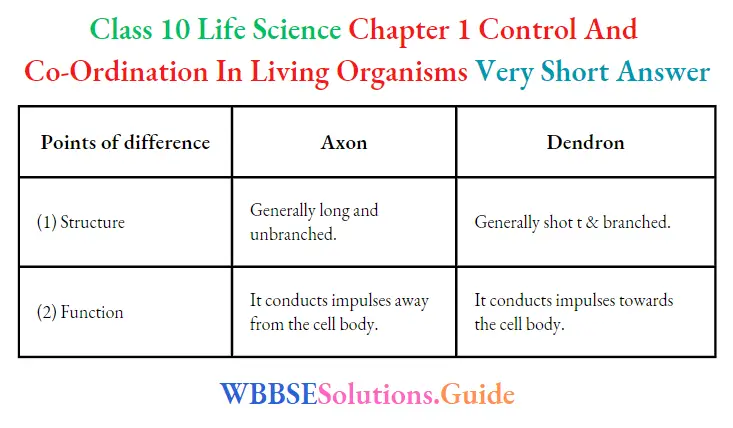
WBBSE Solutions For Class 10 Life Science Chapter 1 Control And Co-Ordination In Living Organisms Difference Between Axon And Dendron

Question 392. What is sensitivity?
Answer.

Sensitivity

Sensitivity is the ability of organisms to detect change and respond to it

Question 393. What are the uses of synthetic hormones?
Answer.

(1) Rooting of cutting (2) Delay of pre-harvest fruit crop (3) Developing parthenocarpic fruits (4) Artificial auxin acts as a herbicide.

Question 394. What happens when hormones are not secreted at the requisite level?
Answer.

When hormones are not secreted at the requisite level some disorders occur in the human body. Such as :
(1) Dwarfism – Due to less secretion of STH in childhood.
(2) Diabetes insipedus – Due to deficiency of ADH.
(3) Goitre or Grave’s disease – Due to Hypersecretion of thyroxine.
(4) Diabetes Mellitus – Due to less secretion of insulin.

Question 395. How do animals respond to stimuli?
Answer.

Irritability or sensitivity is a characteristic feature of all living organisms. It refers to their ability to respond to a stimulus. The stimulus is received by a receptor. It is transmitted using nerves. Finally, an effector (muscle and gland) brings about a response.

Question 396. Illustrate the Nervous Pathway.
Answer.

Stimuli → Receptor → Nerve centre → Effector

Question 397. Why do animals move from one place to another?
Answer.

Animals move from one place to another for to following reasons :
(1) When they hunt for food (2) Escape when under attack (3) Coordinate breeding activity with season when food is plentiful for them and their young.
Plentiful for them and their young.

Question 398. What are the motivations behind locomotion?
Answer.

(1) Finding food (2) Avoiding capture by predators, (3) Dispersal, (4) Finding new favorable habitats, (5) Bringing together individuals for reproductive activity.

Question 399. What is the hypothalamus? Where is it located? Mention its function.
Answer.

Hypothalamus

(1) The hypothalamus is an endocrine gland.
(2) It is located in the forebrain, below the thalamus.
(3) It controls hormonal secretions of the anterior pituitary gland and produces the hormones of the posterior pituitary gland (ADH and oxytocin) which are stored in the Pstelir pituitary and released later.

“WBBSE Life Science Class 10 Chapter 1 solutions, very short answer questions, exam preparation”

Chapter 1 Control And Co-Ordination In Living Organisms Diagrammatic Type Questions

Questions 1. Draw a neat diagram of the human brain and label the following : [Cerebral cortex, Cerebrum, Corpus callosum, Thalamus, Midbrain, Pons, Spinal cord]
Answer.
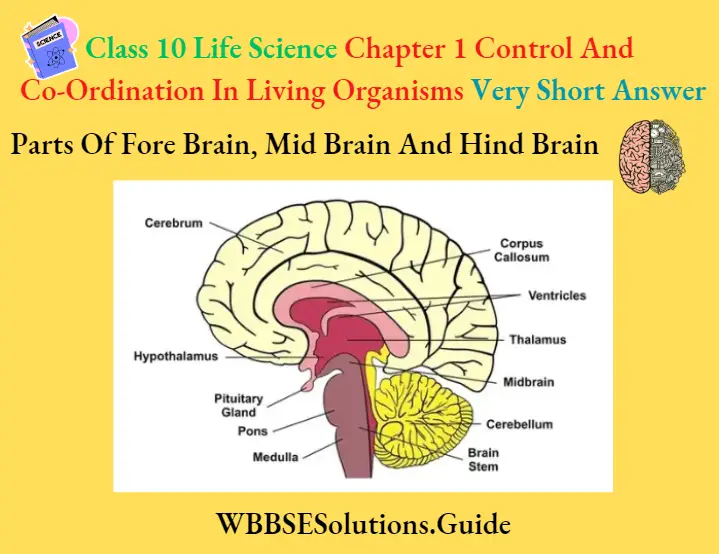
WBBSE Solutions For Class 10 Life Science Chapter 1 Control And Co-Ordination In Living Organisms Parts Of Fore Brain, Mid Brain And Hind Brain

Question.2. Draw a neat diagram of the structural and functional unit of the nervous system and label the following parts : [Nucleus, Cytoplasm, Dendron, Myelin sheath, Neurilemma, Membrane, Dendrite Cell]
Answer.
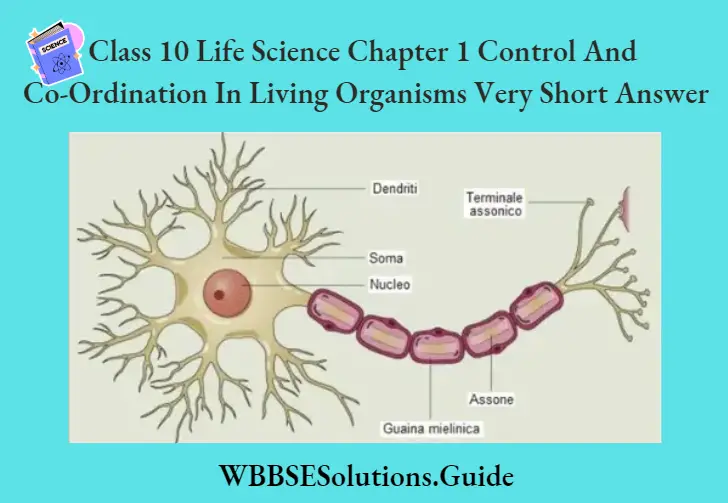
WBBSE Solutions For Class 10 Life Science Chapter 1 Control And Co-Ordination In Living Organisms Neurone

Question 3. Draw a neat and label the following parts of the diagram to show the path of nerve impulses during reflex action. (Sensory neurone, Receptor, Adjustor neurone, Spinal cord, Synapse, Motor neurone)
Answer.
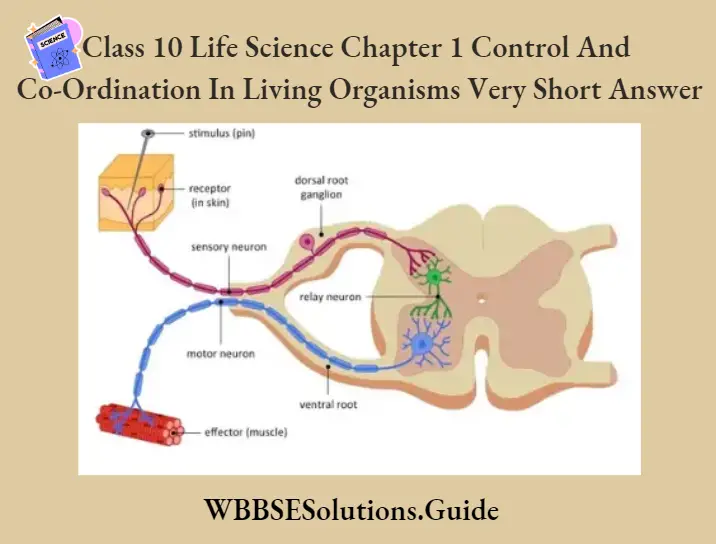
WBBSE Solutions For Class 10 Life Science Chapter 1 Control And Co-Ordination In Living Organisms Reflex Arc

Question 5. Draw a diagram of the human eye and label the following parts: Lens, Retina, Cornea, Sclera, Blindspot, and Aqueous humor.
Answer
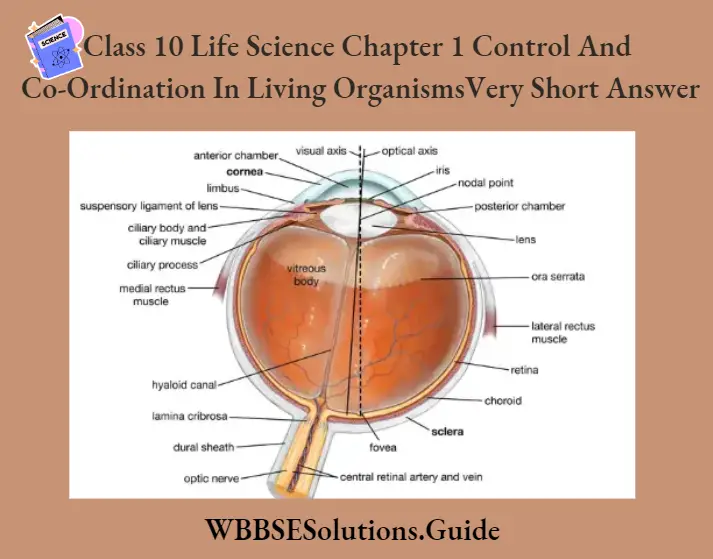
WBBSE Solutions For Class 10 Life Science Chapter 1 Control And Co-Ordination In Living Organisms Left side of human eye showing different parts

Question 6. Draw a diagram to show different parts of the human ear.
Answer.
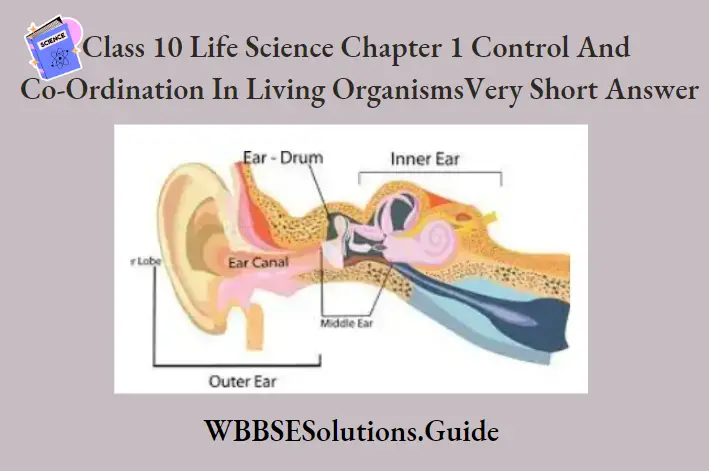
WBBSE Solutions For Class 10 Life Science Chapter 1 Control And Co-Ordination In Living Organisms Different Parts Of Human Ear

Question 7. Draw a diagram to show the location of endocrine glands in the human body.
Answer.
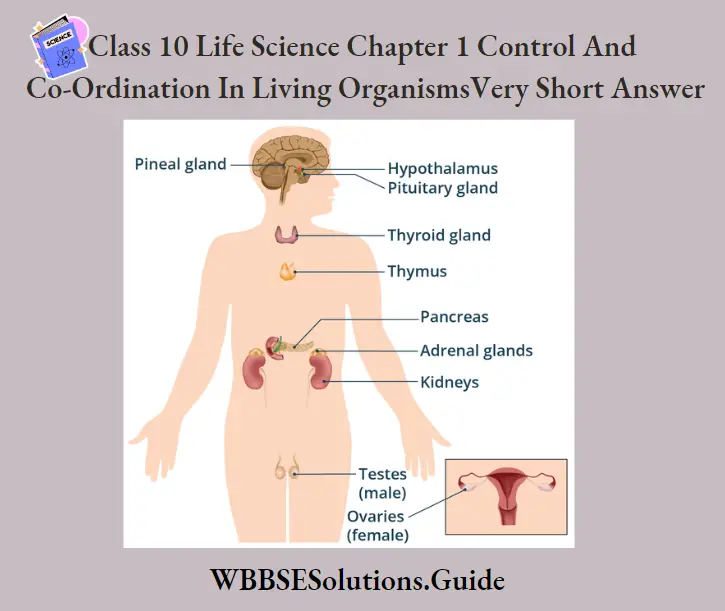
WBBSE Solutions For Class 10 Life Science Chapter 1 Control And Co-Ordination In Living Organisms Location Of Endrocrine Glands

WBBSE Solutions For Class 10 Life Science Chapter 2 Levels Of Organization Of Life Short Answer Questions

Chapter 2 Levels Of Organization Of Life Very Short Answer Questions

Question 1. Name two prokaryotic cells.
Answer: Bacteria and Blue-green algae.

Question 2. Name two trace elements of protoplasm.
Answer: Iron and Manganese.

Question 3. Name two types of essential secretory products of protoplasm.
Answer: Zymogen and. Hormones.

Read and Learn more about WBBSE Solutions for Class 10 Life Science And Environment

Question 4. Name two components of bacterial cell walls which are not present in the cell walls of higher plants.
Answer: Mucopeptide and Peptidoglycan.

WBBSE Solutions For Class 10 Life Science Chapter 2 Levels Of Organization Of Life saqs

Question 5. State the function of the centriole.
Answer:
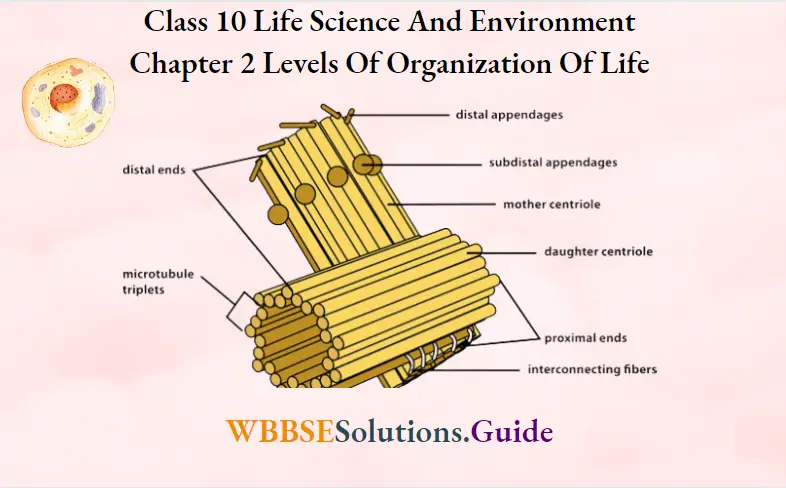
(1) originate cilia and flagella.
(2) formation of a spindle during cell division.

Question 6. Where are the chlorophyll molecules concentrated in the chloroplast?
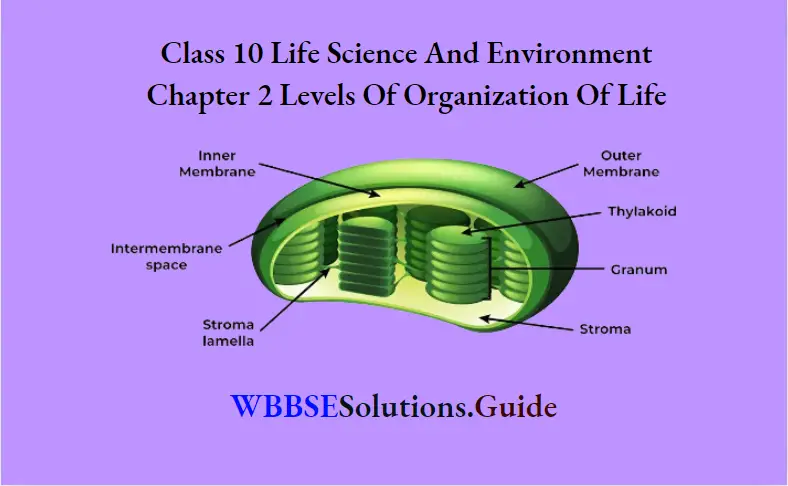
Answer: Quantasomes present in thylakoids.

Question 7. Name one single-layered membrane organelle in the cell.
Answer: Golgi body and Lysosome.

“WBBSE Class 10 Life Science Chapter 2 short answer questions, Levels of Organization of Life”

Question 8. What is a tonoplast?
Answer: Outer covering of central vacuole of a mature plant cell.

Question 9. Name one plant cell and one animal cell where the nucleus is absent.
Answer: Plant cell — Sieve tube, Animal cell — matured mammalian RBC.

Question 10. What is the function of dictyosome?
Answer: It is the Golgi body of plant cells and helps.in secretory process.

Question 11. Which organelle connects the cell membrane with the nuclear membrane?
Answer: Endoplasmic reticulum.

Question 12. Name the plant cell visible to the naked eye.
Answer: Root hair cell, fibre cell of jute.

Question 13. What is plasmodesmata ?
Answer: Cytoplasmic bridges between adjacent plant cells. They help to maintain the continuity of cytoplasm between two adjacent cells.

Question 14. What is glycocalyx? 
Answer: It is an external covering present around the plasma membrane of some animal cells, made up of glycoprotein. :

Question 15. What is cytosol?
Answer: Cytoplasmic matrix.

Wbbse Class 10 Life Science Solutions

Question 16. Name a cell where mitochondria are present in large numbers.
Answer: Liver cells, cardiac muscle cells.

Question 17. Name two animal cells containing more than one nuclei.
Answer: Skeletal muscle cells and Paramecium.

Class 10 Maths Class 10 Social Science
Class 10 English Class 10 Maths
Class 10 Geography Class 10 Geography MCQs
Class 10 History Class 10 History MCQs
Class 10 Life Science Class 10 Science VSAQS
Class 10 Physical Science Class 10 Science SAQs

Question 18. What is cell sap?
Answer: Cell sap is the fluid present within the vacuole, containing water, salt and enzymes.

Question 19. Name the membrane on which epithelial tissue rests.
Answer: Basement membrane.

Question 20. Name the tissue which lacks blood vessels.
Answer: Epithelial tissue.

Question 21. Give the name of one inflammatory protein stored by mast cells.
Answer: Histamine.

Question 22. Which tissue synthesises, stores and metabolises fat?
Answer: Adipose tissue.

Question 23. Name the tissue which connects a bone to another bone.
Answer: Ligament.

Question 24. Name the tissue where Haversian canals are found.
Answer: Bones.

Question 25. Mention the site of haemoglobin synthesis.
Answer: Red Bone marrow of long bones.

“West Bengal Board Class 10 Life Science Chapter 2 solutions, short answers, with explanations”

Question 26. Which pigment is formed when haemoglobin is catabolised?
Answer: Bilirubin.

Wbbse Class 10 Life Science Solutions

Question 27. What is polycythemia?
Answer: Abnormal increase in the number of RBCs.

Question 28. Name the type of epithelium that bears microvilli for absorption.
Answer: Brush-bordered cuboidal epithelium.

Question 29. Name two fluids found in the body.
Answer: Blood and lymph.

Question 30. Name the tissue which fills the gap between the organiser:
Answer: Connective tissue.

Question 31. Name the type of epithelium that lines the inner surface of the stomach.
Answer: Simple columnar epithelium.

Question 32. What are Kupffer cells?
Answer: The phagocytic cell is found in the liver.
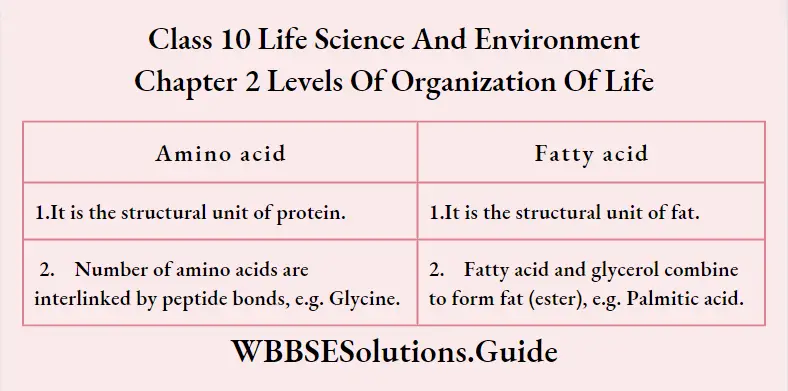
Question 33. What is Rigor mortis?
Answer: Muscles become rigid after death.

Question 34. What are tendons?
Answer: A band of collagen fibres which joins the skeletal muscle to the bone.

Question 35. Which type of food fulfils the requirement of nitrogen in the animal body?
Answer: Protein

Wbbse Class 10 Life Science Solutions

Question 36. Name the disease which is caused by the deficiency of vitamin A.
Answer: Xerophthalmia.

Question 37. Name a vitamin that is dissolved in a fatty substance or fat.
Answer: Vitamin A.

Question 38. Name a vitamin which is solubilized in water.
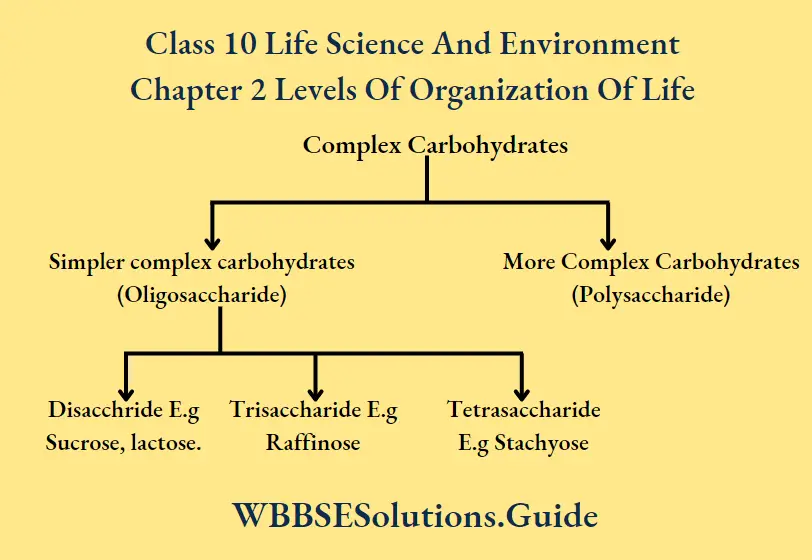
Answer: Vitamin B.
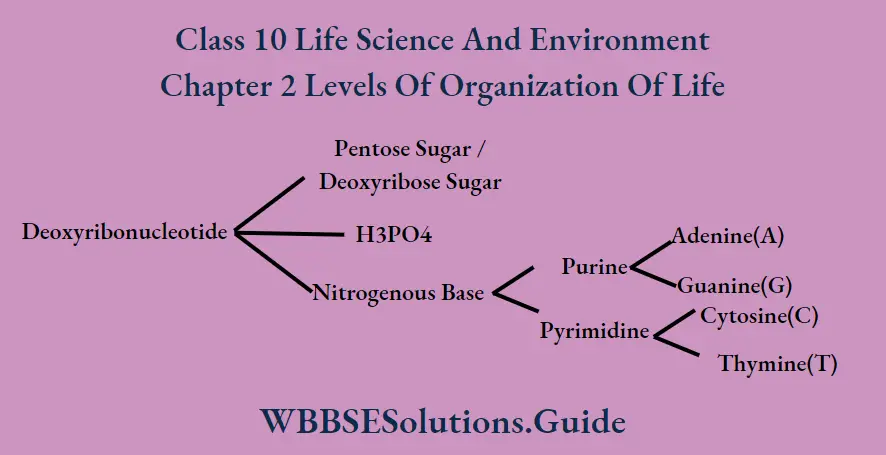
Question 39. Deficiency of which vitamin causes an interruption in. blood coagulation?
Answer: Vitamin K.

Question 40. Deficiency of which vitamin causes rickets?
Answer: Vitamin D.

Question 41. Which vitamin is obtained from sour fruits? Give deficiency symptoms of this vitamin.
Answer: Vitamin C. Its deficiency causes Scurvy.

Question 42, What is a nucleotide?
Answer: Nucleotide is the structural unit of nucleic acid (DNA and RNA). Deoxyribonucleotide is the structural unit of DNA and ribonucleotide is the structural unit of RNA.

Question 43. Mention the main two types of tissue.
Answer: Two types of plant tissue are meristematic tissue and plant tissue.

Question 44. Name the tissue which is present at the apex of the stem.
Answer: Meristematic tissue.

Question 45. Name any two types of simple tissue.
Answer: Parenclyma and collenchyma are two types of simple permanent tissue.

Question 46. Name the parenchyma tissue containing air.
Answer: Aerenchyma cells contain air cavities.

Question 47. Name the parenchyma tissue containing chlorophyll.
Answer: Chlorenchyma cells contain chlorophyll.

Question 48. Name the simple tissue whose corners are thickened without intercellular spaces.
Answer: In Collenchyma corners are thickened without intercellular spaces.

Wbbse Class 10 Life Science Solutions

Question 49. Name the dead simple permanent tissue.
Answer: Schlerenchyma is the dead simple permanent tissue.

Question 50. Name the largest organ of the human body.
Answer: The skin is the largest organ of the human body.

Question 51. Name the acid present in the stomach.
Answer: Hydrochloric acid.

Question 52. Where is the pancreas located?
Answer:
Function :
(i) Processes all sensory information and generates responses accordingly.
(ii) Act as the centre for memory, intelligence, thinking and all other mental activities.

Question 53. Mention one function of the liver.
Answer: It synthesizes bile, stores glycogen, and helps in detoxification.

Chapter 2 Levels Of Organization Of Life Short Type Questions And Answers

Question 1. Name the type of enzyme present in mitochondria and lysosomes.
Answer:
In Mitochondria — Oxidative enzymes
In Lysosomes — Hydrolytic enzymes

Question 2. Define cell.
Answer:

Cell:

The term cell was first used by Robert Hooke (1665). The cell is the structural and functional unit of all living organisms.

The branch of biology which deals with the study of the structure of cells is called cytology.

Question 3. Name the smallest and the largest plant cell and animal cell.
Answer:
Smallest cell — Mycoplasma gallisepticum
Longest plant cell — Phloem fibre of Ramie plant
Longest animal cell — Mammalian Neurone.

Question 4. Differentiate between organ and organelle.
Answer:

Organs are structural components of multicellular plant and animal bodies. They are macroscopic structures.

Organelle are structural components of a cell and are microscopic.

“Class 10 WBBSE Life Science Chapter 2 short answer questions, solved answers, exam-focused”

Question 5. What is cell theory?
Answer:

Cell theory:

Cell theory was proposed by Schleiden and Schwann (1839).
(1) All organisms—animal or plants—consist of cell
(2) Cells are of universal occurrence and are the basic unit of an organism.
(3) All cells are produced from the pre-existing cells.

Cell shape and size :
The shape of the cell differs in different organisms. It may be round, cylindrical, cuboid, columnar or thread-like. The cells are mostly microscopic. The smallest cell is a pleuropneumonia-like organism (PPLO). The largest cell is the egg of the ostrich. In mammals, the nerve and muscle cells may reach up to 900 mm in length.

Question 6. What are the exceptions to cell theory?
Answer:
(1) Viruses without cellular organisation
(2) Prokaryotes without true cellular structure
(3) Mucor, Rhizopus and Vaucharia do not conform to the normal definition of cell.

Wbbse 10th Class Life Science Question Answer

Question 7. Classify animal tissue.
Answer:

Depending on the structure and function, the animal tissue is classified into 4

types :
1. Epithelial tissue
2. Connective tissue
3. Muscular tissue
4. Nervous tissue.

What are essential amino acids?
Answer:

Essential amino acids :
Several nutritionally important amino acids are not synthesized inside a living body. These are to be taken with dietary proteins. Such amino acids are called essential amino acids. These are methionine, tryptophan, histidine, phenylalanine, valine, threonine, lysine, leucine, and isoleucine.

Question 8. What are polysaccharides?
Answer:

Polysaccharides :
These are large carbohydrates, composed of more than ten monosaccharide units. The basic molecular formula of polysaccharides is (C6H10O5)n. They are generally insoluble in water and not sweet to taste.

Examples: Starch, cellulose (found in plant cells), glycogen (found in animal cells), chitin (found in insect bodies), etc.

Question 9. Name two animal sources and two plant sources of fat type of food.
Answer:

Source :
1. Plant source — Mustard oil, coconut oil, groundnut oil, etc.
2. Animal source — Meat, milk and milk products like ghee, butter, cheese, etc.

What is fat or lipid?
Answer:

Fat:

Eat is the ester of fatty acid and glycerol. The salt of alcohol (glycerol) with organic acid (fatty acid) is known as ester. Lipid is a broad term which includes fat, wax, cholesterol, and hydrocarbon since all of them are insoluble in water but soluble in organic solvents.

Question 10. What is a vitamin?
Answer:

Vitamin:

Vitamins are smaller biomolecules, required in small amounts, for normal functioning of the body and provide resistance against some diseases. These act as coenzymes in several enzyme-dependent metabolic reactions.

Question 11. Name fat-soluble and water-soluble vitamins.
Answer:
(1) Fat-soluble vitamins (vitamins A, D, E, K) and
(2) Water-soluble vitamins (vitamin C and B complex).

Question 12. Which vitamin is known as an antihaemorrhagic factor?
Answer: Blood clotting — It takes part in the manufacture of prothrombin (clotting protein factor of blood in plasma) in the liver and helps in normal blood coagulation.

Wbbse 10th Class Life Science Question Answer

Question 13. State three characteristics of meristematic tissue.
Answer:
Characteristics :
(1) Cells are living, undifferentiated, polygonal, spherical or oval in shape.
(2) Cells are densely packed with no intercellular spaces.

Question 14. Mention the functions of the xylem.
Answer:
Function :
(1) Xylem helps in transportation of water and solutes undirectionally.
(2) Acts as supportive tissue, imparting mechanical strength to the plant body.
(3)Helps in the storage of water and mineral salts.

Question 15. Mention the functions of phloem.
Answer:
Functions :
(1) Conduction of food — by sieve tubes of phloem both in upward and downward directions.
(2) Storage of organic food matters.
(3) Lateral translocation of food by the companion cells.

Question 16. State two structural features of permanent tissue.
Answer:
Characteristic features :
(1) Intercellular space may be present in between the cells.
(2) Cells may or may not contain protoplasm and, hence may be living or dead.

Question 17. State two structural features of epithelial tissue.
Answer:
Structure :
(1) Cells are present on a basement membrane made of connective tissue.
(2) Cells are densely packed & joined together by microproteins.

Question 18. State two functions of connective tissue.
Answer:
Function :
(1) Areolar tissue acts as packing material between organs
(2) Adipose tissue stores fat for future use, keeps the body warm and protects it from mechanical injury.

Question 19. State two structural features of muscular tissue.
Answer:
Structure :
(1) Cells are elongated, cylindrical or spindle-shaped.
(2) Bundles of muscle fibres, surrounded by connective tissue, constitute a muscle.

Wbbse 10th Class Life Science Question Answer

Question 20. Mention two functions of the Brain.
Answer:
Function :
(1) Processes all sensory information and generates responses accordingly.
(2) Act as the centre for memory, intelligence, thinking and all other mental activities.

Chapter 2 Levels Of Organization Of Life Descriptive Type Questions And Answers :

Question 1. What are biomolecules?
Answer:

Biomolecules

Building block molecules are called biomolecules. They make up the body of organisms, cells and cell organelles.

It is of two types —
(1) Micro-molecules :
Small molecule size with low molecular weight, eg. minerals, water, gases, carbohydrate, etc.

(2) Macro-molecules :
Large molecule size with high molecular weight. It is formed by polymerisation of many micro-molecules of one type.

eg: Protein, Polysaccharides, Nucleic acid.

Question 2. What is the average composition of plant and animal cells?
Answer:

WBBSE Solutions Class 10 Life Science Chapter 2 Levels Of Organization Of Life Long Answer Questions Composition Of Plant Cell And Animal Cells

Question 3. Write the roles of inorganic compounds in the body of living organisms.

Answer:

Water :
It is the most abundant inorganic compound in living organisms. On an average, water forms 65-75% of protoplasm.

It acts as a solvent for all soluble substances in the cell. It provides an aqueous medium for various cellular reactions. It provides proper hydration to protoplasm. It provides turgidity to the cells in plants. Water maintains constant body temperature in plants and animals. Water acts as a source of hydrogen in photosynthesis.

Gases :
The main gases which play an important role in metabolism are O2 and CO2. Oxygen is needed for the aerobic breakdown of organic food and the release of energy for life. Carbon dioxide is used by photosynthetic autotrophs for the synthesis of carbohydrates.

Question 4. What are carbohydrates? Write their functions.
Answer:

Carbohydrates

Organic compounds containing carbon, hydrogen and oxygen. Its general formula is Cn(H2O)n. Based on the number of sugar Units in the molecule, it is classified as

(1) Monosaccharides :
Contain only one sugar unit known as glucose or simple sugar. These are the reducing agents.
Eg. Glucose (C6H12 O6)

(2) Oligosaccharides :
Carbohydrates with 2-9 mono-saccharides joined together.
glucose + glucose -» Maltose
glucose + fructose -» Sucrose
glucose + glucose -— Lactose~

(3) Polysaccharides :
Carbohydrate with 10 or more mono-saccharide units. These are macro-molecules.
Eg: Starch and cellulose.

Wbbse 10th Class Life Science Question Answer

Functions :
(1) These are structural components.
(2) Play an important role in metabolic functions.
(3) Act as a potential source of energy in cells.

Question 5. What are Amino Acids and proteins? Write their functions.
Answer:

Amino Acids and proteins

Amino acids are microbiomolecules with low molecular weight. They contain C, H, O and N, S.

These are essential and non-essential amino acids.

Essential amino acids are 8 in number. These are not synthesized in animal cells and obtained through diet only, eg. Valine, Leucine, Methionine, Lysine etc.

Non-essential amino acids are 10 in number and are naturally synthesized in the body.

eg. Alanine, Arginine, Aspartic acid, Serine.

Semi-essential Amino Acid :
Only 2 in number can be synthesized in animal cells but not enough. Eg. Arginine and Histidine.

Amino Acids are used in protein synthesis, glucose, vitamins and hormone synthesis.

Question 6. Write the structure and functions of the protein.
Answer:

These are long-chain polymers of amino acids with very high molecular weight. It contains C, H, O, N, S and P. The bond which joins two amino acid molecules is a peptide bond.

Types of protein :
(1) Simple protein :
made of only amino acids, eg: albumin, and histone.

(2) Conjugated protein :
made of amino acid + some non-protein group.

Example: Nucleoprotein, Glycoprotein.

(3) Derived protein :
These are intermediate degradation products of protein, obtained on the hydrolysis of protein.

Functions of Protein :
(1) These are structural constituents of protoplasm, protoplasmic organelles and cell membrane.
(2) Enzymes are proteins, essential for metabolism.
(3) Cytochrome pigment helps in photosynthesis and Respiration.
(4) Haemoglobin transports oxygen in the body.
(5) Actin and myosin help in muscle contraction.
(6) Fibrinogen and thrombin help in blood clotting.

Question 7. Write the structure and functions of lipids in the human body.
Answer:

Lipids are oily, greasy organic compounds, insoluble in water. Lipid molecule contains C, H, O. It has less percentage of oxygen.

These are :
(1) Simple lipids :
These are esters of fatty acids with alcohol.

eg. Bees wax, cholesterol.

Wbbse 10th Class Life Science Question Answer

(2) Compound lipids :
These are fatty acids + Alcohol + Some other group.

eg. Phospholipid, Glycolipid, Steroids Carotenoids.

Functions of lipids:
(1) Release more energy than carbohydrates.
(2) Constituent of cell membrane.
(3) Acts as a solvent for fat-soluble vitamins.
(4) Acts as insulator.

Question 8. What are Nucleotides and Nucleic Acids?
Answer:

Nucleotides :
Nucleotides are the building block unit for Nucleic acid. These are macromolecules with low molecular weight.

Nucleotide = Pentose Sugar + Nitrogenous base + Phosphate group.

Nucleic Acid:
These are long-chain polynucleotide macromolecules. These are the most important biomolecules and control most biological processes, including heredity.

There are two types of Nucleic acid: DNA and RNA.

DNA (Deoxyribose Nucleic Acid): Double-stranded helical structure. Two strands are antiprallel_ and coiled around each other. Complementary base pairs are :

WBBSE Solutions Class 10 Life Science Chapter 2 Levels Of Organization Of Life Long Answer Questions Deoxyribose Nucleic Acid

Adenine is attached to thymine with a double hydrogen bond and Guanine with cytosine with a triple hydrogen bond. DNA has the unique ability of self-replication.

Functions of DNA:
(1) It is the genetic material of all organisms (except some viruses).
(2) It takes part in genetic recombination.
(3) It can replicate itself.

RNA (Ribose Nucleic Acid) :
Single-stranded, long-chain polynucleotide. Complementary base pairs are — Adenine, Guanine, Cytosin, and Uracil. These are mainly present in cell cytoplasm.

Types :
Messenger RNA (mRNA)
Transfer RNA (tRNA)
Ribosomal RNA (rRNA)

Functions :
(1) Involved in protein synthesis.
(2) In certain viruses acts as the genetic material.

Question 9. What are vitamins? Write their roles in the human body.
Answer:

Vitamins :
Vitamins are complex organic chemicals that are present in our
food in small quantities. Vitamins are essential for growth, good health, proper vision, normal digestion process and co-ordinate activities of our body.

These are :
(1) Fat-soluble vitamins — A, D, E, K
(2) Water soluble vitamins — B complex and C

WBBSE Solutions Class 9 Life Science Chapter 2 Levels Of Organization Of Life Long Answer Questions Vitamins Their Roles In Human Body

Question 10. What are minerals? Write the role of minerals in the human body.

Answer:

Minerals :
These are an inorganic element, occurring in the form of its salts. Elements which are required in larger amounts for normal nutrition are called macroelements. Eg, C, H, N, O, P, Ca.

Elements which are required in very small amounts for normal nutrition are called microelements. Eg, Iron, Copper, Zinc, Iodine.

WBBSE Solutions Class 10 Life Science Chapter 2 Levels Of Organization Of Life Long Answer Questions The Role Of Minerals In Human Body

Question 11. Write the structure and function of the cell wall.
Answer:

Cell Wall :
Present in plant cells, fungi and bacteria but absent in an animal cell. It is a non-living, rigid covering, external to the plasma membrane. A cell wall differentiated into middle lamella, primary cell wall and secondary cell wall. There are minute pores on the cell wall, through which cytoplasmic continuity is established between the adjacent cells. Their cytoplasmic bridges are called Plasmodesmata. The middle layer is made up of pectin and some amount of protein. The primary cell wall is thin and permeable, composed of cellulose. The secondary cell wall is also made up of cellulose with hemicellulose, pectin and lignin.

WBBSE Solutions Class 10 Life Science Chapter 2 Levels Of Organization Of Life Long Answer Questions Cell Wall

Functions:-
(1) Provides cell its shape.
(2) Protect the cell membrane and cell content.
(3) Prevents the drying of a cell
(4) Provides mechanical support to the cell
(5) Helps in the maintenance of osmotic balance.

Question 12. Write the structure and functions of the cell membrane.
Answer:

Cell membrane — (Plasma membrane)
The thin, elastic and semi-permeable living membrane that surrounds the protoplasm of a cell.

Nageli and Cramer (1856) reported about the existence of it. Plowe (1931) named it as plasmalemma.

Structure :
Singer and Nicholson (1972) showed that the membrane is formed of two phospholipid layers with distinct surface proteins and integral proteins in between. The name given is the Fluid Mosaic Model. The point of attachment of the cell membrane of two cells is known as a desmosome.

Spherical hydrophilic polar heads of lipids are directed towards the two surfaces of the membrane. The hydrophobic tails of lipids are directed inwards.

WBBSE Solutions Class 10 Life Science Chapter 2 Levels Of Organization Of Life Long Answer Questions Cell Membrane

Functions :
(1) It denotes the shape of an animal cell.
(2) It protects the cytoplasm.
(3) It helps in the intercellular transport.
(4) It helps in diffusion and osmosis between cells.
(5) It helps in cell eating and cell drinking by phagocytosis and pinocytosis.
(6) Seletive permeability.
(7) Help in maintaining homoeostasis in the cell.

Question 13. What is Cytoplasm?
Answer:

Cytoplasm:

Occupies cell space in between plasma membrane and nucleus. It is a part of protoplasm. It is a jelly-like, colloidal matrix and the seat of all metabolic activities of the cell.

It consists of protein, fats, carbohydrates, hormones, vitamins, nucleic acid, protoplasmic cell organelles and vacuoles. Non-living substances in cytoplasm represent deutoplasm. San

Functions:-
(1) It acts as a matrix for cell organelles.
(2) It controls the different metabolic activities within the cell.
(3) It maintains coordination between the different organelles within the cell.
(4) It is sensitive to external stimuli.

Question 14. Explain with a diagram the structure and function of the nucleus.
Answer:

Nucleus :
The membrane-bound central controlling organelle of the cell carrying
the genetic information is known as the nucleus. Robert Brown (1833) first described the nucleus. It is present in all living cells except matured RBC in human body and sieve tube of plant cell. A multinucleated plant cell is called a Coenocytes and a multinucleated animal cell is called Synctium.

The nucleus is differentiated into the Nuclear envelope, Nucleoplasm; Nuelear reticulum and Nucleolus.

WBBSE Solutions Class 10 Life Science Chapter 2 Levels Of Organization Of Life Long Answer Questions Nucleolus

(1) Nuclear envelope :
Double cytoplasmic membrane with many ee pe membrane nuclear pores having definite ribosome organization. The two layers are ~ Diagrammatic structure of nucleus separated by Perinuclear space.

Functions :
(1) Transport and exchange of materials between nucleus and cytoplasm.
(2) It separates nucleoplasm from cytoplasm.
(3) Maintains definite shape of the nucleus.
(4) Ribosomes attached to the cuter face of the envelope are involved in protein synthesis.

(2) Nucleoplasm :
The transparent, jelly-like matrix within the nucleus is called a nucleoplasm. It is also called karyolymph. It fills the internal space of the nucleus. Consists of more than 90% protein. It stores food and enzymes.

(3) Nuclear Reticulum :
It consists of DNA and histone protein. Exists as a chromatin
network in the interphase nucleus. During cell division, it condenses into distinct Chromosomes. Chromosomes are formed of genes which carry the characters from one generation to the next.

(4) Nucleolus :
The spherical dense body inside the nucleus. It consists of granular
part, fibrilar part, matrix and chromatin body. It is usually formed by the aggregation of the Nucleolar Organizer Region (NOR) of the chromosomes.

Functions :
(1) Help in cell division.
(2) Production of ribosomes.

Question 15. Why is mitochondria called the powerhouse of a cell?
Answer:

Mitochondria :
Highly specialized double membrane-bound organelles are present in the cells of higher plants and animals. Kollicker (1850) first observed mitochondria. Altman (1892) called them bioplast. Benda (1897) proposed the name mitochondria. Hogeboom (1948) confirmed mitochondria as the seat of aerobic respiration. It is present only in Eukaryotic cells except in matured RBCs of mammals. The inner membrane is thrown into finger-like projections called cristae. The matrix contains enzymes for the TCA cycle reaction. Cristae is the site for terminal oxidation, ATP formation, utilization of oxygen and formation of water.

WBBSE Solutions Class 10 Life Science Chapter 2 Levels Of Organization Of Life Long Answer Questions Mitochondria

Functions :
(1) It is known as the powerhouse of a cell because it produces and stores energy in the form of ATP.
(2) It helps in the metabolism and the breaking of fat molecules.
(3) It also produces certain respiratory enzymes.

Question 16. Write the structure and function of the Endoplasmic Reticulum.
Answer:

Endoplasmic Reticulum :
It is a network of double membranes distributed all over the cytoplasm. The tubules or vesicles are interconnected. It connects the nuclear membrane with the plasma membrane. It exists in different forms like Cisternae, Tubular ER and Vesicular ER.
ER is of two types :
(1) Rough Endoplasmic Reticulum has ribosomes attached to its surface.
(2) Smooth endoplasmic reticulum (SER) when the walls of tubules are smooth without ribosomes.

Functions :
(1) Mechanical support
(2) Maintenance of osmotic pressure
(3) Exchange of materials
(4) Protein synthesis
(5) May help in the storage of certain components.
(6) They divide the cell into different components.

Question 17. Explain the structure and functions of the Golgi body.
Answer:

Golgi body :
They are single membrane-bound flattened sac-like structures, present in animal cells.

In plant cells, they remain scattered and are called dictyosomes. It is discovered by Camilo Golgi (1890).

They include flattened sac-like cisternae, small round vesicles and larger vacuoles. They contain various secretory enzymes.

WBBSE Solutions Class 10 Life Science Chapter 2 Levels Of Organization Of Life Long Answer Questions Parts Of Golgi Body

Function :
(1) Help in the secretory activities of the cell.
(2) They store protein and enzymes.
(3) They are from the acrosome of spermatozoa.
(4) Help in intercellular transport.
(5) It activates mitochondria.

Question 18. What are lysosomes and ribosomes? Write their functions.
Answer:

Lysosomes :
Their cell inclusions are characteristics of an animal’s cell. They have an outer membrane and their origin is from vesicles derived from the Golgi complex. Lysosomes contain hydrolytic enzymes. They -— Granular are abundant in WBC that bring phagocytosis ‘ Se of bacterial cells. Lysosomes are denoted by oe Cade Duve (1955). Lysosome performs four main functions:
(1) Extracellular digestion Structure of lysosomes
(2) Intracellular digestion
(3) Self digestion
(4) Digestion of substance outside the cell. They act as suicidal bags and help in the destruction of worn-out cells.

WBBSE Solutions Class 10 Life Science Chapter 2 Levels Of Organization Of Life Long Answer Questions Structure of Lysosomes

Ribosomes:
There are very minute spherical bodies found closely associated with ER. They contain ribosomal RNA and protein. They are formed from nucleolus and denoted by Robinson and Brown (1953) and Palade (1955). In prokaryotes, they are 70 s E Tanverse with two subunits 50S and 30S respectively, while depression in Eukaryotes, they are 80S with two subunits I Subunit (40S) 60S and 40S. (S for Swedberg unit). They remain in a chain called Polysome)

Function :
Synthesizing protein helps in lipid metabolism.

WBBSE Solutions Class 10 Life Science Chapter 2 Levels Of Organization Of Life Long Answer Questions Ribosome Of Eukaryotic Cell

Vacuole :
There are empty spaces within Subunit protoplasms filled with cell sap or gases. More (605) common in plant cells. These may contain water, inorganic salt, organic material, etc.

It helps in osmoregulation by regulating the water content in the body. It also helps in the storage and digestion of food and excretion in unicellular organisms like Amoeba.

“Levels of Organization of Life WBBSE Class 10, short answer questions, with solutions”

Question 19. What are centrosomes microsomes and microtubules? Write their functions.
Answer:

Centrosome :
The star-like organelle, very Centrosome close to the nucleus of an animal cell is called a centrosome. It consists of a pair of centrioles and the centrosphere surrounding it. Each centriole is cylindrical and open at both ends. The wall of each cylinder is made of 9 microtubules.

WBBSE Solutions Class 10 Life Science Chapter 2 Levels Of Organization Of Life Long Answer Questions Two Centrioles In Centrosome

Functions of Centrioles :
(1) Give rise to basal bodies of cilia and flagella.
(2) Play an important role in cell division, forming spindle apparatus.
(3) It forms the tail of sperm in higher animals.

Microtubules :
Hollow unbranched tubules, made of sub-units of protein tubulin.
1. It provides polarity to cells.
2. Involved in cell movement.
3. Help in intracellular transport.

Question 20. What are plastids? Name and explain different types of plastids.
Answer:

Plastids :
Membrane-bound cell organelles are present only in plant cells. The term was denoted by Schimper (1883).

It is formed from a primitive plastid called Proplastid. It is of three types :

Chloroplast :
Green-coloured plastid containing green pigment chlorophyll. It is present in leaves and other green parts of the plants. They are formed of two distinct parts, the stack-like granum and ground substance stroma. Each granum is formed of an individual sac-like structure called a thylakoid. Each thylakoid is a membrane-bound flattened vesicle. Thlaokoid membrane contains photosynthetic pigment, electron carriers, and co-enzymes organised into Quantasome. It helps in trapping light energy and synthesis of ATP.

Functions :
(1) Site of all photosynthetic reactions.
(2) Responsible for conversion of light energy to chemical energy.
(3) Synthesis of Carbohydrate from CO2, and H2O.

WBBSE Solutions Class 10 Life Science Chapter 2 Levels Of Organization Of Life Long Answer Questions Chloroplast

Chromoplasts :
Coloured plastids other than green are present in the flowers of plants. They contain carotene and xanthophyll.

Function :
(1) They help in insect pollination.
(2) They absorb the extra wavelength of the sun and help in photosynthesis.

Leucoplaslids :
Colourless plastids are remaining in the underground parts of the plants. It contains stored food and some enzymes. They are classified into three types based on the food they store.

Amyloplast (Storing carbohydrates), Aleuroplast (storing protein), and Elaioplast (storing fats).

Question 21. Differentiate between Prokaryotic and Eukaryotic.
Answer:

WBBSE Solutions Class 10 Life Science Chapter 2 Levels Of Organization Of Life Long Answer Questions Prokaryotic And Eukaryotic

Question 22. Differences between plant cells and animal cells.
Answer:

WBBSE Solutions Class 10 Life Science Chapter 2 Levels Of Organization Of Life Long Answer Questions Plant Cell And Animal Cell

Question 23. What is epithelial tissue? Name the different types of epithelial tissue. Write their functions.
Answer:

Epithelial Tissue :
The cells lie close together and are held together by all junctions, with little or no extracellular material. This type has one free surface, the other surface rests on the basement membrane. The blood vessels are absent.

WBBSE Solutions Class 10 Life Science Chapter 2 Levels Of Organization Of Life Long Answer Questions Epithelial Lissue

WBBSE Solutions Class 10 Life Science Chapter 2 Levels Of Organization Of Life Long Answer Questions Epithelial Lissue Structure

Question 24. Write the function and location of nervous tissue.
Answer:

WBBSE Solutions Class 10 Life Science Chapter 2 Levels Of Organization Of Life Long Answer Questions Location Of Nervous Tissue

Question 25. What is muscular tissue? Name its types and functions.
Answer:

WBBSE Solutions Class 10 Life Science Chapter 2 Levels Of Organization Of Life Long Answer Questions Muscular Tissue And Functions

Question 26. Differences in bones and cartilage :
Answer:

WBBSE Solutions Class 10 Life Science Chapter 2 Levels Of Organization Of Life Long Answer Questions Differences In Bones And Cartilage

Question 27. What is connective tissue? State the location and function of different types of connective tissue.
Answer:

WBBSE Solutions Class 10 Life Science Chapter 2 Levels Of Organization Of Life Long Answer Questions Connective Tissue

Question 28. Write the differences between blood and lymph.
Answer:

WBBSE Solutions Class 10 Life Science Chapter 2 Levels Of Organization Of Life Long Answer Questions Differences Between Blood And Lymph

Question 29. Differentiate between striated and smooth muscle.

Answer:

WBBSE Solutions Class 10 Life Science Chapter 2 Levels Of Organization Of Life Long Answer Questions Differentiate Between Striated And Smooth Muscle.

Question 30. Differentiate between Tendons and Ligaments.

Answer:

WBBSE Solutions Class 10 Life Science Chapter 2 Levels Of Organization Of Life Long Answer Questions Differentiate Between Tendons And Liagaments

Question 31 What is a tissue?
Answer:

Tissue :
A tissue may be defined as a group of cells having common origin,similar structure and function being held together by a cementing substance.” The study of tissue is called histology.

In higher multicellular organism, however, although each cell can carry on all fundamental, vital, biological processes, it is not capable of independent existence. The cells of multicellular organism interact and cooperate with one another. For example, a muscle cell in man could not obtain food or oxygen on its own.
Cell —> Tissue -> Organ —> Organ system —> Individual

WBBSE Solutions Class 10 Life Science Chapter 2 Levels Of Organization Of Life Long Answer Questions Plant Tissue And Its Distribulion

Question 32. What are Meristematic tissue ? Write its characteristics.
Answer:

Meristematic tissue :
It consists of a group of cells which have the capacity to divide. This tissue is found at all growing points of a plant such as tips of root, stem and branches. It is also present between the bark and the wood of trees where it leads to the growth in the diameter of stem.

WBBSE Solutions Class 10 Life Science Chapter 2 Levels Of Organization Of Life Long Answer Questions Meristematic Tissue

Characteristics :
1. Cells are small, usually cubical.
2. The cell walls are thin and large nucleus, densely cytoplasm.
3. Vacuoles are almost absent.
4. Cells are tightly packed with no intercellular spaces.
5. The cells actively divide, adding new cells to the plant.
6. New cells thus produced are transformed into mature permanent tissue.

According to location, meristems are :
1. Apical meristem — It is present at the apices of the root stem and other growing organs and helps in growth in length.
2. Lateral meristem — It is present in a circle parallel to epidermis of stem and root. It help in growth in diameter, e.g. cambium and Be cork cambium.
3. Intercalary meristem — It is present within permanent tissue in the internodal region of the stem. It helps in growth in length.

WBBSE Solutions Class 10 Life Science Chapter 2 Levels Of Organization Of Life Long Answer Questions Position Of Mertism

Question 33. What are permanent tissue? Describe with diagram its types and functions.
Answer:

Permanent Tissue :
Permanent tissue is made up of cells poses s’merstem. which have lost their ability to multiply. They take a permanent shape to perform some permanent functions. These may be simple or complex. These cells are either living or dead and thin walled or thick-walled.

Simple Permanent Tissue :
It is made up of one type of cells forming a uniform mass. On the basis of cell types, it is of three kinds :

(1) Parenchyma:
It is made up of living, usually isodiametric cells. The cell wall is thin and consists of cellulose, pectin and hemicellulose Intercellular eae usually runs between the cells.

Parenchyma are the ground tissue of a plant body. They are widely distributed throughout the plant body.

Functions :
(1) These cells mainly serve as packing tissue and constitute the bulk of the cortex, medullary rays, pith, xylem and phloem, fruit pulp and seed endosperm.
(2) It is storage tissue and store starch.
(3) Chloroplast containing parenchyma called chlorenchyma help in photosynthesis.
(4) Thick-walled parenchyma give mechanical support.
(5) Parenchyma containing air cavities called Arenchyma provide buoyancy to aquatic plants.

Collenchyma:
It is made up of parenchymatous cells which are elongated and are thick at the corner. It consists of living cells but is modified to provide mechanical support. There is extra deposition of cellulose at the corners of the cell.

This tissue is found in the leaf stalks and below the epidermis of the stem.

WBBSE Solutions Class 10 Life Science Chapter 2 Levels Of Organization Of Life Long Answer Questions Collenchyma Tissue

Functions :
It gives mechanical strength to the plant organs

Sclerenchyma :
The cells are dead with thick lignified cell wall. The cells are living when young but gradually loose protoplasm and die when fully formed. The cell wall is provided with cavities called pit.

It includes two types of cells fibre and sclereid or stone cells. Fibres are usually found in patches below the epidermis and endodermis, vascular bundle of leaf, stem and root.

Functions :
(1) Provide mechanical support.
(2) Stone cells provide rigidity to the plant.

Question 34. What are complex permanent tissues? Explain with a diagram the structure and functions of the xylem.
Answer:

Complex Permanent Tissue :
It is made up of more than one type of cell forming a mixed mass but working together as a unit. Two main types of complex tissue are the xylem and phloem.

Xylem :
Complex vascular tissue is concerned with the upward transport of water and minerals. It consists of four different types of cells, viz. Xylem fibres, xylem parenchyma, tracheids and vessels.

(1) Trachids are elongated tube-like, dead, single cells with perforation-lignified cell walls. Their end walls are tapered and overlap the adjacent tracheids. The cells have empty cavities called lumen. The walls have pit. Water can pass through the empty lumen.
(2) Vessels are long tube like structures formed by the SD fusion of several cells arranged end to end in a row. The long vessel helps in the transport of large amounts of water over long distancces.
(3) Xylem parenchyma – The cells are living, thin walled and abundant. These are mainly concerned with the short distance transport of substances and the storage of sugar, starch and lipid.

WBBSE Solutions Class 10 Life Science Chapter 2 Levels Of Organization Of Life Long Answer Questions Xylem

(4) Xylem fibre – Found mainly in woody plants. These do not conduct water and provide additional mechanical strength to the xylem.

Question 35. Name the different components of phloem. Write their functions.
Answer:

Phloem :
It possesses a tubular structure for the transport of food. The tube in the phloem is composed of living | PHLOEM – conducts be sounyard cells. It consists of four types of cells – phloem fibre, phloem-— parenchyma, Sieve tube and Companion cells.

WBBSE Solutions Class 10 Life Science Chapter 2 Levels Of Organization Of Life Long Answer Questions Phloem

(1) Sieve tube are long tube like structure, involved in transport of organic solute like sucrose throughtout the plants. These are formed by end to end fusion of sieve tube elements.
(2) Companion cells – Thin walled elongated cells, is associated with each Sieve tube. Cells are living filled densely with cytoplasm and large nucleus.
(3) Phloem parenchyma – Mainly storstoresod materials. These are living and often cylindrical.
(4) Phloem fibre – Dead cell of phloem tissue, similar to sclrenchyma fibres. It provides mechanical support. Sclereids are more common in older phloem.

Question 36. Name the major organs in the human body. State their location and functions.
Answer:

Major Organs of Humathe and Body and their Functions:
Different tissues are usually grouped to form a larger functional unit called orgAnswer: In animals, organs together form even larger functional units called systems (for example, a digestive system consisting of the stomach, intestine, liver, pancreas, etc.)

Position Functions Skin Situated all over the body inProtection human. As excrtory organ, excrete sweat. As sense organ for touch, pain and temperature. Stomach J – shaped muscular bag in the abdomen to- wards the left and Gastric gland secretes gastric just below the diaphragm. Juice which consltsts hydrochloric acid, mucous and enzymes. HCI convirts pepsinogen into pepsin which help in digestion of protein. Pancreas It is a mixed gland located Secret pancreatic Juice which posterior to stomach consists of enzymes trypsin, amylase, lipase. Trypsin converts protein into poty peptides, amylase acts on starch and convirt them into maltose.

Question 37. What is the importance of water in life ?
Answer:

Importance or Functions of water :-
ife can not exist without water. It has versatile functions in the body and life processes:
(1) It is a universal solvent for all chemical and physiological reactions.
(2) Water maintains electrolyte balance and acid base balance of body fluids.
(3) It allows body’s cells to grow, reproduce and survive.
(4) It is the major component of different body parts.
(5) It acts as an important medium for osmosis, diffusion, filtration, transport and other physical processes.
(6) It helps to deliver O2, all over the body and transport of CO2,
(7) In digestion, it keeps the mucosal membrane moist; makes food digestible; dilutes food for enzyme action; synthesis of digestive juice; medium for digestion; and absorption of digested food.
(8) It provides media um for all metabolic reactions.
(9) It lubricates joints.
(10) It regulates body temperature by sweating and respiration.
(11) It helps in detoxification and elimination of excretory products.
(12) It acts as a shock k absorber for the brain and spinal cord.
(13) It is needed by the brain to manufacture hormones and neurotransmitters.

Question 38. What is the role of acids, bases and salts in the body of living organisms?
Answer:

Acids :
A hydrogen ion is a single free proton released from a hydrogen atom. Molecules containing hydrogen atoms that can rélease hydrogen ions in solutions are referred to as acids, e.g. HCL (Hydrochloric acid) ionizes in water to form hydrogen ions (H+) and chloride ions (CI). Similarly, H2CO3, (Carbonic acid) ionizes in water to form H+ and HCO3.

Some common inorganic acids in human body are—HCI in stomach, H2CO3 in blood, etc.

A base is an ion or a molecule that can accept W e.g. HCO3 – is a base because it can combine with W to form H2CO3. Similarly, HPO4, is a base because it can accept an H* to form

H2PO4.

In the human body, acid-base balance (buffer) is normally regulated by buffering agents— the respiratory system and the renal system. . .. Only six nonmetallic essential elements- carbon, hydrogen, nitrogen, oxygen,phosphorus and sulphur, make up most of the body weight (98%) of an organism. Various metals and nonmetals combine together to form different salts that are present in all living cells. :

Inorganic and organic salts of Ca, Mg, Na, K, and Fe, are very common in living cells.

Question 39. What is monosaccharide ? Write its structure, source and role in life processes.
Answer:

Monosaccharide :
They contain only one unit of simple sugar, e.g. Glucose, fructose, galactose, etc.

Basic Structural Features :
1. Colourless crystalline compounds, sweet in taste.
2. They undergo fermentation by yeast and other microorganisms.

Source :
Glucose (Dextrose) in grapes; Fructose (Laevulose)- fruit sugar which is present in almost all sweet fruits, honey; Galactose- it does not occur free in nature. In the body galactose is present as component of milk sugar (Lactose) which is formed of glucose and galactose.

Major Role in Life Processes :
1. Glycolysis – Glucose undergoes glycolysis to produce pyruvic acid in cell cytoplasm.
2. Storage — Excess glucose may be converted into starch in plants, glycogen in animals.
3. Maintenance of blood sugar — Normally 100 ml human blood contains 80-120 mg glucose.

Increase of this glucose level results into hyperglycemia (Diabetes mellitus) whereas decrease of glucose level is called hypoglycemia.

4. Synthesis of fats, pretend eins — By various metabolic reactions in life the r excess glucose may be converted to fatty acid, glycerol, amino acids, etc.

Question 40. Mention the basic features of amino acids. Discuss their role in life processes.
Answer:

Basic structural features :
1. Amino acid contains at least one central carbon (alpha) which is bound to a free amino group (—NH2), a carboxyl group (— COOH), one hydrogen (— H) and a side chain (R) which is different in each amino acid. Besides, all other three positions are fixed.

WBBSE Solutions Class 10 Life Science Chapter 2 Levels Of Organization Of Life Long Answer Questions Structural-Feature

2. Amino acids are colourless, crystalline substances, solublein water.

Role in life processes :
1. Structure and Function of protein :
Since protein is made of different amino acids, so structure and function of protein depend on its component amino acids.

“WBBSE Class 10 Life Science Chapter 2 important short answer questions, for board exam”

2. First class protein :
The protein that contains all essential amino acids and are capable of growth and maintenance, e.g. Albumin, globulin proteins of egg, meat, fish, milk, etc. (Almost all animal proteins are first class proteins).

3. Second class protein :
The protein contains a few essential amino acids but not all and is not suitable for growth and maintenance, e.g. Zein of Maize (most of the plant proteins are second class protproteins

Question 41. What is fatty acid? Mention its features, types and source.

Answer: Fatty acid is the essential component of fat.

Basic structural features :
1. Fatty acid has a carboxyl group (COOH) attached to it.
2. It is insoluble in water but soluble in fat solvents like chloroform, ether, alcohol, etc.

Types:
1. Saturated fatty acid, e.g. stearic acid, palmitic acid etc. .
2. Unsaturated fatty acid, e.g. Oleic acid, Crotonic acid.
3. Essential fatty acid—that are needed for normal growth but are not synthesized in the body—so they are taken along with diet, e.g. Linoleic acid, Linolenic acid and Arachidonic acid.

Source :
Stearic acids in animal fat; palmitic acid in paim ojl, milk, meat; butyric acid in milk, butter etc; oleic acid in olive oil, sunflower oil, animal fat etc.

Question 42. What is the role of fatty acid in life processes ? Distinguish between amino acid and fatty acid.
Answer:

Role in life processes :
1. They help in normal growth of the body.
2. They are structural components of cells.
3. They are responsible for normal reproductive functions.
4. They are necessary for healthy skin.

Difference between Amino acid and Fatty acid :

WBBSE Solutions Class 10 Life Science Chapter 2 Levels Of Organization Of Life Long Answer Questions Difference Between Amino Acid And Fatty Acid

Question 43. Mention the structural features of nucleotides.
Answer:

Basic structural features :
1. One nucleotide consists of pentose sugar (5 — c- sugar}, Nitrogenous base (N-Base) and phoshoric acid (H3PO4).
2. N—Base can be of — Purine [Adenine (A) and Guanine (G)] and Pyrimidine [Thymine (T), Cytosine (C) and Uracil (U)].
3. A, T, Gand are present in DNA whereas A, U, G and C are present in RNA.
4. Nucleotide consists of pentose sugar and nitrogenous base without H3PO4.

Question 44. What are complex carbohydrates ? Classify them.
Answer:

Complex carbohydrates are oligosaccharides (disaccharides, trisaccharides, etc) and polysaccharides. They are formed of two or more monosaccharide units.

WBBSE Solutions Class 10 Life Science Chapter 2 Levels Of Organization Of Life Long Answer Questions Plant Complex Carbohydrates


Simpler complex carbohydrates (Oligosaccharide) :
1. Disaccharides :
They are formed by the combination of two monosaccharide units with the elimination of one molecule water r.

e.g. Lactose (in milk) formed of glucose and galactose;

Sucrose (cane sugar) formis ed of glucose and fructose;

Maltose (malt sugar) form is the ed of glucose and glucose (i.e., two molecules of glucofose)

“WBBSE Class 10 Life Science Levels of Organization, short Q&A, solved questions

2. Trisaccharides :
They are formed by the union of three monosaccharide units. (Can you explain how many water molecules will be released in this structure ?)

e.g. Raffinose (found in beans, cabbage, broccoli etc) formed of glucose + fructose + galactose. :

3. Tetrasaccharides :
This is formed of four monosaccharide units. e.g. Stachyose (found in green beans, soya beans, etc.) formed of two molecules galactose + glucose + fructose.

More Complex Carbohydrates (Polysaccharide) :
Polysaccharides are polymers of large e number of monosaccharide units (monomer).

Polymer is the ‘garland’ whereas monomer is the ‘individual flower’ of the garland, e.g Glycogen is the polymer and each glucose unit is the monomer.

Basic Structural features :
1. They are commonly not seen.
2. Generally they are soluble in water (except cellulose).

Some common polysaccharides :
1. Starch — Polymer of glucose, produced by plants; insoluble in cold water; givegivee colour with iodine; tasteless.
2. Glycogen — Found in animals and fungi, known as ‘animal- starch’ soluble in water, gives a reddish colour with iodine.
3. Cellulose — Found in plants; insoluble in water; taken in the body along with vegetables; can not be digested in the human body.

Role in life processes :
1. Starch is the main constituent of food grains.
2. Glycogen is generally stored in the liver and muscle as a food reserve.
3. Cellulose forms ‘roughage’, stimulates peristalsis and helps in defaecation.
4. Carbohydrate (simple or complex) is the main source of energy when completely oxidised. One gram of ohydrate yields 4.0 Kcal energy.

Question 45. Mention the basic structural features of protein.
Answer:

Basic structural/ compositional features :
1. EsseThe essentialponent of protein is nitrogen.
2. The structural unit of protein is an amino acid.
3. Most of the proteins have a fishy smell.
4. When heated; protein coagulates
5. In acidic medium, protein is precipitated.

Question 46. What are enzymes? Mention their structural features and role in life processes.
Answer:

Enzyme :
Enzymes are biological catacatalystsotein in nature, produced by the
living cells, accelerate various biochemical reactions, but the selves remain undestroyed after the action.

Basic compositional features:
1. Nature — Almost all enzymes are proteins.
2. Structure — Like all other proteins, the enzyme is also formed of several amino acids.
3. Active site — We ingest food through our mouth, so mount the h is the ‘active site’ for ingestion. Similarly enzyme also performs its function by the ‘active site’ at a higher rate.
4. Specificity — Each enzyme acts on a specific substrate, e.g. Protease acts only on protein; lipase acts only on lipids, etc.
5. Catalytic property — Since enzymes act as biocatalysts, they are not destroyed at the end of the reaction.
6. Medium (pH) — Each enzyme acts in a definite medium, e.g. ptyalin in neutral = medium, pepsin in acidic medium, trypsin in alkaline medium and so on.
7. Temperature — Enzyme shows maximum activity in optimum temperature (GONG 40°C). At very high temptemperaturesove 40°C) enzyenzymes get damaged
(denaturation).
8. Action — Enzyme action is reversible and may be inhibited by a suitable inhibitor.

Role in life processes :
1. EnzyEnzymeselerate different biochemical reacreactions They are essential for any metabolic reaction in living organisms.
3. They play a very significant role in digestion.

Question 47. Discuss the role of lipids in life processes.
Answer:

Role in life processes:
1. Calorific value :
Lipid provides a food with high calorific value. One gram of lipid produces about 9.3 Kcal energy.+

2. Storage :
Lipid acts as reserve food material because it can be easily stored in the body for future use.

3. Reaction :
The storage (depot) fat protects the vital organs, skin, etc, and also acts as cushion and packing tissues.

4. Heat insulations :
Lipid acts as insulin later. Thus subesubcutaneous helps to regulate body temperature (thermoregulation).

5. Solvents :
Lipid is a good solvent for fat-soluble fat-solubleamins like Vit. Ay DP ERK

6. Hormone synthesis :
From cholesterol, all steroid hormones are synthesized in animals.

“Best short answer questions for WBBSE Class 10 Life Science Chapter 2, with solutions”

Question 48. Discuss the structural features of DNA and RNA.
Answer:

The structural features of DNA and RNA

DNA (Deoxyribose Nucleic Acid)

It is usually double-stranded or double-helical.

Two complementary chains are named as  (alpha) and  (Beta)

Two chains are antiparallel and interlinked by H-bonds. The structural unit of DNA is called deoxyribonucleotide which consists of pentose (deoxy-ribose) sugar, H3PO4 and N-Base.

N-Base can be of two types — purine and pyrimidine.

Purine of DNA is again of two types — Adenine (A) and Guanine (G), whereas pyrimidine is again of two types — Thymine (1) and Cytosine (C)

WBBSE Solutions Class 10 Life Science Chapter 2 Levels Of Organization Of Life Long Answer Questions Plant Deoxyribonucleotide

RNA (Ribo Nucleic Acid) :
1. It is generally single-stranded or single-helical.
2. The structural unit of RNA is ribonucleotide which consists of pentose sugar (ribose), H3PO4 and N-Base.
3. N-Base can be of two types — Purine and Pyrimidine.
4. Purine in RNA is of two types — Adenine (A) and Guanine (G) whereas pyrimidine is again of two types-Uracil (U) and Cytosine (C).

Question 49. Distinguish between DNA and RNA.
Answer:
Difference between DNA and RNA:

WBBSE Solutions Class 10 Life Science Chapter 2 Levels Of Organization Of Life Long Answer Questions Plant Difference Between DNA And RNA

Question 50. Discuss the role of DNA and RNA in life processes.

Answer:

DNA:
(1) It contains genes and is responsible for the range of characteristics from parents to off offspring) It is responsible for all characteristics of an organism.
(3) Tt controls cell division where a mother cell divides itself to produce two daughter cells.

RNA:
(1) In plant viruses like TMV (Tobacco Mosaic Virus) and some animal viruses like Influenza virus, HIV, etc. RNA contains genes- so RNA is the genetic material in them.
(2) MRNA (Messenger RNA) carries information from DNA and helps in protein synthesis.
(3) tRNA (Transfer RNA) collects amino acids from cell the cytoplasm protein synthesis.
(4) rRNA (Ribosomal RNA) is the structural component of riboribosomes that helps in protein synthesis.

Question 51. Discuss the role of ATP as the energy currency of cell cells:

Role of ATP as Energy Currency of a cell :
ATP (Adenosine Tri Phosphate) is the primary molecule for storing and transferring energy in cells. It is often referred to as “energy currency of the cell” and may be compared to storing money (ATP) is a bank (cell). In any energy-related chemical reaction of the cell, ATP is either produced or consumed. For example, during photosynthesis, ATP is synthesized by photophosphorylation) using solar energy, whereas during respiration, ATP is synthesized through glycolysis, the Krebs cycle, and ETCC. The production of ATP in ETC is known as oxidative phosphorylation.

ATP is a nucleotide consisting of a N-Base [Adenine (A)], attached to a ribose pentose sugar (s-c-sugar), which is attached to three phosphate groups, that are linked to one another by two high-energy bonds.

ATP: Adenosine – P ~ P ~ P (N- Base)

The symbol ~ designates a high energy. So; in 1 ATP, there are 2 high energy bonds. When these high-energy bonds are broken, energy is released, which is utilized for any biochemical reaction of the cell or body.

ATP = ADP + Pi + energy
ATP = AMP + PPi + energy

Question 52. What are the characteristics of vitamins ?
Answer:

General characteristics of vitamins :
1. Vitamins are obtained from plant products and animal products.
2 . The daily requirement of vitamins is very low.
3. A small amount of fat-soluble vitamins may be stored in the liver and vitamin C in the adrenal cortex.
4. Vitamins are destroyed after reaction hence they must be supplied to the body regularly.
5. Some of the vitamins are heat stable (e.g. vitamin A, D, E, K, B, etc) but some of the vitamins are heat labile (e.g. vitamin B1, B3, vitamin C, etc).

Question 53. What is a micra tubule? Mention its structure and functions:

(1) Microtubule:
In the cytoplasm of eukaryotic cells are numerous non-membranous hollow cylinders known as micrmicrotubules) Structure :

Microtubules have variable length. They are formed of a special type
of protein called tubulin. Each tubulin consists of two sub-units (dimer) — @ and f.

(3) Functions :
(1) They from a supporting framework or cytoskeleton and give
shape to the cell.
(2) Microtubules form spindle during mitomitotic/meiotic division. (3)They form cilia and flagella that help in movement.

Question 54. Distinguish between — (a) Parenchyma and Collenchyma, and (b) Collenchyma and Sclerenchyma.
Answer:

Difference between Parenchyma and Collenchyma :

WBBSE Solutions Class 10 Life Science Chapter 2 Levels Of Organization Of Life Long Answer Questions Difference Between Parenchyma And Collenchyma

Difference between Collenchyma and Sclerenchyma:

WBBSE Solutions Class 10 Life Science Chapter 2 Levels Of Organization Of Life Long Answer Questions Difference Between Collenchyma And Sclerenchyma

Question 55. Distinguish between xylem and phloem.
Answer:
Difference between Xylem and Phloem:

WBBSE Solutions Class 10 Life Science Chapter 2 Levels Of Organization Of Life Long Answer Questions Difference Between Xylem And Phloem

Question 56. Make a comparison of parenchyma, Collenchyma and Sclerenchyma.

Answer:

WBBSE Solutions Class 10 Life Science Chapter 2 Levels Of Organization Of Life Long Answer Questions Comparitive Analysis Of Parenchyma, Collenchyma And Sclerenchyma

“Class 10 WBBSE Life Science Chapter 2 short answers, Levels of Organization of Life, study guide”

Question 57. What is stratified epithelium? Classify it.Answer: Stratified epithelium or stratified epithelial tissue is composed of many layers of cells. Depending on the shape of the constituting cells and structural arrangements this variety of tissue is sub-divided into the following types
(1) Stratified squamous cornified-found in the skin and helps to protect from injury;
(2) Stratified squamous non-cornified- found in the cornea, mouth, pharynx, etc. and helps to afford mechanical protection;
(3) Stratified cubical- found in the pharynx, epiglottis, etc. (iv) Stratified columnar ciliated- found in the oft palate, some parts of larythe nx, etc.