Lipids – Definition, Structure ,Classification, Types

Lipids

Lipids Definition: Lipids are a heterogeneous class of organic compounds that are fatty adds or their derivatives and are insoluble in water but soluble in non-polar solvents.

Lipids comprise a group of naturally occurring molecules that includes fats, wax, sterols, triglycerides, phospholipids, etc. Lipid contains carbon, hydrogen and oxygen but the proportion of oxygen is far less than that in carbohydrate (where the ratio of H:0=2:l).

It is a basic building block of biological membranes.

Lipids Sources: Plants—Various plant sources include seeds of soybean, mustard, sunflower, etc. Animals— Various animal sources include butter, ghee, animal fats, eggs, etc.

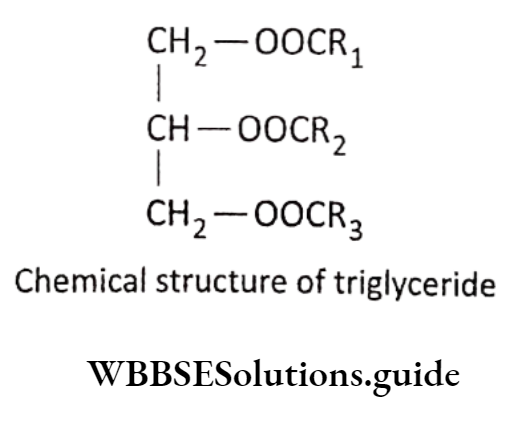
Lipids Chemical structure: Lipid has no single common structure. A commonly occurring lipid in our body is triglyceride which is constituted of fatty acid and glycerol.

Three molecules of fatty acid combine with one molecule of glycerol by three ester linkages to form a triglyceride molecule.

Lipids definition, structure, classification, and types notes PDF

Fatty acids: Fatty acids are organic acids with a long hydrocarbon chain ending with a carboxylic group.

Properties of fatty acid:

  1. It is a type of aliphatic organic acid, which is formed as a result of the hydrolysis of lipids.
  2. There are about 100 types of fatty acids present in nature.
  3. The fatty acid chains are usually 14-24 carbon atoms long.
  4. One end of the fatty acid has a COOH group while the other end has a -CH3 group.
  5. About 4-30 carbon atoms may be present in the fatty acids.
  6. Most lipids consist of a polar or hydrophilic head (typically glycerol) and one to three nonpolar or hydrophobic fatty acid tails, and therefore they are amphiphilic.
  7. Fatty acids consist of unbranched chains of carbon atoms that are connected by single bonds only (saturated fatty acids) or by both single, double or triple bonds (unsaturated fatty acids).
  8. It is generally not available in free form within the cell.
  9. Some fatty acids may also exist in the ring structure.
Class 11 Biology Class 11 Chemistry
Class 11 Chemistry Class 11 Physics
Class 11 Biology MCQs Class 11 Physics MCQs
Class 11 Biology Class 11 Physics Notes

General formula of fatty acids: Fatty acids are straight-chain monocarboxylic acids with a general molecular formula RCOOH.

‘R’ is the variable group.

Fatty acid chains have a methyl group (—CH3) at one end and a carboxyl (-COOH) group at the other end. The general formula is CH3 – (CH2)n – COOH.

The COOH group is attached to the a -carbon, with the next C-atom being J3 -carbon, the next being <5 -carbon and so on.

Similarly the -CH3 group is attached to the OJ1 -carbon, with the previous carbon atom being u2 -carbon, the one previous to it being w3 -carbon and so on.

Types of fatty acids: Fatty acids are classified on the basis of different characteristics.

Classification based on number of carbon atoms: According to the number of carbon atoms, fatty acids are of the following types—

Short-chain fatty acids: These have less than 10 carbon atoms, Example butyric acid (CH3 – (CH2)2 – COOH) which is found in butter and caproic acid (CH3 – (CH2)4 – COOH) which is found in butter, milk, cream, etc.

Short-chain fatty acids show a higher degree of fluidity than long-chain fatty acids because their intermolecular packing is less compact.

Long-chain fatty acids: They have 14- 24 carbon atoms forming a chain.

These are found in biological systems, though 16 and 18-carbon molecules are most common.

Examples of long-chain fatty acids are, palmitic acid (C16H32O2), stearic acid etc-

Classification based on the number of double bonds  in the molecule: According to the number of double bonds present in their molecules, fatty acids are classified as follows—

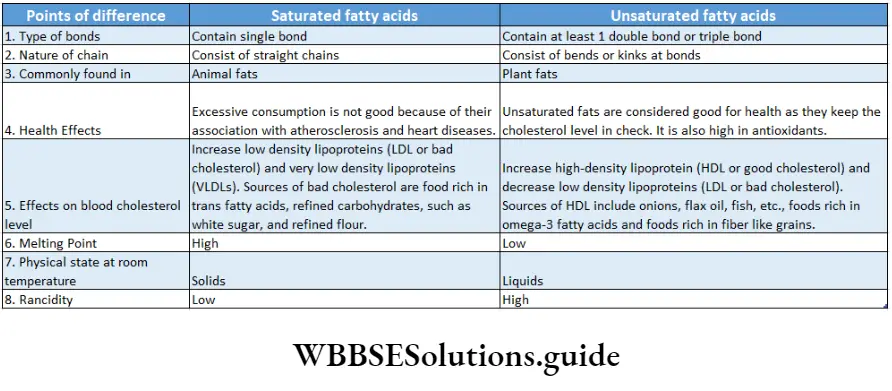
Saturated fatty acids: Here, all carbon atoms are joined by single bonds in the hydrocarbon chain, Example palmitic acid (C16H3202), stearic acid (C18H36°2) caproic acid (C6H1202), butyric acid (C4H802), etc. Saturated fats are found in animals.

Generally, saturated fats have a high melting point, so they are solids at room temperature.

Lipids - Definition Structure Classification Types

Unsaturated fatty acids: They have one or more double bonds in the hydrocarbon chain, Example oleic acid (C18H3402), linoleic acid (C18H3202), linolenic acid (C18H30O2), arachidonic acid (C20H32O2) or triple bonds (acetylenic fatty acids) on the basis of number of double bonds the unsaturated fatty acids called monoenoic acid (one double bond), dienoic acid (two double bonds), trienoic acid (three double bond), etc.

Unsaturated fats are liquid at room temperature and found in plants. This explains why butter (made from animal fat) is solid while oils (fats from vegetables) are liquids.

Margarine is made by hydrogenating (adding H) unsaturated vegetable oils, increasing the amount of saturation and thus the melting point will be high (so it will be solid).

Classification of lipids with examples and functions

Classification based on requirement: Based on their requirement in our body, fatty acids are of the following types—

Essential fatty acids: These are not synthesised in the human body and therefore exclusively obtained through diet. Examples are linoleic acid, linolenic acid, and arachidonic acid.

Non-essential fatty acids: These are synthesised in the body and therefore are not essential in the diet. Example palmitic acid, stearic acid, oleic acid, etc.

Sources of some essential fatty acids

Humans and other mammals have a dietary requirement for certain essential fatty acids, such as linoleic acids and alpha-linoleic acid.

They cannot be synthesized from simple precursors in the diet. Most vegetable oils are rich in linoleic acid (sunflower).

Alpha-linoleic acid is found in the green leaves of plants and in some seeds, nuts, and legumes.

Fish liver oils are particularly rich in longer-chain omega-3 fatty acids such as icosapentaenoic acid or EPA (C20H30O2) and docosahexaenoic acid or DHA (C22H3202).

Biology Class 11 Chapter 9 Biomolecules Difference Between Saturated Fatty Acids And Unsaturated Fatty Acids

Glycerol: A tricarbon alcohol with three hydroxyl groups (-OH) is known as glycerol.

Classification of lipids: Lipids are classified as simple lipids, compound lipids and derived lipids. These are described under a separate head below.

Biology Class 11 Chapter 9 Biomolecules Classification Of Lipids

“lipid classification “

Simple lipids

Simple lipids Definition: Simple lipids are esters of fatty acids with glycerol or other alcohol only without containing any other substituent group.

The two types of simple lipids are mentioned below.

Triacylglycerols or Triglycerides: Triglyceride is an ester obtained from glycerol by the esterification of The two types of simple lipids mentioned below.

Biology Class 11 Chapter 9 Biomolecules Triacylglycerols And Triglycerides

Examples are Ghee, groundnut oil, mustard oil, sunflower oil, castor oil, Cod liver oil, and Halibut liver oil.

Triglycerides Characteristics: Triglycerides have the following properties—

  • These are non-polar and hydrophobic in nature.
  • These are stored in large quantities in plants and animals, as an energy source.

Triglycerides Types: Triglycerides are of two types—

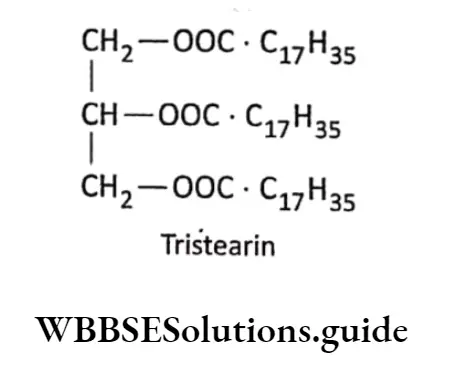
Symmetrical or simple triglycerides: When the three fatty acid molecules of a triglyceride are of the same type, they are called symmetrical or simple triglycerides, Example tristearin.

Biology Class 11 Chapter 9 Biomolecules Symmetrical Or Simple Triglycerides

Asymmetrical or mixed triglycerides: When the three fatty acid molecules of a triglyceride are either of two or three different types, they are called asymmetrical or mixed triglycerides. Example: Oleopalmitosteain.

Biology Class 11 Chapter 9 Biomolecules Asymmetrical Or Mixed Triglycerides

States: Triglycerides are found in two states—

Fats: The triglycerides that are made of saturated fatty acids and are solid at room temperature are called fats.

Oils: The triglycerides that are made of unsaturated fatty acids and are liquid at room temperature are called oils.

Biology Class 11 Chapter 9 Biomolecules Difference Between Animal Fats And Plants Fats

Types of lipids and their biological significance 

Waxes: Waxes are esters of higher fatty acids and aliphatic, alicyclic and monohydric alcohol other than glycerol.

Biology Class 11 Chapter 9 Biomolecules Difference Between Different Types Of Wax And Their Sites Of Occurrence

Wax has the following properties—

  1. It is saturated in nature but may break in the presence of alcoholic KOH and high temperature.
  2. It does not get oxidised in nature.
  3. It is insoluble in water.

Compound lipid

Compound lipid Definition: Compound lipids are fatty acid esters containing wax that have the following properties—

Compound lipid Phospholipids: Phospholipids or phosphatides are heterogeneous groups of compounds. A phospholipid molecule consists of fatty acids and glycerol in addition to phosphoric acid, nitrogen bases and other substituents like Lecithin (DDPC, DOPC), cephalin, etc.“lipid structure diagram “

Compound lipid Characteristics:

  1. These are mainly found in the cell membrane.
  2. The molecules contain a hydrophobic non-polar tail and hydrophilic polar head, hence amphipathic in nature.

Biology Class 11 Chapter 9 Biomolecules Phospholipid lecithin

Glycolipids or glycosphingosides: The compound lipid, in which one of the fatty acids is replaced by an amino alcohol(sphingosine) and one or more fatty acid is replaced by simple sugars, are called glycolipids or glycosphingosides.

The glycolipids are components of cell membranes, particularly in the membrane and myelin sheath of nerve fibres and membranes of chloroplasts.

Glycolipids or glycosphingosides Structure: The glycolipids are made of sugar, fatty acids and sphingosine.

Glycolipids or glycosphingosides Types: Glycolipids are of the following types—

Glycolipids or glycosphingosides Cerebrosides: The glycolipids that contain glucose or galactose as the sugar units, are called cerebrosides. These are mainly found in the brain.

Sulpholipids or sulphatides: The glycolipids that contain S-containing galactose as the sugar units, are called sulpholipids. These are found mainly in the white matter of the brain.

Gangliosides: These glycolipids are composed of sphingolipids linked by glycosidic bonds to oligosaccharide chains as the sugar units, and are called gangliosides.

These are found in nerve cells, spleen and red blood cells. These molecules have important immunological roles and are used for therapeutic purposes.

Lipoproteins: The compound lipid molecules, conjugated with protein, are called lipoproteins.

These molecules contain neutral fats (triglycerides), cholesterol or phospholipids as the lipid part. These are found in cell membranes, milk, egg yolk, etc.

Derived Lipid

Derived Lipid Definition: The lipids that are derived through hydrolysis of simple or compound lipids are called derived lipids.

Some other chemical constituents are also included in this group. Examples are steroid hormones, fatty acids, glycerol, fat-soluble vitamins—A, D, E, K, hydrocarbons, etc.

Derived lipids are of three types—

  1. Steroids,
  2. Terpenes and
  3. Carotenoids.

Steroids: Steroids are derived lipids obtained from cyclohexane pentano per hydro phenanthrene or sterane compound. They do not contain fatty acids, and hence are non-saponifiable.

Several types of steroids are known. Some of them are given below—

Sterol: Hydroxyl group containing steroid.

Cholesterol: This is present in higher animals in a free state or as a fatty acid ester.

It is an important component of some cell membranes and of plasma lipoproteins and also acts as a precursor of different steroid hormones in animals.

Biology Class 11 Chapter 9 Biomolecules Structure Of Cholestrol

Ergosterol: This is found in plants and fungi, such as yeast, Neurospora, etc. and in some protozoa.

Terpenes: Terpenes are a type of derived lipids, which contain less than 40 carbon atoms, and are found mainly in plants.

They are of different types, such as monoterpenes, diterpenes, etc.

Several isoprene units combine to form isoprenoid units. They are found in leaves, flowers etc. Example menthol, camphor, thymol, etc.

Carotenoids: The carotenoids are unsaturated derived lipids, mainly pigments, present in plants. They are responsible for bright red, orange and yellow colouration in flowers and fruits. They are of several types like lycopene, carotene, xanthophyll, etc..

“biochemistry lipids “

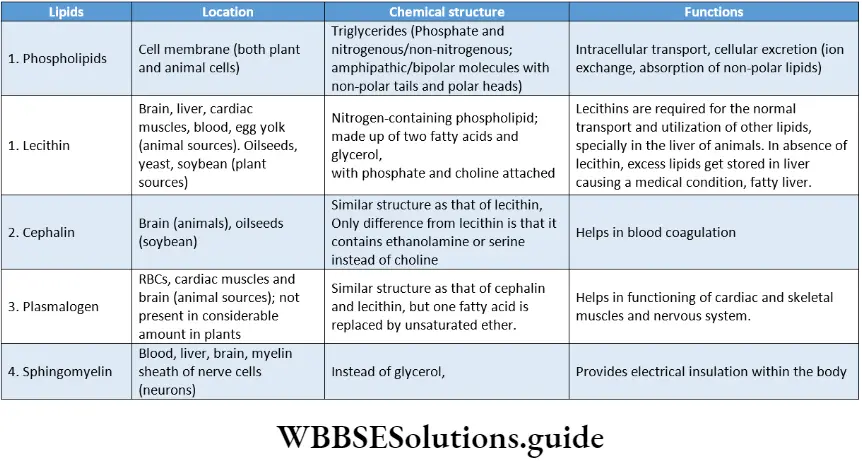
Biology Class 11 Chapter 9 Biomolecules Different Types Of Lipids, Their Locations, Chemical Structures Of Functions

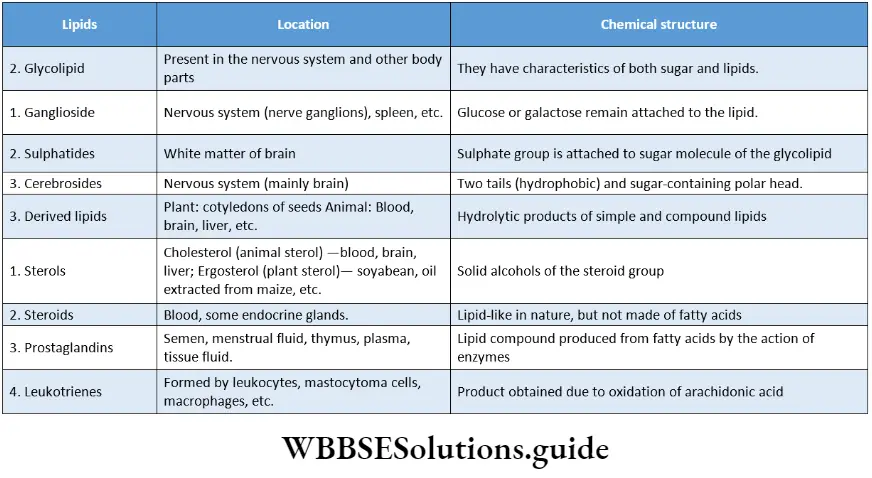
Biology Class 11 Chapter 9 Biomolecules Different Types Of Lipids, Their Locations, Chemical Structures Of Functions 2

Properties of lipid

Different physical and chemical properties of lipids are discussed below.

Physical properties:

  1. Lipids are insoluble in water, but soluble in organic solvents (like ether, chloroform, alcohol) etc.
  2. Pure triglycerides are odourless, tasteless and colourless in nature.
  3. Unsaturated fatty acids are present in a liquid state (oils), at normal temperature while saturated fatty acids are present in the solid state, at normal temperature.
  4. They have different melting points, as their melting point depends on the length and saturation level of the fatty acid chains.
  5. The relative molecular weight of the lipids is less than 1.0, hence they are lighter than water.
  6. Solid lipids are lighter than liquid lipids.

Chemical properties

Chemical properties Hydrolysis: By boiling with acid or alkali or by increasing temperature, fats can be hydrolysed into fatty acids and glycerol. The enzyme lipase hydrolyses lipids into fatty acids and glycerol, within the digestive system.

Saturated vs unsaturated fatty acids in lipids 

Chemical properties Saponification: The process by which fats and oils react with alkali (For example sodium hydroxide, potassium hydroxide, etc.) to form soaps is called saponification.

The number of milligrams of KOH / NaOH required to neutralise the total amount of fatty acids derived from the hydrolysis of 1 gm of fat is called the saponification number.

\(\text { Saponification number }=\frac{1}{\text { M.W. of fatty acid of fat }}\)

This number is an index of the average molecular size of fatty acids present in a particular fat.

Chemical properties Halogenation: Unsaturated fatty acids have the ability to add halogens (iodine, fluorine, chlorine and bromine) at double bonds. This principle is used to determine the presence of unsaturated fatty acids in lipids.

Chemical properties Hydrogenation: The addition of hydrogen to fats and oils depends on the presence of unsaturation in the fatty acids.

This process occurs in unsaturated fatty acids, changing them to saturated fatty acids. Hydrogen is usually added at high temperatures in the presence of nickel as a catalyst.

This reaction changes oil to fat. It raises the melting point of oils so that they solidify.

This principle is used to make edible vanaspati or margarine from inedible and cheap vegetable oil like cottonseed oil.

Chemical properties Oxidation: The unsaturated fatty acids, present in the fats and oils, react with atmospheric oxygen when exposed to air forming lipid peroxides, fatty aldehydes, ketones and short-chain fatty acids.

Rancidity or acid number: It is a condition in which fat attains a bad taste along with bad odour due to exposure to air. The product obtained is called rancid lipid.

Rancidity occurs due to the action of lipase enzymes secreted by microorganisms present in the air. Lipids, like tannins, vitamin E, etc., obtained from plants do not get rancid easily as they contain some of the antioxidants.

However, lipids with higher unsaturated fatty acid content become rancid easily. Rancidity is absent in lipids obtained from animal sources.

Biological importance of lipid

Lipids play various important roles in living organisms, especially in human beings.

Energy source: Lipids act as a source of energy. They are superior to carbohydrates and protein. They yield twice the energy produced by the same amount of carbohydrates and protein. The calorific value of lipids is 9.3 kcal/g.

Structural component: Lipids are the major components of cell membranes. The lipid bilayer of the cell membrane controls the movement of materials in and out of the cell.

Reserve energy food: In plants, Lipid serves the lipidsas thearestoragestored in the body soil seeds of groundnut, mustard, castor and coconut to provide nourishment to the developing embryo during germination. In animals, fat is stored in the form of adipocytes or fat cells.

Solvent: They act as solvents for the fat-soluble vitamins (A, D, E, K).

Body temperature regulation: Lipids deposited in the subcutaneous adipose tissue help in insulation and protection from cold.

A thick layer of subcutaneous fat, called ‘blubber’, especially in whales, seals, etc. regulates body temperature in ice-cold water.

Transmission of information: Steroid hormones transmit information and mediate communication between cells through blood.

Phospholipids, steroids, and triglycerides structure and functions

Fatty acid transport: Lipids play an important role in absorption and transportation of fatty acids by blood.

Role In Maintaining Membrane Fluidity: Fatty acids influence membrane fluidity which is important in regulating the diffusion of protein molecules embedded within the membrane.

Hormone synthesis: Steroid hormones like sex hormones and adrenocorticoid hormones are synthesised from cholesterol.

Protection: Lipids form a protective covering over the aerial parts of plants to regulate the excessive loss of water by transpiration.

In animals, the layer of subcutaneous (below the skin) fat provides protection against desiccation. Fat deposition around the delicate visceral organs acts as a cushion and absorbs mechanical shock.

Lipids in cell membranes: role of phospholipids and cholesterol

Electrical insulator: Lipids in the myelin sheath outside the medullary nerves, act as electrical insulators.

Lipid storage diseases or lipidoses

Gaucher disease: It is a hereditary disease caused by to accumulation of cerebrosides which affects the liver, lung, bone marrow and spleen.

Niemann-Pick disease or sphingomyelin lipidosis: This disease is caused by the accumulation of excess sphingomyelin, in the brain. It is a hereditary disorder.

Tay-Sachs disease: It is a hereditary disease caused due to accumulation of excess gangliosides in the nerve cells of the brain causing progressive damage to the cells.

Monosaccharides (Glucose & Fructose) Notes

Monosaccharides

Monosaccharides Definition: The simplest form of carbohydrates that do not hydrolyse further into smaller units are called monosaccharides.

Monosaccharides Types: Monosaccharides are classified on the basis of—

  1. The number of carbon atoms and
  2. Reducing group presence.

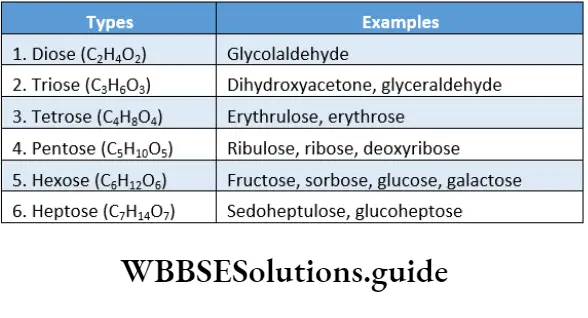
Biology Class 11 Chapter 9 Biomolecules Types Of Monosaccharides According To Number Of C-Atoms

Biology Class 11 Chapter 9 Biomolecules Types Of Monosaccharides According To Reducing Groups

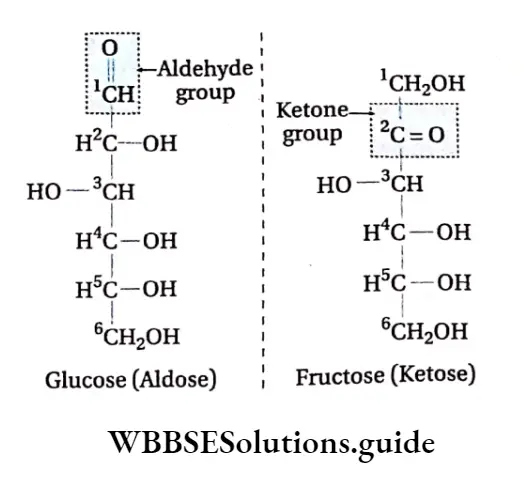
Biology Class 11 Chapter 9 Biomolecules Aldose And Ketose Sugar

Properties of monosaccharides: The different properties of monosaccharides are discussed below.

Presence of aldehyde or ketone group: They essentially contain an aldehyde or ketone group in their structure.

Monosaccharides glucose and fructose notes 

Examples of monosaccharides are glucose, fructose, ribose etc.

Monosaccharides Glucose And Fructose Notes

The simpler carbohydrates are known as sugars. The sugars are named according to the presence of the aldehyde or ketone group. Those that contain –CHO (aldehyde) are called aldoses and those that contain C = 0 (ketone) are ketoses.

Isomerism: The empirical Formula of monosaccharide is Cn(H2O)n. The value of ‘n’ ranges from three to eight.

Pentose and hexoses have an open chain or ring structure. Except for dihydroxyacetone, all other monosaccharides have an asymmetric carbon atom (chiral carbon) i.e., four different atoms or groups of atoms (substituents) bonded to its four valencies.

The presence of asymmetric carbon atoms allows the formation of isomers. The compounds which have the same structural formula but differ only in spatial configuration are called stereoisomers or geometric isomers.

Glucose (aldohexose) with 4 asymmetric carbon atoms has 2n = 24 = 16 stereoisomers (n = The number of asymmetric carbon atoms) while fructose (ketohexose) has 23 = 8 stereoisomers.

Class 11 Biology Class 11 Chemistry
Class 11 Chemistry Class 11 Physics
Class 11 Biology MCQs Class 11 Physics MCQs
Class 11 Biology Class 11 Physics Notes

Depending on the orientation of the H and OH groups around the asymmetric carbon atom, a sugar may exist as D and L stereoisomers that are mirror images of each other.

When the OH group around the carbon atom adjacent to the terminal primary alcohol carbon is on the right, the sugar is a member of the D series and when it is on the left, it is a member of the L series.

The majority of the monosaccharides occurring in mammals are of the D configuration.

Molecular structure: The monosaccharides have mainly two types of molecular structures—

  1. Free Chain Structure And
  2. Ring-Like Structure.

Aldose sugars generally show a free chain structure. This structure can also be explained by Fischer’s projection. On the other hand, monosaccharides with 5-6 C atoms have a ring-like structure.

The carbonyl group(-C=0) is attached covalently to the O-atom of the OH group, to form the ring structure.

“monosaccharide example “

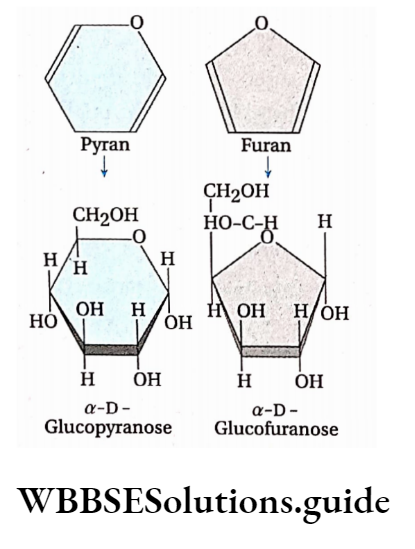
The ring structure is of two types— or -ring and -ring. They are stereoisomers of each other.

Due to optical rotation, they can be converted to each other by mutarotation. The carbon atom1 (C-l) is called anomeric carbon.

Pyranose and furanose formation: Ring forms are of two types—

  1. Pyranose and
  2. Furanose.

The Pyranose ring form is hexagonal with five carbon atoms and one oxygen atom.

It is formed when the aldehyde group attached to the C-l atom of sugar is attached to its hydroxyl group at carbon atom 5, forming a six-member ring.

The Furanose ring form is pentagonal with four carbon atoms and one oxygen atom. It is formed when the keto group at 2nd carbon reacts with the hydroxyl group at 5th carbon, forming a five-member ring.

Difference between glucose and fructose monosaccharides

Biology Class 11 Chapter 9 Biomolecules Pyranose And Furanose Rings Of Glucose

Ester formation: Due to the presence of an alcoholic hydroxyl (-0H) group in the structure, it reacts with inorganic acids to form its esters. Example: Glucose-l-phosphate is the phosphate ester of Glucose.

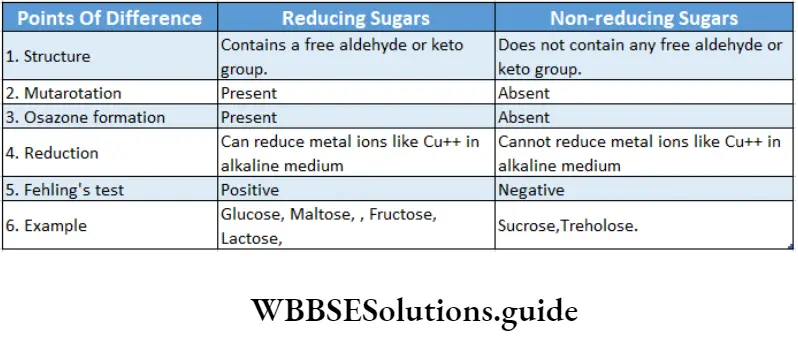
Reducing properties: Due to the presence of free aldehyde or keto group, all monosaccharides can reduce metal ions like cupric ions (Cu++) etc.

Biology Class 11 Chapter 9 Biomolecules Difference Between Resucing And Non-Reducing Sugars

Oxidising properties: Monosaccharides get oxidised to several sugar acids containing the -COOH group.

In the case of hexoses, number 1 or number 6 carbon atoms may get oxidised to -COOH groups.

Structure and function of glucose and fructose 

When a number of carbon gets oxidised, exonic acid is produced, for example, gluconic acid. When C6 gets oxidised, uronic acid is produced, for example, glucuronic acid.

Optical Isomerism

It is the isomerism based on the optical activity of a sugar. The optical activity occurs due to the presence of asymmetric carbon atoms in its molecule.

The optical activity of a sugar refers to the rotation of the plane of polarised light (light in which the waves vibrate in a single plane) passing through a solution of that sugar. If the light is rotated in a clockwise manner or to the right, then the sugar is referred to as dextrorotatory or d-sugar or (+)sugar.

Monosaccharides definition types and examples 

On the other hand, if the light is rotated in an anti-clockwise manner or to the left, then the sugar is referred to as levorotatory or l-sugar or (-)sugar. These are the optical isomers of each other.

Mutarotation

It is the change in the optical activity of a freshly prepared aqueous solution of sugar until its optical rotation attains a stable equilibrium.

Epimers

Several isomers of glucose are formed due to the exchange of H+ and OH- ions, within C-2, C-3 and C-4 of the molecule. These are known as epimers. Example Mannose, galactose etc.

Effect of concentrated acid: The reaction of sugar with a strong mineral acid produces a furfural compound.

Effect of mild alkali: Both aldoses and ketoses react with mild alkali solution, to form enediols which are powerful reducing agents.

Osazone formation: Osazones are a class of carbohydrate derivatives found when reducing sugars react with phenylhydrazine.

Glucose vs fructose metabolism in the body 

By studying the crystalline structure of the osazone formed, the carbohydrate can be identified. For example, glucose osazone is needle-shaped and long, while maltose appears as a bunch of grapes.

Hexosamine formation: The Hydroxyl group of hexose sugar when replaced by an amino group forms a structure called hexosamine. It is also called amino sugar.

Glucosamine is a type of sugar, formed from glucose.

Glycoside formation: Glycosides are molecules in which a sugar is bound to the hydroxyl group of a non-sugar moiety.

The replaceable hydrogen atom is replaced by alcohol, phenol or sterol group. Example digitonin, and fluorine.

They have a bitter medicinal taste, The leaves and roots have large amounts of glycosides.

Condensation: Several monosaccharides form larger molecules through chemical bonds by the condensation process.

Compound Carbohydrate

Two or more monosaccharide units when joined together by glycosidic bonds form compound carbohydrates.

The formula of compound carbohydrate is (C6H12O6)n- (H2O)n-1.

Compound carbohydrates are of two types—Oligosaccharides and Polysaccharides.

Oligosaccharides-simple Compound Carbohydrates

Oligosaccharides Definition: Simple carbohydrates which are composed of two to ten molecules of monosaccharides joined by glycosidic bonds are known as oligosaccharides.

Oligosaccharides Structure: When two or more monosaccharide units, either similar or dissimilar, link to each other by bonds, an oligosaccharide is formed.

” structure of glucose and fructose”

Two monosaccharide molecules join each other by a glycosidic bond between 1st carbon atom of one monosaccharide molecule and 2nd or 4th or 6th carbon atom of another monosaccharide molecule.

Each glycosidic bond formation involves the removal of one molecule of water.

Oligosaccharides Types: On the basis of a number of monosaccharide units or monomers, these are disaccharides, trisaccharides, tetrasaccharides, pentasaccharides etc.

Oligosaccharides Disaccharides: Disaccharides are composed of two molecules of monosaccharides (C6H1206)2-(H20).

The biologically important disaccharides present in plants are sucrose (glucose + fructose) and maltose (glucose + glucose).

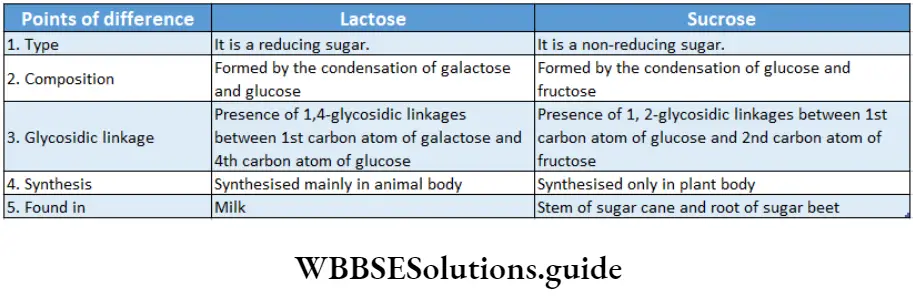
In animals disaccharide, lactose (galactose glucose) is present.

Sucrose or cane sugar is abundantly found in sugarcane, beets, carrots and fruits.

It is formed by the condensation of one molecule of D-glucose and one molecule of D-fructose.

Here, the 1, 2-glycosidic bond is formed between the aldehyde group of glucose and the keto group of fructose.

Due to the absence of a free aldehyde or keto group, sucrose is a non-reducing sugar.

Maltose or malt sugar, a reducing aldose, is found in cereals, like oat, barley, wheat, etc.

A maltose molecule is formed by the bonding of two D-glucose molecules through a 1, 4-glycosidic bond.

It is a reducing sugar as the aldehyde group of one of the glucose molecules is free. It is used in making beer.

Lactose or milk sugar is found in milk in the form of gritty crystals of the milk whey.

It is formed by the condensation of one molecule of D-galactose and one molecule of D-glucose through a 1, 4-glycosidic bond between the 1st carbon aldehyde group of galactose and the 4th carbon of glucose.

It is also a reducing sugar as the aldehyde group of the glucose molecule is free.

Trisaccharides: Trisaccharides are composed of 3 molecules of monosaccharides, for Example, raffinose (glucose + fructose + galactose) found in cottonseed and sugar beet.

Tetrasaccharides: Tetrasaccharides yield 4 monosaccharides on hydrolysis, for Example, stachyose (glucose + fructose + galactose + galactose), the only tetrasaccharide known to exist in plants.

Pentasaccharides: Pentasaccharides yield five monosaccharide units, Example verbascose (fructose + glucose + galactose + galactose + galactose).

Derived monosaccharide

Any substance derived from monosaccharides by reduction of the carboxyl group by oxidation or by replacement of one or more hydroxyl groups and forms a modified, different complex structure with different properties is called derived monosaccharide.

Examples are saline, glucosamine, glucuronic acid, phosphate j sugar, amino sugar and vitamin C (ascorbic add).

Different types of derived monosaccharides are essential for different physiological functions of the body.

For example—

  • Vitamin C is required for the functioning of the different enzymes and also to treat the disease, scurvy,
  • Amino sugar prevents protein synthesis in several bacteria.
  • Glucuronic acid is an important constituent of saliva,
  • Phosphate sugar plays an important role in forming nucleic acid and the release of energy.

Properties:

  1. They are water-soluble.
  2. They generally have a sweet taste.
  3. They are stored as storage carbohydrates. For example, sucrose is stored in sugarcane and sugar beet as reserve food.

Biology Class 11 Chapter 9 Biomolecules Difference Between Glucose And Surcose

Biology Class 11 Chapter 9 Biomolecules Difference Between Lactose And Surose

Polysaccharides—Complex Compound Carbohydrates

Polysaccharides Definition: The polymers consisting of 20 to 107 monosaccharide units, joined by glycosidic linkages, are called polysaccharides.

Classification of polysaccharides: Depending upon the chemical structure, nature and functions, polysaccharides are of the following types.

According to the chemical structure

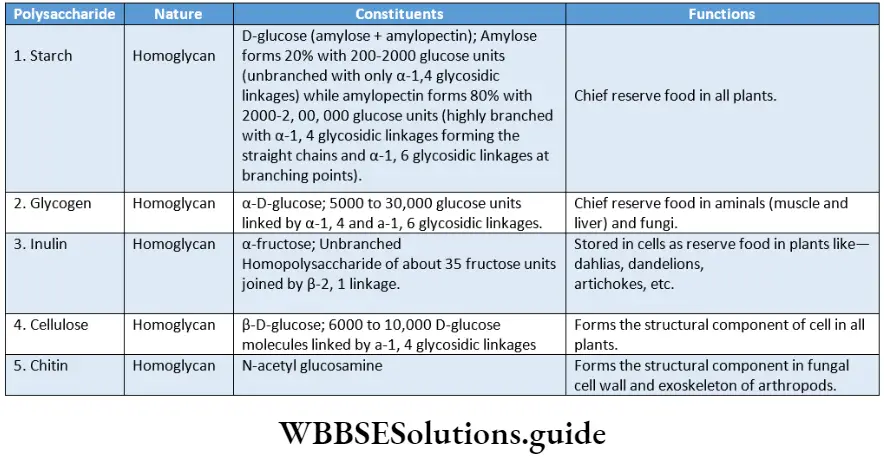
Homoglycans or homopolysaccharides: The polysaccharides formed by condensation of a single type of monosaccharides are called homoglycans or homopolysaccharides; for Example starch (glucose units), inulin (fructose units), agar (galactose units), etc.

Heteroglycans or heteropolysaccharides: The polysaccharides formed by the condensation of two or more kinds of monosaccharide units are called heteroglycans or heteropolysaccharides; for Example chitin, glycoproteins, peptidoglycans, hyaluronic acid, heparin, mucopolysaccharides, etc.

According to the nature of the components

  1. Pentosan: The polysaccharides formed by units of pentoses are called pentosans. Example Xylan.
  2. Hexosan: The polysaccharides formed by units of hexoses are called hexosans. Example Galactan.

According to the nature of the components

Pentosan: The polysaccharides formed by units of pentoses are called pentosans. Example Xylan.

Hexosan: The polysaccharides formed by units of hexoses are called hexosans. Example Galactan.

Fructosan: Homopolysaccharides of fructose units are known as fructosans, for Example, inulin etc.

Galactosan: The homopolysaccharides of galactose units are known as galactosans, Example D-galactosan.

Within cells, there are many oligosaccharides formed by three or more units.

These are not present as free molecules but remain linked to lipids or proteins, to form glycoconjugates.

The carbohydrates attached to proteins are called glycoproteins and to lipids are called glycolipids.

According to functions

Storage or nutrient polysaccharides: They serve as reserve food and provide nourishment, for example, starch, glycogen, inulin, etc.

Structural polysaccharides: They take part in the structural framework of the cell. The cell walls in bacteria, plants and exoskeletons in animals are formed with polysaccharides.

Examplecellulose (in the plant cell wall), chitin (in the fungal cell wall, the exoskeleton of arthropods), peptidoglycan (in the bacterial cell wall), etc.

Complex polysaccharides: They are colloidal materials of high molecular weight. They are formed of polysaccharides and non-sugar components.

They are capable of forming gels or have adhesive properties, for example, glycoproteins, peptidoglycans, agar agar, heparin, hyaluronic acid, keratin sulphate, etc.

They bind proteins in cell walls and connective tissue and water in interstitial spaces.

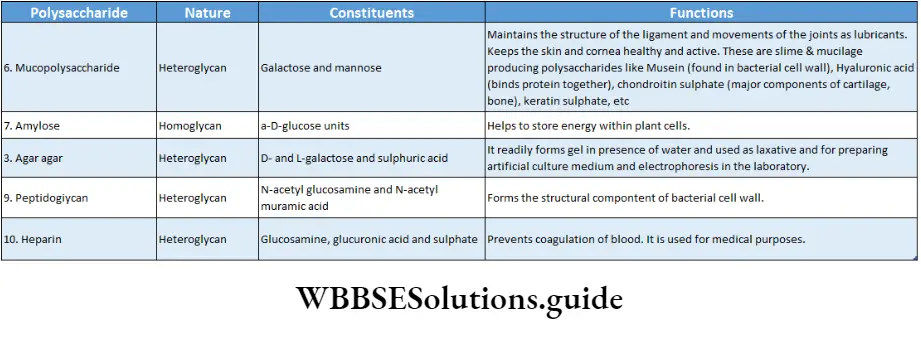
Biology Class 11 Chapter 9 Biomolecules Some Important Polysaccharides- Their Nature, Contituents And Functions

Biology Class 11 Chapter 9 Biomolecules Some Important Polysaccharides- Their Nature, Contituents And Functions 2

Biological importance of carbohydrates

Carbohydrates have immense importance in living organisms. They also have various commercial uses in human life.

Storage food: Starch and glycogen are major storage or nutrient polysaccharides and serve as reserve food providing nourishment.

Energy source: Glucose is the primary source of energy as it is the ultimate substrate in cellular respiration. The calorific value of glucose is 4.1 kcal/g.

Structural compound: Cellulose, chitin and peptidoglycan form structural compounds of living systems like cell walls and exoskeleton.

Protection: Mucilage forms a gelatinous protective coat in many aquatic algae and bacteria.

Glycoproteins form a protective layer, glycocalyx, on the inner lining of the intestine.

Anticoagulant: Heparin prevents intravascular blood coagulation.

Medicinal value: Mucopolysaccharides like husk of isabgol (Plantago ovate), mucilage of Aloe, agar agar, algin etc., obtained from brown and red algae are of medicinal value.

Roughage: Cellulose keeps the digestive tract in functional fitness by acting as roughage.

Functions of glucose and fructose in human body 

Synthesis of vitamins: Lactose helps in the growth of certain bacteria within the intestine, which in turn synthesises vitamin B-complex.

Protein-sparing action: Carbohydrates can act as supplementary food mainly for protein as well as lipid synthesis.

Mucopolysaccharides: Algin obtained from brown algae is used as a stabiliser in ice cream, toothpaste, shaving creams, face creams etc. Algin is also used in the manufacture of surgical fibres, capsule covers, flameproof plastics and security glass. Pectin is used as jelly.

Source of timber, paper, and fibres: Cellulose: fibres of cotton and jute are used for making textiles, ropes, bags etc. Cellulose-rich wood is used in making furniture, tools and sports goods.

Biomolecules Question And Answers

Biology Class 11 WBCHSE Biomolecules Question And Answers

Question 1. Name a carbohydrate that cannot be digested in the human body.
Answer:

Cellulose is a carbohydrate that cannot be digested in the human body. It is because humans do not have cellulase, an enzyme necessary for cellulose digestion.

Biomolecules

Question 2. What is an amino sugar?
Answer:

Amino sugar

The sugar molecule in which the hydroxyl group has been replaced by an amino group, is known as an amino sugar. E.g., Glucosamine.

Biomolecules questions and answers PDF

Question 3. What is known as reducing sugar?
Answer:

Reducing sugar

The sugars which have free aldehyde or keto groups and act as reducing agents in alkaline solution, are called reducing sugars.

Biomolecules Question And Answers

Question 4. What is roughage?
Answer:

Roughage

The undigested polysaccharides that are present in food, and are important for proper functioning of the alimentary canal, is together known as roughage.

It helps to regulate digestion and prevents constipation.

Read and Learn More WBCHSE Solutions For Class 11 Biology

Question 5. What do you mean by animal starch?
Answer:

Animal starch

Glycogen is called animal starch. Plants store excess glucose in the form of starch, similarly excess glucose is stored by animals in the form of glycogen. Hence, glycogen is so named.

Question 6. What do you mean by first and second class proteins?
Answer:

First class proteins: The proteins that contain all the essential amino acids, are known as first class  proteins. Animal proteins are the examples of first class proteins.

Second class proteins: The proteins that do not contain all the essential amino acids, are known as second class proteins. Plant proteins are the examples of second class proteins.

NEET biomolecules important questions with answers

Class 11 Biology Class 11 Chemistry
Class 11 Chemistry Class 11 Physics
Class 11 Biology MCQs Class 11 Physics MCQs
Class 11 Biology Class 11 Physics Notes

Question 7. What are peptide bonds?
Answer:

Peptide bonds

The bonds that exist between the carboxyl group of one amino acid and the amino group of the adjacent amino acid, in a polypeptide chain, are called peptide bonds. Peptide bond formation involves release of a molecule of water.

Question 8. What is known as saponification? What is saponification number?
Answer:

Saponification

The reaction in which fats are hydrolysed by alkali (sodium hydroxide or potassium hydroxide) yielding glycerol and alkali salts of fatty acids (soaps), is called saponification.

Saponification number

Number of milligrams of a base (like KOH), that is required to saponify one gram of a given ester (specifically glyceride), is known as saponification number of that ester.

Biology Class 11 WBCHSE

Question 9. What is iodine number?
Answer:

Iodine number

The amount of iodine (in grams) required by 100 g of fat for saturation of unsaturated fatty acids in it, is known as iodine number. This number determines the level of unsaturation in the lipids.

Question 10. What do you understand by ‘unit of nucleic acids’?
Answer:

‘unit of nucleic acids’

Nucleotide is the ‘unit of nucleic acids’. It is formed of a pentose sugar, nitrogenous base and phosphoric acid.

Question 11. Why is DNA called double helix and anti-parallel?
Answer:

DNA contains two strands that are coiled around each other, hence DNA is also called double helix. DNA contains two nucleotide strands that lie parallel to each other but oriented in opposite directions.

Each strand has a phosphoryl (5′) end and a hydroxyl (3′) end. The 3′ end of one strand faces 5′ end of the other strand, hence DNA is also called anti-parallel.

Class 11 biology biomolecules Q&A

Question 12. What are the nitrogenous bases present in DNA?
Answer:

The nitrogenous bases present in DNA are of two types—purines and pyrimidines. Purines include adenine and guanine, while pyrimidines include cytosine and thymine.

Question 13. What is known as genetic RNA?
Answer:

Genetic RNA

In many organisms RNA is the main gentic material which stores the genetic informations. Such RNA is called genetic RNA. These organisms do not contain DNA. E.g., TMV virus, measles virus, etc.

Question 14. What is known as DNA replication?
Answer:

DNA replication

The process by which a living cell synthesises a new DNA strand from an existing DNA strand, is called DNA replication.

Question 15. What is enzymology?
Answer:

Enzymology

The branch of science that deals with the study of structure, nomenclature, activity, etc., of enzymes, is known as enzymology.

Question 16. What is ribozyme?
Answer:

Ribozyme

Ribozyme is a type of ribosomal RNA (rRNA) molecule, that acts as an enzyme. It catalyses various cellular reactions, like, processing of RNAs, splicing of mRNA, viral replication, tRNA biosynthesis, etc. Ribonuclease P is an example of ribozyme.

Question 17. What are cofactors?
Answer:

Cofactors

The thermostable, non-protein part of the enzyme responsible for the catalytic activity of an apoenzyme, is called cofactor.

The apoenzyme and the cofactor together form holoenzyme which is the active structure of an enzyme.

Question 18. What is a prosthetic group?
Answer:

Prosthetic group

The non-protein part firmly attached to the protein part of the enzyme (apoenzyme), is called a prosthetic group. They together form the holoenzyme.

Biology Class 11 WBCHSE

Question 19. What is a co-enzyme?
Answer:

Co-enzyme

The organic non-protein part which is loosely attached to the protein part of the enzyme (apoenzyme) molecule is called a co-enzyme.

Question 20. What is an active site?
Answer:

Active site

The site of the enzyme to which the substrate molecule binds and undergoes a chemical reaction, is known as active site of that enzyme.

Biomolecules chapter-wise questions with solutions

Question 21. What is the turnover number of an enzyme?
Answer:

Turnover number of an enzyme

The maximum number of chemical conversion of substrate molecules that an active site will execute for unit(l) amount of enzyme concentration per second, is known as the turnover number of the enzyme. It describes the activity of the enzyme.

Question 22. What is a simple enzyme?
Answer:

Simple enzyme

The enzyme that is made up of only protein or
amino acid molecules, is called a simple enzyme. Example: Lysosyme, urease etc.

Question 23. What are allosteric enzymes?
Answer:

Allosteric enzymes

The enzymes which contain allosteric sites (regions on an enzyme, other than the active site), to which the modulator molecules can bind and influence the activity of the enzyme) are called allosteric enzymes.

Question 24. Why do many enzymes remain inactive within living cells?
Answer:

Many enzymes remain inactive within living cells, because their main function is to regulate specific reactions. When needed they become active.

Their activation also depends on some other factors, like, pH, temperature, availability of substrates, presence of activator, enhancer and inhibitor molecules.

Question 25. What are isoenzymes or isozymes?
Answer:

Isoenzymes or isozymes

The isoenzymes or isozymes are different forms of an enzyme, varying in structural constitution but catalysing similar chemical reactions. E.g., Lactate dehydrogenase has 5 isoenzymes.

Biology Class 11 WBCHSE

Question 26. What are proenzymes?
Answer:

Proenzymes

The substances from which enzymes are synthesised through some metabolic actions, are  called proenzymes. For example, Pepsinogen is a proenzyme of pepsin.

Question 27. What are exoenzymes?
Answer:

Exoenzymes

The enzymes which are synthesised within the cells, but are secreted outside the cells, where they carry out their functions, are known as exoenzymes.

For example, the digestive enzymes are synthesised inside the cells of different glands but they act inside the alimentary canal.

Question 28. What are holoenzymes?
Answer:

Holoenzymes

The active enzyme structures consisting of apoenzyme and cofactor molecules, are called holoenzymes.

Question 29. Why is the forehead and the body wiped with wet cloth, during fever?
Answer:

During fever, the temperature of the body rises. This high temperature may affect the activity of the enzymes present in the body.

This may, in turn, affect the metabolic reactions occurring within the body. Hence, the body and the forehead is wiped with wet cloth, to lower the body temperature, which will in turn protect the  enzymes in the body.

Biology Class 11 WBCHSE Biomolecules Short Answer Type Questions

Question 1. What is ketogenic amino acid?
Answer: The amino acid which produces ketone bodies in the body (liver) is known as ketogenic amino acid. Example—Leucine.

Question 2. Give three examples of essential amino acids.
Answer: Valine, lysine and methionine are essential amino acids.

Question 3. What is phosphoprotein?
Answer: Proteins which remain combined with phosphoric acids, are known as phosphoproteins.

Question 4. Give an example of chromoprotein.
Answer: Haemoglobin is a chromoprotein.

Class 11 Biology Solutions

Question 5. What is a pentose sugar?
Answer: Simple sugars containing five carbon atoms are called pentose sugars.

Question 6. What is ‘fruit sugar’?
Answer: Fructose is known as fruit sugar.

Question 7. Why is glucose known as ‘aldose sugar’?
Answer: Glucose contains an aldehyde (-CHO) group at first carbon, hence known as aldose sugar.

Question 8. Give three examples of monosaccharides.
Answer: Glucose, fructose and galactose are examples of monosaccharides.

Question 9. What is a disaccharide?
Answer: Two molecules of monosaccharides are linked together by a glycosidic bond to form a disaccharide.

Question 10. Give two examples of disaccharides.
Answer: Maltose and sucrose are examples of disaccharides.

Question 11. What is ‘malt sugar’?
Answer: Maltose is malt sugar.

Question 12. Give two examples of sulphur containing amino acids.
Answer: Cysteine and methionine are sulphur containing amino acids.

Question 13. Give two examples of acidic amino acids.
Answer: Glutamic acid and aspartic acid are acidic amino acids.

Class 11 Biology Solutions

Question 14. Give three examples of homopolysaccharides.
Answer: Cellulose, glycogen and starch are homopolysaccharides.

Question 15. What are the components of nucleotide?
Answer: Nitrogenous base, pentose sugar and phosphate are the components of a nucleotide.

Question 16. Name four main elements found in animal body.
Answer: Carbon, hydrogen, oxygen and nitrogen are mainly found in the animal body.

Question 17. Name one common sugar found in animal body.
Answer: Glucose.

Short answer questions on biomolecules 

Question 18. Which lipid is responsible for the disease related to high blood pressure?
Answer: Cholesterol.

Question 19. Which one is the 21st amino acid?
Answer: Selenocystein.

Class 11 Biology WBCHSE

Question 20. What is triglyceride?
Answer: Triglyceride is a compound formed in combination with one molecule of glycerol and three molecules of fatty acid.

Question 21. What is ester linkage?
Answer: The linkage between glycerol and fatty acid is known as ester linkage.

Question 22. What is nucleoside?
Answer: Nitrogenous base and pentose sugar together
without phosphoric acid is known as nucleoside.

Question 23. Who discovered the double helix structure of DNA?
Answer: J. D. Watson and F.H.C. Crick (1953) discovered the double helix structure of DNA.

Question 24. What is proenzyme?
Answer: The inactive state of an enzyme from which the active enzyme is formed is known as proenzyme.

Question 25. Give two examples of proenzyme.
Answer: Pepsinogen and trypsinogen are examples of proenzymes.

Class 11 Biology Solutions

Question 26. What is isoenzyme?
Answer: Enzymes that catalyse same reactions but have different structures are known as isoenzymes.

Question 27. What is antienzyme?
Answer: The agents that destroy or inhibit the activity of the enzymes are called antienzymes.

Question 28. Give one example of isoenzyme.
Answer: Lactate dehydrogenase.

Question 29. Where is rRNA synthesised?
Answer: Nucleolus.

Question 30. What is holoenzyme?
Answer: Apoenzyme (protein) and cofactor together is known as holo enzyme.

Question 31. What are abzymes?
Answer: Antibodies with catalytic activity are known as abzymes.

Question 32. Give two examples of non-reducing sugar.
Answer: Sucrose and starch.

Question 33. Give two examples of reducing sugar.
Answer: Glucose and fructose.

Question 34. What is glycerol?
Answer: The alcohol having three hydroxyl (-OH) groups is known as glycerol.

Question 35. What is reverse transcription?
Answer: The process of synthesis of DNA from RNA is known as reverse transcription.

Question 36. What is transcription?
Answer: The process of synthesis of RNA from DNA is known as transcription.

Question 37. What is ribozyme?
Answer: The rRNA molecule capable of showing catalytic activity like enzyme, is known as ribozyme.

Question 38. What is codon?
Answer: The triplet base found in mRNA which recognizes one specific amino acid during protein synthesis is known as codon.

Class 11 Biology Solutions

Question 39. What do you mean by anticodon?
Answer: The triplet base found in tRNA responsible for base pairing with the codon of mRNA during translation is known as anticodon.

Question 40. Which biomolecule is important for carrying hereditary information?
Answer: DNA.

Question 41. Who first used the term enzyme?
Answer: W. Kuhne first used the term enzyme.

Question 42. Give one example where RNA is the genetic material.
Answer: Tobacco mosaic virus.

Question 43. Which type of RNA contains codons?
Answer: mRNA contains codon.

Question 44. What is the function of tRNA?
Answer: The function of tRNA is to carry activated amino acids to mRNA containing specific codons during protein synthesis.

Question 45. Who discovered tRNA structure?
Answer: R. Holley (1965).

Class 11 Biology WBCHSE

Question 46. Who discovered that in a DNA, A=T and G=C?
Answer: E.Chargaff (1950).

Question 47. Write the name of any one amino acid, sugar nucleotide and fatty acid.
Answer: Alanine is one amino acid, adenylic acid is a nucleotide and linolenic acid is a fatty acid.

Question 48. Can you attempt building models of biomolecules using commercially available atomic models (Ball and stick models)?
Answer: Yes, we can attempt building models of biomolecules using commercially available atomic models.

Question 49. Reaction given below is catalysed by oxidoreductase between two substrates, A and A’, complete the reaction.
Answer: A reduced + A’ oxidised →A oxdised + A’ reduced

Question 50. State True or False:
Enzymes are not heat and pH sensitive.
Answer: False.

Biomolecules Multiple Choice Question And Answers

Biomolecules Multiple Choice Questions

Question 1. Which of the following are not polymeric?

  1. Proteins
  2. Polysaccharides
  3. Lipids
  4. Nucleic acids

Answer: 3. Lipids

Question 2. Which one of the following statements is correct, with reference to enzymes?

  1. Holoenzyme = Apoenzyme + Coenzyme
  2. Coenzyme = Apoenzyme + Holoenzyme
  3. Hojoenzyme = Coenzyme + Co-factor
  4. Apoenzyme = Holoenzyme + Co-enzyme

Answer: 1. Holoenzyme = Apoenzyme + Coenzyme

Read and Learn More WBCHSE Multiple Choice Question and Answers for Class 11 Biology

Question 3. DNA fragments are-

  1. Negatively charged
  2. Neutral
  3. Either positively or negatively charged depending on their size
  4. Positively charged

Answer: 1. Negatively charged

Biomolecules multiple choice questions with answers PDF

Question 4. Which one of the following statements is wrong?

  1. Cellulose is a polysaccharide
  2. Uracil is a pyrimidine
  3. Glycine is a sulphur containing amino acid
  4. Sucrose is a disaccharide

Answer: Glycine is a sulphur containing amino acid

Biomolecules Multiple Choice Question And Answers

Question 5. Bill The two polypeptides of human insulin are linked together by—

  1. Phosphodiester bonds
  2. Covalent bonds
  3. Disulphide bridges
  4. Hydrogen bonds

Answer: 3. Disulphide bridges

MCQ on biomolecules for NEET with answers

Question 6. A non-proteinaceous enzyme is—

  1. Lysozyme
  2. Ribozyme
  3. Ligase
  4. Deoxyribonuclease

Answer: 2. Ribozyme

Question 7. Which of the following biomolecules does have a phosphodiester bond?

  1. Nucleic acids in a nucleotide
  2. Fatty acids in a diglyceride
  3. Monosaccharides in a polysaccharide
  4. Amino acids in a polypeptide

Answer: 1. Nucleic acids in a nucleotide

Question 8. Which one of the following is not applicable to RNA?

  1. Chargaffs rule
  2. Complementary base pairing
  3. 5′ phosphoryl and 3′ hydroxyl ends
  4. Heterocyclic nitrogenous bases

Answer: 1. Chargaffs rule

Class 11 Biology Class 11 Chemistry
Class 11 Chemistry Class 11 Physics
Class 11 Biology MCQs Class 11 Physics MCQs
Class 11 Biology Class 11 Physics Notes

Question 9. The chitinous exoskeleton of arthropods is formed by the polymerisation of—

  1. Lipoglycans
  2. Keratin sulphate and chondroitin sulphate
  3. D-glucosamine
  4. N-acetyl glucosamine

Answer: 4. N-acetyl glucosamine

Question 10. Select the option which is not correct with respect to enzyme action.

  1. Substrate binds with enzyme at its active site
  2. Addition of lot of succinate does not reverse the inhibition of succinic dehydrogenase by malonate
  3. A non-competitive inhibitor binds the enzyme at a site distinct from that which binds the substrate
  4. Malonate is a competitive inhibitor of succinic dehydrogenase

Answer: 2. Addition of lot of succinate does not reverse the inhibition of succinic dehydrogenase by malonate

Class 11 biology biomolecules MCQ with solutions

Question 11. Which one of the following is a non-reducing carbohydrate?

  1. Maltose
  2. Sucrose
  3. Lactose
  4. Ribose-5-phosphate

Answer: 2. Sucrose

Question 12. Glutenin is an important protein in—

  1. Potato
  2. Wheat
  3. Soyabean
  4. Spinach

Answer: 2. Wheat

Question 13. One molecule of triglyceride is produced using—

  1. One fatty acid and one glycerol
  2. One fatty acid and three glycerols
  3. Three fatty acids and three glycerols
  4. Three fatty acids and one glycerol

Answer: 4. Three fatty acids and one glycerol

Question 14. Which one of the following is enriched with a non-reducing sugar?

  1. Grapes
  2. Germinating barley grains
  3. Table sugar
  4. Mother’s milk

Answer: 3. Table sugar

Question 15. Which of the following statements is wrong for sucrose?

  1. It is a disaccharide
  2. It is a non-reducing sugar
  3. It accumulates in the cytoplasm
  4. It is comprised of maltose and fructose

Answer: 4. It is comprised of maltose and fructose

Important MCQs on biomolecules for competitive exams

Question 16. The protein component of a holoenzyme is known as~

  1. Co-enzyme
  2. Cofactor
  3. Prosthetic group
  4. Apoenzyme

Answer: 4. Apoenzyme

Question 17. Km is—

  1. Product
  2. Enzyme
  3. Constant
  4. Unit

Answer: 3. Constant

Question 18. Identify the incorrect match between the protein and its role—

  1. Keratin — Structural component of hair
  2. Immunoglobulins — Protection of body against diseases
  3. Haemoglobin — Transport of 02 in muscles
  4. Thrombin — Blood clotting

Answer: 3. Haemoglobin — Transport of 02 in muscles

Question 19. If T = 40%, C = 10%, then G =? in a pollen cell—

  1. 40%
  2. 10%
  3. 91%
  4. 20%

Answer: 2. 10%

Question 20. Lipids, which can be found in oil based salad dressings and ice cream, during digestion are splitted into-

  1. Fatty acids and glycerol
  2. Glycerol and amino acids
  3. Glucose and fatty acids
  4. Glucose and amino acids

Answer: 1. Fatty acids and glycerol

Question 21. Transition state structure of the substrate formed during an enzymatic reaction is—

  1. Transient but stable
  2. Permanent but unstable
  3. Transient and unstable
  4. Permanent and stable

Answer: 3. Transient and unstable

Biomolecules chapter MCQ with explanation

Question 22. A phosphoglyceride is always made up of—

  1. Only a saturated fatty acid esterified to a glycerol molecule to which a phosphate group is also attached
  2. Only an unsaturated fatty acid esterified to a glycerol molecule to which a phosphate group is also attached
  3. A glycerol molecule to which a phosphate group is also attached
  4. A saturated or unsaturated fatty acid esterified to a phosphate group, which is also attached to a glycerol molecule

Answer: A saturated or unsaturated fatty acid esterified to a phosphate group, which is also attached to a glycerol molecule

Question 23. Maximum number of enzymes are found in—

  1. Herbivores
  2. Carnivores
  3. Omnivores
  4. None of these

Answer: 3. Omnivores

Question 24. Holoenzyme is—

  1. Non-protein and apoenzyme
  2. Protein and apoenzyme
  3. Enzyme protein and coenzyme
  4. Enzyme non-protein and coenzyme

Answer: 3. Enzyme protein and coenzyme

Plant Growth And Development Notes

Plant Growth And Development Introduction

On your way to school or home, you see different kinds of trees and plants growing along the road. If you observe them carefully, you will find that they maintain a seasonal pattern in their growth such as the production of new leaves in springtime.

We also see a small bud blossom into a flower or a fruit develops from a flower. All these changes occur through growth and development.

Growth is one of the important characteristics of all living organisms. Plant growth is unique as they have unlimited or indefinite growth throughout their life.

“plant growth and development notes for class 11”

The development of a plant is a highly complex phenomenon. A zygote in the embryo sac starts dividing mitotically by utilizing available nutrients. In this way, it develops into a young sapling, that gradually develops into an adult plant.

Growth in plants includes an irreversible increase in size and in dry weight. It also leads to an increase in the amount of protoplasm. When the rate of anabolism is greater than the rate of catabolism, protoplasm in the cells increases. Increased amount of protoplasm in the cell leads to cell division which is followed by cell growth and differentiation.

Class 11 Biology Class 11 Chemistry
Class 11 Chemistry Class 11 Physics
Class 11 Biology MCQs Class 11 Physics MCQs
Class 11 Biology Class 11 Physics Notes

Different parts of a plant are made of different tissues. These tissues are formed by the growth and differentiation of various kinds of cells. Hence, the development of the plant body occurs by growth and differentiation.

Growth is an irreversible or permanent increase in size, shape, volume, and dry weight of an organism or its parts or even that of an individual cell caused by the synthesis of new protoplasmic materials.

Generally, growth is accompanied by metabolic processes (both anabolic and catabolic), that occur at the expense of energy.

Plant Growth And Development Notes

Seed Germination

Germination starts when a seed is provided with the appropriate amount of water, oxygen, etc.

Seed Germination Definition:

The process by which a resting embryo grows out of the seed coat as a seedling under suitable conditions is known as germination.

“detailed notes on plant growth and development”

Germination of a seed depends on several conditions, such as temperature, light, availability of water, oxygen, and nutrients. Plant hormones play a great role in germination.

Types Of Germination

There are mainly three main types of germination found in angiosperms. They are—
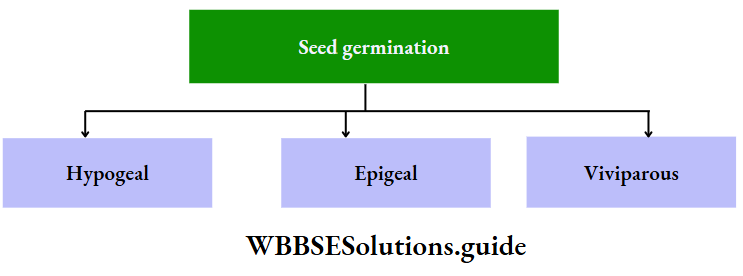
Plant Growth And Development Seed germination

Hypogeal germination

Hypogeal germination Definition:

The germination where the cotyledons remain under the soil and hypocotyl does not elongate is known as hypogeal germination.

“plant growth and development NEET notes”

Explanation: During hypogeal germination, the epicotyl elongates rapidly. This helps the plumule to push upward and to emerge above the ground. The cotyledons and other parts of the seed remain beneath the soil. example Monocotyledonous seed— rice, wheat, maize, etc.; dicotyledonous seed—gram, pea, etc.
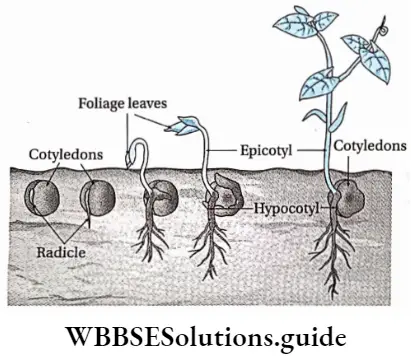
Plant Growth And Development Hypogeal germination in pea

Epigeal germination

Definition: The germination where the cotyledons are raised above the ground due to the elongation of hypocotyl is known as epigeal germination.

Explanation: In this type of germination, the hypocotyl elongates more rapidly than epicotyl to form an arch. Thus, the hypocotyl comes out of the soil, pulling the cotyledon and the enclosed plumule through the ground. The cotyledons are projected out into the air and turn green.

These cotyledons act like the first pair of leaves and provide nutritive support to the growing plants. As the seedling starts to grow leaves, the cotyledons detach and fall to the ground, Examole Dicotyledonous seed—pumpkin, tamarind; monocotyledonous seed—onion.

plant growth and development short notes
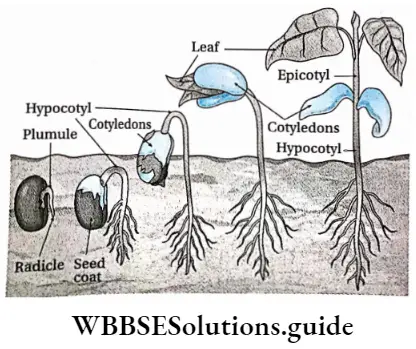
Plant Growth And Development Epigeal germination in bean

Viviparous germination

Definition: The germination in which the seed germinates before detachment of the fruit from the parent plant is called viviparous germination.

Explanation: This type of germination is found in mangroves. The radicle starts growing rapidly inside the fruit without any resting period. Thus, radicle comes out of the fruit. The radicle gradually increases in size.

After some time this structure falls off vertically from the plant on the salty mud and gets implanted in it. Then the whole structure starts growing as an independent plant.

In this way, neither the cotyledons nor the young twig comes in contact with the salty water or mud. example Rhizophora, Ceriops sp., Excoecaria agallocha, etc.
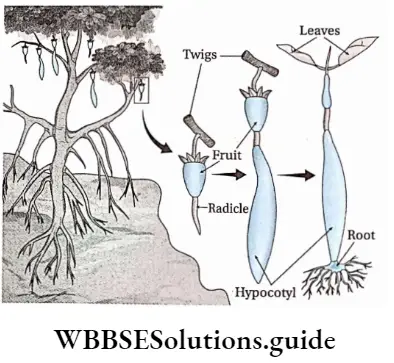
Plant Growth And Development Viviparous germination in Rhizophora

Phases Of Plant Growth And Plant Groth Rate

Generally, plant growth continues throughout their life. Primarily growth in plants is limited to the root and shoot apex. This growth occurs in the meristematic tissues present in those regions.

This type of growth is known as primary growth or apical growth. Growth in plants occurs at different rates and in different phases.

After primary growth, some plants increase in breadth by the division of lateral meristem and this type of growth is known as secondary growth. We have learned about these in Chapter 4.

Phases Of Plant Growth

Continuous division of meristematic tissue gives rise to new cells. These cells contain a thin cell wall and a large amount of cytoplasm. Initially, these cells do not contain any vacuole. During maturation, their size increases, and vacuoles appear. Permanent tissues also take part in growth by the process of differentiation.

The period of growth is generally divided into three phases, namely—

  1. Meristematic phase or phase of cell division,
  2. The phase of elongation and
  3. Phase of cell maturation or differentiation.

Plant Growth And Development Phases ofplant growth

The phase of cell division

  1. In this phase, the cells of the meristematic tissue, present both at the root apex and the shoot apex, start dividing by mitosis. As a result, the number of cells increases rapidly.
  2. The rate of anabolism is very high in these cells. This causes a rapid increase in the dry weight.
  3. Amino acid synthesis also takes place in this phase.
  4. This phase is regulated by different phytohormones like auxin, gibberellic acid, and cytokinin.
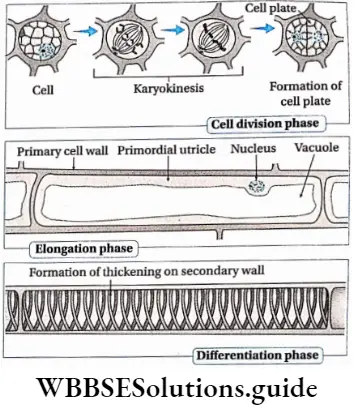
Plant Growth And Development Different phases ofgrowth

Phase of elongation

  1. In this phase, the cells increase in size by endosmosis of water.
  2. More vacuoles are produced and the turgor pressure inside the cell increases. This results in cell enlargement or elongation. Auxin plays an important role in cell elongation.

Phase of differentiation

  1. In this phase, the mature and normal-sized cells start differentiation and give rise to different cells—tracheids, trachea, collenchyma, etc.
  2. After differentiation, the cells stop growing.
  3. In this phase, the cells attain their maximal size in terms of wall thickening and protoplasmic modifications.
  4. Differentiation occurs in the cell for the completion of several physiological activities.
  5. After differentiation, several modification occurs in the cell such as the formation of a secondary cell wall. The secondary cell wall is composed of hydrophobic substances like lignin, wax, etc. As a result, the cells become impermeable and die.

Demonstration of the phases of growth

A wet filter paper is kept on a Petri dish. Now, some peas are kept on the wet filter paper and the seeds are covered with that filter paper. The peas are kept in this condition for two days. After two days, it is found that most of the seeds have produced radicles.

Now the seeds with straight radicles are separated. Water vapor on the radicles is removed by blotting paper. Gradations (1, 2, 3, 4, 5, 6, 7, 8) are marked at a gap of 2 mm on the radicles by using a marker pen. Now, these seeds are kept on wet filter paper for two days again.

After two days, the seedlings are placed on a graph paper. It is found that the distance between the two points (such as 2 and 3, 3 and 4) near the anterior portion has increased than the other portions. This region is known as the elongation region.

The posterior part of the radicle (5, 6, 7, 8) is known as the mature region. The growth rate of this region is comparatively low. This experiment proves that maximum growth of the root occurs at the region just above the tip.

plant growth regulators
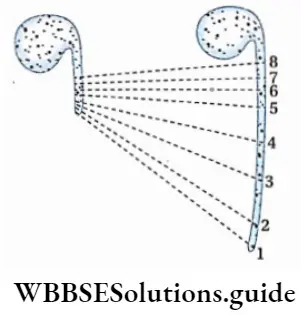
Plant Growth And Development Different stages ofgrowth in different parts ofa radicle

Types Of Growth In Plants

Depending on different factors growth can be divided into various types.

On the basis of nature

On the basis of nature, growth is of three types. They are briefly described in the chart given below.
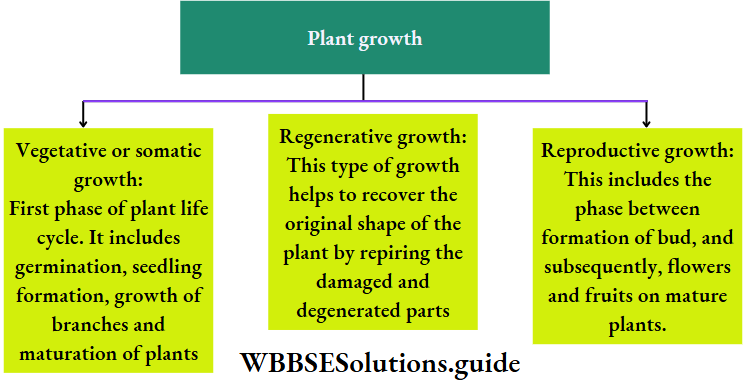
Plant Growth And Development On the basis ofnature

On The Basis Of The Site Of Growth

On the basis of the site of growth, growth is of two types. They are discussed briefly in the chart given below.

Plant Growth And Development Plant growth

On The Basis Of Metabolic Rate

On the basis of metabolic rate, growth can be divided into two types. They are discussed briefly in the chart given below.

Plant Growth And Development On the basis ofmetabolic rate

Some Facts Related To Plant Growth

Some important and interesting facts related to plant growth are discussed below.

Region of growth: In plants, growth is localized in the meristematic regions. These can be apical, lateral, or intercalary according to their position in the plant body. They are responsible for the elongation of root and shoot, increase in breadth, and growth in internodal regions respectively.

Time of growth: Plants retain the capacity for unlimited growth throughout their life. The cells of meristems have the capacity to divide and change on their own.

Process of growth: The differentiated cells increase in volume and size by cell elongation and increased vacuolation. They form one or many types of tissues. Cellulose, pectin, lignin, etc., are deposited on the cell walls of newly formed cells, making the cell voluminous. As a result, cell size increases.

Growth measuring instrument: Auxanometer is used for measuring plant growth. This is of two types an auxanometer and an automatic auxanometer.
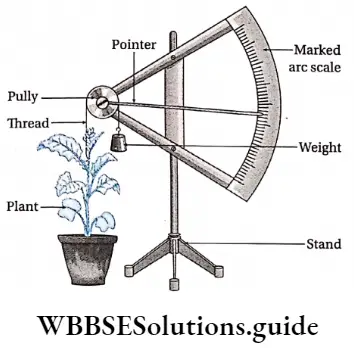
Plant Growth And Development Arc auxanometer

Annual ring: The concentric rings found in cross sections of gymnosperms as well as angiosperms (dicotyledonous) plants with woody stems are known as annual rings.

Plant Growth And Development Annual rings

During secondary growth of cambium in woody plants, a secondary xylem forms these rings each year in spring and autumn. The age of a tree can be determined by counting its annual rings. The process of age determination in plants by counting the number of concentric rings is known as dendrochronology.

Growth Rate

Definition: Growth rate is defined as an increase in growth per unit of time.

Plant growth can be determined by various methods such as measuring changes in area, length, volume, height, and/or dry weight. Also, growth can be characterized by the development of leaves, flowers, and fruits. The actual growth of a plant can be measured by observing the growth rate.

“plant hormones and growth regulators notes”

Phases of plant growth on the basis of differential growth rate

In the life cycle of a plant, the growth rate is different in different phases of its life. Initially, the growth rate remains very slow (lag phase). After that, the growth rate increases rapidly (log or exponential phase). The growth rate again slows down (deceleration phase) thereafter and at last stops completely (stationary phase).

Plant Growth And Development Phases ofplant growth on the basis ofdifferential growth rate

Mathematical explanation of plant growth rate

The growth rate can be expressed mathematically. An organism or a part of that organism can produce cells in a variety of ways. The growth rate can be determined arithmetically or geometrically.
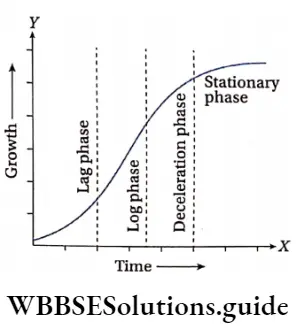
Plant Growth And Development Phases ofplantgrowth

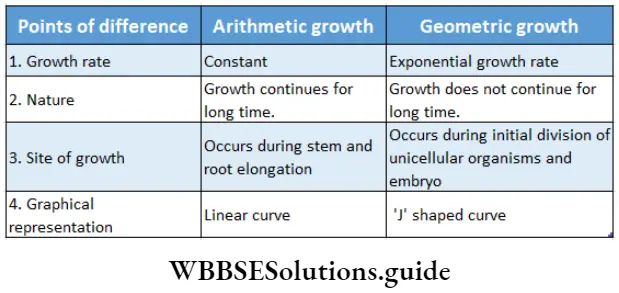
Arithmetic growth: The growth in which the growth rate remains constant from the beginning and the growth occurs arithmetically is known as arithmetic growth.

Explanation: Here, after the mitotic division, only one daughter cell continues to divide. Another daughter cell undergoes differentiation and becomes mature. Such as the root grows at a constant rate. This kind of growth gives a linear curve.

Mathematically, it is expressed as—

Lt = L0 + rt

[where Lt = length at time ‘t’

L0 = length at time ‘zero’

r = growth rate per unit of time

t = time of growth]
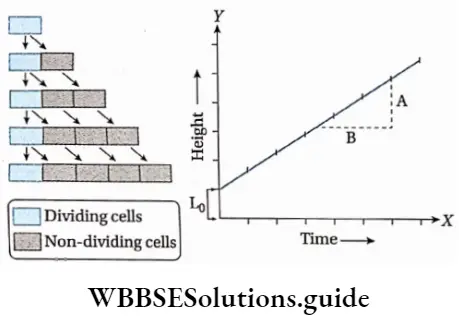
Plant Growth And Development Graphical representation ofarithmetic growth

Geometric growth: The growth in which, all the daughter cells continue to divide and the number of cells increases geometrically is known as geometric growth.

Explanation: This type of growth can be observed in unicellular organisms and in the embryo, during their growth phase. Here, initially, the growth rate remains very slow, but after that, it increases rapidly and gives a T-shaped curve. However, the geometric growth rate is not constant.

So, in the case of plants, the curve becomes ‘S1-shaped (Sigmoid curve) in later stages. In most of the plants, primary growth occurs geometrically and the growth rate is different in different parts of the plant.
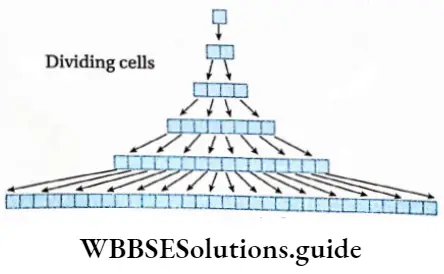
Plant Growth And Development Geometrical growth

“what is plant growth “

The exponential or geometrical growth can be expressed mathematically as—

W1 = W0ert

[where W1 = final size (weight, height, number, etc.)

W0 = initial size at the beginning of the period

r = growth rate t = time of growth

e = a constant, its value is about 2.71]
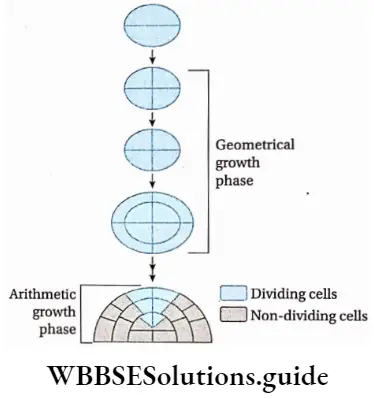
Plant Growth And Development Geometric and arithmetic growth during formation ofembryofrom a zygote

Types of plant growth rate

Plant growth rate can be expressed in two ways. Both are briefly described below—

Absolute growth rate: The comparative measurement of total growth per unit time is called the absolute growth rate.

Mathematical expression

Absolute growth rate = \(=\frac{A_2-A_1}{T_2-T_1}\)

[Ai = Initial volume of the plant, A2 = Absolute volume of the plant, Tj = Initial time, T2 = Absolute time]
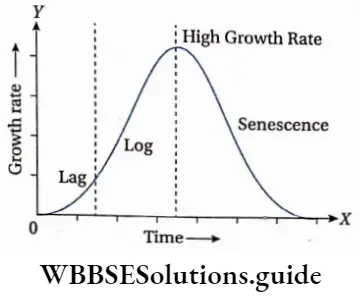
Plant Growth And Development Graphical representation ofabsolute growth rate

When a graph is plotted for absolute growth rate with respect to different major periods of growth, then the graph appears bell-shaped.

Relative growth rate: The increase in size per unit time of the initial size is known as relative growth rate.

Mathematical expression

\(\text { Relative growth rate }=\frac{1}{A_1} \times \frac{A_2-A_1}{T_2-T_1}\)
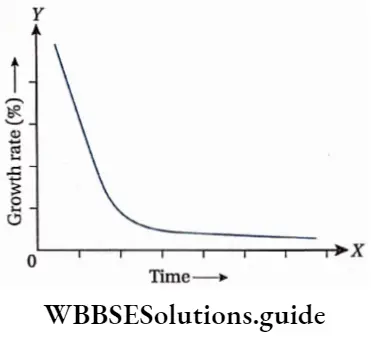
Plant Growth And Development Graphical representation ofrelative growth rate

Example

Suppose,

  1. A leaf of 5cm2 becomes 55cm2 in 5 days.
  2. Another leaf of 10cm2 becomes 60cm2 in 5 days. Absolute growth rate: In case of first leaf = 55-5/5 = 10%

In case of second leaf = 60-10/5 = 10%

Therefore, in both cases, the absolute growth rate is the same.

Relative growth rate: In case of first leaf = 1/5 * 55-5/5 = 2%

In case of second leaf = 1/10 x 60-10/5 = 1%

Therefore, the relative growth rate of the first leaf is twice that of the second leaf.
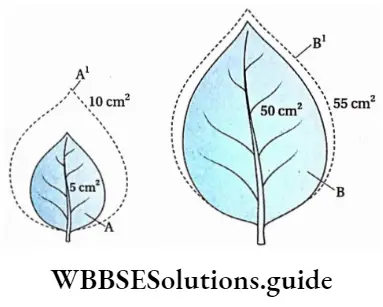
Plant Growth And Development Diagrammatic comparison of absolute and relative growth rates

Plant Growth And Development Differences between geometric growth and arithmetic growth

Condition For Growth

Several external and internal conditions or factors are responsible for plant growth. Various factors are
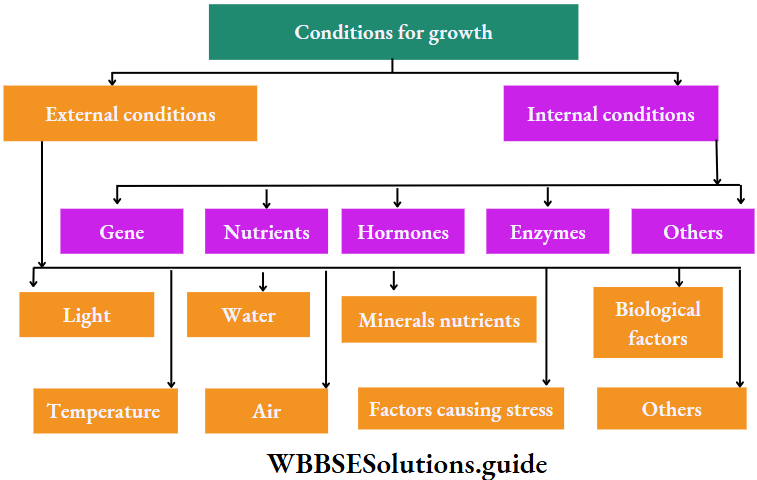
Plant Growth And Development Conditions forgrowth

“chapter 15 biology class 11 notes “

External Factors

Plants also require certain environmental or external factors to synthesize food for their survival.

The environmental factors affecting plant growth include—

Light: Adequate light is perhaps one of the most important external factors influencing plant growth. The intensity, wavelength (color), and duration of light exposure are some influencing attributes of light. Various sources can be used to provide light to the plants.

The sources of light can be classified as natural and artificial sources. The natural source of light is the sun whereas the artificial sources include various types of lighting equipment.

The intensity of light: Photosynthesis and growth increase with the proper intensity of light. At the extremely high intensity of light, chlorophyll undergoes photo¬ oxidation.

As a result, leaves turn colorless, the rate of photosynthesis reduces and the growth rate also becomes low. Again at a high intensity of light, the rate of transpiration increases, and plant growth may be retarded due to dehydration.

Color of light: The rate of photosynthesis increases under blue, red, and purple light. Hence, the growth rate also increases under the illumination of these colors. Maximum chlorophyll formation occurs in the presence of red light. By absorbing red light phytochromes promote seed germination.

Blue light is essential for the growth of the leaves, whereas a combination of red and blue light promotes the flowering of plants.

The artificial light sources can be manipulated to adjust the intensity of the light as well. Also, there are certain plants, which require less light for growth. In such cases, the light can be filtered using protective shelters. This will minimize the exposure of the plants to sunlight.

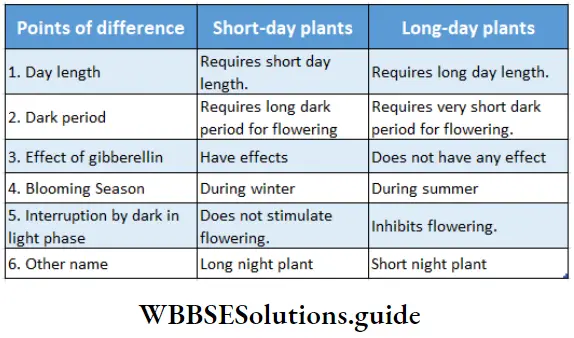
Duration of light: Growth depends on the duration of light, i.e., photoperiod. Long-day plants (mostly of tropical climate) produce flowers when they receive long photoperiods or light hours above critical periods.

Likewise, short-day plants (mostly of temperate climate) are exposed to short light hours below the critical period. Day length may also affect the time when the first flower blooms, the number of flowers produced, and the number of fruit set. This topic is discussed in detail later in this chapter.

Temperature: Temperature is a crucial factor that influences the growth of plants. The temperature of the surrounding atmosphere as well as the temperature of the soil affects plant growth. Optimum temperature is essential for various plant processes, like photosynthesis, respiration, germination, and flowering.

The temperature that supports plant growth generally ranges from 25°C-30°C. Optimum temperatures for growth vary with species and the stages of development and usually fluctuate from night to day too.

Water: Most growing plants contain about 90% water. Water is the medium for transport within the plant and is the solvent for several substances which are important for the growth of a plant.

It is one of the raw materials for photosynthesis in higher plants. Water serves as the electron donor in the reducing reactions of photosynthesis.

A growing plant absorbs water from the soil and gives it off through transpiration. CO2 enters the plant through a film of water that surrounds the leaf. As the film evaporates, it is replenished by the plant.

Therefore, transpirational loss of water is important for growth. Water helps in the transportation of nutrients and activates the enzymes responsible for hydrolysis in the protoplasm.

Oxygen: Aerobic respiration and other metabolic processes increase in the presence of oxygen. Aerobic respiration provides more energy required for biosynthesis, anaerobic activities, cell division, and growth. Seeds require oxygen to germinate. However, a very high concentration of oxygen sometimes causes growth retardation.

Carbon dioxide: Carbon dioxide is a raw material required for photosynthesis. Carbon assimilation of photosynthesis depends on the concentration of carbon dioxide. A high rate of photosynthesis produces a high amount of glucose which helps in the growth of the plant. Excess carbon dioxide causes retardation of growth.

Nitrogen: Nitrogen present in the air is trapped in soil by the process of nitrogen fixation. This increases the fertility of the soil. Plants take up nitrogen from the soil in the form of nitrogenous compounds for protein synthesis.

“plant growth and development handwritten notes”

Mineral nutrients: Plants get nutrients from the soil through water. Sixteen elements are considered to be essential for growth and development in plants. These elements help in the formation of various components of the cell wall, the formation of chlorophyll molecules, and also act as co-enzymes and help the growth of the plant.

The essential elements are divided into two groups macronutrients and micronutrients.

Macronutrients: These are elements or minerals that are required in relatively large amounts. These include carbon, hydrogen, oxygen, nitrogen, phosphorus, potassium, calcium, magnesium, and sulfur.

Micronutrients: These are elements or minerals that are required in small quantities but are essential for plant growth. These include iron, chlorine, manganese, boron, zinc, copper and molybdenum.

Soil: Soil, with proper humidity and the correct balance of all the minerals and nutrients, is one of the essential factors in plant growth. The right pH balance measures the alkalinity or acidity of the soil. The presence of certain chemicals is also necessary for the growth of plants.

Factors causing stress: At the region of the wound, growth is always high. This is because of the high rate of respiration and secretion of hormones at that place. Again lack of any factor in sufficient amount causes a low growth rate.

Biological factors: The external biological factors controlling plant growth, are

Growth promoting factors: Nitrogen-fixing microorganisms such as Clostridium, Anabaena, Nostoc, Azotobacter, and mycorrhizal fungi help in the growth of the plant.

Inhibitory factors: Parasitic organisms, disease-causing organisms as well and grazing of herbivorous animals cause a reduction of plant growth.

Internal Conditions

Besides external factors, the internal substances which help in plant growth, are known as internal conditions or internal factors.

Gene: Metabolic activities of a plant, such as cellular metabolism, synthesis of enzymes growth regulating chemicals, etc., depend on the genes. As a result, genetic factors influence the growth and development of the plants.

Nutrients: Different kinds of nutrients are required for the growth and development of a seedling. Nutrients increase metabolic activities, as a result of which the synthesis of enzymes, hormones, and protoplasmic substances increases.

Lack of nutrients affects the synthesis of hormones, enzymes, and protoplasmic substances, which in turn hinder plant growth. Nutrients play an important role in plant growth.

Variations in plant growth occur due to variations in nutrients

If a plant gets more nitrogenous nutrients than carbohydrates then its cells will produce more cytoplasm. Thus, plants will lack mechanical tissues. In this case shoot will be longer than the root and blackish-green colored leaves will grow.

If a plant gets more carbohydrates than nitrogenous nutrients then its cells will produce less cytoplasm. Cell walls will be thicker as carbohydrate is the main component of the cell wall. The plant will have more mechanical tissues.

Hormones:

Depending on their effect on growth, hormones are of two types—

Growth promoters: Hormones such as cytokinin, auxin, GA3, etc., promote plant growth.

Growth inhibitors: Hormones such as abscisic acid and ethylene are known to decrease growth rate and inhibit plant growth.

Enzymes: Concentration of enzymes responsible for various metabolic activity, rise by the activity of hormones in the cell. This in turn increases metabolic activities which help in the growth of the plants.

Besides all the factors discussed above, plant growth rate depends on the activity of protoplasm, number of stomata and their location, presence of chlorophyll, rate of transpiration, photosynthesis, etc.

Differentiation De-Differentiation And Re-Differentiation

The growth of a plant from a single-cell zygote includes various phases. Completion of these phases is not possible only by cell division or enlargement but also through differentiation. The life cycle of the plant is given in the flow chart below—

Plant Growth And Development Zygote

Some cells after cell division become permanent cells through certain structural and functional events. The rest of the newly produced daughter cells retain their capacity for division.

So in some parts of plants, indeterminate growth can be noticed. When the daughter cells of primary meristem undergo repeated divisions to form tissues, then it is called differentiation. After differentiation, through de-differentiation and re-differentiation, the whole plant body develops.

Differentiation

Definition: The process by which cells derived from the root and shoot apical meristems and cambium change into permanent tissues during the development of a plant body to serve a specific function is known as differentiation. In plants, permanent tissues are formed from meristematic tissues. It is an example of differentiation.

Characteristics:

  1. The meristematic tissues change into parenchyma cells by the process of differentiation.
  2. Some special cells can be formed by differentiation.
  3. Cells originating from the same meristem are different in function and structure due to differentiation.
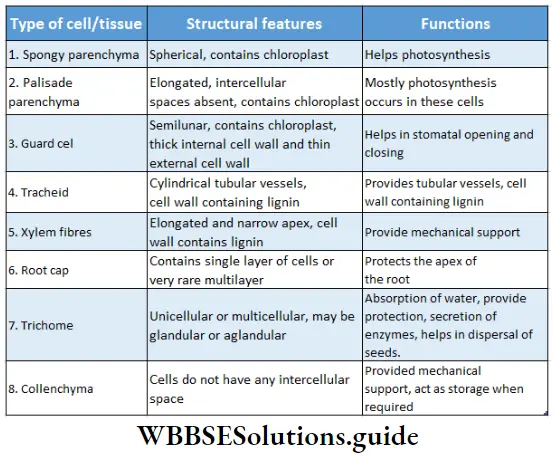
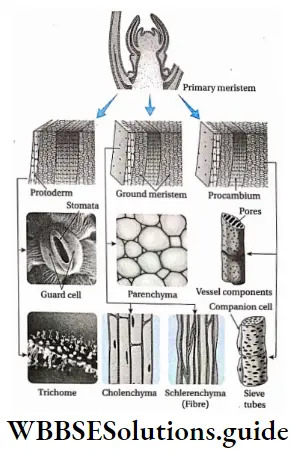
Plant Growth And Development Types of differentiated cell tissue

Plant Growth And Development Differentiation ofplant tissues

De-differentiation

Definition: The differentiated living cells, that have lost the capacity to divide but can regain the capacity of division under certain conditions is called de-differentiation.

In plants, the development of interfascicular cambium and cork cambium (phellogen) from fully differentiated permanent cells, is an example of de-differentiation.

Characteristics:

  1. De-differentiated cells mostly produce secondary meristematic tissue or cambium.
  2. Two main types of cambium thus produced are cork cambium and interfascicular cambium.
  3. Cork cambium is formed from the de-differentiation of collenchyma (living) or parenchyma cells lying immediately beneath the epidermis.
  4. Cells of medullary rays become meristematic and form interfascicular cambium.

Re-Differentiation

Definition: The process in which cells produced by de-differentiation of permanent tissues again divide and form new permanent cells to perform specific functions is called re-differentiation.

Phellogen or cork cambium gives rise to the phellem and phelloderm layer in plants. This is an example of re-differentiation.

Plant Growth And Development Re-differentiation


Characteristics: The differentiated tissues again divide and form new cells to perform special functions.

Importance Of Differentiation De-Differentiation And Re-Differentiation

Formation of tissues and different parts: Different parts and tissues, are formed by the process of differentiation, for performing specific functions.

Development: De-differentiation along with growth causes development.

Secondary growth: Differentiation and re-differentiation are important for the secondary growth of a plant. Cambium plays a key role in this process.

Repairing: A damaged region can be repaired by de-differentiation and re-differentiation of permanent tissue present at that region.

Development And Sequence Of Development Process In A Plantcell

A zygote is formed by the union of a female gamete. It is the first cell in organisms. The sequential occurrence of the different functions like division, growth, maturation, senescence, and death completes the process of development of plants.

Definition: The sequence of changes that occur in the life cycle of a cell or an organism until its death, is known as development.

Explanation: The process of development includes germination of the embryo into a seedling, maturation of the seedling into a mature plant body, blooming of flower, reproduction, seed formation, and senescence of the plant parts with the culmination at death.
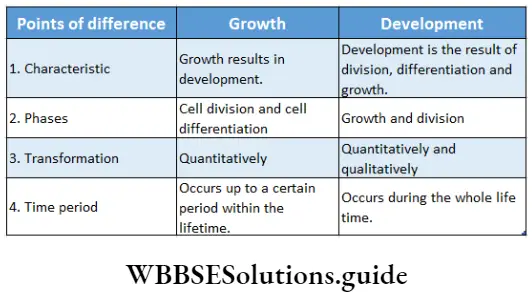
Plant Growth And Development Differences between growth and development

Sequence Of Developmental Process In Plant Cell

During the process of development, a plant cell goes through some sequential changes. They are—

Cell division: After protoplasmic growth, the zygote starts dividing by the process of mitosis or meiosis. Generally, cell divides in plants once each 10-20 hours. This time is known as generation time.

Cell growth: Protoplasmic growth occurs in the newly formed cells. Protoplasmic growth is brought about by the synthesis of different components of protoplasm like DNA, RNA, protein, etc. Due to this growth, the volume of the cell increases.

Elongation: Newly formed plant cell increases mainly in length. Little expansion in the breadth of the plant cells can be seen. Thus a plant cell elongates along the length of the plant axis.

Plant Growth And Development Elongation

Maturation: During this period, the vacuoles start increasing in size by absorbing and accumulating water in them. Protoplasmic growth is thus completed and the cells become fully developed and attain maturity.

Differentiation: Along with these elongation and maturation processes, cells get differentiated and matured. These mature cells now form tissue to perform specific functions and ultimately a tissue system.

Senescence: After a certain period of maturation, gradually the cells lose their activity and at last die.

Plasticity

In response to changes occurring in the environment or | during different phases of life, plants form different j kinds of structures following different pathways. This ability is called plasticity.

An example of plasticity is heterophylly as observed in cotton, coriander, and larkspur. In these plants, the leaves of the juvenile plants differ from those of mature plants. In the water buttercup plant (Rannanculus aquatilis), aerial leaves differ from those produced in water.
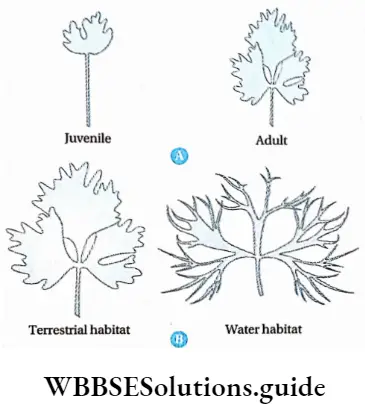
Plant Growth And Development Heterophylly in Larkspur and Buttercup

Plant Growth Regulators

Phytohormones or plant growth substances regulate plant growth and development. Hence, they are also called plant growth regulators (PGRs). They are broadly divided into two groups based on their functions in a plant body.

One group of PGRs takes part in the promotion of plant growth such as cell division, cell enlargement, flowering, fruiting, seed germination, etc. They are called plant growth promoters. The other group is involved in various growth-inhibiting activities such as dormancy and abscission. They are called growth inhibitors.
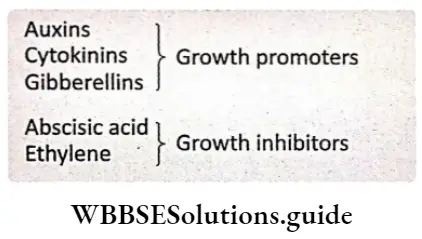
Plant Growth And Development Growth promoters

These are signaling molecules produced in extremely low concentrations within certain tissues of the plant and exert their functions in different places (target site) after being transported.

According to Went and Thimann (1948), the definition of phytohormones is given below.

Definition: A phytohormone is an organic compound of plant origin, produced naturally in minute amounts controlling growth or other physiological functions at a site remote from its place of production and active in minute amounts.

Characteristics of plant hormones:

  1. Phytohormones are secreted from certain special regions such as apical meristematic tissue, in the plants.
  2. The concentration of hormones required for plant responses is very low (10-6 to 10-5 mol/I). The hormones are destroyed by specific enzymes after completing their assigned functions.
  3. Phytohormones can act at sites remote or near their site of production.
  4. They regulate all physiological activities related to the development and growth of plants.
  5. They also establish the chemical coordination between the cells. They can be produced at more than one site in the same plant body and are transported through the conducting system.
  6. The plant hormones differ in their chemical nature. They could be—indole compounds (auxins), adenine derivatives (cytokinins), derivatives of carotenoids (abscisic acid), terpenes (gibberellic acid), or gases (ethylene).

Classification of plant hormones:

Phytohormones can be classified into different types. They are given in the chart below—
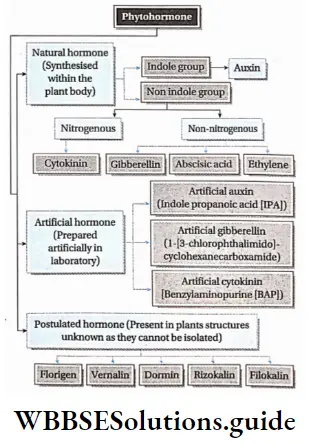
Plant Growth And Development Phytohormone

Artificial phytohormones

  1. PCIB: para-chlorophenoxy isobutyric acid
  2. TIBA: 2,3,5-triiodobenzoic acid
  3. PICLORAM: 4-amino trichloropicolinic acid
  4. NAA: α-naphthalene acetic add
  5. ANOA: α-napthoxyacetic add
  6. BNOA: β-napthoxyacetic add
  7. 2,4-D: 2,4-dichloro phenoxy acetic add
  8. 2,4,5-T: 2,4,5-trichloro phenoxy acetic add
  9. MCPA: Methyl chlorophenoxyacetic add

Discovery Of Plant Growth Regulators

All of the five major groups of plant growth regulators were discovered accidentally. The first one to be discovered was auxin.

Discovery of Auxin

The presence of auxin in plants was confirmed by many scientists through different experiments.

Darwin-Darwin’s experiment: Charles Darwin in his book The Power of Movement in Plants described 1 the phenomenon of bending of light in Phalaris canariensis (canary grass). Darwin along with his son Francis Darwin performed an experiment with Phalaris and observed that

  1. When the coleoptile was exposed to unidirectional light, it bent toward the direction of the light.
  2. When the coleoptile tip was covered with an opaque cap-like material, no bending occurred towards the light source.
  3. However, when the coleoptile tip was left uncovered but the portion just below the tip (growth zone) was covered, exposure to unidirectional light resulted in bending towards the light.

Darwin-Darwin’s experiment suggested that the extreme tip of the coleoptile is responsible for the perception of the light. It produces some biochemical substance which is transported to the lower part of the coleoptile where the physiological response of bending occurs.

He then decapitated the coleoptile and exposed the rest of it to unidirectional light to observe if any bending occurred. Bending was not observed, confirming the results of his first experiment.
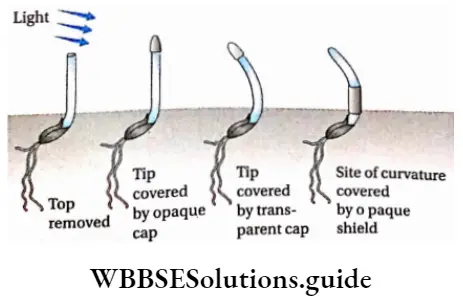
Plant Growth And Development Darwin-Darwin's experiment

Boysen-Jensen’s experiment: In 1913, P. Boysen-Jensen inserted pieces of mica in separate oats (Avena sp.) coleoptiles and on different sides to block the transport of the signal.

They showed that the transport of growth substance toward the base occurred on the darker side of the coleoptile unlike the side that was exposed
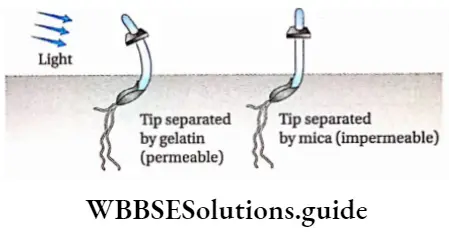
Plant Growth And Development Boysen-Jensen's experiment

Paal’s experiment: In 1919, Paal confirmed Boysen-Jensen’s results by cutting off coleoptile tips asymmetrically and exposing only the tips to the light, replacing the coleoptile tips asymmetrically on the cut end. He found that whichever side of the coleoptile was exposed to light, bending occurred towards the other side.

F. W. Went’s Experiment: In 1928, F. W. Went isolated a plant growth substance by placing agar blocks under freshly cut coleoptile tips for a period of time.

He did this, as he apprehended that agar would absorb the signaling chemical. He then removed agar blocks and placed them on new, freshly decapitated Avena stems. After the placement of agar blocks, stems resumed growth.
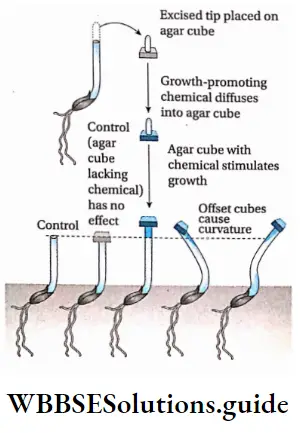
Plant Growth And Development Went’s Experiment

Discovery of gibberellin

Japanese farmers first observed the phenomenon of abnormal elongation in certain rice plants early in the season leading to unhealthy and sterile conditions. They gave many names to this disease but most commonly called it bakanae (foolish seedling).

In 1898, the causal agent of the disease Bakanae was deduced as the fungus Fusarium moniliformae.

“short notes on plant growth and development”

In 1926, Kurosawa discovered that the disease was caused by a substance secreted by the fungal species Gibberella resulting in a controversy about the true pathogen.

In 1935, Yabuta isolated the compound from Gibberella and called it gibberellin A. It was also revealed that Fusarium moniliformae is the asexual or imperfect fungi of Gibberella. This compound was found to stimulate growth when applied to dwarf rice roots.

Discovery of cytokinin

In 1913, Gottlieb Haberlandt discovered that a compound found in phloem had the ability to stimulate cell division. In 1941, Johannes van Overbeek discovered that the milky endosperm from coconut also had this ability. He also showed that various other plant species had compounds that stimulate cell division.

In 1954, Jablonski and Skoog extended the work of Haberlandt showing that vascular tissues contain compounds that promote cell division. In 1955, Hall and de Ropp reported that kinetin could be formed from DNA degradation products.

The first naturally occurring cytokinin was isolated from corn in 1961 by Miller. It was later called zeatin.

Almost simultaneously with Miller, Letham published a report on zeatin as a factor inducing cell division and later described its chemical properties. It is Miller and Letham who are credited with the simultaneous discovery of zeatin. Letham isolated 6- (4-hydroxy -3-methylbut-trans-2-enylamino) purine from immature kernels of Zea mays and named it ‘zeatin’.

Discovery of ethylene

The effect of ethylene on plant growth was observed by Fahnstock in 1858. In 1901, Neljubow observed that the etiolated pea seedlings in the presence of ethylene undergo a ‘triple response’, consisting of—

  1. Thickening of the subapical portion of the stem,
  2. Depression in the rate of elongation, and
  3. Horizontal bending of the stem.

Cousins (1910) reported that a volatile substance was released from ripened oranges that hastened the ripening of stored bananas. Sievers and True (1912) also confirmed the ripening of fruit by ethylene.

Almost all efforts were diverted to this economically important aspect of ethylene action. By the mid-1930s it was established that ethylene is produced autocatalytically just in advance of fruit ripening (Gane, 1934).

Discovery of abscisic acid

In 1963, abscisic acid was first identified and characterized by Frederick Addicott and his associates. They were studying compounds responsible for the abscission of fruits (cotton). Two compounds were isolated and called abscisin-l and abscisin-ll.

Abscisin II is presently called abscisic acid. Two other groups, at about the same time, discovered the same compound. One group headed by Philip Wareing was studying bud dormancy in woody plants.

They were able to isolate a substance from maple leaves responsible for stimulating cold season dormancy and gave the name ‘Dormin’. The other group led by Van Steveninck was studying the abscission of flowers and fruits from lupine plants. Plant physiologists agreed to call the compound abscisic acid.

Auxins

Definition: The indole group containing phytohormones produced at the plants’ apices naturally and responsible for accelerating the growth and development of the plant, are known as auxins.

The term auxin was coined by Charles Darwin in 1880 AD. The term ‘auxin’ has come from the Greek word auxin meaning ‘to enlarge or to grow’. It was first isolated from human urine. Indole Acetic Acid (IAA), and Indole Butyric Acid (IBA) are some examples of naturally found auxin.

Chemical nature of auxin

Auxin is composed of a carboxylic group (-COOH) and an unsaturated organic ring. It may contain nitrogen.

Characteristics of auxin

  1. Auxin is water soluble and moves from the morphological apex to the morphological base of a plant
  2. Auxin influences the phototropism and shows its action in the shaded part rather than the lightened part in the stem.

Types of auxin

On the basis of origin auxins are of the following types—
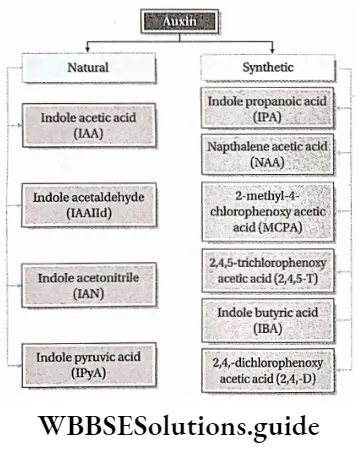
Plant Growth And Development Auxin

Plant Growth And Development Structure ofa natural auxin (IAA)

Plant Growth And Development Structure ofsynthetic auxins

Plant Growth And Development Stammary of physiological responses to exogenous auxins

Functions of auxin

Auxin plays an important role in the growth of different parts of the plant. Its roles are briefly discussed here.

Cell Elongation: Cell expansion or elongation is one of the important functions of auxin. Cell elongation is the increase in cell size accompanying the process of plant growth. Auxin causes loosening of the cell wall by breaking the cellulose microfibrils. Thus it helps in elongation and expansion of cells.

Cell division: Auxin induces growth in secondary meristematic tissue by increasing the DNA content. As a result, mainly nuclear division occurs. Auxin is also responsible for the cell division that occurs during callus formation and root regeneration.

Regulation of apical dominance: Apical dominance may be defined as the control exerted by the shoot apex or apical buds over the growth of the lateral buds due to the presence of auxin. This is an example of developmental correlation where one organ of a plant affects another organ.

“plant growth and development notes with diagrams”

The dominance of the main apex is seen to suppress further development of the lateral apices. Thus they remain as axillary, buds often for long periods and sometimes permanently unless the main apex is removed.

If the shoot apex is subsequently decapitated (also referred to as apex removal), apical dominance is removed. Then only one or more of these lower axillary buds begin to grow out.

Growth of roofs and formation of adventitious roots: A minute concentration of auxin induces the growth of roots but excess concentration prevents root growth. Excess concentration of auxin also induces the development of adventitious roots from the upper nodes and lowermost nodes.

Activation of cambium: A low concentration of auxin increases cambium activity. In the process of grafting, auxin is used to increase the activity of the cambium that joins the vascular cylinders of stock and scion.

Tropic movements: Tropic movements (movement of the plant depends on external stimuli), such as phototropism and geotropism, depend on the concentration of auxin.

The concentration of auxin is always high on the opposite side of the light source, i.e., on the shaded side. As a result, the coleoptile end always bends towards the light and grows opposite to gravity.

The rate of cell division increases at the shaded region and the tip moves towards the light. The movement of coleoptile opposite to gravity is known as acropetal movement.

Again, due to less amount of auxin, the root shows movement towards gravity. This type of movement in roots is known as the basipetal movement.

As a result of the non-uniform distribution of auxin, plant growth is also non-uniform. The shoot shows phototropics and the root shows geotropic movements. to combine the best quality of different species.

Before grafting, the cut ends are treated with IAA. IAA stimulates the cambial activity to generate secondary vascular tissues. Secondary vascular tissues make connections between the vascular cylinders of stock and soon. Thus, a continuous vascular cylinder is produced.
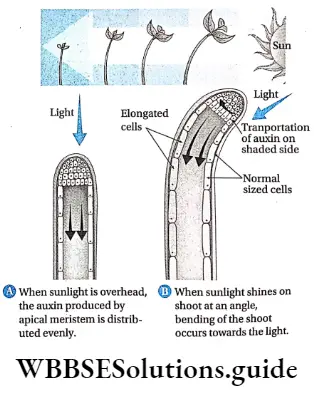
Plant Growth And Development Role ofauxin in phototropism

Regulates abscission: The process through which a plant sheds leaves, flowers, seeds, and fruits is called abscission. An abscission zone forms on the base of these parts due to the low concentration of auxin gradually decreasing with increases in the age of pant.

Abscission and Auxin

The early investigations established that auxin commonly functions to retard abscission. Further investigations disclosed other influences of auxin. The onset of abscission was found to be correlated with the gradient, or balance of auxin across the abscission zone.

Auxin distal to the abscission zone tends to retard abscission, and auxin proximal to the zone tends to accelerate abscission.

Production of seedless fruit: Sometimes production of fruits occurs without pollination, this is known as parthenocarpy. If any plant is unable to produce fruit naturally, then the plant is treated with artificial auxin in order to produce seedless fruits. During parthenocarpy, usually, the concentration of auxin is higher in the pistils.

Sex expression: In 1950, Laibach and Kribben treated many plants of the family Cucurbitaceae with auxin. They found that the treated plants produced more female flowers. Hence, it is proved that a high concentration of auxin induces the production of female flowers (feminizing effect) in plants such as pumpkin, cucumber, etc.

Effect on water absorption: Auxin helps to increase the turgor pressure inside the cell. It affects the osmosis between the cells and helps in water absorption.

Callus formation: Application of auxin causes the formation of callus or tumor in the pith, cortex, etc. Differentiation of tissues in the callus is also induced by auxin in association with cytokinin.

Respiration: Auxin increases the availability of respiratory substrates to the respiratory enzymes thereby increasing the rate of respiration.

Metabolism: The application of auxin increases the rate of metabolism by increasing the functions of plant resources.

Nodule formation: An increase in the amount of auxin causes an increase in the number of root nodules in leguminous plants.

Commercial uses of auxin

Artificial hormones are used in agriculture and horticulture to get good yields. Auxin has several commercial uses. Some of those are—

Rooting in grafting: the stem cutting of different plant is kept in auxin stimulates the formation of adventitious roots on the stem cuttings.

Parthenocarpic fruit production: Auxin helps in the formation of parthenocarpic fruits such as grapes, papaya, bananas, etc. The hormones commonly used in this process are NAA, IBA, etc.

Prevent early abscission: Auxins help to prevent premature abscission of leaves and fruit. Though it promotes the abscission of older leaves and fruits.

Controlling weeds: 2,4-D, 2,4,5-T are widely used to kill dicotyledonous weeds from crop fields. These chemicals destroy the root system of the weeds but do not affect mature monocotyledonous plants.

Flowering: Application of NAA causes prompt flowering in some plants such as litchi, and pineapple.

Increase in yield: Yield can be increased by using IAA, IBA, and NAA in certain plants such as apples, pears, etc.

Preventing abscission: To prevent premature abscission in flowers, leaves, and fruits, artificial auxin such as 2,4-D or NAA is used.

Resistance towards frost: 2,4,5-T and sodium salt of NAA are used to protect vegetables and fruits from frost injury in hilly regions.

Wound repairing: A small amount of dilute artificial auxin is used to repair the wounds after pruning in the garden plants.

Increase in flower and cereal production: The number of flowers and quantity of fibers in cereals can be increased by applying auxin.

Sweetening of fruits: The sweetness of many fruits can be increased by applying IBA.

Gibberellins

Definition: Gibberellin is a tetracyclic diterpenoid substance, secreted from embryos and cotyledons, that activates genes of the target cell and breaks the genetic dwarfness and seed dormancy.

Gibberellin is a growth-controlling phytohormone. According to the scientists Hopkins and Huner, about 125 types of gibberellin are known. Among all these types, GA3 is the most important for plant growth, reproduction, and development.

Gibberellins are most often associated with the promotion of stem growth, and the application of gibberellin to intact plants can induce a large increase in plant height by elongating internodal parts. Gibberellins play important roles in a variety of physiological phenomena.

Chemical nature of gibberellin

Gibberellin is a non-nitrogenous tetracyclic diterpenoid compound.
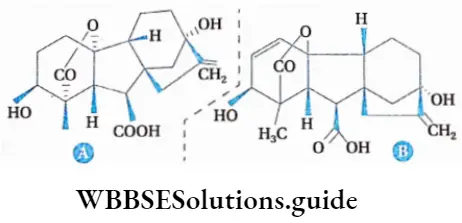
Plant Growth And Development Chemical nature ofgibberellin

Functions of gibberellin

Gibberellin influences plant growth and development. Its effects on plants are briefly discussed here.

Stem elongation: On application to the whole plant, gibberellin can induce remarkable elongation of the stem particularly in rosette and dwarf plant species. It affects mainly the intercalary meristems.

Sugarcane stores carbohydrates as sucrose in their stems. Application of gibberellins increases the length of grape stalks which ultimately raises yield. Gibberellin also increases the size of flowers, fruits, leaves, etc.
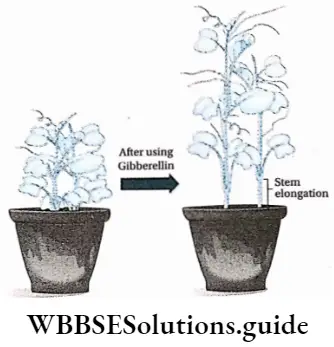
Plant Growth And Development Role ofgibberellin in stem elongation

Seed Germination: Gibberellins are essential for accelerating seed germination and breaking dormancy. Gibberellic acids (GAs) can induce germination in seeds especially those which normally require low temperature or light to break dormancy.

Growth in aerial parts of the plants: If gibberellin is applied along with auxin, then aerial parts of plants will grow rapidly.

Bolting and flowering: The process in which internodal elongation of the rosette plants attain the normal height is called bolting. Gibberellin treatment on short day plants such as beet, and cabbage with rosette habit leads to stem elongation. It also induces flowering in many rosette long-day plants.

When the long-day plants growing in low temperature (2-4°C), are treated with gibberellin, then they show bolting and flowering in the absence of suitable conditions.

Breaking of bud and seed dormancy: Each and every seed and bud show dormancy for a certain period of time. During this period their growth has ceased. If any bud or seed is treated with gibberellin, then the gibberellin helps to induce growth in that bud or seed. Gibberellin affects the synthesis of mRNA and activates the gene responsible for growth.

Sex expression: Gibberellin helps in the sex expression of summer squash, cucumber, etc. A lower concentration of gibberellin stimulates the male flowers and a higher concentration stimulates the female flowers. In maize, the application of gibberelins induces the growth of gynoecium but prevents the growth of androecium.

Bud formation: Gibberellin helps in apical and axillary bud formation.

Parthenocarpy: The application of gibberellin causes the development of ovules and the formation of seedless fruits in many plants.

Commercial uses of gibberellin

Gibberellin has several commercial uses. Some of those are—

Production of seedless fruits: Gibberellin plays an important role in the formation and size of many fruits such as apples, grapes, etc. In the case of tomato, gibberellin is 500 times more effective than auxin.

Delayed fruit ripening: The application of gibberellin delays the ripening of certain fruits such as lemon, etc. It helps in the prolonged storage of those fruits.

Early maturation: For early growth and maturation of gymnosperms, GA3 and GA7 are used. These also induce early maturation of the fruit.

Role of gibberellin on the growth of- different plants:

  1. If GA3 is sprayed over barley grains, then along with ar-amylase, the production of other enzymes also increases. This, in turn, increases the yield of malt from barley.
  2. Application of gibberellin on sugarcane enhances the yield by increasing the internodal length.
  3. Gibberellin is also used for the production of a large number of seeds of the same size in lettuce.
  4. The application of gibberellin also helps to produce good-quality fruits. Gibberellin improves the size of fruit in apples.
  5. The size and stability of flowers in geranium plants can be maintained by the application of gibberellin.
  6. Gibberellin helps to break dormancy in potato tubers.
  7. Gibberellin speeds up the malting process of cereals in brewing industries.

Cytokinin

Definition: The basic biochemical substances of the adenine group, produced in the growing regions of roots and shoots, immature endosperm, and leaves that induce cell division and budding, are known as cytokinins.

Naturally occurring cytokinins are purine compounds. Their structure resembles adenine and promotes cell division. Strong, Miller, and Skoog classify all the hormones related to cell division as cytokinin. These substances also help in the retardation of senescence.

Chemical nature of gibberellin

Cytokinin is a basic adenine-like nitrogen-containing purine molecule. Chemically it is known as 6-furfurylaminopurine. It is composed of nitrogen, oxygen, and hydrogen. Cytokinin is found as isopentenyladenosine (IPA) in most plants. The chemical formula of cytokinin is C10H9N5O.
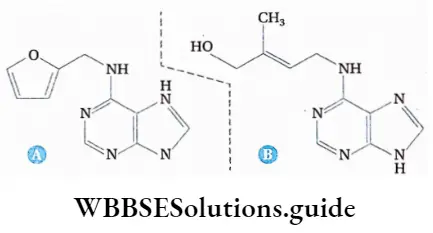
Plant Growth And Development Chemical structure

Functions of cytokinins

The functions of cytokinins in plants are discussed here.

Cell division: In the presence of sufficient amount of auxin, cytokinin promotes cell division in plants by controlling the activities of cyclin-dependent kinases.

Cell enlargement: Cytokinins help overcome the stem tissue. In fact, cytokinin appears to promote the overall enlargement of cells when applied to a culture medium Growth can also be seen in cotyledons of some plants such as mustard, cucumber, sunflower, etc., by application of cytokinin.

Growth regulation in root and stem: Cytokinin prevents the uncontrolled growth of root and stem by inhibiting cell elongation. Thus, endogenous cytokinin seems to regulate the growth of the root and stem.

Tissue differentiation: Organs in tissue culture show a spectacular response to cytokinin. With a low cytokinin supply, the tissue remains as an amorphous undifferentiated callus. Bud formation and shoot initiation depend on a higher concentration of cytokinin.

An interesting observation on morphogenesis in tobacco callus culture is that a high cytokinin-auxin ratio results in the production of shoots but not roots. But a low ratio leads to the opposite effect producing roots only.

In addition to their role in leaf expansion, cytokinins also regulate chloroplast formation. When cytokinin is absent, plastids are formed but remain undifferentiated. Both light and cytokinin are necessary for grana development and conversion of proplastids into chloroplasts.

Retardation of senescence: The retardation of senescence by cytokinin is a well-known phenomenon. Richmond and Lang (1957) first discovered that when leaf discs are kept in water, senescence appears within a few days as evident by the drainage of chlorophyll, protein, and other nutrients.

But when cytokinin is added to the leaf discs, senescence is delayed through the drainage of nutrients and checking the degradation of chlorophyll and protein. This senescence retarding property of cytokinin as mediated through the retention of chlorophyll is known as the Richmond-Lang effect.

Senescence

The slow deterioration of structural and functional characteristics, etc., in a mature plant due to aging, preceding the death of an organ or the whole plant is known as senescence.

1. Types: Scientist Leopold (1961), discussed about four types of senescence in plants,

  1. Complete senescence (the whole plant is affected at once and dies slowly, for example, paddy, wheat, bamboo, etc.);
  2. Stem senescence (parts above the ground (stem) are affected and die, for example, rhizomes of banana, ginger, yam, etc.);
  3. Sequential senescence (older parts die first followed by younger parts, for example, pine, eucalyptus, etc.);
  4. Simultaneous senescence (all the leaves fall off leaving the stem and root alive, for example, apple, oak, etc.).

2. Changes occurring during senescence:

  1. The rate of photosynthesis decreases which leads to a decrease in the storage of starch,
  2. Chlorophyll disintegrates and the storage of anthocyanin increases in cells.
  3. The amount of protein decreases, hydrolyzing enzymes such as protease and nuclease are produced,
  4. Before detachment of leaves, the nutrient components are transported to shoots.
  5. The cell membrane and cell organelles disintegrate,
  6. Anabolic metabolism reduces.

Importance:

  1. Senescence determines the life span of an individual cell, organ, or whole plant.
  2. The inactive and/or older plant parts are replaced by new, young, and active plant parts.
  3. During senescence cellular components are translocated to the newly formed organs from the senescent parts and are used for their growth and development,
  4. The rate of transpiration is reduced during winter due to the senescence of leaves. It is a kind of adaptation to reduce the loss of water.

Axillary bud formation: Cytokinin is important for bud formation in plants. It mainly helps in the formation of axillary buds.

Mobilization of nutrients: Mothes (1961) observed that when a particular area of the leaf is treated with cytokinin, the area remains green showing a delay of senescence. Whereas, the untreated area loses its green color and becomes yellow, showing symptoms of senescence.

Here the nutrients like amino acids, auxins, and phosphorous are drawn or mobilized preferentially from the other parts of the leaf so that the treated area remains green at the expense of the untreated area.

Breaking of seed or bud dormancy: The application of cytokinins can stimulate germination and break dormancy. When dormancy is imposed either by high temperature (thermo-dormancy) or by accumulation of an inhibitor like abscisic acid, coumarin, etc., then gibberellic acid alone is not capable of overcoming dormancy.

The addition of cytokinin can replace the red light requirement in seed germination opposes the action of inhibitors and induces germination.

“stages of plant growth and development explained”

Flowering: Cytokinin can induce flowering in short-day plants in low light than usual. example Lemna, Wolfia.

Parthenocarpy: Like auxin or gibberellin, cytokinin also helps to produce parthenocarpic fruits.

Protection: The application of cytokinin makes the plants resistant to diseases. It also protects the plants in high and low temperatures.

Chlorophyll production: Colourless idioblast (isolated plant cell that stores pigments and other substances) can be converted into chloroplast as rapid production of chlorophyll occurs in the presence of cytokinin.

If etiolated leaves are treated with cytokinin before being illuminated, they form chloroplasts with more extensive grana and chlorophyll. Also, photosynthetic enzymes are synthesized at a greater rate upon illumination.

Stomatal movement: Cytokinin has a distinct action on the mechanism of stomatal movement. Treatment of whole leaf with cytokinin has been reported to increase the size of stomatal aperture thereby increasing the rate of transpiration also increases.

Apical Dominance: Application of cytokinin on lateral buds counteracts the apical dominance which can be due to the presence of terminal bud or due to applied auxin. This has been interpreted as an increase in IAA transport and mobilization of metabolites from the apical region to the point of application of cytokinin.

Commercial uses of cytokinin

Cytokinins have several commercial uses. Some of those are—

Maintains freshness of flowers: Normally flowers wilt after a few days of plucking. Flowers treated with cytokinin will remain fresh for a longer period. This helps in the storage of flowers.

Protection: Plants become resistant to heat, cold, and diseases on treatment with cytokinin.

Tissue culture: Cytokinin helps in cell division and differentiation in tissue culture.
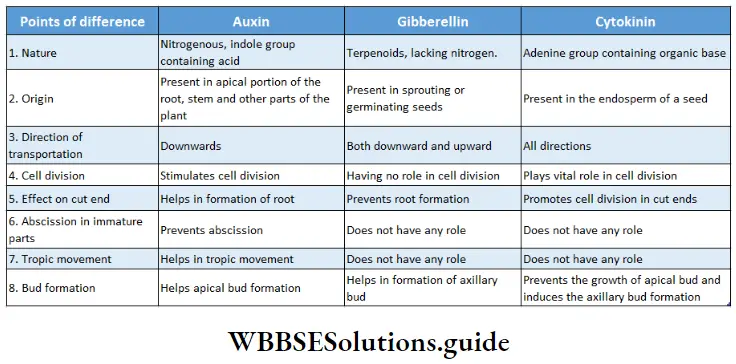
Plant Growth And Development Differences between auxin, gibberellin and cytokinin

Ethylene

Definition: The gaseous compound produced in minute amounts that helps in fruit ripening and leaf abscission is known as ethylene.

Ethylene is a gaseous growth inhibitory phytohormone. It inhibits cell division, DNA synthesis, and growth in the meristems of roots, shoots, and axillary buds. Apical dominance often is broken when ethylene is removed, apparently because it inhibits polar auxin transport irreversibly. Often ethylene inhibits cell growth and delays differentiation.

Chemical nature of ethylene

The structure of ethylene is very simple. It is an unsaturated symmetrical hydrocarbon compound. Since it is highly soluble in water as well as in a lipophilic system, it can easily move through plant tissues.

Production of ethylene is controlled by auxin and red light. Auxin promotes ethylene synthesis and red light represses its production. The action of ethylene is competitively inhibited by CO2 and promoted by O2
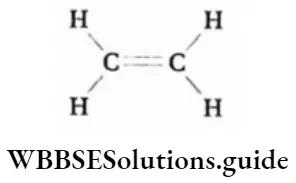
Plant Growth And Development Structure of ethylene

Functions of ethylene

Ethylene plays an important role in different aspects of plant growth and development. Those functions are—

Fruit ripening: Ethylene plays an important role in fruit ripening. It is produced in mature but unripe fruits and then it a initiates chain of reactions which finally lead to ripening of the fruits.

Ripening usually starts at one region of a fruit, spreading to other regions as ethylene diffuses freely from cell to cell and integrates the ripening process throughout the fruit.

Triple response: Ethylene affects the growth of plants. It inhibits stem elongation and initiates horizontal growth of stems with respect to gravity. It also helps in the thickening of the subapical portion of the stem.

Senescence and abscission: Ethylene has been implicated in the regulation of leaf senescence in certain plants. Exposure of Arabidopsis plants to ethylene induces premature yellowing of the leaves. Ethylene also stimulates the formation of abscission zones in leaves, flowers, and fruits.

Stimulate flowering sit pineapples: The promotion of flowering by ethylene was first observed in pineapples in the 1930s. It has become an important horticultural practice for the production of pineapple and other members of the Bromeliaceae family.

Growth promotion: Ethylene promotes the growth of internode or petiole in deep water rice varieties (grows in flooded fields). It helps the leaves and upper parts of the shoot remain above water. Ethylene also promotes root growth and root hair formation, thus helping the plants to increase the absorption surface of their root system.

Growth prevention: Ethylene inhibits the growth of stem, root, and axillary buds in etiolated plants. The major cause of the overall growth inhibition is due to retardation of the mitotic process in the respective meristems.

Root initiation: Ethylene stimulates rooting from stem cuttings. Also, it helps in root hair proliferation. At low concentrations, it stimulates root growth but at higher concentrations, it inhibits root growth. Release of dormancy: In some species (e.g., peanut, sunflower, potato tuber, etc.), ethylene breaks seed and bud dormancy.

Epinasty: When the upper surface of a leaf grows more than the lower surface, then the leaf bends downwards, this is known as epinasty. This is controlled by ethylene. But high concentration of ethylene causes hyponasty (opening of downward folded flower petals or leaves, etc.).

Negative feedback: Secretion of ethylene prevents the production and secretion of auxin.

Wound and stress response: Ethylene is an important signal in many such abiotic stress situations and also in plant-pathogen interactions. Production of ethylene can be induced by pathogen invasion, by fungal toxins as well as by race-specific and endogenous elicitors.

Ethylene may activate plant defense-related processes such as the production of phytoalexins, pathogenesis-related (PR) proteins, and cell wall alterations.

Responses to physical stimuli: Ethylene has been proposed to function thigmomorphogenesis. Exogenous application of ethylene can result in morphological and physiological changes resembling thigmomorphogenesis. Ethylene production may be one of the responses to mechanical wounds or uneasiness.

Commercial uses of ethylene

Ethylene has several commercial uses. Some of those are—

Sprouting of storage organs: Ethylene is used to break the dormancy in storage organs like tubers, rhizomes, and corm bulbs of potatoes, ginger, onion, etc. The application of ethylene also causes sprouting in certain plants.

Increase in the number of female flowers: The application of ethylene in many plants such as pumpkin, cucumber, etc., shows promising effects. Thus, the number of female flowers increases which in turn results in more fruits.

Flower whorl formation: Ethylene inhibits the growth of apical buds and stimulates the growth of axillary buds. As a result, whorls of flowers are produced by the axillary buds. Thus, a compact flowering stem is produced.

Controls the production of fruits and flowers: The application of ethylene controls the growth of excess flowers and fruits in some plants like cherries. It helps to initiate flowering in mangoes. Aside from flowering it also helps in synchronisation of fruit setting in pineapples.

Abscisic Acid

Definition: The sesquiterpene compound found in plants that act as growth inhibitors, senescence, and dormancy inducer is known as abscisic acid.

Unlike growth-promoting phytohormones such as auxins, gibberellins, and cytokinins, abscisic acid (ABA) plays a mostly inhibitory role in plants. It induces dormancy in seeds and buds, and hence, is known as a dormancy-inducing hormone.

It plays an important role in plants during unfavorable environmental conditions (stress) and helps them to cope with it. So, ABA is also known as the stress hormone.

Chemical nature

Abscisic acid is a 15-carbon sesquiterpenoid compound having an asymmetric carbon. It has two optical isomers. the naturally occurring aba is represented as (+) and the synthetic one is racemic, i.e., equivalent mixture of (+) and (-) enantiomers. Its trivial name is 3-methyl-5-(l-hydroxy-4-oxy-2,6,6-trimethyl- 2-cyclohexen-l-yl)-cis,trans-2,4-penta-dienoic acid.
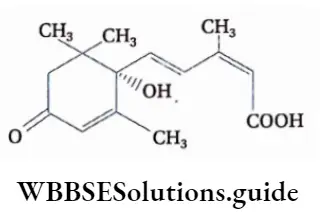
Plant Growth And Development Chemical structure ofabscisic acid

Function of abscisic Acid

As a growth regulator, ABA has several important functions in a plant’s life. They are—

Growth inhibition: ABA acts as an inhibitor of shoot growth in. plants growing in water-deficit conditions. The current understanding of the role of ABA is that it controls root growth.

Endogenous ABA deficiency leads to ethylene production and this interaction is involved in the effects of ABA status on shoot and root growth. ABA can counteract the responses of plants to each of the growth-promoting phytohormones.

Growth promotion: At very low concentrations, ABA has been found to promote some growth processes like rooting of stem cuttings, callus growth in soybean in association with kinetin, and an increase in the frond number of duckweed (Lemna polyrhiza).

Stress response and prevention of transpiration: ABA plays an important role in the regulation of plant responses to environmental stresses, especially drought. The rise in endogenous levels of ABA in leaves under drought situations can inhibit stomatal opening thereby inhibiting transpiration.

Such inhibition plays an important role in water conservation mechanisms. During water stress conditions, guard cells in stomata secret more ABA. This alters the permeability of the plasma membrane of guard cells.

Thus, the plasma membrane renders the exit of K+ ions from guard cells and helps the entry of H+ ions into it. Therefore, stomata remain closed during this time. This helps in the desiccation tolerance of the plant.

Hydrolysis of carbohydrates: ABA prevents translation of or-amylase mRNA. Hence, it prevents the synthesis of or-amylase and carbohydrate hydrolysis Thus it opposes the functioning of gibberellin which helps in the production of the or-amylase enzyme.

Leaf senescence: ABA induces senescence and abscission in leaves and other parts of the plant. ABA is responsible for the activation of the hydrolase enzyme, which dissociates protein and nucleic acid.

Activation of cambium: ABA prevents the activation of the cambium in late autumn, winter, and early spring.

Storage of protein: ABA stimulates protein storage during seed formation.

Seed development, germination, and dormancy: During the development of a variety of seeds, the ABA level rises sharply and then declines. In many seeds, the highest concentration of ABA is found in the embryo at a time when their dry weights increase rapidly.

The germination of most non-dormant seeds can be inhibited by exogenous ABA. Activities of various enzymes, which rise during germination, appear to be specifically inhibited by ABA. At the end of the dormancy, the ABA level decreases and GA3 becomes active.

Seeds cannot germinate in the absence of either of the mentioned conditions. ABA also induces dormancy in adventitious buds. On the other hand, ABA helps the seed or adventitious buds to overcome unfavorable conditions by inducing dormancy in them.

Root geotropism: Experiments have indicated that the root cap is the source of growth-inhibitory substances, formed in response to gravity. These results have led to the hypothesis that when roots are maintained in a horizontal position. i.e. subjected to geotropic stimulus, ABA produced in the root cap moves basipetally to the growing part of the root. It is accumulated in the lower half of the root causing a positive geotropic response.

Fruit growth and flowering: Ripening fruits are the richest sources of ABA, yet the application of ABA to fruits has little effect on the process of ripening. Ripening of grapes is an exception where ABA has the capacity to hasten the ripening and coloring of the fruit. ABA application in a very low concentration has little promoting effect on flower growth. High ABA inhibits or delays flowering in a number of plants.

Commercial uses of abscisic acid

The commercial uses of abscisic acid are—

Dormancy: ABA is applied to prolong dormancy of buds, seeds, and other storage

Root initiation: ABA initiates rooting in stem cuttings of some plants.

Flowering: ABA stimulates flowering in short-day plants growing even in long-day conditions.

Prevents transpiration: ABA causes closure of stomata and prevents transpiration. This does not affect gaseous exchange through the stomata. This does not affect the process of photosynthesis too much.
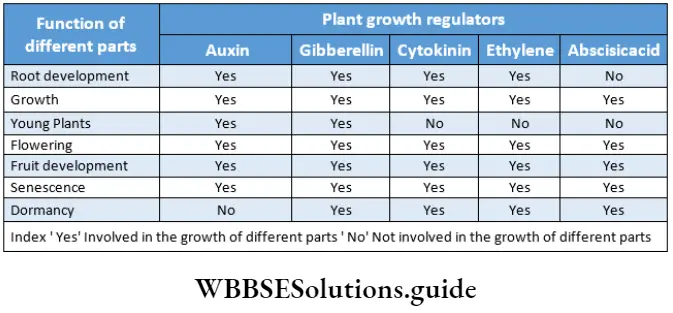
Plant Growth And Development Comparative study of the roles of different plant growth regulators on plant growth

Abscission

The natural phenomenon of the detachment of different plant parts as a result of aging is known as abscission. In deciduous plants, the abscission of all the leaves occurs at the same time during autumn.

As a result, the plants become leafless. There is no particular time for abscission in evergreen plants. In these plants abscission of leaves occurs throughout the year.

1. Abscission zone or layer: The region of separation between the base of the leaf petiole, flower stalk, fruit stalk, and branches, produced by a thin plate of cells oriented at right angles to the axis of the subsequent organs is transformed into the abscission zone or abscission layer.

2. Changes occurring during abscission:

  1. The abscission layer occurs at the base of mature leaves due to a decline in auxin content and an increase in ethylene content.
  2. Metabolic wastes are stored in the leaves and are removed from the plant along with the leaves.
  3. The cells across the abscission layer contain pectinase and cellulase which hydrolyse the pectin and cellulose respectively and form a separation layer at the abscission zone. Due to the destruction of the cells in the abscission zone, the leaves detach from the plant, [iv] Lignin, suberin, etc., are secreted from the wounded region after abscission. These substances prevent the loss of water by covering the wound.

3. Importance:

  1. Abscission is a controlled process, resulting in the removal of older and inactive plant parts.
  2. The process permits the plants to achieve efficient fruit dispersal and to survive an unfavorable period.
  3. The nutrients remain stored in plants as the nutrients are transported to the stem before abscission.
  4. The productivity of plants increases as a result of abscission.

Seed Dormancy

Definition: The failure of a viable seed to complete germination under favorable conditions is known as seed dormancy.

Seed is an important stage in the life cycle of higher plants with respect to the survival of the species. It is the dispersal unit of the plant, which is able to survive the period between seed maturation and the beginning of the next generation as a seedling after it has germinated.

For this survival, the seed, mainly in a dry state, is well equipped to sustain extended periods of unfavorable conditions. This period of inactiveness of seed is known as dormancy.

The seeds enter into the dormant state to get the optimum result of germination. Dormancy prevents pre-harvest germination as well. The dormancy period may extend from a few days to a few years.

Non-dormant seeds that are exposed for some time to unfavorable germination conditions may enter a state of dormancy again, which is called secondary dormancy.

Causes Of Dormancy

The causes of seed dormancy are discussed below—

Impermeability of seed coat to water: Water is essential for germination. If water does not enter into the seed then enzymes necessary for germination will remain inactive. Seeds of some plants of the family Solanaceae, Fabaceae, etc., bear a hard and thick seed coat through which water cannot enter the seed.

The enzymatic action of microorganisms present in the soil makes the seed coat permeable. This results in the entry of water in the seed and germination is initiated.

Seed coat impermeable to oxygen: Respiration is important for the germination of seeds. But seeds of certain plants have thick and hard seed coats through which oxygen cannot enter.

On the other hand, though certain seeds are permeable to water they are impervious to oxygen. All these conditions inhibit the process of germination.

Mechanical resistance of seed coat: The seed coat of some seeds such as Alisma plantago, Capsell sp., and Brassica sp., are so hard that the mature embryo is unable to rupture the seed coat. As a result, germination is inhibited.

Embryonic dormancy: In many cases, germination does not occur due to embryonic dormancy.

Some of them are as follows—

  1. Seeds of certain plants like Gingko biloba and orchids, detach from the plants with immature embryos. Germination of such seeds is naturally delayed till the embryo completes its development inside the seeds.
  2. Seeds of certain plants such as wheat, barley, paddy, etc., do not germinate even after sowing. Hormones play an important role in the initiation of germination in these plants.

Growth inhibitors: Certain chemical substances in plants inhibit germination. These substances are known as growth inhibitors. These substances not only inhibit growth but also inhibit phototropism. Substances such as coumarin, naringenin, etc., inhibit germination.

Effect of light: There are two types of seeds based on the effect of light on their germination

Positively photoblastic seed: The seeds of tobacco, lettuce, etc., do not germinate in the absence of sunlight. Such seeds are known as positively photoblastic seeds.

Negatively photoblastic seed: The seeds of lily, tomato, etc., do not germinate if exposed to sunlight. Such seeds are known as negatively photoblastic seeds. Effect of temperature: Germination in plants such as apples, and peaches, does not take place above or below 5°-10°C temperature.

Methods Of Breaking Seed Dormancy

Several artificial processes to break seed dormancy are discussed below.

Scarification: Any process of breaking, scratching, or mechanically altering the seed coat to make it permeable to water and gases, so that the process of seed germination can be accelerated, is known as scarification. Scarification can be of different types—

Thermal: In this process, seeds are briefly exposed to hot water. This process is also known as hot water treatment. In ‘chaparral’ plant communities (desert biome), some species’ seeds require fire or smoke to achieve germination.

Mechanical: In this process seed coats are filed with a metal file, rubbed with sandpaper, nicked with a knife, or cracked gently with a hammer to weaken the seed coat.

Chemical: Soaking seeds in sulphuric acid makes the seed coat thin and permeable. This helps to break the dormancy. Scarified seeds should not be stored and should be planted immediately. Otherwise, the seeds become non-viable.

Stratification: The second type of imposed dormancy found in seeds is internal dormancy regulated by the inner seed tissues. This dormancy prevents seeds of many species from germinating when environmental conditions are not favorable for the survival of the seedlings.

In certain cases, a brief exposure to a very low temperature is used to break seed dormancy. Stratification is a process in which the seeds are covered with Sphagnum (a moss) and kept at a temperature of 5-10°C. This process is used to break dormancy in seeds of cherry, apple, peach, etc.

Alternating temperature: Moringa (1926) first observed that a variation in the low and alternating high-temperature treatment increased the percentage of germination. The dormancy of many seeds can be broken by alternate use of high (25°C) and low (15°C) temperatures.

Exposure to light: Some plants are sensitive to light. In such plants, dormancy can be broken by using red or white light. Scientists have proved that red light stimulates germination but far-red light inhibits germination. Phytochrome affects these kinds of seed germination.

Effect of excess oxygen: According to Waring and Foda (1957), dormancy in certain plants can be broken by a high concentration of oxygen. In such cases, elevated oxygen concentration decreases the accumulation of germination inhibitors in the seed coat. Thus, it helps in breaking dormancy. This process is used in the case of Xanthium sp.

Hormones and other chemical substances: Some phytohormones such as gibberellin, ethylene, cytokinin, and chemicals such as thiourea, potassium nitrate, etc., help to break the seed dormancy.

Necessity Of Seed Dormancy

Apparently, the phenomenon of dormancy seems to be a negative process as it delays the beginning of a new life.

But, dormancy plays an important role in a plant’s life in various ways. They are—

  1. The beneficial aspect of dormancy helps us to solve the problem of food scarcity. Without dormancy cereal grains would have germinated thereby, losing their usefulness as a source of food.
  2. Dormancy allows the seeds to attain internal optimal conditions for germination.
  3. It helps to maintain the viability of seeds during drought and winter.
  4. It inhibits viviparous germination.
  5. It also helps the seed to find their appropriate location. Hence, it helps in the dispersal of seeds.
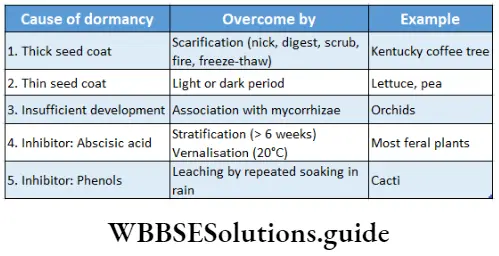
Plant Growth And Development Various causes of dormancy and methods to overcome

Photoperiodism

Definition: Photoperiodism is the phenomenon in which certain physiological changes in plants respond to the relative duration of day and night for growth and development, particularly for flowering.

Plants require a certain day length in order to initiate flowering which actually is a process of transformation from a vegetative state to a reproductive state. This phenomenon is called photoperiodism.

Photoperiodism was first described in detail by Garner and Allard (1920). Maryland Mammoth is a mutant variety of tobacco plants that grows very tall and produces very large leaves.

In nature, it blooms during winter when the day length is short. Garner and Allard (1920) performed a series of experiments on this plant by keeping it in a greenhouse and in a dark chamber.

“plant growth and development important points”

By shortening its exposure to light that would be equivalent to a winter day, this plant was compelled to bloom even in summer.

Alternatively, the plant could be kept in a vegetative state during winter months by artificially lengthening the light period. This landmark experiment proved that periods of light and darkness are highly crucial for the blooming of plants.

Types Of Plants According To The Photoperiod

Plants responsive to day-length produce flowers in a specific photoperiod. The minimum day length required by a plant for its flowering is called the critical day length of that plant.

The critical day lengths for tobacco and Xanthium are 12 hours and 15.5 hours respectively. The plant that produces flowers after exposure to light for the time period below its critical day length is called a short-day plant. On the other hand, long-day plants produce flowers when exposure to light exceeds its critical day length.

On the basis of photoperiod, we may classify the plants in the following way—

Day-neutral plants: In these plants, flowering is not influenced by the duration of the light period. There is no known day length requirement for them. Flowering in these plants is controlled by other factors like age, number of nodes, and previous history of cold treatment. E.g., most fruit crops, many vegetable crops (carrot, pea), rice, sunflower, Poa annua (bluegrass).

Long-day plants: In long-day plants flowering occurs in response to days longer than a critical length (or nights shorter than a critical length). Long-day plants may be grouped on the basis of photoperiodic response as follows—

Qualitative (absolute) long-day plants: These plants do not flower when days are shorter than critical length. They never flower at day lengths less than 12 hours, example black henbane, radish, sugar beet, hibiscus, etc.

Quantitative long-day plants: These plants flower sooner and more as day length increases, e.g., petunia, lettuce, wheat, barley, etc.

Short-day plants: Short-day plants flower in response to days shorter than a critical length (or nights longer than a critical length).

They are also categorized as follows—

Qualitative (absolute) short-day plants: These plants never flower when days are longer than their critical length, for example, tobacco, cocklebur, orchid, Chrysanthemum, Kalanchoe, Japanese morning glory, etc.

Quantitative short-day plants: They flower sooner and more as night length increases. E.g., marijuana, sugarcane, onion, blueberry, rhododendron, cotton, cosmos, etc.

Long-short-day plants (LSDP): These short-day plants produce flowers only when they are exposed to a sequence of long days followed by short days. example certain varieties of Kalanchoe (flower in late summer), Bryophyllum, Cestrum nocturnum (night-blooming jasmine), etc.
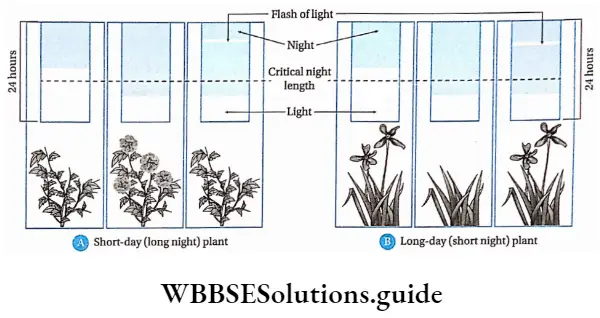
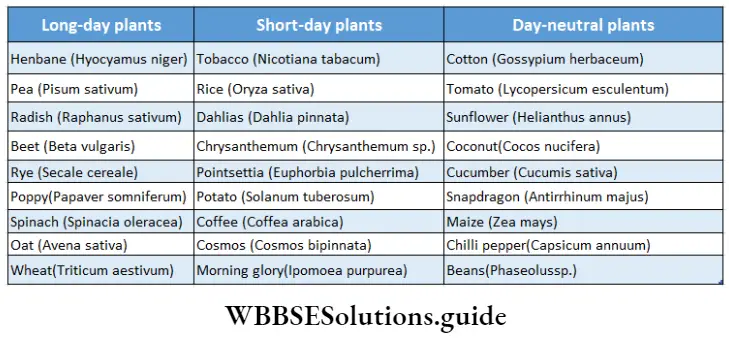
Plant Growth And Development Photoperiodism andflowering

Plant Growth And Development List of some long day, short day and day neutral plants

Plant Growth And Development Differences between long-day plant and short-day plant

Interesting facts about photoperiodism

Dr.S.M.Sarkar and P.Parija tested the necessity of a short day for high-yielding Aman paddy. According to them, the development of flowers in aman paddy occurs under 32.2°C.

Strawberries, a short-day plant, produce more runners if exposed to long days. If yam, a long-day plant, is exposed to short days, then the plant will produce more tubers.

If long-day plant’ Henko sp., is exposed to short days, then it will show rosette formation by reducing the gap between the nodes. If an onion a short-day plant is exposed to the long day, then bulb formation occurs.

Floral clock

Many plants have an internal biological clock, which regulates the time of day when their flowers open and close. For example, the flowers of Nepeta cataria open between 6 am and 7 am; orange hawkweed opens between 7 am and 8 am; field marigolds open at 9 am and varieties of Helichrysum wake up at 10 am. Other varieties follow, with Convolvulus opening at noon.

Plant Growth And Development Linnaeus'Floral clock

By making observations of the times when flowers open and close during the day, Carolus Linnaeus conceived the idea of arranging certain plants in an order of flowering, so that they constitute a kind of floral clock.

This was described in Linnaeus’s Philosophia Botanica (1751) in which he referred to it as a Horologium Florae (floral clock). Apparently, Linnaeus was able to use his clock to determine the time accurately within half an hour.

Characteristics Of Photoperiodism

The general characteristics of photoperiodism are—

Genetic control: Now it is well known that photoperiodic responses are controlled by genes. Nowadays, it is possible to make a plant flower in any season by using technologies (gene manipulation).

At the National Botanical Research Institute, Lucknow, scientists have bred varieties of Chrysanthemum, which are able to bloom in any season of the year including the summer. More such research is going on for different economically important plants to make them flower in any season.
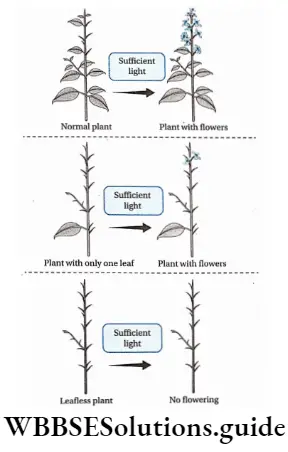
Plant Growth And Development Site ofperception ofphotoperiodic induction in Xanthium

Photoperiodic induction: One complete cycle of light phase and dark phase, required during flowering, is known as an inductive cycle. 1 inductive cycle = 24 hours. This inductive cycle is species-dependent. For example, in Xanthium, only 1 inductive cycle or 24 hours are there.

There are two inductive cycles or 48 hours for Glycine max, while in Plantago lanceolate it is 25 days. Exposure to appropriate photoperiodic conditions induces flowering in both short-day and long-day plants.

The photoperiodic influence continues even if these treated plants are kept in unfavorable conditions. This phenomenon of flowering is known as photoperiodic induction.

Site of perception of photoperiodic induction: Photoperiodic induction is most effectively perceived by the leaves. Experimentally, it has been proved that flowering is possible by keeping a plant with only one leaf under a proper light source.

In a defoliated plant, flowering is not possible even if the plant gets proper day length. This is because the leaf contains the phytochrome pigment which perceives the photoperiodic induction.

Phytochrome: Phytochrome is a covalently bound, chromophore-containing protein pigment system. It is found in two interchangeable forms, which absorb red and far red light [wavelength 660-750nm].

This pigment takes part in photomorphogenesis and photoperiodism. The red and far red light of the action spectrum plays important roles in flowering.

Interchangeable forms: Depending on the variation of absorption of wavelength of light,

Two types of phytochromes are there—

  1. The first phytochrome Pr or P660 [P=phytochrome; r=red] forms in the absence of light and absorbs red light of wavelength 660nm.
  2. Pfr [fr= far-red] or P730, absorbs far red light of wavelength 730nm. Pfr is organically active. These Pr and Pfr are interchangeable. Pr changes to Pfr by absorbing light of 660nm. Again, Pfr changes to Pr by absorbing light at 730nm. Also, the Pfr slowly converts to Pr in the dark.
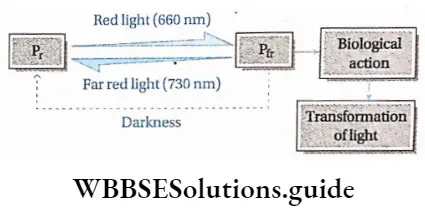
Plant Growth And Development Red light

The gradual conversion of Pfr to Pr is due to the effect of far red light. This induces flowering in short-day plants. Hence, in these plants, Pr acts as a flowering stimulant.

When the Pr changes to Pfr due to the effect of red light, flowering occurs in long-day plants. In these plants, a high concentration of Pfr acts as a flowering stimulant.
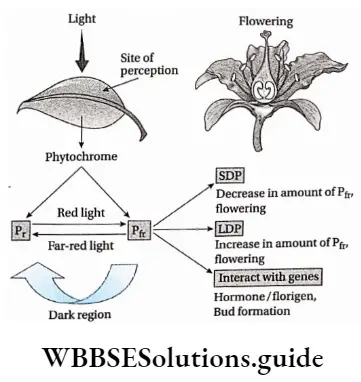
Plant Growth And Development Role ofphytochrome inflowering

Role of florigen in flowering: According to some scientists, the stimulants for flowering are found in leaves. the stimulants (hormone-like chemical substances) are first produced in leaves and then gradually move to the flower-forming regions (axial and lateral buds).

Chailakhyan (1937) named this stimulant florigen. According to some scientists, this florigen along with gibberellin and anthesin helps in flowering.
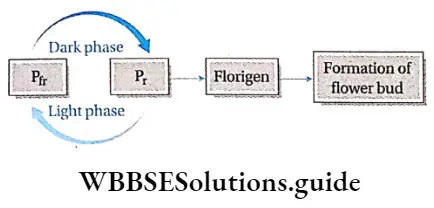
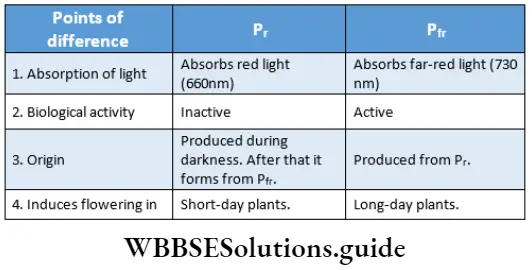
Plant Growth And Development Darkphase

Plant Growth And Development Differences between Pr and Pfr

Importance Of Photoperiodism

  1. Photoperiodism helps in determining the flowering time for economically important plants, especially commercially grown garden plants. Farmers can induce or delay flowering by using this phenomenon according to their needs.
  2. Some vegetable plants are allowed to continue their phase of vegetative growth by delaying the time of flowering. This induces a higher yield of tubers and rhizomes.
  3. The phenomenon can be utilized to produce good-quality breeds by the process of hybridization.
  4. Photoperiodism can also be used to produce more fruits and flowers by altering the flowering time and vegetative growth period.
  5. Endangered species of plants can be saved by using photoperiodism. Photoperiodism increases the power of adaptability as well as acclimatization of plants. This results in better dispersal of plant groups.
  6. This phenomenon is also useful for planning crop patterns and gardening in a particular region.
  7. By controlling day length, flowering can be induced in different varieties of the same species at a time. It helps in cross-pollination between all the varieties at the same time.

Vernalisation

Definition: The physiological process by which flowering is promoted in plants through prolonged exposure to low temperatures is called vernalization.

Plants have evolved a range of strategies so that they can bloom during the most suitable time of the year. In some plants, vernalization is a key requirement of the reproductive strategy. It permits plants to prepare for flowering as winter sets in and enables them to bloom during spring.

The word ‘vernalization’ was coined by Lysenko (1928), although Klippart and Gassner (1918) were the first to demonstrate vernalization. The origin of this word is from the Latin word—vernal, meaning ‘of spring’. The required temperature for vernalization ranges from 1°C to 9°C in plants.

Site of vernalization: In intact plants, the tip of the germinating embryo, root apex, shoot apex and the growing region of leaf lamina are the sites of vernalization. In some cases, other mitotically active tissues can become vernalised. G. Melchers reported that a flowering hormone called vernalin is formed in meristems as a result of vernalization.

There are some specific sites of vernalization in different plant species. Such as—

  1. In the case of Hyoscyamus niger (henbane), vernalization occurs in the shoot apex.
  2. In the case of Streptocarpus wendlandii, vernalization occurs in leaves.

Examples of vernalization: Generally, two types of henbane plants are there. One is annual and another is biannual. Both are long-day plants. If they are kept under short-day conditions then they will grow vegetatively and will not bloom.

It has been proved that those plants will bloom if treated with low temperatures. Flowering can be induced in other plants such as beetroot, mustard (black), etc., by this process. Scientists proved that if the winter variety of some seasonal plants is kept at 0°C-5°C for some weeks, then they will bloom in any season.

Importances of vernalisation:

  1. Vernalisation reduces the period of vegetative growth in the plants.
  2. Vernalisation promotes early flowering in plants.
  3. It increases the cold resistance of the plants.
  4. It reduces the time span between germination and flowering and so, helps to increase crop yield.
  5. Plants may develop fungal resistance due to vernalization.
  6. For cereal crops, early harvesting can be done before the drought season because of vernalization.

Essential Conditionsfor Vernalisation

Essential conditions for vernalization are given below—

Low temperature: 0°C-7°C is essential for vernalization. It has been found that vernalization is not possible below— 4°C and above 12°C-14°C.

Age: In cereals, the sprouting seeds act as the site of vernalization. Dry seeds do not show vernalization.

Water: An appropriate amount of water is important for the process of vernalization.

Light: Some seeds require light for vernalization.

Nutrient: In culture medium proper amount of nutrients especially carbohydrates, is needed for the embryo to be vernalised.

Period of low temperature: The duration of treatment with low temperature is different for different plants. It can be 1-3 months for different plants. In some plants like celery, as little as 8 days of cold can cause a substantial promotion of flowering. However, greater than 1 month of cold treatment is required for maximal cases of vernalization.

Oxygen: Vernalisation requires metabolic energy. So, oxygen is important for this process. According to Von Denffer (1950), different inhibitors of flowering are formed under anaerobic conditions even at low temperatures. So, the oxygenated condition is very important for vernalization, otherwise, it fails in the absence of oxygen.

“plant growth and development notes PDF download”

Active cell division: Germinating seeds and active meristem show active cell division. Active cell division requires active metabolic activity. This is one of the most important criteria of vernalization.

Sensitive parts: The leaves are sensitive to vernalization. Leaves get sensitized and secrete hormones that induce flowering.
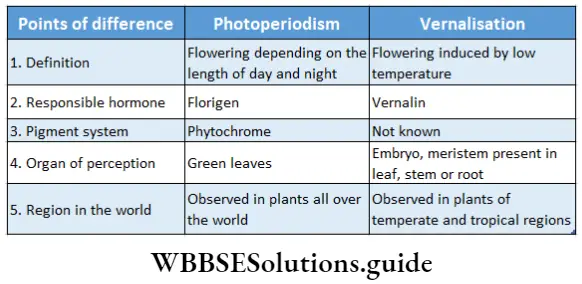
Plant Growth And Development Differences between photoperiodism and vernalisation

Process Of Vernalisation

  1. According to scientists, the application of low temperatures is required for the development of plants. However, vernalization is affected by many hormones.
  2. At low temperatures, gibberellic acid (GA) and vernalin (postulated hormone) are secreted.
  3. These hormones in turn activate certain genes called AGAMOUS-LIKE 20 in some plants like Arabidopsis thaliana.
  4. Some scientists also thought that vernalin helps to activate another hormone called florigen (postulated hormone). According to them, florigen is the actual hormone responsible for flowering.
  5. Vernalin and gibberellin both act differently, but gibberellin helps in the production and functioning of vernalin. The process of vernalization is depicted in the following chart.

Plant Growth And Development Low temperature

Plant Growth And Development Notes

  • Apical dominance: Inhibition of growth of lateral buds while apical buds are present.
  • Bolting: Sudden elongation of a condensed part of the stem before flower initiation.
  • Diterpenoid: An organic compound made up of four isoprene (5C) units.
  • Elicitors: Compounds of endogenous or exogenous origin that activate chemical defense mechanisms in plants.
  • Enantiomer: Each of a pair of molecules that are mirror images of each other.
  • Endangered species: A species of animal or plant that is at the risk of extinction.
  • Etiolation: Yellowing of green parts of the plant in the absence of sunlight.
  • Geotropic: Movement towards gravity or soil.
  • Indole ring: A cyclic ring structure (of different heterocyclic organic compounds) with formula C8H7N
  • Racemic mixture: A mixture of equal amounts of left-handed and right-handed enantiomers of a chiral molecule.
  • Synergistic effect: The overall effect created by more than one chemical or biological substance that is greater than the sum of individual effects of any of them.
  • Terpene: A class of monocyclic hydrocarbons of the formula C10H16.
  • Thigmomorphogenesis: The response by plants to mechanical sensations such as touch, wind, raindrops, etc., by altering their growth patterns.

 Points To Remember

  1. The process by which cells derived from the root and shoot apical meristems and cambium change into permanent tissue during the development of a plant cell to serve a specific function is known as, differentiation.
  2. A high rate of anabolism compared to catabolism induces growth.
  3. Cellular growth is characterized by cell division, cell elongation, and cell differentiation.
  4. The growth curve is the graphical representation of growth with respect to time.
  5. Plants continue to grow throughout their life, so their growth is known as indefinite or unlimited growth.
  6. On the basis of nature, there are three types of growth—vegetative or somatic growth, regenerative growth, and reproductive growth.
  7. Growth is mainly divided into four phases
    • Lag phase,
    • Log phase,
    • Decreasing phase,
    • Stationary phase.
  8. A study related to growth is known as auxanology
  9. The formation of new organs or body parts in living organisms by the process of differentiation is known as morphogenesis.
  10. The concentric rings found in the cross sections of plants with woody stems are known as annual rings or growth rings. The age of a tree can be determined by these annual rings.
  11. Arc indicators, auxanometers, and horizontal microscopes are the instruments used for measuring plant growth.
  12. The structural and functional deterioration occurring in the living body naturally is known as senescence.
  13. Blastema is the cells capable of growth and regeneration to produce buds in the place of any cut and wound.
  14. The minimum day length required to induce flowering in a plant is known as the critical day length of that plant.
  15. The phenomenon in which plants respond to the relative duration of day and night for growth and development, particularly for flowering is known as photoperiodism.
  16. In most of the long-day plants, flowering is induced by gibberellin.
  17. The red and far-red light of the action spectrum plays important roles in the flowering of short-day and long-day plants.
  18. Phytochromes are chromoprotein-like pigments formed of pyrol chains.
  19. The formation of new plant parts by the process of tissue culture is known as regeneration.
  20. Totipotency is the ability of a single cell to divide and produce all of the differentiated cells in an organism. Spores and zygotes are examples of totipotent cells.
  21. Ethylene helps in abscission, whereas auxin and cytokinin prevent abscission.
  22. Generally, long-day plants bloom during summer and short-day plants bloom during winter.
  23. The application of photoperiodism can be used to induce flowering in annual plants in any season of the year.

 

Plant Growth And Development Question And Answers

Biology Class 11 WBCHSE Plant Growth And Development Some Important Questions And Answers

Question 1. Which plant hormone is known as stress hormone?
Answer: Abscisic acid is known as a stress hormone as it helps the plant tolerate adverse conditions like drought, extreme cold, etc.

Plant Growth And Development

Question 2. Which growth control hormone is used for the rapid ripening of fruits?
Answer: Ethylene hormone is used for rapid ripening of fruits.

“plant growth and development questions and answers pdf”

Question 3. What will happen if cytokinin is not used in the culture medium?
Answer: Cytokinin hormone is important for cell division. If cytokinin is not used in the culture medium then cells will not divide properly. As a result, callus formation will be affected.

Question 4. What will happen if GA3 is applied to the seedlings of paddy?
Answer: GA3 increases the length of the internodes which results in better yield of the crops. If GA3 is applied to the paddy seedlings, they will grow in height.

Question 5. What will happen if the differentiation of dividing cells stops?
Answer: The part of the plant where differentiation of dividing cells stops remains a deformed mass of cells and the plant organs like leaves and stems would not form well. This deformed mass of cells is known as a callus.

Read and Learn More WBCHSE Solutions For Class 11 Biology

Question 6. Write the direction of growth of the vascular bundle.
Answer: Vascular bundles grow along the length of the stem. HIS What is senescence?

Question 7. What is an inflection point?
Answer: The slow deterioration of structural and functional characteristics in a mature plant due to aging is known as senescence.

“important questions on plant growth and development”

Question 8. What is seed dormancy? Mention the types of seed on the basis of seed dormancy.
Answer: The point at which the log phase ends and the lag phase starts during growth is known as an inflection point.

Class 11 Biology Class 11 Chemistry
Class 11 Chemistry Class 11 Physics
Class 11 Biology MCQs Class 11 Physics MCQs
Class 11 Biology Class 11 Physics Notes

Question 9. What is seed dormancy? Mention the types of seed on the basis of seed dormancy.
Answer:

Seed dormancy: The failure of an intact, viable seed to complete germination under favorable conditions is known as seed dormancy.

Types of seed on the basis of dormancy:

There are three types of seeds—

  1. Macrobiotic,
  2. Mesobiotic,
  3. Macrobiotic.

Plant Growth And Development Question And Answers

Question 10. Which is the primary site of perception of photoperiodic induction?
Answer: Leaves are the primary site of perception of photoperiodic induction. Mature leaves are more sensitive to photoperiodic induction than any young and old leaves.

Question 11. Name a plant growth regulator that is not a phytohormone.
Answer: Polyamine is a plant growth regulator which is not a phytohormone.

Question 12. Which hormone is applied to plants for rapid closure of stomata?
Answer: Abscisic acid is applied to plants for rapid closure of stomata.

Question 13. What will happen if a fully ripe fruit is placed in a basket of unripe fruits?
Answer: The ethylene present in the fully ripe fruit will be released soon and induce early ripening in all the unripe fruits.

Question 14. What is the determining factor for the growth of dicot leaves?
Answer: The determining factor for the growth of dicot leaves is the upper surface area of the leaves.

“plant growth and development short answer questions”

Question 15. If an apple merchant wants to wait for the rise of the market price of the apples while increasing the size of the fruits, then which plant growth regulator will he apply?
Answer: He will use gibberellin, as this plant growth regulator helps to increase the size of the fruit and also delay the abscission. Thus he can wait till the rise of market price and he would get an increase in yield as well.

Biology Class 11 WBCHSE

Question 16. Will a leafless plant respond to photoperiodic induction? Explain with reason.
Answer: The leaves of the plant contain a covalently bound chromatophore-containing protein system called phytochrome. Phytochrome perceives the photoperiodic induction. Hence a leafless plant will not show any response to photoperiodic induction.

Question 17. How will you prove that leaves are receptors of photoperiodic induction?
Answer: If a plant with only a leaf is kept under appropriate photoperiodic conditions, then it will bloom. But if a leafless plant is kept under suitable photoperiodic conditions then it will not bloom. This proves that leaves are the site of perception of photoperiodic induction.

Question 18. What do you mean by apical dominance?
Answer: Apical dominance is the condition where the growth of the lateral buds is inhibited by the apical buds. In this case, auxin remains more active and the plant increases in height without profuse branching. Decapitation or the removal of the apical bud can deactivate the power of auxin. Thus lateral buds resume their growth to produce branches.

Question 19. What is the sigmoid growth curve?
Answer: The sigmoid growth curve is an ‘S’-shaped curve representing the average growth of all organisms, where young ones experience an initial slow growth followed by rapid accelerating growth. This is followed by continuous steady growth and as organisms reach maturity, the growth rate slows down and finally comes to a stop.

“MCQ on plant growth and development with answers”

Question 20. What is parthenocarpy?
Answer: Parthenocarpy refers to the production of fruits without fertilization. This process produces seedless fruits. Auxins are used to produce such fruits.

Biology Class 11 WBCHSE Plant Growth And Development Very Short Answer Type Questions

Question 1. What does the stationary phase of the sigmoid curve indicate?
Answer: The maturation phase or slow growth rate is indicated by the steady phase or stationary phase in a sigmoid growth curve.

Question 2. Name the growth regulator which was isolated from the endosperm of maize.
Answer: Zeatin—a cytokinin was isolated from corn kernel by Letham et al (1963).

Question 3. What is vernalisation?
Answer: Vernalisation is the promotion of flowering by treating the plant at low temperatures (1°C-2°C) in its primary growth phase.

Question 4. What would happen if soaked, light-sensitive lettuce seeds were exposed to far-red light followed by red light?
Answer: When soaked lettuce seeds are exposed to far-red light followed by exposure to red light, then the seeds will germinate. This phenomenon is known as photomorphogenesis.

Question 5. Name any two synthetic auxins used in agriculture.
Answer: 2,4-dichlorophenoxyacetic acid (2,4-D) and ff-naphthylacetic acid or 1 naphthaleneacetic acid (NAA).

“previous year questions on plant growth and development”

Question 6. What induces parthenocarpy in grapes?
Answer: Gibberellin induces parthenocarpy in grapes

Question 7. What can induce bolting in cabbage plants?
Answer: Boltingin cabbage is triggered mainly by gibberellin. Also, bolting can occur as a result of other factors such as cold spells or changes in day length (long day).

Question 8. What are quiescent seeds?
Answer: The seeds which fail to germinate due to unfavorable, external environmental conditions are called quiescent seeds.

Question 9. Name the hormone that makes the plant more tolerant to various stresses.
Answer: Abscisic acid (ABA) makes the plant tolerant to various stresses.

Question 10. Name the plant hormone that inhibits the growth of plants.
Answer: Abscisic acid (ABA) inhibits the growth of plants.

Question 11. What are the full forms of IAA, NAA, and IBA?
Answer: IAA—Indoleacetic acid, NAA—Naphthaleneacetic acid, IBA—Indole-3-butyric acid.

Question 12. What does an overripe apple release, that affects other apples in the basket?
Answer: An overripe apple releases ethylene—a gaseous hormone, that affects other applesin the basket.

Question 13. What is the growth curve?
Answer: A growth curve is constructed by plotting the increase in cell number versus time of incubation and can be used to delineate stages of the growth cycle.

Question 14. What would develop first, shoot bud or the root, from the callus of tobacco pith, grown in a sterile minimal nutrient medium, when cytokinin added is more than auxins?
Answer: Shoot bud will develop.

Question 15. Define growth regulators.
Answer: A plant growth regulator is an organic compound, either natural or synthetic, that modifies or controls one or more specific physiological processes within a plant to accelerate or inhibit growth in plants.

Question 16. Which part of the plant perceives light for flowering?
Answer: the mature leaf perceives the light stimulus for flowering. It is the organ for the perception of light.

Question 17. Name the phytohormone that stimulates the production of the enzymes that mobilize nutrients in the cotyledon in some germinating seeds.
Answer: Gibberellic acid.

Question 18. A farmer grows cucumber plants in his field. He wants to increase the number of female flowers in them. Which plant growth regulatory hormone (PGR) can be used to achieve this?
Answer: Auxin can Increase the number of female flowers in a cucumber plant. It is responsible for changes in sex expression.

“NEET questions on plant growth and development with solutions”

Question 19. In botanical gardens and tea gardens, gardeners trim the plants regularly so that they remain bushy. Does this practice have any scientific explanation?
Answer: Yes. This practice can be related to a phenomenon called apical dominance. The apical buds suppress the growth of lateral buds and prevent branch formation. If it is removed by trimming, the lateral buds start to grow to give the plant a bushy look.

Question 20. A gardener finds some broad-leaf dicot weeds growing in his lawns. What can be done to get rid of the weeds efficiently?
Answer: If the synthetic auxin 2, 4-D (2,4-dichloro phenoxy acetic acid) is sprayed over the lawns, in a particular concentration, the broad leaf dicot weeds will die, leaving the grasses alive. This is due to the selective herbicidal action of the synthetic auxin 2, 4-D.

Question 21. Name a plant hormone that can delay senescence.
Answer: Cytokinin is the plant hormone that delays senescence.

“class 11 plant growth and development questions and answers”

Question 22. Which plant hormone is called anti-aging hormone?
Answer: Cytokinin is known as an anti-aging hormone as it delays senescence.

Question 23. What is meant by apparent growth?
Answer: Apparent growth is an increase in the size, volume, and weight of the plants, which can be observed from outside.

Question 24. What is real growth?
Answer: Real growth is the formation of new cytoplasm and the accumulation of other cellular materials in the cell.

“long answer questions on plant growth and development”

Question 25. Which plant hormone is known as anti-auxin?
Answer: Abscisic acid

Question 26. While eating watermelons, all of us wish—it was seedless. As a plant physiologist can you suggest any method by which this can be achieved?
Answer: Watermelon plants can be treated with artificial auxin which will induce parthenocarpic fruit production. These fruits will be seedless.

Plant Growth And Development Multiple Choice Question and Answers

Plant Growth And Development Multiple Choice Questions

Question 1. Fruit and leaf drop at early stages can be prevented by the application of

  1. Ethylene
  2. Auxins
  3. Gibberellic acid
  4. Cytokinins

Answer: 2. Auxins

Question 2. Asymptote in a logistic growth curve is obtained when—

  1. K = N
  2. K> N
  3. K< N
  4. The value of ‘r’ approaches zero

Answer: 1. K = N

Read and Learn More WBCHSE Multiple Choice Question and Answers for Class 11 Biology

Question 3. The Avena curvature is used for bioassay of—

  1. GA3
  2. IAA
  3. Ethylene
  4. ABA

Answer: 2. IAA

“plant growth and development MCQ with answers”

Question 4. You are given a tissue with its potential for differentiation in an artificial culture. Which of the following pairs of hormones would you add to the medium to secure shoots as well as roots?

  1. IAA and gibberellin
  2. Auxin and cytokinin
  3. Auxin and abscisic acid
  4. Gibberellin and abscisic acid

Answer: 2. Auxin and cytokinin

Class 11 Biology Class 11 Chemistry
Class 11 Chemistry Class 11 Physics
Class 11 Biology MCQs Class 11 Physics MCQs
Class 11 Biology Class 11 Physics Notes

Question 5. Phytochrome is a—

  1. Flavoprotein
  2. Rotein
  3. Lipoprotein
  4. Chromoprotein

Answer: 4. Chromoprotein

Plant Growth And Development Multiple Choice Question and Answers

Question 6. Auxin can be bioassayed by—

  1. Lettuce hypocotyl elongation
  2. Avena coleoptile curvature
  3. Hydroponics
  4. Potometer

Answer: 2. Avena coleoptile curvature

“multiple choice questions on plant growth and development”

Question 7. Which one of the following fruits is parthenocarpic?

  1. Banana
  2. Brinjal
  3. Apple
  4. Jackfruit

Answer: 1. Banana

Question 8. Dr. F. Went noted that if coleoptile tips were removed and placed on agar for one hour, the agar would produce a bending when placed on one side of freshly cut coleoptile stumps. Of what significance is this experiment?

  1. It made possible the isolation and exact identification of auxin
  2. It is the basis for the quantitative determination of small amounts of growth-promoting substances
  3. It supports the hypothesis that IAA is auxin
  4. It demonstrated the polar movement of auxins

Answer: 4. It demonstrated the polar movement of auxins

Question 9. Which one of the following growth regulators is known as the ‘stress hormone’?

  1. Abscisic acid
  2. Ethylene
  3. GA3
  4. Indole acetic acid

Answer: 1. Abscisic acid

Question 10. Match the following columns

Plant Growth And Development multipule choice Question 10

  1. 1-2, 2-4, 3-3, 4-1
  2. 1-3, 2-1, 3-4, 4-2
  3. 1-1, 2-2, 3-4, 4-3
  4. 1-2, 2-4, 3-1, 4-3

Answer: 2. 1-3, 2-1, 3-4, 4-2

Question 11. Which one of the following is a growth regulator produced by plants?

  1. Naphthalene acetic acid
  2. Zeatin
  3. 2, 4-dichloro phenoxy acetic acid
  4. Benzyl aminopurine

Answer: 2. Zeatin

“plant growth and development quiz with answers”

Question 12. Which of the following plant growth hormones increases the yields of sugar by increasing the length of the stem in sugarcane?

  1. Cytokinin
  2. Auxin
  3. Abscisic acid
  4. Ethylene
  5. Gibberellic acid

Answer: 5. Gibberellic acid

Question 13. One hormone hastens the maturity period in juvenile conifers, a second hormone controls xylem differentiation while, the third increases the tolerance of plants to various stresses and they are respectively—

  1. Auxin, gibberellin, and cytokinin
  2. Gibberellin, auxin, and cytokinin
  3. Gibberellin, auxin, and ethylene
  4. Gibberellin, auxin, and ABA
  5. Auxin, gibberellin, and ABA

Answer: 4. Auxin, gibberellin, and ABA

Question 14. Which of the following is not an effect of ethylene?

  1. Promotes senescence and abscission of plant organs
  2. Breaks seed and bud dormancy
  3. Brings about horizontal growth of seedlings
  4. Hastens fruit ripening
  5. Helps to overcome apical dominance

Answer: 5. Helps to overcome apical dominance

“MCQ on plant growth and development for NEET”

Question 15. Auxin was first isolated from—

  1. Fungus
  2. Apple
  3. Sperm DNA
  4. Human urine

Answer: 4. Human urine

Question 16. Apical dominance in plants means—

  1. Growth of lateral buds
  2. Inhibition of the growth of lateral buds
  3. Both A and B
  4. None of the above

Answer: 2. Inhibition of the growth of lateral buds

Question 17. Vernalization is dependent on exposure to—

  1. Low temperature
  2. High temperature
  3. Both A and BNOA
  4. None of these

Answer: 1. Low temperature

Question 18. In flowering plants, the site of perception of light/dark duration is—

  1. Stem
  2. Leaves
  3. Shoot apex
  4. Floral meristem

Answer: 2. Leaves

Question 19. Study the following columns

Plant Growth And Development multipule choice Question 19

  1. 1-3, 2-1, 3-5, 4-2
  2. 1-2, 2-5, 3-4, 4-3
  3. 1-2, 2-1, 3-5, 4-4
  4. 1-4, 2-3, 3-2, 4-1

Answer: 2. 1-2, 2-5, 3-4, 4-3

“important MCQs on plant growth and development”

Question 20. Senescence in plants leads to cells.

  1. Increase in number
  2. Increase in size
  3. Death
  4. Differentiation

Answer: 3. Death

“objective questions on plant growth and development”

Question 21. If a plant produces flowers when exposed only to alternating periods of 5 hours of light and 3 hours of dark in a 24-hour cycle, then the plant should be.

  1. Short-Question day plant
  2. Long-day plant
  3. Short-long day plant
  4. Day-neutral plant

Answer: 2. Long-day plant

Question 22. Hormone replacing the requirement of vernalization is

  1. Ethylene
  2. Gibberellins
  3. Auxin
  4. Cytokinin

Answer: 3. Auxin

Question 23. Monocarpic plants are those in which—

  1. Flowering and fruiting occur only once
  2. Flowering and fruiting occur regularly
  3. Produce fruits with a single-seed
  4. Fruits are produced without fertilization

Answer: 1. Flowering and fruiting occur only once

“plant growth and development class 11 MCQ”

Question 24. During seed germination, its stored food is mobilized

  1. Ethylene
  2. Cytokinin
  3. ABA
  4. Gibberellin

Answer: 4. Gibberellin

Respiration In Plants Notes

Respiration In Plants Introduction

You have learned in your previous chapter that plants take in carbon dioxide during photosynthesis. But do you know, that plants also take in oxygen They do so during respiration. All living organisms need a continuous supply of food for growth. They also need energy to carry out various life processes. Food is the source of this energy.

During photosynthesis, chlorophyllous cells trap solar energy and convert it to chemical energy (ATP). The chemical energy is stored as bond energy in food (glucose).

However, the energy in the food is to be made available to the cells in a utilizable form. Respiration is the biochemical process that breaks down the food with a subsequent release of energy and CO2.

Respiration In Plants Definition: Respiration is a catabolic, biochemical process, that involves the stepwise, complete, or incomplete oxidation of complex organic molecules (glucose) either in the presence or in the absence of oxygen with the release of energy as ATP required for various cellular metabolic activities.

“respiration in plants notes for class 11 biology”

Cellular Metabolic Reactions

Metabolism (derived from the Greek word metabole means ‘change’) or metabolic reaction is the set of life-sustaining chemical transformations within the cells of living organisms. The word metabolism also H refers to the sum of all chemical reactions that occur in living organisms.

The chemical reactions of metabolism are organized in metabolic pathways. In these pathways, one chemical is transformed through!; a series of steps into another chemical by a sequence of enzymes.

Metabolic reactions are usually divided into two categories

  1. Anabolic reactions are the building up of components of cells from smaller units with the help of energy; for example synthesis of protein and nucleic acids.
  2. Catabolic reactions are the breaking down of organic matter into simpler forms to release energy; for example cellular respiration.
Class 11 Biology Class 11 Chemistry
Class 11 Chemistry Class 11 Physics
Class 11 Biology MCQs Class 11 Physics MCQs
Class 11 Biology Class 11 Physics Notes

Historical perspective: Several important discoveries have led us toward the modern concept of cellular respiration. Some significant discoveries are mentioned in the table below.

” plants and respiration”

Respiration In Plants Important discoveries regacting respiration

Site of respiration: Respiration or oxidation of food occurs in all living cells. This is also known as cellular respiration. Respiration involves various steps that occur in specific parts of a cell.

Site of respiration in prokaryotic cells: Prokaryotic cells do not contain mitochondria. In this type of cell, respiration occurs in the cytoplasm. In prokaryotes, respiration occurs in a specialized structure made up of a cell membrane called a mesosome.

Respiration In Plants Notes

Site of respiration in eukaryotic cells: In eukaryotic cells, respiration is complete in four different phases at different sites.

These are listed in a tabular manner as follows:

Respiration In Plants Sites of respiratory phases

Time of respiration: Respiration occurs all the time, whether it is night or day. If respiration stops, even for a few seconds, organisms die.

Respiratory substrate: The substances that undergo oxidation during respiration to release energy are known as respiratory substrates. These include carbohydrates, protein, fat, and organic acids.

These are present in the protoplasm of the cells. Among these, glucose (a simple carbohydrate) is the main respiratory substrate and is known as the starting point of respiration.

Respiration In Plants Food components involved in respiration

Types of respiration depend on the types of respiratory substrates:

Depending on respiratory substrates, respiration is of two types—floating respiration and protoplasmic respiration.

Floating respiration: In this type of respiration, carbohydrate or fat is utilized as respiratory substrate. Generally, this type of respiration occurs in cells under normal conditions.

“detailed notes on respiration in plants with diagram”

Protoplasmic respiration: In this type of respiration, protein is utilized as a respiratory substrate. This type of respiration generally occurs in the cells during fasting, when stored carbohydrates and fats are used up completely.

This type of respiration uses structural proteins of cells because stored protein is rarely present in the cells. In this process, ammonia is synthesized by the oxidation of amino acids, which is harmful to the cells.

Respiration In Plants Differences between protoplasmic and floating respiration

Respiration is an exothermic process: Organic substances present in the cell, undergo oxidation (fully or partially) during respiration. This releases the energy present in the food as ATP and heat. Hence, respiration is known as an exothermic and exergonic process.

Respiration is a catabolic process: During respiration, the complex organic components of the cell break down to form simple organic substances (in the case of aerobic respiration CO2 and H2O). This releases the energy from food. As a result, the amount of organic substances and the dry weight of the cell gradually decrease Hence, respiration is known as a catabolic process.

Respiration and combustion: In 1789 Lavoisier, first suggested that respiration is a type of controlled combustion. He also said that respiration and combustion have similarities as well as dissimilarities.

Similarities between respiration and combustion:

  1. O2 is involved in both processes. However, free O2 is used mainly during aerobic respiration.
  2. Both processes release stored energy.
  3. Both the processes involve breaking down of chemical bonds within the organic compounds.
  4. Both processes convert complex organic substances into their ample forms.
  5. CO2 is produced during both respiration and combustion.
  6. H2O is produced as the by-product in both processes.

Respiration In Plants Schematic representation ofentrapment ofsolar energy toform organic substances and its conversion into chemical energy inside the cell

Respiration In Plants Differences between respiration and combustion

Importance of respiration: Respiration has immense importance in living organisms, such as

Release energy: The stored energy of the food is released by respiration in the form of heat. Organisms utilize this energy to carry out various life processes. The excess energy remains stored in the form of ATP (chemical energy).

Utilization and transformation of energy: The energy released during respiration is used for various physical activities, such as locomotion, movement, reproduction, growth, etc. The energy is also transformed into different forms such as heat, kinetic energy, etc.

“types of respiration in plants with examples”

Maintenances of O-CO balance: Oxygen (which is evolved during photosynthesis) from the environment is utilized during aerobic respiration. CO2 required in photosynthesis enters the environment through respiration. Hence, respiration and photosynthesis, maintain O2-CO2 balance in the environment

Bioluminescence

The emission of light, by certain living organisms, is known as bioluminescence. The light is produced due to the oxidation of luciferin protein. Enzyme luciferase oxidizes luciferin.

Respiration In Plants Luciferin

Some marine fish and fireflies emit light by this process. This property is also found in certain bacteria, fungi, and also in suckers of some octopus species. example Vibrio fishcheri, black dragon fish, etc.

Do plants Breathe?

The plants do not have any specific respiratory organ. The exchange of gases (that occurs with the help of the diffusion process) takes place after the entry of oxygen into the numerous air spaces present in the cells of the leaf, stem, and root.

The parts of the plant that are involved in the gaseous exchange are—the general body surface of the plant (stems, roots, fruits, and seeds), lenticels (openings in the bark of the tree trunk), stomata (present in the leaves and young stems), pneumatophores (roots that grow upward from the soil or water).

Why do plants not have special respiratory organs?

  1. Plant tissues are formed of loosely bound cells, so, the exchange of gases takes place by diffusion.
  2. Each plant part takes care of its own need for gaseous exchange. The transportation of gases from one part to another in a plant is almost negligible.
  3. Plants require less amount of O2 to carry out their life processes. During photosynthesis, the availability of O2 in the cells is so abundant that the exchange of gases with the environment is not needed at all.
  4. Each living cell in a plant is located quite close to the surface of the plant.

Lenticels: Numerous small pores are found in the bark of woody stems and roots of certain trees and shrubs. These pores help in a gaseous exchange known as lenticels.

Respiration In Plants Gaseous exchange through lenticels

Stomata: Numerous tiny pores found in the epidermis of the leaves and young stems, are known as stomata. A stoma contains an opening called a stomatal aperture. This opening is guarded by two bean-shaped guard cells.

The guard cells are surrounded by other epidermal cells known as accessory cells. A gaseous exchange takes place through the stomatal aperture between the leaf and the atmosphere.

Respiration In Plants Gaseous exchange through stomata

Pneumatophore: Mangrove plants like Rhizophora, Ceriops, etc., mostly grow in muddy and saline soil. This type of soil contains very low levels of O2 which hampers the gaseous exchange in the roots of these plants.

So, their roots grow erect branches that remain above the soil or water. These roots contain tiny pores (called pneumatophores) through which gaseous exchange takes place. Such roots are called pneumatophores.

Respiration In Plants Pneumatophore

Respiration In Plants Types Of Cellular Respiration

Respiration involves the oxidation of respiratory substrates in cells and also the reduction of an electron acceptor. Based on the utilization of oxygen and the ultimate electron acceptor,

Respiration is of two types

  1. Aerobic
  2. Anaerobic.

“aerobic and anaerobic respiration in plants explained”

Respiration In Plants Aerobic Respiration

The word aerobic is derived from the Greek words, aer—’air’ and bios—’life’. The organisms performing aerobic respiration are called aerobes.

Aerobic Respiration Definition: The process that involves the complete oxidation of respiratory substrates (glucose) in the presence of O2 with the release of water and free CO2, with complete conversion of static energy into chemical (as ATP) and heat energy, is known as aerobic respiration.

Aerobic Respiration Site: Aerobic respiration is found in all living cells of higher plants and animals. Phases of aerobic respiration take place in the cytoplasm and mitochondria of the cell.

Overall reaction

Respiration In Plants Overall reaction

Aerobic Respiration Summary:

Aerobic respiration includes four phases:

  1. Glycolysis,
  2. Oxidative decarboxylation of pyruvate,
  3. Krebs cycle,
  4. Electron transport system and terminal respiration.

Experiment to demonstrate aerobic respiration

Aerobic respiration can be demonstrated with the help of a simple experiment using germinating gram seeds.

Materials required: Two conical flasks, two single-holed corks, two delivery tubes bent twice at right angles with small and long arms, two beakers, two sample tubes, thread, colored water, freshly prepared 20% potassium hydroxide solution, germinating and dry non-germinating gram seeds, petroleum jelly, cotton.

Aerobic Respiration Procedure: Seed coats of the germinating seeds are removed carefully. A cotton bed is prepared at the base of the conical flask and is made wet by sprinkling water. The wet cotton protects the germinating seeds from getting dry. Now, decorated seeds are placed on the wet cotton bed.

  • Freshly prepared 20% KOH solution is poured into a sample tube. The sample tube is then suspended inside the conical flask with the help of thread with proper care to avoid the spilling of solution in the conical flask. The mouth of the conical flask is covered with a single-holed cork.
  • The small arm of the delivery tube is fitted with the cork and the long arm is dipped in the beaker containing coloured water. The cork connections are made airtight with petroleum jelly.
  • Another setup is prepared with dry non-germinating seeds which are kept directly in the conical flask. This setup will act as a control setup. Both the set up are kept undisturbed for one hour and then the result is observed.

Aerobic Respiration Observation: The level of the colored water in the delivery tube is raised in the setup having germinating seeds. No such rising of water level is observed in the second set up having non-germinating seeds.

Respiration In Plants Experiment demonstrating aerobic respiration in germinating seeds

Inference and explanation: The rise of the level of colored water in the delivery tube shows a partial vacuum of water in the system. the component of air present in the system has been consumed by the germinating seed component of air (mainly O2 and not N2 or CO2 because higher organisms can not absorb atmospheric N2 or CO2) and releases CO2.

  • This released CO2 is absorbed by KOH present in the sample tube. Thus, a partial vacuum is produced which causes the rise of the colored water level. In the control setup, the dry seeds are not respiring at all, so, they do not use the oxygen.
  • Thus, no vacuum is created. So, the colored water level remains stable at its initial position. Therefore, it can be concluded that germinating seeds perform aerobic respiration.

Aerobic Respiration Precautions:

  1. Seeds should be well germinated.
  2. Removal of seed coats should be done carefully.
  3. All the connections should be made airtight.
  4. The free ends of the delivery tubes should be dipped in colored water.
  5. Levels of the water should be marked appropriately.

Respiration In Plants Chemical reactions related to respiration in some aerobic bacterial cell

Respiration In Plants Anaerobic Respiration

The word Anaerobic word is derived from Greek words, viz., art—’ without’, aer—’air’, and bios—’life’. The anaerobically respiring organisms are called anaerobes.

Anaerobic Respiration Definition: The respiration that involves incomplete oxidation of respiratory substrate (glucose) present in the cells of anaerobic organisms, in the presence of oxygen-containing inorganic substances (NO3, CO32 etc.,) resulting in the release of carbon dioxide and less amount of energy (ATP) is known as anaerobic respiration.

“glycolysis, Krebs cycle, and electron transport chain notes”

Anaerobic Respiration Site:

  • Anaerobic respiration is mainly found in microorganisms such as anaerobic bacteria, Monocystis, yeast, etc. This type of respiration is also found in certain cells of higher plants such as, in potato tuber.
  • It mainly takes place in the cytoplasm and mesosome (a cellular structure made up of cell membranes).
  • In higher groups of organisms, aerobic respiration occurs when a comparatively very small amount of oxygen is made available to the cell or when oxidation of substrates does not occur due to the absence of mitochondria.

Overall Reaction

Respiration In Plants Overall reaction

Anaerobic Respiration Summary:

Anaerobic respiration is completed in two  phases:

  1. Glycolysis, and
  2. Incomplete oxidation of pyruvic acid.

Respiration In Plants Anaerobic respiration

Experiment to demonstrate anaerobic respiration

Anaerobic respiration can be demonstrated with the help of a simple experiment using germinating gram seeds.

Materials required: Deep Petri dish, test tube, bent forceps, mercury, KOH pellets, germinating gram seeds

Anaerobic Respiration Procedure:

  • Seed coats of the germinating seeds are removed carefully. The deep Petri dish is half-filled with mercury. Then the test tube is also filled with mercury up to 5/6th part and the remaining portion is filled with peeled germinating seeds.
  • Now, the mouth of the test tube is closed with the thumb and then inverted vertically over the mercury-filled Petri dish. As the seeds are lighter than mercury they float over mercury tov/ards the closed end of the inverted test tube.
  • The thumb is then removed carefully. The whole setup is then kept undisturbed for half an hour.
  • Observations are recorded after half an hour and then KOH pellets are introduced into the test tube with a pair of bent forceps. KOH pellets rise upwards to the closed end of the tube. A final observation is made after 5-10 minutes.

“respiration in plants NEET notes with key points”

Anaerobic Respiration Observations:

  1. An initial observation is made after half an hour. It is seen that the level of the mercury has displaced downwards due to the collection of some gas towards the upper end of the test tube.
  2. But, after the introduction of KOH pellets in the test tube, the level of mercury is raised again and the tube is filled with mercury.

Respiration In Plants Experiment demonstrating anaerobic respiration in germinatingseeds

Inference and explanation: The test tube is completely filled with mercury and peeled germinating seeds at the beginning of the experiment. So, there is no air left in the tube. The germinating seeds thus are allowed to respire anaerobically.

  • During anaerobic respiration, seeds release a gas which is collected at the top of the test tube by downward displacement of mercury.
  • This gas is obviously CO2 as it is absorbed by KOH, which again results in the rise of the mercury column in the test tube.
  • Thus it is inferred that anaerobic respiration takes place in germinating gram seeds and CO2 gas is evolved during this process.

Anaerobic Respiration Precaution:

  1. The seed coats should be peeled carefully.
  2. Mercury should be handled carefully.
  3. The mouth of the test tube should be smooth.
  4. The amount of mercury in the Petri dish should be sufficient enough so that no air enters the test tube while it is inverted.
  5. KOH pellets should not be touched with hands. They should be always handled with forceps.

Fermentation

Fermentation is a type of anaerobic respiration that occurs in anaerobes. The term fermentation originated from the Latin word fermentum which means ‘to boil’.

Fermentation Definition: The process in which incomplete oxidation of respiratory substrate occurs in the absence of oxygen and in which certain organic compounds are produced resulting in the release of a low amount of energy, is known as fermentation.

It is a process in which the organic compounds are chemically changed, in the absence of oxygen, by microorganisms. Louis Pasteur first described the concept of fermentation in yeasts.

Fermentation Site: Fermentation occurs in microorganisms such as bacteria, yeast, etc. It takes place in specific body cells of higher organisms.

Characteristics of fermentation:

  1. Fermentation is an intracellular process.
  2. This is an enzyme-dependent process. For example, Zymase is required for ethyl alcohol fermentation, and lactate dehydrogenase is required in lactic acid fermentation.
  3. The process of fermentation produces certain organic compounds, such as ethyl alcohol, lactic acid, butyric acid, propanoic acid, etc.
  4. This process does not involve the electron transport system.
  5. In this process, organic compounds act as electron donors as well as the ultimate electron acceptor.

Classification of fermentation:

Depending on the end products, fermentation can be divided into the following types—

Respiration In Plants Fermentation

Among all these types, ethyl alcohol fermentation and lactic acid fermentation are the most important.

Ethyl alcohol fermentation or alcoholic fermentation: The fermentation process where glucose is partially oxidized by the action of cytosolic enzymes in the absence of oxygen to produce CO2, ethyl alcohol, and a low amount of heat energy, is known as ethyl alcohol fermentation or alcoholic fermentation. This process is observed in Saccharomyces cerevisiae (yeast).

The reaction of ethyl alcohol fermentation is:

Respiration In Plants ethyl alcohol fermentation

Lactive acid fermentation: Lactic acid fermentation is a metabolic process in which glucose and other six-carbon sugars are partially oxidized by the enzyme present in the cytosol, in the absence of oxygen, to form lactic acid or lactate and to generate ATP. It occurs in some bacteria (Lactobacillus sp., Lactococcus sp., etc.), and muscle cells of animals. The reaction of lactic acid fermentation is-

Respiration In Plants Lactate dehydrogenase

Fermentation Summary:

Fermentation is completed in two phases:

  1. Glycolysis, and
  2. Anaerobic oxidation of pyruvic acid.

Respiration In Plants Some other important fermentation processes

Advantages and disadvantages of fermentation

The process of fermentation has both advantages and disadvantages.

Fermentation Advantages:

  1. In microorganisms, the fermentation process is the only way to get energy from food. Their cellular metabolism depends on fermentation.
  2. The process of fermentation is used for preparing bread, cakes, wine, and other alcoholic drinks.
  3. Fermentation is also used to produce vinegar.
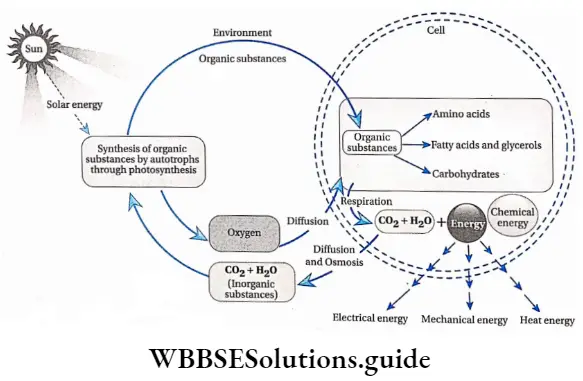
  4. Fermentation plays an important role in the tanning and curing of leather.
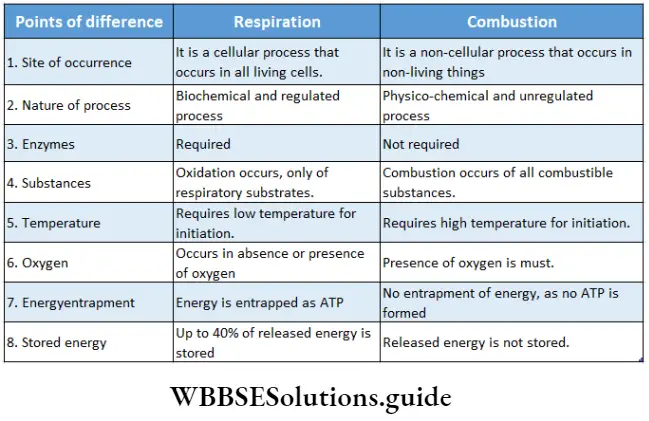
  5. It is also used to induce fragrance in tea and tobacco.
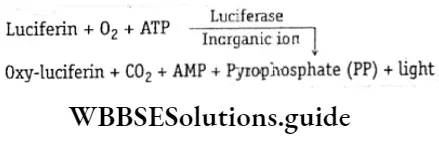
Fermentation Disadvantages:

  1. A small amount of energy is released by this process (net gain is 2 molecules of ATP per glucose molecule). This small amount of energy is sufficient for small organisms such as bacteria, yeasts, etc. However, this small amount of energy is not sufficient for the larger organisms.
  2. After excessive exercise, a large amount of lactic acid is produced in the muscles by fermentation. Muscles become fatigued due to the accumulation of lactic acid in them.
  3. As a result of incomplete oxidation, the end products of fermentation also contain some amount of static energy which is not used for the metabolic activities of the cell.
  4. Certain toxic compounds are often formed in our food due to fermentation.

Respiration In Plants Differences between aerobic and anaerobic respiration

Respiration In Plants Differences between anaerobic respiration and fermentation

” respiration in plants class 11 handwritten notes”


Respiration In Plants Differences between aerobic respiration and fermentation

Respiration In Plants Comparison between aerobic respiration, anaerobic respiration and fermentation

Respiration In Plants Mechanism Of Cellular Respiration

Glucose is the primary respiratory substrate for any living cell. Complete oxidation of glucose occurs by several biochemical reactions, during respiration (aerobic). Many intermediate substances are formed during this process.

Oxidation of glucose is completed in four steps:

  1. Glycolysis,
  2. Fate of pyruvic acid (anaerobic and oxidative decarboxylation of pyruvate),
  3. Krebs’ cycle,
  4. Terminal respiration and electron transport system.

Respiration In Plants Glycolysis

The term ‘glycolysis’ (glycols = sugar, lysis = breakdown) is generally used to refer to the dissolution of sugar. It is nearly, a universal pathway in all biological systems. This pathway was discovered by Gustav Embden, Otto Meyerhof, and J. Parnas in 1930. So, this pathway is also known as Embden-Meyerhof-Parnas (EMP) pathway.
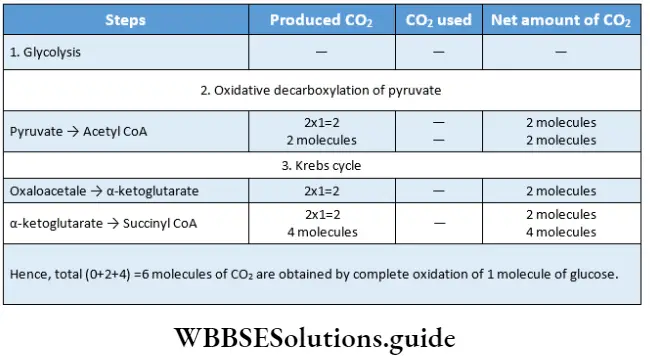
Glycolysis Definition: Glycolysis is the biochemical process, in which glucose is oxidized to pyruvic acid without the presence of free oxygen within the cell cytoplasm and produces 2 molecules of ATP, 2 molecules of NADH+H+, and 2 molecules of water.
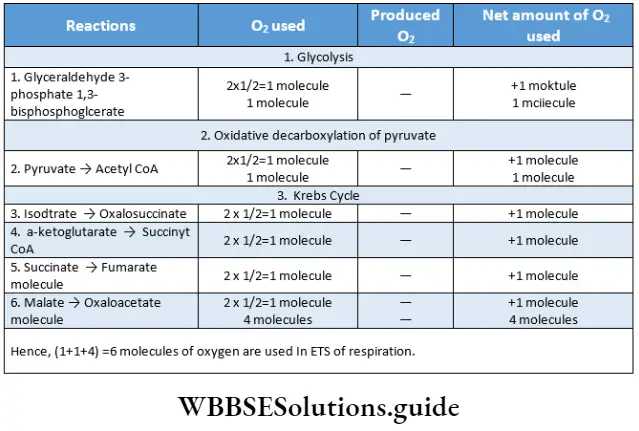
This is the first phase of cellular respiration. Glycolysis includes a sequence of reactions that converts glucose into pyruvate along with the production of ATP. In aerobes, glycolysis is the initiating phase of the citric acid cycle and the electron transport chain. In the case of anaerobes, it is the only energy-yielding phase.
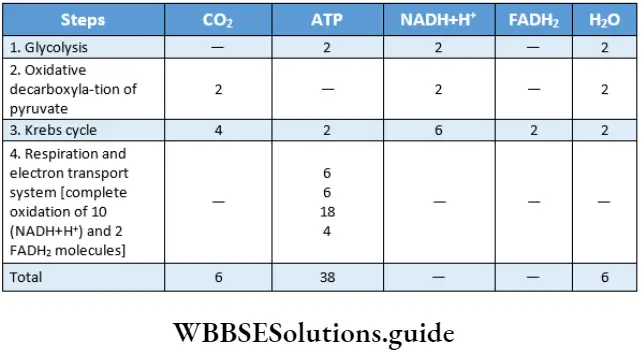
Glycolysis Site: Glycolysis occurs in the cytoplasm of an aerobe or anaerobe. This is because the required for this process are present in the cytoplasm.

Overall reaction

Respiration In Plants Glucose

Glycolysis Components: Glucose, hexokinase, isomerase, phosphofructokinase, aldolase, dehydrogenase, kinase, mutase, etc., and cofactors such as NAD+, Mg2+, ADP, ATP

Glycolysis Characteristics:

  1. The glycolytic pathway does not require oxygen (anaerobic condition).
  2. Pyruvate is formed as the end product. In anaerobic conditions, pyruvate moves to mitochondria to participate in the citric acid cycle. Under anaerobic conditions, pyruvate is converted to other organic compounds in the cytoplasm only.
  3. Generally, this pathway is an emergency energy-yielding pathway for cells in the absence of oxygen.
  4. Here,1 molecule of glucose converts into 2 molecules of pyruvic acid (pyruvate). CO2 is not produced at all.

Glycolysis Process: Glycolysis takes place in two phases. In the first phase, glucose is enzymatically phosphorylated by ATP and ultimately cleaved to yield 2 molecules of glyceraldehyde 3-phosphate (GAP).

This is an energy investment phase. In the second phase of glycolysis, the GAP is oxidized to form 1, 3-bisphosphoglycerate. it is then converted into 3-PGA and ATP. 3-phosphoglyceric acid (PGA) is then converted to 2-PGA which after dehydration yields phosphoenol pyruvate (PEP).

chapter 14 biology class 11 notes

It donates its phosphate group to ADP to form ATP and produces free pyruvic acid as the final product. Both processes are energy-producing phases.

Energy investment phase: 2 ATP molecules are required in five steps.

The steps are discussed below:

First phosphorylation: This step requires enzyme hexokinase, Mg2+, and ATP. This step includes the phosphorylation of glucose at the sixth position by ATP to yield glucose 6-phosphate. This is an irreversible reaction and the first phosphorylation of glycolysis.

Respiration In Plants Glucose 6-phosphate

Isomerization: The next step in glycolysis is the isomerization of glucose-6-phosphate to fructose-6-phosphate. The reaction is catalyzed by phosphoglucoisomerase. It is a reversible reaction.

Respiration In Plants Glucose 6-phosphate

Second phosphorylation: In this reaction, a second molecule of ATP is required to phosphorylate fructose-6-phosphate in its 1-position to yield fructose-1, 6-bisphosphate. This reaction is catalyzed by 6-phosphofructokinase. It requires Mg2+. It is also an irreversible step.

Respiration In Plants Splitting

Interconversion of triose phosphates: The two 3-carbon compounds, i.e., DHAP and GAP, are isomers. DHAP is a ketotriose, whereas GAP is an aldotriose. DHAP is converted to GAP by isomerization and it is catalyzed by triosephosphate isomerase. This reaction is very fast and reversible.

Respiration In Plants Interconversion of triose phosphates

Energy-producing phase: This phase includes the oxidoreduction steps as well as the phosphorylation step. In this step, ATP is generated from ADP.

Oxidation and phosphorylation of glyceraldehyde 3-phosphate convert to 1,3-bisphosphoglycerate (BPG) reacting with inorganic phosphate(pi) and NAD. The enzyme catalyzing this reaction is glyceraldehyde 3-phosphate dehydrogenase. NAD+ is also reduced to form NADH+H+. This is a reversible reaction.

⇒ \(\mathrm{GAP}+\mathrm{NAD}^{+}+\mathrm{Pi} \stackrel{{\mathrm{GAP} \\ \text { dehydrogenase }}}{\rightleftharpoons} 1,3-\mathrm{BPG}+\mathrm{NADH}+\mathrm{H}^{+}\)

Glycolysis in RBC of mammals

The following phases of reaction occur in RBCs of mammals instead of first at the use of ATP synthesis in glycolysis

1. 1,3-bisphosphoglycerate is first converted to 2,3-bisphosphoglycerate.

⇒ \(\text { 1,3-bisphosphoglycerate } \stackrel{\text { Enzyme }}{\longrightarrow} \text { 2,3-bisphosphoglycerate }\)

2. 2,3-bisphosphoglycerate is again converted to 3-phosphoglycerate.

⇒ \(\text { 2,3-bisphosphoglycerate } \stackrel{\text { Enzyme }}{-} \underset{\mathrm{Pi}}{\longrightarrow} \text { 3-phosphoglycerate }\)

First substrate level ATP synthesis and formation of 3-phosphoglycerate: 1,3-bisphos phoglycerate converts into 3-phosphoglycerate by the action of phosphoglycerate kinase and Mg2+. In this stage, ATP is formed from ADP and Pi. ATP is formed by first substrate-level phosphorylation. It is also an irreversible process.

Respiration In Plants Phosphogycerate

Isomerization or rearrangement: In this reaction, an intramolecular rearrangement or isomerization takes place. The phosphate molecule present at the third carbon atom of the 3-phosphoglycerate shifts to the second carbon atom of the molecule. This change forms 2-phosphoglycerate (2-PGA). This reaction is catalyzed by the enzyme phosphogly- ceromutase.

Respiration In Plants 2-Phosphoglycerate

Dehydration: In this reaction, 2-phosphoglycerate is j dehydrated to form phosphoenol pyruvate (PEP),  Enolase catalyzes this reaction. This dehydration reaction markedly elevates the transfer potential of the phosphoryl group. This is also a reversible reaction. One molecule of water is released in this reaction.

⇒ \(\text { 2-Phosphoglycerate } \underset{\mathrm{Mg}^{2+}}{\stackrel{\text { Enolase }}{\rightleftharpoons}} \begin{gathered} \text { Phosphoenol } \\ \text { pyruvate } \end{gathered}+\mathrm{H}_2 \mathrm{O}\)

Second substrate level ATP synthesis and formation of pyruvate: This last reaction involves the formation of pyruvate along with the simultaneous generation of ATP. The transfer of the phosphoryl group from PEP to ADP is catalyzed by pyruvate kinase. This phosphorylation reaction is known as second substrate-level phosphorylation.

Respiration In Plants Pyruvate kinase

The reaction has been found to be irreversible under intracellular conditions. The enzyme requires either Mg2+ or Mn2+ with which it must form a complex before binding the substrate.

Respiration In Plants Glycolysis
Respiration In Plants Glycolysis.

Significance of glycolysis:

  1. This is the common and important glucose metabolism pathway for all the organisms.
  2. It is the obligatory pathway for carbohydrate breakdown to generate intracellular energy.
  3. The end product (pyruvate) of this pathway is considered the main substrate for both aerobic and anaerobic respiration. Pyruvate is also converted to acetyl CoA, which is considered the main substrate for the TCA cycle.
  4. Two molecules of ATP are obtained in this phase of fermentation and 8 molecules of ATP are obtained in this phase of aerobic respiration.
  5. The NADH+H+ produced during glycolysis is used for different metabolic activities.
  6. The intermediate products of glycolysis are used for other metabolic activities, such as
    • Intermediate product phosphoenolpyruvate (PEP) helps in the synthesis of auxin, tryptophan, phenylalanine, anthocyanin, etc.
    • In glycolysis, glycerol produced from fat metabolism, gets converted into dihydroxyacetone phosphate and participates in aerobic respiration, and also produces energy.
    • Dihydroxyacetone phosphate produces glycerol during fatty acid metabolism.

Where has the hydrogen gone?

  • Glucose contains 12 hydrogen atoms. The pyruvate molecule produced from it contains only 8 hydrogen atoms. What will be the fate of the remaining 4 hydrogen atoms?
  • NADH + H+ is produced during the formation of glyceraldehyde 3-phosphate from 1,3-bisphosphate. This phase occurs twice so, 2x(NADH + H+) is produced.
  • It is known that 1 hydrogen atom of glucose reduces NAD+ to NADH. The other H+ comes from glyceraldehyde 3-phosphate. Hence, a total of 2 hydrogen atoms from glucose are required in this phase.
  • In another reaction of glycolysis, phosphoenolpyruvate is produced from 2-phosphoglycerate. This reaction gives out one molecule of water (dehydration). Hence, one H+ is released.
  • This also occurs twice so two H+ are released. Among 12 hydrogen atoms of glucose, 4 hydrogen atoms are used in the above-mentioned reactions. Therefore, a total of 8 hydrogen atoms are found in 2 molecules of pyruvate.

Respiration In Plants Pyruvic acid

Respiration In Plants Fate Of Pyruvate

The fate of pyruvate differs according to the absence or presence of O2.

Respiration In Plants Fate of pyruvate

Anaerobic decarboxylation of pyruvate

The mechanism of fermentation resembles that of aerobic respiration up to glycolysis. Pyruvate undergoes decarboxy location without oxygen to yield ethyl alcohol or lactic acid, depending upon the organism and type of tissue.

Alcoholic fermentation: Yeasts can respire both aerobically and anaerobically. If the fungi are not in contact with the atmosphere they respire anaerobically and the pyruvate is oxidized without the presence of oxygen.

Respiration In Plants Alcoholic fermentation

Pyruvate Process:

Pyruvate produced by glycolysis produces acetaldehyde through decarboxylation (removal of CO2). The enzyme involved in this process is pyruvate decarboxylase. It requires Mg2+ and a tightly bound coenzyme thiamine pyrophosphate (TPP) to complete the reaction.

In this step of alcoholic fermentation, the aldehyde is reduced to ethanol by the enzyme alcohol dehydrogenase, which contains Zn2+ ions at its active site. Ethanol and CO2 are thus the end products of alcoholic fermentation.

Why do microorganisms carry out fermentation for a longer period of time?

The intermediate products of fermentation are waste products. The cell excretes these waste products so that they cannot stop the fermentation process. As the wastes are not stored and catabolised within the cells, waste of energy is minimal. The cell density decreases and the fermentation process continues.

The organisms which respire by the process of fermentation, can survive with less amount of ATP how?

Higher organisms require a large amount of energy to carry out their metabolic processes. They get this energy through aerobic respiration. However, the organisms, that carry out fermentation, require less amount of energy to continue their life process. As a result, their respiration process is short and yields less ATP, which is sufficient for their survival.

Lactic acid fermentation: The lactic acid bacteria and muscle cells (in the absence of oxygen) respire anaerobically. The pyruvate undergoes decarboxylation to form lactic acid.

Respiration In Plants Lactic acidfermentation

Pyruvate Process:

  1. One molecule of glucose yields 2 molecules of pyruvate, 2 ATP molecules, 2 NADH+ 2H+, and 2 molecules of water in glycolysis.
  2. Pyruvate acts as an electron acceptor. Lactic acid is directly produced in the final phase by the reduction of pyruvate, catalyzed by lactate dehydrogenase.
  3. This reaction requires flavin mononucleotide (FMN) as a coenzyme of the enzyme lactate dehydrogenase and Zn2+ ions. CO2 has not evolved.

Respiration In Plants Differences between alcoholic and lactic acid fermentation

Respiration In Plants Differences between glycolysis and fermentation

Oxidative decarboxylation of pyruvate

This is the second phase of aerobic respiration. Scientist Lynen (1951) provided a reaction for this oxidative process.

Oxidative decarboxylation of pyruvate Definition: conversion Oxidativeof pyruvate decarboxylation into acetyl-CoAofbypyruvatethe action of the pyruvate dehydrogenase and co-enzyme A, resulting in the formation of NADH++ H+ and release of CO2.

Site: All the reactions of this process occur in the mitochondrial matrix.

Overall reaction:

The overall reaction of oxidative decarboxylation of pyruvate is:

Respiration In Plants Pyruvate dehydrogenase complex

Pyruvate Components: Pyruvate, thiamine pyrophosphate (TPP), lipoic acid, NAD+, FAD, co-enzyme A (CoA-SH), Mg2+, and pyruvate dehydrogenase.

In eukaryotes, the pyruvate dehydrogenase complex is composed of 30 molecules of pyruvate dehydrogenase, 12 molecules of dihydrolipoyl dehydrogenase, and 60 molecules of dihydrolipoyl transacetylase.

Pyruvate Process:

The process of oxidative decarboxylation is described as follows:

1. This step is catalyzed by pyruvate dehydrogenase whose prosthetic group is thiamine pyrophosphate (TPP). Pyruvate undergoes decarboxylation to yield CO2 and the hydroxyethyl derivative of TPP. TPP remains attached to the acetaldehyde, so it is known as active acetaldehyde

⇒ \(\text { Pyruvate }+\mathrm{TPP} \underset{\text { dehydrogenase }}{\stackrel{\text { Pyruvate }}{\longrightarrow}} \text { Active acetaldehyde }+\mathrm{CO}_2\)

2. Active acetaldehyde produces acetyl lipoic acid. The hydroxyethyl group of TPP is oxidized to form an acetyl group. The acetyl group is then transferred to the sulfur atom of lipoic acid and releases TPP by reacting with lipoic acid.

⇒ \(\begin{array}{ll} \text { Active acetaldehyde }+ \text { Lipoic acid } \longrightarrow & \text { TPP+ } \\ \text { (dihydrolipoyl transacetylase) } & \text { Acetyl lipoic acid } \end{array}\)

“difference between respiration in plants and animals”

3. Acetyl lipoic acid reacts with coenzyme A to produce dihydrolipoic acid and acetyl CoA. Acetyl CoA thus formed then leaves the enzyme complex and enters the TCA cycle.

4. The oxidized form of lipoic acid is regenerated by the enzyme dihydrolipoyl dehydrogenase whose reducible prosthetic group is tightly bound to FAD.

5. The resulting FADH2 which remains bound to the enzyme is re-oxidised in the final step by NAD+ with the formation of NADH+ H+.

Respiration In Plants Dihydrolipoyl transacetylase

Respiration In Plants Krebs Cycle

This is the third phase of aerobic respiration. This cycle was first described by Sir Hans Adolf Krebs, in 1937. In 1953, he received the Nobel Prize for his work. This cycle is named after him as the Krebs cycle. This cycle is also known as the citric acid cycle as the first product of this cycle is citric acid or citrate.

Krebs Cycle Definition: The Krebs cycle is the cyclic process, occurring in the mitochondrial matrix of living cells, where acetyl CoA is completely oxidized to produce different organic acids, carbon dioxide, water, and ATP with the help of enzymes.

Krebs Cycle Site: This cycle occurs in the mitochondrial matrix of any living cell. The essential enzymes for this cycle are present in the mitochondrial matrix.

Only succinate dehydrogenase is present on the inner side of the inner mitochondrial membrane. Due to this, the step of conversion of succinate to fumarate occurs in the inner mitochondrial membrane.

Overall reaction

Respiration In Plants Overall reaction1

Krebs Cycle Components: Acetyl CoA, GDP, FAD, NAD+, H2O, enzymes.

Characteristics of Krebs cycle:

  1. This cycle includes 10 steps for the complete oxidation of 1 molecule of acetyl CoA.
  2. Oxidation takes place in four steps. Hydrogen, present in the organic compounds, takes part in the oxidation process. Among all the oxidation steps, CO2 is released in one step. The step is known as oxidative decarboxylation.
  3. In two steps of this cycle, 1 molecule of CO2 is released.
  4. This cycle takes 3 molecules of water and releases 1 molecule. So, this cycle requires 2 molecules of water in total.

Respiration In Plants Krebs cycle

Steps of Krebs cycle

The complete oxidation of acetyl CoA, (which is formed in glycolysis) occurs in the mitochondrial matrix through this cycle.

The steps are given below:

Step 1 Condensation: This initial reaction of the citric acid cycle is catalyzed by citrate synthase. Here, the 4-carbon compound oxaloacetate binds with an acetyl group of 2-carbon compound acetyl CoA to yield the 6-carbon compound citrate, the first tricarboxylic acid intermediate of the cycle. For this reason, the cycle is also known as the tricarboxylic acid cycle or TCA cycle.

Respiration In Plants Citrate

Step 2 Dehydration: Citrate must be isomerized to isocitrate to enable the 6-carbon unit to undergo oxidative decarboxylation. The isomerization of the citrate is accomplished by dehydration followed by hydration.

After releasing one molecule of water, citrate is converted to cis-aconitate by the action of the enzyme aconitase. Fe2+ acts as the cofactor. is converted to cis-aconitate by the action of the enzyme aconitase. Fe2+ acts as the cofactor.

Respiration In Plants cis-Aconitate

Step 3-Hydration:

Now, cis-aconitate undergoes hydration and gets converted to isocitrate. This reaction is also catalyzed by aconitase.

⇒ \(\text { cis-Aconitate }+\mathrm{H}_2 \mathrm{O} \underset{\mathrm{Fe}^{2+}}{\stackrel{\text { Aconitase }}{\longrightarrow}} \text { Isocitrate }\)

Step 4 Oxidation: This is one of the four oxidation-reduction reactions in the TCA cycle. In this step, isocitrate is oxidized to form oxalosuccinate. The oxidation of isocitrate is catalyzed by isocitrate dehydrogenase in the presence of divalent cations J Mg2+/Mn2+ and NAD+.

⇒ \(\begin{aligned} & \text { Isocitrate }+\mathrm{NAD}^{+} \stackrel{\begin{array}{c} \text { Isocitrate } \\ \text { dehydrogenase } \end{array}}{\longrightarrow} \mathrm{NADH}+\mathrm{H}^{+} \\ & + \text {Oxalosuccinate } \\ & \end{aligned}\)

Step 5 Decarboxylation: The decarboxylation of oxalosuccinate produces a 5-carbon compound ar-ketoglutarate and 1 molecule of CO2. This reaction is catalyzed by oxalosuccinate dehydrogenase.

The formation of ar-ketoglutarate involves both oxidation and carboxylation. Hence, both steps 4 and 5 together are known as oxidative decarboxylation.

Respiration In Plants Oxalosuccinate

Step 6 Oxidative decarboxylation: The conversion of isocitrate to or-ketoglutarate is followed by a second oxidative decarboxylation reaction, with the formation of 4-carbon compound succinyl CoA from or-ketoglutarate.

The reaction produces another molecule of CO2 and NADH in the citric acid cycle. The reaction is catalyzed by the enzyme orketoglutarate dehydrogenase. This stage is the second decarboxylation stage of the citric acid cycle.

Respiration In Plants ketoglutarate

Step 7 Substrate level phosphorylation: Succinyl CoA is converted to succinate by the enzyme succinyl CoA synthetase. One molecule of H2O is H2O required in this reaction. The energy released by this reaction is stored in GDP to form GTP. Next, 1 phosphate from GTP combines with ADP to form ATP. This is the only substrate-level phosphorylation of the TCA cycle.

Respiration In Plants Succinyl CoA

In fact, this is the only reaction in the TCA cycle, that directly yields a high-energy phosphate bond.

Step 8 Oxidation of succinate: Succinate is oxidized to fumarate by the enzyme succinate dehydrogenase, which contains covalently-bound prosthetic group FAD. This enzyme is tightly bound to the inner mitochondrial membrane. FAD accepts hydrogen and is converted to FADH2.

Respiration In Plants Succinate

Step 9 Hydration: The next step in the cycle is the hydration of fumarate to malate. Fumarase or fumarate hydratase catalyses this reaction. One molecule of water combines with fumarate in this reaction.

Respiration In Plants Fumarate

Step 10 Oxidation of malate: In this last reaction of the cycle, the malate dehydrogenase catalyzes the conversion of malate to oxaloacetate. The hydrogen produced in the reaction is accepted by the NAD+ to form NADH+ H+.

Respiration In Plants Malate dehydrogenase

Succinate, fumarate, malate, and oxaloacetate are all 4 carbon compounds.

Different names of the Krebs cycle

  1. TCA cycle: The first product of the Krebs cycle is citrate and some other products (like aconitate, isocirate, and oxalosuccinate) contain 3 carboxylic groups (-COOH). Hence, this cycle is also known as the tricarboxylic acid cycle (TCA cycle).
  2. Citric acid cycle: Citrate (citric acid) is the first product of the Krebs cycle, so it is also known as the citric acid cycle.

Significance of Krebs cycle

Krebs cycle plays many important roles in an organism.

Catabolic and energy-generating role:

  1. The citric acid cycle is a very effective metabolic pathway for the complete conversion of carbohydrates.
  2. The main purpose of the cycle is to convert potential chemical energy into metabolic energy in the form of ATP.
  3. This energy is used for various activities- of the living cells,
  4. Three classes of organic fuels, viz., carbohydrate, lipid, and protein are degraded through the TCA cycle.
  5. During the process, 2 ATP along with 6 NADH and 2 FADH2 are produced. The energy carriers NADH and FADH2 produced from this cycle help to yield ATP during oxidative phosphorylation.

“mechanism of respiration in plants step by step”

Biosynthetic role:

  1. The TCA cycle also fuels a variety of biosynthetic processes.
  2. Several nucleic acids, organic acids, amino acids, keto acids, and other compounds are formed from some intermediate products of this cycle.
  3. Or-ketoglutarate, succinyl-CoA, fumarate, and oxaloacetate are the precursors of the above-mentioned organic substances.
  4. A transamination reaction converts a-ketoglutarate directly to glutamate, which can then serve as a common precursor of proline, arginine, and glutamine.
  5. Oxaloacetate can be transaminated to produce aspartate.
  6. Aspartic acid itself is a precursor of the pyrimidine nucleotides. It is a key precursor for the synthesis of asparagine, methionine, lysine, threonine, and isoleucine.
  7. Oxaloacetate can also be decarboxylated to yield PEP, which is a key element for the synthesis of various organic compounds such as— aromatic amino acids phenylalanine, tyrosine, and tryptophan.
  8. Oxaloacetate also plays an important role in the formation of 3-phosphoglycerate and its conversion to amino acids serine, glycine, and cysteine.
  9. Succinyl-CoA provides most of the carbon atoms of the porphyrins.
  10. Succinyl CoA is the precursor for phytochrome, chlorophyll, and cytochrome.
  11. Acetyl CoA is the precursor for anthocyanin, phenyl yS-cyanin, and fatty acid.

Krebs cycle: a brief overview

  1. Complete oxidation of 1 molecule of acetyl CoA occurs in one Krebs cycle. So, two Krebs cycles are required for complete oxidation of 2 molecules of acetyl CoA.
  2. Four oxidative phases (4th, 6th, 8th, and 10th phases) are present in the Krebs cycle.
  3. The only exothermic reaction occurs in the 7th phase of the Krebs cycle.
  4. The only exothermic reaction occurs in the 7th phase of the Krebs cycle.
  5. All the phases of the Krebs cycle, except the 4th phase, occur in the mitochondrial matrix.
  6. The enzyme succinate dehydrogenase is present in the inner mitochondrial membrane; so, the 4th phase occurs in the inner mitochondrial membrane.
  7. During the cycle, the citrate molecule loses 2 carbon molecules as carbon dioxide, to become oxaloacetate, which will help to repeat the cycle again.
  8. The Krebs cycle is responsible for producing about 24 ATP molecules.
  9. Three molecules of water are used up in the Krebs cycle (1st, 3rd, and 4th places) whereas, only 1 molecule is produced.

Respiration In Plants Differences between glycolysis and Krebs cycle

Respiration In Plants Phosphorylation

The addition of a high-energy phosphate group to an organic compound or a protein is known as phosphorylation.

Some examples of phosphorylation are:

⇒ \(\mathrm{AMP}+\mathrm{Pi}+\text { Energy } \rightleftharpoons \mathrm{ADP}\)

⇒ \(\mathrm{ADP}+\mathrm{Pi}+\text { Energy } \rightleftharpoons \mathrm{ATP}\)

⇒ \(\text { Glucose + ATP } \rightleftharpoons \text { Glucose 6-Phosphate + ADP }\)

Phosphorylation Types: Three types of phosphorylation are found in respiration.

They are—

Substrate-level phosphorylation: Substrate-level phosphorylation is a type of metabolic reaction that results in the formation of ATP or GTP by the direct transfer and donation of a phosphoryl group (PO32-) to ADP or GDP respectively from a high-energy containing phosphorylate intermediate, in presence of the enzyme.

For example, the excess energy of phosphoenolpyruvate combines with ADP in the form of inorganic phosphate to form ATP.

Oxidative phosphorylation: Oxidative phosphorylation is the metabolic pathway in which cells use enzymes to oxidize nutrients to release energy through different carriers of the electron transport system to form ATP in the mitochondria.

The formation of ATP by the energy released during the transportation of electrons through different carriers in the electron transport system is known as oxidative phosphorylation.

Photophosphorylation: In plants during the light reaction, ATP is synthesized from ADP and Pi using the energy of light. This process is called photophosphorylation. This process is described elaborately in chapter 13.

Respiration In Plants Differences between photosynthetic and oxidative phosphorylation

Electron Transport System Or ETS Terminal Respiration

This is the last phase of aerobic respiration. In this phase, NADH+ H+ and FADH2, produced during Krebs cycle and glycolysis, are oxidized.

Electron Transport System Or ETS Terminal Respiration Definition: An electron transport system is a system, that involves a series of electron carriers of coenzymes and cytochromes that help in the transportation of electrons from a reduced substance to its ultimate electron acceptor along with increasing redox potential with loss of energy at each step.

Electron Transport System Or ETS Terminal Respiration Site: In prokaryotic cells, ETS occurs in the cell membrane, and in eukaryotes, it takes place in the inner mitochondrial membrane.

Respiration In Plants Internal structure ofmitochondria

Components: There are several electron carriers, that take part in the electron transport system, present in the inner mitochondrial membrane.

The carriers are:

  1. NAD+ (nicotinamide adenine dinucleotide),
  2. FMN (flavin mononucleotide) or FAD (flavin adenine dinucleotide),
  3. Co-enzyme Q or ubiquinone,
  4. Cytochrome-b,
  5. Cytochrome-c,
  6. Cytochrome-a
  7. Cytochrome-a3.

According to the modem view of the electron transport system, there are five multi-protein complexes present in the inner mitochondrial membrane.

Respiration In Plants ETS complexes

The overall reaction of ETS and terminal respiration:

ETS and terminal respiration can be represented by the following reactions:

⇒ \(\mathrm{NADH}+\mathrm{H}^{+}+3 \mathrm{ADP}+3 \mathrm{Pi}+\frac{1}{2} \mathrm{O}_2 \rightarrow \mathrm{NAD}^{+}+\mathrm{H}_2 \mathrm{O}+3 \mathrm{ATP}\)

⇒ \(\mathrm{FADH}_2+2 \mathrm{ADP}+2 \mathrm{Pi}+\frac{1}{2} \mathrm{O}_2 \longrightarrow \mathrm{FAD}+\mathrm{H}_2 \mathrm{O}+2 \mathrm{ATP}\)

Characteristics of ETS:

  1. The complexes are sequentially present in the inner mitochondrial membrane.
  2. The electron carriers or the hydrogen of the complexes are arranged in the form of a chain.
  3. Transportation of electrons through the chain of electron carriers occurs like a downhill journey to its more electronegative neighbor (i.e., a gradual decrease in free energy).
  4. In the end, this electron is accepted by molecular oxygen. Then it combines with hydrogen to form water.
  5. During electron transport, the electron donor is oxidized and the electron acceptor is reduced. This is known as the redox reaction and it is catalyzed by enzyme reductase. Here, the electron donor and the acceptor are together known as redox pairs.
  6. In some steps of the electron transport system, high-energy ATP is produced by the phosphorylation of ADP in the presence of ATP synthase.

Process Of Ets

The process of electron transport in the inner mitochondrial membrane involves

The sequential occurrence of the following events:

1. Complex-1 oxidizes the NADH which is generated in the cytosol and mitochondrial matrix by the citric acid cycle. NADH donates 2 protons and 2 electrons to the flavin mononucleotide (FMN) to form FMNH2 Now, FMN releases the protons out of- the mitochondria and transfers electrons to ubiquinone via Fe-S molecules.

⇒ \(\mathrm{NADH} \longrightarrow \mathrm{NAD}+\mathrm{H}^{+}+\mathrm{e}^{-}\)

2. During the oxidation of succinate to fumarate, FAD reduces to form FADH2 in complex II. In the next step electrons donated by FADH2, are also transferred to ubiquinone directly through the Fe-S cluster.

⇒ \(\mathrm{FADH}_2 \longrightarrow \mathrm{FAD}+2 \mathrm{H}^{+}+2 \mathrm{e}^{-}\)

3. Ubiquinone gets reduced by accepting electrons from complex I and complex 2. Reduced ubiquinone then transfers electrons to complex 3.

4. In complex 3, cytochrome b accepts the electron from reduced ubiquinone and transfers the electron to cytochrome c via cytochrome cx. Complex III also releases the protons to the outer chamber of the mitochondria.

5. In complex 4, cytochrome a and a3 accept electrons from complex 3. The electrons are passed to oxygen through cytochrome a3. Now, O2, two electrons, and two protons combine to form one molecule of metabolic water.

⇒ \(\mathrm{H}_2+\frac{1}{2} \mathrm{O}_2+2 \mathrm{e}^{-} \longrightarrow \mathrm{H}_2 \mathrm{O}\)

Molecular O2 is required in this last phase and the reaction is known as terminal respiration.

Respiration In Plants ETC, terminal respiration and oxidative phosphorylation

Some important facts about ETS

Some important and interesting facts about ETS are:

Two routes of ETS: Hydrogen released by the intermediate compounds during respiration is accepted by NAD+ or FAD to form NADH + H+ and FADH2. Electrons from these compounds move to ETS by two routes.

Route 1: Electrons from NADH + H+ move to ubiquinone via FMN

Route 2: Electrons from FADH2 directly move to ubiquinone.

Due to the above-mentioned routes of the electron transport system, FMN is known as the first electron carrier of ETS, and FAD is known as the second electron carrier of ETS. Now, these electrons are transported to cytochrome. In the end, these electrons combine with oxygen in the environment.

ATP production in different phases of ETS

Route 1: Three molecules of ATP are produced in this route.

The steps are:

⇒ \(\mathrm{NAD}^{+} \rightarrow \mathrm{FMN}\)

⇒ \(\text { Cytochrome b } \longrightarrow \text { Cytochrome } c_1\)

⇒ \(\text { Cytochrome a } \longrightarrow \text { Cytochrome } \mathrm{a}_3\)

Route 2: Two molecules of ATP are produced in this route. The steps are—

⇒ \(\text { Cytochrome b } \rightarrow \text { Cytochrome } c_1\)

⇒ \(\text { Cytochrome a } \longrightarrow \text { Cytochrome } \mathrm{a}_3\)

Energy is released in different steps:

  1. 9.3 kcal energy is released during the transfer of electrons from NAD+ to FMN.
  2. 8.3 kcal energy is released during the transfer of electrons from cytochrome b to cytochrome c.
  3. 24.4 kcal energy is released during the transfer of electrons from cytochrome a to cytochrome a3.

Relation between ETS and cellular respiration:

  1. NADH+H+ and FADH2 are produced in glycolysis and the Krebs cycle undergoes oxidation in ETS. These oxidized forms, again act as oxidizing agents in glycolysis and Krebs cycle.
  2. Three molecules of ATP are formed from one molecule of NADH+H+ and two molecules of ATP are produced from 1 molecule of FADH2 in ETS during the oxidation phase.
  3. The molecular oxygen produces water by accepting protons and electrons.

“short notes on respiration in plants for quick revision”

Production of 3 ATP from NADH+H+ and 2 ATP from FADH2:

  • Electrons released from NADH+Hf activate the first proton pump, Complex 1 (NADH dehydrogenase). Later, Complex 3  and Complex 4 are also activated by electrons.
  • In each of the steps, 1 molecule of ATP is produced. Hence, electrons released from NADH+  produce 3 ATP by activating 3 proton pumps.
  • The electrons released from FADH2 activate Complex 3 via ubiquinone. The electrons also activate the Complex 4. So, here 2 ATP are produced by activating two proton pumps.

Oxidative phosphorylation:

In cellular respiration, energy is conserved by NADH + H+ and FADH2 produced in glycolysis and Krebs cycle. Electrons, released during ETS are transferred to molecular oxygen through NADH+H+ and FADH2. Molecular oxygen produces water by accepting the electron. As a result, NADH+H+ and FADH2 are oxidized.

The free energy, produced during this reaction, helps in the synthesis of ATP, with the help of ATP synthase present in the FI portion of the oxysome. This coupling of ATP synthesis to NADH/FADH2 oxidation is known as oxidative phosphorylation. So, ETS is also known as oxidative phosphorylation.

Respiration In Plants Electron transport system or chain (ETC)

Relation between ETS and proton pump

After releasing the single electron, the nucleus of the hydrogen atom contains only one proton. This proton acts as a proton pump. In ETS, the proton moves in the opposite direction of the proton pump due to the effect of ATP synthase which produces ATP.

⇒ \(\mathrm{H}-\mathrm{e}^{-} \longrightarrow \mathrm{H}^{+} \text {(proton) }\)

Two protons (2Hf) are required for the formation of molecules of ATP.

Oxidative phosphorylation in ETS

The proton flow and the enzyme ATP synthase of the inner mitochondrial membrane play an important role in oxidative phosphorylation.

Structure F0-F1 and ATP synthesis:

  1. There are several folds, known as cristae found in the inner mitochondrial membrane.
  2. These are present in the mitochondrial matrix. The cristae bear many tennis-racket-like structures known as F0-F1 particles Fernandes-Moran subunits or oxysomes.
  3. The lower portion of the F0-F1 particle remains embedded in the inner mitochondrial membrane.
  4. The Fx particle, (head) remains attached to the F0 particle through a stalk and projects inside the matrix.
  5. The electron carriers of ETS are present in the lower portion of the F0-F1 particle. The enzyme ATP synthase is present in this particle. So, this article is also known as F0-F1 ATP synthase.
  6. The F portion of this article is composed of five subunits, their ratio is 3α: 3β: lγ: 1δ: l∈. α and β subunits form a cylindrical structure and the y subunit acts as the rotor in the middle of the cylinder, The y and e subunits are present at the stalk region of the complex. F0 is composed of three subunits, viz., a, b, and c. Their ratio is la: 2b: 12c. Subunit ‘c’ contains the proton channel.

Respiration In Plants FQ-FJ particle or oxysome

Proton flow: During the transportation of electrons through the electron carriers present in the F0 region of the F0-F1 particle, protons move from the mitochondrial matrix to the outer chamber.

A pH gradient is generated, due to this condition, in the inner mitochondrial membrane with a greater concentration of protons in the outer chamber than in the matrix. The difference in concentration of protons across the inner mitochondrial membrane is called proton gradient. This proton gradient generates the proton motive force.

Chemiosmotic Theory

Peter D. Mitchell proposed this chemiosmotic theory in 1961. The theory suggests, that most ATP synthesis in respiring cells takes place due to the electrochemical (proton) gradient across the inner mitochondrial membranes. This process uses the energy of the proton motive force formed by the oxidation of energy-rich molecules.

Respiration In Plants ATP synthesis by chemiosmosis

Explanation:

  1. In respiration, besides the transportation of electrons, protons are also pumped across the membrane (i.e., between the inner and outer membrane at the region of cristae). This causes a change in pH and electrochemical gradient in the matrix.
  2. To balance this condition, protons are again sent back to the matrix by the proton motive force generated in the outer chamber. The protons move into the matrix through the F1 region of the ATP synthase. This process is known as chemiosmosis. As the protons move through the F0-F1 particle, so it is also known as a proton channel.
  3. This process stimulates the synthesis of ATP from ADP and Pi. Here, ATP is synthesized by the effect of the proton gradient and the process of chemiosmosis.

Its Inhibitors

The electron transport system can be inhibited by various chemicals.

Cyanide: Prevents transportation of electrons from cytochrome a3 to oxygen.

Carbon monoxide: Prevents transportation of electrons from cytochrome a3 to oxygen by showing affinity to cytochrome oxidase.

Dinitrophenol: Prevents synthesis of ATP

Antimycin A: Prevents transportation of electrons from cytochrome b to cytochrome c1.

Significance of terminal respiration

The significances of terminal respiration are:

  1. It is an exergonic process.
  2. The energy released by electrons, flowing through the ETS, is used to transport protons across the inner mitochondrial membrane, by a process called chemiosmosis.
  3. This generates potential energy in the form of a pH gradient and an electrical potential across the inner mitochondrial membrane. Protons are allowed to flow back across the membrane and down this gradient, through the enzyme called ATP synthase. It is present in the inner mitochondrial membrane.
  4. This enzyme uses this energy to generate ATP from ADP and inorganic phosphate, by a phosphorylation reaction.
  5. In this process, oxygen terminally accepts the electrical and is reduced to water. If this step does not occur, the entire flow of the reaction will stop and the respiratory process will no longer take place.

Respiration In Plants Energy Relation In Respiration

  • Adenosine triphosphate (ATP) is a highly energized molecule. Energy remains stored in the form of ATP in the living cells which supplies energy for its physical activities.
  • An inorganic phosphate combines with adenosine monophosphate (AMP) to form adenosine diphosphate (ADP). Again, another inorganic phosphate combines with ADP to form adenosine triphosphate (ATP).
  • An important part of ATP is the three phosphate groups. The last phosphate group remains attached to the ADP through the energy-rich bond.
  • This gets hydrolyzed in the presence of water and releases 8.15 kcal energy. This reaction is catalyzed by the ATPase enzyme.

⇒ \(\mathrm{ATP}+\mathrm{H}_2 \mathrm{O} \rightleftharpoons \mathrm{ADP}+\mathrm{Pi}+8.15 \mathrm{kcal}\)

Respiration In Plants Energy Currency

Commonly, currency is a form of money, used actually as a medium of exchange. It is used as a basis of trade and is circulated within an economy. Similarly, ATP plays an important role as a currency that circulates energy in the ce||. |t also acts as a medium of energy exchange.

The role of ATP as energy currency is as follows:

  1. Adenosine triphosphate (ATP), a nucleotide composed of adenine, ribose, and three phosphate groups, is perhaps the most important energy-rich compound in a cell. It acts as an energy pool in the cells.
  2. Energy is released by the breakdown of the ATP molecules and they are able to supply energy for biochemical processes that require energy. So, ATP is best named as energy currency.
  3. The main function of ATP is to form a connection between cellular respiration and the amount of energy required by the cell.
  4. ATP supplies energy for various physiological processes such as muscle contraction, respiration, nerve function, protein contraction, respiration, nerve function, protein synthesis, active absorption of cells, etc
  5. Hydrolysis of ATP releases energy and produces ADP and inorganic phosphate. This released energy is used up by living organisms. In turn, ATP is again produced during respiration to restore the energy currency of cells.

Respiration In Plants Respiration And Energy

Calculations of energy generated during different types of respiration have been discussed below.

Aerobic respiration: In aerobic respiration, the complete oxidation of 1 molecule of glucose produces 686 kcal or 2870 kJ energy (1 kcal=4.18 kJ). Some amount of this energy is stored in the ATP as chemical energy. The rest of the energy is released as heat energy.

  • The energy, released due to the breakdown of ATP, is used for various biological processes in the cell. In addition to the typical life processes, free energy is also utilized in muscle relaxation and contraction, emission of light in fire-fly, electric current in electric-ray fish, etc.
  • The complete oxidation of one molecule of glucose produces 38 ATP molecules. For the synthesis of 1 molecule of ATP, 8.15 kcal or 34 kJ is required.
  • Hence, 38×8.15 kcal = 309.7 kcal energy is required for the synthesis of 38 molecules of ATP. So, it can be assumed that, out of the 686 kcal energy of 1 molecule of glucose, 309.7 kcal energy is used for the synthesis of 38 ATP molecules.
  • Rest 686-309.7 = 376.3 kcal or 1569 kJ energy is released as heat energy. So, 45% of the total energy is used up for the synthesis of ATP and 55% is released as heat energy. So, the efficiency of aerobic respiration is 45% only.

Anaerobic respiration: In anaerobic respiration, 50 kcal or 210 kJ energy is produced from 1 molecule of glucose. Two molecules of ATP are synthesized from 16.3 kcal, which is 33% of this energy. The rest of the energy (67%) is released as heat. Thus, the efficiency of anaerobic respiration is 33%.

Fermentation: Two molecules of ATP are produced in the fermentation process. So, 2×8.15kcal = 16.3 kcal or 68 kJ energy remains bound with 2 ATP molecules. The efficiency of fermentation is equal to that of anaerobic respiration.

Respiration In Plants Respiratory Balance Sheet

The components formed by complete oxidation of 1 molecule of glucose in aerobic respiration, are 38 molecules of ATP, 6 molecules of CO2, and 6 molecules of water. The balance sheet of ATP produced and consumed in the process of respiration is given below.

Respiration In Plants Estimation of ATP molecules produced during aerobic respiration

Respiration In Plants Aps Production In Glycolytic Phase Of Anaerobic And Aerobic Respiration

The number of ATP varies in the glycolytic phase of anaerobic and aerobic respiration. The aerobic glycolysis produces more ATP than the anaerobic process.

Two molecules of ATP are produced in the glycolysis phase of anaerobic respiration or fermentation: During fermentation, an aerobic process, NADH+H+ is produced in glycolysis. NADH+H+ oxidizes pyruvate to form lactic acid or ethyl alcohol. As a result, oxidative phosphorylation or terminal respiration does not take place in the process of fermentation.

So, in fermentation, ATP is not produced through oxidative phosphorylation. Four molecules of ATP are formed in the process of glycolysis and among them, two molecules are utilized during the same process. So, total ATP produced during fermentation is 4-2 = 2 ATP

Eight molecules of ATP are produced in the glycolysis phase of aerobic respiration: During aferobic respiration, in the glycolysis phase, NADH+H+ is produced by oxidative phosphorylation. During terminal respiration, three ATP are produced by the oxidative photophosphorylation.

This phase occurs twice, so, 3×2 = six molecules of ATP are produced. Four molecules of ATP are produced during glycolysis and two molecules are used by the process. So, the total number of ATPs produced by the glycolysis stage of aerobic respiration is 6+(4-2)=6+2=8.

Respiration In Plants Modern Concept Of ATP Production

Previously it was thought that 38 molecules of ATP are generated during aerobic respiration by oxidation of one molecule of glucose. However, the modern concept of ATP production differs from the earlier knowledge.

  1. Some protons, through the inner mitochondrial membrane, move to the mitochondrial matrix. These protons are pumped by the ATP synthase present in the inner membrane of mitochondria.
  2. The proton gradient between cytoplasm and mitochondria is also used for the transport of pyruvate in the mitochondrial matrix. As a result, NADH+H+ is converted to NAD+ providing 2.5 ATP. This number was previously thought of as three ATP, via electron transport system (ETS). On the other hand, FADH2 converted to FAD provides 1.5 ATP. This number was previously thought of as two ATP.
  3. In aerobic respiration, 5 steps (each step occurs twice) are involved in the production of NAD++e+e +H++H+ NADH+H+ So, ATP is produced in 5 steps. = (5×2.5)x2=25 ATP.
  4. Conversion of FAD —FADH2 occurs only in one step So, ATP produced = (1×1.5)x2=32 ATP.
  5. Total number of ATP found in substrate level phosphorylation = 6. Among these, 2 molecules of ATP are used during glycolysis. So, net production of ATP according to the modern concept = (25+3+6)-2= 32 ATP.

Respiration In Plants Flow chart showing synthesis ofATP during different steps ofaerobic respirationRespiration In Plants Flow chart showing synthesis ofATP during different steps ofaerobic respiration.

Respiration In Plants Estimation of water molecules produced by aerobic respiration

Respiration In Plants Estimation of C02 molecules produced by aerobic respiration

Respiration In Plants Estimation of oxygen molecules used in aerobic respiration through ETS

Respiration In Plants Energy yield from complete oxidation of 1 molecule of glucose in aerobic respiration

Respiration In Plants Yield ofATP, H20, NADH+H+, FADH2 and C02 by complete oxidation of1 molecule ofglucose in cellular respiration

Respiration In Plants Summary of energy metabolism and Respiratory balance sheet

Respiration In Plants Different phases ofcellular aerobic respiration

Respiration In Plants Amphibolic Pathway

The term amphibolic is derived from the Greek word amphi meaning ‘both sides’. This term was proposed by B. Davis (1961). It is used to describe a biochemical pathway that involves both catabolism and anabolism.

Definition: The pathway that includes both an anabolic reaction (to generate metabolic intermediates for biosynthesis) and a catabolic reaction (to generate energy) is known as an amphibolic pathway.

Respiration In Plants’ Anabolic And Catabolic Functions

Reactions, involved in glycolysis and the Krebs cycle, are mainly catabolic in nature. But most of the reactions are reversible in these two processes. As a result, many intermediate compounds are formed which help to produce various intermediate organic compounds necessary for growth through anabolic reactions.

  • A given molecule at a given moment may go for a catabolic or anabolic pathway as per a cell’s requirement. However, both pathways cannot occur simultaneously.
  • Thus, the respiratory pathways not only disseminate organic compounds and provide energy, but they also provide precursors for the biosynthesis of macromolecules that constitute living systems.
  • So, truly, the respiratory pathways are called amphibolic pathways. According to the cell’s need, an enzyme (or enzymes) regulates and determines whether a pathway will function as an anabolic or catabolic pathway.

Respiration In Plants Amphibolic pathway

Anabolic functions of the respiratory pathway

The anabolic functions of the respiratory pathway are as follows—

  1. Acetyl CoA is required for the formation of fatty acids, steroids, and carotenoids.
  2. Porphyrins are formed from succinyl CoA, which are the major components of chlorophyll and phytochrome.
  3. Glutamate, which helps in the formation of purines, is formed from a-ketoglutarate.
  4. Aspartate, which helps in the formation of pyrimidine, is formed from oxaloacetate.
  5. Alanine produced from pyruvate, helps in protein synthesis.
  6. Glucose is synthesized from oxaloacetate through gluconeogenesis.
  7. Starch is produced as a result of reversible reactions in glycolysis. Starch is the stored food, found in plants.
  8. In glycolysis, cellulose is formed from glucose-6-phosphate. Cellulose is the main structural component of the cell wall of plant cells.
  9. Nucleotides are formed from glyceraldehyde -3-phosphate through the pentose phosphate pathway. These are required for the formation of nucleic acid.

Catabolic functions of the respiratory pathway

The catabolic functions of the respiratory pathway are as follows

  1. Glucose is converted to pyruvate in glycolysis and ATP is produced.
  2. Acetyl CoA and oxaloacetate combine to form citrate. This citrate undergoes various processes and produces oxaloacetate and CO2.
  3. This pathway acts as an oxidation pathway for sugar, amino acids, and fat.
  4. Reduced coenzymes are produced in four steps of the Krebs cycle. Another coenzyme is produced during the formation of acetyl CoA from pyruvate.
  5. This reduced acetyl CoA is produced in the matrix, near the inner mitochondrial membrane. This coenzyme helps in the transfer of electrons and protons in the electron transport system and produces ATP and H2O.

Respiration In Plants Respiratory Quotient Or Nutrients

Respiratory Quotient Or Nutrients Definition: RQ is defined as the ratio of the volume of carbon dioxide (CO2) given off by the organism during respiration, to the volume of oxygen (O2) absorbed at the same time.

Expression of RQ or respiratory quotient: RQ or respiratory quotient is calculated by the following formula

⇒ \(\mathrm{RQ} \text { or Rate of respiration }=\frac{\text { Volume of } \mathrm{CO}_2 \text { released }}{\text { Volume of } \mathrm{O}_2 \text { absorbed }}\)

RQ in cell or tissue differs, according to the chemical nature of respiration and respiratory substrate.

“respiration in plants notes PDF download”

Respiration In Plants Different Types Of Respiratory Substrates And Their QR

Depending on respiratory substrates, RQ is of different values.

RQ of carbohydrates

Carbohydrate is the main respiratory substrate in aerobic respiration and fermentation. In aerobic respiration, carbohydrates (glucose, fructose) are completely oxidized, and partial oxidation of carbohydrates occurs in fermentation.

In aerobic respiration: In this process, the amount of O2 required for complete oxidation of carbohydrates is equal to the amount of CO2 evolved. So, in this case, the value of RQ is 1.

Oxidation reaction and RQ of aerobic respiration is given below

⇒ \(\mathrm{C}_6 \mathrm{H}_{12} \mathrm{O}_6+6 \mathrm{O}_2 \rightarrow 6 \mathrm{CO}_2+6 \mathrm{H}_2 \mathrm{O}+\text { Energy }\)

⇒ \(\mathrm{RQ}=\frac{\text { Produced } \mathrm{CO}_2}{\text { Consumed } \mathrm{O}_2}=\frac{6 \mathrm{CO}_2}{6 \mathrm{O}_2}=1\)

In fermentation: In this process, O2 is not used for partial oxidation of carbohydrates, but some amount of CO2 is produced. So, in the case of fermentation, the value of RQ is infinite.

The oxidation reaction and RQ of fermentation are given below

⇒ \(\mathrm{C}_6 \mathrm{H}_{12} \mathrm{O}_6 \stackrel{\text { Enzyme }}{\longrightarrow} 2 \mathrm{C}_2 \mathrm{H}_5 \mathrm{OH}+2 \mathrm{CO}_2+\text { Energy }\)

⇒ \(\mathrm{RQ}=\frac{\text { Produced } \mathrm{CO}_2}{\text { Consumed } \mathrm{O}_2}=\frac{2 \mathrm{CO}_2}{0}=\infty \text { (infinity) }\)

RQ of fats

  • Fats also can be used as the respiratory substrate. At first, fat breaks to form fatty acids and glycerol. It mainly occurs during the germination of oilseeds such as mustard seeds, groundnuts, etc.
  • Complete oxidation of glycerol will show RQ = 0.7. Fats contain considerably more hydrogen and carbon atoms than oxygen atoms.
  • So fatty acids require extra O2 than that is required for carbohydrate metabolism, for complete oxidation. In this process, a low amount of CO2 is produced compared to the amount of oxygen used. In this case, the value of RQ is less than 1.

RQ of glycerol: The reaction of tripalmitin, a triglyceride, also known as glycerol tripalmitate, and RQ is given below:

⇒ \(\begin{aligned} & 2 \mathrm{C}_{51} \mathrm{H}_{98} \mathrm{O}_6+145 \mathrm{O}_2 \stackrel{\text { Enzyme }}{\longrightarrow} 102 \mathrm{CO}_2+98 \mathrm{H}_2 \mathrm{O}+\text { Energy } \\ & \text { Tripalmitin } \\ & \qquad R Q=\frac{\text { Produced } \mathrm{CO}_2}{\text { Consumed } \mathrm{O}_2}=\frac{102 \mathrm{CO}_2}{145 \mathrm{O}_2}=0.7 \end{aligned}\)

RQ of fatty acid: Oxidation reaction and RQ of palmitic acid, a fatty acid is given below—

⇒ \(\mathrm{RQ}=\frac{\text { Produced } \mathrm{CO}_2}{\text { Consumed } \mathrm{O}_2}=\frac{4 \mathrm{CO}_2}{11 \mathrm{O}_2}=0.36\)

RQ of Proteins

Amino acids are produced in those cases, where proteins are used as substrate. Amino acids also have fewer oxygen atoms than hydrogen and carbon atoms. Hence, amino acids need more oxygen for oxidation. The respiratory quotient is hence less than one.

The oxidation reaction and RQ of alanine, an amino acid are given below:

⇒ \( 2 \mathrm{C}_3 \mathrm{H}_7 \mathrm{O}_2 \mathrm{~N}+6 \mathrm{O}_2 \stackrel{\text { Enzyme }}{\longrightarrow} \mathrm{CO}\left(\mathrm{NH}_2\right)_2+5 \mathrm{CO}_2+5 \mathrm{H}_2 \mathrm{O} Alanine\)

⇒ \(\mathrm{RQ}=\frac{\text { Produced } \mathrm{CO}_2}{\text { Consumed } \mathrm{O}_2}=\frac{5 \mathrm{CO}_2}{6 \mathrm{O}_2}=0.83\)

RQ of organic acids

Organic acids released by succulent plants are rich in oxygen and hence, require a low amount of oxygen for oxidation. More CO2 is produced in this case. Therefore, the respiratory quotient of organic acids is always greater than 1.

Oxygen is not required in aerobic respiration. So, the theoretical respiratory quotient is infinity (∞).

RQ of oxalic acid:

Oxidation reaction and RQ of citric acid is given below

⇒ \( 2(\mathrm{COOH})_2+\mathrm{O}_2 \stackrel{\text { Enzyme }}{\longrightarrow} 4 \mathrm{CO}_2+2 \mathrm{H}_2 \mathrm{O}+\text { Energy } Oxalic acid\)

⇒ \(\mathrm{RQ}=\frac{\text { Produced } \mathrm{CO}_2}{\text { Consumed } \mathrm{O}_2}=\frac{4 \mathrm{CO}_2}{\mathrm{O}_2}=4\)

RQ of citric Acid: Oxidation reaction and RQ of citric acid is given below—

⇒ \( 2 \mathrm{C}_6 \mathrm{H}_8 \mathrm{O}_7+9 \mathrm{O}_2 \stackrel{\text { Enzyme }}{\longrightarrow} 12 \mathrm{CO}_2+8 \mathrm{H}_2 \mathrm{O}+\text { Energy } Citric acid\)

⇒ \(\mathrm{RQ}=\frac{\text { Produced } \mathrm{CO}_2}{\text { Consumed } \mathrm{O}_2}=\frac{12 \mathrm{CO}_2}{9 \mathrm{O}_2}=1.33\)

RQ of malic acid:

Oxidation reaction and RQ of malic acid is given below:

⇒ \(\mathrm{C}_4 \mathrm{H}_6 \mathrm{O}_5+3 \mathrm{O}_2 \stackrel{\text { Enzyme }}{\longrightarrow} 4 \mathrm{CO}_2+3 \mathrm{H}_2 \mathrm{O}+\text { Energy }\) Malic acid

RQ of tartaric acid: Oxidation reaction and RQ of tartaric acid is given below—

⇒ \( 2 \mathrm{C}_4 \mathrm{H}_6 \mathrm{O}_6+5 \mathrm{O}_2 \stackrel{\text { Enzyme }}{\longrightarrow} 8 \mathrm{CO}_2+6 \mathrm{H}_2 \mathrm{O}+\text { Energy }\) Tartaric acid

⇒ \(\mathrm{RQ}=\frac{\text { Produced } \mathrm{CO}_2}{\text { Consumed } \mathrm{O}_2}=\frac{8 \mathrm{CO}_2}{5 \mathrm{O}_2}=1.6\)

Respiration In Plants Significance of RQ

The significance of RQ is as follows:

  1. RQ value determines the type of respiration.
  2. It provides information regarding the respiratory substrate. The chemical nature of the substrate can be determined by the RQ value.
  3. The RQ value helps to know the type of changes or abnormalities occurring in the body. In the case of acidosis, the rate of respiration increases. So, more amount of CO2 is given out. As a result, the value of the RQ rises. In case of alkalosis, the opposite happens, hence the value of RQ becomes less.
  4. During exercise RQ rises. This is because lactic acid and CO2 are produced in the body.
  5. After a long period of fasting RQ will be less than 1. This is because proteins stored in the body are used as a respiratory substrate during fasting.
  6. In germinating seeds, initially, anaerobic respiration takes place followed by aerobic respiration. Here, the RQ changes, from less than 1 to more than 1.
  7. In CAM plants, during the night, O2 consumption takes place without the associated CO2 evolution and the RQ value becomes zero or even negative.

Compensation point

  • It is the point at which no gaseous exchange is observed between the photosynthetic organ and environment as the rate of photosynthesis and rate of respiration is equal. Compensation point depends on two factors—CO2 and light.
  • A compensation point can be reached by a plant at a specific CO2 concentration prevailing in the environment when the plant is illuminated with non-limiting light intensity. The CO2 compensation point of C3 plants is 25-100 ppm and of C4 plants is less than 5 ppm.
  • Similarly, at the light-compensation point, the photosynthetic tissue does not show any gaseous exchange at a specific value of light intensity through it receiving non-limiting CO2. Heliophytic plants show light-compensation points at 100-400 ft candles.

Respiration In Plants Factors Affecting Respiration

Respiration is affected by certain factors. Mainly, factors are of two types:

  1. External factors—oxygen, light, temperature, carbon dioxide, etc.
  2. Internal factors— water content of the cell, enzymes, protoplasmic conditions, etc. All the factors are briefly discussed below.

Respiration In Plants Factors affecting respiration

Respiration In Plants Notes

Cytochromes: Iron-containing (heme) proteins that serve as electron carriers in respiration, photosynthesis, and other oxidative reactions.

Electron carriers: Molecules capable of accepting one or two electrons from one molecule and donating them to another in the process of electron transport.

Flavin mononucleotide (FMN): Riboflavin phosphate, a co-enzyme of oxidation-reduction enzyme. Ft-candle or

Foot-candle: A unit of measure of the intensity of light falling on a surface equal to 1 lumen per square foot. Originally it was defined with reference to how bright a standardised candle is burning at one foot away from a given surface.

Heliophyte: A plant that thrives under bright sunlight. They are also called sun-stroke plants. Example Sempervivum tectorum.

Mesosome: An organelle of bacteria that appears as an invagination of the plasma membrane and performs functions like cellular respiration, DNA replication, etc.

Proton motive force: The force that facilitates the transfer of Ft-candle or foot-candle: A unit of measure of the intensity protons or electrons across a membrane downhill the electrochemical potential.

Tripafmitin: A triglyceride derived from the fatty acid called palmitic acid.

Points To Remember

  1. Respiration is a catabolic process, that occurs in all living cells, where energy is released by oxidation of complex organic substances present in the cell.
  2. Cellular respiration is the stepwise oxidation of complex organic substances, where O2 is used, and H2O and CO2 are produced along with the release of energy.
  3. During respiration, energy from the organic substances is released as heat energy. This chemical energy is stored in the ATP as chemical energy and is released in the form of heat.
  4. Fat is used as fuel in some parts of the plants. For example, fat is used by oil seeds during germination.
  5. About 40% of the total energy produced by cellular respiration is used for metabolic activities and the rest is released as heat.
  6. Six molecules of O2 are required for oxidation of 1 gram molecule of glucose. This means, 1 molecule of oxygen is required to generate 114.3 kcal energy.
  7. Carbohydrate is the respiratory substrate in floating respiration. Protein is the respiratory substrate for cytoplasmic respiration.
  8. Excess energy released during respiration is later used for various activities such as active transport, cell division, bioluminescence, etc.
  9. Glycolysis is the common initial step for both aerobic and anaerobic respiration.
  10. Four phases of aerobic respiration are—glycolysis, oxidative decarboxylation of pyruvate, Krebs cycle, and electron transport chain.
  11. Glycolysis is an anaerobic process, that occurs in cytoplasm. This process breaks 6-C glucose molecules to produce 2 molecules of pyruvate via 7 intermediate steps. Two ATP and 2 NADH+2H+ are also produced in this process.
  12. Oxidative decarboxylation of pyruvate occurs in the mitochondrial matrix. Pyruvate produces acetyl CoA by releasing a molecule of CO2. Molecules of NADH + H+ are also produced here.
  13. Krebs cycle occurs in mitochondria. GTP, CO2, NADH+H+, FADH2 are produced in this phase.
  14. ATP is known as cellular energy currency. 30.6 kJ energy is by hydrolysis of one molecule of ATP.
  15. Two high-energy bonds are present in one molecule of ATP—one as a terminal and the other as a carbon phosphate bond.
  16. Four ATP molecules are produced during glycolysis and 2 ATP molecules are produced during the Krebs cycle by substrate-level phosphorylation.
  17. Substrate-level phosphorylation occurs in skeletal muscles and the brain. Phosphocreatine donates a phosphate group to ADP and converts it to ATP. Chemical energy is released by ATP as heat energy.
  18. Thirty-four molecules of ATP are produced in aerobic respiration by oxidative phosphorylation.
  19. Anaerobic respiration occurs only in the cell cytoplasm
  20. In aerobic respiration, 38 molecules of ATP are produced by 1 molecule of glucose. The efficiency of aerobic respiration is 45%.
  21. Mainly there are two types of fermentation—lactic acid fermentation (lactic acid is the end product) and alcoholic fermentation (ethyl alcohol is the end product).
  22. Lactic acid fermentation is mainly of two types— homolactic and heterolactic.
  23. In fermentation, 33% of energy is stored in 2 molecules of ATP.
  24. The ratio of CO2 produced in aerobic and anaerobic respiration is 3:1.
  25. Only the glycolytic cycle occurs in RBCs due to a lack of mitochondria.
  26. Through the electron transport chain, 32 or 34 molecules of ATP are produced.
  27. Cytochrome is an iron-containing electron transport protein. Cytochrome a3 contains both iron and sulfur clusters.
  28. Co-enzyme Q is known as ubiquinone. It acts as an electron receiver in the electron transport chain (ETS).
  29. Only highly energized GTP is produced in the Krebs cycle. It is produced by substrate-level phosphorylation.
  30. Oxidative decarboxylation of pyruvate is known as the gateway of aerobic respiration. It is the connector between glycolysis and the Krebs cycle.
  31. 80-90% of glucose is metabolized in the Krebs cycle.
  32. Fat is used during respiration, in the form of fatty acid and glycerol. A fatty acid is converted to acetyl CoA, which takes part in the Krebs cycle. Glycerol is converted to dihydroxyacetone phosphate, which takes part in glycolysis.
  33. Protein is used during respiration, in the form of amino acids. Unnecessary amino acids release their amino groups by the process of deamination. The rest of the amino acids are converted to acetyl CoA or pyruvate. About 5% of the total energy required for the metabolic activities of the body, is released during glycolysis.
  34. NADP is known as co-enzyme II and NAD is also known as DPN or co-enzyme I.
  35. The high rate of respiration, in ripe fruits, is known as climacteric respiration. Some ETS inhibitors are— 2,4-dinitrophenol, cyanide, and antimycin-A.
  36. Ganong’s respirometer is used to measure the rate of respiration and the value of RQ.
  37. Irreversible reactions are found in 3 steps of glycolysis—
    • Glucose Glucose 6-phosphate,
    • Fructose 6-phosphate Fructose 1,6- bisphosphate,
    • 2-phosphoenol pyruvate —> Pyruvate.
  38. In yeast, bacteria, and lower plants, a different pathway is found instead of the Krebs cycle. This pathway is known as the glyoxylic acid cycle and is considered as the bypass of the Krebs cycle.
  39. Respiration does not occur in the tracheid, trachea, and schlerenchyma, because they do not contain cytoplasm.
  40. In bacteria, respiration occurs in mesosomes instead of mitochondria. Krebs cycle does not occur in RBCs due to lack of mitochondria.


Respiration In Plants Question And Answers

Class 11 Biology WBCHSE Respiration In Plants Some Important Questions And Answers

Question 1. Name the main three events that occur during glycolysis.
Answer:

The main three events of glycolysis are—

  1. Oxidation of glucose and synthesis of pyruvate.
  2. Reduction of NAD and formation of NADH+H+
  3. Formation of ATP from ADP by substrate-level phosphorylation.

Respiration In Plants

Question 2. Respiration is known as an exothermic process. Why?
Answer: During respiration respiratory substrates are oxidized to convert static energy into kinetic energy. Some percentage of this energy is stored in highly energized ATP compounds as chemical energy. The rest of the kinetic energy is converted into heat energy. Because of this release of heat energy and so, respiration is known as an exothermic process.

“respiration in plants questions and answers for class 11”

Question 3. Why is glucose considered as the ‘starting point of respiration’?
Answer: The substances, oxidised in the cytoplasm during respiration are known as respiratory substrates. Among all the substances, glucose is used as the primary respiratory substrate. Hence, glucose is considered the ‘starting point of respiration’.

Read and Learn More WBCHSE Solutions For Class 11 Biology

Question 4. What is the pentose phosphate pathway?
Answer: The pentose phosphate pathway is an alternative pathway of glycolysis or EMP pathway. NADPH+H+ is produced by this pathway. This pathway also takes part in the synthesis of fats and nucleic acids.

“important questions on respiration in plants with answers”

Class 11 Biology Class 11 Chemistry
Class 11 Chemistry Class 11 Physics
Class 11 Biology MCQs Class 11 Physics MCQs
Class 11 Biology Class 11 Physics Notes

Question 5. What happens to the reactions of the TCA cycle in the absence of oxygen?
Answer: In the electron transport chain, NADH+H+ and FADH2 are oxidized in the presence of oxygen to form NAD and FAD respectively. The FAD and NAD are again used in the TCA cycle in the presence of oxygen. These two compounds keep the TCA cycle running. So, reactions of the TCA cycle stop in the absence of oxygen.

Respiration In Plants Question And Answers

Question 6. What is the fate of products, produced during glycolysis?
Answer: Pyruvic acid is produced during glycolysis. Pyruvic acid follows any of the following three processes to produce more energy.

The processes are—

  1. lactic acid fermentation,
  2. Ethyl alcohol fermentation,
  3. Krebs cycle. The fate of pyruvic acid depends on the availability of free oxygen.

Question 7. Name the enzymes present in the mitochondrial matrix.
Answer:

The following enzymes are present in the mitochondrial matrix—

  1. Citric acid synthetase
  2. Isocitrate dehydrogenase
  3. A-ketoglutarate dehydrogenase
  4. Fumarate
  5. Malate dehydrogenase.

“respiration in plants NEET questions and answers PDF”

Question 8. Name the enzymes present in the inner mitochondrial membrane, which take part in cellular respiration.
Answer:

The enzymes present in the inner mitochondrial membrane that take part in cellular respiration are—

  1. Cytochrome C reductase,
  2. NADH dehydrogenase,
  3. Succinate dehydrogenase,
  4. Glycerol 3-phosphate dehydrogenase and
  5. ATP synthase.

Question 9. Name the inhibitors of the Krebs cycle.
Answer:

Some compounds that act as inhibitors of the Krebs cycle are—

  1. Fluoroacetate which inhibits the action of aconitase enzyme;
  2. Arsenite which inhibits dehydrogenase;
  3. Malonate inhibits the action of succinate dehydrogenase.

“short answer questions on respiration in plants”

Question 10. Why is aerobic respiration more important than anaerobic respiration?
Answer: 686 kcal energy is released by oxidation of 1 molecule of glucose during aerobic respiration whereas, only 28-40 kcal energy is released during anaerobic respiration. Again, during aerobic respiration, CO2 and water are released as byproducts.

But during anaerobic respiration, ethyl alcohol is produced in plants, and lactic acid is produced in animals, as a byproduct. These products are harmful to the respective organisms. Hence, aerobic respiration is more important than anaerobic respiration.

Question 11. How does gaseous exchange occur in plants, though they do not have any special respiratory organs?
Answer: In plants, gaseous exchange occurs throughout the body surface. The amount of gaseous exchange is low in plants as compared to animals. Gaseous exchange also occurs in plants through some special openings like stomata and lenticels. The gaseous exchange takes place in different parts of the plants by diffusion, through intercellular space present between the matured parenchyma cells.

Question 12. Why is carbon dioxide not produced during glycolysis?
Answer: Carbon dioxide is not produced during glycolysis because decarboxylation of carbohydrates does not occur in the process of glycolysis.

Question 13. What is oxidative decarboxylation?
Answer: The process where pyruvic acid is transported to the mitochondrial matrix from the inner mitochondrial membrane by a specific transport protein and is oxidized to produce carbon dioxide is known as oxidative decarboxylation.

Question 14. What is the Crabtree effect?
Answer: The oxygen consumption is suppressed by a high concentration of glucose in the living cells. This phenomenon is known as the Crabtree effect.

“MCQs on respiration in plants with answers”

Class 11 Biology WBCHSE Respiration In Plants VeryShort Answer Type Questions

Question 1. Name the site of oxidative phosphorylation.
Answer: Oxysomes are the sites of oxidative phosphorylation.

Question 2. Why is fructose 6-phosphate known as fructose monophosphate?
Answer: As it contains a single phosphate group at carbon 6, it is known as fructose monophosphate.

Question 3. What is the alternate name for fructose bisphosphate?
Answer: Fructose 1,6-bisphosphate or fructose 2,6-bisphosphate.

Question 4. How many highly energized phosphates are present in 1 molecule of ATP?
Answer: There are 2 highly energized phosphates in ATP— phosphate and y phosphate.

Question 5. Write down the elementary difference between 3-phosphoglycerate and 2-phosphoglycerate.
Answer: In 3-PGA, the phosphate group remains at carbon number 3, while in 2-PGA the same is enzymatically shifted to carbon 2 of the molecule.

Question 6. What is the unit of oxidative photophosphorylation?
Answer: The unit of oxidative phosphorylation is kJ/mol.

Question 7. How many ATP molecules are synthesized during the glycolysis phase of anaerobic respiration?
Answer: 2 ATP molecules are formed in anaerobic glycolysis.

Question 8. What is the site for terminal respiration?
Answer: In prokaryotes, it occurs in the cell membrane, and in eukaryotes, it occurs in the cristae of the inner mitochondrial membrane

“previous year respiration in plants questions and answers”

Question 9. Name the special structures present on leaves that are responsible for gaseous exchange in plants.
Answer: Stomata are special structures present in the leaf epidermis and are responsible for gaseous exchange

Question 10. AnsweGive the location of enzymes involved in the Krebs cycle.
Answer: All the enzymes participate actively in the Krebs cycle, except succinate dehydrogenase, which remains dissolved in the mitochondrial matrix. It is one of the components of Complex II of ETS present on the inner mitochondrial membrane

Question 11. Mention the location of coenzymes of ETS in mitochondria.
Answer: The coenzymes remain dissolved in the mitochondrial matrix.

“difference between aerobic and anaerobic respiration questions”
“Krebs cycle and glycolysis questions with answers”
“respiration in plants long answer questions for board exams”
“respiration in plants solved questions PDF download”

Question 12. What is the other name for TCA Cycle?
Answer: The other name of TCA cycle is the Citric Acid Cycle or Krebs cycle.

Question 13. What is the full form of ETS? Where does it occur?
Answer: ETS stands for electron transport system. It occurs in the inner mitochondrial membrane.

Question 14. What are respiratory substrates?
Answer: The organic substances that are catabolized or broken down enzymatically in cellular respiration to release energy are known as respiratory substrates.

Question 15. How many highly energized phosphate compounds (ATP) can be obtained from one molecule of glucose?
Answer: 38 highly energized phosphate compounds (ATP) are obtained from 1 molecule of glucose.

Question 16. What are the raw materials for cellular respiration?
Answer: The energy fuels for cellular respiration are carbohydrates (usually glucose). Lipids and proteins may also be used as substrates for respiration under certain conditions.

Question 17. What is the function of ATP?
Answer: It provides energy for the cellular activities. So, it is often referred to as energy currency.

Question 18. How many molecules of ATP are net gained in Krebs cycle and glycolysis?
Answer: 12 ATP in the Krebs cycle and 2 ATP in glycolysis.

Question 19. What is zymosis?
Answer: The process of anaerobic respiration in yeast is known as zymosis.

Question 20. Which phase connects glycolysis and the TCA cycle?
Answer: The oxidative decarboxylation of pyruvate to acetyl CoA in the mitochondrial matrix is the connecting step of glycolysis and the TCA cycle.

Question 21. Name the stage of respiration that releases 1 molecule of H2O as one of the respiratory products.
Answer: During terminal respiration, one molecule of H2O is one of the respiratory products.

Question 22. Which compound acts as energy currency in plants and animals?
Answer: ATP functions as an energy currency in plants and animals.

“difference between aerobic and anaerobic respiration questions”

Question 23. What is synthesized by the F0-F1 complex?
Answer: They constitute the ATP synthase enzyme and synthesize ATP if a proton gradient is available across the mitochondrial membrane.

Question 24. Name the main compound produced during glycolysis in skeletal muscles and fermentation in yeast.
Answer: Lactate (lactic acid) is formed in skeletal muscle during glycolysis and ethanol (ethyl alcohol) is formed during fermentation in yeast.

Question 25. How many grams of glucose is oxidized during aerobic respiration?
Answer: 180 gm of glucose are oxidized during aerobic respiration.

Question 26. What is RQ?
Answer: RQ or respiratory quotient is the ratio of the volume of carbon dioxide liberated in respiration with the volume of oxygen consumed by a respiring tissue (or organism) for the same time period.

Question 27. Which type of respiration has an infinite RQ value?
Answer: In the fermentation process, the RQ value of glucose is infinity (oo) .

Question 28. Mention the significance of RQ.
Answer: The chemical nature of the respiratory substrate can be determined by knowing the RQ value.

Question 29. What is terminal oxidation?
Answer: Terminal oxidation is the final step in aerobic respiration which involves the oxidation of protons (H+) released by the coenzymes during oxidative phosphorylation, by the final acceptor of protons, i.e., oxygen, which also accepts electrons coming from ETS 4H+ + O2 + 4e —> 2H2O

Question 30. Name one compound produced during the anabolic phase of the Krebs cycle.
Answer: Cis-aconitate.

Question 31. Who observed the similarities between respiration and combustion?
Answer: Lavoisier observed the similarities between respiration and combustion

Question 32. Which plant shows zero RQ value?
Answer: During the night, the respiratory CO2 is utilized to synthesize organic acid by CAM plants (such as Bryophyllum). O2 consumption, therefore, takes place without concomitant CO2 evolution and the RQ value becomes zero.

Question 33. Name the first complex of the electron transport chain or ETC.
Answer: The name of the first complex of the electron transport chain is NADH dehydrogenase.

“Krebs cycle and glycolysis questions with answers

Question 34. In which process does zymase act as an essential enzyme?
Answer: In the fermentation of sugar into ethanol and carbon dioxide, zymase acts as an essential enzyme.

Question 35. Name the two main compounds produced in heterotactic fermentation.
Answer: In heterotactic fermentation ethanol and lactic acid are produced.

Question 36. What type of substrates have an RQ of 1?
Answer: Carbohydrates are the respiratory substrate having an RQ of 1.

Question 37. Where does anaerobic respiration occur in the human body?
Answer: Anaerobic respiration occurs in skeletal muscle cells of the human body when they lack sufficient oxygen supply.

Question 38. Which phase of glycolysis directly produces water?
Answer: Dehydration of 2-phosphoglycerate to phosphoenolpyruvate catalyzed by enolase, directly produces water molecules.

“respiration in plants long answer questions for board exams”

Question 39. Mention the step of the citric acid cycle, which is not mediated by dehydrogenase enzyme.
Answer: Conversion of oxaloacetic acid to citric acid is not mediated by dehydrogenase enzyme.

Question 40. What is oxidative phosphorylation?
Answer: The process of ATP formation, as a result of the transportation of electrons from NADH or FADH2 to O2 through a series of electron carriers is known as oxidative phosphorylation.

Respiration In Plants Multiple Choice Question And Answers

Respiration In Plants Multiple Choice Questions

Question 1. Which statement is wrong for the Krebs cycle?

  1. There is one point in the cycle where FAD+ is reduced to FADH2
  2. During the conversion of succinyl CoA to succinic acid, a molecule of GTP is synthesized
  3. The cycle starts with the condensation of the acetyl group (acetyl CoA) with pyruvic acid to yield citric acid
  4. There are three points in the cycle where NAD+ is reduced to NADH + H+

Answer: 4. There are three points in the cycle where NAD+ is reduced to NADH + H+

Question 2. Oxidative phosphorylation is

  1. Formation of ATP by transfer of phosphate group from a substrate to ADP
  2. Oxidation of phosphate group in ATP
  3. Addition of phosphate group to ATP
  4. Formation of ATP by energy released from electrons removed during substrate oxidation

Answer: 1. Formation of ATP by transfer of phosphate group from a substrate to ADP

Read and Learn More WBCHSE Multiple Choice Question and Answers for Class 11 Biology

Question 3. Which of the following biomolecules is common to the respiration-mediated breakdown of fats carbohydrates and proteins?

  1. Glucose 6-phosphate
  2. Fructose 1,6-bisphosphate
  3. Pyruvic acid
  4. Acetyl CoA

Answer: 4. Acetyl CoA

“respiration in plants MCQ with answers”

Question 4. In which one of the following processes CO2 is not released?

  1. Aerobic respiration in plants
  2. Aerobic respiration in animals
  3. Alcoholic fermentation
  4. Lactate fermentation

Answer: 4. Lactate fermentation

Respiration In Plants Multiple Choice Question And Answers

Question 5. There are three major ways in which different cells handle pyruvic acid produced by glycolysis. These are–

  1. Lactic acid fermentation, alcoholic fermentation, aerobic respiration
  2. Oxaloacetic acid fermentation, lactic acid
    fermentation, aerobic respiration
  3. Alcoholic fermentation, oxaloacetic acid fermentation, citric acid fermentation
  4. Citric Acid fermentation, lactic acid fermentation, alcoholic fermentation

Answer: 1. Lactic acid fermentation, alcoholic fermentation, aerobic respiration

“multiple choice questions on respiration in plants for NEET”

Question 6. The Respiratory Quotient (RQ) of glucose is—

  1. 0.5
  2. 0.7
  3. 1.0
  4. 1.5

Answer: 3. 1.0

Class 11 Biology Class 11 Chemistry
Class 11 Chemistry Class 11 Physics
Class 11 Biology MCQs Class 11 Physics MCQs
Class 11 Biology Class 11 Physics Notes

Question 7. How much ATP is produced when 1 molecule of FADH2 is oxidized to FAD through an electron transport system?

  1. 2
  2. 3
  3. 1
  4. 4

Answer: 1. 2

Question 8. Out of 38 molecules of ATP produced upon aerobic respiration of glucose, the break up of ATP production in glycolysis (P), pyruvate to acetyl CoA formation (Q), and Krebs cycle (R) is as follows

  1. P=1,Q=6, R= 30
  2. P=8,Q=6, R= 24
  3. P=8,Q=10, R= 20
  4. P=2,Q=12, R=24

Answer: 4. P=2,Q=12, R=24

“respiration in plants quiz with answers”

Question 9. How many NAD molecules get reduced in complete oxidation of one glucose molecule?

  1. 2
  2. 5
  3. 10
  4. 12

Answer: 1. 2

Question 10. Acetylation of pyruvate takes place in the—

  1. Perimitochondrial space
  2. Mitochondrial matrix
  3. Cristae
  4. F particles

Answer: 2. Mitochondrial matrix

Question 11. Enzyme enolase catalyzes the conversion of 2PGA to phosphoenol pyruvic acid in the presence of which is the cofactor.

  1. Mn2+
  2. Fe2+
  3. Mg2+
  4. Zn2+

Answer: 3. Mg2+

“important MCQs on respiration in plants with explanations”

Question 12. When the respiratory quotient is less than 1.0 in respiratory metabolism, it means that—

  1. Carbohydrates are Used As Respiratory Substrate
  2. The volume of carbon dioxide evolved is less than the volume of oxygen consumed
  3. The volume of carbon dioxide evolved is more than the volume of oxygen consumed
  4. The volume of carbon dioxide evolved is equal to the volume of oxygen consumed

Answer: 4. Volume of carbon dioxide evolved is equal to the volume of oxygen consumed

respiration in plants

Question 13. A small protein attached to the outer surface of the inner membrane and which acts as a mobile carrier for the transfer of electrons between complex 3 and 4 is

  1. Cytochrome-D
  2. Cytochrome-B
  3. Cytochrome-C
  4. Cytochrome-A

Answer: 2. Cytochrome-B

Question 14. During glycolysis, fructose 1,6-bisphosphate is split into

  1. Dihydroxyacetone phosphate and 2-phosphoglyceraldehyde
  2. Dihydroxyacetone phosphate and1-phosphoglyceraldehyde
  3. Dihydroxyacetone phosphate and 2-phosphoglycerate
  4. Dihydroxyacetone phosphate and 3-phosphoglyceraldehyde

Answer: 4. Dihydroxyacetone phosphate and 3-phosphoglyceraldehyde

“respiration in plants class 11 MCQ PDF download”

Question 15. Assertion (A): The RQ value of fats is less than one. Reason (R): The amount of CO2 released is less than the O2 consumed when fats are used in respiration

  1. Both A and R are correct and R is the correct explanation of A.
  2. Both A and R are correct and R is not the correct explanation of A.
  3. A is correct R is incorrect
  4. A is incorrect R is correct

Answer: 1. Both A and R are correct and R is the correct explanation of A.

“net gain of atp in krebs cycle “

Question 16. In which of the following steps of the citric acid cycle CO2 is evolved?

  1. Citric acid→or-ketoglutarate
  2. Succinic acid →Malic acid
  3. Malic acid →Oxaloacetic acid
  4. α-ketoglutaric acid → Succinyl CoA

Choose the correct answer

  1. 1 and 2
  2. 2 and 3
  3. 3 and 4
  4. 1 and 4
  5. 2 and 4

Answer: 2. 2 and 3

Question 17. Match the organic compounds listed under column I with the explanations given under column II. Choose the appropriate option from the given choices.

Respiration In Plants Phosphenol Pyruvate

  1. 1-3, 2 – 4, 3-5, 4-1
  2. 1-2, 2 —3, 3 — 4,4— 5
  3. 1 — 5, 2-4,3-3, 4-2
  4. 1—5,2-1, 3-2,4-3

Answer: 3. 1 — 5, 2-4,3-3, 4-2

“objective questions on respiration in plants for competitive exams”

Question 18. Oxidative decarboxylation of pyruvic acid results in the formation of

  1. Acetyl CoA
  2. CO2
  3. Atp
  4. NADH+H+

Choose the correct answer

  1. Only 1
  2. 1 and 2
  3. 1,2 and 3
  4. 1,2, and 4
  5. 3 and 4

Answer: 5. 3 and 4

Question 19. Select the correct order of reactions in glycolysis—

  1. Conversion of 3-phosphoglyceraldehyde to 1,3-bisphosphoglycerate.
  2. Conversion of 3-phosphoglyceric acid to 2-phosphoglycerate.
  3. Conversion of 1,3-BPGA to 3-phosphoglyceric acid.
  4. Splitting of fructose 1,6-bisphosphate into dihydroxy acetone phosphate and 3-phosphoglyceraldehyde.

Choose the correct answer

  1. 4,3,1 and 2
  2. 2, 3, 1 and 4
  3. 4, 2, 1 and 3
  4. 1, 4, 3 and 2
  5. 4, 1, 3 and 2

Answer: 5. 4, 1, 3 and 2

Question 20. Oxygen content reduction makes the glycolysis (glycogenesis) intensity increase due to

  1. Increase of ADP concentration in cell
  2. Increase of NAD+ concentration in cell
  3. Increase of ATP concentration in cell
  4. Increase in concentration of peroxides and free radicals

Answer: 1. Increase of ADP concentration in cell

Question 21. The process by which ATP is produced in the inner membrane of a mitochondrion. The electron transport system transfers protons from the inner compartment to the outer as the protons flow back to the inner compartment; the energy of their movement is used to add phosphate to ADP, forming ATP.

  1. Chemiosmosis
  2. Phosphorylation
  3. Glycolysis
  4. Fermentation

Answer: 1. Chemiosmosis

“glycolysis, Krebs cycle, and ETC MCQs with answers”

Question 22. Biological oxidation in the Krebs cycle involves—

  1. O2
  2. CO2
  3. O3
  4. NO2

Answer: 1. O2

Question 23. In which of the following reactions of glycolysis, oxidation takes place?

  1. Glucose 6-phosphate to fructose 6-phosphate
  2. Glyceraldehyde 3-phosphate to 1,3-diphosphoglycerate
  3. 1,3-diphosphoglycerate to 3-phosphoglycerate
  4. 2-diphosphoglycerate to phosphoglycerate

Answer: 2. Glyceraldehyde 3-phosphate to 1,3-diphosphoglycerate

Question 24. The three boxes in this diagram represent the three major biosynthetic pathways in aerobic respiration. Arrows represent net reactants or products.
Answer:

Respiration In Plants the three major biosynthetic pathways in aerobic respiration

Arrows numbered 4, 8, and 12 can all be—

  1. NADH
  2. ATP
  3. H2O
  4. FAD+ or FADH2

Answer: 2. ATP

“previous year respiration in plants MCQs for NEET and board exams”

Question 25. Which of the metabolites is common to respiration-mediated carbohydrates and proteins?

  1. Glucose 6-phosphate
  2. Fructose 1,6-bisphosphate
  3. Pyruvic acid
  4. Acetyl CoA

Answer: 4. Acetyl CoA

Question 26. Which one of the following reactions is an example of oxidative decarboxylation?

  1. Conversion of succinate to fumarate
  2. Conversion of fumarate to malate
  3. Conversion of pyruvate to acetyl CoA
  4. Conversion of citrate to isocitrate

Answer: 3. Conversion of pyruvate to acetyl CoA