WBBSE Notes For Class 6 Physical Geography Chapter 10 India – Natural Vegetation Of India

Natural Vegetation :

Plants that grow naturally in nature, without any human interference are called ‘Natural Vegetation7. In other words, “Naturally growing trees, plants and grasses are together called ‘Natural Vegetation’.

“WBBSE class 6 physical geography chapter 10 notes”

Natural vegetation is a combined result of climate, soil, topography and biotic factors. Of course, the most important is the climatic factors, which comprised temperature, humidity, rainfall etc.
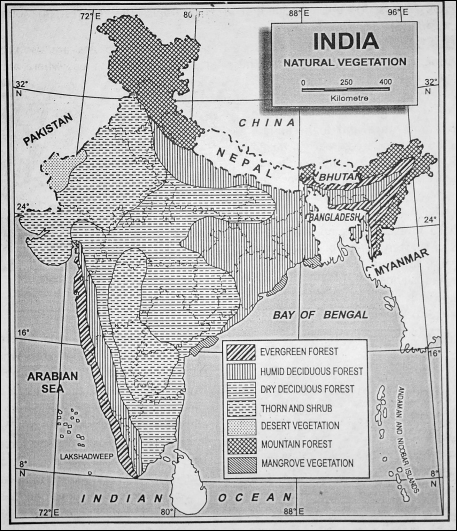
WBBSE Notes For Class 6 Physical Geography Chapter 10 India - Natural Vegetation Of India Natural Vegetation

Natural vegetation are considered to be one of the country’s valuable resources. In India, about 20-55% of the land is under natural vegetation. This natural vegetation can form forests or jungles.

Types of Natural Vegetation in India :

India has a varied relief of landforms, terrain, soil and climatic conditions (temperature, rainfall etc.). The result is that a great variety of vegetation is found in India. India possesses about 45000 different species of plants. Nearly 5000 of the species are found exclusively in India.

WBBSE Notes For Class 6 Physical Geography Chapter 10 India – Natural Vegetation Of India

The natural vegetation of India may be classified broadly into the following types :

  1. Tropical Evergreen Forests
  2. Tropical Deciduous Forests
  3. Tropical Desert Forest
  4. Mountain Forests and
  5. Mangrove Forests.

1. Tropical Evergreen Forests :

‘The Tropical Evergreen Forests’ are also known as ‘Tropical Evergreen Rain Forests’. These forests are found in areas where annual rainfall is more than 200 cm. and the mean temperature is more than 24°C.

Then forests grow rapidly due to high temperatures and high rainfall. Sometimes these trees reach a height of 60 metres. These are hardwood trees like equatorial forests. These are evergreen trees because these do not shed their leaves.

“natural vegetation of India WBBSE class 6 geography notes”

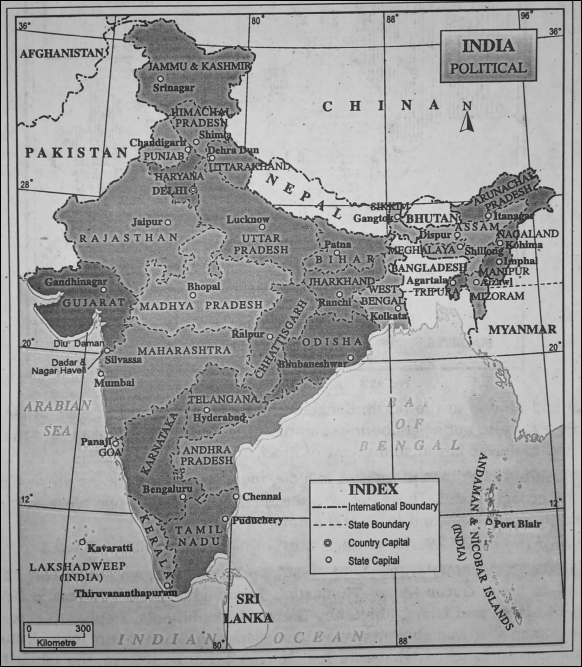
These forests are found in western parts of Western ghats, plains of West Bengal, Odisha, Eastern Himalayas and the Andaman Islands. Important varieties of trees are Mehagony, Rosewood, Ironwood, Sishu, Chaplash, Garjan, Sandlewood and Bamboo.

WBBSE Notes For Class 6 Physical Geography Chapter 10 India - Natural Vegetation Of India Tropical Evergreen Forest

2. Tropical Deciduous Forests :

These forests are found in areas where rainfall is between 75 and 200 cm. These trees shed their leaves in the dry winter and summer seasons. So, these are called ‘deciduous’ forests. These forests are the true monsoon forests.

Class 6 History Class 6 Social Science
Class 6 Geography Class 6 Science
Class 6 Maths Class 6 Science MCQs
Class 6 General Science Class 6 Maths Solutions
Class 6 Geography Class 6 Hindi

These are of two types—

  • Moist and
  • Dry. ‘Teak’ is the important species of moist deciduous and ‘Sal’ is the dry deciduous. These are not dense forests.

These forests are found in Terai, Chhotanagpur plateau, the Eastern slopes of Western Ghats and the eastern part of peninsular India. The main trees are Sal, Teak, Palash, Khair and Bamboo.
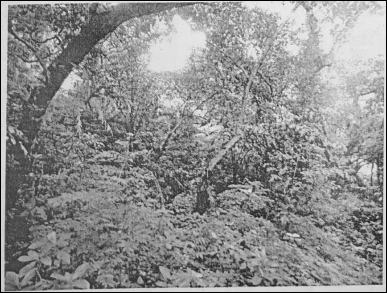
WBBSE Notes For Class 6 Physical Geography Chapter 10 India - Natural Vegetation Of India Tropical Deciduous Forest

3. Deserts and Semi-deserts Thorny Vegetation :

These types of vegetation grow in areas where rainfall is less than 50 cm and the summer temperature is between S5°C – 40°C. These trees have long roots and thick bark. These trees are scattered.

These gradually merge into scrubs and thorny bushes. These form the typical desert vegetation. To avoid loss of water due to transpiration, the leaves of the trees turn into thorns.

“summary of class 6 physical geography chapter 10 WBBSE”

These vegetations are found in Rajasthan, Haryana, parts of Gujarat, Maharashtra, Punjab and Karnataka. Mostly thorny bushes, acacia, babul and sand-binding grasses are found in this vegetation zone.

4. Coastal or Tidal Mangrove Forests :

These forests are found in deltas of rivers in coastal areas. These are called ‘Tidal forests’ or ‘Deltaic forests’. They grow in the coastal regions where the water is saline. Oxygen in soil is very limited or nil due to the salinity of the water.

This necessitates the mangrove root system to take up oxygen from the atmosphere. For this purpose, mangrove trees have special roots that can be seen above ground called ‘pneumatophores’ or ‘breathing roots’.

Besides they have ‘stilt’ (supporting) roots above the ground for safety. Annual average rainfall of more than 50 cm and annual average temperature between 25°C and 35°C are required for its growth. These forests supply timber and firewood.

“important questions from natural vegetation of India class 6”

These forests are found in the Ganges-Brahmaputra Delta, Deltas of Mahanadi, Godavari, Krishna and Kaveri. In West Bengal and Bangladesh, these forests are known as the ‘Sundarbans’ because the ‘Sundari’ tree is the most significant tree in these forests. The other important trees are Garan, Geona, Gilepata, Golpata, Hogla, Pasur, Hental etc.

WBBSE Notes For Class 6 Physical Geography Chapter 10 India - Natural Vegetation Of India Tidal Mangrove Forest

5. Mountainous Temperate Forests :

These forests are found on the southern slopes of the Himalayas from Kashmir to Assam. Mixed deciduous and coniferous forests are found. A gradual change in vegetation occurs according to altitude and climate.

In Western Himalayas, coniferous forests are found due to low rainfall and low temperature. But in Eastern Himalayas, evergreen forests are found as there is heavy rainfall and high temperature.

  1. Tropical moist deciduous forests of ‘Sal’ are found up to a height of 1200 metres in foothills.
  2. Temperate forests of ‘oak’, ‘chestnut’ and ‘pine’ trees are found up to a height of 2000 metres.
  3. Coniferous trees are found up to a height of 3300 metres. These include ‘Spruce’, ‘Deodar’, ‘Pine’, ‘Birch’, ‘Silver fir’ etc.
  4. Alpine pastures are found beyond 3600 metres where pastoral tribes like Gujjars graze their sheep on short grasses.
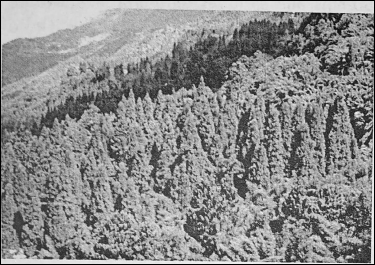
WBBSE Notes For Class 6 Physical Geography Chapter 10 India - Natural Vegetation Of India Mountainous Temperate Forest

Mountain forests are found in the states of Jammu and Kashmir, Himachal Pradesh, Uttarakhand, Sikkim, West Bengal (Darjeeling), Arunachal Pradesh and Tamil Nadu (Nilgiri Hills) etc.

Forests-Our Friends :

Importance of Forests :

Forests are a valuable resource; like a river system, it is multiple resources. Forests provide mankind with some products. Forests have greatly influenced human activities and act as our friends.

Modern civilization depends more and more on forests. The direct and indirect advantages of forests are as follows :

Forests help in occurring rainfall by capturing moisture in the air. These affect the climate of an area.

  1. It absorbs carbon dioxide and releases oxygen in the air.
  2. Forests help to balance the ecological system.
  3. Forests prevent soil erosion, floods and droughts.
  4. Forests increase the fertility of the soil and help agriculture.
  5. They check the advance of deserts.
  6. Forests provide shelter to wild animals and help to the recreation of wildlife.
  7. Soft woods supply raw materials for wood pulp, paper, and rayon industries.
  8. Forests provide plywood and fibrewood for packing purposes.
  9. Many products like rubber, pitch, gum, honey, wax, tanning materials, cork, camphor, fir, herbs etc. are . gathered from forests.
  10. Forests are a source of timber for house building, furniture making, shipbuilding etc.
  11. Forests also help to develop lumbering.
  12. Forests supply about 40% of the fuel of the world. Wood has been the major source of fuel in houses, smelting industries and running locomotives.
  13. Forests provide many things to meet our food requirements like wild fruits, nuts, berries etc. Many tribes are dependent on gathering of these products in forests.

Forest Resources of India :

The forests are a gift of nature. The forest resources play a dominant role in solving the economic problems of India both directly and indirectly. These forests supply a wide variety of resources.

These provide structural timber and wood for making pulp and furniture, match wood, wood for charcoal, fibres, cones, resins, gums etc. Besides these, there are many other forest products such as leaves, fruits, lac, bee-wax, honey, turpentine oil, tan dyes and medicinal herbs.

Problems of Forestry :

Indian forestry faces many problems. Forests have been depleted in India due to the following reasons :

  • The clearing of extensive forest areas for agriculture.
  • Heavy soil erosion.
  • Overgrazing of pastures.
  • Reckless cutting of trees for timber and fuel.
  • The practice of shifting (Jhum) cultivation destroys forests and invites soil erosion.
  • Forest fire often destroys forests; and
  • Human occupancy of forest land.

Forest Conservation :

Forest conservation refers to the proper and need-based utilisation of forests without hampering the environment and residing animals ‘on causing much destruction of the tree species.

The several needs for forest conservation are-

  1. To reduce soil erosion,
  2. To control droughts and floods,
  3. To control desertification,
  4. To control global warming,
  5. To maintain ecological balance and conserve numerous plants and animal species etc.

Measures of Forest Conservation :

The following measures should be adopted for the conservation of forests :

  1. Deforestation or the felling of trees should be checked.
  2. Felling of immature or pre-mature trees should be controlled by law.
  3. Cheap and alternate methods or sources of fuel should be used to control the loss of forest wood as well as to prevent the environment.
  4. Forests should be protected from natural hazards like a forest fire.
  5. Grazing of cattle should be controlled.
  6. Afforestation and reforestation is needed to check deforestation.
  7. Jhum cultivation should be banned by law.
  8. Poaching and stealing of valuable timber should be controlled and stopped by law.
  9. Forest management programmes should be undertaken.
  10. Active involvement of man is indispensable for the conservation of forests.

To preserve the forest, the Government of India has taken up a series of programmes in support of the states :

  • The forests are declared as “Protected Forests”, “Reserve Forests” etc.
  • The “Forest Research Institute” has been set up at Dehra Dun for the promotion and preservation of the forests properly.
  • 21st of March is observed as “World Forest Day” every year.
  • A good programme of “Van Mahotsav’ has been chalked out by the government, thousands of trees are planted every year in the months of July and August to promote new forestation.
  • “Social forestry” and “Agro¬forestry” conservation processes taken up by the Government of India.

Social Forestry :

“Social forestry” is afforestation outside the forest area in barren and fallow land for the benefit to the economically weaker section of our society.

This is a project started by the ‘National Commission on Agriculture in 19761 The aim of this project was to plant trees in the fallow and wastelands in order to remove pressure from the traditional forests.

In this programme, trees are planted beside the canals and rivers, in open spaces,of schools, offices and religious places; along the road and railways and around the agricultural fields.

“WBBSE class 6 geography chapter 10 key points”

As a result, the production of wood, fruits, fodder crops and forest products increases as well as unused barren and fallow lands are used for economically profitable purposes leading to the development of the environment as well as the socio-economic field. It is actually the forestry is ‘of the people, by the people and for the people.’

Some Essential Medicinal Herbs :

Since ancient times herbal plants are used in Indian medicine. The medicinal method that has developed from it is known as! ‘Ayurveda’.

A list of some important and useful herbs is given below :

Forests And Wildlife

Definition of Wildlife :

India is rich in forests and wildlife. Wildlife is a gift of nature and a thing of beauty. All the lives other than cultivated or domesticated ones, which live freely and adapt in natural habitats are called ‘wildlife’.

There is a great biological diversity in India and India’s forests are habitat to a large variety of wildlife.
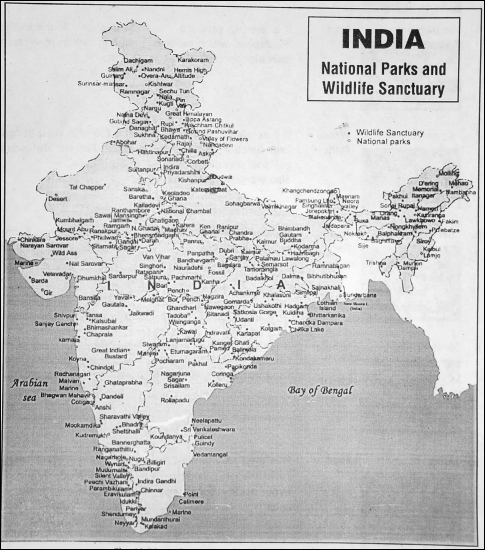
WBBSE Notes For Class 6 Physical Geography Chapter 10 India - Natural Vegetation Of India National Parks and Wildlife Sanctuary

There are about 75000 known species of animals. It has 2500 species of fish and 2000 species of birds. In addition, there are amphibians, reptiles, mammals and small insects and worms. Our rich wildlife has a rich heritage formed through centuries.

Several well-known varieties of Wildlife in India :

India is home to several well-known varieties of wildlife.

These are as follows :

  • The tiger is one of the most powerful species in our jungles. The famous ‘Royal Bengal Tiger’ is found in the Sundarbans, the tidal forests of India.
  • The Giant Crocodiles are also found in the Sundarban areas in West Bengal.
  • Elephant is a typical animals of hot and humid equatorial forests. It is found in the jungles of Assam, Kerala and Karnataka.
  • Indian lion is found in the ‘Gir’ forests in Saurashtra (Gujarat). Lion is the most majestic of all the animals.
  •  Indian one-horned rhinoceros are found in swampy and marshy lands of Assam and North Bengal.
  • Camels and wild asses are found in extremely hot and arid deserts. While the camels are common to the ‘Thar Desert’, the wild asses are confined to the arid areas of the Rann of Kachchh.
  •  Black Panther is found in Anshi National Park in Karnataka.
  • Highest tiger population in India including white tigers are found at ‘Bandhavgarh National Park, M.P.
  • Red Panda, Bear, Cheetah, Wild Cat and monkeys are found at the Himalayan mountainous region.
  • Sambar, Gaur, Barking deer, Jungle cat, Wild Bear etc. are found at Simlipal National Park in Odisha.
  • Different types of reptiles like snakes are found in the wetlands of India.
  • Birdlife in India is both rich and colourful. Many beautiful species of birds are found throughout India.

WBBSE Notes For Class 6 Physical Geography Chapter-10 India Natural Vegetation Of India Wild Llife In India

Conservation of wildlife in India :

India is rich in forests and wildlife, but many of this wildlife have been destroyed by man. Many rare species have become extinct in India. It must be preserved because the existence of these different species of animals is in grave danger.

So, it is necessary to conserve these forests and wildlife. Wildlife can be conserved by the following ways :

  1. Wildlife Act should be activated properly, for the protection and conservation of different species of wildlife.
  2. By establishing Zoos, national parks, bio-reserves, tiger reserves, sanctuaries etc. wildlife can be conserved.
  3. Endangered, vulnerable and rare species of wildlife should be conserved.
  4. ‘Reserved Forests’ and ‘Protected Forests’ should be made to conserve the animals.
  5. Efforts should be taken to stop the hunting of endangered and rare species. Killing of wild animals without any cause should be strictly prohibited by law.
  6. Much social awareness should be improved regarding the conservation of forests and wildlife.

Reserve Forest (R.F.) :

When the number of wildlife of a forest decreases remarkably, the Forest department of the State Government declares the forest as a reserve forest until the forest’s wildlife is restored again.

“types of forests in India class 6 geography”

In this, the public are strictly prohibited from entering that forest. In reserved forests hunting, grazing and other activities are prohibited, e.g. Chapramari and Gorumara of West Bengal, Kodarma Reserve Forest of Jharkhand etc.

Protected Forest (P.F.) :

A protected forest is one where human intervention is not prohibited, but hunting and poaching of animals are not permitted. In protected forests rights to activities like hunting and grazing are sometimes given to communities living on the fringes of the forest, who sustain their livelihood partially or wholly from forest produce or resources.

Sanctuary :

The forest area in which wild animals can live freely and reproduce safely is known as a ‘sanctuary’. In sanctuaries, the protection and proliferation of endangered species are in focus.

In this area trapping and killing of animals are prohibited. Here trespassers are prosecuted under the law. In sanctuaries, collection of minor forest products, harvesting of timber, and private ownership rights are permitted so long as they do not interfere the cause of animals.

There are 490 sanctuaries in India, e.g. Jaldapara Sanctuary and the Sundarbans of West Bengal, Kaziranga of Assam etc.

National Park :

A national park is a reserved area for preserving its natural vegetation, natural beauty and wildlife. The protected forest is larger than the sanctuary controlled by the Central government is called a ‘National Park’.

These parks are reserved for the betterment of wildlife. The public are considered to enter these parks only with special permission from the Govt, authority.

There are about 88 national parks in India, e.g. Kaziranga national park is located in Assam, and Corbett national park lies in terrai area of Uttarakhand. Kaziranga is famous for the Rhinoceros project.

Birdlife in India :

Bird life in India is both rich and colourful. The peacock is our national bird. Pheasants, geese, ducks, mynahs, parakeets, pigeons, cranes, hornbills and sunbirds belong to the forests and wetlands.

Sometimes birds in groups migrate from one area to another where foods are available with breeding facilities. Birds in the winter season fly away from the Siberian cold areas to tropical countries like India.

“tropical rainforests in India and their characteristics”

The birds travel hundreds or thousands of kilometres during migration, depending upon their preference for habitation. They return to their homeland after breeding in summer. These birds are called ‘Migratory birds’.

WBBSE Notes For Class 6 Physical Geography Chapter 10 India - Natural Vegetation Of India birdlife In India
Measures were taken by the Government for Wildlife Conservation in India :

The government of India planned the wildlife conservation and ‘The Wildlife Protection Act’ was constituted in 1972. It was declared that 41 varieties of large animals, 18 types of birds and 2 types of amphibians and reptiles are protected by law from 9th September 1972.

Besides these, Forest Conservation Act’ came up in 1980 ‘And the National Wild Life Action Plan’ was taken up in 1983-1984. ‘The Wildlife Conservation Act’ was finally amended in 1991.

The organization and institutions involved in the protection of wildlife in India are the Indian Board for Wildlife (IBWL) Botanical Survey of India (BSI), the Zoological Survey of India (ZSI) etc. It should be mentioned that every year the first week of October is celebrated as ‘Wildlife Week’

WBBSE Notes for Class 6 Junior School Geography

WBBSE Notes For Class 6 Physical Geography Chapter 2 Shape Of The Earth Is The Earth Round?

Chapter 2 Shape Of The Earth Is The Earth Round? Introduction :

Shape Of The Earth:

Like the origin of the Earth, the subject of the shape of the Earth was for a long time a matter of great speculation. In ancient times ‘people had a lot of confusion about the shape of the Earth.

Some said the Earth was a plane, some said flat,  etc. Later it was learned that it was neither plane or flat but a sphere. To prove it is a sphere, many examples, evidence, and experiments were given.

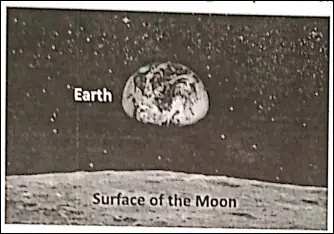
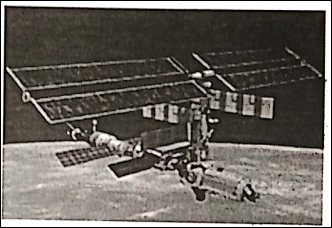
But to know the actual shape of the Earth today, these experiments or evidence are not necessary. Now, daily photos are taken by space crafts or satellites allow us to understand the actual shape of the Earth.

Read and Learn  More WBBSE Notes For Class 6 Junior School Geography

Impression Of The Ancient People About The Shape Of The Earth :

In ancient times, the Earth was considered to be a flat disc with steep edges. Aryabhatta, the famous Indian astronomer, however, believed that the Earth was spherical in shape and rotated on its axis.

In Europe, the Greek philosopher Pythagoras was the first that the Earth was spherical in shape. The Hebrews and the Babylonians regarded the Earth as circular in shape circumscribed by a river Okeanos.

“WBBSE class 6 physical geography chapter 2 notes”

They imagined the sky and the firmament as a dome-shaped casket from the windows of which rain fall. The Greek philosophers soon realized that the Earth was a sphere and it was first Aristotle and then Copernicus, who declared the Earth is as round as a ball.

Later on, came Sir Isaac Newton who asserted that the Earth is not a complete ball but an oblate spheroid. Since the eighteenth-century people have to give analogies about the shape of the Earth.

Some scientists have called it orange-shaped while others have compared to a pear. A few have called it a ‘tetrahedron’.

WBBSE Notes For Class 6 Physical Geography Chapter 2 Shape Of The Earth Is The Earth Round

Who First Noticed And Claimed That The Earth Is Round?

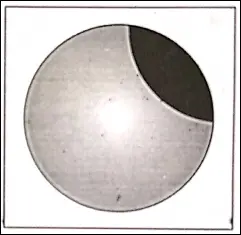
Aristotle, a Greek Philosopher and scientist was the first person who observed the circular shadow of the Earth on the moon during a lunar eclipse and concluded that the Earth is round.

Around 350 B.C. he declared that the Earth was round. Aryabhatta, the ancient Indian scientist and Greek geographer Eratosthenes endorsed the idea of a round Earth.

Why We Do Not Feel That The Earth Is Round?

If an arc has a smaller radius, more is its curvature, and if the radius of an arc is less is its curvature.

The Earth is so big with great dimensions, a little part of its we can see at a glance. The mean diameter of the Earth is about 12734-5 km, while its mean radius is about 6368 km (6400 km).

WBBSE Solutions For Class 6 Physical Geography Chapter 2 Shape Of The Earth Is The Earth Round Visible part Of The Earth

When we stand on the surface of the Earth we can actually get to see a very small portion of the Earth and it seems to be flat to us.

A few practical observations or proofs in support to the round/spherical shape of the Earth :

The fact that the Earth is spherical in shape is based on the following phenomena.

Class 6 History Class 6 Social Science
Class 6 Geography Class 6 Science
Class 6 Maths Class 6 Science MCQs
Class 6 General Science Class 6 Maths Solutions
Class 6 Geography Class 6 Hindi

(1) Shadow Of The Earth :

At the time of the lunar eclipse the shadow of the Earth falls on the Moon is spherical. It can be proved with the help of geometry that only a sphere will cost a circular shadow on a flat surface. Hence, as the Earth is a sphere, its shadow is also spherical.

WBBSE Solutions For Class 6 Physical Geography Chapter 2 Shape Of The Earth Is The Earth Round Shawdow Of The Earth On Moon

(2) Shape Of Other Planets Of The Sun :

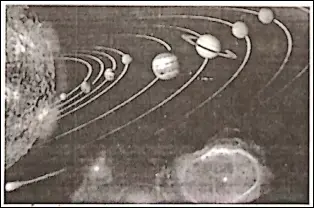
All planets of the Solar System are spherical in shape as seen through the telescope. The Earth is also a planet of the Solar System, so its shape will also be spherical which is logical.

WBBSE Solutions For Class 6 Physical Geography Chapter 2 Shape Of The Earth Is The Earth Round Shapes Of Other Planets Of The Sun

(3) Sunrise And Sunset :

If the Earth was flat, Sunrise and Sunset would occur at the same time at all places. But we know countries located in the east have Sunrise and Sunset earlier than countries lying to the west.

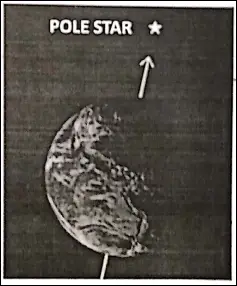
(4) Position Of The North Pole Star :

The Pole star which appears overhead at the North Pole when seen from any place proves that Earth is a spherical shape.

WBBSE Solutions For Class 6 Physical Geography Chapter 2 Shape Of The Earth Is The Earth Round Position Of Pole Star

(5) Effect Of Gravity :

Gravity—whose effect is nearly equal to all the places on the Earth is another proof that Earth is a sphere.

WBBSE Solutions For Class 6 Physical Geography Chapter 2 Shape Of The Earth Is The Earth Round Effect Of Gravity

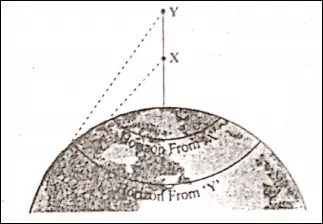
(6) The Spherical Horizon :

The limit of the horizon at a place is circular and the horizon widens as the height of the observer increases. This again indicates the spherical shape of the Earth.

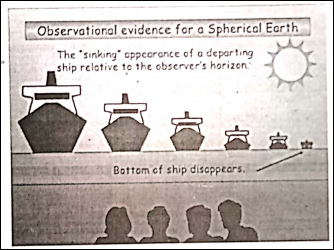
(7) Sighting A Ship :

As one observes a ship coming towards a port, the smoke is first noted. Later the funnel and mast of the ship are seen and finally, the hull of the ship comes into view.

WBBSE Solutions For Class 6 Physical Geography Chapter 2 Shape Of The Earth Is The Earth Round Sighting a Ship

This shows that the sea level has a curved surface. If the Earth was a flat disc, the entire ship would be seen even from a distance.

(8) Circumnavigation :

As the Earth is spherical in shape, it is possible to circumnavigate the Earth. Magellan was the first to go round the Earth in a ship and complete his voyage without encountering a sharp edge.

“shape of the earth WBBSE class 6 geography notes”

Now aircraft make many trips around the world on scheduled flights.

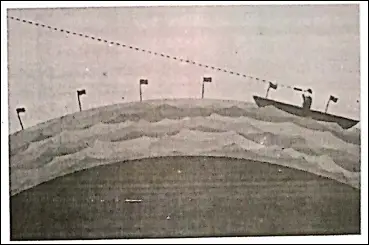
(9) The Bedford Level Experiment :

An experiment was conducted by Dr. Wallace, in the Bedford canal area in England. A set of three poles of equal heights were fixed at a distance of 5 km apart another in a straight line above the water level along of this canal.

From a telescope, it was observed that the middle pole stood taller than the other two. This further confirmed the curvature of the Earth’s surface although apparently, it looks flat.

WBBSE Solutions For Class 6 Physical Geography Chapter 2 Shape Of The Earth Is The Earth Round Bedford Level Experiment

(10) Aerial Photographs :

Numerous photographs of the Earth have been taken by astronauts showing its spherical shape.

WBBSE Solutions For Class 6 Physical Geography Chapter 2 Shape Of The Earth Is The Earth Round Earth From Moon

(11) Artificial Satellites :

Pictures taken by artificial satellites show the spherical shape of the Earth. The most clinching evidence of the spherical shape of the Earth is obtained from photographs taken from space.

WBBSE Solutions For Class 6 Physical Geography Chapter 2 Shape Of The Earth Is The Earth Round Artificial Satelites

Is The Earth Actually Round /Perfectly Spherical?

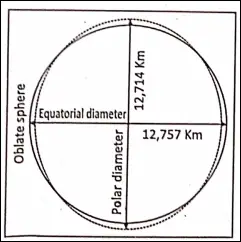
It is now known that the shape of the Earth is not exactly a sphere. There is a slight bulging at the Equator and a flattening at the two polar regions.

This is caused by the rotation of the Earth. That is why the Equatorial diameter of the Earth (12757 km) is larger than the Polar diameter (12714 km.).

“is the earth round WBBSE class 6 chapter 2”

The difference of 43 km is quite small considering the larger size of the Earth. Yet the Earth is not said to be a complete sphere. This unique shape of the Earth is called ‘Oblate-Spheroid’.

WBBSE Solutions For Class 6 Physical Geography Chapter 2 Shape Of The Earth Is The Earth Round Spherical From And Oblate From Of The Earth

Oblate Spheroid :

A sphere in Which its polar diameter is shorter than the equatorial diameter (e.g. in the case of the Earth it is so by 43 km.).

Earth’s Dimensions

(1) Equatorial Circumference    =  40,075 km.
(2) Polar Circumference            =  40,024 km.
(3) Equatorial diameter            =  12756.8 km.
(4) Polar diameter                    =  12713.8 km.
(5) Equatorial radius                =  6378.4 km.
(6) Polar radius                        =  6356.9 km.

What Is Geoid?

Geoid:

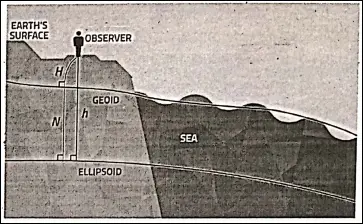
The Earth is not a perfect sphere. Its surface is not smooth. There are high mountains like the Himalayas (Highest peak Mt. Everest 8848 m) and the deepest part of the Earth (The Mariana Trench in the Pacific Ocean) has a depth of 11034 meters.

The difference in elevation between the highest and lowest parts of the Earth is about 20000 meters or 20 km. There are many lofty mountains, plateaus, extensive depressions, rivers, lakes, seas, etc

WBBSE Solutions For Class 6 Physical Geography Chapter 2 Shape Of The Earth Is The Earth Round Geoid

Those make the surface of the Earth uneven. So the shape of the Earth may not be considered to an orange or a pear. It can be most accurately described that the shape of the Earth is ‘Geoid’ which simply means ‘Earth-shaped’.

WBBSE Notes for Class 6 Junior School Geography


WBBSE Notes For Class 6 Physical Geography Chapter 9 Noise Pollution

Chapter 9 Noise Pollution Introduction

Pollution:

The harmful and unwanted substances make the environment unsafe, unhealthy, and hazardous for living organisms. The phenomenon of harming the environment is called pollution.

‘Noise’ means as any loud or unpleasant or undesired sound. £o ‘Noise’ can be defined as any sound that causes annoyance. It also can be a source of pollution.

WBBSE Notes For Class 6 Physical Geography Chapter 9 Noise Pollution

Noise Pollution

The excessive or disturbing noise that can harm our normal activities or damage the balance of human or animal life can be said to be ‘noise pollution’.

“WBBSE class 6 physical geography chapter 9 notes”

The sound level above 80 decibels becomes intolerable and it causes noise pollution. The intensity of sound is measured by a unit which is called ‘Decibel’. A ‘decibel’ or ‘sound level meter’ is a basic tool that measures the intensity of sound.

Read and Learn  More WBBSE Notes For Class 6 Junior School Geography

Natural sources of noise pollution :

There are many kinds of sounds in nature. Some natural phenomena like thunder, volcanic eruptions, waterfalls, landslides, and avalanches can be noisy too. But their effect is localized and persists for a short duration.

Man-made sources of noise pollution :

High-decibel noise is generated mainly from man-made sources such as horns, sirens, television, radio, loudspeakers, food- mixers, washing machines, lawnmowers, etc.

“WBBSE class 6 geography chapter 9 key points”

Some sources of noise pollution in villages :

Noise pollution is comparatively less in villages. However, natural sources of noise pollution like thunder, landslides, the use of tractors and generators in the field, the sound of construction work, use of loudspeakers during festivals and public functions often break the silence of nature.

Class 6 History Class 6 Social Science
Class 6 Geography Class 6 Science
Class 6 Maths Class 6 Science MCQs
Class 6 General Science Class 6 Maths Solutions
Class 6 Geography Class 6 Hindi

Some sources of noise pollution in cities or urban areas :

The sources of noise pollution in cities or urban areas are far more than in the village areas.

The sources of noise pollution in urban areas as follows :

The number of vehicles in cities is more and the degree of commotion is also more. So, people in cities are exposed to the constant blaring of horns, and screeching of tires as buses, trucks, motorcars and other fast-moving vehicles try to overtake each other during busy hours.

The landing and take-off of airplanes, and helicopters can cause serious noise pollution to the residential complexes located at the vicinity of airports.

Loudspeakers, musical bands, and bursting of crackers at different public functions during festivals disrupt the peace and quietness of the environment.

“important questions from noise pollution class 6”

In the cities, the building of skyscrapers is a common feature. As the construction sites of the multistoried buildings, the noise produced by different machines and construction tools poses a serious problem in the nearby areas.

Poor urban planning may give rise to noise pollution If residential and industrial buildings are situated side by side then it can result in noise pollution in residential areas.

It should be noted that the explosion of nuclear or atomic bombs and the sound of bullets during military training in open areas can also cause temporary noise pollution.

WBBSE Notes For Class 6 Physical Geography Chapter 9 Noise Pollution Source Of Different Kinds Of Noise Pollutions

The intensity of different sounds (decibel level) dB :

Effects Of Noise Pollution

The effects of noise pollution can be divided into auditory effects and non-auditory effects. Auditory effects encompass fatigue and deafness. Non-auditory effects can be understood by a noise of 50 dB to 60 dB.

“noise pollution WBBSE class 6 geography notes”

Interfering with speech. Even a low level of sound of considerable duration causes annoyance, high blood pressure, nausea, fatigue, anxiety, etc. All these lead to a loss of working efficiency.

The important effects of noise pollution may be described as follows :

Continuous and loud noise disturbs our thought process, and we lose concentration. As a result, our quality of work, as well as our efficiency, gets lowered.

The capability to hear can get reduced or loss of hearing gradually as a result of noise pollution.

“effects of noise pollution on human health class 6”

Continuous and monotonous sounds of machines and construction tools may be -irritating, tiring, and painful. It can cause nausea, unconsciousness, and even. severe headache when it crosses the tolerance level.

It can also cause hypertension, high blood pressure, heart disease, fatigue, insomnia, eye ailments, ulcers, vertigo, nerve disorders, and gastric and digestive problems.

Noise disturbs sleep. Lack of sleep causes nervous disorders and irritability.

Firecrackers may upset wild or domestic animals or can traumatize individuals.

Control Of Noise Pollution

Noise Pollution can be controlled if we take the following measures :

  • Implementation of laws can control the menace of noise pollution.
  • Government policies should be strictly implemented in order to control noise pollution.
  • Laws should be implemented strictly to maintain silence in areas near hospitals and educational institutions.
  • ‘Silence’ boards should be hung near schools, libraries, hospitals, etc. in order to restrict people from making noise in these areas.
  • Playing of loudspeakers and bursting of crackers should be restricted to a bearable limit. (65 dB).
  • Silencing the noise-producing engines such as engines of air-crafts, auto-mobiles, machinery in factories and home appliances could help.
  • Machinery and tools to be oiled to keep them mobile to reduce noise.
  • The old noisy machines should be replaced by the new ones.

“summary of class 6 physical geography chapter 9 WBBSE”

  • Industrial location should be away from the residential areas. To do this, proper urban planning is necessary.
  • High levels of noise can be reduced by covering the room walls with acoustic tiles which act as sound absorbers.
  • The industrial machinery making noise should be confined to soundproofed enclosures.
  • Devices to reduce sound intensity are used in cinema halls, community halls ‘ or auditoriums.
  • We can save ourselves from harmful noise pollution by using earplugs.
  • Persons, especially the workers employed in noise-prone areas should be given protective devices such as ear plugs and ear muffs.
  • Since natural vegetation has a tremendous ability to absorb and dissipate sound ~ energy, trees should be planted along highways and industrial areas to reduce noise.

WBBSE Notes for Class 6 Junior School Geography

WBBSE Notes For Class 6 Physical Geography Chapter 8 Air Pollution

Chapter 8 Air Pollution Introduction

The Earth comprises three domains namely, the solid lithosphere (land), the liquid hydrosphere (water) and gaseous atmosphere (air). The land, water and air are the three basic amenities for living organisms.

So, the Earth is an ‘unique planet’ of the Solar system because of its environment favours the evolution and survival of various forms of life.

“WBBSE class 6 physical geography chapter 8 notes”

But now the environment is fulfilled with undesirable and harmful substances that make it unhealthy, unsafe and hazardous for living organisms. This phenomenon of harming the environment is called ‘pollution’.

Pollution

The fouling of the environment by man which makes it harmful for living organisms or reduces its amenity value is called pollution. Pollution changes the physical, chemical or biological balance of the environment that has adverse effects on the normal functioning of all lifeforms, including humans.

Read and Learn  More WBBSE Notes For Class 6 Junior School Geography

Pollutants :

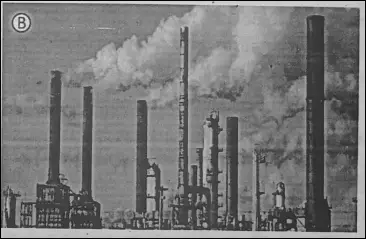
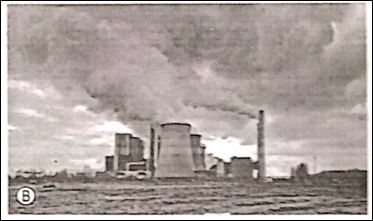
Pollutants are the substance which causes pollution. Pollutants may be solid, liquid or gaseous substances. Air pollution is caused by various types of pollutants released mainly from industries, thermal power plants, domestic appliances and automobiles.

“air pollution WBBSE class 6 geography notes”

Air Pollution

According to the Oxford Dictionary of Geography, the term ‘air pollution’ refers to the presence of contaminants released by human activities into the Earth’s atmosphere which has the potential to cause harm to property or the precious lives of plants, animals or humans.

Air pollution may be defined as an unwanted change in the quality of Earth’s atmosphere caused by the emission of gases due to the burning of fuels, and outpouring of volcanic ashes, pollen and organic compounds from vegetation.

WBBSE Notes For Class 6 Physical Geography Chapter 8 Air Pollution

Causes Of Air Pollution

Air pollution is caused by different types of poisonous gases like carbon dioxide, carbon-monoxide, sulphur-dioxide, nitrogen-oxide, chemical substances like lead, chloroform carbon; organic elements, smoke and dust particles.

Air pollution may be caused in two ways :

  1. Air pollution caused by nature and
  2. Air pollution caused by human activities.

Air Pollution caused by nature :

Air pollution may be caused by nature in the following ways :

Class 6 History Class 6 Social Science
Class 6 Geography Class 6 Science
Class 6 Maths Class 6 Science MCQs
Class 6 General Science Class 6 Maths Solutions
Class 6 Geography Class 6 Hindi

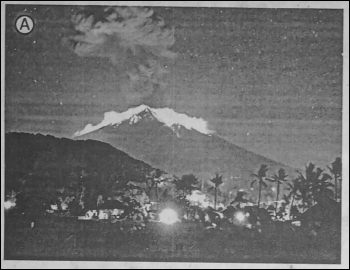
Volcanic eruption :

During volcanic eruption carbon-monoxide, sulphides, and sulphur-dioxide gases come out along with ashes, cinders and pyroclastic materials from the crater and mix with air causing pollution.

WBBSE Notes For Class 6 Physical Geography Chapter 8 Air Pollution Volcanic erruption

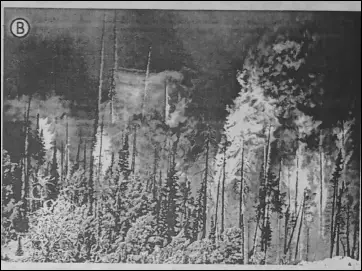
Forest fire :

Forest fire caused due to friction of dry leaves release carbon- dioxide that mix with the air and pollute it.

WBBSE Notes For Class 6 Physical Geography Chapter 8 Air Pollution Forest Fire

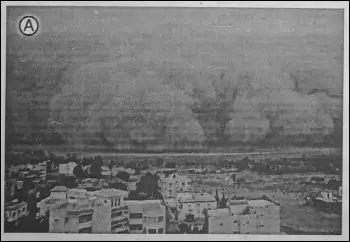
Dust Storms :

Dust and sand particles from the dry desert areas can also make the air polluted.

WBBSE Notes For Class 6 Physical Geography Chapter 8 Air Pollution Dust Storms

Emission of gas :

The decomposition of swampy land and logs emits methane gas and thus pollutes air. Air is also polluted by pollen and organic compounds from vegetation.

WBBSE Notes For Class 6 Physical Geography Chapter 8 Air Pollution Emission Of Gas

Air Pollution Caused By Human Activities

Air pollution may be caused by human activities also. These are as follows :

1. Smoke from motor vehicles :

Smoke or fume discharged from motor vehicles is responsible for large-scale air pollution up to about 60%. In metropolitan cities like Mumbai, Delhi, Kolkata, Chennai etc. about 60% to 70% or air pollution is caused by automobiles alone.

WBBSE Notes For Class 6 Physical Geography Chapter 8 Air Pollution Smoke From Motor Vehicles

Burning of fossil fuels :

Large-scale burning of fossil fuels such as coal, and petroleum (diesel, petrol etc.) produces several gas like carbon monoxide (CO), carbon- dioxide (C07), nitrogen oxide (N.O) and sulphur dioxide (SO_). These poisonous gases pollute the air.

WBBSE Notes For Class 6 Physical Geography Chapter 8 Air Pollution Burning Of fossil Fuels

Urbanisation

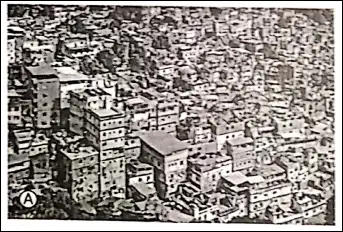
Population explosion has let to an increased number of people who need clear areas to build houses for settlement.

WBBSE Notes For Class 6 Physical Geography Chapter 8 Air Pollution Urbanisation


Due to urbanisation, trees are being cut constantly and for this reason, our atmosphere is lacking oxygen and the amount of carbon dioxide in the air is increasing alarmingly.

4. Deforestation :

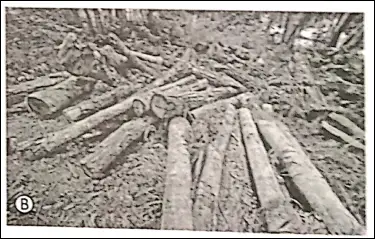
Due to deforestation, our atmosphere is lacking oxygen and the amount of carbon dioxide in the air is increasing which also pollutes air.

WBBSE Notes For Class 6 Physical Geography Chapter 8 Air Pollution Deforestation

5. Industrialisation :

Burning of coal in the industries produces a large amount of smoke, and dust particles which mixes with air and pollute it. Cement, glass and fertilizer industries release a large amount of oxide of silicon, calcium and aluminium into the air.

WBBSE Notes For Class 6 Physical Geography Chapter 8 Air Pollution Air pollution By Industrialisation

6. Uses of atomic fuels:

Burning and uses of atomic fuels In atomic plants emits gas and heat which also pollutes the air.

WBBSE Notes For Class 6 Physical Geography Chapter 8 Air Pollution Uses Of Atomic Fuels

Smog :

Smog (a combination of smoke and fog) with dust particles and sulphur- dioxide also pollutes the air.

WBBSE Notes For Class 6 Physical Geography Chapter 8 Air Pollution Air Pollution By Smog

Fertilizers :

When chemical fertilizers are used on the crop Fields, a part of them mixes with air due to evaporation causing air pollution.

WBBSE Notes For Class 6 Physical Geography Chapter 8 Air Pollution Fertilizers Pollution

Pesticides and insecticides :

Pesticides and insecticides are complex organic compounds using toxic elements like arsenic, chlorine, bromine etc. for killing pests and insects. When these compounds are sprayed on the crops, a part of them mixes with the air and causes air pollution.

WBBSE Notes For Class 6 Physical Geography Chapter 8 Air Pollution Pesticides andInsecticides

Burning of firewood, coal etc :

In the rural areas firewood, coal, cow dung cakes etc. are used for cooking purposes. Due to the burning of these materials, harmful gases mix with the air and the air gets polluted.

WBBSE Notes For Class 6 Physical Geography Chapter 8 Air Pollution Burning Of firewood pollution

Smoke from incense sticks, mosquito coils and oil :

In cities and towns and even in villages also incense sticks are used for worshipping and mosquito coils and oil are used to fly away them. Smoke from these are also pollutes the air

WBBSE Notes For Class 6 Physical Geography Chapter 8 Air Pollution Incense sticks pollution

Domestic and industrial wastes :

Dry leaves, and domestic, industrial and farm wastes are burnt in order to dispose of them. These produce carbon-monoxide gas which mixes with air and pollutes it.

WBBSE Notes For Class 6 Physical Geography Chapter 8 Air Pollution Domestic Wastes

13. Smoking bidis, cigarettes, cigars etc. :

Smoking of bidis, cigarettes and cigars etc. produces carbon-monoxide gas due to incomplete combustion of tobacco leaves. This also pollutes the air.

14. Artificial building materials and chemicals :

Artificial building materials like plywood and chemical like paints, varnishes etc. can cause indoor pollution. Poor ventilation in homes can worsen the situation.

“summary of class 6 physical geography chapter 8 WBBSE”

15. Explosion :

Explosion in the nuclear power plant also pollutes the air. In 2011, there was an explosion in the nuclear plant at Fukushima in Japan. As a result, a huge amount of radioactive materials contaminated the air causing pollution.

Effects Of Air Pollution

The detrimental effects of air pollution are noticed both in the natural and man-made environment. If the air gets excessively polluted, the survival of the living being would then become more difficult or Impossible.

The harmful effects of air pollution are as follows :

Rising atmospheric temperature :

If air is polluted, it would result in the rise of temperature of the ground surface and lower atmosphere. This would cause

  • Depletion of the ozone layer, global warming, acid rain, melting of continental glaciers, rise in sea level etc.

Depletion of the Ozone layer :

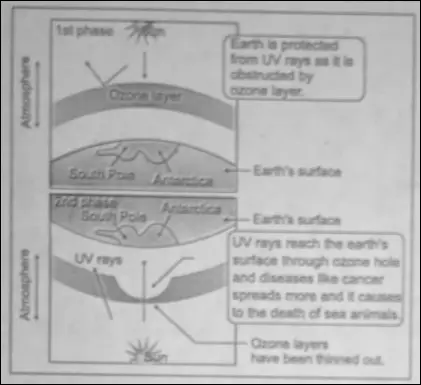
A zone with n the atmosphere generally between 20 and 40 km where ozone terms In Its greatest concentration it caMed the Ozonosphere or Ozone layer’ Recently the researchers have shown that there is a gradual depletion of ozone gas in the atmosphere.

The mam culprit of ozone depletion are chloroflurocarbons (CFC from refrigerators, air conditioners and deodorants are slowly destroying the ozone layer.

WBBSE Notes For Class 6 Physical Geography Chapter 8 Air Pollution Depletion Of Ozoen Layers

NiTrogen-Oxides emitted from supersonic jets (faster than ‘sound), nuclear explosions are causing harm to the ozone layer. As the ozone layer is getting thinner day by day, ultraviolet rays are reaching the Earth.

“important questions from air pollution class 6”

As a result of skin cancer to white-skinned people and optical diseases are increasing Agricultural production is decreasing as chlorophyll in t’ee leaves are being damaged Many plants and animals are facing extinction as a result of these and the whole ecosystem of the biosphere d disturbed.

Acid rain :

The oxides of sulphur and nitrogen emitted from vehicles and factories are carried thousands of kilometres away from their source of origin, and due to prolonged existence in the atmosphere, they are oxidised into sulphuric and nitric acids respectively.

When these acids fall on the Earth’s surface it is called add rain’. Acid ram enhances soil acidity. So, animals as well as plants living on land and in water are equally badly affected.

WBBSE Notes For Class 6 Physical Geography Chapter 8 Air Pollution Effect Of Acid Rains

Crop productivity dwindles and the health of all living animals, including humans, deteriorates. The ecosystem loses its balance as many bacteria and blue green algae are destroyed by acidification.

Greenhouse Effect

The warming up of the atmosphere as some of the gases trap solar radiation and the heat given out by the earth is called Green House Effect. It is a process of counter-radiation which makes the earth’s atmosphere too hot.

It is described more by anthropogenic tmHstom (emissions in the atmosphere caused by man) than any other natural causes. To facilitate identification these gates are alto called greenhouse gases.

“causes of air pollution class 6 geography notes”

Carbon dioxide, nitrous oxide, methane, CFC, water vapours and o/one arc are also chief greenhouse gases it is said that as a result of human activities the volume of these gases in the atmosphere are rising. This is called ‘Global Warming’.

WBBSE Notes For Class 6 Physical Geography Chapter 8 Air Pollution Greenhouse effect

In other words, the abnormal increases of atmospheric temperature throughout the world is known as ‘Global Warming It affects the ecological balance of the Earth adversely.

Global warming can cause a normal reduction of rainfall, and melting of polar ice caps thereby rise in the sea level and submerging low lying areas together with some great cities of the world.

Effect of Mist, Fog and Smog (Smoke + Fog) :

Mist, fog and smog i e the mixture of fog, smoke dust and sulphur-dioxide gas causing thick black layer In the lower atmosphere near the Earth’s surface.

A form of ‘fog’ that occurs in areas where the air contains a large amount of ‘smoke’ is called ‘Smog’ (Smoke + Fog) In industrial towns and cities this ‘smog’ results in poor visibility on the roads The smooth movement of rail, road and air traffic gets disrupted.

“WBBSE class 6 geography chapter 8 key points”

A thick layer of smog can destroy plants and affect crop yield People suffer from diseases like asthma, bronchitis and heart problems. Throat infections and eye problems are also common disc1 is among people.

Measures for reducing Air Pollution :

Pollution can be reduced or controlled by taking some measures.

These are as follows :

  1. Use of public transport like trains, buses etc. should be encouraged instead of private car and transport.
  2. Emission of poisonous gases by trucks, buses, motor cars and other vehicles can be controlled by refining the petroleum products (petrol, diesel etc.) used as fuels.
  3. Use of fossil fuels like coal, petroleum, gasoline etc. should be controlled. Alternative sources of fuel like L.P.G. (Liquid Petroleum gas) and C.N.G. (Compressed Natural Gas) may be used as fuel for public transport and for domestic use.
  4. Newer engines with improved vehicular technology should be accepted replacing the cars with an old engines.
  5. Non-conventional sources of energy like solar energy, bio-gas, wind energy, tidal energy etc. may be used as substitutes of conventional energy like coal, petroleum etc.
  6. Deforestation (clearing of forest area by the felling of trees) should be prohibited by law and afforestation or planting of trees should be encouraged.
  7. The power plants should be located far away from residential areas. The factories and industrial plants should be located far away from residential areas.
  8. For checking industrial air pollution it is necessary to remove particulate matter and gaseous pollutants from the industrial waste.
  9. The waste material produced from industries needs to be treated.
  10. Clearing of the forested area by the felling of trees should be prohibited by law.
  11. Strict laws should be enforced and persons violating the provisions of air pollution control should be penalised.
  12. Mass social awareness campaigns should be indicated regarding the nature and effect of air pollution and remedial measures on a continuing basis.

WBBSE Notes for Class 6 Junior School Geography

WBBSE Notes For Class 6 Physical Geography Chapter 7 Weather And limate

Chapter 7 Weather And Climate Introduction

Weather:

Weather is a major determinant in our daily life. If we explain the atmospheric condition of a day for a certain place then we can actually understand the weather of that place.

By weather, therefore, we mean the atmospheric condition of a particular place for a definite time. It is an hour-to-hour or day-to-day condition of the atmosphere at any place with reference to air temperature, air pressure, wind direction and conditions, humidity, cloudiness and precipitation (rainfall).

“WBBSE class 6 physical geography chapter 7 notes”

Weather can vary from time to time and from place to place. Basic knowledge of the weather is useful for all of us. The climate is an average atmospheric condition over a large area for a long period of time (30 to 40 years, say at least an average of 35 years).

Class 6 History Class 6 Social Science
Class 6 Geography Class 6 Science
Class 6 Maths Class 6 Science MCQs
Class 6 General Science Class 6 Maths Solutions
Class 6 Geography Class 6 Hindi

The climate is also the most determining factor of the environment. Climate directly or indirectly affects the different human activities in his daily life.

Weather

Weather is the atmospheric condition in terms of air temperature, pressure, wind, humidity, cloudiness or cloud condition and precipitation of a particular place at a definite time. It may change even with each moment.

Read and Learn  More WBBSE Notes For Class 6 Junior School Geography

Climate

The climate is the average of weather conditions of a vast area over a long period of time, at least an average of 35 years.

The differences between weather and climate

Weather Climate
1.    Weather is the day-to-day condition that depends on atmospheric elements. 1.    Climate is the generalised pattern of weather conditions.
2.    Weather changes quickly even in each hour. 2.    Climate remains the same year after year.
3.    Weather explains the atmospheric condition of a small area. 3.    Climate describes the average weather conditions of a vast region.
4.    Different types of weather may occur at one place. 4.    A particular place cannot have all types of climate.
5.    The weather refers to a particular place. 5.    The climate refers to a particular region.
6.    The weather is uncertain and changes after a short while, we can only forecast for a short time. 6.    The climate is not uncertain. It has a high degree of accuracy. It remains similar year after year.

Influence Of The Weather And Climate On Our Lives

Weather is a major determinant in our lives. Our dress, our food and even one kind of shelter depends on the weather of the place we live in. Our ability of work also depends on the weather.

Our health and mentality depend on the weather condition of that particular day. The climate is the most determining factor of the environment. Climate directly or indirectly affects the different activities of man.

The climate also determines our food, clothing, shelter and general mode of life. The food habits of the people vary from season to season and from region to region. Type of clothing varies according to the changes in the weather and climate.

“weather and climate WBBSE class 6 geography notes”

Man builds his house to suit the various elements of weather and climate such as temperature, rainfall etc. Climate determines the growth of crops in a region.

Climate affects our mental alertness, physical characteristics and racial differences. Climate influences the location of industries also. Thus it can be concluded that weather and climate both has a direct and indirect influence on human activities/civilization’s arid mode of life.

WBBSE Notes For Class 6 Physical Geography Chapter 7 Weather And Climate

Major Elements Of Weather And Climate

Atmospheric conditions on which weather and climate depend are called the elements of weather and climate. These are—

  • Air temperature
  • Air pressure
  • Wind
  • Humidity
  • Cloudiness or cloud condition and
  • Precipitation or Rainfall.

Air Temperature

The air becomes hot by the rays of the Sun. Temperature is the amount of heat received by a place on the Earth. So, the warmth of the air is known as ‘Air Temperature.

“summary of class 6 physical geography chapter 7 WBBSE”

Example: The temperature of Kolkata indicates air temperature of Kolkata. The Sun is the main source of air temperature. It is an important element of weather and climate. It controls the atmospheric conditions of a place and influences the other elements.

Insulation

Solar radiation as received by the Earth is called insolation. A very small part 1/200,0000000 0f SUn’S energy that reaches the Earth is known as ‘Insolation.

WBBSE Notes For Class 6 Physical Geography Chapter 7 Weather And Climate Incoming And Outgoing

The Earth’s surface is heated by this energy. Only 51% of the insolation heats up the Earth’s surface. So, it is called ‘Effective Solar Radiation.

Albedo

The 35% of the incoming solar radiation (insolation) that it reflected back to space it lost to the atmosphere and it is known as the Earth’s albedo’. The residual 14% it absorbed by the different gases, water vapour and dust particles in the atmosphere.

Terrestrial Radiation

The heat that reaches the Earth’s surface (51%) it almost entirely reflected back to space during the nighttime. This it known as ‘Terrestrial Radiation’. 34% of it is absorbed by the atmosphere and 17% is bounced back to Space.

WBBSE Notes For Class 6 Physical Geography Chapter 7 Weather And Climate Insolation And Terrestrial radiation

Terrestrial Heat Balance

The average annual temperature of the Earth as a whole remains almost constant. It has been possible because of the balance between the amount of incoming solar radiation and the amount of terrestrial radiation returned to space.

WBBSE Notes For Class 6 Physical Geography Chapter 7 Weather And Climate Heat Budget

This balance of incoming and outgoing radiation has been termed as the ‘terrestrial heat balance’ or ‘heat balance of the Earth’ or ‘Earth’s heat budget’.

The different processes of heating up of the atmosphere

The main source of atmospheric heat is the Sun. The atmosphere is not heated directly by the Sun through short-wave radiation. It is indirectly heated by long-wave radiation from the Earth below.

WBBSE Notes For Class 6 Physical Geography Chapter 7 Weather And Climate The Processes Involved in Warming Up the Air

The following processes are mainly involved in heating the atmosphere.

1. Radiation

The heat energy from the Sun is transferred to the Earth by radiation. Radiation is the direct heating of an object or a body by the transmission of heat waves.

This is the only mechanism in which heat can travel through the relative emptiness of space. Hence, the vast amount of energy coming to and leaving the Earth are in this form.

2. Conduction

Conduction is a method in which the heat is transferred by contact between two bodies. When two bodies of unequal temperature are in contact with one another, there is a flow of energy from the warmer to cooler body. This transfer of heat through matter by molecular activity is called conduction.

3. Convection

The transfer of heat by the movement of a mass or substance from one place to another is called convection. Convective motions are possible only in liquids and gases. Conventional current moves vertically to begin with and later on may move horizontally or even downwards as the particles lose heat on their way.

Convection is the most important process of heating the atmosphere. A cyclic circulation of convection currents helps in distributing the heat of lower layers to upper layers.

Advection

The process of horizontal transfer of heat by winds from a hotter to colder region is known as ‘advection’.

Direct absorption

The atmosphere directly absorbs only 14% of the insolation.

The difference in temperature between day and night

Generally, days are very hot and nights are cold. The difference between the highest and lowest temperature in a day at a place is known as the ‘diurnal range of temperature’ or ‘daily range of temperature’.

Daily range of temperature = Daily maximum temperature – Daily minimum temperature. When the diurnal range temperature is high, days are usually hot and nights are cold.

“important questions from weather and climate class 6”

Again the difference between the average temperatures of the hottest and the coldest months is called the ‘annual range of temperature/ Annual range of temperature is calculated as follows :

The average temperature of the hottest month (May) – Average temperature of the coldest month (November). When the annual range of temperature is high, the summers are scorching hot and the winters are very cold.

Measurement Of Temperature

Thermometer:

The common instrument used for measuring temperature is called a Thermometer’. For measuring the temperature of human body we use a ‘Doctor’s or ‘Clinical’ thermometer.

This thermometer is concerned with a very specific and small range of temperature (from 35°C to 45°C or 95°F to 110°F only). Both the Celcius and Fahrenheit scales of temperature have the same common points of reference.

They are the ‘freezing point’ of Water and its ‘boiling point’. The freezing point is the temperature at which water freezes into ice. The boiling point is the temperature at which water boils and turns into water vapour.

The values assigned in the Celcius scale are simple and straight forward namely 0°C for the freezing point and 100°C for the boiling point. In the Fahrenheit scale these values are 32°F for the freezing point and 212°F for the boiling point.

Six’s Thermometer

A special thermometer used to measure the maximum and minimum temperature is Six’s thermometer. This thermometer was invented by James Six in 1782.

This thermometer consists of a cylindrical glass bulb joined in a ‘U-shaped glass tube. The mercury enclosed in the glass tube expands when the temperature rises.

It records the maximum and minimum temperature of the day. Two types of scales, celsius and Fahrenheit for measuring air temperature are used in this thermometer. Both the maximum and minimum temperature of a day can be measured by the same instrument.

WBBSE Notes For Class 6 Physical Geography Chapter 7 Weather And Climate Maximum And Minimum Thermometer.


Factors Influencing The Variation Of Temperature

The air temperature is not uniformly distributed over the Earth’s surface. It varies from place to place and time to time due to the following causes :

Insolation

Solar radiation as received by the Earth is called ‘Insolation’. The Earth intercepts only one part out of two billion  (1/200,0000000) parts of the solar energy radiated.

The amount of insolation reaching the Earth’s surface and its effectiveness per unit area depends upon—

  1. The angle of incidence or the inclination of the Sun’s rays;
  2. The duration of sunshine or the length of the day; and
  3. Transparency of the atmosphere.

All of these are not equal to on the Earth’s surface. So, the temperature is different in different parts of the world.

Latitude

Due to the spherical shape of the Earth, the angle of incidence of Sun’s rays is not the same everywhere on the surface of the Earth When the Sun s rays are vertical over the Equator, they are at an angle of 0* to 90′ at the two poles Vertical rays of the Sun heat on a small area and this leads to the higher temperature.

“WBBSE class 6 geography chapter 7 key points”

Slanting / oblique rays spread the heat over a large area and produce a lower temperature The spherical shape of the Earth and its revolution around the Sun result in a gradual decrease of temperature with an increase of latitude.

WBBSE Notes For Class 6 Physical Geography Chapter 7 Weather And Climate Influence Of temperature Of Latitude

On the other hand, vertical rays travel through a shorter distance in the dense atmosphere. Hence, the heat received per unit area is large. Slanting or oblique rays travel through a longer distance m the atmosphere where much of its heat is absorbed by clouds, water vapour and dust particles.

The equatorial region gets maximum temperature as the Sun’s rays fall vertically over the Equator throughout the year In polar regions, the low temperatures are found due to more oblique or slanting rays for example, Chennai (13*N) is warmer than Kolkata (22’30’N) because Chennai is nearer to the Equator than Kolkata.

Altitude

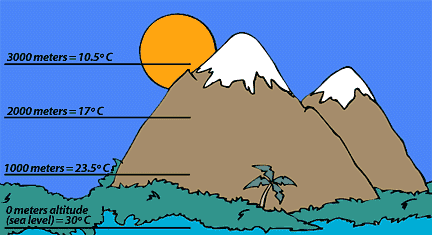
The temperature decreases with increasing height above sea level. The temperature decreases at the rate of 6 4″C or 6 S’C for every 1000 metres or 1 km The main causes for the decrease in temperature with increasing height are as follows

  1. The lower atmosphere (or layers of air) is denser than the upper layers of air because lower layer of air has many dust particles and it absorbs a larger amount of temperature
  2. The upper atmosphere is thinner because the density of air is low at higher elevations It cannot hold much temperature.
  3. Air pressure is low at higher elevations.
  4. The atmosphere is mainly heated by terrestrial radiation. Therefore, the lower layers nearer the Earth’s surface are warmer than higher layers of the atmosphere.

WBBSE Notes For Class 6 Physical Geography Chapter 7 Weather And Climate Temperature decreases with Increasing Altitude

For this reason, the lofty mountain peaks are snow-capped and the mountains are cooler than the plains. For example, as Darjeeling is on the mountain, it gets a cooler climate and as Siliguri is on the plain, it experiences a warmer climate.

Heat Zones of the Earth

Our Earth is like a sphere and sun rays do not fall perpendicularly or vertically everywhere on its surface. Therefore, the distribution of heat is not uniform on the surface of the Earth.

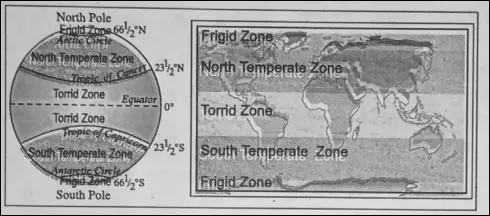
It goes on decreasing from the Equator to the poles. As such different heat belts or temperature belts or zones are found on the surface of the Earth. Based on the variation of temperature over Earth’s surface may be divided into the following heat belts from the Equator towards the poles :

  1. The Torrid belt or zone.
  2. The Northern Temperate belt.
  3. The Southern Temperate belt.
  4. The Northern Frigid belt and
  5. The Southern Frigid belt.

WBBSE Notes For Class 6 Physical Geography Chapter 7 Weather And Climate Heat Belts Or Temperature Belts Of The Earth

1. The Torrid or the Tropical Zone

The Torrid or Hot Belt or Zone (ies between the Tropic of Cancer (231/z°N) and the Tropic of Capricorn (23%°S). It is the hottest zone of Earth.

The Sunrays fall vertically or near vertically here and the temperature is very high about 25°C to 35°C on an average. There is a near absence of winters because the coldest month has an average temperature of over 20°C.

Variation in the length of day and night is minimum. The annual average temperature is 27°C. The isotherm 27°C is considered the northern limit of the Torrid zone. Places located between 30°N and 30°S are included in this zone.

The Temperate Zone (The Northern and Southern Temperate Zone)

The Northern temperate zone or Belt is located between the Tropic of Cancer (23>20N) and ‘The Arctic Circle’ (661/4°N), while the southern temperate zone is located between the Tropic of Capricorn (2334°S) and ‘The antarctic circle (66H°S).

Sunrays fall over these regions obviously. This is the belt of moderate temperature (10°C to 20°C). The length of the day and night is medium. Temperate belts have remarkable seasonal contrasts in temperatures, one season usually being warm or hot and the other cool or cold.

The summers are not very hot, and the winters are not very cold. The temperate zones of both the hemispheres can be divided into two parts :

  1. Warm temperate zone (region close to the torrid zone, 30° to 45° latitudes) and
  2. Cool temperate zone (region close to the Frigid zone, 45° to 60° latitudes).’

The Northern and the Southern Frigid zone or Cold zone

Regions beyond the Arctic circles and Antarctic circles are known as Frigid zones. The Northern Frigid zone lies between the Arctic Circle (661/J°N) and the North pole (90°N).

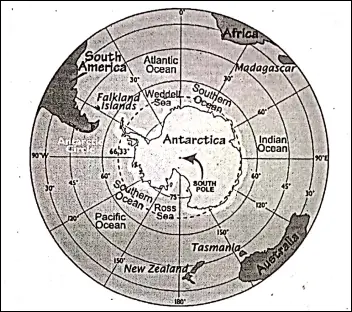
The Southern Frigid zone lies between the Antarctic circle (6634°S) and the South Pole (90°S). In these zones temperature is constantly low throughout the year because of slanting rays of the Sun.

These are the coldest part of the Earth with mean temperature below 10°C. Snowfall occurs most of the year and land remains frozen.

Isotherms

‘Isotherms’ is a combination of two words ‘iso’=’Equal’. ‘therm’ = ‘Temperature’. Isotherm is an imaginary line (drawn on a map) joining the places of equal temperature reduced to the mean sea level.

The temperature is reduced to sea level to eliminate the effects of altitude. Isotherms, thus, will show the distribution of temperature as if the whole Earth were a level plain.

WBBSE Notes For Class 6 Physical Geography Chapter 7 Weather And Climate Isotherms.

If a place is 1650 mts in height and its actual temperature is 20°C, its temperature reduced to sea level will be (20°C + 10°C = 30°C) because the temperature decreases at the rate of 1°C for every 165 metres.

Main characteristics

Isotherms never touch or intersect each other.

Difference of temperatures is more between two places, the isotherms are closely spaced and if the difference is less, isotherms are spaced far apart.

  1. Isotherms run east-west generally following the parallels of latitudes.
  2. Isotherms take sudden bends where land-water contrasts are maximum.
  3. Since there are more water bodies in the Southern hemisphere, the isotherms in this hemisphere are situated further away from each other compare to the Northern hemisphere.
  4. During the summer, isotherms bend towards the equator on the oceans. During the winter, the isotherms bend towards the poles.

Air Pressure

Air is made up of a number of mixed gases and it has weight. The weight of a column of air above a given place determines the ‘air pressure’ at that place. It is also known as ‘atmospheric pressure’.

Air exerts pressure from all directions but we do not feel this pressure because our body’s internal pressure is equal to that exerted by the atmosphere. Air pressure is not the same at all places on the Earth.

“difference between weather and climate class 6”

The air pressure is maximum at the sea level. Normally, the pressure of air at the sea level is 76 cm but it decreases at the rate of 1 cm for every 110 metres of ascent.

The normal or standard air pressure at sea level is 1013.25 mb (millibar). The unit of force to measure air pressure is called a ‘bar’. A ‘bar’ is divided into 1000 millibars. The common unit to measure air pressure is ‘the millibar’ Actual air pressure.

Factors Influencing Air Pressure :

Air pressure is not uniform over the surface of the Earth but varies from place to place for the following reasons :

Temperature

Hot air expands and becomes lighter and less dense. So, it goes up forming a low-pressure area. It is called ‘low pressure’ because the air being less dense, exerts less pressure. On the other hand, cold air which is heavier and denser exerts more pressure and settles down on the ground forming a ‘high pressure’ area.

Water Vapour

Dry air is heavier than moist air because it contains more nitrogen and oxygen than moist or humid air. This is why pressure is low during the rainy season.

Altitude

Air is highly compressible. So it is denser in the lower parts of the atmosphere and becomes lighter or rarefied with an increase in altitude. Therefore air pressure will be higher over a low land area and lower over a mountainous region. This explains why mountaineers require oxygen at very high altitudes.

Rotation of the Earth

The rotation of the Earth also causes variations in the air pressure. The air is thin around the sub-polar areas because A of the rotation of the Earth swing bulk of the air towards the equator.

WBBSE Notes For Class 6 Physical Geography Chapter 7 Weather And Climate Fortin,s barometer

Classification Of Atmospheric Pressure :

There are two types of air pressure—

  1. High pressure and
  2. Low pressure.


1. High Pressure

More air molecules present in a definite volume of air develop high pressure. So, air of high pressure is dense. More than 1013-25 millibar pressure is called ‘high pressure’. Clear sky and fine weather is associated with high pressure.

2. Low Pressure

Less air molecules are present in a definite volume of air, that air-mass forms ‘low pressure’. So, air of low pressure is thin. Less than 986 millibar pressure is called ‘Low pressure’. Cyclones, storms, rainfall and bad weather are associated with low pressure.

Measurement of air pressure

Air pressure is measured by ‘Fortin’s Barometer’. It is the most common barometer using mercury. Now a days air pressure is easily measured by an improved handy portable instrument called the ‘Aneroid Barometer’.

3. Wind

The horizontal movement of air from high-pressure to low-pressure areas along the Earth’s surface is called ‘Wind’. A wind moves parallel to the surface of the Earth.

Reasons for flow of wind

The unequal distribution of heat on the Earth’s surface causes the formation of high and low-pressure belts over the Earth. The mechanism of blowing wind is mainly caused by the variation in air pressure on different parts of the Earth.

Wind always blows from the region of high pressure to the region of low pressure. ”

Types Of Wind

There are different types of winds. Based on their characteristics and their variations over time and space, winds may be broadly divided into four types :

  1. Planetary or Permanent wind.
  2. Periodical winds.
  3. Sudden or Irregular winds and
  4. Local winds.

1. Planetary or Permanent winds

In the surface of the Earth, there are some winds blow constantly in a particular direction from the high-pressure to low-pressure belt throughout the year. These winds are known as Planetary or Permanent winds.

These winds are three types-

  1. Trade winds,
  2. Westerlies and
  3. Polar winds.

2. Periodical or Seasonal winds

The winds which blow from time to time or in a certain period (season) of a year are called ‘Periodical winds’, viz.

  1. Land Breeze,
  2. Sea Breeze and
  3. Monsoon wind. Monsoon winds are land and sea breezes on a large scale.

3. Sudden or Irregular winds

On a place when the air pressure suddenly falls or rises within a short time, it causes strong winds to blow at great speed and charges or breaks in the wind system. These are known as ‘variable winds’.

Their direction, shape, extent and scope is uncertain. Cyclones and anticyclones are examples of this type of wind.

4. Local winds

Local winds are those which blow for a particular period of the day or a year covering a smaller area. They are caused due to local differences in temperature and pressure conditions, e.g. Loo, Chinook, Bora, Pampero etc.

The Instrument Used To Measure Wind

The wind direction is measured by a wind vane or weather cock. Wind speed is measured by an instrument called an anemometer.

Wind Vane And Anemometer

Humidity

Humidity means the total amount of water vapour present in a specific quantity of air at a particular temperature. Water vapour is always present in an air.

About 2% of the atmosphere consists of water vapour. Most of the water vapour of the atmosphere comes from the oceans, seas, lakes, rivers etc. through evaporation.

The amount of humidity varies from time to time and from place to place. It regulates air temperature by absorbing thermal radiation- both from the Sun and the Earth. Humidity is such a factor that causes clouds and precipitation.

Measurement of Humidity

Humidity is measured by an instrument named a hygrometer’.

WBBSE Notes For Class 6 Physical Geography Chapter 7 Weather And Climate Hygrometer

5. Cloudiness or cloud condition

Cloud :

The floating tiny water droplets or ice particles are together, known as clouds which are condensed water vapour, are one of the visible marks (elements) of weather.

They form in distinctive patterns and often give a quick clue to what weather might happen in the near future. It may be mentioned that not all clouds yield precipitation, but no precipitation is possible without clouds.

Cloud cover or cloudiness

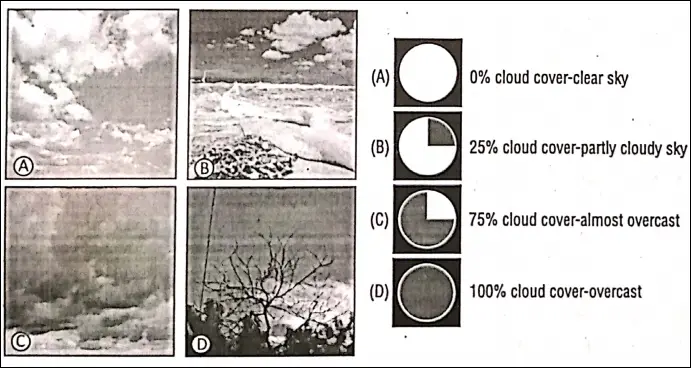
The measurable proportion of cloud in the sky is called ‘cloud cover’ or ‘cloudiness’. When the cloud cover is 0% it is a clear sky, when it is 25%, it is partly cloudy sky, when it is 75%, it is an almost cloudy sky and when it is 100%, it is the completely cloudy sky.

WBBSE Notes For Class 6 Physical Geography Chapter 7 Weather And Climate Cloud Cover Or cloudiness

6. Precipitation

The particles of water or ice form within clouds and fall towards the Earth surface is precipitation. According to famous climatologist H.J. Critchfield, “‘ Precipitation is defined as water in liquid or solid forms falling to the Earth/’ Precipitation includes all forms in which the moisture falls on the Earth’s surface.

It is the process by which condensed water from the clouds falls on the Earth’s surface. It can be solid or liquid. Precipitation is a complex process when millions of drops of water combine together and fall on the Earth.

Different forms of precipitation are

  1. Rainfall
  2. Snow-fall
  3. Hail
  4. Sleet
  5. Mist
  6. Drizzle.

1. Rainfall

The release of moisture in the form of drops of water is called rainfall. After condensation of moist laden air, clouds are formed. The drops of water become so heavy that air cannot hold these. The falling of these drops of water from the clouds is called ‘rainfall’.

Mechanism of Rainfall

If the dewpoint temperature is below freezing, condensation produces minute water droplets and clouds for rainfall, millions of cloud droplets must somehow join together into drops large enough to sustain themselves during their descent.

WBBSE Notes For Class 6 Physical Geography Chapter 7 Weather And Climate Convectional rainfall, Relief Rainfall and Cyclonic Rainfall

Types Of Rainfall :

Ordinary rainfall is considered to be of three types :

  1. Connectional rainfall.
  2. Orographic or Relief rainfall.
  3. Cyclonic or Frontal rainfall.

Isohyet

An imaginary line shown on the map joining the places of an equal amount of rainfall of a certain period (such as a month, a season or a year) is called as isohyet.

The instrument used to Measure Rainfall :

The amount of rainfall is measured by an instrument called ‘Rain Gauge’.

WBBSE Notes For Class 6 Physical Geography Chapter 7 Weather And Climate Rain Gauge


2. Snowfall 

A form of precipitation consisting of crystals of ice is called ‘snow’. It is produced when condensation takes place at a temperature below freezing point (0°C).

So that the minute crystals of ice form directly from the water vapour. These small crystals then unite of form flakes of ice is called snow.

“factors affecting climate WBBSE class 6 notes”

The coming down of snowflakes towards the Earth’s surface Is known as ‘snowfall’. It is common in higher latitudes and high mountain regions.

3. Hail

Precipitation in the form of pellets of ice (hailstone) that develop in and fall from a cumulonimbus cloud, either at a cold front or where intense heating of the surface causes rapidly ascending convection currents is called ‘hail’. It causes damage to crops and buildings.

“role of the sun in weather and climate class 6”

4. Sleet

In the United Kingdom (U.K.), sleet is described as a form of precipitation consisting of either partly melted snow-flakes or rain and snow falling together.

In the U.S.A., sleet is described as a form of precipitation consisting of frozen raindrops that have subsequently by partially remelted. So, sleet is considered as a mixture of rain and snow.

5. Mist

A reduction of visibility within the lower atmosphere to 1-2 km. caused by condensation producing water droplets within the lower layers of the atmosphere is called ‘mist’. It is intermediate between fog and haze.

6. Drizzle

Light rainfall, consisting of particles in size less than 0-5 mm in diameter that are close together is called drizzle. Normally drizzle is produced by ‘stratus’ and ‘strato-cumulus’ clouds.

Forecasting Of Weather

Weather influences our life and activities to a great extent. As the weather is the day-to-day condition of the atmosphere, it changes regularly. Weather forecasting is the prediction of weather for the next hour, next day, next few days or next week.

These are made by collecting as’ much data as possible particularly temperature, humidity,.rainfall and wind. Predictions are thus made by depending on these data.

“major climatic zones of the world WBBSE”

Weather forecasting is done by weather offices with the help of different instruments as well as satellite pictures and the collected data. Weather forecasting has immense importance for aviation, navigation, fishing activities in the deep sea, agricultural fields and for other human activities.

We come to know about the weather reports and the forecast through radio, television and daily newspapers. Military operations, parliamentary sessions, geographical expeditions, important events of sports etc. take into consideration of weather recordings. We plan our daily activities also based on the weather forecast.

WBBSE Notes for Class 6 Junior School Geography

WBBSE Notes For Class 6 Physical Geography Chapter 6 The Ice Capped Continent : Antarctica

Chapter 6 The Ice-Capped Continent: Antarctica Introduction :

The Ice-Capped Continent:

The great ice-capped southern continent situated in frigid isolation around the South Pole is called Antarctica. It is the most desolate continent of the world.

The continent is deeply covered with ice, the average thickness being 1800 metres. The thickness increases with the distance from the sea and the maximum depth measured is 4200 metres.

The ice constitutes 90% of the world’s ice and 70% of the world’s freshwater reserve, and its melting would cause the oceans to rise by 60 metres. The ice gradually moves outwards from the centre as glaciers.

WBBSE Notes For Class 6 Physical Geography Chapter 6 The Ice Capped Continent Antarctica Location Of Antarctica

Notable among these are Lambert and Beardmore. Antarctica is described as a large round ice cake with two roughly triangular pieces cut from it—the Weddell sea and the Ross Sea in West Antarctica.

Antarctica is thought to have been once a part of a single great landmass called Gondwanaland (The southern part of Pangaea includes Antarctica, Africa/South America, Australia and India).

Read and Learn  More WBBSE Notes For Class 6 Junior School Geography

About 200 million years ago Gondwanaland began to break up and Antarctica drifted towards the South Pole. A man came to know about this continent in 1820.

Location Of Antarctica :

Antarctica lies around the geographical South Pole (90°S) beyond the latitude of Antarctica circle (66°30’C). In winter, it extends up to 60° south latitude, became the sea around this continent freezes and the limit of Antarctica is extended.

Class 6 History Class 6 Social Science
Class 6 Geography Class 6 Science
Class 6 Maths Class 6 Science MCQs
Class 6 General Science Class 6 Maths Solutions
Class 6 Geography Class 6 Hindi

Boundary Of Antarctica :

This roughly circular continent is placed between the South Pole and the 60°S parallel of latitude. It is circumscribed by an Antarctic circle and surrounded by the Antarctic ocean. Many seas, bays and groups of islands surround the continent (Ross Bay, Pacific Ocean etc.)

Area and Extension :

Antarctica covers an area of 1 crore 40 lakh square kilometres. This is. the fifth largest continent of the world after Asia, Africa, North America and South America. Europe is sixth and Oceania seventh.

Geographical Importance :

Antarctica is the fifth largest continent or the world. It has very much geographical significance as follows :

  1. Antarctica is the Earth’s highest, coldest, driest, windiest and remotest continent.
  2. The continent has about 90% of the world’s ice. If all of this ice is melted sea levels would rise about 60 metres.
  3. A sheet of ice averaging at least 1-6 km thick covers the continent.
  4. As the continent is covered entirely by the snow and ice, it looks white. So, it is also called the ‘white continent’.
  5. The continent has many large glaciers. Lambert glacier is the longest glacier on the Earth.

Physical Features Of Antarctica :

Relief:

Actually, Antarctica is a plateau of ancient landmass. Below the ice sheet, the surface of Antarctica is undulating. The average height of the plateau is 1800 metres.

The continent has an extremely long, (29800 km) and indented coastline and is between 2000 and 2400 metres high. On account of its high elevation, it is regarded as the highest content of the world.

“WBBSE class 6 physical geography chapter 6 notes”

The 2400 km long Trans-Antarctica Mountain divide the continent into two part: East Antarctica and West Antarctica. East Antarctica is a vast plateau and 600 million years old, as ancient as the Canadian shield.

West Antarctica, with its high mountain peaks, volcanos,  capped plains and many island groups is much more recent in or *’ n. The Peninsula of Grahamiand of West Antarctica is in fact, a range that continues from the Andes.

WBBSE Notes For Class 6 Physical Geography Chapter 6 The Ice Capped Continent Antarctica Antarctica

I the submerged portion of this mountain is called Scotia Range’ It rises above the sea level forming Islands like the Tlerre-del-Fuego, South Georgia, South Sandwich, South Orkney and South Shetland.

The Trans-Antarctka Mountains form the continental backbone with peaks as high as 4800 metres Mt. Vtncum or Vinson (5140 m) on the Sentinel Range in north-west Graham’s land is the highest peak of Antarctica.

“the ice-capped continent Antarctica WBBSE class 6 notes”

There are many active volcanoes and most of these are found in West Antarctica. Mt. Erebus (3794 m) on Ross island is an active volcano. Many large glaciers are also found In Antarctica Lambert (400 km long and 64 km wide) is the longest glacier of the world.

WBBSE Notes For Class 6 Physical Geography Chapter 6 The Ice Capped Continent Antarctica

Climate :

Antarctica is the coldest, driest and windiest of all the continents. It is nearly always frozen and the air is dry.

Winds reach gale force (200 km/hour) and frequent blizzards (snow-storms) occur in Autumn and winter Near the coast, the average temperature varies between 0° and – 11°C while tin* interior plateau records temperatures as low as – 88°C.

Russia’s Vostok’s research station m Queen Maud Land recorded a temperature of – 89 2° C in July 1983 which is the lowest temperature ever recorded anywhere in the world.

WBBSE Notes For Class 6 Physical Geography Chapter 6 The Ice Capped Continent Antarctica Antarctica Vostok's Research station

During the long winter, the land remains in darkness for months together. But in summer, the Sun with its most oblique rays bathes the continent in continuous daylight.

“summary of class 6 physical geography chapter 6 WBBSE”

So, around the South Pole, 6 months day and 6 months night prevail. When the Sun is seen nowhere in the sky, the celestial play of lights of various colours throughout the sky often observed during this time is called the Aurora’ (Aurora Australis).

In the summer, temperature rises to – 20°C. The sun never sets but the sunlight is oblique and a good part of it is reflected by the ice. So, the temperature does not increase too much.

Vegetation

The climate of Antarctica is not conducive to the growth of vegetation. Freezing temperature, poor soil quality, and lack of sunlight and moisture inhibit plant growth.

There is not a single tree or a bush in this bleak land with its dazzling mantle of ice. Only during summer when some ice melts, mosses, fungi and lichens grow in the coastal areas. There are about 100 species of mosses in Antarctica.

Animals/Living Creatures

Antarctica is the permanent home of the Penguins. There are also different migrating birds like the gulls, skua, terns, and petrels are found in the coastal areas in summer.

Living creatures include many species of fish, whales and seals are also found in the sea. Antarctica waters also abound in ‘krill’ (krill is the name given to small red shrimps) and microscopic one-celled plants called diatoms.

“important questions from Antarctica class 6 geography”

While krills are eaten by seals, whales and Penguins, diatoms form food for fish.

WBBSE Notes For Class 6 Physical Geography Chapter 6 The Ice Capped Continent Antarctica Whale, Seal, and Penguins

Penguins

The Penguins are flightless aquatic birds who can swim well. Antarctica is the home of Penguins. They are the permanent residents of this continent. Some penguins are found in the coastal areas.

There are 17 different species of penguins in Antarctica. The Emperor penguins are the largest among them. They are almost four feet tall, an adult weighs almost 30 kg.

“WBBSE class 6 geography chapter 6 key points”

Their bodies are entirely covered with glossy feathers that never get wet. A thick layer of fat under their skins saves them from the biting cold. They feed mainly on small marine organisms, fish and Krill (small red shrimps).

Mineral Resources :

The continent seems to be a storehouse of minerals. But mining is difficult and costly. According to the geologists, there are possibilities of obtaining some important minerals, namely

  1. Iron ore
  2. Coal
  3. Copper ore
  4. Gold
  5. Mineral oil
  6. Natural gas and others

Expedition To The South Pole

Several expeditions were made to discover the continent of Antarctica. The expedition in the south began in the 16th century after the discovery of America by Christopher Columbus.

But the systematic expedition to the south pole started in 1772 when Captain James Cook reached for the first time near Antarctica with his ship evading ‘Pack ice’ and iceberg.

The first landing on Antarctica was by John Davis in West Antarctica in 1821. In 1841, James Clark Ross passed through the ‘Ross Sea’ and discovered the ‘Ross Island’.

In 1907, Ernest Shackleton became the first to reach the South Magnetic Pole and to climb Mt. Erebus. An expedition team led by Norwegian Polar explorer Roald Amundsen became the first to reach the ‘Geographic South Pole’ or the central point of Antarctica, (i.e. the 90°S) on 14th December 1911.

“climate and weather conditions in Antarctica class 6”

The team left the base camp on 19th October 1911. They had to overcome great adversities like blizzards, deep crevasses etc. to reach the ‘South Pole’ on the Earth.

It should be noted that Captain Scott who had actually reached Antarctica before Amundsen but was delayed for his research work there, reached the ‘Geographical South Pole’ on 17th January 1912.

He found a note, left by Amundsen and a flag of Norway. Captain Scott started his return journey but he could not return; with a broken heart he died in the domain of snow.

Indian Expeditions To Antarctica

Our country India has carried many expeditions to Antarctica. The first team of Indian explorers reached Antarctica on 9th January 1982.

They established the first Indian research centre in Antarctica which was named ‘Dakshin Gangotri’ (70°S, 12°E). In 1989 another research station ‘Moitree’ (70°45’S, 11°44’E) was established at 70 km.

“why is Antarctica called the ice-capped continent”

Away from the Dakshin Gangotri on 26th March 1988, by the eighth team of explorers from India. The 19th Jndian expedition returned from Antarctica in March 2000. India is planning to set up her third permanent research station very soon.

Antarctic Treaty :

The Antarctic Treaty signed in 1959 by 12 countries has now got 49 members all over the world including India. By this treaty mineral mining, military activities, nuclear explosions etc. Are prohibited in this continent. Only scientific research can be conducted by the nations in order to maintain the ecological balance.

Antarctica :

The Continent Of Science

Antarctica is not the territory of any country, it is an international land open to all the nations of the world. It has attracted the attention of scientists in recent years.

U.K., Norway, Sweden, France, Belgium, Germany, New Zealand, the U.S.A, Russia, Argentina, Brazil and India have established their permanent research stations in Antarctica.

“human activities and research stations in Antarctica”

Atmospheric, biological, Earth, chemical and medical sciences are studied by these research stations. The scientists from different nations carry out research work on the environment, geology, mineral resources, weather and climate etc.

Antarctica is a continent dedicated to peace and science. The world nations are trying for Cooperative scientific exploration for the well being of human generations. So, it is rightly known as the ‘continent of science’.

Transport :

Transport in this roadless continent consists of sledges drawn by teams of dog called ‘huskies’ or by tracked vehicles, helicopters and aircraft.

Population :

In this desolate land, the population which is composed of the personnel of different scientific stations averages 900 in winter. But it rises to about 11000 in summer with the arrival of the temporary visitors, tourists and personnel in the summer research sites.

The Future Of Antarctica

Antarctica has an ecological balance in the natural environment. To maintain this balance, Antarctica is protected from fishing and mineral exploitation.

However, as energy and mineral reserves and fishing resources get exhausted or depleted In other parts of the world, we may look forward to Antarctica for these resources.

So the pressure to exploit the natural resources of Antarctica from the land and in the ocean Is likely to increase jn future. This increase may have an impact on the natural environment of Antarctica.

“flora and fauna of Antarctica WBBSE class 6 notes”

Global warming, depletion of the ozone layer and air pollution etc. have posed a serious threat to the future of this continent. The ice cap in Antarctica is melting every day due to the rise of temperature.

It reduces the geographical expanse of Antarctica and causes an alarming rise of the sea level. All these may have an adverse effect on the living world and the natural environment of Antarctica.

Krills, seals, whales and penguins are dying thereby jeopardizing the natural balance of the Antarctic environment. So, the future of Antarctica is not beyond doubt.

WBBSE Notes for Class 6 Junior School Geography

WBBSE Notes For Class 6 Physical Geography Chapter 10 India – Location Of India And Political Divisions
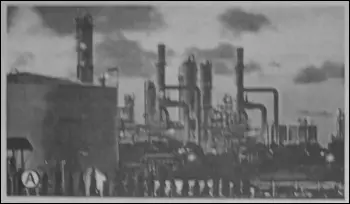
Chapter 10 India – Location Of India And Political Divisions Introduction
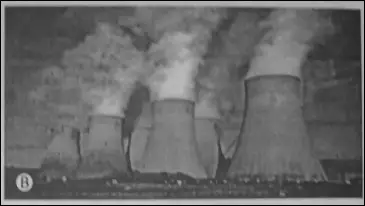
Our motherland India, the queen of all nations—is a vast country of the great geographical extent and it is full of diversities in physical as well as cultural features.

There are very few countries in the world that have such variety as in India. No country in the world has such a variety of topography, rivers, lakes, deserts, forests, and climate, all within the national boundary.

The variety of colors, religions, castes, races, and languages make India seem like a continent. So, it is often described as the ‘Sub-continent’. The history of ancient India is glorious. India is the land of the most ancient civilizations. India is also a land of natural as well as cultural heritage.

Its endless natural resources make our country unique. The present Indian Union became independent from the Yoke of British rule on 15th August 1947 and it is the world’s largest democratic country.

Read and Learn  More WBBSE Notes For Class 6 Junior School Geography

Location Of India

The location of India can be geographically described in three ways :

  1. According to latitudes and longitudes.
  2. According to distance from the sea and
  3. According to neighboring countries.

Location of India according to Latitudes and Longitudes :

WBBSE Notes For Class 6 Physical Geography Chapter 10 India - Location Of India And Political Divisions Location Of The World Map
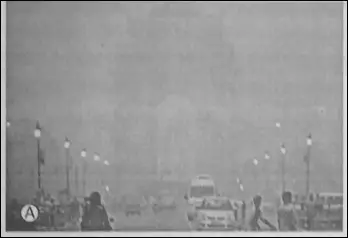
 

WBBSE Notes For Class 6 Physical Geography Chapter 10 India - Location Of India And Political Divisions Location Of The Indian Golbe

 

Latitudinal Location

Latitudinally, India is located in Northern Hemisphere to the southern part of the continent of Asia. According to latitude, the mainland of India stretches from 8°04′ North latitude (Kanyakumari or Cape Comorin) in the south to 37°06′ North latitude (Indira col of Siachen glacier in the Northern extreme boundary of Kashmir) in the north.

“WBBSE class 6 physical geography chapter 10 notes”

The southernmost point of the Indian Union is ‘Indira Point’ (6°45′ North, previously known as ‘Persons Pygmillion point’) lying to the south of Car Nicobar Island.

WBBSE Notes For Class 6 Physical Geography Chapter 10 India – Location Of India And Political Divisions
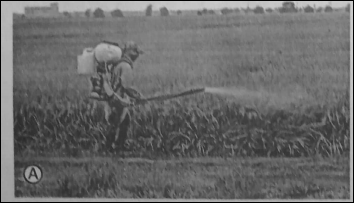
Longitudinal Location

Longitudinally, India lies in the Eastern Hemisphere. It stretches from 68o07′ East longitude (Guhar Moti in the Western extremity of Gujarat) in the west to 97°25′ East longitude (Kibitu in the eastern frontier of Arunachal Pradesh) in the East.

Location Of India According To Distance From The Sea:

WBBSE Notes For Class 6 Physical Geography Chapter 10 India - Location Of India And Political Divisions Indian Location Map

 

India is located to the south of the continent of Asia and to the north of the Indian Ocean.

Ocean, seas, and bay surround India on three sides—

  1. Indian Ocean in the South, of Bengal an Sea in the West and
  2. Bay Land st in the South and East.
Class 6 History Class 6 Social Science
Class 6 Geography Class 6 Science
Class 6 Maths Class 6 Science MCQs
Class 6 General Science Class 6 Maths Solutions
Class 6 Geography Class 6 Hindi

Lands surrounded by water on three sides is a ‘Peninsula’. Thus the southern portion of India is a peninsula.

Location Of India According To Neighboring Countries

India is located to the south of China, Nepal, and Bhutan to the east of Pakistan, to the southeast of Afghanistan, to the west of Myanmar and Bangladesh. India is also located to the north of Srilanka and North- East of Maldives.

India at a glance :

  1. Official Name   —Republic of India. India is the largest democratic country of the world.
  2. Rea    —32,87,782 square kilometers.
  3. Areawise Rank in the world   —Seventh (7th)
  4. The North-South extent of the Indian landmass   —is 3214 km.
  5. The East-West extent of the Indian landmass   —2933 km.
  6. Population    —121,01,93,822 (2011)
  7. Population-wise Rank in the world    —Second, next to China
  8. Literacy Rate   —74-04%
  9. The total number of states   —29*
  10. The total number of Union Territories   —07*, including one National Capital Territory (Delhi).
  11. Largest State   —Rajasthan.
  12. Smallest State   —Goa.
  13. Largest Union Territory   —Andaman and Nicobar Islands
  14. Smallest Union Territory   —Lakshadweep.
  15. Newly formed State   —Telangana (from Andhra Pradesh)
  16. Highest populated State   —Uttar Pradesh.
  17. Least populated state   —Sikkim.
  18. Largest city of India   —Mumbai.
  19. Capital of India    —New Delhi.

The States Of India And Their Capitals :

Before independence (15th August 1947) there were 562 princely states and 9 British provinces in India. After independence, India became a Republic on 26th January 1950.

“WBBSE class 6 geography chapter 10 key points”

The different states or provinces of India were demarcated or reorganized according to the recommendation of ‘The State Reorganisation Commission7 which was set up in 1953.

“India location and political divisions WBBSE class 6”

The process of reorganization of states has continued since 1st November 1956 based on some criteria. These were

  1. Language
  2. Culture
  3. Physical and Geographical similarities
  4. Administrative Efficiency and
  5. Economic Stability.

In India, at present, there are 29* states and 7* Union Territories (including one ‘National Capital Territory7, Delhi’).

A table is given below to show the Indian States, Union Territories and their capitals.

State Capital
1. Andhra Pradesh Hyderabad
2. Arunachal Pradesh Itanagar
3. Assam Dispur
4. Bihar Patna
5. Chhattisgarh Raipur
6. Goa Panaji
7. Gujarat Gandhinagar
8. Haryana Chandigarh
9. Himachal Pradesh Shimla
10. Jammu and Kashmir* Srinagar
11. Jharkhand Ranchi
12. Karnataka Bengaluru
13. Kerala Thiruvananthapuram
14. Madhya Pradesh Bhopal
15. Maharashtra Mumbai
16. Manipur Impal
17. Meghalaya Shillong
18. Mizoram Aizawl
19. Nagaland Kohima
20. Odisha Bhubaneshwar
21. Punjab Chandigarh
22. Rajasthan Jaipur
23. Sikkim Gangtok
24. Tamil Nadu Chennai
25. Telangana Hyderabad
26. Tripura Agartala
27. Uttar Pradesh Lucknow
28. Uttarakhand Dehra Dun
29. West Bengal Kolkata


Union Territories Capital
1. Andaman and Nicober Port Blair
2. Chandigarh Chandigarh
3. Dadra and Nagar Haveli Silvasa
4. Daman and Diu Daman
5. Delhi New Delhi
6. Lakshadweep Kavaratti
7. Puducherry Puducherry


Recently (5th August 2019) according to the declaration of the Parliament of India, the State of Jammu and Kashmir is divided into two Union Territories—

  1. Jammu and Kashmir and
  2. Ladakh.

Constitution-recognized languages :

There are total 22 numbers of constitutionally recognized languages in India. These languages are

  1. Hindi
  2. Bengali
  3. Telegu
  4. Oriya
  5. Tamil
  6. Urdu
  7. Gujarati
  8. Malayalam
  9. Kannada
  10. Marathi
  11. Punjabi
  12. Assamese
  13. Kashmiri
  14. Sindhi
  15. Manipuri
  16. Nepali
  17. Boro
  18. Maithili
  19. Dogri
  20. Santhali
  21. Sanskrit
  22. Konkani.

Hindi is the official National Language of India. The common language of communication is English.

WBBSE Notes For Class 6 Physical Geography Chapter 10 India - Location Of India And Political Divisions India (Political)
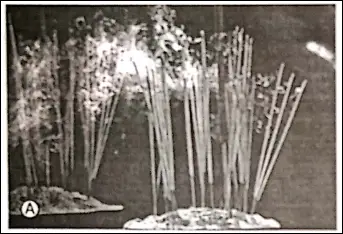
Neighbouring countries of India :

A person who dwells near another is called a ‘neighbour7. The adjoining countries or the countries lying near or beside a particular country are called ‘neighbouring countries.

Indian Union or the Republic of India is bordered by certain countries of the continent of Asia as well as the world. These countries lie in and around India and are called our neighbouring countries.

WBBSE Notes For Class 6 Physical Geography Chapter 10 India - Location Of India And Political Divisions India And Neighbouring Countries
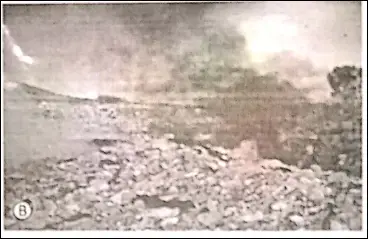
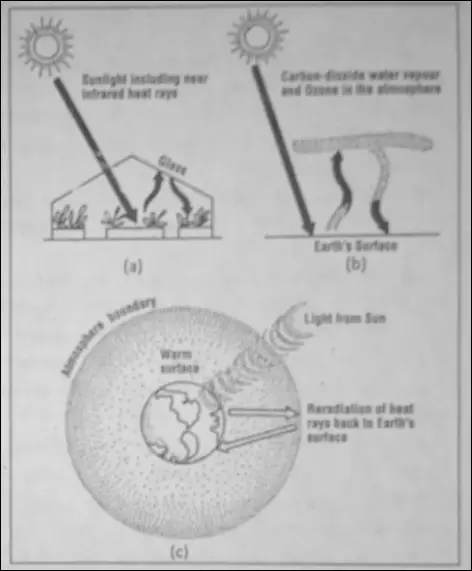
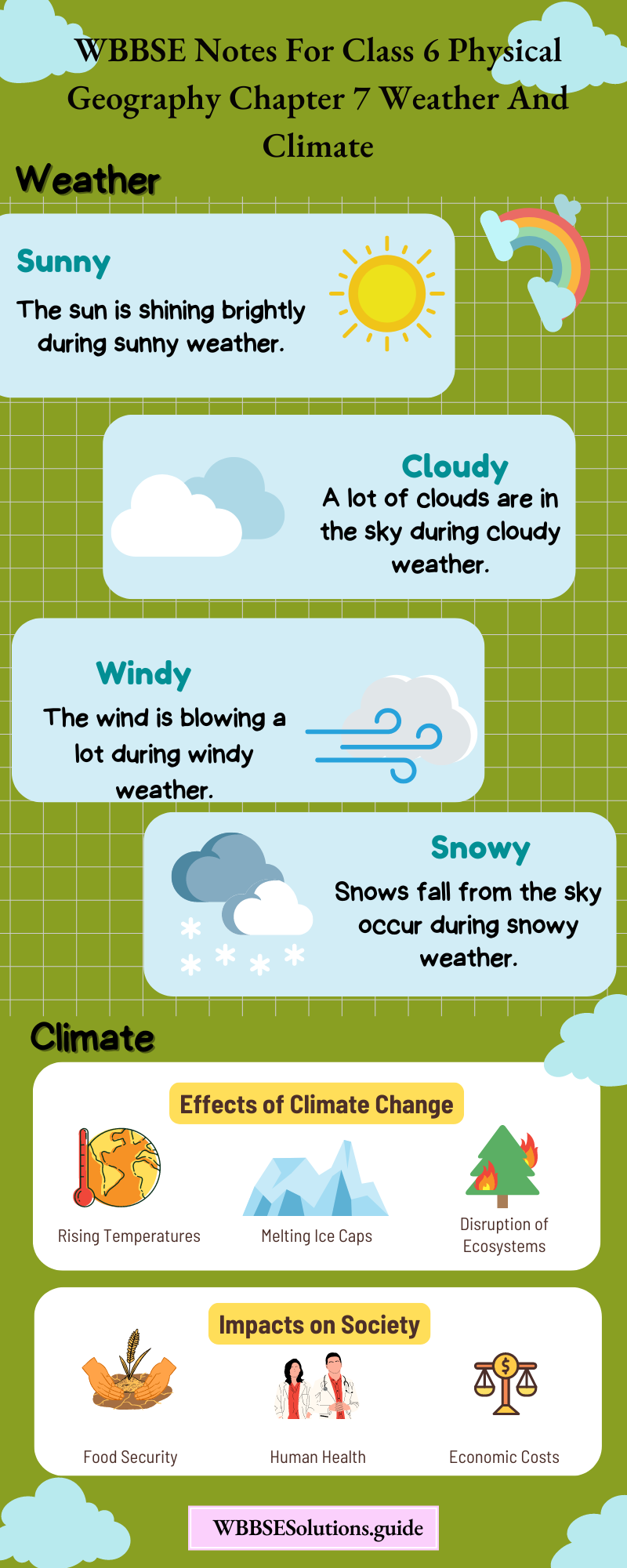
India’s neighboring countries that share common borders with it are Pakistan in the north-west, China, Nepal and Bhutan in the north, and Bangladesh and Myanmar in the east.

“summary of class 6 physical geography chapter 10 WBBSE”

Srilanka and Maldives are also our neighboring countries lying as islands. Srilanka lies in the south¬east and Maldives lies in the southwest of India.

Cultural Heritage Of India
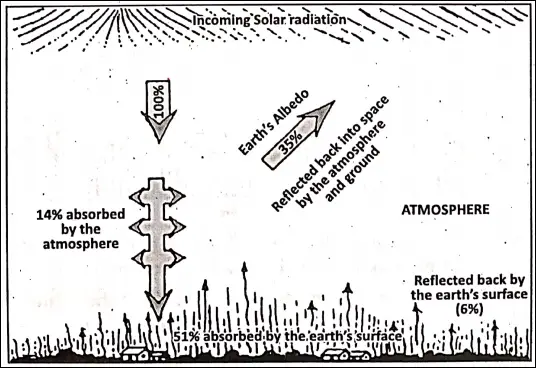
In India, there are many heritage sites that have ‘World heritage’ status. These heritage sites may be divided as two types—

  • World-cultural heritage sites and
  • World-natural heritage sites.

A Few Of The Major ‘World Heritage Sites Of India Are Mentioned Below :
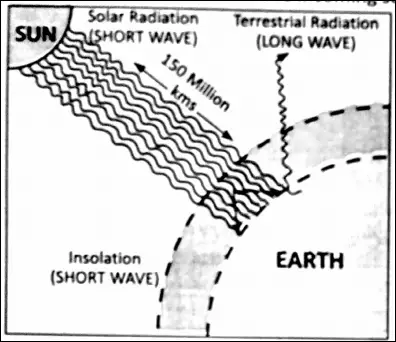
1. World Cultural Heritage Sites of India :

Taj Mahal at Agra, Agra-Fort, Fatehpur Sikri (near Agra), Qutub Minar, ‘Humayun’s Tomb’ (grave) and Red Fort in Delhi, the caves of Ajanta and Ellora, Khajuraho Group of Monuments, Elephant Caves, Group of Monuments at Mahabalipuram or Mamallapuram, Konark-Sun Temple, Buddhist Monuments of Sanchi, Mahabodhi Temple complex at Bodh Gaya, the Jantar-Mantar of Jaipur and Hill forts of Rajasthan, Mountain Railways of India—Darjeeling.
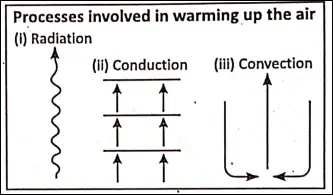
“important questions from location and political divisions of India class 6”

2. World Natural Heritage Sites Of India :

India’s famous ‘World natural heritage’ sites are—The Sundarbans, The^anda Devi Peak and Sanctuary, Manas Wildlife Sanctuary, Kaziranga National Park (Reserve Forest),-Valley of flowers, Western Ghats, etc.

WBBSE Notes for Class 6 Junior School Geography

WBBSE Notes For Class 6 Physical Geography Chapter 5 Water Land Air

Chapter 5 Water Land Air Introduction :

Water Land Air:

The Earth, our homeland is a unique planet of the Solar System. It was born from a cloud of dust and gases about 5000 million years ago. According to the scientists, the Earth was in a hot molten state that cools very slowly taking thousands, of crores of years. During its cooling, the surface became a thin solid crust.

Higher parts of it represent land masses lithosphere i.e. continents. As it cooled down further, the vast amount of water vapour held in its atmosphere condensed into water.

“WBBSE class 6 physical geography chapter 5 notes”

-Lower parts of the surface of the Earth or depressions are filled with, this water and represent ocean and other water bodies or hydrosphere. The Earth has a layer of air surrounding it with different gases.

This layer is called the atmosphere. So, the Earth comprises mainly three interrelated domains or reasons namely, the solid landmasses or lithosphere, the liquid waterbodies or hydrosphere and the gaseous atmosphere.

There is also an interrelated ream, i.e. biosphere where living plants and animals are found. No other planet in the Solar System has all these that are so vital to support life.

Read and Learn  More WBBSE Notes For Class 6 Junior School Geography

If we see the Earth from the space the Earth seems to be a floating bright blue .white sphere amidst the black sky. The black sky is always there beyond the blue sky.

During daytime the blue sky guards it. Actually, the sky appears blue due to the diffusion of blue light during the day. The blue of the sky is due to the scattering of the Sun’s light by molecules and dust particles in the atmosphere.

Class 6 History Class 6 Social Science
Class 6 Geography Class 6 Science
Class 6 Maths Class 6 Science MCQs
Class 6 General Science Class 6 Maths Solutions
Class 6 Geography Class 6 Hindi

“water land air WBBSE class 6 geography notes”

Blue light is scattered more effectively than the red, hence the sky which we seen only by scattered light has an excess of blue. Above the atmosphere, the sky appears black, and the stars are visible to astronauts all the time.

Atmosphere

The atmosphere or the sphere of the air envelope of the layers of invisible gases that surrounds the Earth. It is held to the Earth by the force of gravity and rotates with it.

It represents the gaseous realm of the Earth. It is mobile, elastic, and both compressible and expansible. The atmosphere is a vital part of human existence on the Earth’.

Composition of the Atmosphere :

The Earth’s atmosphere is the layers of air or gaseous cover of the Earth! The air is a mechanical mixture of several gases. Apart from these gases water vapours and particulates are also present in the air.

WBBSE Notes For Class 6 Physical Geography Chapter 5 Water Land Air

So, the atmosphere is mainly composed of three elements :

  • Gases
  • Water vapour and
  • Particulates Nitrogen (78%) is the main element of the atmosphere.

WBBSE Notes For Class 6 Physical Geography Chapter 5 Water Land Air Composition Of Atmosphere

Oxygen (almost 21% by volume) is also an important gas from the standpoint of living organisms. The third important gas is carbon dioxide (0-033%). Helium, Hydrogen, Methane, Argon, Neon etc. are also important gases in the atmosphere.

Layers of the Atmosphere

There are many layers of the atmosphere. There is a lot of difference in their properties. These layers are not separated from one another. The properties of layers change slowly.

On the basis of thermal variation, the atmosphere is divided into a series of layers.

The main layers are—

  • Troposphere
  • Stratosphere
  • Mesosphere
  • Thermosphere and Ionosphere
  • Exosphere and
  • Magnetosphere.

WBBSE Notes For Class 6 Physical Geography Chapter 5 Water Land Air Atmospheric Layers

The main layers are described below :

Troposphere

Troposphere is the lowermost layer of the atmosphere and lies closest to the Earth’s surface. The average height of the troposphere is about 16 km.

The word ‘troposphere’ consists of two words-‘Tropo’ and ‘Sphere’. ‘Tropo’ means changing and ‘sphere’ means ‘region’. Hence, the troposphere is that layer in which the temperature changes upward; almost all changes in daily weather take place in this layer.

“summary of class 6 physical geography chapter 5 WBBSE”

So, this layer is known as the ‘weather-making layer’ in which clouds and storms are formed. In this layer, the temperature decreases at the rate of 6-4°C per 1000 metres or one km.
The upper boundary of this layer is limited by a layer known as ‘Tropopause’.

Stratosphere

This is the second layer of the Earth’s atmosphere and extends up to 50 km above the surface of the Earth. In the lower part of this layer, i.e. up to a height of 20, km temperature remains constant.

Afterwards, it gradually increases up to a height of 50 km because of the presence of the Ozone layer which absorbs the Sun’s ultraviolet rays. Clouds and dust particles are practically absent in this layer.

This zone is free from atmospheric disturbances. The jet stream is a powerful element in this layer. To avoid atmospheric disturbances ‘Jet Planes’ find their safe movement through this calm zone of the atmosphere.

Distinguish Between Troposphere And Stratosphere

Troposphere Stratosphere
1.    Troposphere is the lowermost layer of the atmosphere. 1.    Stratosphere is the second layer of the atmosphere above the Earth.
2.    Its height varies from 8 km at the poles to 18 km at the Equator. 2.    Its height varies from 18 km at the Equator and 72 km at the poles.
3.    In this layer temperature decreases at the rate of 6-4°C per 1000 metres. 3.    In this layer temperatures are very low and fairly constant.
4.    Most of the water vapour, clouds and dust particles are found in this layer. 4.    Clouds, dust particles and water vapour are practically absent in this layer.
5.    Atmospheric disturbances (storms etc.) are confined to this layer. 5.    This layer is free from atmospheric disturbances.
6.    Unstable rising air makes weather changes in this layer. 6.    Jet stream is a powerful element in this layer.

Mesosphere

The third layer of the atmosphere which lies between the stratosphere and the thermosphere is known as ‘Mesopshere’. ‘Meso’ ‘means ‘intermediate’ and ‘sphere’ means ‘zone’.

It extends between 50 and 80 km from the Earth’s surface. Temperature again decreases with increasing height. Incoming meteors from outer space towards the Earth are burnt in this layer. The pressure of air is also very low in this layer.

Thermosphere :

The part of the atmosphere beyond mesosphere is known as ‘Thermosphere’ wherein temperature increases rapidly with increasing height.

Thermosphere is divided into two layers viz.

  • Ionosphere and
  • Isothermal region.

1.  Ionosphere :

This region is located between 80 km and 400 km. It is an electrically charged layer. This layer is characterised by the ionization of atoms. So, electrically charged particles of ions and electrons are found here.

It is the zone in which radio waves are reflected back to the Earth and thus it helps in maintaining the radio and audio communication system. The auroras are produced in the ionosphere.

The light is strange and occurs in the ionosphere. In the northern hemisphere it is called ‘Aurora Borealis’ and in the southern hemisphere as ‘Aurora Australis’. This layer also absorbs Sun’s deadly X-rays.

2. Isothermal region :

[Iso-same, thermal-temperature] :

This zone is extending from 400 km to 700 km. This is the upper layer of the thermosphere. It lies above the ionosphere. The temperature condition attains a state of equal or same temperature.

So, this zone of same temperature is known as ‘isothermal zone or region’.

Exosphere :

This is the fifth layer of the atmosphere extending between the Thermosphere and Magnetosphere about a height of 700 km to 1000 km. the air is extremely rarefied and the temperature gradually increases through the layer.

In this layer, temperature increases with height up to about 1200°C. The density becomes extremely low and the atmosphere resembles a nebula because it is highly rarefied. In fact, we know very little about this layer.

Magnetosphere :

Beyond Exosphere lies the Magnetosphere which gradually merges into space. This layer extends between 1000 km. to 10000 km. from the surface of the Earth.

“importance of water land and air class 6 geography”

It is the outermost limit of the gaseous atmosphere. This layer lies between the Earth’s gaseous atmosphere and the magnetic atmosphere. The atmosphere is very light here. The Magnetosphere protects the life on the Earth from ionizing radiation.

Importance of Atmosphere

The atmosphere of the Earth plays an important role in supporting the various life forms and performs several functions.

These are as follows :

The atmosphere supplies various life-giving gases like 02, N, C02 etc.

  1. Atmospheric pressure is the most important climate element.
  2. It protects from the ultraviolet rays coming from the Sun.
  3. It keeps the temperature within certain limits and moderates the extremes of heat and cold on the Earth.
  4. The atmosphere also acts like a shield against the meteors and comets approaching the Earth which got burnt up while passing through the atmosphere due to friction.
  5. It also dictates the direction of a number of processes like plant growth, agriculture, soil for motion, human settlements etc.

Lithosphere

Some scientists believe that about 5 billion years ago, the Earth was born as a gaseous ball. As the Earth cooled and hardened, the outer hard layer is called the ‘Lithosphere’.

The word ‘Litho’ in Latin means ‘rocks’ or ‘stone’. The word lithosphere thus means a ‘rocks sphere’. It is rightly called the ‘rocky skin’ of the Earth. Lithosphere is the outermost solid layer of the Earth. It is found both on the continents and in oceans.

The Layers Of The Earth (Lithosphere)

At present, there are identified three concentric layers in the Earth’s interior from the surface of the Earth to the core or centre of the Earth. These layers are the ‘lithosphere’, ‘mantle’ and ‘core’ or ‘centre’ of the Earth.

WBBSE Notes For Class 6 Physical Geography Chapter 5 Water Land Air Layers Of The Earth


The Crust of the Earth :

The outer part of the lithosphere immediately below the newer sedi-mentaries on the surface is called ‘the crust of the Earth’ or ‘Earth’s Crust’. This layer is composed of light materials like silicon, aluminium, magnesium etc.

Mantle :

The portion of the interior of the Earth lying beneath the lithosphere or crust of the Earth and above the ‘core’ of the ‘Centrosphere’ is called ‘Mantle’ or ‘Mesosphere’.

“WBBSE class 6 geography chapter 5 key points”

The mantle is reaching up to a depth of 2900 km. Due to heat inside, the mantle consists of solid and molten rocks. The outer mantle is ‘Crfesima’ and the inner mantle is ‘Nifesima’. The upper layer is significant in the formation of fold mountains, earthquakes, continental drift etc. This part of the .mantle is known as the ‘Asthenosphere’.

Core :

The central portion of the Earth’s interior is called the ‘core’ or ‘barysphere’. It extends from the surface to the centre of the Earth (about 6371 km). It is made up of iron (fe) and nickel. So it is also known as ‘Nife’. It is divided into two sub-layers, the Inner and Outer core.

Importance Of Lithosphere

The lithosphere is useful for man in many ways.

  1. Lithosphere provides land for human settlements.
  2. Soils of the lithosphere are indispensable for the growth of plants and crops.
  3. Many types of minerals and fuels are found in Lithosphere.
  4. Atmosphere is heated up by radiation from the lithosphere.
  5. It is responsible for the exchange of water from oceans to the atmosphere.

Hydrosphere

The liquid natural bodies of the Earth called the ‘Hydrosphere’ is the sphere of water and water bodies like oceans, seas, lakes, rivers etc. About 71*4% of the Earth’s surface includes the hydrosphere. 97% of all the water on the Earth is in the oceans. The remaining 3% is distributed in rivers, lakes, glaciers and underground water reserves.

The source of this enormous amount of water on the Earth is not so far known for sure. Scientists believe that after millions of years of the Earth’s origin, the outer layer of the Earth cooled down.

Loads of water vapour condensed in the atmosphere are relentlessly came down as rain. Through thousands of years, rainfall filled up the depressions on the Earth’s surface to form a hydrosphere (rivers, lakes, seas, oceans etc.)

Blue Planet:

The Earth appears bright blue and very beautiful from space as 71*4% of its surface is covered with water. No other planet in the Solar System is loaded so heavily with water. Because of the presence of large amounts of water, the Earth looks blue. So, our Earth is called the ‘Blue Planet’.

Importance Of Hydrosphere

Hydrosphere is essential for men and other living creatures in the following ways :

  1. Life on the Earth cannot exist without water.
  2. The first sign of life was found in water.
  3. Water bodies are the habitat of various living creatures.
  4. Water is the source of different mineral salts.
  5. Ocean currents help to control the weather and climate of coastal areas.
  6. Waterways are the cheapest and most comfortable ways of transport that connect all the continents of the world.

Hydrological Cycle

The hydrological cycle or the water cycle is essential for the maintenance of most life and ecosystems on Earth. The circulation of water between water bodies (oceans), air and land is called the ‘Hydrological Cycle’.

Water in a constant state of movement in the atmosphere, ocean (hydrosphere) and land (lithosphere). There is a continuous exchange of water in cyclic form from the oceans to the atmosphere, to land and back to the oceans.

This is known as the ‘Hydrological cycle’ or ‘Water cycle’. This process interconnects the lithosphere, the hydrosphere and the atmosphere all the realms of the Earth.

WBBSE Notes For Class 6 Physical Geography Chapter 5 Water Land Air Hydrological Cycle

First of all, evaporation take place on the oceans. The water vapour is accumulated in the atmosphere. This water vapour, after condensation, gives rainfall on the land. This running water takes the form of rivers.

All rivers lead to oceans. Thus the cycle is completed. The water from the ocean reaches back to the ocean through the atmosphere and lithosphere.

Drifting Continents And Its Effects

Landmass which is only 28-6% of the Earth’s surface includes seven big continents. But near about 300 million years ago, the world map was not as it is today. Though the Earth apparently seems stable, it does not follow that it is fully stable.

“distribution of water on earth class 6 notes”

The Earth’s crust has been undergoing changes for millions of years. According to the ‘Continental Drift Theory’ of Alfred Wegner about 300 million years ago, all the present-day continents of the world were united as an aggregated supercontinent called ‘Pangaea’.

Later on, it began to break apart and the pieces drifted in two segments Example:

  • Laurasia in the Northern Hemisphere and
  • Gondwanaland in the Southern hemisphere.

Pangaea :

Pangaea is a supercontinent (a single large landmass) that existed about 300 to 200 million years ago during a Mesozoic time when all continents were joined.

The Pangaea started breaking up about 200 million years ago. After drifting the northern portion, separated from the southern portion, named Gondwanaland, by a sea called Tethys.

WBBSE Notes For Class 6 Physical Geography Chapter 5 Water Land Air Pangaea

Panthalasa :

About 300 million years ago, the supercontinent Pangaea was surrounded by a single vast but shallow body of water. This is called ‘Panthalasa’.

Convection currents drove the continents as they magma in the Earth’s interior has made the disintegrated pieces of ‘Pangaea’ drift apart and come to their present positions to form seven continents and five oceans.

Satellite images and observations now reveal that continents are still drifting about 2 to 20 ems each year.

Convection Current:

Convection currents were formed in the mantle due to the immense heat in the interior of the Earth. These convection currents drove the continents as they drifted.

‘Jig-Saw-Fit’:

Alfred Wegner first discovered that the western coastlines of Africa fits very well with the eastern coast of South America. It was known as ‘Jig-Saw Fit’.


WBBSE Notes For Class 6 Physical Geography Chapter 5 Water Land Air Jig Saw Fit

Seven Continents And Five Oceans

In our present world, the lithosphere or landmass which is only 28’6% (About 30%) of the Earth’s surface includes seven continents and Hydrosphere (which is about 70% or 71-4%) is composed of five principal oceans.

Seven Continents :

Large continuous masses of land on the Earth’s surface are called continents.

In our world there are seven continents namely :

  1. Asia
  2. Africa
  3. North America
  4. South America
  5. Antarctica
  6. Europe and
  7. Oceania.

The Salient features of The Continents :

The salient features of all these continents are given in the following chart :

Five Oceans :

The large bodies of salt water that surround the great landmasses of the Earth are called ‘Oceans’. There are five oceans which are joined to one another. These are, according to size.

  1. The Pacific Ocean
  2. The Atlantic Ocean
  3. The Indian Ocean
  4. The Antarctic or Southern Ocean and
  5. The Arctic Ocean.

WBBSE Notes For Class 6 Physical Geography Chapter 5 Water Land Air The Continents And Ocen

Characteristics Of The Oceans :

1. The Pacific Ocean :

The Pacific Ocean is the largest and deepest ocean in the world. It occupies nearly one-third of the Earth’s surface is larger than all the oceans combined.

The deepest part of the Earth called the ‘Mariana Trench’ (11034 m deep) lies in this ocean.

2. The Atlantic Ocean :

The Second largest ocean in the world, present in shape of ‘S’ in between the continents of North and South America on the side (west) and Europe and Africa on the other side (east).

3.  Indian Ocean :

It is the third largest ocean lying to the south of our country India. It is named after the country India. It is the second deepest ocean in the world.

4. Antarctic or Southern Ocean :

It is extended through the southern margin of the Pacific, Atlantic and Indian Oceans.

5.  Arctic Ocean :

The smallest ocean that surrounds the North Pole.

Special Features Of The Landmass/Continents And Water Bodies/Oceans :

Some peculiarities are observed in the distribution of landmasses and waterbodies.

These are as follows :

  1. Landmass is more in the northern hemisphere, while water body is more in the southern hemisphere.
  2. Water bodies occupy 60% of the northern hemisphere and 80% of the southern hemisphere.
  3. The North and South Poles are surrounded by water and land respectively.
  4. The Eastern hemisphere has more land, whereas western hemisphere has more water.
  5. The continents are oceans and triangular-the continents taper to the south and the oceans taper to the north.
  6. The continents are situated opposite to the oceans.
  7. Continents are wide in the north and narrow in the South. But oceans are narrow in the north and wide in the south.
  8. The Arctic Ocean is surrounded by landmasses like Asia, Europe and North America.

On the other side, the continent of Antarctica is surrounded by the Antarctic ocean which in turn has the Pacific, Atlantic and Indian Ocean all around itself.

Man And Environment

The word ‘environment’ refers to all those visible or invisible elements around a man which directly or indirectly affect his life and livelihood.

Even in the modern computer world environment plays a great role in human life. Living things interact with the surroundings constantly. They gather their life support from the three realms-Lithosphere, hydrosphere and atmosphere.

An ideal environment on the Earth has supported the advent of development and diversity of life. Water, soil, air and sunlight are among the physical components of the environment.

WBBSE Notes For Class 6 Physical Geography Chapter 5 Water Land Air Man And Environment

The entire living world including plants and animals are the biotic components of the environment. All the biotic components of the environment depend on the abiotic or physical components.

For example, Exposed soil will be eroded quite easily by wind, rain or surface runoff. Cultivation of crops will not be possible and if crops are not grown, there will be shortage of supply of food for human beings.

Any change in their environment would directly affect the living beings. These living beings exist in a narrow zone of contact between the land, water and air. It is known as the ‘biosphere’.

Biosphere

‘Biosphere’ is that part of the Earth and its atmosphere where life surface are the living places of several organisms, plants, animals and human beings.

The upper layer of the sea and lower layer of the atmosphere also contain the greatest density of living organisms. The narrow zone where we find all kinds of life is known as the ‘biosphere’ (In Greek ‘bios’ means ‘life’).

WBBSE Notes For Class 6 Physical Geography Chapter 5 Water Land Air Relation between Hydrosphere Lithosphere Atmosphere And Biosphere

All living beings including the humans interact with the elements of the lithosphere, hydrosphere and atmosphere in this zone of the biosphere. Approximately 35 thousand species of plants and 1-5 million species of animals spread through water, land and air constitute the ‘Biosphere’ of the Earth.

“types of landforms on earth WBBSE class 6”

Human beings are small part of the biosphere but their activities are responsible in destroying the balance of the environment.

These are as follows :

  1. Rapid growth of population, the establishment of agriculture and industries in forest cleanings, and the expansion of settlements caused contamination of the environment with harmful substances.
  2. Burning of great amounts of coal, petroleum and firewood are polluting soil, water and air on the Earth.
  3. Chemical wastes and smoke from factories pollute soil, water and air.
  4. Fumes, emitted by petrol or diesel vehicles has led to the depletion of the ozone layer of the atmosphere. Due to the depletion of the ozone layer, the harmful ultra¬violet rays of the Sun will reach the Earth’s surface.
  5. Major pollutants like chlorofluro carbons (CPC), hydrocarbons etc. emitted by air- conditioners, refrigerators etc. are causing great harm to the ozone layer of the atmosphere that has been protecting UJ for so long.
  6. The carbon dioxide and other gases form a layer surrounding the Earth which trap the outgoing heat from the Earth surface. As the heat is increasing and cannot escape, the temperature of the Earth tends to rise.

This will lead to ‘Global Warming’. The average temperature of the Earth has increased by 0-8°C over the last 100 years. Some serious problems are found due to global warming.

This is making the polar icecap melt and consequently, the sea level is rising. Global warming can result in a reduction of rainfall, submergence of land area in low-lying regions, devastating heat wave, violent storms, flood and droughts, expansion of deserts, damage of crops and even famines and epidemics.

Unless such damages to the environment are immediately controlled, man can face serious problems in the long run. To protect the living sphere we must therefore take proper and effective measures.

WBBSE Notes for Class 6 Junior School Geography

WBBSE Notes For Class 6 Physical Geography Chapter 4 The Earth’s Motions : The Earth’s Rotation

Chapter 4 The Earth’s Motions: The Earth’s Rotation Introduction :

The Earth’s Motions:

The ancient people used to think that the Earth is a static body and that the Sun, Stars and other heavenly bodies are revolving around it. But the Earth is not stationary in the universe.

Now we have come to know from scientists that the Earth is spinning around its own axis from west to east in front of the Sun. It was only in 476 AD, the great Indian astronomer and philosopher, Aryabhatta came to know that the Earth is a revolving body in space and it is revolving around the Sun.

“WBBSE class 6 physical geography chapter 4 notes”

This idea of the great Indian scientist influenced the thoughts of the scientists of the later ages all over the world. A polish astronomer, Nicholus Copernicus in 1543 A.D, Galilio Galili in 1610 A.D. and Johan Capler in 1630 A.D. came with the idea to ascertain the movement of planets and stars of the universe.

Read and Learn  More WBBSE Notes For Class 6 Junior School Geography

The Earth has three basic movements, namely ‘Galactic movement’, ‘rotation’ and ‘revolution’. The galactic movement is the movement of the Earth with the Sun and the rest of the Solar System in an orbit around the centre of the milky way galaxy.

The movement has little effect on the changing environment of the Earth. So both these few motions-rotation and revolutions are of vital interest to the geographer.

WBBSE Notes For Class 6 Physical Geography Chapter 4 The Earths Motions The Earths Rotation

The Daily apparent movement of the Sun :

The Rotation of the Earth :

Every morning we see the Sun rising in the east and every evening we see it setting in the west. Throughout the year sun appears to be making a journey across the sky from east to west.

We say that the Sun ‘appears’ to make a journey because.e actually it is not the Sun that is moving from east to. west, but it is the Earth that is turning from west to east on its axis. To a person sitting inside a moving train, it appears as if everything outside i.e. the trees, the fields and the houses are moving backwards.

Class 6 History Class 6 Social Science
Class 6 Geography Class 6 Science
Class 6 Maths Class 6 Science MCQs
Class 6 General Science Class 6 Maths Solutions
Class 6 Geography Class 6 Hindi

Similarly, we on the Earth, notice the Sun moving from east to west though it is the Earth which is spinning from west to east. This is actually an eye illusion and is called ‘apparent movement’. While the motion of the train as well as the Earth is the actual movement.

WBBSE Notes For Class 6 Physical Geography Chapter 4 The Earth's Motions The Earth's Rotation Apparent Daily Movement Of The Sun

The Earth’s Rotation :

The spinning of the Earth on its own axis from west to east causing day and night is called ‘rotation’. The Earth rotates on its axis once in 24 hours (23 hours 56 minutes and 4 seconds). It is a ‘Solar day’. The movement is also known as the ‘Diurnal Motion’ or the ‘Daily movement of the Earth’.

WBBSE Notes For Class 6 Physical Geography Chapter 4 The Earth's Motions The Earth's Rotation Earth's Rotation And Revolution Around The Sun

The Speed Of Rotation

The Earth is round. So its circumference is not the same everywhere. It is greatest at the Equator and it decreases gradually at the two poles.

As the circumference of different lengths rotates in the same time, their speed also varies according to their lengths. Therefore, the speed is maximum, about 1670 km/hour at the Equator.

“the earth’s motions WBBSE class 6 geography notes”

The speed at the Tropics is more than 1540 km/hour. At Kolkata (22°30’N) the speed is about 1536 km/hour. In polar regions speed of the Earth’s rotation is negligible.


Why Are We Not Flown Off The Earth’s Surface?

It is an important question in spite of the fact that the Earth is constantly moving at a great speed but why we are not thrown away into space? The reason is the gravity of the Earth.

Gravity is the force that is constantly pulling us and all things around us, towards the centre of the Earth. The existence of the gravity of the Earth was first discovered by a British Scientist, Sir Isaac Newton.

The Effects of a rotation of the Earth :

The rotation of the Earth is responsible for the following major effects

Occurrence of Day and Night:

An important effect of the rotation of the Earth is the occurrence of the day and night on every part of the Earth’s surface. The Earth is lighted by the Sun.

If the Earth is not rotating there would be no alteration of day and night-one half of the Earth would be lighted while the other half of the Earth would remain in darkness forever.

It is only due to the Earth’s rotation, all the places on the Earth enjoy day and night alternately.

WBBSE Notes For Class 6 Physical Geography Chapter 4 The Earth's Motions The Earth's Rotation Earth's Rotation and Occurance Of Day And Night

Experiment:

Keep a globe and burning candle, torch on the table. Rotate the globe and notice that the lighted half of the globe is crossing the ‘shadow circle’ and becomes dark which again, in turn, is crossing the shadow circle and coming under the light.

WBBSE Notes For Class 6 Physical Geography Chapter 4 The Earth's Motions The Earth's Rotation Experiment Of Earth's Rotation

So, day and night takes place, if you think that candle/torch represents the Sun and globe represents the Earth. The circular boundary between the illuminated part and the dark part of the sphere (globe) is called the ‘Shadow Circle’ or the ‘Circle of Illumination’.

During the rotation of the globe when a particular place comes in front of the candle/ torch, it gets sunlight and therefore has a day. As the Earth rotates, their particular place moves away from the candle/torch representing of night.

“the earth’s rotation class 6 WBBSE explanation”

At position ‘a’ the place experiences morning as it emerges from darkness into daylight. At position ‘b’ when light is directly overhead, the place has its ‘Noon.’ At position ‘c’ evening starts at place ‘A’ as it passes from light into darkness.

Finally, positioned, the place has its midnight as it is directed away from the light (Sun). In this way all places on the Earth’s surface continuously get periods of daylight followed by periods of darkness.

WBBSE Notes For Class 6 Physical Geography Chapter 4 The Earth's Motions The Earth's Rotation Day And Night A Place As A Result Of The Earth's Rotation

Determination Of Directions :

The Four sides, namely east, west, north and south are fixed only on the basis of the Earth’s rotation. Rotation determines the direction in which the Sun, Moon and Stars appear to rise and set.

Creation Of Centrifugal Force :

The rotation of the Earth creates a centrifugal force which causes the Earth to have a slight bulge at the equator.

The apparent movement of the Sun, Moon, Planets and Stars :

Owing to the rotation of the Earth from west to east, the Sun, the Moon, Planets and the Stars appear to move from east to west across the sky. This apparent movement of the Sun and other heavenly bodies is in a direction opposite to that of the rotation of the Earth.

“summary of class 6 physical geography chapter 4 WBBSE”

Deflection Of Winds And Ocean Currents :

The trade winds, westerlies and ocean currents are all deflected to the right and left in the northern and southern hemispheres respectively due to the rotation of the Earth.

WBBSE Notes For Class 6 Physical Geography Chapter 4 The Earth's Motions The Earth's Rotation deflection Of Winds And Ocean Currents

Different Local Time :

The rotation of the Earth is responsible for the difference in time between different places on the Earth. The difference in local time is 4 minutes for each degree of longitude. The places located on the same meridian have the same local time.

(7) Idea of Time :

The Earth rotates from west to east on its axis once in every day or 24 hours. It is called a “Solar day”. A day is the length of time from one Moon to the next and each day is divided into 24 hours; each hour is divided into 60 minutes and each minute is divided into 60 seconds.

“important questions from the earth’s rotation class 6”

Variation Of Day And Night :

If the Earth was flat then its surface would have only day and night. As the Earth is a sphere, there is a variation in the condition of day and night, like morning-evening, noon-midnight, dawn-dusk etc. They occur as below :

Morning and Evening :

The surface of the rotating Earth, that emerges from night to face the sunlight after crossing the “Shadow Circle” experiences morning.

WBBSE Notes For Class 6 Physical Geography Chapter 4 The Earth's Motions The Earth's Rotation Variation Of Day And Night


Conversely, the lighted surface on the Earth that rotates away from the Sun, approaches darkness after crossing the circle of illumination or ‘Shadow Circle’, experiences evening.

Noon And Midnight :

In the middle of the lighted half of the Earth’s surface, the Suh lies directly overhead and then it is called ‘noon’. Conversely midway in the half of darkness on the Earth’s surface, the time is midnight.

Dawn And Dusk :

The time before sunrise a faint light that lights the sky is called dawn. After sunset, the faint light that is Still Seen in the sky is called ‘dusk’ or ‘twilight’.

WBBSE Notes For Class 6 Physical Geography Chapter 4 The Earth's Motions The Earth's Rotation Formation Of Dawn And Twilight On Earth

Flattening of the Earth at the Poles and bulging at the Equator :

The rotation of the Earth is considered responsible for the slight flattening of the Earth at the two poles and a bulging at the equator. This is because the speed of the Earth’s rotation is highest at the equatorial region and lowest towards the poles.

Occurance Of Daily Tides

High tides or flow-tides and Ebb-tides are caused because of the rotation of Earth. During rotation, the part of the Earth facing the Moon is attracted to the Moon. On that side as land is solid but water bodies are flexible, they are pulled towards the Moon, so they swell up to form high tides or flow tides.

“WBBSE class 6 geography chapter 4 key points”

At the same time on the opposite side due to the centrifugal force, indirectly high tides are also formed. In between these two zones of high tides are the two ebb¬tides or low tides. If the earth was stationary there would have been only one high or low tide.

Origin Of Plants And Animals

Due to rotation, there is optimum light and heat on the Earth’s surface for the origin of plants and animals. If there was no rotation of the Earth only one portion of the Earth would be constantly having day or night. So there would have been no variation of light or heat which is essential for the evolution of plants and animals.

Sense of Time :

The determination of time of a place depends on the rotation of the Earth. The Earth rotates 360° in 24 hours, which means it rotates 15° in 1 hour and 1° in 4 minutes. This confirms that 4 minutes time is added for each degree of longitude towards the east and subtracted for each degree of longitude towards the west.

International Date Line

A line that roughly follows the 180° meridian, with the same deviations to avoid landmasses and groups of islands is called the ‘International Date Line’ (I.D.L). The date immediately of the line is one day earlier than to the west.

This situation occurs because of the accumulated time change of one hour for each 15° of longitude west and east of.the Greenwich Meridian (0°); i.e. 180° of Greenwich is 12 hours slow but 180°E is 12 hours fast.

WBBSE Notes For Class 6 Physical Geography Chapter 4 The Earth's Motions The Earth's Rotation International Date Line And Time Zones Of The Earth

Local Time

When a meridian comes in line with the centre of the Sun, local midday is said to have occurred at all places on the meridian. Fixing time on the basis of local midday of a place is known as the local time of a place.

“what is earth’s rotation and how does it affect us”

For each degree of longitude, local time varies by 4 minutes. This means that for cities like Delhi, London, New York etc. local time will differ from one point to another from place to place within a country or from country to country.

Standard Time

In a country, local times of places at different longitudes differ from each other. If each place maintained its own time schedule based on its own local time many inconveniences would have corrupted up.

WBBSE Notes For Class 6 Physical Geography Chapter 4 The Earth's Motions The Earth's Rotation Meridian Determining Indian Standard Time

To avoid such inconveniences the local time of a central place of a country or part of a country is generally selected the time for the country (or selected region) as a whole. This time is known as- the standard time of the country (or part of the country or a scheduled region.)

I.S.T

The local time of 82°30’E (passing through near Allahabad) is selected as ‘Indian Standard Time (I.S.T.). I.S.T. is ahead of G.M.T. by 5 hours and 30 minutes. It is followed throughout the country.

G.M.T.

The local time of Greenwich (Prime Meridian or 0° meridian) is regarded as the standard time of the zone at 0° and this is called ‘Greenwich Mean Time. ‘ Or G.M.T. Astronomers call in universal times and regarded Greenwich at the reference meridian for all calculation.

“effects of earth’s rotation on day and night WBBSE”

A.M. (a.m.) and P.M. (p.m):

At any place after midnight (00: 01) and till before 12:00 noon of the next day the time is said to be Ante Meridian or in brief A.M. (a.m.).

After 12 noon (12:01) and till before 12 midnight (00:00) the time is Post Meridian or in brief P.M. (p.m.). ‘Ante’ means before and ‘Post’ means after here, i.e. the time before or after the sunrays arrive overhead the longitude, where the time is being denoted.

The time at 12 midnight or 12 noon is not denoted by P.M. or A.M. It is written as 12 midnight (00: 00) hour or 12 noon (12: 00) hours

WBBSE Notes for Class 6 Junior School Geography