NEET Biology Class 12 Microbes In Human Welfare Notes

Microbes In Human Welfare

Several microbes such as bacteria, viruses, fungi, etc. are useful to man in many ways. Some of them are given below:

Microbes In Household Products

Lactobacillus or Lactic acid bacteria (LAB):

  • It converts milk curd by producing acids that coagulate and partially digest the milk proteins.
  • Fresh milk can be converted to curd by adding some curd containing LAB. It also increases vitamin B12 in curd.
  • In the stomach, LAB helps to check pathogens.

Biology Class 12 Notes For Neet

Bacterial fermentation (anaerobic respiration):

Read And Learn More: NEET Biology Class 12 Notes

  • In dough is used to make foods such as dosa, idle, etc.
  • The puffed-up appearance of dough is due to the production of CO2.

“microbes in human welfare “

Baker’s Yeast (Saccharomyces Cervidae):

  • It is used to make bread by fermenting dough.
  • Toddy is made by fermenting sap from palms.
  • Microbes are used to ferment fish, soya beans & bamboo shoots and to produce cheeses.
  • Swiss cheese has large holes due to the production of CO2 by
  • Propionibacterium sharmanii (a bacterium).

Roquefort cheese is ripened by growing a fungus on it.

Biology Class 12 Notes For Neet

Microbes In Industrial Products

Microbes In Industrial Products: Production of beverages, antibiotics, etc. on an industrial scale, requires growing microbes in very large vessels (fermenters).

Fermented beverages:

  • Saccharomyces cerevisiae (Brewer’s yeast) is used in the production of beverages by fermenting malted cereals and fruit juices to produce ethanol.
  • Wine and beer are produced without distillation.
  • Whisky, Brandy, Rum, Gin, Arrack, etc. are produced by distillation of fermented broth.

“chapter 10 biology class 12 notes “

Antibiotics:

  • Chemical substances produced by some microbes can kill or retard the growth of pathogens.
  • They are used to treating plague, whooping cough, diphtheria, leprosy, etc.
  • Penicillin: The first antibiotic discovered by Alexander
  • Fleming:  He observed that Staphylococci could not grow around a mold (Penicillium nota tum) growing in unwashed culture plates. He extracted penicillin from it.
  • Earnest Chain and Howard Florey established its full potential as an effective antibiotic.
  • Fleming, Chain & Florey were awarded the Nobel Prize (1945).

Chemicals, enzymes & other bioactive molecules:

Biology Class 12 Notes For Neet

1. Organic acids: Acid-producer microbes include

  • Aspergillus Niger (a fungus): Citric acid
  • Acetobacter aceti (a bacterium): Acetic acid
  • Clostridium bretylium (a bacterium): Butyric acid
  • Lactobacillus (a bacterium): Lactic acid

2. Alcohol: Yeast (S. Cervidae) is used to produce ethanol.

NEET Biology Class 12 Microbes In Human Welfare Notes

NEET Biology Class 12 Microbes in Human Welfare Notes

3. Enzymes:

  • Lipases: Used in detergent formulations. Help to remove oily stains from the laundry.
  • Pectinases & Proteases: To clarify bottled juices.
  • Streptokinase: Produced by Streptococcus. Used as a ‘clot buster’ to remove clots from the blood vessels of patients who have myocardial infarction.

4. Cyclosporine A: Produced by Trichoderma polysporum (fungus). Used as an immunosuppressive agent in organ transplant patients.

5. Statins: Produced by Monascus purpure us (a yeast). Used as blood-cholesterol-lowering agents. It inhibits the enzymes responsible for the synthesis of cholesterol.

Class 12 Biology Notes For Neet

Microbes In Sewage Treatment

Microbes In Sewage Treatment: Sewage (municipal wastewater) contains large amounts of organic matter and microbes. Sewage is treated in Sewage Treatment Plants (STPs) to make it less polluting.

It includes 2 stages:

  1. Primary treatment:
    • It is the physical removal of particles. It includes
    • Removal of floating debris by sequential filtration.
    • Removal of the grit (soil & pebbles) by sedimentation.
    • The settled solids form the primary sludge and the supernatant forms the primary effluent.
  2. Secondary treatment (Biological treatment):
    • Primary effluent is passed into large aeration tanks and constantly agitated. This allows vigorous growth of useful aerobic microbes into a flock (bacteria associated with fungal filaments form mesh-like structures).
    • These microbes consume the organic matter in the effluent. This reduces the BOD (Biochemical Oxygen Demand) of the effluent.

“ch 10 bio class 12 notes “

BOD:

The amount of O2 consumed by bacteria to oxidize all organic matter in one liter of water. It is a measure of organic matter present in the water. The greater the BOD more is its polluting potential. The effluent is then passed into a settling tank where the bacterial ‘flocs’ are sediment. This sediment is called ‘activated sludge’.

Class 12 Biology Notes For Neet

A small part of the activated sludge is pumped back into the aeration tank to serve as the inoculum.

  • The remaining sludge is pumped into large tanks called anaerobic sludge digesters.
  • Here, some anaerobic bacteria digest the bacteria and fungi in the sludge by producing gases like CH4, H2S, and CO2. These gases form the biogas.
  • The effluent is released in natural water bodies like rivers and streams.
  • The Ministry of Environment & Forests has initiated the Ganga Action Plan & Yamuna Action Plan to save water

Microbes in Human Welfare NEET Notes

Microbes In The Production Of Biogas

Microbes In The Production Of Biogas:

  • Biogas: Biogas is a mixture of gases (mainly CH4) produced by microbial activity. It is used for cooking & lighting.
  • Methanogens: Methanogens grow anaerobically on cellulosic material and produce CH4, for example, Methanobacterium.
  • Methanobacterium: Methanobacterium is found in the anaerobic sludge and rumen of cattle (for cellulose digestion).
  • The dung of cattle (gobar) is rich in these bacteria. Dung can be used for the generation of biogas (Go bar gas).
  • The Biogas plant consists of A concrete tank (10–15 feet deep) that collects bio-waste and a slurry of dung.
  • A floating cover is placed over the slurry, which keeps on rising as the biogas is produced.
  • An outlet that is connected to a pipe supplies biogas.
  • An outlet to remove spent slurry (used as fertilizer).

Indian Agricultural Research Institute (IARI) and Khadi and Village Industries Commission (KVIC): Developed technology for biogas production in India.

Microbes In Human Welfare Class 12 Notes

Microbes As Biocontrol Agents

Microbes Biocontrol Agents:

  1. Biocontrol: Biocontrol is the use of biological methods for controlling plant diseases and pests.
  2. Chemical pesticides: Chemical pesticides and insecticides kill both useful and harmful organisms and cause pollution.

Microbial biocontrol agents:

Bacillus do huringiensis (Bt): To control butterfly caterpillar.

  • The dried spores of Bt (available in sachets) are mixed with water and sprayed on vulnerable plants such as brassicas and fruit trees. These are eaten by the caterpillar. In their gut, the toxin is released, and the larvae get killed.
  • Scientists have introduced B. the huringiensis toxin genes in implants. For example, Bt cotton.

“ch 10 biology class 12 notes “

Trichoderma sp (fungus): These are free living present in the root ecosystems. They control several plant pathogens.

Microbes In Human Welfare Class 12 Notes

Baculoviruses (Especially genus Nucleopolyhedrovirus):

  • Attacks insects and other arthropods.
  • These are suitable for species-specific, narrow-spectrum
  • insecticidal applications. This is desirable in IPM (Integrated
  • Pest Management) program to conserve beneficial insects.

Microbes As Biofertilizers

Microbes Biofertilizers:

Class 12 Microbes In Human Welfare Notes

Biofertilizers: Biofertilizers are organisms that enrich the nutrient quality of the soil for example, Bacteria, fungi, cyanobacteria, etc.

Rhizobium: Rhizobium (symbiotic bacteria in root nodules of leguminous plants) fix atmospheric N2.

  • Free-living bacteria in the soil (for example, Spirillum and
  • Acetobacter) enrich the nitrogen content of the soil.
  • Mycorrhiza: Symbiotic association of fungi (For example, genus of Glomus) with plants.
  • The fungus gets food from plants.
  • The fungal symbiont performs the following:
  • Absorb phosphorous from the soil and pass it to the plant.
  • Give resistance to root-borne pathogens and tolerance to salinity and drought.
  • Give overall increase in plant growth and development.

“microbes in human welfare images “

Cyanobacteria (Blue-green algae): Autotrophic microbes.

  • They fix atmospheric nitrogen. For example, Anabela, Nostoc,
  • Oscillatoria etc. In paddy fields, Cyanobacteria serve as important biofertilizers.
  • It adds organic matter to the soil and increases its fertility.

NEET Biology Class 12 Molecular Basis of Inheritance Notes

Molecular Basis Of Inheritance Class 12 Notes For Neet

Nucleic acids (DNA and RNA) are the building blocks of genetic material. DNA is the genetic material in most of the organisms. RNA is the genetic material in some viruses. RNA mostly functions as a messenger.

DNA

Structure Of Polynucleotide Chain: Polynucleotides are the polymer of nucleotides. DNA and RNA are polynucleotides. A nucleotide has 3 components:

  1. A nitrogenous base.
  2. A pentose sugar (ribose in RNA and deoxyribose in DNA).
  3. A phosphate group.

Nitrogen bases are 2 types:

Read And Learn More: NEET Biology Class 12 Notes

  1. Purines: These include Adenine (A) and Guanine (G).
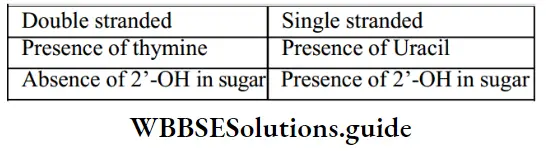
  2. Pyrimidines: It include Cytosine (C), Thymine (T), and Uracil (U). Thymine (5-methyl Uracil) is present only in DNA and Uracil only in RNA.
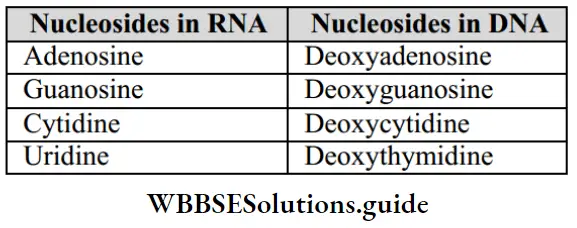
  • A nitrogenous base is linked to the pentose sugar through an N-glycosidic linkage to form nucleoside.
  • Nitrogen base + sugar + phosphate group = Nucleotide (deoxyribonucleotide).
  • In RNA, every nucleotide residue has an additional -OH group present at the 2′-position in the ribose (2’- OH). 2 nucleotides are linked through 3’-5’ phosphodiester bond to form a dinucleotide. When more nucleotides are linked, it forms polynucleotides.

“molecular basis of inheritance “

NEET Biology Class 12 Molecular Basis of Inheritance Strcuture Of Polynucleotide Chain

Molecular Basis Of Inheritance Class 12 Notes For Neet

Structure Of Thedna

  • Friedrich Meischer (1869): Identified DNA and named it as ‘Nuclein’.
  • James Watson and Francis Crick (1953) proposed a double helix model of DNA. It was based on X-ray diffraction data produced by Maurice Wilkins and Rosalind Franklin.
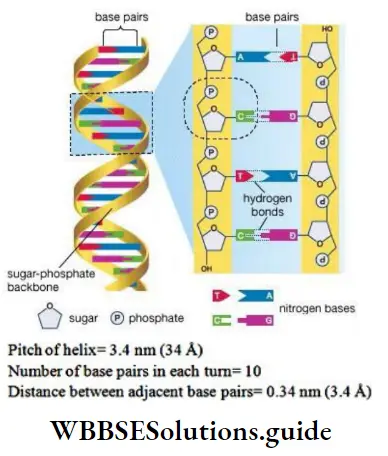
  • DNA is made of 2 polynucleotide chains coiled in a right-handed fashion. Its backbone is formed of sugar and phosphates. The bases project inside.
  • The 2 chains have anti-parallel polarity, i.e. one chain has the polarity 5’→3’ and the other has 3’→5’.
  • The bases in 2 strands are paired through H-bonds forming base pairs (bp).
  • A = T (2 hydrogen bonds) C≡G (3 hydrogen bonds)
  • Purine comes opposite to a pyrimidine. This generates uniform distance between the 2 strands.
  • Erwin Chargaff’s rule: In DNA, the proportion of A is equal to T and the proportion of G is equal to C.

NEET Biology Class 12 Molecular Basis of Inheritance Structure Of Thendna

“molecular basis of inheritance notes pdf download “

∴ A [A] + [G] = [T] + [C] or [A] + [G] / [T] + [C] =1

  • ∅ 174 (a bacteriophage) has 5386 nucleotides.
  • Bacteriophage lambda has 48502 base pairs (bp).
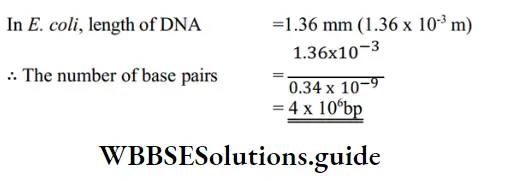
  • E. coli has 4.6×10⁶ bp.
  • Haploid content of human DNA is 3.3×10⁶ bp.

Length of DNA = number of base pairs X distance between two adjacent base pairs.

The number of base pairs in human = 6.6 x 10⁹

NEET Biology Class 12 Molecular Basis of Inheritance Notes

Molecular Basis Of Inheritance Class 12 Notes For Neet

Hence, the length of DNA = 6.6 x 109 x 0.34 x 10-9 = 2.2 m

NEET Biology Class 12 Molecular Basis of Inheritance Length Of DNA

Packaging Of DNA Helix: In prokaryotes (For example, E. coli), the DNA is not scattered throughout the cell. DNA, being negatively charged, is held with some positively charged proteins and forms a ‘nucleoid’. In eukaryotes, there is a set of positively charged, basic proteins called histones. DNA m home

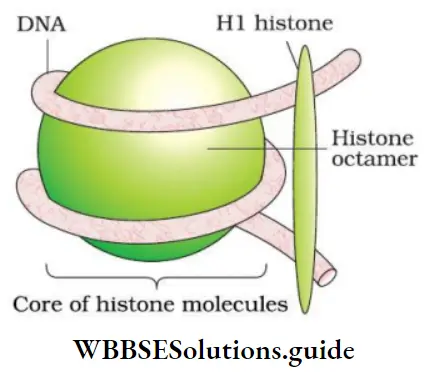
  • Histones are rich in positively charged basic amino acid residues lysines and arginines. 8 histones form histone octamer.
  • Negatively charged DNA is a Nucleosome wrapped around histone octamer to give nucleosome.
  • A typical nucleosome contains 200 bp. Therefore, the total number of nucleosomes in human = \(\frac{6.6 \times 10^9 \mathrm{bp}}{200}=3.3 \times 10^7\)
  • Nucleosomes constitute the repeating unit to form chromatin. Chromatin is a thread-like stained body.
  • Nucleosomes in chromatin = ‘beads-on-string’.
  • Chromatin is packaged → chromatin fibers → coiled and condensed at the metaphase stage → chromosomes.
  • Higher level packaging of chromatin requires non-histone chromosomal (NHC) proteins.

NEET Biology Class 12 Molecular Basis of Inheritance Notes

Molecular Basis Of Inheritance Class 12 Notes Neet

NEET Biology Class 12 Molecular Basis of Inheritance Pachaging Of DNA Helix

“molecular basis of inheritance class 12 pdf notes “

Chromatins include

  • Euchromatin: Loosely packed and transcriptionally active chromatin and stains light.
  • Heterochromatin: Densely packed and inactive region of chromatin and stains dark.

Search For Genetic Material

1. Griffith’s Transforming Principle experiment Griffith used mice and Streptococcus pneumoniae.

Streptococcus pneumoniae has 2 strains

  1. Smooth (S) strain (Virulent): Has polysaccharide mucus coat. Cause pneumonia.
  2. Rough (R) strain (Non-virulent): No mucus coat. Do not cause Pneumonia.

Molecular Basis Of Inheritance Class 12 Notes Neet

Experiment:

  • S-strain → Inject into mice → Mice die
  • R-strain → Inject into mice → Mice live
  • S-strain (Heat killed) → Inject into mice → Mice live
  • S-strain (Hk) + R-strain (live) → Inject into mice → Mice die

He concluded that some ‘transforming principle’, transferred the heat-killed S-strain to the R-strain. It enabled the R-strain to smooth the polysaccharide coat and become virulent. due to the transfer of genetic material.

Molecular Basis of Inheritance NEET Notes

2. Biochemical characterization of the transforming principle: Oswald Avery, Colin MacLeod, and Maclyn McCarty worked to determine the biochemical nature of the ‘transforming principle’ in Griffith’s experiment.

  • They purified biochemicals (proteins, DNA, RNA, etc.) from heat-killed S cells using suitable enzymes.
  • They discovered that
    • Digestion of protein and RNA (using Proteases and RNases) did not affect transformation. So, the transforming substance was not a protein or RNA.
    • Digestion of DNA with DNase inhibited transformation. It means that DNA caused the transformation of R cells to S cells, i.e. DNA was the transforming principle.

Molecular Basis Of Inheritance Class 12 Notes Neet

3. Hershey-Chase Experiment (Blender Experiment)

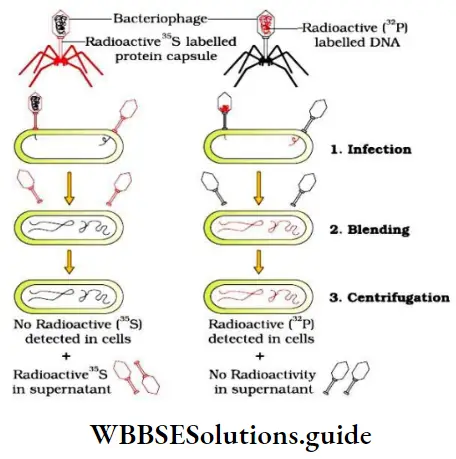
  • Hershey and Chase grew some bacteriophage viruses on a medium containing radioactive phosphorus (P32) and some others on medium containing radioactive sulphur (S35).
  • Viruses grown in P32 got radioactive DNA because only DNA contains phosphorus. Viruses grown in S35 got radioactive protein because protein contains sulfur.
  • These preparations were used separately to infect E. coli.
  • After infection, the E. coli cells were gently agitated in a blender to remove the virus particles from the bacteria.
  • Then the culture was centrifuged to separate lighter virus particles from heavier bacterial cells.

“chapter 6 class 12 biology notes “

NEET Biology Class 12 Molecular Basis of Inheritance The Search For Genetic Material

Bacteria infected with viruses have radioactive DNA from radioactive. i.e., DNA had passed from the virus to synthesize Bacteria infected with viruses having radioactive. These must-be proteins were not radioactive. i.e., proteins did not enter the bacteria from the viruses. This proves that DNA is the genetic material.

Dna And Rna Difference Class 12

Properties Of Genetic Material DNA Versus RNA

A genetic material may have the following properties:

  • Ability to generate its replica (Replication).
  • Chemical and structural stability.
  • Provide the mutations that are required for evolution.
  • Ability to express as ‘Mendelian Characters’.
  • RNA is unstable. So, RNA viruses (For example, Q.B bacteriophage, Tobacco Mosaic Virus, etc.) mutate and evolve faster.
  • DNA strands are complementary. On heating, they separate. etc) evolved around RNA. In appropriate conditions, they come together. In Griffith’s experiment, some properties of the DNA of the heat-killed bacteria did not destroyed. It indicates the stability of DNA. For the storage of genetic information, DNA is better due to its stability. But for the transmission of genetic information, RNA is better.
  • RNA can directly code for protein synthesis, and hence can easily express the characters. DNA is dependent on RNA for protein synthesis.

NEET Biology Class 12 Molecular Basis of Inheritance Properties Of Genetic Material

RNA World

  • RNA was the first genetic material.
  • It acts as genetic material and catalyst.
  • Essential life processes (metabolism, translation, splicing evolved from RNA for stability.

Central Dogma Of Molecular Biology

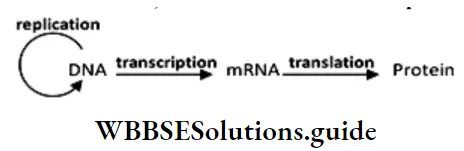
It is proposed by Francis Crick. It states that the genetic information flows from DNA → RNA → Protein. In some viruses, the flow of information is in the reverse direction (from RNA to DNA). It is called reverse transcription.

NEET Biology Class 12 Molecular Basis of Inheritance Central Dogma Of Molecular Biology

Dna And Rna Difference Class 12

DNA Replication

  • Replication is the copying of DNA from parental DNA.
  • Watson and Crick proposed a Semi-conservative model of replication. It suggests that the parental DNA strands act as templates for the synthesis of new complementary strands. After replication, each DNA molecule would have one parental and one new strand.
  • Matthew Messelson and Franklin Stahl (1958) experimentally proved the Semi-conservative model.

NEET Biology Molecular Basis of Inheritance Important Notes

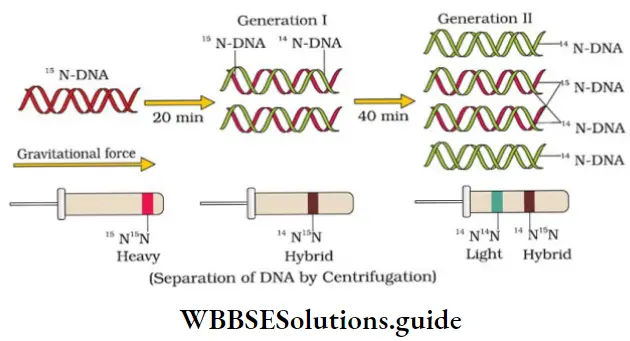
Messelson and Stahl’s Experiment: They cultured E. coli in a medium containing 15NH4Cl (15N: heavy isotope of N). 15N was incorporated into both strands of bacterial DNA and the DNA became heavier.

  • Another preparation containing N salts labeled with 14N is also made. 14N was incorporated in both strands of DNA and became lighter. These 2 types of DNA can be separated by centrifugation in a CsCl density gradient.
  • They took E. coli cells from 15N medium and transferred to 14N medium. After one generation (i.e. after 20 minutes), they isolated and centrifuged the DNA. Its density was intermediate (hybrid) between 15N DNA and 14N DNA. This shows that the newly formed DNA one strand is old (15N type) and one strand is new (14N type). This confirms semi-conservative replication.
  • After 2 generations (i.e. after 40 minutes), there was equal amounts of hybrid DNA and light DNA.
  • Taylor and colleagues (1958) performed similar experiments on Vicia faba (faba beans) using radioactive thymidine to detect distribution of newly synthesized DNA in the chromosomes. It proved that the DNA in chromosomes also replicate semi-conservatively.

“molecular basis of inheritance pyq neet “

NEET Biology Class 12 Molecular Basis of Inheritance DNA Replication


Dna And Rna Difference Class 12

The Machinery and Enzymes for Replication

  • DNA replication starts at a point called origin (ori). A unit of replication with one origin is called a replicon.
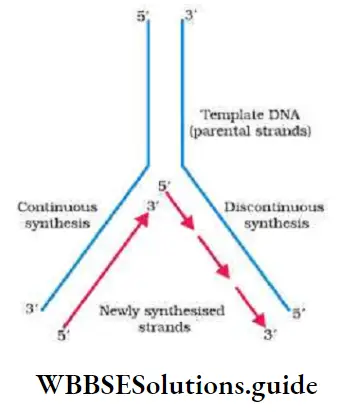
  • During replication, the 2 strands unwind and separate by breaking H-bonds in presence of an enzyme, Helicase. Unwinding of the DNA molecule at a point forms a ‘Y’-shaped
  • The separated strands act as templates for the synthesis of new strands. DNA replies in the 5’→3’ direction.
  • Deoxyribonucleoside triphosphates (dATP, dGTP, dCTP, and dTTP) act as substrate and provide energy for polymerization.
  • Firstly, a small RNA primer is synthesized in presence of an enzyme, primase.
  • In the presence of an enzyme, DNA-dependent DNA polymerase, many nucleotides join with one another to primer strand and form a polynucleotide chain (new strand).
  • The DNA polymerase forms one new strand (leading strand) in a continuous stretch in the 5’^3’ direction (Continuous synthesis).
  • The other new strand is formed in small stretches (Okazaki fragments) in 5’→3’ direction (Discontinuous synthesis).
  • The Okazaki fragments are then joined together to form a new strand by an enzyme, DNA ligase. This new strand is called lagging strand.
  • If a wrong base is introduced in the new strand, DNA polymerase can do proof reading. E. coli completes replication within 18 minutes. i.e. 2000 bp per second.
  • In eukaryotes, the replication of DNA takes place at the S- phase of the cell cycle. Failure in cell division after DNA replication results in polyploidy.

NEET Biology Class 12 Molecular Basis of Inheritance The Machinery And Enzymes For Replication

Molecular Basis of Inheritance Class 12 NEET Key Concepts and Summary

Transcription

It is the process of copying genetic information from one strand of the DNA into RNA. Here, adenine pairs with uracil instead of thymine. During transcription, both strands are not copied because The code for proteins is different in both strands. This complicates the translation.

If 2 RNA molecules are produced simultaneously, this would be complimentary to each other. It forms a double-stranded RNA and prevents translation.

Class 12 Biology Molecular Basis Of Inheritance Notes

Transcription Unit

  • It is the segment of DNA between the sites of initiation and termination of transcription. It consists of 3 regions:
    • A promoter (Transcription start site): Binding site for RNA polymerase.
    • Structural gene: The region between promoter and terminator where transcription takes place.
    • A terminator: The site where transcription stops.
  • The DNA-dependent RNA polymerase catalyzes the polymerization only in 5’ → 3’direction.
  • 3’→5’ acts as template strand. 5’→3’ acts as a coding strand. ATGCATGCATGCATGCATGCATGC-5’te mplate strand. TACGTACGTACGTACGTA CGTACG-3’ coding strand.

“bank of biology class 12 molecular basis of inheritance “

Transcription unit and gene: A gene is a functional unit of inheritance. It is the DNA sequence coding for an RNA (mRNA, rRNA, or tRNA). Cistron is a segment of DNA coding for a polypeptide during protein synthesis. It is the largest element of a gene. Structural gene in a transcription unit is 2 types:

  1. Monocistronic structural genes (split genes): It is seen in eukaryotes. Here, coding sequences (exons or expressed sequences) are interrupted by introns (intervening sequences). Exon sequences appear in processed mRNA. Intron sequences do not appear in processed mRNA.
  2. Polycistronic structural genes: It is seen in prokaryotes. Here, there are no split genes.

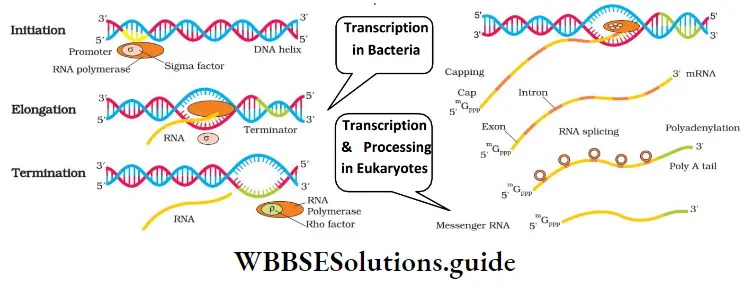
Steps of transcription in prokaryotes: In bacteria (Prokaryotes), synthesis of all types of RNA are catalysed by a single RNA polymerase. It has 3 steps:

  1. Prokaryotes Initiation: Here, the enzyme RNA polymerase binds at the promoter site of DNA. This causes the local unwinding of the DNA double helix. An initiation factor(factor) present in RNA polymerase initiates RNA synthesis.
  2. Prokaryotes Elongation: RNA chain is synthesized in 5’ → 3’ direction. In this process, activated ribonucleoside triphosphates (ATP, GTP, UTP, and CTP) are added. This is complementary to the base sequence in the DNA template.
  3. Prokaryotes Termination: A termination factor (p factor) binds to the RNA polymerase and terminates the transcription.
  • mRNA requires no processing to become active.
  • Transcription and translation take place in the same compartment (no separation of cytosol and nucleus).

Class 12 Biology Molecular Basis Of Inheritance Notes

NEET Biology Class 12 Molecular Basis of Inheritance Steps Of Transcription In Prakaryates

In eukaryotes, there are 2 additional complexities:

1. There are 3 RNA polymerases:

  1. RNA polymerase 1: Transcribes rRNAs (28S, 18S and 5.8S).
  2. RNA polymerase 2: Transcribes the heterogeneous nuclear RNA (hnRNA). It is the precursor of mRNA.
  3. RNA polymerase 3: ‘Transcribes tRNA, 5S rRNA, and snRNAs (small nuclear RNAs).

2. The primary transcripts (hnRNA) contain exons and introns and are non-functional. Hence introns must be removed. For this, it undergoes the following processes:

Class 12 Biology Molecular Basis Of Inheritance Notes

  • Splicing: From hnRNA introns are removed (by the spliceosome) and exons are spliced (joined) together.
  • Capping: Here, a nucleotide methyl guanosine triphosphate (cap) is added to the 5’ end of hnRNA.
  • Tailing (Polyadenylation): Here, adenylate residues (200-300) are added at 3’-end. It is the fully processed hnRNA, now called mRNA.

Genetic Code

It is the sequence of nucleotides (nitrogen bases) in mRNA that contains information for protein synthesis (translation). The sequence of 3 bases determining a single amino acid is called codon.

George Gamow suggested that for coding 20 amino acids, the code should be made up of 3 nucleotides. Thus, there are 64 codons (43= 4 x 4 x 4).

  • Har Gobind Khorana developed the chemical method in synthesizing RNA molecules with defined combinations of bases (homopolymers and copolymers).
  • Marshall Nirenberg developed a cell-free system for protein synthesis.
  • Severo Ochoa (polynucleotide phosphorylase) enzyme is used to polymerize RNA with defined sequences in a template-independent manner.

NEET Biology Class 12 Chapter Molecular Basis of Inheritance Detailed Notes

20 types of amino acids involved in translation

  1. Alanine (Ala)
  2. Arginine (Arg)
  3. Asparagine (Asn)
  4. Aspartic acid (Asp)
  5. Cystein (Cys)
  6. Glutamine (Gln)
  7. Glutamic acid (Glu)
  8. Glycine (Gly)
  9. Histidine (His)
  10. Isoleucine (Ile)
  11. Leucine(Leu)
  12. Lysine (Lys)
  13. Methionine(Met)
  14. Phenylalanine(Phe)
  15. Proline (Pro)
  16. Serine (Ser)
  17. Threonine (Thr)
  18. Tryptophan (Trp)
  19. Tyrosine (Tyr)
  20. Valine (Val)

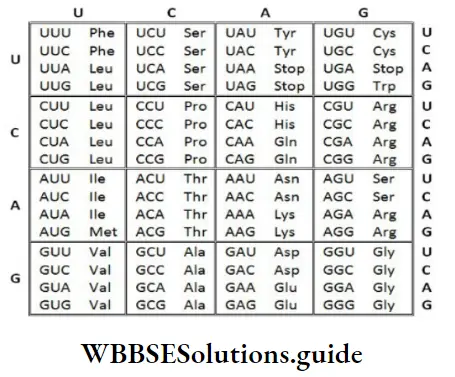
The codons for the various amino acids

NEET Biology Class 12 Molecular Basis of Inheritance The Codons for the Various Amino Acids

Salient features of genetic code

Class 12 Biology Molecular Basis Of Inheritance Notes

  • Triplet code (three-letter code).
  • 61 codons code for amino acids. 3 codons (UAA, UAG, and UGA) do not code for any amino acids. They act as stop codons (Termination codons or non-sense codons). Genetic code is universal. Example, From bacteria to human UUU codes for Phenylalanine. Some exceptions are found in mitochondrial codons, and in some protozoans.
  • No punctuations b/w adjacent codons (comma less code). The codon is read in mRNA in a contiguous fashion.
  • Genetic code is non-overlapping.
  • A single amino acid is represented by many codons (except AUG for methionine and UGG for tryptophan). Such codons are called degenerate codons.
  • Genetic code is unambiguous and specific. i.e. one codon specifies only one amino acid.
  • AUG has dual functions. It codes for Methionine and acts as an initiator codon. In eukaryotes, methionine is the first amino acid, and formyl methionine in prokaryotes.

Biology Class 12 Notes For Neet

Mutations and Genetic Code: The relationship between genes and DNA are best understood by mutation studies. Deletions and rearrangements in DNA may cause the loss or gain of a gene and so a function.

  • Insertion or deletion of one or two bases changes the reading frame from the point of insertion or deletion. Insertion/ deletion of three or its multiple bases insert or delete one or multiple codons.
  • Hence one or multiple amino acids are inserted /deleted. The reading frame remains unaltered from that point onwards. Such mutations are known as frame-shift insertion or deletion mutations. It proves that codon is a triplet and is read contiguously.

Types Of RNA

  • mRNA (messenger RNA): Provide template for translation (protein synthesis).
  • rRNA (ribosomal RNA): Structural and catalytic role during translation. For example, 23S rRNA in bacteria acts as ribozyme.
  • tRNA (transfer RNA or sRNA or soluble RNA): Brings amino acids for protein synthesis and reads the genetic code.

NEET Biology Class 12 Molecular Basis of Inheritance Types Of RNA

NEET Study Material for Molecular Basis of Inheritance Chapter

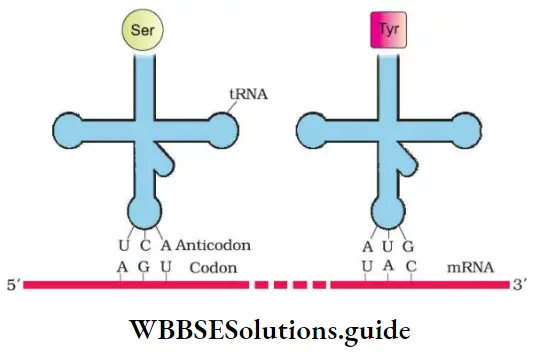
Francis Crick postulated presence of an adapter molecule that can read the code and to link with amino acids. tRNA is called adaptor molecule because it has

Biology Class 12 Notes For Neet

  • An Anticodon (NODOC) loop that has bases complementary to the codon.
  • An amino acid acceptor end to which amino acid binds.
  • Ribosome binding loop.
  • Enzyme binding loop.
  • For initiation, there is another tRNA called initiator tRNA. There are no tRNAs for stop codons.
  • The secondary (2-D) structure of tRNA looks like a cloverleaf. The 3-D structure looks like an inverted ‘L’.

Translation (Protein Synthesis)

It is the process of polymerization of amino acids to form a polypeptide based on the sequence of codons in mRNA.

“molecular basis of inheritance class 12 notes bank of biology “

It takes place in ribosomes. It includes 4 steps:

  1. Charging of tRNA
  2. Initiation
  3. Elongation
  4. Termination

1. Charging (aminoacylation) of tRNA: Formation of peptide bond needs energy obtained from ATP. For this, amino acids are activated (amino acid + ATP) and linked to their cognate tRNA in the presence of aminoacyl tRNA synthetase. Thus, the tRNAbecomes charged.

Biology Class 12 Notes For Neet

2. Initiation

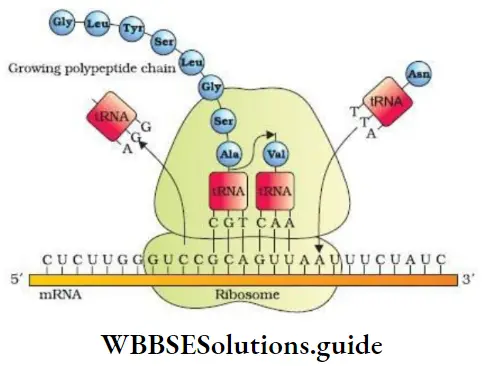
  • It begins at the 5 ’-end of mRNA in the presence of an initiation factor. The mRNA binds to the small subunit of ribosome. Now the large subunit binds to the small subunit to complete the initiation complex.
  • Large subunit has 2 binding sites for tRNA- aminoacyl tRNA binding site (A site) and peptidyl site (P site). The initiation codon for methionine is AUG. So methionyl tRNA complex would have UAC at the Anticodon site.

NEET Biology Class 12 Molecular Basis of Inheritance Translation Initiation

Molecular Basis of Inheritance Class 12 NCERT Notes for NEET

3. Elongation

  • At the P site, the first codon of mRNA binds with anticodon of methionyl tRNA complex.
  • Another aminoacyl tRNA complex with an appropriate amino acid enters the ribosome and attaches to A site. Its anticodon binds to the second codon on the mRNA and a peptide bond is formed between the first and second amino acids in the presence of an enzyme, peptidyltransferase.
  • First amino acid and its tRNA are broken. This tRNA is removed from P site and the second tRNA at the A site is pulled to P site along with mRNA. This is called translocation.
  • Then 3rd codon comes into A site and a suitable tRNA with 3rd amino acid binds at the A site. This process is repeated. During translation, ribosome moves from codon to codon.

Biology Class 12 Notes For Neet

4. Termination

  • When a release factor binds to the stop codon, the translation terminates. The polypeptide and tRNA are released from the ribosomes.
  • The ribosome dissociates into large and small suClass 12 Biology Notes For Neetbunits at the end of protein synthesis. A group of ribosomes associated with a single mRNA for translation is called a polyribosome (polysomes).
  • An mRNA has additional sequences that are not translated (untranslated regions or UTR). UTRs are present at both 5’-end (before the start codon) and 3’-end (after the stop codon). They are required for efficient translation process.

Regulation Of Gene Expression

In eukaryotes gene expression occurs by following levels.

  1. Transcriptional level (formation of primary transcript).
  2. Processing level (splicing etc.).
  3. Transport of mRNA from nucleus to the cytoplasm.
  4. Translational level (formation of apolypeptide).

Class 12 Biology Notes For Neet

The metabolic, physiological, and environmental conditions regulate the expression of genes. Example,

  • In E. coli, the beta-galactosidase enzyme hydrolyses lactose into galactose and glucose. In the absence of lactose, the synthesis of beta-galactosidase stops.
  • The development and differentiation of embryos into adult are a result of the expression of several set of genes. a substrate is added to the growth medium of bacteria, a set of switched off on metabolize it is called induction.
  • When a metabolite (product) is added, the genes to produce it are turned off. This is called repression.

Operon Concept

  • “Each metabolic reaction is controlled by a set of genes”
  • All the genes regulating a metabolic reaction constitute an protein. For example, lac operon, trp operon, ara operon, his becomes free operon, etc.

Class 12 Biology Notes For Neet

Lac Operon in E. coli

  • The operon controlling lactose metabolism
  • It is proposed by Francois Jacob and Jacque Monod. It consists of
  1. A regulatory or inhibitor
    1. gene: Codes for the repressor.
  2. 3 structural genes:
    1. z gene: Codes for β galactosidase (hydrolyze lactose to galactose and glusoce.
    2. y gene: Codes for permease (increase the permeability of the cell to lactose).
    3. a gene: Codes for a transacetylase.

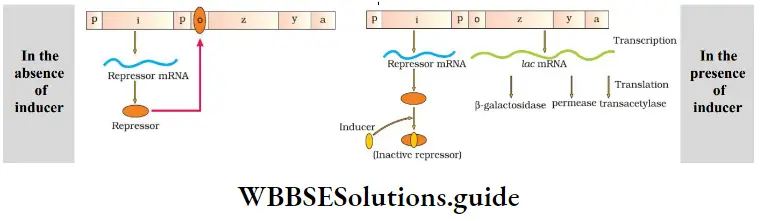
The genes present in the operon function together in the same or related metabolic pathway. There is an operator region for each operon. If there is no lactose (inducer), lac operon remains If it is switched off. The regulator gene synthesizes mRNA to news is produce the repressor protein. This protein binds to the operator genes and blocks RNA polymerase movement. So the structural genes are not expressed.

NEET Biology Class 12 Molecular Basis of Inheritance Regulation Of Gene Expression

DNA Replication, Transcription, and Translation NEET Notes

If lactose is provided in the growth medium, the lactose is transported into the E. coli cells by the action of permease Lactose (inducer) binds with repressor protein. So repressor protein cannot bind to the operator gene. The operator gene is free and induces the RNA polymerase to bind with the operon, val promoter gene. Then transcription starts. Regulation of lac operon by repressor is called negative regulation.

Human Genome Project

The entire DNA in the haploid set of chromosomes of an organism is called a Genome. In Human genome, DNA is packed in 23chromosomes

  • Human genome contains about 3x10⁹bp.
  • Human Genome Project (1990-2003) was the first mega project in identifying the sequence of nucleotides and mapping of all the genes in human genome.
  • HGP was coordinated by U.S. Department of Energy and the National Institute of Health.

Class 12 Biology Notes For Neet

Goals of HGP

  • Identify all the estimated genes in human DNA.
  • Determine the sequences of the 3 billion chemical base pairs that make up humanDNA.
  • Store this information in databases.
  • Improve tools for data analysis.
  • Transfer related technologies to other sectors. Address the ethical, legal, and social issues (ELSI) that may arise from the project.

Methodologies of HGP: 2 major approaches.

  1. Expressed Sequence Tags (ESTs): Focused on identifying all the genes that are expressed as RNA.
  2. Sequence annotation: Sequencing whole set of genome containing all the coding and non-coding sequence and later assigning different regions in the sequence with functions.

HGP Procedure of sequencing: Isolate total DNA from a cell → Convert into random fragments → Clone in suitable host (bacteria and yeast) using vectors (for example, BAC and YAC) for amplification → Fragments are sequenced using Automated DNA sequencers (using Frederick Sanger method) → Sequences are arranged based on overlapping regions → Alignment of sequences using computer programs.

  • BAC= Bacterial Artificial Chromosomes
  • YAC= Yeast Artificial Chromosomes

“molecular basis of inheritance class 12 notes bank of biology “

DNA is converted to random fragments as there are technical limitations in sequencing very long pieces of DNA. HGP was closely associated with Bioinformatics. Bioinformatics: Application of computer science and information technology to the field of biology and medicine.

DNA sequencing also have been done in bacteria, yeast, Caenorhabditis elegans (a free living non-pathogenic nematode), Drosophila, plants (rice and Arabidopsis), etc.

Class 12 Biology Notes For Neet

Salient Features of the Human Genome

  1. The human genome contains 3164.7 million nucleotide bases.
  2. Total number of genes= about 30,000.
  3. Average gene consists of 3000 bases, but sizes vary. Largest known human gene (dystrophin on X- X-chromosome) contains 2.4 million bases.
  4. 99.9% nucleotide bases are same in all people. Only a 0.1% (3×10⁶ bp) difference makes every individual unique.
  5. Functions of over 50% of discovered genes are unknown.
  6. Chromosome I has most genes (2968) and Y has the fewest (231).
  7. Less than 2% of the genome codes for proteins.
  8. A very large portion of the human genome is made of Repeated (repetitive) sequences. These are stretches of DNA sequences that are repeated many times. They have no direct coding functions. They shed light on chromosome structure, dynamics and evolution.
  9. About 1.4 million locations have single-base DNA differences. They are called SNPs (Single nucleotide polymorphism or ‘snips’). This helps to find chromosomal locations for disease-associated sequences and tracing human history.

DNA Fingerprinting (DNA Profiling)

It is the technique to identify the similarities and differences of the DNA fragements of 2 individulas. Developed by Alec Jeffreys (1985).

Basis of DNA fingerprinting

Class 12 Biology Notes For Neet

  • DNA carries some non-coding repetitive sequences called variable number tandem repeats (VNTR).
  • Number of repeats is specific from person to person.
  • The size of VNTR varies from 0.1 to 20 kb.
  • Repetitive DNA are separated from bulk genomic DNA as different peaks during density gradient centrifugation.
  • The bulk DNA forms a major peak and the small peaks
    called satellite DNA.
  • Satellite DNA is classified as micro-satellites, mini¬satellites, etc. based on base composition (A: T rich or G: C rich), length of the segment, and number of repetitive units.
  • VNTR belongs to mini-satellite DNA.
  • Any difference in the nucleotide sequence (inheritable mutation) observed in a population is called DNA polymorphism (variation at genetic level).
  • Polymorphism is higher in non-coding DNA sequence because mutations in these sequences may not have any immediate effect in an individual’s reproductive ability. These mutations accumulate generation after generation and cause polymorphism.
  • Polymorphisms have great role in evolution and speciation differences of the

Steps of DNA fingerprinting (Southern Blotting Technique)

  1. Isolation of DNA.
  2. Digestion of DNA by restriction endonucleases.
  3. Separation of DNA fragments by gel electrophoresis.
  4. Transferring (blotting) DNA fragments to synthetic membranes such as nitrocellulose or nylon.
  5. Hybridization using radioactively labeled VNTR probe.
  6. Detection of hybridized DNA by autoradiography.

“molecular basis of inheritance class 12 notes bank of biology “

The image (in the form of dark and light bands) obtained is are called DNA fingerprint. It differs in everyone except in monozygotic (identical) twins.

The sensitivity of the technique can be increased by use of polymerase chain reaction (PCR). Therefore, DNA from a single cell is enough for DNA fingerprinting.

Application of DNA fingerprinting

  • Forensic tool to solve paternity, rape, murder etc.
  • For the diagnosis of genetic diseases.
  • To determine phylogenetic status of animals.
  • To determine population and genetic diversities.


NEET Biology Class 12 Reproductive Health Notes

Reproductive Health

According to World Health Organisation (WHO), Reproductive health is total well-being in all aspects of reproduction i.e., physical, emotional, behavioural and social.

Reproductive Health Problems And Strategies: India initiated reproductive health programmes (family planning) in 1951. Wider reproduction-related areas are in operation under the Reproductive and Child Health Care (RCH) programmes. Such programmes deal the following:

Read And Learn More: NEET Biology Class 12 Notes

Class 12 Reproductive Health Notes

  • Give awareness about reproduction-related aspects for creating a reproductively healthy society.
  • Educate people about birth control, care of pregnant mothers, post-natal care of mother and child, the importance of breastfeeding, equal opportunities for male and female children etc.
  • Awareness of problems due to population explosion, social evils like sex abuse and sex-related crimes, etc.

Reproductive Health Class 12 Notes For Neet

Aims and needs of sex education in schools

  • To provide right information about sex-related aspects. It helps to avoid sex-related myths and misconceptions.
  • To give proper information about reproductive organs, adolescence and related changes, safe and hygienic sexual practices, sexually transmitted diseases (STD), AIDS etc.

“what is reproductive health class 12 “

Population Explosion And Birth Control

In 1900, the world population was around 2 billion (2000 million). By 2000, it rocketed to about 6 billion. In India, population was nearly 350 million at the time of independence. It crossed 1 billion in May 2000. It means every sixth person in the world is an Indian. According to the 2001 census report, our population growth rate was still around 1.7% (i.e. 17/1000/year), a rate at which our population could double in 33 years.

Class 12 Biology Notes For Neet

  • Reasons for population explosion
    • Increased health facilities and better living conditions.
    • Rapid decline in death rate, maternal mortality rate (MMR) and infant mortality rate (IMR).
    • Increase in number of people in reproducible age.
  • Impacts of population explosion Scarcity of basic requirements (for example, food, shelter and clothing).
  • Population explosion Control measures
    • Motivate smaller families by using contraceptive methods.
    • Aware peoples of the slogan Hum Do HamareDo (we two, our two). Many couples have adopted a ‘one child norm’.
    • Statutory rising of marriageable age of females (18 years) and males (21 years).
  • Properties of an ideal contraceptive
    • User-friendly, easily available, effective and reversible.
    • No or least side-effects.
    • It should not interfere with sexual drive, desire and sexual act.

NEET Biology Class 12 Reproductive Health Notes

Reproductive Health Class 12 Notes For Neet

1. Natural/Traditional methods: Avoid chances of ovum and sperms meeting. It includes

    • Periodic abstinence: Avoid coitus from days 10 to 17 of the menstrual cycle (fertile period) to prevent conception.
    • Coitus interruptus (withdrawal): Withdraw penis from the vagina just before ejaculation to avoid insemination.
    • Lactational amenorrhea: It is the prevention of conception by breastfeeding the child because ovulation and the cycle do not occur during the period of lactation. This is effective up to 6 months following parturition. It has no side effects. But chances of failure are high.

NEET Biology Reproductive Health Important Notes

2. Barriers: They prevent physical meeting of sperm and ovum. Example,

    • Condoms (Example, Nirodh): Made of rubber/latex sheath.
    • Condoms for male: Cover the penis.
    • Condoms for female: Cover the vagina and cervix. Condoms are used just before coitus. They prevent the entry of semen into female reproductive tract.

Class 12 Biology Notes For Neet

Condoms are very popular because: It protects the user from STDs and AIDS.

  • Easily available.
  • It is disposable.
  • It can be self-inserted and thereby give privacy to user.

Diaphragms, cervical caps and vaults:

  • Made of rubber and are inserted into the female reproductive tract to cover the cervix during coitus.
  • They block the entry of sperm through the cervix.
  • They are reusable.
  • Spermicidal creams, jellies and foams are used along with these barriers to increase contraceptive efficiency.

Reproductive Health Class 12 NEET Key Concepts and Summary

3. Intra Uterine Devices (IUDs): These are inserted by doctors or nurses in the uterus through vagina. They increase the phagocytosis of sperms.

Reproductive Health Class 12 Notes For Neet

Types of IUDs:

  1. Non-medicated IUDs: They retard sperm motility. Also, it has a spermicidal effect. Example, Lippes loop.
  2. Copper-releasing IUDs: Cu ions suppress the motility and fertilising capacity of sperms. Example, CuT, Cu7, Multiload375.
  3. Hormone-releasing IUDs: They make the uterus unsuitable for implantation and the cervix hostile to the sperm. Example, Progestasert, LNG-20. IUDs are ideal contraceptives for females who want to delay pregnancy or space children.

Class 12 Biology Notes For Neet

4. Oral contraceptives: Oral administration of progestogens or progestogen-estrogen combinations in the form of tablets (pills).

  • Pills are taken daily for 21 days starting within the first five days of menstrual cycle. After a gap of 7 days (menstruation period), it should be repeated in the same pattern till the female desires to prevent conception.
  • They inhibit ovulation and implantation and thicken cervical mucus to prevent entry of sperm. Pills are very effective with lesser side effects.
  • Saheli: New oral contraceptive for females. It is developed by the Central Drug Research Institute (CDRI) in Lucknow. It contains a non-steroidal preparation. It is a ‘once a week’ pill with very few side effects and high contraceptive value.

NEET Biology Class 12 Chapter Reproductive Health Detailed Notes

5. Injectables Progestogens or Progestogens-oestrogen combination are used by females as injections or implants under the skin.

Their mode of action is like that of pills and their effective periods are much longer. Progestogens or progestogen-oestrogen combinations and IUDs are used as emergency contraceptives within 72 hours of coitus. It avoids pregnancy due to rapeor casual intercourse.

Reproductive Health Class 12 Notes For Neet

6. Surgical methods (sterilization) It helps to block gamete transport and thereby prevents conception. It is very effective but reversibility is poor.

  • Vasectomy: Sterilization procedure in males. In this, a small part of the vas deferens is removed or tied up through a small incision on the scrotum.
  • Tubectomy: Sterilization procedure in females. In this, a small part of the fallopian tube is removed or tied up through a small incision in the abdomen or through vagina.

Side effects of anti-natural contraceptives: Nausea, abdominal pain, breakthrough bleeding, irregula menstrual bleeding, breast cancer etc.

Medical Termination Of Pregnancy

Intentional or voluntary termination of pregnancy before full term is called MTP or induced abortion. 45 to 50 million MTPs are performed in a year all over the world (i.e. 175th of total number of conceived pregnancies).

MTP helps to decrease the population. Many countries have not legalised MTP due to emotional, ethical, religious and social issues. Government of India legalised MTP in 1971 with some strict conditions to check illegal female foeticides.

“reproductive health pdf “

Importance of MTP: To avoid unwanted pregnancies due to casual intercourse or failure of the contraceptive used during coitus or rapes.

It is essential in cases where the continuation of pregnancy could be harmful to the mother to the foetus or both. MTPs are safe during the first trimester, (up to 12 weeks of pregnancy). 2nd-trimester abortions are very risky.

Problems related with MTPs: Majority of the MTPs are performed illegally. Misuse of amniocentesis (a foetal sex determination test based on the chromosomal pattern of foetal cells in the amniotic fluid). If the foetus is female, it is followed by MTP. Such practices are dangerous for the young mother and foetus.

Class 12 Biology Notes For Neet

Sexually Transmitted Diseases

Diseases transmitted through sexual intercourse are called Sexually transmitted diseases (STDs)/Venereal diseases (VD) or Reproductive tract infections (RTI). Example,  Gonorrhoea, syphilis, genital herpes, chlamydiasis, genital warts, trichomoniasis, hepatitis-B and HIV leading to AIDS.

  • Hepatitis B and HIV are also transmitted
  • By sharing of injection needles, surgical instruments etc.
  • By transfusion ofblood.
  • From infected mother to foetus.
  • Except hepatitis-B, genital herpes & HIV, other diseases are completely curable ifdetected early and treated properly.
  • Early symptoms: Itching, fluid discharge, slight pain, swellings, etc. in the genital region.
  • Absence or less significant early symptoms and the social stigma deter the infected persons from consulting a doctor. This leads to pelvic inflammatory diseases (PID), infertility, ectopic pregnancies, abortions, stillbirths, cancer of the reproductive tract etc.
  • All persons are vulnerable to STDs. These are very high among persons in the age group of 15-24 years.
  • Prevention: Avoid sex with unknown partners/multiple partners.

Always use condoms during coitus. In case of doubt, go to a qualified doctor for early detection and get complete treatment.

Biology Reproduction In Organisms Class 12

Infertility

It is the inability to conceive or produce children even after 2 years of unprotected sexual cohabitation. The reasons for this may be physical, congenital, diseases, drugs, immunological or even psychological.

Assisted Reproductive Technologies (Art): These are the technologies used to correct infertility problems. Some of them are given below:

1. In vitro fertilisation (IVF) or Test tube baby programme: In this method, ova from the wife/donor and sperms from the husband/donor are collected and are induced to form zygote under simulated conditions in the laboratory. This is followed by Embryo transfer (ET). ET is 2 types:

  1. Zygote Intra Fallopian Transfer (ZIFT): Transfer of zygote or early embryo (with up to 8 blastomeres) into fallopian tube.
  2. Intra Uterine Transfer (IUT): Transfer of embryo with more than 8 blastomeres into the uterus. The embryo formed by in vivo fertilisation (fertilisation within the female) is also used for such transfer to assist those females who cannot conceive.

“reproductive health pdf “

2. Gamete Intra Fallopian Transfer (GIFT): Transfer of an ovum from a donor into the fallopian tube of another female who cannot produce an ovum, but can provide suitable environment for fertilization and development.

Biology Reproduction In Organisms Class 12

3. Intra cytoplasmic sperm injection (ICSI): It is a laboratory procedure in which a single sperm (from male partner) is injected directly into an egg (from a female partner). After fertilization, the embryo is implanted into the woman’s uterus.

4. Artificial insemination (AI) technique: The semen collected from husband or a donor is artificially introduced into the vagina or the uterus of the female. Artificial insemination into the uterus is known as intra¬uterine insemination (IUI). This technique is useful for the male partner having an inability to inseminate female or low sperm counts etc.

NEET Biology Class 12 Reproductive Health Notes

5. Surrogacy: Here, a woman (surrogate mother) bears a child for a couple unable to produce children, because the wife is infertile or unable to carry. The surrogate is impregnated through artificial insemination or implantation of an embryo produced by IVF.

Problems of ART It requires specialized professionals and expensive instrumentation. Therefore, these facilities are available only in very few centres. o Emotional, religious and social problems. legal adoption is a good method for couples looking for parenthood.


NEET Biology Class 12 Principles Of Inheritance And Variation Notes

Principles Of Inheritance And Variation

Principles Of Inheritance And Variation Important Terms

Genetics: Study of inheritance, heredity and variation of characters or Study of genes and chromosomes.

Inheritance/ Heredity: Transmission of characters from parents to offspring. It results in a resemblance between offspring and their parents.

Variation: Difference between parents and offspring.

Character: A heritable feature among the parents and offspring. For example, Eye colour.

Biology Class 12 Notes For Neet

Trait: Variants of a character. Examples are brown eyes and blue eyes.

Allele: Alternative forms of a gene. For example, T (tall) and t (dwarf) are two alleles of a gene for the character height.

Class 12 Biology Notes For Neet

Read And Learn More: NEET Biology Class 12 Notes

Homozygous: The condition in which a chromosome pair carries similar alleles of a gene. Also known as pure line  (True breeding). Example, TT, tt, YY, yy etc.

Heterozygous: The condition in which a chromosome pair carries dissimilar alleles of a gene. Example, Tt, Yy etc.

Dominant character: The character which is expressed in heterozygous condition. It indicates with capital letters.

Recessive character: The character which is suppressed in heterozygous condition. It indicates with a small letter.

“principles of inheritance and variation “

Phenotype: Physical expression of a character.

Genotype: Genetic constitution of a character.

Biology Class 12 Notes For Neet

Hybrid: An individual produced by the mating of genetically unlike parents.

Punnett square: A graphical representation to calculate the probability of all genotypes of offspring in a genetic cross.
NEET Biology Class 12 Principles Of Inheritance And Variation Notes

Class 12 Biology Notes For Neet

Mendel’s Laws Of Inheritance

Gregor Mendel is the Father of genetics. He conducted some hybridization experiments on garden peas (Pisum sativum) for 7 years (1856-1863).

Steps in making a cross (Deliberate mating) in pea:

  • Selection of 2 pea plants with contrasting characters.
  • Emasculation: Removal of anthers of one plant to avoid self-pollination. This is female parent.
  • Pollination: Collection of pollen grains from the male parent and transferring to female parent.
  • Collection and germination of seeds to produce offspring.

“principles of inheritance and variation class 12 “

Mendel selected 7 pairs of true breeding pea varieties.
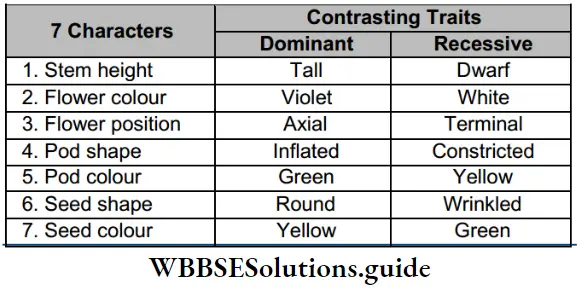
NEET Biology Class 12 Principles Of Inheritance And Variation Mendel's Laws Of Inheritance

Inheritance Of One Gene

Class 12 Biology Notes For Neet

Inheritance Of One Gene Monohybrid cross: A cross involving 2 plants differing in one character pair. For example, Mendel crossed tall and dwarf pea plants to study the inheritance of one gene.

Inheritance Of One Gene Monohybrid phenotypic ratio: 3 Tall: 1 Dwarf = 3:1

Inheritance Of One Gene Monohybrid genotypic ratio: 1 Homozygous tall (TT): 2 Heterozygous tall (Tt): 1 Homozygous dwarf (tt): = 1:2:1. Mendel made similar observations for other pairs of traits. He proposed that some factors were inherited from parent to offspring. Now it is called as genes.
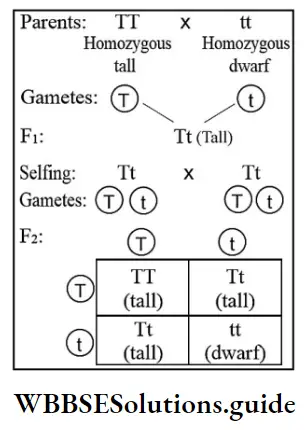
NEET Biology Class 12 Principles Of Inheritance And Variation Otjher Pattern Of Inheritance

“class 12 biology chapter principles of inheritance and variation notes “

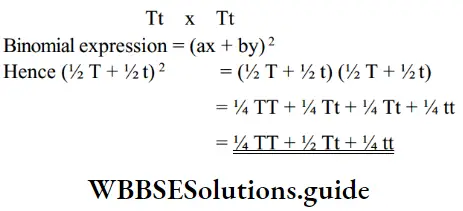
  • The F1(Tt) when self-pollinated, produces gametes T and t in equal proportion. During fertilization, pollen grains of T have 50% chance to pollinate eggs of T and t. Also, pollen grains of t have 50% chance to pollinate eggs of T and t.
  • 1/4th of the random fertilization leads to TT (1/4 TT).
  • 1/2 (2/4) of the random fertilization leads to Tt (1/2 Tt).
  • 1/4th of the random fertilization leads to tt (1/2 tt).

Biology Class 12 Notes For Neet
NEET Biology Class 12 Principles Of Inheritance And Variation Inheritance Of One Gene Bionomial expression

Mendel self-pollinated the F2 plants. He found that dwarf F2 plants continued to generate dwarf plants in F3 and F4. He concluded that genotype of the dwarfs was homozygous- tt.

Class 12 Biology Notes For Neet

Inheritance Of One Gene Backcross And Testcross

  • Inheritance Of One Gene Backcross: Crossing of hybrid with its any parent.
  • Inheritance Of One Gene Testcross: Crossing of hybrid with recessive parent. For example, monohybrid test cross ratio 1:1. Test cross is used to find out the unknown genotype of a character. For example,

“principles of inheritance and variation notes class 12 “
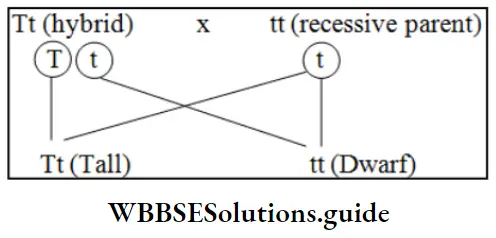
NEET Biology Class 12 Principles Of Inheritance And Variation Inheritance Of One Gene Vackcross And Testcross

NEET Biology Class 12 Principles of Inheritance and Variation Notes

Mendel conducted test cross to determine the F2 genotype.
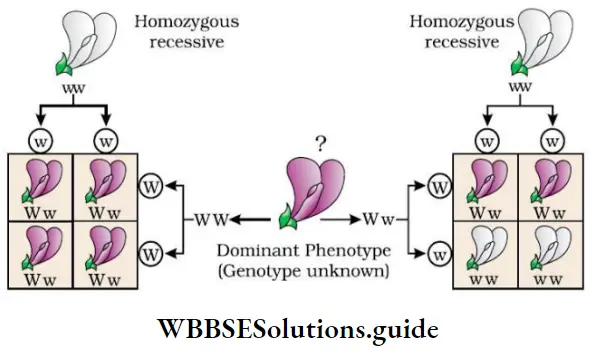
NEET Biology Class 12 Principles Of Inheritance And Variation Genotype

Mendel’s Principles or Laws of Inheritance

Biology Class 12 Notes For Neet

  1. Mendel’s Principles First Law (Law of Dominance)
    • Characters are controlled by discrete units called factors.
    • Factors occur in pairs.
    • In a dissimilar pair of factors one member of the pair dominates (dominant) the other (recessive).
  2. Mendel’s Principles Second Law (Law of Segregation): “During gamete formation, the factors (alleles) of a character pair present in parents segregate from each other such that a gamete receives only one of the 2 factors ”. The homozygous parent produces similar gametes. The heterozygous parent produces two kinds of gametes.

principle inheritance and variation notes

Inheritance Of Two Genes

Inheritance Of Two Genes Dihybrid cross: It is a cross between two parents differing in 2 pairs of contrasting characters. For example, Cross b/w pea plant with round shaped and yellow coloured seeds (RRYY) and wrinkled shaped and green coloured seeds (rryy).
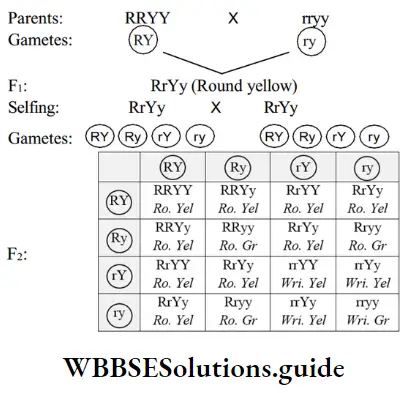
NEET Biology Class 12 Principles Of Inheritance And Variation Inheritance Ofc Two Genes

Principles of Inheritance and Variation NEET Notes

On observing the F2, Mendel found that yellow and green colour segregated in a 3:1 ratio. Round and wrinkled seed shape are also segregated in a 3:1 ratio. Round And Wrinkled Seed Shape also segregated in a 3: 1 ratio.

“heredity notes “

Inheritance Of Two Genes Dihybrid Phenotypic ratio= 9 Round yellow: 3 Round green: 3 Wrinkled yellow: 1 Wrinkled green = 9:3:3:1

The ratio of 9:3:3:1 can be derived as a combination series of 3 yellow: 1 green, with 3 round: 1 wrinkled. i. e. (3: 1) (3: 1) = 9: 3: 3: 1

Biology Class 12 Notes For Neet

Inheritance Of Two Genes Dihybrid genotypic ratio: 1:2:1:2:4:2:1:2:1

RRYY = 1

RrYy = 4

rrYY = 1

RRYy = 2

RRyy = 1

rrYy = 2

RrYY = 2

Rryy = 2

rryy = 1

Mendel’s 3rd Law: Law of Independent Assortment

  • It is based on the results of dihybrid crosses.
  • It states that ‘when more than one pair of characters are involved in a cross, factor pairs independently segregate from the other pair of characters ’.

The concept of dominance: Every gene contains information to express a particular trait. In heterozygotes, there are 2 types of alleles:

  1. Unmodified (normal or functioning) allele: It is generally dominant and represents original phenotype.
  2. Modified allele: It is generally recessive.

For example, Consider a gene that contains information for producing an enzyme. A normal allele of that gene produces a normal enzyme. Modified allele is responsible for the production of

“genetics handwritten notes “

  1. Normal/less efficient enzyme or
  2. A non-functional enzyme or
  3. No enzyme at all

The concept of dominance In the first case: The modified allele will produce the same phenotype like the unmodified allele. Thus, the modified allele is equivalent to an unmodified allele.

The concept of dominance In the 2nd and 3rd cases: The phenotype will be dependent only on the functioning of the unmodified allele. Here, the modified allele becomes recessive.

Other Patterns Of Inheritance (Non-Mendelian Inheritance)

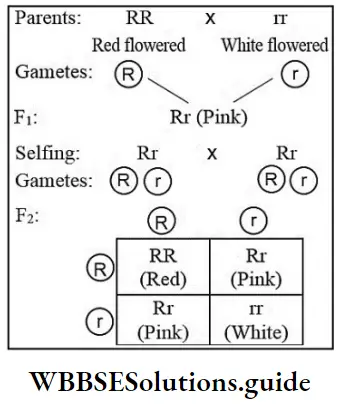
1. Incomplete Dominance: It is an inheritance in which heterozygous offspring shows intermediate character b/w two parental characteristics.

Incomplete Dominance Example: Flower colour in snapdragon (dog flower or Antirrhinum sp.) and Mirabilis jalapa (4’O clock plant).

Here, phenotypic and genotypic ratios are same.

  • Phenotypic ratio = 1 Red: 2 Pink: 1 White
  • Genotypic ratio = 1(RR): 2(Rr): 1(rr)

This means that R was not completely dominant over r. Pea plants also show incomplete dominance in other traits.

“which branch of biology deals with blood and urine test “
NEET Biology Class 12 Principles Of Inheritance And Variation Incomplete Dominance

NEET Biology Principles of Inheritance and Variation Important Notes

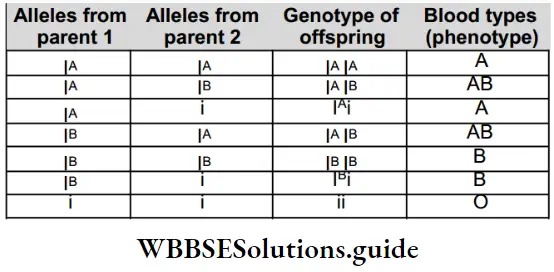
2. Co-dominance: It is the inheritance in which both alleles of a gene are expressed in a hybrid. Example: ABO blood grouping in humans. ABO blood groups are controlled by the gene I.

  • This gene controls the production of sugar polymers (antigens) that protrude from the plasma membrane of RBC.
  • Gene I has three alleles IA, IB and i.
  • IA and IB produce a slightly different form of the sugar while allele I don’t produce any sugar.
  • When IA and IB are present together they both express their own types of sugars. This is due to co-dominance.
NEET Biology Class 12 Principles Of Inheritance And Variation Other Pattern Of Inheritance Codominance

Principles of Inheritance and Variation Class 12 NEET Key Concepts and Summary

3. Multiple allelism: Here, more than two alleles govern the same character.

  • Multiple allelism Example, ABO blood grouping (3 alleles: IA, IA and i).
  • In an individual, only two alleles are present. Multiple alleles can be found only in a population.

4. Polygenic inheritance

  • It is the inheritance in which some traits are controlled by several genes (multiple genes).
  • Example, human skin colour, human height etc.
  • It considers the influence of the environment.
  • In a polygenic trait, the phenotype reflects the contribution of each allele, i.e., the effect of each allele is additive.

Polygenic Inheritance Human Skin Colour:

  • Assume that 3 genes A, B, and C control human skin colour. The dominant forms A, B and C are responsible for dark skin colour and recessive forms A, B and C are for light skin colour.
  • Genotype with all the dominant alleles (AABBCC) gives the darkest skin colour.
  • Genotype with all the recessive alleles (aabbcc) gives the lightest skin colour.
  • Therefore, a genotype with 3 dominant alleles and 3 recessive alleles gives an intermediate skin colour.
  • Thus, number of each type of allele determines the darkness or lightness of the skin in an individual.

5. Pleiotropy

  • Here, a single gene exhibits multiple phenotypic expressions. Such a gene is called pleiotropic gene.
  • In most cases, the mechanism of pleiotropy is the effect of a gene on metabolic pathways which contributes towards different phenotypes. Example: Starch synthesis in pea, sickle cell anaemia, phenylketonuria etc.
  • In Phenylketonuria and sickle cell anaemia, the mutant gene has many phenotypic effects. Example, Phenylketonuria causes mental retardation, reduction in hair and skin pigmentation.

Pleiotropy Starch synthesis in pea plant: Starch is synthesized effectively by BB gene. Therefore, large starch grains are produced. bb have lesser efficiency in starch synthesis and produce smaller starch grains. Starch gram size also shows incomplete dominance.
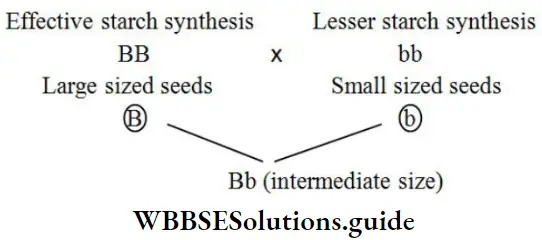
NEET Biology Class 12 Principles Of Inheritance And Variation Oleiotropy Strach Synthesis In pea Plant

NEET Biology Class 12 Chapter Principles of Inheritance and Variation Detailed Notes

Chromosomal Theory Of Inheritance

Mendel’s work remained unrecognized till 1900 because,

  • Communication was not easy.
  • His mathematical approach was new and unacceptable.
  • The concept of genes (factors) as stable and discrete units could not explain the continuous variation seen innature.
  • Mendel could not provide physical proof for the existence of factors.

“which branch of biology deals with blood and urine test “

In 1900, de Vries, Correns and von Tschermak independently rediscovered Mendel’s results.

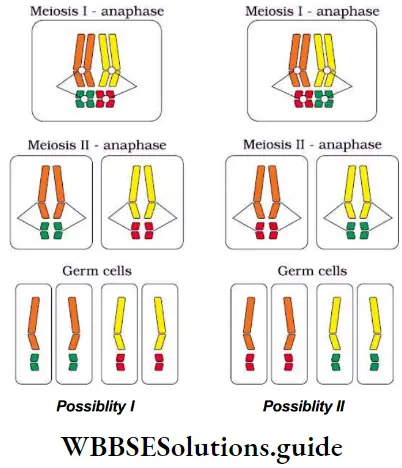
Chromosomal Theory of Inheritance (1902): Walter Sutton and Theodore Boveri said that the pairing and separation of a pair of chromosomes lead to segregation of a pair of factors they carried. Sutton united chromosomal segregation with Mendelian principles and called it the chromosomal theory of inheritance . It states that,

  • Chromosomes are vehicles ofheredity.
  • Two identical chromosomes form a homologous pair.
  • Homologous pair segregates during gamete formation.
  • Independent pairs segregate independently of each other.

Genes (factors) are present on chromosomes. Hence genes and chromosomes show similar behaviours.
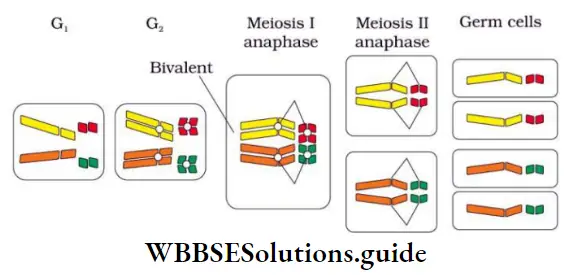
NEET Biology Class 12 Principles Of Inheritance And Variation Segregation Of Chromosomes

NEET Biology Class 12 Principles Of Inheritance And Variation Independent Assortment Of Chromosomes

NEET Study Material for Principles of Inheritance and Variation Chapter

Thomas Hunt Morgan proved chromosomal theory of inheritance using fruit flies (Drosophila melanogaster). It is the suitable material for genetic study because,

  • They can grow on simple syntheticmedium.
  • Short generation time (life cycle: 12-14 days).
  • Breeding can be done throughout the year.
  • Hundreds of progenies per mating.
  • Male and female flies are easily distinguishable. Example, Male is smaller than female.
  • It has many types of hereditary variations that can be seen with low power microscopes.

Linkage And Recombination Of Inheritance

Linkage of Inheritance is the physical association of two or more genes on a chromosome. They do not show independent assortment.

Recombination of Inheritance is the generation of non-parental gene combinations. It occurs due to independent assortment or crossing over.

Morgan carried out several dihybrid crosses in Drosophila to study sex-linked genes. Example,

  • Cross 1: Yellow-bodied, white-eyed females X Brown-bodied, red-eyed males (wild type)
  • Cross 2: White-eyed, miniature-winged X Red-eyed, large-winged (wild type)

“which branch of biology deals with blood and urine test “

Morgan intercrossed their F1 progeny. He found that

  • The two genes did not segregate independently of each other and the F2 ratio deviated from the 9:3:3:1 ratio.
  • Genes were located on the X chromosome.
  • When two genes were situated on the same chromosome, the proportion of parental gene combinations was much higher than the non-parental type. This is due to linkage.
  • Genes of white eye and yellow body were very tightly linked and showed only 1.3% recombination.
  • Genes of white eye and miniature wing were loosely linked and showed 37.2% recombination.
  • Tightly linked genes show low recombination. Loosely linked genes show high recombination.
  • Alfred Sturtevant used the recombination frequency between gene pairs for measuring the distance between genes and ‘mapped’ their position on the chromosome.
  • Genetic maps are used as a starting point in the sequencing of genomes. Example, Human Genome Project.
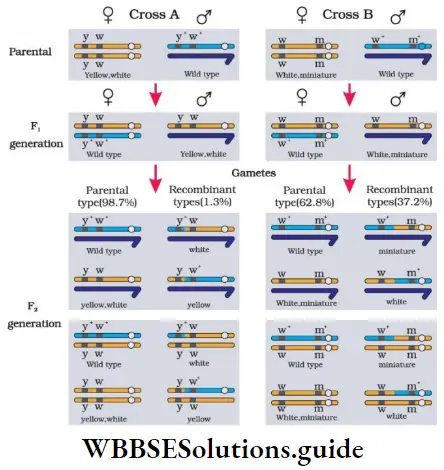
NEET Biology Class 12 Principles Of Inheritance And Variation Linkage And Combination

Principles of Inheritance and Variation Class 12 NCERT Notes for NEET

Sex Determination

The chromosomes that are involved in sex determination are called sex chromosomes (allosomes). They include X and Y chromosomes. Autosomes are chromosomes other than sex chromosomes. The number of autosomes is same in males and females.

Henking (1891) studied spermatogenesis in some insects and observed that 50 % of sperm received a nuclear structure after spermatogenesis, and the other 50 % sperm did not receive it. Henking called this structure as the X body (now it is called as X-chromosome).

Mechanism of sex determination

  1. XX-XO mechanism: Here, male is heterogametic, i.e. XO (Gametes with X and gametes without X) and female is homogametic, i.e. XX (all gametes are with X- chromosomes). Example, Many insects such as grasshoppers.
  2. XX-XY mechanism: Male is heterogametic (X and Y) and female is homogametic (X only). Example, Human and Drosophila.
  3. ZZ-ZW mechanism: Male is homogametic (ZZ) and the female is heterogametic (Z and W). For example, Birds. XX-XO and XX-XY mechanisms show male heterogamety. ZZ-ZW mechanism shows female heterogamety.

Sex Determination in Humans (XX-XY type)

  • Human has 23 pairs of chromosomes (22 pairs of autosomes and i pair of sex chromosomes).
  • A pair of X-chromosomes (XX) is present in the female, whereas X and Y chromosomes are present in male.
  • During spermatogenesis, males produce 2 types of gametes: 50 % with X-chromosome and 50 % with Y-chromosome.
  • Females produce only ovum with an X-chromosome.
  • There is an equal probability of fertilization of the ovum with the sperm carrying either X or Y chromosome.

“which branch of biology deals with blood and urine test “
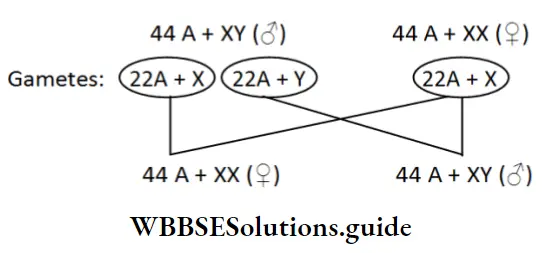
NEET Biology Class 12 Principles Of Inheritance And Variation Sex Determination

Mendelian Genetics, Chromosomal Theory, and Variations NEET Notes

The sperm determines whether the offspring male or female.

Sex determination in honeybee

  • It is based on the number of sets of chromosomes an individual receives.
  • Fertilised egg develops as a female (queen or worker).
  • An unfertilised egg develops as a male (drone). It is called parthenogenesis.
  • Therefore, the females are diploid (32 chromosomes) and males are haploid (16 chromosomes). This is called as haplodiploid sex determination system.
  • In this system, the males produce sperms by mitosis. They do not have father and thus cannot have sons, but have a grandfather and can have grandsons.
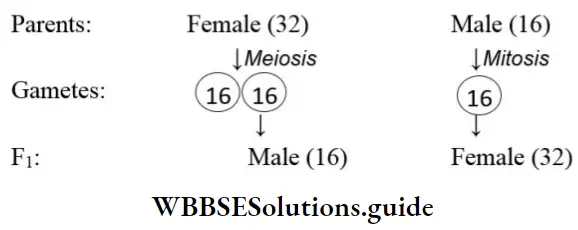
NEET Biology Class 12 Principles Of Inheritance And Variation Sex Determination In Honeybee

Mutation And Genetic Disorders

Mutation: It is a sudden heritable change in DNA sequences resulting in changes in the genotype and the phenotype of an organism. Mutation is 2 types:

  • Point mutation: It is the mutation due to change in a single base pair of DNA. Example, sickle cell anaemia.
  • Frame-shift mutation: It is the deletion or insertion of base pairs resulting in the shifting of DNA sequences.
  • Loss (deletion) or gain (insertion/ duplication) of DNA segment cause Chromosomal abnormalities (aberrations).
  • Chromosomal aberrations are seen in cancer cells.
  • The agents which induce mutation are called mutagens. They include
    • Physical mutagens: UV radiation, a, P, y rays, X-ray etc.
    • Chemical mutagens: Mustard gas, phenol, formalin etc.

Pedigree Analysis: In human, control crosses are not possible. So the study of family history about inheritance is used. Such an analysis of genetic traits in several generations of a family is called pedigree analysis.
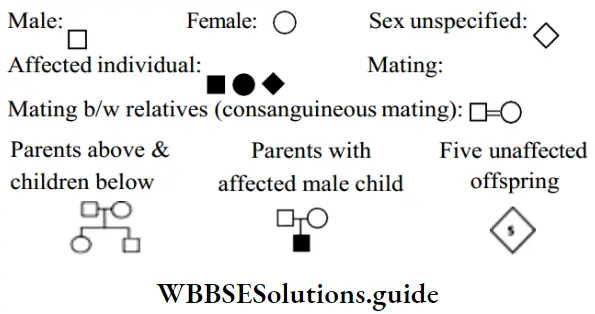
NEET Biology Class 12 Principles Of Inheritance And Variation Symbols Used In Pedigree Analysis

The representation or chart showing family history is called family tree (pedigree). In human genetics, pedigree study is utilized to trace the inheritance of a specific trait, abnormality or disease.

Genetic Disorders: The disorders due to change in genes or chromosomes. 2 types: Mendelian disorders and Chromosomal disorders.

1. Mendelian Disorders: It is caused by alteration or mutation in a single gene. The pattern of inheritance of Mendelian disorders can be traced in a family by the pedigree analysis.

  • Mendelian Disorders Example, Haemophilia, Colour blindness, Sickle-cell anaemia, Phenylketonuria, Thalassemia, Cystic fibrosis etc.
  • Mendelian disorders may be dominant or recessive.
  • Pedigree analysis helps to understand whether the trait is dominant or recessive.
  • Pedigree analysis of
    • Autosomal dominant trait (For example, Myotonic dystrophy)
    • Autosomal recessive trait (For example, Sickle-cell anaemia)
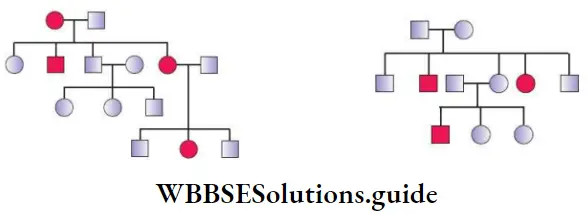
NEET Biology Class 12 Principles Of Inheritance And Variation Genetic Diorders Mendelian Disorders

Haemophilia (Royal disease): It is a sex-linked (X-linked) recessive disease.

  • In this, a protein involved in the blood clotting is affected. A simple cut results in non-stop bleeding.
  • The disease is controlled by 2 alleles, H and h. H is a normal allele and h is responsible for haemophilia.
  • In females, haemophilia is very rare because it happens only when mother is at least carrier and father is haemophilic (unviable in the later stage of life).
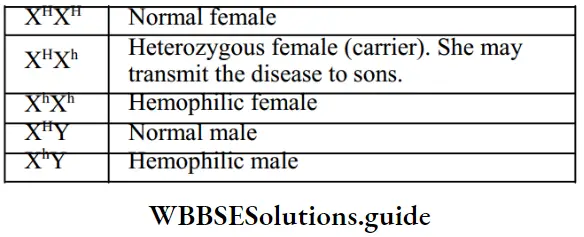
NEET Biology Class 12 Principles Of Inheritance And Variation Haemophilia Royal Diseases

Colour blindness: It is a sex-linked (X-linked) recessive disorder due to defect in either red or green cone of eye. It results in failure to discriminate between red and green colour.

  • It is due to mutation in some genes in the X chromosome. It occurs in 8% of males and only about 0.4% of females. This is because the genes are X-linked.
  • Normal allele is dominant (C). Recessive allele (c) causes colour blindness. The son of a heterozygous woman (carrier, XCXc) has a 50% chance of being colour-blind.
  • A daughter will be colour-blind only when her mother is at least a carrier and her father is colour-blind (XcY).

Sickle-cell anaemia:: This is an autosome-linked recessive disease. It can be transmitted from parents to the offspring when both partners are carriers for the gene (or heterozygous). The disease is controlled by a pair of allele, HbA and HbS.

  • Homozygous dominant (HbAHbs): normal
  • Heterozygous (HbAHbS): carrier sickle cell trait
  • Homozygous recessive (HbSHbS): affected

The defect is caused by the substitution of Glutamic acid (Glu) by Valine (Val) at the sixth position of the β-globin chain of the haemoglobin (Hb). This is due to the single base substitution at the sixth codon of the P-globin gene from GAG to GUG.
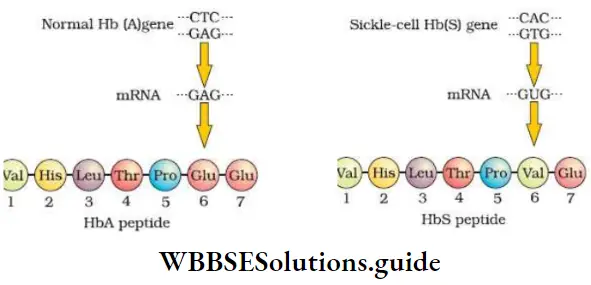
NEET Biology Class 12 Principles Of Inheritance And Variation Sickle Cell Anaemia

The mutant Hb molecule undergoes polymerization under low oxygen tension causing the change in shape of the RBC from biconcave disc to elongated sickle like structure.

Phenylketonuria: An inborn error ofmetabolism. Autosomal recessive disease.

  • It is due to mutation of a gene that codes for the enzyme phenyl alanine hydroxylase. This enzyme converts an amino acid phenylalanine into tyrosine.
  • The affected individual lacks this enzyme. As a result, phenylalanine accumulates and converts into phenyl pyruvic acid and other derivatives.
  • They accumulate in brain resulting in mental retardation. These are also excreted through urine because of poor absorption by kidney.

Thalassemia:

  • An autosome-linked recessive blood disease.
  • It is transmitted from unaffected carrier (heterozygous) parents to offspring.
  • It is due to mutation ordeletion.
  • It results in reduced synthesis of a or p globin chains of haemoglobin. It forms abnormal haemoglobin and causes anaemia.
  • Based on the chain affected, thalassemia is 2 types:
    • α Thalassemia: Here, production of a globin chain is affected. It is controlled by two closely linked genes HBA1 and HBA2 on chromosome 16 of each parent. Mutation or deletion of one or more of the four genes causes the disease. The more genes affected, the less a globin molecules produced.
    • β Thalassemia: Here, production of p globin chain is affected. It is controlled by a single gene HBB on chromosome 11 of each parent. Mutation of one or both the genes causes the disease.

Thalassemia is a quantitative problem (synthesise very less globin molecules). Sickle-cell anaemia is a qualitative problem (synthesise incorrectly functioning globin).

2. Chromosomal disorders: They are caused due to absence or excess or abnormal arrangement of one or more chromosomes. 2 types

  1. Aneuploidy: The gain or loss of chromosomes due to failure of segregation of chromatids during celldivision.
  2. Polyploidy (Euploidy): It is an increase in a whole set of chromosomes due to failure of cytokinesis after telophase stage of cell division. This is very rare in human but often seen in plants.

Examples for chromosomal disorders

Down’s syndrome: It is the presence of an additional copy of chromosome number 21 (trisomy of 21).

Down’s syndrome Genetic constitution: 45 A + XX or 45 A + XY (i.e. 47 chromosomes).

Chromosomal Disorders Features:

  • They are short statured with small roundhead.  Broad flat face.
  • Furrowed big tongue and partially open mouth.
  • Many “loops” on finger tips.
  • Palm is broad with characteristic palm crease.
  • Retarded physical, psychomotor and mental development.
  • Congenital heartdisease.

Klinefelter’s Syndrome: It is the presence of an additional copy of X-chromosome in male (trisomy).

Klinefelter’s Syndrome Genetic constitution: 44 A + XXY (i.e. 47 chromosomes).

Klinefelter’s Syndrome Features:

  • Overall masculine development. However, the feminine development is also expressed. Example, Development of breast (Gynaecomastia).
  • Sterile.
  • Mentally retarded.

Turner’s syndrome: This is the absence of one X chromosome in female (monosomy).

Turner’s syndrome Genetic constitution: 44 A + XXY (i.e. 45 chromosomes).

Turner’s syndrome Features:

  • Sterile, Ovaries are rudimentary.
  • Lack of other secondary sexual characters.
  • Dwarf.
  • Mentally retarded.
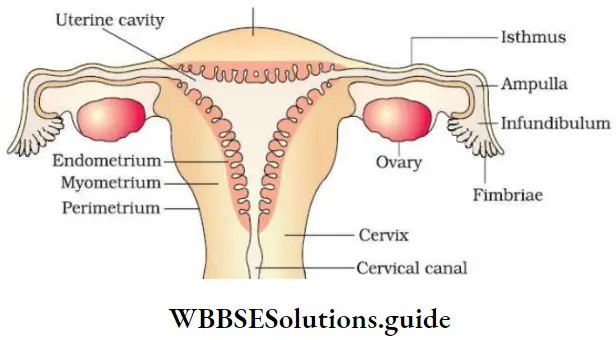
NEET Biology Class 12 Human Reproduction Notes

Human Reproduction Notes

Reproduction is the production of young ones by an organism. Humans are sexually reproducing and viviparous.

1. Male Reproductive System: It consists of paired testes, Accessory ducts, Accessory glands, and external genitalia (penis).

NEET Biology Class 12 Human Reproduction Notes Male Reproductive System

Male Reproductive System Paired Testes::Primary sex organs that produce sperm and testosterone.

“human reproduction class 12 “

Read And Learn More: NEET Biology Class 12 Notes

  • Testes are formed within the abdomen. Soon after the birth or at the 8th month of pregnancy they descend into the scrotal sac (scrotum) through the inguinal canal.
  • The low temperature (2-2.50 C less than the body temperature) of the scrotum helps for proper functioning of the testes and for spermatogenesis.
  • Each testis is oval-shaped. Length 4-5 cm, width: 2-3 cm.
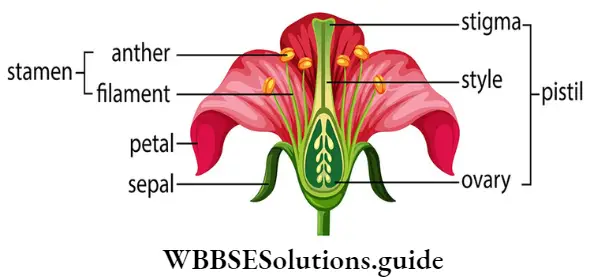
  • Each testis has about 250 testicular lobules.
  • Each lobule contains 1-3 coiled seminiferous tubules.
  • The seminiferous tubule is lined internally with spermatogonia (male germ cells) and Sertoli cells (supporting cells). Sertoli cells give shape and nourishment to developing spermatogonia.
  • The regions outside the seminiferous tubules (interstitial spaces) contain small blood vessels, interstitial cells (Leydig cells), and immunologically competent cells.
  • Leydig cells secrete testicular hormones (androgens).

Class 12 Biology Notes For Neet

NEET Biology Class 12 Human Reproduction Notes Paired Tests

NEET Biology Class 12 Human Reproduction Notes

Male Reproductive System Accessory ducts (Duct system): Include rete testis, vasa efferentia, epididymis, and vas deferens. They conduct sperms from testis as follows:

  • Seminiferous tubules → rete testis (irregular cavities) → vasa efferentia (series of fine tubules) → epididymis (stores sperms temporarily) → vas deferens → join with duct of seminal vesicle to form common ejaculatory duct → urethra → urethral meatus.
  • Urethra receives ducts of prostate and Cowper’s glands.

“human reproductive system notes pdf “

Male Reproductive System Accessory glands: Include a prostate gland, a pair of seminal vesicles, and a pair of Cowper’s glands (bulbourethral glands).

  • Their collective secretion (seminal plasma) is rich in fructose, Ca, and enzymes.
  • Seminal plasma + sperms → semen.

Class 12 Biology Notes For Neet

Functions of seminal plasma:

  • Helps transport sperms.
  • Supplies nutrients to sperms.
  • Provides alkalinity to counteract the acidity of uterus.
  • Secretions of Cowper’s glands lubricate the penis.
  • Secretions of the epididymis, vas deferens, seminal vesicle, and prostate help for maturation and motility of sperms.

Male Reproductive System Penis (external genitalia): It is a copulatory organ made of erectile spongy tissue.

When spongy tissue is filled with blood, the penis erects. It facilitates insemination. The cone-shaped tip of the penis is called a glans penis. It is covered by prepuce (foreskin).

NEET Biology Class 12 Human Reproduction Notes

“human reproduction project pdf class 12 “

2. Female Reproductive System: It includes Ovaries, Accessory ducts, and External genitalia.

Female Reproductive System Paired ovaries: Primary sex organs that produce ova (female gamete) and steroid ovarian hormones (estrogen and progesterone).

NEET Biology Class 12 Human Reproduction Notes Female Reproductive System

Human Reproduction NEET Notes

  • Each ovary is 2-4 cm in length. They are located on both side of the lower abdomen and connected to the pelvic wall and uterus by ligaments.
  • Each ovary is covered by a thin epithelium which encloses the ovarian stroma. The stroma has outer cortex and inner medulla.
  • Ovary contains groups of cells (Ovarian follicles). Each follicle carries a centrally placed ovum.

Reproductive Health Class 12 Notes For Neet

Female Reproductive System Accessory ducts (Duct system): Include 2 oviducts (Fallopian tubes), a uterus, and vagina.

  • Oviducts: Each oviduct (10-12 cm long) has 3 parts:
    1. Infundibulum: Funnel-shaped opening provided with many finger-like fimbriae. It helps to collect the ovum.
    2. Ampulla: Wider part.
    3. Isthmus: Narrow part. It joins the uterus. The ciliated epithelium lines the lumen of the oviduct drives the ovum toward the uterus.
  • Uterus (womb): It is inverted pear-shaped. It is supported by ligaments attached to the pelvic wall. The uterus has 3 parts- The upper fundus, the middle body, and the terminal cervix. Cervix opens to the vagina.
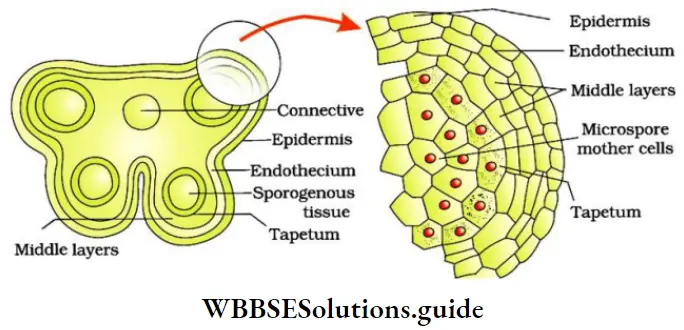
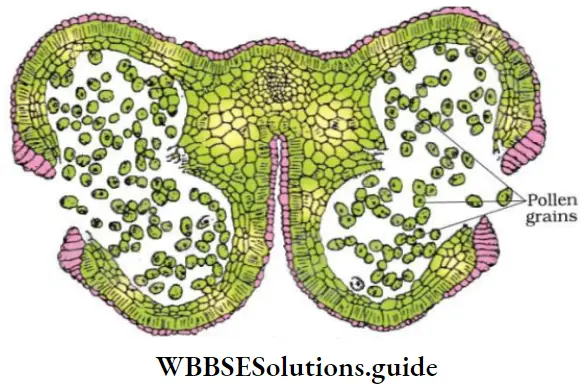
    • The uterine wall has 3 layers:
    • Perimetrium: External thin membrane.
    • Myometrium: Middle thick layer of smooth muscle.
    • Endometrium: Inner glandular and vascular layer.
  • Vagina: It opens to the exterior between urethra and anus. The lumen of vagina is lined by a glycogen-rich mucous membrane consisting of sensitive papillae and Bartholin’s glands. Bartholin’s glands secrete mucus that lubricates the penis during sexual act.

Class 12 Biology Notes For Neet

Female Reproductive System External genitalia (vulva or pudendum): Consist of Mons pubis, vestibule, hymen and clitoris.

  • Mons pubis: A cushion of fatty tissue covered by pubic hair.
  • Vestibule: A median channel. It includes
    • Labia majora: Large, fleshy, fatty, and hairy outer folds. Surrounds vaginal opening.
    • Labia minora: Small, thin, and hairless inner folds.
  • Hymen (Maidenhead): A membrane that partially cover the vaginal opening. It is often torn during the first coitus. It may also be broken by a sudden fall or jolt, insertion of a vaginal tampon; active participation in some sports items, etc. In some women, the hymen persists after coitus. So the hymen is not a reliable indicator of virginity.
  • Clitoris: A highly sensitive organ lying just in front of the urethral opening.

Mammary glands (breasts): A pair of mammary glands contains glandular tissue and fat.

  • Glandular tissue of each breast has 15-20 mammary lobes containing clusters of cells (mammary alveoli). Cells of alveoli secrete milk. It is stored in lumen of alveoli.
  • The alveoli open into mammary tubules. The tubules of each lobe join to form a mammary duct. Several mammary ducts join to form a wider mammary ampulla which is connected to lactiferous duct through which milk is sucked out.

“what is human reproduction class 12 “

Reproductive Health Class 12 Notes For Neet

NEET Biology Class 12 Human Reproduction Notes Mammary Glands

NEET Biology Human Reproduction Important Notes

Gametogenesis

It is the formation of gametes in the gonads. It is 2 types: Spermatogenesis and Oogenesis.

Class 12 Biology Notes For Neet

1. Spermatogenesis: It is the process of formation of sperms (spermatozoa) in seminiferous tubules of testis. It has 2 stages:

  1. Formation of spermatids: In this, spermatonia (Sperm mother cells or immature male germ cells) produce spermatids.
  2. Spermiogenesis: Spermatids transform into sperm.

Schematic representation of spermatogenesis

NEET Biology Class 12 Human Reproduction Notes Schematic Representation Of Spermatogenesis

“reproduction in humans “

4 spermatids are formed from each primary spermatocyte. After spermiogenesis, sperm heads are embedded in Sertoli cells to get nourishment. Then they are released to the lumen of seminiferous tubules. It is called spermiation.

Reproductive Health Class 12 Notes For Neet

Role of Hormones in Spermatogenesis: The hypothalamus releases Gonadotropin-releasing hormone (GnRH).

  • GnRH stimulates the anterior pituitary gland to secrete 2 gonadotropins such as Luteinizing hormone (LH) and follicle-stimulating hormone (FSH).
  • LH acts on the Leydig cells and stimulates the secretion of androgens. Androgens stimulate the spermatogenesis. FSH acts on the Sertoli cells and stimulates secretion of some factors for spermiogenesis.

NEET Biology Class 12 Human Reproduction Notes Diagramic Sectional View Of A Seminiferous Tubule

Best Short Notes for Class 12 Biology Human Reproduction

Structure of spermatozoa (Sperm): A mature sperm is about 60 μ (0.06 mm) long. A plasma membrane envelops the whole body of sperm. A sperm has 3 regions:

  • Structure of spermatozoa Head: Oval-shaped. Formed of nucleus and acrosome. Acrosome is formed from Golgi complex. It contains lytic enzymes. Behind the head is a neck.
  • Structure of spermatozoa Middle piece: Composed of axial filament surrounded by mitochondria and cytoplasm. Mitochondria produce energy for the sperm motility.
  • Structure of spermatozoa Tail: Consists of a central axial filament. The sperm moves in fluid medium and female genital tract by the undulating movement of the tail.

NEET Biology Class 12 Human Reproduction Notes Structure Of Spermatozoa

Human Reproduction Class 12 NEET Key Concepts and Summary

Man ejaculates 200-300 million sperms during a coitus. For normal fertility, at least 60% sperms must have normal shape and size. 40% of them must show vigorous motility.

Reproductive Health Class 12 Notes For Neet

2. Oogenesis: It is the process of formation and maturation of ovum. It takes place in Graafian follicles.  Oogenesis is initiated in embryonic stage when millions of egg mother cells (oogonia) are formed within each ovary.

NEET Biology Class 12 Human Reproduction Notes Oogenesis

NEET Biology Class 12 Chapter Human Reproduction Detailed Notes

No more oogonia are formed and added after birth. Oogonia multiply to form primary oocytes. They enter prophase-I of the meiosis and get temporarily arrested at that stage.

  • Each primary oocyte gets surrounded by a layer of granulosa cells to form primary follicle. Many primary follicles degenerate during the phase from birth to puberty. Therefore, at puberty, only 60,000-80,000 primary follicles are left in each ovary.
  • Primary follicles get surrounded by more layers of granulosa cells and a new theca to form secondary follicles. The secondary follicles transform into a tertiary follicle. It has a fluid-filled cavity (antrum). The theca layer forms an inner theca interna and an outer theca externa.
  • The primary oocyte in tertiary follicle grows and undergoes the first unequal meiotic division to form a large secondary oocyte (n) and a tiny first polar body (n). So, the secondary oocyte retains nutrient-rich cytoplasm of the primary oocyte.
  • It is unknown that whether the first polar body divides further or degenerates. The tertiary follicle further changes into the mature follicle (Graafian follicle).
  • Secondary oocyte forms a new membrane (zona pellucida). Graafian follicle now ruptures to release the secondary oocyte (ovum) from the ovary. This is called ovulation.

“reproduction in humans “

Schematic representation of oogenesis:

NEET Biology Class 12 Human Reproduction Notes Schematic Representation Of OOgenesis

NEET Study Material for Human Reproduction Chapter

Spherical and non-motile. About 0.2 mm in diameter. Ovum has 3 membranes:

NEET Biology Class 12 Human Reproduction Notes Structure Of Ovum

  1. Plasma membrane: Innermost layer.
  2. Zona pellucida: Outer to the plasma membrane.
  3. Corona radiata: Outer layer formed of follicle cells.

Spermatogenesis And Oogenesis A Comparison

Reproductive Health Class 12 Notes For Neet

NEET Biology Class 12 Human Reproduction Notes Spermatogenis And Oogenesis A Comparison

Human Reproduction Class 12 NCERT Notes for NEET

Menstrual Cycle – Reproductive Cycle

It is the cyclic events starting from one menstruation till the next during the reproductive period (from puberty to menopause) of a woman’s life. Its duration is 28 or 29 days. Menstrual cycle is also seen in other primates. Menstrual cycle includes the Ovarian cycle (changes in the ovary) and Uterine cycle (changes in the uterus, oviduct, and vagina).

Menstrual cycle has the following phases:

1. Menstrual phase: 1-5th day: The cycle starts with menstrual flow (bleeding). It lasts for 3-5 days.

  • Menstruation occurs if the released ovum is not fertilized. It results in the breakdown of the endometrial lining and uterine blood vessels that come out through the vagina.
  • Lack of menstruation indicates pregnancy. It may also be caused due to stress, poor health, etc.
  • Menarche: The first menstruation during puberty.

2. Follicular (Proliferative) phase: 5-13th day

  • It starts from 5th day after menstruation and is completed within 8-12 days.
  • In this phase, the action of gonadotropins (FSH and LH) from the pituitary occurs. FSH stimulates
    • Development of primary follicles into Graafian follicles.
    • Secretion of estrogens by Graafian follicles.

“reproduction in humans “

  • Oestrogens stimulate
    • The proliferation of ruptures uterine endometrium and mucus lining of oviduct and vagina.
    • Development of secondary sexual characters.
    • Suppression of FSH secretion.
    • Secretion of LH (Luteinizing hormone).

3. Ovulatory phase: 14th day

  • LH and FSH attain a peak level in the middle of cycle.
  • Rapid secretion of LH (LH surge) induces rupture of the Graafian follicle and thereby ovulation (on 14th day).

Class 12 Biology Notes For Neet

4. Secretory (Luteal) phase: 15-28th day

  • After ovulation, the Graafian follicle is transformed into a yellow endocrine mass called Corpus luteum. It secretes progesterone.
  • Functions of progesterone:
    • Makes the endometrium maximum vascular, thick and soft. Thus, the uterus gets ready for implantation.
    • Inhibits the FSH secretion to prevent the development of a second ovarian follicle.

If fertilization does not occur, the corpus luteum degenerates. It causes disintegration of the endometrium. It leads to next menstruation and new cycle. If a woman becomes pregnant, all events of the menstrual cycle stop and there is no menstruation.

Reproductive Health Class 12 Notes For Neet

NEET Biology Class 12 Human Reproduction Notes Menstrual Cycle

Gametogenesis, Fertilization, and Embryonic Development NEET Notes

Menstrual hygiene:

  • Take bath and clean yourself regularly.
  • Use sanitary napkins or clean homemade pads.
  • Change sanitary napkins or homemade pads after every 4¬5 hrs as per the requirement.
  • Dispose the used sanitary napkins properly.
  • Do not throw the used napkins in the drainpipe of toilets or in the open area.
  • After handling the napkin, wash hands with soap.

Fertilization And Implantation

During copulation, semen is released by the penis into the vagina. It is called insemination. Fusion of a sperm with an ovum is called fertilization. It occurs in Ampullary region of fallopian tube.

Sperms → vagina → cervical canal → uterus → isthmus → Ampullary region → Fertilization → Ovum (from ovary) → fimbriae → infundibulum

  • Fertilization happens only if ovum and sperm are transported simultaneously. So all copulations do not lead to fertilization and pregnancy. A sperm contacts with zona pellucida. It induces changes in the membrane that block entry of additional sperms.
  • The secretions of the acrosome help sperm to enter the egg cytoplasm via zona pellucida and plasma membrane. This causes a second meiotic division of secondary oocyte to form an ovum (ootid) and a second polar body.
  • The haploid nuclei of the sperm and ovum fuse together to form a diploid zygote. Zygote undergoes mitotic division (cleavage) as it moves through the isthmus towards the uterus and forms 2, 4, 8, and 16 daughter cells called blastomeres.
  • The embryo with 8-16 blastomeres is called a morula. Morula continues to divide and transforms into a blastocyst.
  • In blastocyst, blastomeres are arranged into trophoblast (outer layer) and an inner cell mass attached to trophoblast. The trophoblast layer gives nourishment to the inner cell mass. Also, it gets attached to endometrium.
  • After attachment, uterine cells divide rapidly and cover the blastocyst. Thus, the blastocyst becomes embedded in the endometrium. This is called implantation.
  • The inner cell mass gets differentiated to 3 germ layers (outer ectoderm, middle mesoderm, and inner endoderm). This 3-layered structure (gastrula) forms the embryo.

Reproductive Health Class 12 Notes For Neet

NEET Biology Class 12 Human Reproduction Notes Fertilization And Implantation

Pregnancy And Embryonic Development

After implantation, finger-like projections (chorionic villi) appear on the trophoblast. They are surrounded by uterine tissue and maternal blood. The chorionic villi and uterine tissue are interdigitated to form the placenta. It is a structural and functional unit b/w embryo (fetus) and maternal body. Placenta is connected to the embryo by an umbilical cord. It transports substances to and from the embryo.

NEET Biology Class 12 Human Reproduction Notes Pregnancy And Embryonic Development

Functions of placenta

  • Acts as a barrier between the fetus and the mother.
  • Supply O2, nutrients, etc. from mother to fetus.
  • Remove CO2 and excretory wastes from fetus.
  • Acts as an endocrine gland. It secretes Human chorionic gonadotropin (hCG), human placental lactogen (hPL), estrogens, progesterone, and relaxin. Relaxin is also secreted by the ovary.
  • During pregnancy, levels of estrogens, progestogens, cortisol, prolactin, thyroxin, etc. are also increased in maternal blood. They support fetal growth, and metabolic changes in the mother and maintain pregnancy.
  • The germ layers give rise to all tissues (organs). The stem cells in inner cell mass have the potency to give rise to all the tissues and organs.
  • Human pregnancy (gestation period) lasts 9 months (for cats: 2 months, dogs: 2 months, elephants: 21 months).

Reproductive Health Class 12 Notes For Neet

Changes in embryo during pregnancy

  • After one month: Heart is formed.
  • End of second month: Limbs and digits are developed.
  • End of 12 weeks (first trimester): Major organs (limbs, external genital organs, etc.) are well developed.
  • During the 5th month: First movement of fetus and appearance of hair on the head.
  • End of 24 weeks (end of 2nd trimester): Body is covered with fine hair, eyelids separate and eye lashes are formed.
  • End of 9 months: Ready for delivery.

Parturition And Lactation

  • Parturition (labour): Process of giving birth to young ones. Parturition is induced by neuroendocrine mechanisms.
  • The signals originating from the foetus and placenta induce mild uterine contractions (fetal ejection reflex). This causes the release of oxytocin from maternal pituitary.
  • Oxytocin causes stronger uterine muscle contractions which in turn stimulate further secretion of oxytocin. This process is continued leading to expulsion of the baby out of the uterus through the birth canal.
  • After parturition, the umbilical cord is cut off. The placenta and remnants of umbilical cord are expelled from the maternal body after parturition. It is called “after birth”.
  • The mammary glands produce milk towards the end of pregnancy. It is called lactation. The yellowish milk produced during the initial few days of lactation is called colostrum. It contains several antibodies essential to develop resistance for newborn babies.

NEET Biology Class 12 Reproduction In Organisms Notes

Reproduction In Organisms Notes

Reproduction is a process in which an organism produces young ones (offspring) similar to itself. The period from birth to the natural death of an organism is known as its lifespan. No individual is immortal, except unicellular organisms. There is no natural death in unicellular organisms.

Class 12 Biology Notes For Neet

NEET Biology Class 12 Reproduction In Organisms Notes Life Spans Of Some Organisms

Based on the number of participants, reproduction is 2 types: Asexual reproduction and Sexual reproduction.

Read And Learn More: NEET Biology Class 12 Notes

Asexual Reproduction In Organisms

It is the production of offspring by a single parent. It is seen in unicellular organisms, simple plants and animals. The offspring are identical to one another and their parent. Such morphologically and genetically similar individuals are known as clones.

“reproduction in organisms class 12 pdf download “

Types of asexual reproduction

  1. Asexual Reproduction Fission: In this, the parent cell divides (cell division) into two or more individuals. Examples are Protists and Monerans. Fission is 2 types:
    • Binary fission: It is the division of a parent cell into two individuals. Examples are amoeba and paramecium.
    • Multiple fission: It is the division of a parent cell into many individuals. Examples, are Plasmodium and amoeba.
  2. Asexual Reproduction Budding: In this, a bud appears and grows in the parent body. After maturation, it is detached from the parent body to form a new individual. Example, Hydra, Sponge, Yeast etc.
  3. Asexual Reproduction Vegetative propagation: It is the production of offspring from vegetative propagules in plants. Vegetative propagules are units of vegetative propagation.
    • Examples of vegetative propagules:
      • Buds (‘eyes’) of the potato tuber.
      • Rhizomes of banana and ginger. Buds and Rhizomes arise from the nodes of modified stems. The nodes come in contact with damp soil or water and produce roots and new plants.
      • Adventitious buds of Bryophyllum. They arise from the notches at the margins of leaves.
      • Bulbil of Agave.
      • Offset of water hyacinth.
      • Runner, sucker, tuber, bulb etc.

Class 12 Biology Notes For Neet

Other asexual reproductive structures Examples: are zoospores (microscopic motile structures in some algae and protists), conidia (Penicillium) and gemmules (sponge).

Asexual reproduction is the common method in simple organisms like algae and fungi. During adverse conditions, they can shift to sexual methods. Higher plants reproduce asexually (vegetatively) and sexually. But most of the animals show only sexual reproduction.

NEET Biology Class 12 Reproduction In Organisms Notes

NEET Biology Class 12 Reproduction in Organisms Notes

Sexual Reproduction In Organisms

It is the reproduction that involves the formation of male and female gametes, either by the same individual or by different individuals of the opposite sex. It results in offspring that are not identical to the parents or amongst themselves. It is an elaborate, complex and slow process as compared to asexual reproduction.

Reproduction in Organisms NEET Notes

  • The period of growth to reach maturity for sexual reproduction is called the juvenile phase. In plants, it is known as the vegetative phase.
  • In higher plants, the flowering indicates the end of the vegetative phase (beginning of the reproductive phase).
  • Annual and biennial plants show clear-cut vegetative, reproductive and senescent phases. In perennial plants, these phases are very difficult to identify.

Reproduction In Organisms Class 12 Notes

Some plants exhibit unusual flowering. Example,

  • Bamboo species flower only once in their lifetime (after 50-100 years), produce a large number of fruits and die.
  • Strobilanthus kunthiana flowers once in 12 years.
  • In animals, the juvenile phase is followed by morphological and physiological changes before active reproductive behaviour.
  • Birds living in nature lay eggs only seasonally. However, birds in captivity (for example, poultry) can be made to lay eggs throughout the year.
  • The females of placental mammals exhibit cyclical changes in the ovaries, accessory ducts and hormones during the reproductive phase. It is called the oestrus cycle in non-primates (cows, sheep, rats, deer, dogs, tigers etc.) and the menstrual cycle in primates (monkeys, apes and humans).

Based on breeding season, mammals are of 2 types:

  1. Seasonal breeders: The mammals (living in natural conditions) exhibit reproductive cycles only during favourable seasons.
  2. Continuous breeders: They are reproductively active throughout their reproductive phase.

Reproduction In Organisms Class 12 Notes

Senescence (old age):

  • It is the last phase of the lifespan and the end of the reproductive phase.
  • During this, concomitant changes occur in the body. For example, slowing of metabolism etc. It ultimately leads to death.
  • In plants and animals, hormones cause a transition between juvenile, reproductive and senescence phases. Interaction between hormones and environmental factors regulates the reproductive processes and the associated behavioural expressions of organisms.

Events In Sexual Reproduction: Pre-fertilisation-Fertilisation-Post-fertilisation

Class 12 Biology Notes For Neet

Pre-fertilisation Events In Sexual Reproduction: These are the events before the fusion of gametes. They include gametogenesis and gamete transfer.

1. Gametogenesis: It is the formation of male and female gametes. Gametes (haploid cells) are 2 types:

  1. Homogametes (isogametes): Similar gametes. They cannot be categorised into male and female gametes. E.g. Some algae like Cladophora.
  2. Heterogametes: The male and female gametes are distinct types. The male gamete is called an antherozoid (sperm) and the female gamete is called an egg (ovum). Example, Fucus (an alga), Human beings etc.

“class 12th biology reproduction in organisms “

Sexuality (bisexual or unisexual) in organisms:

  • Bisexual In Organisms: Male and female reproductive structures present in the same individual.
    • Bisexual plants: For example, Hibiscus, and Pisum. In flowering plants, the male flower is staminate (bears stamens) and the female flower is pistillate (bears pistils). If male and female flowers are present on the same plant, it is called monoecious. Examples are cucurbits and coconuts.
    • Bisexual animals (hermaphrodites): For example, Earthworms, leeches, sponges, tapeworms, etc.
  • Unisexual In Organisms: Male and female reproductive structures are present on different individuals. If male and female flowers are present on different plants, it is called dioecious. For example, papaya and date palm.
    • Unisexual animals: For example, cockroaches, higher animals etc. Fungi may be homothallic (bisexual) or heterothallic (unisexual).

Reproduction In Organisms Class 12 Notes

Cell division during gamete formation:

  • Many monerans, fungi, algae and bryophytes have haploid parental bodies. They produce haploid gametes by mitosis.
  • Pteridophytes, gymnosperms, angiosperms and animals have diploid parental bodies. They produce haploid gametes by meiosis of meiocytes (gamete mother cell).

NEET-Biology-Class-12-Reproduction-In-Organisms-Notes-Cell-Divisions-During-Gamete-Formation


Biology Reproduction In Organisms Class 12

2. Gamete Transfer: Male gametes need a medium to move towards female gametes for fertilisation. In most organisms, the male gamete is motile and the female gamete is stationary. In some fungi and algae, both types of gametes are motile.

NEET Biology Reproduction in Organisms Important Notes

  • In simple plants (algae, bryophytes and pteridophytes), gamete transfer takes place through water medium. To compensate for the loss of male gametes during transport, a large number of male gametes is produced.
  • In seed plants, pollen grains (in anthers) carry male gametes and the ovule carries the egg. Pollen grains are transferred to the stigma.
  • In bisexual self-fertilizing plants (for example, peas), anthers and stigma are closely located. So transfer of pollen grains is easy.
  • In cross-pollinating plants (including dioecious plants), pollination helps in the transfer of pollen grains. Pollen grains germinate on the stigma and the pollen tubes carrying the male gametes reach the ovule and discharge male gametes near the egg.
  • In dioecious animals, fertilisation helps for the successful transfer and coming together of gametes.

Fertilisation (syngamy) In Sexual Reproduction: It is the fusion of gametes to form a diploid zygote. In rotifers, honeybees, some lizards, birds (turkey) etc., female gamete develops to new organisms without fertilisation. This is called parthenogenesis.

Class 12 Biology Notes For Neet

Types of fertilization:

  1. External fertilisation: Syngamy occurs in the external medium (water), i.e. zygote is formed outside the body. For example, most aquatic organisms (many algae, bony fishes etc.) and amphibians. Such organisms show synchrony between the sexes and release a large number of gametes into the surrounding medium to ensure syngamy.
    • External fertilisation Disadvantage: The offspring are extremely vulnerable to predators threatening their survival up to adulthood.
  2. Internal fertilisation: Syngamy occurs inside the body of the organism. Examples are terrestrial organisms, belonging to fungi, animals (reptiles, birds, mammals) and plants (bryophytes, pteridophytes, gymnosperms and angiosperms).
    • In this, the non-motile egg is formed inside the female body to where the motile male gamete reaches and fuses.
    • In seed plants, the non-motile male gametes are carried to the female gamete by pollen tubes.
    • There is a large number of sperm produced but the number of eggs is very low.

Biology Reproduction In Organisms Class 12

Post-fertilisation Events In Sexual Reproduction: These are the events after the formation of the zygote.

  • Zygote
    • Development of the zygote depends on the type of life cycle of the organism and the nature of the environment.
    • In fungi and algae, the zygote develops a thick wall that is resistant to desiccation and damage. It undergoes a period of rest before germination.
    • In organisms with a haplontic life cycle, zygote divides by meiosis into haploid spores that grow into haploid individuals.
    • Sexually reproducing organisms begin life as a zygote.
    • The zygote is the vital link between organisms of one generation and the next.

“how do organisms reproduce notes pdf “

  • Embryogenesis
    • It is the development of an embryo from the zygote.
    • During embryogenesis, the zygote undergoes cell division (mitosis) and cell differentiation.
    • Cell divisions increase the number of cells in the embryo. Cell differentiation causes the modifications of groups of cells into various tissues and organs to form an organism.

Biology Reproduction In Organisms Class 12

Based on the place of zygote development, animals are of 2 types:

  1. Oviparous: Here, animals lay fertilized/unfertilized eggs. For example, In reptiles and birds, the fertilized eggs covered by hard calcareous shells are laid in a safe place. After incubation, young ones hatch out.
  2. Viviparous: Here, the zygote develops into a young one inside the female body. Later, the young ones are delivered out of the body. For example, most of the mammals. Because of proper care and protection, the chances of survival of young ones are greater in viviparous animals.

NEET Biology Class 12 Sexual Reproduction in Flowering Plants Notes

Sexual Reproduction in Flowering Plants Notes

All flowering plants (angiosperms) show sexual reproduction. Flowers are the sites of sexual reproduction.

Prefertilisation Structures And Events

Several hormonal and structural changes result in the differentiation and development of the floral primordium. Inflorescences bear the floral buds and then the flowers.

NEET-Biology-Class-12-Sexual-Reproduction-in-Flowering-Plants-Notes-Structure-Of-A-Flower


A typical flower has 2 parts: Stamen and Pistil.

Androecium (Stamens): It is the male reproductive part of the flower. It consists of a whorl of stamens. Their number and length are variable in different species. A stamen has 2 parts:

Read And Learn More: NEET Biology Class 12 Notes

  • Filament: Long and slender stalk. Its proximal end is attached to the thalamus or the petal of the flower.
  • Anther: Terminal and typically bilobed. Each lobe has 2 thecae (dithecous). Often a longitudinal groove runs lengthwise separating the theca.

Transverse section of anther: The anther is a tetragonal structure consisting of four microsporangia located at the corners. Each lobe consists of two microsporangia. The microsporangia develop to pollen sacs. They extend longitudinally all through the length of an anther and are packed with pollen grains.

NEET Biology Class 12 Sexual Reproduction in Flowering Plants Notes Transverse Section Of Anther

NEET Biology Class 12 Sexual Reproduction in Flowering Plants Notes

Structure of a microsporangium:

  • A typical microsporangium is near circular in outline. It is surrounded by four wall layers- the epidermis, endothecium, middle layers and tapetum.
  • The outer 3 layers give protection and help in the dehiscence of the anther to release the pollen.
  • The tapetum (innermost layer) nourishes the developing pollen grains. Cells of the tapetum contain dense cytoplasm and generally have more than one nucleus.
  • When the anther is young, a group of compactly arranged homogenous cells (sporogenous tissue) occupies the centre of each microsporangium.

“reproduction in flowering plant “

Microsporogenesis:

  • As the anther develops, each cell of sporogenous tissue undergoes meiotic divisions to form microspore tetrads (microspores are arranged in a cluster of four cells). Each one is a potential pollen (microspore mother cell).
  • The formation of microspores from a pollen mother cell (PMC) through meiosis is called microsporogenesis. As the anthers mature and dehydrate, the microspores dissociate from each other and develop into pollen grains.
  • Each microsporangium contains thousands of pollen grains. They are released with the dehiscence of anther.

NEET Biology Class 12 Sexual Reproduction in Flowering Plants Notes Microsporogenesis A mature dehisced anther

Sexual Reproduction in Flowering Plants NEET Notes

Pollen grain (male gametophyte): Generally spherical. 25-50 pm in diameter. Cytoplasm is surrounded by a plasma membrane. A pollen grain has a two-layered wall: exine and intine.

  • Exine: The hard outer layer. Made up of sporopollenin (highly resistant organic material). It can withstand high temperatures and strong acids and alkalis. Enzymes cannot degrade sporopollenin. Exine has apertures called germ pores where sporopollenin is absent. Pollen grains are preserved as fossils due to the presence of sporopollenin. Exine exhibits patterns and designs.
  • Intine: The inner wall. It is a thin and continuous layer made up of cellulose and pectin.

A matured pollen grain contains 2 cells:

  1. Vegetative cell: It is bigger, has abundant food reserve and a large irregularly shaped nucleus.
  2. Generative cell: It is small and floats in the cytoplasm of the vegetative cell. It is spindle-shaped with dense cytoplasm and a nucleus.

NEET Biology Class 12 Sexual Reproduction in Flowering Plants Notes Pollen Grain Vegetative Cell And Generative Cell

NEET Biology Sexual Reproduction in Flowering Plants Important Notes

In over 60% of angiosperms, pollen grains are shed at the 2-celled stage. In others, the generative cell divides mitotically to give rise to the two male gametes before pollen grains are shed (3-celled stage).

The shed pollen grains have to land on the stigma before they lose viability. The viability period of pollen grains is variable. It depends on temperature and humidity. Viability of pollen grains of some cereals (rice, wheat etc.) is 30 minutes. Some members of Leguminoseae, Rosaceae and Solanaceae have viability for months.

Economic importance of pollen grains:

  • These are rich in nutrients. Pollen tablets are used as food supplements. Pollen tablets and syrups increase the performance of athletes and racehorses.
  • Pollen grains can be stored for years in liquid nitrogen (- 1960C). They are used as pollen banks, similar to seed banks, in crop breeding programmes.
  • Pollen grains of some plants (for example, Parthenium or carrot grass) are allergic for some people. It leads to chronic respiratory disorders – asthma, bronchitis, etc.

NEET Biology Class 12 Sexual Reproduction in Flowering Plants Notes

“reproduction of angiosperms “

Gynoecium (Pistil): It represents the female reproductive part of the flower. It may consist of a single pistil (monocarpellary) or more than one pistil (multicarpellary). In multi-carpellary, the pistils may be fused together (syncarpous) or free (apocarpous)

NEET Biology Class 12 Sexual Reproduction in Flowering Plants Notes Gynoeclum

Sexual Reproduction in Flowering Plants Class 12 NEET Key Concepts and Summary

Each pistil has three parts:

  1. Stigma: It is a landing platform for pollen grains.
  2. Style: It is an elongated slender part beneath the stigma.
  3. Ovary: It is the basal bulged part of the pistil. Inside the ovary is the ovarian cavity (locule) in which the placenta is located. Arising from the placenta are the ovules (megasporangia). The number of ovules in an ovary may be one (wheat, paddy, mango etc.) to many (papaya, watermelon, orchids etc.).

Megasporangium (Ovule): It is a small structure attached to the placenta by means of a stalk (funicle). The junction where the body of ovule and funicle fuse is called hilum.

  • Each ovule has one or two protective envelopes called integuments. Integuments encircle the ovule except at the tip where a small opening (micropyle) is present.
  • Opposite the micropylar end is the chalaza (basal part). Enclosed within the integuments, there is a mass of cells called nucellus. Its cells contain food materials.
  • Located in the nucellus is the embryo sac (female gametophyte). An ovule generally has a single embryo sac formed from a megaspore.

NEET Biology Class 12 Sexual Reproduction in Flowering Plants Notes Megasporanguim Ovule

NEET Biology Class 12 Chapter Sexual Reproduction in Flowering Plants Detailed Notes

Megasporogenesis: It is the formation of megaspores from the megaspore mother cell (MMC). Ovules generally differentiate a single megaspore mother cell in the micropylar region of the nucellus. It is a large cell containing dense cytoplasm and a prominent nucleus. The MMC undergoes meiotic division. It results in the production of 4 megaspores.

NEET Biology Class 12 Sexual Reproduction in Flowering Plants Notes Megasporogenesis

Female gametophyte (embryo sac): In a majority of flowering plants, one of the megaspores is functional while the other three degenerate.

The functional megaspore develops into the female gametophyte. This method of embryo sac formation from a single megaspore is termed monosporic development.

“reproduction in angiosperms “

Formation of the embryo sac: The nucleus of the functional megaspore divides mitotically to form two nuclei. They move to the opposite poles, forming a 2-nucleate embryo sac.

  • The nuclei again divide two times forming 4-nucleate and 8-nucleate stages of the embryo sac. These divisions are strictly free nuclear, i.e. nuclear divisions are not followed immediately by cell wall formation.
  • After the 8-nucleate stage, cell walls are laid down leading to the organization of the typical female gametophyte or embryo sac. 6 of the 8 nuclei are surrounded by cell walls and organized into cells. Remaining 2 nuclei (polar nuclei) are situated below the egg apparatus in the large central cell.

NEET Biology Class 12 Sexual Reproduction in Flowering Plants Notes Female gametophyte Embryo Sac

NEET Study Material for Sexual Reproduction in Flowering Plants Chapter

Distribution of cells within the embryo sac: A typical mature embryo sac is 8-nucleate and 7-celled.

  • 3 cells are grouped at the micropylar end and form egg apparatus. It consists of 2 synergids and one egg cell.
  • Synergids have special cellular thickenings at the micropylar tip called filiform apparatus. It helps to guide the pollen tubes into the synergid.
  • 3 cells at the chalazal end are called the antipodals.
  • The large central cell has two polar nuclei.

Pollination: It is the transfer of pollen grains from the anther to the stigma of a pistil. Some external agents help the plants for pollination.

NEET Biology Class 12 Sexual Reproduction in Flowering Plants Notes Autogamy Self Pollution

Based on the source of pollen, pollination is 3 types:

1. Autogamy (self-pollination): In this, pollen grains transfer from the anther to stigma of the same flower. In flowers with exposed anthers and stigma, complete autogamy is rare. Autogamy in such flowers requires synchrony in pollen release and stigma receptivity. Also, anthers and stigma should lie close to each other. Plants like Viola (common pansy), Oxalis and Commelina produce 2 types of flowers:

  1. Chasmogamous flowers: They are similar to flowers of other species with exposed anthers and stigma.
  2. Cleistogamous flowers: They do not open at all. Anthers and stigma lie close to each other.

They are autogamous. When anthers die in the flower buds, pollen grains come in contact with stigma for pollination. Cleistogamous flowers produce assured seed set even in the absence of pollinators.

2. Geitonogamy: In this, pollen grains transfer from the anther to the stigma of another flower of the same plant. It is functionally cross-pollination involving a pollinating agent. But it is genetically similar to autogamy since the pollen grains come from the same plant.

3. Xenogamy: In this, pollen grains transfer from anther to the stigma of a different plant. It brings genetically different pollen grains to the stigma.

Agents of Pollination

1. Abiotic agents (wind and water)

  • Pollination by wind (anemophily):
    • More common abiotic agent. Wind-pollinated flowers often have a single ovule in each ovary and numerous flowers packed into an inflorescence.
    • For example, Corncobs – the tassels are the stigma and style that wave in the wind to trap pollen grains. Wind pollination is quite common in grasses.
  • Ways for effective pollination: The flowers produce enormous amount of pollen. The pollen grains are light and non-sticky so that they can be transported in wind currents.
    • They often possess well-exposed stamens (for easy dispersion of pollens into wind currents). Large, feathery stigma to trap air-borne pollen grains.
  • Pollination by water (hydrophily): It is quite rare. It is limited to about 30 genera, mostly monocotyledons. Examples are Vallisneria and Hydrilla (freshwater), Zostera (marine sea-grasses) etc.
    • As against this, water is a regular mode of transport for the male gametes among the lower plants. It is believed, particularly for some bryophytes and pteridophytes, that their distribution is limited because of the need for water for the transport of male gametes and fertilisation.
    • In Vallisneria, the female flower reaches the surface of water by the long stalk and the male flowers or pollen grains are released onto the surface of water. They are carried by water currents and reach the female flowers.
    • In seagrasses, female flowers remain submerged in water. Pollen grains are long and ribbon-like. They are carried inside the water and reach the stigma. The pollen grains of most of the water-pollinated species have a mucilaginous covering to protect from wetting.
    • Not all aquatic plants use hydrophily. In most of aquatic plants (water hyacinth, water lily etc.), the flowers emerge above the level of water for entomophily or anemophily.
    • Wind and water-pollinated flowers are not very colourful and do not produce nectar.

“reproduction in angiosperms “

2. Biotic agents (animals) Majority of flowering plants use animals as pollinating agents. Example, Bees, butterflies, flies, beetles, wasps, ants, moths, birds (sunbirds and hummingbirds) bats, primates (lemurs), arboreal (tree-dwelling) rodents, reptiles (gecko lizards and garden lizards) etc.

Pollination by insects (Entomophily), particularly bees is more common. Often flowers of animal pollinated plants are specifically adapted for a particular species of animal.

Features of insect-pollinated flowers:

  • Large, colourful, fragrant and rich in nectar. Nectar and pollen grains are the floral rewards for pollination. When the flowers are small, they form inflorescence to make them visible.
  • The flowers pollinated by flies and beetles secrete foul odours to attract these animals. The pollen grains are generally sticky.
  • When the animal comes in contact with the anthers and the stigma, its body gets pollen grains. When it comes in contact with the stigma, it results in pollination. Some plants provide safe places as floral rewards to lay eggs.
  • For example, Amorphophallus (It has the tallest flower of 6 feet). A moth species and the plant Yucca cannot complete their life cycles without each other. The moth deposits its eggs in the locule of the ovary. The flower gets pollinated by moth. The larvae come out of the eggs as seeds start developing.
  • Many insects consume pollen or nectar without bringing about pollination. They are called pollen/nectar robbers.

Outbreeding Devices: Hermaphrodite flowers can undergo self-pollination. Continued self-pollination results in inbreeding depression. To avoid self-pollination and encourage cross-pollination, there are some devices in plants:

  1. Avoiding synchronization: Here, the pollen is released before the stigma becomes receptive or stigma becomes receptive before the release of pollen. It prevents autogamy.
  2. Arrangement of anther and stigma at different positions: This also prevents autogamy.
  3. Self-incompatibility: It is a genetic mechanism to prevent self-pollen (from the same flower or other flowers of the same plant) from fertilization by inhibiting pollen germination or pollen tube growth in the pistil.
  4. Production of unisexual flowers: If male and female flowers are present on the same plant (i.e., monoecious, castor and maize), it prevents autogamy but not geitonogamy. In dioecious plants (for example, papaya), male and female flowers are present on different plants (dioecy). This prevents both autogamy and geitonogamy.

Pollen-pistil Interaction: It is a process in which pistil recognizes compatible or incompatible pollen through the chemical components produced by them.

  • If the pollen is compatible (the right type), the pistil accepts it and promotes post-pollination events. Pollen grain germinates on the stigma to produce a pollen tube through one of the genn pores. The contents of the pollen grain move into the pollen tube. Pollen tube grows through the tissues of stigma and style and reaches the ovary.
  • If the pollen is incompatible (wrong type), the pistil rejects pollen by preventing pollen germination on the stigma or the pollen tube growth in the style.
  • In some plants, pollen grains are shed at 2-celled conditions (a vegetative cell and a generative cell). In such plants, the generative cell divides and forms the two male gametes during the growth of the pollen tube in the stigma.
  • In plants that shed pollen in the 3-celled condition, pollen tubes carry 2 male gametes from the beginning. Pollen tube reaches the ovary, then enters the ovule through micropyle and then enters one of the synergids through the filiform apparatus. The filiform apparatus present at the micropylar part of the synergids guides the entry of the pollen tube.
  • A plant breeder can manipulate pollen-pistil interaction, even in incompatible pollinations, to get desired hybrids.

NEET Biology Class 12 Sexual Reproduction in Flowering Plants Notes Longitudinal Section Of A Flower Showing Growth Of Pollen Tube

Artificial hybridisation: It is a crop improvement programme in which desired pollen grains are used for pollination.

NEET Biology Class 12 Sexual Reproduction in Flowering Plants Notes Pollen Pistill Interaction

This is achieved by following techniques:

  • Emasculation: Removal of anthers from the bisexual flower bud of female parent before the anther dehisces.
  • Bagging: Here, emasculated flowers are covered with a suitable bag (made up of butter paper) to prevent contamination of its stigma with unwanted pollen. When the stigma attains receptivity, mature pollen grains collected from anthers of the male parent are dusted on the stigma. Then the flowers are rebagged and allowed to develop the fruits.
    • For unisexual flowers, there is no need for emasculation. Female flower buds are bagged before the flowers open. When the stigma becomes receptive, pollination is carried out using the desired pollen and the flower rebagged.

Doble fertilisation

After entering one of the synergids, the pollen tube releases the 2 male gametes into the cytoplasm of the synergid. One male gamete moves towards the egg cell and fuses with its nucleus (syngamy). This forms the zygote (a diploid cell).

  • The other male gamete moves towards the two polar nuclei located in the central cell and fuses with them to produce a triploid primary endosperm nucleus(PEN). As it involves fusion of 3 haploid nuclei, it is called triple fusion.
  • Since 2 types of fusions (syngamy and triple fusion) take place in an embryo sac, it is called double fertilisation.
  • It is an event unique to flowering plants. The central cell after triple fusion becomes the primary endosperm cell (PEC) and develops into the endosperm while the zygote develops into an embryo.

NEET Biology Class 12 Sexual Reproduction in Flowering Plants Notes Fertilized Embryo Sac

Sexual Reproduction in Flowering Plants Class 12 NCERT Notes for NEET

Post-Fertilisation Structures And Events

Post-fertilisation events: Endosperm and embryo development, maturation of ovule(s) into seed(s) and ovary into fruit.

Endosperm development: The primary endosperm cell divides repeatedly and forms a triploid endosperm tissue.

“reproduction in angiosperms “

  • Endosperm cells are filled with reserve food materials. They are used for the nutrition of the developing embryo.
  • In common endosperm development, the PEN undergoes successive nuclear divisions to give rise to free nuclei. This stage is called free-nuclear endosperm. The number of free nuclei varies greatly.
  • The endosperm becomes cellular due to the cell wall formation. The tender coconut water is a free-nuclear endosperm (made up of thousands of nuclei) and the surrounding white kernel is the cellular endosperm.

Embryo development: Embryo develops at the micropylar end of the embryo sac where the zygote is situated.

  • Most zygotes divide only after the formation of certain amount of endosperm. This is an adaptation to provide nutrition to the developing embryo. Though the seeds differ greatly, the embryogeny (early embryonic developments) is similar in monocots and dicots.
  • The zygote gives rise to the proembryo and subsequently to the globular, heart-shaped and mature embryo.

NEET Biology Class 12 Sexual Reproduction in Flowering Plants Notes Stages Of Embrya Development In A Dicot

Dicotyledonous embryo: It has an embryonal axis and 2 cotyledons.

  • The portion of embryonal axis above the level of cotyledons is the epicotyl, which terminates with the plumule (stem tip).
  • The cylindrical portion below the level of cotyledons is hypocotyl that terminates with the radicle (root tip). The root tip is covered with a root cap.

Monocotyledonous embryos: They possess only one cotyledon. In the grass family, the cotyledon is called scutellum.

  • It is situated lateral to the embryonal axis. At its lower end, the embryonal axis has the radicle and root cap enclosed in coleorrhiza (an undifferentiated sheath).
  • A portion of the embryonal axis above the level of attachment of the scutellum is the epicotyl. It has a shoot apex and a few leaf primordia enclosed in a coleoptile (a hollow foliar structure).

NEET Biology Class 12 Sexual Reproduction in Flowering Plants Notes A Typical Dicot Embryo

Seed from Ovule: A seed is the fertilized ovule formed inside fruits. It is the final product of sexual reproduction.

  • It consists of seed coat(s), cotyledon(s) and an embryo axis. The cotyledons are simple, generally thick and swollen due to the storage food (as in legumes).
  • Mature seeds are 2 types:
    • Non-albuminous (Ex-albuminous) seeds: Have no residual endosperm as it is completely consumed during embryo development. Examples are peas, groundnuts, and beans.
    • Albuminous seeds: Retain a part of the endosperm as it is not completely used up during embryo development. Examples, are wheat, maize, barley, castor, and coconut.
  • Occasionally, in some seeds (black pepper, beet etc.) remnants of nucellus are also persistent. It is called perisperm.
  • Integuments of ovules harden as tough protective seed coats. It has a small pore (micropyle) through which O2 and water enter into the seed during germination.
  • As the seed matures, its water content is reduced and seeds become dry (10-15 % moisture by mass). The general metabolic activity of the embryo slows down. The embryo may enter a state of inactivity (dormancy). If favourable conditions are available (adequate moisture, oxygen and suitable temperature), they germinate.

Advantages of seeds:: Since pollination and fertilisation are independent of water, seed formation is more dependable.

  • Seeds have better adaptive strategies for dispersal to new habitats and help the species to colonize in other areas. They have food reserves. So young seedlings are nourished until they are capable ofphotosynthesis.
  • The hard seed coat protects the young embryo. Being products of sexual reproduction, they generate new genetic combinations leading to variations.
  • Dehydration and dormancy of mature seeds are crucial for storage of seeds. It can be used as food throughout the year and also to raise crop in the next season.

Viability of seeds after dispersal: In a few species, the seeds lose viability within a few months. Seeds of many species live for several years.

  • Some seeds can remain alive for hundreds of years. The oldest is that of a lupine (Lupinus arcticus) excavated from Arctic Tundra. The seed germinated and flowered after an estimated record of 10,000 years of dormancy.
  • 2000 years old viable seed is of the date palm (Phoenix dactylifera) discovered during the archeological excavation at King Herod’s palace near the Dead Sea.

Fruit from Ovary: The ovary develops into a fruit. Transformation of ovules into seeds and ovary into fruit proceeds simultaneously.

“reproduction in angiosperms “

The wall of ovary develops into pericarp (wall of fruit). nThe fruits may be fleshy (example, guava, orange, mango, etc.) or dry (example groundnut, mustard etc.).

NEET Biology Class 12 Sexual Reproduction in Flowering Plants Notes Structure Of Some Needs

Pollination, Fertilization, and Seed Formation NEET Notes

Fruits are 2 types:

  1. True fruits: In most plants, the fruit develops only from the ovary and other floral parts degenerate and fall off. They called true fruits.
  2. False fruits: In this, the thalamus also contributes to fruit formation. example, apple, strawberry, cashew etc.
    • In some species, fruits develop without fertilisation. Such fruits are called parthenocarpic fruits. example, Banana.
    • Parthenocarpy can be induced through the application of growth hormones. Such fruits are seedless.

NEET Biology Class 12 Sexual Reproduction in Flowering Plants Notes False Fruit Of Apple And Strawberry

Apomixis And Polyembryony

Apomixis is the production of seeds without fertilisation. example, Some species of Asteraceae and grasses. It is a form of asexual reproduction that mimics sexual reproduction.

Development of apomictic seeds: In some species, the diploid egg cell is formed without reduction division and develops into the embryo without fertilisation.

In many species (example, many Citrus and Mango varieties) some of the nucellar cells surrounding the embryo sac divide, protrude into the embryo sac and develop into the embryos. In such species each ovule contains many embryos. Occurrence of more than one embryo in a seed is called polyembryony.

Importance of apomixis in hybrid seed industry

  • If the seeds collected from hybrids are sown, the plants in the progeny will segregate and lose hybrid characters.
  • Production of hybrid seeds is costly. Hence the cost of hybrid seeds is also expensive for the farmers.
  • If the hybrids are made into apomicts, there is no segregation of characters in the hybrid progeny. Then the farmers can keep on using the hybrid seeds to raise new crop year after year.