
Introduction Mineral Nutrition In Plants
Our daily meals contain different kinds of essential substances like carbohydrates, proteins, and fats. All these substances are useful to us, as they contain several minerals required for our body. Do plants also need such minerals? Yes, they do. Let us study which minerals they need.
This chapter focuses on inorganic nutrition in plants. Here you will learn which elements are essential for the growth and development of plants and why. The criteria for establishing the essentiality of these elements will also be discussed here.
Inorganic (Mineral) Nutrition In Plants
Plant nutrition involves elements, that are necessary for plant growth. These chemical elements are called nutrients. According to their source, nutrients are mainly of two types—organic nutrients (various types of sugars as they are the main products of photosynthesis) and inorganic nutrients (absorbed from soil).
Most inorganic requirements of plants are obtained from soil through roots whether they are grown in the field naturally or in a container artificially. These inorganic minerals, also known as mineral nutrients, are used by plants for the synthesis of different structural and functional substances.
Types of mineral nutrition in plants
Complex interactions between biotic and abiotic factors of soil, weathering of rocks, and decaying of organic matter act together to form inorganic minerals in soil. Roots, specifically root hair cells, absorb mineral nutrients in ionic forms from the soil mainly by active absorption process.
| Class 11 Biology | Class 11 Chemistry |
| Class 11 Chemistry | Class 11 Physics |
| Class 11 Biology MCQs | Class 11 Physics MCQs |
| Class 11 Biology | Class 11 Physics Notes |
Mineral nutrition types functions and importance
Absorbed nutrients are transported through specific transporters, present in the root hair cell membrane to the cells of inner tissue. There are many factors which influence nutrient uptake by plants.
Nutrition In Plants Definition: The process of absorbing all the essential nutrients by plants, for their proper growth, development, structure, and metabolic activity, is known as mineral nutrition.
Classification Of Mineral Nutrients Based On Their Essentiality In Plants
According to Epstein (1972), there are about 60 mineral nutrients or mineral elements present in the plant body. While studying the chemical nature of the body of a plant it is necessary to distinguish elements that are vital for the plant. Scientists have experimentally proved that among these 60 elements, only 17 elements are essential for the growth and development of plants. According to their essentiality, they are divided into two groups
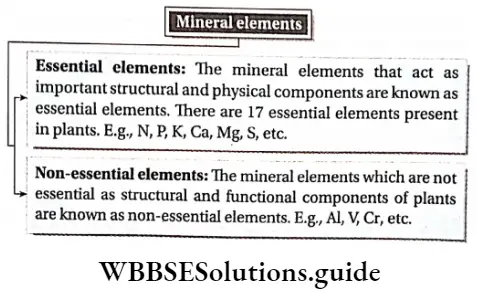
Criteria For Essentiality Of An Element As Nutrient
The term essential mineral element (or mineral nutrient) was proposed by Arnon and Stout (1939). They concluded that the following criteria must be met by an element for it to be considered essential. The criteria are
- In the absence of the mineral element, a plant must always be unable to grow, reproduce, or complete its life cycle.
- The function of the element must not be compensated by any other mineral element.
- The element must be directly involved in the metabolism of the plant.
- Deficiency of the element must cause abnormalities in the growth and development of the plant.
Epstein proposed two criteria for the essentiality of an element.
They are:
- Deficiency of the element, that makes it impossible for a plant to complete its life cycle;
- The element must be one of the main constituents of the chemical components and nutrients present in a plant.
Discoveries made by different scientists:
- In 1699, Woodward first theorized that plants absorb nutrients from soil.
- De Sansur (1804), specified the importance of some minerals in plant growth.
- Liebig (1840) proved that a plant’s development is limited by the one essential mineral that is relatively short in supply. This is known as the law of minimum. This principle is used to determine the quantity of fertilizer to be used in an agricultural field. He also discovered that plants absorb minerals from soil and C02 from air. He invented nitrogen-based fertilizer for agricultural use.
- Sir Francis Beacon (1627) proved that plants may be grown without soil. Julius Sachs (1860) formulated the first modem soilless nutrient solution for growing plants. In 1929, William Frederick Gericke coined the term ‘hydroponics’ for such a soilless technique of growing plants.

Mineral Nutrition Essential Minerals-Macro And Micronutrients, Their Roles And Deficiency Symptoms
The different mineral nutrients can be classified according to their sources, concentrations in the plant body, and functions.
Mineral Nutrition Classification of essential minerals “1 based on their requirement
Depending on the average concentration in plants, Hoagland (1944) divided essential mineral elements or mineral nutrients into two categories
Importance of mineral nutrition in plants and humans
“food minerals definition “
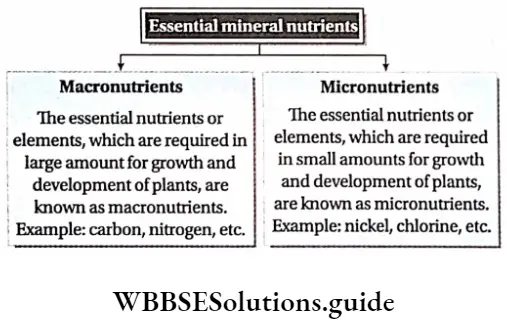
Features of macronutrients
The features of macronutrients are as follows—
- Among 17 essential elements, 9 are considered as macronutrients.
- These are—Carbon (C), Hydrogen (H), Oxygen (0), Nitrogen (N), Phosphorus (P), Potassium (K), Calcium (Ca), Magnesium (Mg), and Sulphur (S).
- These elements are found in high concentrations in the plant body (more than l-10mg per gram of dry weight).
- These elements are easily detectable due to their higher concentration. Carbon, hydrogen, and oxygen cover 96% of the total dry weight of the plant.
- These elements mainly take part in the synthesis of structural components of the plants and they play a vital role in the completion of their life cycle and reproduction.
- Some macronutrients play an active role in the regulation of osmotic potential.
Features of micronutrients
The features of micronutrients are as follows—
- These elements are found in small quantities in the plants (0.1 mg per gram of dry weight or less). Due to their low concentration in plants, they are termed trace elements.
- There are 8 micronutrients. These are— Iron (Fe), Chlorine (Cl), Boron (B), Manganese (Mn), Zinc (Zn), Copper (Cu), Nickel (Ni) and Molybdenum (Mo).
- Most of these elements act as co-factors (the non-protein part of enzymes) for different enzymes and also take part in the production of ATP in mitochondria through the electron transport chain.
- These elements become toxic when their concentrations in the plant body increase above normal. For example, boron is toxic for plants when its concentration increases above 200/jg- per gram of dry weight.
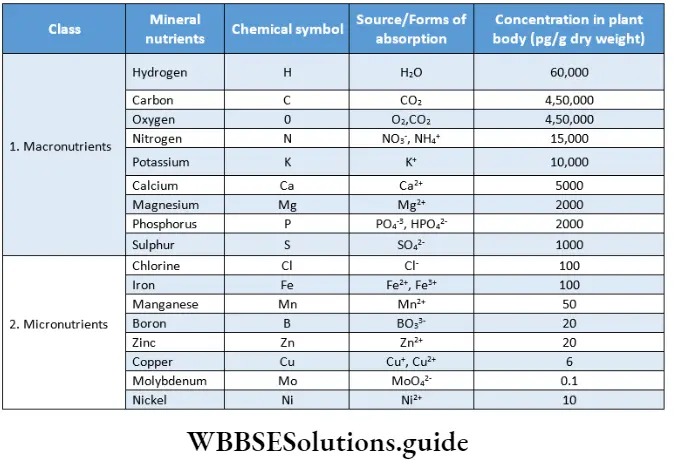
“where are the mineral nutrients mostly used in plants “
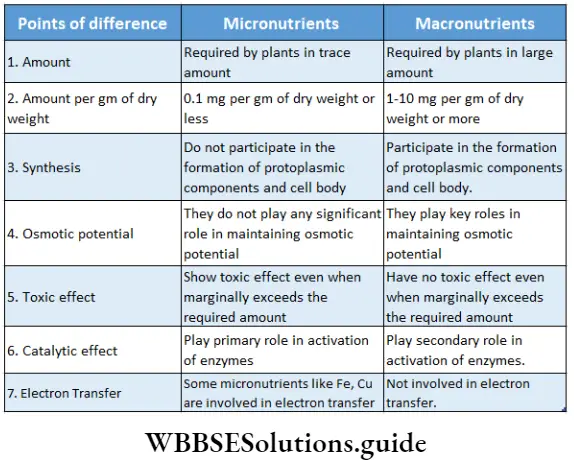
Mineral Nutrition Classification Of Essential Mineral Nutrients On The Basis Of Their Role In The Plant Body
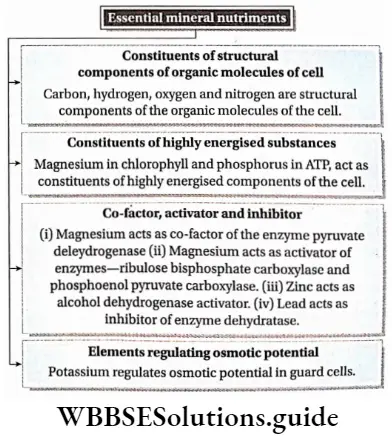
On the basis of function, mineral nutrients or essential elements are divided into four categories
Functions of mineral nutrients in the human bo
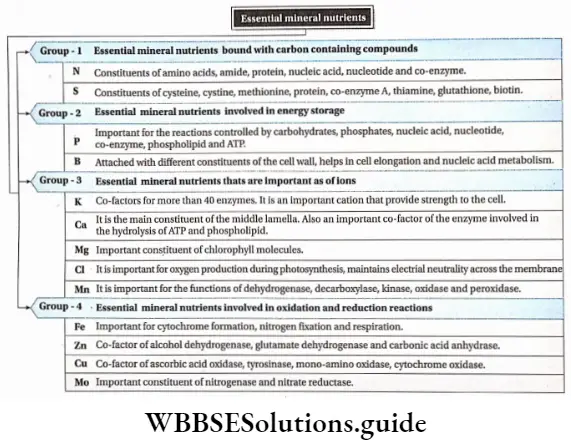
Mineral Nutrition Classification Of Essential Mineral Nutrients On The Basis Of Biochemical Functions
Mineral Nutrition Functions Of Essential Mineral Nutrients
Essential mineral nutrients are used for the following functions in the plant life—
Structural components: The essential elements such as C, H, N, S, P, Mg, and 0 serve as the constituent elements or building materials for the protoplasm, cell wall, and other important cellular structures. For example, cytochrome, an important compound of the electron transport chain, contains iron (Fe).
Some special mineral nutrients
- Catalytic nutrients: These nutrients act as co-enzymes. For example, Mn and Fe are parts of the mangano-protein of PS II and cytochrome c oxidase enzymes respectively.
- Protoplasmic nutrients: These nutrients help in protoplasm formation. For example, N, C, P, H.
- Structural nutrients: These nutrients help in the formation of cell walls in plants. For example, C, H, 0
Buffer: Though inorganic constituents have little influence on pH, certain ions such as phosphate bicarbonate and carbonate may act as buffers and thus regulate the pH of the cytoplasm. Plant tissues usually control the degree of acidity and buffer action, primarily by organic acids.
Hydration: The desirable degree of hydration of cell colloids is maintained by the essential elements. In general, monovalent cations increase hydration whereas, it is decreased by bivalent, particularly by polyvalent cations.
Permeability: The cell membrane’s permeability is also regulated by these elements. Some ions, for example, Ca2+, decrease the membrane permeability while others such as K+, and Na+, increase the permeability of the membrane.
Toxic effect: Some essential nutrients such as Mn, Cu, Zn, etc., become toxic for plants if their concentrations get increased above the normal level.
Functions of mineral nutrients in plant growth
Enzyme activity: Elements such as iron, copper, zinc, manganese, etc., are present in plants as co-factors or activators of various enzymes.
Energy production: Some elements such as Mg (in chlorophyll) and P (in ATP, GTP, CTP, etc.), play important roles in energy-producing reactions.
Regulation of osmotic potential: Different inorganic salts present in the cell sap, develop the osmotic potential and turgidity. The K+ ions in association with PO43– and Cl’ control the turgidity of guard cells. Thus, they are involved in the opening and closing of stomata.
Importance of mineral nutrition in agriculture
Transportation: The translocation of organic substances in the phloem is regulated by the elements B and K.
Balancing antagonistic effect: Heavy metals often show toxic effects. K, Ca, and Mg play an important role in the inhibition of the poisonous effect of high concentrations of trace elements as well as heavy metals.
Storage elements: C, H, 0, N, and S help in the storage of carbohydrates, fats, starch, and proteins.
Oxidation-reduction reaction: Different elements, such as iron, copper, etc., take part in electron transportation. These ions are found in different components of the electron transport systems like cytochrome, ferredoxin, etc. Due to variable valencies, they help in different physical functions through oxidation-reduction.
Role And Deficiency Symptoms Of Different Mineral Nutrients In The Plant Body
Different mineral nutrients play important roles in the plant body. Plants show certain morpho-physiological symptoms if these nutrients are not available in the required amount. Roles and deficiency symptoms of mineral nutrients in the plant body are discussed below.
Mineral Nutrition Macronutrients
Roles and deficiency symptoms of different macronutrients in the plant body are given below.
Mineral Nutrition Nitrogen (N)
Nitrogen Role:
- Nitrogen is a major component of amino acids, nucleic acids, hormones, chlorophyll, vitamins, and enzymes which are essential for plant life.
- Nitrogen plays a major role in vegetative growth.
Nitrogen Deficiency symptoms:
- Chlorosis and abscission occur in matured leaves.
- Deficiencies can reduce yields and cause retarded growth.
- Deficiency of nitrogen results in chlorosis. Sometimes, leaves and stems become purplish due to the accumulation of anthocyanin.
- Retarded growth of lateral bud.
Phosphorus (P)
Phosphorus Role:
- Phosphorus is necessary for seed germination, photosynthesis, protein synthesis, and almost all aspects of growth and metabolism in plants.
- It takes part in the formation of phospholipids, an important constituent of the cell membrane.
- It is also essential for flower and fruit production.
- Phosphorus is also involved in the synthesis of nucleic acid, nucleotides, RNA, DNA and ATP.
- Phosphorus plays an important role in energy metabolism when present in pyrophosphate, ATP, ADP, and AMP.
- It also takes part in the synthesis of other enzymes along with NAD+ and NADP+.
- Applications of large amounts of phosphorus without adequate levels of zinc may cause zinc deficiency.
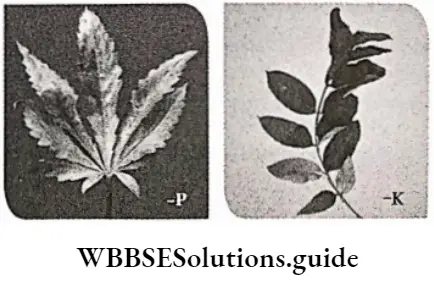
Phosphorus Deficiency symptoms:
- Retarded overall growth and development in plants.
- Stem and leaves become purplish-green due to the accumulation of anthocyanin.
- Sickle-leaf disease and necrosis occur in leaves.
- Abscission occurs in immature leaves.
- Delay in flowering and seed germination.
- Yields of fruits and seeds become poor.
- Premature drops of fruits and flowers may often occur.
Mineral Nutrition Potassium (K)
Potassium Role:
- Potassium is necessary for the synthesis of sugar, starch, carbohydrates, and protein. It is also essential for cell division in different meristematic tissues of the plant.
- It plays an important role in respiration and photosynthesis.
- It also acts as an enzyme activator. This element seems to function mostly as a catalytic agent in several enzymatic reactions.
- It regulates the water potential and turgor pressure in plants. Hence, it improves stem rigidity.
- It also increases the ability to resist cold and enhances the flavor and color of fruit and vegetable crops. It also increases the oil content of fruits and seeds.
- Its probable role is to provide the necessary ionic environment for preserving the proper structure of proteins and enzymes for optimal activity.
- It plays an important role in the opening and closing of stomata.
Potassium Deficiency symptoms:
- Retarded normal growth.
- Curling, necrotic spots in old leaves, and chlorosis occur.
- Reduced apical dominance and cambium activity.
- Root disease occurs in cereal crops.
- The rate of respiration increases.
- Rosette is found in potatoes, beat roots, carrots, etc.
- Dieback disease occurs from shoot tip to base in case of severe deficiency.
Mineral Nutrition Sulphur (S)
Sulphur Role:
- Sulfur is a structural component of amino acids, proteins, vitamins, and enzymes.
- It plays an essential role in chlorophyll synthesis. It takes part.in the nodule formation of leguminous plants.
- It maintains the structure of a protein by synthesizing disulfide bonds.
- It imparts a pungent flavor to many vegetables like mustard, onion, and radish.
- It plays an important role in the synthesis of biotin, thiamin co-enzyme A, etc.
- It also helps in growth and metabolism.
Sulphur Deficiency symptoms:
- Chlorosis first occurs in young leaves.
- Decrease in the quantity of juice in citrus fruits.
- Nodule formation does not
- Stems become hard and woody.
- Yellow patches develop on tea leaves.
Mineral Nutrition Magnesium (Mg)
Magnesium Role:
- Magnesium is the critical component of the chlorophyll molecule.
- It is necessary for the activation of plant enzymes to produce carbohydrates, sugars, and fats.
- It is used for fruit nut production and is also essential for the germination of seeds.
- It regulates the nucleic acid synthesis and the metabolism of fats and carbohydrates.
- It occurs as magnesium pectate in the middle lamella.
Magnesium Deficiency symptoms:
- Magnesium-deficient plants appear chlorotic. Chlorosis occurs between veins of older leaves and is known as mottled chlorosis.
- Increase in the concentration of anthocyanin, followed by necrotic spot.
- Inhibits plant growth and development.
- Immature leaves fall off from the plant.
Mineral Nutrition Calcium (Ca)
Calcium Role:
- Calcium is necessary for the activation of enzymes. Sometimes it acts as a second messenger inaction of some hormones, and enzymes along with calmodulin (calcium-modulated protein).
- It is a structural component of the cell wall and also maintains the permeability of the cell membrane. It influences water movement in cells and is also necessary for cell growth and cell division.
- Some plants need calcium for the uptake of nitrogen and other minerals.
- Calcium also plays an important role in the formation of chromosomes and spindle fibers during cell division.
- Calcium forms crystals of calcium oxalate (raphide) and calcium carbonate (cystolith) in many plants.
Calcium Deficiency symptoms:
- Deficiency shows stunted growth in stems, flowers, and roots. It inhibits the growth of meristematic tissue.
- Black spots appear on leaves and fruits.
- Chlorosis and necrosis occur in young leaves.
- Apices of the leaves curl in certain plants, such as cauliflower, beetroot, and tobacco. It is known as leaf hooking disease.
- Blossom end rot disease occurs in the case of tomatoes.
- Root hairs may develop swellings. The root system becomes short and highly branched.
Macro and micro mineral nutrients and their functions
Mineral Nutrition Micronutrients
Roles and deficiency symptoms of different micronutrients in the plant body are given below.
Mineral Nutrition Iron (Fe)
Iron Role:
- Iron is necessary for the functioning of many enzymes. It also acts as a catalyst for the synthesis of chlorophyll. It also plays an important role in photosynthesis and respiration as a part of the enzymes involved in these processes.
- Iron is the main constituent of electron carriers like ferredoxin and cytochrome.
- It is essential for the young growing parts of the plant. In chloroplast, iron mainly combines with proteins as phytoferritin.
- Under iron-deficient conditions, plant roots secrete ligands for iron uptake. The ligand binds to the iron and releases it at the root surface.
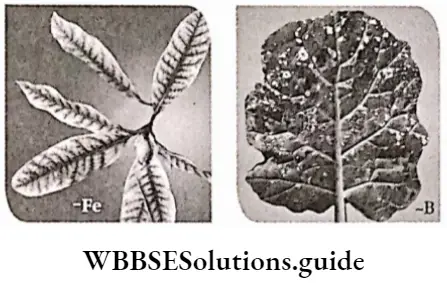
Iron Deficiency symptoms:
Chlorosis occurs in young leaves.
- Young leaves become pale in colour followed by whitening of leaves between veins. This is known as interveinal white chlorosis.
- Petioles become dwarf and weak.
- Respiration and photosynthesis are inhibited. Hence, normal growth is stunted.
Mineral Nutrition Boron (B)
Boron Role:
- Boron is necessary for cell wall formation, membrane integrity, and calcium uptake. It also aids in the translocation of sugars.
- Boron plays an important role in nucleic acid synthesis in meristematic tissues.
- It regulates water relations, active salt absorption, nodulation in legumes, fertilization of gametes, etc.
- Boron helps in pollen germination and elongation of pollen tubes.
Boron Deficiency symptoms:
- Inhibits root growth.
- Causes heart rot disease in beet, drought spot disease in apples, and water core disease in turnip.
- Degeneration of meristematic tissue.
- Boron deficiency kills terminal buds leaving a rosette effect on the plant.
- Leaves become thick, curled, and brittle.
- Fruits, tubers, and roots become discolored, cracked, and flecked with brown spots.
Mineral Nutrition Manganese (Mn)
Manganese Role:
- Manganese is involved in enzyme activity for photosynthesis, respiration, and nitrogen metabolism.
- It plays an important role in photooxidation and oxygen production photolysis of water during photosynthesis.lt helps in chloroplast formation.
- It acts as an activator of enzymes such as malate dehydrogenase, oxalosuccinic dehydrogenase, nitrate reductase, etc.
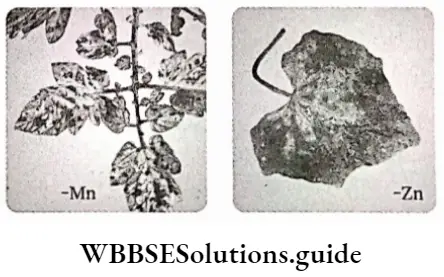
Manganese Deficiency symptoms:
- Interveinal chlorosis occurs in young leaves. This is followed by necrosis (death of tissue).
- The plant produces sterile flowers.
- Destruction of the thylakoid membrane.
- Greyspeck disease in barley, marsh spot disease in pea, and speckled yellow disease in sugar beet are seen when the plants are deficient in manganese.
- In neutral or alkaline soils, plants often show deficiency symptoms like stunted growth of both shoot and root with fewer, sterile flowers.
Mineral Nutrition Zinc (Zn)
Zinc Role:
- Zinc is a functional cofactor of several enzymes and growth regulatory hormones in plants.
- It is involved in the synthesis of auxin or its precursor amino acid, tryptophan.
- Zinc is essential for chlorophyll formation and it also prevents chlorophyll destruction.
- It is also essential for carbohydrate metabolism, protein synthesis and internodal elongation (stem growth).
- Zinc plays an important role in flower and fruit setting
Zinc Deficiency symptoms:
- Zinc deficit plants show a stunted internodal elongation.
- Zinc deficiency causes little leaf disorder in apples and leaf rosette in peaches.
- It also causes a reduction in flower and fruit production and delays seed growth.
- Interveinal chlorosis occurs in old leaves.
- Zinc deficit causes white bud disease in corn.
Mineral Nutrition Copper (Cu)
Copper Role:
- Copper activates many enzymes and is a component of phenolases, ascorbic acid oxidase tyrosinase, etc.
- It is necessary for the electron transport chain.
- It is also a component of cytochrome oxidase and plastocyanin etc., which are important components of respiration and photosynthesis respectively. So, copper is essential for both photosynthesis and respiration.
Copper Deficiency symptoms:
- Copper deficiencies dieback disease of the shoot tips.
- Terminal leaves develop brown spots.
- Deficiency also causes cause exanthema in which tree bark may develop splits from which gum exudes. Fewer fruits develop with necrotic spots and skin splitting.
- Copper deficiency causes less nodule formation in the roots of leguminous plants.
Mineral Nutrition Molybdenum (Mo)
Molybdenum (Mo) Role:
- Molybdenum is a structural component of the enzyme nitrate reductase, that reduces nitrates to nitrites.
- It also functions as a part of xanthine dehydrogenase.
- Molybdenum acts as a co-factor of certain enzymes, such as aldehyde oxidase. This type of enzyme catalyzes reactions like the conversion of abscisic aldehyde to ABA and the synthesis of ascorbic acid.
- This element is important for nitrogen fixation by nitrogen-fixing bacteria.
Types of mineral nutrients and their role in the body
Molybdenum (Mo) Deficiency symptoms:
- Deficiency may block protein synthesis and can cease plant growth.
- Seeds may not form completely, and nitrogen deficiency may occur due to a deficiency of molybdenum.
- Interveinal chlorosis occurs.
- Deficiency also causes leaf tip necrosis, whip tail disease in members of Brassicaceae, yellow spots in citrus fruits, and scaled disease of leguminous plants.
- Despite the presence of abundant nodules, legumes develop symptoms of nitrogen deficiency.
Mineral Nutrition Chlorine (Cl)
Chlorine Role:
- Chlorine plays an important role in the photolysis of water and the production of oxygen during photosynthesis.
- It helps in the cell division of leaves and the growth of roots.
- It maintains the density of the cell sap and ionic balance in the cell.
- Chloride ion is an important solute for developing osmotic potential.
Chlorine Deficiency symptoms:
- Deficiency symptoms include wilting, stubby roots, chlorosis (yellowing), necrosis, and bronzing.
- Distinctive smell in some plants like cabbage and radish may be decreased.
- The root becomes dwarfed and swollen. Root apex becomes round.
- Inhibits photosynthesis and thus flowering and fruiting are retarded.
Mineral Nutrition Nickel (Ni)
Nickel is recently considered an essential trace element for plants according to the Agricultural Research Service Plant, Soil and Nutrition Laboratory in Ithaca, NY.
Nickel Role:
- Nickel is an important component of different enzymes such as urease, hydrolase, superoxide dismutases, amylase, protease, ribonuclease, etc.
- It plays an important role in nitrogen metabolism in plants. It is required for the enzyme urease to break down urea to liberate nitrogen in a usable form for plants.
- Nickel is also required for iron absorption.
- Nickel helps in seed germination.
- During environmental stress conditions nickel-containing antioxidative enzymes play important roles in plant survival.
Nickel Deficiency symptoms:
- Small spots occur on the leaves.
- A deficiency of nickel inhibits the production of viable seeds.
- Several abnormalities of plants are also caused by nickel deficiency.
- The urease becomes inactive. Inactive urease is unable to hydrolyze urea into ammonia. As a result, accumulated urea causes toxicity in plant cells.
Role of minerals in plant growth and development
Mineral Nutrition Diseases Due To Deficiency Of Essential Mineral Nutrients
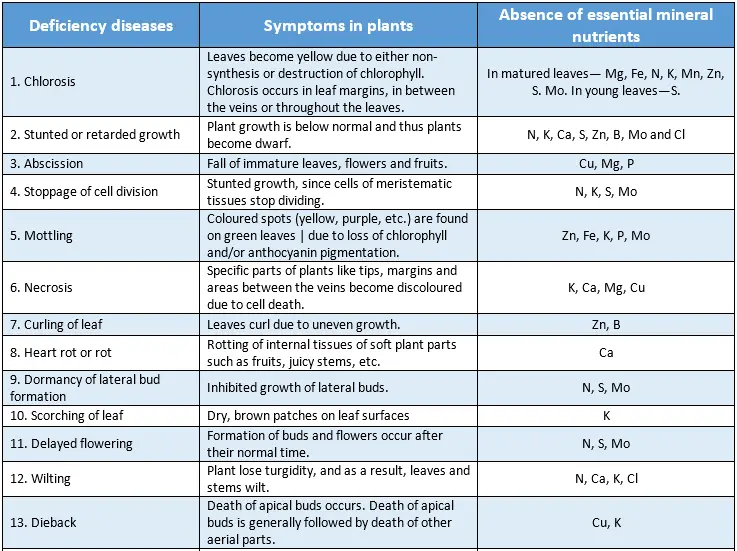
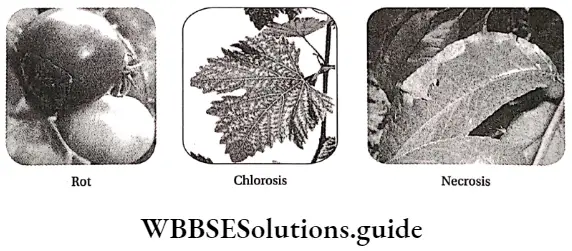
Plants suffer from different diseases due to the absence of essential mineral nutrients. They are given in a tabular manner along with their visible symptoms.
Points To Remember
- About 96% of the total dry weight of organisms is composed of carbon, hydrogen, and oxygen. Except for these components, the plant absorbs other inorganic components from the soil.
- The growth of any plant depends on the presence of minerals present in the soil. Most of the essential inorganic components of plants are minerals, so these nutrients are also known as mineral nutrients.
- A total of 60 nutrient components are found in different plants. The important components required by plants are known as essential elements which are of two types—micronutrients and macronutrients.
- 9 macronutrients are — C, H, O, N, P, K, S, Ca, and Mg.
- 8 micronutrients are — Fe, Mn, Mo, B, Zn, Cu, Cl, and Ni.
- Many species of plants are able to accumulate metals from soil and water in large quantities. Their ability is utilized to remove metallic pollutants of soil and water from the environment. This is known as phytoremediation.
- Agricultural lands are generally deficient in N, P, and K, hence, these minerals are known as critical elements. The fertilizer which contains these three components is known as a complete fertilizer.
- The physical or structural changes that occur due to deficiency of any mineral are known as deficiency symptoms or hunger signs.
- Hydroponics is the method, where plants are grown in nutrient solution without soil. This is also known as soil-less culture or solution culture.
- A balanced nutrient solution is produced by dissolving different minerals in distilled water.
- Common balanced nutrient solutions are—Knop’s solution, Hoagland solution, Arnon’s solution, and Sachs’ solution.
- Deficiency of any mineral can be determined by hydroponics or solution culture.