
Chapter 7 Lifestyle And Culture Of sultanate And Mughal Era Bhakti Movement
Origin:
The impact of the Bhakti movement brought a revolution in life as a whole in the history of the mediaeval age. The revolution brought by the Bhakti cult in religious life during the Sultani age was a unique event.
people raised their voices against the superstition and conservatism of Hinduism after being influenced by the democratic policies of Islam. In this age, the Bhakti cult was a new theory against eternal conservatism.
“Lifestyle and Culture of Sultanate and Mughal Era summary for Class 7 WBBSE”
The main say of this theory was that Bhakti itself was the only main gateway of permanent relief. The supernatural union of Atma and Paramatma was the main object of Bhakti and work only brings relief of Atma.
Read and Learn More WBBSE Notes For Class 7 History
It is not achieved through yagnas and other religious rituals. The Bhakti movement became popular in India between the 7th to 12th centuries. Historian Gearson said that the ideals of the Bhakti cult had percolated into the Hindu religion from Christianity.
Prof. Yusuf Hasan thought that the Bhakti cult originated from the examples of Bhakti towards Allaah in the Islamic religion. Some said that Veda was the source of the Bhakti cult.
“WBBSE Class 7 History Chapter 7 important questions and answers”
Many people thought that different religious texts of Hindus are the main source of the Bhakti movement as this Bhakticult were mentioned in religious texts like Vishnupuran, Geeta, Bhagabat, Ramayana and Mahabharata.
Main Tenets:
The specialities of the Bhakti cult were
- To believe in monotheism.
- A man can succeed through yoga by real. Bhakti.
- All men are equal and they can build up social equality and fraternity by giving up hate, and anger to each other.
- A real guru can give the impression of God.
- To worship Rama and Krishna.
- To hate worshipping idols, the dominance of the priests and the caste system.
- To concentrate and emphasise reasonable behaviours and acts rather than upon superstitions, useless rituals and complicated religious processes.

Chapter 7 Lifestyle And Culture Of Sultanate And Mughal Era Different Propagators Of Bhakticult Movement
Shankaracharya and Ramanuja:
Shankaracharya by his ‘Adaytiyabad’ and Ramanuja by his ‘Bishistadaytiyabad’ tried to re-establish Hinduism in South India. Jagat Guru Shankaracharya built Joshi Math, Gobardhan Math, Sringeri Math and Sarada Math in different places of India just to save Hinduism from the clutch of Buddhism.
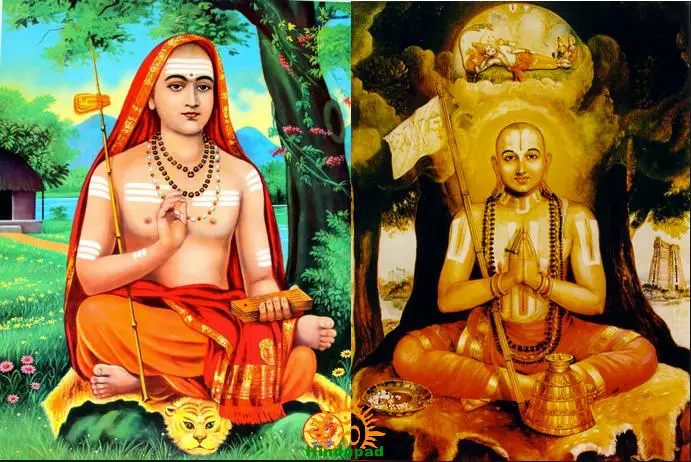
Ramanuja was born in 1166 A.D. in Madras. There are many followers of him in South India. The followers of ‘Shaiva Nainar’ and ‘Vaishnava Albars’ inspired people to worship Shiva and Vishnu respectively although Ramanuja was considered as the main person behind the Bhakti movement in South India.
Ramananda:
Ramananda was the main disciple of Ramanuja. He was born in a Kanyakubja Brahmin family in Allahabad towards the end of the 14th century. His idols were Sri Ramchandra and Sitadevi. He was the founder of the “Ramat Vaishnab” community.
He said that it was possible to get permanent relief if one worships Rama and Sita. Ramananda took the first initiative to propagate the Bhakti cult from North to South India. He propagated his theory in Hindi.
He made many people as his disciples irrespective of any gender and creed. The main disciples among the 12 ones were Kabir (Muslim weaver) Ravidas (Cobbler), Sadhan (Slaughter), Sona (Barbar) etc.
Ramananda used to say “Jatipati Puchhai Na Koi/Hari Ko Bhajo So Hari Ka Hoi.”
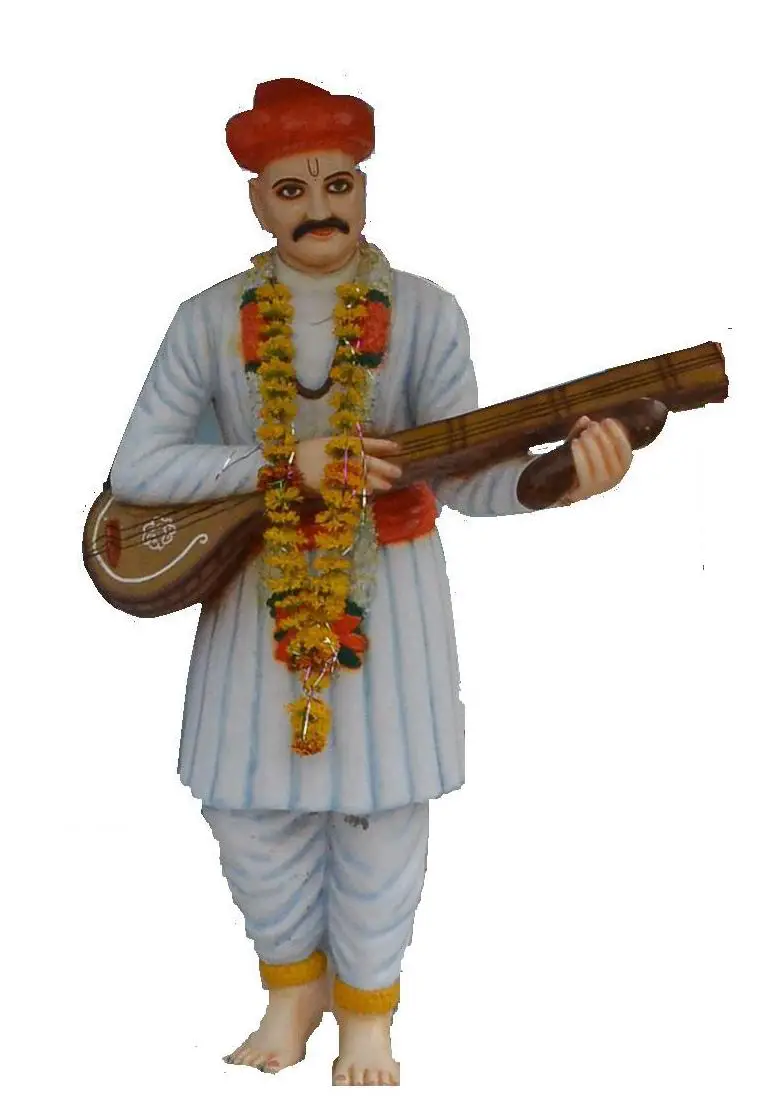
Namdeva (1270-1350 A.D.):
Namdeva was at first the follower of Vishnu. According to him, only worshipping God in a clean mind brings the ultimate. He did not find any difference between Hindus and Muslims.
Ballavacharya (born in 1479 A.D.) :
Bailavacharya was born in a Brahmin family near Varanasi. His parental house was in the South. He came to the royal court of king Krishnadev Ray of Vijayanagar after meditating for Krishna in Mathura and Brindaban for some time.
In this time, he was propagating Vaishnavism in the South. He said that serving to Krishna and serving to animals are the causes of the union of Atma and Paramatma. In this process, souls became free.
Bhakta Dadu (1514-1603 A.D.):
Some said that Bhakta Dadu was born in a wealthy Muslim family in Jounpur in Uttar Pradesh and some said that he was born in Ahmedabad of Gujarat. He became a disciple to Sheikh Budhan, a Sufi Saint.
He realised the cream of religion after travelling through the entire India. He considered Hindu-Muslim, highs and lows as the same and equal. He used to say “I am neither a Hindu nor a Muslim. I am just a saint of Almighty God.”
“Cultural life during Sultanate and Mughal period Class 7 WBBSE notes”
According to John for 40 days between Akbar and Dadu in ‘a solitary field near Fatehpur Sikri on the subject of human life.
Kabir:
Kabir was the main disciple of Ramananda. Kabir was born in 1398 A.D. Some historians claimed that Kabir was contemporary to Sultan Sikandar Lodi. He was an illegal son of a Brahmin widow lady.
A Muslim weaver named Niru brought him up when he was abandoned by his mother beside a pond. Hence, right from childhood, a sense of coexistence between Hindus and Muslims developed in his mind.
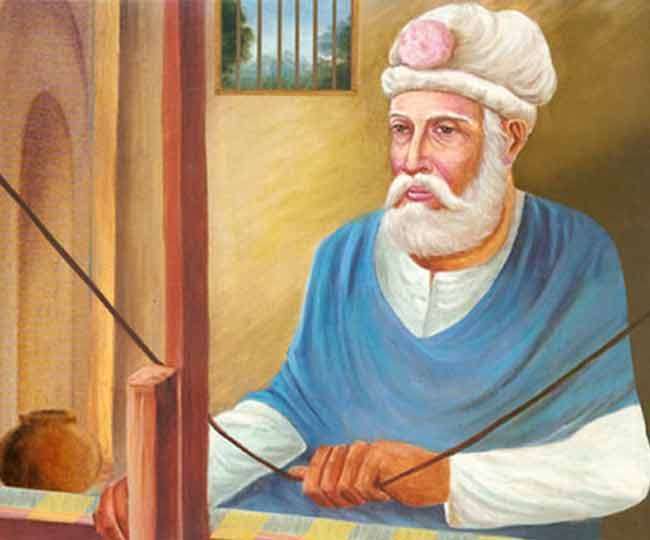
He said, that Hindu and Muslim are two pots made out of the same soil. Ram, Rahim, Hari, Allaah, Sai, and Iswar are all the different forms of one and only Parameswar.
Siddhi can not be achieved by simply worshipping the Gods or Namaj or by pilgrimage. His ideas and advice had been mentioned in ‘Doha’ written by him in Hindi. The followers of Kabir are known as ‘Kabirpanthi’.
Historian Tarachand commented, “Kabir’s main object was to propagate the ideology of love irrespective of any religion or caste.”
Guru Nanak
Nanak, the first Guru of Shikism (1469-1538 A.D.) was born in Talbandi village (Now Nankhana) of Lahore in the year 1469 A.D. in a Kshatriya family. He travelled to Srilanka, Mecca, Bagdad etc.
To know the real truth in life and the world by leaving apart his family, though he married in his first life. Finally, he realised that ‘Mokhhaypalav’ is not possible by worshipping idols, pilgrimages or religious rituals.
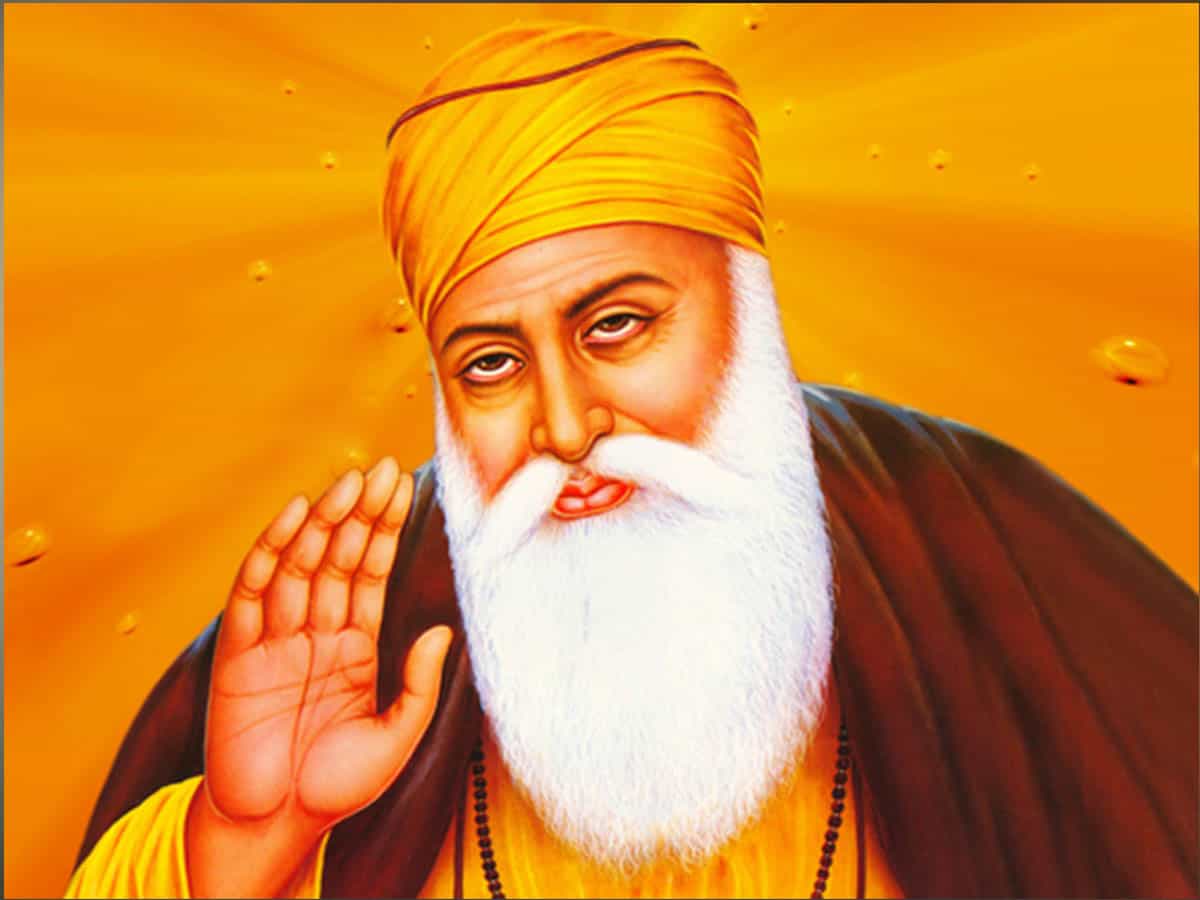
He said to devote to God in the form of truth. But before doing that one should do ‘Nam’ (Pray to God) ‘Dan’ (Serve to animals) and ‘Sthan’ (To purify one’s own body. This religious ideology put forward a bold step in social equilibrium.
This ideology was against caste disparity and untouchability. He said that social and religious life gets new momentum if everyone respects the religion of the other.
His followers are known as Sikhs and his advice had been compiled in ‘Granthasaheb’ or the Original Text in Punjabi gurumukhi language.
Srichaitanya (1486-1533 A.D.)
Srichaitanya was born in 1486 A.D. in a Brahmin family of Nabadwip. It was ‘Dolpurnima’ night. His childhood name was Biswambhar and his parents used to call him ‘Nemai’ affectionately.
“Class 7 History Chapter 7 WBBSE Sultanate and Mughal lifestyle detailed notes”
The neighbours used to call him ‘Gouranga’ because of his fair complexion. His mother was Sachidevi and his father was Jagannath Mishra. He lost his father at the age of eleven.
He was appointed as a teacher in ‘Tol’ after completing his studies at the age of twenty. In this time, he became famous by defeating pandit Keshab Kashmiri by. logic. He took Sikhs in Krishna Mantra from Iswar Puri when he was twenty-two.

At the age of twenty fourth became a saint by departing his wife Vishnupriya and adopting the name, Srikrishna Chaitanya. During the last 24 years of his life, he spent in ‘Dharmaprachar’.
He used to say ‘Trinadapi Sunichena Tarorpie Sahishnuna. Amanina manadena Kirtaniya sada Hari.” According to him, all creatures in this world are the creations of Srikrishna.
One should be as soft and as tolerant like a grass for rendering kind, Love, Bhakti and sacrifice to living beings. Yaban Haridas, Nityananda, Sribas, Rup, Sanatan and Jeeb Goswami, Prataprudradev, again-Madhai etc. were the main followers of Neo Vaishnavism founded by Sri Chaitanya.
Dr Sukumar Sen told that he had brought a new rise in literature, religion and philosophy in Bengalee life. Bimanbehari Majumder said that Srichaitanya died in Puri immaturely on 9th July 1533 A.D. at the age of only 48 years.
Mirabai and Shankardeva:
Mirabai was born in Kurki Village in Jodhpur approximately in the year 1504 A: D. and died sometime between 1563-73 A.D. Historian Col. Todd said that Mirabai was the wife a Rana Kumbha, who was contemporary to Akbar.
Some said that King Bhojraj, the son of Sangram Singha was her husband. Many historians commented that she was contemporary to Akbar, Bhaktamal and Rup Goswami.
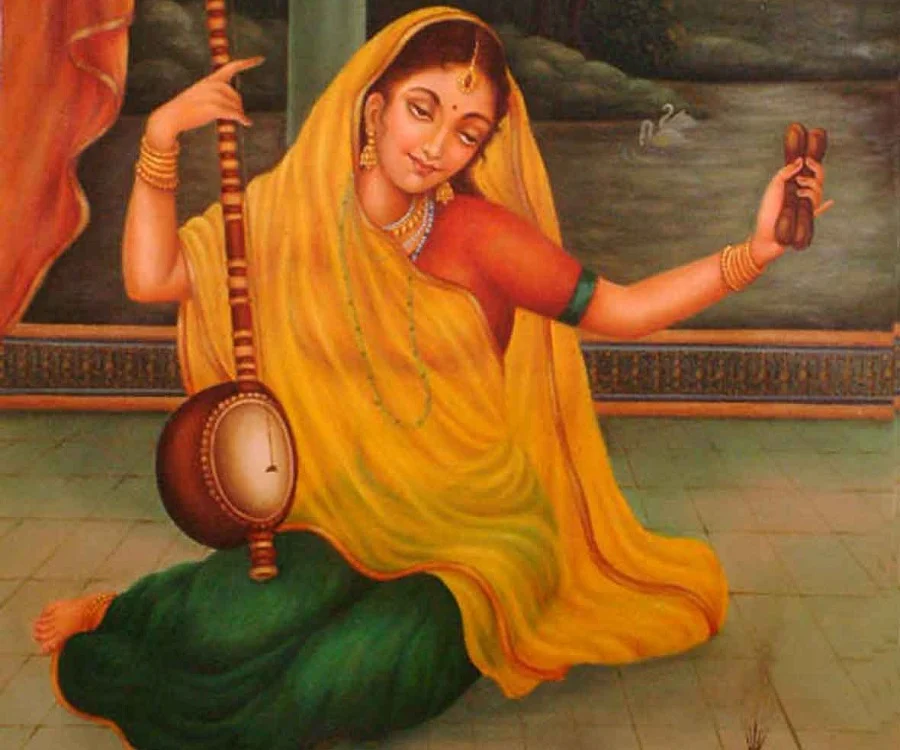
Though Mirabai was a housewife, yet she came to Mathura and Brindaban by leaving behind the royal palace. She became very much involved with the love of Giridharilal Srikrishna and devoted herself completely.
She said that it was possible to reach God by love, bhakti and respect. The Bhajan’s of Mira written in Brajabuli Language are invaluable treasures in Bengali literature.
During the same time, Shankardeva, a Bhakticult leader from the Brahmaputra valley of Assam is worth remembering. He was a very sincere propagator of Bhakicult.
Chapter 7 Lifestyle And Culture Of sultanate And Mughal Era Consequence And Importance Of Bhakti Cult
Bhakticult registered a far-reaching effect on society, religious life, politics and culture of India.
Firstly, due to the influence of the Bhakti cult, the culture of literature started in many regional languages apart from ‘Douha’ of Kabir, ‘Granthasaheb’ of Nanak, ‘Chaitanya Charitamrita’ of Krishnadas Kabiraj and ‘Chaitanya Bhagabat’ of Brindaban Das.
Secondly, the disparity between men and women and between high and low decreases to a great extent. The Asuryampashya ladies of the mediaeval age got the taste of religious and social independence.
“WBBSE Class 7 History Chapter 7 solved question paper”
Thirdly, the religious complications and outwardly showmanship diminish to a great extent. As a result, religions are open for everybody. Worship of idols and dominance of the priests were reduced considerably,
Fourthly, due to the influence of the Bhakti cult leaders, Hinduism became much broader and more friendly. The incidents of the low-caste Hindu people being converted to other religions were reduced.
Fifthly, the influence of the Bhakti cult was far-reaching for the improvement of Hindu- Muslim relationships.
According to Dr Nemaisadhan Bose, it had influenced political leaders to a great extent. The rulers took the ideology of the welfare of the people by accepting humanitarian welfare. Akbar himself was a glaring example.
Sixthly, according to Dr Ramesh Ch. Majumder, without the Bhakti movement the darkness of the Bengalee life would not have been abolished. Prof. Amaiesh Tripathi too, thought that the Bhakti movement was a fruitful event in the history and tradition of the Bengalee race.
Chapter 7 Lifestyle And Culture Of sultanate And Mughal Era Sufi Movement
Origin:
As the Bhakti movement was against the religious conservatism and superstitions of Hinduism so also the Sufi movement was against the Muslim religion. The rise of Sufism was initiated from the 10th century.
But it was fully bloomed in the 13th, 14th and 15th centuries. But the conservative Ulemas did not like the Sufis because they were broad and wide. Sufis did believe that all religions are “the manifestation of the desire to know the truth”.
Sufism is the refined form of Islam. Sufis came to the picture in the world of Muslims after the death of Mohammad. The main source of Sufism was ‘Alhadiz’ the text of compiled advice of Hazrat Mohammad and holy the Koran.
It is a mixed theory. Some historians said the Shiya Muslims of Persia became influenced by Buddhism while they were travelling through different parts of Asia.
So from the synthesis of Buddhism, Hindu Vedanta and other religions, Sufism evolved. The philosophy of nonviolence, dedication to God, sacrifice, yogas, and fasting of Sufies gave rise to this ideology, Abul Fazal said it was Koran, and not Buddhism, Hindu and Vedanta, was the main source of Sufism.
Prof. Yusuf Hasan similarly connected that rather Bhakticult evolved from the ideology of Islam. For this reason, Sufism is called ‘a mystic sect of Islam’.
The word Sufi has been derived from the word ‘Sufi’ or ‘Safa’. The word Sufi means who wears heavy woollen clothes. And the word Safa means to lead a holy life. So the Sufi Saints and Pirs advised people to lead a simple and sacred life.
Main Tenets:
The teaching of Sufism is ‘God is one and everything is his parts’.
The basic tenets of Sufism are
- God is only one and men are his sons.
- Blessings of God can be achieved if one loves people: An English poet said ‘To love God is to love mankind’.
- All religions are beautiful and roads to reach God.
- All men are equal irrespective of race religion and caste.
- Honest living helps get the rituals company of God rather than performing religious formalities. And
- Spiritual advancement is possible by logical and reasonable thoughts. The philosophies like God is one sympathetic towards mankind etc. got a berth in Sufism. Different religions, Iswartatta etc. are the basic theory of the ‘attachment-free’ theory. The specialities of Sufism were syntheses, broadness, application, humanity etc.
Duties:
The Muslim Sufi saints are called ‘Pir’ or ‘Darbesh’. Sufis thought that without any Guru devotion to God was impossible. For this, some instructions are to be observed
- Namaj (Prayer).
- Roza (Fasting).
- Hazz (Pilgrimage to Mecca).
- Toujakul (To be a bachelor).
- Basal (Achieve freeness).
- Sabar (Tolerance for other religions).
- Fakir (To observe poorness).
- Juhud (Kindness).
- Tauba (Repentation of doing any sin to guru).
The sufi saints used to advise to observe these instructions for building up a healthy society.
Leaders:
The Sufi saints Rabia and Mansur-Bin-Hazzaz of Basra port propagated Sufism in the 7th century with the object of the union of man and God.
The subsequent propagators were Al-Gazali, Khoaja Jalall, Mainuddin Chisti, Nizamuddin Aulia, Shihabuddin Surabardi, Hamiduddin Nagori, Nasiruddin Chirag, Baktiar Kaki, Hazrat Kazi, Hazrat Fariduddin, Nuruddin, Syed Ali Hamjani etc.
Division:
Two Sufi communities on the basis of original Sufism became popular-
- Chistiorder and
- Surawardiorder.
Towards the end of the 15th century, many other factions developed like Kaderi, Kalandari, Sattari and Nakshbandi. The broad-minded Sufi Saints were known as Be-Sahara and comparatively more conservative Suffis were known as Ba-sphere.
The Sufis were divided into 15 Groups (Shilsila) for the publicity of Sufism. For this reason, khanka or dargahs were built in different places.
Chisti Community:
The propagators of the Chisti community were much more broad-minded. Christie’s were quite popular in Punjab, ‘Rajputana, Sind, Delhi, Uttar Pradesh, Bengal etc. Mainuddin. built his darga in Ajmer. He founded Chistiorder in 1192 A.D.
He propagated Sufism by making Ajmer as the centre. He used to advise his followers ‘Be broad like a river, be affectionate like the sun and adopt the hospitality like the earth’.
Qutubuddin Baktiar Kaki, his main disciple, got respect from Illtutmis. Nizamuddin Aulia started propagating Sufism coming from Afghanistan to Delhi. He built a Darga in Delhi in 1236 A.D. with the cooperation of Alauddin Khalji.
Khoawaja Shahjalal, Nasiruddin Chirag was his main followers. ‘The Parrot of Hindustan Amir Khasru described Nasiruddin as Chirag-i-Delhi or the light of Delhi.
The propagators of the Chisti ideology believed that money was the main constraint of religious thought. They thought that policies also was harmful for religious life. Sirajuddin expressed these views in Bengali in his book ‘Akhisiraj’.
These saints did not think that money and politics were harmful for religion. Hence they had direct interaction with politics. This ideology was propagated in Punjab, Multan and Bengal.
Suhrawardi Community:
The propagation of the Suhrawardi order started after 1204 A.D. Shihabuddin was the founder of this ideology. His main disciple was Hamid Uddin Nagori. But the popularity of this ideology was comparatively less.
The Sufi communities like Kaderi, Sattari and Nakshwandi order rose in the 15th century. They all followed the regulations of Shariyati. But the Kalandari order did not recognise the Shariyat.
The broad-minded social justice and equilibrium inspired the lower castes of Hindus.
Impacts:
The influence of Sufis were there in the fields of society, religion, politics, culture etc. Historian Taher Ali said that the welfare activities of the Sufis influenced society.
By analysing the influences of Sufi it is found-
- Due to religious coherence between the Hindus and Muslims the deities like Banabibi, Olabibi, Jholabibi, Gazibaba, Dakshin Ray, Ma Shitala, Dharma Thakur, Satyapir, Jayapir, Manikpir etc. became Gods and Goddesses of everyone.
- The literature and culture became much improved. This influence was noticed in the writings of Amir Khasru, Omar Khayam, Rumee, Hafez, Shaikh Shadi etc.
- Such influence were also noticed in the Indian rulers for setting up the ideology of religious coherence. Sher Shah, Alauddin Khalji, Akbar, Shah Jahan etc. were influenced by Sufism.
- Sufism had contributed towards the exposure of the Bhakti cult.
- The religious tolerance of Muslims increased. Akbar got the concept of Din-i-llahi from Sufism. Malik Mohammad Jaysee etc. used to sing ‘Sam Sangeet’ written on the basis of Sufism.
According to Dr Iswariprasad, “Sufism is very much like Vedantic philosophy which teaches that the individual souls are only manifestations of the supreme soul in which they are finally immersed.”
Chapter 7 Lifestyle And Culture Of sultanate And Mughal Era Society And Culture Of The Sultanate Period
There was a massive change in the society, economy and culture of India as a result of 300 years of Sultanate rule. This change showed a peculiar assimilation of Hindu and Islamic customs and rituals, food and entertainment, art and culture.
Society:
The unity of Hindu and Muslim cultures can be understood by a discussion of the society of the Sultanate period. The majority of the aristocrats of the Sultanate were the Amirs and the Omrahs.
Besides, a few high officials were also considered as aristocrats. There were Arabs, Persians Turks, Habshees, Afghans and Egyptians among the aristocrats. Both Hindus and Muslims were present among the merchants.
They comprised the middle class through the word middle class was not common then. Doctors, clerks, and shopkeepers also belonged to this class. The peasants, slaves and workers formed the lowest rungs of society.
“Art, architecture, and literature in Sultanate and Mughal era Class 7”
Slavery was an essential feature of the middle age. Because slaves had prominence in that period. The Ulemas were dominant in society. They were the interpreters of the ‘Shariyat’.
Dr Qureshi says that the theocratic model of the state during the Sultanate was possible because of the dominance of the Ulemas. It is known from Amir Khasrau’s book ‘Khajain-ul- Futuah that the peasants and the workers were the deprived groups.
There was a synthesis of Hindu and Muslim cultures. A very good example of it is the marriage of a Hindu princess Devaladevi with the Muslim prince, Khijir Khan, son of Alauddin Khalji.
The picture of Hindu conservation which is found from the 11th-century account of Al- Beruni became much more rigid during the Sultanate period. The Muslim society was influenced by the early marriage, dowry system and seclusion of Hindu women.
The Parda of the Muslims was similar to the seclusion of the Hindus. The Hindu women could never see the sun, while the Muslim women had to hide their faces with a back piece of cloth. This was a regular feature of social discrimination.
There was a diversity in dresses. The Muslims used to wear long coats (Alkhallha) and Borkhas (covered dresses). The Hindus also started wearing similar dresses. The choga and the chapka became common in festivals.
Many social customs were interested in this society. A Portuguese writer referred to this mixed culture to show the economic and social progress of the period in a book named Summa Oriental.
K. M. Ashraf stated in ‘Life and condition of the people of Hindusthan’ that the changes which were introduced in the Hindusthani lifestyle in the Sultanate period became much more evident during the Mughal Age.
Culture
The main languages of the literature of the Sultanate period were Persian, Urdu and Sanskrit. The main literary works were the works of Amir Khasrau, Bidagdha Madhab and Lalit Madhab of Rup Goswami, Sanskrit texts of Jaisingh Puri, many works based on Karmamimamsa of Parthasarathi Mishra and Pradyumnasamudaya.
Amir Khasrau was famous among the Persian literate, he was known The ‘Parrot of Hindusthani’. The Upanishads or the Ramayana, the Mahabharata were translated into Persian in this Age.
The Urdu language was created by an intermixture of Persian and Hindi and many texts were written in Urdu. Besides; the famous pandit in Smriti was Vachaspati Mishra. Many of the Smritis were translated in this period.
This helped the growth of an Indo- Islamic culture. Music also became popular as entertainment. Ragas like Meghamallar, Bhairavi, and Iman Kalyan were very popular in this age. The people had a particular attraction for classical music.
There was a synthesis of Hinduism and Islam in the society and culture. Chowgan or polo was the main game of entertainment. The Muslims learnt this game from the Hindus besides there were other forms of entertainment like horse racing, hunting, gambling etc.
There was a growth of regional literature in the Sultanate period. Books like Manasamangal and Srikrishnabijaya were written during the Iliyas Shahi and Hussain Shahi rule in Bengal.
Similarly, works like Amaktanalyada, different books written by Poddan the court poet of Raja Krishnadeva Ray of Vijayanagar had enough literary excellence. Besides, the works of Vidyapati and Chandidasa were creations of this period.
The Indo-Islamic influence was found in art architecture and sculpture. The best specimens of architecture were found in the Qutubminar of Qutubuddin, Quasat-ul-Masjid, Alai Darwaja and Jamayatkhana Masjid of Alauddin the tombs of Firoz Tughluq and Adilshah Chandminar of Ahmadnagar Jame Masjid of Daulatabad etc.
“WBBSE Class 7 Lifestyle and Culture of Sultanate and Mughal Era mind map and key points”
In the provinces, the wonderful productions were the Adina Mosque of Sikandar Shah, the Borasona and Chota sona Mosques of Hussain Shah, the Eklakhi Mosque of Nusrat Shah, Atala Masjid, Kadamrasul, the tomb of Hussain Shah etc.
Many temples were beheaded and turned into tombs at this period. In astrology, the famous Arabic astrologer Abu Masar learnt Indian astrology.
Alberuni also learnt the Upanishads and many Hindu texts, The Hindus learnt to produce calendars from Muslim astronomers. There was an improvement in the various fields of silence.
According to the Hindu nationalist historian R. C. Majumder-The Hindu and Muslim societies had a history of struggle in this country, though the main reasons were political and economic. Religious reasons were not very important.
When Muslim rule was established in Hindu dominated country, naturally there was a cultural interaction by the assistance of the Hindus and mutual coexistence, Bipan Chandra, Romila Thapar and other historians have given special emphasis on this Hindu-Muslim cultural assimilation of the Sultanate period in their famous book ‘Communalism and the writing of the History of India’.
Chapter 7 Lifestyle And Culture Of sultanate And Mughal Era Society And Culture Of Bengal In Sultanate Age
After the invasion of Bengal by Baktiar Khalji, Bengal became Muslim-dominated (1204 A.D.). Sultans had dominance over Bengal after the establishment of the Sultanate empire in Delhi (1206 A.D.)
But during the regime of Sultan Mohammad Bin-Tughluq, Bengal became free from the hands of Delhi. Samsuddin Illyas Shah set up an independent Muslim ruling in Lakshanawati or Gour in 1342 A.D. As a result, Bengal became free.
Thus an overall change in the public life of Bengal was noticed during the regime of the Illyas Shahi dynasty and later during the Hussain Shahi dynasty (1493-1535 A.D.).
Especially there had been a great change in the social and cultural life of Bengal. So the Sultanate age was particularly significant in the awakening of the Bengali race.
Society:
Illyas and Hussian Shahi rulers ruled altogether for 200 years. These rulers appointed many Hindu employees. Thus the harmony of Hindus and Muslims increased. The non-Muslim people were called ‘Jimmi’ or sheltered in the Muslim state.
Though the Muslims had the intention to convert the country in a Muslim one (‘Dar-ul-Harb’ to ‘Dar-ul-Islam’) yet the Bengal was an exception.
There was no such anti-Muslim feelings among the Hindus because Muslims did not take any policy for attacking the Hindus or destroying the temples in Bengal.
Dr Jadunath Sarkar considered that a new era had been started in Bengal from the rule of Illyas Shahi. Al-Beruni, during his visit to India, noticed the existence of a caste system, racial disparity and untouchability.
The society was dominated by the high society because of the reason Ballalsen had introduced the ‘Kulinism’. The Hindu society was divided into four classes- Brahmin, Kshatriya, Vaishya and Sudra.
There was no dearth of effort on the part of the conservative Hindus to maintain the caste system strictly. But as Srichaitannya appeared during the regime of Hussain Shah, the differences between the high and the low, Hindu and Muslim, touchable and Intouchables.
Became abolished absolutely. The wall of the difference washed away with the flood of Bhakti. This unique moment of Hindu-Muslim union or harmony never came before. According to Dr Sukumar Sen, Chaitanya awakened the Bengali race.
There developed many sub-castes during the end of the Sena dynasty. These were Kayastha, Kulin Kayastha, Teli, Malakar, Kangsabanik, Subarnabanik etc.
The Bhakti movement during the Sultanate age revolted against social narrowness, exploitation etc. and tried to establish social equality and justice.
There were systems of child marriage, burning of Sati and ignorance towards the female child in the Hindu society. These ideas and viewpoints gradually started changing and this change was a great gain for Bengali life.
But some historians thought that these customs and systems were changed just to save society from the influence of Muslims.
Pandit Madhabacharya of Vijayanagar explained these social restrictions and systems first in his book ‘Kal Nirnay’ written by him which was based upon Parashar-smriti (1335-60 A.D.)
Then pandit Visweswar wrote Madan Parijat, Kuluk wrote a note ‘Manusamhita’ and Rajhunath Shiramoni explained the reasons of different rituals in Hindu society during the Sultanate dynasty.
Muslim Ulemas also pressurised the ruler class to control the Hindus. Kazi. Mughisuddin said “The Only duty of the Hindus was to pay tax. They were destined to extreme grief and sorrow as directed by God.”
But due to the rise of Sufism and due to the appearances of Sufi saints Nizamuddin Aulia, Muinuddin Christ etc. the scope fo Hindu-Muslim harmony became wider.
Culture:
The flow of cultural evolution in Bengal during Illyas Shahi and Hussian Shahi regimes. During the Illyas Shahi regime, trade and commerce, agriculture, art etc. started developing in Bengal.
İban Batuta described Bengal in this stage as a ‘State of prosperity’. The boundary of Bengal extended up to Chilka lake of in Orissa, Kathmandu of Nepal and Kamrup in the East.
According to Dr Syed Nurul Hassan, Illyas Shah started a golden age in the history of Bengal. Due to patronage from the sultans the cultural bend in Bengal reached its highest peak and political peace and economic development were also established.
He was respectful to Pirs or Darbesh and Hindus. In his time, Pandua became the main centre of art and sculpture. Besides this in the fields of local art, sculpture and literature a new era had evolved.
So the historian Dr J. N. Sarkar told “A new chapter was opened in the history of Bengal with the accession of Illyas Shah to the throne of Lakshanabati.”
The famous Adina Mosque of Pandua was built in 1368 A.D. in Maldah during the time of Sikandar Shah. It took 20 long years to build this mosque in imitation of the mosque in Damascus. Adina Mosque was 397 ft long and 159 ft wide.
There were 400 pillars. Many arches and tombs were in that mosque. He built many mansions like ‘Akhi Siraj Uddin’ the Kotowali Darwaja, Mollasimla of Hoogly, ‘Eklakhi Mosque’ and others. Many scholars and pandits were there in his time.
During the regime of Ghiyasuddin Azam Shah, he exchanged letters with the famous poet Hafez of Persia. Ghiyasuddin built two Madrasas in Mecca and Madina. He spent 12,000 Egyptian gold coins to construct the Madrasa of Mecca.
He also built a restaurant and the Arafah canal. The poet of Mithila (“Maithili Cakucoo”) Vidyapati was his contemporary. The Chinese emperor Yurglo sent his ambassador Ma Huan to the royal court of Ghiyasuddin.
He also sent Maharatna Dharmaraj a Buddhist monk, to China (1410-1411 A.D.). Thus the cultural exchanges started between India and China. Barbak Shah was a literature-loving Sultan.
So he took the titles like “Al-Fajil” and “Al-Kamil”. As per his instruction, the pundit of his royal court Brihaspati Misra wrote some notes in Sanskrit on Pada Chandrika and some literature of Kalidasa. For this, he got the title “Pandit Sarvabhauma”.
Barbak Shah gave Maladhar Basu the title ‘Gunraj Khan’ for writing Sri Krishnavijaya and to his son “Satyaraj Khan” As per the instruction of Barbak Khan the poet Krittibas Ojha translated Sri Ram Panchali or Ramayana in Bengali.
The French scholar of Barbak Khan’s royal court, Ibrahim Kayum Fharuki wrote the “Safar Nama” Chandidas was the writer of famous Padabali literature in his time. His secularism was a famous event.
Among the members of his royal court, Kedar Ray, Mukunda, Gandharva Ray, Ananta Sen, and Káladhar are worth mentioning Sultan gave the title “Subharaj Khan” to Kaladhar. Vijay Gupta wrote the poetic novel Manasha Mangal during the time of Jalaluddin Fath.
Dr R. C. Majumder told, “Among the sultans of Bengal Rukanuddin Barbak Shah could claim his utmost supremacy from different angles.”
Culture during Hussain Shahi’s Age:
The interests of Alauddin Hussain Shah and Nasrat Shah towards literature and culture had widened a new horizon of advancement. A new chapter was operated in the field of Hindu-Muslim unity and cultural upsurge.
During the time of Hussain Shah, Nabyanaya Sangha was established in Nabadwip. Nabadwip became the main centre for the study of Sanskrit, Philosophy. Nyayashastra, Smritishastra etc.
Due to the appearance of Sri Chaitanya, the Nabavaishnaba religious emotion stirred the fields of religion, society, literature, art etc. Centring around Sri Chaitarsyadea, many texts like “Chaitanya Bhagabat” by Brindaban Das, Chaitanya Charitamrita by Krishnadas Kaviraj etc.
were written. Due to the patronages of Hussain Shah. Rupa Goswami wrote two texts namely “Lalit Madhav” and “Bidagdhya Madhav”. In this time “Srimad Bhagavad Geeta” was translated in Bengali.
The scholars like Raghunandana, Raghunath, and Basudeva Sarbobhouma appeared in this age. Besides this, Pandit Joshoraj Khan, Srikar Nandy, Sridhar, Kabindra Parameswar, Bipradas Pipilai etc. took an acute role in the cultural upsurge.
Kabindra Parameswar translated Mahabharata in short form in Bengali named “Pandava Vijay Katha” under the instruction of Paragal Khan, the ruler of Chattagram.
Srikar Nandy translated the Ashwamedh chapter of Mahabharat in Bengali under the instruction of Chhuti Khan, the son of Paragal Khan. There had been also much improvement of art and sculpture in this time.
The best examples of art and sculpture were “Dakhil Darwaja”, “Eklakhi tomb”, “Tantipara Mosque”, “The chota sona Mosque of Gour made of brick and stone, and “Bara sona Mosque” “Kadam rasul palace” of Nasrat Shah (An ornamented black stone situated on a platform with the footprints of Hazrat Mohammad) and other sculptures like Adina Mosque of Gour and Pandua.
A special study of Calligraphy was also there in this age. Impartiality and broadness in the field of religion was especially noted. Prof M. R. Tarafdar described the broadness of the Hussain Shahis even of if they were originally born in foreign countries was a rare event.
The Hindus like. Gopinath Basu, Gour Mullik, Rupa and Sanatan Goswami etc. were members of the royal court. In this time, different idols like Satyapir, Manikpir, Gazibaba, Dakshin Ray, Dharma Thakur, Olabibi, Bonbibi, Shitala Devi etc.
Were worshipped equally by Hindus as well as Muslims. Thus the era of Illyas Shahi and Hussain Shahi started a new voyage in the cultural history of Bengal.
During the 15th and 16th centuries, this new trend of cultural as well as overall upsurge brought a brilliant intellect in the life of Bengalees.
Chapter 7 Lifestyle And Culture Of sultanate And Mughal Era Sculpture And Literature In The Mughal Period
Every Mughal emperor, from Babur to Bahadur Shah II tried to improve cultural advancement apart from the political, economic and administrative attachments.
The imperial unity, political stability and economic affluence helped the Mughal emperors to improve art and sculpture, architecture, paintings, music, literature etc.
Mughal Era Sculpture:
Babur during his 4 years ruling, constructed Lodi Fort in Agra, Kabulibagh Mosque in Panipath, and Jama-i-Mosque in Rohilkhand. Besides this, he also constructed many miners, and institutional palaces in Agra, Fatehpur, Cholapure, Kiule and Gwalior.
Shershah also during his 5 years of rule built Purana Killa in Delhi, the Tomb of Sasaram and many palaces. He combined the art of Hindu, Muslim, Jain, Buddhist and Persian. During the regime of Humayun some tombs and mosques were built.
The brilliant creations like Ibadatkhana in Fatehpur Sikri, Tomb of Humayun, Deiwan-i-Am, and Diwan-i-Khas. Jama-i-Mosque, Buland Darwaja, Jodhabai Palace, Panch Mahal and Akbar Tomb were built during the time of Akbar.
Jahangir also constructed the beautiful tomb of Itimad-ud-Daulla, the father of his wife Noorjahan. Besides this, he also completed the Tomb of Akbar.
Historians called Shah Jahan as the ‘Engineering King’ and ‘Prince builder’ due to his sculptural exposure. He built Diwan-i-Am, Diwan-i-Khas, Shismahal, Khasmahal, Moti Mosque; Jama Mosque, Red Fort, Tajmahal and Peacock Throne.
Aurangzeb was against this French scholar Ferguson, while appreciating the Mughal sculpture said that the tombs of Fatehpur Sikri carry the artistic thought of Akbar. Dr V. A. Smith commented that Fatehpur Sikri is a poetry of stone.
Scholar Havell said that the Indian artists and sculptors maintained their dominance though there was an influence of Persian art. But the Western influence is found in the construction of Tajmahal.
This has been referred in the book ‘An Advanced History of India’.
Mughal Era Paintings:
The combination of different arts of Greek, Bahlik, Chinese and Mongolians are found in the art and paintings, during the Mughal period and this flourished Mughal art and painting. Babur was a lover of art.
Khoaja Abbas Dasyanath and Mir Syed Ali the two painters were in the court of Humayun. Akbar encouraged 100 painters and there were 17 painters in his royal court.
Out of them, the famous artists were Tarachand, Jagannath, Syed Ali, Jasawanta, Daswan, Abdul Samad etc. The main subjects of these artists were the Ramayana, the Mahabharata and the Arabian novels.
The famous artists during the time of Jahangir were Bishen Das Tulsi, Manohar, Keshab, Gobardhan Mohammad Nadir, Abul Hassan etc. The paintings were done in Indian style.
The famous artist during the time of Shah Jahan was Nadir Samarkandi. Aurangzeb was apathetic towards paintings. ‘Hilly Art’ of Kangra influenced the Mughal sculpture a lot.
Mughal Era Music
Both Babur and Humayun were music loving. The main musicians among the 36 artists in the royal court of Akbar, were Tansen, Baiju Bawara, Ramdas, Surdas etc.
Different Ragas like Meghmallar, Todi, and Sarang and other instruments like Kara-Nakara, Tabla etc. were invented in this time. Emperor Jahangir was engrossed in music and dances for all day long.
He wrote many songs. Shah Jahan himself was a good singer and songwriter. The musical functions were held in the palace every evening. Janardan Bhatta and Jagannath of Bikaner, historian Mohammad Saliha and his brother were good singers.
Aurangzeb did not have any sense of music. The famous books written on music were ‘Sangeetbaj’, ‘Geetprakash’, ‘Sangeet Kaumudi’ ‘Sangeet Sarani’ etc.
Mughal Era Language
Though Persian was the official language in the Mughal age, yet the use of other languages like Urdu, Arabic, Bengali, Sanskrit and many other regional languages were there.
Mughal Era Literature
There were basically three types of literature in the Mughal age-History literature, translated literature and poetry. These were written primarily in Persian, Hindi and Bengali.
Much information, about the Mughal empire, can be known from the books like Babur Nama by Babur, Humayun Nama by the daughter of Humayan Gulbadan Begum, Tuzuk-i- Jahangiri by Jahangir. Akbar Nama by the historian Abul Fazal.
Tarik-i-Shershahi by Abbas Serwani, Mantakhab-ul-Tawarik by Badauni, Tariq-i-Alafi by Mulla Daud, Tabaqt-i-Akbari by Nizamuddin Ahmed Bakhsi, ‘Shah Jahan Nama’ by Enaet Ali Khan, Padshahnama by Abdul Hamid Lahori, Tariq-i-Ferista by Ferista, Alamgir Nama by Mirza Mohammad Kazim, Nakhs-i- Dilkhusa by Bhimsen, Futuḥat-i-Alamgiri by Iswar Das, Nasir-i-Alamgiri by Mohammad Saqi etc.
Badauni took four years to translate the Ramayana in Persian language and wrote a book Rajamnama by translating different chapters of Mahabharata in Persian. Faizi translated one ancient Mathematics book in Persian named ‘Lilabati’.
Due to the encouragement of Dara, the son of Shah Jahan, Atharvaveda, the Geeta and the Upanishad were translated in Persian. Specially Hazi Ibrahim Sarhind made a sensation by translating Atharva Veda in the Persian language.
Due to the encouragement of Aurangzeb, the book Fathoa-i-Alamgiri a compilation fo Muslim law was published. Besides this, the poets like Urfi Shivaji, Hossain Naziri, and Gazali Mashadi in the court of Akbar and the poets like Abu Talib Kalim, Nakib Khan, Niamat Ullah and Mirza Ghias Baig in the court of Jahangir and Shah Jahan became very famous.
“Society and traditions in Sultanate and Mughal periods Class 7 History WBBSE”
The poems of Birbal, Ramcharitmanas of Tulsidas, Douha by Abdur Rahim Khan Khanan, Bhajans of Mirabhai, and Douha of Surdas are great treasures in Hindi literature.
In Bengali literature the ‘Chaitannya Charitamrita’ by Krishnadas Kabiraj, and ‘Chaitannya Bhagabat’ by Brindaben Das. ‘Chaitanya Mangal’ by Jayananda and Trilochan Das, Mahabharat by Kashiram Das, ‘Kabikankan Chandi’ by Mukundaram Chakravarty, ‘Bhaktiratnakar’ by Harihar Chakravarty were famous.
In the literature of regional languages, the languages like Arabic, Urdu, Oriya, Marathi, Bengali, Gujarati, Punjabi, Tamil, Telegu, Ahamia, Canara, Gurumukhi etc.
Were important Mirza Zan-i-Zanan, Mir Aki, Mohammad Kuli in Urdu, Guru Arjun and Guru Gobind Singh in Gurumukhi, Vijay Sen and Sridhar in Gujrati Dinakar Das, Upendra Bhanja, Abimanyu Samanta in Oriya.
Shankar Deva and Madhav Deva in Ahamia, Saktagiti by Ramprasad in Bengali, and Anayadamangal, Vidyasundar etc. by Bharat Chandra were very famous.
Chapter 7 Lifestyle And Culture Of sultanate And Mughal Era Social Life Of The Mughal Period
A very clear picture of the social structure during the Mughal age can be obtained from the reports of various travellers and merchants from Europe, who visited India during the period of. Mughals. Mughal society was a feudal society.
There were three main classes of people in that society. Badshah and Amir, Umrahos; artisans and merchants, labourers and peasants. There was a tremendous social and economic disparity.
The topmost person of the society was the Emperor or the Samrat. The British traveller Ralph Fitch was moved with the beauties and treasures of Fatehpur Sikri and Agra during the period of Akbar.
The travellers like William Hawkins (British), Fransisco Pelsirt (Portuguese) and Sir Thomas Roe (British) gave vivid descriptions of the grandeur of the royal court and the luxuries of the emperor when they visited India during the period of Jahangir.
The French travellers Tavernier and Barnier and the Italian traveller Manuchi visited India during the regime of Shah Jahan. It is known from their reports that how luxuriously the emperor and amirs used to live.
A large portion of the population in the Mughal dynasty were labourers, farmers, artisans and common people. The foreign travellers reported that common people used to live very simply. Their dresses and houses were very shabby and untidy.
According to Goutam Bhadra, a major section of people died in famine, starvation and many diseases. Bernier and Manucci observed that people used to live very miserably and poorly.
The position of the farmers were different in the agro-based socio-economic structure. It may be classified into few groups according to the land right of the farmers-‘Khud Kashat’ or Khudkasta type of farmers.
They used to enjoy the right of land in there. respective villages. ‘Pahi Kashat’ farmers used to cultivate somewhere distant from their residences, or somebody else land. They did not have any farming implements of their own.
‘Majarian’ farmers were actually sharing farmers. They used to share the crop with the zamindars or Kudkasta farmers by tilling their lands. At last, there were landless farmers. They used to help other cultivations as land slaves.
They got a share of the crop in lieu of wages. The poor farmers sometimes received crop loans or Takkavi from the Government. Historian Goutam Bhadra has given a clear and vivid picture of the situation of the farmers in that age in his book “Agro-nomic policy and peasant movements in the Mughal age.”
There were artisans, small traders and shopkeepers, merchants, pundits, vaidyas, sheth and retail traders called Bohra and Gypsies called ‘Banzara’.
It is mentioned in the “Cambridge Economic History of India” that many Indian merchants were capable of challenging European merchants. The private money lenders were busy in the money lending business charging high rates of interest.
St. Xavier has narrated in 1609 A.D. how the farmers were exploited by the zamindars, jagirdars and the ruler class. Peter Mundi wrote that the farmers who defaulted in paying taxes, were killed and his wife and children were sold in the market.
This was a very common scene in the villages. Manucci said that sometimes those defaulting farmers were tied up around a tree and was whipped with a rope. There was hardly any difference in lifestyle between the emperor and the nobles.
Luxuries, immoral activities, gambling, alcohol etc. were the specialities of the lifestyle of the nobles. Historian Dr Satish Chandra said the simple and saint-like lifestyle of Aurangzeb did not have any impact on the nobles.
Historian M. Atar Ali said in his book ‘The Mughal Nobilities that the nobles crossed the limits of social and moral downfall during the last phase of the regime of Aurangzeb.
Fransoa Bernier said that according to Mughal law, the properties of a noble are taken up by the Government if that person dies. Hence the nobles used to exhaust all their properties and wealth during their lifetime in entertainment and luxuries.
In the Mughal period, there was a caste system in Hindu society. People belonging to higher castes were engaged in education, service and business. People of the lower case were engaged in cultivation, daily labourer and handicrafts.
Chandals were untouchables and were under five Barna. Besides the Hindus, there were also Buddhists, Jain, and Persi in the Mughal period.
The Muslims like Irani, Turani etc.
Were immigrants in the Muslim community (Turk, Uzbeck and Mongols) and the Hindusthani, Muslims were all Indians. Their status was less though they were large in numbers. Apart from this, there was Shia, Sunni, Sufi, Khoja, Bohra, Sheikh, Saiyad etc.
According to religious classifications. The relationship between Hindus and Muslims grew due to different festivals like Holi, Dewali, Nauroz or Vasanta Utsav, Durgapuja, Ramjan, Idd, Muharram etc.
This happened due to the influences of many Bhakticult and Sufism leaders. Apart from this, the interaction between Hindus and Muslims were there through different education centres like Tol, Madrasa, Pathsala etc.
The situation of the women was not very happy in the men dominated society though there were some famous ladies like Noorjahan, Mamtaz, Jahanara, Jodhabai, Chand Sultana, Durgawati, Jijabai, Tarabai, Meerabai.
Centralised administration and integrity of the Mughal royal power :
According to historian Jadunath Sarkar, Akbar had been able to combine Indian philosophy with Arabian and Persian philosophy.
Central administration:
The ministers of the Mughals were-
- Vakil-i-Muklakh (Prime Minister),
- Diwan-i-Wazirat (Finance Minister),
- Mir Bakhsi (Defence Minister),
- Sadar-us-Sudur (Minister of Religion and Charity),
- Mir Saman (Home Minister), Muhtasib (Policy and Ideology),
- Kazi-ul-Kazat (Chief Justice).
There were also other officers to assist the central administration. Thus Akbar organised his central administration.
According to Abul Fazal Akbar divided his empire into 15 sub as or states like Bengal, Bihar, Allahabad, Ayodhya, Agra, Lahore, Delhi, Malwa, Multan, Kabul, Kandahar, Gujarat, Ajmer etc. The ruler of the Suba was called Subadar, Nijam or Sipahasalar. Subedar means Governor.
Chapter 7 Lifestyle And Culture Of sultanate And Mughal Era History Of Mughal Can Be Called As The Golden Age During The Period Of Shah Jahan
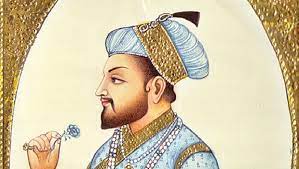
If cultural advancement is a precondition of the golden age, then Shah Jahan may be called the founder of that golden age. He set up an ideal model in the preservation of culture, renovation and expansion by utilising his own innovative power and natural poetic sentiment.
After four months the death of Jahangir, (28th October 1627 A.D.) his son Shah Jahan (February 1628 A.D.) became the emperor. During his 30 years of rule, political peace, economic prosperity, literature and art and sculpture reached the apex.
This period is called the golden age in the history of the Mughals. Shah Jahan fulfilled with beauty the empire, which was founded by Babur and Akbar. Though Shah Jahan became the creator of the golden age simply by following the paths of his ancestors.
Akbar established political unity and domination all over India. As result, Shah Jahan did not face any difficulty in other political issues.
He only could not recover the Kandahar state which was lost by the Mughals at one time. Even then, the political unity helped Shah Jahan to cultural advancement.
Shah Jahan inherited plenty of wealth and prosperity from his ancestors. He received double the revenues in comparison with Akabr. According to Dr Jagadish Narayan Sarkar, the main cause of the economic prosperity of Shah Jahan was due to the importance of Surat port.
The customs duty of Surat port was 3 1/2%. The total revenue earned in export-import trade. was Rs. 228 crores in a year? Historian Irfan Habib said, “The regime of Shah Jahan was the age of extreme peace and prosperity in the field of agriculture.”
There was a lot of earnings from agriculture. There were 2,24,000,000 lbs. left in the royal treasury after meeting up all the expenses for his funerals. This prosperity helped him to advance the cultural trend.
Shah Jahan himself was a good scholar in Arabic, Hindi and Farsi. He made Farsi, the language of the court and hence, this language was more cultured.
The royal poet of Shah Jahan Abu Talib Kalim was also a good scholar in Farsi and Hindi Languages, Historian Mohammad Shaliha was a scholar in poetic literature, and Dara, the son of Shah Jahan was proficient in Sanskrit and Arabic languages.
Under his patronage, Upanishads, Atharva Veda, Geeta etc. were translated in Farsi. The literature like Nakib Khan, Niamat Ullah, Mirja Gyas Beig etc. during the time of Jahangir also influenced Shah Jahan.
Pundits like Jagannath and Janardan Bhutto of Bikaner were also present in the royal court of Shah Jahan. Pundit Jagannath wrote ‘Gangadhara’ and ‘Gangalahari’. Apart from this, poet Banarasi Das wrote ‘Probadh Chandradaya.’
The famous writings during the time of Shah Jahan were ‘Padshahnama’ by the historian Abdul Hamid Lahori, Shah Jahannama by Enaet Ali Khan, Muntakhab-ul-Luber by Kafi Khan etc.
Abdul Hakim Shialkoti and Maulana Muhib were poets as well as historians. For the extension of education, many schools and a big Madrasa called ‘Dar-ul-Baka’ were established.
Historians called Shah Jahan as Prince builder. The famous architectural creations during his time were ‘The Moti Mosque’, ‘Jama-Mosque’, ‘Khas Mahal’, ‘Sish Mahal’, and ‘And Naulakha Mosque’ of Lahore.
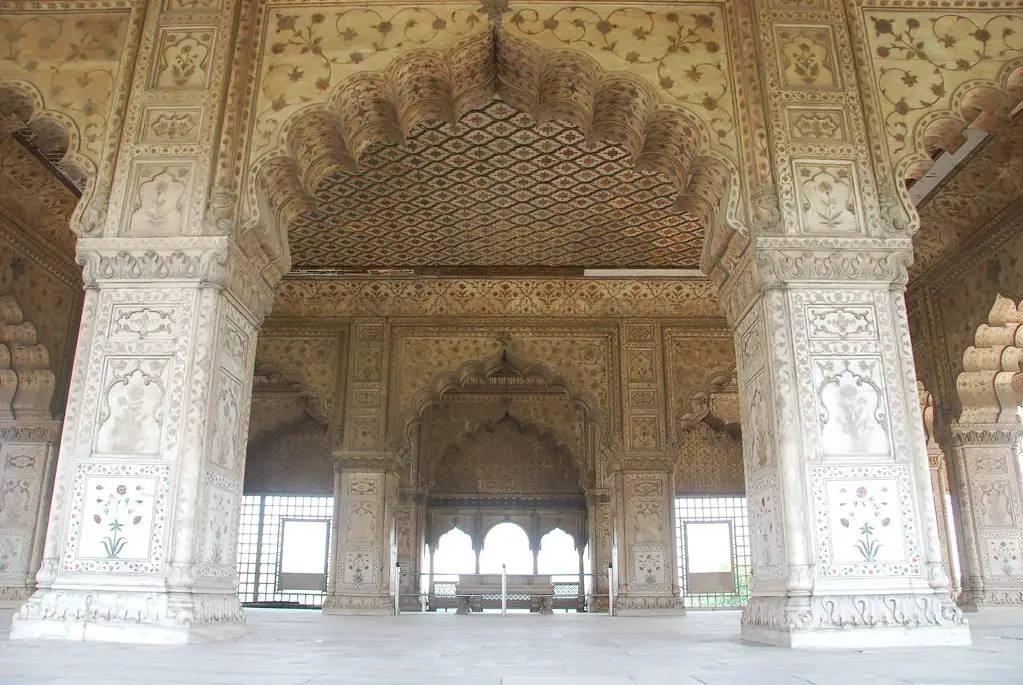
‘Dewan-i-Am’, ‘Dewan-i-Khas’, ‘Redfort’, ‘Taj Mahal’ and Tomb of Jahangir made by Dara (Lahore), Delhi Fort, the ornamented palace of Shah Jahan etc. The art critic Dr Sarasi Kumar Saraswati said that though the architectures of Shah Jahan were bright and gorgeous, yet it showed an indication of erosion.
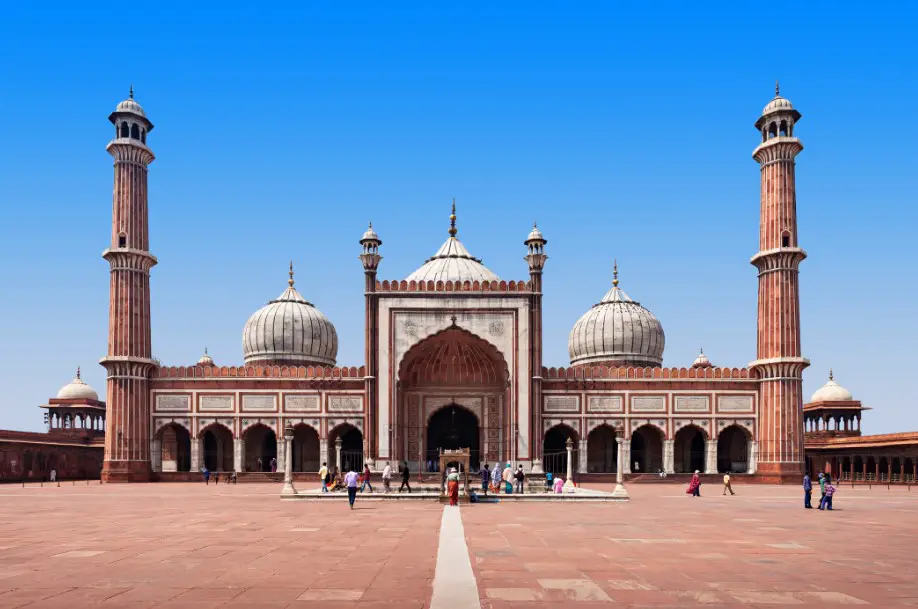
He dug a canal from the river Yamuna to Agra. This is known as ‘Nahar-i-Behest’ or the ‘Canal of Heaven’. Shah Jahan built the Taj Mahal by the side of the Yamuna river in loving memory of his beloved wife Mumtaj and he took advice from the architects of different countries of India.
“WBBSE Class 7 History food, clothing, and customs of Sultanate and Mughal era”
After the death of Mumtaj in 1531 A.D., 20,000 labourers built the Taj Mahal on the tomb of Mumtaj for 22 years (1633-1655 A.D.) It was made of the marble stones of Jaipur. So, historians called the Taj Mahal a ‘Dream of Marble stones’.
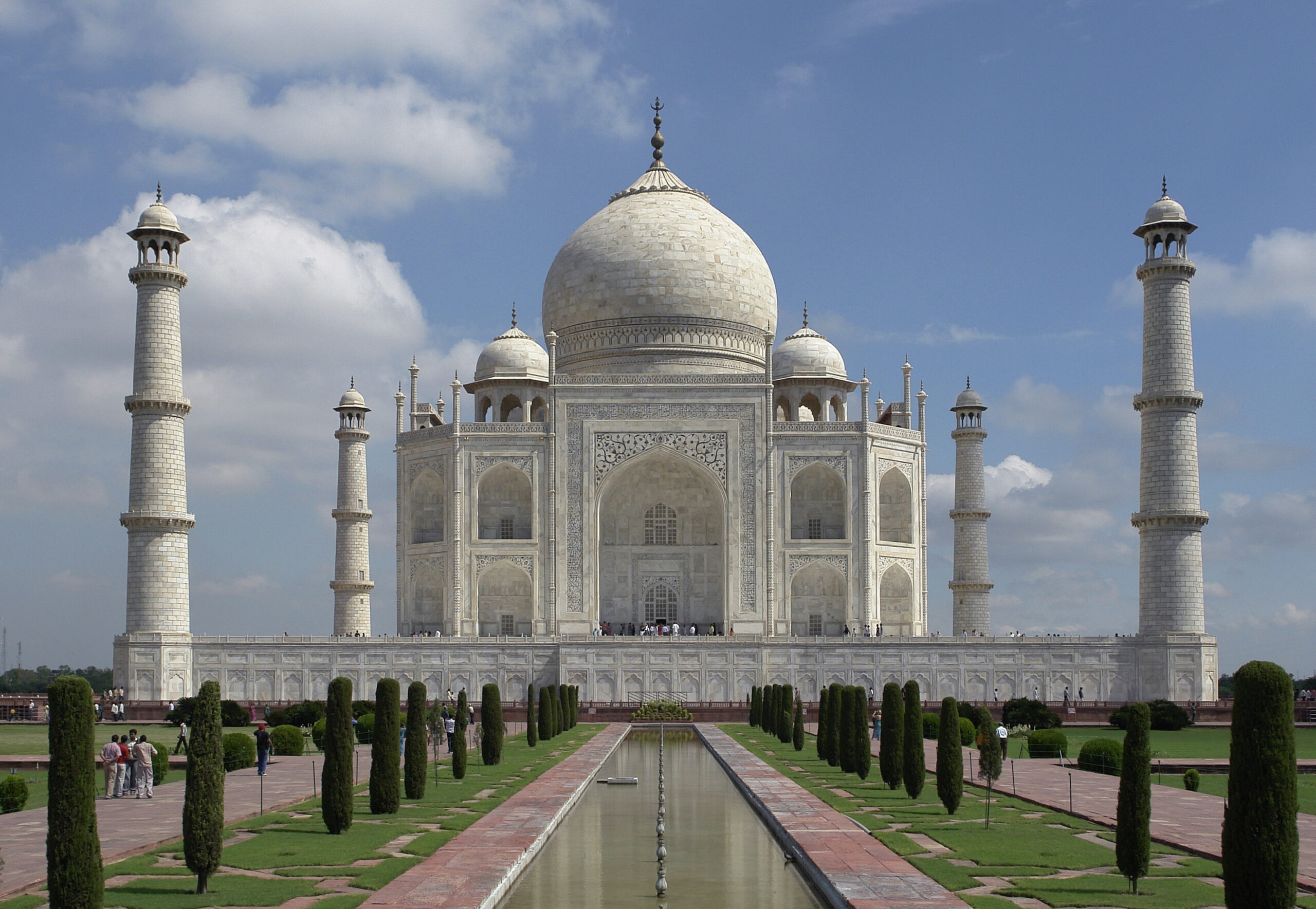
Ustad Isha and Baldeo Das were the main architects of the Taj Mahal. Venetian traveller Tavernier said that the total expenditure of building the Taj Mahal was Rs. 3 crores. The total area in which this was built was 9-5 acres (27 Bighas).
The minute and fine artwork are still wonders. It is really a creation of eternity. Shah Jahan made the Peacock throne with precious jewels and diamonds. The Persian artist Bebadal Khan took seven years to make it.
The throne was placed on four golden pillars. The total cost was Rs. 1 crore. After about 100 years of the death of Shah Jahan (1739 A.D.) Nadir Shah, the ruler of Persia took away this Peacock throne and the world-famous Kohinoor diamond piece at the time of his invasion to Delhi.
“Class 7 History Sultanate and Mughal lifestyle short and long answer questions”
At present, it is in the possession of the British. In the opinion fo Taverniar, there is no such beautiful and precious throne anywhere in the world.
During the period of Jahangir, the artists like Abul Hasan, Mohammad Nadir, Monohar, Tulshi, Bishan Das, Keshab, Gobardhan etc. attained tremendous proficiency in making models, trees, flowers, birds etc.
In fact, Shah Jahan improved the quality fo paintings and other arts on this basis. The famous artist in his time was Nadir Samarkandi. Musical functions were held in every evening in the royal court.
Many singers and dancers used to attend those functions. Mohammad Shalih was an experienced artist in Hindi songs. Famous artists like Sursena, Sukhasena, Sundar Das, Jagannath, Janardan Bhatta etc. were also present.
There were also books like ‘Geeta Prakash’, ‘Sangeet Koumudi’, ‘Sangit Baj’, and ‘And Sangeet Sarani’ written on music. Shah Jahan himself was a good singer and lyric writer.
From this viewpoint, the regime of Shah Jahan may be called the golden age. But it is not above criticism.