Transport In Plants Question and Answers

Biology Class 11 WBCHSE Transport In Plants Question and Answers

Question 1. Why is simple diffusion called passive transport?
Answer: In simple diffusion, solid, liquid, and gaseous ions or molecules are transported from their region of higher concentration to their region of lower concentration, without requiring any metabolic energy. So, simple diffusion is a type of passive transport.

Transport In Plants

” transportation in animals and plants extra questions”

Question 2. (1) What is porin? or (2) What is the composition of water channels?
Answer:

  1. Porin is a type of protein that makes large pores in the outer membrane of plastids, mitochondria, and some bacteria for the transportation of large molecules across the membrane.
  2. Water channels or aquaporins are composed of six transmembrane alpha-helices arranged in a right-handed bundle.

Question 3. In which physiological process of plants, osmotic balance is maintained?
Answer: Osmotic balance in plants is maintained by the process of transpiration.

Read and Learn More WBCHSE Solutions For Class 11 Biology

Question 4. (1) What is tyw’? or (2) What is the value of tj/w of pure water?
Answer:

  1. Refers to water potential.
  2. At standard temperature and pressure, pure water is zero.

Transport In Plants Question and Answers

Question 5. (1) Why water potential of any solvent is
negative? or (2) What is the measuring unit of ψw?
Answer:

  1. The water potential of pure water is highest, i.e., zero. When a solute is added to it, its water potential decreases. So, the magnitude of the water potential of a solution is always negative.
  2. The measuring unit of water potential (ÿw) is Pascal (Pa) Megapascal (MPa) or Kilopascal (kPa).
Class 11 Biology Class 11 Chemistry
Class 11 Chemistry Class 11 Physics
Class 11 Biology MCQs Class 11 Physics MCQs
Class 11 Biology Class 11 Physics Notes

Biology Class 11 WBCHSE

Question 6. Two solutions A and B are separated by a permeable membrane. Ψw of A is -2.0 kPa and that of B is -1.0 kPa.

  1. Whose Ψw is more?
  2. Diffusion of solution will occur in which direction?

Answer:

  1. Ψw of solution B is more.
  2. Water diffuses from regions of higher water potential to lower water potential. So, the direction of diffusion should be from B to A.

transport question

Question 7. (1) What will be present between the cell wall and the shrunk protoplast of a plasmolysed cell? or (2) What will happen when such a cell is kept in pure water?
Answer:

  1. The outer hypertonic solution is present between the cell wall and the shrunk protoplast of a plasmolyzed cell.
  2. When a plasmolyzed cell is kept in pure water, deplasmolysis will occur. It means water will diffuse into the cell, protoplast will regain its normal shape. The volume of the vacuole will also increase.

Question 8. (1) What is turgor pressure? or (2) What will be of a fully turgid cell?
Answer:

  1. When a plant cell is kept in a hypotonic solution, water enters the cell by endosmosis. This increases the turgidity of the cell. In such a case, the hydrostatic pressure exerted by the protoplast on the cell wall is called turgor pressure.
  2. Refers to pressure potential. Water does not enter a fully turgid cell. So, will be zero.

Question 9. Why fishes are salted for preservation?
Answer:

Fishes are salted for preservation because common salt creates a hypertonic solution around the fish. Pathogenic bacteria, fungi that are intolerant to high salt concentrations are killed. They die of exosmosis and plasmolysis.

” transportation question”

Question 10. (1) Since ancient times, dry woods have been used to crack rocks by placing them within the rocks. Which property is utilized here to produce the pressure? or (2) Write one application of that property in the human body.
Answer:

  1. The property which is utilized to produce the pressure is imbibition.
  2. Skin grafting (replacement by new skin) utilizes imbibition property. Newly grafted skin lacks capillaries. Under such conditions, O2 and other substances are transported to the grafted skin by imbibition, until capillaries form.

Question 11. (1) What is the Casparian strip? or (2) What are passage cells?
Answer:

  1. The suberin and lignin deposited between the inner wall and lateral wall of the endodermal parenchyma cells in mature plant roots is called the Casparian strip.
  2. Casparian strips prevent the entry of water into the stele from the cortex. However, this strip is absent in some regions through which water is transported to the xylem vessels. The cells present in those regions, which allow water to enter are called passage cells.

Biology Class 11 WBCHSE

Question 12. (1) What is mycorrhiza? (2) How does it help to absorb water and minerals in roots?
Answer:

  1. Roots of some phanerogams (like pine trees) are occupied by fungi to form symbiotic associations. These symbiotic associations between fungi and roots of phanerogams are called mycorrhiza.
  2. Hypha of the fungi spread along the root. This increases the surface area for the absorption of water and minerals,- which in turn helps the plants.

Question 13. (1) Name the process and the plant part, by which terrestrial plants absorb water from soil. or (b) How do these plants absorb minerals and ions from soil?
Answer:

  1. Terrestrial plants absorb water from the soil by the process of endosmosis through root hairs.
  2. Terrestrial plants obtain minerals and ions from soil either dissolved in water or freely (when no water is being absorbed) by passive or active absorption methods.

Question 14. (1) When and in which type of plants do guttation occur? Which plant part is involved in guttation? (2) What is the main cause of guttation?
Answer:

  1. Guttation mainly occurs at night and in the early morning in the spring season, in some plants of tropical areas. It occurs through the permanent openings called hydathodes, located at the leaf margins.
  2. The main cause of guttation is root pressure.

Question 15. Describe the role of microfibrils of guard cells in opening and closing of stomata.
Answer: According to recent studies, it has been stated that the arrangement of microfibrils in guard cells controls the opening and closing of stomata. The cellulosic microfibrils are arranged parallel and radially. This lengthwise increase of microfibrils helps in the opening of stomata.

Biology Class 11 WBCHSE

Question 16. (1) Upto what height can water rise through the xylem vessel, due to transpiration? or (2) Which component of the xylem vessel is like a capillary tube that takes part in the ascent of sap?
Answer:

  1. Experimentally it has been proved that, due to transpiration pull, water can rise up to a height of 130m through a xylem vessel.
  2. The tracheids and trachea of the xylem vessel act as fine capillary tubes and they help in the ascent of sap.

Question 17. (1) Which tissue is involved in the transport of solute in higher plants? (2) Which components of that tissue help in the transport of solute?
Answer:

  1. Transport of solute occurs through phloem tissue in phanerogams.
  2. Sieve tubes and companion cells of phloem tissue are involved in the translocation of solute.

Question 18. (1) What is a sieve plate? or ( 2) How do the cells of sieve tubes maintain connections between them?
Answer:

  1. The transverse, porous plate present between the consecutively arranged, columnar cells of mature sieve tubes, is called a sieve plate.
  2. The cells of sieve tubes maintain connections between them by fine cytoplasmic projections and plasmodesmata that extend through pores in sieve plates.

Question 19. Transport of solute is bidirectional Explain.
Answer:

The facts that support the statement are as follows—

  1. The organic food produced in the leaf of photosynthetic plants is transported downward through phloem tissue to roots and stems. There, it is utilized to produce energy and the excess food is stored in the form of starch.
  2. Deciduous plants shed their leaves in winter, due to which they cannot photosynthesize. During this condition, the stored food in roots and stem are converted to simple sugar. This simple sugar is then transported upward to different parts of the plant.

Class 11 Biology WBCHSE Transport In Plants Very Short Answer Type Questions

Question 1. What do you understand by antitranspirant?
Answer: The chemicals that reduce the rate of transpiration in plants, when applied to leaf surfaces, without disrupting normal metabolic activity are called antitranspirants. For example, wax

Question 2. What is water potential?
Answer: The difference between the free energy of a molecule of pure water and the free energy of water in any other sample under normal pressure and temperature, is called water potential.

Question 3. What is wall pressure?
Answer: The opposite pressure applied by the cell wall against the turgor pressure in a fully turgid cell, is known as wall pressure.

Question 4. What is the unit of water potential?
Answer: The unit of water potential is bar. 1 bar = 0.987 atmosphere = 106 dyn/cm2.

Question 5. A flowering plant is planted in an earthen pot and watered. A lot of urea is added to make the plant grow faster, but after some time the plant dies. Name the process responsible for this.
Answer: The process is called exosmosis.

Question 6. In a plant cell, the cytoplasm is surrounded by both cell wall and cell membrane. However, it has been observed that the transport of substances across the cell membrane is very specific. Which feature is responsible for this?
Answer: The cell membrane is selectively permeable, so it shows specificity during the transport of substances.

Question 7. What do you understand by pressure potential?
Answer: When a cell is kept immersed in pure water, endosmosis occurs which increases the turgidity that pushes the cell organelles towards the membrane, generating turgor pressure. This is called pressure potential.

Question 8. A plant cell is kept in an aqueous solution and it gets plasmolyzed. What is the nature of the solution?
Answer: The nature of the solution is hypertonic.

Question 9. What is facilitated diffusion?
Answer: The process of diffusion across the membrane with the aid of a carrier is called facilitated diffusion

Question 10. Write three effectors that influence water potential.
Answer: Concentration, pressure, and relative density influence water potential.

Question 11. What is meant by wilting?
Answer: Wilting is the loss of turgidity by the cells at soft aerial parts like leaves and young branches. It occurs when the rate of transpiration is higher than the rate of water absorption.

Question 12. Which instrument is used to measure the magnitude of water absorption in the plant body?
Answer: The absorption of water is measured by a photometer.

Question 13. Name the minerals, that control the opening and closing of stomata.
Answer: Na, K Cl, etc., regulate the opening and closing of stomata.

Class 11 Biology WBCHSE

Question 14. What is passive absorption?
Answer: When water is absorbed by root hairs without utilizing any metabolic energy, it is known as passive absorption.

Question 15. What does the expression mean—Ψwsp?
Answer:
This expression means that water potential is the sum of osmotic potential (or solute potential) and pressure potential

Question 16. What is chemical potential?
Answer: The free energy of 1 mole of any substance is called its chemical potential.

Question 17. How osmotic pressure is controlled by temperature?
Answer: Osmotic pressure is directly proportional to temperature. It means when temperature increases, osmotic pressure too increases.

Question 18. What is known as the epithem?
Answer: The thin-walled parenchyma cells with extensive intercellular spaces which are found in hydathodes, are called epithem.

Question 19. How is transpiration related to the ascent of sap?
Answer: If the rate of transpiration increases, the ascent of sap will also increase. Therefore, transpiration is directly proportional to the ascent of sap.

Question 20. What is the water potential of pure water?
Answer: The water potential of pure water is zero.

Question 21. What is apoplast?
Answer: The pathway by which the passive transport of water and dissolved minerals occur through the cell wall of the plant cell, is called apoplast.

Question 22. What is meant by diffusion pressure?
Answer: The pressure that develops due to the kinetic energy of diffusible ions across the membrane is called diffusion pressure.

Question 23. Which plant hormone regulates the opening of stomata?
Answer: Cytokinin hormone controls the opening of stomata.

Question 24. What is known as capillary water?
Answer: The water that is present as non-colloid within soil particles is called capillary water.

Question 25. What is the approximate water potential of root hair?
Answer: The approximate water potential of root hair is 2 bar.

Question 26. Which enzyme makes transportation through cell membranes easier?
Answer: The transmembrane enzyme protein permease enables membrane transport.

Class 11 Biology WBCHSE

Question 27. Where does root pressure develop?
Answer: Root pressure develops in the xylem cells of the root

Question 28. If a plant cell of advanced species, that is surrounded by deposition of cutin and suberin, is kept in water for 15 minutes, what will happen then?
Answer: The volume of the cell will remain the same because cutin and suberin are impervious to water.

Question 29. Plant cell does not burst if immersed in pure water. Why?
Answer: The elasticity, tough structure, and extensibility of the cell wall of plant cells prevent it from bursting if immersed in pure water.

Question 30. State True or False: Active absorption utilizes ATP
Answer: True

Translocation Of Mineral

Transpiration

Transpiration Definition: The physiological process by which water is lost in the form of vapor, from the living tissues of the aerial parts of plants to the atmosphere is called transpiration.

In terrestrial plants, only 1-3 percent of the total water absorbed by roots, is used in different physiological and metabolic activities. The remaining absorbed water is released into the atmosphere through transpiration. Apart from the terrestrial plants, this process also occurs in aquatic plants through their aerial parts.

Transpiration Site of occurrence: Maximum percentage of k transpiration takes place through stomata. Stomata are present mostly on leaves. Besides stomata, transpiration also takes place through cuticles and lenticels of the stem.

Translocation Of Mineral

transpiration definition

Transpiration Time of occurrence: Transpiration can take place throughout the day. In most plants, it occurs during the day when their stomata remain open. There are many plants in which stomata remain open during the night.

Types Of Transpiration

Based on the site of occurrence, transpiration is classified into the following three groups.

Biology class 11 chapter 11 Transport In Plants Transpiration

Stomatal Transpiration:

The process by which excess water from aerial parts of plants gets evaporated into the atmosphere during the day through open stomata (singular: stoma), is called stomatal transpiration.

Stomatal Transpiration Site of occurrence: There are numerous stomata on both the upper and lower epidermises of monocot leaves and the lower epidermis of dicot leaves. Besides leaves, stomata are also present in the stem and soft parts of branches, stalks of flowers, and sepals.

Class 11 Biology Class 11 Chemistry
Class 11 Chemistry Class 11 Physics
Class 11 Biology MCQs Class 11 Physics MCQs
Class 11 Biology Class 11 Physics Notes

“translocation of minerals in plants notes for class 11”

Each stoma opens to the exterior through an opening or pore, called the stomatal pore. This opening is guarded either by two dumble-shaped cells (in monocots) or two kidney-shaped cells (in dicots). These cells are called guard cells. These cells control the opening and closing of the stomata.

Stomatal Transpiration Importance: 80-90% of absorbed water transpires through this path. So, stomatal transpiration is most important for plants.

Lenticular Transpiration

The process by which excess water is removed from the plant body to the atmosphere through the lenticels present on the stems of woody trees and shrubs, is called lenticular transpiration.

Lenticular Transpiration Site of occurrence: Lenticels are lens-shaped or crack-like openings that develop on the stems and branches of woody trees and shrubs due to secondary growth. Lenticels, also known as stem pores, always remain open.

Lenticular Transpiration Importance: Lenticular transpiration is insignificant in plants as only 1% of excess water is lost by this process.

Cuticular Transpiration: The process by which excess water is lost in the form of vapor through fine cracks of thin cuticle layers present on the stem and the leaf surface, is called cuticular transpiration.

“mechanism of mineral translocation in plants”

Cuticular Transpiration Site of occurrence: Cuticle is made up of a type of wax called cutin. This layer is present on the leaf surface of almost all plants. Actually, cuticle reduces the rate of transpiration in plants. The cuticular layer can be thick in some plants and thin in other plants. In the case of a thin cuticular layer, pores develop on the surface which remove excess water through transpiration.

Cuticular Transpiration Importance: This type of transpiration is next only to stomatal transpiration, in terms of importance. Nearly 10-20% of water is lost through this pathway.
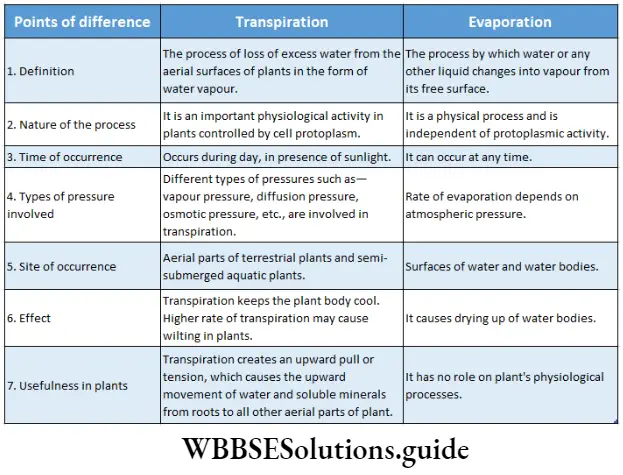
Biology class 11 chapter 11 Transport In Plants Differences between evaporation and transpiration

Experiment To Determine The Rate Of Transpiration

The rate of transpiration can be determined by the following experiment.

The Rate Of Transpiration Materials required: 100 ml conical flask, mustard oil or some other non-volatile oil, fresh leaf with a long stalk, simple beam balance, and water.

importance of transpiration

The Rate Of Transpiration Procedure and observation:

  1. 100 ml water is taken in a conical flask.
  2. A leaf with a long stalk is taken. Its stalk is kept immersed in the conical flask.
  3. A few drops of oil are added to the water in the conical flask. The oil layer will prevent the evaporation of water from the exposed surface.
  4. The total arrangement is weighed by a simple balance. The finding is noted.
  5. The arrangement is now kept in sunlight for one hour. After one hour, it is observed that the level of water has fallen.
  6. The weight of the whole arrangement is measured. the finding is noted again.

” importance of transpiration in plants”
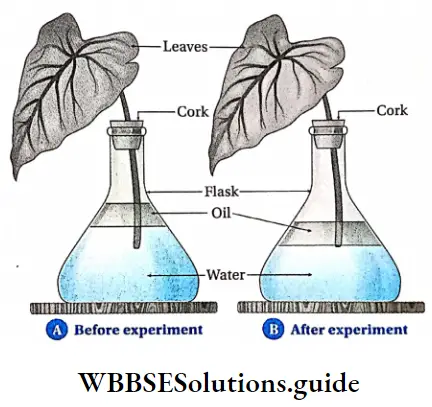
Biology class 11 chapter 11 Transport In Plants Determination ofrate oftranspiration

The Rate Of Transpiration Calculation: Let us assume, the weight of the setup with water, before starting the experiment = W1g

After one hour, the weight of the conical flask = W2g

Then, within one hour, the amount of water transpired = (W1 – W2) g.

” factors affecting rate of transpiration in plants”

The surface area of the leaf = X cm2

Therefore,

The rate of transpiration (g/cm2) is = (W1 – W2 / X) g/h.

Ganong’s Photometer

A potometer (Greek: poto= drunken, metra= measure) is a device used for measuring the rate of water loss by a leafy shoot through transpiration. It is also called transpirometer. The photometer designed by Ganong is known as Ganong’s photometer.

Ganong’s Photometer Structure: It is a twice-bent glass tube that has a wide-mouthed glass cylinder attached at one end. The horizontal portion of the tube has a capillary tube inserted inside and a small glass reservoir containing water is attached to it. The reservoir has a stopcock to regulate the flow of water from it.

“translocation of minerals through xylem and phloem”

The horizontal glass tube has a scale fitted to it. The wide-mouthed cylinder is fitted with a rubber cork bearing a hole. A plant, with its roots intact, is inserted through this hole.

The free end is kept inside a beaker containing colored (eosin) water. The whole apparatus is kept horizontal to the surface with the help of a stand.

“factors that affect the rate of transpiration “

Ganong’s Photometer Use: This apparatus is used to calculate the transpiration rate of the plant. Before the experiment, an air bubble was inserted in the capillary tube and it was steadied at zero reading of the scale. As water is transpired from the aerial part of the shoot a transpiration pull is created.

This will cause the absorption of water by the immersed part of the shoot. This will cause the movement of the air bubble inside the capillary tube. After a certain time, the distance covered by the bubble will be measured.

The transpiration rate will be calculated from the product of this distance and the area of the horizontal capillary tube. This rate is expressed in cm3/h.
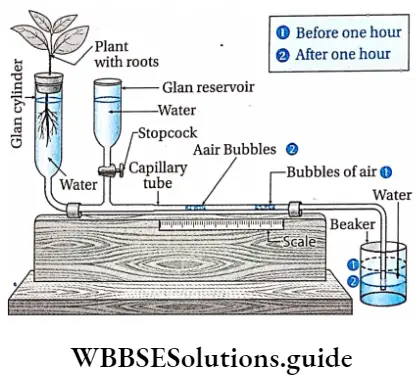
Biology class 11 chapter 11 Transport In Plants Determination ofrate oftranspiration by ganong's potometer

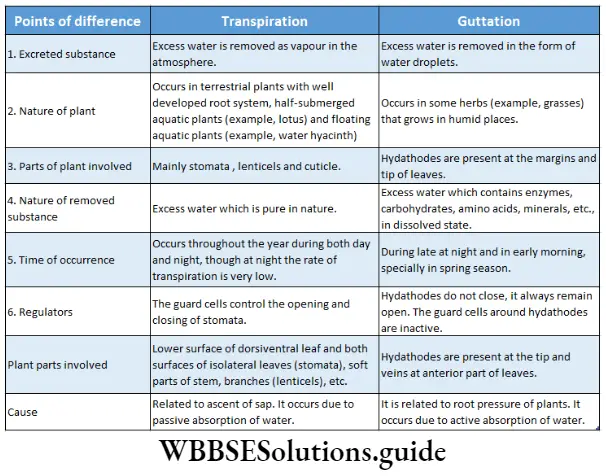
Biology class 11 chapter 11 Transport In Plants Differences between transpiration and guttation

Role Ofstomata In Transpiration

About 50-97% of total transpiration takes place through stomata. So, it is important to understand the structure, function, and method of opening and closing of stomata.

  1. Stomata are present on the lower surface of dorsiventral leaves of dicot plants. However, stomata are present on both the upper and lower surfaces of isobilateral leaves of monocot plants.
  2. In phanerogams, stomata are also present in other green parts such as the stem, calyx, green pericarp, etc.
  3. Generally, stomata are present on the same plane as the epidermis. But, in some plants, they are present below the plane of the epidermis. These stomata are called sunken stomata. The transpiration rate decreases due to such placement of stomata. Examples of such plants include Cycas sp., Nerium sp., Opuntia sp., and other xerophytes.
  4. In some plants, stomata are present above the plane of the epidermis. These stomata are called raised stomata. Raised stomata are found in cucumber, pumpkin, etc.
  5. Stomata are absent in submerged plants, like Potamogeton, and Vallisneria.

Structure of stomata

  1. Stoma (plural: stomata) consists of a pore and two surrounding guard cells. This unit is also known as the stomatal apparatus. This apparatus helps in the exchange of gases and transpiration.
  2. In dicots, stomata are surrounded by two semilunar or kidney-shaped cells which are called guard cells. The concave sides of both the guard cells are attached to each other leaving a slit-like opening between them. This opening is called the stomatal aperture. In monocots (for example, grass, paddy, etc.)the guard cells are dumbbell shaped.
  3. The guard cells are living. Each cell consists of a granular cytoplasm, a distinct nucleus, a few chloroplast, starch granules, etc., which remain suspended in the cytoplasm.
  4. The epidermal cells associated with stomata are different from other epidermal cells. So, these cells are called subsidiary or accessory cells. These cells surround the guard cells. They do not contain any chloroplast. These cells exist as primordial utricles (cells contain a large central vacuole and the nucleus is pushed towards the plasma membrane).
  5. Differential thickening can be observed on the wall of the guard cells. In dicot plants, the concave inner side is thicker and rigid, whereas, the convex outer side is thinner and elastic. Thickening of the ventral side is due to the deposition of cutin and thus becomes rigid.
  6. In the dumbbell-shaped guard cells of monocot plants, the bulbous ends are thin-walled. The ‘handles’ have thick walls on the pore side.
  7. The opening of guard cells is controlled by cellulose microfibrils present in guard-cell walls. These are oriented around the circumference of the elongated guard cells. They radiate from the center of the stoma. This microfibrillar arrangement is called radial micellization.
    When the guard cells absorb water, this microfibrillar arrangement helps in their outward expansion of them. This results in a tension in the pore region. The two guard cells are attached to each other at both ends. This tension, force results in the outward bending of the inner walls of the guard cells and thus stomatal pore opens.
  8. Each stoma is associated with an interior respiratory cavity air cavity or sub-stomatal chamber. This chamber opens up to the atmosphere through the stoma.

Function of Stomata

Stomata take part in several physiological functions for the plant.

Stomata Exchange of gases: Through the open stomata, CO2 is taken in and O2 is released during photosynthesis. The gaseous exchange occurs between the plant body and the atmosphere, by diffusion.

“importance of mineral translocation in plant growth”

Stomata Transpiration: Stomata release excess water into the atmosphere from mesophyll cells of leaves, by transpiration.

Stomata Synthesis of organic substances and their storage: Guard cells have chloroplasts in them and are able to photosynthesize. This results in the synthesis of glucose which is temporarily stored in the form of starch.

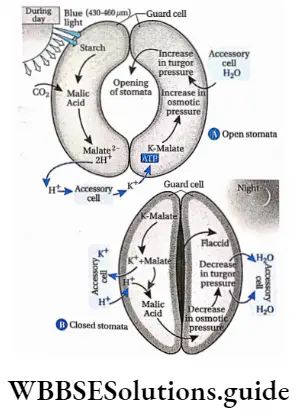
Opening and closing of stomata occurs due to turgor changes in guard cells. The roles of guard cells, light, K+, and microfibrils in the opening and closing of stomata are given below.
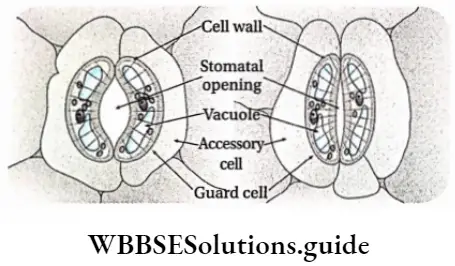
Biology class 11 chapter 11 Transport In Plants Regulation ofopening and closing ofstomata by guard cell

Stomata Role of guard cells: the process of transpiration is dependent on the opening and closing of stomata. generally, in the presence of sunlight, stomata remain open. so, transpiration occurs during the day through the stomata.

On the other hand, stomatal opening and closing also depend on the increase or decrease in the turgor pressure of the guard cells. during the day, starch stored in guard cells breaks down into glucose.

This causes the entry of water into guard cells from accessory cells. thus, turgor pressure in guard cells increases. As a result, guard cells swell up and the stoma opens.

During the night the guard cells become flaccid due to the release of water from the guard cells to the accessory cells and the presence of high starch concentration. As a result, the stomata close. the turgor pressure of guard cells decreases further at the time of stomatal closing.

Stomata Role of light: Plants respond to light by opening stomata for CO2 uptake. Upon darkness, stomata gradually close to prevent loss of water in the absence of light. However, if plants experience water deficiency due to low humidity, low soil moisture, or other conditions, stomata remain closed even during the daytime.

Types Of Stomatal Movement

Photoactive movement: In this case, the movement of stomata is controlled directly or indirectly by light. Stomata that show photoactive movement, remain open at the day and close at night. example mango, pea, and pumpkin plants.

Scotoactive movement: The Latin word scoto means ‘darkness’. In this case, stomata remain open at night and close at the day. This type of stomatal movement is observed in cactus-like xerophytic plants.

Role of K+: The Opening and closing of the stomata aperture is regulated by K+ concentrations in the guard cells. As per modern concepts, in the presence of sunlight, stored starch in guard cells, is converted into malic acid.

This malic acid dissociates into H+ and malate ion R(COO). H+ is released from guard cells and in turn, K+ and water from accessory cells enter the guard cells. This causes an increase in the turgidity of guard cells and as a result, stomata open.

Role of microfibrils: The radial arrangement of microfibrils, i.e., radial micellation of guard cells aids in opening and closing of stomata. When water enters guard cells, microfibrils increase in length but not in diameter. As a result, the outer walls of both the guard cells move away from each other.

The ends of guard cells are attached, so they extend outward due to swelling up. This causes stomata to open like the shape of a biconvex lens.

Theories related to the opening and closing of stomata

Different theories have been given by scientists to explain the phenomena of opening and closing of stomata.

Starch sugar hypothesis: This hypothesis was proposed by Sayre (1926) and later it was modified by Steward (1964). So this hypothesis is also known as Steward’s hydrolysis of starch.

In the presence of light: According to this theory opening and closing of stomata in the presence of light involves the following events—

1. The CO2 stored in the mesophyll cells of leaves is used up during photosynthesis. This causes a decrease in H+ ion concentration in guard cells. As a result, pH increases to 7.0.

2. At pH 7.0, the activity of the enzyme phosphorylase increases. It CQnverts starch into glucose-l-phosphate, in the presence of phosphoric acid.
image

3. The enzyme phosphoglucomutase converts glucose-l-phosphate to glucose-6-phosphate.

⇒ \(\text { Glucose-1-PO } \mathrm{PO}_4 \stackrel{\text { Phosphoglucomutase }}\text { Glucose-6- } \mathrm{PO}_4\)

“process of translocation of minerals with diagram”

4. Glucose-6-phosphate breaks down into glucose and inorganic phosphate by the action of enzyme phosphatase.

⇒ \(\text { Glucose-6- } \mathrm{PO}_4 \stackrel{\text { Phosphatase }}{\longrightarrow} \text { Glucose }+\mathrm{Pi}\)

5. Glucose and inorganic phosphate dissolve in cell sap and thus, increase its concentration. This causes an increase in osmotic pressure in guard cells and a decrease in water potential. As a result, water from accessory cells enters the guard cell and the stomata opens.
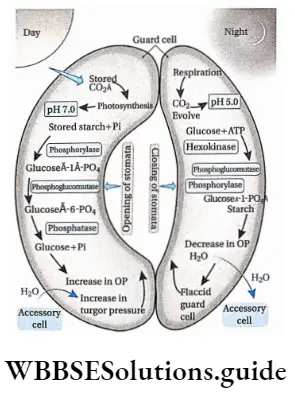
Biology class 11 chapter 11 Transport In Plants Openingand closing ofstomata—starch sugar hypothesis

In the absence of light: According to this theory opening and closing of stomata in the absence of light involves the following events—

1. During the night, photosynthesis does not occur, only respiration takes place. This causes an increase in C02 concentration in the sub-stomatal cavity. This leads to a decrease in pH (pH=5.0).

2. At pH 5.0, phosphorylase becomes inactive. Glucose molecules in guard cells, in the presence of ATP, form glucose-6-phosphate and ADP. This reaction is mediated by the enzyme hexokinase.

⇒ \(\text { Glucose }+ \text { ATP } \stackrel{\text { Hexokinase }}{\longrightarrow} \text { Glucose- } 6-\mathrm{PO}_4+\text { ADP }\)

3. Glucose-6-phosphate is converted to glucose-phosphate by the enzyme phosphoglucomutase.

⇒ \(\text { Glucose-6- } \mathrm{PO}_4 \stackrel{\text { Phosphoglucomutase }}{\rightleftharpoons} \text { Glucose-1-PO }\)

4. Glucose-1-phosphate molecules form a chemical bond with each other by the action of the enzyme phosphorylase, to form starch.

⇒ \(\text { Glucose-1-PO }{ }_4 \stackrel{\text { Phosphorylase }}{\longrightarrow} \text { Starch }+\mathrm{Pi}\)

5. When starch forms in guard cells, it increases water potential and decreases osmotic pressure. Then water from guard cells is released into accessory cells. As a result, guard cells become flaccid, and stomata close.

Criticism: The reasons behind the criticism of Steward’s hydrolysis of starch are as follows—

  1. Interconversion of starch and glucose is a slow process. So, this mechanism cannot explain the rapid opening and closing of stomata.
  2. Stomata opens more in blue light than in red light. This phenomenon cannot be explained by this hypothesis.
  3. Opening and closing of stomata may occur in the absence of stored starch in guard cells. For example, starch is absent in the guard cells of the leaves of monocot plants.
  4. Stomatal opening and closing are also affected by light and temperature.

Active potassium theory: This theory was propounded by Levitt (1974). It was supported by Raschke (1975), Bowling (1976), Noggle and Fritz (1976).

In the presence of light: According to this theory opening and closing of stomata in the presence of light involves the following events—

1. In the presence of sunlight, cells use up CO2 for photosynthesis. This results in a decline in CO2 concentration in a sub-stomatal cavity and the pH is increased (pH=7.0). At higher pH, starch in guard cells is converted into glucose 6-phosphate. 6-phosphate through glycolysis gives rise to phosphoenolpyruvic acid. The rate of this reaction accelerates under blue light (430-460nm).
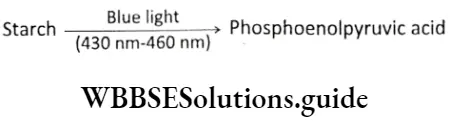
Biology class 11 chapter 11 Transport In Plants phosphoenolpyruvic acid

2. CO2 reacts with phosphoenolpyruvic acid to form oxaloacetic acid. This reaction is carried out by the enzyme phosphoenolpyruvic carboxylase.
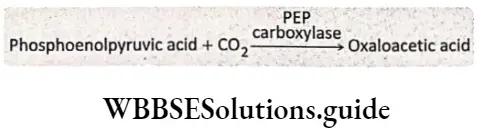
Biology class 11 chapter 11 Transport In Plants phosphoenolpyruvic carboxylase

3. Oxaloacetic acid is converted into malic acid, by the enzyme malate dehydrogenase.

⇒ \(\text { Oxaloacetic acid } \stackrel{\text { Malate dehydrogenase }}{\longrightarrow} \text { Malic acid }\)

4. Malic acid in guard cells dissociates into malate ions and H+ ions.
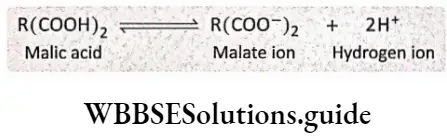
Biology class 11 chapter 11 Transport In Plants Malic acid

Biology class 11 chapter 11 Transport In Plants Role ofion in photoactive movement ofstomata

5. H+ from guard cells moves into accessory cells. In turn, K+ ions enter guard cells from accessory cells, thereby causing ion exchange. Hence, this is an active process or ATP-requiring process.

6. Some Cl ions are also taken into maintaining electrical and ionic balance.

7. K+ ions react with malate ions and form potassium malate. This causes an increase in osmotic pressure and a decrease in water potential in guard cells. So, the water enters accessory cells to guard cells by endosmosis and makes them turgid. This results in stomatal opening.

In the absence of light: According to this theory opening and closing of stomata in the absence of light involves the following events—

  1. At night, photosynthesis does not occur. However, respiration occurs. So, CO2 concentration in the substomatal cavity increases and the pH value decreases (pH 5.0).
  2. Increased CO2 concentration inhibits proton movement through the cell membrane. This causes an efflux of K+ ions along the gradient from guard cells to accessory cells.
  3. CT ions also get transported from guard cells to accessory cells.
  4. Lack of K+ ions causes malate ions to react with H+ ions to form malic acid.
  5. As K+ ions move to accessory cells, the osmotic pressure of guard cells decreases, and water potential increases. Thus, water flows from guard cells into accessory cells. Thus, guard cells become flaccid and stomata close.

Effect of abscisic acid and blue light on stomata

Stomatal opening depends on the concentration of K+ ions in cells. Increased K+ concentration makes the water potential of guard cells more negative and so, water enters by osmosis.

Abscisic acid (a plant hormone) can invoke stomatal closure under water deficit conditions. When water content in plants is low, pH decreases in guard cells. ABA gets activated at low pH. ABA alters the permeability of the cell membrane and prevents the transport of K+ ions inside the guard cells.

Blue light is known to enhance stomatal opening by activating a proton pump (flow of proton (H+) along a gradient) in the guard cells. The proton gradient drives the accumulation of K+ inside the cells.

In cactus-like plants, stomata remain closed during the day but open at night. In these plants, transpiration occurs at night. Hence, their stomata are photoactive. This type of stomatal movement is explained below.

In the absence of sunlight: In these plants, the pH of guard cells increases due to the higher concentration of CO2 generated by cellular respiration. PEP carboxylase converts phosphoenolpyruvate into oxaloacetate (OAA), in the presence of CO2. OAA is reduced to malic acid by the enzyme dehydrogenase.

Malic acid breaks down into malate ions and H+ ions. K+ ion enters guard cells in exchange of H+ ion. K+ ion and malate ion react to form potassium malate, which increases osmotic potential in guard cells.

This causes an influx of water from accessory cells to guard cells which makes the cells turgid and stomata open. In the presence of light: In the presence of light, stored acid (malic acid) in plants breaks down to release CO2.

This carbon dioxide is used up to produce glucose through the Calvin cycle. Efflux of K+ ions occurs from guard cells to accessory cells. This causes an increase in the water potential of guard cells and an efflux of water from guard cells to accessory cells. As a result, guard cells become flaccid and stomata closes.

Factors Affecting The Rate Of Transpiration

The transpiration rate is influenced by a number of internal factors and external factors.

External factors or Environmental factors

The most important external factors influencing transpiration rate are discussed below.

The concentration of CO2 in the atmosphere: It has been observed that when the concentration of CO2 in air exceeds 0.03%, then stomata close down, and the rate of transpiration is reduced. Experimentally it has been observed that in the absence of CO2, stomata remain open even at night.

Relative humidity of air: If relative humidity increases, then the rate of transpiration decreases.

Light: The rate of transpiration is higher in the presence of light. This is because stomata remain open in the presence of light. As the intensity of sunlight increases, the temperature of the leaf surface also increases.

This causes more stomata to open. Thus the rate of transpiration increases. But in intense sunlight, stomata close down, causing cessation of transpiration.

Temperature: An increase in temperature brings about an increase in the rate of transpiration. The maximum rate of transpiration is observed within 10-25°C. Below 10°C and above 25’C, stomata are close to causing cessation of transpiration.

“active and passive transport in mineral translocation”

Wind Velocity: Water vapor released through transpiration saturates the air in the vicinity of the leaf. Relatively low wind velocity increases the rate of transpiration because it does not let the water vapor to accumulate near the leaf.

However, the wind of higher velocity results in a reduction in transpiration. This happens by the combined influence of cooling of the surrounding environment and stomatal closure. During heavy storms,’ the stomata of leaves close, which prevents transpiration of water.

Soil Condition: The availability of soil water has a great influence on the rate of transpiration. If the amount of soil water is reduced, the absorption rate of water is also reduced. Reduced water content in leaves causes closure of stomata and thus the rate of transpiration falls. A high concentration of soil solutes decreases the rate of water absorption as well as the rate of transpiration.

Internal factors affecting transpiration are given below.

Leaf Structure: The general structure of the leaf has an influence on the process of transpiration. The rate of transpiration is affected by different features of the leaf.

These are

  1. Presence of thick cuticle and/or epidermal hair on the surface,
  2. The presence of waxy coating or suberin on the epidermis,
  3. reduced number of stomata,
  4. Presence of sunken stomata, etc.,
  5. Leaves of many plants get modified to thorns, spines, scaly leaves, etc., to reduce transpiration.

Root-Shoot Ratio: One of the most important internal factors is the root-shoot ratio. The greater the root-shoot ratio, the greater the rate of transpiration.

Plant hormone: Phytohormone cytokinin, induces opening of stomata and thus increases the rate of transpiration. Another phytohormone abscisic acid shows the opposite effect.

Stomatal Frequency: Stomatal frequency means the total number of stomata per unit area of the leaf. The frequency varies with the species and their habitat. Therefore, transpiration varies in different plant species.

Scientist Salisbury introduced the term ‘stomatal index’ to relate this stomatal frequency with the rate of transpiration. The stomatal index can be calculated by the following formula— I = S/E+S

where, l=stomatal index, S=total number of stomata per unit surface area of leaf, and E=total number of epidermal cells per unit surface area of the same.

The rate of transpiration increases with the increase of the stomatal index.

Significance Of Transpiration

Transpiration is both necessary as well as harmful in plant life. While transpiration helps in the absorption of water by the roots, at the same time it causes water loss from the leaf surface. For this reason, transpiration is often regarded as a ‘necessary evil’. The advantages and disadvantages of this process are given below.

Advantages of transpiration

There are many advantages of transpiration occurring in a plant.

Ascent of sap: Transpiration produces diffusion pressure deficit in mesophyll cells of the leaf. This produces a suction force which is known as transpiration pull. Due to this pull, water and dissolved minerals (xylem sap) from roots rise up through the xylem vessel by forming a continuous water column. They are then distributed throughout the plant body.

Cooling Effect: Generally it is said that light rays absorbed by 1 cm3 leaf surface, raise the temperature by 37°C per minute. So, in a few minutes it may attain a thermal death point, i.e., 50-60°C, which is fatal for protoplasm.

However, this does not happen, because, of transpiration. During the day, the latent heat absorbed from the plant body converts water into vapor. This water vapor is released by transpiration. Thus, transpiration prevents the plants from overheating by utilizing heat indirectly.

Effect on Water Movement: The absorbed water is translocated from roots to leaves which is greatly influenced by transpiration pull. It has been observed that only 1-3% of the absorbed water is utilized by the plants for different physiological and metabolic activities. So, the excess water has to be removed from the plant body. By stomatal, lenticular or cuticular transpiration, this excess water is released in the atmosphere.

Optimum Turgidity: Transpiration maintains an optimum cell turgidity in terrestrial plants. There is an optimum level of turgidity, below and above which plant cells do not function efficiently.

Maintenance of this optimum turgidity enables a plant cell to carry out many functions, such as opening and closing of stomata, cell division in meristematic tissue, flowering, helping soft plant parts to stand upright, different types of nastic movement, etc.

Role in Precipitation: Water vapor content in the atmosphere increases due to transpiration. This causes rainfall. Therefore, transpiration has an important role in precipitation.

Disadvantages of transpiration

Water is essential for physiological functions in living organisms, so the removal of excess water by transpiration is also harmful for plants. The disadvantages of this process are given below.

Wilting: During summer, the rate of transpiration becomes highest at noon. As a result, the rate of transpiration exceeds the rate of water absorption. This leads to a shortage of water in the cells and it makes them flaccid. Due to this reason, leaves droop. This phenomenon is known as wilting.
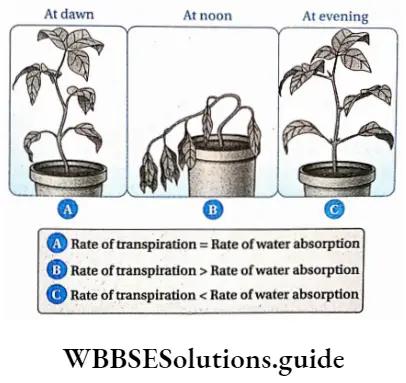
Biology class 11 chapter 11 Transport In Plants Rate oftranspiration at different times ofthe day

Transpiration and photosynthesis—a compromise

Photosynthesis is a delicate process. Through transpiration, all factors (water, minerals, cooler temperature, and turgid cell) necessary for photosynthesis, are made available to the plant.

Excessive transpiration causes loss of water and reduces the rate of photosynthesis. But without transpiration, no transpiration pull will be created and water will not reach the leaves. Hence, transpiration is a compromise for the plant to make photosynthesis happen without disruption.

The evolution of the C4 photosynthetic system is probably one of the strategies for minimizing water loss without disrupting the availability of CO2. A C4 plant fixes twice the amount of carbon but loses only half the amount of water than a C3 plant. In CAM plants, the demand for water is the least as their stomata remain closed during the daytime.

Antitranspirants

Definition: The chemicals which are applied (sprayed) to the aerial parts of plants in order to reduce the rate of transpiration, without affecting its normal growth and metabolism are called antitranspirants.

Types of antitranspirants: They may be of two types—

Metabolic antitranspirants: These antitranspirants reduce the opening of stomata. example phenylmercuric acetate (PMA), abscisic acid (ABA), and aspirin.

CO2 as the natural antitranspirant

If the concentration of atmospheric CO2 is increased from 0.03% to 0.05%, partial closure of stomata has been observed. If the concentration of CO2 is increased further, then, complete closure of stomata has been observed. As a result, photosynthesis is also hampered.

Film-forming antitranspirants:

These antitranspirants when sprayed on leaves, form a colourless, transparent layer on leaf surfaces. This layer is permeable to 02 and C02 but not to water vapor. example silicon emulsion, low viscosity waxes, etc.

Importance Of Using Antitranspirants:

Transpiration involves the loss of water from plants through leaves. To make up for this loss, water is taken up from the soil by roots. This in turn causes a loss in soil water.

Also, the loss of water from a plant body affects some of its physiological and metabolic functions like photosynthesis, respiration, nutrition, growth, etc. Antitranspirants are therefore useful for reducing the loss of water from the plant body and hence from the soil.

Uptake Of Mineral Ions And Their Translocation

Plants absorb minerals from soil and translocate those to other parts of the body. The organic food is translocated from leaves to all the cells of the plant body by phloem.

Uptake Of Mineral Ions

The elements that are necessary for normal growth and development of plants are known as essential elements. In the soil, these minerals are present in ionic form. The essential ions are absorbed by the root hairs in different quantities and then translocated through the xylem stream to the different parts of the plant body. Previously, it was thought that inorganic salts were passively absorbed along with water.

But at present it is considered that mineral ions are absorbed at the expense of energy as the water potential of the soil water is greater than that in root hair. Different theories have been proposed by different scientists to explain the mechanism of ion absorption.

There are two major mechanisms for ion uptake —

  1. Non-Mediated Uptake And
  2. Mediated uptake

Non-mediated uptake

The driving force behind this kind of uptake is its chemical potential gradient. The mechanism is also described as passive ion uptake. Passive non-mediated absorption includes different types of mechanisms like diffusion, ion exchange, Donnan equilibrium, mass flow, etc.

Diffusion: When a plant cell or tissue is transferred from a medium of lower salt concentration to a medium of relatively higher salt concentration, there will be an initial uptake of ions due to diffusion. This mechanism is temperature-independent and remains unaffected by the application of metabolic inhibitors.

Ion Exchange: In this mechanism, the ions within j the cells are exchanged for the ions of equivalent charge | of the external solution. A solution of a dissociable salt (A+ and B) can be separated from distilled water by a membrane that is permeable to both ions.

Then diffusion will occur until the concentration of ions on both sides becomes equal. Let us assume, two solutions containing different salts (A1B1and A2B2) are separated from one another by a semipermeable membrane j (cation-permeable/anion-impermeable or cation- J impermeable/anion-permeable membrane).

The solutions will contain 4 different types of ions (A1+ and B1; A2+ and B2). One of the two ions in each case, is free to move across in exchange for an ion of the same charge.

This movement will occur until the concentration of ions becomes equal on both sides. Hence, at equilibrium, [A1+]/[A2+] (when cation is permeable) and [B1/B2] (when anion is permeable) are equal on both sides.
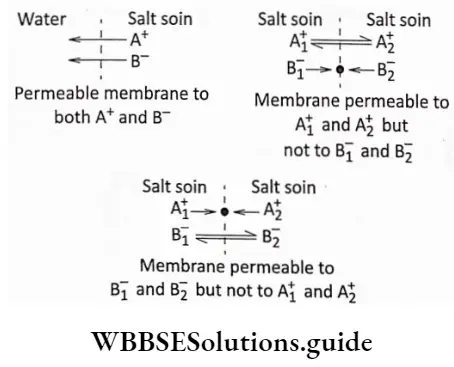
Biology class 11 chapter 11 Transport In Plants Ion-exchange mechanism

The total concentration of salts on either side is not affected by the exchange of ions. Exchange involves; equivalent electrical charge, so that two univalent ions are exchanged for one bivalent, three for one trivalent ion, and so on.

Donnan Equilibrium: This theory accounts for the effect of non-diffusible ions on ion uptake. This theory also explains the cooperation of both electrical as well as diffusion phenomena. It is a complex ion exchange system in which the membrane is impermeable to certain ions called fixed ions.

The fixed ions cannot pass through the membrane. In both the figures be|ow, x+ and Y are fixed ions and cannot move through the membrane. Instead, some other ions get absorbed against the concentration gradient.
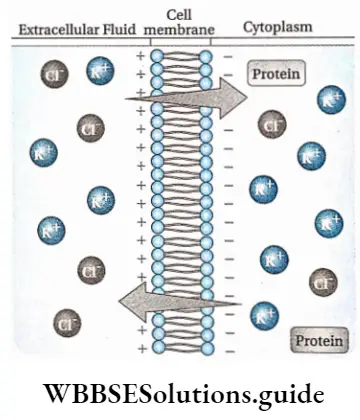
Biology class 11 chapter 11 Transport In Plants Donnan equilibrium

In the first case where K+ is fixed, an equal number of cations and anions from the left side will diffuse across the membrane. The movement of ions continues till the equilibrium is reached. However, additional anions are required to balance the positive charges of the fixed locations on the right side of the membrane.

“role of root pressure and transpiration in mineral translocation”

Therefore the anion concentration would become greater on the right side than it is on the left side. Similarly, in the second case where Cl is fixed, cation accumulation takes place at the equilibrium. Thus, the accumulation of ions against a concentration gradient can occur without using any metabolic energy. This process continues until the Donnan equilibrium is reached.

Mass Flow of Ions: Many scientists believe that ions are absorbed by roots along with the mass flow of water influenced by transpiration pull. The mechanism states that a higher transpiration rate causes more absorption of ions.

Some scientists obtained a correlation between the rate of water transport and the uptake of nutrients. However, when the inhibitors of respiration were added to the system, this correlation usually got affected.

Mediated uptake

Mediated uptake takes place in the presence of carrier proteins in the membrane. These carrier proteins interact with the ions or molecules. Ions form a complex with the carrier protein on the outer side of the membrane. After crossing the membrane, this complex is broken down to release the transported ion and the carrier protein.

There are different carriers for different cations and anions. They are also called transporters or permeases. These carriers may be of different types such as:

  1. Uniport,
  2. Symport and
  3. Antiport.

These transporters have been discussed previously in this chapter.

Mediated transport is classified into two categories depending on the thermodynamics of the system—

  1. Facilitated diffusion (also called passive uptake or transport), in which a specific molecule flows from a region of high concentration to a low concentration,
    without the expenditure of energy.
  2. Active uptake or transport, in which a specific molecule is transported from a region of low concentration to high concentration, against its concentration gradient.

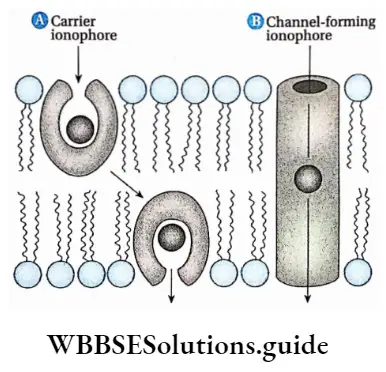
Facilitated Diffusion: Facilitated diffusion has been explained earlier in this chapter. Facilitated diffusion of ions occurs by ionophores.

“factors affecting translocation of minerals in plants”

Ionophores are organic molecules that help in the transport of mineral ions across the cell membrane.

There are two fundamental classes of ionophores—

  1. Carrier ionophore,
  2. Channel-forming ionophore.

Carrier Ionophore: Carrier ionophores increase the permeability of membranes to a particular ion by binding the ion, diffusing it through the membrane, and releasing it on the other side. After releasing the ion, the ionophore must then return to the other side of the membrane, to repeat the process.

The ionic complexes of all carriers must therefore be soluble in membrane lipids. The carrier ionophores are specific in nature. They can transport larger or charged molecules. Carriers do not catalyze ATP hydrolysis.

They do not involve chemical modification of any of the compounds bound to the carrier. The principal inorganic nutrients, including NH4+, NO3, Pi, K+, Cl-, and SO42- are all translocated into cells by plasma membrane carriers.

Channel-forming ionophore: A second type of ionophore is channel-forming ionophore. It forms a transmembrane channel or pore through which the selected ions can diffuse. Even a small amount of ionophore greatly increases the permeability of a membrane toward a specific ion.

For example, a single molecule of carrier antibiotic valinomycin transports up to 104 K+ per second across a membrane. Channel-forming ionophores, such as the antibiotic gramicidin A, have an even greater ion output (over 107 K+ ions per second).
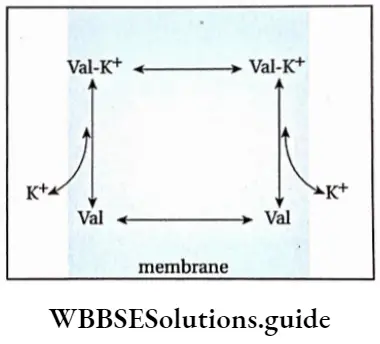
Biology class 11 chapter 11 Transport In Plants Transport of1C with the help ofvalinomycin

Ion channels are driven solely by electrochemical potential differences. Ion flow through channels is passive. The ion channels are specific to ions.

Ion channels in plants are categorized into two types—

  1. Cation channels and
  2. Anion channels.

Biology class 11 chapter 11 Transport In Plants Membrane protein transporter types

Criticism related to facilitated diffusion concept: The following facts are against the passive ion transport concept—

  1. Generally, absorption of ions or minerals occurs at a faster rate which cannot be explained by passive absorption.
  2. Passive absorption theories cannot explain the absorption of ions or minerals against the osmotic gradient. Some plants (Chara australis, Nitella translucent) can absorb 1000 times more K+ which is not in accordance to their environment.
  3. It has been experimentally found that the absorption of minerals is related to the metabolic activities of the plant.

Active uptake: Active uptake of ions is one of the most important features of life processes. The transfer of ions occurs at the expense of the free energy liberated by the hydrolysis of ATP.

Both anions and cations are accumulated within plants, to a great extent, against a concentration gradient. It has also been observed that the rate and amount of absorption of ions are directly related to the expenditure of metabolic energy.

The freshwater green alga Nitella can absorb potassium ions (K+) to a concentration 1000 times more than the concentration of K+ ions in the surrounding medium. This type of absorption where the concentration of ions is much higher within the cells than in the external solution is called ion accumulation.

It has been proved that free diffusion and other passive mechanisms do not involve the expenditure of metabolic energy. So, the mechanisms are not effective for such a great accumulation of these ions.

“short notes on translocation of minerals for NEET”

The active uptake of salt in ionic form may be of two types—

  1. Primary or
  2. Secondary.

Primary active uptake: The primary active uptake is coupled directly to an energy source. These energy sources are—ATP hydrolysis, an oxidation-reduction reaction, etc.

The membrane proteins that carry out this process are called pumps. Most pumps transport ions. Ion pumps are further characterized as either electrogenic (involving net movement of charge) or electroneutral (no net movement of charge).

For example, the Na+/K+- ATPase pump of animal cells is an electrogenic pump. It pumps three Na+ ions out for the inward of two K+ ions. This results in a net outward movement of one positive charge.

Secondary active uptake: Secondary active uptake uses the energy stored in an electrochemical-potential gradient. Protons are extruded from the cytosol by electrogenic pumps.

These pumps operate in the plasma membrane and tonoplast. Consequently, a membrane potential and a pH gradient are created at the expense of ATP hydrolysis. This gradient of electrochemical potential for H+ ions generates the proton motive force.

Minerals such as Fe, Ca, Cu, Mn, Zn, etc., are essential for normal growth and development of plants. They can be toxic when present in excess. Thus, membrane transport systems are likely to play a central role in these processes.

This system is regulated by a wide range of genes. The application of genetic and molecular techniques has led to the identification of such genes.

Many studies indicate that solute transport into cells is strongly dependent upon metabolic energy. Ion accumulation is inhibited when the metabolic activity of the plant is inhibited by —

  1. Low temperature
  2. Low oxygen concentration
  3. Metabolic inhibitors and so on.

“translocation of minerals PDF notes download”

Salt accumulation and respiration are parallelly affected by oxygen tension. With the decrease in oxygen content of the medium, ion accumulation decreases and ultimately stops completely. Metabolic inhibitors like azides and cyanides inhibit ion accumulation along with the inhibition of respiration.

The rate of respiration increases when a plant or tissue is transferred from water to a salt solution. When an extra amount of salt is added, the rate of respiration is increased over the normal rate which is called salt respiration or anion respiration. This phenomenon is additional evidence in support of the active process of ion uptake.

What Is Osmosis? – Definition, Types, Osmotic Pressure

Osmosis

Osmosis Definition: The physical and passive process by which the movement of solvent or water molecules between two solutions of different concentrations, occurs from the region of their higher concentration (lower DPD) to lower concentration (higher DPD), across a semipermeable membrane, is called osmosis.

Osmosis Characteristic features:

  1. Osmosis is a special type of diffusion between two similar solutions with different concentrations. It may also involve diffusion between a solution and its pure solvent.
  2. No expenditure of metabolic energy takes place during this physical process.
  3. During osmosis, solvent molecules spontaneously move from a region of its higher concentration to a lower concentration, through a semipermeable membrane. The movement continues until the concentration of both solutions becomes equal.
  4. The membrane that is used in osmosis is perfectly semipermeable, which means that it is freely permeable to solvent molecules but impermeable to all solute molecules.

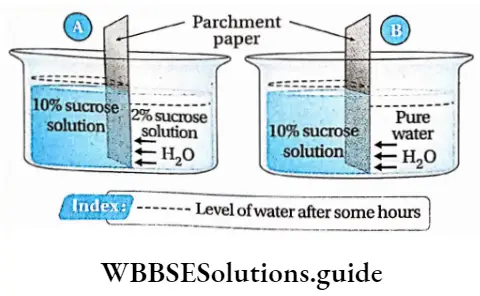
What will happen if a 10% sucrose solution and 2% sucrose solution or pure water is separated by a parchment paper?

” osmosis definition”

Parchment paper is a semipermeable membrane. Water molecules can pass through it but, sucrose molecules cannot. 10% sucrose solution is more concentrated than 2% sucrose solution. So, when the solutions are

Biology class 11 chapter 11 Transport In Plants Osmosis in solutions at different concentrations

” osmosis and osmotic pressure “

Separated by a semipermeable membrane like parchment paper, water molecules will move from 2% sucrose solution to 10% sucrose solution. This process will continue until both solutions become isotonic.

What Is Osmosis Definition Types Osmotic Pressure

When 10% sucrose solution and pure water are separated by parchment paper, water molecules (from its pure side) will move into 10% sucrose solution. This process will continue until both solutions become isotonic. However, this process will take a longer time than the above-mentioned condition.

“osmosis definition and examples in daily life”

Type of solutions on the basis of concentration of cell sap

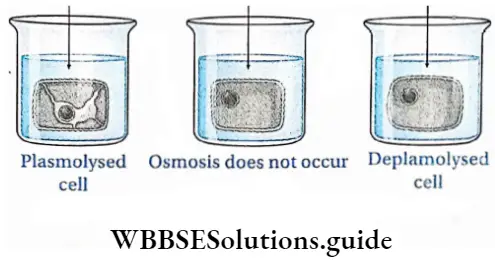
1. Hypertonic solution: When the concentration of the external aqueous medium is more than the concentration of cell sap, the external solution is called hypertonic solution with respect to the cell sap. Therefore, OPe > OPi. [Where OPe = osmotic pressure of the external solution, and OPi – osmotic pressure of cell sap] When a cell is placed in a hypertonic solution, water moves out of the cell and the cell shrinks (plasmolyzed).

2. Isotonic solution: When the concentration of the external aqueous medium is equal to the concentration of cell sap, the external solution is called isotonic solution with respect to the cell sap. Therefore, OPe = OPi. When a cell is placed in isotonic solution it doesn’t undergo any change.

Class 11 Biology Class 11 Chemistry
Class 11 Chemistry Class 11 Physics
Class 11 Biology MCQs Class 11 Physics MCQs
Class 11 Biology Class 11 Physics Notes

“importance of osmosis in plants and animal cells”

3. Hypotonic solution: When the concentration of the external aqueous medium is less than the concentration of cell sap, the external solution is called the hypotonic solution with respect to the cell sap. Therefore, OPe > OPi. When a cell is placed in a hypotonic solution, the cell swells and becomes turgid. If a plasmolysed cell is placed in a hypotonic solution it will regain its turgidity (deplasmolysation).

“osmosis types “

Biology class 11 chapter 11 Transport In Plants Response ofa cell in various solutions ofdifferent concentrations

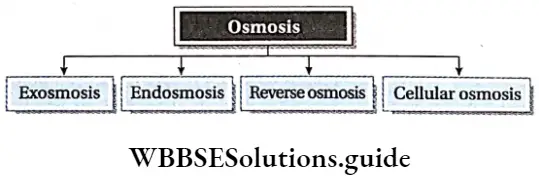
The process of osmosis occurring between a cell and its exterior is of four types.

Biology class 11 chapter 11 Transport In Plants Osmosis

Exosmosis : When the water from cell sap or from an intact cell moves out due to hypotonic external solution, it is called exosmosis. This causes shrinkage of cytoplasm and protoplasm which results in a decrease in the volume of the cell.

Exosmosis  Example: When a plant cell with a primordial utricle is placed in a hypertonic solution, water from vacuoles moves out into the extracellular fluid by exosmosis.

Endosmosis: When water moves into the cell due to lower solute concentration in an external solution (hypotonic), it is called endosmosis. This causes an increase in the volume of cells.

“types of osmosis: endosmosis and exosmosis explained”

Endosmosis Example: Terrestrial plants absorb capillary water through root hairs by the process of endosmosis.

Cell-to-cell osmosis: In multicellular organisms, metabolism in living cells requires cell-to-cell transport of substances, across the membranes. This stepwise osmosis is called cell-to-cell osmosis.

Cell-to-cell osmosis Example: Multicellular cortex region of the roots is made up of living parenchyma cells. Water absorbed by root hairs reaches the endodermis through the cortex by cell-to-cell osmosis.

Reverse osmosis: The process by which solvent particles are compelled to move by exerting pressure from a concentrated (higher solute concentration) to a dilute solution (lower solute concentration), across a semipermeable membrane, is called reverse osmosis.

Reverse osmosis Example: Processes like the thickening of fruit juices and the preparation of pure drinking water from saline water are done by the process of reverse osmosis.

Demonstration of Osmosis

The process of osmosis can be demonstrated through various experiments.

Test for Exosmosis: The process of exosmosis is explained below with the help of an experiment.

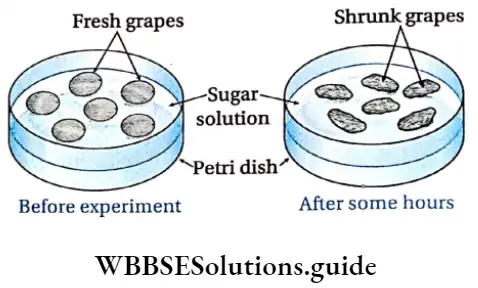
Demonstration of Exosmosis Materials required: Some fresh grapes, concentrated sugar solution, glass Petri dish.

Demonstration of Exosmosis Procedure: The fresh grapes are placed in a glass Petri dish and a concentrated sugar solution is added to it. The arrangement is kept undisturbed for some hours.

“define osmosis in biology “

Demonstration of Exosmosis Observation: After a few hours, it is observed that the grapes have shrunk.

Biology class 11 chapter 11 Transport In Plants Testfor exosmosis

Demonstration of Exosmosis Inference: Concentrated sugar solution acts as a hypertonic solution. When fresh grapes are placed in it, the water in the grapes moves out into the sugar solution by exosmosis, causing them to shrink.

Test for Endosmosis: The process of endosmosis is explained below with the help of an experiment.

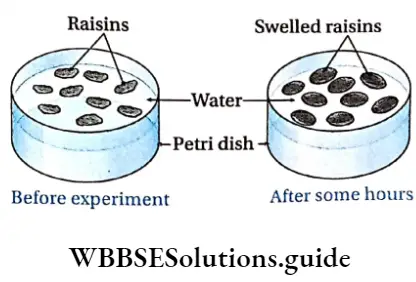
Endosmosis Materials required: A few raisins, pure water, glass Petri dish.

Endosmosis Procedure: A few raisins are placed in a glass Petri dish and pure water is added to it. The arrangement is kept undisturbed for some hours.

Endosmosis Observation: After a few hours, it is observed that the raisins in the Petri dish have become swollen.

Biology class 11 chapter 11 Transport In Plants Testfor endosmosis

Endosmosis Inference: Pure water is hypotonic to dried raisins. So, when raisins are placed in it, water enters raisins by endosmosis which causes them to swell.

Experiment on Osmosis by Thistle Funnel:

The process of osmosis is explained below with the help of an experiment using a thistle funnel.

“reverse osmosis process and its applications in water purification”

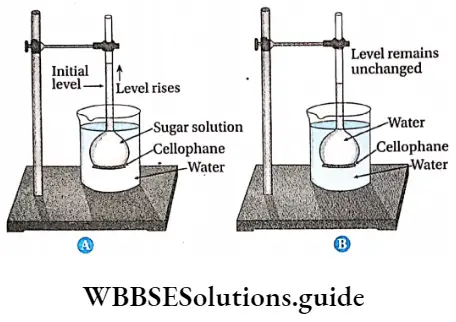
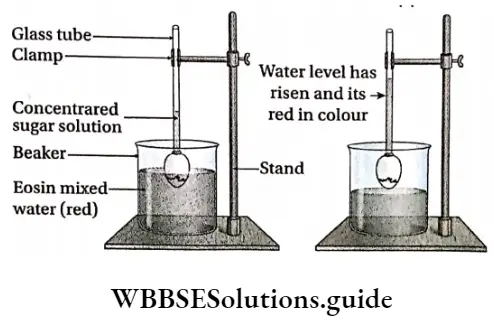
Materials required: A large beaker, one thistle funnel, sugar, stand and clamp, cellophane membrane (semipermeable membrane), eosin dye, pure water, thread, and glass marker.

Biology class 11 chapter 11 Transport In Plants Experiment ofosmosis by thistlefunnel

Osmosis by Thistle Funnel Procedure:

  1. The sugar solution is prepared using pure water and sugar.
  2. A thistle funnel is taken and its mouth is covered by cellophane membrane.
  3. The thistle funnel is fixed to a stand in an inverted position (i.e., mouth facing downward). The sugar solution is added to the thistle funnel and its level is marked by a glass marker.
  4. The glass beaker is filled with 2/3rd parts with water. A few drops of eosin dye is added to it. The water turns red due to this dye.
  5. This beaker is then kept below the inverted thistle funnel in such a way that the mouth of the thistle funnel remains immersed in the beaker.
  6. The arrangement is kept undisturbed for a few hours.

Osmosis by Thistle Funnel Observation: After a few hours it is observed that the level of the solution in the thistle funnel has increased and it has become red.

Osmosis by Thistle Funnel Inference with explanation: The solution in the thistle funnel is hypertonic to the water in the beaker. Since the cellophane membrane acts as a semipermeable membrane, so water from the beaker moves into the thistle funnel by endosmosis. As a result, the level of solution in the thistle funnel increases, and it gradually turns red. This proves that osmosis has taken place.

“role of osmotic pressure in maintaining cell shape”

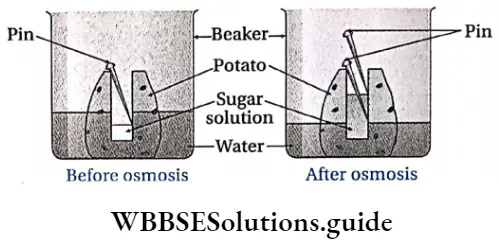
Experiment on osmosis by Potato-Osinoscope: The process of osmosis is explained below with the help of a potato-osmoscope.

osmosis by Potato-Osinoscope Materials required: A large fresh potato, concentrated sugar solution, pure water, a large glass beaker, knife, a few pins, and eosin dye.

osmosis by Potato-Osinoscope Procedure:

  1. The large potato is cut with a knife in a cube shape so that it can be well placed in the beaker. Some portion of the potato is scooped out from the middle, such that a cavity is formed within the potato. This is used as a potato osmoscope.
  2. This cavity in the osmoscope is filled with concentrated sugar solution, The level of the solution is marked by pricking a pin at that level.
  3. This arrangement is carefully placed in the beaker. The beaker is filled with pure water in such a way that part of the potato cube should remain immersed in water.
  4. A few drops of eosin dye is added to the water in the beaker.
  5. The total arrangement is kept undisturbed for a few hours.

Biology class 11 chapter 11 Transport In Plants Potato osmoscope

osmosis by Potato-Osinoscope Observation: After a few hours, it is observed that the level of the solution in the cavity of the potato cube has increased and turned red. This level is marked again with a pin.

Inference with explanation: The sugar solution in the potato is hypertonic to the water in the beaker. So, pure water from the beaker enters the cavity of the potato osmoscope by endosmosis. As a result, the level of solution within the cavity of the potato cube increases and it turns red.

Experiment on Osmosis by Egg-Osmoscope: The process of osmosis is explained below with the help of a egg-osmoscope.

Osmosis by Egg-Osmoscope Materials required: An egg, dilute HCI, thin glass tube, glass marker, cone, sugar solution, stand and clamp, sealing wax, one beaker, pure water, and eosin solution.

Osmosis by Egg-Osmoscope Procedure:

  1. A small pore is made in the shell of an egg gently and its content is removed. The opposite end of the egg is immersed in dilute HCI. As a result, the hard outer shell of the egg gets dissolved in HCI, but the thin inner membrane remains intact. Now, the eggshell is fixed to a thin glass tube at the site of the pore and sealed with sealing wax. This arrangement is called an egg osmoscope.
  2. The egg osmoscope is fixed to a stand with the help of a clamp. The concentrated sugar solution is poured into the glass tube. The level of sugar solution is marked with a glass marker.
  3. A beaker is taken and filled with pure water. A few drops of eosin dye is added to it. The beaker is kept below the egg osmoscope in such a way that half of the egg remains immersed in pure water. This arrangement is kept undisturbed to stand for a few hours.

Biology class 11 chapter 11 Transport In Plants Egg osmoscope

Osmosis by Egg-Osmoscope Observation: After a few hours, it is observed that the level of sugar solution in the egg osmoscope has increased and it has turned red.

Inference with explanation: The inner layer of the egg is semipermeable. The solution in the egg osmoscope is more concentrated than the pure water outside. So, by endosmosis, water from the beaker enters the egg through the semipermeable membrane and turns the solution red.

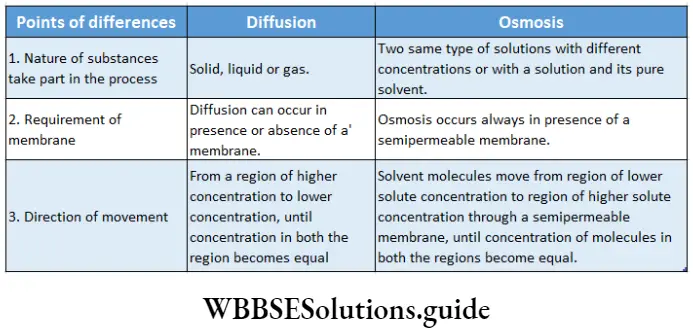
Biology class 11 chapter 11 Transport In Plants Differences between diffusion and osmosis

Osmotic Pressure or OP

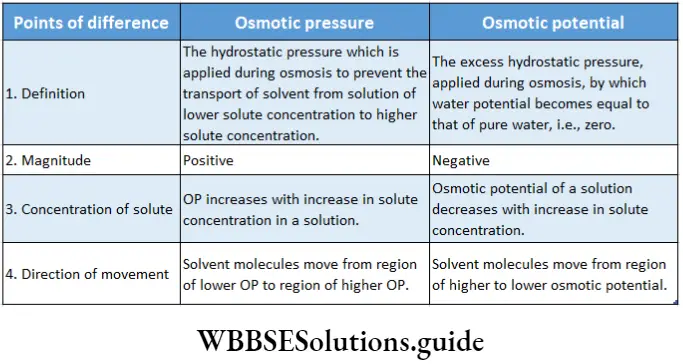
Osmotic Pressure Definition: The opposite hydrostatic. pressure which is applied to a solution to prevent the entry of the solvent molecules from a solution of lower solute concentration to a solution of higher solute concentration, when the two are separated by a semipermeable membrane, is called osmotic pressure.

The osmotic pressure of a solution is denoted by the Greek letter pi (π).

The osmotic pressure is directly proportional to the solute concentration of the solution.

The term ‘osmotic pressure’ is ambiguous. An isolated solution cannot possess osmotic pressure since the phenomenon involves a system, containing both pure solvent and solution separated by a semipermeable membrane. Therefore, it is confusing to refer to this pressure in an isolated solution, although the solution possesses some osmotic pressure.

“MCQs on osmosis and osmotic pressure with answers”

Due to this reason, the term osmotic potential or solute potential (ψs) is used instead of osmotic pressure. It is equal in magnitude but opposite in sign to n. Thus, π = – ψs The osmotic pressure of pure water is zero. This is due to the absence of solute in pure water.

  1. The lowest osmotic pressure is found in cells of aquatic plants or hydrophytes.
  2. The highest osmotic pressure is found in cells of a halophytic plant named Atriplex confertifolia which is p ft* C T approximately 202.5 atmospheres.
  3. Generally, osmotic pressure is less during the night and higher at noon.
  4. Osmotic pressure is expressed in terms of atmosphere or bar.
  5. Osmotic pressure is calculated by the following formula, given by Vant Hoff.
  6. At normal or standard temperature and pressure (STP), the osmotic pressure of 1 molar solution is 22.4 bar and the osmotic potential is -22.4 bar.

s) = n/V RT

n = number of solute particles in solution of volume V

V = volume of solution

R = gas constant

T = specific temperature [273 +………..OC]

Factors influencing Osmotic Pressure: Several factors regulate osmotic pressure, such as

Osmotic Pressure Concentration of the solute: The osmotic pressure (OP) of a solution is directly proportional to the molar concentration of solutes.

The molecular weight of solute: OP of a solution is inversely proportional to the molecular weight of its constituent solute. It means, the higher the molecular weight of the solute, the lower will be the OP.

Osmotic Pressure Temperature: The osmotic pressure of a solution is directly proportional to the temperature of the medium. It means that the osmotic pressure of the solution increases an increase in temperature.

Osmotic Pressure Ionization of solute: Dissociation of solutes into ions (ionization) also increases the OP of a solution.

Significance of osmosis

  1. Root hairs of terrestrial plants absorb water from the soil by the process of endosmosis. The cells present in root hairs of plants have a single large, central vacuole. The cell sap within that vacuole is more concentrated than the water in the soil. This causes the water to enter the cells by endosmosis.
  2. The movement of water in plants through the cortex to the endodermis is performed by cell-to-cell osmosis. Due to endosmosis, the turgor pressure of cells increases which creates root pressure in the endodermis. Root pressure helps in the ascent of sap through xylem vessels. The distribution of water in plants also takes place by osmosis.
  3. Turgidity develops due to endosmosis. It helps to maintain a definite shape of tender parts like leaves, stems, and flowers. Turgidity also provides mechanical strength to the plants.
  4. The opening and closing of stomata also depend upon the process of osmosis.
  5. Movement in plants is dependent on osmosis. example
    The leaves of Mimosa pudica droop down due to a sudden change of turgor pressure in the cell sap of cells in the petiole of the leaf. This is related to osmosis.
    Dehiscence of fruits and sporangium dependent on the process of osmosis,
    Rapid movement of the leaves of Desmodium (telegraph plant) is also due to osmosis.
  6. The resistance against dryness is increased due to high osmotic concentration.
  7. Turgor pressure, especially in meristematic tissue helps in cell elongation.

Different Pressures Related to Osmosis

Different osmosis-related pressures are described below.

Hydrostatic Pressure: The pressure applied by absorbed water on the cell membrane of a turgid plant cell, when kept in a hypotonic solution, is called hydrostatic pressure or HP.

Suction Pressure: The difference of diffusion pressure between molecules of solute present outside and inside of a cell separated by semipermeable membrane is called suction pressure or SP. It can be calculated as, SP = OP-TP.

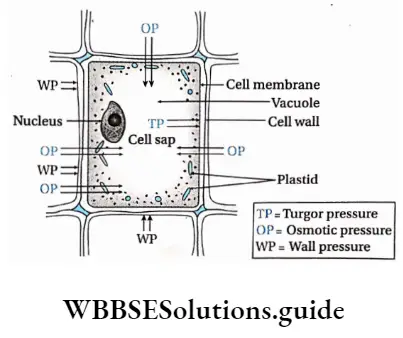
Wall Pressure: The equal and opposite pressure exerted by the cell wall against the turgor pressure in a fully turgid cell is called wall pressure or WP. Hence, TP = -WP, in a fully turgid cell.

Osmotic Pressure: The minimum, external pressure which is required to stop the net movement of water across the semipermeable membrane in a system, is called osmotic pressure or OP. Its value is positive. OP is zero in pure water. It increases with an increase in solute concentration in a solution. It can be calculated as, OP = TP + SP. Water molecules move towards the solution with higher osmotic pressure from the lower osmotic pressure across the semipermeable membrane.

“diagram-based explanation of osmosis in cells”

Turgor Pressure: The pressure exerted on the cell wall due to endosmosis of water is called turgor pressure or TP. A flaccid cell has zero turgor pressure. The highest value of turgor pressure is found in turgid cells and it is equal to the osmotic pressure. In a fully turgid cell OP = TP.

Biology class 11 chapter 11 Transport In Plants Turgor pressure, osmotic pressure and wall pressure in a cell

Nowadays, turgor pressure is known as pressure potential and it is represented as Ψp.

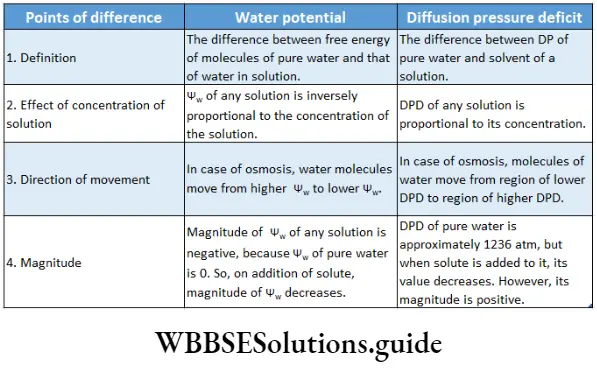
Diffusion Pressure Deficit: The difference between the diffusion pressure of pure solvent and its solution is called its diffusion pressure deficit or DPD. It can be calculated by the formula—

DPD = OP- WP (or TP)

Its value is positive.

Biology class 11 chapter 11 Transport In Plants Differences between water potential and diffusion pressure deficit

Interrelationship among osmotic pressure, turgor pressure, wall pressure, and diffusion pressure deficit

1. When a mature plant cell is kept submerged in pure water, water enters the cell vacuole due to endosmosis. This happens because OPe = OPi (here, the letter ‘e’ denotes the exterior of the cell and T denotes the interior of the cell). This in turn causes the cell to swell up. When a cell is fully turgid, then OPe = OPi.

2. When a cell is immersed in water, molecules of water enter the cell due to the high osmotic pressure of the cell sap. This produces turgor pressure in the cell. The turgor pressure is counterbalanced by an equal and opposite pressure exerted by the cell wall, known as wall pressure. Therefore, wall pressure and turgor pressure become equal but opposite in magnitude to each other, TP = -WP.

If immersed in a hypotonic solution, a plant cell remains intact. However, an animal cell can burst under such conditions. Due to the lack of cell walls, there is no wall pressure to counter the turgor pressure as endosmosis occurs.

3. Plants intake water from the soil by endosmosis through root hairs. In a turgid cell,’ the hydrostatic pressure acting per unit volume is called suction pressure. Water enters root hairs due to diffusion pressure deficit within root hairs. The more the DPD in root hairs, the more the suction pressure. This, in turn, will increase the rate of absorption of water. Thus, SP is dependent on DPD.

4. Again, DPD is equal to the difference between osmotic potential and turgor pressure.

DPD = ψs -TP

A plant cell as an osmotic system—relation between water potential, osmotic potential, and pressure potential

When a typical plant cell is kept immersed in pure water or solution, it acts as an osmometer (device for demonstrating osmosis). The plant cell wall is made up of cellulose. It is permeable in nature and has tensile strength (resist breaking under tension).

A mature plant cell contains a centrally located large vacuole in the cytoplasm. It is surrounded by a thin layer of cytoplasm, called tonoplast. Cell sap is present within the vacuole. It keeps the cell in proper shape. When endosmosis occurs, the cell becomes turgid. But, when exosmosis occurs, the cell becomes flaccid.

In the case of a turgid cell: The transport of water stops in a fully turgid plant cell. In that case, osmotic potential and pressure potential are equal in magnitude but opposite in direction.

Suppose, in a fully turgid cell, the osmotic potential is = ψs = -10 bar

Therefore, Ψwsp = -10 bar + 10 bar = 0

Thus, Ψw = 0

“difference between osmosis and diffusion with examples”

In case of a flaccid cell: In a flaccid cell, TP = 0. In such a cell, the magnitude of ψs and Ψw is the same. Suppose, in the same plant cell,ψs = -10 bar and Ψp = 0 bar

Therefore, Ψwsp

= -10 bar + 0 bar = -10 bar

Thus, water potential is equal to osmotic potential. Water potential in such a cell is less than pure water (Ψw= 0).

Therefore, water will always move from a region of higher water potential to a region of lower water potential

Biology class 11 chapter 11 Transport In Plants Differences between osmotic pressure and osmotic potential

Neural Control And Coordination Questions And Answers

Biology Class 11 WBCHSE Neural Control And Coordination Questions And Answers

Question 1. What are the nodes of Ranvier? Are they found in Dendron also?
Answer:

The Myelin sheath of medullated nerve fibers is found on axons at intervals. Such periodic gaps of the myelin sheath are called nodes of Ranvier. Nodes of Ranvier help in the saltatory conduction of impulses.

The dendron of neurons is always hon-medullated, so the dendron lacks a node of Ranvier.

Neural Control And Coordination

Question 2. Mention the location and process of secretion of neurotransmitters in the synaptic cleft.
Answer:

Neurotransmitters (e.g., ACh) are present in the synaptic vesicles within the axolemma of the synaptic knob of axon in the presynaptic neuron.

Synaptic vesicles fuse with the presynaptic membrane and by exocytosis they are released in the synaptic cleft.

” class 11 neural control and coordination”

Question 3. Which organ is considered a ‘central information processing organ’? Where is it located?
Answer:

The human brain is considered the ‘central information processing organ’.

It is located within a special cavity called the cranium or brain box in the human skull.

Read and Learn More WBCHSE Solutions For Class 11 Biology

Question 4. Which is the largest and most important region of the human brain? What are the names of its two symmetrical parts?
Answer:

The largest and most important region of the human brain is the cerebrum.

The two symmetrical parts of the cerebrum right and left cerebral hemispheres.

Biology Class 11 WBCHSE

Question 5. What is the corpus callosum? Is it found in the brains of other species?
Answer:

The transverse, bundle of nerve fibers, that holds the two cerebral hemispheres together is known as the corpus callosum.

Class 11 Biology Class 11 Chemistry
Class 11 Chemistry Class 11 Physics
Class 11 Biology MCQs Class 11 Physics MCQs
Class 11 Biology Class 11 Physics Notes

” class 11 biology chapter 21 ncert solutions “

Yes, not only humans, but all vertebrates (except platypus) have corpus callosum in their brains.

Question 6. What are grey matter and white matter? Why they are named such?
Answer:

The central nervous system consists of two types of tissues—grey matter and white matter.

The grey matter is mainly composed of neuronal cell bodies, unmyelinated axons, glial cells, synapses, and capillaries. Due to the absence of a myelin sheath, this tissue appears grey. Hence, this name was given.

The white matter is composed of myelinated axons, hence, they appear white and are named such

Neural Control And Coordination Questions And Answers

Question 7. What is known as the cerebral medulla? What is its composition?
Answer:

The region interior to the cerebral cortex, in each cerebral hemisphere of the human cerebrum, is known as the cerebral medulla.

” class 11 neural control and coordination”

The cerebral medulla is composed of white matter. This region contains numerous medullated nerve fibers. Note that due to the presence of myelin sheath in the medullated nerve fibers, this region appears white.

Question 8. What is a cerebral aqueduct? orWhat is corpora quadrigemina?
Answer:

The third and fourth ventricles of the human brain are connected by a duct of the midbrain. This duct is known as the cerebral aqueduct or aqueduct of Sylvius.

On the tectum of the human midbrain, four spherical swellings or lobes are observed. Together, these are known as corpora quadrigemina.

Biology Class 11 WBCHSE

Question 9. Which part of the human brain is known as the brain stem? or Which part of the human brain is involved in breathing and secretion of saliva?
Answer:

The part of the brain that remains connected to the spinal cord is known as the brain stem. The human brain stem is composed of the midbrain (mesencephalon), pons varolii (included in metencephalon), and medulla oblongata (myelencephalon).

The medulla oblongata of the hindbrain controls breathing and secretion of saliva.

” class 11 biology chapter 21 notes”

Question 10. What is a yellow spot or macula lutea? What is fovea? Mention one use of fovea.
Answer:

The convex region at the middle of the retina is known as the yellow spot or macula lutea.

The central part of the yellow spot is more depressed. This part is known as fovea centralis or fovea in short.

The fovea is the most photoreceptive area of the retina. Image is formed on this region when an object is minutely tracked and observed.

Question 11. Where is Organ of Corti located? or Where is stereocilia present? or What is known as the tectorial membrane?
Answer:

The organ of Corti is located in the basilar membrane of the membranous labyrinth in the human inner ear.

neural control

The organ of Corti contains hair cells. Their terminal ends are connected to nerve fibers and their free ends contain numerous cilia. These cilia are called stereocilia.

The elastic membrane present above the hair cells of the organ of Corti is known as the tectorial membrane.

Biology Class 11 WBCHSE

Question 12. What is known as crista ampullaris? or What is its function?
Answer:

The sensory spots present in the ampullae of the semicircular canals are called crista ampullaris.

Crista ampullar is the sense organ of rotation.

Neural Control And Coordination Multiple Choice Question and Answers

Neural Control And Coordination Multiple Choice Question and Answers

Question 1. Receptor sites for neurotransmitters are present on—

  1. Pre-synaptic membrane
  2. Tips of axons
  3. Post-synaptic membrane
  4. Membranes of synaptic vesicles

Answer: 3. Membranes of synaptic vesicles

Question 2. Myelin sheath is produced by—

  1. Astrocytes and Schwann Cells
  2. Oligodendrocytes and Osteoclasts
  3. Osteoclasts and Astrocytes
  4. Schwann Cells and Oligodendrocytes

Answer: 4. Schwann Cells and Oligodendrocytes

Read and Learn More WBCHSE Multiple Choice Question and Answers for Class 11 Biology

” mcq of control and coordination”

Question 3. Good vision depends on adequate intake of carotene-rich food.

  1. Vitamin A derivatives are formed from carotene.
  2. The photopigments are embedded in the membrane discs of the inner segment.
  3. Retinal is a derivative of Vitamin A.
  4. The retina is a light-absorbing part of all visual photopigments.

Options:

  1. 1,3,4
  2. 1,3
  3. 2,3, and 4
  4. 1,2

Answer: 1. 1,3,4

Class 11 Biology Class 11 Chemistry
Class 11 Chemistry Class 11 Physics
Class 11 Biology MCQs Class 11 Physics MCQs
Class 11 Biology Class 11 Physics Notes

Question 4. Photosensitive compound in the human eye is made up Of—

  1. Opsin and Retinal
  2. Opsin and Retinol
  3. Trunsducin and retinene
  4. Guanosine and Retinol

Answer: 1. Opsin and Retinal

WBCHSE Neural Control And Coordination Multiple Choice Question And Answers

Question 5. Choose the correct statement.

  1. Nociceptors respond to changes in pressure.
  2. Meissner’s corpuscles are thermoreceptors.
  3. Photoreceptors in the human eye are depolarised during darkness and become hyperpolarised in response to the light stimulus.
  4. Receptors do not produce graded potentials.

Answer: 3. Photoreceptors in the human eye are depolarised during darkness and become hyperpolarised in response to the light stimulus.

Question 6. In the mammalian eye, the ‘fovea’ is the center of the visual field, where—

  1. More rods than cones are found
  2. The high density of cones occurs but has no rods
  3. The optic nerve leaves the eye
  4. Only rods are present

Answer: 2. High density of cones occur, but has no rods

Question 7. Destruction of the anterior horn cells of the spinal cord would result in loss of—

  1. Integrating impulses
  2. Sensory impulses
  3. Voluntary motor impulses
  4. Commissural impulses

Answer: 3. Voluntary motor impulses

“mcq on control and coordination class 10 “

Question 8. Stimulation of a muscle fiber by a motor neuron occurs at—

  1. The neuromuscular junction
  2. The transverse tubules
  3. The myofibril
  4. The sarcoplasmic reticulum

Answer: 1. The neuromuscular junction

Question 9. Which one of the following statements is not correct?

  • Retinol is the light-absorbing portion of visual photopigments
  • In the retina, the rods have the photopigment rhodopsin, while, cones have three different photopigments
  • Retinol is a derivative of vitamin C
  • Rhodopsin is the purplish red protein present in rods only

Answer: 3. Retinol is a derivative of vitamin C

Question 10. Which excitatory neurotransmitter is involved in the transmission of impulses at the neuromuscular junction?

  1. Epinephrine
  2. Serotonin
  3. Acetylcholine
  4. Glycine

Answer: 3. Acetylcholine

Question 11. Which area of the cerebral cortex is responsible for the

  1. Broca’s area
  2. Wernicke’s area
  3. Premotor area
  4. Association area of sensory cortex

Answer: 2. Wernicke’s area

Question 12. Which one of the following statements is true for ‘Motor cortex’?

  • It is located in the frontal lobe of the cerebral cortex.
  • It contains pyramidal cells.
  • It is responsible for all visual functions.
  • It is essential for our thought process.
  • It stimulates wakefulness.

It regulates voluntary muscular movements. Select the correct answer using the codes given below.

  1. 1,2,3 And 4
  2. 2,3,4 and 5
  3. 2,4,5 and 6
  4. 1,2,4 and 6

Answer: 4. 1,2,4 and 6

Question 13. The statoacoustic receptor responds to changes in the—

  1. Light and pressure
  2. Pressure and touch
  3. Pain and pressure
  4. Sound and equilibrium

Answer: 4. Sound and equilibrium

” mcqs on control and coordination class 10 “

Question 14. Select the correct statement regarding the Schwann cells.

  1. Surround axon of myelinated nerve fiber
  2. Support muscle fibers.
  3. Found in the Haversian system of bones.
  4. From the basement membrane of the epithelium.

Answer: 1. Surround axon of myelinated nerve fiber

Question 15. Which of the following statements is wrong regarding the conduction of nerve impulses?

  1. In a resting neuron, the axonal membrane is more permeable to K+ ions and nearly impermeable to Na+ ions.
  2. The fluid outside the axon has a high concentration of Na+ and a low concentration of K+ in a resting neuron.
  3. Ionic gradients are maintained by Na+-K+ pumps across the resting membrane which transport 3 Na+ ions outwards for 2K+ ions into the cell.
  4. Resting potential is the electrical potential difference across the resting membrane.

Answer: 5. Resting potential is the electrical potential difference across the resting membrane.

Question 16. A neuron is polarised only when the outer surface of the axonal membrane possesses a negative charge and its inner surface is positively charged. Color blindness is due to defects in—

  1. Cones
  2. Rods
  3. Rods and cones
  4. Rhodopsin

Answer: 1. Cones

Question 17. Which one of the following does not act as a neurotransmitter?

  1. Acetylcholine
  2. Glutamic acid
  3. Epinephrine
  4. Tyrosine

Answer: 4. Tyrosine

Question 18. Which cranial nerve has the maximum branches?

  1. Auditory
  2. Trochlear
  3. Trigeminal
  4. Vagus

Answer: 4. Vagus

Question 19. The myelin sheath around the axon is produced by which type of neuroglial cells?

  1. Satellite glial cells
  2. Radial glial cells
  3. Dendrocytes
  4. Schwann cells

Answer: 4. Schwann cells

Question 20. Choose the functions of the sympathetic nervous system.

  1. Constricts bronchi and pupil of the eye
  2. Increases heart rate, relaxes bronchi
  3. Decreases heart rate, increases peristalsis
  4. Dilates blood vessels stimulate salivary glands Which option is correct for the correctly matched groups for column 1, column 2, and column 3?

Answer: 2. Increases heart rate, relaxes bronchi

Question 21. Which option is correct for the correctly matched groups for column 1, column 2, and column 3?

Biology Class 11 Chapter 20 Neural Control And Coordination Multiple Choice Question 21

  1. 1-3-1, 2-4-2, 3-1-4, 4-2-3
  2. 1-2-4, 2-1-2, 3-3-1, 4-4-2
  3. 1-4-2, 2-2-2, 3-1-1, 4-1-4
  4. 1-4-1, 2-3-2, 3-2-3, 4-1-3

Answer: 1. 1-3-1, 2-4-2, 3-1-4, 4-2-3

Question 22. Which of the following options is correct for statements ‘X’ and ‘Y’? Statement X: Immediately after repolarisation, the ionic imbalance is created on both sides of the nerve fiber.

  • Statement Y: During repolarisation K+ ion channel opens up and the K+ ion moves on the inner side of the plasma membrane.
  • Statements X and Y are correct and Y is not correct for X
  • Statements X and Y are correct and Y is correct for X
  • Statement X is correct and statement Y is incorrect
  • Statement X is incorrect and statement Y is correct

Answer: 3. Statement X is correct and statement Y is incorrect

Question 23. The part of the brain where the center for hunger and thirst is located in—

  1. Cerebrum
  2. Hypothalamus
  3. Cerebellum
  4. Medulla oblongata

Answer: 2. Hypothalamus

Question 24. The reflex arc, which is made of two neurons is known as—

  1. Monosynaptic reflex arc
  2. Disynaptic reflex arc
  3. Polysynaptic reflex arc
  4. Asynaptic reflex arc

Answer: 1. Monosynaptic reflex arc

Question 25. The following is the scheme showing the path of the reflex arc. Identify the different labelings 1,2,3,4,5 and Fin the reflex arc.

Biology Class 11 Chapter 20 Neural Control And Coordination Multiple Choice Question 25

  1. 1—Stimulus, 2-Effector,3—Motor nerve, 4-Sensory nerve,5—Receptor 6-Response
  2. 1—Stimulus, 2-Receptor,3—Motor nerve, 4-Sensory nerve,5—Effector 6-Response
  3. 1—Stimulus, 2-Effector,3—Sensory nerve, 4-Motor nerve,5—Receptor 6-Response
  4. 1—Stimulus, 2-Receptor, 3—Motor nerve, 4-Sensory nerve,5—Effector 6-Response

Answer: 4. 1—Stimulus, 2-Receptor, 3—Motor nerve, 4-Sensory nerve,5—Effector 6-Response

Question 26. The cornea is a very important component of the human eye. The main function of the cornea is to—

  1. Bend the light before it reaches the lens
  2. Provide structural support to the eye
  3. Contain a concentrated amount of cone cells in the correct orientation
  4. Change the shape of the lens to enable the image to be focused on the retina

Answer: 4. Change the shape of the lens to enable the image to be focused on the retina

Question 27. A diagram showing the axon terminal and synapse is given. Justify correctly at least two of A-D.


  1. 1—Receptor, 3—Synaptic vesicles
  2. 2—Synaptic connection, 4—K+
  3. 1—Neurotransmitter, 2—Synaptic cleft
  4. 3—Neurotransmitter, 4—Ca 2+

Answer: 1. 1—Receptor, 3—Synaptic vesicles

Question 28. Parts A, B, C, and D of the human eyes are shown in
the diagram. Select the option, that gives correct Identification along with its function characteristics

Biology Class 11 Chapter 20 Neural Control And Coordination Multiple Choice Questions 28

  • 1—retina; contains photoreceptors— rods and cones
  • 2— blind spot; has only a few rods and cones
  • 3—aqueous chamber; reflects the light, which does not pass through the lens
  • 4—The choroid, its anterior part forms the ciliary body.

Answer: 1. 1—retina; contains photoreceptors— rods and cones

Question 29. The thermoregulatory center of the human body is Associated with

  1. Cerebrum
  2. Cerebellum
  3. Hypothalamus
  4. Medulla Oblongata

Answer: 3. Hypothalamus

Question 30. Which of the following is the smallest cranial nerve?

  1. Abducent
  2. Optic
  3. Trochlear
  4. Facial

Answer: 3. Facial

Question 31. Hearing is controlled by—

  1. Cerebellum
  2. Diencephalon
  3. The frontal lobe of the cerebrum
  4. The temporal lobe of the cerebrum

Answer: 4. Temporal lobe of cerebrum

Question 32. Adrenaline is Equivalent To Which Neurotransmitter?

  1. Epinephrine
  2. Acetylcholine
  3. Dopamine
  4. GABA

Answer: 1. Epinephrine

Question 33. Sensory neurons in the retina of the eye care—

  1. Rods
  2. Cones
  3. Ciliary Body
  4. Both 1 And 2

Answer: 4. Both 1 And 2


Digestion And Absorption Question and Answers

Class 11 Biology WBCHSE Digestion And Absorption Questions and Answers

Question 1. What are the organic components of food from which energy can be derived? or What are the nutrients required in less amount for normal growth and development?
Answer:

Proteins, carbohydrates and fats these are –

  1. The three organic components of food, from which energy can be derived for various physiological processes. So they are known as energy-giving or calorie-containing food.
  2. Vitamins (organic compounds), water and mineral salts (inorganic components)—these three types of nutrients do not provide energy, but are required for normal growth and development of the body.

Digestion And Absorption

Question 2. What attaches the tongue to the lower part of the buccal cavity?
Answer:

The frenulum attaches the tongue to the lower part of the buccal cavity.

Read and Learn More WBCHSE Solutions For Class 11 Biology

Question 3. Name a vestigial organ connected with the large intestine.
Answer:

Vermiform appendix is a vestigial organ that is connected to the cecum.

Digestion and absorption questions and answers PDF

Question 4. Mention the location and functions of the villi.
Answer:

Location: They are small finger-like projections, present within the inner lining of the small intestine.

Functions: Digested nutrients, vitamins, water, mineral salts or ions, etc., are absorbed from the lumen of the small intestine by the villi. These substances are then transported either to blood or lymph.

Digestion And Absorption Question and Answers

Question 5. Villi also help to increase the surface area of the small intestine. Or where are the crypts of Lieberkuhn located? What are their functions?
Answer:

  1. Location: They are located in the inner lining of the small intestine.
  2. Function: Intestinal juice or succus entericus is secreted by the crypts of Lieberkuhn.

Question 6. Why is the liver considered as a digestive gland even though no digestive enzymes are secreted by it?
Answer:

The liver secretes bile, which does not contain any digestive enzyme. But bile salts (sodium taurocholate and sodium glycocholate), present in the bile, break down fats into smaller particles. Hence, the emulsification of fats is brought about. Lipase can act on these emulsified fats and hydrolyse them into fatty acids and glycerol. So, even though the liver does not produce any digestive enzyme, it is considered a digestive gland.

NEET digestion and absorption important questions with answers

Class 11 Biology Class 11 Chemistry
Class 11 Chemistry Class 11 Physics
Class 11 Biology MCQs Class 11 Physics MCQs
Class 11 Biology Class 11 Physics Notes

Question 7. What are Glisson’s capsules? Which type of cells secrete bile?
Answer:

Glisson’s capsules

  1. The connective tissue sheath that covers the liver and ensheaths the hepatic artery, portal vein and bile ducts within the liver is called Glisson’s capsule.
  2. The numerous hepatic cells that are present in the middle region of each lobe of the liver, secrete bile.

Question 8. What is the function of the gallbladder? or What is the cystic duct?
Answer:

Function of the gallbladder

  1. The function of the gall bladder is to store and concentrate the bile produced by the liver. This is why the gall bladder is also known as the storehouse of bile.
  2. The duct that arises from the gall bladder, and joins the hepatic duct to form the common bile duct, is known as the cystic duct.

Class 11 biology digestion and absorption Q&A 

Question 9. What is lactose intolerance?
Answer:

Lactose intolerance

The milk-digesting enzyme, lactase, is present in large amounts in childhood but decreases with age. Due to this, some people are not able to digest milk or milk products. This phenomenon is known as lactose intolerance.

Objective questions on digestion and absorption with answers

Question 10. Mention the role of amylase enzyme in saliva.
Answer:

About 30% of the starch gets hydrolysed into disaccharides (mainly maltose), by the action of the amylase, present in the saliva.

Biology Class 11 Chapter 16 Digestion And Absorption Salivary amylase

Question 11. Which type of cell, present in the inner lining of the stomach, secretes mucin? Or why doesn’t the inner lining of the stomach get digested by the cone? Is HCI present in gastric juice?
Answer:

  1. Mucin is secreted by the mucous neck cells present in the gastric glands, in the inner lining of the stomach.
  2. Gastric juice contains mucin and bicarbonate ions. Mucin provides a slimy layer on the inner lining of the stomach. This prevents the epithelial cells from coming in contact with the HCI present in the gastric juice. Mucin and bicarbonate ions neutralise HCI, thereby protecting the inner lining of the stomach from digestion.

Question 12. Mention the role of saliva in the destruction of harmful microbes.
Answer:

The role of saliva in the destruction of harmful microbes

Saliva contains a bacteriolytic enzyme, lysozyme. This enzyme breaks down the cell wall of the bacteria that have entered the mouth, along with the food. This, in turn, kills the bacteria, thereby providing protection.

Biology Class 11 WBCHSE

Question 13. What is known as peristalsis? Or Where are Brunner’s glands located?
Answer:

Peristalsis

  1. The basic propulsive movement of the digestive tract, including its periodic contractions and relaxations, that enable the food to pass through it, is called peristalsis.
  2. Brunner’s glands are present in the submucosa layer of the inner lining of the alimentary canal, specifically the duodenum.

Question 14. What are goblet cells? Or  Name two systems of the body where goblet cells are present.
Answer:

Goblet cells

  1. Goblet cells are mucus-producing cells. They are also known as unicellular glands.
  2. The digestive and respiratory systems both contain goblet cells.

Question 15. What are the substances that can be absorbed in the stomach?
Answer: Substances like simple carbohydrates, water, alcohol, etc., get absorbed in the small intestine.

Question 16. Which organ’s improper functioning leads to jaundice? Or Give two symptoms of jaundice.
Answer: Jaundice is caused by improper functioning of the liver.

Two symptoms of jaundice include—

  1. Accumulation of bile pigments (bilirubin and biliverdin), which causes yellowish colouration of the skin, eyes, etc., of the patient.
  2. The release of bile pigments through the urine gives it a deep yellow colour.

Question 17. What type of reaction is vomiting? Which part of the brain regulates it?
Answer: Vomiting is a type of reflex action. It is regulated by the vomiting centre located in the medulla oblongata of the brain.

Question 18. What is a peptic or gastric ulcer?
Answer:

Peptic or gastric ulcer

The mucous lining of the anterior portion of the stomach and small intestine, i.e., duodenum secretes excess HCI and proteolytic enzymes called pepsin. This leads to the formation of wounds or ulcers, called peptic ulcers.

Biology Class 11 WBCHSE Digestion And Absorption Very Short Answer Type Questions

Question 1. Define digestion.
Answer:

Digestion

The process by which” complex food substances are converted into a simple, absorbable form that can be absorbed by the body is called digestion.

Question 2. Which organ has an acidic environment within it?
Answer: The stomach has an acidic environment within it

Question 3. What are the two organs where mechanical digestion occurs?
Answer: Mouth, oesophagus.

Question 4. Define the term chyme.
Answer:

Chyme

The thick semi-fluid mass of partially digested food, mixed with digestive juices and enzymes formed during digestion is called chyme.

Question 5. What are the components of a portal triad?
Answer:

Components of a portal triad

Branches of the hepatic artery, branches of the portal vein and bile duct.

Question 6. Name the site of action of a pancreatic enzyme.
Answer: Duodenum.

Question 7. What do we call the type of teeth attachment in which each tooth is embedded in a socket of the jaw of bones?
Answer: Thecodont

Question 8. Give the name of the enzymes involved in the breakdown of nucleotides into sugars and bases.
Answer: Nucleosidases

Short answer questions on digestion and absorption

Question 9. Trypsinogen is an active enzyme of pancreatic juice. An enzyme, enterokinase, activates it. Which tissues/cells secrete this enzyme? How is it activated?
Answer: The cells of the duodenum secrete enterokinase. It is activated by the food that enters the duodenum.

Question 10. Where does the venous blood go after leaving the small intestine?
Answer: Liver

Question 11. Name the four layers that compose the wall of the alimentary canal from innermost to outermost.
Answer: Mucous, submucous, muscular and serous.

Digestion and absorption chapter-wise questions with solutions

Question 12. What is a proteolytic enzyme?
Answer:

Proteolytic enzyme

Proteolytic enzyme is the enzyme, that breaks the long polypeptide chains into shorter fragments (peptides).

Question 13. Gastric juice contains—

  1. Pepsin, lipase and rennin
  2. Trypsin, lipase and rennin
  3. Trypsin, pepsin and lipase
  4. Trypsin, pepsin and renin

Answer: 1. Pepsin, lipase and rennin

Question 14. Succus entericus is the name given to—

  1. A junction between the ileum and large intestine
  2. Intestinal juice
  3. Swelling in the gut
  4. Appendix

Answer: 2. Intestinal juice

Digestion And Absorption Multiple Choice Question and Answers

Digestion And Absorption Multiple Choice Questions

Question 1. A baby boy aged two years is admitted to play school and passes through a dental check-up. The dentist observed that the boy had twenty teeth. Which teeth were absent?

  1. Canines
  2. Pre-molars
  3. Molars
  4. Incisors

Answer: 2. Pre-molars

Question 2. Which cells of Crypts or Lieberkuhn secrete antibacterial lysozyme?

  1. Paneth cells
  2. Zymogen cells
  3. Kupffer cells
  4. Argentaffin cells

Answer: 1. Paneth cells

Digestion and absorption multiple choice questions with answers PDF

Question 3. Which of the following options best represents the enzyme composition of pancreatic juice?

  1. Amylase, pepsin, trypsinogen, maltase
  2. Peptidase, amylase, pepsin, rennin
  3. Lipase, amylase, trypsinogen, procarboxypeptidase
  4. Amylase, peptidase, trypsinogen, rennin

Answer: 3. Lipase, amylase, trypsinogen, procarboxypeptidase

Read and Learn More WBCHSE Multiple Choice Question and Answers for Class 11 Biology

Question 4. Which of the following guards the opening of the hepatopancreatic duct into the duodenum?

  1. ileocecal valve
  2. Pyloric sphincter
  3. Sphincter of Oddi
  4. Semilunar valve

Answer: 3. Sphincter of Oddi

WBCHSE Digestion And Absorption Multiple Choice Question And Answers

Question 5. In the stomach, gastric acid is secreted by the—

  1. Parietal cells
  2. Peptic cells
  3. Acidic cells
  4. Gastrin secreting cells

Answer: 1. Parietal cells

Question 6. Primary dentition in humans differs from permanent dentition in not having one of the following types of teeth—

  1. Incisors
  2. Canine
  3. Premolars
  4. Molars

Answer: 3. Premolars

Class 11 Biology Class 11 Chemistry
Class 11 Chemistry Class 11 Physics
Class 11 Biology MCQs Class 11 Physics MCQs
Class 11 Biology Class 11 Physics Notes

Question 7. The enzymes that are not present in succus entericus are—

  1. Lipase
  2. Maltase
  3. Nucleases
  4. Nucleosidase

Answer: 3. Nucleases

MCQ on digestion and absorption for NEET with answer

Question 8. The initial step in the digestion of milk in humans is carried out by—

  1. Lipase
  2. Trypsin
  3. Rennin
  4. Pepsin

Answer: 3. Rennin

Question 9. Fructose is absorbed into the blood through mucosa cells of the intestine by a process called—

  1. Active transport
  2. Facilitated transport
  3. Simple diffusion
  4. Co-transport mechanism

Answer: 2. Facilitated transport

Question 10. Which of the following does not produce any digestive enzymes?

  1. Salivary gland
  2. Pancreas
  3. Liver
  4. Stomach

Answer: 3. Pancreas

Question 11. The disease that occurs in mature adult human beings due to deficiency of calciferol is—

  1. Keratomalacia
  2. Osteomalacia
  3. Glossitis
  4. Pernicious anaemia

Answer: 2. Osteomalacia

Question 12. Absorption of vitamin B12 in humans requires glycoprotein ‘P’ secreted from ‘Q’. The correct choices of P and Q are—

  1. P-extrinsic factor and Q-stomach
  2. P-intrinsic factor and Q-stomach
  3. P-intrinsic factor and Q-small intestine
  4. P-exopolysaccharide and Q-small intestine

Answer: 2. P-intrinsic factor and Q-stomach

Class 11 biology digestion and absorption MCQ with solutions

Question 13. The salivary amylase shows maximum digestive action at pH—

  1. 3.6
  2. 6.8
  3. 7.5
  4. 8.5

Answer: 2. 6.8

Question 14. In the following process of digestion, the enzymes at location ‘X’ and ‘Y’ Define digestion respectively,

Proteins \(\stackrel{\mathrm{x}}{\longrightarrow}\) protease And Peptones \(\stackrel{\mathrm{Y}}{\longrightarrow}\) Dipeptides

  1. Chymotrypsin and pepsin
  2. Pepsin and trypsin
  3. Ptyalin and pepsin
  4. Trypsin and dipeptidase

Answer: 2. Pepsin and trypsin

Question 15. Choose the wrong statements among the following—

  1. Trypsinogen is activated by enterokinase
  2. The optimum pH for salivary amylase activity is 8.9
  3. Rennin helps in the digestion of milk proteins
  4. Goblet cells secrete mucus
  5. Submucosal glands of the intestine are also known as Brunner’s glands

Answer: 2. The optimum pH for salivary amylase activity is 8.9

Question 16. Chylomicrons are—

  1. Small fat globules coated with protein
  2. Protein molecules coated with fat
  3. Small granules found in gastric juice
  4. Neural signals that stimulate intestinal secretions
  5. Aerobic microbes

Answer: 1. Small granules found in gastric juice

Question 17. Match Column 1 With 2 And Column 3

Biology Class 11 Chapter 16 Digestion And Absorption Match The Following Coloumn Question 17

  1. 1-1-1, 2-3-2, 3-2-3, 4-4-4
  2. 1-4-1, 2-1-2, 3-4-3, 4-3-4
  3. 1-3-1, 2-1-3, 3-4-2, 4-2-4
  4. 1-3-1, 2-1-2, 3-4-3, 4-2-4
  5. 1-2-1,2-4-2, 3-3-3, 4-1,4

Answer: 3. 1-3-1, 2-1-3, 3-4-2, 4-2-4

Question 18. The middle part of the small intestine is—

  1. Duodenum
  2. Jejunum
  3. Ileum
  4. Pyloric

Answer: 2. Jejunum

Question 19. Release Of Pancreatic Juice From Pancreas is Stimulated by

  1. Secretin
  2. Trypsinogen
  3. Cholecystokinin
  4. Enterokinase

Answer: 2. Trypsinogen

Question 20. Pernicious Anaemia Results Due to Deficiency Of

  1. Vitamin B1
  2. Vitamin B12
  3. Vitamin A
  4. Iron

Answer: 2. Vitamin B12

Digestion and absorption chapter MCQ with explanation

Question 21. Which is incorrectly matched?

  1. Rennin—liver
  2. Ptyalin—mouth
  3. Pepsin—stomach
  4. Trypsin—intestine

Answer: 1. Rennin—liver

Question 22. Emulsified fats are digested by—

  1. Gastric juice and pancreatic juice
  2. Bile juice and intestinal juice
  3. Pancreatic juice and bile juice
  4. Pancreatic juice and intestinal juice

Answer: 3. Pancreatic juice and bile juice

Question 23. Which ‘enzyme’ initiates the digestion of proteins?

  1. Trypsin
  2. Aminopeptidase
  3. Pepsin
  4. Carboxypeptidase

Answer: 2. Aminopeptidase

Question 24. Select the correct match of the digested products in humans given in column 1 with their absorption site and mechanism in column 2

Biology Class 11 Chapter 16 Digestion And Absorption Match The Following Coloumn Question 24

  1. 1-3,2-2,3-4,4-1,5-5
  2. 1-3,2-4,3-1,4-5,5-2
  3. 1-2,2-5,3-1,4-4,5-3
  4. 1-4,2-3,3-1,4-2,5-5

Answer: 1. 1-3,2-2,3-4,4-1,5-5

Question 25. Which of the following is a gastrointestinal hormone?

  1. Prolactin
  2. Enterogastrone
  3. GH
  4. FSH

Answer: 2. Enterogastrone

Question 26. Digestion is brought about by—

  1. Enzymes
  2. Hormones
  3. Water
  4. Mucus

Answer: 1. Enzymes

Question 27. If the pH of the stomach is 1.6, then which enzyme will digest the protein?

  1. Trypsin
  2. Pepsin
  3. Amylase
  4. Erepsin

Answer: 2. Pepsin

Question 28. In rabbits, the digestion of cellulose takes place in—

  1. Colon
  2. Ileum
  3. Caecum
  4. Rectum

Answer: 3. Caecum

Question 29. What type of teeth are absent in rabbits?

  1. Molars
  2. Premolars
  3. Canines
  4. Incisors

Answer: 3. Canines

Question 30. Which part of our body secretes the hormone secretin?

  1. Ileum
  2. Stomach
  3. Duodenum
  4. Oesophagus

Answer: 3. Duodenum

Question 31. Salivary amylase, a digestive Enzyme Begins the digestion Of

  1. Carbohydrates
  2. Fats
  3. Proteins
  4. All Of these

Answer: 1. Carbohydrates

Question 32. Most digestion and absorption of food take place in

  1. Stomach
  2. Small intestine
  3. Caecum
  4. Large intestine

Answer: 2. Small intestine

Important MCQs on digestion and absorption for competitive exams

Question 33. A balanced diet does not include—

  1. Carbohydrates and fats
  2. Nucleic acids and enzymes
  3. Proteins and vitamins
  4. Minerals and salts

Answer: 2. Nucleic acids and enzymes

Question 34. Column I contains the names of the sphincter muscles of the alimentary canal and column II contains their locations. Match them properly and choose the correct answer.

Biology Class 11 Chapter 16 Digestion And Absorption Match the Following Colounm Quesation 34

  1. 1-3,2-2,3-4,4-1,5-5
  2. 1-3,2-4,3-1,4-5,5-2
  3. 1-2,2-5,3-1,4-4,5-3
  4. 1-4,2-3,3-1,4-2,5-5

Answer: 4. 1-4,2-3,3-1,4-2,5-5

Excretory Products And Their Elimination Question And Answers

Class 11 Biology WBCHSE Excretory Products And Their Elimination Question And Answers

Question 1. With respect to location, what is the difference between both kidneys? Give the reason.
Answer:

Both kidneys are present between the 12th thoracic vertebra and the 3rd lumbar vertebra, enclosed by the peritoneum. However, the right kidney is placed slightly lower than the left kidney. This is due to the presence of the liver towards the right side, just below the diaphragm.

Excretory Products And Their Elimination

Question 2. Aquatic animals are generally ammonotelic, whereas terrestrial animals are not—explain.
Answer:

Aquatic animals are generally ammonotelic, whereas terrestrial animals are not

Most of the aquatic animals are ammonotelic. These organisms produce ammonia as the main nitrogenous waste product. Ammonia requires large amount of water to be excreted from the body.

To remove lgm of ammonia about 300-500 ml of water is required. This much water is available only to the aquatic animals. Moreover, ammonia being highly soluble in water, diffuses out of the body surface, gills, etc., of the aquatic organisms.

Class 11 Biology Class 11 Chemistry
Class 11 Chemistry Class 11 Physics
Class 11 Biology MCQs Class 11 Physics MCQs
Class 11 Biology Class 11 Physics Notes

Excretory products and their elimination notes for NEET PDF

It mixes with water, rendering itself harmless. On the other hand, terrestrial animals do not have such a large supply of water, that is required to remove ammonia. Hence, most of them are ureotelic or uricotelic.

Read and Learn More WBCHSE Solutions For Class 11 Biology

Question 3. How does JGA control GFR?
Answer:

When the rate of ultrafiltration decreases within the nephron, GFR also falls. At this point in time, JG cells, present within JGA, secrete renin. This renin increases the blood flow within the glomerulus, increasing the GFR to the normal limits.

Excretory Products And Their Elimination Question And Answers

Question 4. How does urine formation take place within DCT and collecting tubule, by the process of conditional reabsorption?
Answer:

Reabsorption of water and Na+ within the DCT and collecting tubule, depends upon several conditions or factors.

Excretory products and their elimination chapter summary with important points

These conditions or factors are discussed below—

Neurosecretory cells present within neurohypophysis secrete ADH hormone, which influences water reabsorption in DCT and collecting tubules. When the secretion of ADH decreases, the quantity of water in urine also increases, causing diuresis.

Reabsorption of water and Na+ within the DCT and collecting tubule is mainly regulated by the hormone, aldosterone, secreted by the adrenal cortex.

Therefore, hormone-regulated water reabsorption results in concentrated urine.

Question 5. Describe the relation between renin and angiotensin.
Answer:

The relation between renin and angiotensin

When GFR decreases, renin is secreted from the JG cells, which converts angiotensinogen to angiotensin-1 and further into angiotensin-2. This angiotensin-2 causes contraction of the blood capillaries of the glomerulus, thereby increasing the GFR.

Question 6. Describe the relation between angiotensin 2 and aldosterone.
Answer:

The relation between angiotensin 2 and aldosterone

Angiotensin 2 stimulates the adrenal cortex. This results in an increase in the synthesis and secretion of a mineralocorticoid hormone, called aldosterone. Aldosterone increases the Na+ reabsorption within the DCT. This increases both GBP and GFR.

Question 7. What are mesangial cells? What are their functions?
Answer:

Mesangial cells: The cells found in the middle region of the endothelium of glomerular capillaries and epithelium of Bowman’s capsule, are known as mesangial cells.

Functions:

  • These cells are contractile and help in glomerular filtration.
  • They are involved in renal secretion and absorption of immune complexes.

Question 8. Why does the colour of the urine become more yellow in summer?
Answer:

Normal coloration of urine is due to the presence of urobilin and urobilinogen. More water is lost from the body as sweat, in summer.

This results in the deficiency of water within the body. This makes the blood hypertonic in nature, thereby increasing the osmotic concentration in the blood. Due to this, secretion of ADH from neurohypophysis increases.

As a result, water reabsorption in DCT increases causing hypertonic urine to be released. The presence of less water causes a darker coloration of urine.

Question 9. Which nitrogenous waste product is excreted through the saliva?
Answer:

Urea is a nitrogenous waste product excreted
through the saliva.

Question 10. What are the conditions known when glucose concentrations in the blood as well as in the urine exceed the normal level?
Answer:

When glucose concentration increases in the blood, the condition is known as hyperglycemia. When glucose concentration increases in the urine, the condition is known as glucosuria.

Question 11. What is the condition known as, when the glomerulus undergoes inflammation?
Answer:

The condition when the glomerulus undergoes inflammation is called glomerulonephritis

Class 11 Biology WBCHSE Excretory Products And Their Elimination Very Short Answer Type Questions

Question 1. Define excretion.
Answer:

Excretion

The process by which harmful metabolic wastes and other byproducts are eliminated from the body, is called excretion.

Question 2. Define ammonotelism.
Answer:

Ammonotelism

Ammonotelism is the process of excretion of nitrogenous wastes, mainly in the form of ammonia.

Question 3. What are uriotelic animals?
Answer:

Uriotelic animals

Animals who excrete uric acid as the main nitrogenous waste material are called uricotelic animals.

NEET excretory system and elimination of waste notes with MCQs

Question 4. What is meant by the term osmoregulation?
Answer:

Osmoregulation

Osmoregulation is the process of maintaining water and salt balance in the body.

Question 5. What is hilum in the kidneys?
Answer:

Hilum in the kidneys

Hilum is a fissure in the concave region of the kidney where renal arteries enter into and ureter and veins exit out of the kidney.

Question 6. What are medullary pyramids?
Answer:

Medullary pyramids

The conical-shaped compartments that make up the renal medulla are known as medullary pyramids.

Class 11 biology excretory products and their elimination notes with diagrams

Question 7. Name the fine branch of the renal artery that brings blood to Bowman’s capsule for filtration.
Answer:

Afferent arteriole

Question 8. What are cortical nephrons?
Answer:

Cortical nephrons

Cortical nephrons are nephrons found in the renal cortex which have a shorter loop of Henle.

Question 9. What are peritubular capillaries?
Answer:

Peritubular capillaries

A network of capillaries, formed by branching of efferent arteriole, that surrounds the segments of its own nephron and adjacent nephrons, are known as peritubular capillaries.

Question 10. What is vasa recta?
Answer:

Vasa recta:

The series of vascular loops, formed by branching of the efferent arteriole, that surrounds the loop of Henle, are called the vasa recta.

Human excretory system: structure, function, and waste elimination process

Question 11. Why is glomerular filtration also called ultrafiltration?
Answer:

Ultrafiltration is the process by which colloidal substances are separated from the solvent using a semipermeable membrane by application of pressure. Glomerular filtration is a similar process where impurities are separated from blood under high pressure of glomerular capillaries. Here, membrane of glomerular capillaries and Bowman’s capsule serve as the semipermeable membranes.

Question 12. Define glomerular filtration rate (GFR).
Answer:

Glomerular filtration rate (GFR)

Glomerular filtration rate (GFR) is the volume of filtrate obtained through glomerular filtration per unit time.

Question 13. What is tubular secretion?
Answer:

Tubular secretion

Tubular secretion is the secretion of materials, such as H+, K+, etc., from peritubular capillaries to renal tubular lumen, when the filtrate passes through the DCT. It occurs through the active transport process.

Question 14. Which part of the kidney tubule has brush-bordered epithelium?
Answer:

Proximal convoluted tubule.

Question 15. What are osmoreceptors?
Answer:

Osmoreceptors

The osmoreceptors are the sensory receptors present in the hypothalamus, which respond to changes in the osmotic pressure of the blood.

Role of kidneys, liver, and skin in excretion 

Question 16. What is the main excretory product of reptiles?
Answer:

Uric acid

Question 17. How does sweat regulate body temperature?
Answer:

Sweat provides a cooling effect on the body. It is released out on the surface of the skin and is evaporated using latent heat from the body. This lowers the body temperature.

Excretory Products And Their Elimination Multiple Choice Question and Answers

Excretory Products And Their Elimination Multiple Choice Questions

Question 1. Which of the following statements is correct?

  1. The descending limb of the loop of Henle is impermeable to water.
  2. The ascending limb of the loop of Henle is permeable to water.
  3. The descending limb of the loop of Henle is permeable to electrolytes.
  4. The ascending limb of the loop of Henle is impermeable to water.

Answer: 1. The descending limb of the loop of Henle is impermeable to water.

Read and Learn More WBCHSE Multiple Choice Question and Answers for Class 11 Biology

Question 2. The part of the nephron involved in the active reabsorption of sodium is—

  1. Distal convoluted tubule
  2. Proximal convoluted tubule
  3. Bowman’s capsule
  4. Descending limb of Henle’s loop

Answer: 2. Proximal convoluted tubule

Class 11 Biology Class 11 Chemistry
Class 11 Chemistry Class 11 Physics
Class 11 Biology MCQs Class 11 Physics MCQs
Class 11 Biology Class 11 Physics Notes

Excretory products and their elimination multiple choice questions with answers PDF

Question 3. Human urine is usually acidic because—

  1. Hydrogen ions are actively secreted into the filtrate
  2. The sodium transporter exchanges one hydrogen ion for each sodium ion, in peritubular capillaries
  3. Excreted plasma proteins are acidic
  4. Potassium and sodium exchange generates acidity

Answer: 1. Hydrogen ions are actively secreted into the filtrate

Question 4. Which of the following causes an increase in sodium reabsorption in the distal convoluted tubule?

  1. Increase in aldosterone levels
  2. Increase in antidiuretic hormone levels
  3. Decrease in aldosterone levels
  4. Decrease in antidiuretic hormone levels

Answer: 1. Increase in aldosterone levels

WBCHSE Excretory Products And Their Elimination Multiple Choice Question And Answers

Question 5. Proximal convoluted tubule nephron is responsible for—

  1. Filtration of blood
  2. Maintenance of glomerular filtration rate
  3. Selective reabsorption of glucose, amino acid, NaCI, and water
  4. Reabsorption of salts only

Answer: 3. Selective reabsorption of glucose, amino acid, NaCI, and water

MCQ on excretory products and their elimination for NEET with answers

Question 6. The correct match is—

  1. DCT—Secretion of H+ and Cl ions.
  2. Henle’s loop—Reabsorption of glucose, water, and Na+ ions.
  3. Podocytes—Attached to a parietal layer of Bowman’s capsule.
  4. JGA— A rise in glomerular blood pressure activates it to release renin

Choose The Correct Answer

  1. 3
  2. 2
  3. 1
  4. 4

Answer: 1. 3

Question 7. Identify the correct statement regarding urine formation.

  1. The countercurrent mechanism works around the glomerulus and PCT
  2. To prevent diuresis, ADH facilitates water reabsorption from the latter parts of the tubules
  3. Maximum absorption of electrolytes occurs in Henle’s loop
  4. A decrease in blood pressure can increase the glomerular filtration rate
  5. The collecting duct is impermeable to water and thus helps in diluting the urine

Answer: 2. To prevent diuresis, ADH facilitates water reabsorption from the latter parts of the tubules

Question 8. The accumulation of urea in the blood due to malfunctioning of kidneys is referred to as—

  1. Ureamia
  2. Renal calculi
  3. Edema
  4. Glomerulonephritis

Answer: 1. Ureamia

Class 11 biology excretory products and their elimination MCQ with solutions

Question 9. What are the components of the ornithine cycle?

  1. Ornithine, citrulline, and alanine
  2. Ornithine, citrulline, and arginine
  3. Ornithine, alanine and fumaric acid
  4. Ornithine, citrulline and fumaric acid

Answer: 2. Ornithine, citrulline and arginine

Question 10. Which of the following causes a decrease in blood pressure?

  1. Renin
  2. Angiotensin
  3. ANF
  4. None of these

Answer: 3. ANF

Question 11. Which blood vessel in mammals normally carries the maximum amount of urea?

  1. Renal artery
  2. Hepatic vein
  3. Renal vein
  4. Hepatic portal vein

Answer: 2. Hepatic vein

Important MCQs on excretory products and their elimination for competitive exams

Question 12. Which segment of the renal tubule is permeable to water but nearly impermeable to salts?

  1. Descending limb of Henle’s loop
  2. Proximal convoluted tubule
  3. Ascending limb of Henle’s loop
  4. Distal convoluted tubule

Answer: 1. Descending limb of Henle’s loop

Question 13. Assertion (A): The regulation of RBC production is accompanied by the kidneys.

  1. Reason (R): Erythropoietin hormone circulates to the red bone marrow, where it increases stem cell mitosis and speeds up the development of RBCs.
  2. Both A and R are correct and R is the correct explanation of A
  3. Both A and R are correct, but R is not the correct explanation of A
  4. A is correct, but R is incorrect
  5. Both A and R are incorrect

Answer: 1. Reason (R): Erythropoietin hormone circulates to the red bone marrow, where it increases stem cell mitosis and speeds up the development of RBCs.

Question 14. What is glycosuria?

  1. A low amount of sugar in the urine
  2. Low amount of fat in urine
  3. The average amount of carbohydrate
  4. The high amount of sugar in the urine

Answer: 4. High amount of sugar in urine

Excretory products and their elimination chapter MCQ with explanation

Question 15. The volume of urine is regulated by—

  1. Aldosterone
  2. Aldosterone and testosterone
  3. ADH
  4. Aldosterone and ADH

Answer: 4. Aldosterone and ADH

Body Fluids And Circulation Question and Answers

Class 11 Biology WBCHSE Body Fluids And Circulation Question And Answers

Question 1. what is the normal range of glucose in human blood? What is the condition known as when glucose in blood exceeds the normal value?
Answer:

The normal range of glucose in human blood is 80-120 mg per 100 mL of blood. When blood glucose exceeds the normal range, the condition is known as hyperglycemia.

Body Fluids And Circulation

Question 2. Where are plasma proteins synthesized in the human body?
Answer:

Serum albumin, prothrombin, and fibrinogen are synthesized in the liver but serum globulin is synthesized in the reticuloendothelial (RE) system or lymph nodes.

Body fluids and circulation questions and answers PDF

Question 3. Mention the important functions of plasma proteins.
Answer:

Important functions of plasma proteins

Biology Class 11 Chapter 18 Body Fluids And Circulation Question 3

Question 4. Which one is more mature—neutrophils with three-lobed nuclei or neutrophils with seven-lobed nuclei? Name three substances secreted by basophil.
Answer:

Immature neutrophils generally have spherical nuclei and during maturation, they develop lobes. The number of lobes increases with maturity. Therefore, neutrophils with seven-lobed nuclei are more mature than neutrophils with three-lobed nuclei.

Read and Learn More WBCHSE Solutions For Class 11 Biology

The substances secreted from basophil are—

  1. Histamine,
  2. Serotonin And
  3. Heparin.

Question 5. If your blood group is ‘O’, then from a person of which blood group can you receive blood? If your blood group is ‘AB’, then to a person of which blood group can you donate blood?
Answer:

If my blood group is ‘O’, then I can receive blood from a person of blood group ‘O’ only.

If my blood group is ‘AB’, then I can donate blood to persons having an ‘AB’ blood group only.

Class 11 Biology Class 11 Chemistry
Class 11 Chemistry Class 11 Physics
Class 11 Biology MCQs Class 11 Physics MCQs
Class 11 Biology Class 11 Physics Notes

NEET body fluids and circulation important questions with answers

Question 6. If the father is Rh+ and the mother is Rh-, then which common disease may affect their second child? Write two symptoms of this disease.
Answer:

If the father is Rh+ and the mother is Rh-, then the common disease that may occur in the second child is erythroblastosis foetalis.

Two main symptoms of this disease are—

in the embryonic stage or after birth the child may suffer from chronic anemia, because of the breakdown of a huge number of RBCs i.e., hemolysis,

The amount of bilirubin and biliverdin increases which causes jaundice in the child.

Body Fluids And Circulation Question and Answers

Question 7. Which is the largest lymph gland in the human body? Where is it located in the human body?
Answer:

The largest lymph gland in the human body is the spleen.

The spleen is located in the left hypochondrium (a portion of the abdominal cavity above the naval region) directly beneath the diaphragm, above the left kidney and descending colon.

Question 8. Name one invertebrate which has a closed circulatory system. Where is hemoglobin present in the above-mentioned organism?
Answer:

The earthworm of phylum Annelida has a closed circulatory system.

The blood of earthworms does not contain any RBC but haemoglobin remains dissolved in their blood plasma.

Question 9. Name one vertebrate whose ventricles are separated by a partial septum. Name one reptile whose heart has two auricles and two ventricles.
Answer:

The vertebrate whose ventricles are separated by a partial septum is a lizard Among the reptiles, crocodile’s heart has two auricles and two ventricles.

Class 11 biology body fluids and circulation Q&A

Question 10. Which is known as ‘heart of heart’. Where are Purkinje fibres located?
Answer:

  1. SAN is known as the ‘heart of heart’.
  2. In the wall of ventricles and papillary muscles, the branches of the bundle of His are spread as a network of thin fibres. These are known as Purkinje fibres.

Question 11. Which heart sounds are produced when atrioventricular valves and semilunar valves close?
Answer:

When atrioventricular valves in the human heart close, the first heart sound ‘LUBB’ is produced and when semilunar valves close, the second sound ‘DUPP’ is produced.

Question 12. In a normal ECG, what do QRS complex and P wave indicate?
Answer:

In a normal ECG, the QRS complex indicates depolarisation of the ventricles.

P wave indicates depolarisation of atria.

Question 13. In which vertebrate animals, are single and double blood circulation seen? In how many parts can the human circulatory system be divided?
Answer:

Among the vertebrates, fishes have single blood circulation and amphibians, reptiles, birds and mammals have double blood circulatory system.

The human body has the following blood circulatory systems—

  1. Systemic circulation,
  2. Pulmonary circulation,
  3. Coronary circulation and
  4. Portal circulation.

Question 14. How much do SP and DP values indicate high blood pressure or hypertension in humans?
Answer:

When a person’s systolic pressure (SP) is higher than 140 mm Hg and diastolic pressure (DP) is more than 90 mm Hg for a prolonged period, then it is said that the person is suffering from high blood pressure (HBP) or hypertension.

Question 15. What is the full form of CAD? What is its other name? Deposits of which substance causes ‘atheroma’?
Answer:

CAD

  1. The full form of CAD is coronary artery disease.
  2. The other name of CAD is atherosclerosis.
  3. ‘Atheroma’ is caused mainly due to the deposition of Ca2+, fat, cholesterol and fibrous tissues in the inner wall of the artery.

Question 16. Which disease occurs when blood circulation in cardiac muscles of the wall of the heart decreases and chest pain occurs?
Answer:

When blood circulation in cardiac muscles of the wall of the heart decreases and chest pain occurs, then the disease is known as angina pectoris.

Question 17. Except for blood cells, what other cells are produced by the bone marrow?
Answer:

Other than blood cells, bone marrow produces osteoblast, buffer cells, dendritic cells and Langerhans cells.

Class 11 Biology WBCHSE Body Fluids And Circulation Very Short Answer Type Questions

Question 1. What is interstitial fluid?
Answer:

Interstitial fluid

Interstitial fluid is the tissue fluid which is present at the intercellular spaces between cells of tissues.

Question 2. What are the formed elements of blood?
Answer:

Blood corpuscles such as RBCs, WBCs and platelets are known as formed elements of blood.

Question 3. What do you mean by universal donor and universal recipient?
Answer:

Universal donor 

People with blood group O are universal donors as they can donate blood to people of all blood groups.

Universal recipient

On the other hand people with AB blood group is universal recipient because they can receive blood from people of all the other groups.

Question 4. What is bleeding time?
Answer:

Bleeding time

Bleeding time is the time taken for bleeding to stop from a site of injury. It is measured as the time between the injury and the temporary haemostasis (platelet plug formation).

Question 5. What is clotting time?
Answer:

Clotting time

Clotting time is the time taken by blood to coagulate after it has been shed. It depends on many factors involved in coagulation.

Question 6. What are anticoagulants?
Answer:

Anticoagulants

Anticoagulants are substances used to prevent clot formation inside the blood vessels by blocking the action of clotting factors or platelets.

Question 7. What is open circulation?
Answer:

Open circulation

The open circulatory system is the system where, the heart pumps blood (hemolymph) into the hemocoel (body cavity), where the tissues are surrounded by the blood.

Question 8. How many chambers are there in the human heart?
Answer:

The human heart has four chambers—two atria and two ventricles.

Short answer questions on body fluids and circulation

Question 9. What are pericytes?
Answer:

Pericytes

Capillaries and venules, throughout the body, are wrapped by a type of contractile endothelial cells, known as pericytes.

Question 10. Define pulse.
Answer:

Pulse

The term pulse refers to the altering surges of pressure (expansion and then recoil) in an artery that occurs with each cardiac cycle.

Question 1l. Define heart rate.
Answer:

Heart rate

Heart rate is the number of heartbeats per minute.

Question 12. Define minute volume.
Answer:

Minute volume

Minute volume is the volume of blood pumped by the left ventricle per unit time. It depends on the heartbeat frequency as well as the volume of blood ejected in one contraction.

Question 13. Name two methods for measuring cardiac output.
Answer:

Fick direct method and thermodilution method

Question 14. What do you mean by double circulation?
Answer:

Double circulation

Double circulation is a type of blood circulation where blood flows through the heart twice during its journey around the body—a pulmonary circulation between the heart and the lungs and a systemic circulation between the heart and the rest of the body.

Body fluids and circulation chapter-wise questions with solutions

Question 15. What is PR interval?
Answer:

PR interval

The PR interval starts at the beginning of the P wave and ends at the beginning of the QRS complex. The normal duration of the PR interval is 0.12 to 0.20 secondary.

Question 16. What are cardiopulmonary baroreceptor
Answer:

Cardiopulmonary baroreceptor

Cardiopulmonary Baroreceptors are mechanoreceptors (receptors which are activated by mechanical impulses) located in the atria, ventricles, and pulmonary vessels. These are also referred to as low-pressure baroreceptors. These are responsible for the contraction and relaxation of the left ventricle.