WBBSE Notes For Class 7 History Chapter 3 A Few Trends Of The Indian Society Economy And Culture From 7th To 12th Century A.D

Chapter 3 A Few Trends Of The Indian Society Economy And Culture From 7th To 12th Century A.D Islam And India

In the country of Palestine, Jesus Christ-the founder of Christianity was born in the town of Bethlehem. To the south of Palestine, there was a country whose land was dry and rugged- almost a desert country.

This country of South-West Asia was Arabia (present Saudi Arab). It is a huge peninsula. In this area, great ancient civilizations like the Sumerians, the Babylonian, and the Phoenicians flourished.

Read and Learn More WBBSE Notes For Class 7 History

Vast areas of Arabia are covered with sand. Amidst this desert land, there are some ‘oases’- (fertile land in the desert) surrounded by date palm trees. In these oases, some farming was done. The coastal region of the Red Sea was fertile.

So people started to settle there permanently and gradually some small towns grew up. Among them, Mecca, Jeddah, and Medina were very prominent.

“A fool may be known by six things, anger without cause, speech without profit; change without progress; inquiry without an object; putting trust in a stranger, and mistaking foes for friends.” -Arabian Proverb.

The Bedouins

The inhabitants-like the Phoenicians and the Jews, the people of Arabia were also ‘Semetic’ of mixed race. They were divided into two groups-the Bedouins and the city-dwellers. The Arabs who lived in the desert were called the ‘Bedouins’.

They had different superstitions and they believed in demons and ghosts. Most of the Bedouins were nomads moving from one place to another. They were many more in numbers compared to the city-dwellers.

The economic life of the Bedouins:

The Bedouins were hardy, brave, ferocious, and harsh by nature. Their main livelihood was cattle rearing. They would rear horses and camèls and use them for riding from place to place. Their principal foods were dates and camel’s milk and flesh.

Often they would attack the traders who traveled across the desert and looted their belongings, wealth; food, etc. On the other hand, the city dwellers settled down permanently in one place.

They were involved in trade and commerce with other countries. As a result, a trading organization and administration developed.

Sócio-Religious Life of the Arabs

The Arabs were divided into many tribes. Each tribe had a leader who was called a ‘Sheikh’. These tribes often quarreled and fought among themselves. Although they were always fighting and plundering, charity and hospitality were their noble qualities.

But Arab women had no dignity in their society. Polygamy was common among the menfolk. Men and women led indisciplined and wayward lives. The Arabs were ‘pagans’ which means ‘idol worshippers’.

They worshipped many gods and goddesses. Each tribe had their gods and goddesses. The shrines of these gods and goddesses (almost 350 in number) were present in the Kaaba at Mecca.

So Kaaba was a sacred place for peace and pilgrimage of the Arabs. In this holy place, a holy black stone was worshipped along with the other shrines. Besides, the water of the Jam Jam well is considered holy by the Arabs.

WBBSE Notes For Class 7 History Chapter 3 A Few Trends Of The Indian Society Economy And Culture From 7th To 12th Century A.D

Chapter 3 A Few Trends Of The Indian Society Economy And Culture From 7th To 12th Century A.D Hazarat Mohammad 570 To 632 A.D

Early life:

In about 570 A.D. Hazarat Mohammad, the founder of the Islamic religion, was born in the Kuraish family that looked after the Kaaba temple. His father Abdullah had died a few months before he was born.

WBBSE Notes For Class 7 History Chapter 3 A Few Trends Of The Indian Society Economy And Culture Kaaba

His mother Amena passed away when Mohammad was only 6 years old. After the death of his parents, his grandfather Abdul Muttalib looked after him. After the death of his grandfather, his poor uncle Abu Taleb brought him up.

Mohammad did not get any formal education in his childhood. But he had a very sharp memory.

Spiritual progress :

Mohammad grew up and became a custodian of the trading activities of a wealthy widow named Khadija Bibi. During this time he traveled widely throughout Arabia and became acquainted with the Jewish and Christian religions.

He also got an opportunity to come in contact with people of different races and religions. Impressed by his efficiency and honesty in his work, Khadija Bibi married Mohammad. At that time he was 25 years old.

“Indian society economy and culture from 7th to 12th century AD explained”

Later, Mohammad started meditating deeply in a cave of Hera Mountain near Mecca. Here, at the age of 40 years, he received the message of Allah through Angel Gabriel.

The main essence of this message was, “Only Allah must be worshipped and Mohammad was the godsend conveyer of his message.”

Rise and Popularity of Islam:

Khadija was the first person whom Mohammad told about the divine message and she was the first person to become his disciple. Mohammad started preaching this new religion called Islam and his followers came to be known as Muslims or Musalmans.

‘Islam’ is an Arabic word and it means ‘peace’ and ‘surrender to Allah’. There were many Muslims in Asia and Africa. Later Islam spread to North Africa, Egypt, Libya, Tunisia, Albania, Yugoslavia, Greece, Bulgaria, Southern parts of Soviet Russia, and China.

Mohammad was against idol worship. This was disliked by the Kuraishs and the other Meccans. They conspired to kill him and hearing it in 622 A.D. Mohammad fled from Mecca to Medina. Medina was then called Yethib.

After the arrival of Mohammad in Yethib, its name was changed to ‘Medinat-El-Nabi’ which means “City of the Prophet”. At that time he was accompanied by his trusted friend and disciple Abu Bakar and a few others.

This journey from Mecca to Medina is called “Hijrat” by the Muslims. The Muslim calendar begins from this year (622 A.D.) and it is called Hejira. Seventeen years later Caliph Omar, introduced the new ‘Muslim Calendar’ which is now called the “Medina Charter”.

Battle of Bader:

The people of Medina gave shelter to Mohammad and embraced his religion. As a result of it a great conflict started between the people of Mecca and Medina.

The people of Medina who gave shelter to Mohammad and helped him to preach Islam were called Ansers (helpers) and the people who left Mecca and went with him to Medina, were called Muhajir (refugees).

“A Few Trends of the Indian Society Economy and Culture 7th to 12th Century AD summary”

Mohammad established a brotherhood for them. But the conflict between the people of Mecca and Medina continued. Due to this conflict, an open war took place. In the battle of Bader, Mohammad was victorious. But he was defeated in the battle of Ohode.

Treaty of Hodaibia and its impacts:

At last, the treaty of ‘Hodaibia’ was signed ty of Hodal between the two camps, and according to the “Treaty of Hodaibia,” both sides agreed to refrain from warfare activities for the next ten years.

However, the Quraish tribe, at last, violated the conditions of the treaty and again war broke out. In the 8th year of the ‘Hejira’, Mohammad finally defeated them and occupied Mecca in 630 A.D.

There he left Kaaba intact and destroyed all other idols of Mecca. He forgave the inhabitants of Mecca and advised them to accept Islam. He declared Mecca to be the holiest place of pilgrimage for Muslims.

He ordered that all Muslims should pray to face to Kaaba in Mecca. Gradually through the spreading of Islam, Mohammad was able to establish political unity among the different tribes. Medina was his capital city. He passed away due to malaria in 632 A.D.

Teachings of Mohammad:

The religion of the Muslims preached by the prophet Mohammad is known as Islam. The word ‘Islam’ means peace or ‘surrender to Allah’.

  1. Mohammad preached that Allah is supreme and the one and only God. He is the only creator, who has no other form and he is Omnipotent. Only He
  2. must be worshipped as Mohammad is the prophet.
  3. The ‘Quran’ and ‘Hadees’ are the two holy books of the Muslims. The divine messages received by Mohammad from Gabriel were compiled in the Quran.
  4. Hadees is the collection of Mohammad’s teachings. Mohammad preached that all Muslims were equal in the eyes of Allah. Sinners could attain pardon by praying to Allah.
  5. Mohammad prohibited his followers from gambling and drinking liquor. He also advised his followers to be respectful to the followers of other religions.

According to the Quran, every Muslim must perform the five following duties:

  1. To read the Kalma (guiding principles);
  2. To perform Namaz (prayer) five times a day and a special prayer on Friday;
  3. Roja (fasting throughout the month of Ramzan);
  4. Haj (to go on a pilgrimage to Mecca at least once, if possible) and
  5. Zaqat (give alms to the poor and wealthy Muslims must distribute a part of their income among the poor).
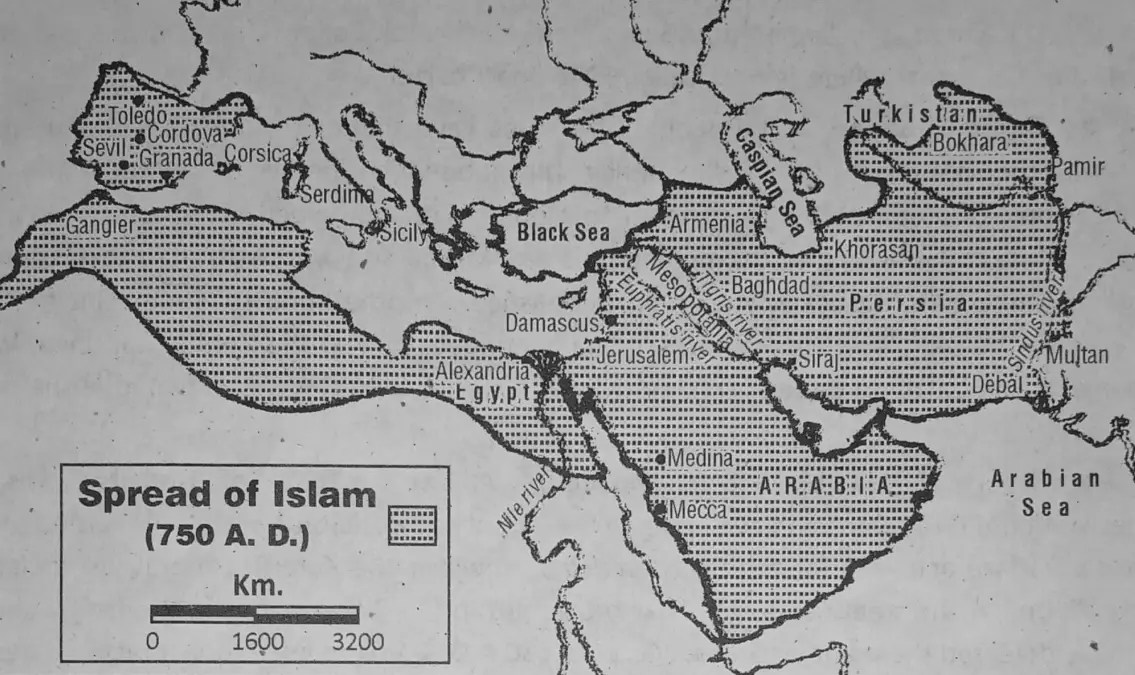
WBBSE Notes For Class 7 History Chapter 3 A Few Trends Of The Indian Society Economy And Culture Spread of Islam

The preachings of Mohammad were very effective on the belligerent Arab tribes. As a result, the spread of Islam was easier among them.

Principle of Equality:

  1. The teachings of Hazrat Mohammad were so simple that even ordinary, illiterate people could understand it easily.
  2. The religion of Islam did not support any social indiscrimination or rigid caste differences.
  3. It preached that everybody was equal in the eyes of Allah. The rich and the beggar could stand side by side in a mosque and pray.
  4. Above all, other tribes defeated in, war and converted to Islam could enjoy the same privileges with the conqueror.
  5. The ideals of Islam-tolerance and equality among all attracted more and more people to eagerly accept this religion.
  6. We see that during the time of Mohammad, there were only three to four thousand Muslims in Arabia, and within the next hundred years the Arabs were successful in spreading Islam from the Sindh area in India to the east of Spain in Europe and Morocco in Africa in the west.
  7.  Islam became the most widely accepted religion of the world. The notion of preaching Islam and the idea of conversion were very much important in this respect. Within a few years, Islam became a worldwide religion.

Creation of the post of Caliph

We have studied earlier that along with the spread of Islam, Mohammad was also successful in establishing political unity among the different Arab tribes. Mohammad’s sons died during his lifetime.

So after his death, the post of ‘Caliph’ was created to represent the political and religious leaders of the Muslims.

The Arabs Conquest of Sind:

The main causes of the Arab conquest of Sind under the leadership of Mohammad-Bin-Kasim in 712 A. D. were as-

  1. The Arabs had different trade centers in the ports along with the coast of the Indian Ocean. But the pirates of Gujarat. Makran and Sind attacked the ships of the Arabs for a number of times.
  2. The King of Sind Chach, an orthodox Hindu Brahmin was a despot. He had his capital at Alore (Rori in present times). The feudal lords were also tired of the despotic king. After the death of Chach, his son Dahir also became despotic like his father. So the disturbed feudal chiefs and the common servicemen took the side of the Arabs and encouraged them to fight against Dahir.
  3. Dahir, the ruler of Sind had given shelter to many enemies of the Khalifa in his own empire. The Arabs attacked Sind out of the arrogance of Dahir.

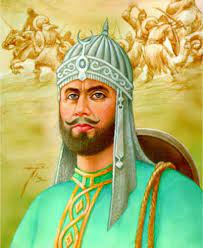
Sultan Mahmud invaded India 17 times. Jaipal committed suicide by performing “Jauhar Brata” when he was defeated by Mahmud in the 1st invasion in 1000 A.D. Mahmud got many wealth and ornaments, Mahmud defeated Fateh Daud a Shiya Muslim of Karmathian of Multan in 1004 A.D.

He captured Delhi and Nagarkot near Punjab in 1006 A.D. Multan came under the control of Ghazni in 1008 A.D. In 1009 A.D. he captured Narayanpur of Rajasthan and looted the Nagarkot Fort by defeating Fateh Daud and Anandapal in the ‘battle of Oaihind’.

“Class 7 History Chapter 3 WBBSE textbook solutions”

Having been inspired with the information of huge wealth in the Somnath temple of Anhilbara in Gujarat, he attacked and destroyed this temple with 80,000 soldiers in the month of January 1025 A. D.

He again invaded India in 1026 A. D. He was resisted by the Jaths while returning back to Ghazni with huge wealth and ornaments. Probably this was his last invasion. Later he died in 1030 A.D. at the age of 59.

The Invasion of Mohammad Ghori :

Muizzudduin or Shihabuddin who is known in Indian history as ‘Mohammad of Ghur’ started a campaign towards India in 1175 A.D. He was defeated by Prithviraj Chauhan III, the king of Chauhan dynasty of Ajmer and Delhi in the 1st Battle of Tarain in 1191 A.D

It was said that Jaichand, the king of the Gharwal dynasty, provocative Mohammad Ghori to declare war against Prithviraj Chauhan, because he kidnapped Samjukta, the daughter of Jaichand, and married her.

“WBBSE Class 7 History Chapter 3 important questions and answers”

It made Jaichand insulted. Mohammad Ghori fought the 2nd Battle of Tarain in 1192 A. D. against Prithviraj just to take revenge of the earlier defeat. Prithviraj was defeated by Md. Ghori.

Chapter 3 A Few Trends Of The Indian Society Economy And Culture From 7th To 12th Century A.D  The Economic And Social Life Of India From 700 To 1200 A.D.

During the period from 700 A.D. to 1200 A.D. the central administration in Indian politics collapsed and may regional power came up. Similarly, many evolutions were found in the field of social and economic aspects.

The cultural life of the Indian population was also influenced deeply by the economic development of India. “Culture is the harmonious development of all the faculties in man”. -Francis Bacon

The impact of religion was great behind this spontaneous change in the life of the people in the post-Gupta era.

Post-Gupta era Social life:

The main specialty of the such social life of north and south India up to the 12th century has different changes in the ancient social structure.

1. Post Gupta Era – Rise of feudal society :

Historians Dr. R. S. Sharma, Dr. D. D. Koshambi, Dr. D. C. Sarkar, Irfan Habib, Dr. B. N. S. Yadav, etc. thought that such a rise of the feudal system of society occurred much prior to the Gupta age.

But after the death of Harshabardhan (647 A.D.), the subordinate staff became much more powerful due to the weak administration of the central power. During the time of the powerful rulers, these people were allowed to occupy lands or villages in lieu of their salaries and wages.

The army chief staff or the local rulers enjoyed such lands in a similar manner. At one time, the right over the land became hereditary. As a result, the landlords became the rulers of the area instead of the king.

Chandragupta for the sake of administration appointed many feudal lords. The dominance of these feudal lords increased to a great extent at the time of invasions of Hun leader Torman or Mihirkula or Pushyamitra.

Thus, the landlords and feudal lords became unruly and extremely dominant in the feudal system of society during the period from the 7th century to the 12th century. On the other hand, the condition of the slaves, laborers, and farmers.

Became bad to worse day by day. Prof. Romila Thapar said ‘There was no light of hope in the life of the farmers.’ Hence, many of them were compelled to become criminals for livelihood.

2.  Caste system:

The caste system took a very hard shape in the ancient age or the last 500 years of the Hindu age. The society was divided into four classes of people i.e. Brahmin, Kshatriya, Vaishya, and Sudra. This disparity increased gradually.

The Pandits like Raghunandan, Bhababhuti, and Bigyaneswar formulated the norms and principles of the society. Vaishyas and Sudras became the prey of extreme exploitation and social humiliation, though the Brahmin and Kshatriyas enjoyed prestige and status in society.

Sudras and Chandalas were hateful and untouchable. Any interactions with the Sudras was strictly prohibited. There was a system of severe atonement for the Brahmins if by chance, they treaded over the shadow of any Chandala.

“Medieval Indian economy and culture from 7th to 12th century detailed notes”

Manu said somewhere, ‘Chandalas will stay outside the locality, will dress like a dead body, will use the earthen utensil, will wear the ornaments made of iron, and will tame the ponies.

‘ So the severe caste system became one of the main peculiarities of this society. The Arabian Pandit Alberuni has described about the narrowness and extreme conservatism of the Hindu society in the 11th century in his famous book ‘Kitab-Ul-Hind”.

3. Rise of sub-caste:

In spite of the strict caste system, mixing between Brahmin, Kshatriya, and other castes existed. Though it was true that intercaste marriages in this society was looked upon with grace, yet the mixing of blood did happen.

From thus different subcastes originated. Again, sub-caste originated by dint of different vocations and professions. These were Kumbhakar, Swarnakar (Goldsmith), Tantubai (Weaver) Charmakar (Cobler) Karmakar, Shankha Banik, Malakar, Teli, Rajput Kshatriya, Malla Kshatriya, Barga Kshatriya, Poundra Kshatriya, etc.

The royal employees, who belonged to Brahmins, Kshatriya, and Sudra were known as Kayastha. Among these, there were Kulin Kayastha and Karan Kayastha. There were other communities also in the south like Albar, Naynar, Enadi, Ballal, etc.

The influence of the Kshatriyas and Vaishyas was comparatively less in the Brahmin-dominated south Indian society. According to Dr. Ramsharan Sharma, caste identity was done by the degree of wealth and not by birth. As a result, the origin of sub-castes was not as complicated as was found in the north.

4. The status of women:

The women did not have any social status or independence in that patriarchal pattern of society. They were literally slaves to men. According to Prof. Sukumari Bhattacharya, the Pundits used to take out distorted meanings of the religious texts as measures of exploiting and oppressing women.

It was mentioned in Matsyapuran that disobeying or wayward women should be beaten by bamboo or rope. Even there were plenty of advice of dissolution them. Within this social structure, there was absolutely no scope of women to become self-sufficient.

The systems of early marriage, Polygamy, burning of Sati, or dowry system, etc. were very much there. Widow marriage and women’s education were not looked upon in good sense and spirit. The married women used ‘Shankha’ and ‘Sindur’.

The women of the south were much more respectful. A queen of the Rastrakuta family used to rule. The aristocratic princesses and other ladies of the royal court showed much efficiency in painting, dancing, singing, fine arts, poetic performances, and also administrative activities.

Women’s right to property was also recognized. But in certain cases, some women in the north used to get a better status.

5.  The system of Devdasi:

One of the main specialties of the society of ancient India was the system of ‘Devdasi’. The unmarried girls of high families, who were experts in dancing and singing, were dedicated to the temple.

This was known as the ‘Devdasi system’. Plenty of stories are found in the Mahabharata, Puran, and even in the ancient inscription about the devadasi, who were deployed to the services to Gods.

Basically, this system existed in Gujarat, Kashmir, Uttar Pradesh, Orissa, and entire south India. Hiuen Tsang found such Devdasi in the Surya temple of Multan. (629 A.D.). In 867 A.D. Abu-Jaid-al-Hasan, an Arabian Traveller saw Devdasi in the same Indian temples.

Some 500 Devdasis used to dance and sing throughout the day in the Somnath Temple of Gujarat. According to researcher U. N. Ghosal, there were about twenty thousand Devdasis in 4000 temples in Gujarat.

“WBBSE History Class 7 Chapter 3 long answer questions”

Sri Chaitanya Dev gave ‘Diksha’ to a Devdasi of Jagannath Temple of Puri. An unknown Geographer of the tenth century wrote in his book ‘Hudud-ul-Alam’ that it was seen in a temple that at least thirty Devadasis were dancing around the idol inside a temple.

It was generally customary to keep Devdasi in every temple in the Chola dynasty. The number of these Devdasi increased in the tenth-eleventh century. In big temples, there were even 1700 to 2500 Devdasi.

In the 11th century, Alberuni found in India that Devdasis were being used as prostitutes. The money earned by them through this process were accepted by the temple authorities. Sometimes this money was spent for the maintenance of the Army.

Towards the end, it became normally detrimental to society and temples became unholy.

6. Slavery system:

One of the main specialties of the ancient social structure was slavery. Slaves were found plenty in south Indian societies. Many people became slaves either voluntarily or for extreme poverty.

Any son of a slave woman became a slave by birth. The slaves were engaged in household jobs or temple jobs.

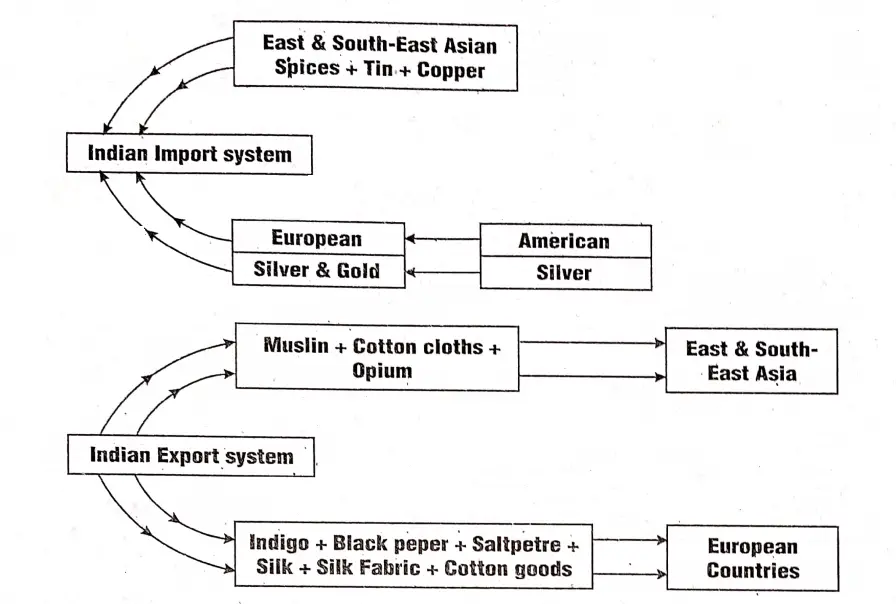
The export trade of India became extremely hampered due to the decline of the Roman empire in the west and the Muslim empire of Iran. Import of gold and silver in India decreased.

Within the 8th to 10th century, the gold deficit in north India increased like anything. In the 10th century, this trade and commerce got a new life. At this time, the import of gold increased in India.

The ports of Saptagram and Tamralipta on the east coast and Cambe, Debal, Thana, Soprab, and Kuilon ports in the west coast became very important.

The business tie-up developed between India and Ceylon, Burma, Africa, Kambuja, Champa, Malay, etc. The overseas such relationship also grew with China, Tibet, Nepal, Bhutan, and Central Asia by land routes.

The merchants of Cholas, Pallavas, and Pandya states used to trade outside via the ports like Mahabalipuram, Kaveripattanam, and Karikal. The articles used for export were mainly sandalwood, spices, camphor, and ivory goods.

For the sake of commercial activities, the chole kings developed guilds or co-operatives called ‘Manigrams’ (big) and ‘Nagaram’ (small).

1.  Chole Kings Coinage system:

As a medium of exchange, the use of coins is quite old in this country. There was gold and silver coins in the Gupta age. There was a use of Dinar (gold coin) and Rupak (silver coin) in ancient Bengal.

But during the Pals the gold and silver coins decreased and the use of the Narayani coins, copper coins, and Kari, made of silver increased. During the Sen age, Puran and Kapardak Puran coins were in use.

Economic prosperity was proved by the use of the gold coin ‘Kashu’ in the Chola age.

2. Chole Kings Money lending business:

Money lending businesses developed with the growth of trade and commerce side by side. According to Prof. Romila Thapar, the money lending business developed from trade and commerce and guild.

Brahmins were charged interest @ 2% and Sudras were charged @ 5%. Though the Rastrakutas and Chowhans initially fixed the rate of interest at 25% and 30% respectively but later the rate of interest was reduced to 15%.

The temples of south India also participated in trade, commerce, and money lending business. Thus the economic condition was passing through ups and downs from the 7th to the 12th century.

“WBBSE Class 7 History syllabus trends in Indian society economy culture”

Due to the cultural upsurge in ancient Bengal, there had been a remarkable change in Pala and Sena ages. The impact of this cultural improvement was noticed in Indian history in the 7th century.

The culture of Bengal reached extreme excellence from-7th the to the 12th century. Through the path of economic advancement and social evolution, the culture of Bengal reached the top of prosperity.

A new wave came in the different cultural activities like language, religion, literature, science, sculpture, architecture, painting, art, and education.

3. Religion:

The Pala kings were the devotees of Buddha and the Sena kings were the devotees of Brahmanya. There had been a change in Buddhism in the 8th and 9th centuries.

At this time, due to the infiltration of ‘Mantra’ and ‘Tantra’ in the religion, different religious theories like Bajrajan, Sahajjan, Tantrajan, Kalchakrajan, etc. came up.

Again, due to the mixing of Buddhism and Brahmannya, ‘Abadhutmarga’ and ‘Baulmarga’ also developed. So the influence of Buddhist Baul or Sahaja increased.

A widespread worshipping of the Buddhist God Tara and Hindu Gods like Shiva, Kali, Durga, Saraswati, etc. was introduced. Along with the Buddhist monasteries, the number of Hindu temples started increasing.

Education: The famous university during the Pala age was Nalanda University. This was recognized as one of the main Buddhist education centers in Asia. The entire maintenance of this university was undertaken by the Pala kings.

Due to the extreme patronage of the Pala kings, Odantapuri, Vikramshila, Somepuri, Devikot, Jagaddal, etc. became the best education centers. Atish Dipankar Srigyan was a student of Odantapuri University when its principal was Shilrakshit.

Dharmapala built one university in Bhagalpur in Bihar. Its name was Vikramshila University. There were 107 monasteries and 6 colleges under this university. The main chancellor was Sri Abhayakar Gupta.

Subjects like Buddhist philosophy, logic, grammar, medical science, and astrology were taught in this university. Among the eminent teachers, Dipankar Srigyana, Ratnakar Shanti, Sridhar, Buddhagyan-pada, Kalyan Rakshit, etc. were important.

For about 400 years, this university continued proudly. Somepuri University was also quite famous. Dharmapala established 50 religious institutions also. Hiuen Tsang and Khemendra the poet of Kashmir thought that Bengalees were very interested in education.

4. Development Of Language:

The three main languages of literature were Sanskrit, Prakrit, and Sourasena Apabhrangsha. Magdhi Apabhrangsha, the language of the common people played an important role in the development of the Bengali language.

The best poet in the Apabhrangsha language was Sayambhu. Bouddha Siddhacharyas in the Pala age wrote the Charyapadas in the 11th-12th centuries. The paragraphs of Chaupau lyrics were written by Luipad, Bhusukapad, Shantipad, Shabarpad, Arahapad, Khnyapad, etc.

In 1916 A. D. Mahamahopadha Haraprasad Shastri published the Charyapad in Bengali. The name of that book was “Hajar Bachharer Purana Bangla Bhasay Bouddha Gan-O-Doha.

” One quotation of ‘charyachrjabinishchay’ under this was “Kahap givi meli achhahu kees. Berila pora chow dish. Apna manshey harina bairi”….. That is whom to accept and whom to reject? There is an uproar around the enemy of a deer is his own flesh.”

5. Improvement of literature:

This age is called the ‘golden age of Bengali literature’. It was known from the Haricharita, written by Pandit Chaturbhuj, that the Brahmins of Barendrabhumi were quite efficient and expert in Puran and grammar.

The books written by the pandits in the age were Herashastra by Bhabadev Bhatta, Ramcharita by Sandhyakar Nandy (Satire), Dayabhag by Jimutbahan (Hindu law), Kadambari Kathasagar by Avinanda, ‘Nayakandali’ by Sridhar Bhatta, ‘Mudrarakhas’ by Vishakdutta (800 A.D.)

‘Ravanbadh’ by Bhatti (7th Century) Nabasahasanka Charita by Padmagupta in the 11th Century (Biography of Malab king) Naikarshacharit by Sriharsha in the 12th Century.

Besides this, there were poems by Bhartrihari, Uttarammcharit, and Malati-Madav by Bhahabbuti, Karpur Manjari by Rajsekhar in the 10th Century, and also ‘Bal Ramayana’ by him. Being moved by the scholarly quality of Dhoi, Laxmansena presented him with the title ‘Kabiraj Chakravarty’.

The eminent scholars during the Pala age were Maitreya Rakshit, Jinendrabuddhi, Sarvananda, etc. Incidentally, it may be said that the names of Pragnyabarman, the writer of the Tantrik text, and Atish Dipankar, the writer of the Bajrajjan text worth mentioning.

Atish Dipankar wrote 200 Buddhist texts by staying in Tibet for thirteen years. Among the novelists in the Sena age, Halayudha for his novel ‘Mimansha Sarvashya’ and ‘Brahman Sarvashya’ was worth mentioning.

Other writings were ‘Bratasagar’ ‘Pratishthasagar’ ‘Acharyasagar’, ‘Dansagar’, and ‘Abdhutsagar’ by Ballalsena. ‘Harilata’ and ‘Pintridayita’ by Aniruddha Bhatta, ‘Pavandut’ by Dhoi, ‘Chandrachur Charit’ by Umapati Dhar and ‘Geetgovinda’ by Jaydeva.

The last line of Geetgovinda was the line written by Srikrishna. It was ‘Smaragarala khandanang momo shirasi mandanong dehi padapallava mudarang’. The Geetagobinda, ‘Tikasarbasya’ of Sarbananda, Aryasaptashati, of Gobordhanacharya, ‘Sanskrita Kosh’ of Sridhar Das, Sadukti Karmamrita, etc. were really famous and classical.

6. Medical Science:

The texts relating to medical science were ‘Madhavnidan’ by Madhabkar, ‘Siddhayoga’ by Brinda, ‘Ayurbed Dipika’ by Chakrapani Dutta, and Bhanumati, Shabdachandrika, ‘Chikitasasamgraha’ by the author, “Sharirvidya” and “Chikitsashastra” Grantha by Surpala and Bangasena, ‘Shabdapradip’ and ‘Brikhyayurbed’ and Louha Paddhati are the classical creations in Medical science.

Banbhatta, Vaskaracharya (Born in 1118) Aryabhatta II, Kalyan Barman, Sridhar, Mahavira, Balbhadra, etc. became very famous by writing books are mathematics and astrology.

7. Art and sculpture:

Somepuri of Bengal, a sculpture of Paharpur, Odantapur, Vikramshila. etc. were brilliant examples of art and sculpture. Different art lovers of Tibet and Suvarnabhumi of south-east Asia imitated the methods of sculpture of different Vihar and temples.

There was mention of constructing temples by the method of ‘Sarbatabhadra’ a theory in Vastushipla. Dr. Niharranjan Ray said “The Temple of Paharpur is the greatest art of Bengal.

Its existence is seen as the most in all ‘Sarbatabhadra’ sculptures. It is noticeable in the field of sculpture. The terracotta art of the Pala age proves its originality. There were two famous sculptors- Dhiman and his son Bitapala.

It is mentioned in a contemporary script about the art of Somepuri Mahavihar “It is only the place to visit in the eyes of the world.” The idols made of Ashtadhatu and Blackstone were examples of the creativity of the highest order.

Many idols or models made of Blackstone carry evidence of excellent sculpture in the Pala age. Many models of women and Gods in a variety of postures are inscribed beautifully in terracotta art. There were many great artists in the Sena age.

Among those, Shulapani of Barendrabhumi demands special reference. Other talented artists were Karnabhadra, Vishnubhadra, Tathagatasagar, Sutradhar, etc. ‘Ballalbari’ was a glaring example of the architect.

8. Painting:

The degree of efficacy and expertise of painting can be known from viewing many pictures of ‘Ashta Sahasrika Pragyaparamita’ written in the time of Rampala. These paintings were made on the basis of Bajrajan and Tantrajan during the Pala age.

A very fine black or red line was painted around the picture. Dr. S. K. Saraswati has done a lot of research work on the paintings of Palas. Many documents and records are conserved in the archives of Cambridge Royal Asiatic Society of Bengal and in the Bovellien library of Oxford.

9. Casteism:

The Pala rulers were Buddhists and the Senas were Brahmins. Society developed based on Brahmana ideals. In Bengal, the society was divided into different castes like Brahmanas, Kayasthas, Vaidyas, and Sudras.

During this period some new castes like Kayastha, Vaidya, and Kaibartas originated. Ballalasena introduced the ‘kulin’ caste system among the Brahmans, Vaidyas and Kayasthas. (Kulin system was based on the status and glory of the high-caste families).

The society was based on a caste system as well as the ‘Kulin family’ system. As a result, there were too many divisions in society. The social life was full of rituals and celebrations.

Buddhists, Shaivas (worshippers of Shiva), and Vaishnavas (worshippers of Vishnu) co-existed happily. Various rituals like marriage and other religious festivals were celebrated with great merriment and pomp.

10. Place of Women:

Women had no special status in society, but they had the right to get an education. Sometimes widows were forced to accept sati and they had to burn themselves on their dead husband’s pyres.

Polygamy (having several wives) was prevalent among the males of high-caste society. Widow re-marriage was condemned in the high caste. However, it was prevalent in the lower castes.

11. Dress and ornament:

The men wore a dhoti and the women wore saris. Other than that men and women also used shawls. They also wore various types of ornaments made of gold, silver, diamonds, and pearls.

Men used wooden sandals. Women adorned themselves with bindis, and kajal, put flowers in their hair, smeared sandalwood powder on their bodies, and put ‘alta’ (red dye) on their feet to beautify themselves.

12. Food habits, amusement, etc.:

The people of Bengal were fond of food. The Bengali food consisted of rice, fish, meat, vegetables, fruits, milk, and ghee. Drinking wine was prevalent but the habit of drinking was looked down upon.

Among the people hunting, wrestling, chess-playing, the game of dice, and gambling were their recreation. Ordinary people traveled by boats and bullock carts. The rich would use horses and elephants to go from place to place.

Bengal flourished under the Palas and Senas. Agriculture was the main occupation of the Bengalees. Industry and commerce also prospered during this period. Bengal showed remarkable advancement, especially in the field of textile, sculpture, and jewelry.

In Europe and other parts of Asian countries, there was a great demand for cotton clothes of Bengal. Various commodities were exported by ships. Tamralipta and Saptagram were famous as important ports.

13. Education System:

The Palà and Sena kings were great patrons of learning and encouraged the spread of education. With their support, there was unprecedented progress in the field of education and literature.

Sanskrit and Prakrit were the mediums of learning. The Bengali language developed from Prakrit. Hymns in Bengali composed by a sect of Buddhists,. were the oldest known specimens of Bengali literature.

Under the patronage of the universities of Nalanda and Sarnath, and the initiative of the Pala kings, new universities were set up at Odantapuri, Vikramshila, and Sompuri. The universities of Vikramshila and Sompuri were established by Dharmapala.

The University of Vikramshila was the most famous one besides Nalanda University. The Buddhist scholar Atish Dipankar was the principal of this University. During the reign of Nayapala, his fame spread far and wide. He was a follower of the Mahayana sect of Buddhism.

“A Few Trends of Indian Society 7th to 12th century AD short notes”

He was invited by the king of Tibet for the spread and reformation of Buddhism in Tibet. Atish Dipankar went to Tibet and spent the rest of his life there. Under the Pala and Sena kings, Sanskrit literature made remarkable progress in Bengal.

The ‘Ramcharita’ was an important historical poetic composition written by Sandhyakar Nandy who was a poet in the court of Rampala. This composition has a double meaning. It gives an account of Sita’s rescue by Ramachandra.

And it also depicts how Rampala regained North Bengal-the land of his forefathers, after defeating Kaivartya king Bhima. Aniruddha Bhatta the spiritual teacher of Ballalasena wrote two books namely ‘Harilata’ and ‘Pitredayita’ discussing different festivals and rituals of the Hindu religion.

Other than these, ‘Danasagara’ and ‘Adbhutasagara’ written in Sanskrit by Ballalasena, are two important creations of this period. Ballalasena himself was an exceptional scholar of Hindu scriptures.

His son, Lakshmanasena too was a poet and a learned man. He completed the ‘Adbhutasagara’ that his father could not complete. The five jewels of Lakshmanasenas court were Saran, Dhoyi, Umapatidhar, Gobardhan, and Jayadeva who helped to enrich the literature of the period.

The poet Dhoyi had written a book of poems called ‘Pavanduta’ similar to Kalidasa’s ‘Meghduta’. Jayadeva was an eminent poet of Lakshmanasena’s court. He was born in a village named Kenduli located on the banks of the Ajay river. He was a Vaishnav.

Jaydeva composed the famous ‘Gitagovinda’ describing the activities of Lord Krishna and Radha. The beautiful lyrical form of this legend has been depicted in the ‘Gitagovinda’ which was a famous poet and is immortal.

In fact, there is a myth that one day Lord Krishna appeared as Jayadeva and completed the couplets of the Gitagovinda. The renowned scholar of law, Jimutbahana wrote his famous book of the law “Dayabhaga”.

During the rule of the Pala kings. Halayudh, the Chief Justice in Lakshmanasena’s court was a renowned scholar. He authored a book named ‘Brahmansarvaswa’ explaining the sacred vedic hymns.
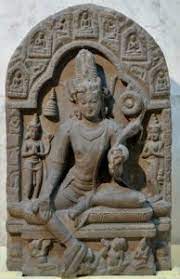
 

WBBSE Notes For Class 7 History Chapter 3 A Few Trends Of The Indian Society Economy And Culture Architecture of pala Age


15. Progress in Science :

Ayurveda (traditional Hindu science of medicine as taught in Atharvaveda) was highly developed in the Pala and Sena Ages. During this time, Chakrapani Dutta the famous Ayurveda specialist was born.

He wrote the book ‘Chikitsa Sangraha’ which contains the interpretation of the methods of treatment by Charaka and Sushruta, the founders of Ayurvedic treatment. Chakrapani Dutta also wrote the ‘Dravyaguna Sangraha’, a book about Ayurvedic treatment.

The art and architecture of this period were proof of the excellent skills of the artisans of this age. The construction of monasteries and temples, stone and metallic idols of Hindu deities and Lord Buddha, and the ‘terracotta’ art bear the evidence of their highly developed workmanship.

The ruins of the monasteries and viharas at Odantapuri, Vikramshila, and Sompuri revealed the highly advanced architecture of the Pala and Sena Ages. The statues engraved on the walls of the vihara at Sompuri in particular were novel.

Dhimana and his son Vitapala were two famous sculptors and artists of this age. Someshwara achieved great skill in engraving alphabets on stone. Shulapani was a renowned artist of the Sena period.

He was also a scholar of Hindu laws. The ‘Sarvatabhadra school of art’ was highly developed in this period.

Chapter 3 A Few Trends Of The Indian Society Economy And Culture From 7th To 12th Century A.D Two Universities Were Established By The Pala Kings

1.  University of Odantapuri :

This university was established near the maha vihara at Nalanda, by Gopala the founder of the Pala dynasty in Bengal. Probably his son Dharmapalȧ completed the construction of this university. The students could study here without paying any fées.

Buddhist scriptures, philosophy, etc., were taught here. When Dipankar Shrignan was a student of this university, Silarakshita was it’s principal.

2.  University of Vikramshila:

This world-famous university near present-day Bhagalpur was built by Dharmapala. This university could accommodate 150 teachers and 3000 students who came from all over the country and abroad.

Here more than a hundred teachers taught Buddhist scriptures, logic, philosophy, grammar, astronomy, medicine, etc. The University of Vikramshila was as famous as Nalanda University. It was the holy place of the Mahayana sect of Buddhism.

Many students of this university went to Tibet for the spread of Buddhism. Among the principals of the University of Vikramshila, Abayakar Gupta, Ratnakar Shanti, Dipankar Shrignana, Buddhajnanpada, Shridhar, and Kalyan Rakshit were famous scholars.

At the end of the 12th century A.D., the soldiers of a Turkish general named Iktiyaruddin Mohammad Bin Bakhtiyar Khilji, who was a general of Mohammad Ghori plundered this university and reduced it to ruins in 1203-05-A.D.

Chapter 3 A Few Trends Of The Indian Society Economy And Culture From 7th To 12th Century A.D Nalanda University

Rules and regulations:

During the period of Kumaragupta I (415-455 A.D.), the son of Chandragupta II, the Nalanda University was built in the Nalanda District of Bihar. The meaning of the word ‘Nalanda’ is knowledge or thirst for knowledge.

In that sense, Nalanda University was the best education center. This free and residential university was run by government sponsorships. The system of admission test was there. This test was very tough.

But once admitted, no student could go back to home for a period of a minimum of 7 to 8 years. The students were awarded degrees and diplomas after the successful completion of the course.

The Buddist pandits used to call this institution as “The Oxford of the Mahayana Buddhism”.

International Importance:

The students from south India and other parts of India used to come here to study in this University. Even students from central Asia, China, Tibet or south-east Asia used to come here. Harshabardhan used to bear all costs from his royal treasury.

At this time while learning for some time, Hiuen Tsang noticed that there were at least 10,000 students in this University. There were 1510 teachers and scholars to teach the students.

The Bengali Pandit Shilabhadra was the Principal of this University. Pragyamitra was an eminent teacher.

The subjects:

15 subjects were taught in this University, each student had to learn all the subjects at a time. The subjects were Buddhist philosophy, Veda, Grammar, Logic, Astrology, Mathematics, Chemistry, Physics, Geography, History, Ayurveda; Pali, Sanskrit, etc.

There were big libraries and archives for the benefit of the students. The library was divided into three parts-Ratnaranjak, Ratnadadhi, and Ratnasagar. The student-teacher relationship was excellent.

Fall of Nalanda:

Sometimes, discussions went on up to midnight regarding the subjects. Apart from the schedule of study, seminars were held on any topic or subject. Students has separate bedrooms. A separate study room and drawing room were there.

There was a very strict discipline which both students and teacher had to follow. According to Hiuen Tsang, Nalanda University was the best educational institution in Asia.

Unfortunately, Baktyar Khalji, during his invasion in Bengal and Bihar, destroyed this university mistaking it as a fort, and burnt the library. This university is only the remnants of old memory, prestige, and the ruins of wonder.

Chapter 3 A Few Trends Of The Indian Society Economy And Culture From 7th To 12th Century A.D Rise Of Rajput Race

Rajput Age:

The word ‘Rajput’ is distorted from of ‘RAJPUTRA’. According to poet Banabhatta, the high families of Kshatriyas are called Rajput.

The period from 647-1192 A.D. i.e. from the death of Harsha to the Muslim invasion, is called the Rajput age. Historians are of different opinions in respect to the rise of Rajput.

Different opinion:

Ancient opinion-According to the proverbs, Rajputs belong to the dynasty of Chandra and ‘Surya’. It can be known from the book “Prithwiraj Raso” written by Brahmin poet Chand Bardoi that Vashistha Muni performed the yagnas in Mount Abu for want of warriors.

As a result, the Rajput heroes like Pratihar, Paramar, Chowhan, Chalukya, Kalchuri, Sholanki, etc. born from the fire of that yagnas. This theory is called “Agnikul Theory”.

Dr. Gourishankar Hirachand Ojha has accepted this theory in his book ‘History of Rajputana’ though modern historians reclined to accept this theory.

Modern opinion:

The historians like Dr. Bhandarkar, William Crook, and Col. Todd thought that the Rajput race was originated from a foreign race. Col. Todd told in his book “Annals and Antiquities of Rajasthan” that the Sakas, Huns, Kushan, and Gurjara people started marrying Indian girls while residing there.

In course of time, the descendants of these foreigners became very strong and courageous, These offsprings were known as Rajputs: For this reason, Dr. V. A. Smith also called the Rajputs as “Mixed race”.

Hence Smith commented, “The term Rajputas, as applied to a social group, has no concern with race, meaning descent or relationship by blood.”

Chapter 3 A Few Trends Of The Indian Society Economy And Culture From 7th To 12th Century A.D Atish Dipankar

Atish Dipankar Srigyana was born in Bikrampur in East Bengal in 980 A.D. He studied in Odantapur University built by Dharmapala with free ship.

Later he became a devotee of the Buddhist religion under the guidance of Bouddha Pandit Shil Rakhsit who was also the principal of that University. Shil Rakhsit himself gave him the title “Dipankar Srigyana”. His original name was ‘Chandragarbha’.

After being christened, his name became Atish Dipankar. Again he was known as Atish or Gyani to the people of Tibet. From that time, he became famous as Atish Dipankar Srigyana instead of Chandragarbha.

“Medieval Indian history WBBSE Class 7 Chapter 3 full explanation”

Atish Dipankar became the principal of Vikramshila University at the age of 19. Atish came to Tibet with the request of Tibetian king Ye-Shesh-Hode after staying for a long period as principal in this University near Bhagalpur in Magadha.

He died in Tibet in’ 1050 A.D. after propagating Buddhism for 13 years here. He was buried here with respect and homage. Atish Dipankar wrote 200 texts in all on the basis of Buddhism in 13 years.

The famous text is Bajrajan Sadhan. But the majority of the texts were written on the basis of Mahajan Buddhism.

‘Vikramshila University :

The Pala king Dharmapala built the Vikramshila University near Bhagalpur. This University was next to Nalanda University. The name Vikramashila originated from the title of Dharmapala. This was one of the main centers for studying Buddhism.

Atish Dipankar Srigyana was the principal of this University. There were almost 3000 students in his time. This was a residential institution and the education, accommodation, etc. were absolutely free of charge.

The subjects taught in this University were Buddhist Philosophy, Hindu Philosophy, Logic, Nyaya, Grammar, Astrology, Medical science, Tantra, etc. The teachers were like Sridhar, Kalyan Rakshit, Abhayakar Gupta, Buddhagyanapad, Ratnakar Shastri, Dipankar Srigyana, etc.

There were 114 teachers in this institution. This University was surrounded by a high wall. 107 monasteries and six education centers were under it.

Dr. Ramesh Chandra Majumdar said, “The name ‘Mahavihar’ was perfect and appropriate.” This University, being the wonderland of history was destroyed by Bakhtiar Khilji in the 12th century.

Borobudur:

The word Borobudur means ‘several Buddha’. The ‘Borobudur’ Buddhist Stupa is situated in Java island of south-east Asia. Shailendra kings of Java Constructed this ‘Stupa’. This was built in between 750-850 A.D.

This is situated at the top of a large mountain. This was built by curving the mountain in imitation of Pallava art. The design was exactly in the pattern of the step Pyramid in Egypt or Mexico. There were altogether 1000 pinnacles in this stupa.

The pinnacle in the middle was comparatively larger. The temple consisted of 9 steps on the mountain. A large bell-shaped stupa was atop the Hill. Amongst these steps, the lower step was 120 meters in length and 120 meters in width.

There were 436 models of Buddha engraved on the walls. The stories of the Mahabharata, Purana, etc. were also engraved. The total area of this stupa was 400 sq. ft. The stupa was built as per the Indian form of art based on Buddhist culture.

This is ever-beautiful because of its most refined artwork and ornamentation like Pallava art. Dr. Ramesh Chandra Majumdar has rightly said “Borobudur is referred to as the 8th wonder of the world.”

An advanced History of India. Unfortunately, this was destroyed by the Turky Muslims in 1474 A.D. After a long time since it was greatly damaged UNESCO has recently started renovating this temple.

Chapter 3 A Few Trends Of The Indian Society Economy And Culture From 7th To 12th Century A.D Expansion Of Indian Culture In South East Asia

The relationship between south-east Asia and the culture of Ancient India is very old. Due to encouragement from the Indian merchants, travelers, pandits, and kings, the Indian culture expanded up to the different islands of southeast Asia.

So, the countries like China, Burma, Sumatra, Java, Siam, Bali, Borneo, Kambuja, Ceylon, etc. of south-east Asia are collectively known as the “Greater India”. The Indian Religion, literature, science, philosophy, art, and sculpture, flourished in the culture of south-east Asia.

From the texts of Jatakas, Periplus of the Erythraean sea, Kathasaritsagar, Kathamala, Brihatkatha, Katha Kosh, Puranas, Ramayana, Mahabharata, etc. we can know many things about the cultural relationship of south Asia with India.

Burma:

The expansion of Indian culture occurred in Burma during the regime of Asoka. Sanskrit and Pali languages were the languages of Burmese literature. People like Brahmin, Bouddha, Shaiva, and Vaishnavas used to live here.

There were Hindu colonies in Pegu and Arakan. Many Buddhist monasteries and pagodas were constructed here. This state became independent in the 16th century. The important king by Indian names were Harivikram, Suryavikram, Aniruddha, Tribhubanaditya, etc.

Siam:

The relationship between India and Siam developed in the 3rd century. Initially, this state was a feudal state under the “Funan” empire. This state became independent in the 16th century. An Indian named Indraditya ruled here for a long time.

Many people of this place were believers in. Hinayana Buddhism. The present name of Siam is Thailand. The tradition of Indian culture is found here. This is well known as a Hindu colony.

Champa :

The Champa island of southeast Asia is situated in northeast of Kambuja. It is mentioned in history that an Indian name of ‘Srimar’ established the Champa estate in the 2nd century. This state was in existence for thirteen hundred years i.e. 2nd to 15th century.

Sanskrit was the official language of this state. In spite of the domination of the Brahminical religion, Brahma, Vishnu, Shiva, and Buddha were equally respected in this state. The pattern of daily life, dresses, and social and religious customs were developed with the imitation of the Indians.

“Class 7 History WBBSE important points of Indian society from 7th to 12th century”

Some historians think that the name of Champa estate had been originated from the name of Champa city of Bihar. The important kings of Champa were-Haribarman, Rudrabarman, Srijayindrabarman, Jaiparameshwardeva, etc.

According to the historian Ramesh Chandra Majumdar, “There were many flourishing cities in Champa and the whole country was adorned with beautiful temples, both Hindu and Buddhist.” These kings were all interested in Indian culture.

Kambuja:

The Kambuja (Presently known as Kampuchea) was situated on the south of Indo-China. It is known from the Chinese source that an Indian Brahmin named ‘Kaundinya’ established this island in the 2nd century.

Thousands of Brahmins, coming from India, used to do yagnas and other rituals, throughout the day. Chinese people called it “Fu-nan.” The Cambodian kings expanded their kingdom up to Vietnam, Laos, Thailand (Siam), Malay, and Burma starting in the 7th century.

The Kambodian kings like Jaibarman I, VII, Jashobarman, and Suryabarman II were quite scholarly in Hinduism. With their efforts, the Indian culture developed a lot.

Vishnu temple of Ankorvat:

King Suryabarman II built the Vishnu temple of Ankorvat (1113-45 A.D.) in Angkor Thom, the capital of Kambuja. But his nephew Dharanindrabarman (1152-81 A.D.) completed the said temple.

This temple was built in the form of Pallava art. The shape of the temple was stepped like just like the step pyramids of Egypt and Mexico. It was surrounded by a 650ft wide moat. On the western side, there was a 36ft wide stone footpath.
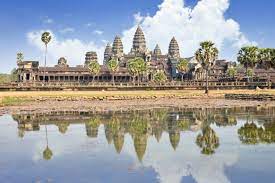
 

WBBSE Notes For Class 7 History Chapter 3 A Few Trends Of The Indian Society Economy And Culture Ankorvat temple


The height of the porch was 800 ft from east to west and 675 ft from north to south. The apex of the temple was 213 ft. There were the images like Nataraj Shiv, (Kiratbeshi) Mahadeva, Arjuna, Jama, Chitragupta, Pragyaparamita, and other images also although there was the main Vishnu image inside the temple.

“A Few Trends of Indian Society Economy and Culture mind map for Class 7”

There are excellent sculptures on the walls of eight high pinnacles, a staircase, and the walls. Ramesh Chandra Majumdar said. “Ankorvat in every sense is a wonder of the world.”

Shiva temple of Bayon:

Ankortham the capital of Kambuja state was 2 miles long and 2 miles wide surrounded by a moat 330 ft wide. There were 5 main gates to enter the city. The main road of the city was 100 ft wide.

A Shiva temple was situated at the center of Bayon, one of the best cities in the world. Jaibarman VII built this biggest Shiva temple. There are 40 pinnacles in this pyramid-shaped three-storied temple.


WBBSE Notes For Class 7 History Chapter 3 A Few Trends Of The Indian Society Economy And Culture Shiva temple of Bayon


4 models of Shiva are curved in each pinnacle. The pinnacle in the middle is almost 45 mt high. It is completely covered by gold.

Malay peninsula

The Indian state had been developed from the 2nd century in the Malay peninsula. Within the eighth century, a large Shailendra empire was developed with the Malay peninsula, Sumatra, Java, Bali, and Borneo islands. According to the Arabian writers, the average, daily income of this empire was 200 mounds of gold.

Though the relationship with the Chola kings was a bit bitter, they maintained a good relationship with the Palas and as a gesture, Shailendra king Balaputradev constructed a Buddhist monastery in Nalanda and donated five villages for its maintenance.

As per the instructions of their Kulaguru Kumara Ghosha. The kings of this place constructed a temple of Goddess Tara in Java island. Kumara Ghosha made the Shailendra kings the devotees of Buddha.

Sumatra, Bali and Borneo :

Srivijay dynasty ruled Sumatra island from the 3rd to 8th century. After that, it went under the control of the Shailendra kings in the 8th century. According to Itsing, thousands of Buddhist monks used to live here. Fa-Hien visited Java in 414 A.D.

At that time the Hindu religion was very flourishing. Bali is situated on the eastern side of Java. People of this place used to worship Hindu Gods and Goddesses. The society was classified into four groups.

“WBBSE Class 7 Chapter 3 History solved question paper”

Borneo island is the longest among the east Indian islands. During the 1st to 15th century, the Hindu religion and culture flourished a lot in this place. King Mulabarman of this place used to respect the Brahmins. He thought that cow conservation was a holy job.

Srilanka:

When Mahendra and Sanghyamitra came to the royal court of the Ceylonese king Tissoa during the period of Asoka, they made him a follower of Buddha. The influence of Indian culture in the field of religion, language, and literature.

Art and culture of this place though there was the dominance of Chola and Chalukya. Thus a keen relationship was developed with the different islands of south-east Asia.

Historian Ramesh Chandra Majumdar said, “The Indians put more value on the cultural conquest and no price was reckoned too high so long as this great mission was fulfilled.”
WBBSE Notes For Class 7 History Chapter 4 Delhi Sultanate Turko Afghan Rule

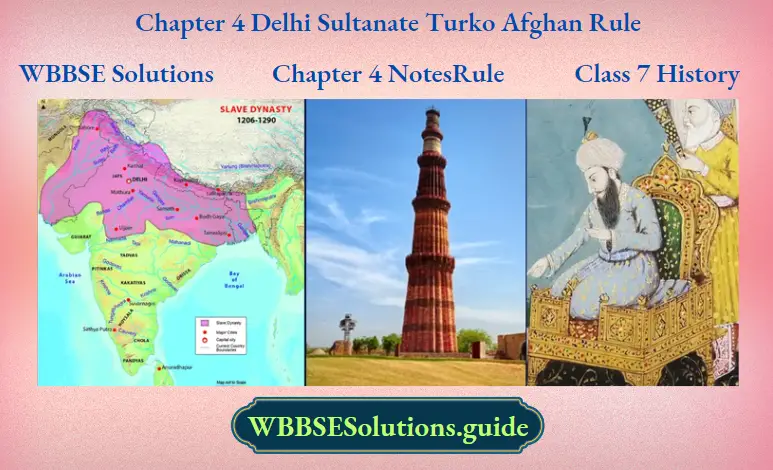
Chapter 4 Delhi Sultanate Turko Afghan Rule Establishment Of Slave Dynasty

Qutubuddin Aibek (1206-1210):

When childless Mohammad Ghori died, his main slave and efficient commandant Qutubuddin Aibek (1206-1210 A.D.) became the independent ruler of Delhi in 1206 A.D. He took the title ‘Malik’ and ‘Shipahasalar’.

He became free from slavery when Ghiyasuddin Ghori, the descendent of Mohammad Ghori, gave him the title ‘Sultan’ in 1208 A.D.. Then he became the symbol of Sovereign power.

He established the capital of the Sultanate Empire in Delhi after conquering Delhi, Kanauj, Gwalior, and, Ranthambore. After the coronation in Lahore in 1206 A.D. he became the sole Master of Hindusthan.

WBBSE Notes For Class 7 History Chapter 4 Delhi Sultanate Turko Afghan Rule

Read and Learn More WBBSE Notes For Class 7 History

Taj Uddin Ilduz and Nasiruddin Qubacha, the two commandants of Mohammad Ghori were the main enemies of Qutubuddin. So to set up a relationship with them, he himself married the daughter of Ilduz and married his sister with Qubacha.

“Delhi Sultanate Turko-Afghan Rule summary for Class 7”

On the other hand, with the instructions of Qutubuddin Bakhtiyar Khilji attacked Bengal and Bihar and destroyed the monasteries of Vikramshila, Odantapur, and Nalanda. Bhaktiar Khilji set up the new Turki Capital in Devikote by defeating Lakhsmansen of Bengal.

Under the instruction of Qutubuddin, Alimardan Khilji became the ruler of Bengal after the death of Baktiar Khilji. The Turky and non-Turky employees of Delhi submitted themselves to Qutubuddin.

In the language of Dr. Iswariprasad, ‘He ranks among the great pioneers of Muslim conquest in India.’

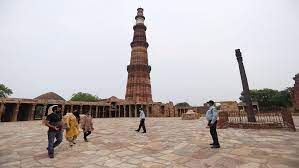
WBBSE Notes For Class 7 History Chapter 4 Delhi Sultanate Turko Afghan Rule Qutubminar

Character and Achievements:

Historians like Smith, Elphinstone, etc. described the royal family of Qutubuddin Aibek as the ‘Slave family’. Because Kazi Fakruddin Kufi brought him from the slave market of Nishapur and later sold him to Mohammad Ghori.

“WBBSE Class 7 History Chapter 4 important questions and answers”

As Qutubuddin was a slave in his early life, hence the family set up by him was known as the Slave family. The meaning of the word Aibek was a slave. But in Turkey language, it means he who looks like a moon.

Anyway, though he was a slave in his early life, he had many qualities. It was known from the ‘Tariq-i-Mubarak’, he started constructing Qutubminar in remembrance of the Sufi Saint Qutubuddin Bakhtiyar Kaki.

“Delhi Sultanate history Class 7 WBBSE chapter-wise explanation”

Dr K. A. Nizami was praised for his bravery and military talent, and said, “Aibek was a military leader par-excellence.” He was broad, noble, and generous. Sometimes he donated a lac of rupees. So people called him ‘Lakhboksh’.

Historian A. B. M. Habidullah said by evaluating him. ‘He combined the intrepidity of the Turk with the refined taste and generosity of the Persian”.

After reigning for only 4 years, he fell down from the horseback while playing Polo and died in 1210 A.D. His son Aram Shah became the next Sultan after him but due to his incapability and worthlessness, Iltutmish, the son-in-law of Qutubuddin became the Sultan in 1211 A.D.

Chapter 4 Delhi Sultanate Turko Afghan Rule Sultan Iltutmish 1211 To 1236

Iltutmish, with the requests of his Amirs and Omrahs of Delhi, became the king by killing Aram Shah, the worthless stepson of Qutubuddin. Iltutmish was a slave in his first life. ‘Encyclopaedia of Islam’ had described him.

“Turko-Afghan rule in India Class 7 WBBSE detailed notes”

‘Iletmis’ due to his attractive figure. The word Iltutmis has been derived from Artemis. He identified himself as a Turkish Muslim, a descendant of Ilbari Turkey just to erase the agony of being a slave.

Iltutmish, the son-in-law of Qutubuddin, was the ruler of Badaun near Delhi in the 1st stage of his life. Later, by the dint of fortune, he became the Sultanate of Delhi (1211 A.D.)

The problems of Iltutmish:

Many problems were there from the time of Qutubuddin. The problems further increased during the 11-month-old ruling of Aram Shah. Basically, he became the king in a chaotic problem-striking atmosphere.

At the time of becoming king, the main problems were-

  1. The revolt of Nasiruddin Qubacha of Sind.
  2. The capture of Punjab and aggression towards Delhi by Tajuddin Ilduj of Ghazni.
  3. Revolt of Ali Mardan Khalji, the ruler of Bengal.
  4.  Declaration of war of independence by the Rajputs of Gwalior, Ranathombore, Jallore, Ajmer, etc.
  5. Many members of his royal court made a coup against him.
  6.  The probable invasion of India by Mongol leader Chengiz Khan.

Solution Iltutmish took some very stem measures to stabilize the political crisis. First of all, he subdued the villain’s Amirs and Omraḥs of Ajodhya, Varanashi, Badaun, Shivalik, Delhi, etc., and established his dominance in 1212-1215 A.D.

“WBBSE Class 7 History Chapter 4 solved question paper”

He also established his dominance by subduing the revolts by Tajuddin in 1216 A.D. and Nasiruddin Kubacher in 1217 A.D. in the Mansera battle. Such dominance was over Sind, Punjab, and even Ghazni.

He made his son Nasiruddin Mahmud, the ruler of Bengal by subduing the revolt of Bengal in 1225-1227 A.D. But due to his untimely death (1229 A.D.) Iltutmish was compelled to kill Iqtiaruddin Mohammad-Bin-Bakhtiyar Khilji in 1230-31 A.D.

“Delhi Sultanate rulers and administration Class 7 notes WBBSE”

For his arrogant nature, though he became the king of Bengal, and made his subordinate Malik Allauddin Jani, the ruler of Bengal. During the period from 1226 to 1232 A.D.

He recovered the places like Gwalior, Ranthambore, Kalinjar, Jallore, Lahore, Ajmer, etc. He conquered Vilsa, Ujjaini, and Mahdore in 1234 A.D. It is said that Iltutmish destroyed the Mahakal Temple built by Vikramaditya.

WBBSE Notes For Class 7 History Chapter 4 Delhi Sultanate Turko Afghan Rule

Invasion of Chengiz:

In 1221 AD the naughtorious Mongol leader Chengiz Khan attacked Khiba or Khoarizam of Central Asia, the capital of Jalaluddin Mangabarani. Mangabarani fled away and prayed for shelter to Iltutmish.

But he was refused by Iltutmish due to fear of Chengiz’s attack to India. Mangabarani left India. Chengiz also followed him up to Sindhu and looted Sindhu and Punjab.

“WBBSE Class 7 Delhi Sultanate Turko-Afghan rule important points”

Mangabarni settled somewhere in the North-Western region by marrying a girl of the Kokkar community of that region. According to historian K. A. Nizami, Iltutmish had been able to strengthen the Sultani rule in Delhi and made it independent.

Acknowledgment of Caliph :

The way Iltutmish had developed the Sultanate empire of Delhi into a large one is a rare event in history. So the Caliph of Baghdad Al-Mustansir Billah gaye Iltutmish the title ‘Sultan-i-Azam’ or the best sultan.

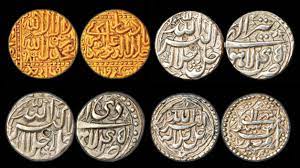
Iltutmish mentioned himself as the ‘Commander of Caliph’ in his silver coin. The weight of this coin was 175 gm, Besides this, he renamed Delhi as ‘Hazrat-i-Delhi’ for increasing its international prestige and importance.

Historian Sir Wolseley Haig said, “Iltutmish was the greatest of the slave kings.”

Other achievements:

Iltutmish constructed the Bandegi-Chihalagani to establish his empire on a solid base of extreme sovereign power and good administration. He also developed the Turki empire in India. He first introduced Arabian coins.

He also introduced the copper coin ‘Jital’ and the silver coin ‘Tanka’. Numismatists Edward Thomas and Nelson Wright think that Iltutmish was the person who first introduced the well-organized coinage system in the Sultanate age.

“Medieval Indian history Delhi Sultanate WBBSE Class 7 full chapter”

He was the first to introduce the ‘Iqta’ Jagir system. He developed a royal administration and became free from Ghur and Ghazni. He built many places, mosques, and towers in Delhi. He finished the incomplete job of Qutubminar (1231-1232 A.D.)

Hence according to Dr K. A. Nizami, ‘It was he (Iltutmish) who gave the country a capital, an independent state, a monarchial form of government and governing class.’ Iltutmish was righteous, honest, and interested in art and education.

The scholars like Minhaz-Uddin-Siraj, Nijam-ul-Mulk, Junaaidi, and Fakar-ul-Mulk-Isani were members of his royal court. So, the historian Dr Iswari Prasad thought, ‘Iltutmish was undoubtedly the real founder of the slave community.’

Chapter 4 Delhi Sultanate Turko Afghan Rule Sultana Raziya 1236 To 1240

Iltutmish chose his only intelligent and educated daughter as the able successor of Delhi’s throne as he observed his sons to be worthless.

But the conservative Turk Muslims refused to accept Raziya as the empress of Delhi and were left insulted to be under the rule of a woman, they made her son Rakunuddin Firoz as the Sultan of Delhi after the death of Iltutmish (1236 A.D.).

But members of the royal court ultimately were compelled to request Raziya to be the Sultan of Delhi because due to the incapability of Rakunuddin, revolts started in and around Delhi.

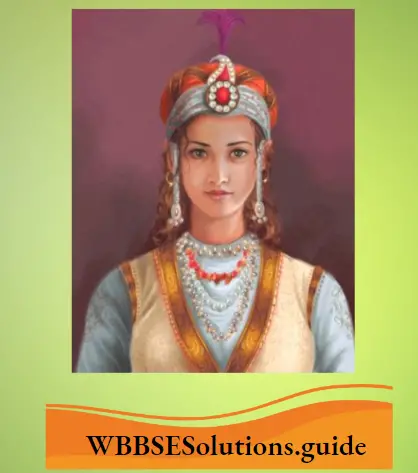
WBBSE Notes For Class 7 History Chapter 4 Delhi Sultanate Turko Afghan Rule Sultana Raziya

Sultana Raziya became Sultan in 1236 A.D. and reigned for only four years (1240 A.D.) with pride and prestige. From the text ‘Futuhaus-Salatin’ written by pandit Isami, many things can be known about the tenure of Raziya.

Raziya was the only lady in the medieval age who became Sultan through election by the people. She was intelligent kind and a warrior. So she was very efficient in horse riding and sword fighting. Being dressed as a man, she used to conduct royal proceedings.

Just after being the empress, she emphasized the introduction of concentrated central rule by snatching powers from the hands of the aristocrats. She abolished the ‘Circle of forty’ which was constituted by the Turk aristocrats.

She employed many non-Turk Muslims in high posts. A Habsi leader named Jalaluddin Yakut Khan helped Raziya to constitute a non-Turk team. She got help from Kabir Khan and Malik ljuddin to kill the revolting leader Nizam-ul-Mulk-Junaidi.

Chapter 4 Delhi Sultanate Turko Afghan Rule Ghiyasuddin Balban 1266 To 1287

Ilbari Turky leader Ghiyasuddin Balban (real name Ulugh Khan) was purchased by Khoaza Jalaluddin in a slave market of Basra in Persia. After that Jalaluddin sold him to Iltutmish.

Then he became Amir-i-Shikar and became a member of the forty ‘Challisher chakra’. Due to the conspiracy of this elderly leader, daughter Raziya and two sons Mahamud Shah and Bahram Shah of Iltutmish were dethroned and declined.

Balban gave marriage of his daughter to Nasiruddin Mahmud Shah and achieved the post of Nayeb-i-Mamlikat in 1254 A.D. But due to extreme greed for power and the throne, he murdered his son-in-law Nasiruddin in 1265 A.D.

With poison at the age of 36. According to the historian Isami, Balban acquired the throne of Delhi in this manner. He was 60 at that time.

The old Balban ruled from 1266-1287 A.D:

As an autocratic sultan. At this time, he proved himself stronger than the Turkey aristocrats. He campaigned himself as the representative of God or ‘Nayeb-i-Khudai to Louis fourteenth. He took the title ‘Jilillah’ like the Sasanian.

The dynasty of Persia introduced the custom of “Paobos” (to kiss the feet of the Sultan) and “Sizda” (to stand on a bent knee). Laughing, humor, entertainment, and drinking were prohibited in the royal court.

He used to attend the royal court in gorgeous dresses and in a heavy and serious atmosphere. He took some stern measures against some members of the Royal Court to subdue them.

He caned Malik Bakbak openly, the ruler of Badaun for killing a slave and for this similar offense, he caned 500 times the ruler of Ayodhya and fined him Rs. 20,000. Maintaining strict discipline in every sphere was the main specialty of his political ideology.

“Delhi Sultanate culture and administration WBBSE Class 7 History”

Historian Dr. Ashirvad Lal Srivastava rightly commented in his book ‘The Delhi Sultanate’ (P-117)-“By such crooked and barbarous measures he destroyed ‘the forty’ and cowed down those of its members that escaped death and dismissal.”

Problems:

Balban faced problems like-

  1. Weak successor in Delhi after Iltutmish.
  2. Death of the last unchild slave ruler Nasiruddin Mahmud,
  3. Mongol invasions created chaos and anarchy in Delhi.

He solved these problems by

  1. Restoring peace in restive Delhi, Doab, Kampil, Bengal, and its adjoining areas.
  2. He ensured the peace and loyalty of his subjects with the help of absolute autocracy and checked, the selfish members of the ‘Forty’.
  3. He banned pleasures and drinking of wine in the royal court.
  4. He appointed an efficient spy system to provide information and reorganized a strong and disciplined army.
  5.  He rebuilt the old forts at Samana, Sunam, Dipalpur, and Bhatinda against the Mongol invasions in the North-Western frontiers. A huge army was also sent there to ensure the security of the people.

He subdued Tugril Khan, the rival leader of Bengal, and hanged the defeated soldiers to death. Balban died in 1287 A.D.

Chapter 4 Delhi Sultanate Turko Afghan Rule The Khalji Dynasty

Jalaluddin Khalji (1290-96 A. D.):

He (at the age of 70) was the founder of the Khalji dynasty. He killed the last Mameluk Turkis sultan of the slave dynasty of Delhi Kaikobad and his infant son Kymursh to establish the Khalji dynasty. This event was known as the “Khalji revolt”.

Alauddin Khalji (1296-1316 A. D.):

Alauddin was a believer of endless autocracy. So he used to say, just like Louis XIV ‘I am the state’ but he did not consider himself as a slave of the Caliphs.

Rather he took the title ‘Yamin-ul-Khilafat’ which meant helping the Caliphs. According to Dr. A. L. Srivastava, ‘He tried to make his state secular’. He was Alexander II.

His commander Nasrat Khan and Ulugh Khan defeated king Karnadeva of Gujarat and capsized his wife Kamaladevi and daughter Debaladevi after conquering Gujarat in 1297 A. D. He also conquered Ranthambhor (1299-1301 A. D.) by killing Rana Hamirdeva.

The soldiers of Alauddin killed about 30,000 Rajputs while conquering Chitore in 1303 A. D. It is known from the ‘Padyabat’ written by Malik Mohammad Jaysi (16th Century) that Alauddin invaded Chitore to win over Padmini, the wife of Ratan Singh.

But Padmini along with many Rajput women sacrificed their lives in fire by performing Jauhar Brata’. Alauddin was the first Muslim sultan who invaded South India by crossing the Vindhya mountain.

His faithful army chief Malik Kafur lead the South India campaign. He captured Devgiri by defeating Ramachandra Deva of the Yadav dynasty on the southwest of the Vindhyas. Later, Ramachandra helped Alauddin a lot for the South India invasion.

He compelled king Prataprudra, king of Warangal or Telengana dynasty in 1306-07 A.D. to surrender before him and got many treasures, 100 elephants, 700 horses, and a very precious diamond.

“WBBSE Class 7 History Chapter 4 mind map and key concepts”

Alauddin defeated Vir Ballal III of the Hoysel dynasty of Dwarsamudra in 1310 A.D. and made that state as a tributary. He advanced up to Rameshwar Bridge in the South by defeating Vir Pandya and Sundar Pandya of the Pandya dynasty in 1311 A.D.

Administrative reforms:

Alauddin was a believer of extreme autocracy. His chief minister was Khoaja Khatir. To eradicate the conspiracies and to strengthen the administration, he took up certain measures such as,

  1. Introduction of spy systems namely ‘Barid’ and ‘Munhi’
  2. To seize the lands which were given to landlords under milk at, waqf, and in systems.
  3. Prohibited drinking and marriage and mixing among the aristocrats without permission.
  4.  Withdrawal of all sources of affluence of the aristocrats.

The main pillar of Alauddin’s administrative structure was his military power. ‘Ariz-i-Mumaliq’ the defense minister, used to recruit soldiers. The cavalry division Bakshi-Fouz used to get 234 tankas per horse and 78 tankas for each additional horse.


WBBSE Notes For Class 7 History Chapter 4 Delhi Sultanate Turko Afghan Rule Alauddin Khalji

Wages were paid in money or cash instead of land. To stop the corruption in the army, he introduced ‘dag’ for identifying horses and ‘Julia’ for the identification of soldiers. According to Ferista, his cavalry strength was 4,75,000.

He first introduced permanent and reserved forces in Delhi. Historian A. L. Srivastava said, “To him, belongs the credit of being the first Sultan of Delhi to lay the foundation of a permanent standing army.”

Economic reforms :

He appointed ‘Diwan-i-Asraf’ or accountant in the revenue department. ‘Diwan-i-Mustafi’ or the auditor was just under him. After that, there were posts like Karkun, Mutasharif, Muhashil, and Gomasta.

Alauddin abolished the earlier ‘Iqta system’ and acquired all the cultivable lands under government control or ‘Khalisa’. As a result, the local zamindars like Khut, Mukaddam, and Chowdhury lost their financial affluence and comfort.

He surveyed the entire land area and collected taxes. The taxes were as domestication tax, housing tax, Jijia tax, Carvi tax (10% in the case of Hindu merchants and 5% in the case of Muslim merchants), and also 50% ‘Khirraj’ or land revenue.

According to the historians like Habib and Afsar begum, there were political and economic motives behind these tax structures. Alauddin employed ‘Sahana-i-Mandi’ and ‘Diwan-i-Riasat’ to control the market.

The prices of essential commodities were fixed and spies were deployed to check the weighing of measures of the merchants. The price list as was follows Wheat = 7 jital, Rice = 5 jital, Job = 4 jital etc.

1 jital = rupee. According to Barani, due to such control, the prices of different articles remained unchanged. Similarly, Ferista, said that there was no way of increasing prices even at the time of famine or epidemic.

Lanepoole said, “Alauddin saved the poor by depriving the riches.” According to Dr. K. S. Lal, “The revenue regulations of Alauddin were meant to crush high landlords, they were in no way less prejudicial to the interests of the peasantry”. (History of Khilijis, by K. S. Lal)

Other achievements:

Though ‘Kazi-ul-Mumalik’ or the chief justice conducted the judicial system yet emperor himself settled many cases through appeal tribunals.

He introduced the postal system such as ‘Dava’ and ‘Aulakh’ (Horse riders) for the sake of exchanges of governmental information and news.

Though Alauddin was of brutal nature, yet he respected the scholars like Pundit Amir Khasru (“Medieval Rabindranath Tagore”), Hussain Nizami, Sufi Saint Nizamuddin Aulia, and Mohammad Samsuddin.

Chapter 4 Delhi Sultanate Turko Afghan Rule The Tughluq Dynasty 1320 To 1399 A.D

Mohammad Bin-Tughluq (1325-1351 A.D.):

Mohammad Bin-Tughluq was a talented Sultan in the medieval age. He was the only scholarly pandit and reasonable Sultan in the Sultanate age. The Tughluq dynasty was founded by Ghiyasuddin Tughluq or Gazi Malik in 1320 A.D.

And was killed by an accident in 1325 A.D. His son Juna Khan or Mohammad Bin-Tughlaq ascended the throne and introduced the following projects.

1. Increase of Tax in Doab (1326 A.D.):

There had been good cultivation in the fertile land of the Ganga-Jamuna-Doab region. So Sultan increased land revenue tax from 50% to a certain portion. According to Barani, the rate of such increase was 5 to 10 times high.

According to Ferista, this increase in rate was 3-4 times, ‘Amir-i-Kohi’ the employees of the revenue department used to take help of oppression and coercion to collect such taxes. This even continued in the year of drought also.

Measures were taken for punishment of the revolting tenants. As a result, many farmers and peasants fled away somewhere else. Many of them became dacoits and created unruly, situations.

For this reason, extremely chaotic conditions arose in political and cultivation fields. Sultan realized the actual condition of the farmers very late.

Then he tried to improve their condition by providing agricultural loans (Takkavi), equipment, seeds, and irrigation systems but in spite of these, he could not overcome the crisis. Barani the resident of Doab and historian Lanepoole described the miserable condition of Doab.

WBBSE Notes For Class 7 History Chapter 4 Delhi Sultanate Turko Afghan Rule Mohammad Bin Tughluq

2. Transfer of Capital (1326-27 A. D.):

Sultan built a 700-mile-long road transferring capital from Delhi to Devgiri (Maharastra). According to Barani, Bin-Tughluq named Devgiri ‘Daulatabad’.

The main reasons behind this project were

  1. To save the capital from the attack of Mongols,
  2. To introduce good administration and establish political peace.

The plans were reasonable. But many old men and women including children died on the way to Devgiri as they were ordered by the Sultan to leave Delhi. The climate of Devgiri was very much unfavorable to the people of Delhi.

As a result, Sultan somehow managed to stay there for three years and then becoming unbearable, he returned back to Delhi. Both common people and the employees became extremely unsatisfied with the Sultan.

Historians said that it would not be that harmful if only the Government department were shifted, Historian Lanepoole said “Daulatabad remained as a moment of misdirected energy”.

3.  Introduction of copper currency (1330 A.D.):

There was a good scientific reason behind the introduction of copper notes by Bin-Tughluq in 1329-1330 A. D. copper was available at that time. In his time, there were the usages of the gold coin ‘Dinar’, silver coin ‘Tanka’, and copper coin ‘Jital’. I dinar = 10 Tanka.

The strong reason behind introducing copper currency was

  1. Kublai Khan of China introduced the paper currency. Chao and Gaikhatu Kings of Persia introduced symbolic currency and both of them were successful.
  2. According to Gardner Brown, the Fourteenth century was the century of the extreme crisis of silver.

The supply of silver in India decreased at that time. But copper was easily available in good quantity. Taking this into consideration, Sultan introduced the copper currency. These currencies were known as ‘Dokani’.

It looked beautiful also. Numismatist E. Thomas so called Sultan “The prince of moneyers”. The Government seals were forgotten to be inscribed on the notes. And due to this little mistake take currencies were made everywhere.

It became a cottage industry in almost every house for making fake notes. The shopkeepers, merchants, and foreign traders refused to accept the fake notes. Then the Sultan settled their accounts with gold and silver coins.

After carrying in four years with extreme difficulty, Sultan gave up the project of copper currency. As a result, a tremendous economic crisis occurred. But as per Iban Batuta, the royal treasury was not empty at that time.

4. Plan to conquer Karajal and Khorasan:

During the regime of Mohammad Bin-Tughluq, many amirs from Western Asia and Central Asia took shelter in Delhi as those places were very much politically disturbed.

So according to Barani, Mohammad Bin-Tugluq collected 3,70,000 soldiers and maintained them for nearly one year to mature the plan of conquering Khorasan. In the year 1337-38 A.D., he invaded the Karajal state of Qumaum in the Himalayas after capturing the Nagarkot fort of Kangra valley in Punjab.

According to Iban Batuta, the main object of the Karajal invasion was to demarcate the boundary of India and China. So, about 10,000 soldiers under the leadership of Khasru Malik advanced towards Karajal in the rainy season.

Though the battle was won, but due to extreme rain, coldwave, and foolishness of the soldiers only 10 soldiers out of 10,000 had been able to return to Delhi. The rest of the soldiers died due to the adverse climate.

Chapter 4 Delhi Sultanate Turko Afghan Rule Firoz Shah Tughluq 1351 To 1388 A. D

Firoz Tughluq did not have military genii like Mohammad Bin-Tughluq and Alauddin. But he introduced many philanthropic activities. The chief minister Malik Maqbul had a vital role in all welfare measures of Firoz.

His main public welfare works were-Firstly, Hé reduced the rate of land revenue, abolished the 24 illegal taxes of Mohammad Bin-Tughluq, and enacted only 4 taxes laid by the Koran. These were

  1. Khiraj or Kharaj or land revenue is 1/2 to 1/3rd of the total produce.
  2. Khams or tax of the plunder.
  3. Jiziya or religious tax is taken from non-Muslim and
  4.  ‘Zakat’ or the 24th part religious tax collected from the Muslims.

Besides the irrigation tax or ‘sub’ was exacted through the production of both parts of the total crops. He abolished the change or interstate tariff. As a result, the price of necessary articles were reduced.

“Class 7 History WBBSE Turko-Afghan rule short and long questions”

This information is found in the book of Afif, ‘Tariq-i-Firozshahi’. Secondly, Firoz ordered  digging of five big canals for the development of irrigation

  1. The Jamuna canal is 150 miles long from Jamuna to Hissar.
  2. The Sutlej-Gharghara canal which was 96 miles long.
  3. The Jamuna-Firozabad canal
  4. The Gharghara canal
  5. The Hansey canal. Besides, he also arranged for the digging of many ponds and 150-deep tubewells.

Thirdly, he laid the foundation of many new villages and cities. He initiated new cities like Firozabad, Fatehabad, Firozpur, Jaunpur, etc.


WBBSE Notes For Class 7 History Chapter 4 Delhi Sultanate Turko Afghan Rule Firoz Shah Tughuluq

According to Afif, Firoz was also credited for the renovation of the memorials of Iltutmish, Alauddin, Nizamuddin Auliah, Jama Masjid of Delhi, Qutub Minar, etc.

Fourthly, Firoz set up an’ employment exchange’ for the placement of the unemployed. He used to donate a huge sum annually for the marriage of poor Muslim girls, and for giving official help to the old, the widow, and the orphans by creating ‘Diwan-i-Khairat’. He founded a charitable hospital named ‘Dar-ul-safa’.

Nasiruddin Mahmud (1394-1412 A.D.) and Invasion of Timur Lane:

Timur invaded India in 1398 A.D. during the regime of Nasiruddin Mahmud Shah, the last Sultan of the Tughluq dynasty of Delhi.

He killed a small number of people on the request of some Muslim personalities in Delhi, though he looted huge amounts of wealth by invading Dipalpur first, and then Bhatna. Timur retaliated on 18th December 1398 A. D.

when he was attacked by the soldiers of Nasiruddin Shah from the back. Nasiruddin could offer a very feeble attack and then fled away to Gujarat. Angry Timur mercilessly killed the public of Delhi for 15 days.

According to Badaun, due to this mass killing not a single bird flew in the sky of Delhi for long 3 months. The Sayyid dynasty (1415-1451): After the death of Nasiruddin Mahmud Shah in 1412 A. D.

Amirs of Delhi appointed Daulat Khan Lodi (1412-1414 A. D.), an Afghan leader, to the throne of Delhi. He was dethroned by Timur’s representative and the ruler of Multan, Khizir Khan (1414-1421 A. D.).

He thought of himself as an heir of Hazrat Mohammad’s daughter. Khizir Khan was the founder of the Sayyid dynasty. The three rulers of the dynasty succeeded him. Khizir Khan’s son Mobarak Shah took the title ‘Shah’ (1421-1434 A. D.)

And Mohammad Shah (1434-1443 A. D.) a nephew of Mubarak occupied the throne but had no efficiency. The last ruler of the dynasty was Alauddin Alam Shah (1443-1451 A. D.).

Due to his weakness Bahlul Lodi, an Afghan ruler of Punjab drove him out and captured the throne of Delhi. All the last successors of this dynasty were worthless.

The Lodi dynasty (1451-1526):

Bahlul Lodi (1451-1489 A. D.) was the founder of the Lodi dynasty in Delhi. He was the first Afghan (Pathan) ruler of India. During his long reign of 38 years, he conquered Jaunpur, Ranthambhor, Gwalior, etc.

His son Sikander Lodi (1489-1517 A. D.) conquered Madhya Pradesh, Bengal, and Bihar. He was a patron of culture and founder of good administration, but fanatic and theocratic by nature.

His son was Ibrahim Lodi (1517- 1526 A. D.) who was the last greatest ruler of the Lodi dynasty. He was a contemporary to Guru Nanak.

Due to the treachery of Daulat Khan Lodi, the ruler of Punjab, and Alam Khan Lodi, the unçle of Ibrahim Lodi; Babur the ruler of Kabul invaded Delhi and in the first battle of Panipat (21st April 1526) defeated and killed Ibrahim Lodi.

Thus Babur destroyed the Lodi dynasty and founded Mughal Empire in India.

Al-Beruni:

According to Hitti, Aburaihan Mohammad Aiban Ahmed Al-Beruni was born in 973 A. D. in a noble Irani family of Khiba (Khoarism) state in Central Asia. His span of life was considered from 973-1048 A. D.

Though Dr. A. L. Srivastava considered it as 970-1038 A. D. He was a good scholar in languages like Arbj, Farsi, Hebrew, Greek, etc. As a royal poet of Sultan Mahmud of Ghazni, he wrote two books on science namely ‘Al Tanjim’ and ‘Al Nazam’.

In this time he translated the books like ‘Alma Gest’ and ‘Euclyd’ of Tollemi. During the invasion of Sultan Mahmud in India, he came to this country and studied the Indian religious texts and Sanskrit language for long eight years.

During this time he studied Ramayana, Mahabharata, Gita, Bhagavata, Yagyabalka and Manusmriti, Sankhyakarika (Iswarkrishna), Yogsutra and Nyayasutra (Patanjali), Mimangsasutra (Jaimini), etc.

Apart from this, he translated many Sanskrit texts into Arbi-Farsi. Those are ‘Brihat Sanghita’ and ‘Laghuyatak’ by Barahamihir, ‘Brahmasputa Siddhanta’ and ‘Khandakhadyak’ by Brahmagupta, ‘Yogasutra’ by Patanjali, etc.

But he wrote the famous book ‘Tahakak-e-Hind’ in 1030 A.D. related to his visit to India. This book was known as ‘Kitab-ul-Hind’ in the Arbi language.

The meaning of Tahkak-e-Hind was-Analytical description of the thoughts of Hindus in the context of judgment as to what was to accept and what was not. The subject matter of this book was divided into eight topics in 76 chapters.

These eight topics were:

  1. The faith in social custom and system.
  2. Hindu Philosophy
  3. Law
  4. Literature
  5. Practical Science-Physical Science, Mathematics, and Astrology
  6. Geology
  7. Religion and rituals and
  8. Miscellaneous topics.

Iban Batuta

Iban Batuta was a habitat of Janjibar under Morocco of North Africa. He came to India in 1333 A. D. during, the regime of Sultan Mohammad Bin-Tughluq. He traveled to many places of India for 9 years out of which for five years (1333-1338 A. D.)

He was engaged as ‘Kazi’ in the royal court of Bin Tughluq. He was an exceptional scholar in many subjects. He wrote ‘Kitab-ur-Rahela’ the famous book regarding travel in India.


WBBSE Notes For Class 7 History Chapter 4 Delhi Sultanate Turko Afghan Rule Iban Batuta

Almost all historians accepted the information and data mentioned in that book regarding the social, economic, and political history of the fourteenth century.

The union between Hindus and Muslims had been mentioned in the book Rahela written by Iban Batuta. Though he said that Hindus were forcibly converted into Muslims and made them slaves forcefully.

Even their social status and prestige were lower as Gimmies. Iban Batuta in his book ‘Rahela’ has described the festival of Mohammad Bin-Tughluq. He said “……After that, the dancers appeared.

In the first group, there were the daughters of those anti-Muslim Hindu kings, who were defeated and imprisoned in that year. After performing, Sultan distributed those girls among the Amirs. After that more girl performed dances etc.

And they too were distributed by the Sultan among his brothers, relatives, and the sons of the Amirs.” Iban Batuta himself received ten such young girls as presentation.

Thus he gave a very clear picture o how the lives of Hindu women were in danger and unsecured. Iban Batuta praised very high about the scholarship of Mohammad Bin-Tughluq but he added, that Sultan became so very cruel and ferocious when impatient.

Iqta System:

Iltutmish introduced the ‘Iqta system’ for collecting revenues from the peasants and also for the conduct of the regional royal administration.

According to Historian Irfan Habib, “It is called ‘Iqta system’ because of the fact that surplus of the cultivation of a farmer is considered as tax and that is distributed among the regional rulers.”

For the sake of administration, the Sultanate empire were divided into some military regions. This was known as ‘Iqta’. The military administrator was called ‘Mufti’ or Iqtadar.

The specialty of this system was to collect tax from the adjoining area, to maintain law and order, to maintain the sovereignty of the Sultan by subduing the revolts by the Chowdhuries. To collect Tax and its distribution and appointment of employees.

Dr. A. L. Srivastava in his book ‘History of India’ said, the Iqtadars, in the majority of the cases, were corrupt. because through forgery, they took out the excess revenues without depositing it to the royal treasury.

Balban appointed a special group of employees ‘Khouja’ to stop this malpractice. Alauddin completely changed and modified the Iqta system. He converted the private lands in and around Delhi into Government lands.

As a result, he abolished the Iqta system within Delhi and introduced the same in distant regions. He gave Iqta only to his chief of army staff, the rest got wages.

He determined the revenue changeable to Iqta and with this, he punished the corrupt Iqtadars. Ghiyasuddin made this Iqta system a bit reluctant. Firoz Tughluq made this system hereditary.

Circle of Forty:

Iltutmish introduced the ‘Circle of forty’ or ‘Bandegi-i-Chihalagani’. Basically, the circle of forty was constituted of 40 experienced Turks. The main reason of constituting the cycle was to take different advice for running a better administration.

Iltutmish used to rule with the advice of this cycle. Each of them had a tremendous influence over the royal court. After the death of Iltutmish, these leaders became very influential and selfish. Many of them were guided by the conservative Ulemas.

So the members of this cycle could not accept Raziya as a ruler from the time of her being Sultana. Raziya demolished this circle of forty when she found that a conspiracy was coming up against her.

The Ghiyasuddin Balban was an elderly member of this cycle of forty. The power-loving Balban killed all the members of this cycle of forty. The power-loving Balban killed all the members of this cycle when he became Sultan at the age of 60 and made himself enemy-free.

“Delhi Sultanate impact on Indian society economy and culture Class 7”

He did this because he realized the wilfulness and arrogance of the circle members during his membership in the said cycle.

New-Mussalman or Neo Muslims:

Jalaluddin Firoz Khalji (1290-’96 A.D.) resisted Mongol leader Abdullah when he attacked Punjab. He also made them go away from India. At that time, Ulugu the son of Halagu prayed for shelter to Jalaluddin along with some thousands of soldiers.

Jalaluddin first converted the sheltered Mongals into Islam then settled them at the outskirt of Delhi. These converted Mongols were known as “New Mussalman”. Many Muslims were identified as New Mussalmans.

The New Mussalmans of Delhi got dejected with Alauddin and revolted. They killed his nephew. Without the slightest delay, Alauddin sent his commander-in-chief Nasrat Khan in 1299 A. D.

To subdue the revolt of the Mongols (New Mussalman) and the imprisoned New Mussalmans were beheaded under the order of the Sultan.

It is said that about 30,000 New- Mussalmans were beheaded within a couple of hours and a gate was built with their heads in Bundelkhand of Delhi. He wanted to make people feel how dangerous would be to revolt against the Sultan.

Mahmud Gawan

Mahmud Gawan was the most efficient army chief and prime minister of Sultan Mohammad Shah III of Bahamani state in South India. The Muslims from foreign took charge of the Bahamani state due to the inefficiency of the Sultan.

During his ministership, the Bahamani state gained the maximum development. It is known from the book ‘Burhan-i-Masir’ that Mahmud Gawan captured Kondabir, Goa, and Rajmantrin after defeating the king of Vijayanagar.

Besides this, he received much wealth, elephants, horse servants, diamonds, and beautiful ladies from the Vijayanagar king. He also captured Khalna in Sangameswar and Orissa.

During Gawan, the policy of public welfare was adopted. He was able to stop taking bribes and other corruption by the government employees. He could not give up the religious conservatism though he was simple and of honest character.

But Gawan himself was very keen in mathematics and medicine, science. He built an education center in Vidar. There is a University named Gawan University. The other Amirs and Maliks could not tolerate the excessive popularity of Mahmud Gawan.

The cunning Amirs made a conspiracy against him and brought a charge of Anarchy against him. The Sultan, depending fully on this information, killed Gawan in an intoxicated condition on 5th April 1481 A. D. Bahmani’s empire declined speedily due to death.

Chapter 4 Delhi Sultanate Turko Afghan Rule Reasons For Decline Of Sultanate Empire Of Delhi

The Sultanate empire declined due to the defeat of Ibrahim Lodi by Babur in the battle of Panipat in 1526 A. D. The Sultanate Empire declined after its existence for about 320 years.

This decline was not due to any sudden singular factor. There were many reasons behind it, such as

1. Irregularities in succession and employment of slaves:

As there was no clear-cut law regarding succession and inheritance, the descendants started fighting among themselves for capturing the throne with the death of each Sultan.

Emphasis was given on capability and personal expertise in the event of appointing servants. But this system was null and void in the regime of Firoz Tughluq. The majority of his 1,80,000 staff were useless and unnecessary.

Class Vii History Book Wbbse

There had been no gain other than the deterioration of law and order throughout the country as well as the wastage, of money.

2.  Bad effect of the Jagir system:

Some Sultans used to donate lands to regional rulers and highly placed officers in lieu of their salary. Alauddin abolished this system and converted all the surrounding private land into ‘Khalisha’ or Government land.

This system was reinstituted at the time of Firoz Tughluq and as a result, corruption percolated in every corner of the society.


WBBSE Notes For Class 7 History Chapter 4 Delhi Sultanate Turko Afghan Rule The Sultanate of delhi on the verge of decline


3.  Defective revenue structure:

Sultanate rulers increased the land revenue for the sake of their army. The peasants were extremely oppressed by the tax burden. The employees of the revenue department started looting the farmers in the name of tax collection.

4.  Military weakness:

The Muslim commanders showed some efficiency and bravery at the early stage but later they became extremely weak. The tropical climate of India was responsible for making the soldiers, idle and weak.

The military power of the Sultanate empire became weak due to a lack of proper training, discipline, and organizing capacity.

5.  Responsibilities of the aristocrats:

The aristocratic class of people were also responsible for the decline of the Sultanate empire. They used to waste their time in entertainment rather than carrying out their duties and responsibilities properly.

They were also involved in clashes with each other for the sake of their self-interests. Their jealousies and suspicions to each other also helped this decline.

6. Weakness of the Sultans:

Qutubuddin Aibek, Iltutmish, Alauddin Khalji, etc. built a strong foundation of administration. But due to the weakness of the subsequent rulers, that foundation became loose and weak.

The worthless Sultans were involved more in wine and women rather than administration and ruling.

7.  Conservative religious policy:

The majority of the Sultans of Delhi ruled with the help of Ulemas by following the Shariati regulations. As a result, the Sultanate’s rule was much more dominated by the religious base.

Hindus became dissatisfied and angry with the Sultanate empire because Firoz Tughluq and Sikandar Lodi imposed the ‘Jiziya tax’ on the Hindus and also due to incidents like the destruction of temples.

8. The Military rule:

The success and expansion of the Sultanate empire happened with the help of its military. Sultan Ghiyasuddin Balban and Alauddin Khalji ruled depending absolutely on their military forces.

They did not care even to give any importance to the demands and desires of the common people. As the Sultan did not have any sympathy towards the public, they also, in turn, did not show any sympathy towards the Sultan in his bad patch.

9. The vastness of the empire:

The Sultanate empire was developed in a vast area of North and South India. Due to an underdeveloped communication system, it was difficult to keep in contact with the remote areas.

As a result, the rulers of the distant regions became independent and unruly. Thus the central power collapsed.

10. The responsibility of Mohammad Bin-Tughluq:

Sir Stanley Lane-Poole and Iswariprasad said that Bin-Tughluq was squarely responsible for the decline of the Sultanate empire. Due to a lack of common sense, lack of practical sense, lack of patience, cruel nature, and whimsical policies and activities, the fall of the empire was speedy and inevitable.

Lanepoole described him as an ‘Insane and bloodthirsty’ Sultan. It was known from a report that a dead body was a must in front of the main gate when it was opened in the morning.

For these reasons, it was told that he was mainly responsible for the fall of the Sultanate empire.

11. Responsibility of Firoz Tughluq:

Historian Wolseley Haig said that Firoz Tughluq initiated the decline of the Sultanate empire by adopting the policy of decentralization.

Istiark Hussain Qureshi said that Firoz Tughluq took the initiative of building a ‘theocratic state’ by deviating from the secular policies of Alauddin Khalji and Bin-Tughluq.

As a result, people became unrest. Due to his weak military organization, reinstitution of the jagir system, the appointment of servants in excess of the necessity (About 50,000 servants), the drinking habit of the Sultan, the Sultanate empire declined.

12.  Invasion of Taimurlane:

Taimurlane attacked and looted Delhi in the month of December 1398 A.D. during the regime of Nasiruddin Mahmud Shah, the last Sultan of Tughluq dynasty.

He left Delhi after lootings and killings for 15 days, on 1st January 1399 A.D. Due. to his invasion, the roads of Delhi became blocked with dead bodies.

13. Invasion of Babar:

The invasion of Babar brought the ultimate end. The Sultanate empire declined forever when Ibrahim Lodi was defeated by Babur in 1526 A. D. in the battle of Panipat. After that, the foundation of the Mughal empire was laid.

Chapter 4 Delhi Sultanate Turko Afghan Rule Culture During The Illyas Shahi And Hussain Shahi Age Of Bengal

Iktiaruddin Mohammad Bin Bakhtiyar Khilji, the subordinate of Qutubuddin, first set up the Muslim ruling in Bengal (1206 A.D.)

Later, during the regime of Mohammad Bin-Tughluq, Samsuddin Illyas Shah became the king of Laxmanabati and declared himself as the independent Sultan of Bengal in 1342 A.D.

His son Sikandar Shah (1358-1389 A. D.) and grandson Ghiyasuddin Ajam Shah (1389-1410 A.D.) ruled Bengal after the death of Samsuddin Illyas Shah.


WBBSE Notes For Class 7 History Chapter 4 Delhi Sultanate Turko Afghan Rule Growth of religion


After that, the Brahmin zamindar of Bhaturia and Dinajpur, Ganesh captured the throne of Bengal by taking advantage of the weak descendants. He took the title ‘Danujamardandev’ and ruled from 1414 to 1418 A.D.

After the death of king Ganesh, his son Jadu christened himself into Islam and became known as Jalaluddin Mohammad Shah. He shifted his capital from Pandua to Gour and ruled from 1418 to 1431 A.D.

After him, his son Samsuddin Ahmed became the king (1431-1442 A.D.) After that, Nasiruddin Mahmud (1442-1459 A.D.) re-instituted the Ilyas Shahi dynasty. According to Ferista, he initiated a glorious age.

After Mahmud Rukanuddin Barbak Shah (1474-1481 A.D.) and Jalaluddin Fathshah (1481-1487 A.D.) of the same dynasty ruled. But Jalaluddin Fath tried to diminish the power of the Habsi slaves from Abesinea within the palace.

As a consequence, the Habsi leader Saifuddin Firoz (1487 A.D.) killed Jalaluddin and set up the Habsi dynasty in Bengal. After that Mujaffar, the Habsi Sultan ruled Bengal from 1487 A.D. to 1493 A.D.

This period of 6 years was called the Dark Age of the history of Bengal. At last, his minister Alauddin Hussian Shah killed the barbarous Mujaffar and set up the Hussain dynasty in. Bengal in 1493 A.D.

Hussain Shah (1493-1519 A.D.) shifted his capital from Pandua to Ekdala. He conquered the states like Kamtapur, Tripura, Orissa, etc. Taking advantage of the incapabilities of Nasrat Shah (1519-1532 A.D.)

And Ghiyasuddin Mahmud Shah (1533-1538 A.D.) the Afgan hero Sher Shah captured Gour in 1538 A.D. and the Hussain Shahi dynasty came to an end with this, the Afghan power arose in Bengal.

The flow of cultural evolution in Bengal during the Illyas Shahi and Hussain Shahi regimes: During the Illyas Shahi regime, trade, and commerce, agriculture, art, etc. started developing in Bengal.

Iban Batuta described Bengal in this stage as a ‘State of prosperity’. The boundary of Bengal extended up to Chilka Lake in Orissa, Kathmandu of Nepal, and Kamrup in the East.

According to Dr. Syed Nurul Hussain, Illyas Shah started a golden age in the history of Bengal. Due to patronage from the sultans, the cultural bend in Bengal reached its highest peak and political peace and economic development were also established.

He was respectful to Pirs. Darbesh and Hindus. In his time, Pandua became the main center of art and sculpture. Besides this, in the fields of local art, sculpture, and literature a new era had been evolved.

So the historian Dr. J. N. Sarkar told “A new chapter was opened in the history of Bengal with the accession of Illyas Shah to the throne of Lakhanabati.”

The famous Adina Mosque of Pandua was built in 1368 A.D. in Maldah during the time of Sikandar. Shah. It took 20 long years to build this mosque in imitation of the mosque in Damascus. Adina Mosque was 397 ft. long and 159 ft. wide.

There were 400 pillars. many arches and tombs in that mosque. He built many mansions like ‘Akhi Siraj Uddin’ the Kotowali Darwaja, Mollasimla of Hooghly, ‘Eklakhi Mosque’, and others. Many scholars and pandits were there in his time.

During the regime of Ghiyasuddin Azam Shah, he exchanged letters with the famous poet Hafez of Parasya. Ghiyasuddin built two Madrasas in Mecca and Madina. He spent 12,000 Egyptian gold coins to construct the Madrasa of Mecca.

He also built a restaurant and the Arafah canal. The poet of Mithila (“Maithili Cuckoo”) Vidyapati was his contemporary. The Chinese emperor Yunglo sent his ambassador Ma-Huan to the royal court of Ghiyasuddin.

He also sent Maharatna Dharmaraj a Buddhist monk, to China (1410- 1411 A.D.). Thus the cultural exchanges started between India and China. Barbak Shah was a literature-loving Sultan.

So he took the titles like “Al-Fajil” and “Al- Kamil”. As per his instruction, the pandit of his royal court Brihaspati Misra wrote some notes in Sanskrit on Pada Chandrika and some literature of Kalidasa.

For this, he got the title “Pandit Sarvabhauma.” Barbak Shah gave Maladhar Basu the title “Gunraj Khan”. for writing Sri Krishnavijaya and to his son “Satyaraj Khan”.

As per the instruction of Barbak Khan the poet Krittibas Ojha translated ‘Sri Ram Panchali’ or Ramayana in Bengali. The French scholar of Barbak Khan’s royal court, Ibrahim Kayum Faruki wrote the “Safar Nama”.

Chandidas was the writer of famous Padabali literature in his time. His secularism was a famous event. Among the members of his royal court, Kedar Ray, Mukunda, Gandharva Ray, Ananta Sena, and Kaladhar are worth mentioning.

Sultan gave the title “Subharaj Khan” to Kaladhar. Vijay Gupta wrote the poetic novel Manasha Mangal during the time of Jalaluddin Fath.

Dr. R. C. Majumdar told, “Among the sultans of Bengal Rukanuddin Barbak Shah could claim his utmost supremacy from different angles.”

Culture during Hussain Shahi’s age:

The interests of Alauddin Hussain Shah and Nasrat Shah towards literature and culture had widened a new horizon of advancement. A new chapter was opened in the field of Hindu, and Muslim unity and cultural upsurge.

During the time of Hussain Shah, ‘Nabyanyaya, Sangha’ was established in Nabadwip. Nabadwip became the main center for the study of Sanskrit, Philosophy Nayashastra, Smritishastra, etc.

Due to the appearance of Sri Chaitanya, the Nabavaishnaba religious emotion stirred the fields of religion, society, literature, art, etc.

Centering around Sri Chaitanya deva, many texts like “Chaitanya Bhagabat” by Brindaban Das, Chaitanya Charitamrita by Krishnadas Kaviraj, etc. were written.

Due to the patronages of Hussain Shah, Rup Goswami wrote two texts namely “Lalit Madhav” and “Bidagdhya Madhav” In this time “Srimadbhagabat Gita” was translated in Bengali.

The scholars like Raghunandana, Raghunath, and Basudeva Sarbodhouma appeared in this age. Besides this, Pandit Joshoraj Khan, Srikar Nandy, Sridhar, Kabindra Parameswar, Bipradas Pipilai, etc. took an active role in the cultural upsurge.

Kabindra Parameswar translated Mahabharata in short form in Bengali named “Pandava Vijay Katha” under the instruction of Paragal Khan the ruler of Chattagram.

Srikar Nandy translated the Ashyamedha chapter of Mahabharata in Bengali under the instruction of Chhuti Khan, the son of Paragal Khan. There had been also much improvement of art and sculpture in this time.

The best examples of art and sculpture were “The Dakhil Darwaja”, “Eklakhi tomb”, “Tantipara Mosque”, “The Chota sona Mosque” of Gour made of brick and stone, and “Bara Sona Mosque”, “Kadamrasul palace” of Nasrat Shah (An ornamented black stone situated on a platform with the footprints of Hazrat Mohammad) and other sculptures of Gour and Pandua.

A special study of calligraphy was also there in this age. Impartiality and broadness in the field of religion were especially noted. Prof. M. R. Tarafdar described the broadness of the Hussain Shahis even if they were originally born in foreign countries, was a rare event.

Hindus like Gopinath Basu, Gour Mullik, Rup and Sanatan Goswami, etc. were members of the royal court. At this time, different idols like Satyapir, Manikpir, Gazibaba, Dakshin Ray, Dharma Thakur, Olabibi, Banabibi, Shitala Devi, etc.

Were worshipped equally by Hindus as well as Muslims. Thus the era of Illyas Shahi and Hussain Shahi started a new voyage in the cultural history of Bengal.

During the 15th and 16th centuries, this new trend of cultural as well as overall upsurge brought a brilliant intellect in the life fo Bengalees.

Chapter 4 Delhi Sultanate Turko Afghan Rule Political History Of The Bahmani Kingdom

When Mohammad Bin-Tughluq called Katlu Khan, the ruler of the Deccan back to Delhi, at the inspiration of some nobles and sent Ismail Khan there, the Southern people revolted against him.

Ultimately, Hassan Khan took the charge or rule with the help of a Brahmin astrologer. Out of gratitude to that Gangu Brahmin, Hassan book the title of Gangu Bahman. He took the title of Abul Muzaffar Alauddin Bahman Shah and set up the independent Bahamani kingdom (1347 A.D.).

He regarded himself as the successor of the brave Bahman king of Persia and his empire was known as the Bahmani state. For proper administration, Abul Bahman Shah divided his kingdom into four provinces-Daulatabad, Gulbarga, Bidar, and Berar.

He conquered Goa, Davel, Telangana, etc., and extended the Bahmani empire from Penganga in the North to the Krishna in the South and Vengir in Hyderabad in the East, and Daulatabad in the West.

18 rulers sat on the throne of the Bahmani kingdom. After the death of Alauddin Bahman Shah in 1358 A.D., his son Mohammad shah I (1358-1377 A.D.) was involved in a war with Warrangal and Vijayanagar during most of his rule.

After his death, Mujahid Shah (1377- 1397 A. D.). spent more time in art and literature than in warfare. The greatest of the Bahmani kings was Firoz Shah (1397-1422 A.D.). He fought against Vijayanagar thrice and was defeated only in the last one.

He won in the other two. He was not only a fighter but a patron of culture too. He had ordered the building of many mosques and palaces. After that Ahmad shah (1422- 1436 A.D.) transferred his capital from Gulbarga to Bidar.

Then Alauddin Ahmad Shah (1436- 1458 A.D.) Humayun Shah (1458-1461 A.D.) and Nizam Shah (1461-1463 A.D.) ruled one after another. Due to the worthlessness of Mohammad Shah III (1463-1482) his able chief minister.

Mahmud Gawan took the charge of the Bahmani state as the leader of the foreign, nobles. According to Ferishta, Mahmud Gawan wrote the book-Diwane, Amar.

He had qualities like military tactics, administrative efficiency, moral ethics, and respect for art and culture. The jealous southern nobles brought the false charge of sedition and Mohammad Shah III killed him by poison and alcohol.

The Russian traveler Authonosius Nikitin was moved by the role of Gawan during his visit to the Bahmani state during the rule of Mohammad III, Taylor argued that at the death of Gawan, the unity and solidarity of the Bahmani state was destroyed.

After the death of Gawan Mohammad III realized his mistakes and died within one year out of sorrow (1482 A.D.). After his death, the political disorder was started everywhere. The provincial governors became independent one by one.

During this period of decline, king Mohammad took the charge of the state. During the rule of Mohammad Shah (1482-1518 A.D.) the Bahmani kingdom was divided into four parts. The last emperor Sultan Kalim-Ullah.

started to rule in Bidar when Amir Barid, the son of minister Kasim Barid started to rebel, the Sultan fled away to Gujarat out of fear. The Bahmani kingdom lost its existence with his death in 1527 A.D.

Five independent Muslim states emerged on the devastation of the Bahmani state. Local states evolved much before the death of the last Sultan. In 1484 A.D. Imal Shal founded the Imad Shah dynasty in Berar.

In 1490 A.D., Adil Shah founded the Adil Shahi dynasty in Bijapur. In 1490 A.D. Ahmad Nizam Shah established the Nizam Shahi dynasty in 1527 A.D. Arim Ali Barid set up the Barid Shahi dynasty in Bidar.

Chapter 4 Delhi Sultanate Turko Afghan Rule The Political History Of Vijaynagar

Taking advantage of the political misrule and rebellious during the reign of Mohammad Bin Tughluq Harihar and Bukka, the two sons of the five of certain sangoma of the Yadav groups founded the independent Vijayanagar kingdom at the south of river Tungabhadra.

R. Sewell has said in his “A Forgotten Empire” that when Juna Khan, son of Ghiyasuddin Tughluq of Delhi destroyed the state of Warangal in the south in 1324 A.D. the five sons of Sangama fled away and set up the Vijayanagar state.

Another group of historians said that the Hoysal king Big Ballala III built many forts on the south banks of the river Tungabhadra to protect it himself from Muslim invasion and appointed Harihar, son of Cangama to that place later on, taking advantage of political misrule, Harihar and Bukka set up an independent Vijayanagar state.

From this period, the independent Vijayanagar staté enlisted for 300 years. Four dynasties ruled in Vijayanagar. Those were

1.  The Sangama dynasty (1336-1485 A.D.) Saluva dynasty (1486-1505 A.D.) Tuluva dynasty (1505-1565 A.D.) and Arbidu dynasty (1570- 1678 A.D.); The Vijayanagar state declined in 1678 A.D.

The Sangama rulers ruled for 150 years. The Vijayanagar state was extended up to Trichinapalli during Harihar and Bukka. At the reign of Bukka, the struggle with the Bahmani kingdom began. He sent ambassadors to China.

Two of his ministers, pandit Madhab Bidyaratna and his brother the commentator of the Vedas Sayanacharya were scholars in various fields. Bukka’s son Harihar II (1379-1404 A.D.) conquered Kanchi, Mysore, Chingelput, Trichinapalli, etc.

And look at the titles of ‘Maharajadhiraj’ and ‘Rajparameswar’. His son Devaray I (1404- 1422) was defeated by the Bahmani Sultan Firoz Shah and gave his daughter in marriage with the later.

To challenge this insult he defeated the Bahmani Sultan in a battle of 1419 A.D. The greatest king of the Sangama dynasty was his son Devaray II (1422-1446 A.D.) He conquered Orissa, and Andhra and extended his empire up to Ceylon.

He appointed many Muslim archers in his army. Still, he was defeated in the battle with the Bahmanis and had to sign an insulting treaty.

The Persian scholar Abdur Razzak and the Italian traveler Niccolo Konti had written about the cultural development, Hindu-Muslim unity, and economic prosperity of his period.

The last ruler of the Sangama dynasty, Mallikarjun sat on the throne in 1446 A.D. He saved the Vijayanagar empire from the invasions of king Kapilendra of Orissa and the Bahmani Sultans, but political anarchy was created during his inefficient son Birupaksha.

At this opportunity, Narsimha Saluva, the ruler of Chandragari had overthrown him and took the charge of the Vijayanagar empire. Narasimha Saluva, the ruler of the Saluvas saved the Vijayanagar state from sure destruction.

He consolidated his empire by establishing peace and discipline. His inefficient son Immadi Narasimha could not rule properly and his commander-in-chief Naras Nayak became the actual ruler of Vijayanagar.

In spite of this opportunity, he did not become the ruler of the state. After his death, his son Bir Narasimha took the throne fo Vijayanagar in ‘1505 A.D. The Saluva rulers ruled in Vijayanagar from 1486 A.D. to 1505 A.D. for only 19 years.

“WBBSE Class 7 History medieval rulers of Delhi Sultanate”

The son of Naras Nayak, Bir Narasimha was the founder of the Tuluva dynasty (1505 A.D.). This dynasty ruled in Vijayanagar for about 65 years (1505-1570 A.D.). The greatest of the Tuluva rulers was Krishnadeva Ray (1509-30 A.D.)

Who was the younger brother of Bir Narasimha? The Portuguese traveler Paes wrote about his rule of twenty-one years that “He is the most learned and perfect king that could possibly be… a great ruler and a man of much justice… gallant and perfect”.

Krishnadeva Ray first forced to nobles to obey him. Then he defeated the Bahmani Sultan Mahmud Shah in the battle of Kovelakonda in 1512 A.D. and occupied the “Raichur- Doab”. He also occupied the two forts of Sivasamudram and Srirangapattanam.

In 1513 A.D. he defeated Gajapatiraj and Prataprudra of Orissa and occupied Udaigiri and Kourdabidu by a treaty of 1518 A.D., he married the daughter of Gajapati. He defeated.

Kuli Kutab, the ruler of Golconda and defended the invasion of Ismail Adit Khan, the Sultan of Bijapur successfully in 1520 A.D. He destroyed the fort of Gulbarga of Bijapur at this time.

His empire included Konkan in the West, Vishakhapatnam in the East, Kanyakumari in the South, and many other islands of the Indian Ocean. In West India, the Portuguese ruler of Goa, Albukark built up the fort of Bhatkal by his order.

Raja Krishnadeva Ray was not only a soldier, he was also a patron of art and literature. He had 8 eminent scholars in his court who were known as the Astadiggajas.

The Portuguese traveler Domingos Paes praised him and wrote that Krishnadeva was a great ruler and impartial judge, but sometimes he got very angry and affectionate to his subjects.

K.K. Dutta has written about him “The reign of Krishnadeva Ray not only marked the climax in the territorial expansion of the Vijayanagar empire but was also remarkable for the encouragement and development of art and letters.

“WBBSE Class 7 Delhi Sultanate chapter-wise explanation with MCQs”

An Advanced History of India p. 370. After the death of Krishnadeva Ray in 1530 A.D. his younger brother Achyuta Ray sat on the throne of Vijayanagar (1530 A.D.-1542 A.D.) Ultimately, his nephew Sadasiv Ray (1542- 1570 A.D.) sat on the throne.

But due to his inefficiency, the minister Ram Ray became the proper ruler. He was a great diplomat like Bismarck. He took advantage of the internal quarrels of the five Muslim states of the Bahmani kingdom (1564 A.D.)

And sometimes took this side or that. Realizing this mistake, the Muslim, states fought unified against Vijayanagar in the battle of Talikota in 1565 A.D. Ram Ray was killed and defeated in this battle.

The Muslim rulers went on looting and killing for 5. months. The battle of Talikota destroyed the much-desired wish to establish a Hindu state in the South.

Dr. R.C. Majumdar had described ‘the battle of Talikota (1565) as a specially significant one’. Though Ram Ray was killed, Sadashiv Ray continued to rule after the battle.

Tirumal, the brother of Ram Ray defeated Sadasiv and set up the Aravidu rule in Pengonda. He was confined to survive between (1570-1586 A.D.) the last powerful ruler of this dynasty was Benkat II (1586-1644 A.D.).

He did the only important work of transferring his capital to Chandragiri. The last ruler of this dynasty Ranga III had to face internal trouble and due to the advancing policy of Bijapur and Golkunda, states like Madura, Tanjore, Bednaur, and Srirangapattam became independent and the Vijayanagar empire lost its last existence.

WBBSE Notes For Class 7 History Chapter 5 The Mughal Empire

Chapter 5 The Mughal Empire Mughal Empire In India

The founder of the Mughal empire in India was Jahiruddin Mohammad Babur. He defeated the last Sultan of the Sultani empire in India, Ibrahim Lodi. Babur’s father Omar Sheikh Mirza was from the family of a famous Chaghtai Turk.

Taimur Lane and his mother was the daughter of Unish Khan who was from the family of the famous Mongol leader Chengiz Khan.

Historian Sir Stanley Lanepoole said, “The bad blood of Chengiz and Taimur, the two curses of Asia, was mixed with the blood of Babur.” Hence Babur was so strong and brave.

The word ‘Babur’ means tiger or lion. His name is self-explanatory through his activities.

Read and Learn More WBBSE Notes For Class 7 History

Chapter 5 The Mughal Empire  Babur 1526 To 1530 A.D

Babur was born on 24th February 1483 A.D. in the Farghana state of Central Asia. His full name was Jahiruddin Mohammad Babur. He became the ruler at the age of 12 only, after the death of his father Omar Sheikh Mirza.

He tried five times from 1496-1512 A.D. to conquer Samarkhand but failed. Babur came to Kabul, the capital of Afghanistan when he was defeated by Farghana leader Shahebani Khan in the battle of Archian in 1503 A.D.

WBBSE Notes For Class 7 History Chapter 5 The Mughal Empire

Shahebani made his brother Jahangir Mirza, the king of Farghana. In Kabul, Babur became strong by conquering Kabul and Kandahar and took the title ‘Padshah’ in 1507 A.D.

In the meantime, he captured Samarkand and Taskhand of Central Asia with the help of Persian king Shah Ismail after the death of Shahebani Khan. But Babur. being Sunni Muslim, the conflict with Shah Ismail started became the later was a Shia Muslim.

“The Mughal Empire summary for Class 7 WBBSE”

Taking this advantage, the Uzbeki leaders under the leadership of Ubaid Ullah Khan, defeated Babur miserably in the ‘Battle of Gajdawan’ (1512 A.D.). Babur then came back to Kabul and decided to advance towards India.

The political instability, weakness of the Lodi Sultans, huge wealth and treasures and the success of Taimur Lane inspired him to invade India.

WBBSE Notes For Class 7 History Chapter 5 The Mughal Empire Babur

At first, he cleared his way by conquering Bajaur on the North-West boundary, Bhera and Punjab by conducting successive invasions during the period from 1519-1524 A.D. He then conquered Lahore and Deepalpur in 1524 A.D.

Daulat Khan Lodi and Akram Khan Lodi the main two rivals of Ibrahim Lodi requested Babur to attack Delhi. After that, he prepared to invade Hindusthan in 1525 A.D.

Sultan Ibrahim Lodi resisted Babur with 1,20,000 soldiers when Babur attacked Delhi in 1526 A.D. with 12,000 soldiers and some guns and cannons. As a result, a fearsome war was fought in the field of Panipath.

This is known as the 1st battle of Panipat (1526 A.D.) Sultan Ibrahim Lodi was killed in Panipath. Babur captured Delhi and Agra easily. But the existence of Rajputs and Afghan were still intact.

Historian Rushbrooke William thinks, “Panipath set his foot of the path of empire-building and in this path, the first great obstacle was the opposition of the Afghan tribes.”

WBBSE Notes For Class 7 History Chapter 5 The Mughal Empire Baburs Invasion

He got the title ‘Kalandar because he distributed the looted treasures among his soldiers, religious prophet and relatives. After that, he advanced towards Doab from Delhi. Babur sent his son Humayun to Kanauj to reduce the dominance of Lohani Afghan.

He himself advanced along with his Amirs towards Kalan, Biana and Cholapur to subdue the dominance of the Afghan leaders. But he was not completely successful.

“WBBSE Class 7 History Chapter 5 important questions and answers”

Historian Satish Chandra thinks that the battle of Panipat can not be called as ultimate from a political viewpoint. Because with this battle, Babur did not become absolutely enemy-free.

Rana Sanga or Sangram Singh, the winner of 18 battles, built a massive alliance to resist Babur for his building up the Mughal empire upon the ruins of the Sultanate empire.

The Rajput kings of Ajmer, Gwalior, Marwar, Ambar, Chanderi etc and Mahmud Lodi the brother of Ibrahim Lodi joined hands with Sangram Singh. On 17th March 1527 A.D.

Babur and Sangram Singh fought with each other continuously for ten hours in the field of Khanua. This is known as the battle of Khanua. In this war, Rana Sangram Singh was defeated and heavily injured.

Within a short time, the associates of Rana Sangram Singh murdered him with poison. Dr Rushbrooke William said, “The ratio of defeating rate between Rajput and Mughal was 7: 1”. But according to Dr A. L. Srivastava, the actual rate was 2: 1.

So Dr K. K. Dutta said, “The battle of Khanua is certainly on of the decisive battle of Indian history. In a sense, its results were more significant than those of the first battle of Panipat-” (An advanced History of India Page 429).

After the death of Sangram Singh Medini Ray of Malwa determined to stop the advancement of Babur, by unifying the Rajputs. Chanderi fort of Gwalior was the main gateway to Rajputana.

Babur defeated Medini Ray of Malwa and captured the Chanderi fort. After conquering Chanderi in 1528 A.D. he entrusted the ruling of Chanderi to the ex-ruler Ahmed Shah.

“Mughal Empire history Class 7 WBBSE chapter-wise explanation”

After conquering Chanderi, he marched towards Eastern India by conquering Allahabad, Gazipur and Varanasi. He was informed that Nasrat Shah of Bengal was giving shelter to the Afghans to accumulate power.

Babur diplomatically detached Nasrat Shah from the Afghans.” After that Babur defeated the Afghans by the side of the Gogra river on 6th May 1529 A.D. Sher Khan of Bihar and Mohammad Lodi of Jaunpur tried to unify all the leaders of Afghan against Babur.

As a result, Babur became enemy-free. The foundation of the Mughal empire became strong from Kabul to Gogra and from the Himalayas to Gwalior. Only after one year after this battle, Babur died at the age of 47 on 26th December 1530 A.D.

Babur gave Delhi the honour of being the capital city of the Mughal empire. He developed a common Indian mentality by the unification of Hindu and Muslim though he was a Sunni Muslim.

According to Dr R. S. Tripathi, ‘The seed of state policy of Akbar was sowed by his grandfather’. Dr R. S. Sharma said, “Babur introduced a royal dynasty and a state policy”.

But Rushbrook William thinks that Babur had left a spineless and structureless royal dynasty for his son. He did not have any administrative qualities.

According to Dr R. S., Tripathi Babur became famous as a commander and as a literator. He wrote his autobiography in the Persian language. Those are ‘Tuzuk-i-Baburi’ and ‘Baburnama’.

He also wrote poems in Persian and Turkey languages and introduced ‘Khat-i-Babur’ as a new form of the Turkey alphabet. According to the historian Mrs Annet Beveridge, “The autobiography of Babur is like those invaluable texts which are eternal and it is equally ranked with the books like confessions by saint Augustine and Russo and the memories of Gibon and Newton.

Chapter 5 The Mughal Empire Mughal Afghan Conflict from 1526 To 1556 A.D

The empire that was established by Babur in India was not free from the enemy. Because he could not eradicate the Afghan power permanently though he defeated them for several times. So, the Afghan power became powerful after the death of Babur.

The first three emperors of the Mughal dynasty, namely, Babur, Humayun and Akbar had to fight against Afghans. Akbar was able to diminish the Afghan power completely which had increased to a great extent in the first 20 years of the Mughal empire.

Emperor Babur defeated the Afghan power through the battle of first Panipath (1526 A.D.) and Gogra (1529 A.D.) but did not abolish the Afghans. Many Afghans helped Ibrahim Lodi in the first battle of Panipat.

But due to the defeat of Ibrahim, the Afghan power became weak. They became mentally upset. They continued some stray attacks on Babur though they were completely scattered.

Historian Rushbrook William said, “Panipath set his foot on the path of empire building and in this path, the first great obstacle was the opposition of the Afghan tribes.”

So, after conquering India, Babur instructed his subordinate Amirs to subdue the Afghans and establish peace in their respective areas. This policy clicked. Many Afghan leaders surrendered to Babur.

Then he deployed his son Humayun to control the Lohani Afghans on the East of Kanauj. Babur himself subdued the Afghans of Kalan, Biana and Cholapur with the help of his Amirs. Temporarily the Afghans became weak.

After the defeat of the Rajputs in the battle of Khanua, they became powerless. Because Afghans would have gained strength if the Mughals were defeated in the hands of the Rajput.

Apart from this, Babur foiled the attempt of Mahmud Lodi the brother of Ibrahim Lodi, in the battle of Gogra on the 6th May 1529 A.D. when Lodi tried to unify the Afghans of Bengal and Bihar against Babur.

In this time, Sher Khan of Bihar and Nasrat Khan of Bengal were against Babur. Though Humayun resisted the Afghans in the battle of Gogra, yet he was not free from this attack.

Chapter 5 The Mughal Empire Humayun 1530, 1545 To 1556 A.D

After the death of Babur his four sons, Humayun, Kamran, Askari and Hindal and a few relatives started disputing among themselves over the claim of the throne. Maham Sultana; the mother of Humayun permitted him to acquire the throne.

The word Humayun means ‘fortunate’. But he had many sleepless nights due to disturbances created by the Afghans and due to some internal troubles.

WBBSE Notes For Class 7 History Chapter 5 The Mughal Empire Humayun.

Due to such disorders in the Mughal Court, Bahadur Shah of Gujarat and Sher Khan of Bihar, two Afghan leaders advanced against Humayun to take revenge of the earlier defeats. All the rivals of Humayun helped the Afghans.

But due to his idiocy and in spite of the favourable situation, Humayun could not defeat Bahadur Shah and Sher Shah. But he had been able to keep king Prataprudra detached from the Afghans by capturing the Kalinjor fort.

Humayun only defeated Mahmud Lodi and his associates in the ‘Battle of Dadra’ in 1532 A.D. He could not subdue Sher Khan in spite of seizing the Chunar fort.

Sher Khan invaded Delhi and Agra and gave lot of trouble to Humayun when he was in Bengal. As a result, Humayun had to fight against Sher Khan in Chausa in 1539 A.D. and in spite of his large contingent of the army he lost that battle.

Afghan leader Sher Khan established his dominance over Kanauj, Jounpur, Bengal and Bihar. He took the title ‘Sher Shah’ to increase his own prestige and read ‘Khutba’ in his name.

The very next year, in 1540 A.D. Humayun again went to war against Sher Khan in the battle of Kanauj or Bilgram. But this time he lost the battle miserably and fled away with his wife to Persia.

As a result, Sher Shah re-established the Afghan empire in Delhi very easily. Before that he subdued the majority of his enemies in the Battle of Surajgarh in 1534 A.D.

But after reigning only for five years (1540-1545 A.D.) he was burnt to death in a fire that occurred in Kalinjor fort. After his death, his son Islam Shah became the king (1545-1554 A.D.)

Then the nephew of Sher Shah, Mohammad Adil Shah became the king after killing Firoz Shah, the son of Islam Shah. His Hindu commander-in-chief Hemchandra or Himu became all in all because Adil Shah – was inefficient and incapable.

By this time, Humayun returned to his home state. After his death, his son Akbar was brought up by Bairam Khan, a friend of his father. In 1556 A.D. Akbar. defeated.

Himu, the commander of Adil Shah and destroyed the hope of the Afghans to settle their rule forever. Akbar put an end of the Mughal-Afghan conflict which was continuing for the last 3 decades and set up a strong foundation of the Mughal empire.

Historian Dr Kali Kinkar Dutta has rightly said in his book ‘An Advanced history of India’ “The second battle of Panipat marked the real beginning of the Mughal empire in India and set it on the path of expansion.”

Chapter 5 The Mughal Empire  Importance of 1st And 2nd Battle Of Panipat

The fates of many rulers of India were determined in the field of Panipath. From that viewpoint, Panipath is an important centre in Indian history. The 1st and 2nd battles of Panipat had a great impact on the rise of the Mughal empire.

The scene of the political history of India changed in the 1st battle (1526 A.D.) of Panipath during the time of Babur and the 2nd battle of Panipat (1556 A.D.) during the time of Akbar. These two battles were of much importance by overall judgement.

The First Battle of Panipat (1526 A.D.):

The 1st battle of Panipat was fought between Mughal leader Babur and the last Sultan of Delhi Ibrahim Lodi in 21st April 1526 A.D. In this battle, Babur had 12,000 soldiers and Ibrahim Lodi had 1,20,000 soldiers.

Class Vii History Book Wbbse

But the historian Rushbrooke William said that whatever might be the number of soldiers, Babur ultimately deployed 8,000 soldiers and Lodi deployed 40,000 soldiers in that battle.

Babur learnt the war tactics from the Uzbek and Turk leaders which was known as ‘Tulghuma’ tactics. Babur applied three tactics in the battle of Panipat.

These were

  1. Unique setting up of lines and forms.
  2. Effective use of cannons and guns and
  3. To attack with the fast-moving horses mounted by the Uzbek soldiers.

Applying such tactics, his artillery and cavalry division ended the war within half a day and defeated and killed Ibrahim Lodj. Just before the 1st battle of Panipat, Babur defeated Daulat Khan Lodi of Punjab.

Thus after the grand success in Panipath, his empire extended from Kabul to Delhi.

The Second Battle of Panipat:

The importance of the second battle of Panipat were

  1. The Afghan dynasty in India came to an end permanently.
  2. The effort of Himu for establishing a Hindu empire failed completely.
  3. The conflict between Mughals and Afghans, which was continuing for the last 3 decades in India, came to an end, after this 2nd battle of Panipat. Akbar became absolutely free from the fear of an Afghan attack when Mohammad Shah, the Sultan of Bengal killed Adil Shah Sur, the master of Himu.
  4. Akbar gained strength of mind and self-confidence with the conquest of the 2nd battle of Panipat. In a nutshell, it may be mentioned that the journey of victories, which started from the winning of this war, came to an end.

Chapter 5 The Mughal Empire Sher Shah 1540 To 1545 A.D

The Afghan hero Sher Shah (Farid Khan) was not only a good warrior but also was a great ruler. There was no other ruler found in mediaeval history other than Sher Shah who built such a modern and self-sufficient administrative system within a short span of time.

Being the son of an ordinary Jagirdar of Sasaram in Bihar, Sher Shah became famous for implementing a very good administrative policy. He became famous in history as a well-wisher of his people.

Class Vii History Book Wbbse

Sher Shah, as a ruler, showed nobleness, impartiality, judgement and welfare of the people in his five years reign (1540-1545 A.D.). It has become a rare example in history.

WBBSE Notes For Class 7 History Chapter 5 The Mughal Empire Sher shah

Historian William Erskine said, “He (Sher Shah) had more the spirit of a legislator and a guardian of his people than any prince before Akbar.” Sher Shah’s administration did not express any originality.

Because he followed the systems introduced by Alauddin Khalji. According to R. S. Tripathi and Dr Percival Spear, Sher Shah’s administration was partly a reform, and partly an innovation.

The entire system was based on an impartial rule formed on the unity of Hindus and Muslims and public welfare. Sher Shah was a powerful emperor, but he was not a despot. He used to rule with the help of his ministers.

These central ministers were Diwan-i-Wazirat (Chief Minister), Diwan-i-Araz (Revenue Minister), Diwan-i-Risalat (Counsellor), ‘And diwan-i-Insha (Army Minister). These four departments were helped by Diwan-i-Kazi (Chief Judge) and Diwan-i-Barid (Espionage).

“WBBSE Class 7 History Mughal Empire rulers and administration”

For better management of his administration, he decentralised his empire into 47 Shik or Sarkar. He employed one ‘Sikdar-i-Sikdaran’ (the man responsible for military and law and order) and one ‘Munsif-i-Munsifan’ (the man responsible for civil proceedings) in each region or Sarkar.

He divided each Sarkar into several Parganas. The responsible officers of these Parganas were Sikdar, Munsef, Amir, Kanungo, Karkoon, Khajanchi, Choudhury, Patwari etc. Each Pargana was further divided into villages.

The administration of the village was entrusted to the Panchayat. “The whole of his brief administration was based on the principle of Union.”

At first, the revenue minister of Sher Shah surveyed the entire land area and based on fertility divided all the cultivable lands into three parts-

  1. Extremely fertile,
  2. Fertile and
  3. Low fertility.

He fixed revenue at the rate ranging from rd to the 4th part depending upon the degree of fertility. The revenue (taxes) were paid either by money or by crops. The taxes were collected directly from the farmers.

Apart from land revenue, Mahasilana (money on account of tax for the tax collector), ‘Jaribana’ (tax money for the surveyors) and ceases tax (2 rupees per bigha were collected for giving subsidy during the feminine and epidemic).

The system of tax relief was there for in the case of natural calamity. The employee, who coerced the people for collecting taxes, was immediately discharged.

Sher Shah first recognised the right of people on land and registered the deed of land for each and every person. This title deed was known as ‘Patta’. Another deed was a government deed, known as ‘Kubliyat’ (Agreement deed).

In this deed, land tenants made an oath to pay taxes. Historian W. H. Moreland commented that the administrative system of Sher Shah was a modern system based upon the scientific base.

For the sake of commercial improvement, Sher Shah introduced the silver coin ‘Rupee’ and the copper coin ‘Dam’. He introduced gold coins also. He introduced new coins discarding the old alloy coins.

“Class 7 History Chapter 5 WBBSE The Mughal Empire detailed notes”

He withdrew all the internal duties for the development of inland trade and commerce, though the duties were levied for export and import trade.

There were 1,50,000 cavalry, 25,000 infantry and 5000 elephant cavalry in the central force of Sher Shah. Besides this, there was also an artillery division in his army.

At the time of recruitment, the soldiers had to undergo tests of capability and loyalty. Salaries were paid in cash instead of Jaigir. The system of transfer was also there. He introduced ‘Dag’ and ‘Hulia’ in his cavalry like Alauddin.

The powerful police force was also introduced to maintain law and order. There were employees named ‘Mahatasib’ who looked after the character and value sense of the public. The commander in chief was a Brahmin like Brahmajit Gaur.

The judicial system of Sher Shah was very strict and impartial. Kazi-ul-Kazatan (the main Kazi) is used to make a judgement according to Muslim law. Sikdar used to settle criminal cases.

The main responsible officer of this department was Mir-i-Adal. There, was Munsef to settle the cases relating to revenue. The judgements were impartial and strict. The accused persons were given a death sentence or caning according to the degree of crime.

Incidentally, it may be mentioned that Sher Shah himself was present to hear the appeals and settled the cases which were important. Many roads were built by Sher Shah. Among these the main roads from Agra to Jodhpur, Agra to Burhanpur, and Lahore to Multan were important.

The long road from Sonar Gaon (or Dhaka) to Thatta of Sind was known as ‘Sarak-i-Azam’ (or Grand Trunk Road) which is 1400 miles long. Historian Abbas Khan Sherwani said that he made 1700 saris beside the road.

There was a system of ‘Daroga-i-Dakchouki’. Through this, he introduced the system of postal communication on horseback. Apart from this, many spies helped Sher Shah in many ways. Sher Shah used to donate Rs. 18,25,000 each year.

The art lover Sher Shah built Rohtasgarh Fort, Purana Killa, Kila-i-Kuhna Mosque and his own tomb in Sasaram even before his death. He made the union of Indo-Persian art culture.

Chapter 5 The Mughal Empire Akbar 1556 To 1605 A.D

Akbar as a founder of the Empire:

Due to the invasion of Sher Shah, the defeated Humayun fled away to Sind and took shelter of Ranaprasad, the Hindu king of Amarkota. In this place, Hamida Banu, wife of Humayun gave birth to Akbar on 16th October 1542 A.D.

During this period, Akbar was passing through very bad days of misfortunes. Then, in 1551 A.D. Akbar became the ruler of Gazni with the help of his father Humayun. At that time, he was married to Rukia Begum.

WBBSE Notes For Class 7 History Chapter 5 The Mughal Empire Akbars empire

After that, he became the ruler of Punjab too. Akbar came back to Delhi after the death of Humayun on 27th January 1556 A.D. and being coronated by Bairam Khan, he acquired the throne of Delhi only at the age of 13 years and 4 months.

Historian Dr R. P. Tripathi thinks that Akbar was the first minor emperor whose emperorship was never challenged.

Conquest of state:

Akbar established an all-India base of the Mughal empire by winning a vast area of Northern and Southern India. The ‘Blood and Iron Policy’ in the field of winning the states brought him unhindered success in his life.

He first conquered the different states of Northern India and then advanced towards South India. Akbar, with the help of Bairam Khan, the guardian of his childhood, defeated the Hindu commander of Adil Shah, Himu in the 2nd battle of Panipat (1556 A.D.) and captured Delhi and Agra.

By taking the help of the guardianship of Bairam Khan, he conquered Ajmer, Jaunpur and Gwalior within 4 years (1556-1560 A.D.). Thus Akbar expanded his empire from Kabul to Jounpur and from Punjab to Ajmer and Gwalior.

In 1560 A.D. an Afghan leader murdered Bairam Khan when he was sent by Akbar to Mecca for Haj. Akbar married the widow of Bairam Khan, Selma Begum.

After the death of Bairam Khan, Maham Anaga, the foster mother of Akbar, and her son Adam Khan took over complete control of the harem. Dr V. A. Smith described the period from 1560-64 A.D. as a period of petticoat government.

From 1564 A.D. onwards, Akbar became the real ruler. Akbar sent his commander Adam Khan and Pir Mohammad (1560 A.D.) to subdue Baj Bahadur, the Afghan king of Malwa. Though defeated initially, Baj Bahadur regained Malwa again.

At last, Akbar sent his ‘commander Abdullah Khan Uzbek who defeated Baj Bahadur miserably in 1561 A.D. Actually Malwa became under the jurisdiction of Delhi in 1562 A.D.

Gandowana was a small state of Madhya Pradesh. Its capital was situated in Garh Katanga of Jabbalpur. Damo, Sagar, Mandala and Narmada valleys of Madhya Pradesh were under the Gandowana state. It was a prosperous state.

Queen Durgabati made his son Vir Narayan, the king after the death of the Rajput king Dalpat Shah. Being insulted, queen Durgabati committed suicide when the commander Asaf Khan, without the permission of Akbar, suddenly attacked Gandowana and killed Vir Narayan.

As a result, Akbar made Chandradhar Shah, the descendent of Dalpat Shah, the king of Gandowana and kept him under his control absolutely (1564 A.D.)

Without going into confrontation, wise Akbar set up a friendship with the Rajputs by marrying the Daughter of Bihari Mal, the king of Ambar (1562 A.D.) and later the princess of Bikaner (1570 A.D.).

Akbar also married his son Selim with the daughter of Bhagabandas of Bikaner (1584 A.D.). Bundi, Jodhpur and Jaipur also built up friendships with Akbar. But the Rana of Mewar, Uday Singh refused to establish any friendship with Akbar.

So Akbar along with his commander Asaf Khan fought continuously for four months and ultimately succeeded to capture the Chitore fort (Oct 1567 to February) 1568 A.D. In this time, the Rajput commander Jaimal died with the gunshot (Sangram) of Akbar.

Then, the other Rajput youths continued the battle under the leadership of Fatha desperately. But Akbar. entered the fort of Chitore and killed 30,000 dwellers of the fort brutally.

WBBSE Notes For Class 7 History Chapter 5 The Mughal Empire Rana Pratap Singh

Many Rajput women performed Jahar Brata by sacrificing their lives in the fire. Uday Singh took shelter in Araballi hills. Akbar entrusted to Asaf Khan the administration of Mewar.

” After the fall of Chitore, Surjan Rai, the king of Ranthambore, realising that fighting with Akbar would be in vain, surrendered to Akbar in 1569 A.D. In 1569 A.D. the ruler of Kalinjor also surrendered to Akbar.

Thus, the prestige of Akbar increased by capturing Kalinjor and Ranthambore. In 1570 A.D. Hara Rai, the ruler of Jaisalmer married her daughter with Akbar and established a good relationship with each other.

Mewar became under the control of the Mughals when his commandant Mansingh defeated Rana Pratap Singh of Mewar in the battle of Haldighat in 1576 A.D.

Due to the worthlessness of Muzaffar Shah III, the Sultan of Gujarat, the selfish aristocratic class involved themselves in internal conflict. Right from the time of Humayun, the aristocratic class of Gujarat were showing their allegiance to the Mughals.

But during the time of Akbar, they refused to show such allegiance. Many aristocrats tried to make a conspiracy against him. The Mughal Wazir Itimad Khan wanted direct interference of Akbar when he failed to control the political unrest.

Akbar realised that Gujarat was a prosperous city. Through the ports of this area, different trade links were there with Western Asia and Europe.

So, without wasting time, he invaded Gujarat by travelling 450 miles in eleven days and captured Ahmedabad first and then Cambe valley. The Portuguese and other foreign merchants surrendered to Akbar.

In 1573 A.D. he completed the Gujarat expedition by conquering Surat. Dr V. A. Smith and Dr Omprakash think that due to the conquest of Gujarat, many seaports of the West came under the control of the Mughals. Akbar, before returning from Gujarat, made Mirza Aziz Koka the ruler of Gujarat.

The Afghan leader of Bengal Daud Khan Karrani, son of Suleman Karrani refused to surrender to the Mughals. As a result, Akbar sent his commandant Munim Khan in 1574 A.D. against Daud. But Daud Khan defended him in Patna.

Akbar again sent Munim Khan and Todarmal in 1575 A.D. They defeated Daud in the battle of Turkai or Turka in 1576 A.D. Daud Khan, with the permission of Munim Khan, returned to Bengal.

In the meantime, Munim Khan died of Malaria and Daud Khan again revolted. This time Akbar sent Muzaffar Khan Tubbati and Khan-i-Jahan to join Todarmal.

As a result, a large contingent of the Mughal army defeated Daud Khan in the battle of Rajmahal in 1576 A.D. and his converted commandant ‘Kalapahar’ was seriously injured. Todarmal then killed Daud.

Though Bengal and Bihar came under the emperorship of Mughals in 1576 A.D. yet many Hindu and Muslim Zamindars of Bengal like Chand Ray, Kedar Ray, Pratapaditya, Isha Khan; Musha Khan etc. revolted.

They are known as Barabhuiya of Bengal. Mansingh, the commandant of Akbar defeated them and established peace in Bengal. The conservative Ulemas of Kabul made a conspiracy against Akbar for making his cousin brother Mirza Mohammad Hakim the ruler of India.

Knowing this, Akbar subdued the Kabul revolt with the help of Rajput soldiers. After the death of Mohammad Hakim in 1585 A.D. Akbar sent his minister Birbal to Kabul. But he was killed by the Pathans.

At last, Akbar solved the problems of Kabul in 1586 A.D. and brought it under his emperorship. Akbar defeated Yusuf Shah in 1586 A.D. the ruler of Kashmir and conquered the Kashmir valley.

His commandant Abdur-Rahim Khan-i-Khanan defeated Mirza Fanibaig the ruler of Sind and captured Sind in 1592 A.D. The Mughal dominance was firmly established in the North-Western region of India with the conquest of Kandahar in 1596 A.D.

There was no religious interest behind the conquest of South India by Akbar. Only due to imperialism, he ventured to conquer South India.

The battalion of Akbar gained the Berar area by exécuting a treaty with Chandbibi, the local guardian of the minor Sultan of Ahmednagar in 1595 A.D. Akbar captured Ahmednagar after the death of Chand bibi in 1600 A.D.

In 1599 A.D. Akbar conquest the capital of Khandesh and the Asirgarh fort in 1601 A.D. The battle of Asirgarh (1601 A.D.) was the last battle of Akbar. He gained the Golconda fort by conquering Bijapur (1580 A.D.) and expelled the Portuguese of Goa.

Thus, Bijapur, Ahmednagar, Khandesh and Berar came under the Suba of Akbar. Dr. K. K. Dutta said, “Akbar’s Deccan policy was purely imperialistic in origin and outlook.”

Akbar established and extended his empire from Kabul in the North-Western region and Kandahar to Godabari in the South, from Brahmaputra in the East to the coastal area of Gujarat in the West. Historian Percival Spear said that he had absolute control over this vast empire.

Chapter 5 The Mughal Empire Mughal Rajput Relationship

Being a practical and wise ruler, Akbar realised within a short time that it would much more beneficial for him to establish friendly relations with the Rajputs instead of fighting with them.

He also realised that the security of the Mughal empire would definitely increase if a good friendship can be established with the brave Rajputs who were freedom-loving.

So Akbar wanted to register his supremacy and sovereignty indirectly either by a friendly relationship with the Rajputs or by a marital relationship. A historian has commented rightly on the policy of Akbar-“Rajputs should first be subdued and then conciliated.”
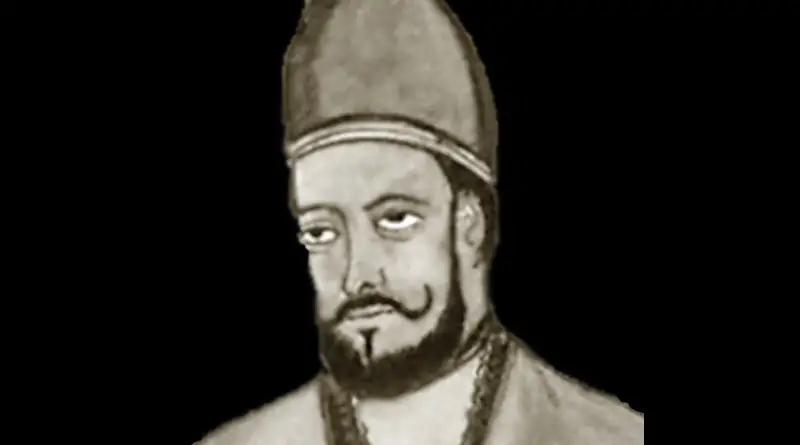
The Cause and Object of Akbar’s Rajput Policy:

Farsighted Akbar adopted a broad-based policy towards all Hindus and Rajputs and gave up the policies like oppression, disparity etc. There are some deep-rooted reasons behind these policies.

Firstly, the Hindus and Rajputs were the majority in India and without their help and cooperation, the administration would be difficult and the Mughal empire would not exist.

Secondly, the Mughals were immigrants in India. So their main enemy and rival was the Afghans of India. Though the Afghans became weak after the death of Sher Shah, yet, they were quite prominent in Bengal, Bihar and Malwa.

For this reason, the help of Rajput was absolutely necessary to subdue the Afghans. Thirdly, Akbar had doubt in his mind about the loyalty of the Mughal aristocrats.

Because, Bairam Khan, Shah Abdul Khan Mali, Adam Khan, Abdullah, Khan Uzbek, and the relative Mirza revolted against Akbar though initially, they were loyal to Akbar. For this reason, also, he relied upon the power of Rajputs.

Historian Iswariprasad has beautifully explained, “There could be no Indian empire without the Rajputs, no political or social synthesis (composition) without their intelligent and active co-operation.”

Different steps are taken for establishing a friendship with the Rajputs:

Akbar, for achieving his goal, took some positive steps to establish friendship with the Hindus, especially with the Rajputs. During the 350 years of Sultani rule in Delhi, different policies of disparity were taken against the Rajputs and the Hindus.

No Rajput personnel was engaged in any royal post. But Akbar, abolishing such a policy gave equal rights to the Hindus and Rajputs with the Muslim personnel.

It was an important event undoubtedly for this attitude of tolerance and coherence towards ‘the Rajputs. Akbar built up the security of his empire by establishing marital relationships. Akbar himself in 1562 A.D.

Married the eldest daughter of Bihari Mal, the king of Ambar (Jaipur) Jodhabai, whose son Selim married Manbai the daughter of Bhagawan Das, son of Bihari Mal in 1585 A.D.

Akbar recruited many Hindus and Rajputs, in his army, almost more than half. He used to appoint only Rajputs in high government posts. King Bhagawan Das and King Mansingh were appointed as chiefs of army staff.

Among other Rajputs and Hindus Todarmal and Birbal achieved high government posts. Akbar gave full religious independence to the Rajputs and Hindus. He gave open permission to Hindus to construct new temples, renovation of old temples, and to perform other religious rituals independently.

He did not destroy any idols or temples during his political expedition. Akbar used to attend physically Hindu ceremonies like Holi, Dewali, Dashera etc.

He had to be aggressive to Mewar, Ranthambore, and Kalinjor states though the majority of Rajput power like Jodhpur. Jaipur, Bikaner, Jaisalmer, Bundi etc. surrendered to him.

But after the battles were over, he gave special relief and advantage to those Rajput leaders who surrendered and showed loyalty to him. Though he was a Sunni Muslim at his early life, yet his religious broadness and religious tolerance brought a new dimension in the Mughal empire.

A sympathetic, noble, liberal-minded and righteous ruler like him is very rare. He made the ‘Sulh-i-Kul’ policy popular to abolish the disparity from the country of Dar-ul-Islam and ‘Dar-ul-Harb’. After the propagation of Din-i- Elahi, in 1582 A.D.

vegetarian diet, or monotheism, charities became part and parcel of his religious life. The orthodox religious rituals and the dominance of the priests were replaced by Akbar’s rational and logical religious activities.

Chapter 5 The Mughal Empire The administrative System Of Akbar

As a main maker of the Mughal administration, Akbar was the introducer of a broad-based, religiously impartial and welfare administration.

According to historian Jadunath Sarkar, Akbar had been able to combine Indian philosophy with Arabian and Persian philosophy. Dr Iswariprasad said that Akbar combined both the inland and the foreign rules with his own.

Accepting this statement, Razvi said, “The administration of Akbar was a mere imitation of Sher Shah’s”. But his administration appeared to be the best in the mediaeval age though it lacked innovative powers to some extent.

Central administration: Akbar was not wayward though he was an autocrat. He did not oppress the people. He always adopted the policy of people’s welfare. And for that reason, he used to take advice from his different central ministers for the sake of smooth ruling.

These ministers were

  1. Vakil-i-Mutlakh (Prime Minister)
  2. Diwan-i-Wazirat (Finance Minister)
  3. Mir Bakhsi (Defence Minister)
  4. Sadar-us-Sudur (Minister of Religion and Charity)
  5.  Mir Saman (Home Minister)
  6. Muhtasib (Policy and Ideology)
  7. Kazi-ul-Kazat (Chief Justice).

There were also other officers to assist the central administration. Those are–Ariz-i-Mubarak, Mirbahari, Mir Araz, Mir Manzil, Mir Tozak, Mustafi, Daroga-i-Gusalkhana etc. Thus Akbar organised his central administration.

Regional administration:

According to Abul Fazal, Akbar divided his empire into 15 Subhas or states. Some also said that number of such Subhas was 12. Subhas were divided into some districts and districts were further divided into panchayats.

The important Subhas, that Akbar developed were Bengal, Bihar, Allahabad, Ayodhya, Agra, Lahore, Delhi, Malwa, Multan, Kabul, Kandahar, Gujarat, Ajmer etc. The ruler of the subha was called Subadar, Najim or Sipahsalar.

Subedar means Governor. There were officers like Diwan, Kazi, Bakhsi, Sadar and Wakinabish to help the Governor. Just like Sher Shah, he employed two classes of staff in every district. They were Fouzdar (Police) and Amal Guzar (Minister for land revenue).

“WBBSE Class 7 History Chapter 5 solved question paper”

There were employees named Fouzdar and Diwan in the district. There were employees like Patwari, Kanungo, Mukaddam, Matwal etc. in the village. Akbar used to communicate directly with the regional administration.


WBBSE Notes For Class 7 History Chapter 5 The Mughal Empire Adimistration


Judiciary:

Akbar used to be present personally in conducting the judiciary proceedings. ‘Kazi-ul-Kazat’ (the Chief Justice) gave his final judgement. Generally, the judgements were impartial and without any prejudice.

Besides the chief justice, there were also ‘Mir Adal’ and ‘Sadar-us-Sudur’ to assist him. Panchayets also performed judiciary proceedings in the villages. The proceedings were done in accordance with the Hindu and Muslim customs respectively.

Mansabdari system:

Akbar introduced the Mansabdari system in 1577 A.D. He introduced this system as a base of the military and civil judiciary systems. ‘So each Mansabdar used to keep soldiers and horses.

The word ‘Manṣab’ means the rank of the post. Mansabdari system was divided into 33 classes according to rank. The lowest masabu was 10 and the highest was 10,000 which increased to 12,000 in the period of Akbar.

Each Mansabdar had to maintain a fixed number of cavalry. For the reimbursement of these expenses, they were paid salaries in cash. In some cases, salaries were paid in the form of allotting land instead of cash.

Thus the Mansabdari system was replaced by the Jaigir system. The salaries and promotion retrenchments of the Mansabdars were dependent upon the emperor.

Chapter 5 The Mughal Empire Noorjahan

The meaning of the word ‘Noorjahan’ means the light of the world. The actual name of Noorjahan was ‘Meherunnisa’. Noorjahan was born in a desert near Kabul in 1578 A.D. Mirza Ghyas Beig, an aristocrat of Tehran was the father of Noorjahan.

But Ghyas Baig started a long march towards India with his children departing his motherland. He left behind his daughter near a tree because Noorjahan was born in his bad days.

WBBSE Notes For Class 7 History Chapter 5 The Mughal Empire Noorjahan

Shaik Mahmud, a religious man took Mirza Ghyas into the royal court of Akbar and provided him with a service. In the meantime prince Selim fell in love with young and beautiful Noorjahan and wanted to marry her.

But Akbar was against this proposal and gave the marriage of Noorjahan with the Afghan Fauzdar of Burdwan Alikuli Baig. After that Jahangir (Selim) became the emperor of Delhi and imprisoned Noorjahan in his harem for four years after killing Alikuli Baig in 1607 A.D.

He married Noorjahan in 1611 A.D. and gave her the honour of the prime queen ‘Mahishi’. He gave her the title ‘Noormahal’ or the light of the world. Later on she became famous as ‘Noorjahan’.)

Chapter 5 The Mughal Empire Jahangir 1605 To 1627 A.D

During the period from 1611 A.D. to 1627 A.D. the entire activity of Jahangir was conducted and supervised by Noorjahan. During this time, she promoted her father Mirza Ghyas Beig and her two brothers Asaf Khan and Itmad Khan to very high posts.

The vacuum which was caused by the weak administration of Jahangir was filled up by the skill and efficiency of Noorjahan. She became Padsha Begum by her own diligence.


WBBSE Notes For Class 7 History Chapter 5 The Mughal Empire Jahangir

She proved her excellence in the fields of literature, art, politics, weaving, conducting wars on elephant back, hunting of tigers with her husband, archery etc.

Though she was very simple, kind and amiable in nature, yet she could understand the complicacies of politics very easily. According to Dr Iswariprasad, the impact of Noorjahan on Jahangir was uncanny and evil.

Dr Tripathi said that the influence of Noorjahan upon Jahangir was moral, emotional, psychological and probably Buddhist. Noorjahan took over the entire responsibility and charge when Jahangir became sick.

“Mughal Empire achievements and impact on India Class 7 WBBSE”

So it is called that she was not an evil power but a fortunate power. Towards the last phase, she constituted ‘Noorjahan ‘Chakra’ when she felt that the same conspiracies were being framed against her.

The constitution of this chakra was effective in her domestic cycle also. At last, her brother Asaf Khan and his son-in-law Khurram (Shah Jahan) dethroned Noorjahan and made Khurram the emperor of Delhi.

After departing from politics, Noorjahan lived for 18 years more. At this time, Shahjahan granted a yearly aid of Rs. 2 lacs to his stepmother Noorjahan. She died in 1645 A.D. and was buried beside the tomb of her husband Jahangir in Lahore.

Chapter 5 The Mughal Empire Baro Bhunya

During the reign of Jahangir, Islam Khan of Sipahasalar of Bengal first killed the Afghan leader Alikuli Baig and handed over his wife Meherunnisa to Jahangir. Then he took the initiative to subdue the 12 zamindars of Bengal.

There were both Hindu as well as Muslim zamindars among those 12. The meaning of the word Bhunya is a feudal king. Though it is called Baro Bhunya, yet there were many more zamindars in that group.

But main Bhunyas were

  1.  Isha Khan and his son Musha Khan. They had zamindaris in Bagura, Pabna, Rangpur and Maymensingh.
  2.  Pratapaditya. His father’s name was Srihari. They had their zamindaris in Jessore, Khulna and Bakharganj.
  3. Kedar Ray the son of Chand Ray was the zamindar of Bhusna.
  4. Usman Khan, the son of Afghan leader Katlu Khan was the zamindar of Srihatta.
  5. Raghunath was the zamindar of Susanga.
  6. Ramchandra was the zamindar of Bakla.

The majority of the Bhunyas were in the habit to oppress the people. Poet Rabindranath Tagore in his book ‘Bouthakuranir Hat’ had described the cruel and selfish nature of Pratapaditya.

The Bhunyas struggled for their existence against the Mughals and foreign powers. Pratapaditya fought and died in the battle of Khagraghat against the Mughals. We can know many things about the Bhunyas from the book ‘Baharisthan’.

Chapter 5 The Mughal Empire  Shah Jahan 1627 To 1658 A.D

After the death of Jahangir, the fourth Mughal emperor, (28th October 1627 A.D.) his son Shah Jahan became the emperor. During his 30 years of rule, political peace, economic prosperity, literature, art and sculpture reached the apex.

This period is called the golden age in the history of the Mughals. Shah Jahan fulfilled with beauty the empire, which was founded by Babur and Akbar. Though Shah Jahan became the creator of the golden age simply by following the paths of his ancestors.


WBBSE Notes For Class 7 History Chapter 5 The Mughal Empire Shah jahan

Akbar established political unity and his domination all over India. As a result, Shah Jahan did not face any difficulty in other political issues. He only could not recover the Kandahar state which was lost by the Mughals at one time.

Even then the political unity helped Shah Jahan to cultural advancement. Shah Jahan built Tajmahal by the side of the Yamuna river in loving memory of his beloved wife Mumtaj and he took advice from architects of different countries of the world.

Chapter 5 The Mughal Empire Aurangzeb 1658 To 1707 A.D

Historians have described the regime of Aurangzeb as a period of extreme expansion as well as a period of decline. Aurangzeb built up a very big empire by conquering a vast area. But at the same time, the number of revolts that happened was maximum in his time.

Aurangzeb was appointed Subedar in South India during the regime of Shah Jahan. He used to keep a sharp lookout towards South India after being the king in 1658 A.D. He spent the last 25 years (1682-1707 A.D.) out of his 50 years of rule in South India.

WBBSE Notes For Class 7 History Chapter 5 The Mughal Empire Aurangzeb

He stayed in South India for such a long time because of two reasons-

(1) To subdue Bijapur and Golconda the two shia states and
(2) To destroy the powerful Marathas.

Aurangzeb sent three expeditions in 1665, 1680 and 1682 A.D. headed by Jaisingh, Dilir Khan and Shahjada Azam. But all of them failed.

“WBBSE Class 7 The Mughal Empire mind map and key points”

At last, Aurangzeb invaded Bijapur state and in that occasion, Sikandar, the young ruler of the Shahi dynasty saluted him and surrendered. He promised to pay a subsidy of rupees one lac per year.

The tradition of the Shahi dynasty for 200 years which was founded by Yusuf Adil Shahi abolished completely on 12th September 1686 A.D. with the fall of Bijapur.

Abul Hasan the last sultan of the Qutabshahi dynasty of Golconda entrusted his empire to two Hindu ministers Akkana and Madana. He used to live in utmost comfort.

Marathas were in favour of Abul Hasan so Aurangzeb at first captured Hyderabad by his commander Shah Alam. At this time, the Mughals captured the Golconda fort by giving bribes to Mir Mohammad Ibrahim, the commander of Golconda.

Zabti system:

Akbar’s revenue minister Todarmal was also the revenue minister of Sher Shah. Todarmal used to determine the revenue by surveying the land in 1582 A.D. It was known as the ‘Zabti system’ in the Mughal period.

He introduced ‘Elahigaj’ for surveying land. Todarmal introduced three kinds of revenue systems. There were-Zabti or’Dahshala, Ghallabakhsi and Nasaq. Jabti system was in vogue in the entire North India.

According to this system, the land was divided into four groups.

(1) Polaz (Land for cultivation throughout the year).
(2) Parauti (The land which was kept uncultivated to make it fertile).
(3) Chachur (The land which remains idle for 3/4 years).
(4) Banzara (The land which remains idle for more than 5 years).

Ghallabakhsi system was in vogue in Kabul, Kandahar, Kashmir and Sindhu Pradesh in North- Western border of India. The Nasdaq system was in vogue in Gujarat and Bengal. Under this system, the land revenue were collected without surveying the lands.

“Mughal architecture and culture Class 7 History WBBSE”

Under all the system of land revenues, 1/3rd of the produced crops were collected as land revenue. These taxes were paid either in cash or by crops.

Apart from land revenue, there were ‘toll tax’, ‘water tax’, ‘building tax’, ‘trade duties’, ‘Nazarana’ and ‘Zarimana’ and in this process. The taxes were collected in the Treasury.

The main staff of the revenue department was Diwan (Revenue minister), Amin (Collecter), Bitikchi (Revenue accountant), Patwari (Local staff) Mukaddam Sadar (Principal officer for charity and religion) etc.

WBBSE Notes For Class 7 History Chapter 7 Lifestyle And Culture Of sultanate And Mughal Era

Chapter 7 Lifestyle And Culture Of sultanate And Mughal Era Bhakti Movement

Origin:

The impact of the Bhakti movement brought a revolution in life as a whole in the history of the mediaeval age. The revolution brought by the Bhakti cult in religious life during the Sultani age was a unique event.

people raised their voices against the superstition and conservatism of Hinduism after being influenced by the democratic policies of Islam. In this age, the Bhakti cult was a new theory against eternal conservatism.

“Lifestyle and Culture of Sultanate and Mughal Era summary for Class 7 WBBSE”

The main say of this theory was that Bhakti itself was the only main gateway of permanent relief. The supernatural union of Atma and Paramatma was the main object of Bhakti and work only brings relief of Atma.

Read and Learn More WBBSE Notes For Class 7 History

It is not achieved through yagnas and other religious rituals. The Bhakti movement became popular in India between the 7th to 12th centuries. Historian Gearson said that the ideals of the Bhakti cult had percolated into the Hindu religion from Christianity.

Prof. Yusuf Hasan thought that the Bhakti cult originated from the examples of Bhakti towards Allaah in the Islamic religion. Some said that Veda was the source of the Bhakti cult.

“WBBSE Class 7 History Chapter 7 important questions and answers”

Many people thought that different religious texts of Hindus are the main source of the Bhakti movement as this Bhakticult were mentioned in religious texts like Vishnupuran, Geeta, Bhagabat, Ramayana and Mahabharata.

Main Tenets:

The specialities of the Bhakti cult were

  1. To believe in monotheism.
  2. A man can succeed through yoga by real. Bhakti.
  3. All men are equal and they can build up social equality and fraternity by giving up hate, and anger to each other.
  4. A real guru can give the impression of God.
  5. To worship Rama and Krishna.
  6. To hate worshipping idols, the dominance of the priests and the caste system.
  7. To concentrate and emphasise reasonable behaviours and acts rather than upon superstitions, useless rituals and complicated religious processes.

WBBSE Notes For Class 7 History Chapter 7 Lifestyle And Culture Of sultanate And Mughal Era

Chapter 7 Lifestyle And Culture Of Sultanate And Mughal Era Different Propagators Of Bhakticult Movement

Shankaracharya and Ramanuja:

Shankaracharya by his ‘Adaytiyabad’ and Ramanuja by his ‘Bishistadaytiyabad’ tried to re-establish Hinduism in South India. Jagat Guru Shankaracharya built Joshi Math, Gobardhan Math, Sringeri Math and Sarada Math in different places of India just to save Hinduism from the clutch of Buddhism.

WBBSE Notes For Class 7 History Chapter 7 Lifestyle And Culture Of sultanate And Mughal Era Sankaracharya and Ramanuja

Ramanuja was born in 1166 A.D. in Madras. There are many followers of him in South India. The followers of ‘Shaiva Nainar’ and ‘Vaishnava Albars’ inspired people to worship Shiva and Vishnu respectively although Ramanuja was considered as the main person behind the Bhakti movement in South India.

Ramananda:

Ramananda was the main disciple of Ramanuja. He was born in a Kanyakubja Brahmin family in Allahabad towards the end of the 14th century. His idols were Sri Ramchandra and Sitadevi. He was the founder of the “Ramat Vaishnab” community.

He said that it was possible to get permanent relief if one worships Rama and Sita. Ramananda took the first initiative to propagate the Bhakti cult from North to South India. He propagated his theory in Hindi.

He made many people as his disciples irrespective of any gender and creed. The main disciples among the 12 ones were Kabir (Muslim weaver) Ravidas (Cobbler), Sadhan (Slaughter), Sona (Barbar) etc.

Ramananda used to say “Jatipati Puchhai Na Koi/Hari Ko Bhajo So Hari Ka Hoi.”

Namdeva (1270-1350 A.D.):

Namdeva was at first the follower of Vishnu. According to him, only worshipping God in a clean mind brings the ultimate. He did not find any difference between Hindus and Muslims.

WBBSE Notes For Class 7 History Chapter 7 Lifestyle And Culture Of sultanate And Mughal Era Namdeva

Ballavacharya (born in 1479 A.D.) :

Bailavacharya was born in a Brahmin family near Varanasi. His parental house was in the South. He came to the royal court of king Krishnadev Ray of Vijayanagar after meditating for Krishna in Mathura and Brindaban for some time.

In this time, he was propagating Vaishnavism in the South. He said that serving to Krishna and serving to animals are the causes of the union of Atma and Paramatma. In this process, souls became free.

WBBSE Notes For Class 7 History Chapter 7 Lifestyle And Culture Of sultanate And Mughal Era ballavacharya

Bhakta Dadu (1514-1603 A.D.):

Some said that Bhakta Dadu was born in a wealthy Muslim family in Jounpur in Uttar Pradesh and some said that he was born in Ahmedabad of Gujarat. He became a disciple to Sheikh Budhan, a Sufi Saint.

He realised the cream of religion after travelling through the entire India. He considered Hindu-Muslim, highs and lows as the same and equal. He used to say “I am neither a Hindu nor a Muslim. I am just a saint of Almighty God.”

“Cultural life during Sultanate and Mughal period Class 7 WBBSE notes”

According to John for 40 days between Akbar and Dadu in ‘a solitary field near Fatehpur Sikri on the subject of human life.

Kabir:

Kabir was the main disciple of Ramananda. Kabir was born in 1398 A.D. Some historians claimed that Kabir was contemporary to Sultan Sikandar Lodi. He was an illegal son of a Brahmin widow lady.

A Muslim weaver named Niru brought him up when he was abandoned by his mother beside a pond. Hence, right from childhood, a sense of coexistence between Hindus and Muslims developed in his mind.

WBBSE Notes For Class 7 History Chapter 7 Lifestyle And Culture Of sultanate And Mughal Era Kabir

He said, that Hindu and Muslim are two pots made out of the same soil. Ram, Rahim, Hari, Allaah, Sai, and Iswar are all the different forms of one and only Parameswar.

Siddhi can not be achieved by simply worshipping the Gods or Namaj or by pilgrimage. His ideas and advice had been mentioned in ‘Doha’ written by him in Hindi. The followers of Kabir are known as ‘Kabirpanthi’.

Historian Tarachand commented, “Kabir’s main object was to propagate the ideology of love irrespective of any religion or caste.”
Guru Nanak

Nanak, the first Guru of Shikism (1469-1538 A.D.) was born in Talbandi village (Now Nankhana) of Lahore in the year 1469 A.D. in a Kshatriya family. He travelled to Srilanka, Mecca, Bagdad etc.

To know the real truth in life and the world by leaving apart his family, though he married in his first life. Finally, he realised that ‘Mokhhaypalav’ is not possible by worshipping idols, pilgrimages or religious rituals.

WBBSE Notes For Class 7 History Chapter 7 Lifestyle And Culture Of sultanate And Mughal Era Guru nanak

He said to devote to God in the form of truth. But before doing that one should do ‘Nam’ (Pray to God) ‘Dan’ (Serve to animals) and ‘Sthan’ (To purify one’s own body. This religious ideology put forward a bold step in social equilibrium.

This ideology was against caste disparity and untouchability. He said that social and religious life gets new momentum if everyone respects the religion of the other.

His followers are known as Sikhs and his advice had been compiled in ‘Granthasaheb’ or the Original Text in Punjabi gurumukhi language.

Srichaitanya (1486-1533 A.D.)

Srichaitanya was born in 1486 A.D. in a Brahmin family of Nabadwip. It was ‘Dolpurnima’ night. His childhood name was Biswambhar and his parents used to call him ‘Nemai’ affectionately.

“Class 7 History Chapter 7 WBBSE Sultanate and Mughal lifestyle detailed notes”
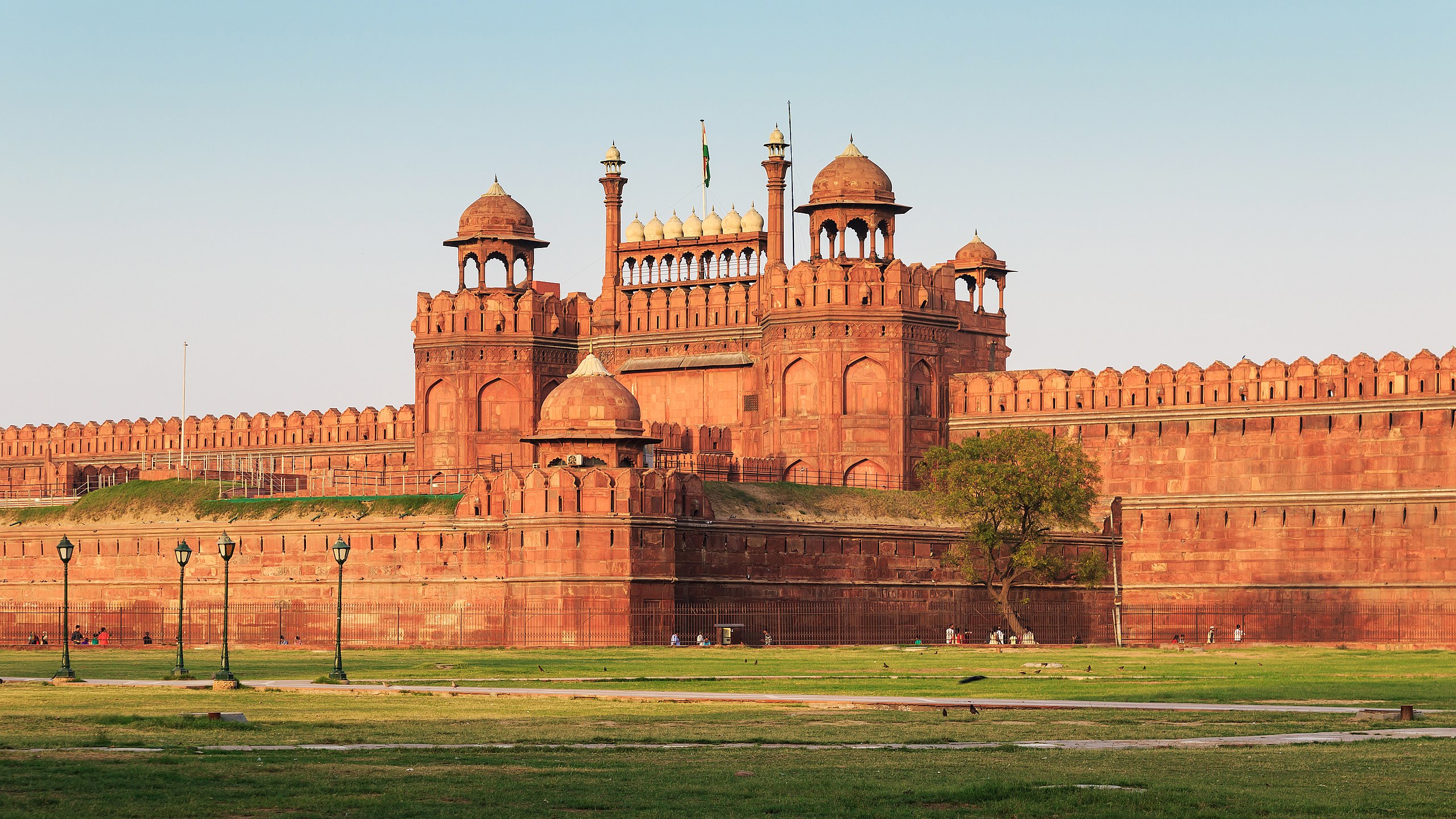
The neighbours used to call him ‘Gouranga’ because of his fair complexion. His mother was Sachidevi and his father was Jagannath Mishra. He lost his father at the age of eleven.

He was appointed as a teacher in ‘Tol’ after completing his studies at the age of twenty. In this time, he became famous by defeating pandit Keshab Kashmiri by. logic. He took Sikhs in Krishna Mantra from Iswar Puri when he was twenty-two.

WBBSE Notes For Class 7 History Chapter 7 Lifestyle And Culture Of sultanate And Mughal Era Sri chaitanya

At the age of twenty fourth became a saint by departing his wife Vishnupriya and adopting the name, Srikrishna Chaitanya. During the last 24 years of his life, he spent in ‘Dharmaprachar’.

He used to say ‘Trinadapi Sunichena Tarorpie Sahishnuna. Amanina manadena Kirtaniya sada Hari.” According to him, all creatures in this world are the creations of Srikrishna.

One should be as soft and as tolerant like a grass for rendering kind, Love, Bhakti and sacrifice to living beings. Yaban Haridas, Nityananda, Sribas, Rup, Sanatan and Jeeb Goswami, Prataprudradev, again-Madhai etc. were the main followers of Neo Vaishnavism founded by Sri Chaitanya.

Dr Sukumar Sen told that he had brought a new rise in literature, religion and philosophy in Bengalee life. Bimanbehari Majumder said that Srichaitanya died in Puri immaturely on 9th July 1533 A.D. at the age of only 48 years.

Mirabai and Shankardeva:

Mirabai was born in Kurki Village in Jodhpur approximately in the year 1504 A: D. and died sometime between 1563-73 A.D. Historian Col. Todd said that Mirabai was the wife a Rana Kumbha, who was contemporary to Akbar.

Some said that King Bhojraj, the son of Sangram Singha was her husband. Many historians commented that she was contemporary to Akbar, Bhaktamal and Rup Goswami.

WBBSE Notes For Class 7 History Chapter 7 Lifestyle And Culture Of sultanate And Mughal Era Mirabai

Though Mirabai was a housewife, yet she came to Mathura and Brindaban by leaving behind the royal palace. She became very much involved with the love of Giridharilal Srikrishna and devoted herself completely.

She said that it was possible to reach God by love, bhakti and respect. The Bhajan’s of Mira written in Brajabuli Language are invaluable treasures in Bengali literature.

During the same time, Shankardeva, a Bhakticult leader from the Brahmaputra valley of Assam is worth remembering. He was a very sincere propagator of Bhakicult.

Chapter 7 Lifestyle And Culture Of sultanate And Mughal Era Consequence And Importance Of Bhakti Cult

Bhakticult registered a far-reaching effect on society, religious life, politics and culture of India.

Firstly, due to the influence of the Bhakti cult, the culture of literature started in many regional languages apart from ‘Douha’ of Kabir, ‘Granthasaheb’ of Nanak, ‘Chaitanya Charitamrita’ of Krishnadas Kabiraj and ‘Chaitanya Bhagabat’ of Brindaban Das.

Secondly, the disparity between men and women and between high and low decreases to a great extent. The Asuryampashya ladies of the mediaeval age got the taste of religious and social independence.

“WBBSE Class 7 History Chapter 7 solved question paper”

Thirdly, the religious complications and outwardly showmanship diminish to a great extent. As a result, religions are open for everybody. Worship of idols and dominance of the priests were reduced considerably,

Fourthly, due to the influence of the Bhakti cult leaders, Hinduism became much broader and more friendly. The incidents of the low-caste Hindu people being converted to other religions were reduced.

Fifthly, the influence of the Bhakti cult was far-reaching for the improvement of Hindu- Muslim relationships.

According to Dr Nemaisadhan Bose, it had influenced political leaders to a great extent. The rulers took the ideology of the welfare of the people by accepting humanitarian welfare. Akbar himself was a glaring example.

Sixthly, according to Dr Ramesh Ch. Majumder, without the Bhakti movement the darkness of the Bengalee life would not have been abolished. Prof. Amaiesh Tripathi too, thought that the Bhakti movement was a fruitful event in the history and tradition of the Bengalee race.

Chapter 7 Lifestyle And Culture Of sultanate And Mughal Era Sufi Movement

Origin:

As the Bhakti movement was against the religious conservatism and superstitions of Hinduism so also the Sufi movement was against the Muslim religion. The rise of Sufism was initiated from the 10th century.

But it was fully bloomed in the 13th, 14th and 15th centuries. But the conservative Ulemas did not like the Sufis because they were broad and wide. Sufis did believe that all religions are “the manifestation of the desire to know the truth”.

Sufism is the refined form of Islam. Sufis came to the picture in the world of Muslims after the death of Mohammad. The main source of Sufism was ‘Alhadiz’ the text of compiled advice of Hazrat Mohammad and holy the Koran.

It is a mixed theory. Some historians said the Shiya Muslims of Persia became influenced by Buddhism while they were travelling through different parts of Asia.

So from the synthesis of Buddhism, Hindu Vedanta and other religions, Sufism evolved. The philosophy of nonviolence, dedication to God, sacrifice, yogas, and fasting of Sufies gave rise to this ideology, Abul Fazal said it was Koran, and not Buddhism, Hindu and Vedanta, was the main source of Sufism.

Prof. Yusuf Hasan similarly connected that rather Bhakticult evolved from the ideology of Islam. For this reason, Sufism is called ‘a mystic sect of Islam’.

The word Sufi has been derived from the word ‘Sufi’ or ‘Safa’. The word Sufi means who wears heavy woollen clothes. And the word Safa means to lead a holy life. So the Sufi Saints and Pirs advised people to lead a simple and sacred life.

Main Tenets:

The teaching of Sufism is ‘God is one and everything is his parts’.

The basic tenets of Sufism are

  1. God is only one and men are his sons.
  2. Blessings of God can be achieved if one loves people: An English poet said ‘To love God is to love mankind’.
  3. All religions are beautiful and roads to reach God.
  4. All men are equal irrespective of race religion and caste.
  5. Honest living helps get the rituals company of God rather than performing religious formalities. And
  6. Spiritual advancement is possible by logical and reasonable thoughts. The philosophies like God is one sympathetic towards mankind etc. got a berth in Sufism. Different religions, Iswartatta etc. are the basic theory of the ‘attachment-free’ theory. The specialities of Sufism were syntheses, broadness, application, humanity etc.

Duties:

The Muslim Sufi saints are called ‘Pir’ or ‘Darbesh’. Sufis thought that without any Guru devotion to God was impossible. For this, some instructions are to be observed

  1. Namaj (Prayer).
  2. Roza (Fasting).
  3.  Hazz (Pilgrimage to Mecca).
  4. Toujakul (To be a bachelor).
  5. Basal (Achieve freeness).
  6. Sabar (Tolerance for other religions).
  7. Fakir (To observe poorness).
  8. Juhud (Kindness).
  9. Tauba (Repentation of doing any sin to guru).

The sufi saints used to advise to observe these instructions for building up a healthy society.

Leaders:

The Sufi saints Rabia and Mansur-Bin-Hazzaz of Basra port propagated Sufism in the 7th century with the object of the union of man and God.

The subsequent propagators were Al-Gazali, Khoaja Jalall, Mainuddin Chisti, Nizamuddin Aulia, Shihabuddin Surabardi, Hamiduddin Nagori, Nasiruddin Chirag, Baktiar Kaki, Hazrat Kazi, Hazrat Fariduddin, Nuruddin, Syed Ali Hamjani etc.

Division:

Two Sufi communities on the basis of original Sufism became popular-

  1. Chistiorder and
  2. Surawardiorder.

Towards the end of the 15th century, many other factions developed like Kaderi, Kalandari, Sattari and Nakshbandi. The broad-minded Sufi Saints were known as Be-Sahara and comparatively more conservative Suffis were known as Ba-sphere.

The Sufis were divided into 15 Groups (Shilsila) for the publicity of Sufism. For this reason, khanka or dargahs were built in different places.

Chisti Community:

The propagators of the Chisti community were much more broad-minded. Christie’s were quite popular in Punjab, ‘Rajputana, Sind, Delhi, Uttar Pradesh, Bengal etc. Mainuddin. built his darga in Ajmer. He founded Chistiorder in 1192 A.D.

He propagated Sufism by making Ajmer as the centre. He used to advise his followers ‘Be broad like a river, be affectionate like the sun and adopt the hospitality like the earth’.

Qutubuddin Baktiar Kaki, his main disciple, got respect from Illtutmis. Nizamuddin Aulia started propagating Sufism coming from Afghanistan to Delhi. He built a Darga in Delhi in 1236 A.D. with the cooperation of Alauddin Khalji.

Khoawaja Shahjalal, Nasiruddin Chirag was his main followers. ‘The Parrot of Hindustan Amir Khasru described Nasiruddin as Chirag-i-Delhi or the light of Delhi.

The propagators of the Chisti ideology believed that money was the main constraint of religious thought. They thought that policies also was harmful for religious life. Sirajuddin expressed these views in Bengali in his book ‘Akhisiraj’.

These saints did not think that money and politics were harmful for religion. Hence they had direct interaction with politics. This ideology was propagated in Punjab, Multan and Bengal.

Suhrawardi Community:

The propagation of the Suhrawardi order started after 1204 A.D. Shihabuddin was the founder of this ideology. His main disciple was Hamid Uddin Nagori. But the popularity of this ideology was comparatively less.

The Sufi communities like Kaderi, Sattari and Nakshwandi order rose in the 15th century. They all followed the regulations of Shariyati. But the Kalandari order did not recognise the Shariyat.

The broad-minded social justice and equilibrium inspired the lower castes of Hindus.

Impacts:

The influence of Sufis were there in the fields of society, religion, politics, culture etc. Historian Taher Ali said that the welfare activities of the Sufis influenced society.

By analysing the influences of Sufi it is found-

  1. Due to religious coherence between the Hindus and Muslims the deities like Banabibi, Olabibi, Jholabibi, Gazibaba, Dakshin Ray, Ma Shitala, Dharma Thakur, Satyapir, Jayapir, Manikpir etc. became Gods and Goddesses of everyone.
  2. The literature and culture became much improved. This influence was noticed in the writings of Amir Khasru, Omar Khayam, Rumee, Hafez, Shaikh Shadi etc.
  3. Such influence were also noticed in the Indian rulers for setting up the ideology of religious coherence. Sher Shah, Alauddin Khalji, Akbar, Shah Jahan etc. were influenced by Sufism.
  4. Sufism had contributed towards the exposure of the Bhakti cult.
  5. The religious tolerance of Muslims increased. Akbar got the concept of Din-i-llahi from Sufism. Malik Mohammad Jaysee etc. used to sing ‘Sam Sangeet’ written on the basis of Sufism.

According to Dr Iswariprasad, “Sufism is very much like Vedantic philosophy which teaches that the individual souls are only manifestations of the supreme soul in which they are finally immersed.”

Chapter 7 Lifestyle And Culture Of sultanate And Mughal Era Society And Culture Of The Sultanate Period

There was a massive change in the society, economy and culture of India as a result of 300 years of Sultanate rule. This change showed a peculiar assimilation of Hindu and Islamic customs and rituals, food and entertainment, art and culture.

Society:

The unity of Hindu and Muslim cultures can be understood by a discussion of the society of the Sultanate period. The majority of the aristocrats of the Sultanate were the Amirs and the Omrahs.

Besides, a few high officials were also considered as aristocrats. There were Arabs, Persians Turks, Habshees, Afghans and Egyptians among the aristocrats. Both Hindus and Muslims were present among the merchants.

They comprised the middle class through the word middle class was not common then. Doctors, clerks, and shopkeepers also belonged to this class. The peasants, slaves and workers formed the lowest rungs of society.

“Art, architecture, and literature in Sultanate and Mughal era Class 7”

Slavery was an essential feature of the middle age. Because slaves had prominence in that period. The Ulemas were dominant in society. They were the interpreters of the ‘Shariyat’.

Dr Qureshi says that the theocratic model of the state during the Sultanate was possible because of the dominance of the Ulemas. It is known from Amir Khasrau’s book ‘Khajain-ul- Futuah that the peasants and the workers were the deprived groups.

There was a synthesis of Hindu and Muslim cultures. A very good example of it is the marriage of a Hindu princess Devaladevi with the Muslim prince, Khijir Khan, son of Alauddin Khalji.

The picture of Hindu conservation which is found from the 11th-century account of Al- Beruni became much more rigid during the Sultanate period. The Muslim society was influenced by the early marriage, dowry system and seclusion of Hindu women.

The Parda of the Muslims was similar to the seclusion of the Hindus. The Hindu women could never see the sun, while the Muslim women had to hide their faces with a back piece of cloth. This was a regular feature of social discrimination.

There was a diversity in dresses. The Muslims used to wear long coats (Alkhallha) and Borkhas (covered dresses). The Hindus also started wearing similar dresses. The choga and the chapka became common in festivals.

Many social customs were interested in this society. A Portuguese writer referred to this mixed culture to show the economic and social progress of the period in a book named Summa Oriental.

K. M. Ashraf stated in ‘Life and condition of the people of Hindusthan’ that the changes which were introduced in the Hindusthani lifestyle in the Sultanate period became much more evident during the Mughal Age.

Culture

The main languages of the literature of the Sultanate period were Persian, Urdu and Sanskrit. The main literary works were the works of Amir Khasrau, Bidagdha Madhab and Lalit Madhab of Rup Goswami, Sanskrit texts of Jaisingh Puri, many works based on Karmamimamsa of Parthasarathi Mishra and Pradyumnasamudaya.

Amir Khasrau was famous among the Persian literate, he was known The ‘Parrot of Hindusthani’. The Upanishads or the Ramayana, the Mahabharata were translated into Persian in this Age.

The Urdu language was created by an intermixture of Persian and Hindi and many texts were written in Urdu. Besides; the famous pandit in Smriti was Vachaspati Mishra. Many of the Smritis were translated in this period.

WBBSE Notes For Class 7 History Chapter 7 Lifestyle And Culture Of sultanate And Mughal Era amir Khasrau

This helped the growth of an Indo- Islamic culture. Music also became popular as entertainment. Ragas like Meghamallar, Bhairavi, and Iman Kalyan were very popular in this age. The people had a particular attraction for classical music.

There was a synthesis of Hinduism and Islam in the society and culture. Chowgan or polo was the main game of entertainment. The Muslims learnt this game from the Hindus besides there were other forms of entertainment like horse racing, hunting, gambling etc.

There was a growth of regional literature in the Sultanate period. Books like Manasamangal and Srikrishnabijaya were written during the Iliyas Shahi and Hussain Shahi rule in Bengal.

Similarly, works like Amaktanalyada, different books written by Poddan the court poet of Raja Krishnadeva Ray of Vijayanagar had enough literary excellence. Besides, the works of Vidyapati and Chandidasa were creations of this period.

The Indo-Islamic influence was found in art architecture and sculpture. The best specimens of architecture were found in the Qutubminar of Qutubuddin, Quasat-ul-Masjid, Alai Darwaja and Jamayatkhana Masjid of Alauddin the tombs of Firoz Tughluq and Adilshah Chandminar of Ahmadnagar Jame Masjid of Daulatabad etc.

“WBBSE Class 7 Lifestyle and Culture of Sultanate and Mughal Era mind map and key points”

In the provinces, the wonderful productions were the Adina Mosque of Sikandar Shah, the Borasona and Chota sona Mosques of Hussain Shah, the Eklakhi Mosque of Nusrat Shah, Atala Masjid, Kadamrasul, the tomb of Hussain Shah etc.

Many temples were beheaded and turned into tombs at this period. In astrology, the famous Arabic astrologer Abu Masar learnt Indian astrology.

Alberuni also learnt the Upanishads and many Hindu texts, The Hindus learnt to produce calendars from Muslim astronomers. There was an improvement in the various fields of silence.

According to the Hindu nationalist historian R. C. Majumder-The Hindu and Muslim societies had a history of struggle in this country, though the main reasons were political and economic. Religious reasons were not very important.

When Muslim rule was established in Hindu dominated country, naturally there was a cultural interaction by the assistance of the Hindus and mutual coexistence, Bipan Chandra, Romila Thapar and other historians have given special emphasis on this Hindu-Muslim cultural assimilation of the Sultanate period in their famous book ‘Communalism and the writing of the History of India’.

Chapter 7 Lifestyle And Culture Of sultanate And Mughal Era Society And Culture Of Bengal In Sultanate Age

After the invasion of Bengal by Baktiar Khalji, Bengal became Muslim-dominated (1204 A.D.). Sultans had dominance over Bengal after the establishment of the Sultanate empire in Delhi (1206 A.D.)

But during the regime of Sultan Mohammad Bin-Tughluq, Bengal became free from the hands of Delhi. Samsuddin Illyas Shah set up an independent Muslim ruling in Lakshanawati or Gour in 1342 A.D. As a result, Bengal became free.

Thus an overall change in the public life of Bengal was noticed during the regime of the Illyas Shahi dynasty and later during the Hussain Shahi dynasty (1493-1535 A.D.).

Especially there had been a great change in the social and cultural life of Bengal. So the Sultanate age was particularly significant in the awakening of the Bengali race.

Society:

Illyas and Hussian Shahi rulers ruled altogether for 200 years. These rulers appointed many Hindu employees. Thus the harmony of Hindus and Muslims increased. The non-Muslim people were called ‘Jimmi’ or sheltered in the Muslim state.

Though the Muslims had the intention to convert the country in a Muslim one (‘Dar-ul-Harb’ to ‘Dar-ul-Islam’) yet the Bengal was an exception.

There was no such anti-Muslim feelings among the Hindus because Muslims did not take any policy for attacking the Hindus or destroying the temples in Bengal.

Dr Jadunath Sarkar considered that a new era had been started in Bengal from the rule of Illyas Shahi. Al-Beruni, during his visit to India, noticed the existence of a caste system, racial disparity and untouchability.

The society was dominated by the high society because of the reason Ballalsen had introduced the ‘Kulinism’. The Hindu society was divided into four classes- Brahmin, Kshatriya, Vaishya and Sudra.

There was no dearth of effort on the part of the conservative Hindus to maintain the caste system strictly. But as Srichaitannya appeared during the regime of Hussain Shah, the differences between the high and the low, Hindu and Muslim, touchable and Intouchables.

Became abolished absolutely. The wall of the difference washed away with the flood of Bhakti. This unique moment of Hindu-Muslim union or harmony never came before. According to Dr Sukumar Sen, Chaitanya awakened the Bengali race.

There developed many sub-castes during the end of the Sena dynasty. These were Kayastha, Kulin Kayastha, Teli, Malakar, Kangsabanik, Subarnabanik etc.

The Bhakti movement during the Sultanate age revolted against social narrowness, exploitation etc. and tried to establish social equality and justice.

There were systems of child marriage, burning of Sati and ignorance towards the female child in the Hindu society. These ideas and viewpoints gradually started changing and this change was a great gain for Bengali life.

But some historians thought that these customs and systems were changed just to save society from the influence of Muslims.

Pandit Madhabacharya of Vijayanagar explained these social restrictions and systems first in his book ‘Kal Nirnay’ written by him which was based upon Parashar-smriti (1335-60 A.D.)

Then pandit Visweswar wrote Madan Parijat, Kuluk wrote a note ‘Manusamhita’ and Rajhunath Shiramoni explained the reasons of different rituals in Hindu society during the Sultanate dynasty.

Muslim Ulemas also pressurised the ruler class to control the Hindus. Kazi. Mughisuddin said “The Only duty of the Hindus was to pay tax. They were destined to extreme grief and sorrow as directed by God.”
But due to the rise of Sufism and due to the appearances of Sufi saints Nizamuddin Aulia, Muinuddin Christ etc. the scope fo Hindu-Muslim harmony became wider.

Culture:

The flow of cultural evolution in Bengal during Illyas Shahi and Hussian Shahi regimes. During the Illyas Shahi regime, trade and commerce, agriculture, art etc. started developing in Bengal.

İban Batuta described Bengal in this stage as a ‘State of prosperity’. The boundary of Bengal extended up to Chilka lake of in Orissa, Kathmandu of Nepal and Kamrup in the East.

According to Dr Syed Nurul Hassan, Illyas Shah started a golden age in the history of Bengal. Due to patronage from the sultans the cultural bend in Bengal reached its highest peak and political peace and economic development were also established.

He was respectful to Pirs or Darbesh and Hindus. In his time, Pandua became the main centre of art and sculpture. Besides this in the fields of local art, sculpture and literature a new era had evolved.

So the historian Dr J. N. Sarkar told “A new chapter was opened in the history of Bengal with the accession of Illyas Shah to the throne of Lakshanabati.”
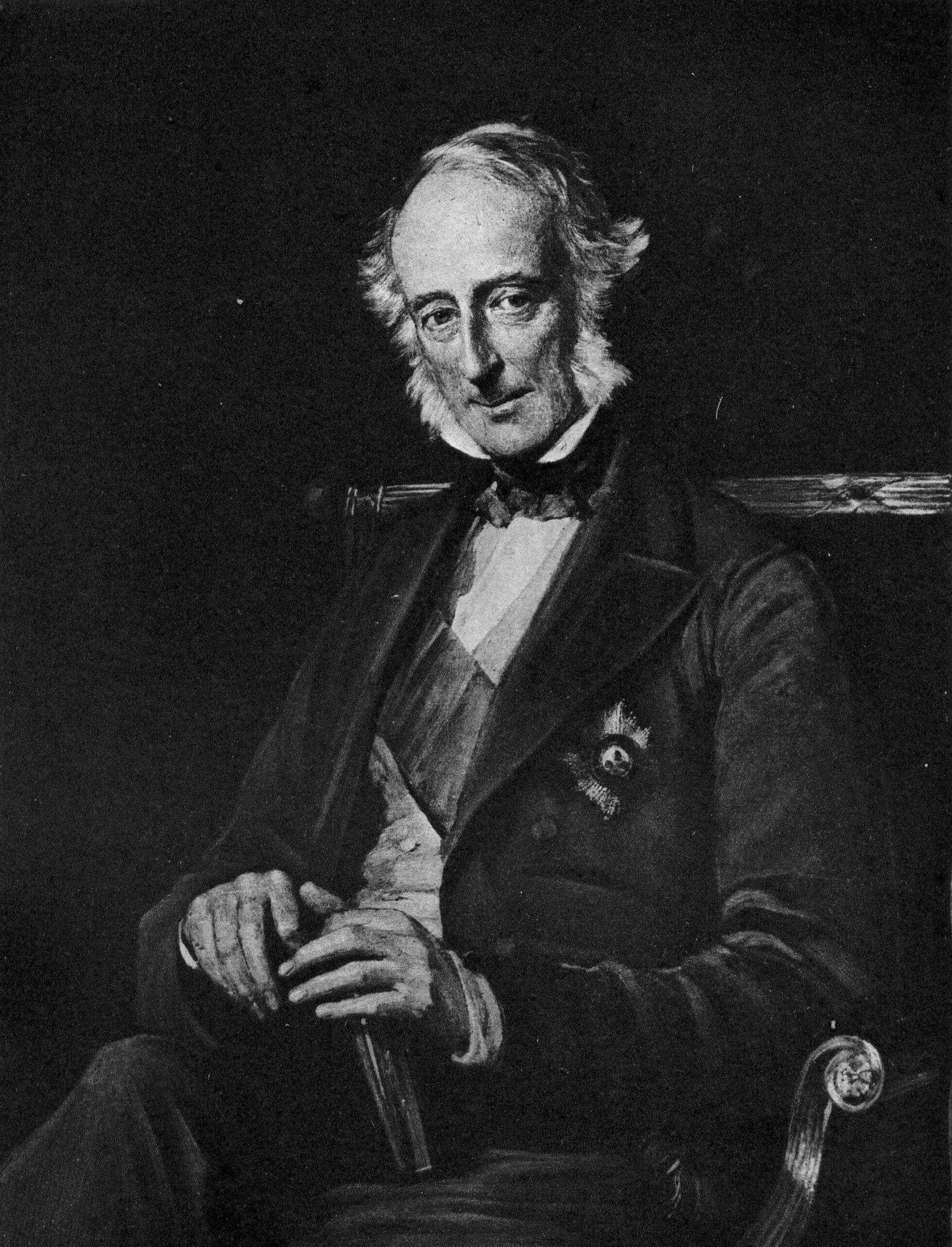
The famous Adina Mosque of Pandua was built in 1368 A.D. in Maldah during the time of Sikandar Shah. It took 20 long years to build this mosque in imitation of the mosque in Damascus. Adina Mosque was 397 ft long and 159 ft wide.

There were 400 pillars. Many arches and tombs were in that mosque. He built many mansions like ‘Akhi Siraj Uddin’ the Kotowali Darwaja, Mollasimla of Hoogly, ‘Eklakhi Mosque’ and others. Many scholars and pandits were there in his time.

During the regime of Ghiyasuddin Azam Shah, he exchanged letters with the famous poet Hafez of Persia. Ghiyasuddin built two Madrasas in Mecca and Madina. He spent 12,000 Egyptian gold coins to construct the Madrasa of Mecca.

He also built a restaurant and the Arafah canal. The poet of Mithila (“Maithili Cakucoo”) Vidyapati was his contemporary. The Chinese emperor Yurglo sent his ambassador Ma Huan to the royal court of Ghiyasuddin.

He also sent Maharatna Dharmaraj a Buddhist monk, to China (1410-1411 A.D.). Thus the cultural exchanges started between India and China. Barbak Shah was a literature-loving Sultan.

So he took the titles like “Al-Fajil” and “Al-Kamil”. As per his instruction, the pundit of his royal court Brihaspati Misra wrote some notes in Sanskrit on Pada Chandrika and some literature of Kalidasa. For this, he got the title “Pandit Sarvabhauma”.

Barbak Shah gave Maladhar Basu the title ‘Gunraj Khan’ for writing Sri Krishnavijaya and to his son “Satyaraj Khan” As per the instruction of Barbak Khan the poet Krittibas Ojha translated Sri Ram Panchali or Ramayana in Bengali.

The French scholar of Barbak Khan’s royal court, Ibrahim Kayum Fharuki wrote the “Safar Nama” Chandidas was the writer of famous Padabali literature in his time. His secularism was a famous event.

Among the members of his royal court, Kedar Ray, Mukunda, Gandharva Ray, Ananta Sen, and Káladhar are worth mentioning Sultan gave the title “Subharaj Khan” to Kaladhar. Vijay Gupta wrote the poetic novel Manasha Mangal during the time of Jalaluddin Fath.

Dr R. C. Majumder told, “Among the sultans of Bengal Rukanuddin Barbak Shah could claim his utmost supremacy from different angles.”

Culture during Hussain Shahi’s Age:

The interests of Alauddin Hussain Shah and Nasrat Shah towards literature and culture had widened a new horizon of advancement. A new chapter was operated in the field of Hindu-Muslim unity and cultural upsurge.

During the time of Hussain Shah, Nabyanaya Sangha was established in Nabadwip. Nabadwip became the main centre for the study of Sanskrit, Philosophy. Nyayashastra, Smritishastra etc.

Due to the appearance of Sri Chaitanya, the Nabavaishnaba religious emotion stirred the fields of religion, society, literature, art etc. Centring around Sri Chaitarsyadea, many texts like “Chaitanya Bhagabat” by Brindaban Das, Chaitanya Charitamrita by Krishnadas Kaviraj etc.

were written. Due to the patronages of Hussain Shah. Rupa Goswami wrote two texts namely “Lalit Madhav” and “Bidagdhya Madhav”. In this time “Srimad Bhagavad Geeta” was translated in Bengali.

The scholars like Raghunandana, Raghunath, and Basudeva Sarbobhouma appeared in this age. Besides this, Pandit Joshoraj Khan, Srikar Nandy, Sridhar, Kabindra Parameswar, Bipradas Pipilai etc. took an acute role in the cultural upsurge.

Kabindra Parameswar translated Mahabharata in short form in Bengali named “Pandava Vijay Katha” under the instruction of Paragal Khan, the ruler of Chattagram.

Srikar Nandy translated the Ashwamedh chapter of Mahabharat in Bengali under the instruction of Chhuti Khan, the son of Paragal Khan. There had been also much improvement of art and sculpture in this time.

The best examples of art and sculpture were “Dakhil Darwaja”, “Eklakhi tomb”, “Tantipara Mosque”, “The chota sona Mosque of Gour made of brick and stone, and “Bara sona Mosque” “Kadam rasul palace” of Nasrat Shah (An ornamented black stone situated on a platform with the footprints of Hazrat Mohammad) and other sculptures like Adina Mosque of Gour and Pandua.

A special study of Calligraphy was also there in this age. Impartiality and broadness in the field of religion was especially noted. Prof M. R. Tarafdar described the broadness of the Hussain Shahis even of if they were originally born in foreign countries was a rare event.

The Hindus like. Gopinath Basu, Gour Mullik, Rupa and Sanatan Goswami etc. were members of the royal court. In this time, different idols like Satyapir, Manikpir, Gazibaba, Dakshin Ray, Dharma Thakur, Olabibi, Bonbibi, Shitala Devi etc.

Were worshipped equally by Hindus as well as Muslims. Thus the era of Illyas Shahi and Hussain Shahi started a new voyage in the cultural history of Bengal.

During the 15th and 16th centuries, this new trend of cultural as well as overall upsurge brought a brilliant intellect in the life of Bengalees.

Chapter 7 Lifestyle And Culture Of sultanate And Mughal Era Sculpture And Literature In The Mughal Period

Every Mughal emperor, from Babur to Bahadur Shah II tried to improve cultural advancement apart from the political, economic and administrative attachments.

The imperial unity, political stability and economic affluence helped the Mughal emperors to improve art and sculpture, architecture, paintings, music, literature etc.

Mughal Era Sculpture:

Babur during his 4 years ruling, constructed Lodi Fort in Agra, Kabulibagh Mosque in Panipath, and Jama-i-Mosque in Rohilkhand. Besides this, he also constructed many miners, and institutional palaces in Agra, Fatehpur, Cholapure, Kiule and Gwalior.

Shershah also during his 5 years of rule built Purana Killa in Delhi, the Tomb of Sasaram and many palaces. He combined the art of Hindu, Muslim, Jain, Buddhist and Persian. During the regime of Humayun some tombs and mosques were built.

The brilliant creations like Ibadatkhana in Fatehpur Sikri, Tomb of Humayun, Deiwan-i-Am, and Diwan-i-Khas. Jama-i-Mosque, Buland Darwaja, Jodhabai Palace, Panch Mahal and Akbar Tomb were built during the time of Akbar.

Jahangir also constructed the beautiful tomb of Itimad-ud-Daulla, the father of his wife Noorjahan. Besides this, he also completed the Tomb of Akbar.

Historians called Shah Jahan as the ‘Engineering King’ and ‘Prince builder’ due to his sculptural exposure. He built Diwan-i-Am, Diwan-i-Khas, Shismahal, Khasmahal, Moti Mosque; Jama Mosque, Red Fort, Tajmahal and Peacock Throne.

Aurangzeb was against this French scholar Ferguson, while appreciating the Mughal sculpture said that the tombs of Fatehpur Sikri carry the artistic thought of Akbar. Dr V. A. Smith commented that Fatehpur Sikri is a poetry of stone.

Scholar Havell said that the Indian artists and sculptors maintained their dominance though there was an influence of Persian art. But the Western influence is found in the construction of Tajmahal.

This has been referred in the book ‘An Advanced History of India’.

Mughal Era Paintings:

The combination of different arts of Greek, Bahlik, Chinese and Mongolians are found in the art and paintings, during the Mughal period and this flourished Mughal art and painting. Babur was a lover of art.

Khoaja Abbas Dasyanath and Mir Syed Ali the two painters were in the court of Humayun. Akbar encouraged 100 painters and there were 17 painters in his royal court.

Out of them, the famous artists were Tarachand, Jagannath, Syed Ali, Jasawanta, Daswan, Abdul Samad etc. The main subjects of these artists were the Ramayana, the Mahabharata and the Arabian novels.

The famous artists during the time of Jahangir were Bishen Das Tulsi, Manohar, Keshab, Gobardhan Mohammad Nadir, Abul Hassan etc. The paintings were done in Indian style.

The famous artist during the time of Shah Jahan was Nadir Samarkandi. Aurangzeb was apathetic towards paintings. ‘Hilly Art’ of Kangra influenced the Mughal sculpture a lot.

Mughal Era Music

Both Babur and Humayun were music loving. The main musicians among the 36 artists in the royal court of Akbar, were Tansen, Baiju Bawara, Ramdas, Surdas etc.

Different Ragas like Meghmallar, Todi, and Sarang and other instruments like Kara-Nakara, Tabla etc. were invented in this time. Emperor Jahangir was engrossed in music and dances for all day long.

He wrote many songs. Shah Jahan himself was a good singer and songwriter. The musical functions were held in the palace every evening. Janardan Bhatta and Jagannath of Bikaner, historian Mohammad Saliha and his brother were good singers.

Aurangzeb did not have any sense of music. The famous books written on music were ‘Sangeetbaj’, ‘Geetprakash’, ‘Sangeet Kaumudi’ ‘Sangeet Sarani’ etc.

Mughal Era Language

Though Persian was the official language in the Mughal age, yet the use of other languages like Urdu, Arabic, Bengali, Sanskrit and many other regional languages were there.

Mughal Era Literature

There were basically three types of literature in the Mughal age-History literature, translated literature and poetry. These were written primarily in Persian, Hindi and Bengali.

Much information, about the Mughal empire, can be known from the books like Babur Nama by Babur, Humayun Nama by the daughter of Humayan Gulbadan Begum, Tuzuk-i- Jahangiri by Jahangir. Akbar Nama by the historian Abul Fazal.

Tarik-i-Shershahi by Abbas Serwani, Mantakhab-ul-Tawarik by Badauni, Tariq-i-Alafi by Mulla Daud, Tabaqt-i-Akbari by Nizamuddin Ahmed Bakhsi, ‘Shah Jahan Nama’ by Enaet Ali Khan, Padshahnama by Abdul Hamid Lahori, Tariq-i-Ferista by Ferista, Alamgir Nama by Mirza Mohammad Kazim, Nakhs-i- Dilkhusa by Bhimsen, Futuḥat-i-Alamgiri by Iswar Das, Nasir-i-Alamgiri by Mohammad Saqi etc.

Badauni took four years to translate the Ramayana in Persian language and wrote a book Rajamnama by translating different chapters of Mahabharata in Persian. Faizi translated one ancient Mathematics book in Persian named ‘Lilabati’.

Due to the encouragement of Dara, the son of Shah Jahan, Atharvaveda, the Geeta and the Upanishad were translated in Persian. Specially Hazi Ibrahim Sarhind made a sensation by translating Atharva Veda in the Persian language.

Due to the encouragement of Aurangzeb, the book Fathoa-i-Alamgiri a compilation fo Muslim law was published. Besides this, the poets like Urfi Shivaji, Hossain Naziri, and Gazali Mashadi in the court of Akbar and the poets like Abu Talib Kalim, Nakib Khan, Niamat Ullah and Mirza Ghias Baig in the court of Jahangir and Shah Jahan became very famous.

“Society and traditions in Sultanate and Mughal periods Class 7 History WBBSE”

The poems of Birbal, Ramcharitmanas of Tulsidas, Douha by Abdur Rahim Khan Khanan, Bhajans of Mirabhai, and Douha of Surdas are great treasures in Hindi literature.

In Bengali literature the ‘Chaitannya Charitamrita’ by Krishnadas Kabiraj, and ‘Chaitannya Bhagabat’ by Brindaben Das. ‘Chaitanya Mangal’ by Jayananda and Trilochan Das, Mahabharat by Kashiram Das, ‘Kabikankan Chandi’ by Mukundaram Chakravarty, ‘Bhaktiratnakar’ by Harihar Chakravarty were famous.

In the literature of regional languages, the languages like Arabic, Urdu, Oriya, Marathi, Bengali, Gujarati, Punjabi, Tamil, Telegu, Ahamia, Canara, Gurumukhi etc.

Were important Mirza Zan-i-Zanan, Mir Aki, Mohammad Kuli in Urdu, Guru Arjun and Guru Gobind Singh in Gurumukhi, Vijay Sen and Sridhar in Gujrati Dinakar Das, Upendra Bhanja, Abimanyu Samanta in Oriya.

Shankar Deva and Madhav Deva in Ahamia, Saktagiti by Ramprasad in Bengali, and Anayadamangal, Vidyasundar etc. by Bharat Chandra were very famous.

Chapter 7 Lifestyle And Culture Of sultanate And Mughal Era Social Life Of The Mughal Period

A very clear picture of the social structure during the Mughal age can be obtained from the reports of various travellers and merchants from Europe, who visited India during the period of. Mughals. Mughal society was a feudal society.

There were three main classes of people in that society. Badshah and Amir, Umrahos; artisans and merchants, labourers and peasants. There was a tremendous social and economic disparity.

The topmost person of the society was the Emperor or the Samrat. The British traveller Ralph Fitch was moved with the beauties and treasures of Fatehpur Sikri and Agra during the period of Akbar.

The travellers like William Hawkins (British), Fransisco Pelsirt (Portuguese) and Sir Thomas Roe (British) gave vivid descriptions of the grandeur of the royal court and the luxuries of the emperor when they visited India during the period of Jahangir.

The French travellers Tavernier and Barnier and the Italian traveller Manuchi visited India during the regime of Shah Jahan. It is known from their reports that how luxuriously the emperor and amirs used to live.

A large portion of the population in the Mughal dynasty were labourers, farmers, artisans and common people. The foreign travellers reported that common people used to live very simply. Their dresses and houses were very shabby and untidy.

According to Goutam Bhadra, a major section of people died in famine, starvation and many diseases. Bernier and Manucci observed that people used to live very miserably and poorly.

The position of the farmers were different in the agro-based socio-economic structure. It may be classified into few groups according to the land right of the farmers-‘Khud Kashat’ or Khudkasta type of farmers.

They used to enjoy the right of land in there. respective villages. ‘Pahi Kashat’ farmers used to cultivate somewhere distant from their residences, or somebody else land. They did not have any farming implements of their own.

‘Majarian’ farmers were actually sharing farmers. They used to share the crop with the zamindars or Kudkasta farmers by tilling their lands. At last, there were landless farmers. They used to help other cultivations as land slaves.

They got a share of the crop in lieu of wages. The poor farmers sometimes received crop loans or Takkavi from the Government. Historian Goutam Bhadra has given a clear and vivid picture of the situation of the farmers in that age in his book “Agro-nomic policy and peasant movements in the Mughal age.”

There were artisans, small traders and shopkeepers, merchants, pundits, vaidyas, sheth and retail traders called Bohra and Gypsies called ‘Banzara’.

It is mentioned in the “Cambridge Economic History of India” that many Indian merchants were capable of challenging European merchants. The private money lenders were busy in the money lending business charging high rates of interest.

St. Xavier has narrated in 1609 A.D. how the farmers were exploited by the zamindars, jagirdars and the ruler class. Peter Mundi wrote that the farmers who defaulted in paying taxes, were killed and his wife and children were sold in the market.

This was a very common scene in the villages. Manucci said that sometimes those defaulting farmers were tied up around a tree and was whipped with a rope. There was hardly any difference in lifestyle between the emperor and the nobles.

Luxuries, immoral activities, gambling, alcohol etc. were the specialities of the lifestyle of the nobles. Historian Dr Satish Chandra said the simple and saint-like lifestyle of Aurangzeb did not have any impact on the nobles.

Historian M. Atar Ali said in his book ‘The Mughal Nobilities that the nobles crossed the limits of social and moral downfall during the last phase of the regime of Aurangzeb.

Fransoa Bernier said that according to Mughal law, the properties of a noble are taken up by the Government if that person dies. Hence the nobles used to exhaust all their properties and wealth during their lifetime in entertainment and luxuries.

In the Mughal period, there was a caste system in Hindu society. People belonging to higher castes were engaged in education, service and business. People of the lower case were engaged in cultivation, daily labourer and handicrafts.

Chandals were untouchables and were under five Barna. Besides the Hindus, there were also Buddhists, Jain, and Persi in the Mughal period.
The Muslims like Irani, Turani etc.

Were immigrants in the Muslim community (Turk, Uzbeck and Mongols) and the Hindusthani, Muslims were all Indians. Their status was less though they were large in numbers. Apart from this, there was Shia, Sunni, Sufi, Khoja, Bohra, Sheikh, Saiyad etc.

According to religious classifications. The relationship between Hindus and Muslims grew due to different festivals like Holi, Dewali, Nauroz or Vasanta Utsav, Durgapuja, Ramjan, Idd, Muharram etc.

This happened due to the influences of many Bhakticult and Sufism leaders. Apart from this, the interaction between Hindus and Muslims were there through different education centres like Tol, Madrasa, Pathsala etc.

The situation of the women was not very happy in the men dominated society though there were some famous ladies like Noorjahan, Mamtaz, Jahanara, Jodhabai, Chand Sultana, Durgawati, Jijabai, Tarabai, Meerabai.

Centralised administration and integrity of the Mughal royal power :

According to historian Jadunath Sarkar, Akbar had been able to combine Indian philosophy with Arabian and Persian philosophy.

Central administration:

The ministers of the Mughals were-

  1. Vakil-i-Muklakh (Prime Minister),
  2. Diwan-i-Wazirat (Finance Minister),
  3. Mir Bakhsi (Defence Minister),
  4. Sadar-us-Sudur (Minister of Religion and Charity),
  5. Mir Saman (Home Minister), Muhtasib (Policy and Ideology),
  6. Kazi-ul-Kazat (Chief Justice).

There were also other officers to assist the central administration. Thus Akbar organised his central administration.

According to Abul Fazal Akbar divided his empire into 15 sub as or states like Bengal, Bihar, Allahabad, Ayodhya, Agra, Lahore, Delhi, Malwa, Multan, Kabul, Kandahar, Gujarat, Ajmer etc. The ruler of the Suba was called Subadar, Nijam or Sipahasalar. Subedar means Governor.

Chapter 7 Lifestyle And Culture Of sultanate And Mughal Era History Of Mughal Can Be Called As The Golden Age During The Period Of Shah Jahan

If cultural advancement is a precondition of the golden age, then Shah Jahan may be called the founder of that golden age. He set up an ideal model in the preservation of culture, renovation and expansion by utilising his own innovative power and natural poetic sentiment.

After four months the death of Jahangir, (28th October 1627 A.D.) his son Shah Jahan (February 1628 A.D.) became the emperor. During his 30 years of rule, political peace, economic prosperity, literature and art and sculpture reached the apex.

This period is called the golden age in the history of the Mughals. Shah Jahan fulfilled with beauty the empire, which was founded by Babur and Akbar. Though Shah Jahan became the creator of the golden age simply by following the paths of his ancestors.

Akbar established political unity and domination all over India. As result, Shah Jahan did not face any difficulty in other political issues.

He only could not recover the Kandahar state which was lost by the Mughals at one time. Even then, the political unity helped Shah Jahan to cultural advancement.

Shah Jahan inherited plenty of wealth and prosperity from his ancestors. He received double the revenues in comparison with Akabr. According to Dr Jagadish Narayan Sarkar, the main cause of the economic prosperity of Shah Jahan was due to the importance of Surat port.

The customs duty of Surat port was 3 1/2%. The total revenue earned in export-import trade. was Rs. 228 crores in a year? Historian Irfan Habib said, “The regime of Shah Jahan was the age of extreme peace and prosperity in the field of agriculture.”

There was a lot of earnings from agriculture. There were 2,24,000,000 lbs. left in the royal treasury after meeting up all the expenses for his funerals. This prosperity helped him to advance the cultural trend.

Shah Jahan himself was a good scholar in Arabic, Hindi and Farsi. He made Farsi, the language of the court and hence, this language was more cultured.

The royal poet of Shah Jahan Abu Talib Kalim was also a good scholar in Farsi and Hindi Languages, Historian Mohammad Shaliha was a scholar in poetic literature, and Dara, the son of Shah Jahan was proficient in Sanskrit and Arabic languages.

WBBSE Notes For Class 7 History Chapter 7 Lifestyle And Culture Of sultanate And Mughal Era Shah Jahan

Under his patronage, Upanishads, Atharva Veda, Geeta etc. were translated in Farsi. The literature like Nakib Khan, Niamat Ullah, Mirja Gyas Beig etc. during the time of Jahangir also influenced Shah Jahan.

Pundits like Jagannath and Janardan Bhutto of Bikaner were also present in the royal court of Shah Jahan. Pundit Jagannath wrote ‘Gangadhara’ and ‘Gangalahari’. Apart from this, poet Banarasi Das wrote ‘Probadh Chandradaya.’

The famous writings during the time of Shah Jahan were ‘Padshahnama’ by the historian Abdul Hamid Lahori, Shah Jahannama by Enaet Ali Khan, Muntakhab-ul-Luber by Kafi Khan etc.

Abdul Hakim Shialkoti and Maulana Muhib were poets as well as historians. For the extension of education, many schools and a big Madrasa called ‘Dar-ul-Baka’ were established.

Historians called Shah Jahan as Prince builder. The famous architectural creations during his time were ‘The Moti Mosque’, ‘Jama-Mosque’, ‘Khas Mahal’, ‘Sish Mahal’, and ‘And Naulakha Mosque’ of Lahore.

WBBSE Notes For Class 7 History Chapter 7 Lifestyle And Culture Of sultanate And Mughal Era Dewan i khas

‘Dewan-i-Am’, ‘Dewan-i-Khas’, ‘Redfort’, ‘Taj Mahal’ and Tomb of Jahangir made by Dara (Lahore), Delhi Fort, the ornamented palace of Shah Jahan etc. The art critic Dr Sarasi Kumar Saraswati said that though the architectures of Shah Jahan were bright and gorgeous, yet it showed an indication of erosion.

WBBSE Notes For Class 7 History Chapter 7 Lifestyle And Culture Of sultanate And Mughal Era Jama Mosque

He dug a canal from the river Yamuna to Agra. This is known as ‘Nahar-i-Behest’ or the ‘Canal of Heaven’. Shah Jahan built the Taj Mahal by the side of the Yamuna river in loving memory of his beloved wife Mumtaj and he took advice from the architects of different countries of India.

“WBBSE Class 7 History food, clothing, and customs of Sultanate and Mughal era”

After the death of Mumtaj in 1531 A.D., 20,000 labourers built the Taj Mahal on the tomb of Mumtaj for 22 years (1633-1655 A.D.) It was made of the marble stones of Jaipur. So, historians called the Taj Mahal a ‘Dream of Marble stones’.

WBBSE Notes For Class 7 History Chapter 7 Lifestyle And Culture Of sultanate And Mughal Era Taj Mahal

Ustad Isha and Baldeo Das were the main architects of the Taj Mahal. Venetian traveller Tavernier said that the total expenditure of building the Taj Mahal was Rs. 3 crores. The total area in which this was built was 9-5 acres (27 Bighas).

The minute and fine artwork are still wonders. It is really a creation of eternity. Shah Jahan made the Peacock throne with precious jewels and diamonds. The Persian artist Bebadal Khan took seven years to make it.

The throne was placed on four golden pillars. The total cost was Rs. 1 crore. After about 100 years of the death of Shah Jahan (1739 A.D.) Nadir Shah, the ruler of Persia took away this Peacock throne and the world-famous Kohinoor diamond piece at the time of his invasion to Delhi.

“Class 7 History Sultanate and Mughal lifestyle short and long answer questions”

At present, it is in the possession of the British. In the opinion fo Taverniar, there is no such beautiful and precious throne anywhere in the world.

During the period of Jahangir, the artists like Abul Hasan, Mohammad Nadir, Monohar, Tulshi, Bishan Das, Keshab, Gobardhan etc. attained tremendous proficiency in making models, trees, flowers, birds etc.

In fact, Shah Jahan improved the quality fo paintings and other arts on this basis. The famous artist in his time was Nadir Samarkandi. Musical functions were held in every evening in the royal court.

Many singers and dancers used to attend those functions. Mohammad Shalih was an experienced artist in Hindi songs. Famous artists like Sursena, Sukhasena, Sundar Das, Jagannath, Janardan Bhatta etc. were also present.

There were also books like ‘Geeta Prakash’, ‘Sangeet Koumudi’, ‘Sangit Baj’, and ‘And Sangeet Sarani’ written on music. Shah Jahan himself was a good singer and lyric writer.

From this viewpoint, the regime of Shah Jahan may be called the golden age. But it is not above criticism.

WBBSE Notes For Class 7 History Chapter 6 City Merchant And Trade

Chapter 6 City Merchant And Trade Cities Of Medieval India

From the Sanskrit word ‘Nagar’, the Persian word ‘Shaher’ has come. In the Sultanate and the Mughal period, there were many ‘Shaher’ or cities in India, such as Delhi, Agra, Fatehpur Sikri, Golconda, Bijapur, Surat, Ahmedabad, etc.

Fatehpur Sikri was the capital city of Akbar. Most. of these cities emerged in between the 13th to 19th century AD.

Importance of Delhi:

The city of Delhi is more important from a political, economic, and cultural point of view. It is situated in the junction of the edge of the Arabella range and the plains of the river Yamuna. In the Mahabharata, we find the name of a city ‘Indraprastha’.

Its present name is Delhi. The city of Delhi was founded first by a Rajput clan in the 7th century. In the 12th century, the city of Delhi was rebuilt by Qutubuddin Aibek, the commander-in-chief of Sultan Mohammad Ghori of Ghazni.

Ghori captured Delhi after defeating Prithviraj Chauhan in the second battle of Tarain in 1192 AD. Qutubuddin Aibek decorated Delhi and therefore the city came to be called “Qutub Delhi”.

Read and Learn More WBBSE Notes For Class 7 History

WBBSE Notes For Class 7 History Chapter 6 City Merchant And Trade Qutubuddin Aibek

His son-in-law Iltutmish was the real founder of the city of Delhi. In the time of Ghiyasuddin Balban ‘Ghiyaspur city’ and his grandson Kaikobad Quilaghari palace was founded near the bank of river Yamuna.

The founder of the Khalji dynasty Jalaluddin Khalji a new city known as “Shaher-i-Nau” for the nobles like ‘Amirs’ and ‘Sardars’. The next sultan Alauddin Khalji founded a fort city named “Siri” to protect the citizen of Delhi.

“City Merchant and Trade summary for Class 7 WBBSE”

Ghiyasuddin Tughlug founded the “Tughlakabad” city. But the city ‘Qutub Delhi’ or ‘Purana Delhi’ never lost its fame and glory. Many scholars, travelers, and traders from foreign countries visited here and enlightened the city of Delhi.

Contemporary historians Ishami, Uthbi, Minhaj-us-Siraj, and Jiauddin Barani are highly admired. the historic city of Delhi.

Ishami said that Sultan Iltutmish well decorated his capital Delhi, for which aristocrats, artisans, artists and travelers, Jewell traders, physicians, sages, and saints from Arab, Central Asia, China or Byzantine came to permanently settle in the new city Delhi.

Turk Sultan Firoj Shah Tughluq made the new city ‘Firojabad’ (1354) which is also called “Firoj Shah Kotla” (Kotla means Fort). Among the Mughals Humayun built the city ‘Dinpanah’ and ‘Shergah’ (1533) and Shahjahan founded the city ‘Shahjahanabad’ (1639).

Shershah Suri built ‘Purana Quila’ (1540). All these together increased the importance of Delhi. After the destruction of the city of Baghdad, an important center for Muslim culture and civilization Delhi had come to an important shelter for Sufi Saints.

The Sufi Saint Nizamuddin Aulia permanently settled in Delhi and was popularly called “Chirag-i-Delhi” or “light of Delhi” and the city of Delhi was “Hazrat-i-Delhi”.

WBBSE Notes For Class 7 History Chapter 6 City Merchant And Trade

Water Supply System in Delhi:

To get job men of various professions were gathered in Delhi irrespective of ‘caste and religion. So the town planning of Delhi was not followed properly. The ‘Kasba’ or ‘Suburbs’ sprang up around the cities of Delhi.

“Class 7 History City Merchant and Trade short and long answer questions”

The inborn problem of Delhi was it scarcity of water, for which the Sultans dug some ‘Hauz’ or ‘tanks or ‘Talao’ for the supply of water. Iltutmish built an eight-corner water reservoir known as “Hauz- i-Shamsi” or “Haaur-i-Sultani”.

WBBSE Notes For Class 7 History Chapter 6 City Merchant And Trade Hauzi shamsi

Similarly, Alauddin Khilji built a four-cornered reservoir named “Hauz-i-Alai” or “Hauz-i-Khas”.. The Sultans of Delhi ruled in India for more than 300 years. During that time the rulers of Delhi changed their capital for 11 times.

Sultan Sikandar Lodi shifted his capital from Delhi to Agra. But the city of Delhi did not lose its importance to the people of Hindustan.

Mughals And The Delhi

The Mughal emperors like the Sultans of Delhi changed their capital several times. Akbar founded his new capital at Fatehpur Sikri in the native village ‘Sikri’ of Sheikh Selim Chisti.

In 1585 he left this city for the scarcity of water and went to Lahore and finally in 1596 AD, he came back to Agra. After the breaking of the shores of the river Yamuna city life of Agra was hampered.

“WBBSE Class 7 History Chapter 6 important questions and answers”

As a result, Shahjahan built a new city.’ Shahajahanabad’ in 1639 and the Shahjahan came to Agra in 1648 AD. At that time importance of Delhi was not lost. He built the Red Fort in Delhi, for which he spent Rs. 91 lacks at that time.

WBBSE Notes For Class 7 History Chapter 6 City Merchant And Trade Red fort

He dug the canal outside the fort. This canal was called the “Nehr-i-Beheset” or “Canal of heaven”. Near the Red Fort ‘Chandni Chowk Market’ was built. Various types of people were there in Shahajahanabad city.

The big and beautiful houses of the city were called “havelis” and the ordinary houses were called “Kothari” or “Makan” and the small rooms were called “Kothi”.

“WBBSE Class 7 History merchants and their role in medieval economy”

The highways of Shahajahanabad were known as “Bazar” as there were many shops by the side of the way. The sultans of Delhi introduced three types of currencies like ‘Mohar’ made of gold, ‘Tanka’ made of silver, and ‘Jital’ made by copper.

During the Mughals, the gold coin ‘Mohar’ was called ‘Asrafi’ but the well-known silver coin was called ‘Rupaya’. The copper currency of the Mughals was ‘Dam’. In South India gold coin ‘Hon’ made of gold was popular.

WBBSE Notes For Class 7 History Chapter 6 City Merchant And Trade Mohar Gold made and Tanka Silver made

WBBSE Notes For Class 7 History Chapter 6 City Merchant And Trade Merchants

The British merchants made their trade centers in Surat, Masulipattam, and other parts of India. British King James-I sent his ambassador Sir Thomas Roe to the court of Mughal emperor Jahangir in 1615 AD.

After getting permission from the emperor he established trade centres in Agra, Burhanpur, and Patna. For indulging in the slave trade another Mughal emperor Shah Jahan drove the Portuguese out from Hooghly.

WBBSE Notes For Class 7 History Chapter 6 City Merchant And Trade thomas Roe met Jahangir for Permission of trade

The Dutches were forced to go to Bangladesh and the French were made pressured to restrict their political activities in India.

Ultimately the British and French merchants carried out their trade and other activities in India with the help of local middlemen who were popularly called ‘Dalal’. These Dalals directly collect the raw materials from local farmers or artisans.

“Medieval trade and merchants Class 7 WBBSE History notes”

From this diagram, we can easily understand the trading of European merchants.

WBBSE Notes For Class 7 History Chapter 6 City Merchant And Trade Merchant

The export and import systems of India developed the cultural and commercial relations between the world. The European traders developed with export-import trade through Surat, Masulipattam, Hooghly, and Pulikot.

Surat was the international seaport of the Mughals. The Mughal emperors, aristocrats, and nobles involved themselves in trade, but the luxurious items produced from their ‘Karkhanas’ were not sold outside.

“Class 7 History Chapter 6 WBBSE City Merchant and Trade detailed notes”

The luxurious items were for their own use only. All the industrial towns in medieval India were trade centers. Quilon and Calicut of Malabar coast, Cambay and Surat of Gujarat, Saptagram and Gauda of Bengal, Multan and Lahore of North-West India, Delhi, Benaras and Lucknow of North India, etc.


WBBSE Notes For Class 7 History Chapter 6 City Merchant And Trade Trade centre in medieval india

Each and every city were however industrial and commercial center. From Lahore and Multan, the trade relation was developed with Central Asia and West Asia. In every city of India, traders had a deep influence.

Chapter 6 City Merchant And Trade The Merchants

The traders were divided into four types during the Mughal period-

  1. European merchants
  2. Indian export traders
  3. Traders engaged in internal trade and
  4. Local traders. The Gujarati Hindu merchants were the most prosperous.

The traders had different names according to regions

  1. Lohana or Kshatri merchant (Sind and Punjab),
  2. Persian merchants (Western India),
  3. Marwari and Armenian merchants (Eastern India),
  4. Komati (Andhra),
  5. Bohra Khoja and Menon merchants (Gujarat),
  6. Chettiyan merchants (Madras).

Moreover, the Banjaras (mobile traders in rice, wheat, sugar, etc). Dasanami and Feriwalas were also known as traders.

Chapter 6 City Merchant And Trade Trade In Mughal India

Trade in Mughal India can be divided into 3 parts:

  1. Local trade
  2. Internal trade and coastal trade
  3. External trade.

The local trade of the villages and markets was developed on the basis of the popular or local necessity. The main centers of local trade were Agra, Lahore, Multan, and Gujarat.

The wide roads from Sonargaon to Lahore, Agra to Burhanpur, and Agra- Delhi to Surat in Gujrat through Rajputana had great commercial importance. The kotwals and the faujdars used to give a watch on the roads.

“Growth of cities and trade in medieval period Class 7 History WBBSE”

Lahore and Multan on the river Indus were big ports. The other famous ports were Saptagram, Patna, Allahabad, and Varanasi on the Ganges and Agra on the river Yamuna.

The big boats or ships used to travel from one part to other with merchandise weighing 3/4 hundred tons. In the case of coastal trade, the loaded ships used to travel from the port of Saptagram in Bengal to Andhra.

Tamilnadu and Kerala with rice, sugar, cloth, cotton, tobacco, etc. Spices like Ichilly, pepper, etc. used to come from South India to Bengal. In Bengal rice was sold at one rupee per maund.

“the dutch established a settlement at in andhra pradesh “

The description of the ‘Saptadinga Madhukar’ of Dhanapati Saudagar traveling of Ceylon, as found in the ‘Chandi Mangal’ of Kobikankan Mukundaram Chakraborty was not only an imagination.

It was a direct description or proof of coastal and seaborne trade. Dr. Tapan kr. Roychowdhury said, “the nobles’ lavish lifestyle implied a very large demand for domestic manufactures”- The Cambridge Economic History of India (v-1).

In the case of external trade, India had a land trade with Kabul, Kandahar, Persia, Turkey, etc. In seaborne external trade ports like Surat, Broach, Cambay in Gujarat, Goa, Calicut, Cochin, Daval, Bessain in the west coast, Madras, Negapattam, Musalipattam, Satgaon, Sonargaon, Chittagong in the east coast were main centers of trade.

“WBBSE Class 7 History Chapter 6 solved question paper”

Silk from China, Chinaware, lac made goods, camphor and many other cosmetics used to come from China to India, Spices, and cardamom came from Burma, horses and Kasturi used to come from central Asia and Arabia, carpets and velvets used to come from Persia.

Industries: Along with the growth of trade, there was a development of art and artistic production in Mughal India. The cotton clothes of Bengal; particularly muslin from Dacca and calico clothes and woolen clothes from Kashmir became famous.

“how important were the craftspersons for the maintenance of temples “

Bernier said that the luxury items for the ‘Mughal harems’ were produced a lot and the imperial makhanas fulfilled the needs of the royal court. Along with the cotton silk trade was also developed in Bengal.

There was satisfactory growth in the leather craft and metal industries. Dr. Irfan Habib has discussed the improved technology of bronze-made cannons and missile weapons, and ships, in his book ‘Technology in medieval India’.

Jagadish Narayan Sarkar called it the primary stage of “heavy industries”.

Causes for the growth of Mughal trade:

  1.  Political peace and unity and as well as a stable government encouraged the Mughal traders.
  2. The manufacturing of trade goods and construction of trade routes under the patronage of the rulers greatly helped to develop trade in Mughal India,
  3. Dr. Tapan Roychowdhury said that the manufacture of luxurious items for the pomp and luxury of the Mughal harem increased a lot of domestic needs.
  4. The Mughal administration did never interfere in the enterprises of the Mughal merchants and trade duty was not so much unbearable.
  5. The growth of towns, trade centers, markets, shops, etc. was another cause of the growth of Mughal trade.
  6. The rise of imperial ‘Karkhanas’ by the emperors and its large number of artisans and workers made the primary basis for the growth of trade and commerce. A foreign traveler Bernier remarked that the consumption of luxury goods in the ‘harem’ of Mughal rulers was “Greater than can be conceived of.”
  7. Equal implementation of trade law by the Emperors was another factor.
  8.  Apart from these new currency policies, the introduction of bank drafts and the system of cash-making salary payments helped people to purchase commodities from the markets.
  9. Coming of the European merchants in India also played a vital role in the rapid expansion of Mughal trade and commerce.

Chapter 6 City Merchant And Trade Relation With The European Merchants

In the Mughal age, many travelers and merchants came from France, Spain, Portugal, England, Holland, Italy, and many other countries. Among them were Bernier, Tavernier, Manuchi, and Munric,

Ralph Fitch, Edward Terry, Pachars Hawkins, Thomas Roe, Cartwright, and Batan are important. It is very important to write the social, economic, and political history of the Mughal empire. India has had trade relations with European countries in very ancient times.

This trade continued through the middle ages. India had many things that the Europeans praised highly but the most important thing was spice. Europe could hardly do anything without Indian spices.

WBBSE Notes For Class 7 History Chapter 6 City Merchant And Trade Vasco da Gama

In 1498 Vasco-da-Gama discovered the sea route to reach India. We have already seen that Alfonso d’ Albuquerque was sent to India by the king of Portugal.

Albuquerque captured Goa in 1510 and this was a signal for Portuguese domination in the eastern trade. This domination was achieved not only by the strength of arms.

Diu, Surat, Daman, Bombay, Calicut, Cochin, Masulipattam, and Colombo came under their sway. Several famous Portuguese missionaries like Francis Xavier and Stevens tried to impose their religion on India.

“WBBSE Class 7 City Merchant and Trade mind map and key points”

In 1602 the Dutch East India Company was established. They soon drove out the Portuguese from Surat, Calicut, Cochin, Balasore, Chinsura, Cossimbazar, and Masulipattam. They established trading posts in Cambay, Nagapatam, and Patna.

“craftspersons “

In 1608 captain Hawkins and Thomas Roe in 1615, the ambassador of James I obtained certain trading rights from the Mughal emperor Jahangir. In 1640 the English had a port in Madras where they built a fort.

In 1651 they obtained permission to trade in Bengal and soon there were trading posts at Cossimbazar, Patna, and Hooghly. In 1690 the English had a lease of Sutanate, Gobindapur, and Calcutta.


WBBSE Notes For Class 7 History Chapter 6 City Merchant And Trade Dupleix

The initiative was taken by Job Charnock. In 1668 the English East India Company had earned trading rights in Bombay. The French sent to India a ship or two in the sixteenth century.

“City development and trade in medieval India Class 7 WBBSE”

French attempts at setting up trade in India hardly succeeded then. They formed their East India Company in 1664. Since then the French company made progress having built.

Trading posts also at Pondicherry, Chandennagar, Mahe, Dacca, Cossimbazar, and Balasore. Dupleix even dreamt of a French empire in India.

Dupleix’s dream did not, however, come true and the failure of the French left the British the only European power to hold away throughout India.

WBBSE Notes For Class 7 History Chapter 8 Crisis Of Mughal Empire

Chapter 8 Crisis Of Mughal Empire Introduction

Under the able leadership of Shivaji, the first founder of the Maratha race, the independent Maratha state came up. From that viewpoint, the second part of the seventeenth century was an important chapter in the rise of an independent Maratha state.

At that time, Bombay, Berer, Konkan, and Khandesh areas were called the Maratha region. The largest part of the Maratha region is Maharastra. It extends from the Arabian Sea on the West to Hyderabad on the East.

Read and Learn More WBBSE Notes For Class 7 History

Chapter 8 Crisis Of Mughal Empire Rise Of Maratha Power Under Shivaji And Mughal State

Childhood of Shivaji:

Alauddin Khalji abolished the existence of an independent Maratha state by defeating Ramchandradeva, the king of the Yadav dynasty. After 50 years or so, Bahmani state came up in that place.

After the fall of Bahmanis, the Marathas took services under the sultans of Bijapur and Ahmednagar. Shahji, Bhonsle, father of Shivaji, became the Jagirdar under the Sultan of Ahmednagar. Shivaji was born in the cave of Shivan (1627 A.D. or 1630 A.D.).

But Shivaji was very unfortunate as his father left him behind and went away somewhere else. Shivaji was brought up by his mother Jizabai and maternal grandfather Kondadeva, who was also a wise Brahmin.

“Crisis of the Mughal Empire summary for Class 7 WBBSE”

During this time, Shivaji learned war tactics from Kondadeva. He also got inspired by listening to the stories of the Ramayana and the Mahabharata from his mother Jizabai.

Unification of Marathas:

He was brought up in a safe shelter in a rugged hilly place that was surrounded by the Vindhyas and Satpura mountains on the North, the Western Ghats, and the Narmada river on the West.

Marathas used to live in the infertile dense forest areas of Nasik, Kankon, Pune, Satara, etc. Naturally, they were very hardworking and painstaking. Ambar, the ruler of Ahmednagar first taught the Maratha peasants the tactics of guerilla warfare.


WBBSE Notes For Class 7 History Chapter 8 Crisis Of Mughal Empire Shivaji

So Shivaji faced no’ difficulty in adopting the guerilla training of the Marathas. Historian Jadunath Sarkar thinks that Shivaji did not face any difficulty in uniting, the simple and poor farmers.

It was not a problem for him to cover the hard-working and struggling farmers into fighting soldiers. So he organized. the Mawali youths of hilly area and set up a strong military régiment first.

Pride of the past:

Besides this, the influences of Bhaktibadi leaders Tukaram, Eknath, Ramdas, etc. inspired Shivaji to build up the united Maratha state.

The books like ‘Dashbodh’ written by his guru Ramdas, Abhanga by Tukaram, ‘Pothi’ by poet Sridhar, and ‘Pobara’ or the ballads written by the local poets made him conscious of the pride of the past.

Protest against Mughal:

It is written in the book Cambridge Economic History of India that the battle between Adilshahi of South India and the Nizam Shahi sultans with the Mughals, which continued for a long time, hampered cultivation and agriculture a lot.

“WBBSE Class 7 History Chapter 8 important questions and answers”

During these hard days for the farmers, Shivaji lent his helping hands to them and encouraged them to be united and loot. Some modern historians say that Shivaji dreamt of establishing an independent Maratha state as against the blind religious policy of Aurangzeb.

But it is very difficult to say which cause, religious or economic, was active behind the rise of the Maratha dynasty. Prof. Satish Chandra said that the different hill tribes like Kol Bhil, Ramosi, etc.

Joined with Shivaji just to boost their status. Shivaji took the initiative, being inspired by the ideas of his guru Ramdas, to build up a powerful and united Hindu dynasty in the entire India.

The Marathon historian Dr. G. S. Sardesai said that he had the idea of establishing a strong Hindu dynasty in India and not any regional state.

WBBSE Notes For Class 7 History Chapter 8 Crisis Of Mughal Empire

Unpleasantness Of Shivaji With Bijapur

So at the age of 18, he conquered the forts of Torna and Raigarh, (1645 A.D.-1647 A.D.). He recovered the Jagir of Pune after the death of his maternal grandfather Kondadeva in 1647 A.D.

He established his domination in the Konkan region by capturing Jaoli fort after killing Chandra Rao More in 1656 A.D. After that, he conquered Chakan, Raigarh, Singhagarh, Purandar, Baramati, and Indrapur one after another.

Torna was under Bijapur and Raigarh fort was 5 miles away from it. But the angry sultan of Bijapur imprisoned his father Shahji when this fort was captured by Shivaji.

After that, the relationship with Bijapur improved when he promised not to attack Bijapur in the future. But within a very short period, Shivaji violated all his promises and as a result, the sultan of Bijapur sent his commandant Afzal Khan along with 10,000 soldiers and some cannons against Shivaji (1659 A.D.).

But with the help of guerilla warfare, Shivaji cornered Afzal Khan. Then Afzal invited Shivaji to the Pratapgarh fort for a compromise. But Krishnaji Bhaskar came to know about his bad intentions and warned Shivaji.

“Reasons for the decline of the Mughal Empire Class 7 WBBSE notes”

Shivaji came to the fort prepared by wearing an iron shield and a special knife known as ‘Bichhua’. Afzal Khan, the prevention of embracing him, attacked Shivaji with Baghnokh or a weapon equipped with tiger nails.

As Shivaji was alert about this type of attack, he immediately drew out the knife ‘Bichhua’ and killed Afzal with the help of the same.

After that Shivaji and his bodyguard Jeeb Mahala took away plenty of artillery, elephants, horses, and 10,00,000 rupees along with them, on their way back, they conquered the forts of Panhala and Kolhapur.

Chapter 8 Crisis Of The Mughal Empire Mughal Maratha Conflict

After that, the conflict between Mughal and Maratha started (1660-1680 A.D.). Aurangzeb after being the emperor, sent Shayesta Khan the Subedar of South India and also his maternal uncle, to subdue Shivaji in 1660 A.D.

Shayesta Khan drove away many Marathas and established tents in different areas. As a retaliation, Shivaji all suddenly attacked the tent of Shayesta Khan in Pune on 15th April 1663 A.D. and killed his son Abul Fath.

Shayesta Khan lost one of his fingers. Mughal soldiers scattered around. Taking this opportunity Shivaji looted Surat port in 1664 A.D. and acquired wealth and treasures worth one crore of rupees.

Treaty of Purandar:

Aurangzeb being frustrated, transferred Shayesta Khan to Bengal as subedar and engaged Prince Muajjam as subedar in South India. Then he sent commandants Dilir Khan and Jaisingh to subdue Shivaji.

Faza! Khan, son of Afzal Khan, and the European merchants were included in the Mughals. Then Mughal army besieged Shivaji in the Purandar fort and started firing shells from the cannons.

“Class 7 History Chapter 8 WBBSE Mughal Empire downfall detailed notes”

As a result, the walls of the fort cracked and Shivaji came out of the fort and surrendered. Then he signed a treaty of Purandar with Jaisingh on 26th June 1665 A.D.

Condition of Purandar Treaty:

The conditions of this treaty were (1665 A.D.)

  1. Shivaji quit 23 out of 35 forts.
  2. Made the scope of earning Rs. 20 lakhs in a year.
  3. Accepted the sovereignty of the Mughals.
  4. His son Shambhuji was proposed to be employed as 500 Mansab in the Mughal Court.
  5. He will extend all kinds of help to the Mughals at the battle against Bijapur.
  6.  Shivaji would pay the Mughal emperor a sum of Rs. 2 crores if he could capture Payenghat and Balaghat of Bijapur.

But after this treaty, Aurangzeb invited Shivaji to Delhi. When he came to Delhi. Aurangzeb captured and imprisoned Shivaji and his son Shambhuji in the Agra fort (1666 A.D.).


WBBSE Notes For Class 7 History Chapter 8 Crisis Of Mughal Empire Aurangzeb

But Shivaji and Shambhuji, disguised in a dress of saints managed to escape from Agra fort in 1668 A.D. From 1670 A.D. onwards, Shivaji started looting. He recovered many forts that he lost earlier.

He also recovered Purandar, Singhagarh, Kalyan, etc. He captured some parts of Jinji, Vellore, and Karnataka. He was coronated in the capital Raigarh in 1674 A.D.

At that time he got the title ‘Chhatrapati’ and ‘Gobrahman’ ‘Prajapalak. He died at the age of 53 only on 16th April 1680 A.D.

Administrative achievements:

Shivaji ruled only for 6 years. Within this short period, he developed an improved administrative infrastructure (1674-1680 A.D.). Though he was all in all, yet he used to take advice from eight ministers (Astapradhan) for building up a welfare state.

For the sake of good administration, he divided Swarajya into three parts. These were Bargi (Government soldiers) and Shiladar (rented soldiers) in his army. Also, there were infantries, elephants, camels, artillery, and naval squads.

“WBBSE Class 7 History Chapter 8 solved question paper”

Revenue was collected from 30% to 40%. But it was inadequate. So he collected taxes from Chouth, (4th share) and Sardeshmukhi ( share) from the neighboring states.

So Shivaji was not only a great warrior but also a good administrator. According to Sir Jadunath Sarkar, “Shivaji was not only the founder of the Maratha race, but also was a great national leader.”

Grant Duff also recognized him as a great national leader.

  1. The relationship between Aurangzeb and the Rajputs was good at the initial stage. But in 1678 A.D. many Rajputs did not agree to the appointment of Indar Singh, a relative of Jaswant Singh as the king of Marwar, which was recognized by Aurangzeb after the death of Jaswant Singh.
  2. The Sikh revolution happened due to political and economic reasons. The conflict between Sikhs and Aurangzeb occurred because Sikh gurus started collecting taxes of their own from the people and developed Gurdwaras and soldiers.

Aurangzeb killed Arjun, the 5th Sikh Guru Tegbahadur in 1675 A.D. As a result, the Sikhs became angry with this incident. So Gobinda Singh the 10th Sikh Guru developed the Khalsa regiment and fought a lifelong battle with Aurangzeb.

Chapter 8 Crisis Of Mughal Empire Revolt During The Regime of Aurangzeb

Historians have described the regime of Aurangzeb as a period of extreme expansion as well as a period of decline. Aurangzeb built up a very big empire by conquering a vast area. But at the same time, the number of revolts that happened was maximum in his time.

WBBSE Notes For Class 7 History Chapter 8 Crisis Of Mughal Empire India under Auranzeb.

Revolt in North-Eastern Border:

With his instruction, Daud Khan conquered Palamau (1661 A.D.) and as a result, the states of the North-East region started revolting. The Kotch and the Ahome races of the border states attacked and to defend there, Aurangzeb sent his commander Mirjumla (1661 A.D.).

He subdued the Ahome king Jayaddhaj and collected huge compensation from him. In the meantime, Mirjumla died and Sayesta Khan became the Subedar of Bengal.

He captured Chittagong from the Aracans, Sandip from the Portuguese, and Orissa from the Pathans and set up the business atmosphere in Balasore.

Revolt in North-Western Border:

Aurangzeb snatched away the self-government of the Afghan tribals in the North-Western border of India. They in turn attacked the Mughal Empire.

Especially due to attacks by the ferocious Afghan tribals like Yusufzai (1667 A.D.), Afridi (1672 A.D.), and Khattak (1674 A.D.) the peace in the North-Western border area was very much disturbed.

“Causes of the decline of the Mughal rule in India Class 7 History”

Historian Jadunath Sarkar thinks, that due to these revolts by the tribals, the Mughal Empire faced political and economic crises to a great extent.

Besides this, the integrity of his empire was hampered to a great extent due to the revolts by the Jath, Satnami, Sikh, Bundela, Rajput, Maratha, etc during his regime.

“WBBSE Class 7 Crisis of the Mughal Empire mind map and key points”

Dr. Jadunath Sarkar thinks that blind religious policies are responsible for such revolutions. On the other hand, Dr. Goutam Bhadra, Dr. Irfan Habib, Dr. Satish Chandra, etc. think these revolutions took place due to socioeconomic factors.

WBBSE Notes For Class 7 History Chapter 8 Crisis Of Mughal Empire

Aurangzeb killed Arjun, the 5th Sikh Guru, and beheaded the ninth Sikh Guru Tegbahadur in 1675 A.D. As a result, the Sikhs became angry with this incident. So Gobinda Singh the 10th Sikh Guru developed the Khalsa regiment and fought a lifelong battle with Aurangzeb. After the death of Guru Gobinda. Banda and his followers continued the Sikh revolution. Aurangzeb could not manage all the revolutions that started against him during his long 50 years of rule. As a result, the path of the decline of the Mughal dynasty became widened. Taking advantage of his weakness, the Marathas of the South and the Shia community revolted against Aurangzeb.

Chapter 8 Crisis Of Mughal Empire Mansabdari System

‘Mansabdari system’ is a Persian system. Emperor Akbar first introduced this system in 1577 A.D. The meaning of the word ‘Mansab’ is Government given Rank.

It has two parts- ‘Jath’ and ‘Sawar’. There is no doubt that the Mansabdari system has initiated a new chapter in the military as well as civil administration. The Military Personnel connected with the Mansab system are called Mansabdar.

They were given the responsibility to collect the army for their training. Some Mansabdars were given cash salaries and the same were given Jagir or land. The Mughal army was based on the Mansabdari system.

“Political instability and economic crisis in Mughal India Class 7 WBBSE”

Akbar used to decide which Mansabdar would keep how many soldiers or horses. Depending upon the Mansabdar’s keeping how many soldiers and horses, the Mansabdari system was divided into 33 grades.

The lowest grade was 10 and the highest grade was 10,000 (Dash Hazari). Between this, there were 20, 100, 200, 500, 1000, 5000, and 7000 grades of Mansabs, etc.

The highest Mansab 10,000 was increased to 12,000. The emperor usually donated high Mansab to his relatives and loyal people. Bhagawan Das got a 5000 mansab, 7000 mansab of king Mansingh was increased to 10,000. Aurangzeb increased it to 40,000 to 50,000.

Chapter 8 Crisis Of The Mughal Empire Jagirdari Crisis

In the Mughal period, taxation made the peasants, workers artisans, and merchants very poor. Most of the rulers were overly expensive. They lost Kandahar in this period which place was economically very important.

Surat lost its past importance from the line of Shah Jahan. Historian Jagadish Narayan Sarkar believed that decreasing trade in Surat made the Mughal economy weaker. The regional rulers of many areas stopped taxing in the last phase.

Shah Jahan made many architecture, buildings, and monuments which finished the Mughal treasury. He could not increase the income of the empire. In his time there were two peasant rebellions and famines.

“WBBSE Class 7 History Mughal Empire last rulers and their failures”

Dr. Goutam Bhadra believed that the Mughal empire started to decline during Shah Jahan’s time. The Jagirdari crisis created a new situation. The Jagirdari system was developed with the Mansabdari system.

The causes of the Jagirdari crisis were as-

  1. The vast difference between Jama’ (false record of collected revenue) and ‘Hassil’ (original revenue).
  2. Increase the number of mansabdars and their limitless demands on peasants.
  3. Corruptions and anarchy prevailed in the Jagirdari crisis.
  4. Dr. Satish Chandra said that the Jagirdari crisis was a crisis of social, economic, and administrative all together.

During this crisis revenue collection became difficult and the peasants were severely exploited. Many Mansabdars were given Jagirs. Two types of Jagir were there ‘Tankha Jagir’ and ‘Watan Jagir’. These Jagirdars exploited peasants.

WBBSE Notes For Class 7 History Chapter 9 India Today Government Democracy And Autonomous Rule

Chapter 9 India Today Government Democracy And Autonomous Rule Introduction

The basic principle of history is the dynamism with the changes of time; everything is changing today. It is very interesting to note that the fundamental structures in many cases remain unchanged.

For example, the Persian word “Sarkar” used by Pathan’s ruler Sher Shah first means province and its ruler. He divided his whole empire into 47 ‘Sarkars’. So in the medieval period the ‘Sarkar’ was used to understand both rule and ruler.

“Class 7 History Chapter 9 WBBSE India Today detailed notes”

For the welfare of the subjects Sher Shah used the term “Sarkar”, which is now called “Government” in the English language, and the word “Govern” means act of administering.

Read and Learn More WBBSE Notes For Class 7 History

Chapter 9 India Today Government Democracy And Autonomous Rule Democracy

Every country has a government of its own people. The country India, where we live in also has a government. The government of India is now formed not by force, but by election.

“WBBSE Class 7 History Chapter 9 India Today Government Democracy and Autonomous Rule notes PDF download”

India is a “Democratic” country because common people by casting their votes form the government. The Latin word “Democracy” has come from “Demos” (people) and “Cratos” (rule).

So the government of the people, by the people, and for the people is called democracy or in Bengali “Ganatantra” (Gana means public and “tantra” means system) denotes a kind of public system.

WBBSE Notes For Class 7 History Chapter 9 India Today Government Democracy And Autonomous Rule India is a democratic country

Our democracy is mainly based on democracy or a system of administration where the elected members of government are to be responsible to the countrymen.

Democracy is the opposite term of monarchy and “Monarchy” is a system of government run by a king, queen, sultan or emperor. England and Japan have monarchies but at the same time, they have democratic governments as well.

“India Today Government Democracy and Autonomous Rule summary for Class 7 WBBSE”

India does not have a monarchy. In our democracy, the President is the constitutional head and the Prime Minister is the real head of India.

Chapter 9 India Today Government Democracy And Autonomous Rule Constitution

Constitution is a law book of every independent sovereign country. So India’s rules of administration are called “Constitution”. All most all the countries in the world have their own written constitution.

The largest written constitution of the world is the Indian constitution. There are few countries in the world who do not have written constitutions and therefore those countries follow their conventions of hundreds of years.

WBBSE Notes For Class 7 History Chapter 9 India Today Government Democracy And Autonomous Rule Dr. Bhimrao Ramji Ambedkar

Dr. Bhimrao Ramji Ambedkar (1891-1956) was the chairman of the “Drafting Committee of the Constitution” (1949) under whose guidance the Indian constitution was written. Before writing the constitution a “Constituent Assembly” was formed.

WBBSE Notes For Class 7 History Chapter 9 India Today Government Democracy And Autonomous Rule Dr. Rajendra Prasad


Its first president was Dr. Rajendra Prasad. The constitution was completed on 26th November 1949 and it came into force on 26th January 1950. This day was celebrated as the first “Republic Day” of India.

“WBBSE Class 7 History Chapter 9 important questions and answers”

The Constitution of India has recognized single citizenship for the citizens. They can cast their vote to elect a government. The state government is formed for five years with the elected members by the people of the concerned state of India.

The central government is formed for five years with the elected members by the people of the whole of India.

Federal Government:

According to the constitution, India is a “Federal Government” because the central and state governments have a co-relation. This system of administration recognizes three power lists like ‘Central list’, ‘State list’, and ‘Concurrent list’.

In many cases, the central and states help each other. For this reason, India is called “a federal country”, but political scientist K. C. Wheare said, “India is not federal, but a quasi-federal state”.

WBBSE Notes For Class 7 History Chapter 9 India Today Government Democracy And Autonomous Rule

As in many matters central dominates over the state, it is not a fully federal state.

Functions of Government:

The functions of the Government of India are as

  1. To build India as a welfare state.
  2. To collect taxes and revenue.
  3. To preserve the sovereignty of the country.
  4. To maintain peace and development.
  5. To help the helpless, poor, old, and orphans.
  6. To punish the criminals and offenders on behalf of the countrymen.
  7. The government also has to obey various provisions of the constitution and its guidelines in each and every step of functions,
  8. “Legislative” functions of a government to enact the laws for the administration of India.
  9. “Executive” functions mean to administer the country as per constitutional laws.
  10.  “Judicial” activities are to take actions against violation of laws of the land and to oversee – whether the country is being properly ruled as per prescribed laws or the rights of people are properly preserved.

Thus the policy of power separation adopted first by French philosopher Montesquieu has been initiated in Indian administration.

“Government and democracy in India Class 7 WBBSE notes”

The rules for the local Self-Government of West Bengal is an important part of the constitution. In the local Self-Government, people can directly participate in the administration and enjoy autonomous powers.

In West Bengal “Local Self-Government” are of two types. Such as

  1. “Corporation” (for a big city) and “Municipality” (for urban and semi-urban areas) and
  2. “Panchayat System” for rural areas. It is not the features of modern administration, in the ancient and medieval Indian administrative system this type of local Self-Government was seen.

Corporation and Municipality:

The main activities of the Corporation and Municipality are as

  1. The welfare of local people.
  2. Local public health.
  3. Improvement of local roads and drainage system.
  4. Supply of drinking water.
  5. Construction of roads.
  6. Establishment of new schools, hospitals, and health centers.
  7. Spread of education.
  8. Maintain of local public health, hygiene, cleanliness, and other awareness for the public.
  9. Control of pollution and others.

‘Mayor’ the head of the Corporation and ‘Chairman’, the head of Municipal rule conducts the duties and responsibilities of their respective administrative areas.

Panchayat System

The village panchayat system is the lowest rank of the Indian administration. The elected members of villagers form the Panchayat Pradhan. Like Municipality, the Panchayat Pradhan of every village carries the overall developmental activities out of the village.

“Government and democracy in India Class 7 WBBSE notes”

Like the Panchayat system, the “Block” is a kind of local Self-Government unit. A Block is generally formed with many villages. Each and every block has a “Panchayat Samity”. A district is formed with many blocks, for which a “Zilla Parishad” is constituted.


WBBSE Notes For Class 7 History Chapter 9 India Today Government Democracy And Autonomous Rule Government


In the local Self-Government system, the “Panchayat Samity” and Zilla Parishad are the most entrusted units of administration. All these local Self-Government bodies are generally formed with elected members for every five years.

Thus the grass-root level of the Indian administration has been recognized for strengthening democracy.

WBBSE Notes For Class 8 History Chapter 1 Ideas Of History

Chapter 1 Ideas Of History Background

In the universe, change is inevitable, without any exception. While going through this changing process, our ideas and contemplations have also transformed. New ideas have been born in different fields.

We have broken the barriers of tradition and brought many subjects within the purview of Historical Studies which were hitherto not discussed or highlighted.

This trend will, no doubt, enrich and enhance the knowledge bank of the studies of history, because ‘history is the mother of all sciences’ and ‘tower of experience’. The word ‘history’ has come from the Greek word ‘historia’.

It has come from the Latin word ‘history’ or knowledge. According to Sir William jones History is the scientific study of our complete past. The Greek scholar Herodotus is called “the father of history”.

“WBBSE class 8 history chapter 1 notes”

As per modern historiography royal history now has become the ‘history for you, ‘history for me’ and ‘history for all’. These new ideas and trends are indeed quite relevant to the progressive society and modern generation.

From the 19th century A.D., the study of history has been recognized as separate stuff, which is really ‘history of history’. Today history is the complete story of man’s life and struggle. It expanded the scope and variety of modern history.

Class 8 General Science Class 8 Maths
Class 8 History Class 8 Science LAQs
Class 8 Geography Class 8 Science SAQs
Class 8 Maths Class 8 Geography
Class 8 History MCQs Class 8 History

The modern trends in the studies of history help us to know the numerous aspects of history; for example, the history of a new society, sports, food habits, art, clothes, transport, and communication, etc.

The study of modern history has freed itself from all mundane bondage and expanded to a new horizon. Very often, old government records, letters, and reports of Government officials and the Police help in the study of history.

In the words of historian G. M. Trevalion, ‘Study of history is the mother of the study of other social studies’. French philosopher Voltaire said about ‘eternal and universal history’, which is the main aim of most historians.

WBBSE Class 8 History Chapter 1 Ideas Of History

Rabindranath Tagore (1861-1941)

Thought that the history of India which we study for examinations is just a history of the dark times of India. Our history is the struggle for the throne or coming up and departure of various groups like Saka, Hun, Pathan, Mughal, Portuguese; French, British, etc.

This history could never answer about the standing portion of the Indians or the whereabouts of their killers or enemies. According to Rabindranath Tagore “we got the dust storms from foreigners written history, but no word of Home…..”

Tagore thought that “Those countries are lucky who find their eternal home in the history of their nation”. Unfortunately by, our history prevented us from our patriotic feeling about India.

WBBSE Notes For Class 8 History Chapter 1 Ideas Of History Rabindranath Tagore

From the invitation of Sultan Mahmud to the imperial expansion of Lord Curzon our history took a new chapter, where there was no good impressive look at our homeland. Rabindranath said “It focuses artificial light.

On such a spot of history, that the history of our own nation is swallowed in the darkness…..” Tagore maintained the British colonialism found its justification in the ideology of nationalism, as the colonizers came to India and other rich pastures of the world to plunder and so further the prosperity of their own nation.

“ideas of history WBBSE class 8 history notes”

They were never sincere in developing colonized countries or nations, as to convert their “hunting ground” into “cultivated fields” would have been contrary to their national interest.

His critique of nationalism on that of a wholesome and holistic thinker arguing against discusses couched in essentialism and one-sidedness that-champion power and wealth but not soul and conscience, greed but not goodness, possessing but not giving self-aggrandizement but not self-sacrifice becoming but not being.

Bankim Chandra (1838-1898)

Before Rabindranath wanted a true history of the Bengalis. He wanted to glorify the past history of his race.

The study of the past history of Bengal and Bengalis will help to compare the history of Bengalis in the present times. The present is determined by past history. In this sense, the study of the knowledge of history is very important.

So proper history is not the history of fights and battles of kings or fall of empires. Bankim Chandra wanted such a history where the glorious past of the Bengalis must be highlighted which will make influence to the present activities.

WBBSE Notes For Class 8 History Chapter 1 Ideas Of History Bankim Chandra chattopadhay

History is a logical and scientific method of the study of our past. On this perspective, we must analyze the “Whiteman burden Theory” of Rudyard Kipling’s burden theory from a negative point of view.

Really the civilized British came to India not to civilize the uncivilized Indians, .they came to exploit us and our country. This is the real motive of the establishment of the British empire in India.

“exercise 1 solved questions on ideas of history class 8”

Before the British rule in India, from Emperor Ashoka to Akbar or Aryabhatta to Sri Chaitanya dev, India established its own history, which was no less glorious than the history of the British. This is the history of true history of India.

Rudyard Kipling

WBBSE Notes For Class 8 History Chapter 1 Ideas Of History Rudyard Kipling

So history is not only a collection of dates, facts, and names of kings and rulers, it is the identity of a race. Therefore, reading history is very urgent to find out the truth.

So on the words of Rabindranath and Bankim Chandra, inquiry and arguments are very important to know the past events and the consequences of the history of Indians and as well as the history of Bengalis.

“WBBSE class 8 history chapter 1 important questions”

In the new view of history, it has clearly been stated that thousands of nameless people are generally neglected in the documents or records of history, because in the time of the writing of the history of the Santhal revolt.

we only write about Sidhu and Kanu neglecting a lot of common rebels or in the time of the writing the freedom history we give emphasis on the role of Gandhiji or Netaji Subhas Chandra Bose only forgetting thousands of other participants in the struggle for freedom of India.

Chapter 1 Ideas Of History The Problems Of Dividing Areas In Indian History

Division or periodization of history is arbitrary. It is very difficult to divide areas in Indian History because history is like a flow of rivers.

The facts and events of ancient history have a link and relation with medieval history which also have a correlation with modern history. So dividing areas in Indian history is problematic.

“difference between history, archaeology, and anthropology”

But on some features Indian history has been divided by historian Romila Thapar into three eras, such as ancient eras based on the classical culture of the Hindus, the medieval era based on integrated culture of Muslims in India, and the modern era based on imperialist capitalism of the British in India.

Though the word ‘modern’ is relative, but yet it refers to whatever is current or recent. From this point of view, the battle of Plassey (1757) in the history of India is the beginning of a modern era.

James Stuart Mill

WBBSE Notes For Class 8 History Chapter 1 Ideas Of History James stuart Mill

Mrityunjay Bidyalankar a professor of Fort William College wrote a history book called “Rajabali” in 1808, where he stated the history from the era of king Yudhisthira of the Mahabharata to the end of Kaliyuga.

The kali yuga might be the modern age, but modern historians did not accept the term “history of Kaliyuga”. They divided history from socio-economic and political points of view.

That’s why the historiography of ‘Rajabali’ of Mrityunjay Bidyalankar is not supported by scholars. British philosopher James Stuart Mill wrote “History of British India” in 1817, where he divided Indian history into the ‘Hindu Era’, (Ancient) ‘Muslim Era’ (Medieval), and the ‘British Era’ (Modern).

The first and second eras were named an the basis of religion, third one was on the basis of race-the identity of modernity. Mill did not have any respect to the Hindus of the ancient period and had apathy to the Muslims of the medieval period as it was to him the “dark age” of Indian history.

“definition and significance of history class 8”

Mill interpreted only the history of British India. He said that the battle of Plassey which happened fifty years after the death of Aurangzeb (1707) is the real beginning of the modern age in India.


WBBSE Notes For Class 8 History Chapter 1 Ideas Of History James stuart Mill


The nawabs of Bengal and even the East India company had obtained the framework of the Mughal administration. So on the basis of logic Aurangzeb should be kept in the character of the medieval age and Siraj-ud-daullah or Company’s Lord Clive would be treated as a man of the modern age.

So it is obviously a problem in dividing the history of India.

But its important aspects are-

  1. To simplify the pact with facts of history,
  2. To find out the unique characteristic features of every era,
  3. To decrease the term and pressure of a large passage of distance time of eras,
  4. To study and understand history easily, the divisions of Indian history are generally more.


Chapter 1 Ideas Of History The Sources Of Modern Indian History

The sources of modern history are available almost in all countries in the world. In the case of the history of modern India, it is not an exception.

Various books, diaries, administrative documents, letters, paintings, posters, portraits, pictures, land deeds, advertisements, newspapers, journals, etc are helpful sources of Indian history.

“sources of history primary and secondary sources WBBSE”

Apart from these biographies, autobiographies, and photographs are the best-known sources of history. But in time of using these sources, we need

  1. Scientific analysis,
  2. precautions and carefulness,
  3. Neutral thoughts and outlooks etc.

An autobiography can not be used as a direct source of history. Therefore without judging the sources written in autobiography, proper history would not be written.

For example, William Wedderburn wrote the biography of Allan Octavian Hume where he claimed that Hume was the founder of Indian National Congress. But it is not the correct information, because he was one of the factors behind the birth of Congress.

Like biography, photography is an important source to have information of social, economic, political, cultural, and other histories.

But it is not always absolute truthful evidence, because the photographs taken by two photographers of the same subject may be expressed different meanings. So, like a biography or auto-biography precautions are needed here.

The picture of Subhas Chandra Bose during his presidentship of the Haripura Congress (1938) and the picture of him during his resignation from the presidentship of the Tripuri Congress (1939) could never help to know about ‘Gandhi-Subhas conflict’.

“how historians study the past class 8 history”

So photographs are not always a reliable authentic source of history. In the case of the Capers, Journals, and books of the British, the freedom movements of Titumir, Birsha Munda, and Sidhu-Kanhu were written as anti-colonial movements and these rebels were called “trouble-makers”; not “freedom-fighters”.

Colonialism and imperialism are correlated. Imperialism is a method through which a powerful country dominates over a weak country and captures and controls the wealth of the people of the subjugated country.

“importance of chronology in history WBBSE class 8”

So imperialism is a kind of imperial expansion. In this perspective imperial country and its people must think that they are only civilized and therefore they must have their own history.

British claimed that ‘India had no history’. Now it is relevant to mention the words of Bankim Chandra Chattopadhyay, “you and I and everyone together will write our own history”.

After writing about nationalist views of Indian history, the conflict between nationalism and imperialism reached its climax.

WBBSE Notes For Class 8 History Chapter 2 Rise Of Regional Powers

Chapter 2 Rise Of Regional Powers Background

With the death of Mughal Emperor Aurangzeb in 1707 the empire lost its strength and as a result, regional powers became powerful. Provincial rulers or ‘Subedars tried to rule independently in their respective areas.

On the ruins of the Vast Mughal Empire, many regional kingdoms appeared. Such as Hyderabad, Oudh, Mysore, Maharastra, Carnatic, Bengal etc. All these new kingdoms and its kings emerged in the 1st half of the 18th century.

Some of the regional kings declared independence’ against the Mughals. The rulers of the new kingdoms made the expansion of trade and commerce relations with the native states necessary.

Bengal:

During the rule of Aurangzeb (1658-1707), Ibrahim Khan the Subedar of Bengal brought companies given permission to continue duty-free trade in Bengal on an amount of Rs. 1200 per year.

Class 8 General Science Class 8 Maths
Class 8 History Class 8 Science LAQs
Class 8 Geography Class 8 Science SAQs
Class 8 Maths Class 8 Geography
Class 8 History MCQs Class 8 History

Murshid Quli Khan (1713-1727), the first Nawab of Bengal disapproved of the firman or data. Rich merchant Jagat Seth joined hands with him and at the same time he opposed the use of Murshidabad mint by the Company.

“WBBSE class 8 history chapter 2 notes”

The dastak was a royal permit for duty-free trade in Bengal, which was first given by Farrukshiyer in 1717. Sujauddin (1727-1739) and Alivardi Khan (1740-1756) controlled the misuse of dastak.

Wbbse Class 8 History Chapter 2 Notes

Murshid Quli Khan


WBBSE Notes For Class 8 History Chapter 2 Rise Of Regional Powers Murshid Quli Khan.

Job Charnak bought the Zamindari right (1698) of Sutanuti, Gobindapur and Kolkata villages from Sabarna Choudhuri. Murshid Quli Khan asked the Zamindars to sell their land to the company. The British also built Fort St. George of Madras (Chennai).

In 1700 Bengal, Bombay and Madras became the presidencies. In 1696 permission was got and in 1700 on the name of William-III Fort William of Calcutta was built under the presidency of Sir Charles Eyer.

The French Company was losing its trade centres from 1700-1720 A. D. But after 1720 A. D. the company revived and reorganised again. The French merchants captured Maricions (1721) Mahe (1725) and Karikol (1739).

WBBSE Class 8 History Chapter 2 Rise Of Regional Powers

“rise of regional powers WBBSE class 8 history notes”

The French officials did not have any political ambition except the expansion of trade. But Joshep Dupleix took initiative to extend the empire in India from the year 1742 A. D. As a result Anglo-French rivalry started.

The Danes merchants established trade centres in Tranquebar (1620) and Serampore in 1755 A. D. Other Europeans like ‘The Ostend Company’, ‘The Swedish Company’, ‘Austrian East India Company etc. were built but were in vain to establish its supremacy in India.

Jagat Seth: The three main merchants of Murshidabad were Umichand, Khoawaja Wazid and Jagat Seth. Among these Jagat Seth with the help of Mirzafar made a conspiracy against Siraj-ud-daullah.

“exercise 2 solved questions on rise of regional powers class 8”

Jagat Seth was really the nephew of Manik Chand, the diwan of Dhaka and the elder son of Heeranand Sahu whose original homeland was in Nagore of Marwar but with the blessings of a Jain Saint, he migrated to Patna, Bihar.

“Jagat-Seth” was the title of Fateh Chand given by a Mughal Emperor. As a banker and rich merchant Fateh Chand got this honourable title. He belongs to a Jain Marwari business family.

Jagat Seth

WBBSE Notes For Class 8 History Chapter 2 Rise Of Regional Powers Jagat Seth

His spiritual guru was Jain Acharya Sri Bhratruchandra to Suri. According to the official historian of East India company Robert Orme “Jagat Seth as the greatest shroff (money changer) and banker in the known world”.

Nick Robins called him the “banker of the world”.

Hyderabad:

The independent Hyderabad was founded by Nizam-Ul-Mulk in 1724 A. D. But in 1720-22 A. D. he defeated Mughal enemies in Deccan. He was also a Wazir in the Mughal court. Ultimately he left the royal court and built a separate Hyderabad state.

Nizam-Ul-Mulk


WBBSE Notes For Class 8 History Chapter 2 Rise Of Regional Powers Nizam ui mulk

Nizam died in 1748 A. D. Ruler of the Carnatik isolated himself from the control of Nizam. When the Civil war started in 1740 A. D. on the question of capturing the throne of it, Europeans entered into the court politics of Carnatic.

Oudh :

Sadat Khan Burhn Mulk founded the independent Oudh in 1722 A. D. He was a brave, bold and wise man. For the maintenance of peace and law and order he built a fort and reorganised the army. He drove away the evil zamindars from Oudh.

Sadat Khan


WBBSE Notes For Class 8 History Chapter 2 Rise Of Regional Powers Sadat Khan

He kept a peaceful climate in Oudh. His successor Sadat Khan and nephew SafdarZang independently ruled over Oudh. But in the time of nawab Suja-ud-daullah he was involved in the battle of Buxer (1764 A. D.) and had to pay huge war compensation to the British.

Maratha Power and the Portuguese:

The Portuguese mariners were more powerful in India from the 15th century, from the coming of Vasco-da-Gama (1498 A. D.). Mughal emperor Shah Jahan had driven them out from their trade centre of Hooghly in 1632 A. D.

Class 8 History Wbbse

In 1709 A. D. Salsett and Bassien the important seaports of the Portuguese came under the control of the Marathas. The Portuguese got right only on Goa, Daman and Diu.

WBBSE Notes For Class 8 History Chapter 2 Rise Of Regional Powers Vasco da gama

Their domination over these regions ended in 1961 A. D. and the 400 years of their rule in India was thus terminated. The British and Dutch merchants jointly had driven out the Portuguese.

Historians say that though the earliest intruder in the east, Portugal could not establish any permanent domination in India.

Attack of Bargits in Bengal:

Shivaji founded the permanent army named the ‘Bargirs’. The Badgers attacked Bengal under the leadership of Bhaskar Pandit during the rule of Nawab Alivardi Khan. The Badgers attacked and plundered Bengal and Orissa in between 1742 to 1751.

Bhaskar Pandit


WBBSE Notes For Class 8 History Chapter 2 Rise Of Regional Powers Bhaskar Pandit

To save the family, the merchants of Calcutta dug the “Maratha ditch” on 3rd Feb. 1744.

The Dutch and the local Kings:

The ruler of the Netherlands self Gen Peterson Coan came to India for their expansion of trade and commerce. After capturing Jakarta and Batavia he blocked Goa (1639) and occupied Ceylone (1658) from the Portuguese.

“WBBSE class 8 history chapter 2 important questions”

The Dutch merchants made trade centres in Gujarat Coromandel Coast, Bengal, Bihar and Orissa. Some other important centres were Surat (1616), Chunchura (1653), Patna, Kashimbazar and Nagapattam (1659) and Cochin (1663).

WBBSE Notes For Class 8 History Chapter 2 Rise Of Regional Powers Mirzafar

Ultimately Dutch and the British conflicted among themselves. During the ‘battle of Bidera’ (1759) between Mirzafar, the Nawab of Bengal and English official Robert Clive, the Dutch merchants supported the Nawab of Bengal.

“emergence of regional kingdoms in medieval India”

From the Cambridge History of India (Vol-V Page 57), we know that due to the economic crisis, the Dutch Company became weakened and once, they were compelled to give up India. The British Company captured their centre.

Farruksiyar’s Firman (1717):

The event that crowned the trading history of England in India was the grant to them of a firman or “dastak” in 1717 by the reigning Mughal emperor, Farruksiyar. This firman granted them the right of trade everywhere in India.

Later most British activities in India centred on Bombay, Madras and Calcutta. Historian William Orme called this firman or trade license or dastak as a “magna-carta” in the history of British trade and commerce.

Farruksiyar

WBBSE Notes For Class 8 History Chapter 2 Rise Of Regional Powers Farruksiyar

Sir John Surman sent William Hamilton to the court of Mughal Emperor Farrukhsiyar. With the help of Hamilton, the emperor was cured of a disease. Farrukhsiyar was satisfied and John Surman was able to get 3 firmans from the emperor in July 1717.

According to firman (1717)

  1. The company got the right to duty-free trade in place of an annual payment of Rs. 3000 was fixed,
  2. The company was also allowed to settle wherever they liked, and to rent additional territories around Calcutta,
  3. The English company was also given the power to duty-free trade, but the rent was paid for Madras and in Gujarat provinces Rs. 10,000 was taken early in the satisfaction customs due at Surat,
  4. The rupees coined by the company at. Bombay were made currency all over the Mughal Empire,
  5. The company could buy 38 villages adjoining areas of Sutanuti, Govindapur and Calcutta,
  6. The company also should have the right to make coins and issue money from the mint of Murshidabad.

“factors leading to the rise of regional powers class 8”

Thus Farukhsiyar’s firman caused the prosperity of the English East India Company. Historian C. R. Wilson remarked it “a diplomatic success of the East India Company”.

Chapter 2 Rise Of Regional Powers Causes And Effects Of The Conflict Between Nawab Siraj Ud Daulah And The East India Company

The 16 years reign of Nawab Alivardi Khan, grandfather of Siraj-ud- daulah gave prosperity to the History of Bengal, but also created many problems for the future successors.

After the death of Alivardi in the month of April in 1756 A.D. his favourite grandson Siraj sat on the throne of Bengal at the age of only twenty-one and reigned for 15 months.

Siraj-ud- daulah

WBBSE Notes For Class 8 History Chapter 2 Rise Of Regional Powers Siraj Ud Daulah

1.  When the British and the French utilised:

The political weaknesses of the Deccan and started constructing forts for their own security, but nobody intervened. So, when they did so in Bengal without the permission of the Nawab, Siraj ordered them to stop the construction immediately.

The French stopped their work by this order, while the British continued. Ultimately Siraj had to employ force against this British arrogance and the mutual relationship worsened.

2.  Misuse of Dastak:

In 1717 A.D. the Mughal emperor Farrukshiyar gave a free trade licence or Firman or Dastak to the East India Company in exchange of an annual sum of Rs. 3000.

Later the officers of the company misused this dastak and began to earn private profit by trading freely. Historian P. J. Marshall has described it wonderfully in his ‘East India Fortunes’.

The earlier nawabs had never considered the economic losses of their treasury in terms of this misuse of dastaks. Siraj ordered to stop it and made him an enemy of the British.

“important regional dynasties in India WBBSE history”

3.  Shelter to the Hindu Subjects:

Many Hindus were dissatisfied with the rule of the Muslims. The British used to incite the Hindus against the new Nawab Siraj and also gave shelter. to the conspiratorial Hindus.

For instance, when the British gave shelter to Krishnadas, son of Rai Durlav in their Kuthi at Falta, Siraj asked them to hand over the treacherous person to him. When Siraj’s proposal was refused, he became very angry with the British.

“political, economic, and cultural impact of regional powers”

4. Attack on Calcutta and the Black Hole Tragedy:

Being disturbed by the British, Siraj attacked the Fort of Calcutta on 20th June 1756 A. D. Then, he kept 146 English people imprisoned within a small room 12″ x 14″. Out of them, 123 persons died from a loss of breath.

According to the British historian Holwell, Siraj killed those persons in a planned way. This incident is known as the “Black Hole Tragedy”.

But Annie Besant said that the measurement of the room as noted by Holwell was not true according to the rules of arithmetic and geometry. Because 146 persons could not be kept within such a small room.

Dr Jadunath Sarkar said that Calcutta at that time was not inhabited by 146 English people. There was a number of 60/65 persons. Historian Dodwell had made Siraj responsible for that.

However, on hearing about the attack of Calcutta by Siraj, Robert Clive and Admiral Watson came from Madras to Calcutta and reoccupied the city on 2nd January 1757 A. D.

Ultimately Siraj had to accept the insulting Treaty of Alinagar on 9th February 1757 A. D. By this treaty, Siraj had to accept the misuse of dastaks and allow the construction of forts.

5. The British attack on Chandannagar:

Clive feared that Siraj would make friends with the French, and occupied Chandannagar, the only commercial centre of the French in Bengal in March 1757 A. D. This attitude also disturbed Siraj.

6. Conspiracy against Siraj :

Clive made a plan of conspiracy to overthrow Siraj. He tried to conspire against Siraj in the capital of Hazarduari and tried to bring the intimates of Siraj to his side, with many possible gains.

Mirzafar, the ‘sister-in-law of Siraj was given the chance of getting the Masnad of Bengal. Rai Durlav was about to get a bribe of 30 lakhs of rupees. The most wealthy merchant Jagat Seth was also offered to get many commercial opportunities.

The faithful servant Umi Chand was also purchased by the British. Dr Rajat Ray in his book ‘Palashir Sharajantra’ has shown that Jagat Seth was the main conspirator. However, the entire situation created an atmosphere, suitable for war.

Chapter 2 Rise Of Regional Powers Battle Of Plassey 1757 A. D

Battle Of Plassey

On 23rd June, Thursday, 1757 A.D. Nawab Siraj-ud-Daulah, who was already very angry with the British proceeded with 50,000 soldiers against the British. Mirmadan and Mohanlal fought valiantly.

Clive occupied Hazarduari very easily and imprisoned Siraj-ud-Daulah and his wife-Lutfa-un-nisa. Miran the son of Mirzafar, beheaded and killed Siraj in front of his wife. The battle of Plassey was really Plassey plunder.

WBBSE Notes For Class 8 History Chapter 2 Rise Of Regional Powers Battle of plassey

Dr. Percival Spear said. that the “economic bleeding of India” through the drainage of wealth started from this battle. According to one statistic, an amount of Rs. 1,73,96,761 went from Bengal to England just after the battle of Plassey.

The New nawab became bankrupt. Besides money, the British won the land of 24 Parganas. In the words of Rabindranath Tagore, “Baniker mandanda pohale surbari dekha dilo rajdanda rupe”. Many scholars called it ‘Plassey Plunder’.

Jadunath Sarkar said that Plassey helped the first renaissance of Bengal because Western education came through this battle. So it is one type of blessing to the Indians.

Importance of the Battle of Plassey:

According to the British historian S. C. Hill, Siraj involved himself in to the battle out on his own arrogance and lust for money. P. E. Roberts also thinks that Siraj was responsible for the battle of Plassey.

Wbbse Class 8th History Notes

But Dr Brijen Gupta did not accept it. Whatever might have been the initial arrangements that this battle was a farce and a game with cannons is a settled fact.

According to Malleson “Plassey, though decisive can never be considered as a great battle.”

  1. Ultimately, the East India Company established its supremacy upon India for the next hundred years.
  2. According to the earlier secret treaty, Mirzafar took the place of Siraj on the Masnad of Bengal. But though he became the Nawab, the entire power was enjoyed by the Company. Percival Spear had referred to this ‘Power behind the throne’ and stated that the real relationship that existed between the Nawab and the Company was that between shadow and substance.
  3. As a reward of victory, the officers of the company received huge money.. Clive alone received 3 lakhs of Rupees as a reward and this money was given from the treasury of Bengal.

Nawab Mirzafar (1757-1760):

By the victory of Plassey (1757 A.D.) English East India Company established its political and economical control over Bengal. After the fall of Siraj, Mirzafar sat on the throne of Bengal but he had no sovereignty of his own.

WBBSE Notes For Class 8 History Chapter 2 Rise Of Regional Powers Mirzafar

He became a puppet in the hands of the British. His only duty was to satisfy the endless demand of the British. In course of time when the economic pressure on Mirzafar was increased, he became irritated and made a secret alliance with the Dutch merchants.

Knowing it, the British general Robert Clive defeated Mirzafar in the battle of Bederah (25/ 10/ 1759) and dethroned him. Instead of treacherous Mirzafar, his son-in-law Mir Kasim was put upon the maenad of Bengal.

Chapter 2 Rise Of Regional Powers Nawab Mir Kasim 1760 To 1763

In 1760 A.D. Mir Kasim became the Nawab of Bengal. Initially, he was satisfying the economic demands of the British at the utmost level. As a result, he had a better relationship with the British in the beginning.

Vansitart, who became the next general after Clive was sympathetic to him. But always eager to build an independent administrative structure, as he was always afraid of the growing strength of the British, he never tried to be a puppet like Mirzafar.

“conflicts between regional kingdoms and central authority”

So, as a defence against the officers of the company, he adopted a few independent measures. Mir Kasim tried to end the political misrule and adopted a new system to expose himself as an independent and brave ruler before all.

Verelest regarded those measures as programmes for warfare against the British. Depending upon his words, Dodwell said that Mir Kasim was responsible for his struggle with the British.

But historian P. J. Marshall thinks that the Nawab was not preparing himself to fight against the British, but he never looked well at the increasing power of the English East India Company. Perhaps, his mentality made Nawab’s struggle with the company an inevitable fact.

WBBSE Notes For Class 8 History Chapter 2 Rise Of Regional Powers Mir Kasim

The Independent measure of Mir Kasim :

  1. To stop the corruption of the revenue officers, Mir Kasim sacked some government officials like Chunilal, Manilal etc and seized their properties. Thus the empty treasury was filled up to some extent. He also donated a huge amount of money to the company by taking a loan from the business tycoon Jagat Seth. Besides this, Nawab retrenched Ramnarayan of Pabna for not paying back the due money.
  2. Mir Kasim released the right over Burdwan, Midnapur and Chittagong for Rs. 53 lacs per year by a secret agreement with the company. This was done for the settlement regarding revenues with the company. Thus the Nawab increased his imperial ideology.
  3. To strengthen its military power, Mir Kasim purchased many cannons and guns. He made intimacy with France to train his army in the French way. He appointed Markar and Samru the famous two French Generals, in his army. Verelesrt described his military reform as Mir Kasim’s thought of freedom. But Vancitart said that Mir Kasim trained his army in a western way just to conquer Nepal.
  4.  Mir Kasim shifted the capital of Bengal from Murshidabad to Munghyr of Bihar for formulating ruling policies independently. The reason of such shifting was that the British may interfere off and on because Murshidabad was situated very near to Calcutta. He also built a fort in Munghyr for safety.
  5.  Mir Kasim took the policy of curtailing costs. He introduced some new taxes for the smooth flow of revenue earning. He retrenched many government officials and zamindars who were prone to revolt.
  6. Mir Kasim took the initiative to stop corruption in the field of trade duties. He calculated that the personal business of some government employees by using Dustak or official seal were tax-free and thus taxes were evaded indirectly.

As a result, Nawab was incurring a loss of Rs. 25 lacs per year. To stop this illegal business by using ‘seal’ he entered into an agreement with Vansitart.

It was decided that native traders will pay 25% tax, employees of a company will pay 9% tax and in the salt business tax will be 22% and all of them are explainable to Nawab for respective activities. This is known as the ‘Treaty of Munghyr’.

The English employees and the clerks admitted all the clauses except the salt tax. By this Mir, Kasim became very angry and he lifted all the taxes from native merchants and put them in the same category with the European merchants.

“role of trade and commerce in strengthening regional powers”“factors leading to the 

With this attitude of the Nawab, the company close the way of battle with him. But according to Dodwell, the tax policy was an excuse only. The main reason was the interesting clash of the Company and the Nawab.

Dr Nandalal Chatterjee in his book ‘Mirkasim’ said that Nawab wanted to get rid of the Company in every respect and for this battle became inevitable.

Battle of Katwa-Giria-Udaynala (1766 A.D.):

Nawab was repeatedly defeated by Kuthiyal Ellis in the battles of Katwa, Gira, Udaynala Munghyr, Murshidabad and Suti and ultimately took shelter in Patna.

After that he came to Oudh taking this scope, old Mirzafar was made the king of Bengal in July 1763 A.D. He became engrossed in the post of Nawab by paying Rs. 30 lacs to the Company and accepted all the terms and conditions of the Company.

The throne of Bengal was much desired to him rather than get lost from the scenario.

rise of regional powers class 8″

Battle of Buxar (1764 A.D.):

Defeated Mir Kasim now joined with Wazir Suja-ud-daulla, Nawab of Oudh, Ayodhya and Mughal emperor Shah Alam II and organised a huge contingent of army. Then he faced Hector Munroe, the efficient General of Clive in the field of Buxar.

The Buxar battle was fought with Marker and Samru, the French generals of Mir Kasim on 22nd October 1764 A.D. Mir Kasim was again defeated and took shelter in the forest. After that, he was assassinated near Delhi in 1777 A.D.

WBBSE Notes For Class 8 History Chapter 2 Rise Of Regional Powers Battle of Buxar

His two companions Shah Alam and Suja-ud-daulla surrendered to the British. Due to the defeat of Mir Kasim in the Buxar war, the last independent Nawab of Bengal was abolished.

This battle brought a unique change in history for expanding the empire by the British. In 1765 A.D. two Allahabad treaties in were signed with Clive. According to the first treaty, Oudh was returned to Suja-ud-daulla.

“important regional dynasties in India WBBSE history”

But the British got Rs. 50 lacs as compensation apart from getting Kara and Allahabad districts. According to the second treaty, Shah Alam gave Clive the right of collecting revenues from Bengal, Bihar and Orissa in exchange of Rs. 26 lacs per year.

Due to the Buxar battle, the economic, political and administrative powers of the Company were increased a lot. Historian Vincent Arthur Smith said, “Plassey was a cannonade but Buxar was a decisive battle.

” Sir James Stephenson has rightly said, “the battle of Buxar serves far more credit than the battle of Plassey as the origin of the British power in India.”

Chapter 2 Rise Of Regional Powers Significance Of The Diwani Right

Lord Clive, received the Diwani of Bengal, Bihar and Orissa from the Mughal emperor Shah Alam II in 1765 A.D.

  1. This event happened after the battle of Buxar (1764 A.D.) and during the restoration of Nawab Mirzafar (1763-65 A.D.) But in 1765 A.D. After the death of Mirzafar, his minor son Nizam-ud-Daulah sat on the throne.
  2. It was decided by a treaty between this Nawab and the Company that the Company will give an annual amount of 53 lakhs of Rupees for the expenses of his administration. An amount of 26 lakhs of Rupees will also be given from the revenue of Bengal, Bihar and Orissa of the Mughal emperor Shah Alam II.
  3. The rest would be regarded as the income of the Company. After the acquisition of Diwani, the company understood that the British could get its highest profit from land revenue.
  4. So the main aim of the company’s rule was to establish its total control over large areas of India.

WBBSE Notes For Class 8 History Chapter 2 Rise Of Regional Powers Shah Alam

Significance of the Double Government :

Robert Clive introduced a Diarchy in Bengal in 1765 A.D.

  1.  By a treaty, the Nawab of Bengal surrendered the administrative and military power to the company, on 20th February 1765 A.D.
  2.  According to Dr Nandalal Chatterjee the Nawab thus became a puppet to the hands of the Company, which became actually powerful.
  3. There were two features of this diarchy- The Company was all-powerful but the Nawab was only a formal ruler. The Company had control over finance and the army, while Nawab had to supervise administration. As two systems were maintained in a single structure it was known as a double government.
  4.  After by its introduction, the Company received the Diwani of Bengal, Bihar and Orissa in 1765 A.D. In 1764-65 A.D. 1 crore 13 lakhs of rupees were earned as land revenue. The amount increased to 2 crores 20 lakhs of rupees by 1765-66 A.D.
  5. Besides, the monopoly of the Company brought disaster to indigenous trade merchants and handicrafts. P. J. Marshall has said in “East India Fortunes” that the drain of wealth from Bengal and India was increased from the diarchy.
  6.  Percival Spear mentioned about the Power-behind the throne. The politics between the Nawab and the Company was led by responsibility without power and power without responsibility. Thus the Nawab became a shadow of the body of the Company.
  7. The Company did not play any responsible role at this time. As a result, nearly 3rd of the people of Bengal died during the famine of 1176 B.S. (1770 A.D.) Lord Cartier, the then governor of Bengal had done nothing for the famine-stricken people.
  8. Clive himself acknowledged the corruption and misrule and exploitation of the diarchy in Bengal. John Key said, “The dual administration made confusion more confounded and corruption more corrupt.” In 1772 A.D. Warren Hastings came as the Government and brought an end to the dual rule.

Chapter 2 Rise Of Regional Powers A Policy Of Lord Wellesley To Expand The Empire In India

Wellesley extended the British territory only within his 7 years of rule in India (1798-1805 A.D.). He realised that the situation was grave but not that fearsome.

Wbbse Class 8th History Notes

So he devoted himself in expanding the empire in spite of the political uncertainty and disorder. Historian Percival Spear commented that the change he had brought within the span of 7 years was unique in the history of the expansion of the empire.

WBBSE Notes For Class 8 History Chapter 2 Rise Of Regional Powers Lord Wellesley

The objective of expanding the empire :

  1. The ‘french phobia’ was still there even though the Wandiwash of Carnatic (1760 A.D.) diminished the possibility of establishing French dominance in India.
  2. There still existed a huge army contingent under the French Commander Reymond in Hyderabad. Similarly. another commander, Peron of Sindhia became active.
  3. Tipu Sultan brought some cannons from France. Over and above, some French commanders joined his army.
  4. Wellesley felt the urge of expanding the British empire in India due to French phobia.
  5.  It became the prime motive of Wellesley to disintegrate the Maratha and Nizam as well as the power of Tipu under the shelter of the French, for the purpose of expanding the British Empire.

“political, economic, and cultural impact of regional powers”

The main three policies of Wellesley were:

  1. To conquer by the encounter.
  2. To conquer diplomatically and
  3. To conquer by the subsidiary alliance.

To Conquer by War:

Tipu disobeyed this policy of Wellesley first. As a result, Wellesley defeated and killed Tipu in the 4th Anglo-Mysore War in 1799 A.D. Wellesley alleged Tipu for his alliance with the French and declared war against him.


WBBSE Notes For Class 8 History Chapter 2 Rise Of Regional Powers Speard of British Empire in india

Bhonsle and Scindhia were also defeated by Wellesley in the 2nd Anglo-Mysore war in 1803-1805 A.D. Afterwards they signed the Treaties of Deogaon and Surjiarjungaon to accept a subsidiary alliance.

As a result, the British empire was established in those states.

To Conquer Diplomatically:

Wellesley was also successful in expanding the empire diplomatically. With this process, he conquered Tanjore, Surat, and Carnatic, In 1801 A.D. taking advantage of the internal conflict for the inheritance he established dominance upon Surat keeping in mind, the military importance of the ‘Surat Fort between Deccan and Gujarat.

WBBSE Notes For Class 8 History Chapter 2 Rise Of Regional Powers nawab umdad ui umarah

He captured Carnatic after the death of Nawab Umdad-Ul-Umarah ignoring the legitimate claim of the eldest son of the Nawab.

To conquer by Subsidiary Alliance:

Much before Lord Wellesley, Clive had first thought about this Subsidiary Alliance as early as 1765 A.D. In India, during the rule of Wellesley (1798- 1805 A.D.) one of the essential features of his domination was the Principle of Subsidiary Alliance.

This was an important event in the history of British imperialism in India. The changes which were introduced during his seven years’ time had facilitated colonisation in India.

“The changes brought about during the seven years of Wellesley’s leadership were so great that they are rightly considered to mark an epoch in the development of British power in India.- Percival Spear.

The main principle of Wellesley’s Subsidiary Alliance is that if any princely state had established a friendship with the British then the latter will bear the entire responsibility of that state’s security.

So the princely states had to submit their sovereignty and accept the friendship of the British in the name of a Subsidiary Alliance.

The main features of the Subsidiary Alliance were

  1.  If any state accept it, it had to give either money or territory to the British for the maintenance of the army.
  2. Once a friend of the British the state had to seek for British permission to establish a treaty of friendship with any other state.
  3. The said state had to appoint only British and not a single European in its service.
  4.  The state had to keep an English resident within its territory.
  5.  If the state had a conflict with any other state, it had to act according to British decisions.
  6. The state had to declare that the English East India Company was a powerful Company.
  7.  If all these conditions were fulfilled, the Company’s army would give security to the state’s internal communication and against all foreign invasions. In 1798 A.D. 1st September, the Nizam of Hyderabad first accepted this alliance.

The British spent the entire amount for the 7 battalion army of the British. In 1801 A.D. The Nawab of Oudh accepted it that gave Rohilkhand, Gorakhpur and the Ganga-Jamuna Doab to the British.

In 1802 A.D. the Peshwa Baji Rao II accepted the alliance by the Treaty of Bassein. When Tipu Sultan of Mysore refused to accept it, Wellesley fought against him in the fourth Anglo-Mysore war in 1799 A.D.

Philosopher Mill has commented about the worst limitation of this Subsidiary Alliance that all the princely states which had accepted it had to dissolve their army. Most of the soldiers were unemployed and joined the groups of Pindari robbers.

So the entire situation became far more complicated. Historian P. E. Roberts. said that the people of India did not respect Wellesley like Dalhousie.

Evaluation :

The British authority was grateful to Wellesley for his policies in respect of expanding the British kingdom, but the Indians could not respect him. He did not do anything constructive other than establishing the Fort William College in 1800 A.D.

Historian P. E. Roberts said that in comparison with Lord Clive, Wellesley did not get that respect. Because he only concentrated on the interest of expanding the British Empire.

Sidney Owen said, “British imperialism in India became the British Imperialism of India.” This was his greatest achievement.

Chapter 2 Rise Of Regional Powers Policy Of Lord Dalhousie To Expand The Empire In India

Lord Dalhousie was a keen Imperialist. During his reign (1848-56 A.D.) the British Empire reached its absolute form. Dalhousie was the ideal descendant of Robert Clive, Hastings and Wellesley who tried to expand the British empire in India wholeheartedly.

As a conservative imperialist, he used to say “The extinction of all native states of India is just a question of time.” The administrative structure of India was very undergraded.

So he called the Indians as “White man’s burden.” For this reason historian Percival Spear called him a “convinced Westerniser”.

WBBSE Notes For Class 8 History Chapter 2 Rise Of Regional Powers Lord Dalhousie

A Policy of Dalhousie For The Expansion of the Empire:

Dalhousie adopted three policies for the expansion of the British empire in India-

  1. To Conquer by war.
  2. To conquer with a plea of misrule and
  3. To conquer by the doctrine of Lapse.

1.  To conquer by war:

The states, which he conquered by war were Punjab, Sikkim, Burma etc. The background of the Second Anglo-Sikh War was laid when Dewan Mulraj, the ruler of Multan resigned (1848 A.D.) due to strained relations with Lahore.

At this time two English commanders Vance Agnew and Anderson were Lord Dalhousie killed in Lahore. Because of the Sikhs. did not like Lawrence, the British resident. Dalhousie, to subdue such arrogance of the Sikhs, declared war on 10th October 1848 A.D.

Anyway, Dalhousie defeated Jhindan the wife of Ranjit Singh and his minor son Dalip Singh in the battle of Chllianwala in 1849 A.D. and by sending them down to England, he captured Punjab.

In 1849 A.D. the king of Sikkim besieged Dr Campbell and Hooker. Then Dalhousie had to attack Sikkim and included 1670 sq. miles of Sikkim within the British territory.

The First Anglo-Burmese war was fought between Lord Amherst and Burma in 1824 A.D. before the Burmese policy of Dalhousie. At this time, the Burmese were defeated and signed the Treaty of Yandaboo in 1826 A.D.

The conditions of this treaty were violated by the Burmese and Tharwadi, the king of Burma started oppressing the English Merchants. With this, the British became very much dissatisfied.

Dalhousie demanded compensation from the king Mindon which Mindon refused to pay. As a result, the Second Anglo-Burmese war was fought (1853 A.D.).

The British dominance was established on Aracan, Tenaserim, Pegu, Pome, Rangoon, Martaban etc. when the king Badaupaya of Burma was defeated.

2. Plea of misrule:

By sacrificing all the moralities and legalities, Dalhousie captured Oudh in (1856 A.D.) with the excuse of bad administration. He arranged Rs. 12 lacs per year as a subsidy to Nawab Wazir Ali of Oudh.

After his death, Dalhousie ignored the right of the eldest son of Wazir Ali. Sleemann said that at that time there was bad administration, frustration and exploitation of the Taluqdars in Oudh.

According to H. H. Wilson The Oudh policy of Dalhousie was shameful.

3.  Doctrine of Lapse:

The doctrine of Lapse was the notorious weapon of Dalhousie in expanding the British empire. The basic theory of this doctrine was that the state will be included in the British domain if the king of that state died childlessly.

And that king was prohibited in adopting any child. In the adoption system, Dalhousie divided the native states into three classes-

  1.  Independent native state.
  2.  The state originated by the Company and
  3. Tributary states under the Company.

Dalhousie prohibited adopting a son in the case of Company originated states and the tributary states. But he permitted the independent native states to adopt sons.

Under this Doctrine of Lapses Dalhousie captured the following states. Those were Satara (1848 A.D.), Sambalpur and Jaitpur (1849 A.D.), Bagat (1850 A.D.), Udaipur (1852 A.D.), Jhansi (1853 A.D.), Nagpur (1854 A.D.), Carnatic (1855 A.D.) etc.

Satara was the first to be included in the British empire. When the king of Jhansi was expired without having a son the state was included in the British empire.

When Baji Rao II died in 1851 A.D., Nana Saheb (real name Dhundu Pant) his stepson, donated the entire property to Dalhousie and instead appealed for a subsidy of Rs. 8 lacs a year.

This appeal was turned down by Dalhousie. He cancelled many titles, subsidies, pensions etc. of many native kings.

There are some defects in Dalhousie Policy

  1. It was used only on Hindus.
  2. The Muslim community was not in the scope of this policy.
  3. Dalhousie used the policy without any sanction from ‘The Board of Control.
  4. This policy is just a misuse of the law. This policy ultimately became responsible for the sepoy mutiny. Sir. Henry Russel properly said, “I consider the extinction of a native state as a nail driven into our coffin.”

Consequence:

The policies of Dalhousie made the Indians dissatisfied to a great extent and as a result, the anti-British movement was further intensified.

Historians like John Malcolm, Henry Russel, and Elphistone think that the withdrawal of the system of adopting sons, which was continuing for a long time made the native rulers and employees very much dissatisfied and annoyed.

He was to a great extent responsible for the sepoy mutiny though he was termed as the ‘father of maker of modern India’. He formed P.W.D., Extension of the G.T. Road, Construction of Railways, set up of Roorki Engineering College and recommended for establishing universities in Calcutta, Bombay and Madras.

In spite of this, he was severely criticised for his naked and shameless imperialism. But due to the policies of Dalhousie, the revenues of the British Government in India increased to 4 Million sterlings. But Henry Russel said, “I consider the extinction of a native state as a nail driven into our coffin.” Sir Richard Temple praised him immensely for his glorious reign.

Chapter 2 Rise Of Regional Powers Anglo-French Conflict

During the days of the decadence of the Mughal Empire anarchy and lawlessness prevailed in India. At that time English and French tried to increase power in South India. They conflicted for 20 years in India.

Initially both the English and the French were involved in the Civil War of Carnatic. From the very beginning of the-war French supported Chand Sahib (Carnatic) and Muzaffaruddin (Hyderabad) and the British supported its enemy group Anawaruddin (Carnatic) and Mohammad Ali (Hyderabad).


WBBSE Notes For Class 8 History Chapter 2 Rise Of Regional Powers Dupleix

The main causes of conflict were as

  1. Impact of the war of succession in Austria,
  2. Unparallel commercial competition,
  3. Lack of French trade centres and sea-port in India,
  4. The desire of the establishment of political domination in India etc.

Anglo-French context continued from 1744 A.D. to 1763 A.D. In the First Anglo-French war (1744-1748 A.D.) French general Dupleix defeated the British troop.

By a peace treaty of ‘Aix-lus-sapple’ (1748), the conflict initially ended and the British got back Madras, which helped them to establish colonial rule in future India. The Second Anglo-French war (1749-1755 A.D.) was in favour of the British.

During the Third Anglo-French war (1756-1763) French general Count-de-Lally was defeated to British general Sir Eyre Coote in the battlefield of Wandiwash (1760). After that

  1. A peace treaty was concluded by which the French company lost their political domination except for trade and commerce in a limited area.
  2. On the other hand, the English company became more powerful.
  3. The English established monopoly colonial rule in India.
  4. The war of Carnatic made the fate of the colonial rule as well as the expansion of the British Empire in near future.

Failure of the French in the Anglo-French rivalry in India :

The conflict between the English and the French became inevitable when both the powers, the French and the English were predominant in India.

There were many reasons behind the failure of the French in the Anglo-French struggle for, rivalry in India.

  1. The main reason behind the failure of the French was an economic crisis. During the third Carnatic war, the British could meet their expenses from the wealth of Bengal. On the other hand, the French had to face a severe crisis due to a lack of mercantile prosperity.
  2. When Lully came to India the French could not receive more than Two thousand million Franks for warfare in India. It is known from the ‘Military Consultations of the East India company’ that Lully was late in occupying Trichinapally due to an economic crisis. He had to occupy the fort of Tanjore first for economic reasons.
  3. The British made their empire in India on the basis of strong naval power. The French lacked a strong naval force and was defeated by the British.
  4. The French soldiers had many defects in their characters. Lally was quite intelligent but very rude. On the other hand, British soldiers like Saunders, Eyre Coote, Ford, and Clive were much more efficient.

WBBSE Notes For Class 8 History Chapter 3 Establishment Of Colonial Authority

Chapter 3 Establishment Of Colonial Authority Background

English East India Company was founded in 1600 A.D. This company made its trade centres in Calcutta, Bombay and Madras. Gradually the ‘Presidency system’ was made with the help of these trade centres.

The company also set up trade centres in Musolipattanam (1611), Surat (1612), Madras (1639) etc. within 1639 company set up ‘St. George Fort’ in Madras and got the Diwani right of Bengal-Bihar-Orissa in 1765. Bombay had become the administrative centre of the company in 1687.

Chapter 3 Establishment Of Colonial Authority Establishment Of Colonial Rule

The battle of Plassey was a great landmark in the establishment of British Colonial rule in Bengal. Sir Jadunath Sarkar wrote, “The battle of Plassey ended Muslim rule in Bengal and foreign master of the sword had become its king-maker”.

WBBSE Notes For Class 8 History Chapter 3 Establishment Of Colonial Authority Willam Pitt

Factors Consolidated To The Colonial Rule Were

  1. After the battle of Buxer and granting of Diwani’s Rights (1765), Company became the absolute authority in both of politics and the economy in India.
  2. The weakness of the Mughal Empire greatly helped the British company to restore power. Mughal Emperor created the posts of ‘Subedar’ or ‘Nizam’ and ‘Diwan’. Though they had separate duties sometimes it gets help and advice from each other.
  3. After the Diwani Right Company appointed Reza Khan as the ‘Naib-i-Diwan’ or tax collector of Bengal and Sitab Roy of Bihar.
  4. Maintaining of law and order i.e., ‘Nizamat-right also came to the control under from the hand of Mirzafar’s second son Nizam-ud-daullah.
  5. Clive became the supreme authority of the administration, military, economy and politics of Bengal. Historians called this diplomatic victory as “Legal fiction”.
  6. The establishment of diarchy (dual govt) in 20th Feb. 1765 A. D. was the initial stage of the foundation of Colonial rule in Bengal when Nawab Nizam-ud-daullah transferred administrative and military power to the hands of the Company.
  7.  Mughal emperor Shah Alam II was the nominal head and the nawab of Bengal became a puppet ruler to the hands of the British. Thus “Puppet system” was introduced in Bengal. Dr Nandalal Chatterjee said that it made the company the real head and the nawab of Bengal, the nominal head. Sir Ramsey Moore remarked that the dual govt empowered colonial rule.
  8. According to the Regulating Act (1773) governor of Bengal was awarded with the title ‘governor general’. The Supreme Court of Calcutta also was established in 1774 after passing the regulating act. Its first Chief Justice was Sir Eliza Impee.
  9.  ‘Pitt’s India Act (1784) was considered building ‘The Board of Control’ and ‘Board of Directors, the two important organisations of the company. The ‘Court of Proprietors’ lost its power and prestige. ‘Tribunal court’ was formed under the control of ‘Commander-in-Chief’.

Clive was the first founder of Colonial rule in Bengal. After granting the Diwani Rights company got only the matter of the Diwani case. Fauzdari’s case was not under their control. The Regulating Act was passed in 1773 A.D.

WBBSE Class 8 History Chapter 3 Establishment Of Colonial Authority

It was the first step of the transfer of power from the Company to the British government.

This Act settled three things

  1.  It settled the relationship of the Company’s partners with the directors.
  2.  It extended the influence of the British Parliament over the Company.
  3.  It settled the relationship of Bengal with the forts of Bombay and Madras. Pitt’s India Act of 1784: By this India Act of the Chief Minister of England Pitt, the government’s control was reimposed upon the Company.

By this Act, A ‘Board of Control’ was set up with 6 Commissioners. It was to supervise the work of the Court of Directors. But the Pitt’s India Act had not separated the power between the Board of Control and the Court of Directors.

“WBBSE class 8 history chapter 3 notes”

Consequently, many problems were created. So the Act was not completely successful. Following the Act, the first Charter Act was passed in 1793 A. D.

Regulating Act:

The Regulating Act was passed by Lord North in 1773 A.D. It was the first step of the transfer of power from the Company to the British government. The government made the Company responsible for the famine of 1770 A.D.

And passed this act by dismissing many of the despotic Company officials.

Class 8 History Wbbse

This Act settled three things

  1. It settled the relationship of the Company’s partners with the directors.
  2. It extended the influence of the British Parliament over the Company.
  3. It settled the relationship of Bengal with the forts of Bombay and Madras.

By this Act, the shareholder of 1000 pounds. (instead of the earlier 500 pounds) were given the power to vote. The 3, 6 and 10,000 pounded shareholders got the right over 2, 3 and 4 votes. The director was elected for 4 years.

WBBSE Notes For Class 8 History Chapter 3 Establishment Of Colonial Authority Lord North

Every year 6 out of 24 directors would resign and new directors would take the place of the old. The governor of Bengal was titled as the ‘Governor-General’. The council working under him had a tenure of 5 years.

The first Supreme Court was established in Calcutta by the Regulating Act. Sir Eliza Impee was its chief judge. But practically the Regulating Act was not very successful.

Pitt’s India Act:

As the Regulating Act was not successful and problems were increased, Lord North made some recommendations to change the Company’s rule, and the Pitt’s India Act was passed on its basis.

Class 8 General Science Class 8 Maths
Class 8 History Class 8 Science LAQs
Class 8 Geography Class 8 Science SAQs
Class 8 Maths Class 8 Geography
Class 8 History MCQs Class 8 History

By this Government of India Act of the Chief Minister of England William Pitt,

  1. The government’s control was reimposed upon the Company.
  2. ‘Board of Control’ was set up with 6 Commissioners. It was to supervise the work of the Court of Directors.
  3.  It received the power to inspect on all the papers of the company.
  4.  It did not have any influence on trade.
  5. The Board could inform the about its order to the company through “Secret Committee”. As a result the power of the ‘Court of Proprietors’ was curbed.
  6. The members of the Governor General’s Council were reduced in number from 4 to 3.
  7.  It was also said that a tribunal will be formed to investigate on the amount of money taken from India by the Company officials and also to judge the
  8. guilty officers.
  9.  The Governor General was entrusted with the duty of the commander-in-chief.

But the Pitt’s India Act had not separated the power between the Board of Control and the Court of Directors. Consequently, many problems were created. So the Act was not completely successful. Following the Act, the first Charter Act was passed in 1793 A.D.

“establishment of colonial authority WBBSE class 8 history”

Chapter 3 Establishment Of Colonial Authority Charter Act Of 1813 A.D

The Charter Act was passed first in 1793 A.D., but the 2nd charter act was passed to understand the exact position of the Company in India in 1813 A.D.

  1. This Act ended the monopoly of the East India Company in India. As a result, the Indian markets were opened to all other merchants of Europe.
  2.  It is also said that the Company should separate its income from trade and from land revenue.
  3. The income would be spent for military and non-military purposes.
  4.  It was said that the Government would give an amount of 1 lakh of rupees annually for the development of literature and science in India.
  5. The Christian missionaries were allowed to preach their religion in India.
  6. This Act also stated that the approval of the British Government was compulsory regarding the appointment of Governor-General, Governor and Commander-in-Chief.

This Act was to be renewed after every 20 years. Accordingly, the Charter Act of 1833 A.D. and 1853 A.D. changed, improved and developed the earlier ones.

Of all these Acts, the Charter Act of 1833 A.D. was known as a ‘Charter of laissez fair, due to its constitutional and economic significance.

Civil Service:

At the beginning of the establishment of Colonial rule in India, there was no civil service in the structure of the company’s administration. The company’s officials were the helping hand of the company’s rule in India.

Lord Cornwallis was called “the father of Indian Civil Service”. Historian K. K. R. Shastry said that Directors nominated I. C. S. from their own relatives.


WBBSE Notes For Class 8 History Chapter 3 Establishment Of Colonial Authority Lord clive

Dr Kali Kinkar Datta remarked that Fort William College as “the sacred college of sons and nephews.” Civil Services could be regarded as a historical product, which had a vital role in the expansion of the British Empire in India.

Lord Macaulay remarked, “the character of the Governor-General was less important than the character and spirit of the Servants (civil) by whom the administration of India was carried on.”

The British Civil Servants totally crushed the self-respect and national feeling of the Indians. At the time the British Civilians or Bureaucrats were both mechanical and insensitive and had no higher academic qualifications.

This type of employee were in four categories, such as

  1. Senior merchants.
  2. Junior merchants.
  3. Factors, and
  4. Writers.

According to H. H. Dodwell a junior merchant used to be promoted as a factor or writer. Initially, the Directors used to select the company’s officials.

But by the Regulation of 1731, it was stated that the willing candidates must have to present before the Directors. Lord Clive paid attention to the Civil Service in India first but Cornwallis was the real founder of the Indian Civil Service.

Class 8 History Wbbse

His policy of Europeanisation in the Civil Services was totally a bane for the people of India as they could not be appointed in highly respectable posts. Wellesley founded Fort William College in Calcutta on 24 November 1800 A. D.

WBBSE Notes For Class 8 History Chapter 3 Establishment Of Colonial Authority Fort William college

For the training of the Civil Servants. Similarly, Haileybury College in London was founded in 1806 A. D. for the same purpose. By the charter acts of 1813 and 1833, it was stated that educational qualification must be treated as the sole basis for recruitment in Civil Services.

Sir Charles Wood allowed Indians entry into the Civil Services by passing the Charter Act of 1853, through an open competitive examination. The age was fixed in to 18 to 23 for the examination.

There was not a single one Indian in the Civil Service of the Company up to 1857 A. D. The Civil Service was a “steel frame” of British rule.

Army

Another important organ of the colonial rule of the company was an army. It was necessary for the growth of the company’s empire and trade. The army played a decisive role in conquering the native states of India and as well as suppressing internal revolts.

Dodwell said that the army officers were 87 in 1750, which increased to 412 in 1775 and 652 in 1800 A. D. In 1800 A. D. ‘Special Cadets Company’ was built. Later military officers were divided into Colonel, Lt Colonel and Major.

The condition of soldiers in India was very bad and painful. Indian soldiers were not so good. They were exploited by various means, though the Indian soldiers were more than the European soldiers.

In 1857, 2,65,900 were Indian soldiers, out of 3,11,400 soldiers in the army of the company. The British soldiers were less in number and were paid high salaries. The number of Gorkha Regiments was increased before the revolt of 1857 A. D.

Judicial Organisation

In the time of his governor generalship (1772-85),, Warren Hastings reformed both Diwani and Fauzdari Courts.

Reforms are as

  1. A civil and Diwani or a Fauzdari Court was built in each district. The District Collector was given the responsibility of the Diwani Court and a local chief was given Fauzdari activities.
  2. “Sadar Diwani Adalat” and “Sadar Nizamat Adalat” were built in Calcutta to judge both civil and criminal offenders.
  3. The Judges were given good salaries so that they can never be corrupted.
  4. To compile Hindu-Muslim laws and customs ten Hindu Scholars Muslim Kaji and Mufti were appointed for the codification of laws.
  5. Village Diwani and Fauzdari Courts were built under the supervision of the “Committee of Circuit”.

British observers were appointed for each and every court. The Supreme Court of Calcutta was founded in 1774 A.D. Its first Chief Judge was Sir Eliza Impee. Magistrates were given judicial responsibilities.

WBBSE Notes For Class 8 History Chapter 3 Establishment Of Colonial Authority Warren Hastings

The District Judges supervised the Civil Court. There were the appeal courts where common people used to appeal against the district judges and its superintendent.

The last appeal adalat against civil and criminal cases was the ‘Sadar Diwani’ and ‘Sadar Nizamat’ courts. Corpwallis codified a law book known as the ‘Cornwallis Code’ (1793) consisting of new legislative laws.

Some ‘Petty Courts’ were formed in the big towers and cities. Bentinck abolished the system of mobile courts and regional appellate courts for the speedy disposal of cases. The Persian Language was the court language so far.

He first introduced the ‘Indian Penal Code’ written by Macaulay. He also set up Sadar Court for the interest of the common people.

“exercise 3 solved questions on colonial authority class 8”

Police:

The most important aspect of the colonial administrative structure was the Cornwallis Police organisation who first set up it. He brought drastic changes in this department.

Such as

  1. A separate Police department was formed.
  2. Each district was divided into some Police stations.
  3. A Police Superintendent was appointed to each police station, under whom many constables were kept.
  4. The Police Superintendents of each district must have to be responsible to their ‘District Magistrate’.
  5. 10% of the recaptured properties must be given to Police Superintendent to encourage and be responsible for him.

Historian Percival Spear remarked “The Constructive work of Cornwallis was one of which any man might have been proud”.-(Oxford History of India, Page-94.).

As a colonial ruler, Dalhousie adopted his administrative reforms which were more important than others. To rule properly he implemented a lot of executive reforms.

Such as

  1. The governor-general of India too occupied the power and responsibilities of the governor of Bengal. But he could follow the Act of 1853 and appoint Lt
  2. Governor as the administrative head of Bengal.
  3. He founded two headquarters for the Colonial Govt in Şimla and Calcutta respectively.
  4. A province was divided into some districts under the control of “Deputy Commissioner”.
  5. He rejected the policy of Election and started Competitive Examination to recruit government officials.
  6. For the making of laws Dalhousie formed ‘The Central Legislative Council’.

“The Rule of Law” or equality on the eyes of the law was introduced in colonial rule. It means everyone must have to abide the law and no one is above it. The concept of “Equality before the law” is the main basis of the rule of law.

It was first introduced in England after the ‘Glorious revolution’ (1688). The rule of law gave pure and fair judgement to the Indians.

“WBBSE class 8 history chapter 3 important questions”

Chapter 3 Establishment Of Colonial Authority Reforms Of Bentinck

During the regime of Lord William Bentinck (1828-35 A.D.), it is a glorious chapter in Indian History. He was inspired by the ‘Utilitarian theory’ by Mill and Bentham and developed himself in the reform works.

He thought himself responsible to make the Indians modern through reforms. He took up many programmes for humanitarian reforms in the fields of conservatism, society education, administration etc. of India.

Sir Alfred Lyall said, “……It was an era of liberal and civilising administration, of quiet material progress and some important moral and educational reforms.”

Bentinck took up many reform programmes in the fields of economy, administration, judiciary, society and education.

Lord William Bentinck

WBBSE Notes For Class 8 History Chapter 3 Establishment Of Colonial Authority Lord William beantinck

1. Economic reforms:

Bentick adopted the policy of cost curtailment and an increase in land revenue. Because, before him, during the regime of Lord Hastings and Lord Amherst, the treasury of the Company was almost empty due to continuous wars and battles.

So for the improvement of economic condition, he took up the following measures:

  1. Reduced the salaries of the civil servants.
  2. Reduced the allowances and other benefits of the military personnel of Bengal.
  3. Appointed the Indians on higher posts on minimum salary, thus saving a lot of money.
  4. Issued licences to the opium traders of Malwa, Bihar and Banaras and collected revenues by imposing taxes on them.
  5. Many Mughal rulers donated tax-free lands to some zamindars. Bentinck, by inquiry, imposed taxes on those who could not produce any record or
  6. document. Thus he earned about Rs. 30 lacs as revenue.
  7. During his time, Robert Bird introduced a new form of taxation in Uttar Pradesh and in the North-West border for collecting more money as revenue. By such economic reform, Bentinck was able to wipe off the deficit of Rs. 1 crore and made a surplus of Rs. 1-5 crore in the treasury.

“European trading companies in India class 8 notes”

2. Administrative reform

Bentinck reformed many loopholes in the judiciary and administration of the company.

  1.  Cornwallis used to appoint only Europeans in high Posts of administration. Bentinck changed this system and started giving appointments to the Indians in those posts.
  2. Set up a ‘Board of Revenue’ for smooth collection of revenues in the North-West border.
  3.  Bentinck kept under his control the post of commander-in-chief besides his own post as Governor General.
  4.  Bentinck combined the posts of District Collector and District Magistrate into one single post.
  5. The number of advocate members was increased in the working council of the Governor General. Lord Macaulay was the first to be appointed as a law member.

3. Reform of the Judicial System

  1. He abolished the system of mobile court and regional appellate court for speedy disposal of cases.
  2. The Persian Language was the court language so far. He introduced a simple mother tongue instead of Persie.
  3. For gaining the support of the Indians, he handed over the judiciary powers to the Indians and also raised their remunerations. (d) He entrusted upon one man to discharge the duties of the District Collector as well as the District Magistrate.
  4. He first introduced the ‘Indian Penal Code’ written by Macaulay. He also set up Sadar Court for the interest of the common people. Dr V. A. Smith said, “It was Bentinck who first built up an efficient framework of administration.”

4. Social reform.:

Bentick is still remembered from some social reforms made by him. Some of such main reforms were:

  1. Bentinck took a positive legal step against the system where the widow was burnt alive along with her dead husband’s cremation. This he did with the request from Rammohan. At first Regulation XVII was passed against this obnoxious system of ‘burning of sati’ based on this, Bentinck amended this act in 1829 A.D.
  2. The forest of Delhi and Central India was inflicted by Thagi dacoits. They used to loot and kill people indiscriminately. Bentinck engaged Col. Slimann and subdued all these dacoits within 1830 A.D. He also subdued the Pindari Dacoits.
  3. There was a system in the Rajput race in Kathiabar and Rajputana that a female child had to be executed. Bentinck abolished this system and ordered to give death sentence to anybody who would kill his female child.
  4.  A wild tribal race of Orissa used to do human execution in front of their gods to satisfy them. He also banned this system.

“British East India Company and colonial expansion”

5. Educational reform:

During the reign of Bentinck, the influence of western education flourished. The Company was supposed to spend Rs. 1 lac per year towards the improvement of education in India as per the ‘Charter Act’ of 1813 A.D.

But it was not possible due to internal conflict between the East and the West. Bentinck decided to spend this sum with the advice of the Indians. The education secretary Lord Macaulay published the ‘Macaulay Minute’ in 1835 A.D.

For the expansion of knowledge and western language in India, as per the recommendation, of the General Committee of Public Instructions and according to charter Act, 1833 A.D.

As per the recommendation, The Calcutta Medical and Bombay Elphinstone Institution were formed in 1835 A.D. In this way, Bentinck became very popular and famous for his different public welfare activities in the post-Cornwallis period.

Chapter 3 Establishment Of Colonial Authority Different Land Revenue Systems Of The Company In India

At the very outset of the company regime, whole of India including Bengal, Bihar, and Orissa, was an agriculture-based country. Dr Rajani Palme Dutta thinks that modern England has been flourished from the land revenues of this country.

So, due to the eagerness of the British and the active part of the Company, different land revenue policies were taken up. After Bengal, Bihar and Orissa got the Diwani (1765 A.D.), the income of the company increased to a great extent.

In 1765-66 A.D. the land revenue collected was Rs. 1 crore 20 lacs. Later it increased to Rs. 2 crores 40 lacs. Dewan Reza Khan and Sitab Rai used to collect huge revenues from Bengal and Orissa respectively by coercion and exploitation.

At this time, the condition of the Bengali farmers became worse as Clive introduced duel ruling. After Clive, Verelest (1767-69 A.D.) and Cartier (1770 A.D.) did not even try to improve the coerced way of collecting land revenue.

Wbbse Class 8th History Notes

Land revenue policy of Warren Hastings:

The company formed ‘Comptrolling Councils of Revenue’ in Patna and Murshidabad in July 1770 A.D. with the purpose of retrenching the corrupted employees. Similarly, he formed the Comptrolling Committee of Revenue in Calcutta in April 1771 A.d.

The ‘Court of Directors’ of the company ordered the principal officers in Calcutta to recover the condition of famine-stricken Bengal. Under this circumstances, Lord Warren Hastings was sent to Bengal as governor (1772-85 A.D.).

Lord Warren Hastings


WBBSE Notes For Class 8 History Chapter 3 Establishment Of Colonial Authority Warren Hastings

After being governor he immediately sacked Reza Khan and Slitab Ray and appointed a special class of employees known as ‘Collector’. A ‘Board of Revenue’ was formed to determine how much revenue they would collect.

Under this Board, there was a ‘Committee of Circuit’. Warren Hastings introduced the ‘Five-year settlement from 1772-77 A.D. It visited each district and the ‘Committee of Circuit’ was given the responsibility to allot land through an auction for a tenure of five years. In 1773 A.D. a change was made in the revenue system by the ‘Regulating Act’.

‘Hastings-Barwel’ Project was made in 1775 A.D. Middleton Decars supported it. Ultimately the five-point system was nullified due to some disadvantages and a One-year settlement was introduced in 1775 A.D.

Even before the end of the five-year settlement system. Warren Hastings appointed the ‘Amini Commission’ in 1776 A.D. Neither a Five-year settlement nor One-year settlement was introduced in 1775 A.D. even before the expiry of the Five-year settlement.

Wbbse Class 8th History Notes

Both Five year and One-year settlements could improve the condition of the peasants. Because, under this system, nobody thought of the improvement of land. Rather they were much more involved in accounts of the revenue.

Under this system, the peasants and the farmers were the most sufferers. This was due to the fact that new coming zamindars used to take huge rents from the peasants and fled away without paying revenues to the Company.

Land revenue policy of Lord Cornwallis:

Cornwallis changed the system of land revenue. Sir Henry Dandus, the President of Pitt’s India Act (1784 A.D.) The Court of Directors and Board of Control advised him to reform the land revenue and to introduce a permanent settlement.

Lord Cornwallis

WBBSE Notes For Class 8 History Chapter 3 Establishment Of Colonial Authority Lord Cornwallis

He enquired about the land revenue in 1786- 89 A.D. At last, he introduced the ‘Ten-year settlement’ in Bengal and Bihar in 1789 A.D. and in Orissa in 1790 A.D.

To make this system permanent, he discussed the matter with Charles Grant, John Shore, Phillip Francis, Thornton etc. This permanent settlement became legalised when the Court of Directors sanctioned it.

Chapter 3 Establishment Of Colonial Authority Expansion Of Western Education In India Picture Of Western And Native Education

Western education did not expand in India before the Nineteenth Century. At that time, there were Pathsalas and Chatuspathi for lower education for the Hindus and tools were for higher education.

In 1800 A.D. a survey was conducted by Adams, the friend of Rammohan and observed that there were on average 100 tols in every district. Ward informed in 1803 A.D. that there was a pathshala in every village of Bengal.

The subjects like literature, grammar, Purana, tantra and logic, medicine, astrology, Sanskrit etc.. were taught in those institutions. On the other side, there were Maqtabs and Madrasas for giving primary education to Muslims.

Here Arabian and Persian and the Koran were taught. The subjects like Mathematics, Practical science, History, Economics, Politics etc. were not taught in those institutions of the Hindus and the Muslims.

“battles that led to British colonial rule WBBSE history”

These educational institutions were suffering from serious financial crises due to the non-receipt of army grants of aid. The Government was totally ignorant about the improvement of education.

The interest of western education by Scholars :

At first, the East India Company did not show any interest towards the expansion of western education in India. They were anxious for the adverse reaction if western education would have been introduced.

So Warren Hastings had a very high impression about oriental education. He took the initiative for the culture of the native language as well as the oriental education.


WBBSE Notes For Class 8 History Chapter 3 Establishment Of Colonial Authority Asiatic Society

Warren Hastings formed ‘Calcutta Madrasah’ with the requests of the Muslims in 1781. A.D. Sir William Jones founded the Asiatic Society in 1784 A.D. Orientalists like Farsi Scholar William Wilkins, Hores Heyman Wilson, Nathaniel Halhed etc. were with him.

Charles Wilkins invented the Bengali type in 1778 A.D. With this, the first Bengali grammar was published by Halthed. Jonathan Duncan founded ‘Benaras Sanskrit College’ in 1792 A.D.

WBBSE Notes For Class 8 History Chapter 3 Establishment Of Colonial Authority Benaras Sanskrit colege

Able to know many things from the books like ‘Pratapaditya Charitra’ and ‘Lipimala’ written by Ram Ram Basu, ‘Rajabali’ and ‘Prabodhchandrika’ written by Mrityunjoy Tarkalankar, Tota Kahini by Chandi Charan Munshi, ‘Raja Krishnachandra Rayasya Charitram’ by Lochan Mukherjee etc.

These persons were famous scholars and teachers of Fort William College. Lord Wellesley founded Fort William College in 1800 A.D. for making the Company employees aware of the Indian language etc.

For the sake of administration. Incidentally, it may be mentioned that for the same cause, ‘The Hailebury College’ was founded in England.


WBBSE Notes For Class 8 History Chapter 3 Establishment Of Colonial Authority Fort William college

The Company employees were able to Know many things from the books like ‘Pratapaditya Charitra’ and ‘Lipimala’ written by Ram Ram Basu, ‘Rajabali’ and ‘Prabodhuchandrika’ written by Mrityunjoy Tarkalankar, Tota Kahini by Chandi Charan Munshi, ‘Raja Krishnachandra Rayasya Charitram’ by Lochan Mukherjee etc.

These Persons were famous scholars and teachers of Fort William College.

Private enterprise in western education:

Evangelical Movement-There was a tug of war between the followers of the East and the West on the issue of introducing western education in India. It was known as the ‘Evangelical movement.’

But Evangelical movement a portion of the enlightened middle class ignored all the obstacles and realised the necessity of western education even without any grant from the government.

“Battle of Plassey and Buxar significance class 8”

Many of them realised that there would be no improvement in human life without the expansion of western language and science. So Rammohan Ray said in his letter to Lord Amherst, “The Sanskrit system of education would be the best calculated to keep the country in darkness.”

A column was Published in the ‘Sudhakar’ on 7th September 1833 A.D. that the improvement of the Sanskrit system of education will help the Brahmins only and none else.

WBBSE Notes For Class 8 History Chapter 3 Establishment Of Colonial Authority Hindu College

It was advised in that newspaper to build up one school in each village for the learning of English and for this, the villagers were requested to contribute for this cause.

The Bengalees were the first to take interest in English education. Dwarakanath first got acquainted with the English language when Sherbone, a Eurasian gentleman, founded one English school in Jorasanko.

Another Eurasian was appointed as a private tutor in the family of Motilal Seal of Amratala. Gradually with the efforts of Rammohan Ray, Radhakanta Dev etc. Hindu college was founded in 1817 A.D. Later it was known as Presidency College in 1855 A.D.

WBBSE Notes For Class 8 History Chapter 3 Establishment Of Colonial Authority Hare school

But Dr R. C. Majumdar said that Rammohan did not build the Hindu College. This college was recognised with the help of Hyde East, the Supreme Court Judge and Dr Baidyanath Mukherjee.

Persons like Bhudev Mukherjee, Madhusudan Dutta, Pearychand Mitra, Rajnarain Basu etc. were students of this college. Apart from this David Hare founded a Higher English School in Calcutta. Presently it is known as ‘Hare school’.

“methods used by British to establish colonial authority”

Two English schools were founded one in Bhabanipur in 1800 A.D. and another in Chinsura in 1824 A.D. The Calcutta School Book Society was formed in 1817 A.D. and The Calcutta School Society in 1818 A.D.

With the formation of these organisations, the distribution of textbooks and the development of schools were much improved. With the efforts of the students of Henry Louis Vivian Derozio, a young teacher of Hindu College, six-morning schools were established in Calcutta in 1831 A.D.

Rammohan himself founded one English school in a bar. Gourmohan Addhya founded the school ‘Oriental Seminary’ in 1828 A.D. Syed Ahmed founded one English School (1818 A.D.) in Gazipur of Uttar Pradesh.

Besides Bengal and Calcutta, many other English schools were established in Delhi, Agra etc. Up to 1823 A.D. maximum expansion of English education was done through private enterprises.

Some missionary organisations came forward towards the expansion of western education in India. The main organisations were the Clapham Group, the Church missionary society, the Calcutta aviation society, the London missionary society, the Church of Scotland etc.

WBBSE Notes For Class 8 History Chapter 3 Establishment Of Colonial Authority Serampore college

In 1793 A.D. the Baptist Missionary William Carey and his wife Anna Carey founded a mission in Serampore. In this time, Marshman, the editor of ‘Samachar Darpan’ and ‘Digdarshan’ founded one English school in Serampore along with his friend Willam Ward under the instruction of Carey with their combined effort, Serampore College was founded in 1818 A.D.

“impact of colonial rule on Indian economy and society”

But many persons objected to the activities of the missionaries. Charles Grant said in his book “Observations on the state of society among the Asiatic subjects of Great Britain” that Christianity should be propagated in India if India and the Indians are to be free from the degradation of Hinduism and society.

Alexander Duff founded ‘The General Assemblies Institution in 1830 A.D. which was later known as ‘Scottish Church College’. At this time an English school was founded in Simulia.

WBBSE Notes For Class 8 History Chapter 3 Establishment Of Colonial Authority scottish Church college

Government enterprise in the expansion of western education:

The East India Company agreed to spend Rs. I lack towards the improvement of education in India by virtue of the ‘Charter Act’ passed in 1813 A.D.

But due to controversies between the followers of east and west nothing was spent out of that Rs. 1 lac up to 1823 A.D. ‘General Committee of Public Instructions’ (G.C.P.I.) was formed in 1824 A.D.

This Committee instructed to spend that amount towards western education. From that time onwards a new horizon was opened for the expansion of western education in the presidency.

In the meantime ‘Sanskrit College’ was founded by Lord Amherst in 1824 A.D. for oriental education in Calcutta. Rammohan resisted this system. Initially, the Government tried to restrict western education to a handful of Indians.

They had an idea that this should not reach the masses otherwise they would be conscious. As a result, they would be unrestful against the British. But Lord William Bentinck was a believer of the ‘Filtration Theory’ of education.

He used to believe that education would be filtered from the upper class to the lower class and as a consequence, the education cost would be minimised and at the same time, western education would be spread.

Bentinck introduced the policy of expansion of western education in India in English with the recommendations of ‘Macaulay minutes’ executed on 2nd February 1835 A.D.

“chapter 3 establishment of colonial authority long and short questions”

After that Bentinck founded The Calcutta Medical College (1835 A.D.) and The Elphinstone Institution of Bombay (1835 A.D.). Bentinck said, “The great objective of the British Government ought to be the promotion of European literature and science among the natives of India.”

During the time of Bentinck, 14 government schools were established. This number increased to 48 within two years. English School was established in Chandannagar. ‘Hooghly College’ was founded in 1836 A.D. ‘Board of Education’ was formed in 1840 A.D.

in Bombay with Erskin Carey its president. The Church of Scotland founded an English School in Madras in 1807 A.D. ‘Council of Education’ was founded in 1842 A.D.

Lord Hardinge spoke about the applicants of the government service, and the efficiency in the English language in ‘Educational Despatch’ in 1854 A.D. After this Despatch, Indians became much more interested in learning the English language.

Charles Wood, the president of ‘The Board of Control’ of England recommended combining the streams of both the lowest and the highest form of education in 1854 A.D. This is known as ‘Wood’s Despatch’.


WBBSE Notes For Class 8 History Chapter 3 Establishment Of Colonial Authority Charles Wood


This despatch is known as the ‘Magna Carta’ in the history of English education in India.

The recommendations were

  1. To form a separate department for education.
  2. To establish three universities in Calcutta, Bombay and Madras.
  3. To take adequate measures for the teachers and the teachings.
  4. To reform the government schools and colleges.
  5. To establish new middle schools.
  6. To start grants-in-aid in private schools.
  7. To improve the native primary schools.
  8. To expand woman’s education.
  9. To increase the number of government schools etc. Wood rejected the filtration policy.

According to Wood’s Despatch three Universities were founded in Calcutta, Bombay and Madras. Director of Public Instructions (D.P.I) was formed in 1855 A.D. There were 79 English schools and 140 aided government native schools under this organisation.

“resistance movements against colonial rule class 8”

Not only English education but also women’s education was initiated under government patronisation. There were many enterprising persons like Rammohan, Radhakanta Dev (1767- 1884 A.D.), David Hare, Vidyasagar etc.

In the expansion of women’s education. Female Juvenile society was formed in 1819 A.D. This society published the book ‘Sri Siksha Bidhayak’ written by Gourmohan Adhya for the development of female education.