WBBSE Notes For Class 8 Geography Chapter 1 Interior Of The Earth

Chapter 1 Interior Of Earth

Earth

1. The Earth our homeland is one of the members of the Solar system. The earth is a planet. Among all planets of the Solar system as well as the Universe, the earth is a unique planet because it contains life and it is possible for these main reasons—air (atmosphere), water (hydrosphere) and soil or rock (lithosphere).

Read and Learn all WBBSE Notes For 8 Class Middle School Geography
WBBSE Notes For Class 8 Geography Chapter 1 Interior Of The Earth Layer Of The Earth


WBBSE Notes For Class 8 Geography Chapter 1 Interior Of The Earth Layer Of The Earth's Interior

Internal Structure Of Earth Notes

2. Some scientists believe that about 4600 million (460 crores) years ago, the earth was born as a gaseous ball. As the earth has been cooled for millions of years, most of its components slowly condensed to form liquids.

When it passed through a molten stage light substances floated up from deep inside to lie upon its fiery surface. Then they cooled and hardened.

Class 8 General Science Class 8 Maths
Class 8 History Class 8 Science LAQs
Class 8 Geography Class 8 Science SAQs
Class 8 Maths Class 8 Geography
Class 8 History MCQs Class 8 History

“WBBSE Class 8 Geography Chapter 1 notes, Interior of the Earth”

3. This hard outer layer of the earth is called the ‘earth’s crust’. |f a cup of hot milk is kept, a creamy layer is formed on the top when it cools down, but just below the creamy layer, the milk remains liquid and hot for a few minutes.

So the interior of the earth is still in a liquid state which we can realise from the occasional eruptions of the volcanoes.

WBBSE Notes For Class 8 Geography Chapter 1 Interior Of The Earth

Information regarding the earth’s interior: Exploring the earth beneath our feet is a more difficult task. If we want to know what lies hidden in the centre of the earth we should able to dig up a borehole to the centre of the earth from the surface of the earth whose length is about 6400 kilometres (the radius of the earth is 6368 km).

Although man has not been able to sink boreholes more than 8 km into the earth’s crust. He is able to obtain information on the nature of the earth’s interior by studying molten materials (magma/ lava) emitted from volcanoes and by studying the behaviour of seismic waves (earthquake waves).

By using a seismograph, a graphic recording of earthquake waves, scientists are able to get some idea of the kinds of rocks which are found below the earth’s surface. We need its elementary knowledge in Geography because this understanding is essential to follow the nature of changes taking place on the earth’s surface.

“Class 8 WBBSE Geography Chapter 1 notes, Interior of the Earth study material”

Temperature and pressure inside the earth: The evidence of volcanic eruptions and hot springs indicates that high temperatures prevail in the interior of the earth. A progressive rise in temperature with increasing depth is recorded in mines and deep wells all over the world, the average rate of increase being 1°C for every 32 metres of descent.

At the same time, there is a tremendous increase in the pressure of overlying layers on the earth’s interior. Thus, even under extremely high temperatures towards the central part of the earth, the liquid nature of its core has acquired the properties of a solid and is probably in a plastic state.

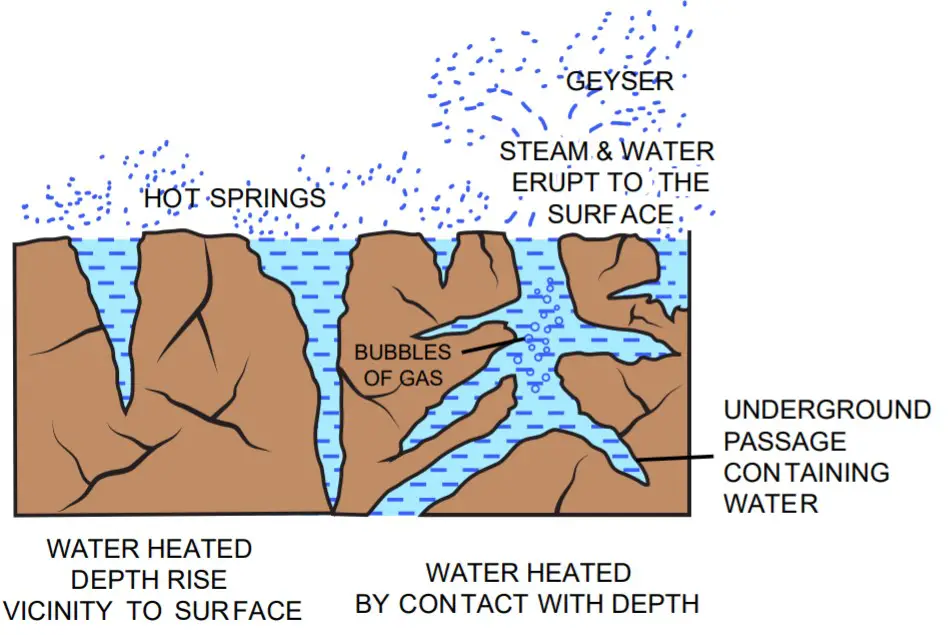
Geothermal Energy: The energy that is derived from the internal heat of the earth is called ‘geothermal energy’. The temperature increases with depth at approximately 1°C for every 32 metres, some of this heat is transported to the surface by geysers, hot springs and volcanoes.

WBBSE Notes For Class 8 Geography Chapter 1 Interior Of The Earth Hot Springs And Geysers

What is magma: Molten rock materials charged with gases and at a very high temperature lying beneath the earth’s surface is called ‘magma’.

What is Lava: Molten or particularly molten magma that is extruded from a volcano or volcanic fissure out onto the surface of the earth, where it cools and solidifies is called ‘Lava’.

Distinguish between Magma and Lava:

Magma Lava
(1)Magma is hot, sticky molten material the interior earth. (1) Lava is solidified form of magma on the surface of the earth.
(2)It contains solutions of water and gases. (2)Gases and water disappear after evaporation.
(3)It comes out during volcanic eruptions. (3)It cools down as it comes into contact with atmosphere.


Hot spring: A spring of hot water that flows out of the ground is called a hot spring’ Unlike a geyser, the water is not forced out under great pressure and flows continuously instead of intermittently.

In many areas hot springs are associated with past or present volcanic activity. They are also found in non-volcanic areas. In India hot springs are found in Rajgir (Bihar), Bakreswar (West Bengal) etc.

The density of the Earth: The mass of a substance per unit volume is called ‘density. It is expressed in gm/cm3. It helps to give the idea of how closer or farther the molecules and atoms of a particular matter exist.

“WBBSE Class 8 Geography Chapter 1, Interior of the Earth study guide”

The average density of the earth’s surface is only 2-6 to 3-3 gm/cm3. The average density of the core of the earth is about 11 gm/cm3. It increases up to 13 to 14 gm/cm3 at the centre of the earth. In respect of artificial satellites average density of the earth is 5-5 gm/cm3.

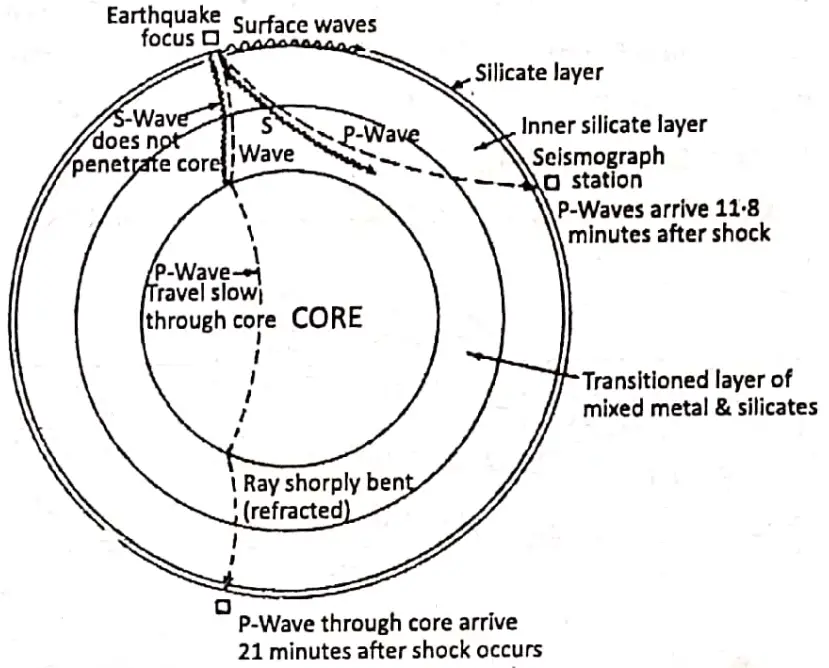
Seismic Waves: There is a change in the course and velocity of the waves on crossing the boundaries of different zones inside the earth. If the ground through which the waves travel is solid, they behave in one way. If it is liquid the waves behave in a different way.


WBBSE Notes For Class 8 Geography Chapter 1 Interior Of The Earth Cross-section Of The Earth Showing Diagrammatically The Paths Of P,S And L Waves

Their velocities in both cases differ There are three types of waves known as ‘P’ or longitudinal or Primary waves, ‘S’ waves or transverse or secondary waves, and the long ‘L’ waves or surface waves which are recorded by a seismograph. The velocity of the first two types of waves increases with depth but only up to 2900 km.

Afterwards ‘S’ waves passing accorss the direction of their movement do not pass the ‘P’ waves travelling in the direction of their movement generally pass at a recorded velocity. The long ‘L’ waves do not pass and do not go deeper in the earth.

The ‘S’ waves cannot pass through a liquid and are transmitted only through a rigid or a solid body. The velocity of the ‘P’ waves passing through inner core again increases as compared to their passage through inner core again increases as compared to their passage through the outer core.

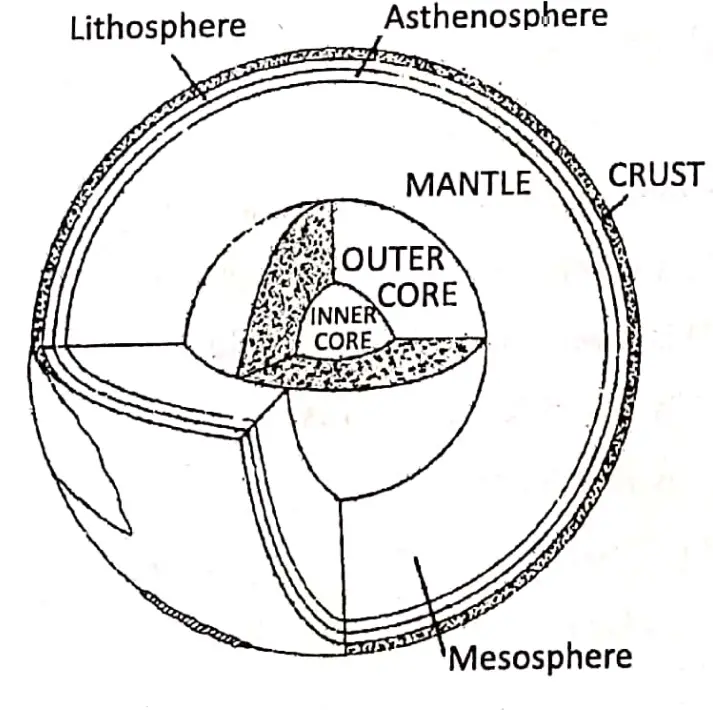
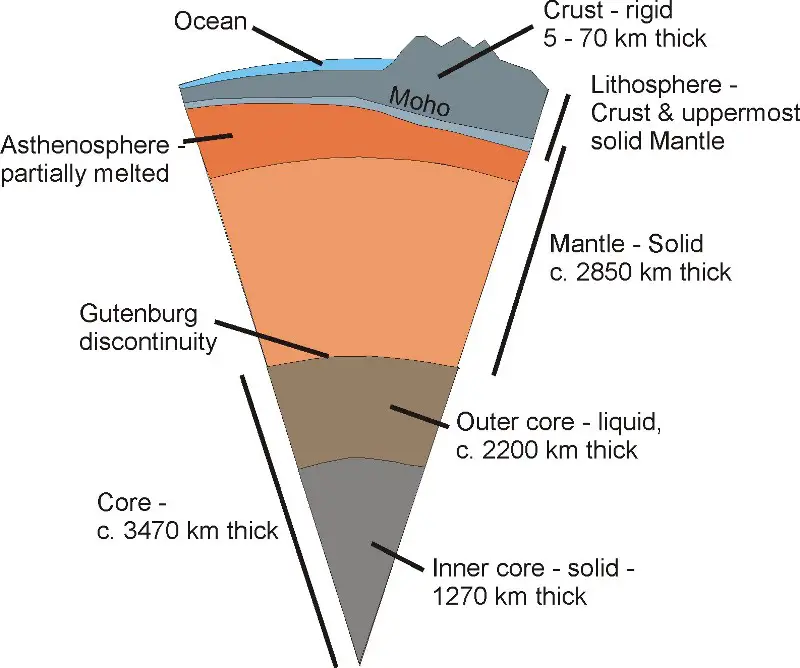
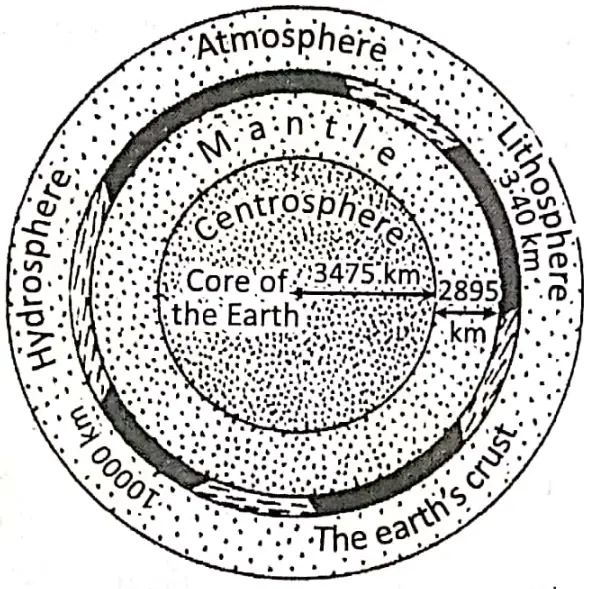
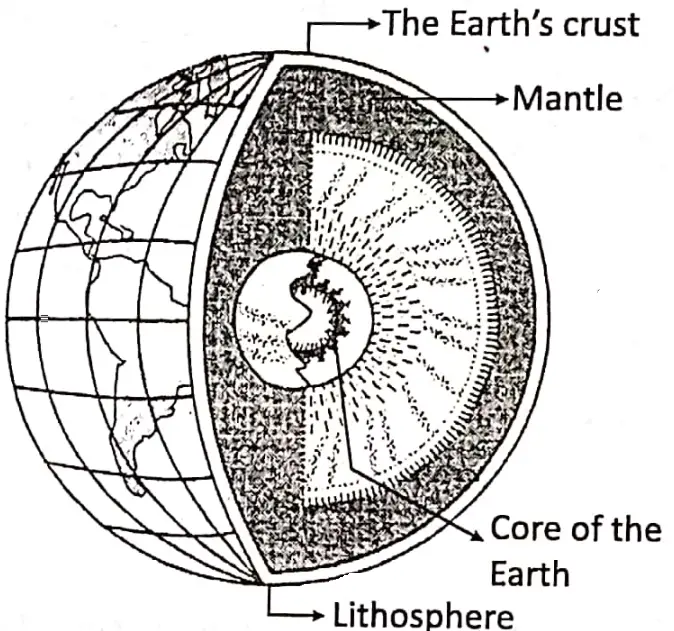
Layers of the Earth: At present, by observing the seismic waves and the lava coming out of a volcano, scientists have identified three concentric layers in the earth’s -interior from the surface of the earth to the core or centre of the earth. These layers are ‘the crust’ (lithosphere), ‘mantle’ and ‘core’ of the earth.

(1) Lithosphere: The word ‘l*’tho’jn Latin -means ‘rocks’ or stone. The word lithosphere thus means a ‘rocks sphere’. lt is rightly called the ‘rocky skin’ 0f the earth. Lithosphere is the outermost solid layer of the earth. It is found both on the continents and in oceans.

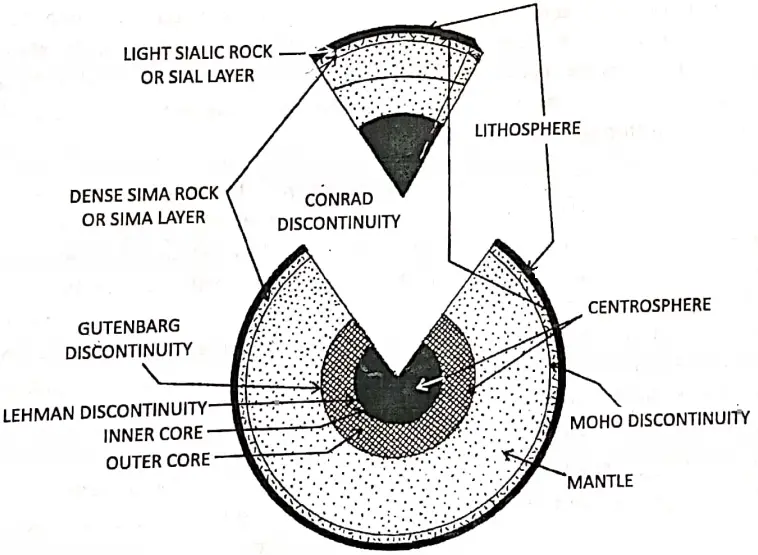
WBBSE Notes For Class 8 Geography Chapter 1 Interior Of The Earth A Section Through The Earth Showing Its Structure

It forms a thin crust (the earth’s crust). The average thickness of the lithosphere is 60 km. It is spread over 29% of the earth’s surface. The thickness of the lithosphere is greater on the continents than on the ocean floor. The rocks of this crust are of lower density than those below the crust.

WBBSE Notes For Class 8 Geography Chapter 1 Interior Of The Earth Different Layers Of The Earth's Interior

The crust of the earth: The outer part of the lithosphere immediately below the. newer sedimentaries on the surface is called ‘the crust of the earth’.

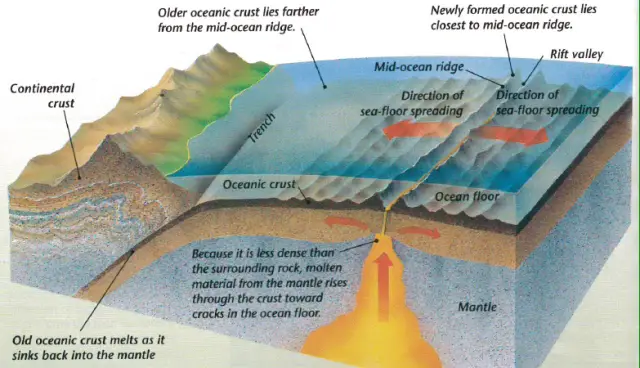
The earth’s crust is now regarded as a series of plates which are gradually being pushed apart, away, from the zone where they formed. This layer is composed of light materials like silicon, aluminium, magnesium etc.

“WBBSE Class 8 Interior of the Earth notes, Geography Chapter 1”

The crust has two distinct parts.

These are—(1) sial and (2) Sima.

(1) Sial: This is the uppermost layer of the earth. This layer is called the ‘crust of the earth’. Silica and aluminium predominate in this layer and hence it is also called Sial (Silicon = Si and Aluminium = Al) Though it is composed of light rocks, its density is only 2-75g/cm3.

The principal rock of this layer is granite. In some places ‘Sial’ is 60 km thick. Continents have been formed by this layer and it is also called ‘continental crust’. This layer is absent in ocean floors.

(2) Sima: This layer is found below the layer of Sial,’ It has an average thickness of 6-8 km. and a density of 3 g/cm3. This layer is composed mainly by Magnes (a). So it is called Sima. This layer forms the ocean floors. So it is also called the ‘oceanic crust’.

Sima layer is about 5km thick and the principal rock of this layer is basalt. Though these two layer is in a solid state, the lighter ‘Sial’ is considered as ‘floating’ on the denser ‘Sima’ layer.

WBBSE Notes For Class 8 Geography Chapter 1 Interior Of The Earth Sial Floats On The Sima


Distinguish between ‘Sial’ and ‘Sima’:

Sial Sima
1.    The upper part of the earth’s crust. 1.    Sima layer lies below the Sial layer.
2.    It is composed of SiOica and aluminium. 2.    It is composed of Silica and Magnesium
3.    Continents are made of Sial. 3.    This layer forms the ocean floors.
4.    It is called ‘continental crust’. 4. It is called ‘Oceanic Crust’.
5.    It is lighter than Sima. 5.    It is heavier than Sial.
6.    Principal rock of this layer is granite. 6.    Principal rock of this layer is basalt.
7.    This layer is about 60 km thick in some Places. 7.    This layer is about 5 km. thick.
8.  Specific gravity is lower than Sima. 8. Specific gravity is higher than Sial.


Discontinuity Line: The line of limit or boundary between two layers within the Earth that possess very different physical properties is called discontinuity Line’. These boundaries were discovered by the study of the behaviour of seismic waves as they travelled through the heart.

Conrad Discontinuity: The line of limit or boundary on which the lighter granite made a lower portion of continental mass (Sial) joins the heavy basaltic ocean floor (Sima) is known as ‘Conrad Discontinuity’.

“Class 8 WBBSE Geography Chapter 1, Interior of the Earth easy explanation”

Mohorovicic/MohoDiscontinuity: Thelineoflimitorboundaryinbetweenthecrustofthe earth (lithosphere) and the Mantle (Mesosphere) is called the ‘Mohorovicic’ or ‘Moho Discontinuty’.

Repetti Discontinuity: The line of limit or boundary in between the ‘Crofesima’ and ‘Nifesima’ is called ‘Repetti Discontinuity’.

Gutenberg Discontinuity: The line of limit or boundary in between the Centrosp ere (core) and Mesosphere (Mantle) is known as the Gutenberg Discontinuity’.

Lehman Discontinuity: The line of limits or boundary in between the inner core and the outer core of the earth is called’Lehman Discontinuity’.

WBBSE Notes For Class 8 Geography Chapter 1 Interior Of The Earth Discontinuity Line Between Different Layers In The Earth's Interior

Significance of lithosphere to man: Lithosphere is useful for man in many ways

  • Lithosphere provides land for human settlements.
  • Soils of the lithosphere are indispensable for the growth of plants and crops.
  • Many types of minerals and fuels are found in the lithosphere.
  • Atmosphere is heated up by radiation from the lithosphere.
  • Lithosphere is responsible for the exchange of water from oceans to atmosphere.

Chapter 1 Interior Of The Earth: Mantle


Asthenosphere: That portion of the interior of the Earth lying beneath the crust (lithosphere) and above the core (centrosphere) is called ‘Mantle’or ‘Mesosphere’. Its upper limit is the Mohorovicic discontinuity, which lies at an average depth of 35-40 km below the surface of the earth, and it descends as far as the Gutenberg discontinuity which lies about 2900 (2895) km. This layer is composed of nickel, iron, silicon, magnesium etc.

The specific gravity of this layer is about 4 to 5. Temperature of this layer is about 2000°C much less than the core but quite higher than lithosphere. The mantle is subdivided into two layers—(1) Outer Mantle or ‘Crofesima’ and (2) Inner Mantle or ‘Nifesima’.

“WBBSE Class 8 Geography Chapter 1 notes, Interior of the Earth PDF”

The upper part of the mantle (40 to 700 km) is composed of chromium (CRO), (Ni) iron (fe), silicon (Si) and magnesium (Ma) and the lower part of the mantle is composed of nickel, iron (fe), silicon (Si) and magnesium (Ma). i.e. 700 to 2900 km (2895 km).

Volcanic eruptions originate in the upper part of this ‘Crofesima’ layer. This layer is also significant in the formation of fold mountain, earthquakes, continental drift etc. This part of the mantle is known as the ‘Asthenosphere’ (Asthenosphere is a Greek word, which means ‘weaker layer’).

Due to excessive heat and pressure, the rocks are here in a state of viscosity—just as molasses or melted asphalt. Comparatively lighter materials come upwards when heated geothermally, and allow the heavier ones to go downward.

This is happened to be a sort of convectional current. From this part of the mantle molten rocks or magma find their way to the earth’s surface through cracks or faults.


Chapter 1 Interior Of The Earth: Centrosphere or Barysphere or Core of the Earth


The central portion of the Earth’s interior is called the ‘core ‘barysphere'(‘bary’ from greek word ‘baros’ meaning weight). The innermost layer which encircles the centre of the earth is also called the ‘core’ or the mental is the centrosphere.

This layer extends from the centre of the earth to about 3500 (3475) km. This is the hottest, heaviest and densest layer of the earth’s interior and is composed mainly of nicloel (Ni) and iron {fe) which gives its name ‘NIFE’ or ‘Nife’.

“WBBSE Class 8 Geography Chapter 1, Interior of the Earth important questions”

The density, of the core, is between 10 – 12 gm/cm3. So this dense layer is also called the ‘Barysphere’. The temperature of the core is estimated at 5000°C. Geologists have divided the core into two sub-layers— (1) Inner core and (2) Outer core.

  1. Inner Core: The layer that lies surrounding the centre of the earth is called the ‘inner core’. It is nearly 5100 km to 6368 km deep. The tempereture of this layer is about 2700°C and at very high pressure. This layer remains in a solid state.
  2. Outer Core: The layer which encircles the inner core is known as ‘the outer Core’. It is nearly 2895 (2900) km to 5100 km deep. The outer core does not transmit the ‘S’ waves of earthquakes, which suggests that it is liquid.

“Class 8 Geography Interior of the Earth notes, WBBSE syllabus”

Temperature, pressure and specific gravity of the inner core are much higher than of the outer core. Outer core is in a molten state because of high temperature. But the inner core is solid probably due to the tremendous pressure of the overlying rocks.

WBBSE Notes For 8 Class Middle School Geography
WBBSE Notes For Class 8 Geography Chapter 3 Rocks

Chapter 3 Rocks

What is rocks:

Rocks Meaning 

In geography, the word ‘rock signifies any non-metallic natural substance found in the earth’s crust whether it is soft like clay or hard like a stone. A rock is simply an aggregate of various minerals, but in the scientific sense, the term ‘rock means, ‘the materials that make up the earth’s crust’. A rock has no definite chemical composition as minerals.

Multicolor Professional Business Timeline Infographic

Read and Learn all WBBSE Notes For 8 Class Middle School Geography

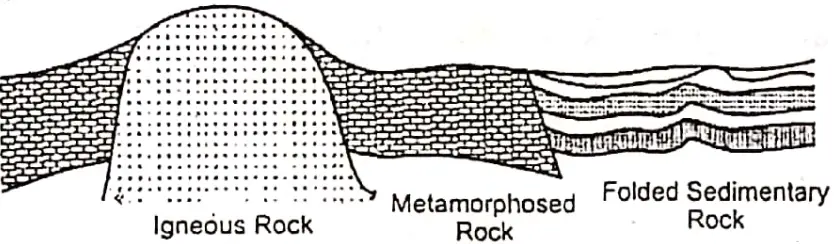
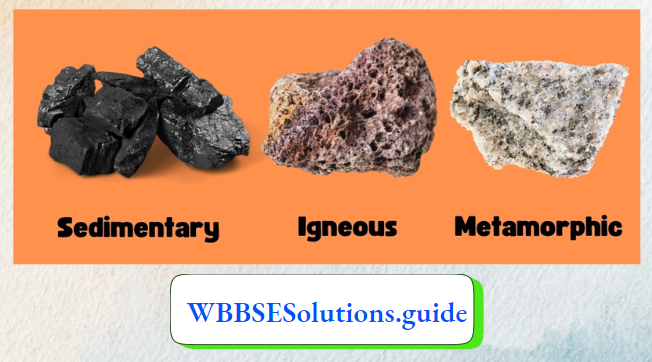
Types of Rocks: Rocks can be classified into three types according to their mode of origin:

  1. Igneous Rocks,e-8- Basalt, granite etc.,
  2. Sedimentary Rocks, E.g: Sandstone, Mudstone, Limestone etc. and
  3. Metamorphic Rocks,e-g: Gneiss, Marbles, slate etc.

“WBBSE Class 8 Geography Chapter 3 notes, Rocks”

Class 8 General Science Class 8 Maths
Class 8 History Class 8 Science LAQs
Class 8 Geography Class 8 Science SAQs
Class 8 Maths Class 8 Geography
Class 8 History MCQs Class 8 History

1. Igneous Rocks: Igneous rocks are those rocks which have been formed by the cooling and solidification of Lava. The word “igneous” is derived from the Latin word “Ignis” meaning ‘fire’. In the beginning, when the Earth was born, it was just a glowing ball of gas.

WBBSE Notes For Class 8 Geography Chapter 3 Rocks Different Types Of Rocks

WBBSE Notes For Class 8 Geography Chapter 3 Rocks Igneous,Sedimentary And Metamorphic Rocks

Gradually, it cooled down and its molten volatile surface solidified. In this way, the igneous rocks formed at the first on the earth’s crust. Hence, it is called ‘Primary Rock’.it has no layer and that is why it is called ‘Unstratified Rock’.

Characteristics of Igneous Rocks:

  1. Igneous rocks are formed by the cooling and solidification of hot molten lava and magma.
  2. These rocks are compact, massive and crystalline.
  3. These rocks are hard and resistant.
  4. The rocks do not contain any fossil.
  5. They contain several kinds of minerals, though they are not rich in mineral resources.
  6. These rocks are sometimes transparent,
  7. There is no layers in this rock.
  8. Metallic minerals are common in this rock.

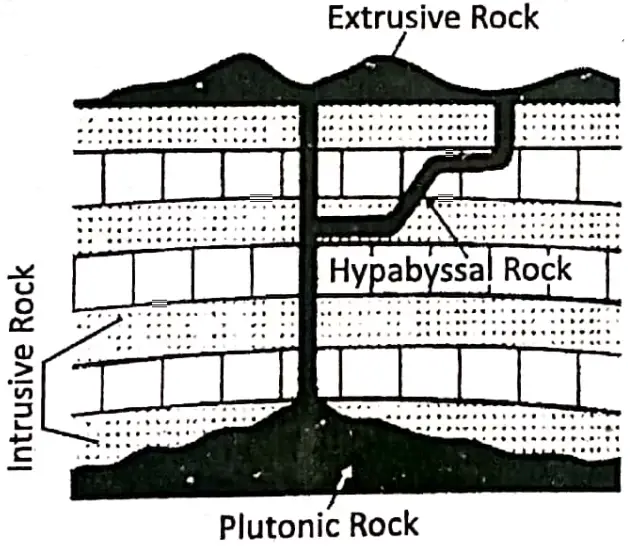
WBBSE Notes For Class 8 Geography Chapter 3 Rocks Extrusive And Intrussive Igneous Rock

Types and Examples of Igneous Rocks: According to origin igneous rocks are of two types—

  1. Extrusive igneous rocks
  2. Intrusive igneous rocks.

1. Extrusive Igneous rocks: Igneous rock formed by the cooling and solidification of magma that has poured out onto the surface of the Earth is called Extrusive Rock,e.g. Basalt, Obsidian.

2. Intrusive Igneous rock: Igneous rock that has solidified below the Earth’s surface is called intrusive rock’ Granite is the most common intrusive rock. According to its depth intrusive igneous rocks are further subdivided into two types—(1) Plutonic and (2) Hypabyssal.

  1. Plutonic: At a great depth in the earth’s interior it is known as ‘Plutonic roc’s e.g. granite, gabbro etc.’
  2. Hypabyssal: At a shallow depth just beneath the earth’s surface, the rocks formed are called ‘Hypabyssal rock’.e.g. dolerite and porphyry.

Distinguish between Intrusive Igneous rock and Extrusive igneous rock:

Extrusive Igneous Rock Intrusive Igneous Rock
(1)Extrusive igneous rock is the name given to magma erupting and solidifying after the escape of gases as lava on reaching the surface of the earth. (1) The intrusive igneous rock is formed by solidification of magma at moderate or below depths beneath the earth’s surface.
(2)  This variety is also named as volcanic rock.  (2) The deep-seated intrusive rocks are known as ‘plutonic rocks’.
(3)    As lava cools down rapidly on the earth’s surface, its grains are very small. (3)    As solidification of magma occurs at great depths below the earth’s surface, the cooling is obviously slow and as a result, very large size grains are formed in this rock.
(4)These rocks have a glossy appearance. (4)These rocks are not glossy in appearance.
(5) These rocks are more compact and harder than intrusive rocks. (5)These rocks are less compact and softer than extrusive rocks.
(6) These rocks are mainly two types: 1. Lava rock (eg. Basalt) and 2. Pyroclastic rock (e.g. Tuff). (6)Intrusive rocks are of two types according to their depth, (1) Plutonic (at a great depth, eg. granite, and (2) Hypabyssal (at a shallow depth e.g. Dolerite).


Classification of Igneous Rocks Based on Chemical Compositions:

Name of the Rock Content of Silica Examples
Acidic Rock More than 65% Granite
Intermediate Rock 55% to 65% Diorite, Andesite
Basic Rock 45% to 55% Basalt, Dolerite
Ultra Basic Rock Less than 45% Peridotite

Chapter 3 Rocks: An Account Of Two Igneous Rocks


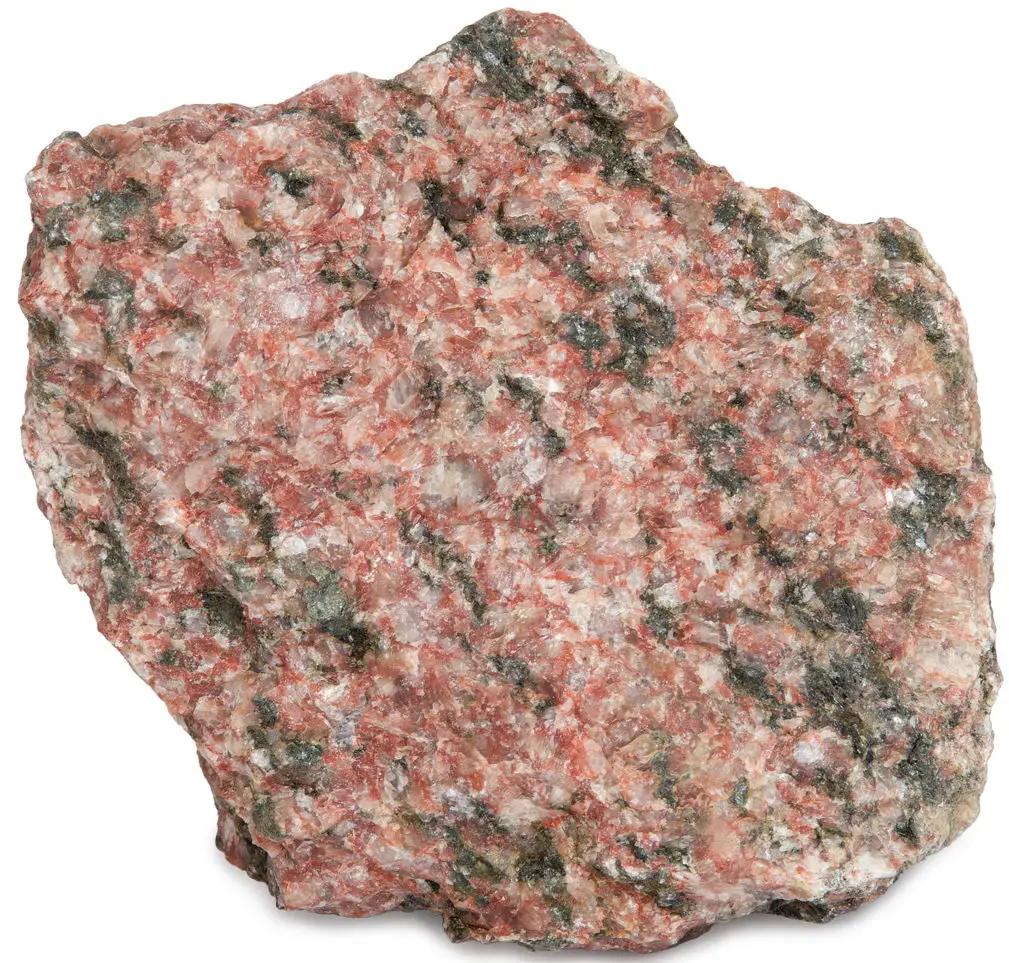
1. Granite: Granite is an intrusive igneous rock. It is composed of quartz, feldspar, mica and hornblende. It is highly crystalline and glossy. Granite is a brown or golden colour with black and white dots. It is one of the hardest and most durable rocks.

This type of plutonic rock cools and consolidates very slowly, so coarse grains are found in this rock. Granite is an acidic rock as it contains a high percentage (over 70%) of silica. It is very much resistant to erosion and it is very heavy.

“Class 8 WBBSE Geography Chapter 3 notes, Types of Rocks study material”

Granitic landforms are generally rounded and dome-shaped. The continental crust of the earth is mainly formed by this rock. It is used as a building material. Metalled roads are also constructed with it.

WBBSE Notes For Class 8 Geography Chapter 3 Rocks Granite Rock


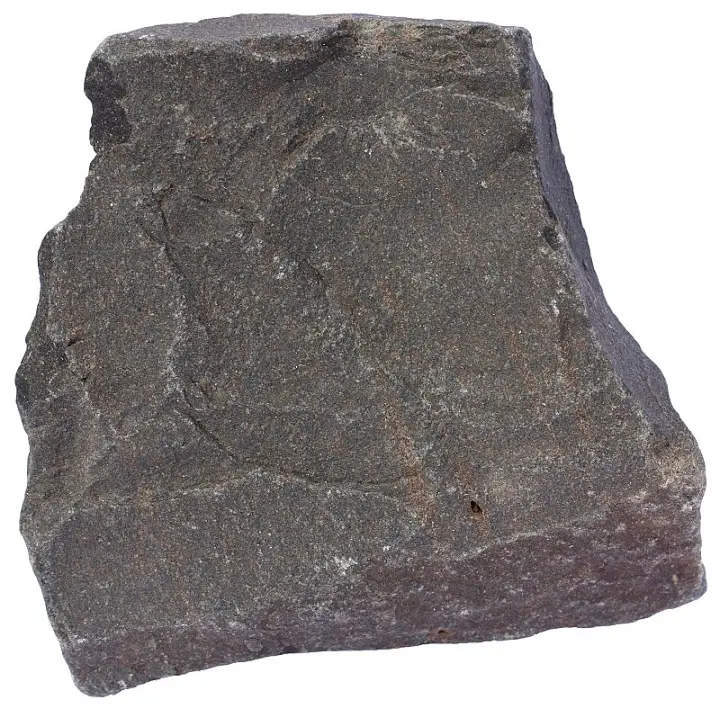
2. Basalt: Basalt is a fine-grained extrusive igneous rock. It is a dark-coloured crystalline rock formed by the solidification of lava. It is composed of feldspar, olivine, pyroxene and hornblende. This highly erosion-resistant, hard, heavy rock may be grey to black in colour.

This rock is highly permeable and many joints, cracks etc. are present in this rock. As magma (lava) cools and solidifies rapidly on the surface of the earth, basalt is fine-grained. The oceanic crust is mainly formed of this igneous rock. Flat-topped landforms are formed in regions composed of basalt rock. It is an important house-building material.

WBBSE Notes For Class 8 Geography Chapter 3 Rocks Basalt Rock


Economic Significance of Igneous Rocks:

  1. Igneous rocks supply different types of minerals.
  2. Granite is used for house-building and idol-making.
  3. Pumic Stone is used as a sharpener.
  4. Basalt and dolerite is quarried for road-making.
  5. Gravestones, monuments, etc. are made from these hard rocks.

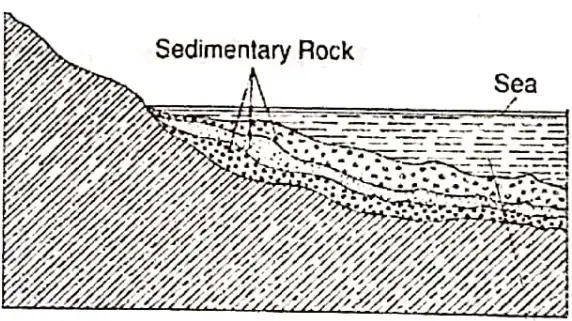
2. Sedimentary Rocks: A rock composed of sediments and generally having a layered (stratified) appearance is called ‘Sedimentary rock’.It has been named after the sediments forming it. The word ‘Sediment’has been derived from the Latin word ‘Sedene’which means to settle or settle down.

Formation of Sedimantary Rocks: Sedimentary Rocks have been formed by the deposition of sediments (gravel, sand, silt or clay) brought by wind, ice and river. These sediments are deposited in river beds, depressions, lakes and seas in the form of layers.

After a long period, due to the pressure of the overlying layers, the sediments become hard compact rocks. Silica and calcite act as cementing agents.

These rocks are also called ‘stratified rocks as these occur in the form of layers or strata. Mudstone and sandstone are formed in this way. Coal and petroleum are formed by fossils of plants and animals.

WBBSE Notes For Class 8 Geography Chapter 3 Rocks Sedimentary Rocks

According to origin and composition, Sedimentary rocks are classified into three types:

  1. Mechanically formed
  2. Organically formed and
  3. Chemically formed rocks

1. Mechanically formed Sedimentary Rocks: These rocks have been formed by the deposition of sediments derived from other rocks.
Examples: Landstone, Mudstone, Shale etc.

2. Organically formed Sedimentary Rocks: These rocks are formed from the remains of plants and marine animals.
Example: Dolomite, Calcite, Gypsum, etc..,

3. Chemically formed Sedimentary Rocks: These rocks are mostly precipitated from a solution of certain salts.
Examples: Dolomite, calcite, gypsum etc.

“WBBSE Class 8 Geography Chapter 3, Rocks study guide”

Characteristics of Sedimentary Rocks:

  1. The sedimentary rocks are formed by the sediments and remains of primary rocks.
  2. These rocks are non-crystalline rocks.
  3. These rocks contain particles of various sizes and shapes.
  4. These rocks are formed in stratus of horizontal layers and are therefore known as ‘stratified rocks’.
  5. These rocks cover nearly 70% of the total surface of the earth.
  6. These rocks contain several kinds of fossils.
  7. These rocks are easily weathered and eroded.
  8. These rocks bear the marks of ripples, waves and mud.
  9. These rocks are less hard than igneous and metamorphic rocks.
  10. These rocks are porous and fragile These rocks are highly permeable and lighter than other rocks.
  11. Porosity is a major character of this rock.
  12. Organic matter, such as coal, mineral oil, natural gas, and limestone are found in this type of rock.

Types of Sedimentary Rocks: Based on the origin of sediments sedimentary rocks are mainly two types,

  1. Clastic Rockand
  2. Non-Clastic Rock.

1. Clastic Rock: ‘Clastic’is derived from the greek word ‘Klastos’which means ‘broken’. The rocks that are formed from fragments resulting from the breakdown of pre-existing Rocks is called clastic rocks,e.g. Sandstone, Mudstone etc.
2. Non-clastic Rock: The rocks that are formed from chemical or organic processes is called Nion-clastic rocks,e.g. Dolomite, Limestone, Rocksalt etc.

Fossils: Sometimes while sediments are being deposited plants, animals or any organism are also embedded in the layers of sedimentary rocks as they are solidified, cemented and converted into rocks. These rocks or their parts, impressions or remnants left in the sedimentary rocks, are called ‘fossils’.

An account of some Important Sedimentary Rocks:
Limestone: Limestone is the most important calcareous rock of sedimentary origin. It consists essentially (about 50%) of calcium carbonate. These are wholly or partly organic origin.

“WBBSE Class 8 Rocks notes, Geography Chapter 3”

They contain hard parts of various organisms, such as the shells of molluscs and the skeleton of corals. Limestone is soluble in water. Limestones are widely used in cement and chemical industries. It is also used as a building material.


WBBSE Notes For Class 8 Geography Chapter 3 Rocks Limestone

Power Resources

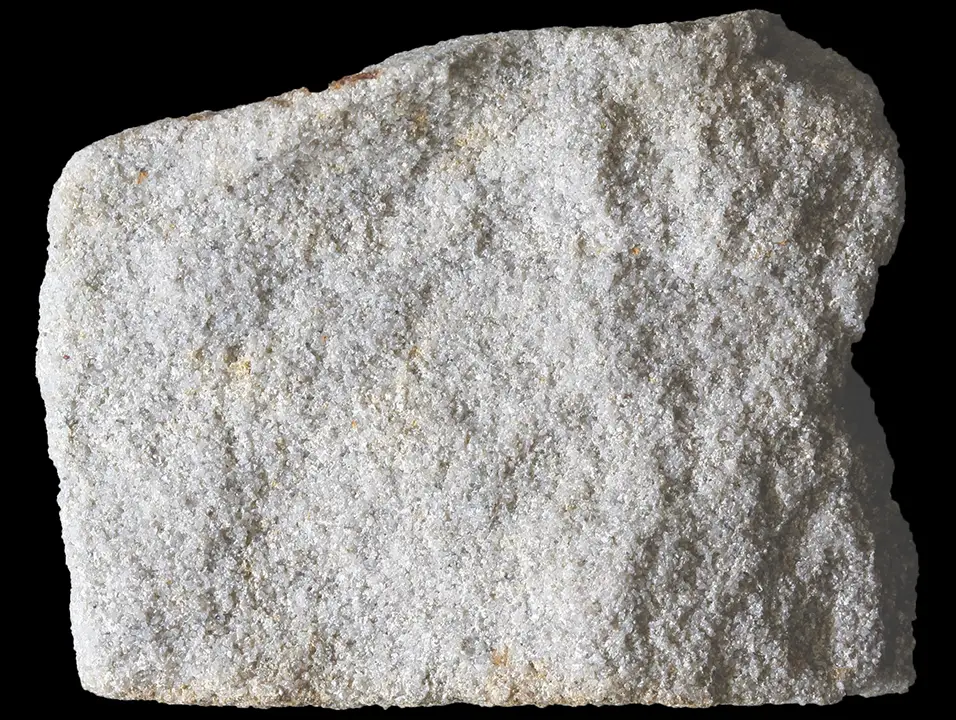
Sandstone: Sandstone is a sedimentary rock. It is porous consisting of grains of sand, bound together by such substances as calcium carbonate or silica. Sandstones are of different colours.

The stone which contains silica, keolin and calcium carbonates if whitish; but when it contains ferrous oxides, the stone looks in red or brownish colour. Sandstones are hard and useful as house-building materials.

WBBSE Notes For Class 8 Geography Chapter 3 Rocks Sand Stone Rock

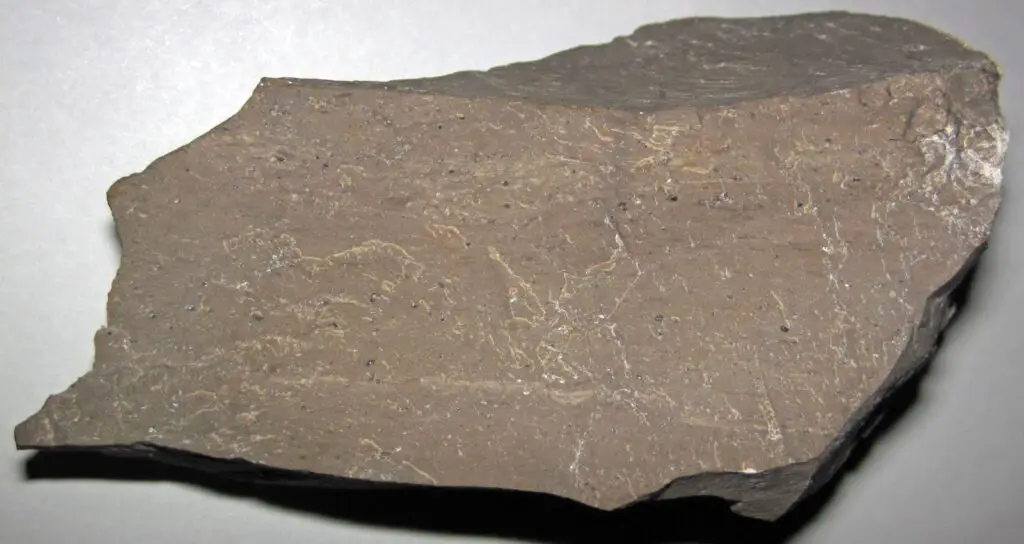
Shale: Shale is a fine-grained sedimentary rock produced from clay. These rocks are usually finely stratified and thus they readily split into thin layers. These rocks are so soft that they easily disintegrate. These stones are used in making utensils and other household materials

WBBSE Notes For Class 8 Geography Chapter 3 Rocks Shale Rock

Economic Significance of Sedimentary Rocks:

  1. Many valuable minerals are found in these rocks.
  2. Coal, petroleum, natural gas are the major sources of power.
  3. Limestone and sandstone is used for building purposes.
  4. Bricks from clay, cement from limestone and glass from sandstone is made.
  5. Many types of chemicals (calcites, gypsum, salts, boron etc.) are also obtained from these rocks.
  6. The fossils are useful to trace out the past history of the earth.

Distinguish between Igneous Rock and Sedimentary Rock:

Igneous Rock Sedimentary Rock
(1)Igneous rocks are formed due to the cooling of magma or lava. (1)Sedimentary rocks are formed by the deposition of sediments.
(2)These rocks are massive and found in bulks. (2)These rocks occur in layers or strata.
(3) These are hard and resistant rocks. (3)These are soft rocks.
(4) These rocks have different types of crystals. (4)These rocks contain minute particles.
(5)These are also known as Primary rocks. (5)These rocks are known as Secondary rocks.
(6)These rocks do not contain fossils. (6)These rocks contain fossils of animals and plants
(7)These are impervious rocks. (7) These are previous rocks.
(8)Joints are found in this rock. (8)These rocks have no joints.
(9) These rocks are not easily eroded due to weathering and erosion. (9) These rocks are easily eroded due to weathering and erosion.
(10)These rocks are formed in depressions, sea beds, lakes and river beds. (10) These rocks are formed in depressions, sea beds, lakes and river beds.


Distinguish between Igneous Rock and Metamorphic Rock:

Igneous Rocks Metamorphic rock
(1)Igneous rocks are formed due to the cooling of lava magma. (1)Metamorphic rocks are changed due to heat, pressure and chemical action.
(2) These are crystalline rocks. (2) These rocks are highly crystalline.
(3) These are hard, massive rocks (3) These are hard resistant rocks.
(4)Igneous rocks are primary rocks (4)Pre-existing igneous and sedimentary rocks are changed to metamorphic rocks.
(5) Granite and Basalt are formed as igneous rocks. (5)Granite is changed into gneiss, and limestone is changed into marble.


3. Metamorphic Rocks: Rock formed when the pre-existing sedimentary or igneous rock is altered as a result of changes by immense heat of the earth’s interior or a tremendous pressure of the overlying rocks is called ‘metamorphic rock’ (Greek ‘means’ means ‘changed’, ‘morphe’, means ‘form’).

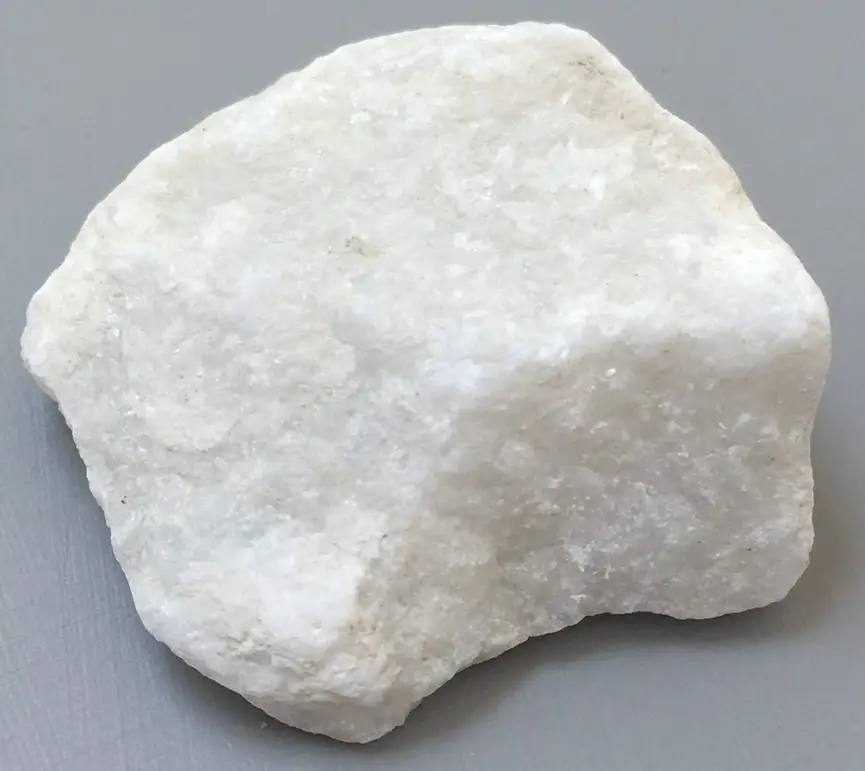
The mineral composition and the structure of the rock can be altered. Examples of metamorphic rocks include Granite changes into Gneiss, Limestone changes into Marble, Sandstone changes into Quartzite and Coal changes into Graphite.

WBBSE Notes For Class 8 Geography Chapter 3 Rocks Metamorphic Rock

Agents of Metamorphism: Three factors have a major effect on metamorphism.
They are—

  1. Temperature,
  2. Pressure and
  3. Chemical processes.

On the basis of the agency involved there are two types of metamorphism.

1. Thermal Metamorphism: The process by which a rock undergoes change as a result of excessive heat and pressure of the intrusive mass of molten igneous rock is known as ‘Thermal Metamorphism’, such as limestone is changed into marble and sandstone into quartzite. It is also called ‘Contact Mctamorplusm’.

2. Dynamic Metamorphism: The modification of rocks by pressure during extensive earth movement is known as ‘Dynamic Metamorphism’. It is also known as ‘Regional metamorphism’ On account of the regional effect brought in metamorphism.

Characteristics of Metainorphsc:

  • Metamorphic rocks are massive, completely crystalline and hard.
  • These rocks can not be eroded easily.
  • These rocks are very rich in minerals.
  • During metamorphism minerals become oriented in a specific fashion. It facilitates mining operations.
  • No fossil is found in metamorphic rock because excessive heat and tremendous pressure destroy the fossil.
  • These rocks supply many house-building materials, example, Marble, Slate, Gneiss, etc.

“Class 8 WBBSE Geography Chapter 3, Rocks easy explanation”

An account of three common metamorphic rocks:

Marble: Marble is a coarse-grained crystalline metamorphic rock, derived from limestone. It appears in different colours, such as white, red, black, green and yellow. Dolomite, hornblende and talc are important constituent elements. Marble is used as a building material. Palaces are also constructed with it.

WBBSE Notes For Class 8 Geography Chapter 3 Rocks Marble Rock

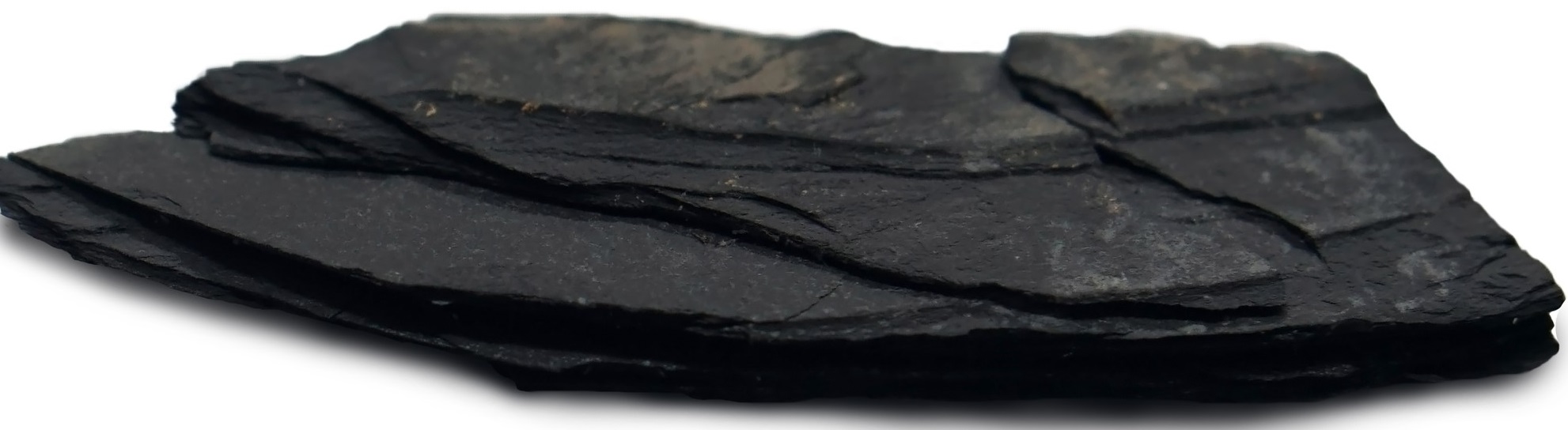
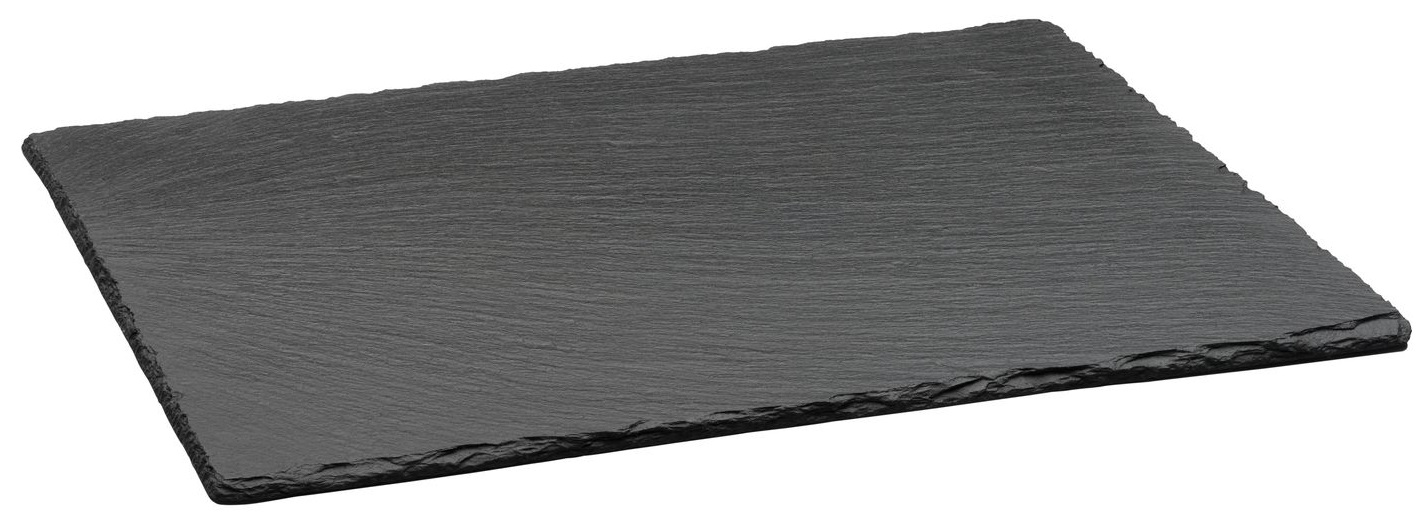
Slate: Slate is produced by metamorphic processes from shales. It is a fine-grained metamorphic rock produced by heat and pressure from fine clay. Its colour varies from grey to black. It has well-marked cleavages. It ready to split into thin, smooth plates, suitable for roofing purposes.

WBBSE Notes For Class 8 Geography Chapter 3 Rocks Slate Rock

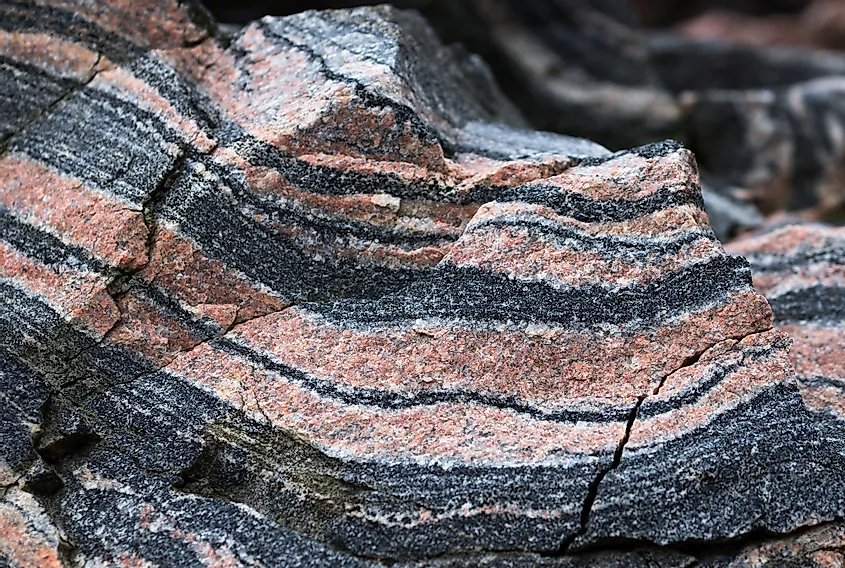
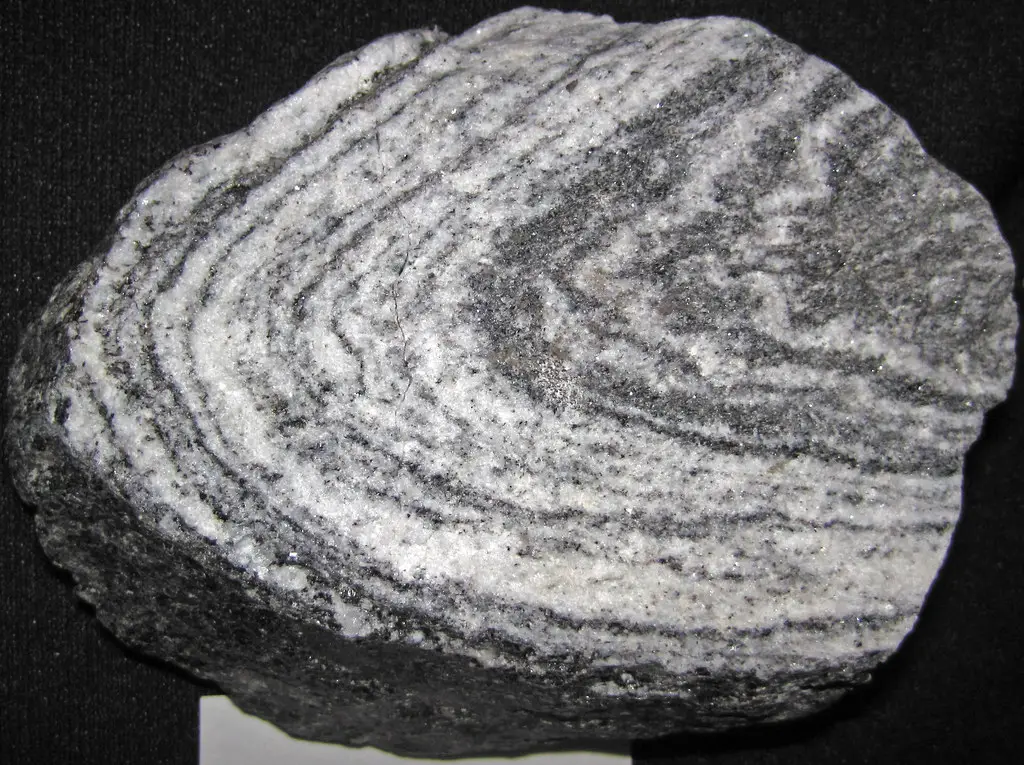
Gneiss: Gneiss is a metamorphic form of granite rock. This rock is found in banded structure. This banding is the most characteristic feature of a typical gneiss. This banding is due to the separation of light and dark materials in crude layers of previous rock. It is very much hard and massive. It is widely used as house-building material.

WBBSE Notes For Class 8 Geography Chapter 3 Rocks Gneiss Rock


Economic Significance of Metamorphic Rocks:

  1. Marble can be very well carved, into desired shapes. So, it is extensively used by architects.
  2. Many house-building materials like marble, slate, etc. are obtained from these rocks.
  3. Many minerals are found in these rocks. So,’ these rocks are very rich in minerals.
  4. As rearrangements and redistribution of minerals take place in metamorphic processes, so valuable minerals are found conveniently in successive layers. It facilitates mining operation.
  5. These attract a huge mining population.
  6. Slates are used in making blackboards and can be used as a substance for writing.

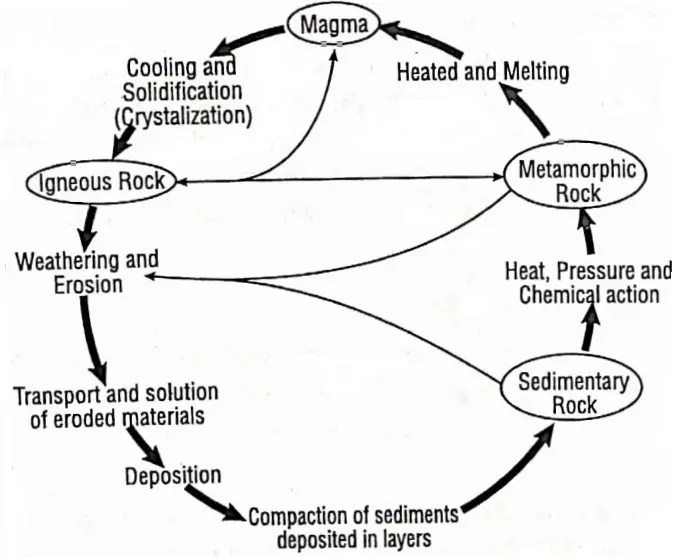
The Rock Cycle: Rocks in the earth’s surface gradually change from one major type to another due to various processes acting on them. The change of one rock into another under different conditions is known as the ‘rock cycle’. Igneous rocks were formed first in the earth’s crust.

“WBBSE Class 8 Geography Chapter 3 notes, Rocks PDF”

The agents of denudation disintegrated these original igneous rocks into sediments. These sediments were deposited in water bodies to form sedimentary rocks. Both igneous and sedimentary rocks were subjected to the processes of metamorphism to form metamorphic rocks.


WBBSE Notes For Class 8 Geography Chapter 3 Rocks The Rock Cycle


Metamorphic rocks in turn were denuded to form sedimentary rocks. Both metamorphic and sedimentary rocks may get buried deep inside the earth due to tectonic movements. There they melt to form magma. Such magma may rise to the earth’s surface through volcanic activity and solidify to form igneous rock. Thus, the rock cycle goes on and the rocks continue to get transformed from one type to another.

Influence of rocks on landforms: Rocks influence the formation of different landforms, eg.,—

  1. Regions having granite rocks have rounded landforms, like in the Telenana plateau.
  2. Surfaces made of basalt rocks form hills with flat surfaces or tops.
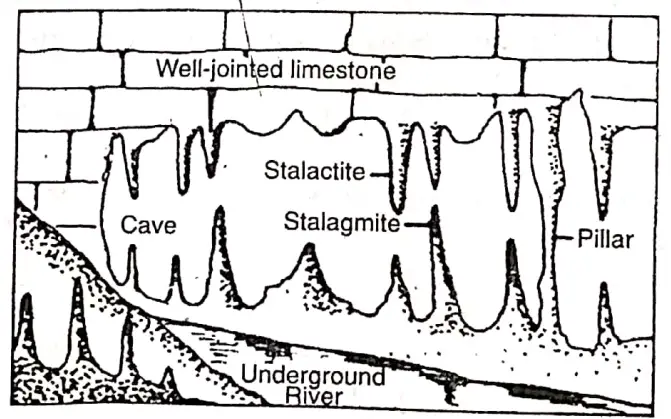
  3. Limestone and rocksalt areas having rivers flowing over them, have many underground caves.
  4. Hard rock being difficult to erode, need more time to be eroded, so generally form highland, while soft rock is easy to erode so they get eroded soon to form plains or river valleys or lowlands.

Dee can Trap: Lava covered hill slopes of the Deccan (Maharastra Plateau) on weathering have formed terraces resembling a flight of stairs. They are popularly known as the ‘Deccan Trap’. Weathering, erosion and denudation have given the rise to such a typical ‘Trap Landscape’.

Karst Topography: Limestone consists” chiefly of calcium carbonate which is insoluble. The carbon dioxide, which rainwater absorbs from the air, turns the insoluble carbonate into soluble bicarbonate.

It dissolves limestone and gives rise to caves, cavities and broken lands, stalactite and stalagmites develop in these caves by the accumulation of sediment derived from precipitation. Limestone landforms are popularly known as ‘Karst Topography’.

WBBSE Notes For Class 8 Geography Chapter 3 Rocks Karst Topography


Characteristics of few Rocks:

Igneous Rock Sedimentary Rock Metamorphic Rock
(1)Hot molten materials from the earth’s interior cool and turn solid to form igneous rocks. (1)    These rocks formed after the deposition of sediments and compared on the floor of water bodies to form sedimentary rocks. (1) These rocks formed after the change of igneous and sedimentary rocks under the influence of pressure, temperature chemical action etc.
(2)These rocks are hard and not easily eroded. (2)These rocks are softer than igneous and metamorphic rocks. (2)These rocks are harder.
(3)These rocks are heavy. (3)These rocks are lighter than igneous rocks. (3) These rocks are heavier than the other two rocks.
(4) They have no bedding planes. (4)They have distinct bedding planes which are clearly visible. (4)Generally they do not have bedding planes.
(5) They have no fossils. (5)Fossils are present. (5)No fossils are found.
(6)Some igneous rocks have quartz crystals. (6)No quartz crystals are present. (6)Crystalline igneous rocks when metamorphosed become more crystalline with more crystals.


Rock-forming minerals: Most of the rocks found in the earth’s crust are composed of various minerals. About two thousand mineral species are known on the surface of the earth. Out of these, mainly twenty-four minerals constitute the rocks of the earth’s crust. Among them following ten important minerals are as follows :

  1. Feldspar,
  2. Quartz,
  3. Mica
  4. Clay minerals,
  5. Augite,
  6. Calcite and Dolomite,
  7. Hornblende,
  8. Olivine,
  9. Chlorite
  10. iron.

Brief Account of some important minerals:

  1. Quartz: Quartz crystals are six-sided prisms and pyramids. These are very hard often whitish or milkfish, grey, pink or violet. They look like glass or crystal. Clear crystals are used in optical instruments. It is also used as a stone cutter, glass cutter and in ornaments.
  2. Feldspar: Feldspar is less hard than quartz, although harder than glass. The colour is. white, light shades of grey and pink. It is the most common type of mineral making up 60% of the total weight of the earth’s crust. Pure feldspar is used in the making of porcelain and “ as mild abrasive.
  3. Gypsum: Gypsum is a chemically formed sedimentary rock as wed as a mineral. It is
    a hydrated crystal of calcium sulphate. It is fairly soft, light and yellow-coloured. It is used in making fertilizers, cement and in construction industries.
  4. Mica: Mica is a group of silicate minerals that have perfect cleavage, so they split easily into thin plates. It is a common mineral in igneous and metamorphic rocks and is responsible for the characteristic shiny appearance of many metamorphic rocks such as schists. The most common types are biotite, which is dark black in colour, and muscovite which is light white.

It is a very soft mineral only a trifle harder than the fingernail. Mica is a poor conductor of heat and electricity. it is used in preparing electrical goods, decorative glitters and paint. it is used as insulator in electrical equipment.

Distinguish between Rocks and Minerals

Rocks Minerals
(1) Rock is an aggregate of minerals. (1) Mineral contains only one ore and has an atomic structure.
(2) A rock is a natural solid material forming the earth’s crust. (2) A mineral is a natural inorganic compound found in rocks.
(3) A rock does not have a definite chemical composition. (3) It has a definite chemical composition.
(4) Rocks are mainly three types—lineouts, sedimentary and metamorphic. (4) There are about 2000 types of minerals.


Why the Chhotonagpur Plateau is called “the Storehouse of Minerals in India: The Chhotonagpur Plateau region of India is called the ‘Storehouse of Minerals in India’.

The variety of minerals extracted are— coal, iron,-ore, limestone, mica, copper, uranium, manganese, asbestos, graphite etc.., and are the most important. A besides large amount of minerals are found in this plateau, like uranium, limestone, mica, fire, clay, manganese etc.

In the Chhotonagpur plateau the following reserves of minerals are found—coal (40%), Copper (94%), iron-ore (42%), mica (56%), bauxite (30%), China clay (52%), fire clay (35%) of the reserves of India, besides these there are very large resumes of limestone, asbestos, graphite, lignite, uranium etc. in this plateau.

In this way such a large amount and variety of minerals are available in the Chhotonagpur plateau and the main occupation of the people of this region is related to minimal and mineral-based industries that it has gained the title “the Storehouse of Mineral in India”.

“WBBSE Class 8 Geography Chapter 3, Rocks important questions”

The influence of Minerals: Different types of rocks are found in nature. Most of the rocks found in the earth’s crust are composed of various minerals. So, there is a great influence of minerals in nature.

  1. The different cheracteristics like—colour, hardness, lustre, cleavage, chemical reactions etc. are dependent on minerals.
  2. The soil which is rich in iron and aluminium is hard and red at the top. The Laterite and Red soils with an excess of minerals like iron and aluminium are less fertile and perform poorly in agriculture.
  3. Many mineral springs are useful for curing skin diseases.
  4. Soil rich in gypsum is soft and light yellow in colour.
  5. Abundance of solf calcite leads to the formation of Limestone which is easily eroded.
  6. Soft, Porous and permeable sedimentary rocks are abundant in places where petroleum and natural gas are found.
  7. The main occupations of the people may be related ot mining and mineral based
    industries.

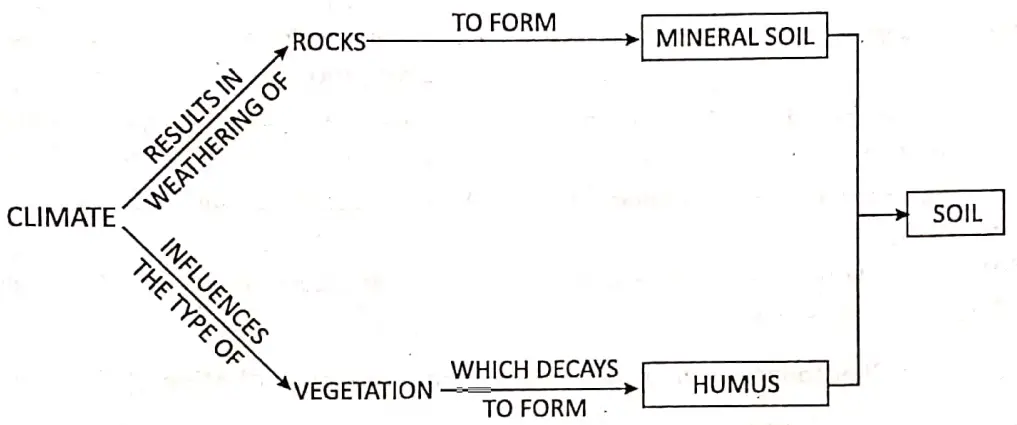
Formation of soil from rocks: The uppermost thin layer of the looser materials of the earth’s crust that sustains living beings is called soil. It forms slowly over a long period by the mechanical and chemical weathering of bedrock.

Weathering is the breaking up of rocks by the elements of weather like temperature, rainfall, winds, river, sea waves, glaciers etc.

The loose weathered materials or rock wastes lying above the bedrock and blow the ground surface is called regolith. It includes the parent material from which soil is formed.

This debris then interacts naturally with water, air and organe matter (humus and living organisms), bacteria etc.) to form soil. Characteristic features of a soil usually depend oh the nature of the layer of rock underneath i.e., parent rock.

WBBSE Notes For Class 8 Geography Chapter 3 Rocks Soil Formation


Example: Black soil, Red soil and Sandy soils are made mainly from Basalt, Granite and Sandstones respectively.

WBBSE Notes For 8 Class Middle School Geography