NEET Biology Class 9 Chapter 4 Why Do We Fall Ill Short Question And Answers

Why Do We Fall Ill Short Answer Questions

Directions: Give answer in 2-3 sentences.

Question 1. Write a short note on malaria as a disease. Explain its symptoms and control.
Answer:

Malaria is caused by protozoa that lives in water. This parasite enters our body through a female Anopheles mosquito bite which is the vector, visits water to lay eggs, the protozoa enters our blood stream when female mosquito bites us. This protozoa affects our liver and Red blood cells.

Symptoms: Very high fever with periodic shivering, headache and muscular pain.

Control: Use of quinine drug, keeping the surroundings clean, with no stagnant water. Use of mosquito repellent creams, nets, can control the spread of this disease.

Read And Learn More: NEET Class 9 Biology Short Question And Answers

Question 2. Why are infectious diseases called communicable diseases?
Answer:

Infectious diseases are caused by microbes, which can move from one person to another in different ways. As these diseases can be communicated from one person to another, therefore they are called communicable diseases.

For an infectious diseased person in the family following precautions should be taken:

  • The surroundings and the house should be clean.
  • The infected person should be kept isolated in separate room.
  • The clothes and utensils of patient should be sanitized regularly.
  • Separate towels and handkerchief should be used by the patient.
  • Children should not be allowed to visit the infected person.
  • Proper diet and clean, boiled drinking water should be given to the patient.
  • A balanced and nutritious diet which will provide lot of energy should be given.
  • There should be silence and the patient should be given lot of bed-rest to overcome the infection.

NEET Biology Class 9 Why Do We Fall Ill Short Questions

Question 4. What are three limitations for the approach to deal with infectious diseases?
Answer:

The three limitations are:

  • If someone has a disease, their body functions are damaged and may never recover completely.
  • As the treatment will take time, the person suffering from a disease is likely to be bedridden for some time.
  • The infectious person can serve as the source from where the infection may spread to other people.
NEET Biology Class 9 Chapter 4 Why Do We Fall Ill Short Question And Answers

Question 5. What is antibiotic Penicillin? Give its function.
Answer:

Penicillin antibiotic blocks the bacterial processes that build the cell-wall. Due to this drug, the bacteria is unable to make a protective cell-wall and dies easily. It is used to curve the diseases and infections caused by bacteria.

Question 6. What is AIDS? How does a person get affected with HIV?
Answer:

AIDS is Acquired Immuno Deficiency syndrome, it is caused due to HIV, human immuno deficiency virus. This virus reduces the immunity of human body. Therefore if any microbe enters the body it affects the body thereby killing the person.

Question 7. What are disease specifi means ofprevention?
Answer: The disease-specifi means of prevention are the use of vaccines. The vaccines, are used against tetanus, diphtheria, whooping cough, measles, polio and many others.

Why Do We Fall Ill NEET Short Questions and Answers

Question 8. State two main causes of disease.
Answer:

Two main causes of disease are Immediate cause and

Contributory cause: Immediate cause are the organisms that enter our body and cause disease. Example, virus, protozoa, bacteria. Contributory causes: These are the secondary factors which lead these organisms to enter our body. Example, dirty water, unclean surrounding, contaminated food etc.

Question 9. Bacteria is a cell, antibiotics can kill these bacterias (cell). Human body is also made of cells, how does it affect our body?
Answer:

Antibiotics block the biochemical pathway of bacteria by which it makes a protective cell wall around it. Antibiotic does not allow the bacteria to make this cell wall because of which they die. Human body cell don’t make any cell-wall so antibiotics cannot have any such effect an our body.

Question 10. What are antibiotics? Name the scientist who first discovered antibiotics. Also give name of this antibiotics. What do you mean by vaccination? Who first conceived the idea of vaccination?
Answer:

Antibiotics are the chemicals secreted by microorganisms (e.g., fungi, bacteria), that kill or hinder the growth of certain other microorganisms such as bacteria. Sir Alexander Flemming; Penicillin.

Vaccination is the technique to develop immunity in individuals without infection. Edward Jenner first conceived the idea of vaccination.

NEET Biology Why Do We Fall Ill Important Short Questions

Question 11. Name any two ways through which infectious diseases spread?
Answer:

  • Through water
  • Through sexual contact.

Question 12. Name two diseases that spread through water.
Answer: Cholera, Amoebic dysentry.

Question 13. After eating food, number of people complained of nausea, vomiting, abdominal pain, and loose stools with blood and mucus. Name the disease they are suffering from. Also, name the causative organism.
Answer: Diarrhoea, Bacteria Escherichia coli or Shigella, Salmonella etc.

Question 14. Mention the modes of transmission of tuberculosis.
Answer: Tuberculosis is transmitted directly through sputum of infected person by sneezing, coughing, or spitting and indirectly also (air borne disease).

Question 15. What kind of effects of chronic diseases have on our health?
Answer: Chronic diseases cause drastic long-term effects on our general health.

Question 16. Name any two acute diseases.
Answer: Cold, typhoid.

Why Do We Fall Ill Class 9 NCERT Short Question Bank

Question 17. Mention two diseases that spread through sexual contact.
Answer: Syphilis and AIDS.

Question 18. Give major differences between infectious and noninfectious diseases.
Answer:
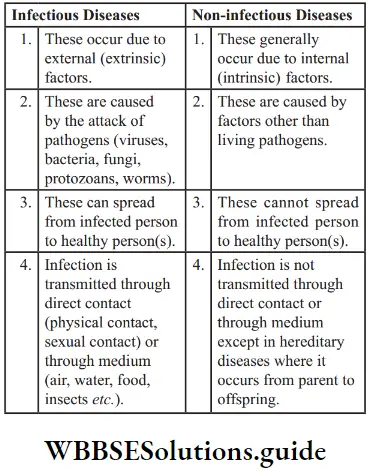
NEET Biology Class 9 Why Do We Fall Ill Difference between Infectious Diseases and Non-infectious Diseases

Question 19. Name any two diseases which occur due to mosquito bites.
Answer:

  1. Malaria
  2. Japanese encephalitis.

Short Answer Questions on Why Do We Fall Ill for NEET Exam

Question 20. Name the viral disease which is about to be completely irradicated from the world. What are its preventive measures?
Answer:

  • Poliomyelitis or Polio.
  • It can be prevented through immunization with oral polio vaccine.

Question 21. Name two symptoms of tuberculosis of lungs.
Answer:

  • Fever and cough
  • Blood-containing sputum.

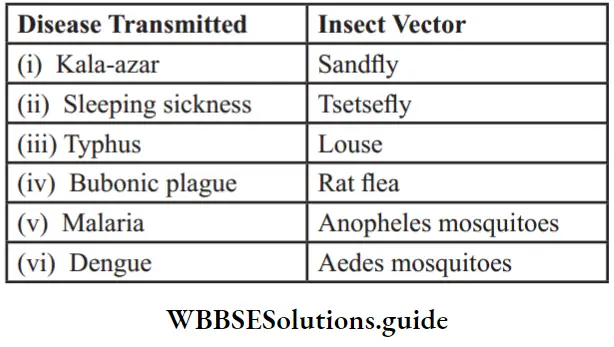
Question 22. Name the vectors of following diseases:

  1. Kala-azar
  2. Sleeping sickness
  3. Typhus
  4. Bubonic plague
  5. Malaria
  6. Dengue

Answer:

NEET Biology Class 9 Why Do We Fall Ill difference between Disease Transmitted and Insect Vector

Best Short Questions for Class 9 Biology Why Do We Fall Ill

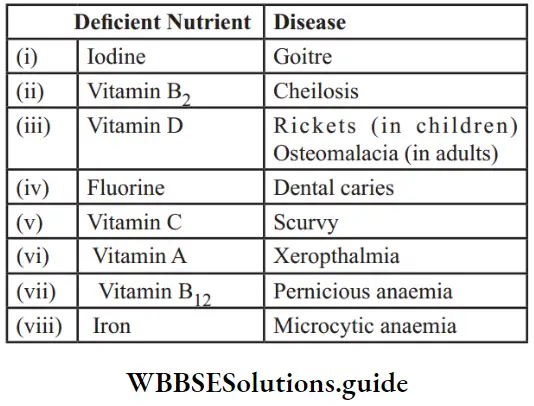
Question 23. Name the deficiency diseases caused due to deficiency of

  1. Iodine
  2. Vitamin B2
  3. Vitamin D
  4. Fluorine
  5. Vitamin C
  6. Vitamin A
  7. Vitamin B12
  8. Iron

Answer:

NEET Biology Class 9 Why Do We Fall Ill difference between Defiient Nutrient and Disease

Why Do We Fall Ill Class 9 NEET One-Liner Questions

Question 24. Name any three p
Answer:

  1. Malaria
  2. Amoebic dysentry
  3. Sleeping sickness

Question 25. Name one disease caused by Anopheles, Culex and Aedes spp. of mosquitoes. Name the organism that transmits the following diseases:

  1. Diarrhea
  2. Bubonic plague

Answer:

1. Anopheles – Malaria.

  1. Culex – Filariasis.
  2. Aedes – Dengue.

2.

  1. Diarrhea is transmitted by housefles.
  2. Bubonic plague is transmitted by rat fla.

NEET Study Material for Why Do We Fall Ill with Short Q&A

Question 26.

  1. A viral disease which generally affects children and causes paralysis of limbs. It is about to be eradicated from the world. Name this disease.
  2. Name the programme which was launched globally in 1995-1996 with an aim to eradicate a viral disease from the world.
  3. What is the target age group of patients at present in this program?

Answer:

  1. Poliomyelitis
  2. Pulse Polio Immunisation Programme
  3. The target age group at present is extended to all children under 5 years of age.

Question 27. Acute diseases are severe but are less harmful than chronic diseases. Why?
Answer:

Acute diseases are severe but last for short duration. These do not cause long term bad effects on our health. On the contrary, chronic diseases are long lasting and have drastic long term effects on patient’s health.

Question 28.

  1. AIDS is a viral disease that spreads by sexual contact. Is there any other way in which this disease can spread?
  2. Can you name two diseases which spread by sexual contact but are caused by bacteria instead of virus?
  3. Do microorganisms, responsible for causing these diseases, spread by physical contact such as hug or handshake?

Answer:

  1. Yes, through blood transfusion from infected person or through use of common needles and syringes.
  2. Syphilis and Gonorrhoea, both caused by bacteria.
  3. No.

NEET Biology Class 9 Chapter 4 Short Answer Type Questions with Solutions

Question 29.

1. Name a group of diseases that last only for short period of time.
Answer: Acute diseases

2. Name any one anatomical or physiological abnormality present in human beings since birth due to:

  1. Gene Or Chromosomal Mutations
  2. Environmental factors.

Answer:

  1. Haemophilia.
  2. Cleft p

NEET Biology Class 9 Chapter 3 Diversity In Living Organism Short Question And Answers

Short Answer Questions

Discreptions: Give answer in 2-3 sentences.

Question 1. How does a subspecies differ from a species?
Answer:

A species consists of a population (or populations) that cannot interbreed successfully with another species. A subspecies consists of a group within a species that is usually geographically isolated from other subspecies. If ranges of different subspecies do overlap, successful interbreeding can occur.

Read And Learn More: NEET Class 9 Biology Short Question And Answers

Question 2. Describe the evolution of specialized cells, tissues, and organs in the Animalia, including the name of the animal group that first showed each evolutionary innovation.
Answer:

Sponges are the group in which the first specialized cells appeared. However, sponges are merely loose collections of such cells. The cnidaria were among the first animals to evolve true, differentiated tissues. Flatworms were among the first animals to evolve true organs.

NEET Biology Class 9 Diversity in Living Organisms Short Questions

Question 3. Why do we classify organisms?
Answer:

We classify organisms because of classification:

  • Makes the study of diverse forms of life easy i.e. by
    studying one member of the group we can know about
    the whole group.
  • Helps us to understand the interrelation among different
    living organisms and trace the order of evolution.
  • Provides the basis for developments in other branches
    of biology e.g. crop improvement and animal breeding.

NEET Biology Class 9 Chapter 3 Diversity In Living Organism Short Question And Answers

Question 4. What are the kingdoms of life?
Answer:

A five-kingdom classification system consisting of the kingdoms Monera, Protista, Animalia, Fungi and Plantae is widely used, but a new and increasingly accepted three domain system will require revisions at the kingdom level of classification. The three domains, representing the three main branches of life, are Bacteria, Archaea and Eukarya.

Question 5. The biological field of taxonomy classifies organisms based on their evolutionary relationships. Indicate the correct order for these levels of taxa Class, family, species, genus, kingdom, phylum, order

  1. What are the three domains of life?
  2. What is the binomial name for humans”

Answer:

  1. Kingdom, phylum, class, order, family, genus, species
  2. Archaea, Bacteria, Eukarya
  3. Homo sapiens.

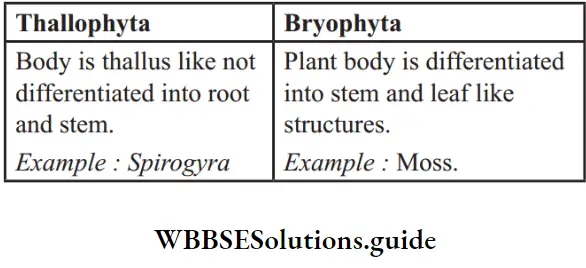
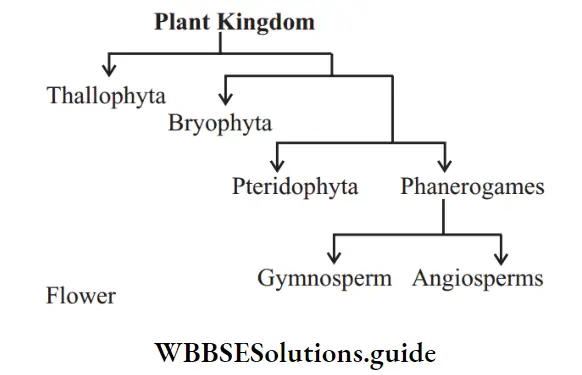
Question 6. Give the difference between Thallophyta and Bryophyta.
Answer:

NEET Biology Class 9 Diversity in Living Organism differences between thllophyta and bryophyta

NEET Biology Diversity in Living Organisms Important Short Questions

Question 7. Give the characteristics of Monera.
Answer:

  1. Organisms are unicellular, do not have a defined nucleus.
  2. Organisms may have cell wall or may not have cell wall.
  3. Mode of nutrition is either autotrophic or heterotrophic

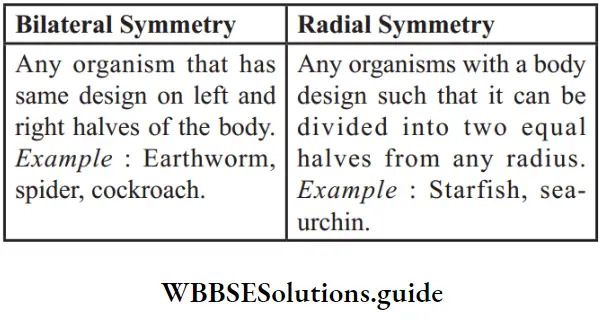
Question 8. Give the difference between the two types of symmetry that animals show.
Answer:

NEET Biology Class 9 Diversity in Living Organism differences between bilateral symmetry and radial symmetry

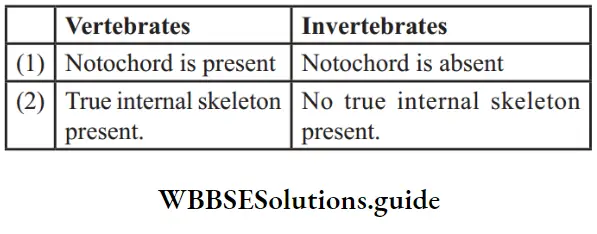
Question 9. Differentiate between Vertebrates and Invertebrates.
Answer:

NEET Biology Class 9 Diversity in Living Organism differences between vertebrates and invertebrates

Best Short Questions for Class 9 Biology Diversity in Living Organisms

Question 10. How are pores or holes all over the body of porifera important?
Answer: The pores or holes present all over the body of the organisms lead to a canal system that helps in circulating water throughout the body to bring in food and oxygen.

Question 11. State the features of all chordates.
Answer:

All chordates possess the following features:

  • Have A Notochord
  • Have A Dorsal Nerve Cord
  • Are Triploblastic
  • Have paired gill pouches

Question 12. Name the phylum of the following animals.

  1. Tapeworm
  2. Starfish
  3. Jellyfish
  4. Octopus

Answer:

  1. Tapeworm – Phylum Platyhelminthes
  2. Starfish – Phylum Echinodermata
  3. Jelly fish – Phylum Coelenterata
  4. Octopus – Phylum Mollusca

Diversity in Living Organisms Class 9 NEET One-Liner Questions

Question 13. Give general characteristics of Platyhelminthus’?
Answer:

  1. These are flatworms.
  2. Most of them are parasites.
  3. Animals are triploblastic.
  4. No true internal body cavity.

Examples: Tapeworm, Planaria, Liver fluke

Question 14. Give the characteristics of Arthropoda with two examples.
Answer:

  1. Arthropoda means ‘Jointed legs’.
  2. Animals are bilaterally symmetrical and segmented.
  3. It has an open circulatory system.
  4. They have open circulatory system.

Example: Spider, scorpions, crabs house flies.

Question 15. Give specific characteristics of coelenterata.
Answer:

  1. Water-living animals.
  2. Body is made of two layers of cells.
  3. Some of them live in colonies corals, while others have solitary life-span (Hydra).
  4. Body cavity present.

Question 16. Give the characteristics of mammals.
Answer:

  1. Mammals are warm-blooded animals.
  2. Four chambered heart
  3. Mammary glands for production of milk to nourish their younger one.
  4. Skin has hairs and sweat and oil glands.
  5. Most of them produce their young ones (viviparous)

NEET Biology Class 9 Chapter 3 Short Answer Type Questions with Solutions

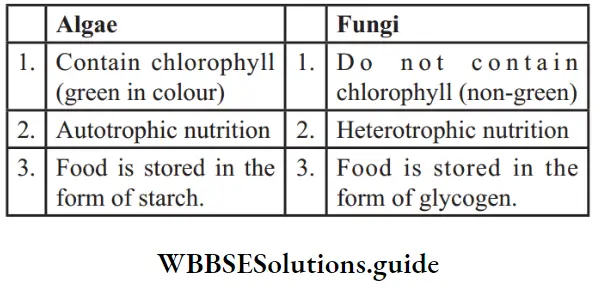
Question 17. Differentiate between algae and fungi.
Answer:

NEET Biology Class 9 Diversity in Living Organism differences between algae and fungi

Question 18. Give the characteristics ofAves.
Answer:

Characteristics of Aves are :

  1. Streamlined body
  2. Hollow and light bones
  3. Forelimbs are modified into wings, which help in fling.
  4. Warm blooded animals. Heart with four chambers.
  5. Egg laying animals
  6. Beak present, teeth are absent.

NEET Study Material for Diversity in Living Organisms with Short Q&A

Question 19. Birds should feed more often than lizards. Give reasons.
Answer:

Birds are warm-blooded animals and are more active. Some of them often fl continuously for hours. So their energy requirement is more. On the other hand, lizards are coldblooded, sluggish animals and often go for hibernation. So their energy demand is relatively less. Energy is produced by the oxidation offood materials. So, to fulfi the higher energy demand, birds should feed more often than lizards.

Question 20. A, B and C are living organisms. Identify the group to which they belong to on the basis of the following features:

1. A is unicellular, microscopic, eukaryotic, and shows locomotion with the help of pseudopodia.
Answer: Organism A belongs to kingdom Protista.

2. B is unicellular, microscopic, prokaryotic, and has cell wall.
Answer: Organism B belongs to kingdom Monera.

3. C is multicellular, fiamentous, eukaryotic, autotrophic and aquatic.
Answer: Organism C belongs to kingdom Plantae; division Thallophyta and class Algae.

Question 21.What is haemocoel? Which groups of animals have it?
Answer: The coelomic cavity meant for blood circulation is termed as haemocoel. In haemocoel, the blood flws freely, so this type of blood circulation is known as open type circulation. Haemocoel is found in the animals of phylum Arthropoda.

Question 22.What is the fate of notochord in higher chordates?
Answer: In higher chordates, the notochord is transformed into vertebral column, which lies mid dorsally extending from skull to tail.

Question 23. How can we consider that green algae are similar to higher plants?
Answer: On the basis of the following points, green algae can be considered to be similar to higher plants :

  1. Their cell wall is made up of cellulose and pectin.
  2. They contain pigments like chlorophyll and carotenoid
  3. They contain pigments like chlorophyll and carotenoid
  4. They store food in the form of starch.

Question 24. Why are bryophytes called ‘amphibians of the plant world’?
Answer: Like amphibians, bryophytes, also need water for fertilisation and development. Hence, they are called amphibians of the plant world.

Question 25. Give the characteristics of Protista.
Answer:

  1. Organisms are unicellular, eukaryotic organisms
  2. Use appendages for locomotion like cilia, flagella.
  3. Nutrition is either autotrophic or heterotrophic, e.g. algae, protozoa.

Diversity in Living Organisms Class 9 NCERT Short Question Bank

Question 26.What are hermaphrodites? Give two examples.
Answer: When an organism has both the sexes, i.e., it can produce both sperms and eggs.

Example: sponges, earthworms.

Question 27. Give the characteristics features of Echinodermata.
Answer:

  1. Spikes present on skin.
  2. Free-living marine animals.
  3. Triploblastic and have a coelomic cavity.
  4. Have peculiar water-driven tube system called water vascular system that they use for making movement around.
  5. Have hard calcium carbonate structure that is used as a skeleton.

Example: Starfish, sea-urchin.

Question 28. What are the conventions followed for writing the scientific names?
Answer:

The conventions followed while writing the scientific names are:

  1. The name of the genus begins with a capital letter.
  2. The name of the species begins with a small letter.
  3. When printed, the scientific name is given in italics.
  4. When written by hand, the genus name and the species name have to be underlined separately.

Question 29. Why are vertebrates also called craniates?
Answer: All vertebrates possess skull or cranium, inside which brain ramains protected. Since cranium is always present in vertebrates they are also referred to as craniates.

Question 30. In which kingdom are viruses placed?
Answer:

Viruses are classified as living organisms because they have very simple, noncellular structure and cannot exist independently. They are on the boundary between what we regard as living and non living, and hence, are not included in any kingdom under modern classification.

Short Answer Questions on Diversity in Living Organisms for NEET Exam

Question 31. Why is Euglena called a plant-animal?
Answer:

Euglena is claimed to be a plant by botanists because it contains chloroplats and obtains its food through photosynthesis. On the other hand, zoologists consider it to be an animal as its body is covered by pellicle, it bears myonemes and reproduces by binary fision. Since Euglena possesses the features of both plants and animals, it is often called as a plant-animal.

Question 32. Identify the animal group having:

1. Spiny body and radial symmetry
Answer: Echinodermata

2. Bones are light and hollow
Answer: Aves

3. External ear or pinna present
Answer: Mammal

4. Soft-bodied animals supported by calcareous shell.
Answer: Mollusca

Question 33. What conventions are followed while writing the scientific names?
Answer:

  • The scientific name should be written in italicized letters.
  • Every organism must have two Latin names – the first name representing genus and the second name representing the species.
  • The genus name must start with a capital letter and the species name with a small letter

NEET Biology Class 9 Chapter 2 Tissues Short Question And Answers

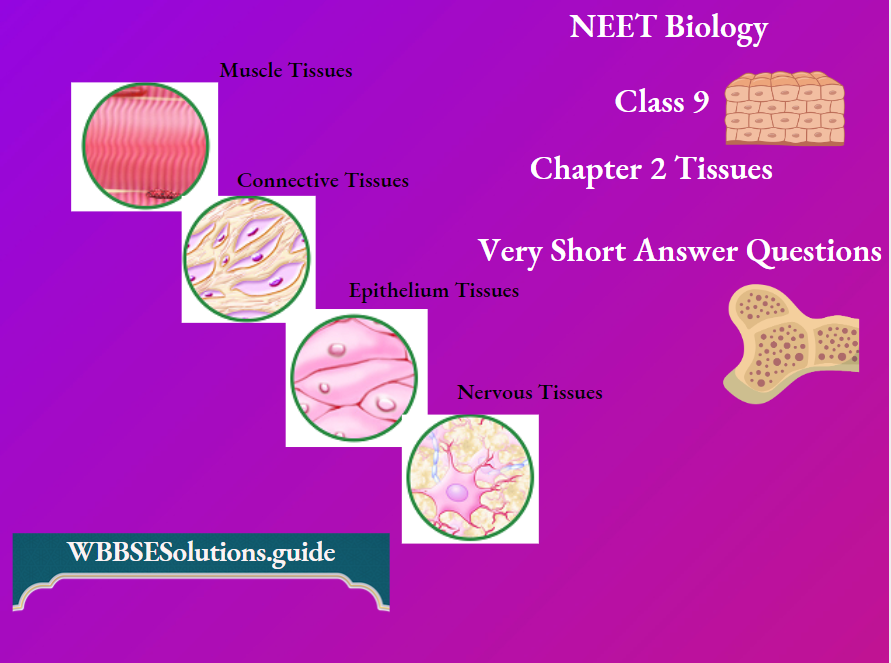
Tissues Short Answer Questions

Directions: Give an answer in 2-3 sentences.

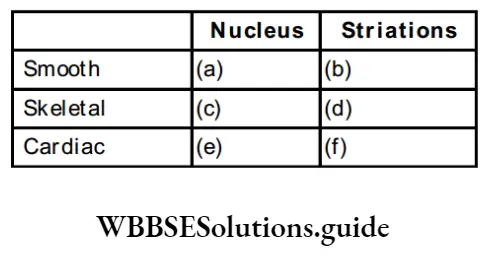
Question 1. Fill in the following table relating to muscle tissue.

NEET Biology class 9 Tissues muscle tissue

Read And Learn More: NEET Class 9 Biology Short Question And Answers

Answer:

  1. Single
  2. No
  3. Many
  4. Yes
  5. Single
  6. Yes

Question 2. Where are the intercalary meristem located?
Answer:

Intercalary meristem is located in between the regions of permanent tissues, usually at the base of node, base of internode or at the base of the leaf.

Question 3. What are the main function of nervous tissue?
Answer:

The cells of nervous tissue are highly specialized for being stimulated. They transmit the stimulus from one place to another.

NEET Biology Class 9 Tissues Short Question and Answers

Question 4. Select the examples of

1. Complex permanent tissue,
Answer: Complex permanent tissue – Phloem

2. Simple permanent tissues,
Answer: Simple permanent tissue – Sclerenchyma, Chlorenchyma

NEET Biology Class 9 Chapter 2 Tissues Short Question And Answers

3. Connective tissue,
Answer: Connective tissue – Blood, bone, cartilage

4. Muscular tissue
Answer: Muscular tissue – Muscle

5. Nervous tissue, from the given
Answer: Nervous tissue – Neuron

Blood, Phloem, Muscle, Bones, Sclerenchyma, Neuron, Cartilage, Chlorenchyma

Question 5. Give different components of phloem tissue.
Answer:

Sieve tubes, Companion cells, Phloem parenchyma and Phloem fires.

Question 6. Which animal epithelial tissue is called pavement epithelium? Where is it located?
Answer:

Simple squamous epithelium: It lines the blood vessels, coelom, urinary tubules and alveoli of lungs.

Short Answer Questions on Plant and Animal Tissues NEET

Question 7. Name two components of blood and give functions of blood plasma.
Answer:

  • Blood has two components-Plasma and Blood cells.
  • Blood plasma serves the function of transport of nutrients, carbon dioxide, waste products, hormones and metabolites intermediates. It also regulates water balance, pH and body temperature.

Class 9 Biology Chapter 2 Tissues NEET Short Notes with Questions

Question 8. What is lymph? Give its components.
Answer:

Lymph is a colorless flown tissue that acts as a middle man for transport of materials between blood and tissue cells.

It consists of two parts:

  • Plasma
  • White blood corpuscles.

Question 9. Name the tissues that show the following features:

1. Cells are living; cells show thickening; provide mechanical support to plants
Answer: Collenchyma

2. Cells are dead; cells show thickening; provides mechanical support to plants; made up of one type of cells
Answer: Sclerenchyma

3. Cell are living; cells contain green coloured chloroplasts; possess intercellular spaces.
Answer: Chlorenchyma

Question 10. Distinguish between the following:

1. Cartilage and bone on the basis of matrix.
Answer: Matrix of cartilage may or may not have calcium salts whereas calcium salts, mainly calcium phosphates, are always present in the matrix of bone.

2. Blood and lymph on the basis of components.
Answer: Blood consists of plasma, erythrocytes, leucocytes and platelets whereas lymph consists of plasma and leucocytes.

3. Simple tissues and complex tissues on the basis of constitution of cells.
Answer: Simple tissue is made up of similar cells whereas complex tissue is made up of two or more than two types of cells.

NEET Biology Tissues Chapter Important Short Questions and Answers

Question 11. Answer the following:

1. Which skeletal tissue does show unidirectional growth?
Answer: Cartilage

2. Which animal tissue is responsible for movement of body parts and locomotion?
Answer: Muscular tissue

3. Which animal tissue is protective in function?
Answer: Epithelial tissue.

Question 12. Give three features of cardiac muscles.
Answer:

Cells/Fibres: They are small, cylindrical, uninucleate striated with short lateral branches.

Intercalated Discs: In the area of union between the two adjacent cardiac muscle fires, zig-zag junctions called intercalated discs develop. The intercalated discs function as impulse boosters.

Rhythmic Contractions: The muscles are involuntary and nonfatigued which continue to contract and relax tirelessly throughout life.

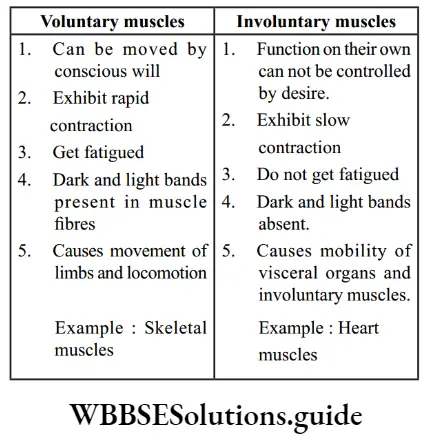
Question 13. Differentiate between voluntary and involuntary muscles.
Answer:

Give one example of each type.

NEET Biology class 9 Tissues Differences between voluntaru muscles and involuntary muscles

Best Short Questions for Class 9 Biology Tissues NEET

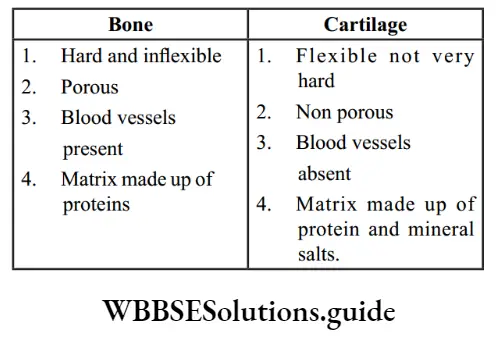
Question 14. Give four differences between the Bone and Cartilage.
Answer:

NEET Biology class 9 Tissues difference between bone and cartilage.

Question 15. Name the functions of cartilage.
Answer:

  1. It provides support and flexibility to body parts.
  2. It smoothens the surface at joints.

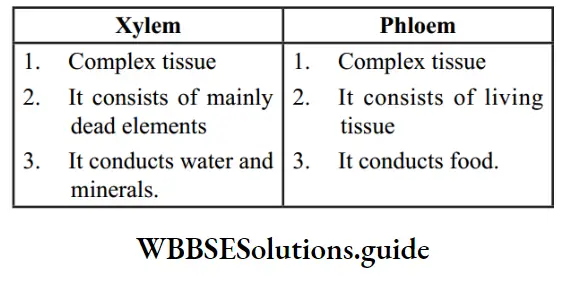
Question 16. Difference between xylem and phloem.
Answer:

NEET Biology class 9 Tissues xylem and pholem

Question 17. Name the tissues for the following:
Answer:

  1. Stores fat in the animal body
  2. Adipose tissue
  3. Divides and redivides to grow in plants
  4. Meristematic tissue

Question 18. Why does epidermal tissue have no intercellular space?
Answer:

The epidermal (layer) tissue forms a protective outer covering for the plants and it protects the internal parts of the plant. It aids in the protection against loss of water, mechanical injury and invasion by parasitic fungi.

For this protective role to play the continuation of cells is necessary, hence it does not have intercellular space.

Tissues Class 9 NEET One-Liner Questions and Answers

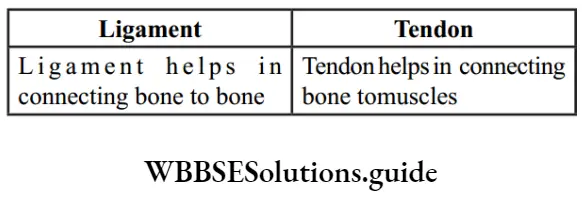
Question 19. Give the difference between ligament and tendon.
Answer:

NEET Biology class 9 Tissues Ligament Tendon

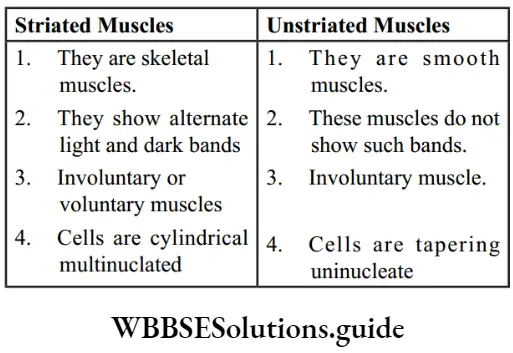
Question 20. Give the difference between striated muscles and unstriated muscles.
Answer:

NEET Biology class 9 Tissues Striated Muscles Unstriated Muscles

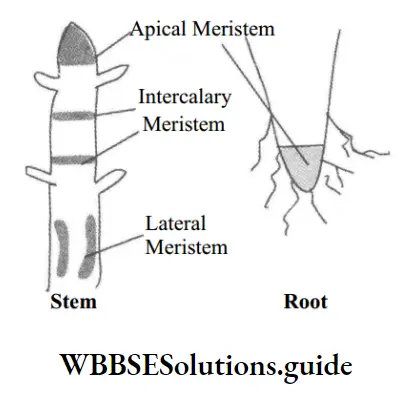
Question 21. Name different types of meristematic tissue and draw a diagram to show their location.
Answer:

The 3 different types of meristematic tissue are:

  1. Apical meristem – Function; growth in length.
  2. Lateral meristem – Function; growth in thickness.
  3. Intercalary meristem – Function; growth in internodes

NEET Biology class 9 Tissues Intercalary meristem - Function

NEET Biology Class 9 Tissues Chapter 2 MCQs and Short Questions

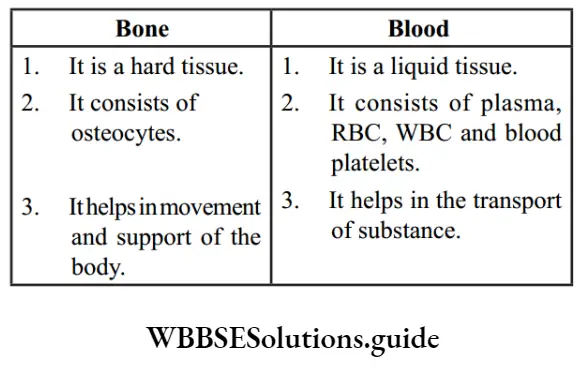
Question 22. State the difference between Bone and Blood.
Answer:

NEET Biology class 9 Tissues bone blood

Question 23. Name three types of muscle tissues and give the function of each.
Answer:

Three types of muscle tissues are:

  1. Striated Muscle
  2. Smooth Muscle
  3. Cardiac muscle.

1. Striated muscle: These muscles show alternate light and dark bands or striations. They are involuntarily present in skeletal tissues, help in the movement of body and bones.

2. Smooth muscle: These are involuntary muscles, that control the movement of food in the alimentary canal, contraction and relaxation of blood vessels. Present in iris, uterus etc.

3. Cardiac muscles: These muscles are present in heart, help in the rhythmic contraction and relaxation throughout the life.

NEET Study Material for Tissues Chapter Class 9 with Q&A

Question 24. Explain the structure, function and location of nervous tissue.
Answer:

Structure: Nervous tissue consists of cells called nerve cells joined end to end cytoplasm, from this cells body long thin hair-like parts arise called dendrites. One of this part is long, branched and is called axon.

Location: Nervous tissues are present in brain, spinal cord and nerves.

Function: Nervous tissue receives the stimuli and transmit the stimulus rapidly from one place to another within the body. The nerve impulse allows us to move our muscles and respond to any stimuli.

Question 25. What is the function and location of stratified squamous epithelium?
Answer: Stratified squamous epithelium is present in the skin. The layers of cells are arranged to prevent wear and tear.

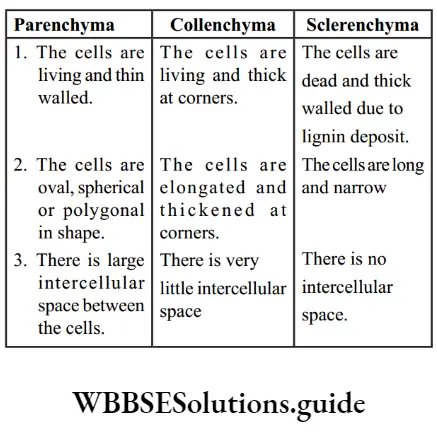
Question 26. State the differences between simple tissues of plants.
Answer:

The simple tissues of plants are:

  1. Parenchyma
  2. Collenchyma
  3. Sclerenchyma

NEET Biology class 9 Tissues simple tissues of plants

Tissues Class 9 NCERT Biology NEET Short Question Bank 

Question 27. What is the utility of tissues in multicellular organisms?
Answer:

  • Division of Labour: Tissues bring about the division of labor in multicellular organisms. It increases efficiency.
  • Higher Organisation: Tissues become organized to form organs and organ systems.
  • Individual Cells: Work-load of individual cells is decreased.

NEET Biology Class 9 Chapter 1 The Fundamental Unit of Life Short Question And Answers

The Fundamental Unit of Life Short Answer Questions

Question 1. Explain why it is not enough just to say that a Answer: is “hypertonic.”
Answer:

Hypertonic and hypotonic are relative terms: A Answer: that is hypertonic to tap water could be hypotonic to seawater. In using these terms, you must provide a comparison, as in “The Answer: is hypertonic to the cell.

Read And Learn More: NEET Class 9 Biology Short Question And Answers

Question 2. As a cell increases in size, its surface-to-volume ratio decreases which causes the cell to function less effiiently. Discuss ways in which variations in cell structure can help overcome this problem.
Answer:

Cells with spines or extensions help to overcome the surface area-to-volume ratio problem by increasing their surface area. Elongated or non-spherical cells also have a more favourable ratio.

Question 3. Why is the presence of organelles within eukaryotes signifiant? In otherwords, why are eukaryotes so complex and diverse as compared with prokaryotes?
Answer:

Eukaryotes have organelles that each contain different enzymes, so the enzymes do not mix and interact within the cytoplasm of the cell. This arrangement allows for greater diversity in types of enzymes and reactions and greater diversity in eukaryotes. Prokaryotes do not have such organelles.

NEET Biology Class 9 Chapter 1 The Fundamental Unit of Life Short Question And Answers

Question 4. Distinguish between rough endoplasmic reticulum and smooth endoplasmic reticulum, both structurally and functionally.
Answer:

Rough ER consists of cisternae with numerous polysomes on their outer surface, whereas smooth ER lacks ribosomes and is mostly tubular. Rough ER is involved in protein synthesis, but smooth ER is involved in the synthesis of lipids.

Question 5. How is osmosis a special type of diffusion?
Answer:

Osmosis is a special type of diffusion because both involve movement of molecules of substance from the region of its higher concentration to the region of its lower concentration. In osmosis water moves across a semi-permeable membrane.

NEET Biology The Fundamental Unit of Life short questions and answers

Question 6. What are the functions of vacuoles in plant cells and unicellular organisms?
Answer:

In plant cells vacuoles:

  1. Provide rigidity to the cell.
  2. Store waste products, and useful substances like amino acids, sugars, organic acids, proteins, minerals and pigments.

In unicellular organisms like Amoeba:

  1. Food material is enclosed in vacuoles, called the food vacuole.
  2. Contractile vacuoles expel water and waste products from the cell.

Question 7. Proteins embedded in the plasma membrane have several important functions in the life of the cell. Describe two of these functions. Explain why they are important to the cell?
Answer:

One function of proteins embedded in the plasma membrane is to form gateways that allow selective passage of ions and molecules in and out of the cell. This allows wastes to be removed and needed substances to enter. Another function is to recognize changes in the outside environment and to communicate with other cells for the quick response to change occurred.

Question 8. Organelles are the functional subunits of the cell. Each organelle has a specifi function which makes it easier to master the names, structure, and function of each component. In the following table, indicate the functions associated with each structure.

Organelles:

1. Nucleus
Answer:

Control centre of cell ; houses DNA

2. Rough Endoplasmic Reticulum
Answer:

Site of protein synthesis.

Important short questions from The Fundamental Unit of Life for NEET

3. Smooth Endoplasmic Reticulum
Answer:

Lipid Synthesis

4. Golgi body
Answer:

Center For Packaging And Secretion

5. Lysosomes
Answer:

Degrade Debris, Recycle Cell Contents

6. Mitochondrion
Answer:

Organelle In Which Energy Transformation Occur.

7. Chloroplast
Answer:

Site Of Photosynthesis

8. Peroxisomes
Answer:

Contain enzymes that help the cell use oxygen

The Fundamental Unit of Life Class 9 short answer questions with solutions

Question 9. Why do plant cells have more in number and big sized vacuoles as compared to the animal cell?
Answer:

Plant cells attain turgidity and rigidity due to the more number of vacoules as well as large sized vacuoles help the plant cells to withstand the wear and tear, external environment conditions. They also help in the storage of essential material required by plants for their growth like amino acids, sugar and various organic substances.

Question 10. We eat food composed of all the nutrients like carbohydrates, proteins, fats, vitamins, minerals and water. After digestion, these are absorbed in the form of glucose aminoacids, fatty acids, glycerol etc. What mechanisms are involved in absorption of digested food and water?
Answer:

Water is absorbed by osmosis; fatty acids and glycerol are absorbed by diffusion (passive transport) and glucose, amino acids and some ions are absorbed by active transport.

Question 11. Write the name of different plant parts in which chromoplast, chloroplast and leucoplast are present.
Answer:

  • Chromoplasts – Flowers and fruits.
  • Chloroplasts – Green leaves and green parts of young stems.
  • Leucoplasts – Root and underground stem

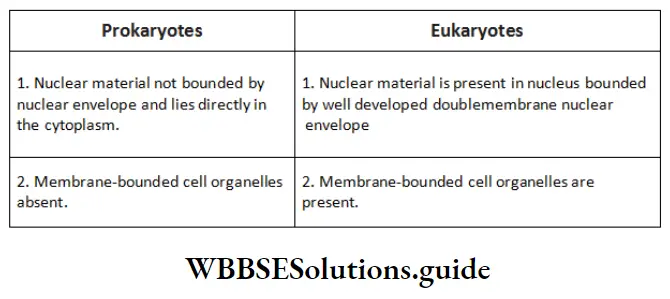
Question 12. Give two major differences between prokaryotes and eukaryotes.
Answer:

NEET Biology class 9 The Fundamental Units Of life Porkaryotes and Eukaryotes

Structure and function of cell organelles short answer questions NEET

Question 13. What is the main function of each of the following cell organelles?

1. Ribosome
Answer:

Ribosomes are the sites of protein synthesis.

2. Cell wall
Answer:

The cell wall provides shape, rigidity and protection to the cell.

Difference between plant and animal cells short questions NEET

Question 14. State two types of plastids. Write one function of each.
Answer:

Two types of plastids in plant cells are:

  • Leucoplasts (colourless plastids). These store carbohydrates, proteins and lipids in the cells.
  • Chromoplasts (coloured plastids). Green plastids e.g. chloroplasts synthesize food in the presence of sunlight by the process called photosynthesis.

Question 15. What are chromosomes? List their two functions.
Answer:

Chromosomes are thread-like structures usually present in the nucleus and become visible only during cell division.

They are composed of DNA and proteins:

  • Chromosomes contain hereditary information of the cell.
  • DNA of chromosomes also controls all the activities of the cell

Question 16. Name the nucleic acids that are present in an animal cell.
Answer:

Deoxyribonucleic acid (DNA). Ribonucleic acid (RNA)

Question 17. Cell wall is composed of which chief material. How many molecules of glucose contributes o prepare cellulose?
Answer:

Cellulose (carbohydrate). A cellulose molecule is a long, unbranched chain of about 6000 glucose molecules.

Plasma membrane and its functions short answer questions NEET

Question 18.

1. Is the cell wall in a plant cell living or non-living?
Answer:

The plant cell wall is non-living.

2. Is the cell wall in a plant cell permeable or selectively permeable?
Answer:

It is permeable.

Question 3. What is its chemical composition?
Answer:

Plant cell wall is chiefl composed ofinsoluble fibous polysaccharide, cellulose (carbohydrate). Certain other compounds (hemicellulose, pectins and proteins) also occur in the cell wall.

Question 19.

1. Who coined the term ‘cell’?
Answer:

Robert Hooke coined the term cell

NCERT-based short answer questions on The Fundamental Unit of Life

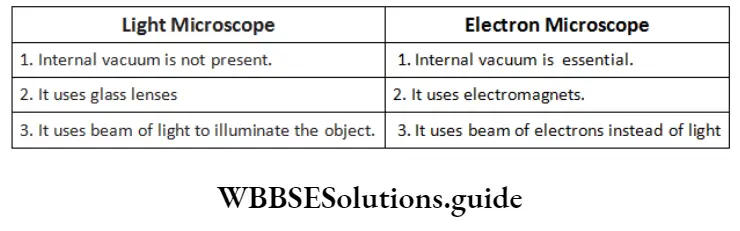
2. Name three major differences between light microscope and electron microscope.
Answer:

NEET Biology class 9 The Fundamental Units Of life Light microscope and electron microscope

Question 20.

1. Name any two cell organelles which are bounded by double membranes.
Answer:

Mitochondria and chloroplast.

2. Why are mitochondria called semiautonomous organelles?
Answer:

Mitochondria are capable of self duplication. They are also able to synthesize some of their own proteins. Hence, they are regarded as semiautonomous organelles

3. Where one would fid green chlorophyll pigment in a plant cell?
Answer:

Chlorophyll pigments are found in thylakoids of chloroplasts in a plant cell.

Osmosis and diffusion short answer questions NEET

Question 21.

1. Name any two cell organelles that are bounded by double membranes.
Answer:

Nuclear envelope, nuclear sap, chromatin material, nucleolus and nuclear matrix.

2. What are chromosomes? Give their chemical composition.
Answer:

Chromosomes are thread-like structures usually present in the nucleus and become visible only during cell division. Each chromosome is made up of DNA and proteins.

3. List the type of chromosome if it has the following position of the centromere.

1. In the middle.
Answer:

Metacentric chromosome

2. At the tip of chromosome.
Answer:

Telocentric chromosome.

Question 22. What is a nucleoid?
Answer:

The nuclear region in some cells are poorly defied due to the absence of a nuclear membrane, it contains only nucleic acid. This undefined nuclear region with nucleic acid in it is called nucleoid.

NEET Biology Class 9 Chapter 6 Natural Resources Very Short Answer Questions

Natural Resources Very Short Answer Questions

Directions: Give an answer in one word or one sentence.

Question 1. Which radiations are absorbed by carbon dioxide?
Answer: Infra-red radiations are absorbed by carbon dioxide

Question 2. Name two organisms that play a vital role in the nitrogen cycle.
Answer: Symbiotic nitrogen fixing bacteria like Rhizobium free-living nitrogen-fixing bacteria like Nitrosomonas and Nitrobacter

Question 3. What is the majorreservoirforwaterin the hydrological cycle ?
Answer: The oceans of Earth are major water reservoirs for the hydrologic cycle

Read And Learn More: NEET Class 9 Biology Very Short Answer Question And Answers

Question 4. Why are there many fossils of marine organisms in sedimentary rock?
Answer: Marine organisms died and sank to the ocean floor to become fossilized in sedimentary rocks. Some of the these fossils are present in sedimentary rocks that are exposed on continents today

NEET Biology Natural Resources very short answer questions

Question 5. Which forms of energy do you see that contribute to acid depositions ?
Answer: Coal-fired electrical power generation is responsible for most acid deposition

Question 6. How might forest declines on a global scale affect the greenhouse effect ?
Answer: Decreases in the amount of forests globally would reduce an important carbon sink, causing an increase in atmospheric CO 2 concentrations. This would lead to increase greenhouse effect

“class 9 science natural resources “

Question 7. Is stratospheric ozone depletion uniform over the Earth’s surface?
Answer: No, Stratospheric ozone depletion is maximal in the polar regions

Question 8. Explain the cause of the thinning of the ozone layer surrounding Earth.
Answer: Chlorofluorocarbons used in refrigeration and aerosol propellants react with the ozone in the upper atmosphere, causing it to slowly disappear.

Question 9. Why is the transfer of energy in an ecosystem referred to as energy flw, not energy cycling ?
Answer: Because energy passes through an ecosystem, entering as sunlight and leaving as heat. It is not recycled within the ecosystem.

NEET Biology Class 9 Chapter 6 Natural Resources vasqs

Important very short answer questions from Natural Resources for NEET

Question 10. What are the basic requirements ofall life forms?
Answer: The basic requirements of all live forms are ambient temperature, water and food.

Question 11. What is a breath of life?
Answer: Air is called breath of life.

Question 12. Which forms the nuclei for condensaiton of water vapours in the atmosphere?
Answer: Dust and other particles

Question 13. Defie atmosphere.
Answer: The atmosphere is a transparent gaseous envelope that surrounds the earth.

Question 14. What is biosphere?
Answer: The biosphere is the living mantle of the earth where living beings occur

Question 15. Name the physical divisions of the biosphere.
Answer: There are three physical divisions of biosphere-lithosphere (land or soil), hydrosphere (water) and atmosphere (air)

Question 16. What is the major component of atmosphere of Earth and
Answer: The major component of the atmosphere of Earth is nitrogen (78.08%) while that of Mars and Venus is carbon dioxide (95-97%)

Class 9 Natural Resources very short answer questions with answers

Question 17. Name an area in India with very poor vegetation.
Answer: Parts of Rajasthan like Jaiselmer (hot desert) and Dras (cold desert).

Question 18. Name parts of India with maximum biodiversity.
Answer: Western Ghats and North-East India

Question 19. Where is the major part offresh water bound up?
Answer: In the form of ice caps and glaciers (1.9% out of 2.5% of fresh water)

Question 20. Defie eutrophication.
Answer: Eutrophication is nutrient enrichment of water bodies that results in a spurt in the growth of plants, especially algae causing colouration of water known as algal bloom

“class 9 science chapter 14 question answer pdf “

Question 21. Which one determines the density and richness of biota?
Answer: Availability of water in the form of rainfall.

Types of natural resources very short answer questions NEET

Question 22. What is soil?
Answer: Soil is the upper humus containing the weathered part of the crust of the earth which supports plant life

Question 23. What is weathering?
Answer: Weathering is the pulverisation of rocks to form fie particles

Question 24. Name the types of weathering.
Answer: There are three types of weathering-physical, chemical and biological

Question 25. Defie paedogenesis.
Answer: Paedogenesis is the process of formation of soil from the upper rocky crust of the earth

Question 26. Defie humiliation.
Answer: Humifiation is addition of partially decomposed organic matter or humus into weathered rock particles to form soil.

Question 27. What is green house?
Answer: Green house is a glass enclosure that is used for growing tropical plants in colder areas even during the winter.

Question 28. What are biogeochemical cycles?
Answer: Biogeochemical cycles are the repeated circulation of biogeochemical between abiotic and biotic components of the environment which result in their repeated withdrawal and replenishment of their pool

Question 29. What is the water cycle? Give its other name.
Answer: Water cycle is repeated circulation of water among various components of biosphere involving evaporation of water more from sea, falling more on land and flwing back into sea by rivers.

Importance of natural resources very short answer for NEET

Question 30. What are biogeochemicals?
Answer: Biogeochemicals are essential elements or nutrients required by living organisms that are obtained from the earth

Question 31. What are green house gases?
Answer: Green house gases (GHGs) are radiatively active gases which allow the solar radiations to pass through but reflct back long wave heat radiations.

“chapter 14 class 9 science “

Question 32. What is ODS?
Answer: ODS is ozone depleting substance which causes the breakdown of ozone present in the ozone layer into oxygen

Question 33. How is oxygen replenished in nature?
Answer: Oxygen is replenished through photosynthesis

Question 34. Name a process which causes a long term withdrawal of carbon from carbon cycle.
Answer: Formation of carbonate or limestone rocks.

Question 35. What is the ozone layer?
Answer: It is a layer in the stratosphere which is rich in ozone

Question 36. Defie nitrification.
Answer: Nitrification is the oxidation of ammonia (released during ammonification) into nitrate stat

“natural resources question answer “

Question 37. What is the chief source of precipitation?
Answer: The chief source of precipitation is rainfall

Question 38. Name two diseases caused by

  1. Infectious agents in polluted water.
  2. Toxic chemicals in polluted water.

Answer:

  1. Diseases caused by infectious agents in polluted water are cholera and typhoid.
  2. Diseases caused by toxic chemicals in polluted water are cancer and arsenicosis

Role of atmosphere in climate control very short answer questions

Question 39. What is the phenomenon through which certain pollutants get accumulated in tissues in increasing concentration along the food chain, called?
Answer: The phenomenon through which certain pollutants accumulate in tissues in increasing concentration along the food chain is called biological magnification

Question 40. What do you understand by ammonification?
Answer: Ammonifiation is the process of conversion of complex organic compounds like protein into ammonia. It is carried out by the action of decomposers such as the putrefying bacteria and fungi

Question 41. How is the ozone layer useful to us?
Answer: It protects animals, plants and human beings by absorbing harmful UV radiation

Question 42. What is smog?
Answer: It is a dark fog formed by condensation of water vapours, dust and smoke particles, and various gaseous pollutants (oxides of nitrogen and sulphur, hydrogen sulphide etc.) in the troposphere and reduces visibility

Question 43. Name two common types of pollutants of the air.
Answer: Particulate matter and gaseous pollutants

Question 44. What are non-renewable resources? Give one example.
Answer: These are the resources which are lost for ever, after use, as they are not restored. For example, Fossil fuels

Question 45. What is meant by renewable resources? Give one example.
Answer: These are the resources that can maintain themselves or can be replaced if managed wisely. Example. Wildlife

Question 46. Name any two man-made sources of air pollution.
Answer: Deforestation, thermal power plants

Question 47. What is the percentage of oxygen in the air? Name the biological process by which it is mainly returned to the atmosphere.
Answer: 20.94%; Photosynthesis.

Water cycle and its significance very short answer questions

Question 48. Name at least one disease that may occur in human beings due to continuos inhalation of gaseous pollutants.
Answer:  Asthma

Question 49. What is an ozone hole? Where was it fist located?
Answer: A decline in the thickness of the ozone layer over a restricted area is called an ozone hole. It was first noticed over Antarctica.

Question 50. In which layer of soil profile one would fid litter and humus?
Answer: Top soil (Horizon A)

Question 51. What do you mean by fossil fuels? Give one example of these.
Answer: These are the materials formed from the organisms that died in the remote past and got buried. Example: Coal

Question 52. What is humus?
Answer: It is dark-coloured partially decayed organic matter rich in nutrients. It makes soil porous thereby increasing its air and water-holding capacity

Question 53. How does the accumulation of solid wastes make human life miserable?
Answer: Accumulated solid wastes on degradation emit a foul smell that spreads with the wind. Moreover, these become breeding places for vectors of many human diseases

Question 54. Give at least two sources of methane formation in nature.
Answer: Decay of vegetation matter in marshes and paddy fields and biogas plants.

Question 55. What is the negative effect of excessive use of fertilizers and pesticides on the soil?
Answer: Excessive use of fertilizers and pesticides pollutes the soil, affects the soil fertility and subsequently reduces crop yield

Question 56. Name the chief ozone-depleting substance which is used in refrigerators and air conditioners as coolant.
Answer: Chlorofluorocarbons (CFCs)

Conservation of natural resources very short answer NEET

Question 57. How do solar radiations influence physical weathering?
Answer: Under the influence of solar radiation, the rocks heat up and expand. At night, these cool down and contract. Since all parts of the rocks do not expand and contract at the same rate, cracks appear in rocks and ultimately the large rocks break up into small pieces.

Question 58. What is soil pollution?
Answer: Contamination of soil with solid wastes, chemicals and excess fertilizers and pesticides thus reducing its fertility, is called soil pollution

Question 59. Give one example of each of inexhaustible and exhaustible resources.
Answer:

Inexhaustible resource – Air

Exhaustible resource – Fossil fuels

Question 60. Give one example of a non-renewable natural resource.
Answer: Fossil fuels.

Question 61. Name two common pathogens in polluted water.
Answer: Bacteria and protozoa.

Question 62. Name the gas which has the highest percentage in the air.
Answer: Nitrogen.

Question 63. What is detritus?
Answer: Dead remains of plants and animals are called detritus.

Question 64. What are detritivores? Name any one of them.
Answer: The organisms that consume detritus are called detritivores. Example: Earthworm

Ozone layer depletion very short answer questions NEET

Question 65. Why is the majority of fresh water not available to us for use?
Answer: The majority of fresh water is found frozen in the ice-caps at the poles an on snow-covered mountains. It is not available to us for use

Question 66. Which of the following two gases has more affinity for haemoglobin?

  1. Oxygen
  2. Carbon monoxide.

Answer: Carbon monoxide.

Question 67. In coastal areas, wind moves in which direction during the night?
Answer: Carbon monoxide.

Question 68. Earth has an atmosphere. Name two other planets that also have an atmosphere.
Answer: Venus and Mars.

Question 69. Name any one source of emission of carbon monoxide.
Answer: Venus and Mars.

Question  70. How would you defie air pollution?
Answer: An undesirable change in the physical, chemical or biological characteristics of the air making it harmful for living organisms (including man) is termed air pollution

Question 71. Name any inexhaustible natural resource.
Answer: Solar energy.

Question 72. Name two chemicals that are depleting the ozone layer.
Answer: Chlorofloro carbons and compounds of chlorine fume or halogen gas.

Question 73. Name two gases released by fossil fuels that cause acid rain.
Answer: SO2 and NO2 which forms sulphurous acid and nitric acid

Question 74. Name four factors that lead to soil formations.
Answer: Sun, water wind and living organisms.

NEET Biology Class 9 Chapter 5 Improvement In Food Resources Very Short Answer Questions

Improvement In Food Resources Very Short Answer Questions

Question 1. What do you understand by Culture Fishing ?
Answer: Culture fihing is to multiply fih in controlled conditions and then capture them.

Question 2. Defie crop protection.
Answer: Crop protection is to save crop plants from weeds, insectspests and pathogens like viruses, bacteria and fungi.

Question 3. What attributes of loam soils help make them ideal agricultural soils?
Answer: In loam soils, the proportion of sand, silt, and clay results in good drainage as well as high nutrient retention.

Question 4. Why is cattle husbandary done ?
Answer: Cattle husbandary is done for two purposes-milk production and draught labour for agricultural work such as tilling, irrigation and carting.

Question 5. Give some examples of Kharif crops.
Answer: Paddy, maize, soyabean, pigeon pea, green gram, black gram and cotton are all Kharif crops.

Read And Learn More: NEET Class 9 Biology Very Short Answer Question And Answers

Question 6. Give some examples of Rabi crops.
Answer: Wheat, gram, peas, mustard and linseed are Rabi crops.

Question 7. What are genetically modifid crops ?
Answer: A genetically modifid crop is a variety of crop plant produced by introducing a gene that provides desired characteristics.

NEET Biology Class 9 Chapter 5 Improvement In Food Resources vasqs

NEET Biology Improvement in Food Resources very short answer questions

Question 8. What is compost ?
Answer: Compost is a manure prepared by controlled biological decomposition of farm waste material like livestock excreta, vegetable waste, domestic waste, sewage waste, straw and eradicated weeds.

Question 9. What is mixed cropping?
Answer: Mixed cropping is the practice of growing two or more crops simultaneously on the same piece of land.

Question 10. What kinds of crops are grown in intercropping?
Answer: Crops having different nutrient requirements are selected for intercropping. For example Soyabean with maize, cowpea (lobia) with figer millet (bajra). Legumes are preferred with cereals.

Question11. How do the weeds affect the crops?
Answer: They complete with the crop plants for available space, light water and nutrients. This leads to low yield and poor quality of the crop.

Question 12. What type of diseases affect cattle ?
Answer: Cattle are affected by parasitic and infectious diseases. Parasitic diseases are caused by external and internal parasites while infectious disease are caused by viruses, bacteria and fungi.

Important very short answer questions from Improvement in Food Resources NEET

Question 13. What is the main cause of disease in poultry birds?
Answer: Poultry birds suffer from diseases caused by viruses, bacteria, fungi, parasites and nutritional deficiencies.

Question14. Defie Beekeeping.
Answer: Beekeeping or apiculture is the rearing, care and management of honey bees for obtaining honey and wax.

Question 15. Why are legumes preferred in mixed cropping and inter cropping ?
Answer: Legumes are preferred in mixed cropping and intercropping because then can fi atmospheric nitrogen in their root nodules with the help of bacteria. They replenish the soil by adding nitrates to the soil and help the other crop.

Question 16. For increasing production, what is common in poultry, fisheries, and beekeeping?
Answer: For increasing production in poultry, fisheries, and beekeeping, scientific management is necessary. It includes scientific methods of offering, breeding and disease control.

Question 17. What is hybridisation?
Answer: Hybridisation is crossing between genetically dissimilar plants.

Improvement in Food Resources Class 9 very short answer questions with answers

Question 18. What are draught animals? Give two examples.
Answer: Animals used in agriculture and for transport are called draught animals. Examples, Bullocks and Horses.

Question 19. Defie poultry.
Answer: Poultry is a class of domesticated fowl (birds) used for food and eggs.

Question 20. Name two shell fih.
Answer: Prawns and molluscs

Question 21. What is pasturage?
Answer: It is the availability offlwers to bees for nectar and pollen collection.

Question 22. Name three major activities of crop improvement.
Answer:

  1. Crop variety improvement
  2. Crop production improvement
  3. Crop protection management

Question 23. What is meant by ‘livestock’?
Answer: Livestock are domesticated animals intentionally reared in an agricultural setting to make produce such as food and fie

Question 24. What do you understand by a period of lactation?
Answer: The period from the time the calf is born until the cow ceases to give milk is called the period of lactation

Question 25. What is vermicompost?
Answer: The compost prepared by using earthworms for decomposition of plant and animal refuse is called vermicompost

Difference between manure and fertilizers very short answer

Question 26. What are cereals?
Answer: Wheat, barley, rice, and other similar grains belonging to grass family are called cereals

Question 27. What do you mean by ‘Zaid’?
Answer: It is a summer season crop grown from April to June.

Question 28. Name the vitamins found in fihes and other aquatic animals.
Answer: Vitamin A and D

Question 29. What is green revolution?
Answer: It is an enormous increase in food production by using the improved strains of wheat, rice, maize and other cereals

Question 30. What are macronutrients? How many are there in plants?
Answer: The elements required in large amounts are called macronutrients. Six macronutrients are needed by plants

Question 31. What is meant by sustainable agriculture?
Answer: Sustainable agriculture may be defied as the practice of farming and production of maximum agricultural yield or meet the needs of present generation without endangering the resource base of future generation

Question 32. What is white revolution?
Answer: The increase in production of milk and milk products is called white revolution.

Question 33. How many elements are essential for plants?
Answer: 16 elements

Sustainable agriculture very short answer questions Class 9

Question 34. What is apiculture?
Answer: Apiculture or bee-keeping is domestication of honey bees for production of honey and wax on a commercial basis.

Question 35. What products are obtained from bee-keeeping?
Answer: Honey, Wax, Propolis and Bee-poison.

Question 36. Give any two common diseases of cattle.
Answer: Anthrax Foot and mouth disease

Question 37. What are the different systems of irrigation?
Answer: Some common irrigation systems are dug wells, tube wells, canal systems, river lift systems, and tanks.

Question 38. Name the six species of fih cultivated in composite fih culture systems.
Answer: Rohu, Catla, Mrigal, silver carp, Grass carp and Common carp.

Question 39. What is manure?
Answer: Manure is partially decomposed organic material added to soil to increase its fertility as well as productivity of the crop.

Question 40. What are the two normal components of food of dairy animals?
Answer:

  1. Roughage
  2. Concentrates.

Question 41. List the different crop patterns usually followed in our country.
Answer: In India, the different patterns of growing crops are : Mixed cropping, intercropping and crop rotation.

Question 42 Defie irrigation.
Answer: The process of supplying water to the crop plants by means of wells, tanks, ponds, lakes, reservoirs, canals etc. is called irrigation.

Question 43. What is intercropping?
Answer: The practice of growing two or more crops simultaneously in the same field in definite row pattern is called intercropping.

Importance of crop rotation very short answer NEET

Question 44. Define insect pests.
Answer: Insects which destroy or damage crop plants are called insect pests

Question 45. What are weeds? Name two common weeds found in India.
Answer: Weeds are unwanted plants which grow along with the crop plants. The common weeds found in India are: Amaranthus (chaulai) and Chenopodium (bathua).

Question 46. Why should preventive measures and biological control methods be preferred for protecting crops?
Answer: Preventive and biological methods are environmentfriendly, target-specific, do not cause pollution and are harmless to other life forms, they are preferred for protecting crops.

Question 47. For increasing production, what is common in poultry, fiheries , and beekeeping?
Answer: Rearing, housing, improvement of variety, control of diseases are common aspects for increasing poultry, fiheries and bee-keeping production.

Question 48. Defie selection.
Answer: The sorting out of best individual plants or groups of plants from mixed population is known as selection.

Question 49. Mention the crop, whose production has increased by blue revolution and yellow revolution.
Answer: Fish and oil production.

Question 50. Give one example of animal source which provides carbohydrates, proteins and fats.
Answer: Milk.

Question 51. Name the improved varieties of the following crops 
Answer:

  1. Pigeon Pea
  2. Wheat.
  3. Answer: Manak
  4. PBW 154.

Mixed cropping and intercropping very short answer questions

Question 52. Defie autotrophs.
Answer: Autotrophs are those organisms which synthesize their own food with the help of solar energy from inorganic raw materials like CO 2 and water.

Question 53. Name two potassic fertilizers.
Answer: Potassium sulphate and potassium chloride

Question 54. Defie green manure. Give one example.
Answer: A quick growing crop which is cultivated and ploughed under, to incorporate it into the soil for the purpose of improving its physical structure and fertility, is known as green manure. For example, Crotalaria. Cow dung

Question 56. What will happen, when we use sodium nitrate excessively in the soil?
Answer: Soil becomes alkaline

Question 57. Name two nitrogenous fertilizers.
Answer: Urea and ammonium nitrate.

Question 58. Give one disadvantage of fertilizers.
Answer: Fertilizers cause water and soil pollution. Ammonium sulphate.

Question 59. Name one inorganic nitrogenous fertilizer
Answer: Ammonium sulfate

Question 60. Which one is nutrient specifi, fertilizer or manure?
Answer: Fertilizer is nutrient specifi.

Question 61. Defie eutrophication.
Answer: Eutrophication is rapid excessive growth of algae and other plants in nutrient enriched water bodies leading to organic loading and depletion of dissolved oxygen that is harmful to aquatic animals.

Question 62. At what time is irrigation required by all crops?
Answer: At the time of germination of seeds, irrigation is required by all crops.

Question 63. Name two factors on which irrigation requirement of crop depends.
Answer: Nature of crop and nature of soil.

Question 64. Mention one advantage of intercropping.
Answer: Farmers can apply fertilizer and pesticides as per need of the crop.

Question 65. Mention one criterion for selection of the mixed crops.
Answer: Root pattern of both the crops.

Question 66. Give one example of mixed cropping.
Answer: Groundnut and Sunflwer are grown together in mixed cropping.

Question 67. Mention one advantage of mixed cropping.
Answer: No risk of complete crop failure.

Question 68. Give one example of two year rotation.
Answer: Maize-Potato-Sugarcane-Pea.

Question 69. Defie crop rotation.
Answer: The process in which different types of crops are grown alternately in the same fild in a pre-planned succession is called crop rotation.

Question 70. Mention one advantage of crop rotation.
Answer: It helps in weed, pest and disease control.

Question 71. Give one example of natural insecticide.
Answer: Neem leaves

Question 72. Name the following.

  1. Seed borne disease
  2. Airborne disease.

Answer:

  1. Red rot of sugar cane.
  2. Rust of wheat.

Animal husbandry very short answer questions for NEET

Question 73. Name one common disease of wheat plant.
Answer: Rust.

Question 74. Give example of an insect pest of paddy.
Answer: Stem borer

Question 75. Mention two factors which affect food grains.
Answer: Biotic and abiotic factors

Question 76. What percent of moisture should be present in the food grains at the time of storage?
Answer: Below 15%

Question 77. Which method is most effective for destroying insects in stored food grains, spraying or fumigation?
Answer: Fumigation

Question 78. Name two natural pesticides.
Answer: Pyrethrum and fruit of Black Pepper

Question 79. Give one example of solid and one of liquid fumigant.
Answer: Solid fumigant-Aluminium phosphide Liquid fumigant-Ethylene dichloride, carbon tetrachloride

Question 80. How are oil cakes formed?
Answer: Oil cakes are formed from remains of oil seeds after the extraction of oil

Question 81. Name two breeeds of buffalo.
Answer: Murrah and Surti.

Question 82. How are the following breeds formed?

  1. Karan swiss
  2. Frieswal.

Answer:

  1. By cross between Brown Swiss and Sahiwal
  2. By cross between Holstein-friesian and Sahiwal

Question 83. Name any one India breed of

  1. Cows and
  2. Buffaloes.

Answer: Cow-Gir; Buffalo-Murrah

Question 84. Name two indigenous breeds of draught cows.
Answer: Nageri and Malvi

Question 85. Who performed fist experiment in artifiial insemination?
Answer: Spallanzani

Question 86. Give two examples of concentrates.
Answer: Grains of maize and oil cakes

Question 87. Write full form of NDRI.
Answer: NDRI- National Dairy Research Institute

Question 88. Name the organism which affects the liver of cattle.
Answer: Liver flke

Question 89. Name the disease in which high fever, excessive salivation and lesions of mouth occurs.
Answer: Rinderpest

Question 90. Name two viral diseases of the cattle.
Answer: Pox and rinderpest

Question 91. Name two diseases against which vaccination is available.
Answer: Rinderpest and foot and mouth disease

Question 92. Defie pisciculture.
Answer: Pisciculture is the rearing and breeding of fihes under controlled conditions

Question 93. Defie broiler.
Answer: Chickens, which are about 7-8 weeks ofage and are raised for meat.

Question 94. Defie inland fihery.
Answer: Inland fihery deals with the fihery aspects of fresh and brackish waters.

Question 95. Name two HYV (High Yield Variety)of poultry.
Answer: ILS-82, B-77

Question 96. What is honey flw?
Answer: The total time period during which honey bees collect nectar and pollen is called honey flw period.

Question 97. Name the species of honey bee, which is used for commercial production of honey.
Answer: Apis mellifera.

Question 98. What is the main function of drone?
Answer: The main function is to fertilize the queen

Question 99. Name the sugars present in honey.
Answer: Fructose and sucrose.

Question 100. Defie polyculture.
Answer: Growing of two or more than two fihes together in the same water body

Question 101. Name one fresh water and one marine water fih ofIndia.
Answer:

  1. Freshwater fih – Catla
  2. Marine water fih – Carp fih.

Question 102. Name two indigenous breeds of hen.
Answer: Aseel and Busra

Question 103. What is the size of bee-hive?
Answer: 46 × 23 cm

Question 104. Mention two diseases caused by bacteria in poultry.
Answer: Cholera and tuberculosis

Question 105. How many eggs are laid by queen bee in a single day?
Answer: 2000 eggs

Question 106. What is swarming?
Answer: The process by which a queen leaves the old hive alongwith approximately one half of the workers in that colony and takes a new shelter, is called swarming.

Question 107. Name two synthetic agents which are used for inducing spawning.
Answer: Ovaprim and ovatide

Question 108. How is wax moth controlled?
Answer: Wax moth is controlled by exposing bees in hive to sun for increasing temperature

Question 109. Name any two fodder crops.
Answer: Berseem, Oats or sudan grass are raised as food for the livestock, called fodder crops.

Question 110. Name any two storage pests of foodgrains found commonly in India.
Answer: Rice weevil and khapra beetle

Question 111. Name the two eternal factors that have favourable effect on egg laying of hens.
Answer: Light intensity and duration of light affect the egg laying of hens.

NEET Biology Class 9 Chapter 4 Why Do We Fall Ill Very Short Answer Questions

Why Do We Fall Ill Very Short Answer Questions

Directions: Give an answer in one word or one sentence.

Question 1. Mention when the following days are celebrated in India:

  1. Leprosy Day
  2. World AIDS Day
  3. World Tuberculosis Day
  4. World Health Day

Answer:

  1. Leprosy Day – 30 January
  2. World AIDS Day – 1 December
  3. World Tuberculosis Day – 24 March
  4. World Health Day – 7 April

Question 2. Why do babies develop AIDS?
Answer: They are infected by their infected mothers during pregnancy, though placenta or birth, or nursing.

Question 3. What are congenital diseases? Give one example.
Answer: There are anatomical or physiological abnormalities present since birth. Example: Haemophilia.

Read And Learn More: NEET Class 9 Biology Very Short Answer Question And Answers

Question 4. Name atleast two diseases caused by viruses.
Answer: Common cold, measles.

Question 5. Name the bacterium responsible for causing peptic ulcers.
Answer: Helicobacter pylori.

Question 6. Name the disease that occurs due to deficiency of vitamin B1.
Answer: Beriberi

NEET Biology Why Do We Fall Ill very short answer questions

Question 7. Name the insect vector who transmits dengue in human beings.
Answer: Aedes mosquito.

Question 8. Name the scientist who first discovered antibiotics.
Answer: Sir Alexander Flemming.

Question 9. Expand the term ‘ORS’.
Answer: Oral Rehydration Solution

Question 10. Female Anopheles mosquito feeds on human blood. What is the food of male Anopheles mosquito?
Answer: Male Anopheles mosquito feed on plant juices.

Question 11. What is the safety level of the polio vaccine in infants?
Answer: Nearly 100%.

Question 12. Who first conceived the idea of vaccination?
Answer: Edward Jenner

NEET Biology Class 9 Chapter 4 Why Do We Fall Ill vasqs

Important very short answer questions from Why Do We Fall Ill NEET

Question 13. Which vaccine is commonly given to children to induce immunity in them against tuberculosis?
Answer: BCG.

Question 14. When was the Pulse Polio Immunisation Programme launched in India?
Answer: 1995-1996.

Question 15. Name the disease that occurs due to deficiency of vitamin C.
Answer: Scurvy.

Question 16. Name any one disease that spreads through sexual contact.
Answer: AIDS

Question 17. Knowledge of which disease helped Dr. Edward Jenner to develop idea of vaccination to prevent small pox?
Answer: Cowpox disease.

Question 18. Name the diseases showing respective symptoms:

  1. Yellowness in the sclera of eyes and skin.
  2. Patient fears from water.

Answer:

  1. Hepatitis
  2. Rabies.

Why Do We Fall Ill Class 9 very short answer questions with answers

Question 19. Define health.
Answer: According to WHO, health is a state of complete physical, mental and social well being, and not merely an absence ofdisease, or infimity.

Question 20. What is meant by ‘symptoms’ of a disease? What do they indicate?
Answer: These are the manifestations or evidence of the presence of disease(s). These indicate that there is some abnormality in the body.

Question 21. Name the scientist who first discovered penicillin antibiotic. Can you name any other known antibiotic?
Answer: Sir Alexander Flemming. Other known antibiotic is streptomycin.

Question 22. What are pathogens? Give examples.
Answer: Disease causing microorganisms are called pathogens. These include viruses, bacteria, fungi, protozoans and worms.

Question 23. Name any one general way of prevention of infectious diseases.
Answer: Eradication of vectors.

Question 24. What is the mode of transmission of diarrhoeal diseases?
Answer: Generally through contaminated food, water, drinks etc.

Question 25. Name any one larvivorous fish which is a natural predator of mosquito larvae.
Answer: Gambusia fish.

Question 26. Name the toxin released by bacterium which causes tuberculosis.
Answer: Tuberculin

“why do we fall ill question answers “

Question 27. Name the causative organism and vector of malaria
Answer: Causative organism is Plasmodium and vector is female Anopheles mosquito

Question 28. What are the first-level causes of the disease?
Answer: These are immediate or primary cause of the disease. For infectious diseases, pathogens are the first level causes of the disease.

Question 29. Name any one causative organism of diarrhoeal diseases.
Answer: Staphylococcus.

Question 30. What is good health?
Answer: Good health is disease free energetic state of body, free from anxiety, psychological and social tensions with happy cheerful and purposeful living.

Question 31. How has WHO Defined health?
Answer: “A state of complete physical, mental and social well being and not merely the absence ofdisease or infimity that enables one to lead a socially and economically productive life”.

Difference between acute and chronic diseases very short answer

Question 32. What is poor health?
Answer: Poor health is a condition of inability to perform physically, mentally or socially of what is required from a person.

Question 33. Whom will you call disease-free?
Answer: A person is called “disease free” if there is no discomfort or derangement in the functioning of the body.

Question 34. Who were awarded Nobel Prize for discovery of treatment for peptic ulcers?
Answer: Marshall and Warren (Nobel Prize for physiology and medicine, 2005)

Question 35. Highlight the way through which infectious disease generally spread in human communities.
Answer: Infectious diseases may spread through air (e.g. , tuberculosis), contaminated food and water (e.g., cholera, Hepatitis A), vectors (e.g. , trypanosomiasis, rabies) or through direct contact with the patient (e.g., chickenpox).

Question 36. Define acquired diseases.
Answer: Acquired diseases are those diseases which one pick up after birth.

Question 37. Define chronic diseases.
Answer: Chronic disease is a long duration, slow developing, disabling disease.

Causes of infectious and non-infectious diseases very short questions

Question 38. What are contributing causes of disease?
Answer: Contributing causes are factors which make an individual prone to catch a disease, e.g. , undernourishment, poor heredity, poor public health services.

Question 39. Expand HIV.
Answer: Human immunodeficiency virus.

Question 40. Name two diseases transmitted by contaminated food and water.
Answer: Cholera and Hepatitis A.

Question 41. Name the target organ of Japanese encephalitis and AIDS virus respectively.
Answer: Brain and lymph nodes respectively.

Question 42. Name any two habits, which should be avoided to keep good health.
Answer: Drinking alcohol and smoking.

Question 43. Why we should not eat uncovered food?
Answer: It may contain microbes and other harmful substances.

Important definitions from Why Do We Fall Ill Class 9

Question 44. Name the target organ of Plasmodium.
Answer: Red blood cells.

Question 45. Name the causal organism of measles and anthrax respectively.
Answer: Virus and bacterium respectively.

Question 46. Name any two sources of diseases caused to an individual by his negligence.

  1. Contaminated water
  2. Uncovered food

Answer:

The two main sources of diseases caused to an individual by his negligence:

  1. Contaminated water
  2. Uncovered food

Question 47. What may be the symptoms of a disease if brain is infected?
Answer: Severe headache and vomiting.

Question 48. Name two barriers, which prevent the entry of microbes in the body?
Answer: Intact skin and sweat

Question 49. Mention the two principles of treatment.
Answer: By reducing the effect of the disease and by killing microbes.

“why do we fall ill question answers “

Question 50. Expand DPT.
Answer: DPT – Diphtheria, pertussis (whooping cough) and tetanus.

Question 51. How does proper nourishment help us to prevent infection?
Answer: It helps to develop a strong immunity.

Immunity and its types very short answer questions NEET

Question 52. Name the microbe against which antibiotics are nearly ineffective.
Answer: Viruses

Question 53. Name the disease in which

  1. Patient fears from water
  2. Yellowing of skin takes place

Answer:

  1. Rabies
  2. Hepatitis.

Question 54. Name two animals, which transmit rabies to human beings.
Answer: Rabid dog and cat.

Question 55. Name the causal organism of diarrhoea.
Answer: Bacteria like Salmonella, Shigella.

Question 56. Name the disease in which legs become paralysed.
Answer: Polio.

Question 57. Mention two preventive measures against rabies.
Answer: Rabid animal should be killed and compulsory immunisation of cats and dogs.

Question 58. Give the full forms of these abbreviations:

  1. ATS
  2. ARS
  3. ADS

Answer:

  1. ATS – Anti-Tetanus Serum
  2. ARS – Anti-Rabies Serum
  3. ADS – Anti-Diphtheria Serum

Question 59. What kills bacteria in our food in the mouth and stomach?
Answer: The acidic pH of the oral cavity (mouth) and stomach kills the bacteria present and brought in through food.

Question 60. Who discovered that Anopheles mosquito is the vector of malaria, and how was he awarded?
Answer: Sir Ronald Ross, in 1897, discovered Anopheles as the vector of malaria. He was awarded the Nobel Prize in 1902 for his discovery.

Prevention of diseases very short answer questions Class 9

Question 61. “Health is wealth”. What does this proverb mean?
Answer: This proverb means that health is the greatest asset for a human being and as such, it is not worth-living without good health.

Question 62. Differentiate between etiology and epidemiology.
Answer: Etiology is the study of the cause of disease while epidemiology deals with the cause as well as the spread of disease.

Question 63. Name the vaccine which saves that life of babies from three diseases.
Answer: DPT (Diphtheria-Pertussis-Tetanus) vaccine is used to prevent three diseases, namely diphtheria, whooping cough and tetanus in babies.

NEET Biology Class 9 Chapter 3 Diversity in Living Organism Very Short Answer Questions

Diversity in Living Organism Very Short Answer Questions

Directions: Give an answer in one word or one sentence.

Question 1. What does hierarchy in the systems of classification mean?
Answer: Hierarchy is the frame-work of classification in which these groups are arranged in the order of increasing or decreasing levels of similarities.

Question 2. What is the criterion for the classification of organisms belonging to kingdom Monera or Protista?
Answer: Absence and presence of a well-defined nucleus and organelles in the kingdom Monera and Protista.

Question 3. Define diploblastic animal.
Answer: Animals in which cells are arranged in two germ or embryonic layers, ectoderm and endoderm, are called diploblastic animals, e.g., Coelenterates.

Read And Learn More: NEET Class 9 Biology Very Short Answer Question And Answers

Question 4. Name a marine annelid?
Answer: Nereis.

Question 5. Name two phyla, which have radial symmetry.
Answer:

  1. Echinodermata.
  2. Coelenterate.

Question 6. Which type of circulatory system is present in annelids?
Answer: Annelids have closed circulatory system.

“class 9 science chapter 7 exercise question answer “

Question 7. Give the scientific name of
Answer:

  1. Frog-Rana tigrina.
  2. Tree frog-Hyla.

Question 8. If plants produce no seeds, then how do they reproduce?
Answer: They produce spores that germinate and develop into gametophytes that produce gametes.

Question 9. What kind of symmetry you have?
Answer: Humans have bilateral symmetry.

NEET Biology Class 9 Chapter 3 Diversity in Living Organism vsaqs

NEET Biology Diversity in Living Organisms notes

Question 10. What are elements of the biological hierarchy and how are they arranged in their proper relationship with respect to one another, from smallest to largest order?
Answer: The elements of the biological hierarchy are: molecules, cells, tissues, organs, organ systems, individual organisms, populations species, communities, ecosystems, biomes, biosphere.

Question 11. List five characteristics by which biologists classify protozoan.
Answer:

  • Mode of locomotion
  • Nutrition
  • Reproduction
  • Type and number of nuclei
  • Symbiotic or free-living

Question 12. State the basic characteristics of bryophytes.
Answer: Bryophytes are small, compact plants that lack vascular tissue. They absorb nutrients and water directly from the ground, rainwater and dust.

Question 13. What is an animal?
Answer: A animal is heterotrophic, unicellular or multicellular organism with eukaryotic cells that lack cell walls.

Question 14. Name the fresh water sponge.
Answer: Spongilla

Question 15. What is the space between epidermis and gastrodermis in coelenterates known as?
Answer: Mesogloea

Question 16. Name the organism in which asexual reproduction takes place by budding.
Answer: Hydra

Important questions from Diversity in Living Organisms for NEET

Question 17.What is alternation ofgenerations?
Answer: When asexual and sexual generations alternate in the life cycle, it is called alternation of generations or metagenesis, e.g., coelenterates.

Question 18. What is the body symmetry of coelenterates?
Answer: Radial symmetry

Question 19. What is the skeleton of sponges made up of?
Answer: Skeleton of sponges is made up of spicules. Spicules are formed of calcium carbonate, silica or spongin fires.

Question 20. What is enterocoelom?
Answer: Enterocoelom is a true coelom which develops as lateral pouches from embryonic gut, e.g., echinodermata, chordata.

Question 21. What do you mean by diploblastic animals?
Answer: They are animals having two germinal layers in the embryo, outer ectoderm and inner endoderm, e.g., porifera, coelenterata.

NCERT solutions for Diversity in Living Organisms Class 9

Question 22. Define choanocytes.
Answer: Choanocytes or collar cells are biflagellate oval sponge cells that have a transparent contractile collar.

Question 23. What are parazoa?
Answer: Parazoa includes animals whose body consists of loosely aggregated cells, e.g., Porifera.

Question 24. What are non-chordates?
Answer: Non-chordates are those animals in which notochord is totally absent.

Question 25. What is cell level organization?
Answer: It is a type of organization based on cells which are not organised into tissues.

Question 26. Which type of body organization is present in platyhelminthes?
Answer: Organ system level of organization.

Five kingdom classification NEET notes

Question 27. Give the scientific name of the following:
Answer:

  1. Round-worm
  2. Ascaris lumbricoides
  3. Filarial worm
  4. Wuchereria bancrofti

Question 28. Give the scientific name of the following:
Answer:

  • Earthworm
  • Pheretima Posthuma
  • Leech
  • Hirudinaria

Question 29. What is the body symmetry of echinoderms?
Answer: Radial symmetry (in adults).

Difference between plant and animal kingdom NEET

Question 30. Which type of eyes are present in insects?
Answer: Compound eyes

Question 31. Give two examples of mollusca.
Answer: Pila and Oyster

Question 32. Name the organ of echinoderms which helps in respiration and locomotion.
Answer: Tube feet.

Question 33. Give one example of
Answer:

  • Cartilaginous fish
  • Scoliodon (dog-fish)
  • Bony fish.
  • Rohu

“the living organisms characteristics and habitats extra questions “

Question 34. Name two classes of chordates in which clawed digits are present.
Answer: Reptilia and Aves

Question 35. Mention one unique feature of mammals.
Answer: Presence of diaphragm

Question 36. Name two classes having cold-blooded animals.
Answer: Amphibia and pisces

Classification of living organisms NEET questions

Question 37. Name the following:
Answer:

1. Organism in which external ear (pinna) is present.
Answer: Man

2. Organism in which nictitating membrane is present.
Answer: Frog.

Question 38. Name the reptile in which heart is four-chambered.
Answer: Crocodile

Question 39. What is the position of notochord in

  1. Urochordata
  2. Cephalochordata?

Answer:

  1. Tail region
  2. Notochord extends up to anterior end of the body.

Question 40. How many chambers are present in the heart of

  1. Fishes
  2. Frogs

Answer:

  1. Two chambers
  2. Three chambers.

Question 41. Name the phylum in which pharyngeal gill slits are present.
Answer: Chordata

Question 42. What do you mean by the term chondrichthyes?
Answer: Cartilaginous fishes.

Mnemonics for biological classification NEET

Question 43. Which tissue is called loose connective tissue?
Answer: Areolar tissue.

Question 44. Write one important character of permanent tissues.
Answer: They originate from meristematic tissue and become
permanent at field positions in the plant body.

Question 45. Name the components of xylem.
Answer: Tracheids, vessels, xylem parenchyma and xylem fires.

Question 46. Which tissue is the principal component of tendons and ligaments?
Answer: Dense regular connective tissue.

Question 47. Name the three parts of a neuron.
Answer: Cyton (cell body), Dendrons and Axon.

Question 48. Where do you find meristematic tissues in plants?
Answer: In apical, intercalary and lateral positions in plants.

Best books for Diversity in Living Organisms NEET

Question 49. Name the three types of meristematic tissues.
Answer: Apical meristem, Lateral meristem and Intercalary meristem.

Question 50. Name the complex tissues in plants which help in the

“the living organisms characteristics and habitats extra questions “

1. Conduction of water and inorganic solutes.
Answer: Xylem

2. Translocation of organic solutes.
Answer: Phloem.

Question 51. What is meant by division of labour?
Answer: It refers to the distribution of different functions among
different parts of the organism’s body which get specialized
for the particular function.

Question 52. Name the muscles of heart.
Answer: Cardiac muscles

Question 53. Identify a plant tissue whose living cells form the mechanical tissue of actively growing organs and whose cell wall show cellulose thickenings often at the corners of cells.
Answer: Collenchyma.

Question 54. Nissl’s granules are present in which cells?
Answer: Neurons.

Question 55. Which cell is attached to the lateral side of sieve tube in phloem?
Answer: Companion cell.

Question 56. Which simple tissue is used for making ropes?
Answer: Sclerenchyma.

Question 57. An organism has actively dividing cells at its growing apices which continue to divide and add new cells throughout the life. To which group it belongs – plants or animals?
Answer: The organism is a plant

Question 58. What is the chief function of collenchyma?
Answer: It provides mechanical strength as well as flexibility to soft parts of plant.

Question 59. Who wrote the book “The Origin of Species”?
Answer: Charles Darwin in 1859.

Characteristics of Monera, Protista, and Fungi NEET

Question 60. Name the simple division of plant kingdom.
Answer:

NEET Biology Class 9 Diversity in Living Organism plant kingdom

Question 61. Name the reproductive organ of plants.
Answer: Flower

Question 62. What are cotyledons?
Answer: Plant embryos in seeds are called cotyledons. They are called so because they look like seed ‘leaves’.

Question 63. Name two mammals that lay eggs.
Answer: Platypus, Echidna.

Question 64. What are Cryptogamae?
Answer: The plants with hidden reproductive organs are called cryptogamae, e.g. fern

NEET Biology Class 9 Chapter 2 Tissues Very Short Answer Questions

Tissues Very Short Answer Questions

Question 1. Where is chlorenchyma found in plant body?
Answer: Chlorenchyma is found in green parts of plant body like leaves and young stem

Question 2. Why does a thin and delicate layer of squamous epithelium line blood capillaries?
Answer: To allow easy exchange of materials between blood and body tissues.

Question 3. Which type of blood cells are nucleated at maturity?
Answer: White blood cells or leucocytes

Read And Learn More: NEET Class 9 Biology Very Short Answer Question And Answers

Question 4. Why are skeletal muscles called striated muscles ?
Answer: They have alternate light and dark bands or striations, therefore they are called striated muscles.

Question 5. What other structure is especially abundant in muscle cells?
Answer: Microfilaments.

” tissues extra questions class 9 “

Question 6. What is the function of a firoblast ?
Answer: To produce various types of connective tissue fibers

Question 7. What is the function of adipose tissue ?
Answer: To store fats, which insulate and protect parts of the body.

Connective tissue very short answer questions for NEET

NEET Biology Class 9 Chapter 2 Tissues vasqs

NEET Biology Tissues very short answer questions

Question 8. What might be an advantage in cardiac muscle cells bring branched?
Answer: Gives them greater strength.

Question 9. How is the branched structure of neurons related to their function?
Answer: They serve to establish and operate communication networks

Question 10. What is the function of mitochondria in a muscle cell?
Answer: To provide muscle cells with energy through cellular respiration reactions.

Question 11. What is the source of energy for muscle cell contraction?
Answer: ATP generated from cellular respiration.

Question 12. Which organ is composed of cardiac muscle tissue?
Answer: Only the heart

Important very short answer questions from Tissues for NEET

Question 13. What is the overall purpose of a nervous system?
Answer: The function of the nervous system is to detect and react to changes in the environment to maintain homeostasis of the origanism.

Question 14. Write the four types of animal tissues.
Answer: Epithelial tissue, Muscular tissue, Connective tissue and Nervous tissue

Question 15. Name the three types of simple permanent tissues.
Answer: Parenchyma, Collenchyma and Sclerenchyma.

Question 16. Which tissue is called loose connective tissue?
Answer: Areolar tissue.

Question 17. Name the three parts of a neuron.
Answer: Cyton (cell body), Dendrons and Axon

Question 18. What is meant by division of labour?
Answer: It refers to the distribution of different functions among different parts of the organism’s body which get specialized for the particular function.

Tissues Class 9 very short answer questions with answers

Question 19. Which tissue is the principal component of tendons and ligaments?
Answer: Dense regular connective tissue

Question 20. What is the main function of parenchyma?
Answer: Main function of parenchyma is to store food and provide turgidity to the organ.

Question 21. What are tracheary elements?
Answer: Tracheids and vessels in xylem are called tracheray elements.

Question 22. Name the tissue responsbile for growth in plants.
Answer: Meristematic tissue.

Question 23. What is the chief function of collenchymas?
Answer: It provides mechanical strength as well as flexibility to soft parts of plant.

Question 24. Which type of animal tissue connects muscles to the bone?
Answer: Tendons

“tissues extra questions “

Question 25. Which tissue type does protect the animal body?
Answer: Epithelial tissue

Question 26. What is the chief function of

  1. R.B.Cs.
  2. Blood platelets.

Answer:

  • Transport of oxygen
  • Platelet plays a role in blood clotting

Question 27. An organism has actively dividing cells at its growing apices which continue to divide and add new cells throughout the life. To which group it belongs-plants or animals?

Answer: The organism is a plant.

Difference between plant and animal tissues very short answer

Question 28. Name the protein found in white fire and yellow fire.
Answer: Collagen protein is found in white fires whereas elastin protein is found in yellow fires.

Question 29. State the functions of microvilli.
Answer:

  • Microvilli have the following main functions:
  • They increase the absorptive surface of the intestine
  • They increase the surface area available for reactions.

Question 30. What does the root tip contain that helps in root elongation?
Answer: The root tip contains apical meristematic tissues which are responsbile for elongation of roots.

Question 31. Which plant tissue provides both mechanical strength as
well as flexibility?
Answer: Collenchyma provides both mechanical strength as well as flexibility

Question 32. Why is the axon called efferent nerve process?
Answer: Axon is called efferent nerve process because it conducts the impulse away from the cyton.

Question 33. Define arenchyma.
Answer: When the cells have air filed in large cavities ofcell, it is called arenchyma present in aquatic plant to help them in floating.

Question 34. What is differentiation?
Answer: The process of taking up permanent shape, size and function by cells is called differentiation.

Functions of different types of tissues very short questions NEET

Question 35. Name the three types of meristematic tissues.
Answer:

The three types are:

  • Apical tissue – tips of root and shoot
  • Lateral tissue-sides of stem.
  • Intercalary tissue – at nodes.

Question 36. Which tissues are present at the nodes of the plants.
Answer: Intercalary tissue

Question 37. What are the various types of blood cells?
Answer:

There are three types:

  1. RBCs.
  2. WBCs and
  3. Platelets.

Question 38. Name the following:

1. Tissue that forms the inner lining of our mouth.
Answer: Epithelial tissue

2. Tissue that connects muscle to bone in humans.
Answer: Tendon

3. Tissue that transports food in plants.
Answer: Phloem

4. Tissue that stores fat in our body.
Answer: Adipose tissue

“tissue extra questions “

5. Connective tissue with a flied matrix.
Answer: Blood

6. Tissue present in the brain.
Answer: Nervous tissue.

Question 39. Name the tissue responsbile for movement of our body. What does a neuron look-like?
Answer: Muscular tissue

Simple and complex permanent tissues very short questions

Question 41. Where is apical meristem found?
Answer: A miniature tree with thin hair-like parts arising from its ends.

Question 42. Give one example of
Answer:

  • Apical meristem and
  • Lateral meristem.
  • Answer: One example of
  • Apical meristem-Shoot apex
  • Lateral meristem – Cambium.

“tissue extra questions class 9 “

Question 43. Define permanent tissues.
Answer: A group of cells that have lost their ability to divide and have assumed a definite form and size is known as permanent tissue.

Question 44. Which chemical is deposited at the corner of cells in collenchyma?
Answer: Pectin and cellulose are deposited at the corner of cells in collenchyma

Question 45. Which chemical is deposited in the cell wall of sclerenchyma?
Answer: Lignin is deposited in the cell wall of sclerenchyma

Important NCERT-based very short answer questions on Tissues

Question 46. What is the common name of the following?

  1. Xylem
  2. Phloem

Answer: Wood

Question 47. Which type of simple tissue is used for making ropes?
Answer: Sclerenchyma is used for making ropes